 Skip to content
Custom Dress Manufacturer for Licensed Brand Operators
Dress-focused development and manufacturing for authorized brand operators, fashion licensees, product teams and regional brand management groups.
- 10-30 styles per program: structured development for seasonal drops, capsule edits and multi-style licensed collections.
- 20,000-80,000 pieces per order: production planning across style complexity, colorways, size ranges and delivery priorities.
- 16 owned factories plus 20+ satellite factories: core control for priority styles and scalable capacity for coordinated bulk production.
- 12,000+ supporting workers: a manufacturing network organized around womenswear development, special processes, quality checkpoints and repeat production.
Duolan supports brand-manual execution, confidential development, sample approval, fit correction, material locking, PP confirmation, bulk quality control, labeling, packing and shipment coordination. Manufacturing begins only within the authorized product scope supplied by the operator; Duolan does not grant brand rights or claim ownership of licensed intellectual property.
Built for Licensed Brand Operating Teams

Fashion Licensees
- Project focus: licensed women’s dresses, coordinated fashion sets and dress-led seasonal collections.
- Control focus: approval status, version records, material confirmation and sample-to-bulk consistency.

Regional Brand Operators
- Market alignment: regional fit, wearing scenario, seasonal timing and channel presentation.
- Manufacturing alignment: one approval basis carried into samples, production, labels and packing.

Multi-brand Groups
- Program management: separate files, timelines and approval paths for each label.
- Scale planning: multi-style production coordinated by complexity, materials and launch priority.

Product and Buying Teams
- Development support: feasibility review, pattern development, sample revision and PP preparation.
- Production support: order breakdown, quality checkpoints, packing control and repeat-order standard preservation.
What Licensed Operators Need From Manufacturing
Brand Manual Execution
Brand manuals must become measurable production instructions.
Logo version, artwork scale, placement, color reference, label hierarchy, packaging identity and restricted materials are transferred into development files rather than left as presentation references.
- Before sampling: identify missing or conflicting instructions.
- Before bulk: lock approved identity points into BOM, workmanship and QC records.
Confidential Development
- File discipline: project-specific folders, version naming and limited internal circulation.
- Visual discipline: no marketing use of confidential samples without written permission.
Approval-ready Samples
A sample must help an operator or licensor approve fabric, proportion, fit, construction, artwork, labels and production readiness.
A visually close prototype with unresolved technical points does not create a reliable bulk standard.
- Sample purpose: prototype, fit, photo-ready, salesman, revised or PP sample.
- Approval status: pending, approved with comments, approved or bulk-ready.
Bulk Consistency
Licensed programs carry reputation risk when bulk production drifts from the approved sample.
Material substitution, color variation, grading error, trim changes and inconsistent finishing must be controlled before full release.
- Locking points: fabric, lining, trims, color, measurements, workmanship and packaging.
- Verification points: first piece, inline inspection, final inspection and packing review.
Compliance Coordination
- Document basis: care instructions, composition, origin, test requests and inspection plan.
- Execution basis: approved label files, barcode data, carton marks and packing manual.
Launch Timeline Control
Campaign shooting, approval meetings, showroom dates, warehouse arrival and selling windows create fixed milestones. Sampling, material confirmation, PP approval, bulk production, inspection and transit must be planned backward from the launch date.
- Planning method: stagger complex and standard styles by readiness.
- Delay control: surface unresolved approvals before they affect the full production calendar.
Risks That Disrupt Licensed Dress Programs
Licensed projects carry product, approval and reputation exposure. Each risk needs a defined control point before a collection reaches bulk production.
| Program Risk | Commercial Impact | Duolan Control Point |
|---|---|---|
| Unapproved design variation | Licensor rejection or delayed sign-off | Written design review and controlled revision record |
| Artwork scale or placement error | Brand identity inconsistency | Placement measurement, mock-up and sample approval |
| Material substitution | Different handfeel, color, drape or durability | BOM locking and written change approval |
| Sample approval ambiguity | Disputes over bulk standard | Approval checklist and named sample status |
| Fit comments lost between teams | Repeated samples and inconsistent grading | Comment consolidation and pattern correction record |
| Label or barcode error | Retail receiving failure or relabeling cost | Approved label file and packing verification |
| Approval cycle delay | Missed campaign or delivery window | Milestone tracking and unresolved-point escalation |
| Bulk differs from approved sample | Returns, markdowns and brand damage | PP locking, first-piece confirmation and inline QC |
Clear Responsibilities Across Licensed Development
A disciplined project separates brand ownership, commercial operation and manufacturing execution. Clear responsibility prevents informal changes and protects every approval decision.
| Project Area | Licensor / Brand Owner | Licensed Operator | Duolan |
|---|---|---|---|
| Rights and territory | Grants authorization and defines restrictions | Confirms authorized category, market and channel | Manufactures only within supplied scope |
| Brand direction | Defines identity and non-negotiable standards | Builds assortment and commercial plan | Reviews dress feasibility and execution risks |
| Design approval | Approves brand use when required | Submits files and consolidates comments | Develops samples and records revisions |
| Quality standard | Defines brand-level expectations | Confirms target price and market requirements | Converts standards into sample and QC controls |
| Labels and packaging | Approves identity rules | Supplies legal, barcode and retail data | Executes approved labels, packing and carton marks |
| Launch and delivery | Controls licensing milestones where applicable | Manages sales calendar and destination plan | Plans production, inspection, packing and shipment readiness |
Protecting Unreleased Designs and Brand Information

NDA and Access
- Operator input: identify restricted files, disclosure limits and approval contacts.
- Duolan action: separate access, version control and production-only information release.

Sample Security
Original garments, development samples and PP samples may reveal unreleased silhouettes, materials, labels and launch direction. Each physical sample should carry a clear project identity and stage status to prevent accidental mixing or unauthorized display. Sample photography for internal review can be limited to necessary angles and detail points. Public use, showroom display or marketing publication requires written permission from the authorized operator.
- Sample status: prototype, fit, revised, photo-ready, salesman or PP.
- Return control: confirm whether originals, patterns or samples must be returned or retained.

Digital File Control
Tech packs, BOM files, artwork, pattern data, size charts, barcode files and comments are working assets. Clear file naming prevents older versions from re-entering development after an updated approval. A controlled file trail also protects bulk accuracy.
Production instructions should refer to the approved revision, not to screenshots, informal chat messages or mixed email attachments.
- Version rule: one current working file and one visible approval basis.
- Change rule: record what changed, why it changed and who confirmed it.

Anonymous Evidence
Capability can be demonstrated without exposing protected brands. Cropped workmanship details, blurred tech packs, generic material boards, non-branded QC records and anonymized production timelines show process discipline while preserving identity. Case descriptions should focus on garment challenge, control method, style count, order structure and measurable outcome. Brand names, logos, character artwork and release dates remain hidden unless written permission is available.
- Safe evidence: process, fit correction, material control, QC and timeline.
- Restricted evidence: logos, artwork, unreleased samples and identifiable commercial files.
Turning Brand Manuals Into Production Standards
Identity Assets
Confirm approved logo versions, wordmarks, artwork files and restricted combinations before creating placement or packaging layouts.
- Check: file format, version, color reference and permitted applications.
- Control: no redrawing or replacement without approval.
Artwork Placement
- Check: scale, orientation, repeat, placement tolerance and size grading impact.
- Control: sample approval against an agreed reference point.
Color Direction
Match fabric, print, embroidery, labels and trims to the approved color direction while accounting for material surface, lighting and dye-lot variation.
- Check: Pantone or supplied standard, lab dip, strike-off and bulk lot.
- Control: written approval before color-dependent production.
Material Restrictions
- Check: composition, finish, durability, testing and traceability needs.
- Control: approved alternatives only when the original is unavailable.
Label Hierarchy
- Check: wording, language, dimensions, fold, position and attachment method.
- Control: label proof and garment-level verification.
Packaging Identity
- Check: approved artwork, location, SKU data, size-color assortment and carton requirement.
- Control: packing sample or visual confirmation before final packing.
A Controlled Approval Workflow Before Bulk
Brief Review
- Output: project basis and missing-information list.
- Status: ready for feasibility review or pending clarification.
Feasibility Review
- Output: risk note and recommended development path.
- Status: develop as supplied, adjust before sampling or hold for clarification.
Material Approval
- Output: approved material direction and substitution limits.
- Status: approved, approved with comments or revision required.
Sample Approval
- Output: sample comments and revision record.
- Status: pending, approved with comments or approved.
PP Confirmation
- Output: PP or golden sample reference and bulk-start checklist.
- Status: bulk-ready or pending final point closure.
Bulk Release
- Output: bulk start confirmation and production timeline.
- Status: released, staged release or hold.
Dress Categories for Licensed Fashion Programs

Contemporary Dresses
- Best use: core collection styles, retail drops and brand extensions.
- Key control: commercial fit, fabric handfeel and clean finishing.

Party and Going-out
- Best use: nightlife, birthday, holiday and event edits.
- Key control: support, security, stretch and surface durability.

Occasion and Cocktail
Occasion and cocktail dresses need polished proportion, flattering structure and refined material behavior. Satin, crepe, lace, chiffon, mesh and embellished surfaces must be matched to the silhouette and the expected level of formality.
Common priorities include bust and waist balance, lining coverage, drape, hem movement, seam smoothness and finish under event lighting. The category can support wedding guest, graduation, cocktail, formal and semi-formal programs.
- Best use: occasionwear lines and event-driven calendars.
- Key control: fit accuracy, drape, lining and visual finish.

Vacation and Resort
- Best use: resort drops, holiday capsules and travel edits.
- Key control: print, opacity, movement and packing performance.

Wedding Guest
- Best use: wedding guest, bridesmaid and social-event edits.
- Key control: color continuity, fit and occasion-appropriate finish.

Seasonal Capsules
A licensed seasonal capsule may include 10-30 styles rather than one hero dress. Style roles should be clear: image pieces, commercial core styles, price-entry styles and color or silhouette extensions.
Duolan can coordinate multi-style development by common fabric stories, shared trims, fit blocks and approval waves. The aim is a coherent launch with controlled complexity, not a loose assortment of unrelated dresses.
- Best use: holiday, party, resort and seasonal brand programs.
- Key control: range coherence, approval sequencing and production grouping.
Building Commercial Collections Around Brand Identity

Hero Visual Styles
- Range role: campaign image, social content and storefront impact.
- Planning rule: start earlier and isolate high-risk processes.

Core Commercial Styles
Core styles convert brand identity into repeatable sales. Clean midis, fitted minis, draped jersey dresses, satin slips or occasion dresses may use recognizable details with more stable construction and broader fit acceptance. Fit blocks, shared fabric stories and controlled trims can improve consistency across colorways and repeat orders. Core styles deserve the strongest measurement, grading and material-repeatability discipline because volume often concentrates here.
- Range role: sales volume, repeat orders and wider size demand.
- Planning rule: lock fit, materials and QC criteria early.

Accessible Entry Styles
- Range role: price architecture and customer acquisition.
- Planning rule: simplify construction, not brand integrity.

Range Extensions
- Range role: assortment breadth and repeat development.
- Planning rule: reuse proven foundations without skipping technical review.
Translating Approved Concepts Into Dress Specifications
Tech Pack and BOM Review
- Missing data: flag absent measurements, unclear material specifications, unmatched artwork files or undefined label placement.
- Conflicting data: identify differences between sketch, measurement table, original sample and written comments.
- Approval basis: mark which file revision controls the next sample and which points remain open.
Reference Image and Original Sample
Reference images communicate visual direction but rarely provide construction logic, hidden support, fabric composition, size grading or production tolerance. Original samples offer more information, yet copying without analysis can repeat defects or reproduce a material no longer available. Duolan separates visual features from structural requirements: neckline angle, bust coverage, waist position, skirt fall, closure method, lining, support and finish are reviewed before pattern development.
- Visual target: proportion, drape, surface effect and styling intent.
- Engineering target: fit, support, movement, seam stability and repeatability.
- Commercial target: price band, expected quantity, launch date and channel standard.
Pre-sample Feasibility Decisions
A strong development review may recommend proceeding as supplied, adjusting a hidden construction point, comparing two fabrics, testing a trim, or delaying a high-risk style until approval information is complete. Any change affecting approved appearance, artwork, label or brand identity remains subject to written operator confirmation.
Duolan does not replace a difficult specification simply because an easier factory method exists.
- Fabric feasibility: drape, stretch, recovery, opacity, shrinkage and color behavior.
- Fit feasibility: bust balance, waist contour, neckline security, movement and grading.
- Bulk feasibility: repeatable workmanship, material availability, QC access and production path.

Fabric and Trim Development Within Brand Direction

Satin Systems
Bias slips need controlled grain and hem behavior; structured satin dresses need enough body for seams and support. Bulk planning should include roll inspection, shade grouping, needle selection, clean handling and pressing tests.
- Approval evidence: swatch, color standard, seam sample and garment sample.
- Bulk risk: shade, snagging, puckering and inconsistent pressing.

Mesh and Tulle
Development should define coverage zones, double-layer areas, lining edge, seam type, neckline stabilization and recovery after wear. Print or embroidery on mesh also needs placement and distortion control.
- Approval evidence: layering test, stretch test, body coverage and seam sample.
- Bulk risk: transparency, edge curling, distortion and recovery loss.

Lace and Embroidery
Lace and embroidered surfaces depend on motif scale, edge shape, repeat, direction and placement. Joining pieces without motif planning can create visible breaks at center front, side seams, cups or waist lines.
Duolan reviews panel mapping, scallop use, backing, lining, seam allowance, thread color and reinforcement. Production may require placement markers or cutting plans to keep the approved visual rhythm.
- Approval evidence: motif map, placement sample and lined garment view.
- Bulk risk: misalignment, fraying, uneven tension and shade variation.

Sequin and Beading
Development checks motif placement, seam clearance, lining, reinforcement, missing-piece tolerance and repair method. A production sample should confirm the surface can be cut, sewn, pressed, packed and inspected without losing the approved appearance.
- Approval evidence: surface panel, edge treatment and wear-contact review.
- Bulk risk: shedding, scratching, weight distortion and repair inconsistency.
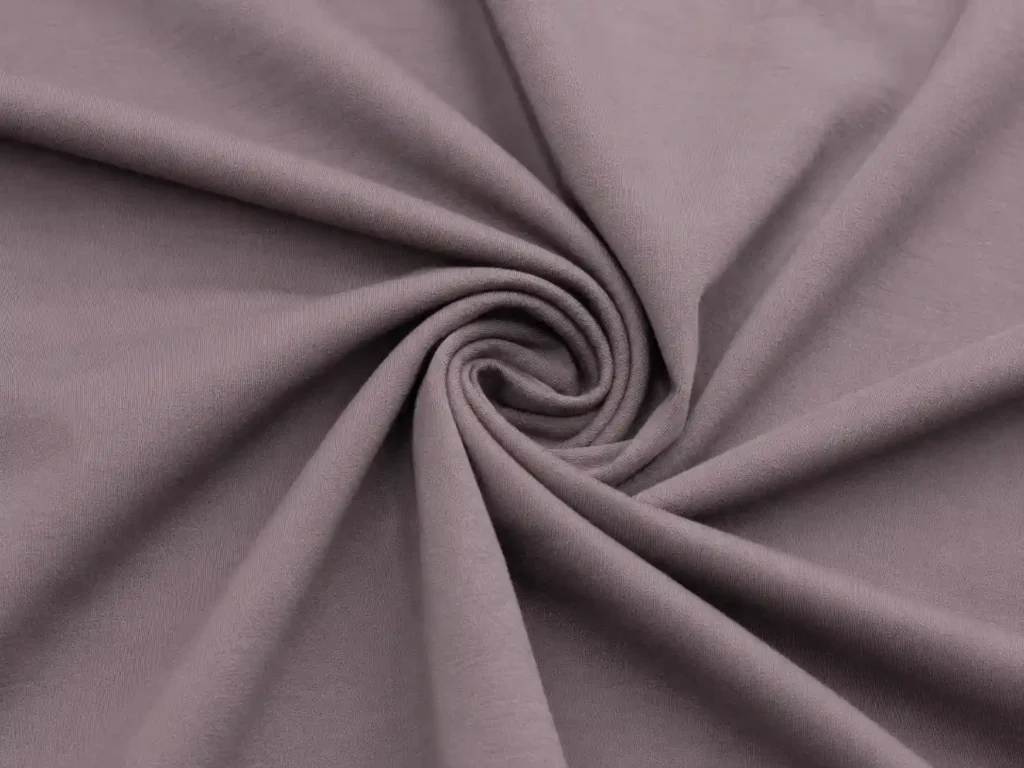
Jersey and Stretch
Duolan reviews weight, stretch percentage, recovery, opacity, pilling, shrinkage and directional behavior. Pattern and grading decisions are tied to the approved fabric rather than transferred automatically from a woven block.
- Approval evidence: stretch-recovery test, opacity view and fitted sample.
- Bulk risk: growth, measurement drift, seam wave and size inconsistency.

Printed and Finished
Print, wash, coating, pleating, heat transfer and special finish can change handfeel, shrinkage, color and lead time. Artwork approval must include scale, repeat, placement, ground color and interaction with garment panels.
Strike-offs or sample panels should be judged under the expected fabric and finish, not on a screen alone.
Bulk lots need color and process comparison against the approved reference.
- Approval evidence: strike-off, panel sample, color standard and wash review.
- Bulk risk: repeat shift, color difference, shrinkage and finish variation.
Fit Standards for Consistent Dress Collections
Measurement Architecture
- Base size: confirm target body profile, wearing ease and sample-size purpose.
- Tolerance: apply tighter control to fit-critical points and realistic tolerance to flexible areas.
- Grading: review whether the approved silhouette remains stable across 4-8 commercial sizes or the operator’s required size range.
Structure-sensitive Fit
Corset, bustier, strapless, halter, backless and cut-out dresses depend on forces not visible in a flat sketch. Cup position, boning path, neckline tension, side-seam balance, internal elastic, anti-slip tape, strap angle and closure strength determine security. A correct front view can still fail during movement when the back opening pulls, the neckline gaps or the waist rides upward.
- Corset and bustier: bust balance, support, cup shape, boning comfort and waist contour.
- Halter and backless: neck pressure, bust coverage, strap angle, back tension and closure stability.
- Cut-out and slit: movement, exposure, seam reinforcement and size-grade behavior.
Material-dependent Fit
Pattern corrections must use the approved material basis. Stretch, drape, thickness, friction and recovery change how the same paper pattern sits on the body. Satin may pull at seams without visible stretch; mesh may lengthen under weight; jersey may grow after wear; sequins may reduce flexibility; lace may require backing.
Duolan links fit comments to material behavior so a correction solves the cause rather than moving a symptom.
- Review evidence: front, side and back views; key measurements; movement check; close-up of stress points.
- Correction record: comment, pattern action, expected result and status in the next sample.
- Bulk basis: approved sample, measurement file, grading rule and tolerance set.

Construction Details That Protect Brand Quality
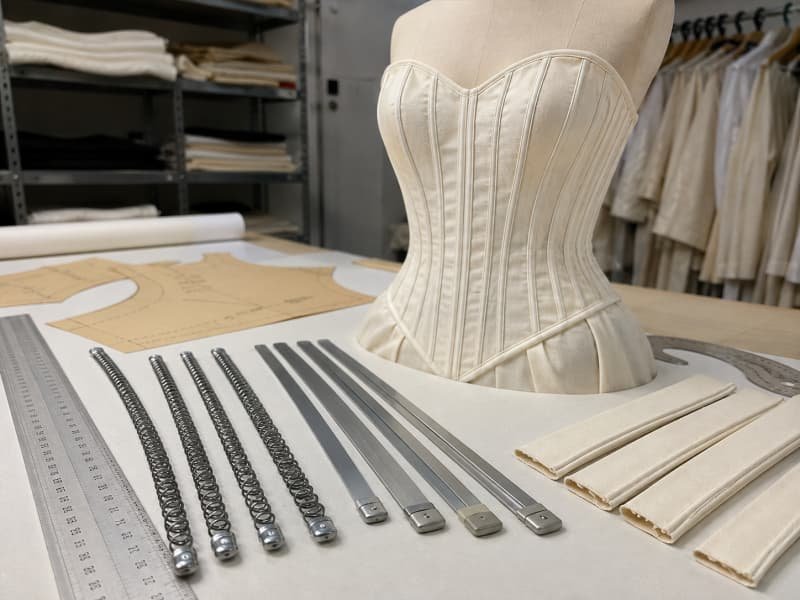
Corset and Boning
- Hidden control: interlining, cup support, anti-slip and internal elastic.
- Visible control: smooth contour, balanced neckline and stable waist.

Lining and Coverage
- Hidden control: lining length, anchoring, seam finish and support layers.
- Visible control: no show-through, pulling or lining exposure.

Zippers and Closures
- Hidden control: stabilization, seam allowance and reinforcement.
- Visible control: flat closure line and aligned seam junctions.

Sequin and Embellishment
- Hidden control: backing, edge binding, reinforcement and repair kit.
- Visible control: continuous motif, balanced density and clean seams.

Lace and Mesh Joining
Joining lace and mesh requires control of tension, motif direction, seam visibility and edge stability. Over-stretching creates ripples; under-stabilizing creates distortion after wear. Sample trials compare seam type, thread, tape, binding or clean-finish methods. Bulk standards define alignment points, allowable edge variation and inspection under light.
- Hidden control: stabilization, seam choice and thread compatibility.
- Visible control: smooth transition, aligned motif and clean transparency.
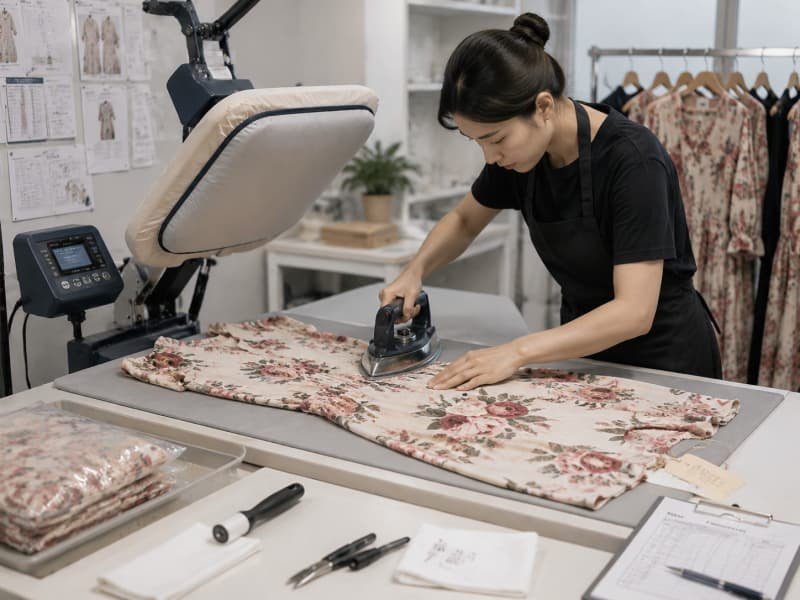
Hemming and Pressing
- Hidden control: stitch density, differential feed and press protection.
- Visible control: even hem, smooth seams and consistent shape.
Sampling Stages for Licensed Dress Approval
Development Prototype
Tests silhouette, material direction and main construction from a sketch, reference or tech pack. The goal is directional validation, not final approval.
- Decides: whether the concept can move into controlled development.
- Not yet final: fit grading, labels, packing and complete bulk standard.
Fit Sample
Uses the selected base size and material basis to review body balance, wearing ease, length, coverage, support and movement.
- Decides: pattern corrections and fit priority.
- Evidence: measurements, front-side-back views and consolidated comments.
Revised Sample
Verifies whether comments were translated correctly and whether one correction caused a new issue elsewhere.
- Decides: which points are closed and which remain open.
- Evidence: revision summary and comparison against prior comments.
Photo-ready Sample
- Decides: camera appearance, color, styling and visible finish.
- Control: record any photo-only treatment not intended for bulk.
Salesman Sample
- Decides: commercial assortment and order direction.
- Control: separate salesman-sample status from PP approval.
PP or Golden Sample
- Decides: whether production can start under the agreed standard.
- Control: identify approved exceptions and unresolved points in writing.
What Must Be Approved Before Production
Material and Color Approval
- Close before bulk: material identity, approved color, substitution rule and lot-comparison method.
- Keep visible: any risk related to shade, shrinkage, stretch, snagging or finish variation.
Fit and Construction Approval
Confirm base size, critical POMs, silhouette, length, neckline, coverage, bust support, waist balance, hip ease, strap or sleeve position, slit height, closure, lining, seam method, embellishment placement, hem and pressing result. Approved comments should be reflected in the pattern and specification rather than held only in email or chat.
- Close before bulk: fit status, measurement revision, grading rule and construction standard.
- Keep visible: approved exceptions, operator notes and size-specific concerns.
Brand Identity Approval
- Close before bulk: identity files, placement measurements, label proofs and packaging layout.
- Keep visible: market-specific language, legal text and restricted-use requirements.
Next-stage Release
- Required record: approval date, sample version, approver, open points and next action.
- Production rule: no informal material, workmanship or identity change after release.
From Approved Sample to Bulk-ready Standard
Sample Status
Identify whether the latest sample is fit confirmed, visual confirmed, PP basis or still pending refinement.
- Decision: what can be locked and what must stay open.
- Record: sample version and approval date.
Order Purpose
- Decision: capacity, release sequence and inspection depth.
- Record: program objective and delivery priority.
Material Lock
Confirm fabric, lining, trims, color, artwork and approved alternatives against sourcing availability and bulk-lot risk.
- Decision: ready to purchase, pending confirmation or requiring comparison.
- Record: BOM and approved references.
Workmanship Lock
- Decision: standard line, special process, pilot or first-piece route.
- Record: workmanship and QC checkpoints.
Production Path
Break the order down by style, color, size, quantity, complexity and delivery milestone.
- Decision: single factory, multi-line or coordinated factory allocation.
- Record: production path and timeline plan.
Release Control
- Decision: full release, staged release or hold.
- Record: bulk start confirmation and responsible contacts.
Manufacturing Built for Multi-style Dress Programs

Owned Factory Control
- Program value: stronger standard transfer and faster internal issue resolution.
- Suitable for: corset, satin, mesh, sequin and fit-sensitive dresses.

Satellite Capacity
More than 20 long-term satellite factories support repeat orders, seasonal peaks, replenishment and controlled volume expansion. Satellite use does not remove approval discipline; standards, materials, first-piece confirmation and QC points must remain aligned.
Allocation is based on proven capability for the assigned garment rather than on the lowest available price.
- Program value: flexible volume without treating every factory as interchangeable.
- Suitable for: stable styles, repeat programs and coordinated scale-up.

Regional Manufacturing
Supporting bases across Guangxi, Guizhou, Sichuan and Jiangxi provide production flexibility and capacity buffering. The wider system includes more than 12,000 supporting workers across apparel manufacturing resources. Regional allocation can help manage seasonal load, yet development ownership, material control and quality standards remain centrally coordinated for each project.
- Program value: capacity resilience and planned load distribution.
- Control need: clear standard transfer and inspection responsibility.

Quick-response Lines
- Program value: controlled speed for ready styles and repeat directions.
- Control need: clear readiness status before line booking.

Special Process Network
- Program value: broader design execution without uncontrolled outsourcing.
- Control need: trial, approval, lot comparison and process QC.

Multi-style Planning
- Program value: clear allocation, visibility and staged risk control.
- Output: production path and timeline plan.
Quality Control From Approval to Shipment
Quality is built through linked decisions. Inspection at the end cannot recover an incorrect fabric, unresolved fit, unapproved label or unstable construction method.
Design Review
- Check: wearability, repeatability, special process and approval gaps.
- Prevents: late redesign and non-scalable samples.
Material Inspection
Inspect fabric and trims against approved specifications before cutting or assembly.
- Check: shade, defects, width, weight, shrinkage, stretch, recovery and appearance.
- Prevents: lot variation and material-driven fit change.
Sample Standard
- Check: sample version, open points and approved exceptions.
- Prevents: old revisions entering production.
Pre-production Review
Explain critical fit, construction, artwork, labels, packing and inspection points before line release.
- Check: responsibility, sequence and high-risk operations.
- Prevents: different interpretations between teams.
First-piece Check
- Check: measurements, construction, appearance and approved materials.
- Prevents: repeating one defect across a large quantity.
Inline Inspection
Inspect during sewing and assembly while correction remains possible.
- Check: seam quality, fit points, symmetry, closure, embellishment and process discipline.
- Prevents: hidden accumulation and end-stage rework.
Final Inspection
- Check: appearance, measurements, workmanship, labels, cleanliness and function.
- Prevents: shipment of unresolved defects.
Packing Review
- Check: packing manual and destination requirement.
- Prevents: retail receiving errors and repacking cost.
Common dress risk points include fit deviation, satin seam puckering, lining exposure, transparency, zipper distortion, stretch recovery, lace alignment, missing embellishment, boning discomfort, hem wave, label error and size tolerance. Inspection records should identify disposition: accept, repair, replace, hold or re-inspect.
Compliance, Labels and Packaging for Controlled Programs
Audit and Testing Coordination
- Before development: identify restricted substances, performance tests, fiber claims and operator-specific standards.
- Before shipment: confirm required reports, inspection documents and destination paperwork.
- Evidence rule: provide current, project-relevant documents rather than broad unsupported claims.
Label and Legal Information
Main label, size label, care label, fiber composition, country of origin, warnings, language and hangtag content must follow approved files and the destination requirements supplied by the operator. Placement and attachment method also matter.
A correct label printed in the wrong language, folded incorrectly or attached in the wrong location can still fail retail receiving or legal review.
- File control: approved wording, dimensions, fold, color, material and version.
- Garment control: placement, attachment, readability and consistency across sizes.
- Data control: SKU, barcode, style, color and size accuracy.
Retail and E-commerce Packing
Packing can be folded, hanger-based, tissue-protected, individually polybagged or prepared for a specific warehouse or retail channel. Satin, embellishment, boning and delicate surfaces may need protection against creasing, abrasion or crushing.
Carton assortment must match size-color ratios and the operator’s receiving plan.
- Packing approval: polybag, tissue, hanger, sticker, barcode and visual presentation.
- Carton approval: assortment, quantity, carton mark, gross weight and destination data.
- Shipment readiness: packing inspection, document check and release status.

Confidential Dress Program Case Studies
US Multi-brand Operator
Program: 18 licensed-brand dress styles across party, satin, mesh and fitted categories; 42,600 pieces in five color groups and six commercial sizes.
Challenge: three approval contacts supplied overlapping comments, while artwork placement, lining coverage and fit changes were moving at different speeds. Several image-led styles were not ready for the same production release as the commercial core range.
Control: Duolan divided the range into three approval waves, consolidated comments by style, created measurement-based artwork placement, locked satin and mesh lots separately, and used first-piece confirmation for corset and sequin styles. Core styles moved into production while two high-risk styles remained on hold.
Result: the main launch quantity proceeded without waiting for unresolved image styles. Two revisions were closed before PP release, packing data was verified by SKU, and production standards were preserved for the planned repeat window.
- Order structure: 18 styles / 42,600 pieces.
- Key gain: staged approval protected the launch calendar.

European Occasion Program
Program: 24 occasion and wedding-guest dress styles; 63,200 pieces across satin, chiffon, lace and embellished constructions.
Challenge: color continuity across fabric families, different coverage requirements by market and a compressed showroom-to-delivery calendar. Several lace and chiffon styles used shared colors but reacted differently under dyeing and lining.
Control: Duolan grouped materials by color family, ran lab-dip and lining comparisons, separated fit approval from color approval, and mapped lace placement on high-visibility panels. Bulk was allocated by material and construction risk rather than by style number alone.
Result: color decisions were closed before full material purchase, high-risk lace styles received pilot verification, and the collection maintained a coordinated palette without forcing unsuitable fabrics into one identical color process.
- Order structure: 24 styles / 63,200 pieces.
- Key gain: material-family control improved collection consistency.

Regional Licensed Capsule
Program: 12 resort and going-out styles; 28,800 pieces with printed maxi dresses, halter minis, cut-out midis and coordinated sets.
Challenge: approved artwork needed adaptation to different panel shapes without distorting scale or brand recognition. Several backless and halter styles also required stronger support for the target market.
Control: Duolan prepared panel-specific placement references, reviewed print scale by garment size, adjusted hidden support without changing approved appearance, and confirmed artwork, neckline security and packaging in separate checkpoints. Print-heavy and solid styles followed different production paths.
Result: artwork remained consistent across mini, midi and maxi formats, support changes were approved before bulk, and the capsule shipped under one coordinated assortment plan.
- Order structure: 12 styles / 28,800 pieces.
- Key gain: artwork integrity and wearability were controlled together.

Licensed Dress Manufacturing Frequently Asked Questions

Start Your Licensed Dress Project Review
- Rights and project basis: brand or IP name, authorized category, market, channel and approval contacts.
- Product information: dress categories, style count, colorways, size range, reference images, tech packs and fabric direction.
- Commercial plan: target quantity, launch date, warehouse destination, inspection and delivery requirements.
- Approval requirements: NDA, licensor review, artwork, labels, packaging and required sample types.
- File upload: brand manual, tech pack, BOM, original-sample photos, artwork, size chart, packing manual and comments.


