 Skip to content
Custom Dress Manufacturer for Long-Term Production Partnership
A dress-focused manufacturing partner for recurring collections, stable repeat orders, and controlled growth across multiple seasons.
- 30+ years of fashion dress development experience supporting product direction, fit, materials, workmanship, and commercial production.
- 16 owned womenswear factories, 20+ long-term satellite factories, 300 sewing lines, and 50+ flexible production lines.
- Stable monthly capacity of approximately 6.5 million garments, with peak capacity reaching approximately 10 million garments.
- Built for multi-style programs, repeat production, seasonal drops, and long-term brand standards rather than isolated orders.
Built for Recurring Dress Programs
Global Fashion Brands
Regional Market Leaders
Established Dress Brands
Buying and Sourcing Teams
Product Development Teams
Sourcing Offices
What Long-Term Production Should Deliver
A long-term dress manufacturer should improve speed, consistency, and control as cooperation develops. The following criteria help fashion teams evaluate whether a supplier can support repeated collections rather than only one successful sample.
| Evaluation Area | What the Brand Should Verify | Duolan Working Evidence |
|---|---|---|
| Dress Expertise | Proven understanding of fashion silhouettes, fit, fabrics, lining, closures, and decorative workmanship | Dress-focused development, pattern, fabric, and process review |
| Development Control | Clear movement from brief to prototype, fit review, revision, and approval | Sample stage planning, comment review, revision summaries, and PP basis |
| Bulk Consistency | Approved appearance and measurements remain stable through production | Bulk readiness review, first-piece checks, inline control, and final verification |
| Capacity Scalability | Production can expand without losing style ownership or quality discipline | 16 owned factories, 20+ satellite factories, 300 sewing lines, and coordinated allocation |
| Repeat-Order Control | Previous standards can be reused and rechecked before the next run | Approved patterns, BOM records, material references, workmanship points, and packing rules |
| Communication | Responsibilities, changes, risks, and deadlines remain visible | Project ownership, milestone plans, production updates, and escalation routes |
| Compliance Readiness | Factory and product requirements can enter a formal vendor process | SMETA audit basis and project-specific testing, quality, and documentation coordination |
| Continuous Improvement | Later collections require less repeated explanation and fewer avoidable corrections | Brand-specific records, issue history, and development knowledge carried forward |
Why Dress Supply Relationships Break Down
Standards Reset Every Season
Sample and Bulk Drift
Capacity Fails During Growth
Material Continuity Is Ignored
Revisions Stay Unrecorded
Repeat Orders Are Treated as Copies
What Improves After Each Collection
A valuable production relationship becomes easier to manage over time. Approved information accumulates, teams understand each other more accurately, and later programs can move with fewer repeated corrections while preserving the brand’s established product standard.
Faster Development Decisions
Later projects can begin with known fit references, previous material choices, approved workmanship, and familiar decision routes. Product teams spend less time explaining baseline requirements and more time refining the new design. Faster decisions come from reusable knowledge, not from skipping development controls.
Fewer Repeated Corrections
Recurring fit, lining, zipper, seam, label, and packing issues should not return every season. Duolan records approved solutions and previous quality findings so new work can avoid known failure points. The goal is fewer unproductive revision loops and stronger first-round direction.
Reusable Brand Standards
Brand-specific measurement logic, grade rules, construction details, label placement, packaging, and inspection expectations can become working references. Standardization helps design, technical, sourcing, and factory teams speak from the same approved basis across different programs.
More Stable Bulk Quality
Experience with the same brand improves understanding of acceptable tolerance, visual expectations, fit priorities, and critical details. Bulk control can focus more sharply on the areas most likely to affect approval, returns, and brand presentation.
Faster Repeat Planning
Repeat styles benefit from existing pattern, BOM, consumption, workmanship, and packing records. Planning still requires confirmation of materials, quantity, color, delivery, and capacity, but fewer unknowns allow a clearer production path and earlier risk identification.
Better Capacity Forecasting
Seasonal forecasts, expected repeat volume, and launch priorities help reserve appropriate development and production resources. Duolan can distinguish core programs from opportunistic additions, reducing last-minute allocation decisions and supporting more stable delivery planning.
Dress Programs We Develop and Manufacture

Party Dress Programs

Occasionwear Collections

Going-Out Dresses

Vacation Dress Lines

Bodycon Fitted Dresses

Corset Bustier Dresses

Satin Mesh Dresses

Sequin Embellished Dresses
Fabric Decisions Protect Repeat Production
Fabric Behavior Before Pattern Approval
A pattern cannot be finalized correctly without understanding the fabric. Stretch percentage, recovery, drape, weight, surface friction, transparency, shrinkage, and directional behavior influence ease, seam choice, lining, support, and grade rules.
- Stretch fabrics: Crosswise and lengthwise stretch are reviewed separately. Recovery matters as much as initial stretch, especially for bodycon and fitted silhouettes. Weak recovery can produce bagging at the waist, seat, neckline, or elbow.
- Satin and fluid woven: Grain direction, bias movement, seam tension, and pressing response influence panel balance and hem level.
- Mesh and sheer materials: Transparency, edge stability, snag risk, and stretch determine lining coverage, seam allowance, reinforcement, and panel placement.
- Embellished materials: Sequin or bead density changes weight, drape, seam preparation, and needle selection.
Material Approval and Bulk Locking
Bulk control requires more than approving a swatch.Duolan confirms the material details relevant to production and repeat use.
- Main fabric: Composition, weight, width, construction, stretch, hand feel, color, surface effect, and approved supplier reference.
- Lining: Color, opacity, stretch compatibility, hand feel, static behavior, and interaction with the outer shell.
- Trims: Zippers, elastic, boning, hooks, cups, rings, sliders, labels, and decorative components are reviewed for function and visual match.
- Color: Lab dip, strike-off, print, embroidery, or bulk lot approval follows the material type and brand requirement.
- Workmanship compatibility: The material is tested against intended seams, pressing, fusing, gathering, ruching, pleating, embroidery, print, or wash processes.
Before cutting, approved material references become part of the production basis. Substitutions require renewed review rather than silent replacement.
Repeat Availability and Lot Variation
- Original material available: The new lot is checked against the approved reference for color, hand feel, stretch, weight, and appearance.
- Original material discontinued: Alternatives are screened for visual and technical similarity before presentation.
- New color extension: Dyeing, print, or finishing behavior is reviewed because different colors can alter hand feel, shrinkage, or surface appearance.
- Larger quantity: Multi-lot production may require tighter shade grouping and cutting controls.
- Seasonal timing: Capacity at fabric, print, embroidery, wash, or finishing suppliers is included in the production plan.
Commercial Alternatives Without Visual Loss
- Visual effect: sheen, texture, transparency, color depth, print clarity, and surface character.
- Fit effect: stretch, recovery, drape, body, and weight.
- Construction effect: seam stability, edge handling, pressing, fusing, lining, and closure behavior.
- Wear effect: comfort, movement, opacity, support, and durability.
- Production effect: width, consumption, cutting efficiency, defect rate, supplier capacity, and repeat availability.
- Cost effect: fabric price is considered alongside consumption, sewing difficulty, wastage, finishing, and quality risk.
Fit Pattern and Construction Standards

Bust Waist and Hip Balance
- Bust: Apex position, neckline coverage, cup volume, dart or panel shaping, support, and armhole balance are reviewed on the intended body profile.
- Waist: Placement must follow the design and body proportion. Excess suppression can create drag lines, zipper distortion, or fabric stress.
- Hip: Ease and contour are assessed against fabric stretch and skirt shape. Too little ease affects movement; too much weakens the intended silhouette.
- Side seam: A stable side seam helps confirm front-to-back balance. Twisting or pulling often indicates a pattern or grain problem rather than a simple sewing issue.

Necklines Straps and Open Backs
Halter, one-shoulder, low-back, strapless, and cut-out dresses need stability without visible overengineering.
- Neckline control: Shape, gape, stretch, support, binding, facing, and internal stabilization are chosen according to fabric and edge design.
- Strap position: Strap length and placement affect bust lift, neckline level, armhole shape, and back tension.
- Open-back balance: Low backs can shift garment weight toward the front. Waist anchoring, strap geometry, elastic, grip, or internal support may be required.
- Cut-outs: Edge stability, seam allowance, lining, reinforcement, and stretch direction are checked to prevent distortion.
- Wear movement: Sitting, walking, raising arms, and turning reveal problems not visible on a static mannequin.
Approved construction should support the intended look without adding visible bulk or uncomfortable tension.

Corsetry Lining and Internal Support
- Boning: Position, length, stiffness, end protection, and channel construction influence support and comfort.
- Cups: Cup size, placement, shape, and attachment must align with outer panels and neckline.
- Lining: Stretch and recovery should match the shell where movement is required. Excess tension can alter fit; insufficient control can allow collapse.
- Fusing and tape: Stabilization is placed only where required to protect edge shape, zipper areas, waist seams, or support zones.
- Closures: Zipper type, hook-and-eye position, lacing, or fastening sequence must support dressing, movement, and repeated wear.

Grading and Size Consistency
Duolan follows the brand’s size specification and grade rules. Where grading support is required, the base-size fit is approved first, followed by review of how key points change across sizes.Critical areas often include:
- Bust and cup proportion
- Waist-to-hip growth
- Strap and neckline movement
- Armhole depth
- Back width and closure length
- Dress length and slit position
- Boning and panel proportion
- Stretch allowance by size
A uniform grade increment does not suit every point on a structured or fitted dress. Grade decisions reflect body growth, material stretch, silhouette, and construction. Production measurement control then focuses on points most likely to affect appearance and wear.
Complex Dress Details Controlled Before Bulk

Corset and Boning

Sequin and Beading

Mesh and Sheer Panels

Ruching and Draping

Cut-Out Backless Shapes

Satin Delicate Seams
Product Development Built Around Brand Direction
Converting Creative Direction Into Buildable Dresses
- Silhouette: Intended body relationship, length, volume, contour, and movement.
- Structure: Seams, panels, darts, internal support, closures, lining, and stabilization.
- Material: Required drape, stretch, recovery, transparency, shine, texture, and weight.
- Detail: Ruching, pleating, cut-outs, embellishment, trim, print, embroidery, wash, or finishing.
- Commercial position: Target market, expected retail level, order depth, and planned use within the collection.
- Production route: Sampling risk, special-process coordination, inspection points, and likely repeat requirements.
Protecting Design Value During Cost Review
Cost control should preserve the visible and functional reasons a style exists. Duolan separates high-value design elements from hidden cost drivers.
Possible actions include:
- Maintaining the outer silhouette while simplifying internal seam sequence
- Adjusting fabric width or marker use without changing appearance
- Reducing unnecessary lining coverage while protecting opacity and comfort
- Selecting equivalent trims with stronger availability
- Revising embellishment density outside key visual zones
- Improving construction sequence for repeat production
- Grouping compatible colors or materials across a program
Each option is evaluated against fit, appearance, durability, production stability, and brand positioning.
Cost is managed through informed trade-offs rather than uncontrolled specification reduction.
Building Coherent Multi-Style Collections
- Shared fabric qualities across selected styles
- Common trims or label systems
- Repeated fit blocks where suitable
- Color grouping for material and production efficiency
- Priority styles for early approval
- Complex styles with longer development paths
- Commercial styles designed for faster scale-up
- Packing and shipment groups aligned to launch drops
Designing for Commercial Fit and Wear
Fashion impact must still work on the body. Duolan reviews how the style will be worn, moved in, dressed, fastened, and graded.
Key questions include:
- Can the wearer enter and exit the garment comfortably?
- Does the neckline remain stable during movement?
- Does the lining support or fight the outer shell?
- Will a bodycon style recover after sitting?
- Does a slit provide movement without opening excessively?
- Can the chosen closure carry the garment tension?
- Will a strap, cup, or boned panel remain correctly positioned?
- Can the hem and drape remain balanced after packing and transport?
Commercial fit is not a generic loose or tight judgment. It is the relationship between design intent, target body, fabric, construction, and expected use.
Sampling and Revision With Decision-Ready Outputs
Choosing the Correct Sample Stage
- First prototype: Tests overall interpretation, silhouette, construction direction, and material behavior.
- Fit sample: Focuses on body balance, measurements, movement, support, and pattern correction.
- Revised sample: Verifies whether specific comments were applied and whether new issues appeared.
- Salesman sample: Supports internal selling, line review, photography, or commercial presentation where required.
- Pre-production sample: Confirms the production basis after material, measurements, workmanship, color, trims, and packing direction are ready.
Reviewing Tech Packs and Missing Information
- Conflicting measurements
- Missing construction information
- Unclear fit intent
- Fabric not matching the reference effect
- Trim or embellishment feasibility concerns
- Artwork, print, or embroidery file gaps
- Size grade questions
- Packaging or testing requirements affecting development
- Target cost conflicts with the proposed build
Converting Fit Comments Into Actions
- Measurement changes: Exact points, values, tolerance, and size reference.
- Shape changes: Bust, waist, hip, neckline, shoulder, back, skirt, sleeve, or hem balance.
- Construction changes: Seam, lining, closure, support, reinforcement, finishing, or operation sequence.
- Material changes: Main fabric, lining, trim, color, hand feel, stretch, opacity, or weight.
- Visual changes: Proportion, placement, symmetry, drape, gathering, embellishment, or artwork.
Planning Timelines From Real Inputs
Sample and bulk timing are confirmed after the style is reviewed. Fabric development, custom dyeing, print, embroidery, embellishment, complex fit, special trims, testing, and approval rounds can change the schedule significantly. Duolan builds the working timeline from:
- Availability of complete technical information
- Main material and trim readiness
- Pattern and fit complexity
- Number of styles developed in parallel
- Required sample stages
- Artwork or special-process development
- Shipping destination for physical samples
- Brand review and comment turnaround
The result is a milestone plan connected to real work. Artificially short promises are avoided when the product route requires additional control.
Approved Sample to Controlled Bulk

Bulk Readiness Review
- Fit confirmed
- Visual confirmed
- PP basis established
- Refinement still pending

Locking the Production Basis
- Approved pattern and size specification
- Main fabric and lining references
- Trim and component details
- Color or artwork approvals
- Construction and workmanship points
- Measurement tolerances
- Label placement and packing rules
- Inspection focus areas
- Approved sample or PP reference

First-Piece and Early-Line Control
- Boning and cup placement
- Ruching density
- Mesh tension
- Sequin or bead clearance
- Print or embroidery position
- Lining and outer-shell balance
- Slit, hem, and drape level

Inline Control Through Final Packing
Bulk quality is protected through connected checks rather than one final inspection.
- Inline: Measurement, workmanship, operation stability, defect trend, and critical details are monitored during sewing.
- Finishing: Pressing, cleaning, trimming, embellishment repair, label, and appearance are checked before packing.
- Final verification: Quantity, size ratio, color, measurement sampling, workmanship, appearance, packing, barcode, carton, and required documents are reviewed against the agreed plan.
- Packing: Garments are protected according to fabric and embellishment risk, with SKU and carton identification aligned to the brand requirement.
Records from bulk are retained for repeat planning and issue prevention.
Multi-Style Collection Management
Style Priority
Shared Material Planning
Color Coordination
Sample Calendar
Approval Dependencies
Launch Delivery Control
Manufacturing Capacity for Recurring Programs
16 Owned Factories
20+ Satellite Factories
12,000+ Workers
300 Sewing Lines
50+ Flexible Lines
6.5M Monthly Capacity
Production Path and Capacity Allocation
Every order is broken down by style, color, size, quantity, material, process, and timing. The production route below shows how different program types require different control rather than one general factory assignment.
| Program Type | Main Production Decision | Recommended Route | Critical Controls |
|---|---|---|---|
| Complex Core Style | Protect approved shape and workmanship | Owned core factory or dedicated line | PP basis, operator skill, first-piece approval, and critical-detail checks |
| Multi-Style Drop | Balance many styles under one launch calendar | Split by construction and material family | Shared dependencies, sample status, color approval, and delivery groups |
| Repeat Order | Preserve prior standard while checking current conditions | Original approved route where suitable | Material lot, pattern version, measurements, workmanship, and packing |
| Scale-Up Order | Increase volume without losing line consistency | Additional line or controlled multi-factory allocation | Pilot output, cross-line standard, shade grouping, and inspection alignment |
| Replenishment | Respond after sales while protecting quality | Flexible line after material and capacity review | Fabric readiness, current trim supply, realistic delivery, and SKU accuracy |
| Special-Process Style | Coordinate print, embroidery, wash, or embellishment | Specialist process supplier plus matched sewing route | Process sample, placement, handover timing, damage control, and final appearance |
Quality Control Across Bulk and Reorders

Fabric Inspection

Pre-Production Review

First-Piece Check
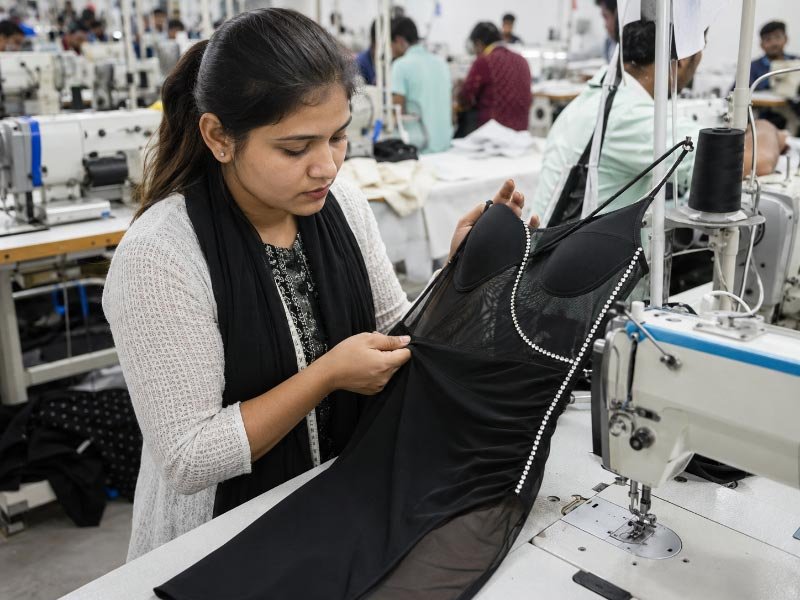
Inline Inspection

Measurement Control

Workmanship Inspection

Final Verification
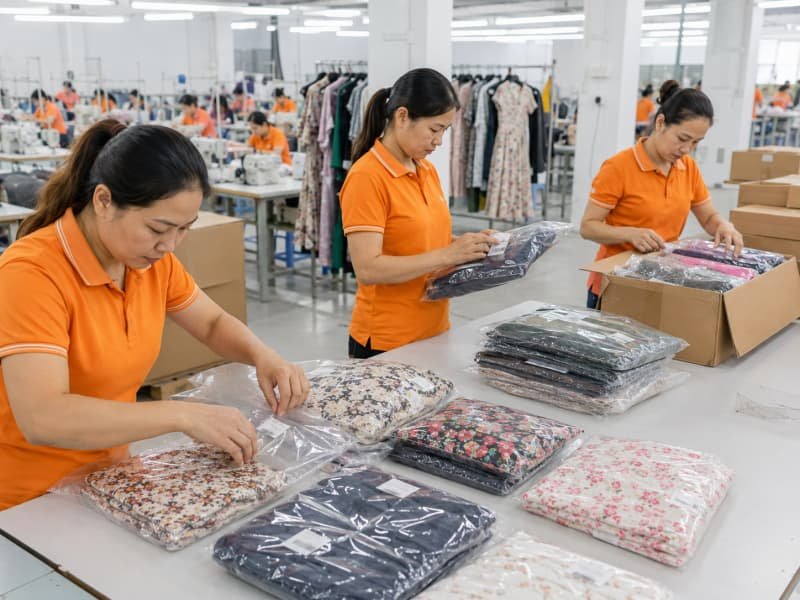
Packing Verification
Repeat Orders Replenishment and Scale-Up
Exact Style Repeat
New Color Extension
Length Sleeve Extension
Replenishment Order
Regional Adaptation
Volume Scale-Up
Brand Standards Preserved for Future Orders
Approved Patterns
Measurement Specs
BOM Records
Fabric References
Workmanship Standards
Label Packing Rules
Quality Issue History
Communication Records
Workmanship Built for Repeated Production

Seam Engineering by Fabric and Stress
- Stretch dresses need seam elasticity and recovery aligned with the fabric. Excessively rigid seams can break or restrict fit; loose seams can wave or open.
- Satin and fluid woven require controlled tension, stable feeding, accurate grain, and pressing discipline to prevent puckering and twisting.
- Mesh needs seam stability without bulky or visible finishing. Reinforcement is placed only where required.
- Structured dresses require seam strength and internal support around bust, waist, boning, zippers, and closures.
- Embellished materials may need surface clearance, component removal around seams, hand repair, and protective lining.

Internal Construction Without Visible Bulk
- Whether the lining should stretch with the shell or stabilize it
- Where boning needs support and end protection
- How cups align with outer panels and neckline
- Which edges require tape, elastic, facing, or clean finish
- How zipper areas resist tension
- How seam allowance is graded to avoid bulk
- How internal components behave across sizes
- Whether pressing can reach the required shape without marking the fabric
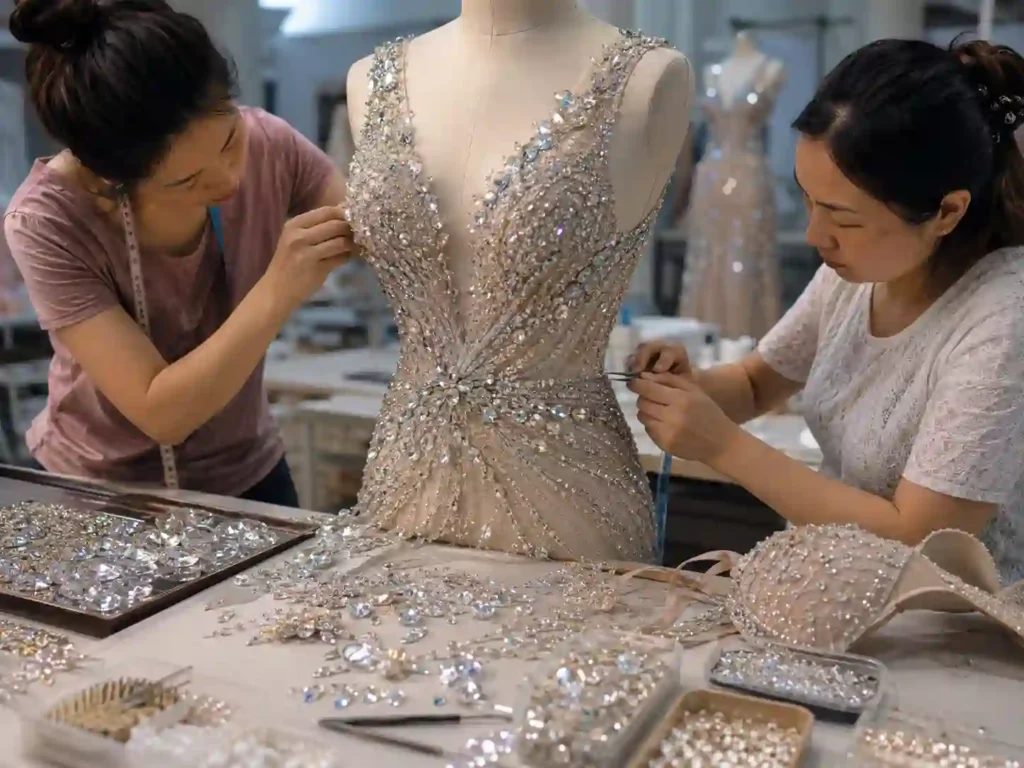
Decorative Workmanship With Repair Control
Sequin, pearl, bead, rhinestone, embroidery, print, and combined effects create additional handover points. Decorative work is reviewed before and after sewing. Control includes:
- Artwork and placement approval
- Density and component selection
- Seam and zipper clearance
- Attachment strength
- Surface damage during cutting and sewing
- Missing or loose component repair
- Lining protection against skin contact
- Pressing and finishing restrictions
- Packing to reduce abrasion and crushing

Finishing and Pressing for Final Shape
Pressing is a construction stage, not a cosmetic last step.
Temperature, steam, pressure, dwell time, support tools, and protective layers are adjusted to the fabric and design.
- Satin needs protection from shine, water marks, seam impressions, and edge damage.
- Mesh and synthetic materials require controlled heat to avoid distortion.
- Structured panels need shaping without collapsing support.
- Ruching and drape need volume preserved rather than flattened.
- Embellishment needs clearance and protective handling.
- Hems and seams are checked for balance after pressing.
Final appearance is reviewed after the garment has cooled and settled, because some tension or distortion becomes visible only after pressing.
Long-Term Cost Control Without Weakening Product
Development Cost
Material Cost
Construction Cost
Operational Cost
Communication and Account Management
Project Ownership
Development Timeline
Revision Records
Production Updates
Risk Escalation
Cross-Team Meetings
Compliance and Vendor Onboarding Support
SMETA Audit Basis
Quality Requirement Review
Testing Coordination
Vendor Information Pack
Factory Visit Support
NDA and IP Control
Private Label Packing and Delivery Coordination

Brand Size Labels

Care Composition Labels

Hangtags Price Tickets

Barcode SKU Control

Polybag Carton Rules

Shipment Documentation
Long-Term Dress Partnership Cases
United States Partywear Program
Program scope: 24 styles, 62,400 garments, 11 colorways across bodycon, corset, mesh, satin, and embellished party dresses.
The brand needed one production partner to coordinate a high-impact seasonal drop while reducing sample-to-bulk variation. Several styles used close fit, internal cups, boning, mesh panels, ruching, and sequin details. The main risk was not capacity alone; it was maintaining fit and surface quality across several constructions and color groups under one launch calendar.
Duolan separated the program into fit-critical, decorative, and commercial-core groups. Corset and fitted styles moved through focused base-size review before grading. Satin and mesh styles received material-specific seam, lining, and pressing instructions. Embellished styles used placement and repair standards. Before bulk, approved patterns, materials, workmanship, measurements, and packing were locked under a production-readiness review.
The order was allocated by construction complexity rather than evenly splitting quantities. First-piece checks focused on bust position, waist contour, mesh tension, zipper movement, ruching distribution, and sequin clearance. Shared color and label dependencies were tracked across the range.
Result: The program shipped in planned delivery groups, repeatable standards were preserved for later color extensions, and the brand retained a working base for the next partywear cycle rather than rebuilding every style from zero.

United Kingdom Occasionwear Program
Program scope: 16 styles, 38,000 garments, including satin midis, mesh maxis, one-shoulder dresses, wedding guest styles, and fitted occasion dresses.
The brand’s existing concern involved inconsistent drape, hem level, lining behavior, and color appearance between sample and bulk. Several styles shared satin qualities and seasonal shades, so one material decision could affect multiple products.
Duolan organized the range by shared fabric and construction family. Grain direction, bias movement, seam tension, lining, zipper application, and pressing were reviewed during sampling. Fit comments were separated into measurement, shape, and construction changes. The final sample basis included critical visual points for neckline stability, side seam direction, slit opening, hem balance, and surface protection.
Bulk material was grouped by shade, and early-line checks compared seam appearance and drape with the approved reference. Packing used protective layers for satin surfaces, while multi-SKU carton control followed the brand’s warehouse requirements.
Result: The brand gained a clearer standard for satin and mesh handling, reduced repeated explanation across related styles, and used the approved construction notes for a later occasionwear repeat program.

Australian Vacation Dress Program
Program scope: 12 styles, 24,600 garments across three launch drops, covering printed maxis, halter dresses, lightweight midis, day-party styles, and coordinated fashion sets.
The program required several lightweight materials, custom prints, multiple colors, and delivery groups aligned to a warm-season launch. Key risks included transparency, print placement, strap stability, shrinkage, hem balance, and replenishment feasibility after sales results.
Duolan reviewed print scale, garment placement, lining coverage, fabric width, shrinkage, strap construction, neckline stability, and packability during development. Styles sharing one print or fabric were grouped for material planning, while fit-sensitive halter and open-back styles received separate approval priorities. Production allocation followed material readiness and launch group rather than one combined bulk start.
For replenishment planning, approved patterns, print references, labels, packing, and quality findings were stored after the first delivery. Material availability and current capacity were checked before confirming repeat timing.
Result: Three coordinated drops moved through one structured program, and the approved records provided a controlled route for repeat colors and selected replenishment styles.

Frequently Asked Questions

Discuss Your Long-Term Dress Program
Share enough information for Duolan to evaluate product fit, development work, production route, capacity, and risk before quoting or scheduling. A clear brief allows the team to identify missing technical decisions, likely material challenges, sample requirements, bulk controls, and whether the program is suitable for owned-factory or coordinated capacity.
Please include:
- Brand name and website
- Main sales markets
- Dress categories and seasonal direction
- Tech packs, reference images, or original samples
- Fabric and trim direction
- Size specification and grade rules
- Number of styles per collection
- Estimated quantity per style and total program volume
- Target launch or delivery date
- Required sample stages
- Testing, audit, and inspection requirements
- Labels, barcodes, packing, and shipment requirements
- Current production problems or repeat-order goals
Duolan will review the submitted information and propose the next working step, which may include a technical clarification, material review, sample plan, capability meeting, factory review, or production-readiness discussion.


