 Skip to content
Custom Dress Manufacturer for Measurement Tolerance Control
Controlled measurements, corrected patterns, and production-ready dress standards for established fashion brands and technical product teams.
- 4-stage measurement path: base size, size set, PP approval, and bulk verification.
- 10-30 dress styles coordinated within a collection program when product calendars require parallel development.
- 20,000-80,000 pieces commonly managed across a brand order, depending on style mix and construction complexity.
- 6 core technical records can connect development to production: POM diagram, spec sheet, fit note, size-set report, PP checklist, and inline measurement record.
Why Measurement Variance Becomes a Brand-Level Risk
Sample-to-Bulk Drift
- Lock the approved pattern version
- Confirm critical POMs and tolerances
- Measure the first finished pieces
- Correct the process before wider release
Same-Size Variation
- Compare multiple pieces within one size
- Review high-risk POMs by style
- Separate process variation from measuring variation
- Record corrective action before packing
Unclear POM Methods
- Define the start and end point
- State flat, curved, half, or full measurement
- Confirm closure and garment position
- Add a clear POM diagram
Fabric-Driven Change
- Check stretch direction and recovery
- Review shrinkage or relaxation
- Match lining behavior to shell fabric
- Re-measure after finishing
Grading Imbalance
Grading is not the same as adding an equal increment to every point. Bust, underbust, waist, hip, strap, armhole, cup position, and dress length may need different progression rules. Poor grading can make the base size look correct while smaller or larger sizes lose balance.
- Confirm the target size range
- Protect silhouette and support points
- Review size-set samples
- Update the graded nest after fit feedback
Repeat-Order Drift
- Keep the approved pattern version
- Retain measurement and workmanship records
- Recheck material substitutions
- Compare repeat production against the golden reference
What Measurement Tolerance Control Really Means
Define The Standard
Verify The Garment
Correct The Source
An out-of-tolerance result is a signal, not a complete diagnosis. The team first confirms the measuring method, then traces the source through pattern, cutting, sewing, fabric behavior, finishing, or size marking. Correction is applied where the variance begins. Re-measurement follows before the affected production stage continues, protecting the remaining quantity from repeated error.
Critical Points of Measurement for Custom Dresses
Dress measurement control becomes reliable only when each POM has a fixed origin, method, and fit purpose. The following positions cover common fashion, occasion, bodycon, corset, halter, backless, satin, mesh, and slit dress programs.
| Point of Measurement | How It Is Measured | Why It Matters | Control Note |
|---|---|---|---|
| Bust / Chest | Across the garment at the defined underarm level | Silhouette, mobility, neckline stability | Specify distance below armhole and half/full method |
| Underbust | Across the fitted underbust line | Corset balance, cup support, waist transition | Critical for bustier and structured dresses |
| Waist | Across natural or seam-defined waist | Fit identity, zipper closure, body balance | State relaxed or stretched condition |
| High Hip | Across the level stated below waist | Contour through upper hip | Important for fitted and bodycon silhouettes |
| Full Hip | Across the widest hip level | Movement, side-seam balance, skirt fall | Define distance below waist |
| HPS Length | High point shoulder to hem or target point | Overall proportion and selling length | Confirm front, back, or both |
| Center Front Length | Top edge or neckline to hem | Front balance, neckline depth, coverage | Avoid mixing with HPS length |
| Center Back Length | Back neckline or top edge to hem | Back balance and zipper position | State whether collar or facing is included |
| Strap Length | Defined attachment point to attachment point | Support, neckline position, underarm fit | Measure fixed or adjustable strap consistently |
| Armhole | Along seam or straight depth method | Comfort, gaping, mobility | Clarify curved or straight measurement |
| Neck Drop | HPS or center reference to neckline | Coverage, visual proportion, wear security | Front and back measured separately |
| Slit Height | Hem edge to slit opening or bartack | Movement, coverage, visual placement | State finished hem reference |
| Hem Opening | Straight or full circumference at hem | Skirt sweep, movement, silhouette | Bias and flare styles need stable setup |
| Cup Position | Reference points for cup center and height | Bust placement and support | Use horizontal and vertical references |
| Boning Position | Distance from seam or center line | Structure, symmetry, comfort | Check both sides and finished alignment |
| Zipper Length | Finished opening length | Dressing access and seam balance | Confirm top hook and seam allowances |
Standardized Measurement Methods Prevent False Variance
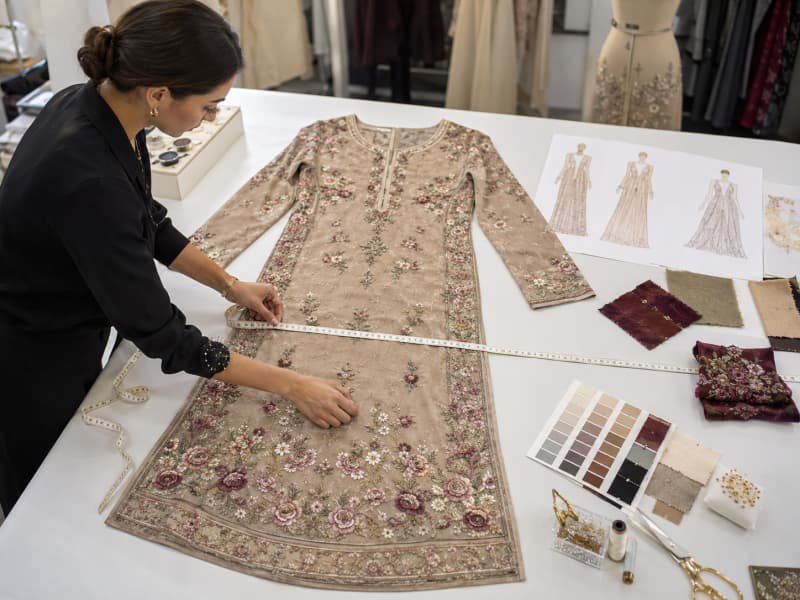
Flat, Curved, Half, Or Full
Measurement language must match the geometry of the garment. A waist can be measured straight across, along a curved seam, or as a full circumference. An armhole can be taken around the seam or as a vertical depth. The chosen method changes the reading, so the diagram and wording must work together. Control points:
- State half measurement or full circumference.
- Mark curved lines where tape follows a seam.
- Define whether gathers, elastic, or pleats remain relaxed.
- Use the same garment side when asymmetry is intentional.
Production value: A single method prevents sample-room readings from conflicting with inline or final inspection records.

Fixed Origins And Endpoints
- Name the exact seam, edge, notch, or attachment point.
- Add a distance reference below HPS, armhole, or waist when needed.
- Separate front and back length definitions.
- Fix the reference after any neckline or seam revision.
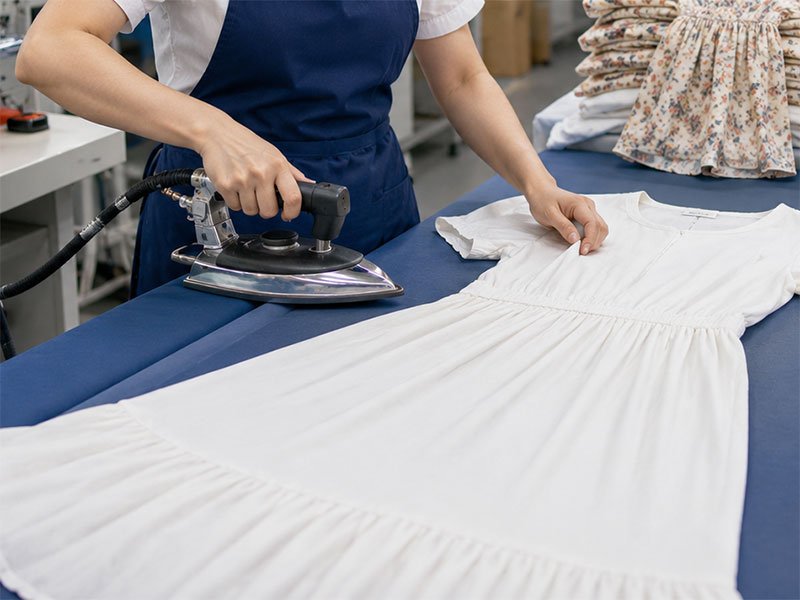
Garment Preparation Before Measuring
- Lay flat without pulling or compressing.
- Close fastenings according to the spec method.
- Allow elastic and knit fabrics to recover.
- Confirm whether measurements occur before or after final pressing.

Special Dress Measurement Methods
Structured and open-body dresses need additional definitions. Strapless top edge length, cup center, underbust, boning position, back opening, cut-out width, strap attachment, and slit height affect both fit and wear security. Decorative lines may also need location tolerances when they shape the silhouette. Control points:
- Measure left and right placement for symmetry-sensitive details.
- Reference cup and boning positions from stable center lines.
- Define strap measurements between finished attachment points.
- Measure slit height from the finished hem to the opening or bartack.
Production value: Technical definitions convert visual details into repeatable construction standards.
Prioritize Tolerances by Measurement Criticality
One tolerance cannot serve every POM. The accepted range should reflect fit sensitivity, function, construction, fabric behavior, target market, and the approved brand standard.
| Control Level | Typical POMs | Main Risk | Recommended Control |
|---|---|---|---|
| Fit-critical | Bust, underbust, waist, high hip, full hip, cup position | Directly changes fit, closure, contour, or support | Tighter style-specific control; verify on fit and size-set samples |
| Function-critical | Armhole, strap length, zipper length, slit height, neckline opening | Affects movement, dressing access, security, or comfort | Confirm through measurement plus wear and movement review |
| Balance-critical | HPS length, center front/back length, side seam, waistline position | Affects proportion, hem balance, and visual alignment | Check front/back relationship and fabric relaxation |
| Construction-critical | Boning position, panel seam, dart placement, pocket or trim location | Controls structure, symmetry, and assembly accuracy | Link to pattern notches and workmanship instructions |
| Visual-secondary | Hem opening, decorative placement, bow or applique location | Influences appearance with lower direct fit impact | Set style-appropriate range; avoid over-tightening non-critical points |
Tech Pack and Spec Sheet Readiness Review
POM Names And Diagrams
- Missing POMs identified
- Conflicting names highlighted
- Measuring origins clarified
- Critical dress points added where needed
Base Size And Fit Priority
The base size should represent the brand’s intended fit direction and target market. Duolan reviews which measurements carry the fit identity: close waist, shaped underbust, relaxed hip, secure strapless edge, low back position, or long bias silhouette. A base-size table without fit priority can lead to technically compliant but visually wrong samples.
Review output:
- Base size confirmed
- Critical POMs ranked
- Fit-sensitive areas marked
- Sample purpose defined as prototype, fit, photo, sales, or PP
Tolerance And Grading Logic
Tolerance describes acceptable production variation; grading describes intended size progression. Both need independent review. A wide tolerance cannot compensate for an incorrect grade rule, and a correct grade rule cannot protect a poorly defined POM.
Review output:
- Tolerance gaps flagged
- Size increments checked for logic
- Length, cup, strap, and armhole progression reviewed
- Stretch-dependent measurements separated from fixed measurements
Revision And Version Control
Fit comments, pattern changes, spec updates, and sample approvals should share one version history. A measurement changed in an email but not in the latest spec can move into the wrong pattern or production file. Duolan records confirmed changes before the next sample or bulk stage. Review output:
- Current tech pack version identified
- Revised measurements summarized
- Pattern and spec versions aligned
- Pending approvals separated from locked standards
Size Chart Development and Grading Control

Build Around The Target Body
- Target body measurements and fit model
- Base size and intended ease
- Length and coverage expectations
- Stretch allowance and recovery
- Market-specific size labeling

Grade Shape, Not Only Width
- Bust-to-waist and waist-to-hip relationship
- Front/back balance
- Cup and support placement
- Strap and armhole progression
- Hem sweep and slit proportion

Verify With Size-Set Samples
A correct base size does not prove the graded range. Size-set samples reveal whether smaller and larger sizes maintain closure, comfort, support, seam balance, and visual proportion. Not every size requires the same review depth, but boundary sizes deserve close attention. Size-set checks:
- Selected sizes measured against spec
- Critical POMs reviewed on body or mannequin
- Side seam, waistline, cup, and hem balance checked
- Grade rules updated before PP approval
Records from the size set become part of the production standard.

Preserve Standards For Reorders
Repeat production should reuse confirmed grading assets rather than recreate them. Pattern nests, measurement tables, fit notes, approved materials, and workmanship references are preserved with clear version control. Any fabric or trim substitution is reviewed for fit impact before release. Reorder checks:
- Confirm latest approved pattern and grade
- Compare new material behavior
- Review prior production measurement records
- Reconfirm changed color, lining, or finishing conditions
A stable archive shortens the path from reorder brief to controlled production.
Pattern Correction Behind Measurement Accuracy
Read Wrinkles As Technical Signals
- Waist wrinkles may indicate incorrect waist shaping or body length.
- Hip drag lines may come from insufficient ease or wrong dart balance.
- Neckline gaping can relate to pattern shape, strap length, or fabric stretch.
- A rising front hem may reflect bust allowance or front-length imbalance.
Correct Pattern And Specification Together
- Mark the issue on sample photos
- Identify the responsible pattern area
- Revise seam, dart, panel, or length balance
- Update the relevant POM and tolerance note
- Record the new version before cutting
Protect Structure And Symmetry
Corset, bustier, halter, backless, and cut-out dresses need more than circumference correction. Cup position, boning direction, neckline tension, strap attachment, closure length, and left/right balance determine whether the design stays secure during wear.
Control steps:
- Measure structural placement from fixed center lines
- Check both sides of symmetrical details
- Review support under movement
- Confirm lining and internal reinforcement do not pull the shell
- Validate the corrected pattern in a revised sample
Transfer Correction Into Bulk
A corrected sample becomes useful only when the approved pattern, seam allowance, construction method, measurement table, and QC checkpoints move together into production. Duolan prepares a bulk-ready handover rather than relying on the sample garment alone. Bulk handover:
- Approved pattern and graded nest
- Updated measurement specification
- Critical workmanship notes
- PP or golden sample reference
- First-piece measurement points
- Inline checks for high-risk areas
Fit Review Goes Beyond the Measuring Tape

Mannequin Balance
- Check front, side, and back views
- Mark drag lines and gaping
- Compare panel and boning symmetry
- Confirm length and slit placement
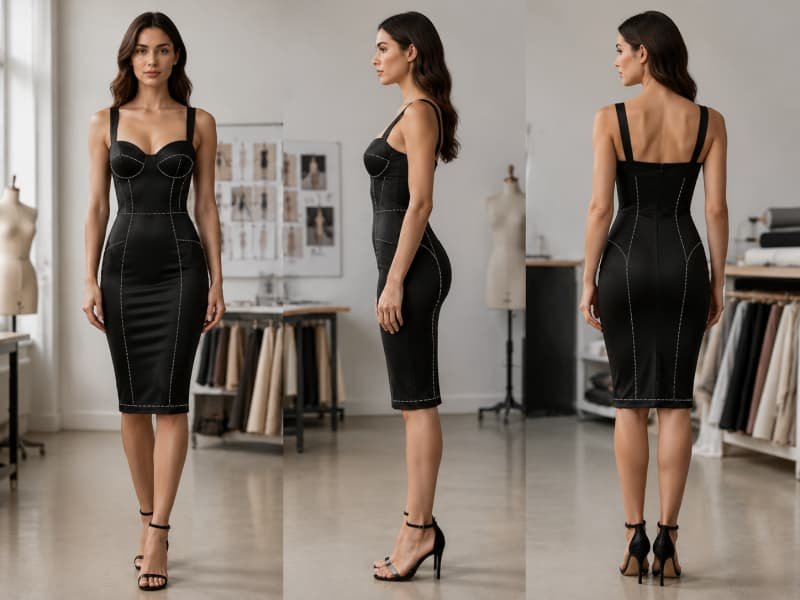
Live Fitting Review
- Review bust, waist, hip, and underbust balance
- Check neckline and back opening security
- Confirm strap pressure and arm movement
- Translate comments into measurable pattern changes

Movement And Coverage
- Test slit and hem mobility
- Check strapless and halter security
- Review cut-out and low-back coverage
- Confirm lining stays aligned during movement

Measurement Reconciliation
- Compare actual readings with approved target
- Separate fit issue from measurement issue
- Update pattern, spec, or method as required
- Record the decision before the next sample
How Fabric Behavior Changes Finished Measurements
Shrinkage Control
- Review expected care process
- Test or assess shrinkage where required
- Allow material relaxation before cutting
- Recheck finished measurements after pressing
Stretch And Recovery
- Mark stretch direction
- Match shell and lining elasticity
- Use suitable seams and elastic components
- Review measurement after recovery time
Bias-Cut Movement
- Control grain and cutting direction
- Allow defined hanging relaxation
- Review length before final hemming
- Re-measure front, back, and side balance
Seam Relaxation
- Test high-risk seams before bulk
- Compare panel length before and after sewing
- Avoid forcing mismatched layers
- Check side seams and neckline edges after finishing
Pressing Response
- Define pressing method for sensitive fabrics
- Use protective handling for surface materials
- Measure after the approved finishing process
- Correct pressing before adjusting the pattern
Batch Variation
- Compare new lots against approved material
- Review color and physical behavior together
- Reconfirm critical measurements after substitution
- Protect repeat orders with material records
Measurement Risks Across Different Dress Constructions

Bodycon Dresses

Corset Dresses

Halter Dresses

Backless Dresses

Strapless Dresses

Satin Slip Dresses

Slit Dresses

Mesh Dresses
Measurement Control Through Every Sample Stage
Prototype Sample
- Confirm development basis
- Review silhouette and fabric response
- Identify missing specification details
- Decide the next fit or revision path
Fit Sample
- Measure critical POMs
- Record fit comments with photos
- Translate comments into pattern changes
- Update the measurement spec
Revised Sample
- Verify corrected POMs
- Review side effects on adjoining areas
- Confirm fabric and trim changes
- Record remaining open points
Size Set Sample
- Measure selected sizes
- Check fit-critical progression
- Review cup, strap, armhole, length, and hip balance
- Revise grade rules before PP
PP Sample
- Confirm fabric, lining, trims, and color
- Approve measurement and tolerance basis
- Lock workmanship and pressing
- Define first-piece and inline checks
Golden Reference
- Preserve pattern and spec versions
- Keep approved BOM and workmanship points
- Record measurement results
- Reuse the standard for future orders
From Approved Sample to Controlled Bulk Production
A sample becomes production-ready only after measurements, materials, pattern versions, construction details, and inspection points are transferred into controlled bulk instructions.
Approved Sample Review
Spec And Pattern Lock
Material Lock
Size Set Confirmation
PP Sample Approval
First-Piece Measurement
Inline Measurement Checks
Reorder Standard Archive
Bulk Measurement Inspection at Critical Production Points

Pre-Production Review
- Confirm active versions
- Review shrinkage and relaxation needs
- Mark critical sizes and POMs
- Align QC and production methods

First-Piece Check
- Measure fit-critical points
- Check symmetry and construction placement
- Compare against PP reference
- Correct before broad release

Early Inline Check
- Select key sizes
- Compare multiple pieces
- Separate method error from product error
- Record immediate action

Mid-Line Measurement
- Track measurement distribution
- Review recurring deviations
- Check high-risk construction points
- Escalate trends before finishing

End-Line Verification
- Include lining and closures
- Measure after approved pressing
- Verify size labels and garment identity
- Segregate nonconforming pieces

Final Review And Records
- Follow agreed sampling plan
- Review critical POM results
- Confirm corrective actions are closed
- Archive records for reorders
How Out-of-Tolerance Garments Are Corrected
Verify The Reading First
- Recheck the POM diagram and wording
- Measure the same piece again
- Compare additional pieces from the same size and stage
- Confirm whether the garment has recovered or relaxed
- Separate single-piece anomaly from a process trend
Contain The Affected Quantity
Once a real deviation is confirmed, affected pieces or bundles are identified and separated. Production may continue only where the source is understood and the remaining process is protected.Containment actions:
- Identify size, color, line, bundle, fabric lot, and time period
- Hold affected pieces from packing
- Review nearby production for the same trend
- Mark the next verification point
- Communicate the status through the project team
Trace And Correct The Source
Common root causes include wrong pattern version, cutting displacement, inconsistent seam allowance, layer feeding, fabric shrinkage, stretch direction, pressing, or measuring method. Correction is applied at the source instead of trimming or forcing every garment into range.
Corrective actions:
- Update or replace the active pattern
- Adjust cutting, sewing, feeding, or pressing method
- Rebalance lining and shell interaction
- Retrain the measuring method
- Repair only where the product remains technically sound
Prove Correction And Preserve Learning
Corrective action is complete only after new pieces are produced and measured successfully. Results are recorded for the current order and future repeat programs.Closure records:
- Before-and-after measurement results
- Root-cause summary
- Updated process or pattern version
- Recheck quantity and status
- Reorder prevention note
A controlled record converts one production issue into a stronger future standard.
Measurement Control Documents Your Team Can Review
POM Diagram
Useful for pattern, sample, QC, and nominated inspectors.
Measurement Spec
Useful for sample comparison, PP approval, and bulk inspection.
Fit Review Note
Useful for revision decisions and cross-team communication.
Sample Measurement Report
Useful for prototype, fit, revised, size-set, and PP sample stages.
PP Approval Checklist
Useful for bulk readiness and first-piece planning.
Inline QC Record
Useful for early detection, production control, final review, and repeat-order learning.
Duolan’s Dress Development and Manufacturing System

30+ Years Experience

16 Owned Factories
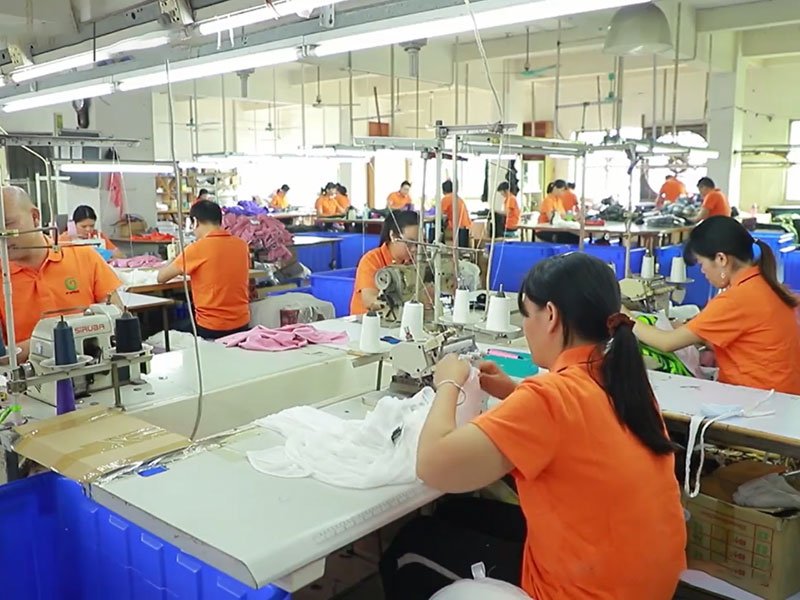
20+ Satellite Factories

12,000+ Workforce

Dress-Focused Capability

Compliance Foundation
Measurement Tolerance Control Case Studies
The following anonymized programs reflect the scale and control patterns commonly required by established dress brands. Style counts and order quantities are shown to make the production context clear.

US Bodycon Program
Duolan revised the grade rules for the fit-critical POMs, aligned shell and lining stretch direction, and introduced first-piece plus early-inline checks for waist, high hip, full hip, and body length. The approved base-size silhouette was retained across the selected size set, and bulk release followed only after re-measurement confirmed the corrected progression.

European Corset Collection
Duolan created fixed center-line references for cup and boning placement, measured left/right symmetry, reviewed sitting and movement, and linked fit comments to both pattern and spec revisions. A PP checklist locked internal support, lining, measurement, and pressing. First-piece records were used to confirm high-risk points before wider production release.

Australian Satin Program
An Australian dress brand ran 18 satin slip, halter, and slit styles totaling 36,800 pieces. Several styles used bias-cut panels, creating length growth, side-seam movement, and uneven hems after hanging.
Duolan controlled cutting direction, introduced defined relaxation before final hemming, reviewed strap and neckline measurements after hanging, and checked front/back/side length balance after pressing. Production followed 20-30 days for regular constructions and 30-45 days for the more complex bias and structured combinations, subject to material readiness and approvals.
Measurement Control Frequently Asked Questions

Submit Your Dress Measurement Standards for Review
Send your tech pack, measurement specification, POM diagram, size chart, grading rules, fit comments, reference sample photos, previous QC report, target quantity, and launch timing. Duolan will review the development basis, identify measurement-sensitive areas, and outline a controlled path for sampling, size-set verification, PP approval, and bulk production.
A stronger project brief normally includes:
- Dress category, style count, colorways, and size range
- Target market and intended fit direction
- Base-size measurements and critical POMs
- Fabric composition, stretch, lining, and finishing requirements
- Approved sample status or known fit problems
- Order quantity, launch date, packing, and delivery destination
Regular bulk production is commonly planned at 20-30 days, while complex styles may require 30-45 days after approvals and material readiness. Simple constructions may be completed in 15-20 days. Final timing follows the style mix, fabric, special processes, quantity, packing, and delivery plan.


