Skip to content
Custom Dress Manufacturer for Multi-Brand Fashion Portfolios
Dress-focused development and manufacturing for fashion groups managing separate brand identities, overlapping launch calendars, multi-style sampling, bulk production and repeat programs.
- Portfolio-scale programs: Structured for brand orders commonly covering 10-30 styles and 20,000-80,000 total pieces per brand.
- Manufacturing network: 16 owned womenswear factories supported by 20+ coordinated satellite factories for core control, seasonal volume and repeat production.
- Production organization: 300 sewing lines and 50+ quick-response and flexible lines support different style risks, order stages and delivery priorities.
- Development density: 15,000-35,000 monthly sample developments and 3,000-8,000 style-development workflows across the wider manufacturing system.
Manufacturing Facts Behind Portfolio-Level Dress Programs
30+ Years Development
16 Owned Factories
20+ Satellite Factories
300 Sewing Lines
50+ Flexible Lines
SMETA 2-Pillar
Built for Teams Managing Several Fashion Brand Lines
Fashion Groups
Holding Companies
Buying Teams
Product Teams
Sourcing Offices
Retail Portfolios

What Multi-Brand Dress Manufacturing Must Control
Portfolio manufacturing means shared sourcing and manufacturing resources under separate brand rules. The supplier must control identity, fit, materials, files, timing, quality and repeat production at style level.
Shared Infrastructure, Separate Brand Standards
A fashion group may centralize supplier relationships, fabric sourcing, production oversight and logistics. Product output still needs to follow the identity of each label. Duolan separates silhouette direction, fit standards, material approvals, workmanship level, color language, labels and packaging by brand. Shared resources are used where they improve efficiency without weakening differentiation. Common lining options, standard zippers or carton specifications may be consolidated when approved. Exclusive prints, custom lace, signature trims, fit blocks and visual details remain controlled by the relevant label. The goal is not one standardized collection across many names. The goal is one coordinated manufacturing system producing clearly different commercial outcomes.
Central Oversight, Style-Level Execution
Portfolio leaders need a clear view of the whole program, while development and production teams need detailed information for each style. Duolan can organize projects by brand code, season, drop, style number, color, sample version and approval status. Central reports show overall progress, critical delays and production priorities. Style files hold the information needed for pattern development, sample revision, material confirmation, PP approval, QC and packing. Clear separation reduces cross-use of measurement sheets, comments, labels or trims. Decisions become easier because each style shows what is approved, what is pending and what must be resolved before the next stage.
Scalable From Sample to Repeat
A strong portfolio supplier must support more than first samples. Development records need to become production standards and later repeat-order assets. Approved patterns, measurement sheets, BOM versions, fabric references, trim approvals, workmanship notes, PP samples, inspection points and packing instructions should remain linked. When a tested style returns for another color, length or season, production starts from controlled records rather than memory. Duolan connects sampling, bulk readiness, factory allocation, inline quality checks, shipment preparation and reorder preservation, allowing a brand group to expand successful styles without rebuilding the full technical base each time.
Portfolio Risks That Need Style-Level Controls
Multiple brands increase the number of files, approvals, materials, fit standards and delivery dates moving at once. Each risk should lead to a defined control action before loss appears in sampling, production or shipment.
| Risk | Commercial Impact | Control Required |
|---|---|---|
| Brand identity dilution | Similar silhouettes, fabrics or details appear across labels | Separate brand direction, material approvals and collection role review |
| Tech pack confusion | Wrong version reaches pattern, sample or production teams | Brand/style coding, revision date and approved-version status |
| Fit standard crossover | One label receives another label’s block or measurement logic | Independent fit blocks, graded specs and measurement records |
| Material cross-use | Fabric, trim or color gets assigned to the wrong label | Brand-specific BOM, swatch approval and material status log |
| Capacity conflict | One launch displaces another during peak production | Portfolio priority map, line matching and staggered start dates |
| Quality inconsistency | Shared factories apply different appearance or tolerance rules | Brand-level QC sheet, PP basis and common inspection reporting |
| Launch delay | Late samples, materials or approvals compress production and shipping | Back-planned calendar, critical path review and approval deadlines |
| Design leakage | Unreleased files or samples circulate outside the assigned team | NDA support, access control and restricted project folders |
One Manufacturing System With Six Separate Controls
Brand File Separation
Fit Standard Control
Material Approval Control
Calendar Control
Quality Standard Control
Reorder Record Control
Preserving Distinct Identities Across Shared Manufacturing Resources
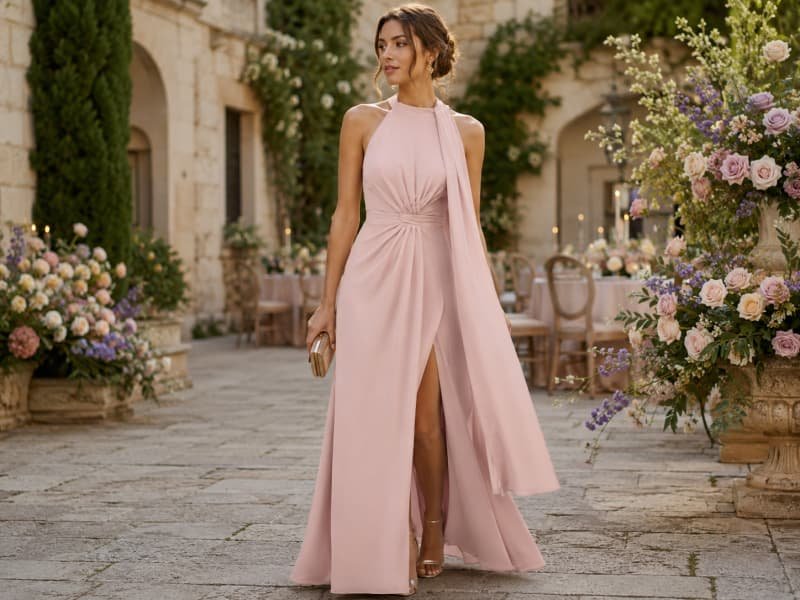
Premium Occasion Label

Trend-Led Party Label

Resort and Vacation Label
Structured Coding for Brands, Seasons, Styles and Approvals
Portfolio Coding Logic
Sample and Revision Identification
Approval Status Visibility
Portfolio teams need more than a production percentage. A style may look close to finished while fabric, color, fit or packaging remains unresolved. Duolan can separate status into design direction, pattern, fit, fabric, trim, workmanship, PP basis, testing, labels and packing. Each area is marked as approved, pending or requiring revision. A production start should only follow a readiness review covering the items relevant to the order. Visibility also helps scheduling. Styles with complete materials and stable construction can move first, while styles waiting for exclusive fabric or complex detail confirmation remain on a controlled path rather than blocking the full collection.
Keeping Technical Files and Revisions Under Control
Tech Pack Version
BOM Version
Measurement Sheet
Comment Response
Material Approval
PP and Bulk Basis

Coordinating Several Launch Calendars Without Production Conflict
A portfolio calendar should work backward from selling windows. Material risk, sample stages, approvals, production complexity, inspection and shipping buffers determine the real start date.
Back-Plan From Market Release
Each label may have a different campaign shoot, wholesale delivery, ecommerce launch or regional selling window. Duolan starts by identifying the date when finished goods must be available, then works backward through shipment, final inspection, packing, production, PP approval, material readiness and sample confirmation. A complex sequin or corset style receives more development and pilot time than a stable repeat block. Photo samples may follow a different path from production samples. Back-planning shows early whether a target date is workable and which decisions must be accelerated. It also prevents late approvals from being hidden inside an unrealistic production promise.
Protect the Critical Path
Not every task controls the delivery date. Critical items may include exclusive fabric, custom print, lace production, hardware, testing, fit approval or a complex construction trial. The schedule highlights those dependencies and assigns decision dates. Styles using ready or repeat materials may progress while high-risk styles remain under development. A delayed statement dress does not need to hold an entire commercial collection if the program is structured correctly. Production and sourcing updates focus on the items capable of changing the launch outcome rather than reporting activity without priority.
Set Cross-Brand Priorities Early
Peak periods create competition for sample rooms, specialist operations, production lines and inspection capacity. Portfolio priorities should be agreed before the bottleneck appears. Core launch styles, campaign samples, replenishment orders and strategic labels may receive different priority rules. Duolan reviews style complexity, material readiness, commercial role and delivery date before line allocation. A portfolio-level schedule can show brand milestones while style-level schedules guide execution. Clear priorities allow urgent decisions without continually disrupting other programs.
Dress Categories for Different Portfolio Positions

Fashion Mini Dresses

Commercial Midi Dresses

Statement Maxi Dresses

Party Dresses

Occasion Dresses

Going-Out Dresses

Vacation Dresses

Satin Slip Dresses

Bodycon Dresses

Corset Bustier Dresses

Mesh Lace Dresses
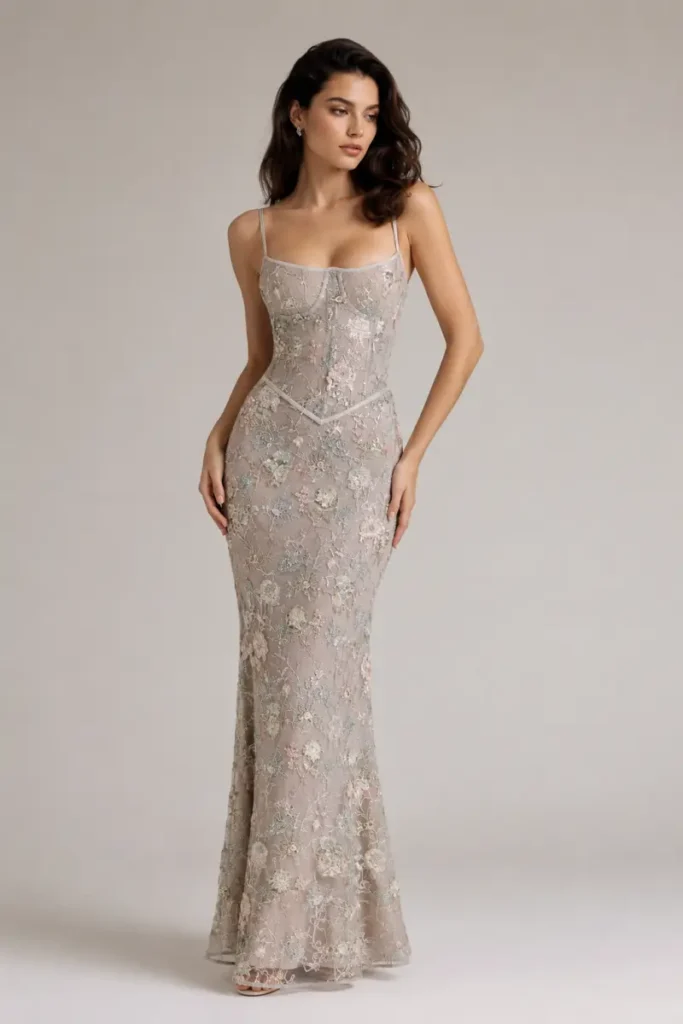
Sequin Embellished Dresses

Separate Fit and Measurement Standards for Every Label
Brand fit cannot be copied across a portfolio. Body profile, ease, length, support and styling intent must remain linked to the label, category, fabric and confirmed base pattern.
Brand-Specific Fit Blocks and Measurement Logic
Each label can maintain its own fit direction, base size, points of measurement, ease preference and grading rules. A contemporary midi, fitted party mini and resort maxi do not share the same balance even when the numeric size appears identical. Duolan reviews bust, waist, hip, neckline, armhole, strap position, torso length, skirt fall and total length according to silhouette and fabric behavior. A measurement sheet remains the numeric reference, while fitting confirms whether the numbers create the intended shape. Approved blocks can support future styles, but changes in stretch, structure, lining or cut direction still require review. Fit records are stored under the correct brand and style code so repeat orders and extensions use the intended base.
Structure-Sensitive Fitting for Complex Dresses
Corset, bustier, halter, backless, strapless and body-conscious dresses need more than circumference checks. Bust balance, cup position, boning path, waist support, neckline security, closure tension and movement influence the real result. Satin slip styles require strap and neckline balance without distorting the fabric. Mesh and cut-out styles require stable edges and controlled coverage. Fit comments are translated into specific actions: pattern adjustment, seam relocation, support change, trim change, fabric reconsideration or construction trial. The next sample then has a defined objective rather than a general request to improve fit.
Grading, Tolerances and Bulk Measurement Control
After base fit approval, grading follows the brand size specification and style behavior. Structured details, necklines, straps, cup shapes and cut-outs may need non-linear review instead of mechanical scaling. Critical measurement points are assigned style-specific tolerances in the approved measurement sheet; one universal tolerance is not suitable for every dress category. Bulk control begins at pattern and cutting, continues through first-piece measurement and inline checks, and finishes with final measurement sampling. When a repeat order returns, the confirmed pattern, grading record and historical issues are reviewed before cutting begins.
Fabric Planning for Distinct Brand Identities and Dress Functions

Satin and Drape

Mesh and Coverage
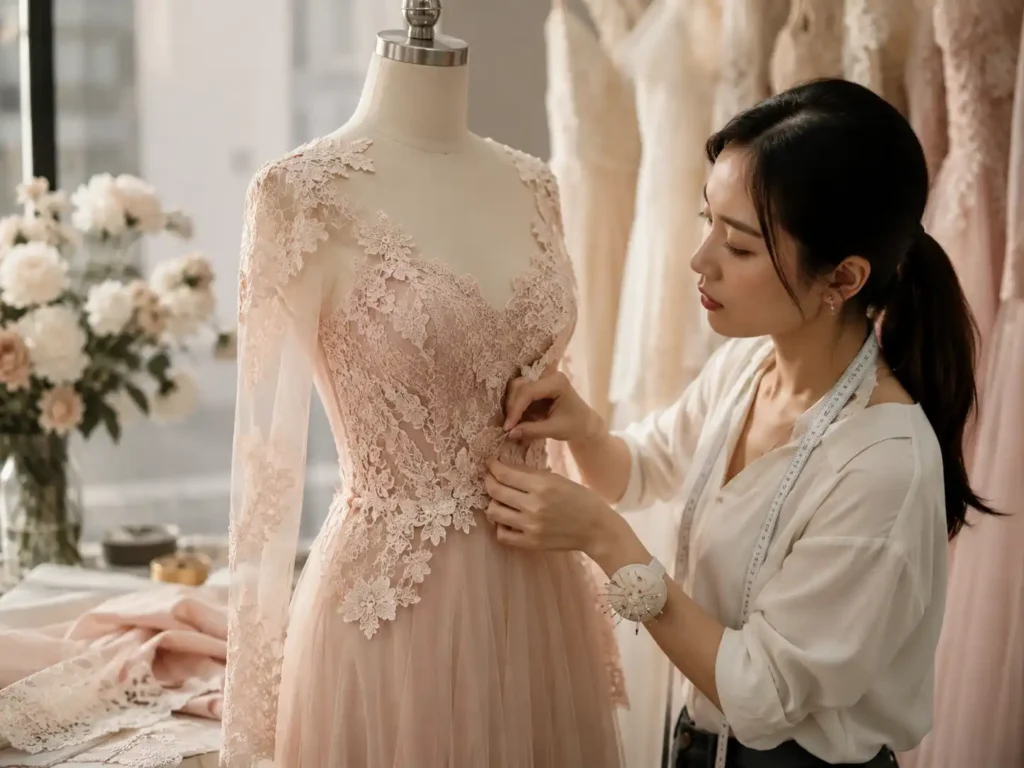
Lace and Placement

Stretch Jersey

Chiffon and Light Wovens

Embellishment Base Fabrics
Workmanship Selection Based on Product and Bulk Risk
A capable manufacturer should explain where a process creates value, where it creates risk, and how production will be controlled. Availability alone does not prove suitability.
| Process | Best Applied To | Main Risk | Control Method |
|---|---|---|---|
| Corset and Boning | Bustier, strapless, structured occasion dresses | Cup position, boning distortion, closure tension, comfort | Pattern and support trial, first-piece fit, boning position check, closure strength |
| Ruching and Stretch Seams | Bodycon, party, going-out dresses | Uneven gathering, seam breakage, poor recovery | Stretch compatibility, gathering reference, seam test, inline symmetry check |
| Sequins and Beading | Party, occasion, statement dresses | Drop-off, sharp skin contact, weight, seam damage | Placement map, seam allowance clearance, attachment test, lining and packing control |
| Embroidery and Print | Resort, statement, logo or motif-led styles | Color shift, placement error, shrinkage, hand-feel change | Strike-off approval, placement reference, wash/heat review, batch comparison |
| Lace Placement | Occasion, cocktail, mesh-layered dresses | Motif mismatch, edge inconsistency, transparency | Cutting map, paired placement, lining reference, first-piece review |
| Pleating and Draping | Maxi, occasion, asymmetric dresses | Uneven depth, shape loss, pressing marks | Pleat specification, drape reference, heat behavior check, final pressing standard |
| Lining and Coverage | Satin, mesh, lace, light-colored dresses | Transparency, twisting, pulling, visible seam lines | Lining shade/weight approval, attachment balance, movement check, hem alignment |
| Hem and Pressing | All dress categories, especially satin and maxi | Wavy hem, shine marks, uneven length, crushed surface | Hem method approval, pressing temperature control, hanging recovery, final appearance check |
Development Can Start From Different Brand Inputs
Tech Pack
Reference Image
Original Sample
Sketch and Mood
Fabric Direction
Bestseller Revision
Parallel Sample Development Across Multiple Brand Lines
Brief Review
Feasibility Review
Material Direction
Pattern Development
First Prototype
Fit Review
Revised Sample
Bulk Readiness

Turning Sample Feedback Into Controlled Revisions
Useful sample feedback needs an action path. Duolan separates fit, visual, material and production comments so every revision has a clear purpose and approval result.
Translate Comments Into Technical Actions
Comments such as “the bust feels unstable,” “the waist looks heavy,” or “the skirt does not fall cleanly” need more than an acknowledgement. The development team reviews whether the cause comes from pattern, fabric, lining, seam placement, support, trim weight or pressing. Each comment is converted into an action, an owner and a confirmation method. A fit request may require pattern correction; a visual request may require drape or trim adjustment; a production concern may require a process trial. Clear translation prevents cosmetic changes from hiding structural issues and keeps the next sample focused.
Use Before-and-After Evidence
Revision decisions become easier when the difference is visible. Marked photos, measurement comparisons, annotated fit areas, material swatches and construction close-ups can show what changed and why. A revision summary lists completed points, open points and items awaiting approval. Multi-brand projects benefit because managers can review progress without relying on long message threads. Physical samples and digital records carry the same version reference. Before-and-after evidence also becomes a useful production reference when a critical change affects pattern shape, lining, support or workmanship.
Deliver a Decision-Ready Sample Package
A sample shipment can include garment photos, key measurements, detail images, fabric or trim status, revision summary and the next decision required. The receiving team knows whether the garment is intended for fit review, visual approval, sales use or PP confirmation. When the sample direction is close to final, Duolan can prepare the next-step path: final revision, launch order, production-ready version or multi-style bulk planning. The goal is an increasingly clear project, not an expanding list of unresolved comments.
Confidential Development for Unreleased Portfolio Projects
NDA Support
Controlled Access
Separate Folders
Pattern Handling
Sample Display Rules
Packaging Isolation

Cost Planning Across Different Brand and Product Tiers
Portfolio costing should explain value, risk and scalability. Fabric, construction, quantity, color split, testing, packaging and timing all influence whether a dress fits the intended commercial model.
Understand the Real Cost Drivers
Dress cost is shaped by fabric consumption, lining, trims, embellishment, construction difficulty, fit sensitivity, size range, color split, order volume, testing, packaging and delivery timing. A satin slip dress may appear simple but require careful cutting, seam control and pressing. A corset dress may need more pattern work, support components and line skill. Sequin and lace styles add material yield and placement considerations. Duolan can review cost pressure before sampling and identify which decisions carry the greatest effect. A clear cost discussion reduces late surprises and helps each label set a realistic product brief.
Build a Portfolio Price Architecture
Different labels and collections should not use one cost formula.
- A trend-led line may rely on repeatable blocks, concentrated details and shared materials.
- A contemporary line may invest more in fabric hand, lining and finishing.
- A premium occasion label may justify complex construction, special materials and lower production efficiency.
Within each collection, statement styles, core commercial styles and extension pieces can carry different cost roles. Portfolio planning becomes stronger when value is distributed deliberately rather than every style receiving the same level of complexity.
Optimize Without Losing the Selling Value
Cost optimization is not the removal of every expensive element. The first step is to identify what creates the product’s value: silhouette, drape, support, opacity, surface detail, trim or finishing. Alternatives may include a different fabric construction, lining adjustment, shared materials across related styles, simplified low-visibility details, concentrated embellishment or reduced color fragmentation. Changes are validated through swatches, process trials or sample comparison. The goal is a commercially workable garment that still expresses the intended label position.
Order Structure From Development Through Scaled Production
Development Stage
Trial Order Stage
Launch Order Stage
Repeat Order Stage
Scale-Up Stage

Preparing Every Approved Style for Bulk Production
Sample approval does not automatically mean production readiness. A structured review confirms the standard, unresolved risks, material status, production path and quality checkpoints before cutting begins.
Confirm the Approval Basis
The first step is to define what has actually been approved. Fit, visual appearance, fabric, color, trim, workmanship and packaging may reach approval at different times. The project team identifies whether the current garment is a fit-approved sample, visual reference, PP basis or a version still awaiting refinement. Production should not start from a sample whose status is unclear. The approved pattern, measurement sheet, BOM, sample reference and revision notes are aligned so every function receives the same instruction. Any open point is assigned a deadline and owner before material or line commitment advances.
Lock Materials and Critical Workmanship
Fabric, lining, trims, labels, packaging and special-process components are checked against the current order. Color, lot behavior, stretch, shrinkage, print or embroidery placement and substitution rules are confirmed where relevant. Critical workmanship points are identified for production: boning position, cup shape, lace placement, sequin clearance, ruching distribution, lining coverage, zipper behavior, hem method or pressing condition. Complex details may require a process sample, first piece or pilot run. Locking does not remove all production risk, but it turns key decisions into inspectable standards.
Issue a Production Readiness Note
A concise readiness note can summarize order purpose, approved basis, material status, pending items, production route, first-piece requirements, QC checkpoints, packing requirements and timeline. The note helps production, sourcing, quality and commercial teams work from the same plan. It also allows portfolio leaders to compare style readiness across several brands. Styles ready for bulk can move forward while styles with unresolved fabric or fit remain controlled. The result is a staged launch rather than a collection-wide delay or an uncontrolled production start.
Capacity Planning for Brands, Drops and Repeat Orders
Duolan combines 16 owned factories, 20+ satellite factories, 300 sewing lines and 50+ flexible lines. Allocation follows product risk, approval status, material readiness and launch priority.
Core Complex Styles
Commercial Volume Styles
Quick-Response Orders
Launch Programs
Repeat Orders
Scale-Up Orders
Seasonal Peaks
Special Processes
The wider manufacturing system reports stable monthly capacity of approximately 6.5 million garments, peak capacity up to approximately 10 million garments, plus a further 1-2 million pieces of potential monthly space. Portfolio planning still begins at style level because headline capacity cannot replace line suitability, material readiness or quality control.

Matching Each Program to the Right Manufacturing Resource
Multi-factory production only works when allocation rules and shared standards are clear. Duolan uses owned factories for core control and coordinated resources for flexibility and scale.
Owned Factories for Core Control
Priority styles, complex dresses, first commercial orders and programs requiring close development alignment can remain in owned factories. Pattern, sample, material and production teams can communicate around the approved standard, while first-piece and inline reviews receive direct attention. Owned factories also provide a stable base for recurring styles and strategic labels. Allocation is not based only on order size. Fit sensitivity, fabric handling, internal structure, special processes and the cost of inconsistency influence the decision.
Satellite Factories for Flexible Scale
Long-term satellite factories support replenishment, scale-up orders, seasonal peaks and production balancing. A style is assigned only when the factory and line match its construction and quality requirements. The role of the satellite network is not uncontrolled subcontracting. It is coordinated capacity under defined patterns, BOMs, PP references, workmanship instructions and QC checkpoints. Different regions can provide buffer capacity, while central project and quality teams maintain visibility over approval and delivery status.
Common Standards Across Production Locations
When one portfolio or style family uses more than one factory, the approved basis must travel with the order. Pattern version, measurement sheet, fabric and trim approvals, workmanship notes, PP sample, inspection criteria, labels and packing instructions remain consistent. First pieces are compared against the same standard, and production updates follow a common reporting format. Any variation in material lot, process method or factory interpretation is identified early. Shared standards allow a group to gain capacity flexibility without accepting different product outcomes from different locations.
Production Paths Built Around Each Launch Date
Order Breakdown
Material Readiness
Pre-Production Meeting
Pilot or First Piece
Cutting and Numbering
Sewing and Inline QC
Final Inspection
Packing Control
Shipment Preparation
Testing Complex Dress Styles Before Full Production

Corset Structures

Satin Construction

Bodycon Sewing

Mesh Layering

Sequin Beading

Structured Occasion
Brand-Specific Quality Control Within One Manufacturing System
Material Inspection
Cutting Control
First-Piece Review
Inline Inspection
Measurement Control
Appearance Review
Special Craft Check
Label Packing Check
Final and Corrective
Compliance and Supplier Evaluation Support for Global Portfolios
SMETA Audit Record
Brand Audit Coordination
Material Testing Support
Product Standard Support
Evaluation Documents
Factory Verification
Keeping Labels and Packaging Accurate for Every Brand

Main Brand Label

Size Label

Care Label

Hangtag
Control artwork version, string or fastener, price or market information, placement and any brand-specific presentation requirement.

Barcode and SKU

Folding and Polybag

Carton Packing

Destination Pack
Multi-Destination Delivery and Repeat Production Control
Multi-Destination Delivery Planning
Duolan can coordinate express, air and sea options according to timing, volume and destination. Typical logistics references are 3-7 days by express, 5-8 days by air and 20-35 days by sea, subject to route, season, customs and carrier conditions. FOB, CIF, DDP and split-shipment arrangements can be discussed according to project needs.
Each shipment plan links brand, style, quantity, carton information, destination, required documents and warehouse instructions. Portfolio groups can separate delivery by label, market, warehouse or launch date rather than forcing every order into one dispatch. Final release follows inspection status and packing confirmation.
Repeat Orders as Preserved Product Assets
Repeat production should not begin from zero. Approved pattern, graded size record, BOM, fabric and trim references, color standard, workmanship notes, PP basis, QC checkpoints, packaging instructions and historical issue records are reviewed before a reorder starts. Material availability and lot variation are checked, especially for satin, stretch fabric, lace, print or embellishment. A first piece may be repeated when materials, factory or process conditions have changed. Successful styles can then expand through new colors, lengths, sleeves or related products while the proven fit and construction remain protected. Each completed order strengthens the base for the next collection.
Anonymized Multi-Brand Dress Manufacturing Programs
United States Three-Label Portfolio
Portfolio structure: three fashion labels managed by one sourcing division. Label A covered 18 styles and 52,000 pieces in a contemporary occasion direction. Label B covered 14 styles and 36,000 pieces in a trend-led party direction. Label C covered 11 styles and 24,000 pieces in resort and vacation dresses. Total scope reached 43 styles and 112,000 pieces.
Main challenge: overlapping sample comments, different fit blocks, shared fabric opportunities and three launch windows.
Duolan approach: separate brand and style codes, independent measurement files, a common portfolio calendar, brand-level material approvals and differentiated factory allocation. Structured satin and corset styles remained with core factories; commercial and repeatable silhouettes moved through stable lines; resort prints followed a separate approval path.
Program outcome: three distinct PP standards were maintained, packing files remained separated, and staggered shipments followed the relevant launch sequence. Reorder files were preserved for color and length extensions.

United Kingdom Occasion Portfolio
Portfolio structure: two occasionwear labels under one fashion group. The premium label included 22 styles and 64,000 pieces across satin, lace, corset and embellished dresses. The contemporary label included 12 styles and 28,000 pieces across commercial midi, fitted and wedding-guest directions. Total scope reached 34 styles and 92,000 pieces.
Main challenge: complex surface materials, different finishing expectations and production risk concentrated in several statement styles.
Duolan approach: process trials for satin pressing, lace placement and embellishment; two clearly defined sample review cycles; separate cost and workmanship standards by label; first-piece confirmation before full release; common reporting for the group sourcing team.
Program outcome: statement styles and commercial styles moved through different production paths without weakening the collection calendar. Final inspection and packaging checks followed separate brand standards and carton marks.

Multi-Market Ecommerce Portfolio
Portfolio structure: four labels selling across the United States and Europe. Each label carried 10-16 styles per order and 20,000-45,000 pieces, producing a combined program of 52 styles and 128,000 pieces. Product directions included going-out, bodycon, party and vacation dresses.
Main challenge: rapid color extensions, repeat orders, different barcode packs and frequent changes in size ratios after sales review.
Duolan approach: confirmed fit blocks were retained by label; repeat BOMs and color records were checked before material booking; quick-response lines handled selected replenishment; size and barcode instructions were controlled by destination; recurring issues were added to the style-level QC record.
Program outcome: successful silhouettes returned in new colors and lengths without restarting the full development process. The portfolio gained a clearer distinction between trial, launch, repeat and scale-up orders.

Frequently Asked Questions About Multi-Brand Dress Manufacturing

Discuss Your Multi-Brand Dress Production Program
Send Duolan a portfolio brief for an initial development and manufacturing review. Useful information includes the number of labels involved, dress categories, target markets, style count, estimated quantity, fit or size standards, fabric direction, quality requirements and launch dates. Tech packs, reference images, original samples, collection boards, packaging files and current supplier concerns can be uploaded when available. Duolan will review product fit, material and workmanship risk, sample stages, factory allocation, production timing and the information needed before quotation or sampling. Confidential projects can begin under an NDA. Qualified teams may also request a capability pack, video meeting or factory visit.
- Company or group name, website and target markets
- Number of brand lines and positioning of each label
- Dress categories, style count and estimated quantity
- Tech packs, reference images, original samples or mood boards
- Fit standards, size specifications and key quality concerns
- Fabric, trim, embellishment, label and packaging requirements
- Target sample dates, launch dates and delivery destinations
- Required audits, testing, inspection or documentation