Skip to content
Custom Dress Manufacturer for Multi-Door Fashion Retailers
Dress-focused development and controlled production for retail groups managing multiple stores, seasonal launches, replenishment and repeat programs.
- 10-30 styles can be organized within one seasonal or launch program, with development status tracked by style, color, size and approval stage.
- Representative brand orders commonly total 20,000-80,000 pieces across the program, requiring disciplined allocation of materials, lines, inspections and delivery milestones.
- 16 owned womenswear factories and 20+ long-term satellite factories provide core control, flexible capacity and a structured route for repeat production.
- 50+ quick-response lines support launch quantities, priority styles and replenishment planning when materials and approved standards are available.
- Nearly 30 years of fast-fashion womenswear development experience supports dress fit, fabric behavior, decorative workmanship and production-readiness decisions.
- SMETA and SMETA 2-Pillar audit foundations support established retail compliance reviews and project-specific social responsibility requirements.
Dress Manufacturing Support for Established Multi-Door Retailers
Regional Retail Chains
National Retail Groups
Private-Label Teams
Omnichannel Retailers
Omnichannel programs must serve stores, online launches, campaign photography and later replenishment. Sample objectives are separated early: fit approval, sales review, photography, pre-production approval or bulk reference. Clear sample purpose prevents a visually attractive prototype from being mistaken for a production-ready standard. The approved version then becomes the base for bulk, online product presentation and later repeats.
What Multi-Door Retailers Need From a Dress Manufacturer

Multi-Style Development
Fit and Size Discipline

Bulk Quality Consistency

Launch Calendar Control

Reorder Readiness

Retail Delivery Accuracy
Where Multi-Door Dress Programs Commonly Lose Control
Small errors become network-wide problems when the same style reaches many stores. Early risk identification connects each problem to a measurable control action before time, inventory and margin are affected.
| Project Stage | Common Failure | Retail Consequence | Duolan Control |
|---|---|---|---|
| Collection planning | Too many similar styles or no clear product role | Weak assortment balance and duplicated inventory risk | Style-role review: core, image, occasion, test or replenishment candidate |
| Sample development | Comments, versions or materials become mixed | Approval delays and wrong samples entering review | Style coding, revision summary, material status and approval ownership |
| Fit and grading | Sample size works but larger or smaller sizes lose proportion | Returns, poor reviews and inconsistent store performance | POM definition, grading review, size-set checks and tolerance control |
| Material approval | Fabric lot, lining or trims change after sample approval | Different drape, shade, opacity or support in bulk | Material locking, approved swatches and controlled substitution review |
| Bulk production | Lines interpret workmanship differently | Visible inconsistency across stores and batches | PP basis, first-piece confirmation, critical-operation notes and inline QC |
| Packing | Barcode, label, ratio or carton information is wrong | Warehouse delays, relabeling cost or store allocation errors | Packing manual review, label verification, carton check and final status summary |
| Repeat production | Approved files are incomplete or materials have changed | Reorder differs from the original selling style | Pattern/BOM retention, shade review, repeat-order risk check and renewed first-piece approval |
How Retail Teams Should Evaluate Dress Manufacturing Partners
Dress Specialization
Development Depth
Parallel Project Control
Production Readiness
Quality Evidence
Reorder Discipline
Verify how approved patterns, BOMs, swatches, comments and packaging records are preserved. Ask what happens when the original fabric lot is no longer available. A disciplined repeat-order review protects the selling style while allowing controlled material replacement when required.
Dress Categories Built for Multi-Door Retail Programs

Mini Dresses

Midi Dresses

Maxi Dresses

Party Dresses

Occasion Dresses

Going-Out Dresses

Vacation Dresses

Structured Dresses
From Individual Styles to a Commercial Dress Assortment
Core Volume Styles
Fashion Statement Styles
Occasion Drivers
Price-Point Balance
Color and Length Architecture
Replenishment Candidates
Not every style should be built for repeat production. Replenishment candidates need accessible materials, stable workmanship, clear approved files and a production route that can be reopened without major redevelopment. Potential repeats are identified early so fabric continuity, trim availability and documentation receive the right level of control.
Fabric and Trim Planning Across Multi-Style Collections
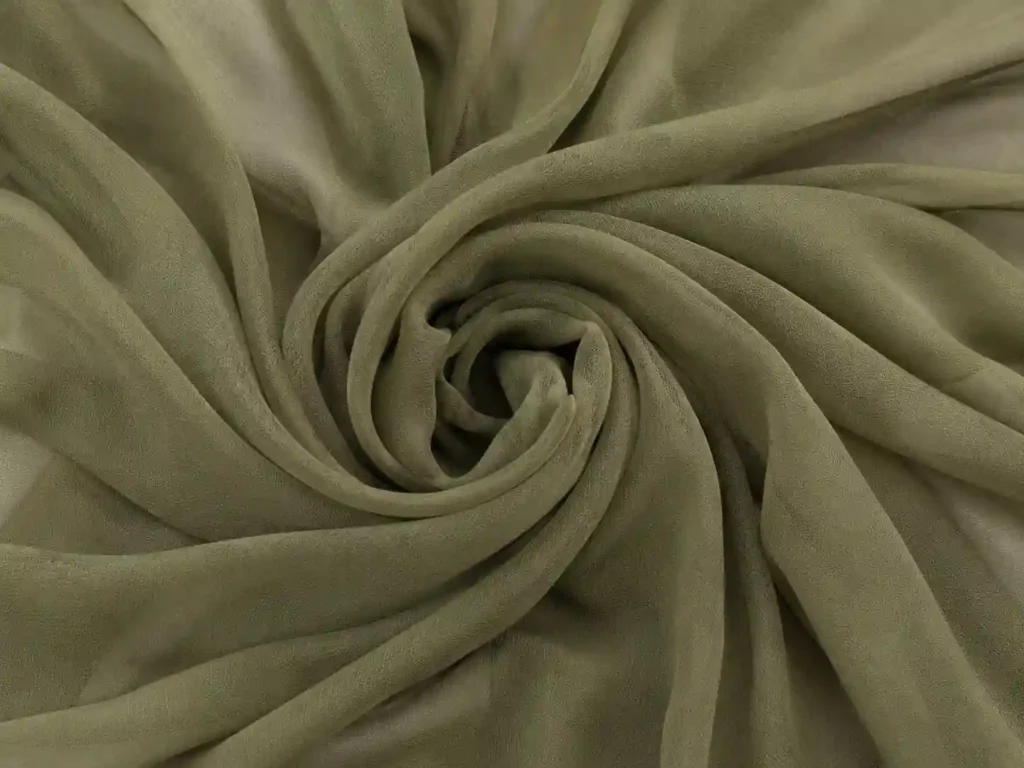
Material selection determines drape, opacity, support, recovery, sewing behavior, packing appearance and reorder continuity. Duolan evaluates each fabric against the silhouette, size range, target price and production path rather than choosing by swatch appearance alone.

Satin
Chiffon and Georgette

Lace

Mesh and Tulle

Stretch Jersey

Sequin and Embellished
Construction Details That Protect Retail Dress Quality
Bust Support System
Boning and Corsetry
Lining Coverage
Zippers and Closures
Straps and Necklines
Ruching and Draping
Slits and Cut-Outs
Decorative Attachment
Pearls, beads, sequins and rhinestones must meet visual density while surviving handling, packing and wear. Attachment method changes with weight, base fabric and design location. Critical zones receive reinforcement and skin protection. Bulk criteria cover placement, density, missing pieces, sharp edges and repair standards before packing.
What We Review Before Starting Dress Development

Project Inputs

Feasibility Review

Timeline Planning

Commercial Alignment
Target retail position, expected order structure, color and size split, launch quantity and replenishment potential influence fabric, workmanship and development choices. The team identifies which visual elements deserve protection and where cost can be controlled through material, lining, trim or operation adjustments.
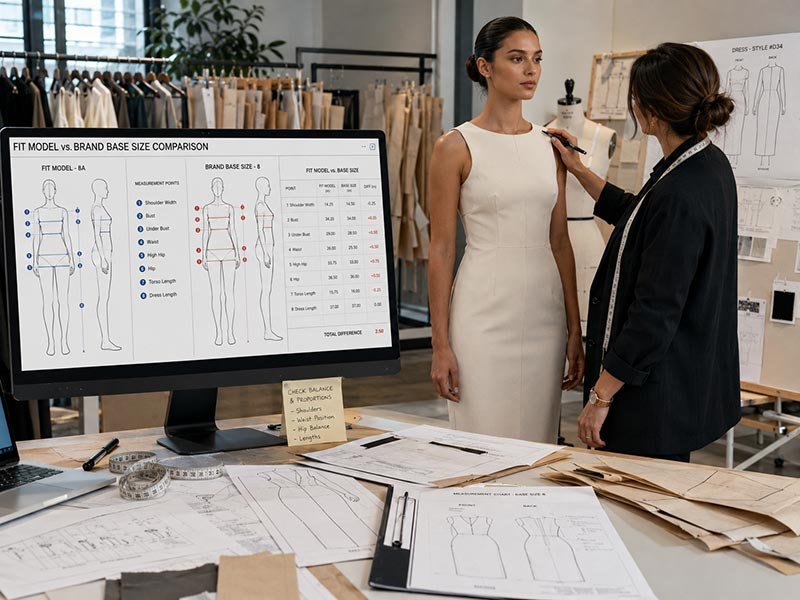
Fit and Size Control Across Retail Size Ranges
Fit control connects design intent to store performance. Duolan builds a measurable route from base-size review to grading, size-set approval and bulk measurement checks, with extra attention to fitted, structured and transparent styles.
| Control Stage | Key Decisions | Evidence or Output | Retail Value |
|---|---|---|---|
| Base size setup | Target body, ease, bust-waist-hip balance, torso and dress length | Approved measurement chart and POM diagram | Creates one clear foundation for development |
| Fit sample | Silhouette, neckline, support, mobility, coverage and visual proportion | Fit comments, photos and marked adjustment points | Prevents appearance changes from being handled as vague comments |
| Pattern correction | Panel shape, dart position, seam balance, strap and closure relationship | Revised pattern record and change summary | Keeps fit corrections traceable across versions |
| Grading | Bust-waist-hip increments, vertical balance, cup/boning position, slit and hem changes | Grading rules for the approved range | Protects the design across XS-XL or wider approved ranges |
| Size-set review | Selected sizes checked for proportion, support and critical measurements | Size-set samples or measured review record | Finds grading issues before full cutting |
| Bulk measurement | Critical POM sampling and agreed tolerance by style risk | Inline and final measurement reports | Limits network-wide returns caused by size drift |
Structured Sampling for Multi-Style Retail Programs
Development Review
First Sample
Revision Management
PP Preparation
Staged Updates
Program Tracking
A multi-style tracker can record style code, sample type, material status, comment date, revision owner, approval stage and next milestone. Priority styles are identified against photography, line review and launch needs. One delayed style remains visible without hiding the progress of the rest of the program.
How Approved Samples Become Repeatable Bulk Standards

Approval Identity

Material Locking

Pattern Version Control

Workmanship Standard

First-Piece Confirmation

Inline Protection
Packing Standard
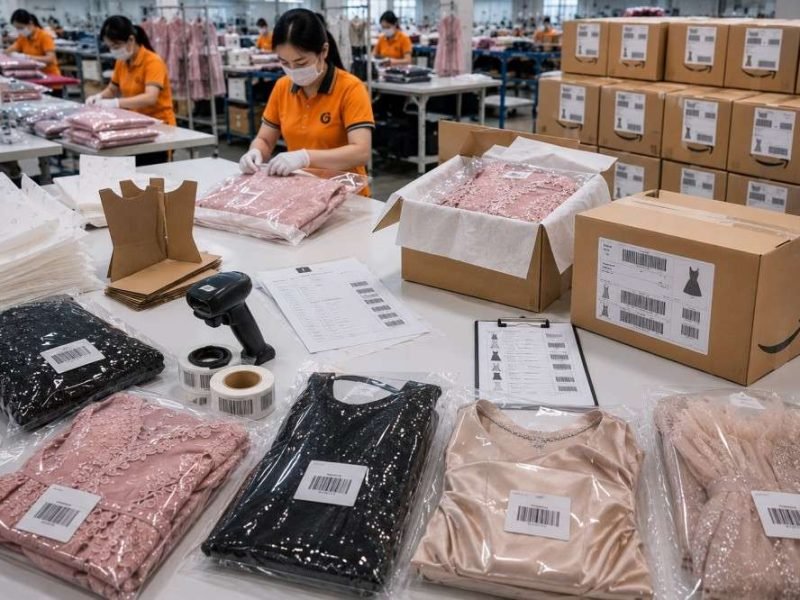
Label files, hangtags, barcode data, size stickers, folding, polybag, ratio packing, carton quantity and shipping marks are tied to the approved order breakdown.
Garment approval and packing approval are treated as one delivery system.

Repeat-Order Basis
Approved patterns, BOMs, swatches, measurements, workmanship notes and packing records are retained for future production. A repeat order still receives a material and risk check because availability and batches can change. Preserved standards shorten reopening time without removing necessary quality gates.
Managing Multiple Styles Without Losing Project Control
Style Status Tracking
A clear tracker reduces time spent asking which sample is current or which issue is still open.
Complexity Routing
Routing prevents every style from being forced through one production method.
Material Coordination
Material visibility protects both schedule and cost when many colors and products are linked.
Approval Ownership
Fit, appearance, material, price, PP and packing approvals may involve different people.
Decision ownership and due dates are listed so comments do not remain open between departments.
The production path only advances after the required approval for that stage is clear.
Priority Planning
Priority is based on retail impact and risk rather than whichever style receives the latest message.
Milestone Updates
Updates focus on decisions, progress and risks: materials confirmed, samples completed, comments pending, PP released, production started, inspection scheduled and shipment prepared.When a change affects the timeline, the revised milestone is communicated together with the action needed to protect delivery.
Building Dress Costs Around Retail Price Architecture
Fabric Consumption
Pattern and marker review helps identify whether visual effect justifies the material impact.
Lining and Support
Unnecessary layers can be reduced, while critical support is protected.
Decorative Density
A focused decorative area often protects the design story more effectively than uniform coverage.
Construction Complexity
Where a detail contributes little to the final look, a cleaner method may improve stability and margin.
Color and Size Split
The final plan still protects the retailer’s merchandising direction and size demand.
Packing and Delivery
Hangtags, barcode labels, special folding, tissue, hangers, assortment packing, split shipments and urgent freight all influence landed cost. Packing choices are reviewed before the final quotation basis is locked.
Clear delivery structure avoids late charges created by last-minute retail instructions.
A Controlled Manufacturing Network for Multi-Style Programs
Owned Factory Control
Satellite Capacity
Regional Production Base
Special-Process Partners
Quick-Response Lines
Unified Project Control
Bulk Quality Control Across Styles, Sizes and Batches

Incoming Material Check

Pre-Production Review

First-Piece Approval

Inline Inspection

Measurement Sampling
Critical POMs are sampled against the approved chart and tolerance. Fit-sensitive points such as bust, waist, hip, body length, strap length, slit height and garment length receive appropriate control. Findings are traced to pattern, cutting, sewing or pressing causes before correction.

End-Line Appearance

Packing Verification

Final Release Status
Bulk delivery is released after garment quality, packing details and shipment requirements are reviewed against the agreed standard. Third-party inspection coordination can be supported where required. The aim is a checked, deliverable order rather than a quantity that is merely finished.
Capacity for Launch Orders, Reorders and Seasonal Volume
Launch Orders
Launch orders require production-readiness confirmation, realistic material status and enough inspection time before the selling window. A standard bulk planning range may be around 25-45 days after PP approval and material readiness, with complex decoration, special fabric or fragmented order structures requiring a dedicated schedule.
Priority Styles
Repeat Orders
Seasonal Peaks
Multi-Style Scale-Up
Delivery Buffers
Production completion is not the final date. Final inspection, packing, documents, booking, warehouse intake and possible split shipments need protected time. A launch plan with no quality or logistics buffer transfers avoidable risk into the final stage.
Retail-Ready Packing and Delivery Coordination

Brand Labels

Hangtags

Barcodes and Stickers
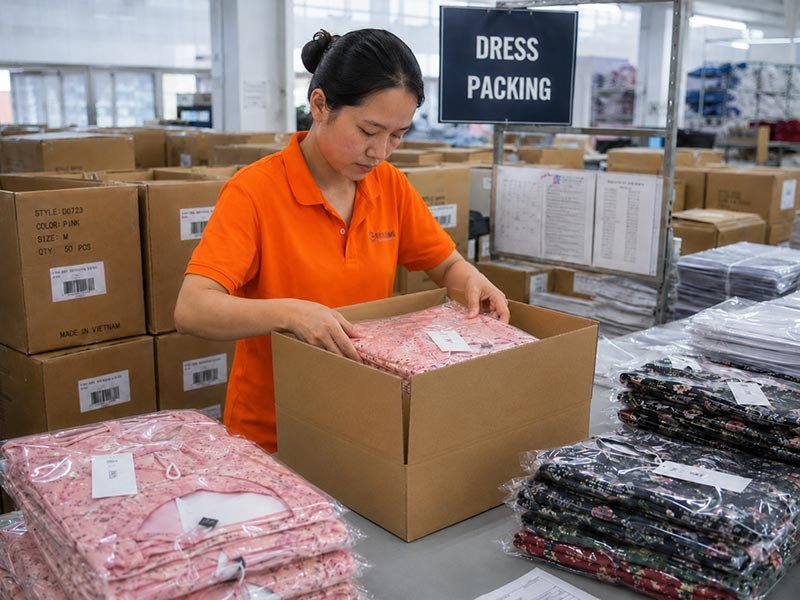
SKU, color, size and barcode data must match the physical garment and packing list. Size stickers and external labels are checked for legibility, placement and adhesion. Controlled data review reduces relabeling, warehouse delays and store allocation errors.

Packing Method
Folding, tissue, hangers, polybags, warnings, garment protection and decorative safeguards are selected according to fabric and delivery route. Satin, sequins, beads and structured bodices need protection from pressure and abrasion.
Packing trials may be used when presentation risk is high.
Carton Planning
Solid-size, assorted-size, color ratio and store-ready carton structures can be prepared from the approved order breakdown. Carton quantity, dimensions, gross weight and marks are checked before release. Clear carton logic supports warehouse receiving and downstream distribution.

Shipment Coordination
Duolan supports express, air, sea, FOB, CIF, DDP, split shipments, nominated forwarders and coordination with overseas or third-party warehouses. Shipping method is selected around timing, cost and delivery structure. Packing lists, documents, booking milestones and batch sequence remain connected to the production status.
Compliance Support for Established Fashion Retailers
Social Compliance
Testing Coordination
Confidentiality and Files
Evidence Behind Development, Production and Delivery
Brief Review
Fabric Board
Pattern Development
Fit Review
PP Confirmation
Production Control
Inline Inspection
Packing Release
Multi-Door Dress Program Case Studies

U.S. Regional Retail Chain

European Occasion Retailer

Omnichannel Replenishment Program
Scope: 12 repeat styles, 28,600 pieces, three replenishment colors, XS-XXL and split delivery to a distribution center and third-party warehouse. Challenge: several original fabrics were no longer available in the same lot, while the retail team needed the reordered garments to match the selling fit and visual standard. Duolan action: reopened approved patterns, BOMs, measurement tables and workmanship notes; compared replacement fabric for weight, stretch, recovery, shade and drape; renewed first-piece approval and checked barcode data against the new PO breakdown. Result: repeat production followed the original fit basis while material changes were controlled before cutting. Split shipment and packing records remained aligned with the revised replenishment plan.
Frequently Asked Questions From Multi-Door Retail Teams

Send Your Multi-Door Dress Program for Evaluation
Share the available project information and Duolan will review the dress direction, development stage, material and fit risks, production path, capacity needs and delivery structure. A useful evaluation can begin with a tech pack, reference images, an original sample or a collection brief. Clearer quantity, color, size, launch and packing information allows a more accurate sample plan, quotation basis and production schedule. The aim is a structured next step, not a generic price response.
Project Information
- Company or brand name; website and market; number of retail doors; store, online or omnichannel structure; product category; number of styles; estimated total quantity; colorways; size range; target launch date; current sample or bulk stage.
Files and Requirements
- Tech pack, reference images, original sample photos, size chart, BOM, fabric direction, label artwork, barcode or SKU structure, packing manual, compliance requirements and delivery destination. Send the files already available; the team will identify what needs to be confirmed next.
Form Fields
- Name; Company; Website; Country; Email; Tel/WhatsApp; Number of Retail Doors; Product Type; Number of Styles; Estimated Quantity; Size Range; Launch Date; Message; Upload Your Files.
Response Focus
- The response can cover development feasibility, sample route, fit and material risks, expected confirmation points, production-readiness needs, capacity direction, packing considerations and the information required for quotation.