Skip to content
Custom Dress Manufacturer for Multi-Style Cost Comparison
Compare every dress on the same commercial basis before sampling, collection approval, and bulk production.
- 10-30 styles per program: Organize a collection by style, fabric family, construction level, craft level, quantity split, and target price position.
- 20,000-80,000 total units: Plan commercial quantities across hero styles, core sales styles, supporting styles, and repeat-ready products.
- Eight cost drivers reviewed: Main fabric, lining, trims, structure, workmanship, special craft, order structure, packaging, and delivery conditions.
- Three commercial routes: Compare the original direction, a cost-balanced direction, and a premium direction without reducing every style to one average price.
Duolan reviews tech packs, reference images, original samples, fabric directions, target quantities, size ranges, colorways, packaging standards, and launch dates. Early figures remain estimates until materials, measurements, workmanship, final BOM, quantity split, packaging, and Incoterm are confirmed.
Cost Review Built for Established Fashion Teams
Fashion Brand Teams
Product Development Teams
Sourcing and Procurement
Procurement teams need comparable quotation scope, clear assumptions, version control, sample-to-bulk continuity, and production-path visibility. Duolan records what is included, what remains provisional, which facts can change the cost, and which confirmation is required before a figure becomes production-ready.
Why Multi-Style Quotations Become Hard to Compare
Different Quote Scope
Unclear Fabric Basis
Hidden Style Complexity
Quantity Split Confusion
Sample and Bulk Gap
Late Cost Changes
Unconfirmed lining, color, embellishment density, packaging, testing, or delivery conditions can move the final cost after product approval. Early risk notes keep commercial decisions aligned with product decisions.
Comparable Costing Starts with a Common Basis
Every style should be reviewed under the same stage, specification depth, quantity logic, quality level, packaging scope, delivery condition, and currency basis.
Comparable
Partially Comparable
Not Comparable
Send the Information Available at Your Current Stage
A useful review can begin from a complete tech pack, a reference image, an original sample, or a collection brief. More confirmed information produces a narrower cost range and a clearer development path.

Tech Pack Ready

Reference Image Ready

Original Sample Ready

Collection Plan Ready
Receive More Than a List of Unit Prices
Style Cost Matrix
Complexity Map
Quotation Basis Note
Target Price Review
Optimization Options
Production Path Advice
Eight Cost Drivers Behind Every Dress Style
Main Fabric
Cost depends on composition, weight, width, finish, color method,cutting direction, actual consumption, shrinkage, inspection, and expected wastage. A lower price per meter can still produce a higher garment cost when width, shrinkage, defect rate, or marker efficiency is unfavorable.
Lining and Support
Trims and Closures
Zippers, hook-and-eye sets, eyelets, rings, sliders, buttons, lace edges, labels, and decorative components carry material cost, application time, color matching, testing, and supply risk.
Pattern and Structure
Sewing Workmanship
Special Craft
Order Structure
Quality and Delivery
Classify Styles Before Comparing Their Costs
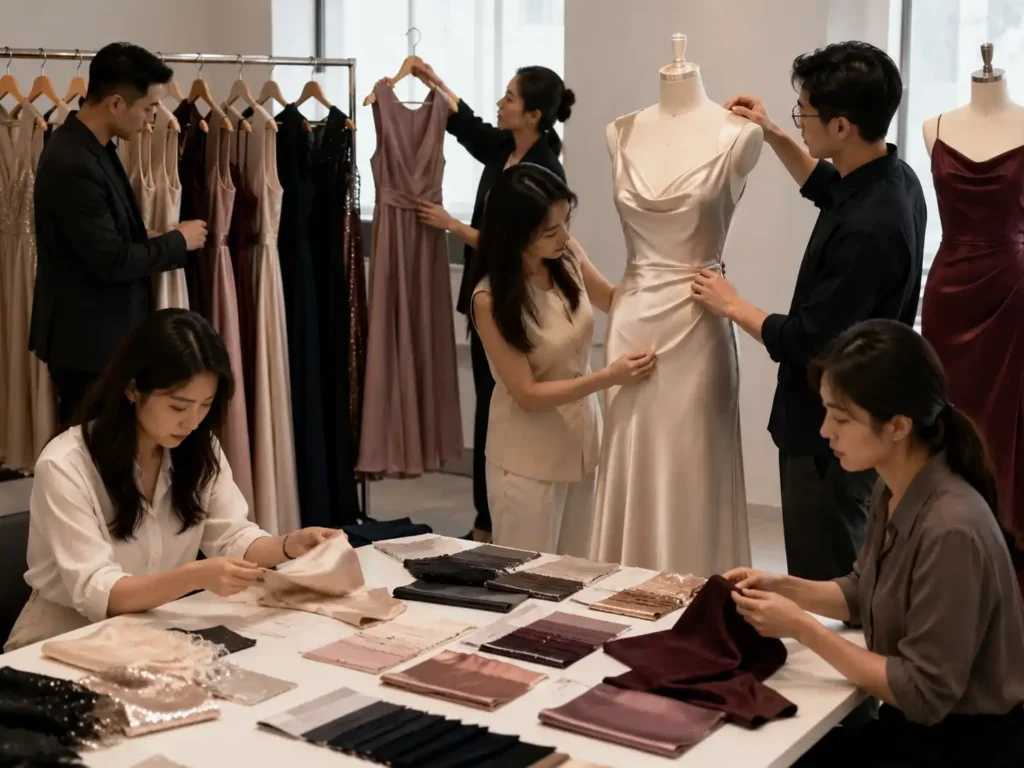
Standard Construction Styles
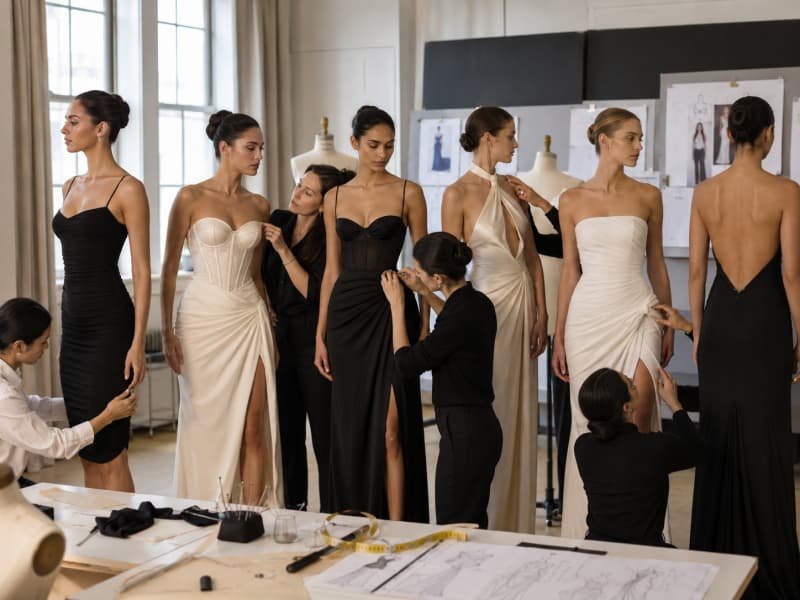
Fit-Sensitive Styles
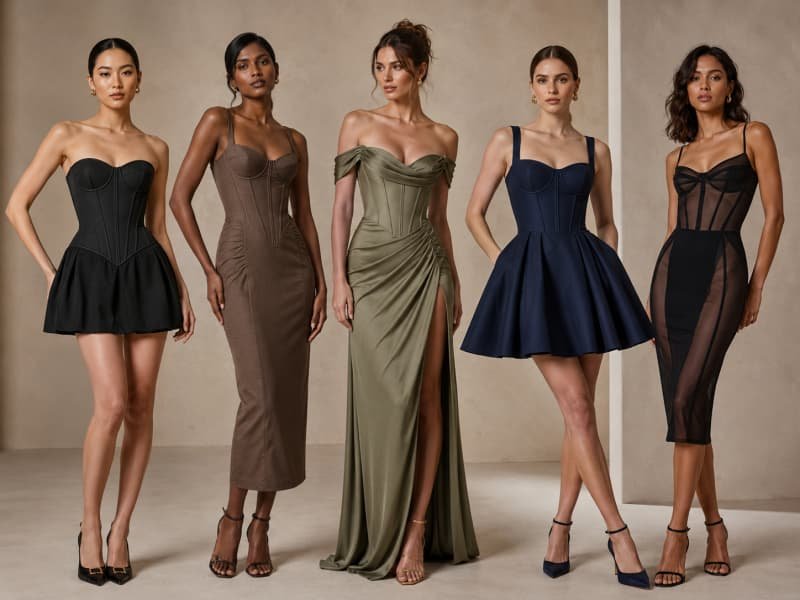
Structure-Sensitive Styles

Craft-Sensitive Styles
Use a Style-by-Style Cost Comparison Matrix
A structured matrix keeps estimates, confirmed facts, open decisions, and recommended actions visible across the collection. The example below shows the fields used for a disciplined review; prices are entered only after project files are assessed.
| Style | Product Basis | Cost Status | Main Cost Driver | Main Risk | Recommended Action |
|---|---|---|---|---|---|
| A01 | Satin slip midi; lined; invisible zip | Estimate | Bias consumption and satin handling | Seam marking and packing pressure | Confirm satin width, lining, and cutting direction |
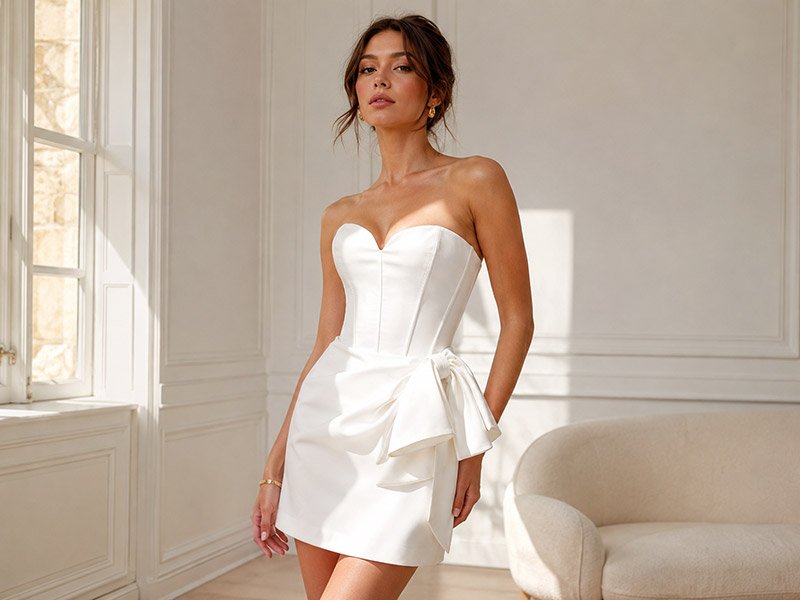
| A02 | Corset mini; cups; boning; back zip | Development review | Internal structure and panel work | Cup position, support, grading | Make structure trial before firm bulk costing |
| A03 | Printed mesh ruched midi; full lining | Material review | Print, mesh consumption, ruching labor | Print alignment and transparency | Confirm print method, mesh stretch, and coverage |
| A04 | Sequin party mini; woven lining | Craft review | Sequin fabric loss and hand finishing | Dropped sequins, skin feel, packing | Test cutting route and edge finishing |
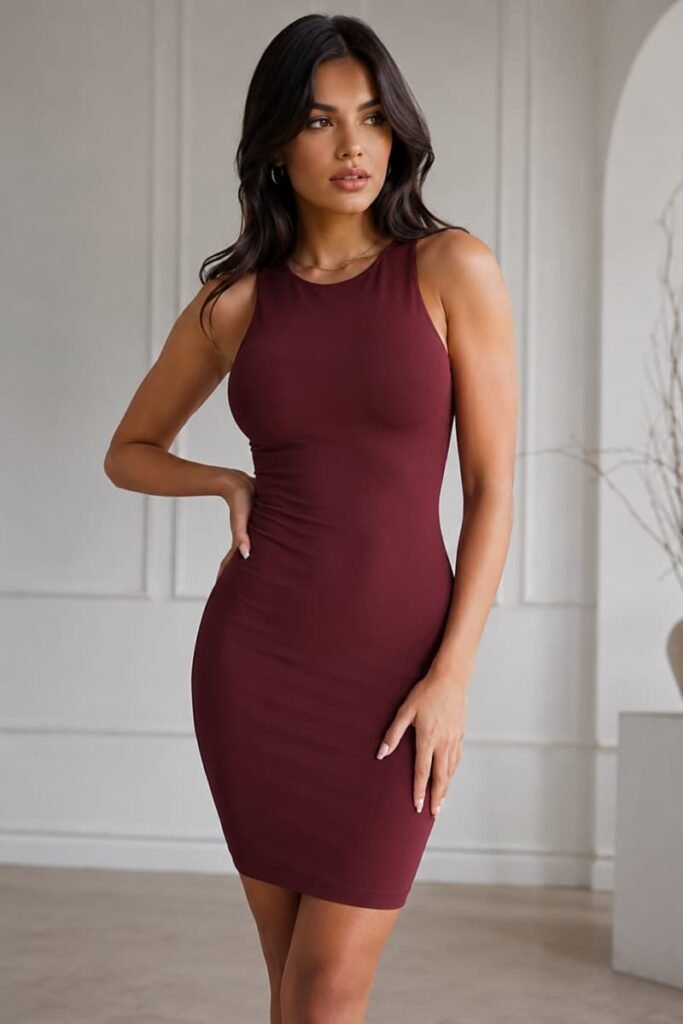
| A05 | Jersey bodycon maxi; double layer | Comparable | Fabric weight and double-layer use | Recovery, opacity, length growth | Lock stretch and recovery standards |
| A06 | Halter backless midi; support lining | Fit review | Support construction and fitting | Neck pressure and bust stability | Review strap angle and internal support |
Fabric Cost Must Be Read Through Garment Behavior

Satin: Drape, Surface, and Handling

Mesh: Stretch, Coverage, and Print

Sequin Fabric: Loss, Labor, and Protection

Jersey: Recovery, Opacity, and Size Stability
Internal Support Materials Protect Fit and Wearability
Lining and support components are often hidden, yet they control coverage, shape, comfort, stability, and return risk in fitted or occasion-led dresses.
Lining Strategy
Boning and Bodice Support
Cups and Bust Shaping
Power Mesh and Elastic
Construction Complexity Changes Sewing Time and Risk
Pattern Pieces and Panels
Bias, Drape, and Gathering
Lining Attachment and Clean Finish
Closures, Hems, and Final Shape
Special Craft Needs Its Own Cost and Risk Review

Sequin Work

Beading and Pearls

Rhinestone Application
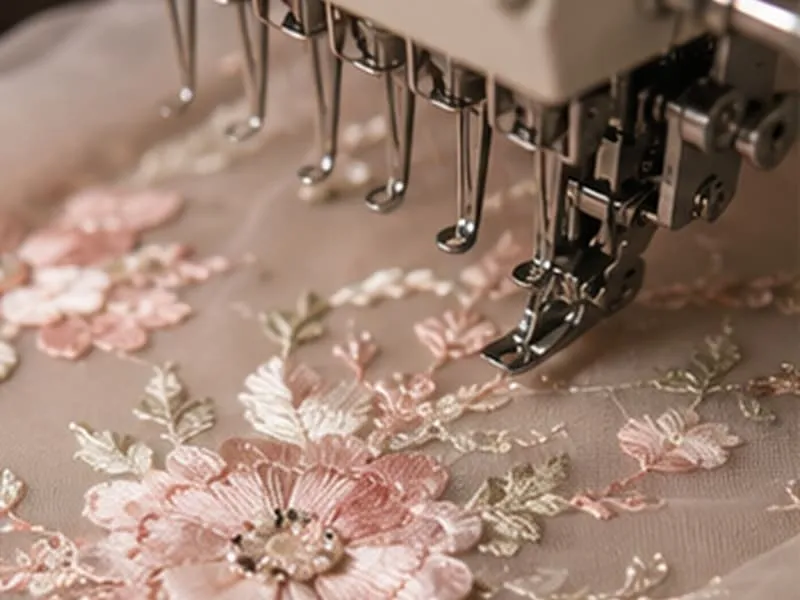
Embroidery

Lace Placement

Print and Dye Effects
Quantity, Colors, and Sizes Shape Production Efficiency
Per-Style Quantity
Per-Color Quantity
Size Range
Size Ratio
Shared Materials
Repeat Strategy
Sample Fees and Bulk Unit Costs Serve Different Purposes

Sample Development Cost
- Cost status: Confirmed after style complexity, material route, sample purpose, and included revision scope are reviewed.
- Useful output: A sample plan identifying what is being tested, what remains open, and how the sample can move toward production readiness.

Bulk Production Cost
Bulk costing uses the approved or agreed production basis: final BOM, confirmed fabric and trims, measurements, workmanship, colorways, size range, quantity split, labels, packaging, testing, delivery condition, and trade term. A production figure becomes reliable only when the sample standard and commercial basis are aligned. Changes after approval are recorded because even a small change in lining, embellishment density, color count, or packing method can alter cost and timing.
- Cost status: Estimate, reviewed, sample-updated, or production-confirmed.
- Useful output: A clear link between approved product decisions and the final quotation basis.
Check Whether Design and Target Cost Truly Match
Duolan does not force every concept into any requested figure. The review identifies whether the current design is commercially aligned, adjustable, or structurally outside the intended price position.
Matched
Adjustable
Mismatch
Value Engineering Protects the Product Before Reducing Cost
Protect the Non-Negotiables
Locate the Real Cost Pressure
Build Two or Three Routes
Validate Before Approval
Update the Production Basis
Give Every Style a Commercial Role
Hero Styles

Core Sales Styles

Repeat-Ready Styles

Premium Styles
Compare Original, Cost-Balanced, and Premium Routes
Three controlled routes help product and commercial teams discuss trade-offs without turning the review into a simple price-cutting exercise.
| Decision Area | Original Direction | Cost-Balanced Direction | Premium Direction |
|---|---|---|---|
| Main fabric | Specified material and finish | Similar performance with improved width, loss, or availability | Higher-grade surface, handfeel, drape, or fiber content |
| Lining and support | Original layer and support plan | Retain required coverage and support; simplify low-value layers | Upgraded lining, support, or internal finishing |
| Construction | Full original panel and finish route | Reduce low-visibility complexity while protecting silhouette | Retain intricate shaping and premium clean finish |
| Craft | Original density and placement | Preserve signature areas; reduce secondary density or spread | Higher density, handwork, placement control, or special finish |
| Colors | Full proposed color range | Concentrate core colors or share material families | Custom shades, additional lab work, or special finishes |
| Packaging | Original custom packing | Standardized branded packing with necessary protection | Enhanced protection, presentation, or retail-ready elements |
| Commercial role | Design-led concept | Core sales or margin-balanced style | Premium image or limited-edition style |
| Review requirement | Check full feasibility | Validate substitutions and visible effect | Validate premium materials and production tolerance |
Control Cost Across Reorders, Not Only the First Order
Locked Patterns
Approved Material Library
Shared Components
Workmanship Standards
QC Reference Files
Reorder Planning
Different Dress Families Carry Different Cost Logic

Satin Dresses

Corset Dresses

Mesh Dresses

Sequin Dresses
Bodycon Dresses

Halter and Backless
A Controlled Workflow Keeps Multi-Style Costing Current
Project Brief Review
Style File Check
Material Basis Review
Preliminary Cost Mapping
Commercial Discussion
Sample Development
Cost Update
Bulk Readiness Review
Production Planning
Lock Cost and Product Standards Before Bulk Starts
Sample Status
Final Material Basis
Measurements and Grading
Workmanship Standard
Commercial Basis
Production Path
Decide whether the style requires a trial, first-piece approval, specialist line, special-process coordination, or additional inline control before full output.
Plan Timing Around Decisions, Not Generic Promises
Development Timing
Approval Timing
Bulk Timing
Launch Timing
Campaign shooting, showroom review, buying meetings, online launch, warehouse arrival, seasonal selling window, and reorder window are considered when priorities are set across 10-30 styles. Complex image styles may start earlier while repeatable core styles follow a faster route.
Compare Costs Only Under the Same Quality Standard
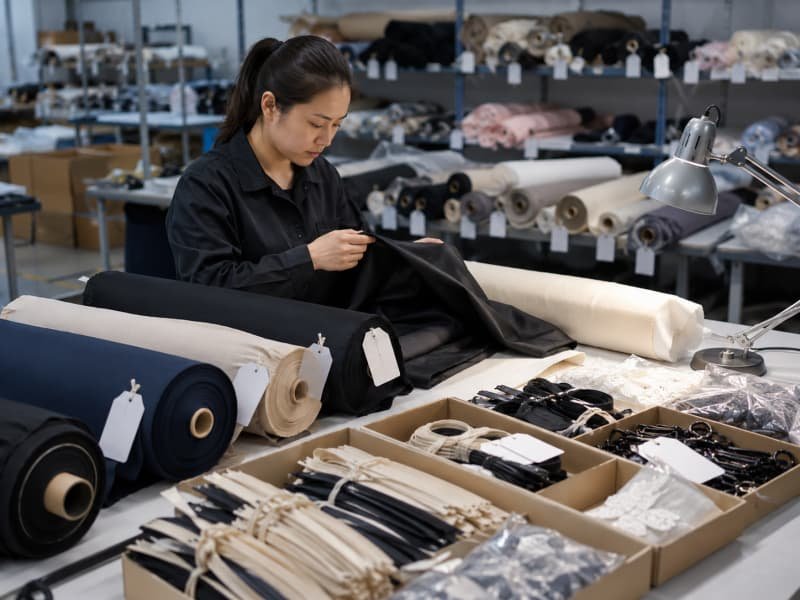
A cheaper quotation is not comparable when it removes material control, fit discipline, workmanship requirements, inspection, testing, or packing protection. Quality must remain visible in the cost basis.

Design Risk Review
Material Control

Sample Standard

Pre-Production Control

First-Piece Review

Inline Inspection

Final Inspection

Packing Protection
Manufacturing Capacity for Multi-Style Brand Programs
Scale matters only when it supports organized style allocation, parallel development, controlled production, and repeat capacity. Duolan combines core control with flexible manufacturing resources.
16 Owned Factories
20+ Satellite Factories
300 Sewing Lines
50+ Flexible Lines
3,000-8,000 Style Flows
15,000-35,000 Sample Instances
The manufacturing system also includes more than 12,000 workers across core and coordinated facilities. Duolan factory operations have completed a SMETA 2-Pillar audit. Program-specific quality, social responsibility, testing, and documentation requirements can be aligned to the standards named by each brand, including relevant BSCI, ISO 9001, AATCC, ASTM, OEKO-TEX, EN, China GB, GOTS, or company-specific requirements where applicable.
Multi-Style Cost Planning Across Realistic Order Structures

US Occasionwear Program

US Partywear Collection
Order profile: 24 styles, 67,200 pieces, sequin, rhinestone, mesh, bodycon, and halter directions across two delivery waves. Early references contained varying embellishment density and incomplete lining information, making supplier prices impossible to compare. Duolan defined craft zones, density references, lining routes, support components, packing protection, and repair standards before rebuilding the matrix. Six high-craft styles retained premium execution; ten styles used controlled focal embellishment; eight commercial styles shared jersey, lining, zippers, labels, and packaging. Production planning placed structural and craft-sensitive styles on specialist routes and stable fitted styles on repeatable lines. The program moved forward with distinct price bands, clearer sample purposes, and fewer open assumptions before PP review.

North American Fashion Group
Frequently Asked Questions About Multi-Style Costing

Send Your Style List for a Structured Cost Review
Share the information available now, even when several details remain open. Duolan can begin with tech packs, reference images, original samples, fabric ideas, or a collection brief and identify which facts are strong enough for preliminary costing. For a useful multi-style review, include the number of styles, product categories, target quantity by style, colorways, size range, material direction, target price position, labels, packaging, testing requirements, launch date, delivery destination, and preferred trade term. The team will organize the styles, review material and construction difficulty, identify cost-sensitive details, mark assumptions, and advise whether each style needs a direct estimate, material check, development sample, structure trial, craft trial, or bulk-readiness review. Clear information helps avoid generic answers and gives your product, procurement, and commercial teams a stronger basis for sample priority, collection budget, and manufacturing decisions.
- Project files: Tech packs, style list, reference images, original sample photos, BOM, artwork, fabric specifications, and measurement charts.
- Commercial details: Quantity per style and color, size range, target price position, packaging, testing, delivery date, destination, and Incoterm.
- Recommended form fields: Name, company, country, website, email, WhatsApp, number of styles, project stage, quantity per style, target range, message, and file upload.