...

Custom Dress Manufacturer for PP Sample Control

Production-ready dress approval built around locked materials, controlled fit, repeatable workmanship, and disciplined bulk release.

  • 7 production-critical approval groups: fabric, lining, trims, color, measurements, workmanship, and packaging.
  • 8 controlled steps from file review and PP development to written bulk-readiness confirmation.
  • 3 verification stages after approval: first-piece release, inline control, and final shipment inspection.
  • Collection programs commonly involve 10-30 styles and 20,000-80,000 pieces across colors and sizes.

Duolan supports fashion dress programs where an approved sample must become a stable production standard, not a visual reference left open to interpretation. Pattern versions, BOM details, material direction, critical measurements, construction points, labels, packing instructions, and quality checkpoints are aligned before production release. Complex satin, corset, bodycon, mesh, sequin, halter, and backless styles receive additional risk review before full line loading.

PP Sample Control for Brand-level Dress Production

Structured PP approval is most valuable when several teams, styles, colors, sizes, and production lines must work from the same confirmed standard. Duolan aligns development decisions with bulk execution for established fashion operations.

Established Fashion Brands

Seasonal drops and repeat programs need more than a good-looking sample. Materials, fit, size range, workmanship, labeling, packing, and launch timing must remain aligned across every production decision. Duolan prepares the PP stage around bulk reproducibility, collection consistency, and future reorder use, giving merchandising and production teams a firmer basis for release decisions.

Buying and Sourcing Teams

Supplier approval depends on clear records, responsible ownership, and visible checkpoints. Duolan can work from brand-issued tech packs, BOMs, measurement charts, inspection standards, nominated materials, and approval comments. Open items are identified before line loading, while confirmed items are transferred into production and QC references.

Product Development Teams

Design intent must survive pattern correction, material sourcing, fit comments, and manufacturing constraints. Duolan reviews how fabric behavior, structure, closures, lining, trims, and construction affect the target silhouette. PP approval follows the latest confirmed design basis rather than an outdated prototype or an incomplete visual sample.

Sourcing Offices

Regional sourcing teams often coordinate brand comments, factory execution, third-party inspection, and shipment timing. Duolan supports a traceable route from sample status and material confirmation to bulk start, first-piece approval, inline inspection, packing review, and final release, reducing avoidable gaps between commercial and technical communication.

Why PP Sample Approval Matters Before Bulk Production

A PP sample is the final production reference used to confirm materials, measurements, fit, construction, workmanship, labels, and packaging before bulk manufacturing begins. Clear approval gives development, production, and QC teams one standard to follow. 

Approval Is a Production Decision

A sample may look ready in photographs while still carrying unresolved production risks. Fabric could be provisional, the lining might not match bulk availability, the zipper length may remain open, or the measurement chart may not reflect the latest fitting. PP approval should therefore confirm what the factory will reproduce, what QC will inspect, and what the brand team has accepted. Duolan treats approval as a production decision supported by current files, confirmed materials, measurable standards, and written status rather than a casual “looks good” message.

Visual Approval Is Not Enough

Dress production combines appearance, fit, movement, internal structure, and material behavior. A satin dress can appear smooth on a mannequin yet show seam puckering after line production. A corset dress can photograph well while cup position, boning tension, or back closure remains unstable across sizes. A mesh dress may look correct under studio lighting but reveal inconsistent coverage in normal wear. PP control converts appearance into specific, repeatable instructions covering pattern, measurements, material, construction, finishing, and packaging.

One Standard for Every Team

Pattern makers, fabric coordinators, line supervisors, sewing operators, finishing teams, QC inspectors, and packing teams should not work from separate assumptions. Duolan links the approved PP sample to the latest tech pack, BOM, measurement chart, trim references, workmanship notes, and packing instructions. The shared reference improves decision speed during production because deviations can be judged against a confirmed basis rather than debated after quantities have already accumulated.

Risks Between Sample Approval and Bulk Production

Most production deviations begin before sewing starts. Unlocked materials, mixed file versions, vague tolerances, and incomplete workmanship decisions can turn an approved sample into an unreliable bulk reference.

Pattern Version Drift

A corrected fit sample may be approved while production receives an earlier pattern file. Duolan identifies the approved pattern version and links it to the final measurement basis before release.

Material Substitution

A similar fabric can change drape, stretch, opacity, shrinkage, needle response, and pressing behavior. Proposed substitutions require review against the approved dress effect and production risk.

Measurement Ambiguity

Critical points without tolerances create inconsistent interpretations. Bust, waist, hip, length, strap, neckline, cup, slit, and opening measurements are prioritized according to style risk.

Workmanship Simplification

Line production can expose operations that were hand-managed during sampling. Seam construction, edge finish, lining attachment, support structure, embellishment placement, and pressing standards must be transferable.

Color and Shade Variation

Bulk rolls, dye lots, panels, linings, and trims can vary even when color names match. Shade review, lot segregation, cutting control, and visual acceptance standards reduce mixed-color garments.

Comment Loss

Fit and visual comments can be scattered across email, marked photos, and spreadsheets. Duolan consolidates accepted changes into the current sample and production basis before PP approval.

Packing Mismatch

Folding, hangers, polybags, tissue, labels, barcodes, cartons, and moisture protection can affect presentation and shipment readiness. Packing requirements are reviewed before production completion.

Multi-style Confusion

A 10-30 style program contains different risk levels and approval states. Duolan separates approved, pending, revision, pilot-required, and bulk-released styles instead of treating the collection as one undifferentiated order.

PP Samples Compared with Other Dress Samples

Every sample stage has a different decision purpose. Using a prototype, photo sample, or fit sample as the final production standard leaves material, construction, and packing questions open.

Sample StageMain DecisionFinal MaterialsBulk Release BasisKey Output
PrototypeDesign proportion and basic constructionNot alwaysNoInitial pattern and design direction
Fit SampleFit, balance, movement, and key measurementsNot alwaysNoFit comments and pattern correction
Revision SampleVerification of accepted changesMay be partialNoUpdated sample and revision record
Photo SampleCampaign appearance and stylingOften closeNoPhoto-ready garment
Salesman SampleSales presentation and range reviewOften closeNoCommercial presentation sample
Size SetGrading and fit across selected sizesShould be closeConditionalSize-range verification
PP SampleFinal production standard before bulkYes, or formally approved bulk equivalentYes, after written approvalApproved sample, files, and release status
TOP SampleVerification of the first bulk outputActual bulk materialsProduction already startedLine-produced comparison sample
Shipment SampleRecord from packed bulk goodsActual bulk materialsShipment stageFinal production record

What We Review Before PP Sample Development Begins

The PP stage starts with a controlled input review. Incomplete files are not hidden inside the sample process; open decisions are identified so the production reference can be built on current, approved information.

Design Basis

Latest tech pack, flat sketch, reference image, original sample, mood direction, and accepted visual comments are compared. Conflicting references are clarified before the PP sample is cut.
fit

Pattern and Fit Status

The team checks which pattern version was fitted, what size was reviewed, which comments were accepted, and whether any fit point remains unresolved. A visual sample without confirmed fit is not treated as bulk-ready.
Core Fabric Direction​

Fabric Direction

Composition, weight, stretch, recovery, drape, opacity, shrinkage, surface, color, and expected bulk availability are assessed against the silhouette and selling season.

Trims and Structure

Zippers, hooks, buttons, elastics, boning, cups, gripper tape, straps, drawcords, lace, sequins, stones, labels, and packaging components are listed with specifications and approval status.

Construction Requirements

Seam type, seam allowance, stitch density, edge finish, lining method, gathering, pleating, support, closure, embellishment attachment, pressing, and finishing points are reviewed for repeatability.

Commercial Requirements

Style quantity, colorways, size range, target quantity, launch date, inspection standard, labeling, packing, carton plan, and shipment route are considered because production purpose changes the approval depth.

What Must Be Locked Before PP Approval

PP approval should close the decisions that directly affect bulk consistency. Duolan groups the standard into eight control areas so every production function receives a usable reference.

Main Fabric

Confirm composition, construction, weight, stretch direction, recovery, drape, opacity, shrinkage, surface, bulk lot basis, and approved color. Fabric behavior must support the approved silhouette and construction method.

Lining System

Confirm lining type, color, weight, stretch, coverage, seam connection, hem relationship, opacity, comfort, and movement. Lining is treated as a structural part of the dress, not a late addition.

Functional Trims

Confirm zipper type and length, hooks, buttons, elastics, gripper tape, boning, cups, straps, adjusters, eyelets, and reinforcement. Specifications must match appearance, fit, and durability needs.

Decorative Details

Confirm lace, sequins, beads, pearls, stones, bows, appliques, printing, embroidery, pleating, wash, and finishing. Placement, density, attachment, edge treatment, and tolerance are defined.

Measurements

Confirm sample size, points of measure, method of measure, critical dimensions, and tolerance. High-risk areas receive tighter attention than non-critical decorative dimensions.

Fit and Silhouette

Confirm bust, waist, hip, shoulder, neckline, cup, strap, waistline, slit, hem, flare, drape, and movement. Approval must reflect the intended wearer and target size system.

Workmanship

Confirm seams, seam allowance, stitch type, stitch density, overlock, binding, facing, lining attachment, support structure, closure installation, pressing, thread trimming, and internal cleanliness.

Branding and Packing

Confirm main label, care label, size label, hangtag, barcode, sticker, hanger, fold, tissue, polybag, warning text, carton assortment, carton marks, and special retail presentation requirements.

PP Controls for High-risk Dress Categories

Different dress categories fail in different ways. Duolan adjusts PP approval around fabric behavior, fit sensitivity, support structure, embellishment, coverage, and operations that become unstable during line production.
Bias and Drape​

Satin Dresses: Surface, Drape, and Seam Control

Satin requires control beyond color and composition. PP review checks face direction, cutting orientation, surface marks, needle size, thread, stitch density, seam allowance, seam puckering, zipper waviness, pressing temperature, shine marks, lining interaction, and packing recovery. Bias-cut or draped satin designs need additional attention because small differences in grain direction or handling can change hem balance and body movement. The approved reference should show the acceptable surface appearance under normal lighting, not only retouched studio images. Bulk planning may separate cutting lots, protect panels during movement, and use first-piece confirmation before full release. Measurements are read together with drape; forcing a rigid dimension onto a fluid pattern can damage the approved silhouette.

Bodycon Dresses: Stretch, Recovery, and Size Stability

Bodycon production depends on fabric weight, stretch percentage, recovery, opacity, negative ease, seam elasticity, and size progression. PP approval checks whether the final bulk fabric behaves like the fitted sample, especially around bust, waist, hip, armhole, neckline, and hem. A 2-4% difference in usable stretch can materially change fit even when the composition label looks similar. High-risk POMs may be managed with project-specific tolerances, often around +/-0.5 cm for key fit points and +/-1.0 cm for selected lengths, subject to fabric and brand standards. Seam type, thread elasticity, lining, zipper, and shaping panels must move with the garment. Size-set review is recommended when grading or body compression is central to the style.

Corset Dresses: Support, Cup Position, and Construction

Corset and bustier dresses need a PP standard that captures internal engineering, not only the outer appearance. Review covers cup shape, cup spacing, bust point, boning type and length, channel construction, seam reinforcement, waist tension, back closure, hook position, zipper load, lining, under-bust stability, neckline security, and wearer movement. Support materials must be available for bulk and applied consistently across sizes. A sample that fits one mannequin may still fail when cup grading, torso length, or closure tension changes. Duolan can identify operations requiring templates, marked placement, dedicated operators, or pilot verification before production release. Approved internal photos are valuable because hidden construction cannot be judged from the finished exterior alone.

Mesh Dresses: Coverage, Layering, and Seam Visibility

Mesh decisions affect transparency, stretch, recovery, edge stability, color, layering, and comfort. PP approval defines which areas remain sheer, where lining begins and ends, how seams appear through the fabric, whether nude tones match the intended market, and how mesh behaves under tension. Layered designs require alignment of gathers, prints, embroidery, or appliques across panels. Stitching and seam allowance can become visually dominant through transparent materials, so internal workmanship is part of the external standard. The approved sample should be checked under daylight and normal indoor lighting. Bulk fabric lots, lining shades, and trim colors are reviewed together because small differences can be amplified by transparency.

Sequin Dresses: Placement, Abrasion, and Attachment

Sequin and embellished dresses combine visual precision with production risk. PP approval checks motif direction, placement landmarks, density, missing-area tolerance, edge clearance, seam preparation, attachment method, loose components, abrasion, skin contact, lining protection, garment weight, hanger support, pressing restrictions, and packing friction. Cutting plans may need to protect motifs and reduce uncontrolled damage. Seam areas often require sequin removal and secure reattachment rather than sewing directly through dense embellishment. A first-piece or pilot run is useful for high-density styles because line speed and handling can expose risks not seen in one sample. Bulk inspection should include visual distance checks and close-up workmanship checks.

Halter and Backless Dresses: Stability and Wear Security

Halter, backless, strapless, and cut-out designs are approved around body security as well as visual shape. PP review covers neck pressure, strap length, adjustability, side coverage, bust support, underarm exposure, elastic recovery, gripper tape, cup position, tie strength, back opening, closure, lining, and movement during sitting, walking, and raising the arms. Edge stretch and seam reinforcement are critical because minimal structures carry concentrated loads. Grading must preserve coverage and support across sizes rather than simply scaling every dimension. The approved sample should identify critical fit points and internal support details so production and QC can judge wear stability consistently.

How Materials and Trims Are Locked for Bulk

Material locking protects the approved fit, handfeel, appearance, and construction. A similar-looking replacement is not accepted automatically because small material changes can alter the finished dress and production method.

Fabric Lot and Behavior Control

Main fabric is reviewed by specification and behavior: composition, construction, width, weight, stretch direction, recovery, drape, opacity, shrinkage, colorfastness, surface sensitivity, and pressing response. Bulk lots may be checked against the approved swatch or PP sample. Shade variation is managed through lot identification, visual comparison, segregation where needed, and cutting discipline. For satin, mesh, stretch jersey, lace, and embellished fabrics, physical behavior often matters more than a generic fabric name. 

Lining and Transparency Control

Lining changes color depth, opacity, movement, comfort, and fit. Duolan reviews lining weight, stretch, shade, coverage, attachment, hem length, static behavior, and compatibility with the outer fabric. For mesh, lace, light satin, and fitted dresses, the lining system is approved together with the shell. A lining replacement may require renewed fit or visual review because added stretch resistance or thickness can change measurements and body movement.

Functional Trim Specifications

Zippers, hooks, buttons, elastics, cups, boning, gripper tape, adjusters, rings, eyelets, and drawcords are controlled by material, dimensions, color, finish, function, and supplier status. A zipper that is 2 cm longer, a softer boning grade, or a different elastic recovery can change fit and closure performance. Trim references are linked to the BOM and PP standard so purchasing and production receive the same instruction.

Decorative Material Consistency

Lace, sequins, beads, pearls, stones, bows, appliques, printed panels, and embroidered components require placement and quality standards. Duolan reviews motif direction, repeat, density, attachment, edge finish, color, shine, weight, abrasion, and replacement risk. When handwork or special processes are involved, reference photos, marked positions, approved samples, and pilot verification help convert visual intent into repeatable operations.

Color Approval and Shade Control

Color is evaluated across shell, lining, thread, zipper tape, metal finish, lace, embellishment, labels, and packaging where visual matching matters. Lab dips, strike-offs, approved swatches, or physical trim references can be used according to the material. Bulk shade differences are judged under agreed lighting and within the brand standard. Mixed-lot cutting is avoided where visible shade variation could appear within one garment.

Substitution and Change Control

Any proposed substitution is reviewed for impact on appearance, fit, construction, cost, timing, and compliance. A replacement can be accepted, accepted with a sample update, or rejected. Unrecorded substitutions are not treated as normal production flexibility. Change status should be visible before cutting or line loading, especially when the approved PP sample no longer represents the available bulk material.

Fit, Measurement, and Pattern Version Control

PP approval must identify which pattern, sample size, measurement chart, and fit comments define bulk production. Dress fit is controlled through priorities, not by treating every dimension as equally sensitive.

Master Size and Fit Basis

The approved sample size is recorded together with the intended body profile, fit direction, and fitting comments. Bust, waist, hip, shoulder, neckline, cup, under-bust, torso length, armhole, strap, slit, and hem relationships are assessed according to the style. Fitted and support-led dresses require stronger control than loose silhouettes because minor variation can affect comfort, coverage, and appearance.

Points of Measure

The measurement chart should define where and how each point is measured. Diagrams or marked sample photos reduce ambiguity for curved necklines, cups, straps, cut-outs, asymmetrical hems, drapes, and stretch garments. Critical POMs are flagged so sewing and QC teams understand which dimensions cannot drift without changing the approved fit.

Tolerance Logic

Tolerance is set by fabric behavior, construction, measurement method, and brand standard. As a working reference, high-risk fit points may be controlled around +/-0.5 cm, while selected lengths or lower-risk dimensions may allow around +/-1.0 cm. Final tolerances remain project-specific. A single tolerance applied to every POM can create false failures in fluid styles and unacceptable variation in fitted styles.

Grading and Size Range

Grading is reviewed for proportional growth, coverage, support, and visual balance. Corset cups, neckline depth, cut-out positions, straps, slits, and back openings often require controlled rules rather than simple scaling. Size-set samples may be requested for selected sizes when the range, fabric stretch, or support structure creates greater risk.

Pattern Version Locking

Pattern corrections from fitting must reach the final production file. Duolan records the current version and links it to the approved measurement basis. Superseded patterns are separated from bulk use. Reorders refer back to the approved version, while material changes or new size ranges trigger a review rather than automatic reuse.

Fit Comment Closure

Accepted comments are translated into measurable or visible actions. “Raise neckline” becomes a defined measurement or pattern change; “more support” becomes a structural decision; “cleaner waist” becomes a seam, shaping, or ease adjustment. Open comments are not hidden inside PP approval. Each point is confirmed, revised, or held with a clear next action.

Construction and Workmanship Standards for PP Approval

Workmanship approval must describe how the dress is built, not only how the finished sample looks. Duolan converts critical operations into production references that can be repeated and inspected.

Seams, Stitching, and Allowances

Seam type, seam allowance, stitch type, stitch density, thread, needle, reinforcement, overlock, binding, and clean finish are reviewed according to fabric and load. Lightweight satin needs surface protection and controlled tension; stretch dresses need seams that recover; transparent mesh needs clean internal appearance; embellished fabric needs prepared seam zones. The approved sample establishes both exterior appearance and internal construction.

Support Structure

Boning, cups, interfacing, elastic, gripper tape, under-bust support, waist stay, shoulder support, and reinforcement are approved by type, placement, length, attachment, and function. Hidden components must be photographed or documented before closing because QC cannot fully verify them after completion. Support-led styles may require operation templates or marked positions to maintain consistency across operators and sizes.

Lining and Closure Construction

Lining attachment, turning method, hem relationship, zipper installation, hook position, facing, under-stitching, and edge stability affect comfort and finish. PP approval checks whether closures sit flat, lining remains inside, seam bulk is controlled, and movement does not expose internal components. Backless, cut-out, halter, and fitted designs need particular attention around openings and load points.

Gathering, Draping, Pleating, and Placement

Visual operations are translated into measurable controls: gather distribution, drape anchor points, pleat direction and depth, bow position, lace alignment, print placement, slit height, applique landmarks, and embellishment boundaries. Templates, notches, marks, photos, and approved first pieces can support operations where appearance depends on consistent positioning.

Pressing and Final Appearance

Pressing temperature, pressure, equipment surface, protective cloth, steam, shaping, cooling, and hanger recovery influence satin, pleated, bonded, embellished, and structured dresses. The approved standard should define acceptable seam appearance, shine, creasing, shape, hem line, and presentation after packing. Finishing instructions are transferred before production reaches the final stage.

Production Reference Evidence

Useful references include close-up PP photos, internal construction photos, marked critical points, operation notes, trim boards, approved seam samples, placement templates, measurement diagrams, and packing photos. Evidence reduces reliance on memory and gives line supervision and QC a faster way to identify deviation during production.

Our Eight-step PP Sample Approval Process

The process moves from current information to controlled bulk release. Every stage closes a defined set of decisions and produces a clearer reference for the next team.

1. Project Review

Confirm dress category, sample purpose, current development stage, style quantity, colorways, size range, target volume, launch timing, inspection needs, and production objective.

2. File Alignment

Compare the latest tech pack, measurement chart, BOM, comments, reference images, and original sample. Conflicts and missing information are listed before sampling.

3. Pattern Review

Check the approved fit basis, pattern version, grading direction, critical POMs, construction feasibility, and any remaining pattern corrections.

4. Material Review

Confirm main fabric, lining, trims, color, special processes, bulk availability, supplier status, and material behavior against the approved dress effect.

5. PP Development

Cut and sew the PP sample using the confirmed direction.
Critical operations and hidden construction points are recorded during making.

6. Technical Inspection

Measure the sample, review fit, compare appearance, inspect workmanship and test closures , and check labels and packing requirements where available.

7. Comment Closure

Organize comments by fit, visual, material, construction, and production impact. Accepted actions are updated in the sample and files; open items remain visible.

8. Bulk Release

Issue approval status and complete a production-readiness check. Bulk starts only after confirmed standards, pending actions, production path, and verification points are clear. 

Bulk Readiness Review Before Production Starts

An approved-looking sample is not released automatically. Duolan checks sample status, order purpose, locked standards, and the correct production path before line loading.

Sample Status

The sample is classified as fit confirmed, visual confirmed, PP basis, approved PP, or still pending refinement. The label matters because a garment can be visually approved while measurements, materials, or construction remain open. Release language reflects the actual status rather than a broad “approved” statement.

Order Purpose

Launch orders, test orders, repeat orders, and scale-up orders create different risks. A first launch may need more verification; a repeat order may depend on preserved pattern and BOM records; a scale-up may require renewed capacity and material-lot review. The production plan follows the commercial purpose.

Locked Production Basis

Fabric, lining, trims, color, measurements, workmanship points, labeling, packing, inspection requirements, and delivery expectations are checked before release. Pending items receive an owner and deadline. Production does not rely on assumptions that will be decided after cutting.

Production Path

Style complexity, materials, special processes, quantity, timing, and risk level determine whether the project uses a core factory, specialist process partner, dedicated line, quick-response line, pilot run, first-piece approval, or multi-factory allocation. Duolan can provide a concise Bulk Start Confirmation or Production Readiness Note for structured programs.

How Approved PP Standards Reach the Production Line

Approval has value only when the confirmed standard reaches purchasing, cutting, sewing, finishing, QC, packing, and shipment teams without version loss or informal substitution.

Approved PP Reference

The physical PP sample, sealed reference, detailed photo record, or agreed control sample provides the visual and construction standard. Access and storage are defined for production and QC use.

Current Tech Pack

The latest approved technical file carries construction, measurements, details, labeling, and packing information. Old versions are separated from active production documents.

BOM and Trim Board

Materials and trims are identified by specification, supplier reference, color, size, finish, and approved substitute status. Purchasing receives the same basis used during PP approval.

Pre-production Meeting

Merchandising, technical, production, QC, and special-process teams review risks, critical operations, tolerance priorities, material status, line plan, inspection points, and open actions before loading.

Operation Checkpoints

High-risk construction points are supported by marked photos, templates, seam samples, placement guides, internal construction images, or first-piece approval requirements.

QC Inspection Basis

QC receives critical measurements, workmanship criteria, defect priorities, approved material references, labeling and packing standards, and escalation rules for deviation.

First-piece Verification Before Full Production Release

Complex dresses should not accumulate hundreds of units before a line-level issue is visible. First-piece and pilot verification confirm how the approved PP standard performs under actual production conditions.

When First-piece Approval Is Required

First-piece control is recommended for high-risk satin surfaces, corset structures, bodycon stretch, mesh coverage, sequin placement, halter support, backless openings, asymmetry, heavy gathering, pleating, special washing, printing, embroidery, and unfamiliar operations. It is also valuable when production moves to another line, factory, material lot, or size range. The purpose is not to repeat full development; it is to verify that the production setup can reproduce the approved standard.

What the First Piece Confirms

The first piece is checked for pattern identity, fabric direction, shade, measurements, fit-critical dimensions, seam construction, support structure, zipper and closure, lining, embellishment, pressing, appearance, labeling, and packing preparation. Line-specific risks such as machine tension, operator sequence, template accuracy, seam distortion, or handling damage are corrected before full release. Findings are returned immediately to supervision and QC.

Pilot Run for High-risk Styles

A small pilot quantity may be used when one unit cannot expose production variation. Pilot review can reveal size spread, operator consistency, embellishment loss, pressing marks, shade mixing, or packaging recovery. Pilot size is defined by style risk and order scale; it is not a fixed sales quantity. Full production continues after the required checks meet the approved standard or corrective actions are closed.

Release and Hold Decisions

Results are recorded as released, released with controlled correction, or held. A held style remains off full production until the issue is resolved. The decision protects the collection schedule by isolating risk rather than allowing one difficult style to create wider rework. Multi-style programs can continue with approved styles while a high-risk style receives focused correction.

Quality Control from PP Sample to Shipment

Quality control follows the approved production standard through materials, cutting, sewing, finishing, packing, and release. Inspection is used to prevent drift, not only to sort defects at the end.

Incoming Material Check

Fabric and trims are checked against approved references, specifications, color direction, quantity, visible defects, and project testing requirements. Lot and shade information is recorded where variation matters.

Cutting Control

Fabric face, grain, nap, print direction, motif placement, shade lots, marker, bundle identification, and cut-part accuracy are controlled before sewing. High-risk panels may receive additional checking.

First-piece Release

The first line-produced garment is compared with the PP standard for measurements, construction, appearance, support, trims, and finishing before wider loading.

Inline Inspection

QC checks critical operations while corrective action is still possible. Inspection frequency and checkpoints follow style risk, brand requirements, line performance, and defect history.

Measurement Control

Selected pieces are measured against the approved chart and project tolerances. Critical POMs receive priority, with size and color coverage planned according to the order.

Finishing Review

Pressing, shape, surface, stains, loose threads, embellishment, closures, labels, and overall presentation are checked before packing. Sensitive fabrics receive handling and recovery controls.

Packing Verification

Folding, hanger, tissue, polybag, barcode, sticker, assortment, carton quantity, carton marks, moisture protection, and retail presentation are checked against approved instructions.

Final Release

Final inspection can follow the brand standard, agreed AQL level, or third-party protocol. Shipment release is based on inspection results, packing status, documents, and closed corrective actions.

PP Control Across Multi-style Dress Collections

Collection programs need style-level visibility. Duolan separates approval, material, risk, production path, and release status so 10-30 styles can move at different speeds without losing control.

Style GroupPP StatusMaterial StatusRisk LevelProduction DecisionVerification
Core satin stylesApproved after seam reviewBulk lot lockedMediumCore factory, dedicated lineFirst-piece + inline surface check
Corset statement stylesRevision closedBoning and cups lockedHighSpecialist operators, controlled loadingPilot run + first-piece
Mesh layered stylesApproved with coverage mapShell and lining lockedHighLine with transparent-fabric experienceCoverage and seam visibility check
Bodycon commercial stylesApproved size setStretch lot lockedMediumMulti-line after master releaseMeasurement and recovery check
Sequin hero stylesPP pending placement updateBulk panel under reviewHighHold full releasePilot attachment and abrasion review
Repeat carryover stylesPrior PP reference confirmedNew shade lot approvedLow-MediumReorder line allocationFirst-piece comparison

A Dress-focused Manufacturing System Behind PP Control

PP discipline depends on development knowledge, material access, technical coordination, production capacity, and quality ownership. Duolan combines a dress-focused development base with a multi-level manufacturing network.

30+ Years of Development Experience

Chairman Jerry Li and the underlying manufacturing team have worked in fast-fashion womenswear development since the 1990s, with long-term experience in dress design, fabric development, pattern expression, decorative workmanship, and commercial product execution.

16 Owned Womenswear Factories

Core factories provide direct control for important styles, technical development, PP standards, complex workmanship, first production, and repeat programs where continuity matters.

20+ Satellite Factories

Long-term production partners provide capacity flexibility for scale-up, replenishment, seasonal peaks, and style allocation after standards and responsibilities are confirmed.

12,000+ Coordinated Workers

The broader manufacturing base supports cutting, sewing, sampling, pressing, QC, packing, special processes, multi-style production, and regional capacity coordination.

Special-process Resources

For printing, dip dyeing, embroidery, and washing, Duolan maintains 2-3 established partner resources in each process direction, allowing projects to be matched by style, quality requirement, and timing.

SMETA Audit Foundation

The core factory system has completed SMETA and SMETA 2-Pillar audit requirements and can coordinate brand-specific social responsibility, quality, testing, documentation, and third-party inspection needs.

PP Sample Control in Multi-style Dress Programs

The following anonymized projects show how style-level approval, material locking, first-piece verification, and production routing can protect large dress programs without slowing every style to the same pace.

US Occasionwear Program: 18 Styles, 46,800 Pieces
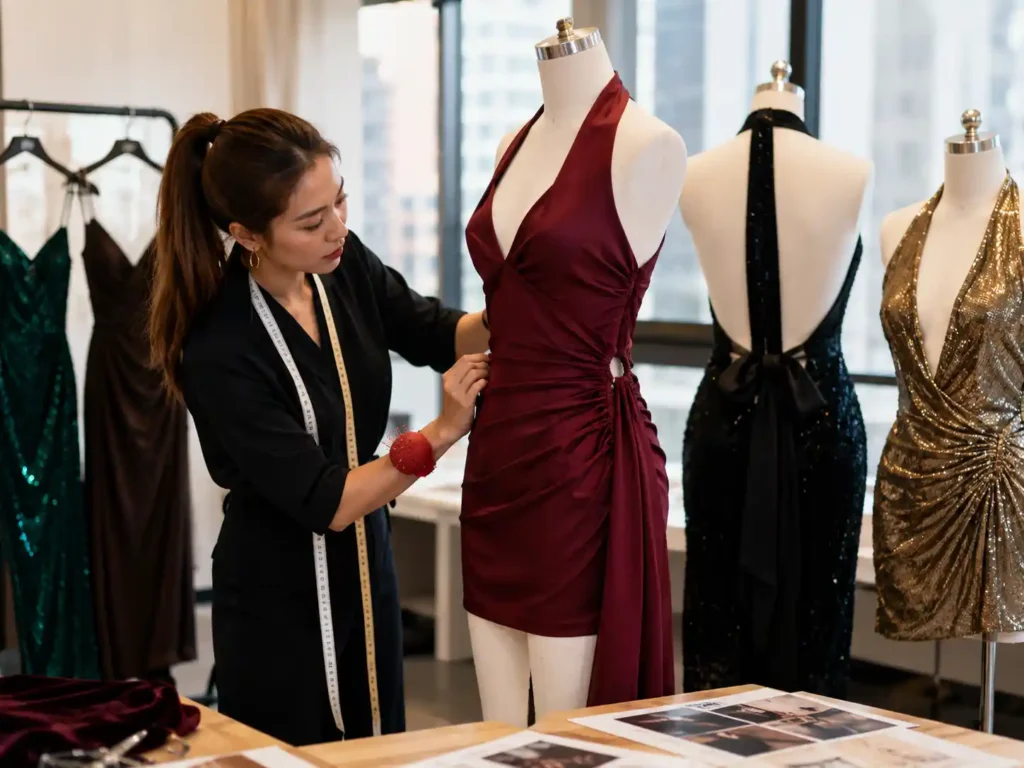
Project profile: 18 satin, mesh, and fitted occasion styles; 4 colorways; XS-XL; total volume 46,800 pieces. The launch calendar required approved styles to move while several fabric-sensitive designs remained under review. Main risks included satin seam rippling, inconsistent mesh coverage, zipper waviness, and measurement drift at the bust and waist. Duolan separated the range into medium- and high-risk groups, locked bulk fabric lots and lining shades, recorded critical POMs, and required first-piece approval for 7 styles. Fourteen styles passed the first PP review; 4 styles received one controlled revision before release. One satin style was held until a more stable bulk fabric lot met the approved surface and seam standard. Approved styles entered production on schedule while the held style remained isolated. Final release followed the brand inspection standard with the planned carton-ready window maintained.

European Partywear Program: 24 Styles, 72,000 Pieces

Project profile: 24 corset, sequin, halter, and backless styles; 3 seasonal drops; 5 sizes; total volume 72,000 pieces. The main challenge was converting high-impact samples into repeatable line operations across support structures and embellishment. PP control covered cup position, boning length, back closure tension, gripper tape, sequin edge clearance, motif placement, lining protection, and hanger support. Eight high-risk styles entered a pilot verification stage before full loading. Two styles were held for boning and neckline correction; one sequin style required a revised seam-zone method to reduce loose components. Production standards included internal construction photos, placement guides, approved trim boards, and first-piece records. Commercial styles moved through regular lines while statement styles remained with specialist operators. All 24 styles reached bulk release after open PP actions were closed.

US Multi-brand Reorder: 12 Styles, 28,500 Pieces

Project profile: 12 repeat dress styles; 6 colors; XS-XXL; total volume 28,500 pieces. The concern was repeat-order drift after changes in fabric lots, trim availability, and production allocation. Duolan retrieved prior pattern versions, measurement charts, BOMs, workmanship photos, packing instructions, and previous QC findings. New bulk shades were reviewed against preserved references, and zipper and lining substitutions were assessed before approval. Eleven styles were released after document, material, and first-piece confirmation. One style remained on hold until a metal trim finish matched the approved range. Production was allocated across 2 factories and 3 lines using one master reference route. Reorder QC focused on historical risk points rather than restarting development, protecting fit continuity and brand presentation across the renewed color range.

Frequently Asked Questions About PP Sample Control

A PP sample, or pre-production sample, is the final garment reference prepared before bulk production. It should represent the approved fit, measurements, materials, trims, construction, workmanship, labeling, and packing direction. Production and QC use the approved reference together with current technical files.
Yes. A fit sample mainly confirms fit, balance, movement, and measurements. A PP sample confirms the production-ready standard, including final or formally approved bulk materials, trims, construction, workmanship, labels, packing, and release status. A fit-approved garment may still need PP work.
Final bulk materials are preferred because fabric, lining, trims, and decoration affect fit and workmanship. When an exact bulk material is unavailable, any temporary material must be identified, and the final bulk equivalent must receive formal review before production release.
The approval basis normally includes fabric, lining, trims, color, pattern version, measurement chart, tolerances, fit, construction, workmanship, labels, packing, inspection requirements, and any special-process standard. Open items should be listed with an owner and deadline.
A change is possible, but it should follow change control. The impact on fit, appearance, construction, cost, timing, and production must be reviewed. Updated samples, files, or written approvals may be required before production continues.
Approval commonly involves the brand product or production team, technical or fit team, sourcing office where applicable, and the manufacturer technical team. Internal responsibilities vary, but the final status should be written and connected to the current files.
No. Simple repeat styles may use a lighter confirmation route, while satin, corset, bodycon, mesh, sequin, halter, backless, heavily embellished, or newly graded styles may need additional size-set, first-piece, pilot, or special-process verification.
The approved PP reference is linked to the tech pack, BOM, measurement chart, trim references, workmanship notes, and packing instructions. Incoming, cutting, first-piece, inline, measurement, finishing, packing, and final inspections compare production with the confirmed standard.
A TOP sample is useful because it comes from the actual production line and bulk materials. It verifies whether the line setup reproduces the approved PP standard. The need depends on brand protocol, style risk, order scale, and inspection requirements.
Send the latest tech pack, measurement chart, BOM, approved or current sample photos, fit comments, material references, color standards, trim details, label and packing files, target quantity, size range, launch date, and inspection requirements. An original sample can also support review.

Send Your PP Sample for Bulk Readiness Review

Share the current sample status, latest tech pack, measurement chart, BOM, material direction, fit comments, target quantity, colorways, size range, launch date, and quality requirements. Duolan will review whether the dress is ready for PP development, revision, first-piece verification, pilot production, or bulk release. The review focuses on unresolved fit, material, construction, workmanship, labeling, packing, and production-path risks. For collection programs, include the style list and current approval status so priorities can be separated across the range.

  • Product information: dress category, style count, colorways, size range, and target quantity.
  • Current status: prototype, fit sample, revision sample, PP sample, approved sample, or repeat order.
  • Available files: tech pack, measurements, BOM, comments, material references, labels, packing, and inspection standard.
  • Main concern: fit, fabric, workmanship, embellishment, sample-to-bulk consistency, timing, or reorder stability.
  • Project timing: target bulk start, inspection window, shipping window, and launch date.

Form fields: Name | Company | Country | Email Address | Tel/WhatsApp | Dress Category | Number of Styles | Target Quantity | Size Range | Target Launch Date | Current Sample Status | Main Quality Concern | Message | Upload Your Files


Start Your Apparel Development Project

OEM/ODM Manufacturing Support for Fashion Brands

Share your collection details, estimated quantities, target market, development timeline, and technical requirements. The production team will review your request and provide a tailored manufacturing solution based on your product category, fabric selection, construction needs, and delivery schedule.

Fashion Manufacturing Support with Scalable Production Capacity

From sample development to bulk production, Duolan supports fashion brands with confidential OEM/ODM manufacturing, stable quality management, flexible production planning, and coordinated multi-factory execution for seasonal and capsule collections.

Need Direct Assistance?

Seraphinite AcceleratorOptimized by Seraphinite Accelerator
Turns on site high speed to be attractive for people and search engines.