 Skip to content
Custom Dress Manufacturer for Soft Tailoring Fashion Brands
Custom dress development for brands building relaxed structure, natural drape, clean proportion, and polished work-to-evening silhouettes.
Duolan develops soft tailored dresses for established fashion brands where structure must feel refined, comfortable, and feminine. From shoulder line review and fabric body matching to fit samples, PP approval, bulk QC, pressing, packing, and reorder records, every program is managed to keep softness and tailoring in balance.
- 300–400 pattern and sample roles support shoulder balance, waist shaping, fit correction, and sample review.
- 110–200 fabric and trim specialists review crepe, soft suiting, twill, ponte, linen blends, and matte satin.
- 130–200 process development roles evaluate lining, zipper, slit, pressing, packing, and bulk feasibility.
- 650–1,200 CAD and sample tools support pattern conversion, structure review, and sample accuracy.
- 10–30 styles supported across many mature brand orders with soft tailoring capsule needs.
- 20,000–80,000 pieces handled per brand order across current cooperation ranges.







Built for Soft Tailoring Fashion Brands
Soft tailoring fashion brands need a manufacturing partner able to balance relaxed structure, body comfort, refined lines, and polished production standards. The goal is not a stiff uniform look or a loose casual dress. The goal is a dress with ease, shape, movement, and quiet sophistication.
Contemporary Womenswear Labels
Contemporary womenswear labels often need relaxed tailoring, clean lines, modern feminine shape, and day-to-evening versatility.
Soft tailored dresses must feel current without becoming overly casual or overly corporate.
- Duolan reviews style direction around body line, lifestyle use, target price position, and material behavior.
- Soft tailored midi dresses, relaxed sheaths, shirt dresses, wrap dresses, and fluid belted styles need clear proportion control.
- Clean surface, smooth seams, natural shoulder, and balanced drape help keep refined styles from looking plain.
Premium Workwear Brands
Premium workwear brands need dresses suitable for office, meetings, travel, and evening plans. Structure matters, yet comfort and natural movement remain essential.
- Duolan supports soft workwear programs through pattern review, fabric matching, sample correction, PP approval, and production standard control.
- Key areas include shoulder, waist, back line, sleeve opening, slit, lining, zipper, pressing, and final garment presentation.
- Approved fit and workmanship details can become repeatable standards for future colors, lengths, and related styles.
Office-to-Evening Dress Brands
Office-to-evening dress programs need garments able to move across work, dinner, travel, and social occasions.
A dress must look polished during the day and still feel elegant after hours.
- Duolan reviews wearing scenario, fabric body, movement range, wrinkle behavior, and packing needs before bulk standards are released.
- Crepe, soft suiting, ponte, matte satin, and compact woven fabrics can each support a different day-to-night look.
- PP samples help protect shape, comfort, and finish before production begins.
Capsule Wardrobe Brands
Capsule wardrobe brands need fewer styles with stronger long-term use.
Each dress should work across seasons, colors, and styling moments.
- Duolan supports capsule programs through core pattern control, fabric reuse, color extension, and repeat production records.
- A soft tailored capsule may include belted dresses, shirt dresses, wrap dresses, relaxed sheaths, and refined midis.
- Pattern, BOM, PP sample, and QC notes help protect continuity across later production runs.
Quiet Luxury Dress Brands
Quiet luxury dress brands often prefer soft tailoring because it gives structure without severity.
The garment should look refined through material, proportion, and finish.
- Duolan reviews clean shoulder line, waist shaping, lining comfort, zipper smoothness, fabric handfeel, and pressing finish.
- Understated dresses reveal every weak seam, poor lining choice, or overly hard press line.
- Soft tailoring helps quiet luxury styles feel relaxed, modern, and expensive without loud decoration.
Product and Sourcing Teams
Product and sourcing teams need sample records, material standards, approval notes, QC checkpoints, and repeat production discipline. Soft tailoring depends on visible process control.
- Duolan supports review around dress category, silhouette, fabric direction, size range, order plan, color palette, and launch window.
- Sample notes, pattern records, BOM confirmation, PP sample comments, and QC records keep approved standards visible.
- Strong project organization helps teams judge manufacturing suitability beyond price and speed.
Why Soft Tailoring Needs Dress Development Discipline
Soft tailoring is not a loose dress with a belt, and it is not a rigid suit converted into a dress. Its value comes from balance. The shoulder should feel natural but not collapsed. The waist should have shape but not pressure. The fabric should drape but not hang lifelessly. The back should sit smooth without restricting movement. The whole garment should feel polished, wearable, and modern.

Duolan treats soft tailored dress development as a controlled relationship between pattern, fabric, lining, construction, pressing, and movement.
A beautiful sample has limited value if bulk production becomes stiff, flat, twisted, or shapeless. Every approved detail should move into PP sample, production method, inline review, final inspection, and reorder records.
Soft tailoring needs discipline because every small decision affects body line. Fabric body, seam tension, dart position, sleeve opening, slit height, hem balance, pressing pressure, and packing method all influence whether a dress feels refined or ordinary.
Soft Tailored Dress Styles Duolan Develops
Soft tailored dress programs need styles with structure, ease, and refined daily wear value. Duolan focuses on silhouettes where pattern balance, fabric body, construction, movement, and finish decide whether a dress feels polished or plain.

Soft Tailored Midi Dresses
Soft tailored midi dresses rely on quiet structure. The neckline, shoulder, waist, hip, back line, skirt fall, and hem length must work together without creating stiffness.
- Suitable for contemporary, work-to-dinner, premium ecommerce, and capsule wardrobe programs.
- Duolan reviews shoulder slope, waist level, side seam fall, back view, lining, fabric body, and hem sweep.
- A strong midi can support black, navy, chocolate, grey, ivory, wine, or seasonal color extensions.
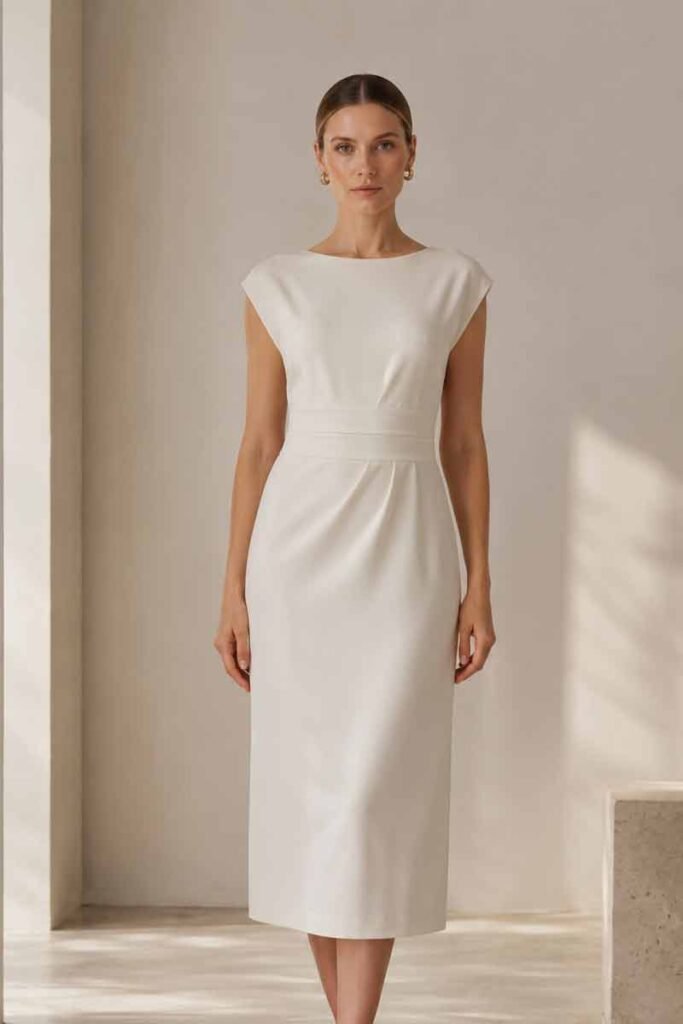
Relaxed Sheath Dresses
Relaxed sheath dresses need body shape without a tight corporate look.
Small errors around bust, waist, hip, or back can make the style feel dated.
- Suitable for office-to-evening, premium workwear, refined capsule, and travel-ready lines.
- Duolan reviews bust shaping, waist ease, hip comfort, back smoothness, slit, zipper, lining, and pressing.
- Crepe, ponte, compact knit, and soft suiting fabrics each create a different level of structure.

Shirt Dresses
Shirt dresses need crisp details softened through fabric, proportion, and waist treatment. The collar and placket should feel refined, not uniform-like.
- Suitable for refined daily wear, capsule wardrobe, travel, resort workwear, and polished casual programs.
- Duolan reviews collar shape, front placket, button spacing, shoulder line, sleeve opening, belt position, and wash stability.
- Cotton blends, twill, linen blends, and soft woven fabrics need different pattern and pressing methods.

Wrap Dresses
Wrap dresses support soft tailoring through movement, waist definition, and ease. Coverage and overlap must remain stable.
- Suitable for office, dinner, travel, social occasions, and day-to-evening dress programs.
- Duolan reviews neckline coverage, waist tie placement, overlap width, skirt opening, lining, and size range behavior.
- Careful pattern control helps avoid gaping, pulling, or excess fabric bulk.
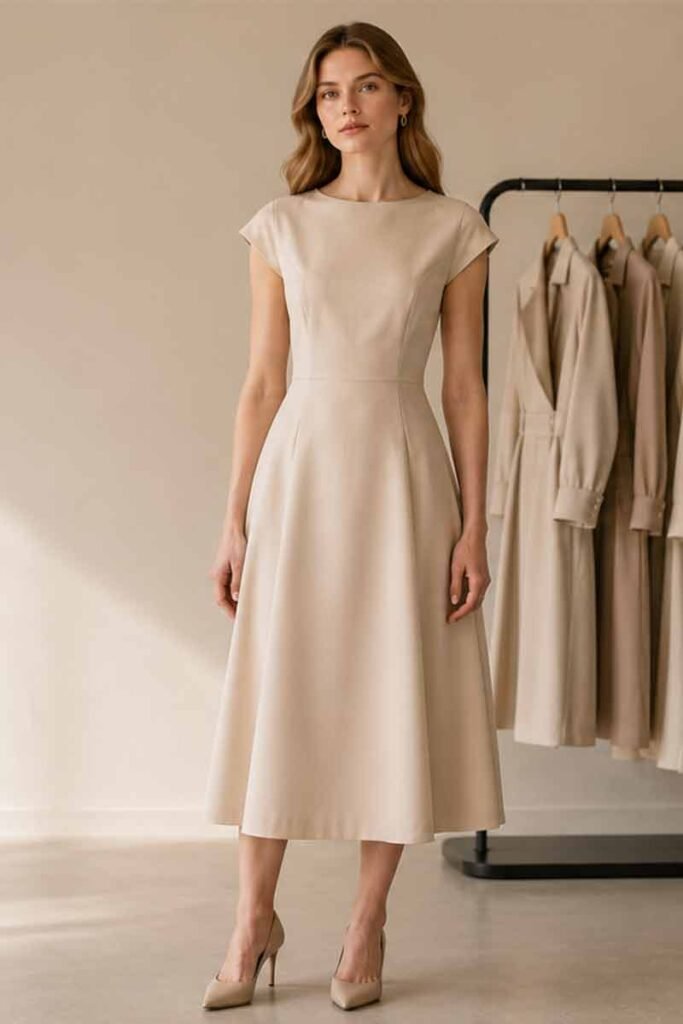
Soft A-Line Dresses
Soft A-line dresses need a clean upper body and a skirt with controlled movement.
Wrong fabric weight can make the style too heavy or too casual.
- Suitable for refined feminine labels, brunch, workday, occasion crossover, and capsule programs.
- Duolan reviews bodice fit, waist seam, skirt volume, fabric weight, lining, hem balance, and walking movement.
- Fabric body decides whether the silhouette feels relaxed, structured, or softly elegant.

Tailored Slip Dresses
Tailored slip dresses soften minimal evening codes through drape, low shine, and quiet structure. They need more control than a basic slip.
- Suitable for soft minimal evening, resort, quiet occasion, and capsule wardrobe programs.
- Duolan reviews bias fall, bust ease, hip skim, strap width, seam smoothness, lining, and packing pressure.
- Matte satin, silk-touch woven, and crepe-back satin need careful cutting and pressing.

Belted Dresses
Belted dresses create soft tailoring through waist placement, fabric movement, and controlled ease. Belt position can change the whole body line.
- Suitable for soft tailoring lines, office-to-evening, travel wardrobes, and refined daywear.
- Duolan reviews belt height, belt loops, side seam curve, waist ease, pleat amount, and back balance.
- The belt should shape the garment without creating bunching, pulling, or old-fashioned proportion.

Fluid Blazer-Inspired Dresses
Blazer-inspired dresses need tailored references without hard suiting severity. Lapel, shoulder, front closure, and waist shape must feel feminine and fluid.
- Suitable for contemporary, quiet luxury, elevated workwear, and refined occasion programs.
- Duolan reviews lapel roll, shoulder line, front edge, lining, waist shaping, button placement, and pressing.
- Soft suiting fabrics, crepe, and compact woven materials need balanced structure and movement.
Soft Structure Points Reviewed Before Sampling
Soft tailoring begins with structure review before cutting. Duolan checks body zones, garment balance, material behavior, and movement needs early, helping reduce repeated samples caused by unclear fit priorities or wrong fabric assumptions.
| Structure Area | Common Failure | Duolan Control Focus |
|---|---|---|
| Shoulder Line | Too sharp, too dropped, or weak hanger appeal | Shoulder slope, armhole, sleeve head, fabric body, and lining support |
| Waist Shaping | Too tight, too loose, or outdated | Waist level, side seam curve, belt position, ease, and torso balance |
| Bust Balance | Pulling, flattening, or excess room | Dart direction, front length, lining, fabric recovery, and body movement |
| Back Smoothness | Wrinkles, zipper pulling, or hollow back | Back width, zipper setting, shoulder blade ease, and lining behavior |
| Sleeve Opening | Restrictive or visually heavy | Sleeve width, cuff shape, arm movement, seam finish, and fabric weight |
| Slit and Hem | Poor movement or uneven fall | Slit height, hem sweep, walking comfort, grain direction, and pressing |
| Fabric Body | Too limp or too rigid | Weight, drape, recovery, structure, wrinkle behavior, and lining relation |
Soft tailored dresses succeed when structure and softness are reviewed together. Duolan checks garment balance around body line, fabric, sewing method, pressing, and movement before sample approval begins.
Fabric Choices for Soft Tailored Dresses
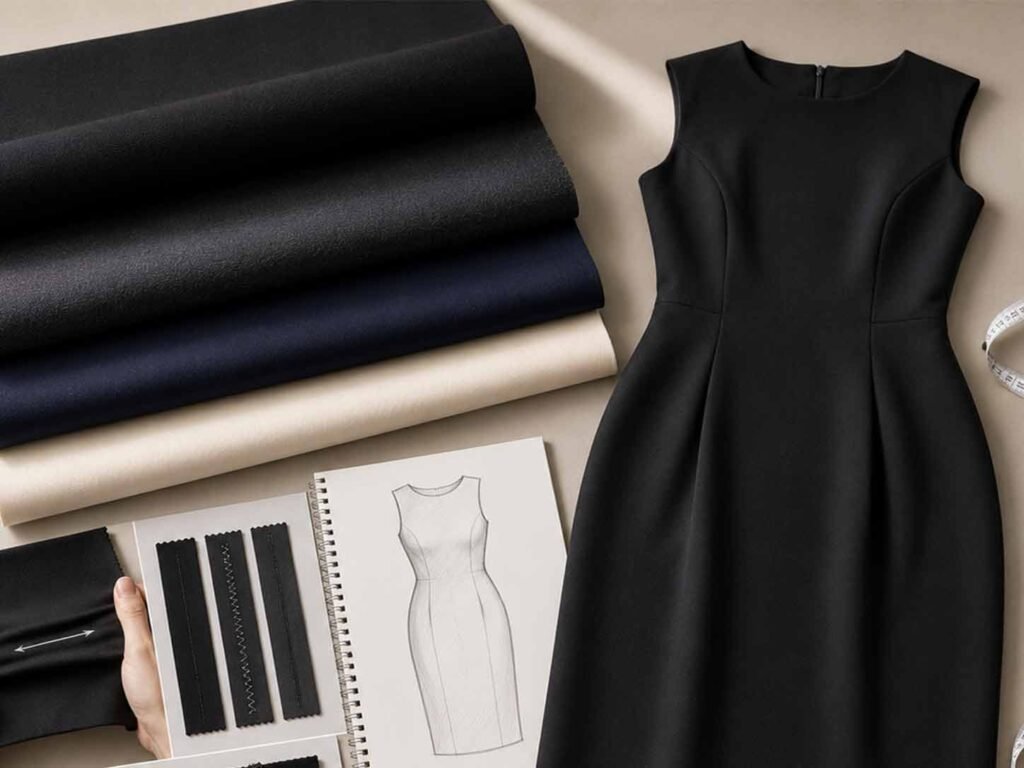
Fabric decides whether soft tailoring feels refined, stiff, limp, or cheap. A dress needs enough body to hold line, enough drape to move naturally, and enough comfort for all-day wear.

Crepe
Crepe supports relaxed sheaths, soft midis, office-to-evening dresses, and cocktail-soft tailoring programs. Its texture and body can create refined shape without excessive weight.
- Duolan reviews fabric weight, drape, seam pressing, wrinkle behavior, opacity, and lining needs.
- Crepe can protect shape around shoulder, waist, hip, back, hem, and slit when pattern balance is correct.
- Strong crepe selection helps a dress feel polished across neutral and seasonal colors.

Soft Suiting Fabrics
Soft suiting fabrics bring tailored language without sharp rigidity. They work well for blazer-inspired dresses, belted midis, and refined workwear styles.
- Duolan reviews handfeel, fabric body, shoulder response, wrinkle behavior, seam pressing, and lining relation.
- The fabric should support structure while still allowing natural movement.
- Tailored dresses need suiting materials with polished surface and comfortable drape.
Twill
Twill suits shirt dresses, structured day dresses, travel-ready programs, and workwear capsules. Its diagonal weave can add body and durability.
- Duolan reviews texture, thickness, wash stability, placket behavior, collar shape, and seam finish.
- Twill can support clean lines when fabric weight is matched with garment proportion.
- Overly heavy twill may feel stiff, while overly light twill may lose shape.

Ponte and Compact Knit
Ponte and compact knit support refined fitted dresses with comfort and recovery. The surface must remain clean, not sporty.
- Duolan reviews compression, stretch return, pilling risk, opacity, seam strength, and garment pressure.
- Suitable for relaxed sheaths, body-skimming office dresses, and work-to-evening core styles.
- Pattern and tolerance control help preserve fit across repeat production.

Linen Blends
Linen blends suit relaxed tailoring, resort workwear, summer capsules, and refined day dresses. Natural texture should look intentional, not wrinkled carelessly.
- Duolan reviews shrinkage, wrinkle acceptance, handfeel, transparency, seam strength, and washing response.
- Linen blend dresses need stable pattern planning because wash behavior can affect size and shape.
- Best for shirt dresses, wrap dresses, belted styles, and relaxed midis.

Matte Satin and Silk-Touch Wovens
Matte satin and silk-touch wovens support fluid tailored slips, soft midis, and elevated dinner dresses. Low shine helps retain refined softness.
- Duolan reviews bias fall, softness, static behavior, seam tension, opacity, and surface marks.
- Suitable for soft slips, fluid maxis, refined occasion, and capsule wardrobe styles.
- Pressing and packing standards protect drape and surface after delivery.
Tailoring Details Without Stiffness
Soft tailoring depends on refined construction without hard suiting weight. Duolan reviews details able to shape the dress while preserving comfort, drape, and modern femininity.

Natural Shoulder
A natural shoulder gives form without sharpness. It should frame the body without creating a suit-like block.
- Duolan reviews shoulder slope, armhole depth, sleeve head, seam support, and fabric body.
- Soft tailored dresses need shoulder control suited to female body lines and lighter structures.
- Natural shoulders help maintain polish while allowing movement.

Clean Waist Seaming
Waist shaping should define the body without pressure or old-fashioned stiffness.
The seam should support proportion quietly.
- Duolan reviews waist height, side seam curve, dart direction, belt position, and garment ease.
- Strong waist control helps prevent bunching, pulling, or boxy appearance.
- Soft shaping should work with fabric drape, not fight against it.
Style-specific Fit Risk
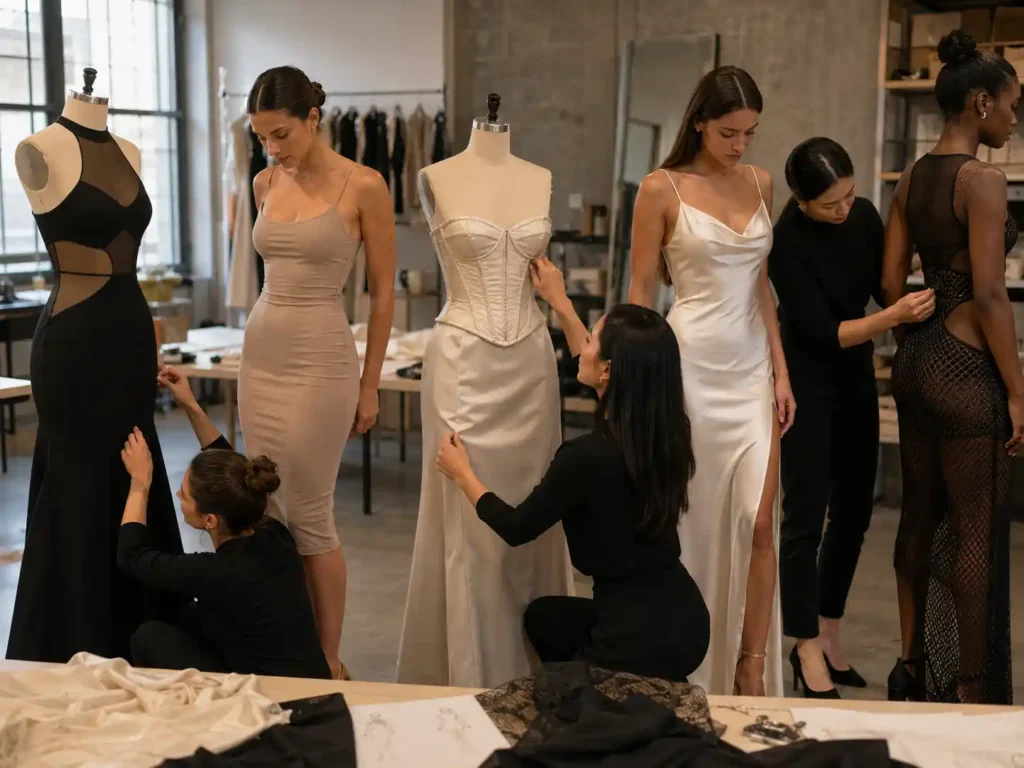
Different dress styles create different feedback patterns. Bodycon may trigger recovery or opacity concerns. Corset styles may raise bust and closure issues. Satin dresses may show zipper waves. Mesh and cut-out styles may create exposure or lining concerns.
- High-risk styles receive stronger fit review.
- Movement checks are added where needed.
- Size set review protects grading consistency.

Smooth Lining
Lining should help a dress slide on smoothly and hang cleanly. Poor lining can pull, twist, or stiffen the outer fabric.
- Duolan reviews lining softness, breathability, stretch compatibility, attachment, and length.
- Soft tailored dresses need lining able to support movement without adding bulk.
- Lining decisions should be confirmed before PP approval.

Invisible Zipper
A zipper can interrupt back smoothness and waist balance. Invisible zipper setting needs strength without visual noise.
- Duolan reviews zipper length, tape firmness, seam balance, top edge finish, and puller comfort.
- Back zippers and side zippers need different stability control.
- Fit-sensitive styles need zipper review during sample and PP approval.

Soft Pressing
Pressing should refine lines without turning the garment stiff. Overly hard pressing can destroy the ease central to soft tailoring.
- Duolan reviews pressing temperature, seam flattening, fold lines, surface protection, and fabric recovery.
- Crepe, twill, linen, satin, ponte, and soft suiting fabrics need different handling.
- Pressing standards should match garment mood and final selling channel.
Pattern, Fit and Proportion for Soft Tailored Silhouettes
Step 1|Brand Fit Direction Review
Duolan begins by reviewing brand body line, target wearer, price position, lifestyle use, core silhouettes, preferred fit, and soft tailoring direction.
Before pattern work begins, our team studies whether the garment should feel relaxed, tailored, fluid, softly structured, office-ready, or work-to-evening. Soft tailoring depends on the right balance from the start, because early pattern choices influence comfort, posture, and movement.
Step 2|Base Pattern Direction
A soft tailored dress needs a base pattern suited to its silhouette. Soft midis, relaxed sheaths, shirt dresses, wrap dresses, belted styles, tailored slips, and blazer-inspired dresses all require different starting logic.
Duolan reviews neckline, shoulder, bust, waist, hip, back, hem, sleeve, slit, belt, and skirt sweep together. The base pattern should support natural structure rather than rigid tailoring.
Step 3|Shoulder and Waist Balance
Shoulder and waist define the visual character of soft tailoring.
A shoulder can become too sharp, too dropped, or too weak. A waist can look tight, straight, or dated.
Duolan corrects shoulder slope, armhole, front length, waist height, side seam, back width, belt position, and ease so the garment feels polished without pressure.
Step 4|Fabric-to-Pattern Adjustment
Soft tailoring relies on fabric behavior. Crepe holds refined drape, soft suiting brings structure, twill adds body, ponte adds recovery, linen blends change after wash, and matte satin flows differently.
Duolan adjusts pattern direction around drape, shrinkage, stretch, opacity, seam behavior, lining, and pressing response so fabric supports the intended silhouette.
Step 5|Fit Sample Review
Fit sample review checks more than static measurements. Duolan reviews sitting comfort, walking movement, arm lift, waist pressure, back mobility, slit behavior, sleeve opening, and hem fall.
A soft tailored dress must feel comfortable during real movement while preserving a clean body line. Sample comments are converted into pattern, fabric, lining, or construction actions.
Step 6|Production-Ready Standard
A confirmed soft tailored silhouette must move into production records. Duolan works toward approved patterns, size specs, BOM, material records, construction notes, pressing requirements, packing method, QC checkpoints, PP sample, and golden reference.
A refined sample should become a repeatable standard for production, not a one-time garment.
Comfort Movement for Work-to-Evening Dresses
Soft tailored dresses often move across meetings, commuting, travel, dinner, and social occasions. Duolan reviews comfort through real garment behavior, not only static measurements.

Sitting Comfort
Sitting changes waist pressure, hip tension, slit behavior, and fabric recovery.
A dress can look strong standing but feel restrictive at the desk or dinner table.
- Duolan reviews waist ease, seat curve, hip movement, lining behavior, slit opening, and fabric return.
- Office-to-evening styles need enough ease without losing shape.
- Ponte, crepe, soft suiting, and twill require different comfort allowances.

Walking Movement
Walking reveals side seam balance, skirt fall, slit height, hem sweep, and lining length. Poor movement makes a refined dress feel uncomfortable.
- Duolan reviews walking stride, slit placement, hem balance, skirt weight, and lining opening.
- Midi and maxi styles need extra attention to stride length and fabric fall.
- Movement review helps protect both comfort and polished appearance.

Arm Movement
Arm movement affects shoulder, sleeve, armhole, back width, and lining tension. Restriction can make soft tailoring feel like rigid officewear.
- Duolan reviews arm lift, shoulder slope, sleeve opening, back ease, and lining pull.
- Shirt dresses, blazer-inspired dresses, and sleeved midis need careful mobility review.
- Comfort should be built into pattern and lining, not added later.

Waist Ease
Soft tailoring should shape the waist without squeezing it. A dress may need definition for polish and ease for wearability.
- Duolan reviews waist level, belt placement, side seam curve, darts, elastic options, and seam tension.
- Travel and work-to-evening dresses benefit from quiet ease around the waist.
- Strong waist shaping should not create pressure marks or distortion.

Back Mobility
Back mobility affects sitting, reaching, and walking.
A smooth back line should not come at the cost of movement.
- Duolan reviews back width, shoulder blade ease, zipper setting, lining attachment, and armhole relation.
- Relaxed sheath and shirt dress styles need enough ease across upper back.
- Proper back balance helps preserve comfort and hanger appeal.

Day-to-Evening Wearability
A successful work-to-evening dress should remain polished after hours of wear. Fabric recovery, wrinkle behavior, lining comfort, and packing response matter.
- Duolan reviews garment behavior across office, commute, travel, dinner, and social use.
- Suitable styles need balanced fabric body, clean pressing, and comfortable movement.
- Sample review should reflect real wearing situations, not only studio presentation.
Sample Standards for Soft Tailoring Dress Development
Soft tailoring samples need to confirm structure, drape, comfort, movement, pressing, and garment polish. Duolan separates sample purpose so development teams can judge each stage with the right standard.
| Sample Type | Main Purpose | Soft Tailoring Value |
|---|---|---|
| First Sample | Confirm silhouette and construction route | Tests balance between structure, softness, and garment direction |
| Fit Sample | Review body and movement | Checks shoulder, waist, hip, armhole, back, slit, and wearing comfort |
| Fabric Trial | Compare body and drape | Confirms whether fabric feels too stiff, too limp, or suitable |
| Photo-Ready Sample | Review polished appearance | Checks campaign, ecommerce, lookbook, and internal visual presentation |
| PP Sample | Lock production standard | Protects bulk shape, seam finish, lining, pressing, labels, and packing |
| Size Set Sample | Review grading | Keeps relaxed fit balanced across sizes and body movement |
| Golden Sample | Create long-term reference | Supports reorder, QC comparison, and approved standard memory |
A soft tailored sample should become a production reference. Duolan connects approval with pattern record, BOM, construction notes, QC points, pressing method, and packing standard.
From Soft Tailored Sample to Bulk Consistency
Step 1|Sample Balance Review
Duolan reviews whether a sample carries the intended balance between structure and softness. Shoulder line, waist shaping, body ease, fabric drape, movement comfort, pressing, and final garment polish are checked together.
Soft tailored samples should not be judged only by style similarity. The sample must prove whether the garment can feel refined, wearable, and production-ready.
Step 2|Pattern and Fabric Locking
After sample approval, pattern and material standards protect future consistency.
Duolan records the approved pattern, fabric, lining, trims, shrinkage notes, fabric direction, key measurements, and construction details.
Small material changes can alter drape, recovery, comfort, and shape, so locking standards matters before bulk production starts.
Step 3|PP Sample Approval
PP sample approval confirms final production standards.
Duolan reviews final fabric, trims, measurements, construction, seam finish, lining, pressing, labels, and packing before production begins.
For soft tailored dresses, PP approval protects the garment from becoming too stiff, too loose, or visually inconsistent during bulk execution.
Step 4|Production Method Alignment
Production teams need clear instructions for sewing, lining attachment, zipper setting, shoulder handling, neckline finish, slit reinforcement, hem control, pressing, and packing. Duolan aligns production method with approved sample details before allocation. A soft tailored dress benefits from line clarity because a small process change can affect garment shape.
Step 5|Inline Shape Check
Inline review helps catch quality drift early.
Duolan checks shoulder line, side seam, waist, back smoothness, lining, zipper area, slit, hem, pressing marks, and key measurements during production. Soft tailored dresses need mid-process review because late repairs may affect surface cleanliness or final garment fall.
Step 6|Final Garment Review
Before delivery, Duolan reviews full silhouette, surface, drape, measurements, trims, thread, pressing, folding, bag fit, and carton pressure.
Soft tailored dresses need final presentation control because creases, hard press lines, crushed hems, or distorted shoulder areas can reduce the intended relaxed polish.
QC Focus for Soft Tailored Dress Production
Soft tailoring QC protects shape, drape, comfort, and garment polish. Duolan checks fabric, cutting, sewing, pressing, movement, and comparison references through the lens of final wearing quality.
Fabric Inspection

- Review weight, drape, shrinkage, stretch, recovery, shade, handfeel, surface defects, and fabric direction before cutting.
- Protects soft tailoring programs from differences between sample fabric and bulk material.
- Especially important for crepe, suiting fabrics, twill, ponte, linen blends, and matte satin.
Cutting Direction

- Review grain direction, marker accuracy, size ratio, panel symmetry, shoulder balance, and fabric behavior during cutting.
- Helps prevent twisting, hem imbalance, mismatched panels, or poor body fall.
- Important for tailored midis, wraps, shirt dresses, relaxed sheaths, and slips.
Sewing Review

- Review shoulder line, side seam, waist seam, lining attachment, zipper setting, neckline, sleeves, straps, hem, and slit construction.
- Clean sewing protects perceived value in refined and soft structured styles.
- Inline review reduces late-stage repair pressure.
Pressing Review

- Review surface shine, seam flattening, crease control, shoulder shape, collar shape, placket smoothness, and final garment line.
- Crepe, twill, linen, ponte, satin, and soft suiting fabrics all require different pressing decisions.
- Proper pressing should refine line without making the garment look rigid.
Movement Check

- Review sitting, walking, arm lift, turning, waist pressure, back mobility, and slit safety beforefinal approval.
- Helps protect office-to-evening wearability and comfort.
- Useful for sleeves, shirt dresses, wraps, sheaths, and belted styles.
PP and Golden Comparison

- Compare production units against PP and golden references for measurements, workmanship, trims, color, shape, and finish.
- Protects production from slow drift across batches.
- Useful for core silhouettes, reorder styles, and color extension programs.
Duolan Manufacturing System for Soft Tailoring Programs
Duolan’s manufacturing structure supports soft tailoring programs needing development depth and production memory. Soft tailored styles often involve multiple samples, careful fabric selection, movement review, light structure, PP approval, clean finishing, and repeat production. A single sewing workshop may struggle when style quantity, revision cycles, and delivery pressure increase together.
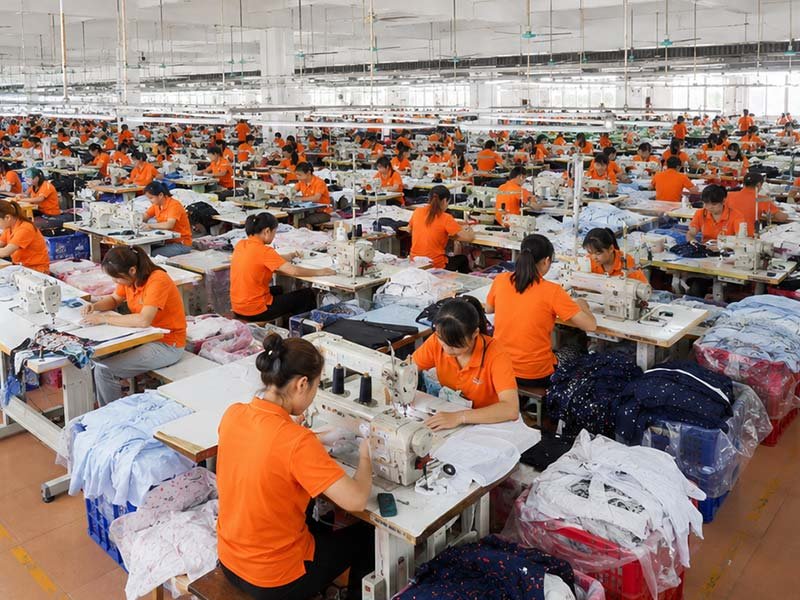
Duolan connects product development, fabric and trim review, pattern and sample work, process development, production coordination, QC, packing, delivery, and repeat records. Core factories support refined silhouettes, high-control styles, PP sample management, and closer workmanship discipline. Satellite factories support repeat production, color extensions, and volume balancing once standards are clear.
South China fabric resources, Humen trim resources, and long-term process partners support fabric matching, lining selection, trims, print, embroidery, washing, finishing, and lightweight decorative updates. For soft tailored dresses, material decisions influence drape, structure, recovery, seam behavior, comfort, care, movement, pressing, and final appearance.
For soft tailoring programs, Duolan’s value lies in a full chain: style direction to pattern, pattern to sample, sample to PP standard, PP standard to production, production to QC, QC to delivery, and delivery to future reorder planning.
Custom Dress Manufacturer for Soft Tailoring Fashion Brands case studies
Duolan respects brand confidentiality, so program examples are described by region, product direction, development challenge, order scale, and control focus. Soft tailoring work is best shown through what was protected: structure, softness, fabric, movement, sample standard, and bulk consistency.
US Office-to-Evening Program
A US office-to-evening dress brand developed soft tailored midis, relaxed sheaths, and belted work-to-dinner dresses.
The main challenge involved natural shoulder, comfortable waist shaping, smooth back line, crepe quality, and pressing standard.
- Program scale: 12–18 styles across midi, sheath, and belted silhouettes.
- Order planning range: approximately 30,000–50,000 pieces across launch colors and repeat needs.
- Control focus: base pattern, crepe review, lining, zipper, movement ease, PP sample, and final garment presentation.

Australian Contemporary Capsule
An Australian contemporary label developed wrap dresses, shirt dresses, soft A-line dresses, and fluid tailored styles.
The main challenge involved movement comfort, wash stability, shade extension, fabric body, and sample-to-bulk consistency.
- Program scale: 15–25 styles across wrap, shirt, soft A-line, and fluid silhouettes.
- Order planning range: approximately 40,000–70,000 pieces across seasonal launch planning.
- Control focus: fabric-to-pattern review, fit sample, movement check, PP approval, pressing, and shade notes.

UK Premium Workwear Program
A UK premium workwear brand developed ponte sheaths, soft suiting midis, and day-to-evening tailored dresses.
The main challenge involved fabric recovery, surface stability, shoulder-waist balance, size range comfort, and repeat production.
- Program scale: 10–16 styles across ponte, soft suiting, and compact woven silhouettes.
- Order planning range: approximately 20,000–40,000 pieces for controlled launch production.
- Control focus: fabric recovery review, pattern record, size set review, movement check, and final QC.

FAQ for Soft Tailoring Dress Manufacturing
Yes. Duolan can review brand mood, reference styles, target market, price position, core silhouettes, preferred fabric direction, and existing product line before development starts. The goal is to turn brand direction into patterns, fabric choices, sample stages, and production standards suited to soft tailoring programs.
Common options include crepe, soft suiting fabrics, twill, ponte, compact knit, linen blends, matte satin, silk-touch woven, cotton blends, and structured lightweight wovens. The best choice depends on silhouette, season, care requirement, structure level, drape, comfort, and pressing response.
Duolan reviews fabric body, shoulder structure, waist ease, lining, seam method, pressing pressure, and movement comfort before approval. Soft tailored dresses need enough structure to look polished while avoiding hard shoulder lines, tight waists, heavy linings, or overly sharp pressing.
Yes. Duolan can support soft tailored dresses designed for office, meeting, travel, dinner, and social occasions. The development review can include wrinkle behavior, movement comfort, fabric recovery, lining comfort, color palette, PP sample standard, and repeat production planning.
Shoulder and waist balance are reviewed through pattern, fit sample, fabric body, lining, and movement. Duolan checks shoulder slope, armhole, sleeve opening, front length, side seam, waist height, belt placement, back width, and garment ease before moving into PP approval.
Yes. Fit sample review can include sitting comfort, walking movement, arm lift, waist pressure, back mobility, slit safety, and garment recovery. Soft tailoring needs real movement review because static measurements cannot fully show comfort, drape, and daily wearability.
Yes. PP samples help confirm final fabric, trims, measurements, construction, workmanship, labels, pressing, and packing before bulk production. Golden samples can support reorder control and QC comparison. Soft tailored programs benefit from both references because structure and softness must remain consistent.
Shape difference can be reduced through pattern locking, fabric and trim confirmation, PP sample approval, production method alignment, inline shape checks, pressing control, final inspection, and packing standard. Duolan connects approved sample details with production instructions before bulk starts.
Yes. Capsule and repeat programs can be developed around core silhouettes, shared fabrics, controlled colors, and reusable pattern logic. Duolan can support soft tailored midis, relaxed sheaths, wrap dresses, shirt dresses, belted styles, and office-to-evening programs within one coordinated development plan.
Useful materials include tech pack, reference images, original sample photos, brand fit direction, target market, fabric preference, color palette, size range, sample goal, target quantity, launch date, and repeat plan. Clear information helps Duolan review silhouette, fabric, movement, production readiness, and bulk consistency.

Send Your Soft Tailoring Dress Program
Share your tech pack, reference style, original sample, brand fit direction, fabric preference, color palette, target price position, sample purpose, target quantity, size range, and launch timing. Duolan can review the program around soft structure, fabric body, movement comfort, pattern route, PP approval, production feasibility, QC standards, and repeatable bulk shape.
A useful project brief may include:
- Dress category, desired silhouette, brand mood, target market, and wearing occasion.
- Fabric direction, lining requirement, trim details, pressing expectation, and color palette.
- Sample goal, current stage, order plan, size range, delivery window, and future production plan.


