Skip to content
Custom Dress Manufacturer for Technical Design Directors
Custom dress development and manufacturing for Technical Design Directors managing fit standards, tech pack execution, pattern correction, graded specs, PP approval, TOP review and bulk consistency.Duolan helps technical design teams turn spec sheets, POMs, construction notes, fit comments and approved samples into controlled dress production standards for complex womenswear programs.
- 650–1,200 pattern and sampling equipment units support pattern trials, sample revisions and fit correction.
- 300–400 pattern and sample development team members support proto, fit, PP and technical sample review.
- 15,000–35,000 monthly sample cycles support multiple sample stages across complex dress programs.
- 3,000–8,000 monthly style development flows support parallel tech pack review and sample development.
- 300 sewing lines plus 50+ flexible lines support sample-to-bulk technical standard transfer.
- 140–180 quality, data and system support staff support QC feedback, issue records and ERP maintenance.
- 12,000–20,000 equipment units across the group support cutting, sewing, finishing, inspection and packing execution.








Technical Design Directors Duolan Works With
Technical Design Directors
- Tech pack, spec sheet, POM and construction notes are reviewed before sampling.
- Fit comments are translated into pattern, measurement, construction or trim actions.
- Approved PP standards remain connected with bulk QC and technical archives.
Senior Technical Designers
Senior Technical Designers need accurate sample response and fewer repeated fit issues. Duolan supports technical sample review across bust, waist, hip, neckline, shoulder, back opening, slit, hem and garment balance.
- Measurement points are checked against dress structure and fabric behavior.
- Sample revisions are recorded by issue, correction and approval stage.
- Fit updates move into spec sheets, PP notes and QC focus.
Fit and Spec Teams
- Bust point, waist placement, hip level, strap length and CB length are reviewed by style.
- Tolerance is adjusted by garment category, fabric and risk zone.
- Bulk measurement checks follow approved POM logic.
Pattern and Sample Review Teams
- Pattern corrections are linked with sample version and fit comments.
- Revision records preserve change reason and next sample target.
- Fit-approved updates move toward PP and production standards.
QC and Technical Compliance Teams
QC and technical compliance teams need garment-specific inspection points. Duolan supports PP sample comparison, first-piece review, inline technical QC, final inspection and packing checks aligned with approved specs.
- QC checks cover POM, tolerance, construction, trims, surface and labels.
- First-piece review compares production output with PP standard.
- Final technical inspection includes garment presentation and packing accuracy.
Reorder and Core Fit Teams
- Approved fit records support new colors and repeat runs.
- Previous QC findings become reorder inspection points.
- Pattern and BOM archives reduce repeated technical clarification.
Why Technical Design Directors Need a Different Manufacturer
Technical Design Directors do not need a factory able to copy a picture. They need a manufacturer able to read garment files, understand fit comments, apply pattern correction, respect tolerance and keep approved standards stable in bulk production.
A corset dress may fail at cup placement, boning position, waist support, back closure or zipper tension. A bodycon dress may fail through poor stretch recovery, weak opacity, distorted side seams or unstable grading. A satin dress may fail through zipper waves, seam tension, slit height, hem balance or post-packing creases. These are technical execution problems, not simple sewing problems.
Duolan manages custom dress programs through tech pack review, spec clarification, fit sample correction, pattern update, PP technical lock, first-piece comparison, inline QC and reorder archive. The goal is to help technical design teams reduce correction friction and keep fit, construction and measurements consistent from sample room to production line.
- Spec clarity: Flat sketch, spec sheet, BOM, POM, construction notes and packing requirements need early review.
- Fit translation: Fit comments must become pattern, measurement, trim, lining or construction actions.
- Pattern traceability: Each correction needs version control and sample-stage record.
- Fabric-sensitive grading: Stretch, satin, mesh, lace, sequin and structured fabrics need different size logic.
- PP technical lock: Approved specs, trims, construction, tolerance and packing need production-ready confirmation.
- Bulk consistency: First-piece, inline and final inspection must compare against approved technical standards.
- Reorder memory: Pattern version, BOM, fit notes, PP records and QC findings support future production.

How Technical Design Directors Evaluate a Dress Manufacturer
Can the Factory Read a Complete Tech Pack?
- Flat sketches are reviewed against garment structure and body zones.
- BOM is checked for fabric, lining, trims, labels and packing materials.
- Construction notes are reviewed for sewing, support and finishing requirements.
- Packing instructions are linked with garment surface and channel needs.
Can Missing Technical Points Be Flagged Early?
Duolan prepares a technical gap list before sampling or bulk preparation.
- Missing measurements and POMs are flagged.
- Unclear construction details are clarified.
- Trim and BOM versions are checked.
- Packing, label and QC requirements are confirmed before production.
Can Fit Comments Become Pattern Correction?
- Comments are grouped by garment zone and issue type.
- Correction actions are connected with sample version.
- Pattern changes are reviewed before next sample.
- Approved corrections move into PP standard.
Can Dress-Specific Construction Be Controlled?
- Corsets need support structure and cup placement control.
- Halter and strap dresses need tension and anchor review.
- Cut-outs and backless styles need edge and coverage control.
- Satin and sequin styles need seam, surface and packing control.
Can Grading and Tolerance Stay Realistic?
- Bodycon styles need stretch and recovery review.
- Corset styles need cup, waist and back structure control.
- Maxi styles need length, sweep and hem balance review.
- Mesh and lace styles need coverage and lining stability.
Can PP and TOP Review Prevent Bulk Drift?
- PP sample locks fabric, trims, specs and workmanship.
- First-piece review checks production-line execution.
- Inline QC monitors measurements and construction risk.
- Final inspection confirms approved technical standard.
Can Repeat Orders Preserve Technical Memory?
A repeat style should not lose approved fit. Duolan preserves pattern version, spec sheet, BOM, PP sample notes, fit correction history, QC findings and packing method for future runs, new colors and fabric updates.
Where Technical Dress Programs Break Down
Tech Pack Is Read Visually, Not Technically
Some factories treat a tech pack as a picture file. They follow the sketch but miss specs, POM, stitch notes, construction details, BOM versions or tolerance. The result is a sample looking close while failing technical review.
Duolan response: Tech pack review checks visual design, measurement logic, BOM, construction and packing requirements before sampling.
- Flat sketch and spec sheet are reviewed together.
- POMs are mapped by garment structure.
- Construction details are checked before sample cutting.
- Missing information is listed before development moves forward.
Fit Comments Are Misinterpreted
Fit comments require technical translation. A note about bust point, waist gaping, side seam twist, strap tension or hem imbalance may need pattern, construction, trim or lining adjustment.
Duolan response: Fit comments are classified by garment zone and converted into correction actions.
- Bust, waist, hip, shoulder, back and hem issues are separated.
- Pattern correction is distinguished from sewing or fabric issues.
- Sample version records track changes.
- Approved fit updates move into PP standard.
Pattern Correction Is Not Version-Controlled
A pattern may be changed without clear record. Later samples may repeat old issues or ignore approved correction. Version control matters for technical teams managing several styles and sample rounds.
Duolan response: Pattern version, correction reason and sample stage remain connected.
- Each correction is linked with fit comment and sample version.
- Approved pattern updates are recorded before PP.
- Rejected adjustments are not carried forward silently.
- Reorder files preserve final pattern record.
Graded Specs Do Not Match Fabric Behavior
Mechanical grading can distort dresses. Stretch jersey, power mesh, satin, lace, woven crepe and sequin fabric all behave differently across sizes.
Duolan response: Grading review considers fabric, silhouette, garment zone and fit risk.
- Stretch styles are reviewed for recovery and transparency.
- Corset styles are reviewed for cup, waist and back fit.
- Maxi styles are reviewed for length and sweep balance.
- Lace and mesh styles are reviewed for coverage across sizes.
PP Sample Does Not Lock Enough Details
A PP sample approved only by appearance cannot protect bulk production. Technical teams need specs, construction, trims, labels, packing, tolerance and QC points locked before production.
Duolan response: PP technical lock connects garment standard with BOM, spec sheet, QC focus and packing method.
- Final fabric and trim versions are confirmed.
- POM and tolerance are reviewed.
- Construction notes are aligned with production.
- Packing standard is checked before bulk.
Bulk QC Checks Only General Defects
General QC may catch stains, loose threads and obvious measurement problems but miss fit, POM, construction and sample drift. Technical dress QC needs garment-specific checkpoints.
Duolan response: Bulk inspection follows approved POM, PP sample, construction notes and risk zones.
- Measurements are checked by POM mapping.
- Fit-sensitive zones receive added review.
- Construction and trim details are compared with PP.
- Deviations are recorded for correction and reorder learning.
Reorder Technical Files Are Incomplete
Core dresses drift when repeat production lacks earlier technical files. Missing pattern versions, BOM, fit comments, QC findings or packing methods can force repeat styles into unnecessary redevelopment.
Duolan response: Technical archives preserve production memory for future runs.

Duolan Tech Pack-to-Bulk Execution System
Step 1|Tech Pack and Spec Review
Step 2|Technical Gap and Risk List

Step 3|Pattern and Sample Route Planning
Step 4|Fit Comment Translation
Step 5|PP Technical Lock

Step 6|Bulk Tolerance and QC Control
Step 7|Technical Archive for Reorders
Technical Dress Categories Duolan Supports

Corset and Bustier Dresses

Bodycon and Stretch Dresses

Halter and Strap Dresses

Cut-Out and Backless Dresses

Ruched and Draped Dresses

Lace and Mesh Dresses

Satin Occasion Dresses

Sequin and Embellished Dresses
Technical Design Execution Matrix
Technical design teams need manufacturing actions aligned with files, samples and production standards. The matrix below shows how Duolan manages key technical areas from review to bulk control.
| Technical Area | Common Risk | Duolan Control Focus |
|---|---|---|
| Tech Pack Review | Missing specs, unclear construction | File gap list and clarification before sampling |
| POM Control | Wrong measurement points or inconsistent checking | POM mapping by dress structure |
| Fit Comments | Comments not translated into corrections | Pattern update, measurement change, construction note |
| Pattern Version | Revisions lose traceability | Version record and sample-stage tracking |
| Grading | Sizes distort across fabric and fit | Fabric-sensitive grading review |
| PP Sample | Approved sample lacks production detail | PP checklist with specs, trims, QC and packing |
| TOP / First Piece | Bulk starts with unnoticed drift | First-piece comparison against PP standard |
| Reorder Files | Core style loses fit memory | Pattern, BOM, spec and QC archive |
Tech Pack, Spec Sheet and POM Readiness
Tech Pack Review
- Flat sketch is reviewed against garment structure.
- Detail drawings are checked for sewing and trim requirements.
- Label and packing instructions are confirmed early.
- Missing technical information becomes a clarification list.
Spec Sheet and POM Review
Spec sheet review focuses on whether measurement points suit the dress style. A corset, satin slip, mesh bodycon, printed maxi and halter dress need different POM logic. Duolan reviews bust point, waist placement, hip level, strap length, slit height, CB length, sweep, hem and neckline measurements.
- POM mapping follows garment structure.
- Fit-sensitive zones are highlighted before sampling.
- Measurement logic is reviewed against fabric behavior.
- Approved POMs move into bulk QC instructions.
Tolerance Review
- Tolerance is reviewed by garment zone.
- Fabric behavior affects acceptable measurement range.
- PP sample confirms tolerance before production.
- Bulk QC checks high-risk POMs first.
BOM and Trim Version Review
- Fabric and trim versions are checked before sample cutting.
- Support materials are reviewed against garment structure.
- Label and packing items are confirmed before shipment planning.
- BOM updates remain tied to sample and PP records.
Missing Technical Information List
Duolan organizes unclear points into a technical list for review. Missing tolerance, unclear POM, unspecified trim, incomplete construction note or absent packing standard can be resolved before sample or bulk work begins.
Fit Sample and Pattern Correction Support
Fit Comment Classification
- Bust comments may involve cup, dart, seam, strap or lining.
- Waist comments may involve side seam, CB, elastic or shaping.
- Hip comments may involve fabric stretch, seam balance or grading.
- Hem comments may involve length, sweep, pressing or fabric fall.

Pattern Correction Logic
Pattern correction follows fit cause. Bust point too low may require front panel, cup, strap or neckline adjustment. Waist gaping may require waist curve, side seam, back opening or lining correction. Hip tightness may require hip measurement, side seam, stretch review or size grading update.
- Corrections are linked with exact garment zone.
- Pattern changes are recorded by version.
- Measurement updates move into spec sheet.
- Repeated issues are flagged before next sample.

Construction-Related Fit Issues
- Construction notes are updated with fit corrections.
- Trim or lining changes are reviewed when needed.
- Sewing method is checked for garment stability.
- Fit and workmanship are reviewed together before PP.

Sample Version Control
Each sample version needs correction history. Duolan records issue, correction, sample stage, approval status and next target. Version control helps technical teams avoid repeating the same fit problems across multiple styles.

Fit-to-PP Transition

Grading, Size Set and Tolerance Control
Fabric-Sensitive Grading
- Stretch fabric needs recovery and transparency review.
- Satin needs length, seam and zipper stability review.
- Lace and mesh need coverage and motif placement review.
- Sequin fabric needs weight and seam bulk review.
Dress Zone Grading
- Corset zones need cup, waist and back support control.
- Halter zones need neck and strap tension review.
- Bodycon zones need hip and waist balance.
- Maxi zones need length and hem consistency.
Size Set Review
- Proportion and garment length are checked across sizes.
- Support points are reviewed in smaller and larger sizes.
- Stretch styles are checked for recovery and coverage.
- Size set comments become grading or pattern updates.
Tolerance by Garment Type
Bulk Measurement Control
Construction Detail and Technical Sewing Control

Support Structures
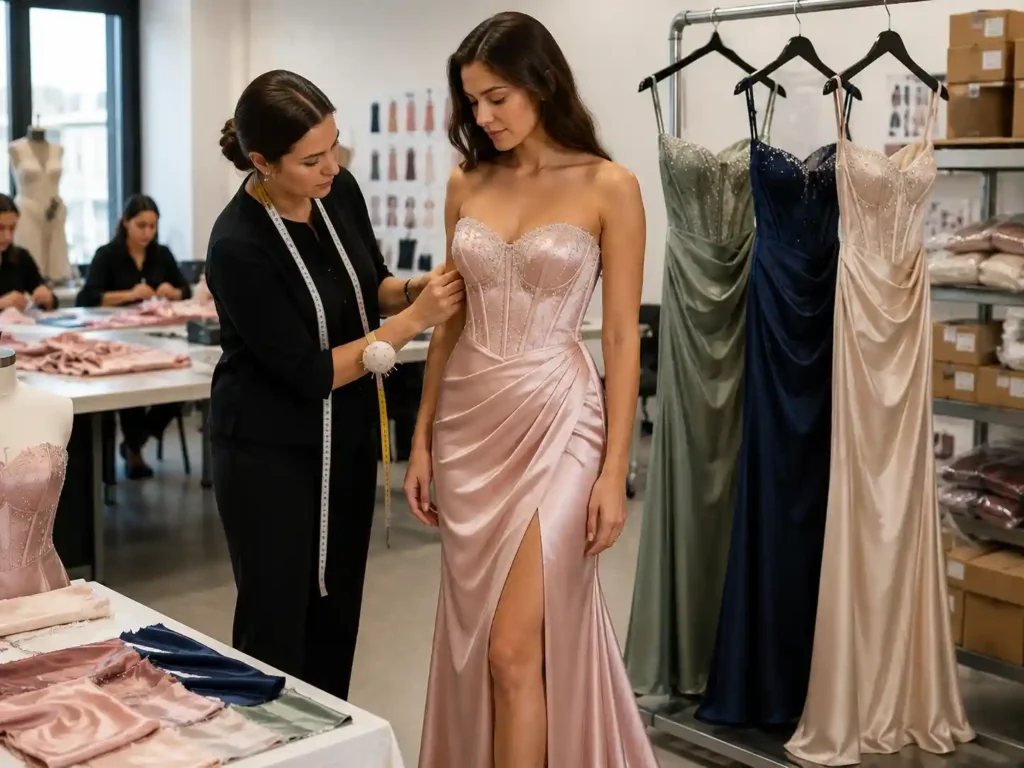
Corset, bustier and strapless dresses need cup, boning, lining, grip, zipper reinforcement, back closure and waist support working together. Duolan reviews support details during sample and PP stages so structure remains stable in bulk.
- Cup position is checked against bust point and neckline.
- Boning placement is reviewed for support and comfort.
- Lining and grip details are matched with fabric behavior.
- Back closure and zipper reinforcement are checked before PP.

Edge and Opening Control
- Cut-out edges are checked for stability.
- Back openings are reviewed for support and coverage.
- Slits are checked for height, seam strength and movement.
- Mesh panels are reviewed for stretch and lining needs.

Seam and Surface Control
Satin, lace, mesh, sequin and velvet need different sewing and finishing standards. Duolan reviews seam allowance, stitch type, needle choice, pressing limit, surface protection and packing method according to fabric behavior.
- Satin needs seam tension and zipper control.
- Lace needs motif and edge finish review.
- Mesh needs seam stability and snag control.
- Sequin needs seam bulk and lining comfort review.
Ruching and Draping Control
Closure and Hardware Control
Zippers, hooks, eyelets, sliders, rings, drawcords and adjusters affect fit and durability. Duolan reviews hardware position, reinforcement, comfort and appearance before PP approval and production release.
PP Sample, TOP Review and Bulk Technical QC
PP Sample Technical Lock
- Final material and trim versions are checked.
- POM and tolerance are confirmed.
- Construction details are reviewed against sample comments.
- Packing and label requirements are locked.

TOP / First-Piece Review
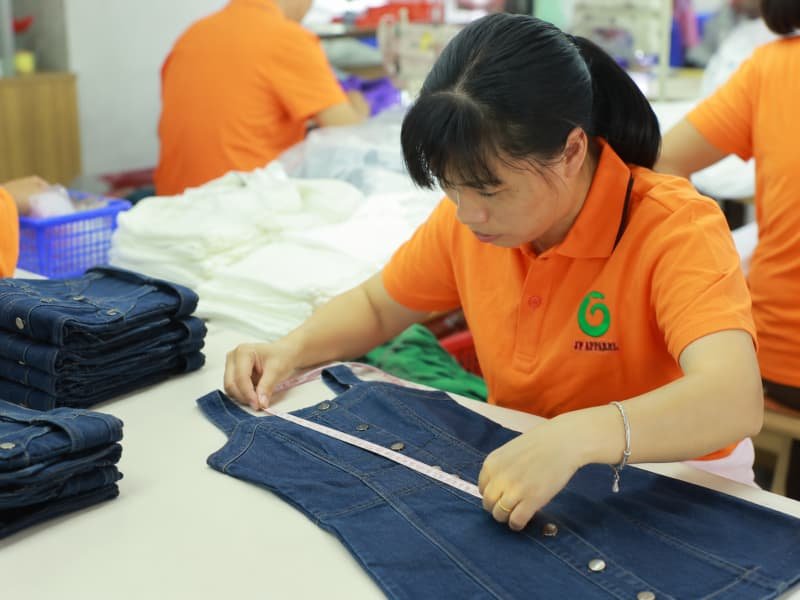
TOP or first-piece review checks whether production follows PP standard. Duolan compares the first production garment against PP sample, POM, BOM, pattern version and construction notes. Corrections can be made before output expands.

Inline Technical QC
Final Technical Inspection
Final inspection reviews specs, POM, tolerance, appearance, workmanship, labels, packing and garment presentation. For technical dress programs, final inspection is measured against approved files and PP sample, not visual judgment alone.

Deviation and Correction Record

Sample-to-Bulk Technical Risk Table
Technical dress programs need risk control before production scale grows. The table below connects common sample-to-bulk problems with Duolan’s control focus.
| Technical Risk | Bulk Breakdown | Control Before Scale |
|---|---|---|
| Fit Drift | Approved fit changes in bulk | PP sample and first-piece comparison |
| POM Inconsistency | Different teams measure differently | POM mapping and measurement guide |
| Pattern Revision Loss | Old correction not applied | Pattern version and sample record |
| Grading Distortion | Larger or smaller sizes lose balance | Size set review and fabric-sensitive grading |
| Construction Change | Sewing method changes silently | Construction note and line briefing |
| Trim Version Error | Wrong zipper, lining or hardware used | BOM and trim version control |
| Tolerance Failure | Bulk outside approved limits | Inline measurement and final QC |
| Reorder Fit Drift | Repeat style loses approved shape | Technical archive and previous QC review |
Technical Design-led Dress Program Case Studies
United States|Corset Fit and PP Standard Program
- Technical Task: Improve corset fit, support structure, back closure and satin surface consistency.
- Fit Challenge: Early samples showed cup position variation, zipper waves and uneven waist support.
- Duolan Response: Duolan reviewed fit samples, updated pattern records, adjusted support details and locked PP checklist items.
- Production Result: Bulk production gained more stable cup placement, waist structure and zipper control.

United Kingdom|Mesh and Cut-Out Technical Program
- Technical Task: Control mesh coverage, cut-out edges, halter tension and bodycon fit.
- Fit Challenge: Several samples needed better POM mapping, lining adjustment and edge stability.
- Duolan Response: Duolan reviewed POMs, adjusted lining, updated edge binding and checked size set feedback.
- Production Result: Exposed structures and fitted silhouettes became easier to control in bulk.

Australia|Printed Maxi and Fit Balance Program
- Technical Task: Manage maxi length, hem sweep, print placement, shrinkage and strap balance.
- Fit Challenge: Long silhouettes needed better tolerance around CB length, hem and shoulder support.
- Duolan Response: Duolan reviewed specs, checked fabric behavior, updated hem tolerance and compared first pieces against PP standard.
- Production Result: Bulk length, hem balance and print placement became more consistent across sizes and colors.

Europe|Repeat Core Dress Technical Archive
- Technical Task: Preserve repeat fit, pattern version, BOM, QC history and updated trim records.
- Fit Challenge: New color runs needed to keep earlier approved measurements and garment balance.
- Duolan Response: Duolan used spec sheets, PP notes, pattern correction history, BOM files and previous QC records.
- Production Result: Repeat production carried stronger fit memory and fewer repeated clarification rounds.
Send Your Technical Design Brief
A strong technical brief gives Duolan the information needed to review fit, specs, construction, sample stage and bulk readiness. Share available files and current concerns, and Duolan can recommend the next technical development or production step.
Share Your Technical Files
- Tech pack, spec sheet, POM, graded measurements, BOM, construction notes, flat sketch, stitch detail, fit comments, PP standard or TOP comments.
- Sample photos showing front, side, back and close-up areas needing technical review.
- Existing records such as pattern version, approved sample photos, QC comments, packing notes or reorder files.
Share Your Fit and Construction Concerns
- Fit concerns around bust point, waist gaping, hip fit, strap position, armhole, neckline, back opening, slit height, hem balance, side seam or garment length.
- Construction concerns around zipper waves, lining coverage, boning, cup support, edge binding, ruching, lace placement, sequin seam bulk or satin surface.
- Measurement concerns around tolerance, grading, size set, POM mapping or bulk deviation.
Share Your Sample and Production Stage
- Current stage: proto sample, fit sample, size set, photo sample, PP sample, TOP review, bulk preparation, repeat order or supplier transition.
- Production plan including target quantity, size range, colorways, PP approval window, bulk timeline, QC requirement, packing method and shipping route.
- Main technical priority: fit correction, pattern update, grading review, PP locking, first-piece review, bulk QC or repeat archive.