Skip to content
Custom Dress Manufacturer for Transparent Quotation Requirements
Specification-based dress quotations built around confirmed materials, construction, quantities, quality standards, packaging, and production conditions.
Duolan supports established fashion brands, product teams, buying offices, and sourcing organizations that require more than a single unexplained unit price.
- Quotation basis aligned with style specifications and order structure
- Fabric, lining, trims, workmanship, and packaging reviewed separately
- Included items, pending decisions, exclusions, and revision conditions clarified
- Sample development connected to bulk production readiness
- Multi-style programs evaluated according to complexity, volume, and launch timing
Manufacturing and quotation facts:
- 10-30 coordinated dress styles can be reviewed under one quotation framework for material, construction, color, size and packaging assumptions.
- 20,000-80,000 garment programs require style-level quotation records rather than one unexplained average price.
- A United States partywear quotation program covered 18 styles and 42,600 pieces across sequin, mesh, satin and corset construction groups.
- A United Kingdom occasionwear quotation review covered 12 styles and 28,800 pieces, balancing protected visual features with revised construction logic.
- A European multi-brand sourcing program covered 26 styles and 73,200 pieces with EXW/FOB, packaging, testing and validity assumptions separated for comparison.
Quotation Support for Established Fashion Teams
Fashion Brand Teams
- Brand positioning and intended retail level
- Number of styles and colorways
- Initial quantity and repeat-order expectations
- Required product presentation and packaging
- Development, launch, and replenishment schedule
Product Development Teams
- Design and construction review
- Fabric and trim clarification
- Pattern and fit requirement assessment
- Sample-stage definition
- Missing-information identification
Buying and Procurement Teams
- Comparable cost assumptions
- Included and excluded services
- Quantity-based price conditions
- Quotation validity
- Change and re-quotation rules
Sourcing Offices
Sourcing offices manage communication between brands, product teams, mills, manufacturers, inspection companies, and logistics partners. They need organized documentation and traceable decisions. Duolan supports structured sourcing work through:
- Style-level quotation records
- Material and workmanship summaries
- Sample and bulk confirmation points
- Production-path planning
- Quality, packing, and delivery documentation
Transparent Quotations Need More Than One Price
A Defined Quotation Basis
A credible custom dress quotation begins with a stated product basis. The document should identify the style, expected fabric, lining, trims, major construction features, quantity, color structure, size range, packaging, delivery basis, and approval status.Satin quotations can change according to:
- Fiber composition and fabric weight
- Width and cutting yield
- Stretch or non-stretch construction
- Gloss level and surface sensitivity
- Bias-cut or straight-grain layout
- Full, partial, or no lining
- Drape complexity and seam length
- Pressing and packing protection
Duolan reviews the quotation basis before treating a price as suitable for commercial planning.
Defined Revision Conditions
A quotation may require revision when commercial or technical conditions change. Common triggers include:
- Replacing the main fabric
- Adding lining or structural layers
- Changing embellishment density
- Reducing the quantity
- Adding more colors
- Extending the size range
- Introducing custom packaging
- Compressing the production schedule
- Changing the trade term
Clear change conditions protect both sides from misunderstanding.
Clear Pending Decisions
- An early cost direction
- A quotation based on a nominated assumption
- An alternative-material option
- A sample-stage estimate
- A final bulk quotation after specification locking
Visible Included Items
A quotation should explain what the stated price covers.
Depending on the agreement, included items may involve main fabric, lining, standard trims, sewing, finishing, labels, individual packing, export carton packing, or agreed factory-side quality control.
Duolan separates major inclusions so procurement teams can understand the commercial boundary.
Stated Exclusions
Testing, third-party inspection, international freight, duties, special certificates, nominated laboratory fees, custom molds, unusual packaging, or last-minute air shipment may sit outside the unit price.
Exclusions should appear before purchase-order approval, not after production begins. Duolan confirms whether relevant items are included, excluded, pending, or payable directly to a nominated service provider.
Quotation Validity
Material prices, exchange conditions, capacity availability, and delivery schedules can change. A professional quotation should carry a date, version, quantity basis, currency, trade term, and validity period.
Duolan reviews expired quotations before production confirmation, especially when fabric, trims, quantity, or delivery timing has changed.
Why Similar Unit Prices May Not Be Comparable
Two quotations can show similar numbers while covering different materials, workmanship standards, packaging requirements, and delivery responsibilities.
| Quotation Area | Incomplete Quotation Risk | Transparent Quotation Requirement |
|---|---|---|
| Main Fabric | Described only as satin, mesh, jersey, or lace | Composition, weight, width, finish, stretch, color process, and availability stated |
| Lining | Omitted or assumed | Lining type, coverage, color, opacity, and construction purpose defined |
| Trims | Grouped as standard accessories | Zipper, hook, cups, boning, elastic, hardware, thread, and closures clarified |
| Construction | Visual appearance used as the only basis | Seams, panels, draping, gathering, support, openings, and finishing methods reviewed |
| Quantity | One total quantity without style breakdown | Quantity stated by style, color, and relevant size structure |
| Size Range | No grading assumption | Base size, size range, grading scope, and extended-size review noted |
| Embellishment | Described only as beading or sequins | Material type, density, placement, attachment, repair, and protection requirements defined |
| Packaging | Added after production | Labels, hangtags, barcodes, polybags, folding, carton marks, and carton requirements stated |
| Testing | Responsibility unclear | Required tests, nominated standards, sample quantity, and payer identified |
| Trade Term | Price cannot be compared fairly | EXW, FOB, or other agreed basis clearly stated |
| Delivery | Production and freight timing mixed together | Material lead time, approval timing, production period, and shipping responsibility separated |
| Validity | Price treated as permanent | Issue date, version, validity period, and review triggers included |
A lower number may result from a lighter fabric, simpler lining, generic trims, reduced embellishment, basic packing, different trade terms, or unconfirmed quality requirements. Procurement decisions should be based on equivalent specifications rather than the number alone.
Prepare a Quotation-Ready Dress Brief
Style Reference
Useful files include:
- Flat sketches
- Marked reference photographs
- Original samples
- Close-up detail images
- Collection moodboards
Technical Specification
A tech pack should identify construction details that cannot be confirmed from an image. Seam type, panel layout, lining method, hem finish, zipper position, boning, cups, straps, gathers, draping, pleating, and embellishment placement affect both costing and production planning.
Incomplete details may be listed as pending decisions rather than silently assumed.
Measurement Chart
Provide garment measurements, base size, measurement method, tolerance requirements, and grading rules. Duolan can work with brand-specific standards rather than imposing a generic factory chart.
Common project ranges may cover XXS-3XL or US 0-18. Extended ranges require separate review of grading, material consumption, support structure, and fit consistency.
Fabric Direction
State the preferred material type, composition, weight, hand feel, stretch, drape, transparency, surface finish, and color direction.
A physical swatch is helpful when visual and tactile characteristics are central to the design.
Include any nominated mill, certification, recycled-content, or testing requirement.
Lining Requirement
Color matching between shell and lining should also be defined.
Trim and BOM
For nominated trims, provide supplier details, item numbers, colors, dimensions, and delivery responsibility.
Construction Details
Construction decisions often carry more cost impact than visual sketches suggest.
Colorways
Multiple colors can influence fabric minimums, dyeing, sourcing, production setup, inspection, and packing complexity.
Size Range
Confirm the sellable size range, sample size, fitting model requirement, grading scope, and any plus-size or petite standards.
A wider size range may affect consumption, marker efficiency, panel dimensions, strap length, cup grading, support, and placement of design details.
Order Structure
Useful information includes:
- Number of styles
- Quantity per style
- Quantity per color
- Expected repeat orders
- Planned launch waves
Branding and Packaging
Late packaging confirmation can delay shipment even when garments are finished.
Launch and Delivery
State the launch date, warehouse receiving window, photo-shoot date, inspection requirement, shipping method, destination, and preferred trade term.
A workable timeline should include material sourcing, sampling, revisions, approval, production, inspection, packing, and transport buffers.
Six Steps Before a Quotation Is Confirmed

Step 1|Project Brief Review
- Early cost direction
- Sample development quotation
- Material alternative assessment
- Formal bulk quotation
- Repeat-order price review

Step 2|Specification Check
Technical drawings, measurements, BOM information, construction notes, labels, packaging, and quality requirements are checked for missing or conflicting information. Questions are grouped by importance. Production-critical decisions are addressed before minor presentation details so the quotation process remains efficient.

Step 3|Material Review

Step 4|Construction Review

Step 5|Cost Direction
- Material-sensitive items
- Workmanship-sensitive items
- Quantity-sensitive items
- Pending sample decisions
- Potential alternatives

Step 6|Quotation Proposal
The quotation is prepared with the agreed basis, including quantity, currency, trade term, price scope, sample conditions, packaging basis, validity, and review triggers. For multi-style collections, styles may be grouped by material family, construction complexity, or production path to make internal review easier.
Nine Cost Drivers Behind Custom Dresses
Main Fabric
Important variables include:
- Usable width
- Marker efficiency
- Color minimums
- Batch availability
- Surface sensitivity
- Cutting loss
Lining and Support
Lining may provide opacity, comfort, shape retention, bust support, seam coverage, or structure.
A bodycon dress may need power mesh, while a corset style may require several internal layers.
Support components can include cups, boning, elastic, interfacing, stay tape, underwire, or stabilizing panels.
Embellishment
Beads, sequins, rhinestones, appliqués, embroidery, pearls, decorative chains, and specialty trims require density, placement, attachment, repair, and skin-contact review.
Costing should consider:
- Decorative material quantity
- Machine or hand application
- Seam clearance
- Replacement allowance
- Final inspection
- Protective packing
Pattern Complexity
A style with fewer visible details may still carry high technical complexity inside the garment.
Sewing Operations
Slippery satin, stretch mesh, lace placement, dense gathers, small cutouts, and hand-finished edges usually need more controlled handling than basic woven construction.
Trims and Closures
Zipper quality, hook strength, sliders, rings, eyelets, drawcords, shoulder adjusters, branded hardware, and specialty closures can change both material cost and sewing operations.
Custom finishes, color plating, logo development, or nominated suppliers may add minimum order conditions and longer lead times.
Material Wastage
Consumption should be reviewed against the real style and marker rather than assumed from garment length alone.
Order Structure
Color count and size assortment also influence efficiency.
Packaging and Timing
Branded labels, individual bags, tissue, hangers, retail boxes, barcode systems, assortment packing, carton standards, third-party inspection, and compressed timelines can affect total cost.
Delivery planning must separate garment production from international freight and destination handling.
Quotation Logic by Dress Construction

Satin Dresses
Satin quotations should identify fiber, weight, stretch, finish, width, lining, grain direction, panel layout, seam appearance, pressing, and packing protection. Cost-sensitive details include:
- Bias cutting
- Long draped panels
- Cowl necklines
- Surface-mark protection
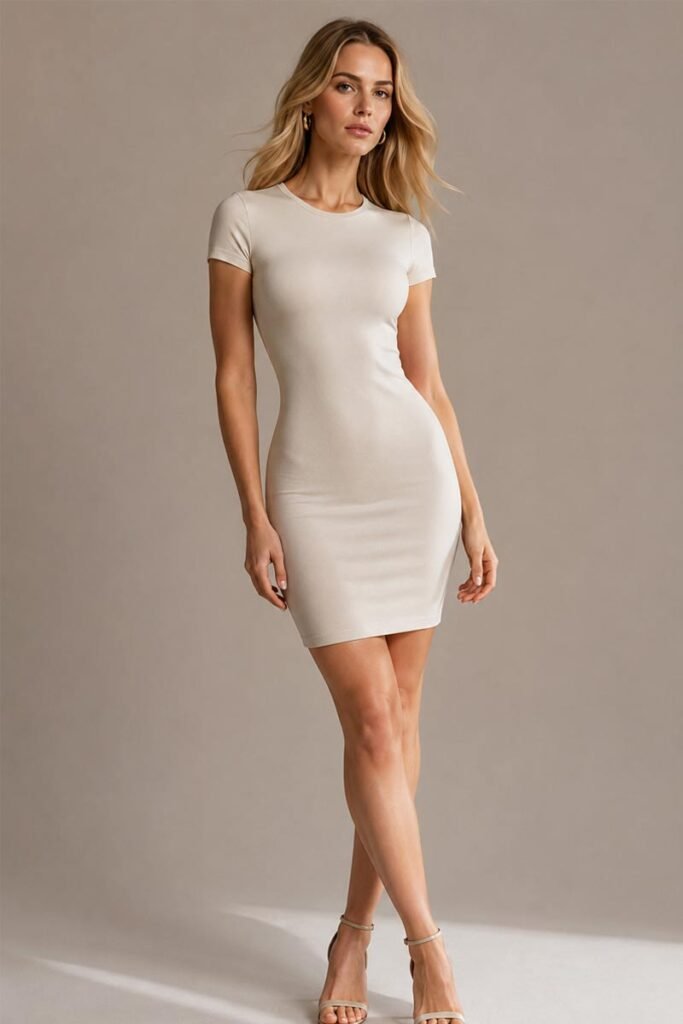
Bodycon Dresses

Corset Dresses

Mesh Dresses

Lace Dresses
Lace quotations should consider motif size, usable width, border use, placement matching, scalloped edges, transparency, lining, appliqué cutting, and seam concealment. Engineered motif placement creates more consumption and manual work than randomly cut all-over lace.

Sequin Dresses

Halter and Backless Dresses

Occasion Dresses
Occasion dresses may combine satin, mesh, lace, corsetry, draping, embellishment, sculpted shapes, and premium finishing. Quotation review should separate visual decoration from hidden structural work. Commercial planning also needs photo-sample quality, event-season timing, and reliable repeat-order standards.
Materials Must Support the Intended Dress Result
Fabric Performance Review
- Composition
- Weight
- Width
- Stretch direction
- Recovery
- Drape
- Transparency
- Surface finish
- Shrinkage
- Color stability
- Batch availability
Lining and Coverage Planning
Lining decisions influence opacity, comfort, body support, movement, seam appearance, and cost. The correct solution may involve:
- Full lining
- Bodice-only lining
- Skirt-only lining
- Power mesh support
- Cup lining
- Partial modesty panels
- Color-matched or skin-tone lining
For light colors, lining must be checked under realistic lighting. For stretch dresses, shell and lining recovery should work together. For draped satin, a heavy lining can damage the intended movement.
Alternative Material Evaluation
When the original material is unavailable, commercially unsuitable, too costly, or unstable for bulk production, Duolan can review alternatives against the intended dress effect. An alternative should be compared by:
- Appearance
- Hand feel
- Drape
- Stretch and recovery
- Opacity
- Sewing behavior
- Price
- Lead time
- Bulk consistency
Replacing material only by price can damage fit, silhouette, and brand presentation.
Color and Surface Review
The same color can appear different across satin, mesh, lace, jersey, lining, and hardware. Gloss, transparency, texture, and lighting influence visual results.
Color development may include Pantone references, lab dips, strike-offs, trim matching, and sample-garment approval. Metallic, ivory, champagne, red, black, emerald, skin tones, and pale shades often require additional attention.
Trims and Structural
Trims are part of garment engineering, not a minor finishing detail. Zippers, hooks, boning, cups, wires, elastic, straps, sliders, rings, eyelets, tapes, and interfacing must suit the expected wear and construction. Duolan evaluates:
- Strength and size
- Color matching
- Plating or finish
- Skin contact
- Wash or care requirement
- Minimum purchase quantity
- Replacement consistency
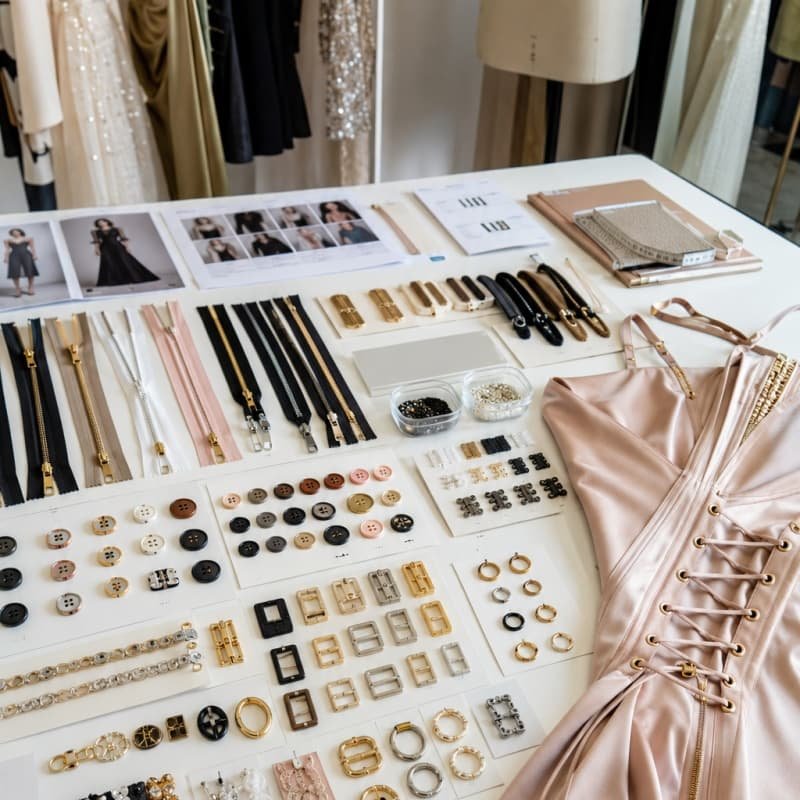
Design Details Must Become Measurable Standards
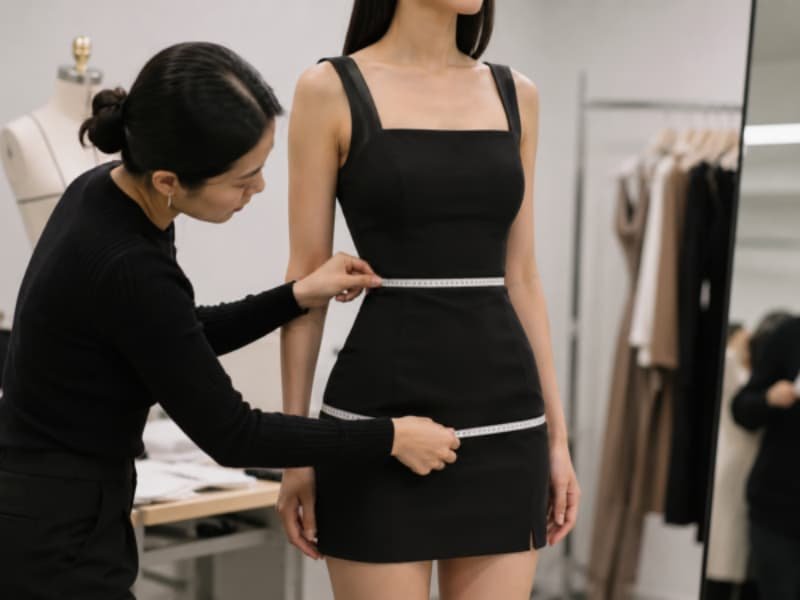
Fit and Measurement Priorities
Brand teams should identify priority measurements rather than treating every point equally. Bust, waist, hip, front length, back length, strap length, armhole, neckline, slit position, cup position, and hem length may require different tolerances.
Duolan can follow brand-specific measurement charts and fit comments. A clearly marked sample review is more useful than general comments such as “make it tighter” or “improve the shape.”

Bust and Waist Support
Corset, bustier, halter, strapless, backless, and deep-neck styles often require hidden support. Cups, boning, interfacing, power mesh, elastic, grip tape, wires, and internal seams influence cost and fit.
Support decisions should reflect the size range.
A construction suitable for one sample size may not grade reliably across a wider range without adjustment.

Openings and Closures
- Dressing ease
- Body stress
- Seam reinforcement
- Skin comfort
- Size grading
- Visual placement
- Bulk consistency

Silhouette and Proportion
Mini, midi, and maxi lengths alone do not define silhouette. Quotations may be affected by skirt volume, panel count, flare, draping, train length, asymmetric hems, gathered sections, and cut direction. Duolan reviews the relationship between:
- Bust, waist, and hip balance
- Bodice length
- Waist position
- Skirt volume
- Hem sweep
- Slit height
- Shoulder or neckline placement
- Back opening depth

Size Range Planning
- Fabric consumption
- Panel proportions
- Strap dimensions
- Cup grading
- Boning position
- Support requirement
- Print or embellishment placement
- Marker efficiency

Production Feasibility
A sample can look attractive yet remain unsuitable for stable bulk production. Construction must be repeatable across operators, sizes, colors, and production lines. Duolan reviews whether the design requires:
- A special sewing sequence
- A construction trial
- Additional reinforcement
- A workmanship reference
- A pilot run
- A first-piece approval
- Extra inline inspection
Sample Cost Is Not Bulk Unit Cost
Pattern Development
Material Preparation
Construction Trials
Sample Sewing
Revision Rounds
- Changes requested
- Measurements updated
- Materials changed
- Pending decisions
- Next approval purpose
Planning Ranges
Early scheduling may use the following working ranges after materials and specifications are available:
- Technical review: 1-3 working days
- Standard first sample: 7-15 working days
- Complex embellished or structured sample: 15-25 working days
- Standard revision sample: 5-10 working days
- Bulk production planning: commonly 25-45 days after PP approval and material readiness
From Cost Direction to Repeat Order Pricing
Early Cost Direction
Formal Bulk Quotation
Formal bulk quotation should follow approval of the relevant sample direction and confirmation of material, BOM, quantity, colors, size range, labels, packaging, testing, trade term, and delivery requirement. Formal pricing is more dependable because fewer assumptions remain.
Sample Proposal
A sample proposal defines the development method, sample fee, material basis, construction trials, approximate timing, and approval path. It may separate:
- Pattern and sample work
- Exact or substitute materials
- Special processes
- Revision conditions
- Courier cost
- Bulk-price status
Repeat Order Review
Repeat-order pricing is reviewed against the preserved production standard and current commercial conditions. Relevant checks include:
- Same or revised material
- Same or revised color
- Quantity changes
- Size-mix changes
- Packaging changes
- Material-price validity
- Production timing
- Destination and trade term
When a Quotation Needs Formal Review
Quotation changes should follow an identifiable technical or commercial reason rather than an unexplained price increase.
| Project Change | Main Cost Effect | Re-quotation Requirement |
|---|---|---|
| Main fabric replacement | Meter price, width, yield, shrinkage, handling, and lead time | Normally required |
| Added or revised lining | Material, consumption, construction, pressing, and sewing time | Required |
| More colorways | Fabric minimums, lab dips, sourcing, setup, and packing separation | Usually required |
| Reduced quantity | Material minimums, setup allocation, labor efficiency, and packaging cost | Required |
| Wider size range | Pattern, grading, consumption, support, and marker efficiency | Review required |
| Added cups or boning | Components, internal layers, operation count, and fit validation | Required |
| Embellishment revision | Material density, application time, repair, inspection, and packing | Required |
| Changed zipper or hardware | Material price, sourcing minimum, color, plating, and construction | Review required |
| New print or embroidery | Artwork, setup, strike-off, color approval, placement, and wastage | Required |
| Custom retail packaging | Packaging development, printing, packing labor, volume, and carton plan | Required |
| Added testing | Laboratory fee, sample quantity, documentation, and lead time | Required |
| Compressed schedule | Material route, line planning, overtime, inspection buffer, or freight | Review required |
| Different trade term | Export handling, freight responsibility, insurance, or destination service | Required |
| Brand design revision after approval | Pattern, sample, material, workmanship, timeline, and production standard | Required |
MOQ Must Match the Project Structure
Style MOQ
Color MOQ
Fabric MOQ
Trim and Process MOQ
Custom zippers, plated hardware, branded buttons, eyelets, printed elastic, embroidery, digital print, screen print, heat transfer, special labels, and retail packaging may carry independent minimums.
MOQ review therefore needs a complete BOM rather than garment quantity alone.
Collection MOQ
A brand collection can sometimes be evaluated as a coordinated program. Shared fabrics, linings, trims, colors, labels, packaging, and delivery windows may create better commercial logic than treating every style in isolation. Duolan can assess whether styles should be grouped by:
- Material family
- Color family
- Production path
- Delivery wave
Commercial Growth Path
Mature brand programs often move through: Development → Trial Order → Launch Quantity → Repeat Order → Scaled Production
Duolan evaluates the commercial path rather than positioning itself as a micro-order supplier. A clear repeat-order plan, material reuse, stable patterns, and concentrated colors can improve long-term cost control.
Improve Production Logic, Preserve the Brand Look
Material Alternatives
Material alternatives can be reviewed against appearance, drape, stretch, opacity, quality level, lead time, and bulk stability.
A successful substitution should preserve the intended effect. Replacing premium satin with a cheaper but stiff quality may reduce material cost while damaging silhouette and presentation.
Duolan can compare alternative fabrics using garment-relevant criteria rather than price alone.
Construction Simplification
- Reducing unnecessary internal panels
- Simplifying concealed seam structures
- Adjusting gather distribution
- Replacing excessive hand finishing
- Standardizing closure construction
- Improving repeatable sewing sequences
Collection-Level Costing
One high-cost statement style may be balanced by commercially efficient styles using shared materials and trims. Collection-level review can help protect visual impact while managing average cost across the program.
Duolan can group styles by:
- Hero products
- Commercial core products
- Entry-price products
- Repeat-order products
- Shared material families
Embellishment Engineering
Decoration can be optimized through controlled density, strategic placement, mixed application methods, or improved seam clearance.
For example, the visual concentration of sequins may be retained in high-impact areas while low-visibility zones use a more efficient arrangement.
Color and SKU Planning
Too many colors across too many styles can fragment fabric purchasing and production efficiency. A stronger commercial plan may place core colors across several styles and reserve specialty colors for selected products.
Such planning supports material consolidation without limiting collection variety.
Trim Standardization
Shared zippers, cups, boning, sliders, hooks, labels, linings, and packaging across several styles can improve purchasing and repeat-order consistency.
Standardization should not erase product identity. Visible signature hardware or special trims may remain protected while hidden components are rationalized.
Workmanship Standards Shape Cost and Quality

Draping and Gathering
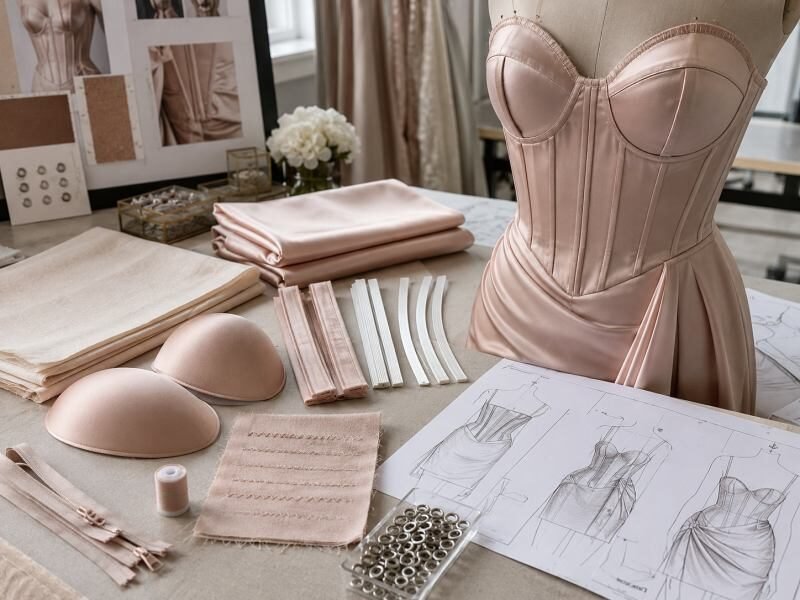
Corset Assembly

Lace Placement

Zipper Setting

Sequin Handling

Mesh Joining

Slit Reinforcement

Pressing and Finishing
Stable Bulk Pricing Begins With Standard Locking
Approved Sample Status
- Fit approved
- Visually approved
- Approved as PP basis
- Approved with comments
- Still pending refinement
Material Locking
For sensitive materials, confirmation may involve:
- Swatch
- Lab dip
- Strike-off
- Trim sample
- Bulk fabric cutting
- Approved accessory reference
Production Readiness Review
Complex or high-risk styles may require:
- Pilot production
- First-piece confirmation
- Special process trial
- Additional inline checkpoints
- Separate workmanship references
Measurement and Fit Standards
Critical points may be highlighted separately for closer production monitoring.
Workmanship Standards
Production should not depend on verbal memory.
Packaging Confirmation
Labels, hangtags, barcodes, folding, polybags, tissue, hangers, retail boxes, size assortment, carton marks, and carton packing need approval before the shipment window becomes compressed.
Packaging changes can affect cost and delivery even after garments are finished.
BOM Confirmation
The BOM should identify every production-critical component, including item description, quality, color, size, supplier or source, placement, and responsibility.
A locked BOM reduces substitution risk and improves repeat-order consistency.
Quoted Standards Must Continue Into Production
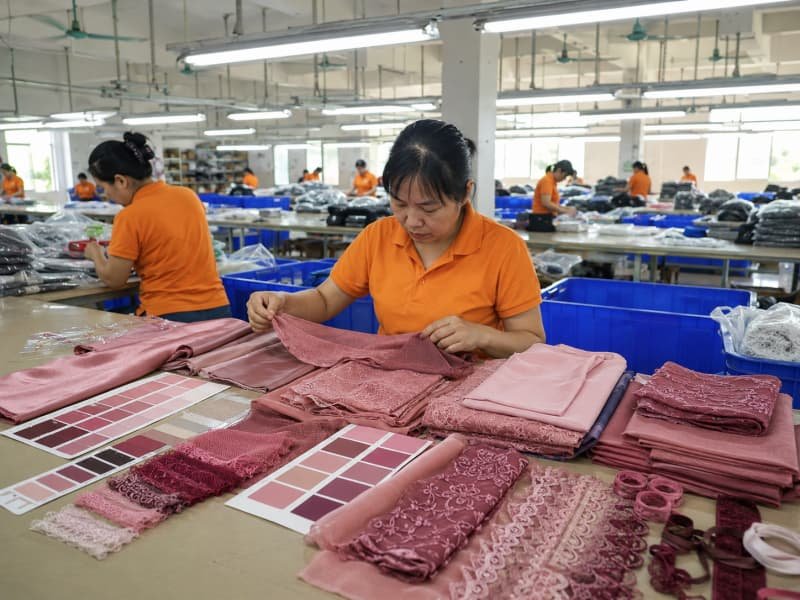
Incoming Material Review
Checks may include:
- Color and appearance
- Width and weight
- Stretch and recovery
- Visible defects
- Trim specification
- Quantity and labeling
- Batch consistency

Pre-Production Confirmation
Production references are reviewed before line start. The relevant team aligns the PP basis, measurements, BOM, workmanship, critical risk points, and packing requirements.
High-risk styles receive clearer notes around support, transparency, stretch, decoration, or sensitive surfaces.

First-Piece Review
Review points may include:
- Overall shape
- Key measurements
- Construction sequence
- Zipper and closure
- Lining and support
- Decoration placement
- Pressing and appearance
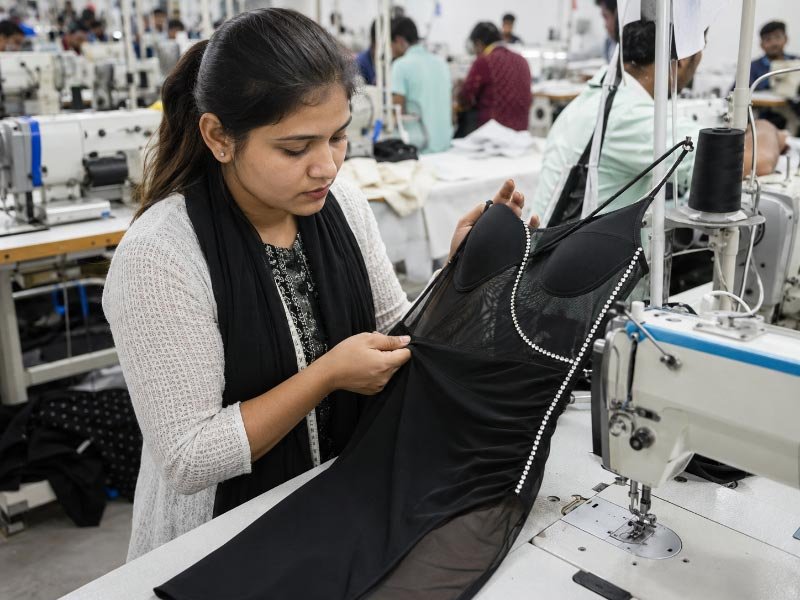
Inline Inspection
Complex styles may receive additional checkpoints.

Finished-Garment Inspection
Inspection planning can follow brand requirements, agreed sampling methods, or third-party inspection arrangements.

Packing Verification
Packing control confirms size, color, barcode, labels, polybag, folding, assortment, carton marks, carton quantity, and special destination requirements.
Earlier confirmation helps avoid finished goods waiting for packaging corrections.
Manufacturing Capacity Behind Multi-Style Programs
30+ Years Development Experience
16 Owned Womenswear Factories
Sixteen owned womenswear factories provide core control for development-sensitive and production-critical programs. Owned capacity supports closer coordination across:
- Sampling
- Pattern and technical work
- Core production
- Quality standards
- Repeat-order preservation
20+ Satellite Factories
More than 20 long-term satellite factories support capacity flexibility, process allocation, repeat orders, and production scaling.
Satellite capacity is matched according to style complexity, workmanship, material, quantity, schedule, and required control level rather than distributed without planning.
12,000+ Supporting Workers
The broader manufacturing network includes more than 12,000 workers across supporting production bases.
Scale matters when a brand program includes 10-30 styles, multiple delivery waves, parallel production, seasonal peaks, and total order volumes between 20,000 and 80,000 garments.
50+ Flexible Lines
More than 50 quick-response and flexible lines support differentiated production needs, including test orders, launch quantities, repeat orders, replenishment, and selected fast-moving programs.
Capacity is reviewed according to material readiness, construction complexity, quality level, and launch schedule.
Brand Compliance Readiness
Duolan’s factory system has completed SMETA audit and SMETA 2-Pillar audit requirements and maintains social-audit records. The manufacturing network can coordinate around brand-specific quality, inspection, testing, documentation, packaging, and compliance procedures, including cooperation with third-party service providers where required.
Multi-Style Quotation Projects for Fashion Brands
The following anonymized project profiles illustrate how structured quotation work can improve cost visibility before sampling and bulk production.

United States Partywear Program
Project Profile
- Region: United States
- Brand type: Established online and retail partywear brand
- Styles: 18
- Total quantity: 42,600 pieces
- Product mix: Sequin mini dresses, mesh bodycon dresses, satin midi dresses, and corset party dresses
- Colors: 2-4 colors per style
- Size range: US 0-16
Initial Quotation Challenge
The first brief contained reference images, approximate quantities, and target prices. Several cost-critical points remained open:
- Sequin density and base fabric
- Lining coverage
- Cup and boning construction
- Mesh layer count
- Satin quality and width
- Packaging and barcode requirements
Giving one fixed price at that stage would have created a large risk of revision.
Duolan Review
The 18 styles were divided into four technical groups:
- Standard satin construction
- Stretch mesh and bodycon construction
- Corset and bustier construction
- Sequin and embellished construction
A missing-information list was issued for every group. Material assumptions, lining, structural trims, packaging, and quantity conditions were recorded separately.
Quotation Outcome
Three quotation levels were prepared:
- Early cost direction for collection review
- Sample proposal for selected priority styles
- Formal bulk quotation after sample and BOM confirmation
The final order was planned across two production waves. Formal pricing was approved after two documented quotation revisions, each linked to confirmed material or construction changes rather than unexplained increases.
Commercial Result
The 42,600-piece program moved from 18 loosely defined concepts into style-level production files. Hero styles retained their corset and sequin features, while selected commercial styles shared linings, zippers, cups, and packaging components.

United Kingdom Occasionwear Collection
Project Profile
- Region: United Kingdom
- Brand type: Established occasionwear and wedding-guest brand
- Styles: 12
- Total quantity: 28,800 pieces
- Product mix: Draped satin dresses, corset midi dresses, lace dresses, and embellished maxis
- Colors: 2-3 colors per style
- Size range: UK 6-20
Initial Quotation Challenge
The brand supplied detailed tech packs, but the target price was below the original construction plan. Cost pressure came from:
- Multi-layer corset structures
- Imported-looking decorative hardware
- Large draped panels
- Engineered lace placement
- Separate lining qualities across styles
- High number of custom trim colors
A simple price reduction would have weakened fit and visual quality.
Duolan Review
Each style was separated into protected visual features and adjustable production features.
Protected features included:
- Bust shape
- Waist definition
- Draped focal areas
- Lace placement
- Visible hardware
- Premium surface appearance
Adjustable areas included:
- Hidden internal panels
- Shared lining qualities
- Standardized zipper families
- Consolidated hardware finishes
- Controlled drape fullness
- Repeated trims across several styles
Quotation Outcome
The collection was regrouped into three material families and two trim families. Revised specifications were costed before sample changes began.
Commercial Result
The 12-style program proceeded with a revised development plan instead of uncontrolled cost cutting. Statement styles kept their premium structure, while commercial styles adopted shared internal components and more efficient production methods.

European Multi-Brand Sourcing Program
Project Profile
- Region: European Union
- Organization type: Multi-brand sourcing and procurement office
- Styles: 26
- Total quantity: 73,200 pieces
- Product mix: Fashion dresses, resort dresses, fitted dresses, occasion styles, and coordinated sets
- Colors: 1-5 colors per style
- Delivery: Three shipment windows
Initial Quotation Challenge
The sourcing office had received quotations from several manufacturers, but the documents were not directly comparable.
Differences included:
- EXW versus FOB pricing
- Packaging included versus excluded
- Different fabric weights
- Testing fees omitted
- Sample fees mixed into unit price
- Size-range assumptions not stated
- Embellishment descriptions too general
- Different quotation-validity periods
Duolan Review
A common RFQ structure was used across all 26 styles. Every style record included:
- Style reference
- Material basis
- Lining and trim basis
- Quantity by color
- Size range
- Packaging standard
- Testing responsibility
- Trade term
- Quotation validity
- Re-quotation triggers
Styles were also classified as standard, complex, material-sensitive, or embellishment-sensitive.
Quotation Outcome
Duolan issued a consolidated quotation pack with a main summary and style-level notes. Optional costs were separated from standard garment costs. Delivery assumptions were connected to material approvals and three planned production waves.
Commercial Result
The sourcing office was able to compare quotation scope rather than headline unit prices alone. The 73,200-piece program moved into phased sample development with clearer internal approval records and fewer repeated clarification rounds.
Frequently Asked Questions About Custom Dress Quotations
Provide style drawings or reference images, measurements, fabric direction, lining, trims, construction details, colors, size range, quantity, labels, packaging, destination, trade term, and launch timing. A tech pack is preferred for formal bulk quotation. Early cost direction can begin with less information when assumptions are clearly identified.
Reference images can support an early feasibility and cost review. Images rarely define fabric weight, internal structure, lining, exact measurements, trim quality, workmanship, packaging, or production standards. Duolan will identify missing decisions before presenting a dependable sample or bulk quotation.
A complete tech pack is not always required to begin development. Duolan can review sketches, reference images, original samples, moodboards, fabric ideas, or existing comments. Formal production pricing becomes more reliable after critical specifications, measurements, BOM items, packaging, and quantity conditions are confirmed.
A professional quotation should identify the style, material basis, trims, construction assumptions, quantity, size range, unit price, sample fee, packaging basis, trade term, validity, exclusions, and conditions requiring review. Optional services and pending decisions should remain separate from confirmed costs.
Sampling may reveal material consumption, internal structure, sewing operations, fit changes, workmanship trials, or decoration requirements not visible in the original brief. Pricing may also change when the brand revises fabric, lining, quantity, colors, size range, trims, packaging, or delivery timing.
Sample fees and bulk unit prices cover different work. Sample fees may include pattern development, short-length material preparation, individual sewing, construction trials, and revision management. Any sample-fee credit, deduction, or separate treatment should be confirmed in the project agreement rather than assumed.
Quantity influences material purchasing, cutting yield, line setup, labor efficiency, quality-control allocation, packaging, and overhead distribution. Style count, color count, size mix, fabric minimums, decoration, and delivery waves also matter. Total program quantity alone does not define unit cost.
Yes. Provide the target price, intended retail level, style files, material direction, quantity, size range, and protected design features. Duolan can review material alternatives, construction efficiency, trim standardization, embellishment engineering, and collection-level cost planning without automatically weakening the brand look.
Validity depends on material conditions, exchange environment, production timing, supplier offers, and project status. Every formal quotation should carry an issue date and validity period. Expired quotations are reviewed before purchase-order confirmation, especially when quantity, materials, or timing has changed.
Common triggers include new fabric, additional lining, lower quantity, more colors, wider sizing, revised embellishment, custom packaging, added testing, compressed lead time, different trade terms, or design changes after sample approval. Duolan links revisions to identifiable technical or commercial changes.

Start a Structured Dress Quotation Review
Send Duolan the information currently available for your dress program. A complete project brief may include tech packs, reference images, original-sample photographs, measurement charts, BOM files, fabric direction, Pantone colors, workmanship notes, label artwork, packaging instructions, quality standards, target quantity, price expectations, launch dates, and delivery requirements.
Our team will review the available information and organize the next step according to project readiness. The review may identify missing specifications, material questions, construction risks, sample requirements, quotation assumptions, quantity conditions, packaging scope, and production considerations.
Before submission, include:
- Company and brand name
- Website and primary market
- Product category
- Number of styles
- Quantity by style and color
- Size range
- Tech packs or references
- Fabric and trim direction
- Target price where applicable
- Labels and packaging
- Required testing or inspection
- Launch and delivery schedule