Skip to content
Custom Dress Manufacturer for UK Premium Fashion Brands
Dress-focused womenswear development and manufacturing for UK fashion teams building premium collections, repeatable fits and scalable production programs.
Duolan supports premium dress projects from design direction to production-ready samples and controlled bulk delivery. Our work focuses on fashion dresses, occasionwear, partywear, fitted silhouettes and collection-ready womenswear for mature brand teams with clear development plans.
- Dress-focused development, sampling and bulk production
- Fabric, trim, pattern and workmanship coordination
- 16 owned womenswear factories and 20+ satellite factories
- 300 sewing lines and 50+ quick-response production lines
- SMETA 2-Pillar audit record and brand requirement support
Manufacturing and case facts:
- 16 owned womenswear factories and 20+ satellite factories support controlled development, production allocation, QC and delivery planning.
- Around 300 sewing lines and 50+ quick-response lines support multi-style dress programs, launch orders, repeat orders and scale-up production.
- 15,000-35,000 monthly sample-development capacity supports prototypes, fit samples, revised samples, sales samples and PP samples across active programs.
- A UK satin wedding guest capsule covered 18 styles and 42,000 pieces with satin drape, lining, pressing and packing control.
- A UK partywear drop covered 24 styles and 68,000 pieces across sequin minis, mesh bodycon dresses and fitted going-out silhouettes.
Built for UK Premium Fashion Teams
UK Fashion Brands
Buying Teams
Product Teams
Sourcing Offices
Occasionwear Labels
Multi-brand Groups
Why UK Premium Brands Need Dress Specialists
Dress Fit Requires Category-specific Control
A premium dress is judged on body balance before fabric cost or label placement. A fitted midi, satin slip, corset mini or mesh party dress can fail when bust support, waist position, hip ease, neckline tension or hem movement is not reviewed early enough. Duolan handles dress development through pattern, fit and sample logic rather than simple garment copying.
Key control areas include:
Fit balance:
- Bust, waist, hip and length are checked according to dress type, wearing scene and brand size standard.
- Bodycon and corset styles require closer tolerance review than loose vacation dresses.
- Side seam position, zipper tension and strap placement are checked during sample review.
Wearability:
- Slit height, neckline depth, back opening and lining coverage are reviewed for movement, comfort and photo presentation.
- A visually strong dress still needs stable wearing performance for retail use, campaign shoots and repeat orders.
Production translation:
- Pattern changes after sample comments must be recorded clearly before PP sample confirmation.
- Fit-approved samples become production references only after measurements, material, workmanship and trims are aligned.
Fabric Behavior Changes Final Dress Results
A premium dress is judged on body balance before fabric cost or label placement. A fitted midi, satin slip, corset mini or mesh party dress can fail when bust support, waist position, hip ease, neckline tension or hem movement is not reviewed early enough. Duolan handles dress development through pattern, fit and sample logic rather than simple garment copying.
Key control areas include:
Fit balance:
- Bust, waist, hip and length are checked according to dress type, wearing scene and brand size standard.
- Bodycon and corset styles require closer tolerance review than loose vacation dresses.
- Side seam position, zipper tension and strap placement are checked during sample review.
Wearability:
- Slit height, neckline depth, back opening and lining coverage are reviewed for movement, comfort and photo presentation.
- A visually strong dress still needs stable wearing performance for retail use, campaign shoots and repeat orders.
Production translation:
- Pattern changes after sample comments must be recorded clearly before PP sample confirmation.
- Fit-approved samples become production references only after measurements, material, workmanship and trims are aligned.
Bulk Consistency Protects Premium Brand Value
A dress sample may look impressive, yet commercial production requires a different level of control. Premium fashion teams usually care about whether approved fabric, fit, color, trims, inside finish, pressing and packaging can remain stable across 20,000 to 80,000 pieces per order program. Duolan treats bulk production as a controlled transition from sample standards into manufacturing standards.
Before production begins, Duolan reviews whether a sample is fit confirmed, visual confirmed, PP basis or still pending refinement. After order confirmation, styles are split by silhouette, color, size, quantity, material risk, process difficulty and delivery window. Complex styles may need separate pilot run, special process coordination or dedicated line allocation.
Bulk consistency is protected through:
Production readiness:
- Fabric, lining, trims, measurements, workmanship points and packaging requirements are checked before bulk start.
- A production-readiness note can be prepared for complex brand projects.
Line discipline:
- First-piece review, inline inspection and final inspection reduce uncontrolled variation.
- Critical details such as zipper placement, lining length, sequin edge, boning position and hem shape receive closer review.
Repeatability:
- Pattern version, BOM, fabric direction, trim reference and QC records support repeat orders and seasonal extensions.

Premium Dress Categories Duolan Supports
Duolan focuses on dress-led womenswear categories where fit, fabric, workmanship and collection rhythm shape brand value.

Occasion Dresses

Party Dresses
Party dresses often use satin, mesh, sequins, stretch fabrics, cut-outs and fitted shapes. Duolan checks stretch recovery, seam strength, skin comfort, embellishment placement and size balance before production. For brand drops with 10-30 styles, style priority and production path planning help keep approval flow organized.

Cocktail Dresses

Wedding Guest Dresses

Satin Dresses

Mesh Dresses

Lace Dresses

Sequin Dresses

Bodycon Dresses

Corset Dresses
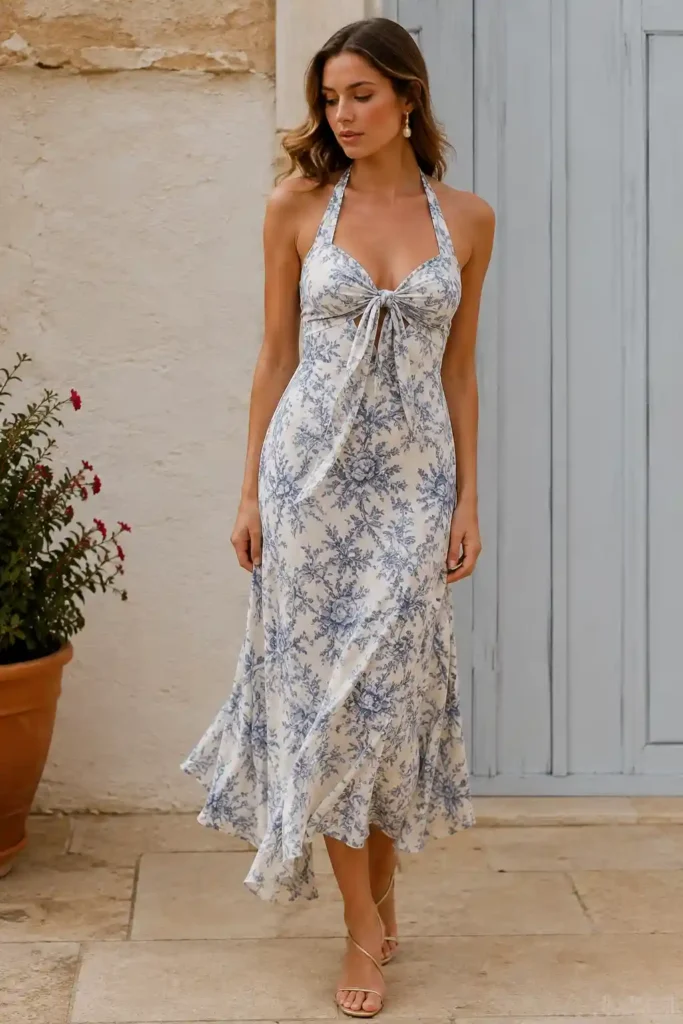
Halter Dresses
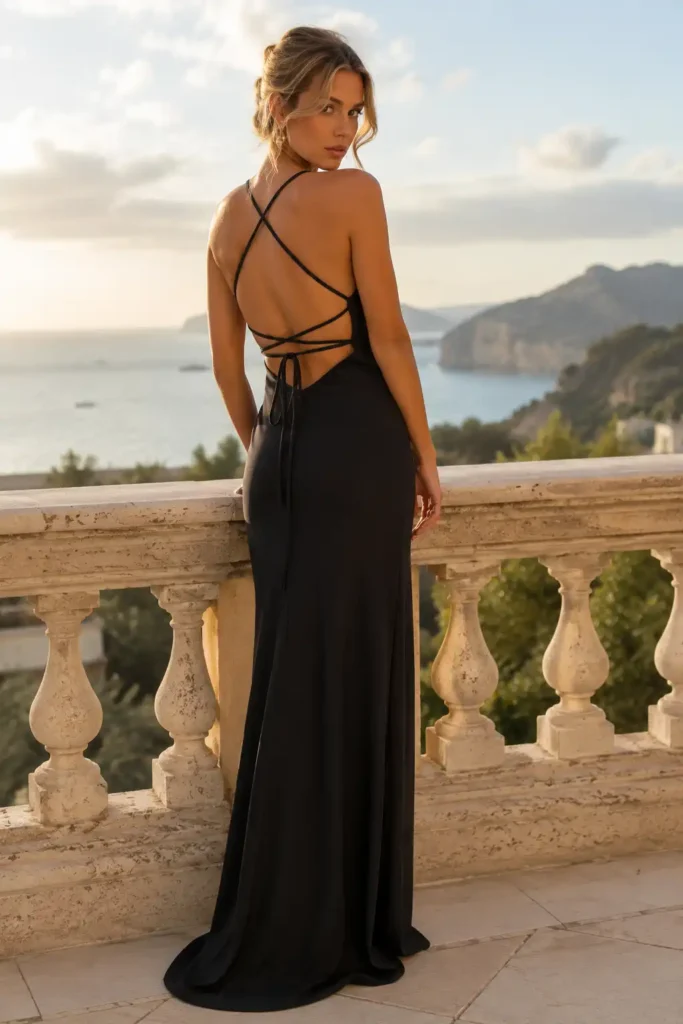
Backless Dresses
Fabric Direction for UK Premium Dress Projects
Satin, Crepe and Chiffon Direction
Satin, crepe and chiffon are common in UK premium dress programs because they create movement, polish and event-ready visual value. Each fabric brings different production concerns. Satin shows surface pressure and seam marks. Crepe can offer better body and cleaner construction, yet varies by composition and weight. Chiffon needs layered construction, lining coverage and careful edge finishing.
Duolan reviews:
Satin behavior:
- Surface shine, drape, seam pressure, needle marks and pressing response are checked before bulk standard confirmation.
- Bias-cut or slip-style satin dresses need closer control of fabric movement and hem shape.
Crepe suitability:
- Crepe can support structured midi dresses, cocktail dresses and fitted occasionwear.
- Weight, stretch, opacity and recovery affect pattern balance and size grading.
Chiffon handling:
- Chiffon needs clean cutting, controlled seam allowance, lining coordination and hem stability.
- Lightweight styles may require additional fitting review before production approval.
Commercial review:
- Fabric selection must fit retail price position, production complexity and delivery timing.
- Premium presentation comes from fabric-handling accuracy, not only fabric price.

Mesh, Lace and Sheer Fabric Control
Mesh, lace and sheer fabrics create high visual value for partywear, evening dresses and social-event styles. They also create transparency, stretch, placement and construction risks. A mesh bodycon dress may look strong on a model but fail when coverage, recovery or lining balance changes across sizes. Lace dresses can lose premium effect when motif placement is random or lining color is poorly matched.
Duolan reviews:
Mesh control:
- Elasticity, recovery, opacity, print placement and seam tension are checked during development.
- For fitted styles, lining length and coverage must be confirmed before PP sample approval.
Lace placement:
- Motif direction, scallop edge, body placement and panel matching affect perceived value.
- Lace trimming, seam bulk and lining tone need sample-stage review.
Sheer balance:
- Transparent panels need coverage planning around bust, waist, hip and back areas.
- Inner construction should support design intention without creating uncomfortable seams.
Bulk planning:
- Cutting and panel allocation require stronger discipline when patterns and motifs must remain aligned.

Sequin, Velvet and Decorative Fabric Handling
Sequin, velvet and decorative fabrics can create strong commercial recognition for premium partywear and festive drops. They also add production difficulty. Sequin fabric increases weight and may scratch skin near armholes, necklines or side seams. Velvet changes shade by nap direction and requires careful cutting. Decorative fabrics with beads, stones or pearl details need process planning before bulk production.Duolan reviews:
Sequin planning:
- Density, weight, scratch risk, seam bulk, zipper area and lining comfort are checked early.
- Needle damage and edge finishing must be considered before bulk production.
Velvet direction:
- Nap direction, shade variation, crushing risk and pressing method affect final look.
- Cutting direction must remain consistent across panels and size sets.
Decorative workmanship:
- Pearl, bead, stone, embroidery and print combinations require feasibility review.
- Decoration area, density and garment weight must match silhouette and wearing comfort.
Production allocation:
- High-risk decorative styles may need dedicated line planning, pilot review or special process coordination.
- Bulk delivery should not begin until workmanship standard and packing method are confirmed.

Design Details Controlled Before Production
Neckline Shape
Bust Support
Waist Balance
Waistline position affects proportion, comfort and size grading. Duolan checks waist seam placement, shaping, darts, panel balance and stretch behavior during fit review.For bodycon, corset and cocktail dresses, small waist changes can alter the full silhouette and retail appearance.
Hip Fit
Hip fit must allow clean shape without pulling or excess fabric. Duolan reviews fabric stretch, side seam balance, hip ease, lining behavior and grading rule before bulk cutting.
Premium fitted dresses need stable hip control across sizes, not only a beautiful sample.
Strap Width
Back Opening
Zipper Placement
Lining Coverage
Boning Position
Slit Height
Hem Finish
Sleeve Shape
Drape Line
Print Placement
Print placement affects garment value, especially for mesh, satin, chiffon and seasonal collections. Duolan checks panel cutting, motif balance, seam matching and size grading effects. Placement approval should be recorded before cutting bulk fabric.
Embellishment Area
Pressing Shape
Final pressing affects how dresses appear in campaign shoots, retail unpacking and delivery inspection. Duolan reviews fabric temperature, seam flattening, pleat setting, velvet pressure and satin shine before packing. Pressing method should match fabric behavior and final presentation goal.
Workmanship Standards for Premium Dresses
Seam Cleanliness and Stitch Control
Seam quality is one of the fastest ways to judge a premium dress manufacturer. Clean stitching is not only a visual requirement. It affects garment strength, body shape, wearing comfort and final pressing. Satin can show needle marks. Mesh can stretch under seam pressure. Lace can shift during sewing. Sequin fabric can create bulk around side seams and zippers.
Duolan reviews seam construction according to fabric, silhouette and use scene. For fitted dresses, seam tension must support body shape without pulling. For satin dresses, stitch spacing and pressing must avoid visible seam pressure. For sheer fabrics, internal seam visibility matters because the inside construction may become part of the external appearance.
Control points include:
Stitch selection:
- Single needle, overlock, coverstitch, blind stitch, chain stitch and special machines are selected according to fabric and design.
- High-stress areas such as zipper, slit, strap and waist seam receive additional review.
Seam allowance:
- Lightweight fabrics need clean internal control.
- Fitted garments need seam strength and stable measurements.
- Decorative fabrics require seam-bulk reduction and scratch-risk management.
Production discipline:
- First-piece review and inline QC help confirm seam quality before full production moves forward.
Inside Finish and Lining Construction
Premium dresses are judged from the inside as much as from the outside. Lining must support shape, comfort, opacity and durability. A dress may look elegant on hanger, yet poor lining can twist, climb, show through, pull at seams or create discomfort during wear. UK premium fashion teams often review inside finish during sample approval because it reflects supplier discipline.
Duolan reviews lining construction by fabric, silhouette and wearing scene. Satin and chiffon often need soft lining with controlled attachment. Mesh and lace need opacity planning. Corset dresses need stronger inner construction. Sequin and beaded dresses need lining protection around skin-contact areas.
Control points include:
Lining compatibility:
- Weight, stretch, opacity, color and hand feel must work with shell fabric.
- Lining should not fight against drape, stretch or body movement.
Inside workmanship:
- Side seams, zipper tape, cups, boning channels, bust lining and hem finishing are reviewed during sample development.
- Inside edges should remain clean and comfortable, especially for occasionwear and partywear.
Bulk readiness:
- Lining length, attachment points and construction method must be confirmed before production.
- Changes after PP sample approval can affect fit, cost and delivery timing.
Pressing, Shape and Final Presentation
Final pressing decides how a premium dress looks at unpacking, photo review and delivery inspection. A well-made dress can still appear lower value if seams are not pressed cleanly, satin is crushed, velvet nap is flattened, pleats are uneven or hems lose shape. Pressing is part of manufacturing, not an afterthought.
Duolan reviews pressing method according to fabric and design. Satin requires temperature and pressure control. Velvet needs nap protection. Pleats and drape lines need shape stability. Sequin fabrics need surface protection. Lace needs gentle finishing to avoid distortion. Final shape should support the approved sample look before packing.
Control points include:
Pressing method:
- Fabric type, seam construction and surface finish decide steam, pressure and temperature approach.
- Sensitive fabrics may need protective layers or reduced pressure.
Shape setting:
- Neckline, waist, hem, slit, pleat and drape line are reviewed after pressing.
- Garment shape must remain stable through packing and shipment.
Packing response:
- Folding, hanger packing, polybag choice and carton pressure affect final presentation.
- Premium dress projects may need packing review before shipment preparation.
Decorative Workmanship and Craft Feasibility
Decorative dresses create strong market value when process and silhouette are planned together. Pearl, bead, rhinestone, sequin, embroidery, print, wash and dye effects can make a dress more distinctive, yet each process adds production risk. Decoration can affect garment weight, seam strength, skin comfort, cost, delivery time and bulk consistency.
Duolan has long experience in decorative dress development, including pearl dress techniques, beadwork, rhinestone applications, sequin-and-print combinations and other fashion dress embellishment processes. For premium projects, decorative process review should happen before final quotation and PP sample confirmation.
Control points include:
Process feasibility:
- Decoration density, placement, garment weight, fabric base and production route are reviewed before bulk planning.
- Complex styles may need process testing or pilot production.
Comfort and durability:
- Skin-contact areas, armholes, neckline, zipper and side seams need scratch-risk review.
- Stones, beads and sequins must be checked for attachment stability.
Commercial balance:
- Decorative details should support retail value, not only increase complexity.
- Duolan can help review whether a detail fits target price band, delivery timing and bulk production path.
Sample Development for UK Brand Review
From Design Brief to First Prototype
The first prototype should help a brand judge whether the design direction can become a commercial dress. Duolan can start from tech packs, reference images, original samples, fabric ideas, size charts, brand comments or collection mood boards. The goal is not only to create a garment resembling the sketch. The goal is to test whether the silhouette, fabric direction, structure and workmanship path can support future production.
During early review, Duolan checks:
Design translation:
- Neckline, length, waist position, sleeve shape, back detail and overall proportion are reviewed against the reference.
- Style purpose is clarified, such as campaign sample, fit sample, PP sample, launch order or repeat order basis.
Material suitability:
- Fabric, lining and trims are reviewed according to drape, stretch, opacity, weight and finishing needs.
- Risk areas are marked before sampling when fabric and design may not work together.
Construction feasibility:
- Complex details such as corset support, backless structure, sequins, mesh panels, lace placement and slit reinforcement are considered early.
- A prototype becomes useful only when it reveals what needs improvement.
Fit Sample and Revision Management
Fit samples are where premium dress projects become controlled. A fit sample must show whether bust, waist, hip, length, neckline, sleeve, lining and movement meet brand expectations. For fitted dresses, corset styles, satin slips, mesh bodycon and party dresses, small changes can alter visual result and wearing comfort.Duolan supports fit review through measurement checking, sample comments, pattern correction and revised sample planning.
Fit review often covers:
Body balance:
- Bust support, waist shaping, hip ease, strap position and hem line are checked together.
- Garment should be reviewed on mannequin or fitting body where possible.
Comment translation:
- Written comments are converted into pattern, material, construction or workmanship actions.
- Each revision should have a clear reason and record.
Revision control:
- Revised samples should confirm improvement, not create new uncontrolled changes.
- Fit-approved status should be separated from visual-approved status before production.
PP Sample and Bulk Readiness
A PP sample is not merely a nicer sample. It is the production basis for bulk manufacturing. Before bulk starts, Duolan reviews whether sample status, fabric, lining, trims, measurements, workmanship points and packaging requirements are fully aligned. For UK premium fashion brands, PP confirmation protects quality consistency, launch timing and repeat production potential.
Duolan normally reviews:
Sample status:
- Fit confirmed, visual confirmed, PP basis or pending refinement.
- Each status leads to different next steps before production.
Order purpose:
- Launch order, test order, repeat order or scale-up order.
- Production path should match business purpose and delivery window.
Locked standards:
- Fabric, lining, trims, color, measurements, workmanship points and packaging requirements.
- Critical details such as zipper, boning, sequin edge, slit and lining length should be documented.
Production path:
- Style, color, size and quantity are broken down before production planning.
- Complex or high-risk styles may need pilot review, special process line or multi-line coordination.

Sample-to-Bulk Control Path
A confirmed sample must become a clear manufacturing standard before bulk production begins.
| Stage | Main Risk | Duolan Control Point | Output for Brand Team |
|---|---|---|---|
| Design Review | Design effect may not match fabric or structure | Review silhouette, fabric behavior, key construction and project purpose | Development notes and sample direction |
| Prototype Sample | First sample may only show appearance | Check proportion, fabric reaction, construction path and detail feasibility | Prototype comments and revision focus |
| Fit Sample | Measurements may not support wearing performance | Review bust, waist, hip, length, neckline, lining and movement | Fit comments and pattern correction basis |
| Revised Sample | Changes may create new problems | Track sample comments, pattern changes and material adjustments | Revision summary and approval path |
| PP Sample | Sample may not be ready for bulk | Lock fabric, lining, trims, color, measurements and workmanship | PP sample basis and production-readiness note |
| First-piece Review | Bulk line may drift from sample | Check first garment from production line against PP sample | First-piece confirmation and line adjustment |
| Inline QC | Quality may vary across batches | Inspect measurements, workmanship, critical details and process consistency | Inline QC feedback and correction |
| Final Inspection | Packing or finishing may affect presentation | Check size, appearance, pressing, labels, packing and quantity | Shipment readiness confirmation |
| Repeat Order | Reorders may lose previous standard | Preserve pattern version, BOM, material direction and QC records | Reorder reference file |
Manufacturing System Behind Duolan
Owned Factories for Core Control
Duolan is supported by 16 owned womenswear fashion factories. Owned factory control matters when premium dress programs involve fit-sensitive silhouettes, complex workmanship, fabric handling, sample-to-bulk consistency and repeatable standards. Core styles, high-control samples, PP sample transitions and key launch orders can be managed through a more direct production structure.
Owned factories support:
Development connection:
- Sample-room knowledge can be carried into production planning more clearly.
- Pattern, workmanship and PP sample references are easier to align with production teams.
Core style control:
- Fitted dresses, corset dresses, satin dresses, lace dresses and partywear pieces often require closer technical attention.
- Owned factory resources help manage quality standards and communication discipline.
Production visibility:
- Production path, line allocation, first-piece review, inline QC and final inspection can be coordinated with clearer responsibility.
- Premium projects benefit from recorded checkpoints rather than informal production updates.
Satellite Factories for Scalable Production
Duolan also works with 20+ long-term satellite garment factories. Satellite capacity is valuable when brand programs involve 10-30 styles per order, several colorways, season launch pressure or repeat production. A single factory may not always be the best way to manage style variety, delivery windows and different process levels.
Satellite resources support:
Order split planning:
- Styles can be reviewed by fabric type, construction risk, quantity, delivery timing and workmanship level.
- Standard styles, repeat styles and scalable commercial styles can be allocated more efficiently.
Production flexibility:
- Satellite cooperation supports production peaks, repeat orders and volume expansion.
- Multi-style programs can be planned with stronger capacity buffering.
Coordination discipline:
- Production standards still need PP sample reference, material locking, QC checkpoints and packing requirements.
- Duolan’s role is to coordinate manufacturing logic, not simply distribute orders.
Regional Bases and Production Buffer
Duolan’s manufacturing system extends across regional production resources, including stable partner bases in Guangxi, Guizhou, Sichuan and Jiangxi. These resources help support production buffering when seasonal demand, repeat orders, scale-up needs or delivery pressure increase. For fashion brands, capacity is not valuable only because it is large. It becomes valuable when it can be organized.
Regional production support helps with:
Peak production periods:
- Large dress programs can create short-term pressure across cutting, sewing, finishing, packing and inspection.
- Regional resources provide additional capacity options when order planning is confirmed early.
Different complexity levels:
- Not every style requires the same line setup.
- Basic commercial dresses, complex decorative pieces and repeatable core shapes may need different production paths.
Delivery coordination:
- Internal timeline planning helps connect material arrival, cutting, sewing, finishing, QC, packing and shipment preparation.
- Production planning begins after style, color, size, quantity and complexity are reviewed.
Equipment and Line Capacity
Across the full manufacturing group, Duolan’s supporting system includes fabric inspection and cutting resources, CAD pattern systems, sample development machines, sewing equipment, printing, embroidery, pressing, finishing, inspection and packaging equipment. Around 300 garment sewing lines and 50+ quick-response lines support different project types.
Equipment value is expressed through project results:
Fabric and cutting control:
- Inspection, spreading and cutting equipment support more stable fabric handling across sizes and colors.
- Pattern systems and cutting planning help reduce avoidable variation before sewing begins.
Sample and production connection:
- CAD pattern systems, sample machines and production equipment help transfer sample standards into bulk work.
- Special machines support details such as buttonholes, bartacks, stretch stitching, templates and decorative construction.
Finishing and inspection:
- Pressing, needle inspection, measuring, final checking and packing tools support delivery presentation.
- Equipment alone is not the promise; process use and QC discipline create brand-level value.
Production Planning by Order Type
Dress programs require different production paths according to style count, complexity, quantity and delivery window.
| Project Type | Common Brand Situation | Duolan Planning Logic | Useful Output |
|---|---|---|---|
| Development Sample | New style, new fabric or new silhouette | Review design, fabric, pattern and sample purpose | Sample plan and feasibility comments |
| Fit Review Order | Style needs body balance confirmation | Check measurements, comfort, lining, structure and comments | Fit revision record |
| Launch Order | First commercial order for a confirmed range | Lock PP sample, fabric, trims, workmanship and packing | Production-readiness note |
| Multi-style Order | 10-30 styles under one collection | Split by style, color, size, quantity, fabric and difficulty | Production path plan |
| Repeat Order | Existing bestseller or returning seasonal style | Reuse pattern version, BOM, material direction and QC records | Reorder reference file |
| Scale-up Order | Larger volume after sales validation | Review line allocation, material supply and delivery schedule | Scale production plan |
| Complex Craft Order | Sequin, lace, bead, corset or special process | Confirm process test, pilot review and special production path | Craft feasibility notes |
| Peak Season Order | Compressed delivery window or seasonal demand | Plan material arrival, cutting, line loading, QC and packing | Timeline milestone plan |
Quality Control for Premium Dress Orders
Material, Cutting and Size Preparation
Quality control starts before sewing. Premium dress orders often involve sensitive fabrics, color differences, print placement, lining compatibility, decorative trims and size grading. If fabric or cutting control is weak, later sewing inspection cannot fully recover the project. Duolan reviews material and cutting preparation before production moves into full line work.
Control points include:
Material review:
- Shell fabric, lining, trims, labels and special process materials are checked against approval references.
- Color, hand feel, surface condition, stretch, opacity and fabric direction may be reviewed according to style needs.
Cutting preparation:
- Pattern version, size chart, fabric direction, panel placement and marker planning are aligned before cutting.
- Lace, print, velvet and directional fabrics require stronger placement discipline.
Size control:
- Key measurements are reviewed before bulk sewing.
- Fitted dresses, corset styles and stretch garments need tighter attention to grading and tolerance.

Inline QC and Critical Detail Checking
Inline QC helps detect problems while correction is still possible. Premium dress programs need more than final inspection. Stitch tension, lining attachment, zipper placement, strap length, bust support, boning, slit reinforcement, sequin edge and hem balance should be checked during production, not only after packing.
Duolan uses inline review to protect critical details:
Workmanship points:
- Line supervisors and QC staff check key areas according to PP sample and workmanship notes.
- For special fabrics, stitch, seam pressure and surface damage receive closer attention.
Measurement review:
- Key sizes are checked during production to control drift.
- Stretch garments and fitted dresses require more active measurement tracking.
Correction timing:
- When a problem appears early, line adjustment can reduce further variation.
- Inline QC protects delivery timing by reducing large-scale rework before final inspection.

Final Inspection and Shipment Readiness
Final inspection protects delivery quality and brand presentation. Premium dress orders should be checked for appearance, measurement, workmanship, pressing, labels, packing, carton information and quantity. Final inspection should confirm whether garments are ready for shipment, not simply whether production is finished.
Duolan reviews:
Appearance and finishing:
- Stains, fabric marks, thread ends, seam quality, pressing shape and garment presentation are checked.
- Satin, velvet, sequins and light fabrics may need additional visual review.
Measurement and workmanship:
- Key measurement points are checked according to size standard and tolerance needs.
- Critical construction details are compared with approved sample references.
Packing and documentation:
- Polybag, hanger, carton, labels, barcode, care label and packing method are reviewed according to order requirements.
- Shipment preparation aligns product, packing and documentation before goods leave the factory.

Compliance and Supplier Readiness
SMETA Audit Record
Duolan’s factory system has completed SMETA audit and SMETA 2-Pillar audit record. For premium fashion teams, social responsibility and factory transparency often form part of supplier review. SMETA-related records help sourcing teams evaluate whether a factory system can enter more formal cooperation review and long-term manufacturing discussion.
BSCI Coordination
ISO 9001 Awareness
AATCC and ASTM
OEKO-TEX® Support
Some premium dress programs require material safety or textile-related documentation. Duolan can help coordinate fabric and trim sourcing direction based on requested requirements. OEKO-TEX®-related material support depends on selected fabric supplier, order material direction and confirmation stage.
Brand Requirements
UK Premium Brand Risk Control
Design and Fabric Mismatch Risk
Premium dress projects often begin with strong design direction, yet fabric behavior may not support the intended look. A satin dress may not hold the drape shown in the reference. A mesh bodycon may become too transparent after stretch. A corset dress may need stronger inner construction than the sketch suggests. Duolan reviews design and fabric together before confirming sample direction. Control actions include: Fabric behavior review:
- Drape, stretch, opacity, weight, shine, hand feel and sewing response are considered before sampling.
- Fabric direction should match price band, wearing scene and production feasibility.
Construction review:
- Neckline, bust support, zipper, lining, slit, boning and decoration areas are checked against fabric limitations.
- When design and fabric conflict, Duolan can suggest adjustment paths.
Commercial review:
- A style should not only look attractive in sample. It should remain feasible for production, delivery and repeat order.
Sample Rework and Approval Risk
Repeated sample corrections can slow a launch calendar and create confusion across teams. Premium fashion teams often need first prototype, fit sample, revised sample, salesman sample and PP sample at different stages. If sample purpose is unclear, comments may conflict and approval status may become unreliable. Duolan helps reduce sample-stage confusion through: Sample purpose definition:
- Each sample should have a clear role: prototype, fit, revision, photo, sales, PP or production reference.
- Brand comments are reviewed according to sample stage.
Revision records:
- Pattern changes, material changes, trim changes and workmanship changes should be tracked.
- Revised samples should confirm improvement rather than restart development.
Approval discipline:
- Fit approval and visual approval are not always the same.
- PP basis should be confirmed only after material, measurements, workmanship and packing needs are ready for bulk.
Bulk, Delivery and Reorder Risk
Bulk production risk usually appears when sample standards are not translated into production standards. Premium dress programs need locked references before production begins. For programs of 10-30 styles and 20,000-80,000 total pieces, production path planning becomes essential.
Duolan controls bulk risk through:
Production-readiness review:
- Fabric, lining, trims, color, measurements, workmanship points and packaging requirements are checked before production.
- Bulk start should be based on confirmed standards, not assumptions.
Production path planning:
- Orders are split by style, color, size, quantity, complexity and delivery window.
- Complex craft styles may require separate planning or special process coordination.
Reorder preservation:
- Pattern version, BOM, material direction, PP sample, QC records and packing standards can support repeat production.
- Repeat orders should not restart from zero when standards are already confirmed.

Brand Project Workflow
Brief Review
Feasibility Check
Fabric Coordination
Pattern Development
Sample Development
Production Planning
Quality Checking
QC work includes material review, cutting check, inline inspection, measurement review, final inspection, pressing review and packing confirmation. Critical areas such as zipper, lining, sequin edge, boning, slit and hem require extra attention for premium dress orders.
Shipment Preparation
Anonymous UK Premium Dress Projects
UK Occasionwear Brand|Satin Wedding Guest Capsule
Region: United Kingdom
Project Type: Occasionwear capsule for wedding guest and formal social events
Style Count: 18 styles
Total Order Quantity: 42,000 pieces
Product Focus: Satin midi dresses, draped necklines, bias-inspired silhouettes, slit details, lined bodices
Project Challenge: The brand needed a supplier able to handle satin surface quality, drape control, lining compatibility and clean pressing across several colors. Previous sampling attempts looked acceptable on hanger but showed seam pressure, uneven hem movement and packing creases after transit simulation. The team also needed a production path suitable for a seasonal launch window.
Duolan Solution: Duolan reviewed satin GSM, drape behavior, seam direction, lining weight, pressing method and folding approach before revised sampling. Fit comments were separated into bodice balance, waist position, slit movement and hem shape. Before production, Duolan ran production-readiness review covering fabric, lining, trims, color, measurements, workmanship points and packing requirements.
Result: The project moved into a structured launch order with style-by-style production planning. Satin handling, lining control and pressing method became locked standards for bulk. Packing method was adjusted to reduce crease pressure. The brand used the approved construction approach for follow-up styles in the next occasionwear capsule.

UK Partywear Label|Sequin and Mesh Drop
Region: United Kingdom
Project Type: Partywear drop for holiday and going-out channels
Style Count: 24 styles
Total Order Quantity: 68,000 pieces
Product Focus: Sequin minis, mesh bodycon dresses, asymmetric necklines, cut-out details, fitted silhouettes
Project Challenge: The brand needed multiple partywear styles developed under a compressed calendar. Key concerns included sequin scratch risk, mesh transparency, lining coverage, zipper bulk, stretch recovery and measurement control. The order included different complexity levels, from simpler fitted mesh dresses to higher-risk sequin pieces with edge finishing and lining requirements.
Duolan Solution: Duolan split the project into fabric families and complexity levels before production planning. Mesh styles were reviewed for stretch, opacity, lining coverage and print placement. Sequin styles were reviewed for weight, scratch points, zipper construction, seam bulk and packing protection. Complex pieces received closer sample review before PP confirmation.
Result: The brand received a clearer production path for 24 styles rather than a single mixed order plan. High-risk styles were separated from standard fitted styles during production allocation. Critical workmanship notes covered neckline comfort, side seam finish, zipper area, lining attachment and final packing. The approach supported bulk delivery with stronger order visibility.

UK Multi-brand Fashion Team|Dress Launch and Reorder
Region: United Kingdom
Project Type: Multi-style dress launch with reorder planning
Style Count: 30 styles
Total Order Quantity: 80,000 pieces
Product Focus: Mini dresses, midi dresses, fitted dresses, satin styles, lace panels, halter necklines
Project Challenge:The team managed multiple internal approvals and needed a supplier able to coordinate samples, comments, fabric direction, PP confirmation and bulk production across many styles. The main risk was not one difficult dress, but the possibility of communication disorder across 30 styles, several colorways and different approval owners.
Duolan Solution: Duolan organized the project by style, color, size, quantity, fabric category, production difficulty and delivery priority. Fit comments and sample status were reviewed before PP confirmation. Production planning separated stable commercial styles from styles requiring more workmanship control. Pattern versions, BOM, material direction and QC points were preserved for potential repeat orders.
Result: The launch order became easier to track because each style had a clear production status and control focus. Several styles were prepared for repeat order discussion after initial sales review. Preserved records helped reduce redevelopment work for returning shapes and color extensions.

Download Supplier Capability Pack
What Brand Teams Can Prepare
A strong dress development brief helps Duolan evaluate fit, fabric, sample route, production difficulty, cost drivers and delivery timing more accurately. Brand teams do not need every document finalized before contact, but clear information helps avoid vague quotation, repeated sample changes and production misunderstanding.
Recommended files include:
Product information:
- Tech pack, reference images, original sample photos, CAD files, sketches or collection mood board.
- Target category, such as occasionwear, partywear, satin dresses, corset dresses or mesh bodycon dresses.
Material direction:
- Fabric ideas, fabric composition, GSM, color reference, print direction, lining needs and trim expectations.
- Existing supplier fabric or open sourcing requirement can both be reviewed.
Commercial plan:
- Target quantity, style count, size range, colorways, launch date, repeat plan and packing needs.
- For common premium brand programs, 10-30 styles and 20,000-80,000 total pieces can be evaluated as a structured project.
Compliance and delivery:
- Testing request, audit expectations, label rules, carton requirements, inspection standard and shipment destination.
What Duolan Can Review
Duolan can review project feasibility before sampling or production commitment. The review may cover design translation, fabric behavior, fit risk, construction difficulty, workmanship path, sample route, bulk readiness, QC focus and repeat production potential. The goal is to make the next step clearer before time and materials are invested.
Review areas include:
Development review:
- Whether the design direction can be translated into a sample with current files.
- Which areas need confirmation before pattern or fabric work begins.
Fabric and trim review:
- Whether fabric direction supports target silhouette, comfort, visual effect and commercial price band.
- Whether lining, zipper, boning, elastic, tape, sequin, lace or decorative trims need additional confirmation.
Production review:
- Whether the style is suitable for single-line, special-process or multi-line production planning.
- Whether sample comments, PP sample status and bulk standards are ready for manufacturing.
QC review:
- Which details require closer inspection during inline QC and final inspection.
- Which records should be preserved for repeat orders.
Frequently Asked Questions

Send Your Dress Project Brief to Duolan
Duolan is ready to review premium dress projects from UK fashion brands, buying teams, sourcing offices and product development teams. Share your current files and project goals, and our team can evaluate design direction, fabric suitability, sample route, production difficulty, QC focus and bulk planning needs.
A useful first brief may include:
- Tech pack, sketches, CAD files or reference images
- Original sample photos or garment construction notes
- Fabric direction, color references, lining and trim ideas
- Style count, target quantity, colorways and size range
- Launch date, delivery window and repeat production plan
- Label, packaging, inspection and compliance requirements
- Current stage: sample review, revision, PP sample or bulk planning
For structured dress programs, Duolan can help review whether the project is ready for prototype sampling, fit sample correction, PP sample confirmation, launch order planning, scale-up production or repeat order support.