Skip to content
Custom Dress Manufacturer for UK Product Development Teams
Dress-focused development, sampling and bulk manufacturing support for UK fashion product teams managing seasonal dress programs.
Duolan supports UK product development teams, buying offices, sourcing teams and established fashion brands with structured custom dress development from first brief to bulk delivery. Our work focuses on fashion dresses, occasionwear, party dresses, going-out dresses, resort dresses and collection-based womenswear programs where fit, fabric behavior, construction details and production discipline directly affect commercial success.
- 16 owned womenswear factories supporting controlled development and core production
- 20+ long-term satellite garment factories for capacity planning, repeat orders and scale support
- Around 300 sewing lines and 50+ quick-response lines for multi-style dress programs
- 15,000-35,000 monthly sample-development capacity across active style and revision workflows
- SMETA 2-Pillar audit record and supplier-review support for established fashion teams
Manufacturing and project facts:
- 10-30 style product-development programs can be reviewed by fabric group, fit risk, construction complexity and launch priority.
- 20,000-80,000 piece brand-level orders require style-level planning, PP sample standards, first-piece review and packing control.
- A UK occasionwear line covered 16 styles and about 38,000 pieces across satin, chiffon, crepe and lace groups.
- A UK partywear drop covered 24 styles and about 62,000 pieces across bodycon, mesh, sequin, velvet and rhinestone styles.
- A UK sourcing office project covered 12 custom dress styles and about 27,000 pieces with structured sample records and production updates.
Built for UK Dress Product Development Teams
Product Teams
UK product development teams need a supplier able to read more than a sketch. Duolan reviews design direction, fit priority, fabric behavior, construction complexity, lining needs, trim selection and production feasibility before sampling begins. For dresses with satin drape, bodycon stretch, corset support, mesh layering or sequin weight, early technical review helps the sample move closer to an internal approval version.
- Tech pack and reference review
- Fabric, lining and trim direction
- Fit priority clarification
- Production feasibility notes
- Sample purpose and approval path
Buying Teams
- Sample accuracy review
- Bulk readiness planning
- Multi-style program support
- Delivery coordination
- Repeat-order reference control
Sourcing Offices
- Supplier capability review
- Compliance document support
- Factory coordination
- Quality communication
- Production-status tracking
Brand Teams
Established fashion brands require dress suppliers able to protect brand language while converting styles into wearable, manufacturable and repeatable products. Duolan works with reference images, original samples, tech packs, fabric directions and seasonal collection briefs. The focus stays on product accuracy, fit balance, visual finish, fabric suitability, workmanship execution and stable production after sample approval.
- Collection brief review
- Style direction alignment
- Sample-to-bulk control
- Repeat production support
- Fit and workmanship preservation
Different Supplier Types Serve Different Dress Development Needs
UK development teams often compare local studios, sourcing platforms and overseas manufacturers before selecting a long-term dress supplier.
| Supplier Type | Strong Point | Common Limitation | Best Project Use | Duolan Position |
|---|---|---|---|---|
| UK sampling studio | Local fitting, toile, press sample and short-run support | Limited capacity for multi-style dress programs and repeat volume | Early fit test or local sample review | Duolan supports overseas development, sampling, bulk production and repeat-order planning |
| Online manufacturing platform | Access to multiple factories and enquiry routing | Supplier control, communication depth and responsibility may vary | Initial supplier discovery | Duolan offers direct manufacturing communication and project accountability |
| Luxury atelier | High craft detail and premium sample finishing | Cost and capacity may not match fast fashion volume planning | Runway, capsule or premium short run | Duolan supports commercial dress programs with craft detail and scalable production planning |
| General clothing factory | Broad garment coverage | Dress-specific fit, fabric and construction risks may receive less focus | Basic apparel production | Duolan is focused on fashion dresses and womenswear development |
| Scalable dress manufacturer | Development, sample revision, PP control and production capacity | Requires clear project files and organized approval process | Multi-style seasonal dress programs | Duolan fits UK teams needing sample-to-bulk control and long-term supply coordination |
Dress Development Risks Worth Reviewing Before Sampling
Design Gap
- Silhouette reading and proportion review
- Neckline, waist, hem and back-view risk identification
- Main construction notes before sample work
- Visual target compared with production feasibility
Fabric Mismatch
Fabric selection affects drape, stretch, opacity, seam stability, weight and final garment shape. A satin dress, mesh dress, bodycon dress or corset dress cannot share the same development logic.
Duolan checks fabric behavior against dress result before committing to sample execution.
- Drape behavior and hand feel
- Stretch recovery and measurement stability
- Transparency and lining compatibility
- Surface sensitivity, color and packing response
Fit Comments
Fit comments lose value when they are passed as general feedback without pattern-level action.
Duolan helps translate sample comments into pattern, measurement, construction, seam, length, lining and trim changes so the next revision has a clearer technical basis.
- Measurement comments and tolerance review
- Pattern correction and sample notes
- Fit-priority ranking by garment area
- Revision summary for the next sample round
Bulk Drift
- PP sample basis
- Material and trim locking
- First-piece review
- Inline inspection and final QC
Calendar Pressure
- Sample path review
- Bulk timeline planning
- Revision calendar
- Packing and shipping coordination
Style Complexity
- Style classification
- Complexity grouping
- Process allocation
- Production path planning
Duolan Turns Dress Ideas into Production-Ready Styles
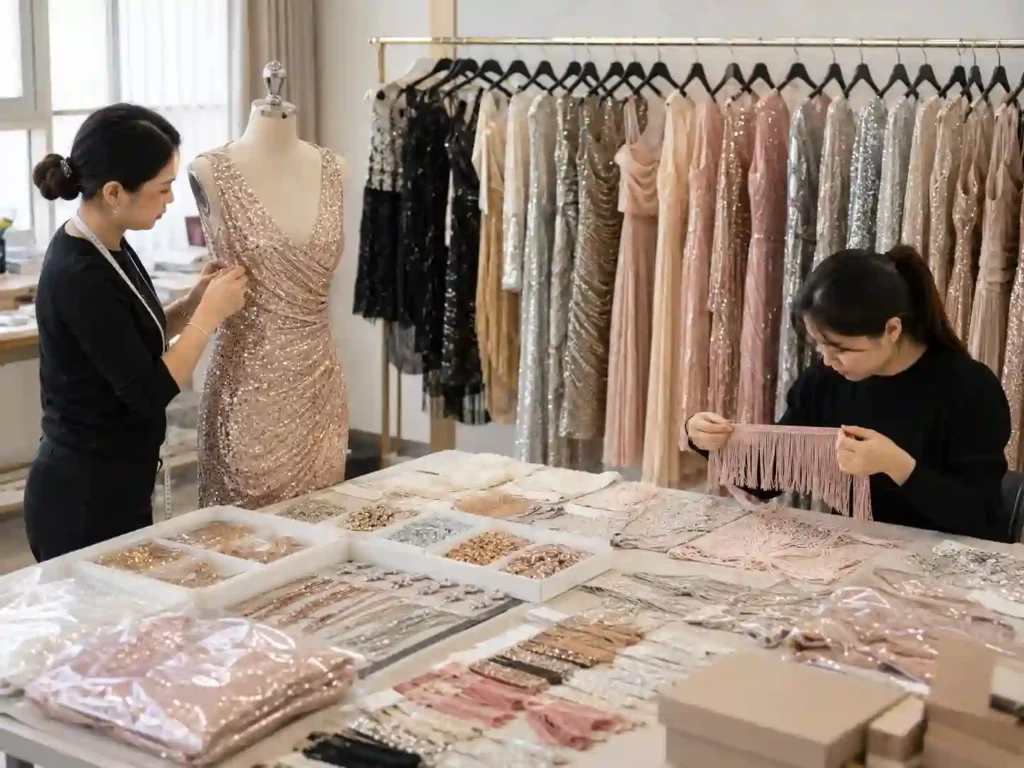
Dress Focus
- Dress-led review instead of generic apparel handling
- Stronger focus on silhouettes, fit and fabric behavior
- Suitable for multi-style collections and repeatable dress programs

Fabric Judgment
A dress supplier must judge how fabric behaves before the sample is cut. Satin can show seam marks and pressing lines. Mesh may need coverage and lining review. Jersey requires stretch recovery control. Sequins add weight and skin comfort concerns.
Duolan reviews fabric direction against the intended dress effect before sample execution.
- Review GSM, drape, stretch, recovery and opacity
- Check lining compatibility and surface sensitivity
- Identify bulk risks before pattern and cutting decisions

Pattern Support
Pattern development directly affects neckline stability, waist position, bust support, hip balance, slit opening, hem fall and wearing comfort.
Duolan supports pattern review, sample adjustment and fit correction based on design files, reference samples, client comments and production requirements.
- Convert reference images into pattern decisions
- Review bust, waist, hip, strap, slit and hem points
- Adjust pattern direction according to fabric behavior and fit comments

Sample Revision
A first sample should not be treated as a finished product. Duolan uses sample comments, measurement notes, fit feedback, fabric observations and workmanship review to guide revision rounds. The goal is to move from a visual prototype toward a decision-ready sample with clearer production value.
- Separate comments by fit, material, construction and workmanship
- Record revision actions before the next sample
- Prepare samples for internal approval, photo review or PP confirmation

Bulk Readiness
- Confirm materials, trims, measurements and workmanship notes
- Prepare first-piece and inline QC focus points
- Review packing and pressing according to garment type

Repeat Supply
- Preserve pattern, BOM, material and QC references
- Support color extensions, style updates and replenishment
- Coordinate capacity for launch, repeat and scale-up programs
What Duolan Reviews Before Custom Dress Sampling
Style Review
- Identify silhouette, length, neckline, sleeve and closure requirements
- Mark details that affect sample route and production feasibility
- Clarify visual features that must remain protected during revision
Fabric Review
- Review drape, stretch, recovery, opacity and shrinkage
- Check surface marks, seam reaction, pressing and packing risk
- Compare fabric alternatives against intended garment result
Fit Review
Fit review identifies the parts most likely to affect approval: bust support, waist placement, hip ease, back opening, strap length, sleeve mobility, slit height and hem balance. UK product teams can send measurement specs, fit comments or reference samples. Duolan uses these details to guide pattern and sample decisions.
- Confirm base size, size range, tolerance and grading logic
- Review body balance, support and movement risk
- Translate fit priorities into pattern and sample actions
Construction Review
- Review lining, cups, boning, zipper, elastic and support methods
- Identify construction decisions that may change cost or production timing
- Prepare workmanship notes for high-risk garment areas
Quantity Review
Dress production planning changes when a program contains 10, 20 or 30 styles, multiple colors, size ranges and different fabric families.
Duolan reviews style count, total quantity, size breakdown and complexity level to plan the correct development path and factory allocation.
- Review quantity by style, color and size range
- Group styles by fabric family and construction difficulty
- Prepare production route options for launch and repeat planning
Timeline Review
- Connect sampling, revision, PP and bulk timing
- Review material and trim lead time before quotation or production commitment
- Plan QC, packing and shipment around launch and intake windows
Custom Dress Categories for UK Product Development Programs
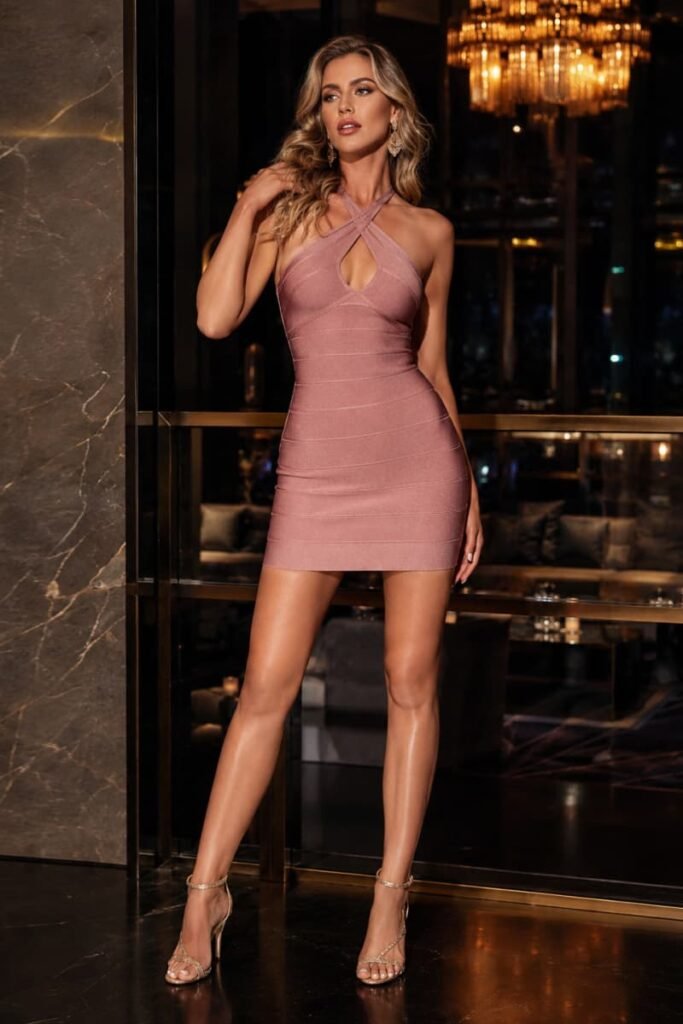
Mini Dresses
- Key checks: body length, hem width, lining length and movement range
- Fabric focus: stretch, opacity, recovery and seam response
- Bulk focus: size grading, coverage consistency and return-risk reduction

Midi Dresses
Midi dresses require balance between body fit, skirt fall and wearing movement. A fitted midi in jersey needs stretch recovery, while a woven midi may need dart control, lining, slit placement and pressing method. Duolan reviews the target customer fit, length standard, fabric direction and seam construction before moving into sample revision and bulk planning.
- Key checks: waist position, skirt fall, slit height and hem balance
- Fabric focus: jersey recovery, satin drape, crepe structure or lace placement
- Bulk focus: length consistency, pressing method and packing protection

Maxi Dresses
Maxi dresses demand stronger control over fabric weight, hem sweep, lining length, shoulder balance and packing crease risk. Chiffon, satin, mesh and jersey maxi dresses behave differently after cutting and sewing. Duolan helps UK teams check drape, movement, opacity, strap strength and hem finish so bulk garments maintain the approved sample effect.
- Key checks: shoulder load, lining length, hem sweep and movement
- Fabric focus: chiffon layering, satin crease, mesh coverage and jersey stretch
- Bulk focus: hem level, packing method and carton pressure

Party Dresses
- Key checks: decoration comfort, zipper strength, lining and fit security
- Fabric focus: sequin, mesh, satin, metallic knit and stretch jersey
- Bulk focus: QC checkpoints, repair method and packing protection

Occasion Dresses
- Key checks: neckline, waist, slit, lining and final pressing
- Fabric focus: satin, crepe, chiffon, lace, jacquard and mesh
- Bulk focus: polished appearance, size consistency and sample-to-bulk control

Wedding Guest Dresses
- Key checks: drape, color tone, neckline, sleeve and waist balance
- Fabric focus: satin, chiffon, crepe, lace and soft mesh
- Bulk focus: shade control, lining match and event-ready presentation
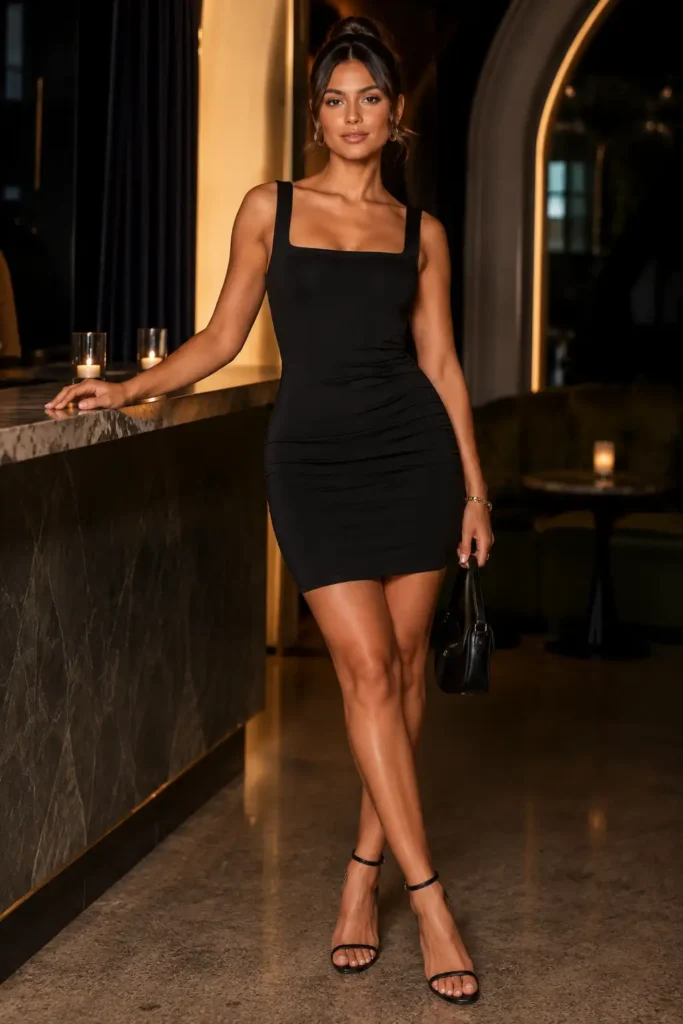
Going-Out Dresses
- Key checks: bust security, body coverage, strap tension and back stability
- Fabric focus: stretch jersey, power mesh, satin, sequin and metallic knit
- Bulk focus: grading, recovery, seam strength and comfort

Vacation Dresses
- Key checks: breathability, movement, print placement and packing response
- Fabric focus: viscose, cotton blend, chiffon, printed mesh and crepe
- Bulk focus: shrinkage, color consistency and travel-friendly finishing

Resort Dresses
- Key checks: neckline comfort, waist construction, skirt volume and movement
- Fabric focus: breathable woven, viscose, chiffon, linen blend and light crepe
- Bulk focus: colorway planning, print placement and soft finishing

Bodycon Dresses
Bodycon dresses are highly sensitive to stretch, recovery, opacity and pattern balance. Fabric with poor recovery can lose shape, while thin fabric can expose seam and body lines. Duolan reviews GSM, stretch direction, lining requirement, size grading, stitch type and measurement tolerance before sample revision and production planning.
- Key checks: bust, waist, hip, side seam and hem tension
- Fabric focus: GSM, stretch direction, recovery and opacity under tension
- Bulk focus: tolerance, grading and measurement stability

Corset Dresses
- Key checks: cup height, boning, underbust, top edge and closure strength
- Fabric focus: shell fabric, lining, interlining, cups and support components
- Bulk focus: PP sample control, first-piece review and size grading
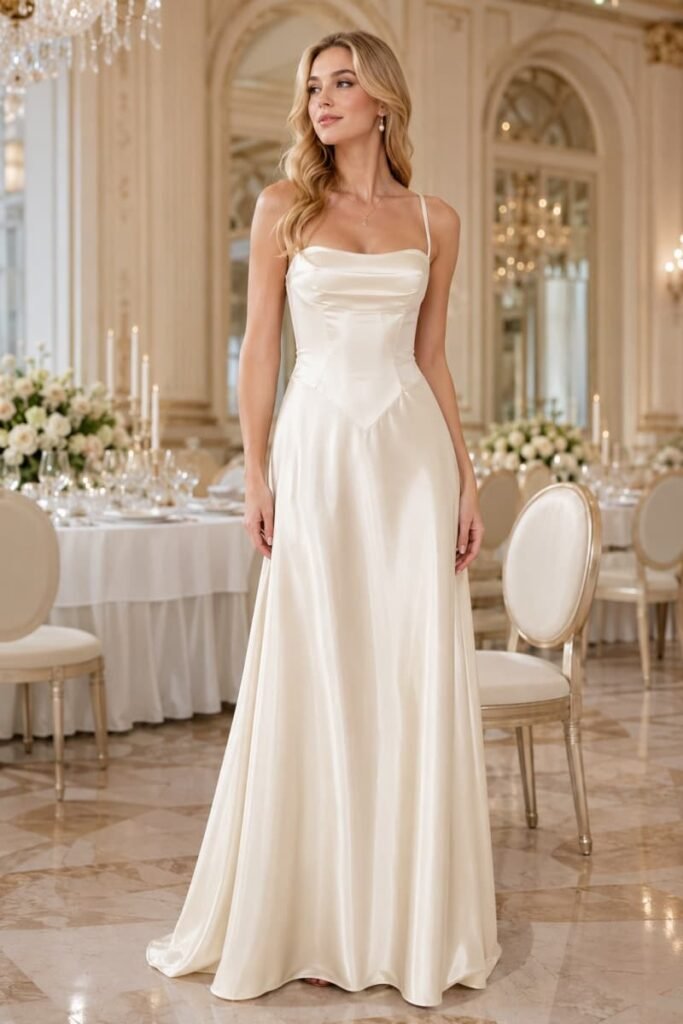
Satin Dresses
- Key checks: seam pressure, pull lines, zipper installation and hem fall
- Fabric focus: weight, drape, shine, bias behavior and lining compatibility
- Bulk focus: pressing, folding, crease protection and shade consistency

Mesh Dresses
Mesh dresses require a clear plan for transparency, stretch, lining, print placement and seam reinforcement. For party and going-out styles, mesh may be layered, ruched, printed or combined with jersey lining. Duolan reviews coverage points, seam strength, elastic behavior and fit recovery before sample and bulk execution.
- Key checks: transparency, lining, seam softness and body coverage
- Fabric focus: GSM, stretch, recovery, print and skin feel
- Bulk focus: graded coverage, placement records and seam stability

Sequin Dresses
- Key checks: density, weight, scratch points and seam bulk
- Fabric focus: base fabric, sequin direction, stretch and decoration loss
- Bulk focus: lining protection, repair standard and packing pressure

Lace Dresses
Lace dresses depend on pattern placement, lining color, seam treatment and edge finishing. A lace style may need partial lining, full lining, scallop edge planning or embroidery placement control. Duolan reviews lace repeat, cutting direction, panel matching, stretch behavior and skin comfort before sample development.
- Key checks: motif placement, scallop use, lining color and seam concealment
- Fabric focus: repeat, usable width, stretch, softness and edge finish
- Bulk focus: cutting direction, panel matching and snagging control
Dress Programs Duolan Can Support for UK Teams
Party Season
- Typical styles: sequin minis, satin dresses, mesh panels and fitted silhouettes
- Development focus: lining, comfort, decoration and size control
- Planning focus: sample sequence, QC checkpoints and delivery calendar
Occasionwear Line
- Typical styles: satin midis, chiffon dresses, lace dresses and cocktail styles
- Development focus: drape, neckline, lining, slit and pressing
- Planning focus: PP standard, packing method and repeatable visual finish
Going-Out Capsule
A going-out capsule often relies on fast trend reaction and strong fit. Bodycon, halter, cut-out, backless and ruched dresses must hold shape while remaining wearable. Duolan reviews pattern balance, seam stress, elastic behavior, neckline stability and lining choices before moving styles toward production.
- Typical styles: bodycon, cut-out, halter, ruched and mesh dresses
- Development focus: coverage, recovery, support and comfort
- Planning focus: size grading, movement tests and fit-comment translation
Resort Drop
- Typical styles: printed maxis, flowy midis and vacation-ready dresses
- Development focus: shrinkage, print placement, lining and hem balance
- Planning focus: packability, color control and seasonal launch timing
Holiday Collection
Holiday collections combine sparkle, shine, texture and compressed timelines. Sequins, velvet, satin, metallic knit, mesh and rhinestone details need early process review.
Duolan helps plan decorative workload, lining comfort, seam thickness, QC points and factory allocation before bulk production starts.
- Typical styles: velvet dresses, sequin minis and rhinestone party styles
- Development focus: decoration security, lining, surface pressure and packing
- Planning focus: peak-season capacity, QC timing and shipment grouping
E-commerce Launch
- Typical needs: photo samples, launch order, SKU packing and reorder planning
- Development focus: fast sample status and clear revision records
- Planning focus: product data, barcodes, packing and delivery updates
Retail Intake
Retail intake programs require stronger attention to size range, barcode packing, carton requirements, label placement, compliance notes and inspection timing. Duolan can support production planning, QC coordination and delivery documentation for dress programs prepared for regional retail or multi-brand channels.
- Typical needs: cartons, labels, barcodes, inspection and delivery documents
- Development focus: fit consistency, size ratio and quality records
- Planning focus: packing list, carton marks and intake schedule
Repeat Orders
Repeat orders depend on whether the first approved standard has been properly recorded.
Duolan reviews fabric, trims, measurements, workmanship notes, label details, packing method and QC findings, allowing successful dress styles to return into production with clearer control and fewer repeated development questions.
- Typical needs: new colors, replenishment, updated size ratio or style extensions
- Development focus: preserved pattern, BOM, trims and QC learning
- Planning focus: material availability, color consistency and repeat timeline
Fabric Direction for Custom Dress Development
Fabric choice should be guided by target garment result, not only by material name or trend image.
| Material | Best Dress Use | Development Focus | Common Risk | Duolan Review Point |
|---|---|---|---|---|
| Satin | Slip dresses, occasion dresses, evening styles | Drape, shine, lining, seam finish | Needle marks, puckering, pressing shine | Fabric weight, seam method, packing crease risk |
| Chiffon | Maxi dresses, layered dresses, resort styles | Float, transparency, lining, hem flow | Uneven layers, fragile seams | Layer control, lining length, hem balance |
| Mesh | Going-out dresses, printed dresses, ruched styles | Stretch, coverage, print placement | Transparency, seam stress | Lining, stretch recovery, panel stability |
| Lace | Occasion dresses, feminine silhouettes | Pattern placement, lining, edge finish | Irregular cut, poor coverage | Lace repeat, scallop planning, lining color |
| Jersey | Bodycon, casual, ruched dresses | Stretch, recovery, GSM, opacity | Shape loss, see-through areas | Stitch method, measurement tolerance, recovery |
| Crepe | Midi, office-to-event, structured styles | Surface texture, fall, seam stability | Poor pressing, weak drape | GSM, seam finish, lining decision |
| Velvet | Holiday, party, evening dresses | Nap direction, richness, weight | Shade variation, pile pressure | Cutting direction, packing pressure, QC |
| Sequin Fabric | Party dresses, evening styles | Weight, skin comfort, decoration control | Loose sequins, scratchy seams | Lining, seam thickness, zipper handling |
Fabric, Lining and Trim Decisions for Better Dress Execution
Duolan coordinates dress materials, linings, closures and decorative elements according to fit, fabric behavior and production needs.

Main Fabric
- Review composition, GSM, usable width, drape and stretch direction
- Check opacity, recovery, shrinkage and surface sensitivity
- Confirm whether fabric behavior supports the target silhouette and size range

Lining
Lining affects comfort, opacity, structure, skin feel and garment fall. A satin dress may need smooth lining to reduce clinging. Mesh and lace styles may need planned coverage. Sequin dresses need lining for skin comfort. Duolan checks lining color, GSM, stretch compatibility, length and attachment method before sample confirmation.
- Confirm full, partial, bodice, skirt or power-mesh lining
- Match lining color, stretch and hand feel with shell fabric
- Review lining attachment, length and skin-contact comfort

Zippers
Zipper choice affects fit, dressing comfort and seam stability. Bodycon dresses need strong closure handling, corset dresses need higher stress control, while satin dresses require clean application to avoid puckering. Duolan reviews zipper type, length, tape color, placement, reinforcement and bulk sewing method.
- Choose invisible, exposed, side, back or special zipper by garment type
- Review zipper strength, tape color, top hook and seam allowance
- Check satin, sequin, corset and fitted garments for zipper stress risk

Elastic
- Review elastic width, strength, recovery and hand feel
- Confirm tension for ruching, waist, back, neckline or sleeve openings
- Check washing and comfort risk before bulk approval

Boning
- Review boning type, length, channel placement and edge protection
- Check cup, underbust, waist and back structure together
- Confirm grading and PP standard before production

Decorations
- Review decoration density, placement, weight and attachment method
- Check skin-contact areas, seam interference and packing pressure
- Define QC and repair standards before bulk production
Pattern and Fit Control for Custom Dress Development
Development Basis Locking
Before pattern work begins, Duolan confirms the development basis with the UK product team. The basis may come from a tech pack, a reference image, an original sample, a mood board, a fabric direction or a collection brief. Each source has different limits. A reference image may show the desired silhouette but not the seam structure. An original sample may offer shape and construction clues but may not match the new fabric.
Duolan first clarifies the sample purpose. Some samples are made for internal design review, some for fit approval, some for photography, some for sales presentation, and some for PP confirmation. The sample purpose decides how much priority should be given to fit precision, visual appearance, construction proof or production readiness.
Key basis checks include:
- Source file type: tech pack, reference image, original sample, fabric idea or collection brief
- Sample purpose: prototype, fit sample, sales sample, photo sample or PP sample
- Protected features: silhouette, neckline, fabric effect, support, decoration or fit standard
- Missing decisions: material, lining, trims, measurements, label and packing requirements
Fit Priority Translation
Dress fit is not one single measurement. A fitted bodycon dress may depend on bust, waist, hip and recovery balance. A corset dress may depend on cup placement, boning, back opening and zipper stress. A satin midi dress may depend on drape, seam position, lining and slit height. A mesh party dress may depend on coverage, stretch, transparency and ruched tension.
Duolan translates fit priority into pattern action. When a UK team sends fit comments, our team reviews whether each comment belongs to measurement adjustment, pattern balance, seam position, fabric behavior, construction method or trim tension. This avoids vague revision work. Comments such as “too loose at waist,” “front neckline unstable,” “hem not falling cleanly,” or “back zipper pulling” must become clear technical adjustments before the second sample is made.
Fit translation may include:
- Measurement update and tolerance review
- Pattern curve, dart, panel or seam adjustment
- Lining, elastic, cup, boning or trim change
- Fabric behavior review when the issue comes from stretch, drape or weight
Revision Record Control
Sample revision becomes valuable only when changes are recorded clearly. Duolan can support revision summaries covering measurement updates, fabric comments, lining changes, seam corrections, trim replacement, construction decisions and workmanship notes. For multi-style dress programs, clear revision records help UK teams compare styles, prepare internal review meetings and decide which samples should move forward.
A strong revision process also protects bulk production. When sample comments are approved but not recorded, later production teams may repeat old mistakes or follow incomplete standards. Duolan connects sample comments with PP sample direction, production preparation and QC checkpoints so approved decisions are not lost between development and bulk manufacturing.
Revision records can show:
- What changed from the previous sample
- Why the change was requested
- Which measurements, pattern pieces or construction points were affected
- Whether the next sample is for fit, photo, sales review or PP approval

Design Details Duolan Reviews Before Dress Production
Bust Support
- Review cup placement, underbust seam and neckline security
- Check support method across the intended size range
- Confirm lining, boning, strap and closure relationship before PP approval
Waist Balance
Waist position decides whether a dress looks proportional on body. A few centimeters can change the garment from flattering to unbalanced. Duolan reviews waist seam, dart location, elastic tension, panel shape and size grading logic before revision.
Waist balance is especially important for bodycon, corset, midi and occasion dresses.
- Check waist height, shaping and panel balance
- Review stretch or boning effect on waist tension
- Confirm grading so proportion remains stable across sizes
Neckline Stability
Neckline shape affects wearing confidence and product returns. Strapless, halter, square neck, cowl neck, V-neck and off-shoulder styles each require different support logic.
Duolan reviews fabric weight, facing, lining, elastic, strap angle and edge finish to reduce gaping, twisting or collapse.
- Review depth, curve, edge finish and support method
- Check gaping, rolling, pulling or collapsing during movement
- Confirm facing, lining, tape or elastic before bulk production
Back Opening
Backless and open-back dresses need stability without losing visual impact. Duolan reviews strap tension, closure position, fabric stretch, lining attachment, side seam balance and body coverage. For UK going-out styles, open-back design must remain wearable during movement and consistent after size grading.
- Check back depth, strap route, closure and side seam tension
- Review hidden support, tape, elastic or hook requirements
- Confirm body coverage and grading impact before PP approval
Slit Control
- Define slit start point, reinforcement and lining opening
- Review walking, sitting and modesty needs
- Control slit height across the size range
Lining Coverage
Lining protects opacity, comfort and garment structure. Mesh, lace, chiffon, satin and sequin dresses often require different lining strategies. Duolan reviews lining length, color, stretch, attachment method and skin feel so the finished dress remains wearable while preserving the design effect.
- Confirm full, partial, bodice-only or skirt-only coverage
- Match lining color, stretch and weight with shell fabric
- Review skin comfort, seam placement and opacity under light
Trim Placement
- Review density, attachment, seam clearance and garment weight
- Check comfort around neckline, armhole, waist, side seam and zipper
- Confirm inspection method for decorative consistency
Hem Finish
Hem finish affects movement, drape and perceived quality. Chiffon may need fine rolled hemming, satin may need controlled pressing, mesh may need clean cover stitching, while sequin hems may require trimming and lining protection. Duolan reviews hem method according to fabric and dress length.
- Choose hem method by fabric, length and visual standard
- Check hem level, pressing, lining relationship and packing response
- Confirm method before first-piece review
Workmanship Standards for Fashion Dress Programs
Sewing Quality by Fabric Type
For UK product teams, workmanship standards should be defined before bulk production begins. When construction notes are unclear, bulk garments may vary across lines or factories. Duolan connects approved sample details with sewing instructions, first-piece review and inline QC so workmanship decisions remain visible during production.
Control points include:
- Stitch type, needle choice, thread tension and seam allowance
- Fabric-specific risks such as satin puckering, mesh distortion or sequin bulk
- First-piece review and inline QC for high-risk seams and details
Decorative Process Execution
Duolan reviews decoration density, placement, production workload, material stability and QC points before confirming the production path. For embellished dresses, process control includes skin comfort, seam thickness, trimming loss, shade matching, packing pressure and inspection frequency. This helps preserve visual impact without creating unnecessary production risk.
Control points include:
- Decoration density, placement, garment weight and production workload
- Attachment strength, skin comfort, seam clearance and packing protection
- QC frequency, repair method and realistic delivery planning
Pressing and Packing Finish
The final appearance of a dress can be affected after sewing is complete. Satin can crease or shine under the wrong pressing method. Velvet can show pile pressure. Sequin garments can damage nearby fabric during packing. Chiffon and mesh can twist or wrinkle when folded incorrectly. Duolan reviews pressing and packing requirements according to fabric type and delivery method.
For bulk orders, finishing standards should be discussed before shipment preparation. Duolan can coordinate garment folding, polybagging, label placement, carton arrangement and inspection notes so the received garments better match the approved sample appearance. This matters for UK teams preparing photography, retail intake, e-commerce launch or distribution.
Control points include:
- Pressing temperature, pressure, steam and protective layer choices
- Final shape, hem fall, pleat, drape and surface inspection
- Folding, hanger, polybag, carton and garment-protection method

From First Sample to Production-Ready Dress Standard
Step 1|Sample Input Stage
Duolan can start from tech packs, reference images, original samples, fabric swatches, mood boards or seasonal collection briefs. The first task is to understand what the sample must prove. A sample for visual review may focus on silhouette and fabric appearance. A sample for fit approval needs accurate measurement and pattern review. A sample for production preparation must include workmanship and material decisions close to bulk execution.
Typical first sample development depends on style complexity, material availability and decoration workload. Standard styles may move faster, while corset, sequin, lace, mesh, lined satin or heavily decorated styles require more review. Duolan keeps the focus on decision value rather than producing a quick but incomplete sample.
Step 2|Revision Stage
After the first sample, Duolan reviews client comments and separates them by category: measurement, pattern, fabric, trim, construction, decoration, lining, workmanship and finishing. This avoids repeated vague changes. UK teams can send annotated photos, fit notes, measurement comments, meeting notes or sample review files. Duolan then prepares the next sample direction with clearer technical action.
For multi-style programs, revision control becomes especially important. A 15-style or 25-style dress collection may include different fabrics and complexity levels. Duolan helps track which styles need fabric change, which require pattern adjustment, which can proceed toward PP sample, and which should wait for more input.
Step 3|PP and Bulk Readiness Stage
A production-ready sample is not simply a good-looking garment. It should carry enough standard information for bulk teams to repeat the approved result. Duolan reviews fabric, lining, trims, measurement tolerance, workmanship points, label placement, packing method, pressing requirement and QC checkpoints before bulk production begins.
This stage protects UK product teams from sample-to-bulk drift. Once the PP direction is approved, Duolan can proceed with material locking, production planning, first-piece confirmation, inline inspection and final checking. The goal is controlled transition from approved sample to saleable dress inventory.
How Duolan Controls Sample-to-Bulk Dress Consistency
Material Locking
- Confirm shell fabric, lining, trims, thread, labels and decoration references
- Review color, hand feel, stretch, weight and surface behavior
- Prevent unapproved substitution after sample approval
PP Direction
The PP sample becomes the core production reference. Duolan checks measurements, workmanship, fabric behavior, label placement, finishing and packing against approval notes. For UK teams, the PP stage creates a shared standard before cutting begins.
- Use PP sample as production, QC and packing reference
- Confirm measurements, workmanship, labels and finishing details
- Resolve remaining comments before bulk cutting
First Piece
First-piece review helps confirm whether production line output matches the approved standard. Duolan checks measurement, stitching, fabric handling, seam quality, decorative placement and pressing result before production continues at volume.
- Compare the first production garment against PP reference
- Check critical seams, zipper, lining, decoration and measurements
- Correct line issues before wider production output
Inline QC
Inline QC detects problems while they can still be corrected. Duolan reviews sewing quality, size tolerance, seam strength, workmanship details and process consistency during production. This matters for fitted dresses, delicate fabrics and decorated styles.
- Monitor fit-sensitive measurements during sewing
- Check stitch, seam, lining, trim and decoration consistency
- Reduce large-scale rework before final inspection
Final Review
- Inspect appearance, measurements, workmanship and cleanliness
- Confirm labels, hangtags, packing and carton information
- Review surface, decoration and pressing before shipment release
Shipment Prep
Shipment preparation links packing, carton marks, quantity records, delivery method and required documents. UK product teams may need packing lists, carton details, label confirmation or inspection communication before goods leave the factory.
- Prepare packing list, carton details and shipment records
- Coordinate with nominated forwarder or agreed shipping route
- Keep shipment communication aligned with warehouse or intake needs
Bulk Dress Production Planning for Multi-Style Orders
Order Structure Review
Established fashion brands often develop 10-30 dress styles within one seasonal program. Total order quantity may range from 20,000 to 80,000 garments across colors, sizes and fabric groups. Duolan reviews style count, quantity split, fabric type, size range, complexity level and delivery priority before production allocation. A multi-style dress program cannot be managed as one simple order. Jersey bodycon dresses, satin midi dresses, sequin party dresses, mesh going-out dresses and lace occasion dresses require different handling. Duolan separates styles by fabric risk, construction complexity and production workload, then prepares a more controlled path for sampling, PP approval and bulk production. Planning outputs may include:
- Style list by fabric family and construction difficulty
- Quantity breakdown by style, color and size range
- Sample sequence, PP approval status and production readiness notes
- Suggested production path and QC focus for each style group
Factory Allocation
- Fabric sensitivity, decorative process and workmanship difficulty
- Style quantity, size range, color count and delivery priority
- Owned factory, satellite factory or quick-response line suitability
- Additional pilot, first-piece or inline QC needs
Delivery Coordination
- Material arrival, cutting, sewing, QC, packing and shipment milestones
- Split shipment, priority style or repeat-order arrangements
- Carton, label, barcode and warehouse intake requirements
- Forwarder coordination and export documentation support

Duolan Manufacturing Network for Development and Bulk Delivery
Owned Factory Control
- Suitable for high-control samples and PP transitions
- Stronger coordination between development, production and QC teams
- Better preservation of core standards for repeat production
Satellite Capacity
Duolan also works with 20+ long-term satellite garment factories. Satellite capacity supports volume expansion, replenishment, seasonal pressure and multi-style order distribution. The value is not only quantity. It allows Duolan to separate different dress programs by complexity, urgency, process requirement and delivery window. For a UK product team handling a large seasonal dress order, a single production point may create capacity pressure.
Duolan’s satellite system gives more room for order planning, especially when one program includes fitted jersey, woven satin, lace, mesh and embellished party dresses.
- Supports repeat orders, volume expansion and seasonal peaks
- Helps allocate stable commercial styles and replenishment programs
- Requires clear PP sample, material and QC references for consistency
Regional Production Bases
- Provides additional production buffer for larger programs
- Supports different complexity levels and delivery waves
- Helps build longer-term supply continuity for seasonal dress lines

Dress-Specific Quality Control from Fabric to Packing

Fabric Check
- Check shade, defects, width, GSM and batch consistency
- Review stretch, recovery, opacity and surface direction
- Confirm material against approved sample and fabric records

Cutting Check
- Review marker, panel layout, fabric direction and size ratio
- Control lace, print, velvet and sequin placement
- Confirm cut pieces before larger production flow continues

Sewing Check
- Check seam type, stitch density, thread color and tension
- Review zipper, slit, strap, lining and high-stress areas
- Monitor satin puckering, mesh distortion and sequin seam bulk

Measurement Check
- Measure key POMs against approved tolerance
- Review fitted, corset and stretch styles more frequently
- Preserve measurement records for repeat-order reference

Workmanship Review
Workmanship review checks visual finish, lining attachment, seam cleanliness, trim security, pressing marks, decoration condition and body balance. For occasion and party dresses, surface quality and finishing have direct impact on perceived value.
- Check inside finish, lining, zipper, hem, slit and neckline
- Review decoration security, surface marks and loose threads
- Compare workmanship with PP sample and approved notes
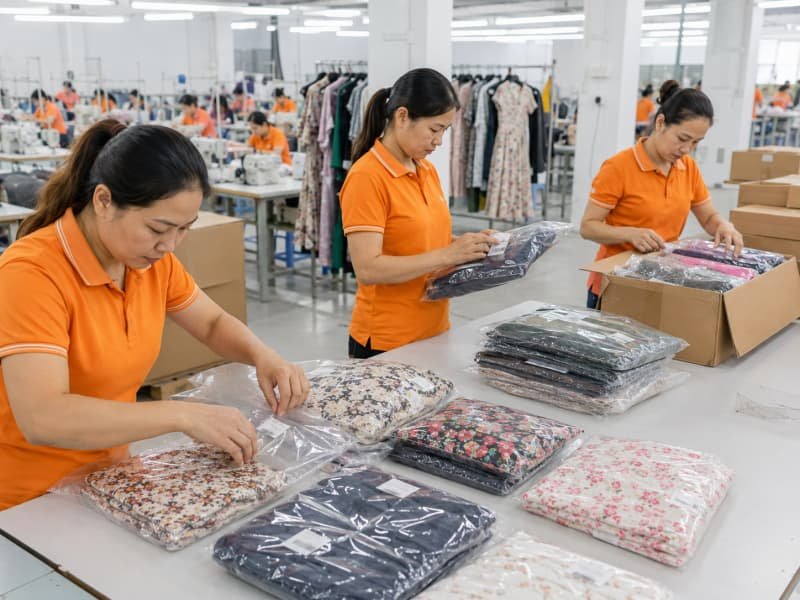
Packing Check
- Confirm folding, hanger, tissue, polybag and carton method
- Review barcode, label, SKU, carton mark and size grouping
- Protect satin, velvet, sequin and structured dresses from pressure damage
Compliance Support for Established Fashion Brands
SMETA Record
- Supports formal supplier review conversations
- Helps procurement teams assess social responsibility background
- Can be discussed before project qualification and production planning
Brand Standards
- Review quality manuals, label rules and packing instructions
- Translate brand requirements into production and QC actions
- Align sample approval with bulk production standards
Testing Support
Duolan can coordinate testing-related communication according to market, fabric, trim and product requirements. Relevant standards may include AATCC, ASTM, OEKO-TEX, EN, China GB standards, GOTS-related material requirements and specific client testing requests when applicable.
- Confirm required test type before bulk material purchase
- Coordinate with nominated third-party laboratories where needed
- Review fabric, trim, colorfastness, seam and care-label requirements
Document Support
- Sample notes, PP records and revision summaries
- Production status, QC updates and packing information
- Shipment preparation and carton-level communication
Decorative and Special Processes for Dress Development

Printing
- Review artwork scale, color direction and fabric absorption
- Confirm placement across panels, seams and sizes
- Prepare strike-off or print sample where needed

Dip Dyeing
Dip dyeing creates visual depth for resort, holiday and occasion dresses, yet shade consistency and fabric reaction require planning.
Duolan reviews material behavior, color transition, processing sequence and QC points before confirming bulk feasibility.
- Check fabric composition and dye reaction
- Review color transition, shade consistency and shrinkage risk
- Confirm QC method before bulk processing

Embroidery
- Review stitch density, backing and fabric distortion risk
- Align motif placement with pattern and seam lines
- Check reverse-side comfort and lining requirement

Washing
Washing can improve hand feel, surface texture or garment appearance, especially for cotton, denim-inspired, casual or resort styles.
Duolan reviews shrinkage, color change, measurement impact and finishing result before confirming washing requirements for bulk production.
- Review shrinkage, measurement change and color effect
- Confirm wash test before bulk approval
- Check whether washing affects trims, labels or decorations

Rhinestones
Rhinestone and crystal details are common in party and occasion dresses. Duolan reviews placement, density, attachment method, skin contact, packing pressure and inspection needs. Decorative sparkle must be planned together with comfort, durability and production workload.
- Review stone size, layout, bonding and heat setting
- Check skin-contact comfort and fabric tolerance
- Define inspection and packing protection method

Pearl Beading
- Confirm bead or pearl density, spacing and attachment method
- Review weight, seam interference and lining protection
- Prepare QC checkpoints for attachment strength and appearance
Anonymous UK Dress Project Examples
UK Occasionwear Line
Region: United Kingdom
Project Scenario: A UK occasionwear team planned a 16-style collection for wedding guest, cocktail and event dressing. The program used satin, chiffon, crepe and lace across several colorways, with a total planned quantity of about 38,000 pieces.
Pain Point: The team needed better sample-to-bulk control because several styles depended on drape, lining, slit position and waist balance. Early samples from a previous supplier had looked acceptable in photos but changed noticeably during bulk production.
Duolan Solution: Duolan reviewed fabric behavior, lining choices, sample purpose, fit comments and PP direction before bulk confirmation. Satin styles received seam and pressing review. Chiffon styles received layer and hem review. Lace styles received placement and lining review.
Result: The collection moved from development review into bulk planning with clearer PP references, fabric and trim confirmation, inline QC points and packing instructions. The client team reduced repeated sample questions and gained a more stable approval path for future occasionwear drops.
Data Reference: 16 styles, about 38,000 pieces, 4 fabric groups, multi-color program.

UK Partywear Drop
Region: United Kingdom
Project Scenario: A UK partywear e-commerce team developed a 24-style going-out and holiday dress program containing bodycon, mesh, sequin, velvet and rhinestone styles. Total planned quantity was about 62,000 pieces across different colors and sizes.
Pain Point: The main risks were sequin comfort, mesh transparency, zipper stress, bodycon recovery and decoration consistency. The team needed a manufacturing partner able to separate styles by complexity rather than handling the order as one simple production batch.
Duolan Solution: Duolan grouped the styles by fabric risk and workmanship difficulty. Sequin styles received lining and seam-thickness review. Mesh styles received coverage and stretch recovery review. Bodycon styles received measurement and recovery checks. Rhinestone styles received placement and packing pressure review.
Result: The program received a clearer sampling sequence, PP confirmation path and production allocation plan. High-risk decorative styles were reviewed separately before bulk launch, while stable jersey styles moved through a faster production path.
Data Reference: 24 styles, about 62,000 pieces, 5 major fabric or process groups, staggered production planning.

UK Sourcing Office
Region: United Kingdom
Project Scenario: A UK sourcing office supported a multi-brand dress program requiring 12 custom styles for seasonal retail and online launch. Total order volume was about 27,000 pieces, including midi dresses, satin dresses, lace dresses and fitted party styles.
Pain Point: The sourcing office needed stronger communication discipline, sample records, supplier capability details and production updates for internal review. The previous workflow created confusion between product comments, material approvals and bulk preparation.
Duolan Solution: Duolan organized project files by style, fabric group, sample stage, revision note, PP status and production requirement. Communication covered material review, sample comments, bulk readiness, quality checkpoints, packing details and delivery coordination.
Result: The sourcing office gained clearer visibility across all 12 styles. Sample comments were easier to follow, bulk preparation became more organized, and production updates supported internal reporting to the brand team.
Data Reference: 12 styles, about 27,000 pieces, 3 approval stages, organized production update flow.

Communication Workflow for UK Product Development Teams
File Submission
- Tech pack, reference images, original sample photos or measurement specs
- Fabric direction, lining needs, trim details and color references
- Label, packaging, compliance and delivery requirements
- Close-up images for neckline, zipper, cups, hem, slit, lining or decoration
Sample Comment Tracking
After the sample is reviewed, UK teams can send annotated photos, fit notes, measurement comments, meeting records or garment technician feedback. Duolan separates comments into technical categories: pattern, measurement, fabric, lining, trim, construction, decoration, workmanship and finishing. This keeps revision work organized. For a 10-30 style program, comment tracking prevents confusion between styles and revisions.
Duolan can help confirm which style needs a second sample, which is ready for PP direction, which needs fabric change and which requires construction review before production planning. Comment tracking may cover:
- Measurement and tolerance changes
- Pattern, fit, fabric, lining and trim notes
- Decoration, workmanship and finishing corrections
- Approval status for each style and sample round
Production Updates
During bulk production, Duolan can provide updates around material status, cutting, sewing, inline QC, finishing, packing and shipment preparation. Communication may include email, WhatsApp, video meeting, photos, videos, spreadsheets and marked-up files according to project needs. Structured updates are valuable for UK teams managing launch calendars, internal reporting and supplier evaluation.
Production communication should not only say “in progress.” It should show what stage the order has reached, which checkpoints have been reviewed and what actions remain before shipment.
Production updates may include:
- Material arrival, cutting, sewing and finishing status
- First-piece, inline QC, final inspection and packing checkpoints
- Carton, label, packing list and shipment preparation details
- Remaining actions before release or forwarder handover

Frequently Asked Questions About Custom Dress Manufacturing for UK Product Teams

Send Your Custom Dress Project for Development Review
Duolan is ready to review custom dress programs from UK product development teams, buying offices, sourcing offices and established fashion brands. Send your development files before quotation or sampling, and our team will review the product direction, fabric needs, fit priorities, construction risks, quantity plan and bulk production path. Clear project information allows our team to give more useful feedback and prepare a better sample-to-bulk plan. Please include as many of the following items as possible:
- Tech pack or specification sheet
- Reference images or original sample photos
- Fabric direction or swatch details
- Target styles, colors and size range
- Estimated quantity per style
- Target launch or delivery window
- Label, packaging and compliance notes
- Current sample stage or revision comments