Skip to content
Custom Dress Manufacturer for UK Wedding Guest Dress Brands
Dress-focused development and manufacturing support for UK occasionwear labels, wedding guest edits, seasonal drops, and repeat production programs.
Duolan helps UK wedding guest dress brands turn design directions, reference styles, fabric ideas, size specs, and seasonal launch plans into production-ready dress programs. Our team supports dress development from fabric review, pattern direction, sample refinement, workmanship planning, private label execution, bulk production, quality checkpoints, packing, and shipment coordination. The focus is not only making a dress look right at sample stage, but keeping fit, fabric, color, construction, and finishing aligned when 10-30 styles move into bulk production.
- Dress-focused womenswear manufacturing for fashion brands and product teams
- Strong experience across occasion dresses, party dresses, going-out dresses, vacation dresses, and fitted silhouettes
- Support for satin, chiffon, lace, mesh, crepe, velvet, sequin, printed woven, and stretch styles
- 16 owned womenswear factories with 20+ long-term satellite factory partners
- Around 300 sewing lines and 50+ quick-response flexible lines across the group manufacturing system
- Sample-to-bulk control through fabric locking, PP sample review, first-piece confirmation, inline QC, and final inspection
Manufacturing and project facts:
- 10-30 style UK wedding guest and occasionwear edits can be reviewed by scene, fabric family, fit risk and production path.
- 20,000-80,000 piece brand-level programs require style-level records, PP standards, first-piece review and packing control before shipment.
- A UK occasionwear label project covered 18 styles and 42,000 pieces across floral chiffon, satin, lace, ruffle and crepe styles.
- A UK-facing ecommerce capsule covered 24 styles and 68,000 pieces across satin slips, printed woven maxis, mesh ruched dresses and formal reception styles.
- A European ecommerce occasionwear program covered 12 styles and 28,500 pieces across draped satin, sequin and lace-overlay dresses.
Built for UK Wedding Guest Dress Brands
UK Occasionwear Labels
- Wedding guest edits and seasonal occasionwear drops
- Multi-style dress programs with fabric and fit review
- Sample-to-bulk control for repeatable occasionwear supply
- PP sample, QC and packing coordination before shipment
Wedding Guest Dress Brands
- Guest-appropriate color direction and scene logic
- Fabric, lining, fit and length control
- Brand-led private label execution
- Bulk readiness review for multi-style programs
US Brands Entering UK Occasionwear
- UK-facing dress direction and capsule style planning
- Launch calendar alignment for seasonal edits
- Shipping, packing and private label coordination
- Fabric grouping for satin, chiffon, mesh, lace and crepe styles
Product and Sourcing Teams
Procurement and product teams need more than a sewing factory. They need a supplier able to review style difficulty, fabric risk, fit comments, workmanship details, material availability, bulk readiness, and delivery timing. Duolan provides structured project evaluation before sampling or bulk production begins.
- Tech pack and reference image development
- Fit comment translation and sample revision planning
- Bulk readiness review before production release
- Supplier capability, QC and documentation support
Wedding Guest Dress Category Boundaries
Clear product boundaries help Duolan support the right occasionwear programs and avoid bridal-category confusion during development.
| Category | Main Product Logic | Fit for Duolan | Development Focus |
|---|---|---|---|
| Wedding Guest Dresses | Event-ready dresses worn by guests for weddings, garden events, city ceremonies, destination weddings, and formal receptions | Core focus | Elegant color, secure lining, refined fit, drape, comfort, photo-ready finishing and repeat production |
| Occasion Dresses | Broader social-event dresses for weddings, graduations, race day, formal dinners, holiday events and cocktail settings | Core focus | Scene planning, fabric selection, silhouette mix, sample review and seasonal launch coordination |
| Party Dresses | Going-out, cocktail, fitted, sequin, mesh, cut-out, mini, midi and body-skimming dress programs | Strong fit | Stretch behavior, coverage, support, seam strength, decoration stability and bulk consistency |
| Bridesmaid Dresses | Coordinated wedding party styles, often color-grouped and size-sensitive | Selective fit | Color consistency, size range, delivery timing, fabric continuity and repeat color accuracy |
| Bridal Gowns | Wedding dresses for the bride, often requiring couture-level bridal construction | Not core focus | Duolan is better suited to guest dresses, occasionwear, partywear, fashion dresses and seasonal dress collections |
UK Wedding Guest Dress Scene Logic
Garden, Country House and Outdoor Wedding Styles
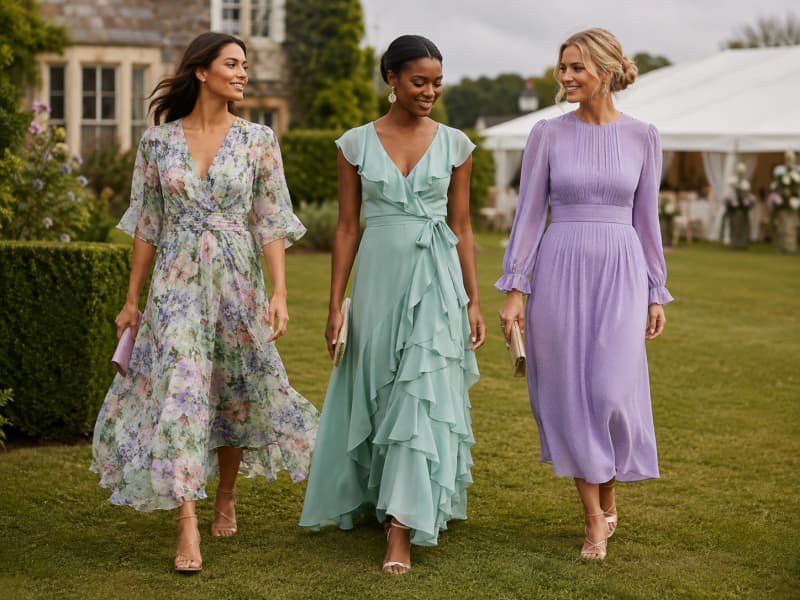
UK wedding guest collections often include garden weddings, countryside venues, marquee events, and outdoor ceremonies. Dresses for these scenes need movement, modest balance, and fabric stability across changing temperature, long wear time, and photo-heavy social moments. A floral chiffon midi may look strong in campaign imagery, but bulk execution must handle transparency, lining coverage, hem stability, and print placement. A ruffle maxi may carry strong visual value, yet excessive frill volume can create sewing bulk, packing pressure, and size grading difficulty.
Duolan reviews outdoor wedding styles through four checkpoints:
- Fabric behavior: drape, opacity, wrinkle response, lining compatibility and recovery after packing
- Wear comfort: strap stability, underarm depth, bust coverage, sleeve opening and walking ease
- Visual proportion: neckline, waistline, skirt volume, slit position and camera-facing balance
- Bulk feasibility: seam control, hemming method, print repeat, trimming consistency and pressing plan
City Ceremony and Registry Wedding Styles
City wedding guest dresses often need a cleaner and more polished tone. Crepe midi dresses, satin slips, draped midis, asymmetric necklines, and structured fitted dresses work well when the brand wants a refined style for registry weddings, evening dinners, and modern hotel receptions. Development risk often sits in fit balance rather than decoration. Bust position, waist shaping, back opening, invisible zipper quality, side seam smoothness, and lining attachment decide whether the garment feels premium or average.
Duolan reviews these styles before sampling by checking fabric weight, body coverage, stretch or non-stretch construction, length proportion, and pressing behavior. For satin and crepe, seam puckering, water marks, shine variation, and packing creases receive special attention. For fitted styles, we check whether the fabric can support the target silhouette without pulling across bust, waist, hip, or back seams.
Key checks include:
- Clean neckline, waist and hip balance for city ceremony styling
- Satin or crepe weight matched to intended drape and structure
- Invisible zipper, side seam and lining attachment control
- Pressing and packing method before bulk approval

Black Tie and Formal Reception Styles
Formal wedding guest collections need stronger visual presence without moving into bridal gown territory. Satin maxi dresses, velvet evening dresses, lace-overlay midis, draped dresses, corset-inspired structures, and darker formal colorways often appear in these edits. The main challenge is controlling structure and polish while keeping production scalable. A dress may need lining, inner support, boning, cups, invisible zipper, slit reinforcement, or clean hem finishing, each adding cost, lead time, and QC points.
Duolan’s review focuses on whether structure, material, workmanship, and order size fit the launch plan. Formal reception styles are often used as hero pieces in a collection, so sample approval must cover not only appearance, but also inner construction, fit stability, decoration security, shade control, and packing method. For bulk orders, we separate standard styles from high-risk construction styles during production path planning.
Formal style controls include:
- Inner support, cup, boning, zipper and lining review
- Slit height, hem sweep and formal length control
- Velvet, satin, lace and crepe surface handling
- Separate planning for high-risk hero styles before line allocation

Who Duolan Serves for Wedding Guest Dresses
UK Dress Brands
- 10-30 style collection review
- Fabric, fit and sample route planning
- Bulk production and repeat support
Occasionwear Labels
- Scene-led style grouping
- Occasion fabric direction
- PP standard and packing control
Fast Fashion Teams
- High-density sampling support
- Quick-response production planning
- Style grouping by fabric and complexity
Sourcing Offices
- Supplier capability information
- Compliance and QC coordination
- Packing and shipment communication
Product Teams
- Fit comment translation
- Size specification and sample review
- Revision and PP sample planning
Multi-brand Groups
- Multiple range coordination
- Production allocation by style risk
- Repeat and scale-up order planning
Wedding Guest Dress Collection Planning
From Single Style to Collection Structure
Wedding guest brands rarely build growth around one dress. A commercially balanced edit normally includes hero styles, repeat styles, photo styles, easy-fit styles, and event-specific options. A brand may need 18 styles for a spring wedding guest drop: floral chiffon midi dresses for garden weddings, satin midis for city ceremonies, draped maxis for formal receptions, lace dresses for feminine occasionwear, and fitted stretch styles for evening events.
Duolan helps organize the development path by style complexity, fabric source, pattern difficulty, fit risk, production route, and delivery window.
During collection planning, we review:
- Product role: hero style, commercial style, campaign style, repeat style or event style
- Fabric logic: satin, chiffon, crepe, mesh, lace, jacquard, velvet, sequin or stretch jersey
- Silhouette mix: midi, maxi, slip, wrap, halter, one-shoulder, corset, fitted or A-line
- Bulk pathway: sample priority, material locking, PP sample needs, line allocation and QC focus
Building a Repeatable UK Occasionwear Program
Repeatability matters for wedding guest dress brands. A successful satin midi may return in new colorways, a floral chiffon maxi may extend into summer and resort edits, and a structured crepe dress may become an evergreen occasion style. Duolan supports repeat development by recording fabric, lining, trim, measurement priorities, workmanship points, packing methods, and fit notes during sample and bulk stages.
For a brand planning 20,000-80,000 pieces across 10-30 styles, every style needs a clear production identity. Some styles can run through quick-response lines; embellished, printed, boned, or multi-layer styles may need a separate production route. Duolan reviews quantity, complexity, colorways, size range, launch date, and packing requirements before arranging production planning. Repeat-program control includes:
- Pattern, BOM, trims, fabric and QC records preserved for reorders
- Color extension planning before fabric and lining changes
- Style grouping by quick-response, high-control or special-process route
- Reorder review based on previous bulk and QC learning
Dress Styles for UK Wedding Guest Brands

Satin Slip Dresses
- Fabric focus: weight, shine, bias response and lining compatibility
- Fit focus: cowl depth, strap length, bust coverage and side seam balance
- Bulk focus: seam puckering, pressing marks, folding and carton pressure

Floral Midi Dresses
- Fabric focus: print repeat, drape, opacity and shrinkage behavior
- Fit focus: waist position, skirt fall, sleeve comfort and hem balance
- Bulk focus: color approval, marker placement and lining consistency

Ruffle Maxi Dresses
- Fabric focus: chiffon, georgette or soft woven drape
- Fit focus: shoulder balance, waist position, skirt volume and hem sweep
- Bulk focus: ruffle ratio, layer matching, sewing bulk and packing recovery

Halter Dresses
- Structure focus: strap width, neck comfort, closure and reinforcement
- Fit focus: bust coverage, armhole curve and back stability
- Bulk focus: strap strength, seam reinforcement and size grading

Wrap Dresses
- Structure focus: overlap depth, inner tie, waist tie and neckline coverage
- Fit focus: bust control, skirt opening and movement comfort
- Bulk focus: grading, seam finishing and repeatable tie placement

Corset Dresses
- Structure focus: cups, boning, interlining, zipper and top-edge stability
- Fit focus: bust height, waist pressure and back closure balance
- Bulk focus: PP standard, first-piece review and workmanship notes

Mesh Dresses
- Fabric focus: mesh GSM, stretch, softness and recovery
- Fit focus: lining coverage, neckline safety and body balance
- Bulk focus: print placement, graded coverage and seam softness

Lace Dresses
- Fabric focus: motif scale, usable width, scallop edge and stretch level
- Fit focus: lining tone, coverage and zipper reinforcement
- Bulk focus: cutting loss, motif matching and color-category control
One-shoulder Dresses
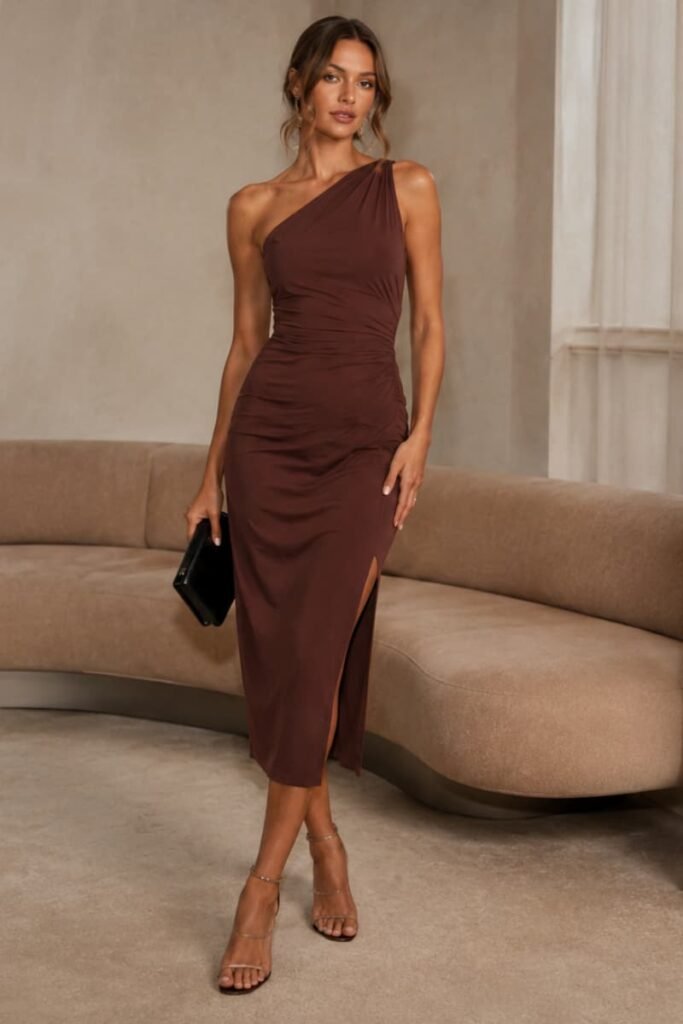
- Structure focus: shoulder support, neckline curve and inner balance
- Fit focus: bust support, underarm coverage and side seam smoothness
- Bulk focus: asymmetry grading and first-piece fit review

Cowl Neck Dresses
- Fabric focus: drape, weight, surface shine and pressing behavior
- Fit focus: cowl depth, shoulder seam and bust coverage
- Bulk focus: neckline consistency, lining and packing recovery

A-line Dresses
- Structure focus: waist seam, skirt volume, hem sweep and lining
- Fit focus: length grading, movement and daytime comfort
- Bulk focus: fabric body, cutting direction and seam stability

Draped Dresses
- Pattern focus: grainline, fixing points and drape direction
- Fabric focus: weight, fall, recovery and surface response
- Bulk focus: repeatable drape placement and pressing method

Bodycon Dresses
- Fabric focus: stretch ratio, recovery, opacity and GSM
- Fit focus: bust, waist, hip, hem and side seam balance
- Bulk focus: tolerance, grading and measurement stability

Black Tie Dresses
- Structure focus: inner support, slit, hem sweep and lining
- Fabric focus: satin, velvet, crepe, lace and formal colorways
- Bulk focus: shade control, pressing and garment-protection packing

Occasion Co-ord Sets
Occasion co-ord sets can extend a wedding guest edit beyond dresses while keeping brand handwriting. Duolan reviews top and skirt proportion, fabric matching, waist construction, lining, closure, and packing. Co-ords also require color consistency between separate pieces during cutting and assembly.
- Product focus: top-skirt proportion, closure and coordinated fit
- Fabric focus: color consistency, lining and fabric matching between pieces
- Bulk focus: SKU grouping, size-ratio packing and set completeness
Fabric Directions for UK Occasionwear

Satin
- Best for: slip dresses, cowl necks, city registry styles and black tie edits
- Main risks: seam pressure, needle marks, shine variation and packing creases
- Duolan control: satin weight, lining, seam method, pressing and folding review

Chiffon
- Best for: floral midis, ruffle maxis, sleeve dresses and layered occasion styles
- Main risks: transparency, fragile edges, uneven layers and static
- Duolan control: lining, roll hem, layer balance and print placement review

Crepe
- Best for: modern midis, one-shoulder dresses and clean event styles
- Main risks: wrong weight, poor drape or visible pressing issues
- Duolan control: GSM, seam finish, lining choice and proportion review

Lace
- Best for: romantic midis, sleeve dresses and feminine occasion styles
- Main risks: motif mismatch, bridal confusion, snagging and poor lining color
- Duolan control: lace repeat, scallop edge, lining tone and panel matching

Mesh
- Best for: printed overlays, ruched dresses and refined sheer layers
- Main risks: transparency, poor recovery, needle damage and lining mismatch
- Duolan control: GSM, coverage, lining color, print placement and seam softness

Jacquard
- Best for: structured midis, race day edits and polished event pieces
- Main risks: heavy handfeel, motif mismatch, seam bulk and stiffness
- Duolan control: motif layout, cutting direction, lining and pressing plan

Georgette
- Best for: soft midis, sleeve dresses and summer wedding edits
- Main risks: fraying, lining exposure, hem twisting and print variation
- Duolan control: seam method, lining length, hem finish and print approval

Viscose Blends
- Best for: destination wedding dresses, soft maxis and resort occasion edits
- Main risks: shrinkage, wrinkle, color movement and seam distortion
- Duolan control: shrinkage review, print quality, packing recovery and sourcing stability

Stretch Jersey
- Best for: fitted midis, ruched styles and body-skimming occasion dresses
- Main risks: weak recovery, transparency, twisting and size drift
- Duolan control: recovery test, opacity check, stitch method and tolerance review

Velvet
Velvet works for autumn weddings, winter receptions, and formal evening edits. Duolan reviews pile direction, shade variation, pressing sensitivity, seam crush, lining, and packing method.
Velvet needs production discipline because surface marks and nap direction can affect final garment appearance.
- Best for: winter receptions, formal dresses and rich evening edits
- Main risks: pile pressure, shade variation, lint and crush marks
- Duolan control: nap direction, cutting, pressing and packing method

Sequin Fabric
- Best for: evening wedding guest edits, black tie capsules and statement pieces
- Main risks: scratchy seams, heavy garment weight, loss and zipper bulk
- Duolan control: lining, seam allowance cleaning, repair standard and packing protection

Printed Woven
- Best for: floral midis, race day edits and seasonal occasionwear capsules
- Main risks: print mismatch, color approval delay, shrinkage and repeat variation
- Duolan control: strike-off review, placement record, material locking and cutting plan
Fabric, Fit and Scene Matrix
Scene-led planning helps each fabric, silhouette, and workmanship route match the wedding guest occasion.
| UK Occasion Scene | Strong Fabric Direction | Dress Direction | Main Development Risk | Duolan Control Method |
|---|---|---|---|---|
| Garden Wedding | Chiffon, georgette, printed woven | Floral midi, ruffle maxi, sleeve dress | Transparency, hem movement, print placement | Lining review, roll hem control, print repeat check and PP sample review |
| City Registry | Crepe, satin, fluid woven | Satin midi, clean cowl dress, one-shoulder dress | Seam puckering, fit balance, pressing marks | Fabric weight review, sample fitting, seam tension control and pressing plan |
| Country House Wedding | Jacquard, lace, soft satin | Structured midi, lace dress, A-line dress | Fabric weight, motif placement, lining comfort | Cutting direction, motif layout, lining tone and zipper reinforcement |
| Formal Reception | Satin, velvet, crepe, lace | Maxi dress, draped dress, black tie dress | Inner structure, slit height, packing recovery | Bulk readiness review, inner support check, final pressing and packing control |
| Destination Wedding | Viscose blend, lightweight woven, georgette | Wrap dress, halter maxi, soft slip dress | Wrinkle, movement, strap security | Fabric recovery check, strap reinforcement and travel packing review |
| Race Day Edit | Jacquard, crepe, lace, printed woven | Polished midi, A-line dress, structured dress | Proportion, stiffness, color direction | Pattern balance, lining, fabric body review and sample refinement |
Design Details for Wedding Guest Dresses

Neckline Balance
- Review depth, curve, facing, tape, lining and strap connection
- Check gaping, pulling, neckline collapse or unstable top edge
- Confirm neckline standard before grading and PP approval

Waist Shaping
Waistline placement decides proportion across midi, maxi, wrap, A-line, and fitted dresses. Duolan reviews seam position, elastic method, waist tie length, dart balance, and size grading.
Poor waist control can make a strong fabric look inaccurate after fitting or bulk production.
- Review waist seam, dart, elastic, panel and tie placement
- Check size grading and body proportion across the range
- Confirm waist standard before bulk cutting

Slit Height
- Set measured slit start point and reinforcement method
- Review walking, sitting and lining exposure
- Confirm tolerance so slit height stays consistent across sizes

Lining Coverage
Lining is critical for chiffon, lace, mesh, satin, georgette, and light printed fabrics. Duolan checks opacity, stretch compatibility, lining length, seam attachment, color tone, and comfort.
Lining decisions should be locked before bulk because late changes affect fit, cost, and production timing.
- Confirm full, partial, bodice, skirt or power-mesh lining
- Match color, stretch and hand feel with shell fabric
- Review opacity under light and movement

Bra-friendly Structure
- Review strap width, cup coverage, back depth and neckline tension
- Confirm whether cups, boning, tape or lining support is needed
- Check comfort and coverage before PP standard is locked
Back Opening
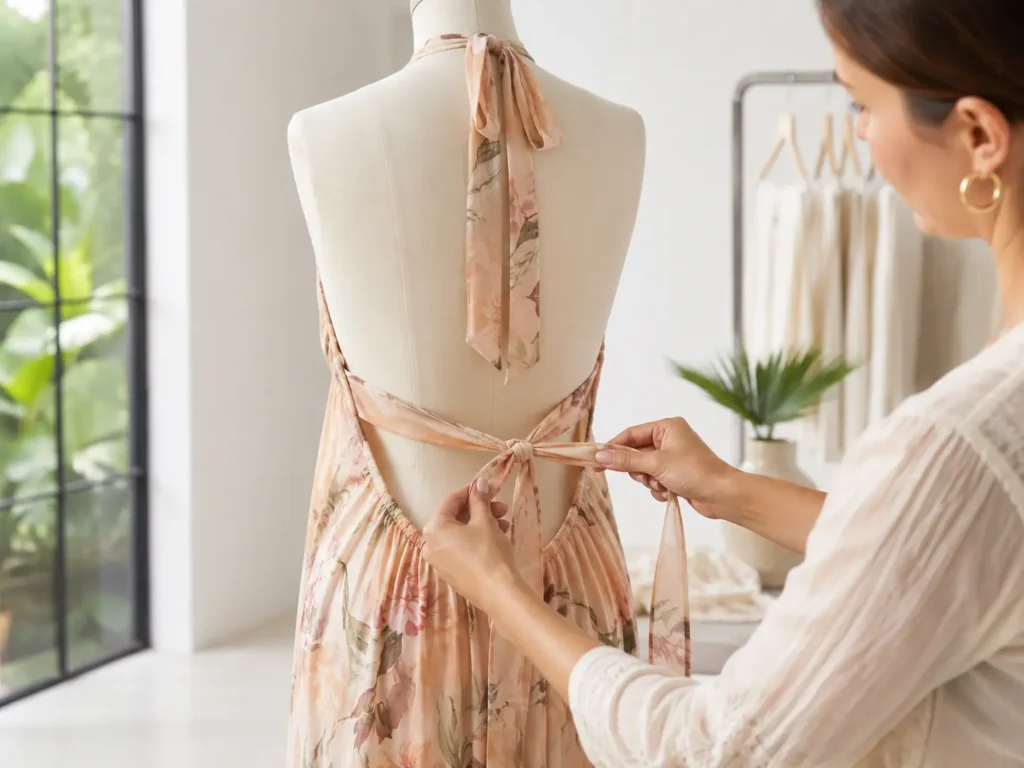
Backless, tie-back, low-back, and cut-out dresses need careful balance. Duolan reviews opening depth, strap angle, closure type, elastic recovery, lining, and wearing security.
Wedding guest styles need visual appeal without losing stability during long event wear.
- Check back depth, strap route, waist hold and side seam security
- Review closure, elastic, tape and lining support
- Confirm stability during movement and size grading

Zipper Placement
Invisible zippers must match fabric weight, fit tension, and seam position. Duolan reviews zipper length, side or back placement, seam reinforcement, top finishing, and bulk sewing stability.
Satin, lace, and fitted styles need extra attention around zipper waviness and seam pulling.
- Review zipper type, length, tape color and placement
- Check seam thickness, reinforcement and top finishing
- Confirm zipper quality during first-piece review

Ruffle Volume
Ruffles add movement and femininity, but over-volume can create cost, weight, packing pressure, and uneven bulk results.
Duolan reviews ruffle width, gathering ratio, seam layering, fabric softness, and hemming route so design value remains scalable.
- Review width, gather ratio, hem method and layer construction
- Check sewing bulk, packing pressure and weight
- Confirm symmetry and consistency across sizes
Drape Direction
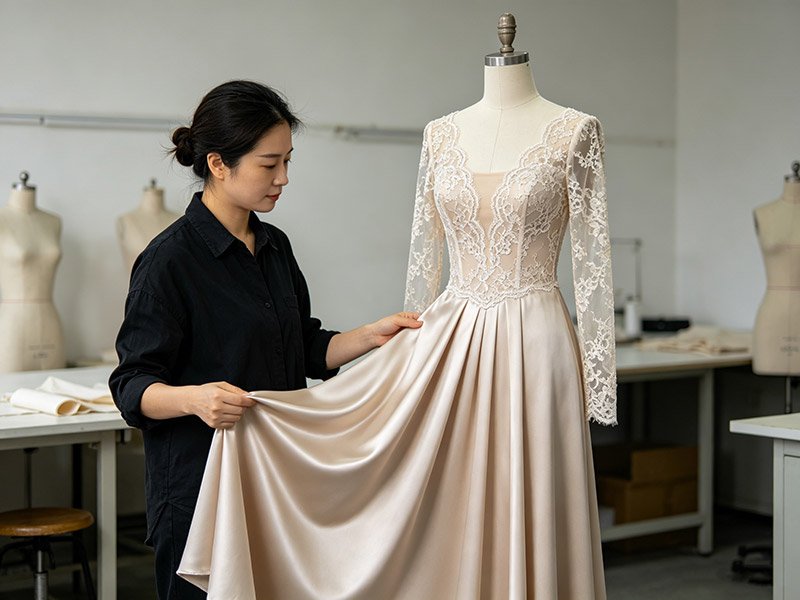
Drape must be engineered, not guessed. Duolan reviews grainline, fabric fall, pattern angle, fixing points, lining, and pressing.
Draped satin and crepe dresses often need sample refinement because small pattern changes can shift bust, waist, and hip balance.
- Confirm grainline, pattern angle and hidden fixing points
- Review fabric weight, fall and lining relationship
- Check drape shape after pressing and packing

Strap Strength
- Review strap width, slider quality and attachment strength
- Match strap construction with fabric weight and garment tension
- Confirm stress points during sample and QC review

Boning Support
- Review boning type, channel placement and edge protection
- Check cup, waist and back closure balance
- Confirm production training and QC focus before bulk

Hem Finish
Hem finish affects movement, polish, and packing recovery. Chiffon may need roll hem; satin may need clean folded hem; lace may use scallop edges; maxi dresses need length grading.
Duolan reviews hem method before production to reduce uneven length and rework.
- Select hem method by fabric and dress length
- Check hem level, stitch visibility and pressing method
- Confirm packing recovery before shipment preparation
Development Inputs Duolan Can Review
Tech Pack and Size Specification Review
- Missing measurement, BOM, lining or trim information
- Fabric risk notes before sample cutting
- Suggested sample route by style complexity
- Bulk readiness points to confirm before production planning
Reference Image and Collection Moodboard Development
- Scene fit: garden, city registry, destination, formal reception or race day
- Silhouette and fabric grouping for collection planning
- Open technical questions not visible in reference images
- Priority order for fabric sourcing, pattern and sample work
Original Sample and Improvement Review
When a brand sends an original sample, Duolan can review pattern, measurement, fabric, lining, workmanship, trims, fit points, and improvement opportunities. The goal is not blind copying. A strong review identifies which elements must stay, which details need correction, and which construction points need adjustment for production stability. For wedding guest dresses, original samples often reveal important issues: neckline gaping, slit insecurity, zipper waviness, uneven hem, fabric transparency, weak straps, or poor packing recovery.
Duolan can use these findings to prepare a development plan for a refined sample and a cleaner bulk route. Original-sample review can cover:
- Pattern, measurement and construction comparison
- Fabric replacement or matching direction
- Workmanship and finishing improvement points
- Repeat production standards that should be preserved

Sample Development Path for Dress Programs
Step 1|Brief Review
Duolan reviews style direction, fabric ideas, quantity, colorways, size range, target launch date, and brand requirements before sample planning.
The review helps identify unclear details and early risk points.
- Confirm sample purpose and approval target
- Identify missing fabric, size, trim or packing details
- Mark high-risk areas before pattern work begins
Step 2|Fabric Check
Fabric direction is checked against silhouette, scene, lining, print, stretch, opacity, drape, and pressing needs.
Satin, chiffon, lace, mesh, velvet, and sequin styles require different review points.
- Review drape, opacity, stretch, color and surface response
- Check lining and trim compatibility
- Confirm whether sample fabric can represent bulk fabric
Step 3|Pattern Development
- Translate style direction into pattern structure
- Review movement, coverage and support logic
- Prepare fit-sensitive points for sample checking
Step 4|First Sample
- Review visual effect, construction and material behavior
- Separate fit issues from fabric or workmanship issues
- Confirm whether the next stage is revision, photo sample or PP preparation
Step 5|Revision Sample
Revision work translates comments into measurable changes.
Duolan tracks adjustment points such as length, neckline depth, waist shaping, lining coverage, zipper area, strap length, and hem finish.
- Record measurement and construction changes
- Confirm why each revision is needed
- Avoid creating new problems while correcting the previous sample
Step 6|Production-ready Sample
A production-ready sample supports PP confirmation and bulk planning. It should clarify fabric, lining, trims, construction, measurement points, workmanship standards, packing direction, and QC focus.
- Lock fabric, trims, measurements and workmanship points
- Confirm packing and QC standards before production release
- Use the approved version as production and inspection reference
UK Fit and Size Review
Size Chart Translation and Measurement Points
Measurement review is especially important when one program includes satin slip dresses, crepe midis, chiffon maxis, fitted jersey dresses, corset structures, and lace overlays. Different materials respond differently during cutting, sewing, pressing, and wear. Duolan reviews which measurements should stay strict, which need fabric-aware tolerance, and which points require fitting feedback before bulk.
Fit review may include:
- Brand size chart, base size, tolerance and grading review
- Bust, waist, hip, length, strap, slit and hem measurement points
- Material-aware tolerance for satin, mesh, jersey, chiffon and lace
- Fit-model or mannequin review when needed for complex styles
Fit Comments and Revision Control
Fit comments need clear translation into pattern, sewing, and measurement action. A comment such as “neckline feels too open” may involve shoulder angle, bust depth, cowl length, strap tension, lining attachment, or fabric weight. A comment such as “waist does not sit right” may involve dart position, seam balance, elastic length, or grading.
Duolan records revision points so sample changes can move toward production readiness rather than endless sample rounds. For multi-style wedding guest programs, revision control helps avoid confusion when 10-30 styles are moving through different sample stages. The team can organize comments by style, colorway, size, fabric, and construction point before confirming the next sample step.
Revision control can include:
- Annotated photo comments and measurement notes
- Pattern, fabric, lining, trim and workmanship actions
- Sample status by style and revision round
- Clear next step: revised sample, SMS, PP sample or bulk preparation
Fit Risk by Fabric and Silhouette
Fit review changes by fabric. Satin shows tension and seam marks quickly. Chiffon needs coverage and layer control. Stretch jersey requires recovery and transparency review. Lace needs lining and motif placement. Corset styles need cup, boning, waist, and back closure balance. Mesh needs stretch and coverage planning.
Duolan reviews these factors before bulk release because a good-looking photo sample can still fail in repeated production if fit risk remains unresolved. The final goal is clear: a style should be approved not only by appearance, but by fabric behavior, pattern logic, measurement control, and production readiness.
Risk review may include:
- Stretch and recovery review for jersey, mesh and bodycon styles
- Seam and tension review for satin and crepe styles
- Cup, boning and closure review for corset-inspired styles
- Lining and motif review for lace, mesh and chiffon styles

Risk Control Before Bulk Production
Design Mismatch
- Review visible and hidden construction points
- Compare design intent with fabric and production route
- Mark support, lining and closure risks before sampling
Fabric Mismatch
- Review drape, stretch, opacity and surface response
- Check lining compatibility and bulk sourcing stability
- Confirm whether fabric changes affect price, sample time or delivery
Fit Comment Loss
- Convert comments into pattern, measurement or construction actions
- Record changes before the next sample round
- Preserve approved fit notes for PP and QC use
Bulk Inconsistency
- Lock material and trim references before cutting
- Use PP sample as production and QC benchmark
- Confirm first-piece output before wider production
Shade Variation
Color differences can weaken wedding guest collections, especially when several styles share one palette. Duolan reviews lab dip, bulk fabric, print approval, lining shade, and colorway grouping before production release.
- Confirm fabric, lining, thread and zipper colors together
- Review print and lab dip approval before bulk fabric use
- Group colorways to reduce visible inconsistency
Lining Problems
Lining affects opacity, comfort, body coverage, and garment shape. Duolan checks lining length, stretch compatibility, tone, attachment method, and movement. Chiffon, mesh, lace, and light satin dresses receive closer lining review.
- Review lining color, stretch, length and attachment
- Confirm opacity under lighting and body movement
- Avoid late lining changes after PP approval
Calendar Pressure
- Plan sampling and revisions before peak production pressure
- Identify styles needing earlier fabric or process approval
- Align QC, packing and shipment with launch date
Reorder Drift
Reorders need records from the first bulk run. Duolan tracks fabric, trims, measurements, workmanship points, packing method, and QC focus so repeat production can stay aligned with the approved version.
- Preserve pattern, BOM, fabric, trim and packing records
- Review dye lot, print and material availability before reorder
- Use previous QC findings to improve repeat production
Workmanship Control for Occasion Dresses
Seam, Zipper and Pressing Quality
- Stitch type, needle choice, seam allowance and thread tension by fabric
- Zipper placement, reinforcement and surrounding seam smoothness
- Pressing method, surface marks, hem line and final garment recovery
Embroidery, Beading and Sequin Handling
- Decoration density, placement, weight and production time
- Skin-contact comfort, lining and reverse-side finish
- Attachment strength, repair method and QC frequency
Inner Construction and Support Systems
Some wedding guest dresses need inner construction even when the outside design looks simple. Corset-inspired dresses may require boning, cups, interlining, reinforced seams, and stable back closure. Halter and backless dresses may need strap reinforcement and careful bust balance. Draped dresses may need hidden fixing points to maintain shape during wear.
Duolan reviews inner construction early because late support changes can alter fit, cost, sample timing, and bulk method. Inner structure must support the design without making the dress uncomfortable or difficult to produce. For formal reception and black tie wedding guest styles, inner construction often decides whether a hero dress can move from sample to scalable production.
Control points include:
- Cups, boning, interlining, tape, elastic and inner waist support
- Back closure, zipper stress, neckline stability and strap security
- Comfort, grading and production repeatability before PP approval

Sample-to-Bulk Control System
Bulk Readiness Review Before Production
The review covers fabric, lining, trims, color, measurements, workmanship points, packing requirements, and launch requirements. A satin midi may need fabric and pressing locked. A chiffon floral maxi may need print and lining locked. A corset dress may need boning, cup, lining, and zipper details locked. The output should be clear enough for production teams, QC teams, and brand teams to work from one approved basis.
Readiness review includes:
- Sample status: fit confirmed, visual confirmed, PP basis or pending refinement
- Material status: shell fabric, lining, trims, color and supplier records
- Production status: measurements, workmanship, packing and QC focus
- Order status: launch, test, repeat or scale-up production route
Production Path and Timeline Planning
Duolan reviews which styles need quick-response lines, which require special process partners, which need trial production, which need extra QC points, and whether multi-line or multi-factory coordination is suitable. Internal scheduling can then connect sample status, material arrival, cutting, sewing, special process, inline QC, final inspection, packing, and shipping. This structure helps large dress programs stay organized through high-pressure launch windows.
Production planning includes:
- Style grouping by fabric, construction, process and quantity
- Material arrival, cutting, sewing, QC, packing and shipment milestones
- Quick-response, special-process or high-control production path review
- Split shipment or priority style planning when launch calendars require it
First-piece Confirmation and Inline QC
First-piece confirmation helps protect approved sample standards when production begins. Duolan checks whether the first production pieces match the approved sample in fabric, color, measurement, seam finish, lining, trims, zipper, pressing, and packing direction. For complex styles, first-piece review may include decoration security, boning placement, slit height, neckline stability, and hem quality.
Inline QC keeps problems visible before full quantity is completed. Final inspection comes after production, but inline checking reduces late rework and calendar pressure. For wedding guest dresses, QC often focuses on fit-sensitive measurements, seam quality, fabric surface, lining coverage, shade consistency, trimming, label placement, and packing recovery.
QC actions include:
- First production garment checked against PP sample and approved notes
- Measurement and workmanship review during production, not only at final stage
- Decoration, lining, zipper, seam and pressing checks by garment type
- Final inspection and packing confirmation before shipment release

Manufacturing System Behind Duolan
Factory Network and Production Capacity
- 16 owned womenswear factories for core style control
- 20+ long-term satellite factories for scaling and repeat orders
- Around 300 sewing lines and 50+ quick-response lines
- Stable monthly output around 6,500,000 pieces across the wider system
Development Density and Sample Support
Wedding guest dress brands often develop several styles at once. Duolan’s supporting system has monthly sample development capacity of 15,000-35,000 sample or development rounds and can support 3,000-8,000 style development and sampling workflows per month across the wider group structure. This matters when a brand is building a seasonal edit with 10-30 dress styles instead of one isolated sample. The development system is supported by CAD pattern systems, marker systems, pattern plotters, sample sewing machines, overlock machines, coverstitch machines, electric cutters, and sample ironing tables. These resources support pattern correction, sample iteration, fit review, and production-ready sample preparation.
Development support includes:
- High-density sample review for multi-style collections
- Pattern and sample equipment for revision and fit correction
- Fabric card, trim, lining and workmanship coordination
- PP sample preparation before bulk production release
Equipment and Process Resources
- Fabric inspection, cutting and numbering before sewing
- Sewing, special-machine and template operations by garment type
- Printing, heat transfer and surface process coordination
- Pressing, finishing, inspection and packing preparation

QC Points for Wedding Guest Dresses
Fabric Inspection
- Check defects, shade, width, GSM and hand feel
- Review fabric direction, print clarity and batch consistency
- Confirm material against approved sample and production record
Shade Control
Color consistency matters across satin, chiffon, lace, lining, trims, and repeat orders.
Duolan checks lab dip, bulk fabric, print direction, and colorway grouping before production release.
- Compare shell fabric, lining, thread, zipper and trim color
- Review lab dip, bulk lot and print approval
- Group colorways by order and production plan
Measurement Check
- Check key POMs by garment type and size range
- Apply tighter review for fitted and structured styles
- Preserve measurement records for repeat orders
Seam Inspection
Seams affect perceived quality and wear strength.
Duolan checks puckering, tension, skipped stitches, seam allowance, inner finish, zipper seam, and hem quality during inline and final QC.
- Review stitch density, thread color and seam tension
- Check high-stress zones such as zipper, slit and strap seams
- Inspect puckering, skipped stitches and fabric damage
Lining Coverage
Lining QC checks opacity, attachment, tone, comfort, stretch match, and length.
Chiffon, mesh, lace, georgette, and light satin dresses receive extra lining attention.
- Confirm lining color, length, stretch and opacity
- Check attachment, seam comfort and garment movement
- Ensure lining supports the outer silhouette
Decoration Security
- Check attachment, placement and missing decoration
- Review reverse-side comfort and seam interference
- Inspect decoration after sewing, pressing and packing preparation
Pressing and Packing
- Match pressing method to fabric and decoration type
- Review folding, hanger, polybag, carton and tissue needs
- Check garment recovery after packing where required
Final Inspection
Final inspection reviews garment appearance, measurement, workmanship, labels, packing, carton marks, and shipment readiness. For launch programs, inspection timing should be planned into the delivery calendar.
- Confirm garment appearance, quantity and size breakdown
- Check labels, barcode, polybag and carton marks
- Prepare shipment readiness before handover
Audit and Compliance Support
Social Audit and Supplier Evaluation Readiness
- Supplier capability information for qualified brand teams
- Factory background, production structure and QC workflow explanation
- SMETA 2-Pillar audit record discussion during supplier review
- Project communication records for development and production planning
Testing and Material Requirement Coordination
- Fabric, lining, trim and colorfastness requirement discussion
- Care label, composition and packing standard review
- Third-party testing coordination when required by the brand
- Material direction review before bulk purchase
Third-party Inspection and Brand Requirements
- Measurement records, production photos and inspection notes
- Style-level QC focus by fabric and construction risk
- Packing list, carton mark and shipment readiness review
- Coordination with brand-nominated inspection requirements

Launch Calendar for UK Wedding Guest Dresses
Backward Planning from Wedding Season
UK wedding guest dress programs often connect to spring weddings, summer garden events, race day edits, autumn formal occasions, holiday events, and destination wedding capsules. Strong product planning starts from the target launch date, not from the sewing date. Duolan reviews the expected selling window, campaign shooting date, photo sample needs, first sample timing, fit revision, material locking, PP sample, bulk production, inspection, packing, and shipping.
A 16-style spring wedding edit may need different calendars for floral chiffon, satin slip, lace midi, and corset-inspired formal styles. Styles with print, lace, boning, sequin, or special finishing should start earlier because material approval and workmanship testing take more time. Duolan helps identify which styles should move first and which ones can follow a shorter route.
Calendar planning includes:
- Selling window, campaign date and warehouse intake date
- First sample, fit revision, PP sample and material locking stages
- Earlier review for print, lace, boning, sequin and special finishing
- QC, packing and shipment milestones before final delivery
Sample Timing and Production Timing Review
Sample lead time should be evaluated by style complexity, fabric availability, pattern difficulty, special process needs, and comment depth. Duolan presents sample planning with a clear development path, including what is included, what must be confirmed, and how the sample can move toward production readiness.
Bulk lead time should also be reviewed by style count, quantity, material readiness, colorways, production route, QC needs, packing, and shipment mode. A program with 20-30 styles and 40,000-80,000 pieces needs calendar discipline across material arrival, cutting, sewing, special process, inspection, packing, and delivery. Duolan can support planning around express, air, sea, split shipment, or brand-nominated forwarder coordination when project requirements are clear.
Timeline review includes:
- Sample route by fabric, construction and special-process difficulty
- Material and trim lead time before production confirmation
- Bulk schedule by style, color, size, quantity and delivery priority
- Shipping plan by express, air, sea, split shipment or nominated forwarder
Private Label Delivery for Dress Brands
Neck Labels
- Review label type, size, color and placement
- Match label method to neckline, lining and fabric sensitivity
- Confirm label artwork and approval before bulk application
Care Labels
- Confirm fiber composition, care symbols and origin wording
- Check label placement and skin comfort
- Align care label with fabric, lining and decoration requirements
Hangtags
Hangtags help maintain retail presentation and brand identity. Duolan can support hangtag placement, string method, safety pin or loop choice, barcode position, and packing consistency.
- Review hangtag artwork, size, string and attachment point
- Confirm barcode and style-color-size information
- Avoid tag pressure on delicate satin, mesh, velvet or sequin surfaces
Barcode Labels
Barcode and SKU labels support warehouse receiving, ecommerce fulfillment, and retail distribution.
Duolan reviews placement, scan readability, carton matching, and size-color-style accuracy.
- Confirm barcode placement on polybag or hangtag
- Match SKU data with size, color, style and carton records
- Check scan readability before shipment preparation
Polybag Packing
- Select folding or hanger method by garment fabric and structure
- Review bag size, warning text, SKU label and sealing method
- Add protection for satin, velvet, sequin or structured styles where needed
Carton Marks
- Confirm carton number, style, color, size ratio and quantity
- Review gross weight, net weight, carton size and destination mark
- Align carton marks with packing list and forwarder requirements
Ecommerce Packaging
Ecommerce-focused wedding guest dresses need neat folding, crease control, barcode clarity, and easy warehouse handling. Satin and velvet styles may need extra packing review.
- Support direct warehouse intake and order processing
- Review SKU label, barcode, folding and polybag standard
- Protect garment presentation for unpacking and photography
Brand Manual Execution
- Translate brand manual into factory and packing actions
- Confirm inspection photos and documentation needs
- Keep packaging aligned with approved sample and warehouse requirements
UK Occasionwear Project Examples
UK Occasionwear Label|18 Styles|42,000 Pieces
- 18 styles organized into 4 occasion scenes
- 42,000 pieces produced across multiple colorways
- Satin, chiffon, lace and crepe routes separated before production
- Bulk readiness notes prepared for key styles
- Final packing reviewed for crease-sensitive fabrics

US Fast Fashion Brand|24 Styles|68,000 Pieces
- 24 styles grouped by complexity and launch priority
- 68,000 pieces planned with style-color-size breakdown
- Campaign sample, fit sample and PP sample routes separated
- Quick-response lines used for selected commercial styles
- Reorder records prepared for repeat colors and core silhouettes

European Ecommerce Occasionwear Brand|12 Styles|28,500 Pieces
A European ecommerce occasionwear brand developed a focused wedding guest and party edit with 12 styles and 28,500 pieces. The collection included draped satin midis, one-shoulder dresses, halter maxis, sequin evening dresses, and lace-overlay occasion styles. The biggest concern was whether samples could stay consistent after moving into bulk, especially for satin seam quality, sequin comfort, and lace placement.
Duolan reviewed material behavior before final sample approval. Satin styles were checked for seam tension, cowl fall, and packing recovery. Sequin styles were reviewed for skin comfort, decoration loss, and lining. Lace styles were reviewed for motif placement, zipper reinforcement, and shade match. Bulk production began only after fabric, trims, lining, workmanship points, and packing direction were locked.
Project result:
- 12 styles developed for wedding guest and party scenes
- 28,500 pieces produced across satin, lace and sequin styles
- High-risk decorative styles separated during production planning
- Inline QC focused on surface defects, lining and measurement
- Packing review reduced crease risk for satin and embellished garments

Why Brand Teams Compare Duolan
UK Sample Studios
- Useful when a brand needs overseas sample-to-bulk execution
- Supports larger programs after local fit or prototype decisions
- Connects development work with QC, packing and shipment
General Apparel Factories
General apparel factories may sew many categories but lack dress-specific development judgment. Duolan focuses on fashion dresses, occasion dresses, party dresses, fitted silhouettes, and fashion sets, giving product teams stronger fabric, fit, lining, and workmanship discussion.
- Stronger focus on dress categories and fabric behavior
- More relevant discussion around lining, support and drape
- Better fit for multi-style occasionwear programs
Trading Companies
- Directer project coordination with manufacturing resources
- More traceable sample, PP, production and QC records
- Better control of repeat orders and production route planning
Low-price Wholesalers
Wholesalers often focus on ready designs and price-driven stock logic.
Duolan supports custom dress development, private label execution, fabric review, sample refinement, production readiness, and repeat production for brands with clear product programs.
- Custom development instead of stock-style sourcing
- Private label, material and packing support
- Better fit for brands with own design direction
Multi-country Agencies
Multi-country sourcing agencies can offer location options, but product understanding and production control vary by factory.
Duolan’s advantage is concentrated dress development, strong China garment supply chain access, and direct project coordination within a manufacturing system.
- Concentrated dress development and production experience
- Strong South China fabric, trim and process resources
- Suitable for China-based scalable dress production planning
Duolan Manufacturing System
Duolan brings together dress development, fabric and trim coordination, pattern work, sample refinement, special process resources, bulk production, inline QC, final inspection, packing, and shipment support. This makes Duolan suitable for structured wedding guest dress programs and long-term occasionwear supply.
- Development, production, QC and shipment under one project system
- Suitable for 10-30 style programs and repeatable dress supply
- Helps brands move from sample review to controlled bulk production
Download UK Dress Development Checklist
Style Brief Guide
- Style reference
- Target scene
- Fabric idea
- Size range
- Quantity range
- Launch window
Sample Review Sheet
- Fit comments
- Measurement notes
- Fabric issues
- Workmanship notes
- Revision priority
- PP sample status
Bulk Readiness List
The bulk readiness list helps teams confirm whether fabric, lining, trims, colors, measurements, workmanship, label, packing, carton, inspection, and shipment details are ready for production planning. It is especially helpful for multi-style wedding guest programs. Checklist includes:
- Fabric locking
- Trim approval
- Color approval
- Packing standard
- QC focus
- Shipment planning
Frequently Asked Questions

Start Your Dress Development Review
Share your wedding guest dress program with Duolan and our team will review the product direction, fabric needs, sample path, production feasibility, QC points, and delivery requirements before recommending the next step. The strongest project files usually include reference images, tech packs, original samples, fabric direction, target quantity, number of styles, colorways, size range, expected launch date, label artwork, packaging requirements, and inspection standards.
For UK wedding guest dress brands, we can review satin, chiffon, lace, mesh, crepe, jacquard, velvet, sequin, printed woven, fitted, draped, halter, wrap, corset-inspired, and formal reception styles. If your program includes 10-30 styles or a launch quantity between 20,000 and 80,000 pieces, please include the style breakdown by fabric, color, size, and delivery window so Duolan can evaluate the production route more accurately.
Please prepare:
- Company or brand name
- Website or Instagram
- Country and target market
- Product category and number of styles
- Reference images, tech pack, or original sample photos
- Target fabric, colorways, and size range
- Estimated quantity per style
- Expected launch date or delivery window
- Label, packaging, barcode, and carton requirements
- Inspection, testing, or compliance requirements