Skip to content
Custom Dress Material Manufacturer
Dress material evaluation, sourcing coordination and garment development for established fashion brands.
Duolan helps dress brands evaluate satin, mesh, lace, sequin, chiffon, printed, stretch and embellished materials, then apply them into sample-ready and bulk-ready dresses. We are not a pure fabric mill. Our value is connecting material choice with dress fit, lining, structure, sampling, production, QC and brand-ready delivery.
- 16 owned womenswear factories supporting material-to-dress sample development and production control.
- 20+ satellite factories supporting repeat dress programs, material-sensitive production and seasonal capacity needs.
- 12,000+ workers across coordinated production bases for scalable womenswear manufacturing.
- 300 sewing lines supporting dress production once material, fit and construction standards are confirmed.
- 50+ quick-response lines helping selected material trials, launch styles and replenishment programs.
- 15,000–35,000 monthly samples supporting dress material testing, sample revisions and PP sample preparation.
- SMETA 2-Pillar audit record supporting supplier review for established brand sourcing teams.







What Established Brands Need From Dress Materials
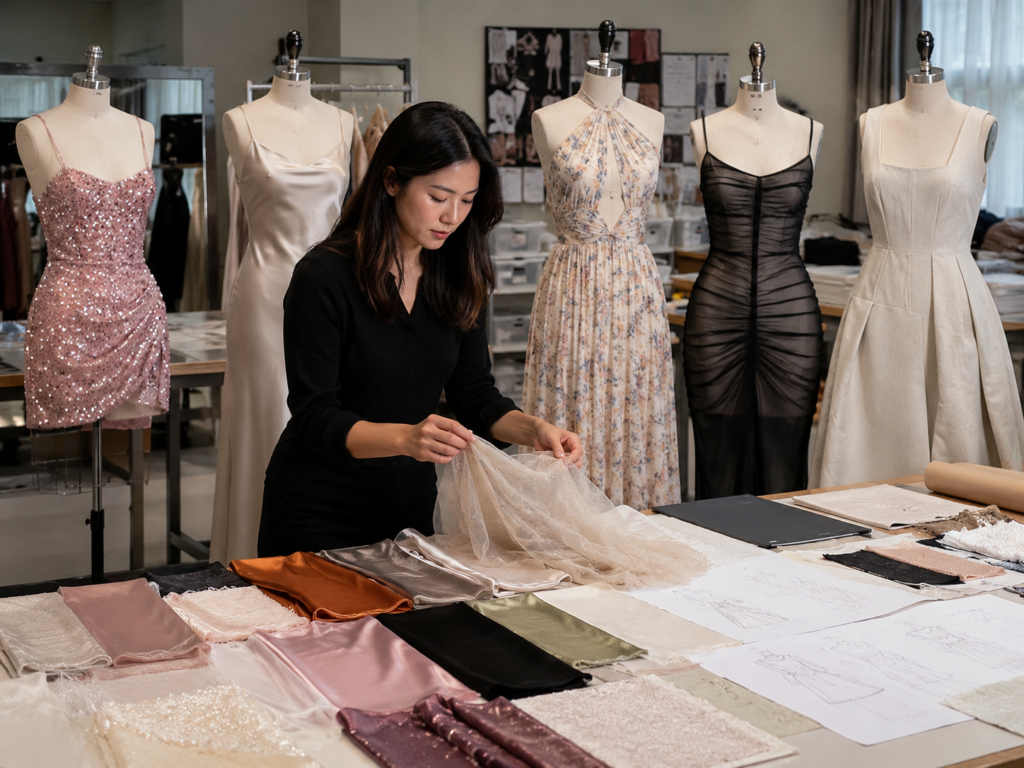
Established dress brands do not evaluate material only by color, handfeel or supplier catalogue. A fabric must work inside a real garment. It must drape correctly, support the body, control transparency, hold the intended shape, survive sampling, remain consistent in bulk and arrive without damage after packing and shipment. Duolan helps brands review dress materials through garment reality, not just fabric appearance.
Material Must Match the Dress Purpose
A party mini, satin midi, resort maxi, mesh bodycon dress and corset dress should not begin with the same fabric assumptions. Each dress type creates a different relationship between material, body, lining and construction.
- Dress scenario: Duolan reviews whether the material is intended for partywear, occasionwear, resortwear, cocktail dresses, fitted styles or structured dress programs.
- Material suitability: We check whether the material supports the intended silhouette, movement, opacity, comfort and production quantity.
- Development result: The material direction should lead to a sample that can be evaluated realistically, not only photographed beautifully.
Material Must Work on the Body
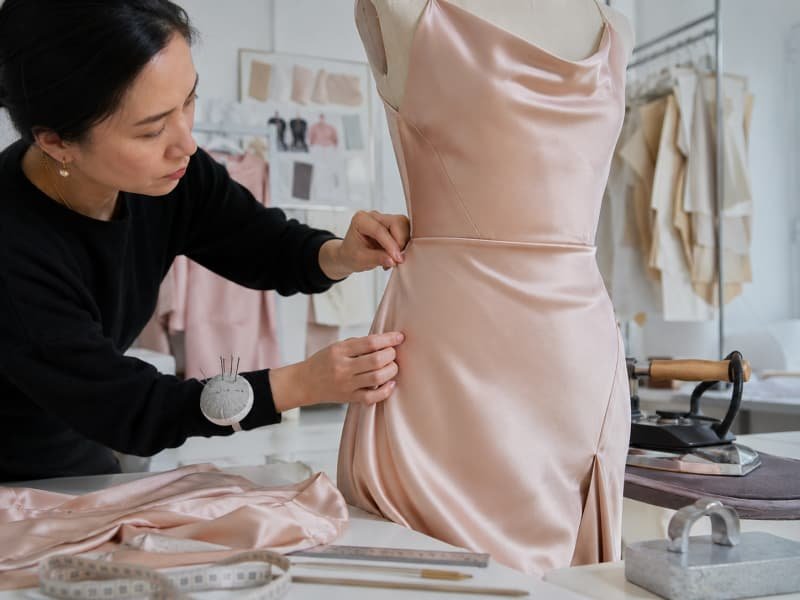
A fabric can look attractive as a swatch but fail after being cut into a dress. Stretch may recover poorly. Satin may mark easily. Mesh may reveal too much. Sequin may scratch the skin. Lace may need the right lining color.
- Body behavior: Duolan reviews drape, stretch, recovery, transparency, support, skin-contact comfort and lining relation.
- Fit influence: Material decisions affect bust, waist, hip, neckline, back opening, slit, hem and size grading.
- Sample review: The first dress sample should test how the material behaves when worn, not only how it looks flat.

Material Must Survive Bulk Production
A material is suitable only if the approved sample can be repeated. Mature brands care about batch consistency, shade control, print placement, shrinkage, surface damage, sequin loss, lace motif position and packing pressure.
- Bulk stability: Duolan reviews whether the material can remain stable across colors, sizes, quantities and repeat orders.
- Production control: Fabric inspection, material lock, cutting direction, lining standard and QC focus are prepared before bulk.
- Brand protection: Material records help reduce sample-to-bulk differences and future reorder drift.

How Brands Evaluate Dress Material Suppliers
A dress material supplier should not be judged only by swatch beauty. For brand-level dress development, the real question is whether the material can become a wearable, sellable and repeatable garment. Duolan helps brands connect material sourcing with dress development and production standards.
| Evaluation Point | What Dress Brands Need | Duolan Response |
|---|---|---|
| Material suitability | Fabric must match the intended dress type, silhouette and wearing occasion | Dress material review based on product use and garment structure |
| Handfeel and drape | Material must create the right body movement and visual softness or structure | Swatch review, sample observation and dress-type matching |
| Opacity and lining | Transparent or light fabrics need coverage planning | Lining shade, lining stretch, coverage map and interior finish review |
| Stretch and recovery | Fitted dresses need stable recovery across sizes | Stretch direction, recovery test, pattern tension and grading review |
| Surface sensitivity | Satin, velvet, sequins and metallic surfaces can mark, crush or scratch | Handling, pressing, packing and QC focus by material type |
| Print / lace / motif position | Pattern direction must remain controlled after cutting and grading | Strike-off review, motif placement, panel alignment and cutting plan |
| Sample behavior | Swatch appearance must be tested in a real dress sample | Material-to-sample development and fit comment review |
| Bulk consistency | Fabric batch, shade, width and handfeel must remain stable | Material lock, batch review, shade check and production records |
Dress Brands That Need Material-led Development
Duolan is best suited for established brands that understand dress materials influence fit, appearance, production cost and customer experience. Our role is to help brands move from material inspiration to real dress development, not simply purchase fabric by the yard.
Premium Dress Brands
Premium dress brands need materials that support refined appearance and stable construction. A beautiful fabric becomes valuable only when it performs correctly in the final dress.
- Brand concern: Satin marks, lace placement, lining color, hem balance and surface finish directly affect perceived value.
- Material risk: A fabric that looks luxurious as a swatch may wrinkle, pull, shine unevenly or lose structure in production.
- Duolan support: We review material behavior through sample development, fit correction, PP standard and final presentation checks.
Occasionwear Brands
Occasionwear brands need materials that feel special but remain wearable. Dresses for events must combine visual polish, comfort and reliable delivery timing.
- Brand concern: Chiffon, satin, lace, mesh and structured materials must support event use, photography and movement.
- Material risk: Transparency, poor lining, uneven hems or weak support can damage customer confidence.
- Duolan support: We connect material selection with dress type, lining, support, sample purpose and bulk production planning.
Party Dress Brands
Party dress brands often use bold surfaces and fitted materials. Sequins, mesh, metallic fabrics, stretch satin and embellished materials create strong visual impact but higher risk.
- Brand concern: Materials must look exciting while staying comfortable and secure on body.
- Material risk: Scratching, shedding, weak recovery, seam bulk and packing pressure can create complaints.
- Duolan support: We review surface risk, lining comfort, stretch behavior, zipper areas and packing protection.
Resort Dress Brands
Resort dress brands rely on light movement, print, color and travel-friendly presentation. The wrong fabric can make a resort dress look heavy, transparent or difficult to pack.
- Brand concern: Printed woven, chiffon, soft rayon blends and lightweight materials must hold movement and color story.
- Material risk: Print scale, hem drop, fabric slippage and packing creases can weaken the final product.
- Duolan support: We review print direction, fabric drape, lining, hem finish and packing method before bulk.
Product Development Teams
Product teams need material decisions that help sample approval, not create endless revision loops. The material must serve the design and the production plan.
- Brand concern: Teams need to understand whether the material supports the garment before sample time is wasted.
- Material risk: Wrong stretch, wrong lining, wrong surface or wrong weight can make the first sample misleading.
- Duolan support: We help translate material feedback into dress sample adjustments and production decisions.
Buying Teams & Sourcing Offices
Buying teams need suppliers who can explain material risk clearly. They must compare fabric options, supplier capability, sample result, QC requirements and delivery feasibility.
- Brand concern: A material decision can affect cost, lead time, testing, packing and repeat production.
- Material risk: Poor material review can create late-stage corrections, bulk rejection or inconsistent reorders.
- Duolan support: We provide material-to-dress evaluation, QC focus and supplier-readiness communication for qualified projects.
Dress Material Categories We Evaluate
Duolan evaluates dress materials by how they behave inside a garment. The same fabric family can perform differently depending on weight, stretch, surface, lining, print, finish and production method. The material categories below are reviewed for dress use, not only fabric sourcing.

Satin Materials
Satin is widely used for polished dress programs, but it is sensitive to sewing, pressing and packing. A satin swatch may look smooth, yet the final dress can show needle marks, seam tension or creases.
- Best dress use: Slip dresses, satin midi dresses, cocktail styles, occasion dresses and soft evening looks.
- Material risk: Puckering, shine difference, pressing marks, static, lining mismatch and packing creases.
- Duolan review: We check fabric weight, surface sensitivity, seam method, lining, pressing and garment protection.

Mesh Materials
Mesh can create sheer, fitted, layered or printed dress effects. Its performance depends on stretch, recovery, opacity and how it interacts with lining.
- Best dress use: Mesh bodycon dresses, printed party dresses, layered styles and sheer fashion panels.
- Material risk: Excess transparency, distortion, weak recovery, lining pull and unstable panel edges.
- Duolan review: We map coverage zones, stretch direction, lining relation, seam elasticity and print placement.

Lace Materials
Lace material must be judged by motif, edge, transparency and lining compatibility. The value of lace appears only after placement and cutting.
- Best dress use: Lace occasion dresses, cocktail styles, corset panels, feminine minis and premium midis.
- Material risk: Motif imbalance, lining shade error, high cutting loss, unstable edge and grading inconsistency.
- Duolan review: We review repeat size, motif position, scallop edge use, lining color and cutting layout.

Sequin Materials
Sequin material creates strong party and holiday value but needs comfort and production discipline. Shine alone is not enough.
- Best dress use: Sequin holiday dresses, club dresses, party minis and statement evening capsules.
- Material risk: Scratching, shedding, weight, seam bulk, zipper difficulty and packing pressure.
- Duolan review: We check sequin direction, base fabric, lining comfort, seam allowance, edge finish and QC focus.

Chiffon Materials
Chiffon creates soft movement and layered appearance. It needs careful cutting, hemming and lining decisions.
- Best dress use: Maxi dresses, layered occasion dresses, soft formal looks and resort styles.
- Material risk: Slippage, transparency, fraying, uneven hem, static and pressing sensitivity.
- Duolan review: We check layer behavior, lining length, narrow hem, cutting stability and movement after sample.

Tulle / Organza
Tulle and organza can create volume, structure and special occasion texture. They must be reviewed for comfort and packing.
- Best dress use: Volume skirts, overlays, formal dresses, statement details and occasion layers.
- Material risk: Scratchiness, crushed volume, edge discomfort, stiffness and shape loss in cartons.
- Duolan review: We review layer count, handfeel, lining comfort, edge finish, structure and packing shape.

Stretch Jersey
Stretch jersey is often used for fitted dresses, but recovery and weight must be suitable for the desired body line.
- Best dress use: Bodycon dresses, ruched styles, fitted midis and comfortable party silhouettes.
- Material risk: Weak recovery, twisting, seam cracking, growth and inconsistent fit across sizes.
- Duolan review: We test stretch direction, recovery, pattern tension, seam elasticity and wash behavior.

Rib Knit
Rib knit provides texture and stretch, but it can grow or twist if not controlled. It is more suitable for selected dress programs than all dress categories.
- Best dress use: Fitted casual dresses, refined knit dresses, stretch sets and comfort-driven styles.
- Material risk: Growth, shrinkage, twisting, poor recovery and unstable length after wear.
- Duolan review: We review rib density, recovery, shrinkage, seam strength and grading impact.

Velvet Materials
Velvet creates rich surface depth but is sensitive to pile direction, pressure and shade difference.
- Best dress use: Holiday dresses, winter occasionwear, evening minis and premium party styles.
- Material risk: Pressure marks, nap direction errors, shade difference, crushed packing and difficult pressing.
- Duolan review: We control nap direction, cutting layout, storage, pressing limits and carton protection.

Printed Woven Fabrics
Printed woven fabrics help build resort, vacation and seasonal dress stories. Print scale and cutting direction are critical.
- Best dress use: Printed maxi dresses, floral midis, resort dresses and vacation collections.
- Material risk: Scale mismatch, color deviation, print shift, panel mismatch and shade inconsistency.
- Duolan review: We review strike-off, print scale, panel position, cutting direction and bulk shade.

Embroidered Materials
Embroidered materials add surface value but may change fabric drape, stretch and comfort. They must be tested as part of the dress.
- Best dress use: Embroidered mesh dresses, lace-inspired panels, occasion details and premium fashion pieces.
- Material risk: Stiffness, distortion, scratchiness, heavy stitch density and unstable backing.
- Duolan review: We review stitch density, backing, base fabric stability, placement and comfort.

Metallic / Foil / Glitter Fabrics
Metallic and glitter materials create dramatic visual value but can be difficult in sewing, skin contact and packing.
- Best dress use: Party dresses, holiday styles, stage-inspired looks and high-impact fashion capsules.
- Material risk: Cracking, shedding, rough surface, heat sensitivity, odor and packing damage.
- Duolan review: We check coating stability, seam behavior, comfort, pressing limits and garment protection.
How Material Choice Changes Dress Silhouette
The same dress design can become soft, structured, fitted, sheer, voluminous or heavy depending on material choice. Duolan reviews materials by how they shape the final dress silhouette and whether that silhouette can be repeated in production.
Soft Drape Dresses
Soft drape depends on fabric weight, fall and seam behavior. The material must move without collapsing.
- Material effect: Satin, chiffon and soft woven fabrics create fluid movement and elegant lines.
- Common mistake: Choosing fabric that is too stiff, too thin or too unstable for the intended drape.
- Duolan review: We check fabric fall, lining relation, seam behavior, pressing and hem balance.
Structured Bodice Dresses
Structured dresses need materials that support shape. The outer fabric must work with lining, interlining and support pieces.
- Material effect: Structured woven, satin, lace and selected embellished fabrics can support a defined bodice.
- Common mistake: Using soft material without enough internal support.
- Duolan review: We check fabric strength, support layer, cup relation, boning and closure tension.
Fitted Bodycon Dresses
Fitted dresses depend on recovery and body tension. Material must stretch and return without distortion.
- Material effect: Stretch jersey, mesh, rib knit and stretch satin can create close body lines.
- Common mistake: Choosing fabric with poor recovery or unstable size behavior.
- Duolan review: We check recovery, pattern tension, side seam balance, lining and grading impact.
Sheer Layer Dresses
Sheer dresses need transparency planning. The outer layer and lining must be designed together.
- Material effect: Mesh, lace, chiffon and tulle create layered or skin-revealing effects.
- Common mistake: Allowing sheer areas to become uncontrolled after sampling.
- Duolan review: We map opacity, lining coverage, skin-contact comfort and seam placement.
Voluminous Skirt Dresses
Volume requires material with the right body. Too soft and it collapses; too stiff and it becomes uncomfortable.
- Material effect: Organza, tulle, layered chiffon and structured woven fabrics can create skirt volume.
- Common mistake: Ignoring packing compression, scratchiness or uneven volume.
- Duolan review: We check layer structure, edge finish, lining comfort and carton protection.
Printed Maxi Dresses
Print direction affects the whole dress. Long length makes print placement more visible.
- Material effect: Printed woven, chiffon and soft rayon-like fabrics can carry resort or vacation stories.
- Common mistake: Using a print scale that does not match the dress length or panel shape.
- Duolan review: We check strike-off, panel layout, print direction, shade and hem balance.
Embellished Party Dresses
Embellishment adds visual impact but also weight and comfort risk.
- Material effect: Sequin, beaded mesh, glitter and metallic fabrics create strong campaign value.
- Common mistake: Ignoring skin contact, seam bulk, zipper function and garment weight.
- Duolan review: We check lining, edge comfort, attachment, closure areas and packing pressure.
Stretch Comfort Dresses
Stretch comfort materials must balance movement, recovery and surface quality.
- Material effect: Stretch jersey, rib knit and technical stretch fabrics can support easy wear and repeatable fit.
- Common mistake: Selecting fabric that grows, twists or loses shape after wear.
- Duolan review: We review recovery, shrinkage, seam strength, size grading and wash behavior.
Which Materials Work Better for Each Dress Type
Material choice should follow the dress purpose. A fabric that works for a resort maxi may fail in a bodycon mini. A material suitable for a structured bodice may not work for a soft draped midi. Duolan reviews dress material direction before sample development begins.
| Dress Type | Recommended Material Direction | Material Risk | Development Check |
|---|---|---|---|
| Mini party dress | Stretch satin, sequin, mesh, metallic knit | Coverage, support, scratching, recovery loss | Check length safety, lining, stretch, edge comfort and closure strength |
| Occasion midi dress | Satin, crepe, lace, chiffon | Hem imbalance, pressing marks, lining mismatch | Check drape, lining length, seam smoothness and final pressing |
| Resort maxi dress | Printed woven, chiffon, soft lightweight fabric | Print shift, transparency, hem drop, packing creases | Check strike-off, fabric fall, lining, cutting direction and packing |
| Bodycon dress | Stretch jersey, mesh, rib knit | Weak recovery, twisting, size instability | Check stretch direction, recovery, pattern tension and grading |
| Corset dress | Structured woven, satin, lace, supportive lining | Weak support, gaping, cup distortion | Check interlining, cups, boning, closure and neckline stability |
| Sequin dress | Sequin mesh, sequin knit, embellished fabric | Shedding, scratching, seam bulk, zipper difficulty | Check lining comfort, sequin direction, seam allowance and packing protection |
| Lace dress | Leavers-style lace, embroidered lace, stretch lace | Motif shift, lining shade, cutting loss | Check motif placement, lining color, scallop edge and grading layout |
| Chiffon dress | Layered chiffon, printed chiffon, lightweight lining | Slippage, transparency, fraying, uneven hem | Check layer length, narrow hem, lining coverage and cutting control |
| Printed dress | Printed woven, printed mesh, digital print base | Scale mismatch, color variation, panel misalignment | Check artwork scale, strike-off, panel layout and shade matching |
| Stretch comfort dress | Jersey, rib knit, technical stretch fabric | Growth, shrinkage, seam cracking, twisting | Check recovery, wash behavior, seam strength and measurement tolerance |
Custom Printed Dress Fabric Direction
Custom printed dress fabric requires more than uploading artwork to a fabric base. A print must be scaled for the dress length, positioned for panels, tested on the right material and controlled in bulk. Duolan reviews printed dress materials as part of garment development.
| Print Decision | Why It Matters for Dresses | Duolan Review |
|---|---|---|
| Print scale | A print that looks good on fabric may feel too large or too small on a mini, midi or maxi dress | Review print repeat against dress length, panel shape and target visual effect |
| Fabric base | The same print changes on satin, chiffon, mesh or woven fabric | Check handfeel, drape, opacity, color absorption and sewing behavior |
| Color direction | Dress color must match brand story, lighting, campaign and bulk expectation | Review Pantone direction, strike-off and shade consistency |
| Panel placement | Front, back, side seams and cut-out areas can break print continuity | Review panel layout, motif position and cutting plan |
| Border / placement print | Border prints and positioned motifs need higher cutting discipline | Check marker planning, size grading impact and cutting waste |
| Print and lining relation | Transparent printed fabric may require lining color decisions | Review lining shade, coverage and opacity after sample |
| Bulk shade stability | Print lots can vary if not controlled | Confirm strike-off, batch separation and shade review |
| Packing behavior | Printed surfaces can crease, transfer or show pressure marks | Review folding, pressing and packing method by fabric type |
Special Occasion Dress Materials
Special occasion dresses often rely on materials that create immediate visual value. These materials can also create higher production risk. Duolan reviews whether each material can support the dress style, wearing comfort and bulk standard.

Sequin Fabric
Sequin fabric creates high shine and party appeal, but comfort must be controlled.
- Best use: Holiday dresses, party minis, club dresses and statement event pieces.
- Material risk: Scratching, shedding, weight, seam bulk and zipper difficulty.
- Duolan review: Lining comfort, sequin direction, edge finish, seam allowance and packing pressure.

Glitter Fabric
Glitter materials create a strong visual surface but may shed or feel rough.
- Best use: Party dresses, festive capsules, bold minis and promotional campaign styles.
- Material risk: Glitter loss, rough touch, coating cracks, odor or heat sensitivity.
- Duolan review: Surface stability, skin comfort, seam behavior, wash risk and packing protection.

Beaded Mesh
Beaded mesh offers premium detail but adds weight and attachment risk.
- Best use: Occasion panels, embellished overlays, premium party dresses and evening details.
- Material risk: Beads can detach, pull the mesh, scratch skin or create uneven weight.
- Duolan review: Bead density, backing, attachment strength, panel position and lining comfort.

Lace Fabric
Lace fabric creates feminine and refined dress value.
- Best use: Occasion dresses, cocktail dresses, corset panels and romantic dress capsules.
- Material risk: Motif misplacement, unstable edges, lining mismatch and high cutting loss.
- Duolan review: Motif scale, scallop edge, lining shade, cutting plan and size grading.

Embroidered Tulle
Embroidered tulle can create light decorative structure.
- Best use: Formal dresses, occasion layers, mesh panels and feminine overlays.
- Material risk: Stiffness, scratchiness, distorted base fabric and uneven density.
- Duolan review: Stitch density, backing, comfort, stretch behavior and placement.

Satin Back Crepe
Satin back crepe gives polish with more body than very light satin.
- Best use: Cocktail dresses, formal midis, structured occasion styles and clean silhouettes.
- Material risk: Weight mismatch, seam tension, pressing marks and lining decisions.
- Duolan review: Face-side use, weight, drape, seam finish, pressing and lining relation.

Organza
Organza creates volume and structure while staying visually light.
- Best use: Skirt volume, statement sleeves, formal overlays and occasion details.
- Material risk: Scratchiness, crushed shape, sharp edges and packing distortion.
- Duolan review: Layer structure, edge finish, comfort, support and carton shape protection.

Metallic Fabric
Metallic fabrics create strong fashion impact but need careful handling.
- Best use: Party dresses, statement minis, holiday edits and high-impact fashion styles.
- Material risk: Coating cracks, heat sensitivity, stiffness and seam damage.
- Duolan review: Surface stability, seam method, pressing limits, lining comfort and packing.
Material Risk Review Before Sampling
Before a dress sample is made, Duolan reviews material risks that may affect fit, comfort, appearance and bulk production. This helps brands avoid approving a fabric that looks attractive but fails in the garment.
Opacity
Opacity decides whether the dress feels wearable. Light, mesh, lace, chiffon and printed fabrics often require lining decisions.
- Risk sign: The dress reveals more than intended or changes color when lined.
- Sample check: Review fabric against skin, lining color, stretch zones and lighting conditions.
- Bulk control: Confirm lining shade, coverage map and fabric consistency before cutting.
Drape
Drape determines whether the dress falls softly, holds structure or looks unstable.
- Risk sign: Fabric collapses, sticks, pulls, becomes stiff or loses the intended shape.
- Sample check: Review movement, side seam, hem fall and body position.
- Bulk control: Confirm fabric weight, direction, pressing and packing method.
Stretch Recovery
Stretch recovery affects fitted dresses and bodycon styles.
- Risk sign: Fabric grows, twists, loses shape or creates size inconsistency.
- Sample check: Review recovery after fitting, sitting, movement and seam stress.
- Bulk control: Confirm stretch direction, measurement tolerance and size grading.
Surface Damage
Surface-sensitive materials can mark, crush, shed or scratch.
- Risk sign: Satin marks, velvet pressure, sequin shedding, glitter loss or metallic cracking.
- Sample check: Review sewing, pressing, handling, friction and packing pressure.
- Bulk control: Define handling rules, QC focus and garment protection.
Shrinkage / Stability
Shrinkage affects measurements, lining relation and repeat orders.
- Risk sign: Garment changes after steaming, washing, pressing or storage.
- Sample check: Review fabric stability and care expectation before production.
- Bulk control: Confirm shrinkage behavior, care label direction and production tolerance.
Comfort Against Skin
Dress materials often touch sensitive areas around bust, underarm, waist and thighs.
- Risk sign: Scratching, stiffness, rough seams, sharp trims or uncomfortable backing.
- Sample check: Review lining, edge finish, seam placement and inner construction.
- Bulk control: Confirm skin-contact areas and inspection focus before bulk.
Lining, Interlining and Support Materials
Dress material development is not only about outer fabric. Lining, interlining, cups, padding, boning and support tapes often decide whether the final dress feels secure, clean and brand-ready.
Dress Lining
Lining protects opacity, comfort and interior finish.
- Material role: Adds coverage, softness and a cleaner inside appearance.
- Failure risk: Wrong lining can twist, pull, show through or change the outer fabric.
- Duolan review: We check lining color, handfeel, stretch, length and attachment method.
Skin-tone Lining
Skin-tone lining is often used under mesh, lace and sheer dress materials.
- Material role: Helps control transparency while preserving the intended sheer effect.
- Failure risk: Wrong tone can change the garment color or look inconsistent across sizes.
- Duolan review: We review shade, opacity, stretch, coverage zones and customer market needs.
Stretch Lining
Stretch lining is important for fitted and body-conscious dresses.
- Material role: Supports comfort and movement without fighting the outer material.
- Failure risk: Poor recovery can pull, sag, twist or restrict the dress.
- Duolan review: We check recovery, stretch direction, seam relation and size grading.
Interlining
Interlining supports structure in bodices, collars, waist areas and selected panels.
- Material role: Adds stability, shape and support where outer fabric is too soft.
- Failure risk: Wrong interlining can make the dress stiff, bubbly or uncomfortable.
- Duolan review: We check weight, bonding behavior, handfeel and compatibility with outer fabric.
Cups and Padding
Cups and padding influence bust shape and wearing confidence.
- Material role: Support strapless, corset, bustier and fitted dress structures.
- Failure risk: Wrong cup shape creates distortion, discomfort or uneven appearance.
- Duolan review: We check size, position, thickness, attachment and symmetry.
Boning and Support Tapes
Boning and tapes help structured dresses hold shape.
- Material role: Support waist definition, bodice stability and neckline security.
- Failure risk: Poor boning can poke, twist, break or create hard lines.
- Duolan review: We check boning type, channel width, edge comfort and placement.
From Material Swatch to First Dress Sample
A swatch is not proof that a material will work in a dress. Duolan helps brands move from fabric inspiration to sample testing, where material behavior can be reviewed on the body and inside garment construction.
Material Inspiration Review
The process can begin with fabric photos, swatches, runway references, existing samples, print artwork, Pantone colors or a target handfeel. Duolan reviews the material idea against the intended dress type. The first question is not only “Can we source this fabric?” but “Will this material support the dress silhouette, wearing occasion, fit expectation and production quantity?”

Swatch and Fabric Direction
Swatches are reviewed for weight, drape, opacity, stretch, recovery, surface risk, color direction and lining need. If the material is printed, embellished, sheer or stretch-based, additional questions are raised early. This helps the brand understand whether the material should move forward, be adjusted or be replaced before sample development begins.

Dress Type Matching
The same material may work for one dress type and fail in another. Satin may work for a midi but not a tight mini. Mesh may work with lining but not as a single layer. A sequin fabric may be suitable for a loose dress but too heavy for a fitted bodycon style. Duolan matches material behavior with dress structure before cutting a sample.

First Sample Material Test
The first sample tests how the material behaves as a garment. Duolan observes drape, fit, comfort, opacity, seam behavior, lining relation, surface damage and movement. This is where a beautiful swatch may prove unsuitable, or where a material direction can be confirmed with adjustments.
Fit and Fabric Comment
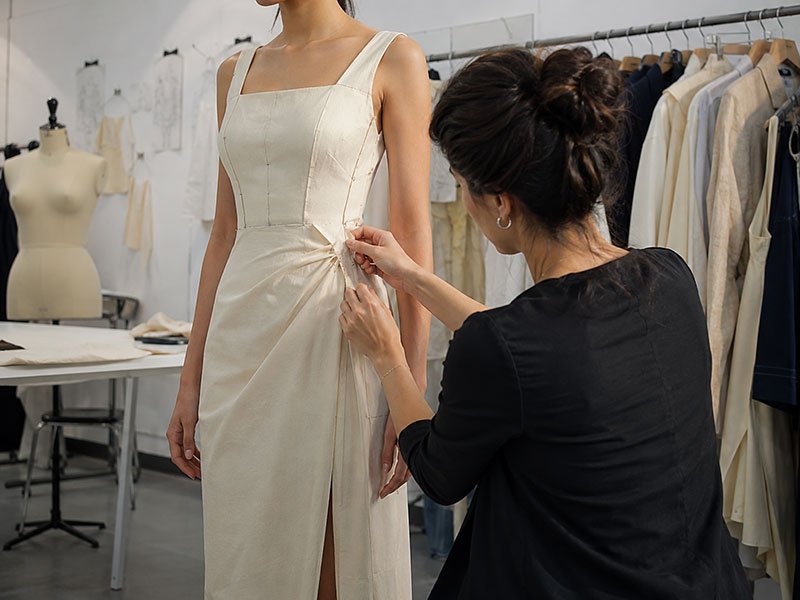
Sample comments should separate design issues from material issues. If the dress pulls, the cause may be pattern, stretch, lining or fabric weight. If the hem is uneven, it may relate to drape, cutting or pressing. Duolan helps connect comments with the correct material and garment decisions.
Material Lock for PP Sample
Once material behavior is approved, the material must be locked before PP sample or bulk production. Fabric reference, lining, trims, color, batch information and care direction are recorded. This creates a stronger foundation for production consistency and future repeat orders.

How Materials Affect Fit and Size Stability
Material choice changes how a dress fits, grades and performs after wear. Duolan reviews material behavior before production because size consistency is not created by the measurement chart alone.
Stretch and Recovery

Stretch fabrics support fitted dress styles, but only when recovery is reliable. Weak recovery causes garments to grow, twist or lose shape after movement. Duolan reviews stretch direction, recovery rate, seam elasticity, lining compatibility and size grading impact before approving material for bodycon, ruched or fitted dresses.
Bias and Drape

Soft drape materials can create elegant dresses, but they may shift, twist or drop after hanging. Satin, chiffon and lightweight woven fabrics need review for bias behavior, seam movement, hem level and pressing. Duolan checks whether the sample keeps its intended shape after fitting and handling.
Weight and Support

Material weight affects support, comfort and structure. Heavy sequin fabrics can pull the garment down. Thin fabrics may need lining or interlining. Structured dresses may require support layers. Duolan reviews how material weight interacts with bodice, straps, zipper, lining and hem.
Shrinkage and Measurement Stability

Shrinkage and dimensional change can affect finished garment measurements. Stretch fabrics, knits, printed materials and washed fabrics may behave differently after processing. Duolan reviews stability, care direction, tolerance and production handling so that bulk dresses remain closer to approved standards.
Material-to-Bulk Consistency Control
Material approval must translate into bulk control. Duolan reviews how material behavior may change from sample to production and sets control points before cutting, sewing and packing.
| Material Bulk Risk | Why It Happens | Duolan Control |
|---|---|---|
| Shade variation | Dye lot, print lot or batch mixing | Lab dip / strike-off reference, batch separation and shade review |
| Handfeel change | Fabric supplier change, finishing difference or wrong weight | Material reference, supplier confirmation and handfeel comparison |
| Stretch recovery difference | Different elastane content, knit tension or fabric batch | Recovery test, stretch direction check and measurement tolerance |
| Print color shift | Fabric base, ink behavior or lot difference | Strike-off approval, color reference and bulk print review |
| Sequin shedding | Weak attachment, friction or cutting stress | Attachment review, loose sequin check and packing protection |
| Lace motif shift | Cutting layout or grading not controlled | Motif mapping, marker planning and size layout review |
| Fabric width difference | Batch width changes affect cutting efficiency | Width check, marker adjustment and cutting plan update |
| Shrinkage change | Processing, steaming or wash behavior varies | Stability review, care direction and tolerance planning |
| Lining mismatch | Wrong shade, stretch or weight selected | Lining approval, coverage test and inside finish check |
| Packing crease | Material sensitive to folding or pressure | Packing test, folding rule and carton protection |
Material-specific QC for Dress Production
Dress QC should follow material behavior. Each material creates different inspection points. Duolan connects fabric risk with production inspection so that material-related defects are caught before shipment.
| Material Type | QC Focus | Dress Risk Controlled |
|---|---|---|
| Satin | Surface marks, seam puckering, pressing lines, shade and crease | Protects polished dress appearance |
| Mesh | Opacity, stretch direction, panel tension, lining relation and edge stability | Prevents uncontrolled transparency and distortion |
| Lace | Motif placement, symmetry, lining shade, scallop edge and cutting loss | Protects refined lace appearance across sizes |
| Sequin | Loose sequins, scratching areas, seam bulk, zipper movement and packing pressure | Reduces discomfort and surface damage |
| Chiffon | Slippage, fraying, layer length, hem balance and transparency | Controls light dress movement and finish |
| Printed Fabric | Strike-off, color consistency, print scale, panel alignment and shade | Protects print identity and bulk consistency |
| Stretch Jersey | Recovery, twisting, seam elasticity, measurement and shrinkage | Controls fit stability for bodycon styles |
| Velvet | Nap direction, pressure marks, shade variation, storage and pressing | Prevents surface inconsistency and crushed appearance |
| Tulle / Organza | Layer balance, edge finish, scratchiness, volume and packing shape | Protects structure and comfort |
| Metallic / Glitter | Coating stability, shedding, seam behavior, skin comfort and heat sensitivity | Prevents surface cracking and customer complaints |
Material Sourcing Network and Development Support
Duolan is not positioned as a pure fabric mill. Our advantage is coordinating material resources and judging whether those materials can become workable dresses. For established brands, this connection between material sourcing and garment execution is often more useful than a fabric catalogue alone.
Fabric and Trim Resource Coordination
Duolan can coordinate dress-related fabric and trim resources according to project needs. This may include satin, mesh, lace, sequin, chiffon, printed fabrics, stretch fabrics, lining, zippers, hardware, cups, boning and support materials.
- Material direction: We help compare material options against the target dress type and selling scenario.
- Trim relation: Lining, zippers, straps, hardware and support materials are reviewed together with outer fabric.
- Project value: Material sourcing becomes more useful when it is connected with sample development and production feasibility.

Special Process Support
Some dress materials require additional processes such as printing, embroidery, dip dyeing, washing, coating, pleating or decorative finishing. These processes must be reviewed for appearance, comfort, cost, lead time and repeatability.
- Process direction: Duolan can coordinate relevant special process resources according to confirmed project requirements.
- Garment impact: Each process is reviewed by how it affects fabric handfeel, shrinkage, structure, color and final dress quality.
- Production value: Process decisions are more reliable when tested through actual dress samples.

Material-to-Garment Judgment
Many brands can find attractive fabric. The harder question is whether the material will work after cutting, sewing, fitting, lining, pressing, packing and shipment. Duolan’s material value sits in this evaluation.
- Sample connection: Material is reviewed through dress sample behavior, not only swatch appearance.
- Bulk connection: Approved material is connected with batch control, cutting direction, QC and packing.
- Repeat connection: Material records support future replenishment and style continuation.

Brand Material Development Models
Different dress brands enter material development at different stages. Some have fabric inspiration. Some have swatches. Some need print direction. Others need material replacement after a poor sample result. Duolan supports material review according to project readiness.
| Material Development Model | Suitable Brand Situation | Duolan Support |
|---|---|---|
| Fabric Inspiration Review | Brand has moodboard, fabric photo or target handfeel | Review material direction against dress type, silhouette and production feasibility |
| Swatch-based Dress Development | Brand provides fabric swatches or existing material reference | Evaluate drape, opacity, stretch, lining need and sample risk |
| Custom Print Direction | Brand has artwork, print idea or seasonal color story | Review print scale, fabric base, strike-off, panel layout and bulk shade control |
| Special Fabric Application | Brand wants sequin, lace, metallic, tulle, organza or embroidered material | Review comfort, weight, construction, QC and packing sensitivity |
| Material Replacement Review | Existing material failed in sample or bulk | Identify material issue and suggest more suitable direction for sample revision |
| Bulk Material Lock | Brand has approved sample and needs stable production | Confirm material reference, batch control, lining, trims and QC focus |
| Repeat Order Material Control | Brand has proven dress style and needs replenishment | Review shade, handfeel, width, batch and previous production record |
Material Decisions That Affect Cost and Order Planning
For established brands, material cost is not only the price per yard. Material choice affects cutting loss, lining, special process setup, testing, QC time, packing method and repeat order stability. Duolan helps brands understand these factors before material approval.
| Cost / Planning Factor | Why It Matters | Brand Decision |
|---|---|---|
| Fabric minimums | Some materials require dye lot, print lot or mill-level commitments | Decide whether the material fits the launch quantity and repeat plan |
| Color count | More colors can increase material preparation, shade review and batch management | Decide which colors are core, test or seasonal |
| Custom print setup | Artwork, strike-off, screens or digital print setup affect time and cost | Confirm print scale, color target and material base early |
| Sequin / embellishment cost | Dense decoration increases material price, weight and QC time | Balance visual impact with comfort and production efficiency |
| Lace cutting loss | Motif placement and scallop edge use can increase wastage | Plan cutting layout and decide where lace value matters most |
| Lining selection | Lining affects comfort, opacity, cost and construction | Choose lining according to fabric, body contact and price position |
| Special process setup | Pleating, embroidery, dyeing or coating may require setup time | Confirm process priority before sample and launch calendar |
| Testing needs | Material testing may affect timeline and label decisions | Identify testing requirements before bulk material lock |
| Packing method | Delicate materials may need special folding, hanging or protection | Plan packing early to protect garment presentation |
| Repeat material access | Reorders depend on fabric availability and batch memory | Record material references and supplier details from the first order |
Compliance and Testing for Dress Materials
Material testing and care information should be considered before production. Duolan can coordinate according to customer requirements and project needs, especially when dress materials affect skin contact, color stability, shrinkage, labeling and customer care.
Colorfastness
Colorfastness affects customer use, care and long-term product quality.
- Material concern: Dark colors, prints, dyed fabrics and contrast linings may carry bleeding or transfer risk.
- Dress impact: Poor colorfastness can affect lining, skin contact, washing and customer complaints.
- Review focus: Testing needs should be confirmed before care label and bulk production decisions.
Shrinkage
Shrinkage affects measurements and fit after care.
- Material concern: Knits, stretch fabrics, washed fabrics and lightweight woven materials may change dimensions.
- Dress impact: Length, lining relation, bust fit and hip fit can shift if shrinkage is not understood.
- Review focus: Stability should be reviewed before size tolerance and care direction are finalized.
Composition
Composition affects care label, handfeel, cost and market requirements.
- Material concern: Outer fabric, lining and trims may have different compositions.
- Dress impact: Incorrect composition information can create labeling or customer trust issues.
- Review focus: Brand-confirmed label content should align with material and market needs.
Care Labeling
Care labeling should reflect material behavior.
- Material concern: Satin, sequin, lace, mesh, metallic and embellished fabrics may require special care.
- Dress impact: Incorrect care instructions can damage garments or increase customer complaints.
- Review focus: Care directions should be confirmed before label production.
Skin-contact Comfort
Some dress materials touch sensitive skin areas.
- Material concern: Sequins, glitter, embroidery backing, tulle, stiff lace and hardware can irritate skin.
- Dress impact: Comfort affects reviews, return risk and brand perception.
- Review focus: Lining, edge finish and inner construction should be checked during sampling.
Customer-specific Testing
Established brands may require their own testing standards.
- Material concern: Requirements may cover colorfastness, shrinkage, performance, labeling or safety.
- Dress impact: Testing can affect material approval, timeline and shipment planning.
- Review focus: Duolan can coordinate according to customer instructions and project-specific needs.
How Similar Dress Material Projects Are Reviewed
Duolan respects customer confidentiality. These examples describe material review scenarios by market, material issue and development control method, without exposing customer names or unauthorized designs.

US Satin Midi Material Review
A US dress brand reviewed satin materials for a polished midi dress program.
- Project background: The brand wanted a smooth occasion dress with clean drape and premium product photos.
- Material issue: The first satin option showed seam tension, pressing marks and crease sensitivity.
- Duolan review: We checked fabric weight, lining relation, seam method, pressing temperature and packing protection.
- Development result: The material direction was refined before PP sample and bulk planning.

Australian Lace Occasion Material Review
An Australian occasionwear label evaluated lace materials for feminine event dresses.
- Project background: The collection needed lace details that felt refined but remained production-friendly.
- Material issue: Motif placement, lining shade and cutting loss affected the final dress value.
- Duolan review: We checked lace repeat, scallop edge, lining color, motif position and grading impact.
- Development result: Lace application became clearer before sample revision and production layout.

UK Sequin Holiday Material Review
A UK brand reviewed sequin material for a holiday party dress capsule.
- Project background: The brand needed high-shine dresses for a seasonal launch window.
- Material issue: Sequin scratching, shedding, seam bulk and zipper areas created comfort and QC risk.
- Duolan review: We checked sequin direction, lining comfort, seam allowance, edge finish and packing pressure.
- Development result: Material risk points were converted into sample and QC controls.

European Printed Resort Material Review
A European brand reviewed printed fabric for maxi dresses in a resort collection.
- Project background: The collection relied on print scale, color story and soft movement.
- Material issue: Print placement, fabric slippage, shade variation and hem drop needed early review.
- Duolan review: We checked strike-off, fabric base, panel layout, cutting direction and lining relation.
- Development result: Print and material decisions were aligned with dress sampling and bulk control.
How Duolan Compares With Pure Fabric Suppliers
Pure fabric suppliers are important, but they usually stop at material supply. Duolan’s role is different: we help brands evaluate whether a dress material can become a stable garment through sampling and bulk production.
| Pure Fabric Supplier | Duolan |
|---|---|
| Supplies swatches, yardage or fabric collections | Reviews material-to-dress feasibility before sampling |
| Focuses on fabric appearance and handfeel | Connects fabric with fit, lining, structure and production risk |
| May not test fabric through a dress sample | Uses dress sampling to evaluate real garment behavior |
| May not control garment measurements | Reviews how material affects bust, waist, hip, length and grading |
| May not manage dress QC | Builds material-specific QC into dress production |
| May not handle labels or packing | Supports brand-ready finished dress delivery |
| May not track sample-to-bulk garment performance | Connects material lock with PP sample, BOM and production checks |
| May not manage repeat dress production | Uses material records to support reorders and consistency |
What Your Team Should Prepare Before Material Review
A strong material review helps Duolan evaluate whether a fabric can become a production-ready dress. The more clearly your team explains material direction, dress type, print, lining and quantity, the more accurate the review can be.
Fabric Inspiration
Fabric inspiration helps communicate the desired look and feel.
- Useful files: Moodboard, fabric photo, swatch image, reference dress, runway image or handfeel description.
- What we review: Material mood, likely fabric family, dress suitability and possible production concerns.
- Why it matters: Inspiration helps start the discussion before exact fabric is confirmed.
Swatches or Material Photos
Swatches or clear material photos allow more practical review.
- Useful files: Physical swatch, close-up image, composition, GSM, stretch information and surface detail.
- What we review: Drape, opacity, recovery, surface risk, lining need and garment feasibility.
- Why it matters: Material detail reduces guesswork before sample planning.
Dress Type
The same material behaves differently in different dress types.
- Useful files: Dress sketch, tech pack, reference image, original sample photo or product category list.
- What we review: Whether the material fits mini, midi, maxi, fitted, structured, sheer or resort dress use.
- Why it matters: Material should be approved for a specific garment purpose.
Fit and Lining Expectations
Fit and lining affect whether the material will be wearable.
- Useful files: Size chart, fit comments, lining requirement, coverage expectation or support requirement.
- What we review: Opacity, comfort, stretch, body tension, lining shade and support needs.
- Why it matters: Many material issues only appear when the dress is worn.
Color / Print Direction
Color and print decisions influence both sample and bulk.
- Useful files: Pantone reference, artwork, print repeat, strike-off, color board or sample print.
- What we review: Print scale, panel placement, shade target, cutting direction and bulk color control.
- Why it matters: Print and color decisions must be locked before bulk material planning.
Quantity and Launch Timing
Quantity and timing affect sourcing feasibility.
- Useful information: Target quantity, color count, size range, sample deadline, PP deadline and launch date.
- What we review: Material lead time, batch control, production planning and QC schedule.
- Why it matters: Material approval must fit the product calendar.
Custom Dress Material Manufacturer FAQ
These questions help established dress brands understand how Duolan supports material review, material sourcing coordination and material-to-garment development.
Duolan is not positioned as a pure fabric mill. We are a dress development and manufacturing partner that helps brands evaluate, source and apply dress materials into real garments. Our value is connecting material selection with dress fit, lining, structure, sampling, bulk production, QC, packing and repeat order consistency.
Yes. Duolan can coordinate dress-related material and trim resources according to project needs. This may include satin, mesh, lace, sequin, chiffon, printed fabrics, stretch materials, linings, zippers, cups, boning and support materials. The sourcing direction is reviewed together with the dress type and production plan.
Duolan can review satin, mesh, lace, sequin, chiffon, tulle, organza, stretch jersey, rib knit, velvet, printed woven fabrics, embroidered materials, metallic fabrics and other dress-related materials. Each material is evaluated by how it performs in the intended dress, not only by swatch appearance.
Duolan can support print direction review for dress development. We can review artwork scale, fabric base, strike-off, panel placement, color direction, cutting layout and bulk shade control. We do not position ourselves as an online fabric printing platform; our focus is whether the printed fabric works in the finished dress.
We review the material through dress-specific factors: drape, opacity, stretch, recovery, surface sensitivity, lining need, seam behavior, pressing, packing and garment fit. The first sample is often the most practical way to test whether the material works on body and can move toward production.
Duolan controls material consistency through material reference, batch review, shade check, lining approval, trim confirmation, PP sample standard, BOM, production notes and QC focus. For printed, sequin, lace, satin and stretch materials, we pay extra attention to batch differences, placement, handfeel, recovery and packing sensitivity.
Yes. For lace, we review motif placement, lining shade, edge use and cutting layout. For sequin materials, we review shedding, scratching, seam bulk, zipper areas and lining comfort. For mesh, we review opacity, stretch, lining relation, panel placement and recovery. These materials must be tested through real dress development.
Yes. If a material fails during sample review, Duolan can help identify whether the issue comes from weight, stretch, opacity, surface behavior, lining, comfort or production feasibility. We can then discuss a more suitable direction according to the dress type, target look, quantity and launch timing.
Please send fabric swatches or material photos, composition, GSM, stretch information, Pantone references, print artwork, reference dress images, tech pack, lining expectation, target quantity and launch date. If the material is still an inspiration idea, a moodboard or reference garment can also help.
Yes. Repeat production is more stable when material information is recorded from the first project. Duolan can refer to material references, batch information, lining records, trim standards, color direction, QC notes and packing requirements. This helps future orders stay closer to the approved sample.

Start a Dress Material Review Project
Duolan works with established dress brands, occasionwear teams, party dress brands, resort dress brands, product development teams and sourcing offices that need more than fabric sourcing. If your project involves satin, mesh, lace, sequin, chiffon, printed, stretch, embellished or structured dress materials, our team can review how the material may perform in sampling, fit development, bulk production, QC and brand-ready delivery.
To receive a useful review, please share as much material and dress information as possible. A fabric swatch, material photo, reference dress, print artwork, Pantone reference, tech pack, lining requirement, target quantity, size range and launch timing can help us evaluate whether the material is suitable for the intended dress.
What You Can Send
- Material information: Fabric swatch, material photo, composition, GSM, stretch data, print artwork, Pantone reference or surface detail photo.
- Dress direction: Reference dress, sketch, tech pack, original sample photo, target silhouette, lining expectation and fit requirements.
- Project plan: Target quantity, color count, size range, sample deadline, PP deadline, bulk deadline and launch timing.
What Duolan Will Review
- Material suitability: Drape, opacity, stretch, recovery, surface risk, lining need, support requirement and comfort.
- Sample risk: Whether the material may create fit issues, transparency problems, seam defects, surface damage or packing sensitivity.
- Bulk readiness: Batch consistency, shade control, material lock, QC focus, packing method and repeat production potential.
Best-fit Projects
- Established dress brands: Teams developing dress programs with clear material direction, sample goals and production plans.
- Material-sensitive dresses: Satin dresses, mesh bodycon dresses, lace occasion dresses, sequin party dresses and printed resort dresses.
- Sourcing teams: Teams needing material evaluation, sample review, supplier coordination and material-to-garment production support.