...

Custom Embroidered Dress Manufacturer

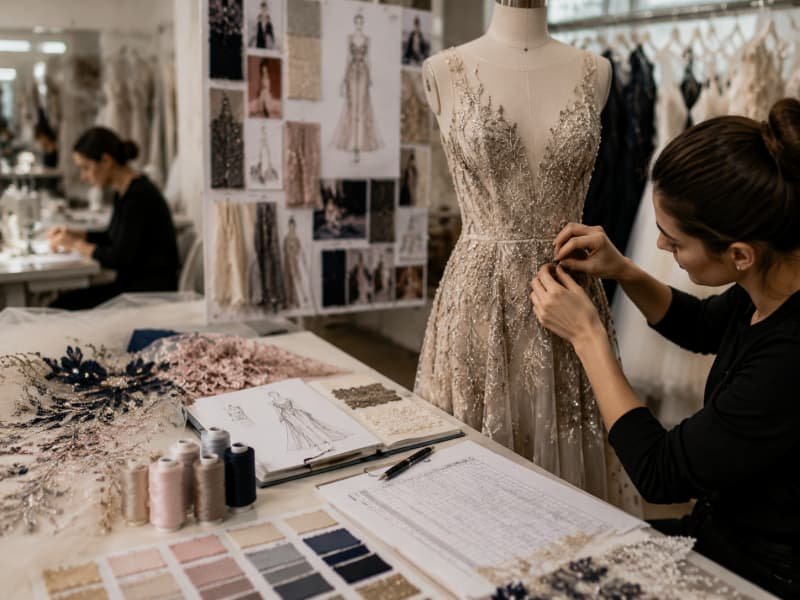
Dress-focused development and controlled embroidery production for established fashion brands, occasionwear labels, buying teams and product development departments.

  • 30+ years of fashion womenswear development and manufacturing experience behind the Duolan production system.
  • 2–3 regularly coordinated embroidery production partners selected according to fabric, workmanship, volume and delivery requirements.
  • 16 owned womenswear factories, 20+ satellite factories, 300 sewing lines and 50+ flexible production lines.
  • Structured to support embroidered dress programs containing 10–30 styles and approximately 20,000–80,000 total pieces.
  • Artwork review, fabric evaluation, strike-off development, pattern making, sample revision, PP approval, bulk production and quality control managed through one project path.

Embroidered Dress Manufacturing for Established Fashion Teams

Duolan works with fashion organizations that require more than decorative stitching. Each project is approached as a complete dress development program in which embroidery, fabric behavior, fit, construction, production readiness and delivery must move together.

Fashion Dress Brands

Suitable for established brands developing mini, midi, maxi, fitted and fashion-led dresses across seasonal collections. Development focuses on translating the brand’s visual direction into garments that can be sampled, reviewed, produced and repeated without losing the intended embroidery effect.

Occasionwear Labels

Occasionwear projects often combine embroidery with mesh, tulle, satin, lining, cups, boning, appliqué or hand-applied details. Duolan coordinates the visual finish with support, coverage, comfort, fitting balance and production feasibility rather than treating embroidery as an isolated surface process.

Product Development Teams

Product teams can submit tech packs, reference garments, embroidery artwork, fit priorities, material directions and launch calendars. Technical comments are converted into pattern, placement, material, workmanship and production actions before the style moves toward approval.

Sourcing Offices

Sourcing teams require documented standards, traceable approvals, clear production paths and controlled communication. Duolan supports supplier evaluation, sample coordination, multi-style production planning, inspection preparation, packaging requirements and repeat-order file preservation.

What Strong Embroidered Dress Production Must Control

A successful embroidered dress depends on several connected capabilities. Attractive stitching alone cannot protect silhouette, comfort, cost, production timing or repeatability. Duolan evaluates six areas before a style becomes ready for organized development.

Dress Development

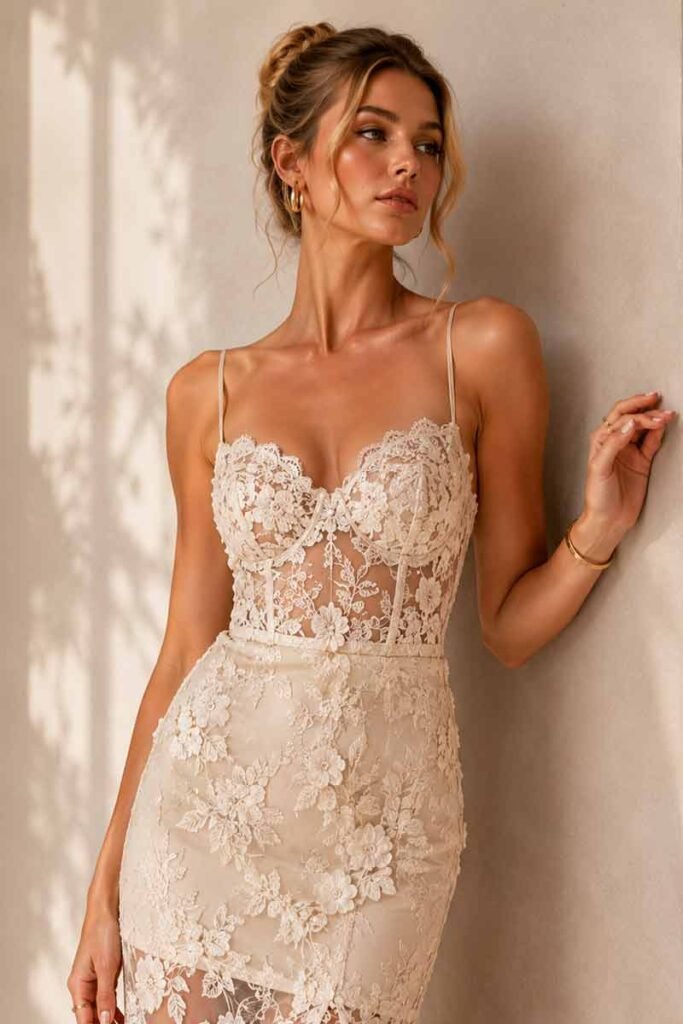
The silhouette, target occasion, fit direction and selling position are reviewed before embroidery parameters are finalized. A floral placement suitable for a loose resort maxi may not work on a fitted corset mini with shaped seams and internal support.

Artwork Translation

Creative artwork must become a controlled embroidery file with defined scale, stitch direction, color separation, edge treatment, repeat structure and placement references. Visual ideas are refined without removing the identity of the original design.

Fabric Compatibility

Base fabric weight, stretch, recovery, transparency, drape, surface sensitivity and shrinkage affect embroidery performance. Fabric selection determines whether the motif remains flat, flexible and balanced or causes puckering, stiffness and distortion.

Fit Coordination

Embroidery changes fabric behavior around the bust, waist, hip, sleeve, neckline and hem. Pattern balance and fit comments must consider the embroidered area rather than relying only on the unembroidered fabric specification.

Bulk Repeatability

Approved samples are converted into measurable production standards covering thread color, motif size, placement, density, backing, panel handling, workmanship, garment measurements and packing protection.

Scalable Delivery

Multi-style programs require capacity planning across embroidery preparation, panel processing, sewing, inspection, finishing and packing. Production routes are matched to style complexity, order quantity and launch timing.

Complete Dress Manufacturing Versus Basic Embroidery Services

Duolan develops the full garment around the embroidery. The production path covers the base fabric, pattern, fit, internal structure, stitching, lining, labels, inspection and delivery rather than adding a motif to an already finished blank garment.

Evaluation AreaBasic Embroidery ServiceDuolan Embroidered Dress Manufacturing
Starting PointReady-made blank garment or finished panelTech pack, reference garment, sketch, original sample or collection direction
Product ScopeLogo or decorative embroidery applicationComplete mini, midi, maxi, party, occasion and resort dress development
Fabric ResponsibilityLimited to embroidery executionFabric sourcing, behavior review, backing, lining and shrinkage considerations
Pattern and FitNormally excludedPattern development, fit review, grading and placement coordination
Sample ProcessEmbroidery sample onlyStrike-off, garment sample, revision, PP reference and bulk-readiness review
Bulk ControlStitching inspectionEmbroidery, garment measurement, sewing, lining, finishing, labeling and packing control
Delivery ResultEmbroidered garment or panelPrivate-label dresses prepared for brand distribution and repeat production

Risks Hidden Behind Attractive Embroidery Samples

Many embroidered dresses look convincing in a development sample but become unstable when the order expands across colors, sizes, styles and production batches. Early risk recognition protects the garment before defects become expensive bulk problems.

Fabric Puckering

Excessive stitch density, unsuitable backing, unstable fabric or incorrect machine tension can pull the ground fabric around the motif. The defect becomes more visible on satin, chiffon, mesh and lightweight woven fabrics under store lighting or photography.

Motif Distortion

A motif may look balanced in a flat file but stretch, compress or rotate after being placed across a curved bust, waist seam, princess panel, sleeve cap or flared skirt section. Pattern shape and garment construction must be included in placement review.

Size Placement Drift

Using one fixed placement point across every size can move motifs too high, too low or too close to a seam. Bust level, waist position, body length and panel width change during grading and require size-specific reference points.

Stiff Garment Areas

Large motifs or dense fills may add enough weight and rigidity to change drape, movement and comfort. A soft vacation dress can become board-like, while a fitted dress can lose stretch or create unwanted pressure around the body.

Visible Backing

Transparent mesh, pale chiffon and partially lined garments can reveal backing, thread tails and internal finishing. The internal view must be planned with lining coverage, skin contact, opacity and the intended visual transparency.

Thread Color Variation

Thread may respond differently under daylight, store lighting and photography. Metallic, high-luster and pale colors require comparison against the base fabric, lining and full collection color direction rather than approval from a digital screen alone.

Cross-Seam Misalignment

Motifs crossing center front, side panels, yokes or skirt seams require controlled matching. Small cutting or sewing shifts can make continuous vines, borders or geometric repeats appear broken in the finished garment.

Sample-to-Bulk Difference

A carefully handled sample may use slower manual adjustments that cannot be repeated consistently without written standards. Strike-offs, approved references, production instructions and first-piece verification must establish a reproducible bulk method.

Custom Embroidered Dress Categories We Develop

Duolan supports fashion-led embroidered dresses across different silhouettes, fabrics and occasions. Every category requires a different relationship between motif scale, body placement, garment structure, movement, opacity and production method.

Embroidered Mini Dresses

Mini dresses place embroidery within a compact visual area, so motif proportion and placement become highly sensitive. Suitable directions include fitted party minis, A-line silhouettes, corset styles, mesh overlays and statement sleeve designs. Development reviews bust level, waist emphasis, hem balance, lining coverage and the risk of dense embroidery making a short garment feel heavy.

Embroidered Midi Dresses

Midi styles allow embroidery to move from bodice to waist, skirt panels or hem borders. Suitable for contemporary occasionwear, cocktail collections and elevated daywear. Pattern shaping, skirt movement and placement across side seams must remain controlled so the motif supports the body line rather than interrupting it.

Embroidered Maxi Dresses

Maxi dresses work well with vertical vines, border motifs, layered floral arrangements and placement embroidery through the bodice and skirt. Fabric drape and embroidery weight require close coordination. Long skirts also need controlled repeat spacing and hem placement across multiple sizes.

Party Dresses

Party styles may combine embroidery with sequins, crystals, beads, mesh, satin, cut-outs and corset structures. Visual impact must be balanced with comfort, secure attachment, lining protection and the ability to survive packing, transport and repeated movement.

Occasion Dresses

Occasion dresses require refined motif edges, controlled transparency, stable fit and clean internal finishing. Floral embroidery, lace-like motifs, appliqué and tonal thread combinations are developed around photography, event lighting, movement and formal presentation.

Resort Dresses

Resort programs often use cotton, viscose, linen blends, lightweight woven fabrics and relaxed silhouettes. Embroidery should retain softness and breathability. Border, neckline, sleeve and localized motifs can add identity without overloading the fabric.

Floral Embroidered Dresses

Floral directions range from tonal botanical motifs to multicolor statement arrangements. Development evaluates flower scale, leaf direction, thread sheen, color count, negative space and how the design moves across the body and garment panels.

Mesh Embroidered Dresses

Mesh provides a floating embroidery effect but requires careful stabilization. Stretch, recovery, transparency, skin-tone lining, seam position and motif density affect fit and comfort. Embroidered areas may need separate pattern behavior from unembroidered mesh sections.

Tulle Embroidered Dresses

Tulle suits layered occasion and party dresses where embroidery creates depth. Projects may use one or more tulle layers, partial lining and shaped bodices. Motif placement must remain visible without creating excessive stiffness or bulky seam allowances.

Cotton Embroidered Dresses

Cotton poplin, voile and lightweight woven structures support clean casual and resort embroidery. Shrinkage, washing response, thread compatibility and seam distortion require assessment before bulk production. Scalloped hems and border motifs need accurate cutting references.

Satin Embroidered Dresses

Satin highlights every needle mark, tension line and handling defect. Embroidery density must protect the surface from puckering while maintaining drape and luster. Pressing, backing removal, lining and packing methods require special attention.

Embroidered Cocktail Dresses

Corset Embroidered Dresses

Corset dresses combine embroidery with cup shaping, boning, seam construction, lining and body support. Motifs must align with shaped panels without blocking seam movement or distorting the bust line. Panel-level embroidery is normally reviewed before full garment assembly.

Building a Consistent Embroidered Dress Collection

A coordinated collection requires more than placing unrelated motifs on different dresses. Duolan helps organize embroidery language, fabrics, silhouettes, colors and production paths so individual styles belong to one commercially coherent program.

Motif Architecture Across Styles

A collection may use one master floral language across mini, midi and maxi silhouettes while changing scale and placement. Hero dresses can carry larger motifs or mixed surface work, while commercial styles use simplified borders, neckline placements or reduced color counts.
  • Master motifs are defined before style variations begin.
  • Scale is adjusted according to bodice width, dress length and visual priority.
  • Placement follows garment construction rather than arbitrary flat measurements.
  • Repeated elements help maintain family recognition across the range.
  • Simplified versions can reduce cost without breaking collection identity.

Color Planning Across Fabrics

The same thread color can appear different on satin, mesh, cotton and matte woven fabric.
Collection development compares thread sheen, ground color, lining and lighting before approvals are separated by style.

  • Core thread colors create continuity across the program.
  • Accent colors can be reserved for leading styles.
  • Pale bases require backing and transparency checks.
  • Dark bases need edge definition and contrast control.
  • Metallic threads require handling and wear review.
  • Color approval records are maintained by style and material.

Silhouette and Embroidery Balance

Embroidery should strengthen the purpose of each dress. A fitted mini may need vertical placement to lengthen the torso, while a resort maxi may benefit from a border or neckline focus that preserves movement.

  • Bust motifs are aligned with cup and neckline positions.
  • Waist motifs are coordinated with seam and fit balance.
  • Skirt motifs follow flare, pleats, gathers or panel construction.
  • Sleeve embroidery considers movement and armhole assembly.
  • Hem borders are checked against length grading.
  • Back placements respect zipper, opening and strap structures.

Production Planning by Complexity

A 10–30 style collection rarely follows one production route. Duolan groups styles according to embroidery complexity, fabric sensitivity, garment construction and approval requirements.
  • Standard machine embroidery can follow a repeatable panel route.
  • Transparent or stretch fabrics may require separate testing.
  • Mixed embroidery and embellishment styles need additional checkpoints.
  • High-risk styles can enter controlled trial production first.
  • Core commercial styles can be assigned to scalable production paths.
  • Shared materials and thread colors are coordinated to reduce confusion.

Embroidery Techniques Matched to Fashion Dress Design

Technique selection begins with the intended garment effect, base material and bulk plan. Duolan coordinates established embroidery resources according to the style rather than claiming every process suits every fabric.

Flat Embroidery

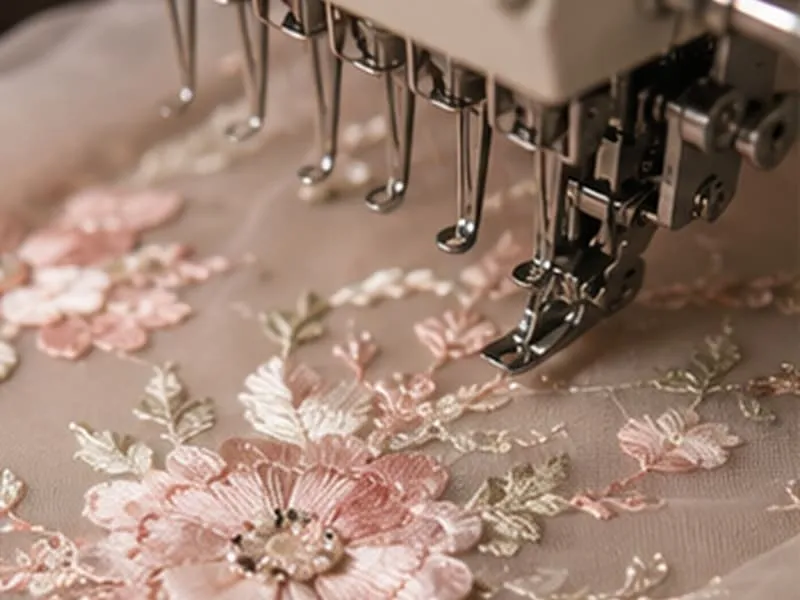
Flat embroidery creates defined motifs with a relatively controlled surface profile. It works across many woven fabrics, structured mesh and selected stretch bases after stability testing. Stitch length, direction and density are adjusted to protect edge clarity without producing unnecessary stiffness.

Appliqué Embroidery

Appliqué combines cut fabric elements with stitched edges. It can create larger visual areas with fewer dense fill stitches, reducing weight in selected designs. Fabric compatibility, fraying, edge treatment, symmetry and washing response must be confirmed before production.

Sequin Embroidery

Sequins can be integrated into machine embroidery for reflective partywear effects. Sequin size, spacing, thread security, motif direction and skin-contact areas require control. Lining and packing protection help reduce scratching, catching and surface damage.

Cord Embroidery

Cord creates raised lines suitable for botanical, geometric and scroll motifs. The cord thickness must suit the fabric and garment scale. Curves, corners, joining points and seam allowances are reviewed to prevent bulky or uneven areas.

Cutwork Embroidery

Cutwork uses stitched edges around controlled openings. Suitable base fabrics need enough stability to retain clean shapes. Opening size, edge density, lining or skin exposure, seam position and fraying risk must be evaluated through a physical strike-off.

Border Embroidery

Border embroidery works along necklines, sleeves, waists and hems. Pattern pieces must be planned around motif depth and repeat length. Cutting marks and finished garment length become part of the embroidery approval standard.

Placement Embroidery

Localized motifs are positioned according to garment reference points. Bust, waist, shoulder, back and hip placement require clear measurement maps. Size grading may use proportional movement rather than one universal location.

Mixed Surface Work

Embroidery can be combined with beads, sequins, crystals, appliqué or other decorative elements. Mixed work increases inspection needs because weight, attachment, comfort, wash performance, repair access and packing protection all become part of the production standard.

Turning Embroidery Artwork Into Production Instructions

A visual file is only the beginning. Production-ready embroidery requires an engineered interpretation that controls motif scale, stitch behavior, thread movement, color use, garment placement and repeatability on the selected fabric.

Artwork Cleaning and Structural Review

Artwork is reviewed for line thickness, enclosed areas, small details, overlaps, negative space and edge definition. Elements that look clear on a screen may disappear, merge or become too heavy after stitching.
  • Fine lines are checked against the selected thread and fabric.
  • Small enclosed shapes are reviewed for filling pressure.
  • Overlapping elements are separated into controlled stitch layers.
  • Sharp corners may need adjusted stitch direction.
  • Repeated motifs are checked for consistent scale.
  • Decorative detail is preserved wherever production remains stable.
The goal is not to redesign the brand artwork. The goal is to translate it into a stitchable structure that protects the intended visual hierarchy.

Stitch Direction and Density

Stitch direction changes how light reflects, how the motif feels and how force is transferred into the fabric. One flower may need several directions to create dimension without excessive density.
  • Satin stitches suit defined edges and narrow shapes.
  • Fill stitches cover larger areas but add weight.
  • Underlay supports edge stability and surface control.
  • Density is reduced where the fabric cannot carry heavy stitching.
  • Direction changes can create texture without adding colors.
  • High-stress corners receive additional review.
A strike-off provides the physical evidence needed to balance clarity, handfeel and fabric stability.

Thread Color and Surface Effect

Thread selection considers hue, sheen, thickness and interaction with the ground material. Pantone references can guide direction, but physical comparison is required because embroidery thread and dyed fabric reflect light differently.

  • Matte thread creates a softer, quieter finish.
  • High-luster thread increases contrast and event appeal.
  • Metallic thread adds impact but may require slower handling.
  • Tonal colors create texture without strong contrast.
  • Multicolor motifs require controlled sequence planning.
  • Pale-on-pale combinations need edge visibility checks.

Approval should be made with the actual base fabric and lining rather than isolated thread cards.

Production File and Approval Basis

Once the strike-off is approved, the embroidery file, thread references, size, placement, stitch structure and finishing notes are preserved as a controlled production basis.
  • Approved file version
  • Stitch count or density reference
  • Thread supplier and color code
  • Base fabric and backing reference
  • Motif dimensions
  • Placement map
  • Special handling notes
  • Approved physical strike-off
These controls reduce reinterpretation when embroidery moves from development into repeated panel production.

Embroidery Placement and Grading Across Dress Sizes

Placement affects visual balance as strongly as motif design. A correct motif in the wrong position can distort the neckline, shorten the torso, widen the waist or break the relationship between bodice and skirt.

Body Reference Points

Placement maps are built around stable garment references rather than relying only on fabric edges. Depending on the style, references may include center front, high shoulder point, bust level, waist seam, side seam, neckline edge, zipper line and finished hem.
  • Bust embroidery is reviewed against cup, dart or princess-seam positions.
  • Waist motifs follow the finished waist rather than the unsewn panel.
  • Neckline borders must account for seam allowance and turning.
  • Back motifs avoid zipper teeth, hooks and opening allowances.
  • Sleeve placements consider cap shape and arm movement.
  • Hem borders use finished length and fold allowance references.

Size-Specific Placement Logic

Duolan follows the brand’s size chart and grading standard.

A five-size run such as XS–XL or a broader US size range can require separate placement coordinates where body length and panel width change noticeably.

  • Vertical movement may differ from horizontal movement.
  • Motif size can remain fixed or scale by size depending on design intent.
  • Bust-level motifs should not drift toward the armhole.
  • Waist motifs must remain centered on the visual waist.
  • Larger sizes may require repeat extension rather than motif stretching.
  • Border repeats need controlled start and finish points.

Symmetry and Panel Matching

Mirrored motifs require left-right balance after cutting and sewing.

Continuous motifs crossing seams require panel registration before assembly.

  • Pair panels are grouped and identified.
  • Center-front matching is checked before sewing.
  • Side-seam motifs are compared at key points.
  • Skirt panels follow repeat references.
  • Neckline and yoke motifs are aligned after seam allowance.
  • First-piece checks confirm the cutting and assembly method.

Placement Approval Evidence

Approval should include more than one close-up image. A complete reference normally combines a flat panel view, full garment view, measurement map and approved sample.

  • Motif width and height
  • Distance from defined reference points
  • Orientation and angle
  • Symmetry requirements
  • Size grading instruction
  • Seam or edge alignment
  • Tolerance priorities
  • Approved garment photograph

Fabrics Selected for Stable Embroidered Dress Results

Embroidery performance begins with the base fabric. Weight, construction, stretch, recovery, transparency, drape and surface sensitivity determine how much stitching the material can carry and how the finished dress will move.

Mesh and Power Mesh

Mesh creates a refined floating effect and supports fitted or transparent occasionwear. Stretch percentage, recovery and openness must be reviewed before embroidery begins.

  • Dense motifs reduce stretch around the stitched area.
  • Backing can become visible through open constructions.
  • Skin-tone lining changes the visual contrast.
  • Motifs near side seams or zippers can affect fit.
  • Power mesh may support fitted styles better than soft decorative mesh.
  • Embroidered panels may require adjusted pattern dimensions.

Tulle

Tulle is suitable for layered occasion dresses, illusion panels and full-skirt designs.

Stability varies significantly by fiber, yarn and net structure.

  • Soft tulle can collapse under heavy motifs.
  • Stiffer tulle supports shape but may feel harsh against skin.
  • Multiple layers change motif visibility.
  • Raw edges and seam handling require planning.
  • Appliqué or lighter fill structures may protect softness.
  • Lining coverage must be confirmed from front, side and back views.

Satin

Satin offers visual richness but reveals needle marks, tension lines, pressing damage and handling errors.
  • Motif density must avoid pulling the reflective surface.
  • Hoop or frame marks require prevention.
  • Backing removal should not scar the fabric.
  • Pressing temperature and direction need control.
  • Pale satin shows oil, dirt and thread tails easily.
  • Packing folds should avoid high embroidery areas.
A full garment sample is essential because a flat strike-off cannot show how embroidery affects satin drape.

Chiffon and Georgette

Lightweight sheer fabrics need low-pressure embroidery structures and careful stabilization.

  • Excessive underlay can become visible.
  • Dense fills create local stiffness.
  • Fine fabric can shift during stitching.
  • Seam allowances may show through.
  • Layered construction can improve stability.
  • Motif placement should avoid high-stress fitted areas unless reinforced.

Georgette often carries slightly more structure than chiffon , but both require physical testing .

Cotton and Linen Blends

Cotton and linen-based fabrics suit resort, vacation and elevated day dresses. Their natural appearance works well with floral, geometric and border embroidery.

  • Pre-shrinkage behavior should be understood.
  • Washing may change fabric and thread appearance.
  • Slub yarns can affect edge smoothness.
  • Border embroidery needs cutting accuracy.
  • Open weaves require sufficient stabilization.
  • Heavy thread can overpower lightweight fabric.

Stretch Woven and Jersey

Stretch bases require embroidery that allows garment movement without creating rigid islands.
  • Stretch loss is measured around the motif.
  • Recovery after wear needs consideration.
  • Placement should avoid areas with maximum body expansion.
  • Backing must support stitching without excessive stiffness.
  • Pattern measurements may need compensation.
  • Fitted styles require try-on assessment after embroidery.
The approved standard should specify how much stretch remains acceptable in key garment zones.

Backing, Lining and Internal Comfort Engineering

A premium embroidered dress must look refined from the outside and remain wearable from the inside. Backing, lining, seam finishing and contact points are selected according to transparency, motif density, garment structure and skin sensitivity.

Backing Selection

Backing stabilizes the base fabric during stitching, but the wrong option may create stiffness, visible edges or discomfort.
  • Cut-away backing offers lasting support for stretch or unstable fabrics.
  • Tear-away options may suit stable woven structures after testing.
  • Wash-away solutions can support selected sheer applications.
  • Local reinforcement can reduce unnecessary coverage.
  • Backing color matters under transparent fabric.
  • Removal methods must protect the embroidered area.
The chosen backing should maintain motif shape without dominating drape or creating hard edges.

Lining Coverage

Lining affects opacity, comfort, support and the visible color of embroidery.

  • Full lining protects large embroidered areas.
  • Partial lining can preserve intentional transparency.
  • Bust lining must coordinate with cups and support.
  • Skirt lining should not pull against embroidered layers.
  • Skin-tone options are assessed against target markets.
  • Lining seam positions should avoid creating visible ridges.

Front, side and back views are reviewed because coverage can appear different under movement and light.

Skin-Contact Control

Thread tails, backing edges, sequins, beads and dense embroidery can irritate the body.
  • Contact areas are identified during sample review.
  • Soft covering or lining can isolate rough surfaces.
  • Neckline and armhole areas receive special checks.
  • Side seams and waist seams should not trap bulky embroidery.
  • Raised details are kept away from pressure points where possible.
  • Try-on review includes sitting, walking and arm movement.

Internal Workmanship

Clean internal construction supports garment longevity and brand presentation.
  • Thread tails are trimmed and secured.
  • Backing removal follows an approved method.
  • Lining remains free from pulling and twisting.
  • Seam allowances are controlled around embroidered panels.
  • Closures operate without catching embroidery.
  • Care labels are placed away from sensitive contact areas.

Pattern and Fit Control Around Embroidered Areas

Embroidery changes thickness, stretch, weight and movement. Pattern development must account for those changes so the finished garment retains the intended bust support, waist balance, hip contour and skirt fall. The approved garment should be checked while standing, walking and turning.

Bodice and Bust Balance

Fitted bodices need close coordination between embroidery, cups, darts, princess seams, boning and lining.

  • Motifs should not force seams away from the intended line.
  • Dense stitching near the bust can reduce shaping flexibility.
  • Cup position and motif center must remain visually aligned.
  • Neckline embroidery must allow clean turning and support.
  • Boning channels should not create visible ridges through embroidery.
  • Fit comments are reviewed on the embroidered sample, not only the plain toile.

Waist and Hip Contour

Embroidery near the waist or hip can affect stretch, drape and perceived proportion.
  • Waist seams are checked against motif boundaries.
  • Side-panel motifs should not widen the visual hip unintentionally.
  • Fitted styles may require measurement adjustment around dense areas.
  • Ruching and embroidery must be planned in the correct production sequence.
  • Zippers need clearance from raised motifs.
  • Sitting and walking tests reveal pressure or stiffness not visible on a mannequin.

Skirt Movement

Skirt construction determines how embroidery appears during movement.

  • Flared panels can rotate motifs visually.
  • Gathered skirts compress repeated artwork.
  • Pleats may hide or divide motif sections.
  • Slits need clean motif endings.
  • Maxi hems require size and length planning.
  • Heavy embroidery can pull lightweight skirts downward.

Seam and Construction Planning

Embroidery can be completed before or after selected assembly stages. The route depends on motif location, garment access and alignment requirements.

  • Panel embroidery offers better access and placement control.
  • Partial assembly can improve alignment across shaped areas.
  • Finished-garment embroidery is limited by frame access and construction.
  • Seam allowances are kept clear where necessary.
  • Pair pieces require identification after embroidery.

Information Needed Before Embroidered Dress Development

Complete information helps the development team identify fabric, fit, embroidery and timing risks before sample work begins. A project can start from different reference formats, but every confirmed detail improves schedule control and sample accuracy.

Tech Pack

Include flat sketches, construction notes, measurements, seam information, BOM details and artwork placement. Mark which specifications are fixed and which remain open for development recommendations.

Reference Garment

An original sample helps communicate fit, length, construction, fabric handfeel and finishing. Required design changes should be clearly listed so the reference is not copied blindly.

Embroidery Artwork

Vector formats such as AI, EPS, SVG or editable PDF are preferred. High-resolution artwork can also support evaluation when vector files are not yet prepared.

Placement Map

Provide intended motif locations, dimensions and orientation. Mark whether placements should remain fixed, scale by size or extend across panels.

Fabric Direction

Share the target composition, weight, stretch, color, transparency, drape and handfeel. A physical swatch is valuable when the surface effect is difficult to communicate digitally.

Size Standard

Provide the intended size chart, base size, grading rules and fit model information. Duolan follows the brand standard rather than replacing it with a generic house chart.

Order Structure

State estimated styles, colors, size range and quantities. Programs containing 10–30 styles need early grouping by complexity, materials and production path.

Launch Timing

Share the intended sales date, campaign date, delivery location and transport plan. Development, approvals, bulk production, inspection and shipping should be scheduled backward from the required arrival date.

Embroidery Feasibility Review Before Sample Investment

A feasibility review identifies whether the artwork, fabric, silhouette, price positioning and production plan can work together. Early technical decisions reduce repeated sampling and prevent beautiful concepts from becoming unstable bulk products.

Visual and Product Review

The team reviews the target occasion, garment silhouette, brand identity and visual priority of the embroidery.

  • Is the motif the main selling feature or a supporting detail?
  • Should the embroidery look soft, dimensional, glossy or tonal?
  • Does the scale suit the dress length and body area?
  • Will the artwork remain clear after seams, gathers or shaping?
  • Does the visual level match the intended retail positioning?
  • Can commercial styles use simplified variations?

Fabric and Process Review

Base fabric is assessed against the proposed stitch structure.
  • Fabric weight and construction
  • Stretch and recovery
  • Transparency and lining needs
  • Surface sensitivity
  • Shrinkage and wash behavior
  • Backing compatibility
  • Stitch density limits
  • Handling and pressing risks
A strike-off is recommended whenever a combination has not already been validated.

Construction and Fit Review

Pattern and embroidery interactions are checked before sample cutting.

  • Motifs crossing seams
  • Bust and cup positions
  • Waist-seam alignment
  • Zipper and opening clearance
  • Sleeve and arm movement
  • Hem-border grading
  • Corset or boning integration
  • Areas requiring reinforcement

Production and Timing Review

Production suitability depends on quantity, complexity and the number of approvals.

  • Number of styles and colors
  • Artwork versions
  • Thread-color combinations
  • Embroidery route
  • Manual detail content
  • Inspection level
  • Packaging sensitivity
  • Delivery deadline

Controlled Embroidery Strike-Off Development Process

A strike-off provides the first physical proof of motif scale, line definition, thread color, density, handfeel and fabric stability. Full garment sampling should not begin with an untested embroidery structure when the decoration is central to the design.

Artwork Review

The artwork is checked for scale, small details, fill areas, line thickness, repeats, symmetry and color separation. Questions are clarified before digitizing begins.

Fabric Confirmation

The actual base fabric or the closest confirmed development quality is prepared. Testing on an unrelated fabric may hide puckering, transparency or stretch problems.

Thread Selection

Thread type, sheen, thickness and color are compared against the fabric and collection direction. Physical color review is preferred for sensitive shades.

First Digitizing

Stitch direction, underlay, density, sequence and edge treatment are translated into a machine-readable file according to the motif structure.

First Strike-Off

The first physical sample is examined for motif dimensions, edge clarity, missing details, fabric pulling, stiffness, backing visibility and color balance.

Technical Revision

Density, direction, underlay, line thickness or scale can be adjusted. Changes are documented so each version has a clear development purpose.

Garment Placement Test

Approved embroidery is positioned on the relevant panel or sample garment to confirm body balance, seam interaction, drape and visibility.

Approval Reference

The approved strike-off is identified and preserved with file version, thread references, base fabric, backing, dimensions and finishing notes for later production use.

Production-Ready Embroidered Dress Sample Development

A useful sample must support design review, fitting decisions, embroidery approval and future production. Duolan separates the objectives of each sample stage so one garment is not expected to answer every question without a defined standard.

First Development Sample

The first sample translates the design direction into a complete garment. Main review points include silhouette, proportions, fabric behavior, embroidery scale, placement and construction feasibility.

  • Pattern balance is checked on the intended body shape.
  • Embroidery is evaluated in the full garment context.
  • Lining and transparency are reviewed under light.
  • Sensitive seams and closures are tested.
  • Major visual and technical deviations are recorded.
  • The next sample objective is defined clearly.

Fit and Embroidery Revision

Fit comments and embroidery comments are handled together where they influence each other.
  • Bust, waist, hip and length corrections
  • Neckline or armhole adjustments
  • Motif movement after pattern correction
  • Density or color revision
  • Lining coverage adjustment
  • Backing and comfort improvement
  • Construction simplification where required
  • Updated measurement and placement records

Photo or Sales Sample

A presentation sample may require refined finishing, approved color and strong visual accuracy for campaigns, showrooms or internal range reviews.

  • Photography lighting is considered for thread shine.
  • Embroidery is checked from full-distance and close-up views.
  • Garment pressing and packing protect the presentation.
  • Temporary decisions are identified if bulk materials remain pending.
  • Photo approval is not automatically treated as PP approval.
  • Remaining production risks are documented separately.

PP and Bulk-Ready Sample

A pre-production reference should represent the materials, measurements, workmanship, embroidery and internal finishing intended for bulk.
  • Approved fabric and lining
  • Approved embroidery file and strike-off
  • Confirmed thread colors
  • Final placement map
  • Final measurements and tolerance priorities
  • Confirmed construction
  • Label and packaging direction
  • Bulk inspection reference

Sample Revision Records That Prevent Repeated Mistakes

Revision quality depends on how comments are translated into controlled actions. Duolan organizes pattern, measurement, embroidery, material and workmanship changes by version so the next sample does not restart from an unclear brief.

Version Identification

Each sample should have a recognizable development stage and date. “First sample,” “fit revision,” “photo sample” and “PP sample” must not be mixed because their approval purposes differ.
  • Style number
  • Sample stage
  • Fabric version
  • Artwork version
  • Pattern version
  • Measurement version
  • Date and reviewer
  • Pending decisions

Comment Prioritization

Comments are grouped by impact rather than listed without hierarchy.
  • Critical fit corrections
  • Visual embroidery corrections
  • Material changes
  • Construction changes
  • Comfort issues
  • Bulk feasibility concerns
  • Optional refinements
  • Points retained without change
Critical corrections are completed before decorative adjustments that depend on the garment shape.

Before-and-After Evidence

Visual records help overseas teams confirm whether the intended change was understood.
  • Full front, side and back photographs
  • Detail photographs
  • Measurement comparison
  • Placement comparison
  • Strike-off version comparison
  • Marked pattern or garment images
  • Internal construction photographs
  • Revision summary

Handover Into Production

Approved comments are transferred into the files used by production and QC.

  • Final pattern
  • Final measurement chart
  • Final artwork version
  • Approved strike-off
  • Placement instruction
  • Workmanship notes
  • PP sample reference
  • QC checkpoints

Cost Drivers in Custom Embroidered Dress Production

Reliable pricing requires more than a reference photograph. Fabric, stitch structure, garment construction, color count, manual work and inspection requirements all influence the final production cost.

Embroidery Area

Large coverage increases machine time, backing use, thread consumption, handling and inspection. A simplified open motif may cover a large area while remaining lighter than a small, densely filled design.

Stitch Density

Higher density can improve coverage but increases weight, rigidity, machine time and puckering risk. Density should serve the visual result rather than becoming an automatic measure of quality.

Thread Colors

Multiple colors increase thread preparation, machine change requirements and error-control needs. Collection-wide color planning can improve consistency and organization.

Fabric Sensitivity

Satin, mesh, chiffon and stretch fabrics often require more testing, stabilization and careful handling than stable medium-weight woven fabrics.

Placement Accuracy

Symmetrical placements, cross-seam motifs and hem borders require tighter cutting, identification and assembly controls than isolated decorative motifs.

Garment Construction

Corset structures, shaped cups, boning, complex linings, cut-outs, layered mesh, draping and special closures add construction time around the embroidery process.

Manual Decoration

Beads, crystals, hand finishing and manual corrections increase labor content and inspection needs. Attachment standards should be agreed before pricing is finalized.

Order Structure

Style count, color count, size range, total quantity and delivery split affect material purchasing, embroidery setup, production planning, QC coverage and packing organization.

Manufacturing Capacity Behind Multi-Style Embroidery Programs

Duolan combines dress development, owned manufacturing, satellite capacity and established special-process coordination. Scale is used to organize complex programs rather than replace the control required for each style.

16 Owned Factories

Core factories provide direct control for key styles, complex constructions and programs requiring close communication between pattern, sample, sewing, QC and production teams.

20+ Satellite Factories

Long-term satellite resources support capacity flexibility, repeat production, volume expansion and project allocation according to garment type and delivery requirements.

300 Sewing Lines

The broader manufacturing system includes approximately 300 garment sewing lines. Line allocation depends on fabric, construction, workmanship sensitivity, quantity and production calendar.

50+ Flexible Lines

Flexible lines support fast-moving development, controlled test production, repeat programs and styles requiring shorter manufacturing paths after standards are confirmed.

2–3 Embroidery Partners

Duolan regularly coordinates 2–3 mature partner resources in embroidery, alongside established support for printing, dip dyeing and washing. Partner selection follows project style, material, volume, workmanship and timing.

Multi-Style Capacity

The system is structured to manage collection orders containing approximately 10–30 styles, multiple colors, broad size runs and total quantities commonly reaching 20,000–80,000 pieces per program.

The broader platform includes stable monthly garment capacity of approximately 6.5 million pieces, with peak capacity reaching approximately 10 million pieces across the manufacturing system. Capacity is planned according to confirmed project conditions rather than offered as an unsupported promise for every style.

Quality Control Standards for Embroidered Dresses

Inspection standards combine embroidery appearance with complete garment quality. Control points are defined before production so inspectors do not rely on subjective statements such as “looks acceptable.”

Control StageMain Inspection PointsRisk Being ControlledApproval Evidence
Strike-Off ReviewMotif size, line definition, density, thread color, backing, fabric responseIncorrect visual effect, stiffness, puckeringApproved physical strike-off and artwork version
First Embroidered PanelPlacement, orientation, symmetry, dimensions, fabric distortionBulk panels produced in the wrong positionFirst-piece measurement and photograph
Embroidery Inline CheckMissing stitches, thread breaks, loose threads, color sequence, stainsRepeated embroidery defectsIn-process inspection record
Pre-Assembly CheckPair matching, cross-seam alignment, panel identity, seam clearanceMisaligned garment constructionApproved panel set
Sewing Inline CheckGarment measurements, seams, lining, zipper, cups, boning, motif alignmentFit and construction deviationInline QC record
Finishing CheckThread trimming, backing removal, pressing, surface protectionSkin irritation, marks and damaged embroideryFinishing standard reference
Final Garment CheckFull appearance, placement, symmetry, measurements, closures and cleanlinessSample-to-bulk inconsistencyApproved sample comparison
Packing CheckLabel, barcode, folding, tissue, polybag, carton ratioRetail and delivery errorsPacking instruction and carton record

Testing and Compliance Support for Global Dress Programs

Testing requirements vary by fabric, decoration, intended market and brand standard. Duolan coordinates project-specific checks without presenting every possible standard as a certification already held.

Dimensional Stability

Fabric and finished garment behavior can be evaluated according to the intended care method. Shrinkage may affect dress length, panel matching and embroidery placement.

Colorfastness

Base fabric and embroidery thread can be reviewed for washing, rubbing or other required conditions. Dark grounds, pale threads and high-contrast combinations deserve close attention.

Embroidery Durability

Testing can evaluate loose threads, edge breakdown, motif deformation and appearance changes after the required care process.

Attachment Security

Sequins, beads, crystals, appliqué and mixed decoration require attachment review according to product design and brand requirements.

Needle and Metal Control

Production and packing procedures can include needle management, metal detection or related controls where required by the project.
Social Audit Awareness​

Audit and Documentation

Duolan’s core manufacturing system has completed SMETA and SMETA 2-Pillar audit processes and maintains a social-audit record. 

Private Labels and Packaging for Embroidered Dresses

Brand presentation continues after sewing is complete. Labels, folding, protective materials and cartons must preserve embroidery quality while meeting retail, ecommerce, warehouse and market requirements.

Main Brand Labels

Woven, printed or other approved main labels are positioned according to garment construction. Label attachment should remain clean and avoid visible distortion on delicate fabrics.

Size and Care Labels

Size labels and care instructions follow the confirmed size system, fiber information and destination-market requirements supplied or approved for the project.

Hangtags and Barcodes

Hangtags, price tickets, barcode stickers and SKU information can be coordinated by style, color and size to support warehouse and retail operations.

Surface Protection

Tissue paper, protective sheets or localized covering can reduce abrasion between embroidered areas, sequins, beads, zippers and neighboring garments.

Folding Method

Folds are planned away from high-density embroidery, structured bodices and raised decoration where possible. Sensitive satin and tulle styles may require adjusted packing methods.

Carton Planning

Carton ratios, assortment, carton marks and packing quantities are checked against the order breakdown. Split deliveries and regional warehouse arrangements can be coordinated according to the confirmed shipping plan.

Embroidered Dress Projects Managed Across Multiple Styles
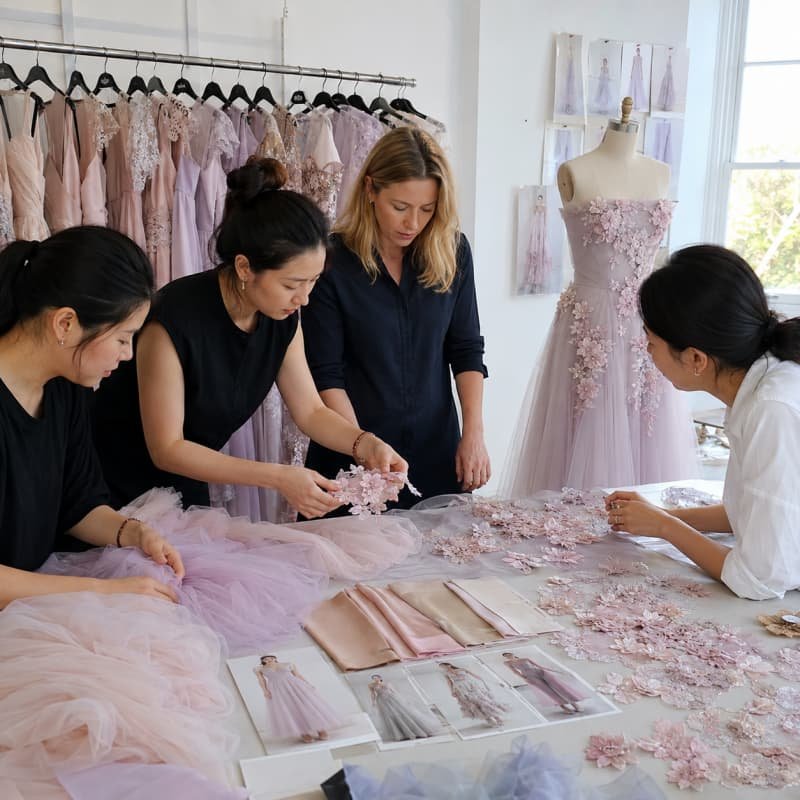
The following anonymous project profiles show how embroidered dress programs can be organized around style count, quantity, technical risk and approval discipline. Names and unreleased artwork remain confidential.

US Occasionwear Collection

A US occasionwear label developed an 18-style embroidered collection containing fitted midi dresses, mesh minis and structured evening silhouettes. The confirmed production program reached approximately 48,600 pieces across six colors and a five-size run.

The central challenge involved floral embroidery crossing shaped bodice panels. Early samples showed motif movement around the bust after fit corrections. Duolan separated fit approval from placement approval and rebuilt the position map after the base pattern was corrected. Development actions included:

  • Individual strike-offs on mesh, satin and structured woven bases
  • Separate motif coordinates for bodice and skirt panels
  • Five-size placement review
  • Revised lining coverage around transparent sections
  • First embroidered panel confirmation before bulk processing
  • Inline checks for pair matching and side-seam alignment

The approved method protected the floral balance across sizes while allowing the sewing team to assemble shaped panels without cutting through critical motif areas.

UK Resort Embroidery Program

A UK resortwear label planned 24 styles and approximately 72,000 pieces across cotton, viscose and linen-blend dresses. The range used one botanical language through maxi, midi and short relaxed silhouettes. The original artwork included too many dense fill areas for lightweight resort fabrics. Full-density stitching made the first development swatches feel rigid and reduced the natural fall of the skirts. Duolan coordinated the program through:

  • One master motif system with three complexity levels
  • Open-stitch alternatives for lightweight fabrics
  • Simplified commercial versions for higher-volume styles
  • Border layouts adjusted to finished garment length
  • Shared thread palettes across the 24 styles
  • Wash and shrinkage review on selected cotton qualities
  • Style grouping by embroidery and sewing complexity

The final structure allowed hero pieces to retain richer embroidery while commercial styles remained softer, lighter and more suitable for repeat production.

European Partywear Embellishment Line

A European partywear brand developed 12 styles totaling approximately 28,800 pieces. The range combined machine embroidery with sequins, crystals and localized hand finishing on mesh and satin bases.

The principal risk involved weight and surface abrasion. Early decoration concentrated too much density near the waist and underarm, affecting comfort and creating rubbing during packing. Control actions included:

  • Decoration maps identifying no-contact and low-pressure zones
  • Reduced density under the arm and at side seams
  • Full lining on selected bodices
  • Attachment checks for sequins and crystals
  • Packing tissue between decorated surfaces
  • First-piece verification for every style and color
  • Final inspection focused on missing pieces, loose threads and scratching risk

Production proceeded through separate high-risk and standard routes, allowing complex styles to receive additional checks without slowing the full collection unnecessarily.

Evidence Behind Embroidered Dress Development and Production

Strong manufacturing claims should be supported by visual records. Duolan organizes project evidence around development, material, sampling, production, QC and delivery rather than presenting unrelated factory photographs.

Artwork Evidence

Recommended visuals include original artwork sections, cleaned motif files, color separation views, placement maps and approved version references. Confidential details can be masked while still showing the control process.

Material Evidence

Fabric swatches, thread cards, lining options, backing samples and alternative-material comparisons demonstrate how the selected combination was evaluated before full garment development.

Strike-Off Evidence

First, revised and approved strike-offs can be displayed side by side to show changes in density, scale, line definition, thread color and fabric stability.

Sample Evidence

Front, side, back and close-up images show how embroidery works with fit, lining, structure and movement. Measurement and revision notes provide stronger proof than isolated model photographs.

Production Evidence

Panel embroidery, pair identification, first-piece confirmation, sewing sequence, inline inspection and finishing records show how approved standards enter bulk manufacturing.

Delivery Evidence

Final measurement checks, embroidery inspection, label verification, protective folding, carton preparation and shipment records complete the chain from design files to finished delivery.

Frequently Asked Questions About Embroidered Dress Manufacturing

Yes. A complete tech pack can be used to evaluate silhouette, measurements, construction, fabric, embroidery artwork, placement, labeling and packaging. Open points are identified before development begins.
Yes. Reference images can communicate visual direction, but additional information is needed for accurate development. Recommended details include target fabric, size standard, embroidery dimensions, quantity, intended market and launch date.
Editable vector formats such as AI, EPS, SVG or editable PDF are preferred for clean motif preparation. High-resolution artwork can support initial evaluation when vector files are unavailable.
A strike-off is strongly recommended when embroidery is central to the design, when the fabric is sensitive, or when density, color and backing have not already been approved on the actual material.
Placement uses defined garment reference points, approved dimensions, orientation, symmetry instructions and size-specific rules. First embroidered panels or garments are checked before continued production.
Yes. Bust level, waist position, garment length and panel width can change through grading. Placement can remain fixed, move proportionally or extend through repeats according to design intent.
Stable woven fabrics are generally easier to embroider, but mesh, tulle, satin, chiffon, stretch woven, jersey, cotton and linen blends can also be developed after compatibility testing.
Control may involve fabric selection, backing, underlay, stitch direction, density, frame tension, panel handling and pressing. Physical strike-offs are used to confirm the combination.
Yes, selected projects can combine embroidery with sequins, beads, crystals, appliqué or other decorative methods. Attachment, comfort, weight, inspection and packing requirements must be defined.
A reliable schedule is issued after artwork, fabric direction, size standard and sample purpose are reviewed. Complex embroidered dresses may require separate strike-off, first sample, fit revision and PP stages, so one generic promise is not applied to every style.
Motif complexity, fabric readiness, style count, color count, manual decoration, approval speed, production quantity and packaging all affect timing. Typical garment production references after approval are 15–20 days for simple styles, 20–30 days for regular styles and 30–45 days for complex styles.
Yes. Duolan follows the supplied size chart, base-size measurements, tolerance priorities and grading rules. Fit comments can be translated into pattern corrections and updated measurement records.
Approved fabrics, embroidery files, strike-offs, patterns, measurements, placement maps, workmanship notes and PP references are locked before bulk production. First-piece and inline checks verify execution.
Yes. Main labels, size labels, care labels, hangtags, barcodes, polybags, tissue protection, carton ratios and market-specific packing requirements can be coordinated.
Confidentiality arrangements can be reviewed before unreleased artwork, collections, commercial data or original product files are shared.
Projects can be coordinated under FOB, CIF or DDP arrangements, including split shipments where agreed. Reference transit times are approximately 3–7 days by express, 5–8 days by air and 20–35 days by sea, subject to destination and logistics conditions.
Factory, sample-room, production-line and process visits can be arranged for qualified projects. Meeting scope and locations are confirmed in advance according to the development or production program.
Send the product category, style count, artwork, target fabric, size range, estimated quantity, launch date, destination market, quality priorities and available technical files.

Send Your Embroidered Dress Project for Evaluation

Share your embroidered dress direction with Duolan for a structured review of the artwork, base fabric, silhouette, fit, placement, construction and bulk-production path. A clear first submission helps the development team identify which details are ready, which points require strike-offs, and which decisions should be confirmed before full garment sampling.

Useful project information includes:

  • Company and brand name
  • Brand website or product reference
  • Tech pack, sketch or original sample
  • Editable embroidery artwork
  • Motif dimensions and intended placement
  • Target fabric, lining and color direction
  • Base size, size range and grading standard
  • Number of styles and colors
  • Estimated quantity per style and total program quantity
  • Target launch or delivery date
  • Destination market
  • Required labels, packaging and inspection standards

Duolan will review the development basis, embroidery feasibility, material risks, fit-sensitive areas, sample stages, production structure and information needed for quotation.


3.Australia|Lace and Resort Occasion Program (1)

Start Your Apparel Development Project

OEM/ODM Manufacturing Support for Fashion Brands

Share your collection details, estimated quantities, target market, development timeline, and technical requirements. The production team will review your request and provide a tailored manufacturing solution based on your product category, fabric selection, construction needs, and delivery schedule.

Fashion Manufacturing Support with Scalable Production Capacity

From sample development to bulk production, Duolan supports fashion brands with confidential OEM/ODM manufacturing, stable quality management, flexible production planning, and coordinated multi-factory execution for seasonal and capsule collections.

Need Direct Assistance?

Seraphinite AcceleratorOptimized by Seraphinite Accelerator
Turns on site high speed to be attractive for people and search engines.