Skip to content
Custom Event Dress Manufacturer
Dress development, sampling and controlled bulk manufacturing for established eventwear brands, product teams, purchasing departments and sourcing offices.
Duolan develops event-dress programs for wedding guest, cocktail, homecoming, graduation, holiday party, gala and formal social calendars. The team reviews fabric behavior, fit security, decorative workmanship, PP approval and production release before bulk starts, allowing multi-style collections to move from reference, tech pack or original sample into a controlled manufacturing path.
Duolan turns event-dress concepts into production-ready collections through:
- Fabric, lining and trim evaluation
- Pattern development and fit correction
- Corset, mesh, satin and embellished workmanship
- Structured sample review and revision
- PP confirmation and bulk-readiness control
Manufacturing and case facts:
- 30+ years of womenswear development experience behind dress-focused product decisions
- 16 owned womenswear factories supported by 20+ long-term satellite factories
- 300 garment sewing lines and 50+ quick-response lines for multi-style event programs
- 15,000-35,000 monthly sample-development capacity across garment workflows
Anonymous eventwear programs in the current content range from 12-18 styles and 26,400-42,600 pieces
Built for Brand-Level Event Dress Programs
Duolan supports established teams managing defined collections, sample calendars, production quantities, quality requirements and long-term eventwear programs.
Established Fashion Brands
Duolan supports:
- Seasonal eventwear collections
- Multi-style development programs
- Launch, repeat and scale-up orders
- Brand-specific fabrics, fit and finishing
- Approved standards carried into future production
Product Development Teams
Duolan helps organize:
- Design brief review
- Fabric and trim decisions
- Pattern and measurement corrections
- Sample revision summaries
- PP and production-readiness requirements
Purchasing Departments
Duolan reviews:
- Product construction and labor requirements
- Material and workmanship cost drivers
- Quantity, color and size structure
- Production route and capacity fit
- Inspection, packaging and delivery conditions
Sourcing Offices
Sourcing offices often coordinate several brands, regions or seasonal programs. Clear documentation and controlled communication become essential when many styles move at the same time.
Duolan supports:
- Capability and compliance evaluation
- Multi-style project tracking
- Sample and bulk status reporting
- Factory and line allocation
- Repeat-order file preservation
Custom Manufacturing Beyond One Individual Dress
From Individual Fit to Commercial Size Systems
- Brand measurement chart and base size
- Intended fit and wearing ease
- Critical points of measure
- Grading increments
- Fabric stretch or recovery behavior
- Length and proportion changes across sizes
From Creative Reference to Production Standard
- Tech packs
- Original samples
- Sketches
- Reference images
- Collection mood boards
- Fabric or trim directions
From One Style to a Commercial Collection
Established brands rarely develop only one dress. Event programs often contain 10-30 styles across several lengths, colors, fabrics and price positions. Duolan helps organize:
- Hero styles with strong visual impact
- Commercial styles designed for broader selling potential
- Photo-ready styles for campaigns
- Repeatable styles suitable for color extensions
- Complex styles requiring earlier development
- Easier styles supporting collection volume
A collection becomes easier to produce when shared fabrics, lining qualities, trims, color stories and construction principles are planned before bulk ordering.
Event Dress Collections for Major Social Occasions
Each occasion creates different expectations for formality, movement, coverage, photography, fit, fabric and seasonal timing.
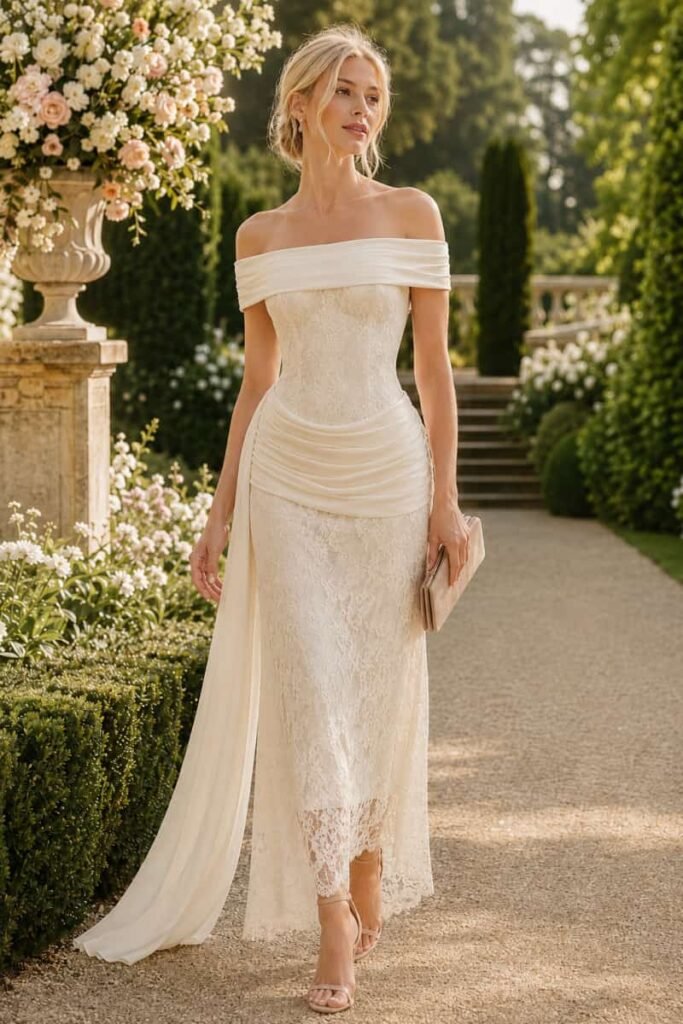
Wedding Guest Dresses
Key development points:
- Refined rather than bridal styling
- Controlled ivory and champagne use
- Ceremony-to-evening wearability
- Comfortable lining and movement
- Seasonal color and fabric planning

Cocktail Dresses
Key development points:
- Body contour without excessive tension
- Secure necklines and armholes
- Satin, crepe, velvet or mesh suitability
- Balanced slit and hem length
- Photo-ready surface quality

Graduation Dresses
Key development points:
- Mini and midi commercial lengths
- Reliable opacity in light colors
- Comfortable sitting and walking
- Secure straps and necklines
- Easy styling for social photography

Homecoming Dresses
Key development points:
- Secure mini-dress proportions
- Lightweight support construction
- Controlled embellishment weight
- Comfortable dancing movement
- Reinforced zippers and closures

Prom Dresses
Key development points:
- Bust support and waist balance
- Long-hem proportion by size
- Walking and sitting allowance
- Layer consistency
- Beading and sequin security

Holiday Party Dresses
Key development points:
- Visual effect under indoor lighting
- Sequin edges and skin comfort
- Velvet pile direction
- Metallic color consistency
- Packaging protection against abrasion

Gala Evening Dresses
Key development points:
- Long-line body balance
- Draping and hem symmetry
- Internal support without visible bulk
- Smooth lining and closure integration
- Pressing and final presentation

Formal Social Dresses
Key development points:
- Polished silhouette
- Appropriate neckline depth
- Formal fabric hand
- Clean interior construction
- Reliable fit across sizes

Celebration Dresses
Birthday, engagement, anniversary and private-event collections allow greater freedom in color, cut-outs, shine and decorative expression. Brand identity should remain stronger than novelty.
Key development points:
- Recognizable brand styling
- Cut-out placement and security
- Statement details with production control
- Movement for dining and dancing
- Repeat potential in new colors
Custom Event Dress Styles We Develop

Satin Midi Dresses
- Match fabric weight to silhouette
- Control needle marks and puckering
- Review light-color opacity
- Protect finished surfaces during packing

Sequin Mini Dresses
- Review sequin base fabric
- Clear seam allowances where required
- Protect underarm and neckline areas
- Reinforce closures and stress points

Corset Event Dresses
- Confirm bust volume and cup shape
- Map boning length and position
- Review back opening and tension
- Test sitting, walking and arm movement

Mesh Dresses
- Test stretch and recovery
- Match mesh and lining shade
- Control coverage zones
- Prevent seam distortion

Lace Occasion Dresses
- Lock motif placement
- Plan neckline and hem finishing
- Match lace with suitable lining
- Control symmetry across panels

Ruched Party Dresses
- Define ruching ratio
- Secure gathering points
- Balance left and right sides
- Verify length after stretch
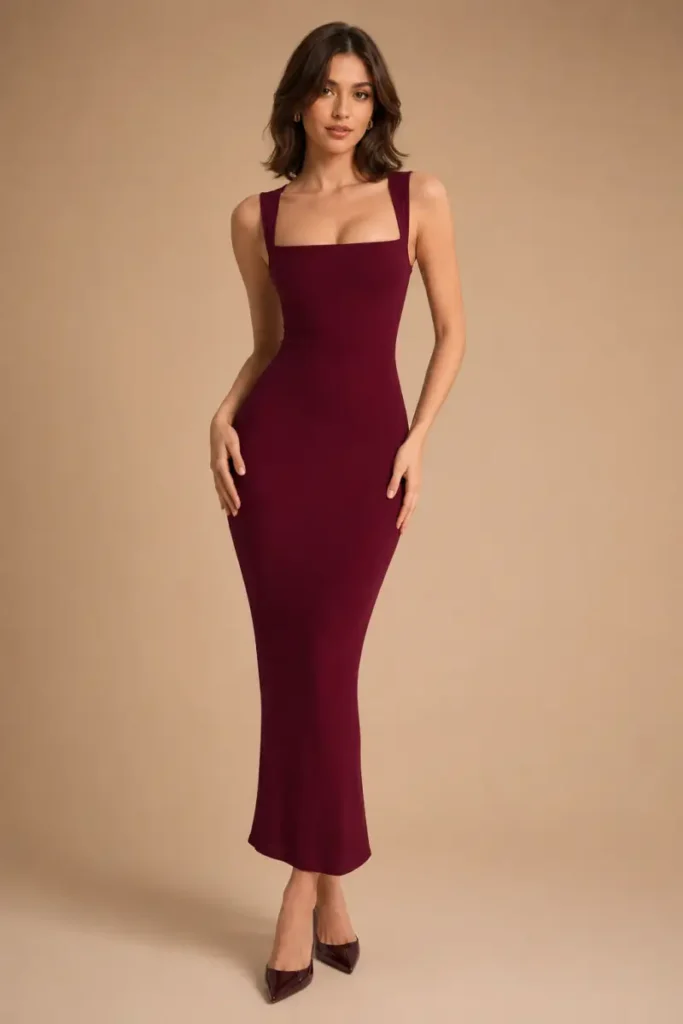
Bodycon Event Dresses
- Review GSM and compression
- Test recovery after wear
- Confirm seam stretch
- Evaluate lining or double-layer needs
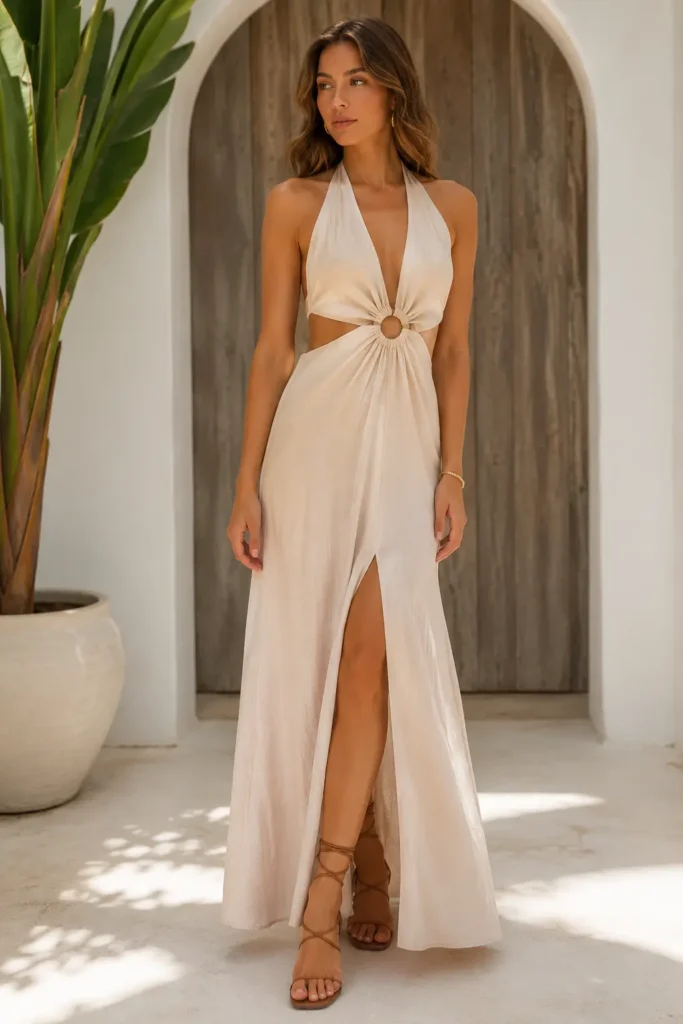
Halter Dresses
- Review neck comfort
- Confirm strap strength
- Secure side-bust coverage
- Balance open-back tension
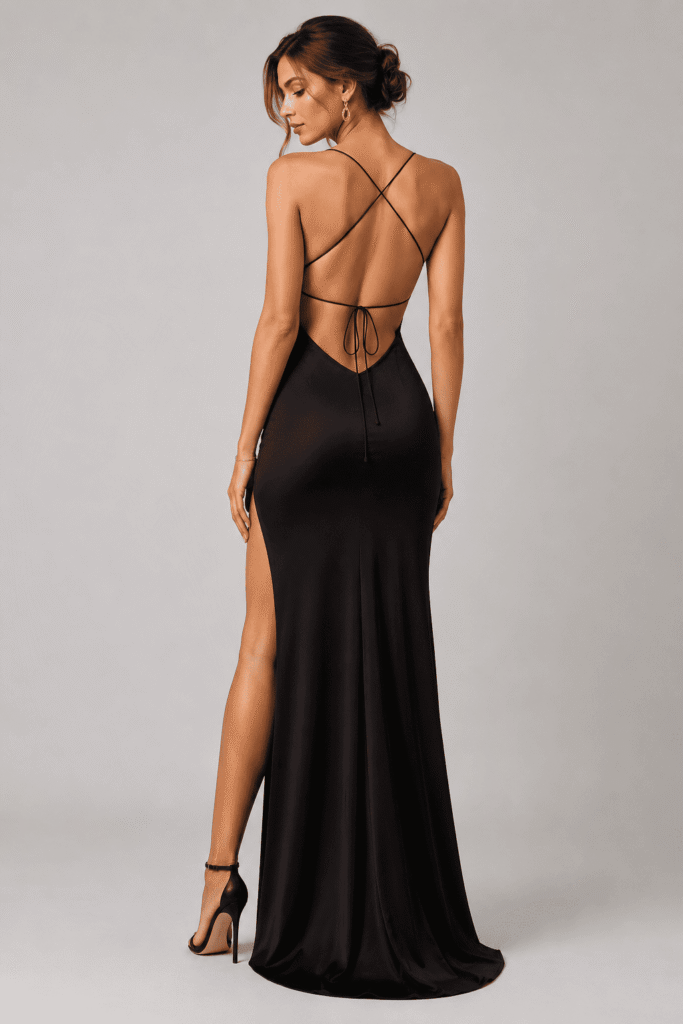
Backless Dresses
- Control gaping
- Evaluate adhesive-bra compatibility
- Stabilize waist and side seams
- Test movement and sitting
Building a Commercial Event Dress Collection
Hero Styles
- Early feasibility review
- Longer sample allowance
- Clear cost boundaries
- Campaign-sample timing
- Strong visual consistency
Commercial Styles
Commercial styles translate the collection mood into easier fits, more accessible construction and broader selling potential. Development priorities:
- Reliable fit across sizes
- Controlled labor input
- Repeatable materials
- Easier color extensions
- Stable bulk construction
Photo-Ready Styles
- Clean visible seams
- Camera-ready pressing
- Balanced decoration
- Reliable sample measurements
- On-time campaign delivery
Repeat Styles
- Stable material supply
- Preserved technical files
- Familiar production lines
- Repeat color management
- Previous issue review
Easy-Wear Styles
- Comfortable movement
- Accessible fit
- Efficient construction
- Retail-ready presentation
- Strong color potential
Statement Styles
- Local construction trials
- Workmanship standard samples
- Material-loss planning
- Reinforcement mapping
- Final inspection focus
Plan Production Backward from Your Event Season
Start with the Launch Date
Duolan begins timing discussions with the intended online, wholesale or retail launch date. Production planning then works backward through shipping, inspection, packing, manufacturing, material preparation and sampling. Information required for early planning includes:
- Target launch date
- Required warehouse delivery date
- Number of styles and colorways
- Size range
- Estimated order quantity
- Main fabric direction
- Special workmanship
A holiday collection with sequins and velvet needs a different timeline from a satin wedding guest capsule. Material sourcing, color confirmation and decorative workmanship may sit on the critical path.
Separate Sample Milestones
One sample cannot serve every decision. Event dress programs may require:
- First prototype for silhouette review
- Fit sample for measurement and balance
- Revised sample for corrections
- Photo-ready sample for campaign use
- Salesman sample for internal or wholesale review
- PP sample for production approval
Campaign dates should not depend on a sample still carrying unresolved fit or fabric questions. Duolan identifies the purpose of each version before the sample starts.
Protect Production and Delivery Buffers
Compressed production often increases risk around special processes, inspection, rework and packing. A controlled plan preserves time for:
- Fabric and trim booking
- Lab dips or color confirmation
- Local workmanship trials
- PP approval
- First-piece review
- Inline inspection
- Final inspection
- Carton and shipping documentation
- Forwarder booking
Bulk lead time is evaluated by style complexity, material readiness, order structure, packaging and delivery method. Final timing is confirmed in the project plan rather than promised from a product image alone.
Event Dress Risks Controlled Before Bulk Production
Complex dresses become more predictable when material, fit, construction and approval risks are identified before cutting begins.
| Risk Area | Common Cause | Commercial Impact | Duolan Control | Visible Proof |
|---|---|---|---|---|
| Design mismatch | Reference image lacks construction detail | Sample misses intended silhouette | Development brief and feasibility review | Annotated design review |
| Fabric mismatch | Wrong weight, stretch, shine or drape | Shape and fit fail | Fabric behavior review | Swatch comparison |
| Bust instability | Cup, neckline and support are not coordinated | Gaping or poor security | Cup, boning and neckline review | Fit sample close-up |
| Size imbalance | Grading changes proportion incorrectly | Inconsistent fit by size | Measurement and grading review | Size-spec record |
| Mesh transparency | Shell, lining and shade are not aligned | Coverage complaints | Opacity and lining review | Light-condition check |
| Sequin discomfort | Exposed edges or dense seam areas | Skin irritation | Edge clearing and lining protection | Workmanship sample |
| Satin seam marks | Needle, tension or pressing method is unsuitable | Visible surface defects | Sewing and pressing trial | Seam trial comparison |
| Sample-bulk drift | Materials and workmanship are not locked | Production differs from approval | BOM, PP and bulk-readiness review | Approval record |
| Color inconsistency | Fabric lots or surface reflection vary | Collection color mismatch | Lab dip and lot review | Approved color standard |
| Launch delay | Timeline begins too late | Missed event season | Backward project scheduling | Project calendar |
| Multi-style confusion | Files and priorities are not separated | Errors across styles | Style-level tracking | Revision summary |
| Packing damage | Sensitive surfaces are folded incorrectly | Creasing or abrasion | Product-specific packing method | Packing confirmation |
Why Brands Choose Duolan for Event Dresses
Dress-Focused Development
Occasionwear Experience
Fabric Judgment
Pattern and Fit
Complex Workmanship
Production-Ready Sampling
Multi-Style Coordination
Scalable Manufacturing
Repeat-Order Support
Fabric Selection for Different Event Dress Results
Material selection should protect silhouette, fit, comfort, visual value and production stability rather than follow fabric name alone.
| Fabric | Suitable Event Styles | Main Value | Main Risk | Development Control |
|---|---|---|---|---|
| Satin | Wedding guest, cocktail, formal midi, slip dresses | Shine and fluid drape | Needle marks, puckering, creasing, transparency | Weight selection, seam trial, lining review and packing test |
| Chiffon | Layered maxis, formal dresses, soft occasion styles | Movement and lightness | Transparency, seam slippage, uneven layers | Layer plan, lining, seam method and hem review |
| Mesh | Ruched, bodycon, cut-out and layered dresses | Stretch and controlled transparency | Recovery, color mismatch and seam distortion | Stretch review, shade matching and coverage mapping |
| Lace | Wedding guest, formal and cocktail dresses | Texture and refined detail | Motif mismatch, edge quality and high cutting loss | Placement planning, symmetry and lining selection |
| Sequin Fabric | Holiday, party, prom and evening dresses | Strong reflective effect | Weight, abrasion, dropping and bulky seams | Base-fabric review, edge clearing, reinforcement and lining |
| Tulle | Prom, homecoming and volume dresses | Shape and layered volume | Static, compression and inconsistent layer lengths | Stiffness selection, layer control and packing recovery |
| Velvet | Holiday and winter occasion dresses | Rich color and surface depth | Pile direction, marking and pressing damage | Direction control, cutting plan and low-pressure finishing |
| Crepe | Formal midi, asymmetric and tailored occasion dresses | Controlled drape and clean surface | Weight variation and seam impression | Weight confirmation, construction trial and pressing control |
| Stretch Jersey | Fitted party and ruched dresses | Comfort and body contour | Transparency, growth and weak recovery | GSM, stretch, recovery and seam-extension checks |
| Organza | Structured overlays, sleeves and statement volume | Crisp transparency and shape | Seam visibility, crushing and sharp edges | Layer construction, edge finish and packing method |
| Jacquard | Formal mini, midi and structured dresses | Pattern, body and premium surface | Motif placement, stiffness and fraying | Cut placement, silhouette review and seam protection |
| Embellished Mesh | Prom, gala and statement party dresses | High decorative value | Weight distribution and thread damage | Local trials, reinforcement and inspection standard |
Fit and Structure Engineering for Event Dresses

Bust Shape, Cup Position and Neckline Security
- Cup height and width
- Bust-point position
- Neckline depth
- Gaping risk
- Side-bust coverage
- Bra compatibility
- Padding thickness
- Internal support placement

Waist Balance and Body Contour
- Natural versus designed waist position
- Front and back waist balance
- Side-seam direction
- Ruching distribution
- Tension across zipper areas
- Stretch allowance
- Lining restriction
- Hip and thigh movement

Boning, Support and Internal Construction
- Number and position of boning channels
- Boning length
- Upper and lower end protection
- Center-front stability
- Side-seam reinforcement
- Waist-stay options
- Back closure tension
- Lining integration

Back Opening, Slit and Hem Movement
Backless designs, high slits and long hems require dynamic review. Static front-view approval cannot confirm wear performance. Development checks may include:
- Back gaping during movement
- Halter and neck tension
- Waist stability
- Side-bust coverage
- Slit height and opening angle
- Sitting allowance
- Lining visibility
- Hem level and walking clearance
Decorative Workmanship for High-Impact Event Dresses
Sequin Application
- Base fabric strength
- Sequin density
- Seam allowance clearing
- Underarm comfort
- Edge finishing
- Zipper bulk
- Missing or loose sequins
- Packing abrasion

Beading and Pearl Details
Pearls, beads and rhinestones add perceived value, but attachment strength and weight distribution require control. Development review covers:
- Bead size and weight
- Thread or fixing method
- Placement density
- Stress-point reinforcement
- Wash or care limitations
- Skin contact zones
- Repair standard
- Inspection method
Heavy decoration may distort mesh, satin or stretch fabrics. A small test section helps confirm whether the base fabric can support the decoration.

Embroidery and Applique
- Motif placement
- Thread color
- Backing material
- Fabric distortion
- Edge trimming
- Symmetry between panels
- Lining coverage
- Bulk production repeatability

Rhinestone and Heat-Set Details
Rhinestone layouts must balance sparkle, cost, durability and flexibility. Dense heat-set areas may reduce fabric stretch or feel uncomfortable in movement. Review includes:
- Stone size and layout
- Heat-setting parameters
- Stretch impact
- Adhesion testing
- Edge protection
- Packing friction
- Repair allowance

Mixed Decoration Programs
- Craft-sensitive style priority
- Workmanship trial sequence
- Material readiness tracking
- PP sample confirmation
- Inspection standard by craft
- Packing method by surface sensitivity

Custom Design Details for Brand-Specific Event Dresses

Neckline and Bust
- Bust coverage
- Neckline stability
- Strap or upper-body tension
- Bra compatibility
- Lining visibility
- Edge finishing
- Movement security
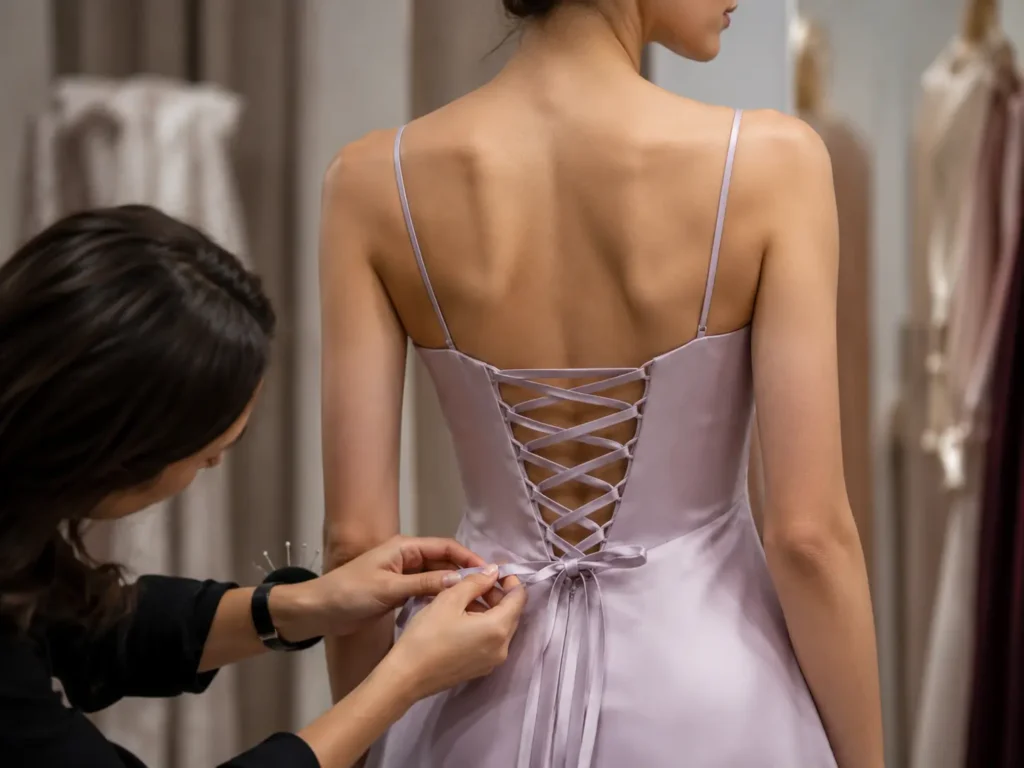
Back Designs
- Back opening height
- Closure type
- Strap angle
- Side seam support
- Gaping risk
- Inner structure visibility
- Label placement

Slits and Hemlines
- Slit height
- Slit angle
- Reinforcement
- Lining exposure
- Sitting comfort
- Hem balance
- Walking clearance
- Size grading effect

Cut-Out Placement
- Body coverage
- Seam stability
- Edge binding
- Stretch behavior
- Lining interruption
- Size-range proportion
- Production repeatability

Straps, Ties and Closures
- Strap width
- Strap length
- Bar-tack position
- Ring or slider quality
- Tie-end finish
- Hook, eyelet or zipper selection
- Closure reinforcement

Draping, Ruching and Gathering
- Gathering ratio
- Anchor points
- Left-right balance
- Fabric recovery
- Lining restriction
- Side seam direction
- Grading impact
Color, Trim and Private Label Development
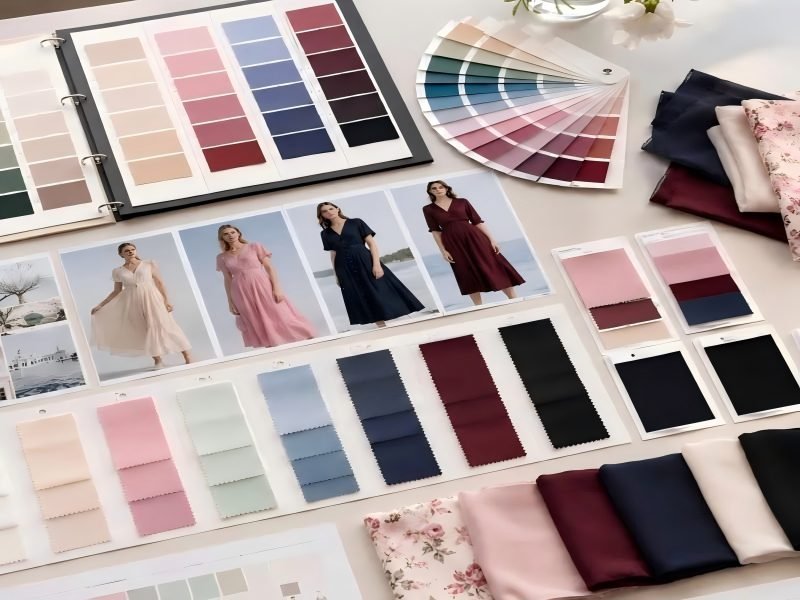
Custom Color Development
Color review may include:
- Pantone or physical color standard
- Lab dip requirement
- Fabric lot consistency
- Reflection under light
- Lining and shell shade match
- Trim and zipper color coordination

Print and Pattern Direction
Printed event dresses may need digital print, screen print, floral repeat, placement print or engineered artwork. Print quality depends on fabric base, color profile and repeat accuracy.
Duolan reviews:
- Original artwork quality
- Repeat size
- Color reference
- Print method
- Fabric base suitability
- Placement requirements
- Shrinkage and alignment risk

Trim and Hardware
Control points include:
- Metal color
- Strength
- Skin contact
- Weight
- Rust risk
- Closure function
- Replacement availability
- Bulk consistency

Labels and Hangtags
Review includes:
- Label artwork
- Material and color
- Size information
- Fiber content
- Care instructions
- Barcode or SKU logic
- Placement and attachment method

Packaging Direction
Packaging may consider:
- Polybag size
- Tissue paper
- Folding direction
- Hanger packing
- Carton size
- Anti-crease protection
- Decoration protection
- Retail or ecommerce requirement

Brand File Preservation
Preserved records may include:
- Label artwork
- Hangtag layout
- Barcode notes
- Packaging method
- Color standards
- Approved trim details
- Care instruction references
Information Needed for an Accurate Project Review
Tech Pack
- Flat sketch
- Measurement specification
- BOM
- Construction notes
- Stitching details
- Size chart
- Label and packaging notes
Reference Images
- Front, back and side views
- Detail close-ups
- Fabric references
- Fit intention
- Desired length and proportion
- Similar market examples
Original Sample
- Base size
- Fabric behavior
- Interior construction
- Lining method
- Closure details
- Wear or fit issue notes
Fabric Direction
- Fabric type
- Composition
- GSM or weight
- Stretch direction
- Hand feel
- Shine or texture
- Opacity
- Color standard
Quantity Structure
- Quantity by style
- Quantity by color
- Size breakdown
- Reorder possibility
- Launch order or repeat order
- Delivery priority
Launch Calendar
- Target launch date
- Warehouse delivery date
- Campaign date
- Showroom or sales sample date
- Shipping method
- Approval deadline
Quality Priorities
- Fit concern
- Transparency concern
- Decoration durability
- Measurement tolerance
- Packaging protection
- Compliance or testing need
Brand Requirements
- Label files
- Barcode or SKU logic
- Packaging standard
- Inspection requirement
- Approval process
- Internal review stages
Current Project Stage
Knowing the stage helps Duolan decide whether the project needs feasibility review, sample development, PP sample review or bulk evaluation. Possible stages:
- Concept direction
- Tech pack prepared
- First sample needed
- Sample revision needed
- Approved sample ready
- Bulk quotation required
- Repeat production planning
Controlled Sample Development for Event Dress Programs
Step 1|Development Brief and Feasibility Review
Review includes:
- Occasion and style direction
- Fabric behavior and sourcing risk
- Fit and structure difficulty
- Decoration or special process risk
- Estimated sample path
- Main missing information
Step 2|Fabric, Trim and Structure Confirmation
The sample basis becomes clearer when fabric, lining, trims and structural components are reviewed together. A corset dress, satin slip dress or sequin mini may need different testing before cutting.
Control points include:
- Main fabric selection
- Lining requirement
- Zipper and closure selection
- Boning or support materials
- Decoration materials
- Color and opacity review
Step 3|Pattern and First Sample Development
Sample review may focus on:
- Overall silhouette
- Bust and waist balance
- Length and hem level
- Fabric drape or tension
- Construction method
- Main visual effect
Step 4|Fit Comments and Revision Summary
Duolan may summarize:
- Accepted comments
- Comments needing clarification
- Pattern corrections
- Material changes
- Workmanship refinements
- Risk items before PP sample
Step 5|Photo, Salesman or PP Sample Preparation
Preparation may include:
- Final visual finishing
- Pressing and presentation
- Correct trim and label direction
- Measurement confirmation
- Workmanship standard
- Bulk-readiness review
Step 6|Bulk Readiness Review
Bulk review includes:
- Approved sample status
- BOM confirmation
- Color and trim standard
- Measurement specification
- QC checkpoints
- Production-sensitive details
Event Dress Samples and Their Approval Purposes
First Prototype
Fit Sample
Revised Sample
Photo-Ready Sample
Salesman Sample
PP Sample
Golden Sample
Size-Set Sample
From Approved Sample to Repeatable Bulk Production
A beautiful sample becomes commercially useful only after approved details are converted into a production-ready standard.
Bulk Readiness Review
- Fit confirmed
- Visual direction confirmed
- PP basis approved
- Final refinement still pending
- Launch order
- Test order
- Repeat order
- Scale-up order
- Multi-style seasonal program
Technical Standard Lock
- Approved sample
- Final pattern
- Measurement specification
- BOM
- Color standard
- Workmanship notes
- Placement diagrams
- Label instructions
- Packaging instructions
- QC checkpoints
First-Piece or Pilot Review
Review may focus on:
- Cutting accuracy
- Component matching
- Structure and support
- Main sewing operations
- Decoration placement
- Measurement direction
- Pressing result
- Production-line understanding
Production Release
Bulk begins after essential materials and approval references are ready. Production scheduling follows style complexity, quantity, fabric readiness, special processes, delivery date and line suitability.
Manufacturing Capacity for Multi-Style Event Dress Programs

Owned Factory Control
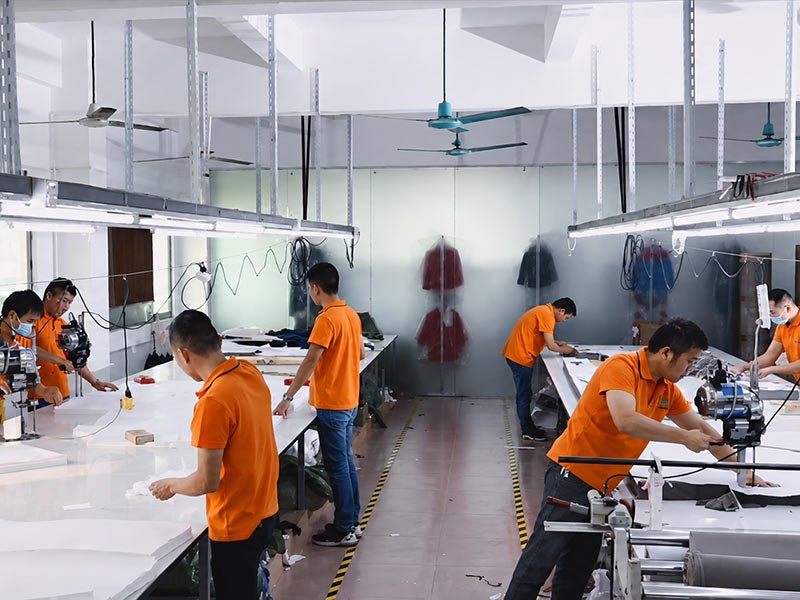
Satellite Factory Flexibility

Sewing Line Capacity
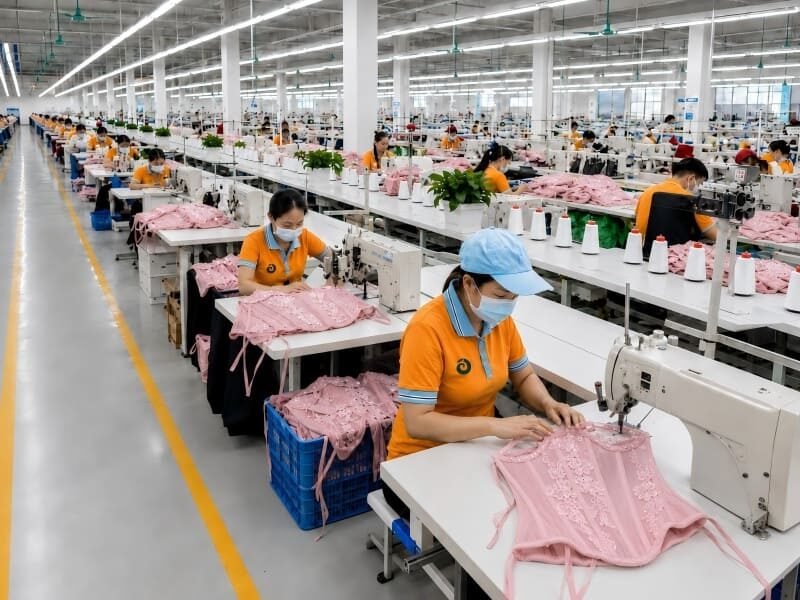
Quick-Response Lines

Sample Development Scale

Production Capacity
Production Planning for Complex Multi-Style Orders
Order Breakdown
- Early-start styles
- Craft-sensitive styles
- Simple support styles
- Repeat or carryover styles
- Campaign priority quantities
- Main bulk quantities
Material Readiness Mapping
- Fabric booking
- Lab dip or color standard
- Trim sourcing
- Decoration materials
- Special process lead time
- Lining and component matching
- Replacement or alternative options
Factory and Line Allocation
- Style construction
- Operation difficulty
- Worker familiarity
- Order quantity
- Inspection intensity
- Delivery deadline
- Rework risk
- Production-line schedule
Inline Review and Adjustment
- First-piece check
- Measurement direction
- Sewing operation understanding
- Surface handling
- Decoration security
- Lining exposure
- Pressing result
- Packing trial
Delivery Sequence
When a program contains campaign quantities, showroom needs and main bulk quantities, delivery sequence must be planned instead of assumed. Duolan can separate:
- Priority air quantities
- Main sea shipment
- Repeat order planning
- Partial shipment needs
- Carton and packing preparation
- Shipping document timing

Quality Control for Event Dress Production
Fabric Inspection
Cutting Review
Sewing Inspection
Fit and Measurement
Decoration Check
Surface and Pressing
Label and Packaging
Final Inspection
Corrective Actions
If issues appear, Duolan separates defect type, affected quantity, repair method, replacement need and shipment impact before final release.
Compliance Support for Global Fashion Brand Programs
SMETA Audit
Quality Standards
Material Standards
Third-Party Testing
Label and Care Information
Client Requirements
Proof Behind Event Dress Development and Manufacturing
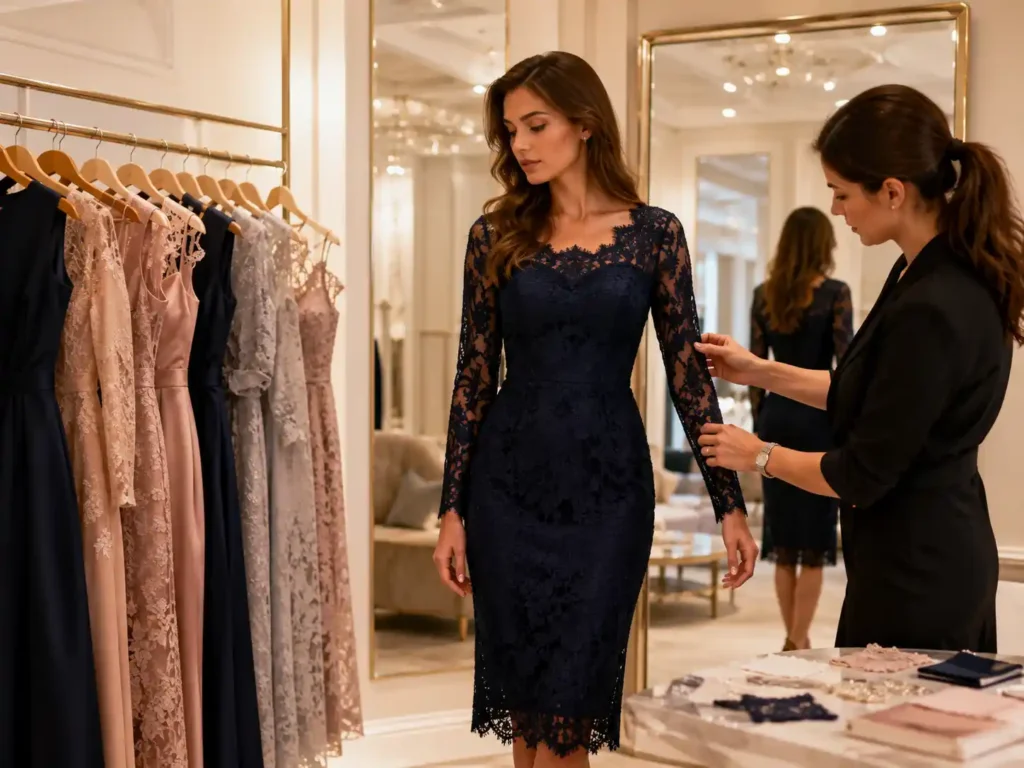
Event Dress Samples

Fabric and Lining

Corset Structure

Mesh Coverage

Lace Placement

Sequin Edges
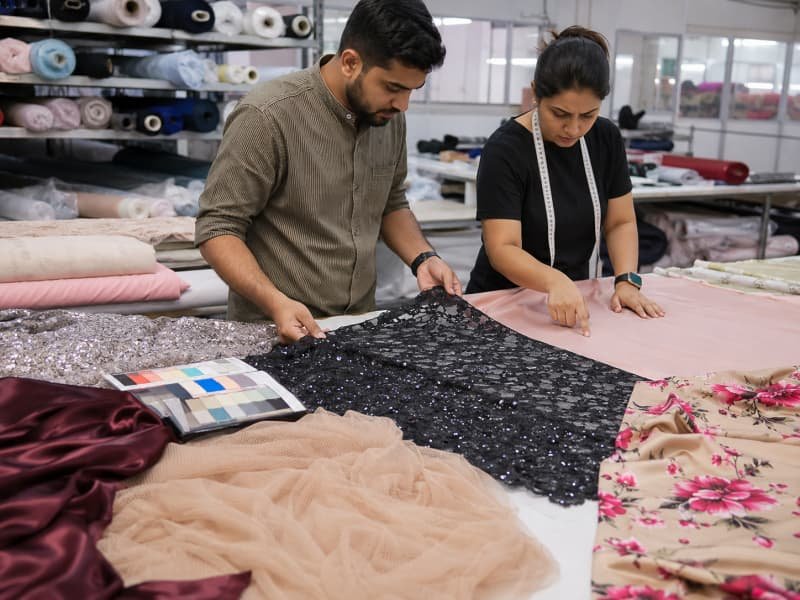
Fabric Swatches

Pattern Development

Fit Review
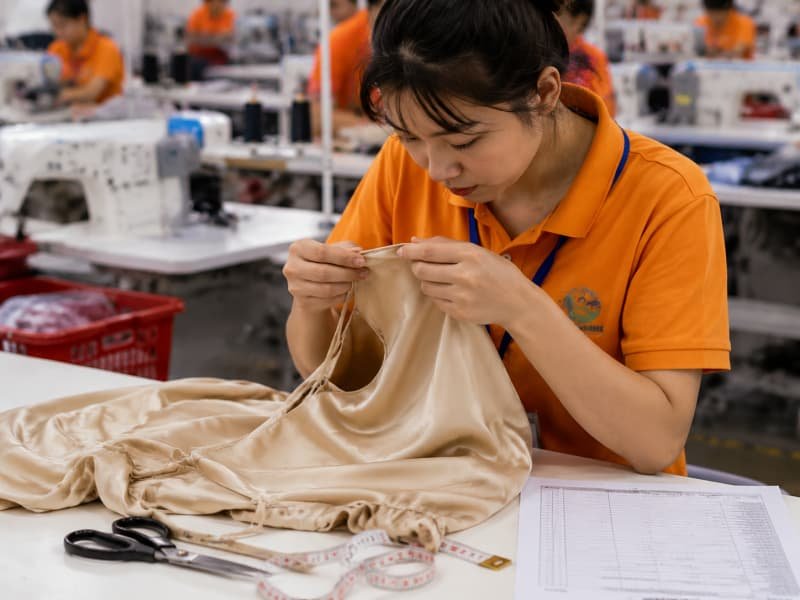
QC Inspection
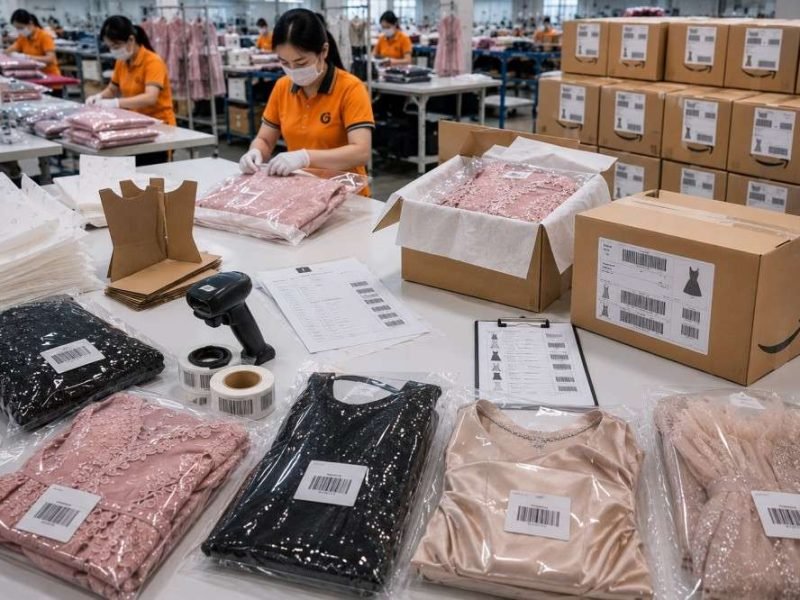
Packing and Shipment
Event Dress Programs Managed Across Styles and Seasons
The following anonymized program profiles reflect realistic order structures for established fashion labels. Brand names and unreleased designs remain confidential.
United States Holiday Party Collection
Program Profile:
- Region: United States
- Collection: Holiday party and going-out dresses
- Styles: 18
- Total quantity: 42,600 pieces
- Colorways: 2-5 per style
- Size range: XS-XL
- Main materials: Sequin mesh, velvet, satin and stretch jersey
- Sample rounds: 2 main rounds plus selected PP corrections
- Production window after PP release: 11 weeks
- Delivery: Split sea and priority air shipment
Development Challenge:
The collection combined heavily embellished hero styles with commercial fitted dresses. Several sequin designs carried high seam bulk, underarm abrasion risk and zipper distortion. Velvet styles required pile-direction control, while satin styles needed clean surface handling.
Duolan Actions:
- Separated styles by craft sensitivity
- Ran local sequin seam and edge trials
- Adjusted lining around underarm and neckline areas
- Locked velvet cutting direction
- Reviewed satin zipper construction
- Scheduled hero styles earlier than commercial styles
- Preserved a packing buffer for reflective and delicate surfaces
Production Control:
The 18 styles moved through separate material and production routes. Inline inspection focused on loose sequins, zipper flatness, lining exposure, hem level and measurement stability. Priority campaign quantities were completed first, followed by the main sea-shipment balance.
Program Result:
The collection reached the required shipping sequence without treating every style as one production block. Approved files were preserved for color extensions and repeat planning.

European Wedding Guest Capsule
Program Profile:
- Region: Western Europe
- Collection: Wedding guest and summer occasion dresses
- Styles: 12
- Total quantity: 26,400 pieces
- Colorways: 3-4 per style
- Size range: EU 32-46
- Main materials: Satin, chiffon, lace and crepe
- Sample rounds: 2
- Production window after PP release: 9.5 weeks
- Delivery: One main sea shipment with a smaller showroom allocation
Development Challenge:
The label needed a consistent polished mood across draped satin midis, chiffon maxis and lace occasion dresses. Light shades created opacity risk, while motif placement and long-layer balance required closer control.
Duolan Actions:
- Grouped the collection into three shared material families
- Reviewed satin weight by silhouette
- Adjusted lining shades for pale colors
- Locked lace motif placement for key panels
- Standardized zipper and lining qualities across several styles
- Confirmed graded dress lengths for selected maxi styles
Production Control:
The capsule moved through style-level tracking, with lace and long chiffon styles released earlier. QC focused on satin seam marks, lining exposure, lace symmetry, layer lengths and hem balance.
Program Result:
The program maintained a unified wedding guest mood across different fabrics and dress lengths, with technical files preserved for later color and seasonal extensions.

Australian Summer Event Edit
Program Profile:
- Region: Australia
- Collection: Summer event and birthday dresses
- Styles: 15
- Total quantity: 33,800 pieces
- Colorways: 2-6 per style
- Size range: AU 4-16
- Main materials: Mesh, stretch jersey, printed satin and lightweight crepe
- Sample rounds: 2-3 depending on fit complexity
- Production window after PP release: 10 weeks
- Delivery: Main sea shipment with selected early air quantities
Development Challenge:
The brand needed fitted, social-media-ready dresses with secure coverage and strong color impact. Mesh transparency, print placement, bodycon recovery and cut-out positions created fitting and production risks.
Duolan Actions:
- Reviewed coverage zones before sample cutting
- Matched mesh and lining shades
- Tested stretch recovery for fitted styles
- Adjusted cut-out placement after fit review
- Confirmed print scale and repeat direction
- Used separate QC priorities for mesh and jersey styles
Production Control:
Fit-sensitive styles received closer measurement and movement review. Inline inspection checked mesh coverage, side seam distortion, print direction, zipper strain and neckline stability.
Program Result:
The collection supported a summer event launch with different fitted silhouettes while keeping coverage, stretch and visual consistency under control.

Custom Event Dress Frequently Asked Questions
Duolan develops wedding guest dresses, cocktail dresses, homecoming dresses, graduation dresses, holiday party dresses, formal social dresses, prom dresses, gala dresses, celebration dresses and related fashion dress styles. The strongest fit is brand-level eventwear requiring fabric, fit, workmanship and bulk consistency control.
Yes. Reference images can help communicate silhouette, mood, neckline, fabric direction and surface detail. For accurate development, Duolan also needs measurements, fabric preferences, target quantity, size range, colorways and launch timing. A tech pack or original sample improves accuracy.
Yes. Corset and bustier event dresses are reviewed around cup position, bust volume, boning length, lining, closure strength, back tension and movement. Duolan may recommend structure trials or fit review before PP approval for complex corset programs.
Satin control focuses on fabric weight, drape, seam puckering, needle marks, zipper flatness, opacity, pressing method and packing protection. Light shades and bias-cut styles require additional review because surface defects and transparency become more visible.
Duolan can review and source satin, chiffon, mesh, lace, sequin fabric, velvet, crepe, tulle, organza, jacquard, stretch jersey and related linings or trims. Fabric recommendations depend on silhouette, target effect, cost logic, production stability and timing.
Duolan reviews the base fabric, decoration density, seam allowances, edge comfort, reinforcement, weight distribution and repair standard. Production inspection may focus on missing decoration, loose threads, abrasion areas, zipper distortion and packing protection. A workmanship sample or local trial may be used before bulk approval.
Sample needs depend on the decisions required. A program may use a first prototype, fit sample, revised sample, photo-ready sample, salesman sample, size-set sample, PP sample or golden sample. Bulk production should not start until the relevant fit, material, workmanship, measurement, label and packaging points are sufficiently confirmed.
Duolan uses a bulk-readiness review before production release. Approved samples are supported by patterns, measurements, BOM records, color standards, workmanship notes, PP approval, label instructions, packaging requirements and QC checkpoints. Fit-sensitive or craft-sensitive styles may also require first-piece or pilot review.
Yes. Duolan supports programs containing multiple styles, colorways, sizes and construction levels. Orders are separated by style, material status, complexity, production route and delivery priority. Core factories, stable lines, quick-response lines, satellite factories and special-process resources are matched according to project needs.
Useful information includes a tech pack, reference images, original sample details, fabric direction, base-size specification, size range, target quantity, colorways, launch date, quality priorities, labels and packaging requirements. Duolan can then evaluate sample direction, material feasibility, production route, cost drivers and timing risks.

Start Your Event Dress Manufacturing Project
Duolan works with established fashion labels, product teams, purchasing departments and sourcing offices developing defined eventwear programs for future production. Send a clear project brief to receive a more useful review of development needs, manufacturing risks and the next approval stage.
Helpful project information includes:
- Tech packs, sketches or reference images
- Original sample photos or measurements
- Event category and target market
- Fabric, lining and trim direction
- Base size, size chart and grading requirements
- Number of styles and colorways
- Estimated quantity by style
- Target launch and delivery dates
- Special workmanship requirements
- Label, barcode and packaging instructions
- Existing sample status
- Main quality concerns
After receiving the information, Duolan can review the product direction, material suitability, pattern and fit priorities, sample route, production-sensitive details, bulk-readiness requirements and possible manufacturing path.