 Skip to content
Custom Fashion Collection Manufacturer
Custom fashion collection development and manufacturing for established womenswear brands with multi-style launch plans.
Duolan helps fashion brands turn collection briefs, reference styles, fabric directions and launch calendars into coordinated womenswear programs. From style grouping and sample development to PP approval, bulk production, QC, packing and repeat delivery, our system is built for dress-focused collections, not isolated garment orders.
- 16 owned womenswear factories support controlled collection-to-bulk handover.
- 20+ satellite factories provide flexible capacity for multi-style production programs.
- 300 sewing lines support parallel production across different womenswear structures.
- 50+ quick-response lines support sampling, trial runs and launch preparation.
- 15,000–35,000 monthly sample capacity supports frequent collection development cycles.
- 3,000–8,000 monthly style development flows support seasonal planning and revisions.
- 6,500,000 stable monthly capacity supports planned bulk and repeat collection delivery.







Collection Manufacturing Means More Than One Style
A custom fashion collection is not a pile of unrelated garments. For established womenswear brands, a collection should carry a clear product direction, style roles, fabric rhythm, color logic, sample sequence, production route and launch timing. A dress collection may include visual hero styles, commercial core pieces, repeatable silhouettes, seasonal fabric stories and campaign-focused styles. Each role needs a different development and manufacturing decision.
Duolan approaches collection manufacturing as a coordinated product program. A satin midi dress, mesh party style, fitted mini dress, resort maxi dress and refined top may belong to the same launch, but each garment may require a different fabric review, pattern route, sewing method, QC focus and packing plan. A strong manufacturer must keep the collection coherent without forcing every style through the same production logic.
For mature brands, collection manufacturing should connect design language with manufacturing discipline. The goal is not only to make samples that look attractive during review. The real value appears when approved samples become PP standards, BOM records, cutting instructions, sewing notes, QC checkpoints, packing references and repeat order records. Duolan’s role is to keep collection identity, production feasibility and delivery control aligned.

Built for Collection-driven Fashion Brands
Duolan is structured for brand teams managing seasonal launches, capsule collections, dress programs and multi-style womenswear drops. The strongest fit comes from brands with defined positioning, real launch plans, product standards and long-term supply value.
Global Fashion Brands
Global fashion brands need collection manufacturing with stable execution across styles, sizes, colors and seasons. One launch may involve occasion dresses, party styles, resort pieces and refined tops at the same time. Duolan supports global teams by connecting collection planning, sample development, fabric sourcing, PP confirmation, bulk production, QC and packing discipline. The value lies in keeping standards clear when several styles move forward together.
Regional Fashion Leaders
Established regional brands often grow through frequent drops and commercially proven categories. They need a manufacturer capable of supporting new style development without weakening quality, timing or repeat delivery. Duolan helps organize collection briefs, style roles, sample priorities, fabric plans and production routes so regional brands can launch with stronger control and clearer handover from development to bulk.
Occasionwear Brands
Occasion, party and event-driven brands need collection structures built around wearing scenarios. Cocktail, wedding guest, graduation, holiday, resort and going-out collections each carry different fit, support, fabric and presentation requirements. Duolan supports these programs with dress-focused development, sample review, production engineering and QC discipline for styles where visual impact and wear confidence matter together.
Product Teams
Product teams need suppliers that can turn moodboards, references, sample comments and fabric ideas into organized development actions. Duolan reviews which styles should be sampled first, which fabrics need testing, which silhouettes need fit attention and which garments can move toward PP approval. Clear collection development reduces repeated uncertainty and gives internal teams better products for review.
Sourcing Offices
Sourcing offices evaluate suppliers by capability, communication, compliance, timing, production route and repeatability. Duolan supports sourcing work with structured project information, supplier evaluation data, sample-to-bulk planning and manufacturing coordination. Multi-style programs become easier to assess when style roles, material needs, QC focus and packing requirements are organized before production.
Multi-brand Groups
Multi-brand groups often manage different product lines, price levels and visual identities within one manufacturing calendar. Duolan supports separate brand standards across fabric, fit, trims, label systems, packing and production records. This helps each brand line stay distinct while production, QC and delivery remain coordinated across the wider group program.
Collection, Capsule, Drop and Line
Fashion collection manufacturing requires clear language before development begins. A collection, capsule, drop and product line may sound similar, but each one creates different sample, fabric, production and delivery requirements.
| Term | Meaning | Manufacturing Focus |
|---|---|---|
| Fashion Collection | A group of garments built around a seasonal, stylistic, fabric or market direction | Style roles, fabric structure, color rhythm, sample stages and bulk planning |
| Capsule Collection | A smaller, focused group with tight color, fabric or styling logic | Core silhouettes, shared materials, faster review and controlled launch timing |
| Seasonal Drop | A product group released for a specific launch window | Calendar back-planning, material timing, sample speed and packing coordination |
| Occasion Line | A group built around weddings, parties, graduations, holidays or events | Fit, support, photo effect, fabric polish and delivery timing |
| Single Style | One garment developed independently | Useful as part of a collection, but limited for collection-level planning |
| Repeatable Program | A product group designed for future reorders and extensions | BOM record, PP standard, color reference, QC notes and repeat delivery |
What Brands Should Prepare
A strong fashion collection brief gives Duolan enough information to judge product direction, sample priority, fabric feasibility, production route and launch timing. A complete tech pack helps, but collection development can begin earlier when brand direction, style references, fabric ideas and commercial goals are clear.

Collection Brief
A collection brief should explain the product story before any pattern or sample begins. Duolan reviews the brief to understand the intended market, garment categories, launch purpose and overall style direction.
- Collection purpose: Define whether the program is for an occasion line, partywear drop, resort capsule, contemporary dress line or seasonal fashion collection.
- Style count: Share the expected number of dresses, sets, tops or related garments so sample flow and production workload can be planned early.
- Product role: Mark hero styles, commercial core pieces, repeatable garments and seasonal statement pieces before development priorities are decided.
- Brand direction: Include the visual language, target wearer, price level and channel requirement so styles can remain aligned across the full program.

Moodboard and References
Moodboards and references help Duolan translate visual direction into garment development. The goal is not to copy images, but to understand silhouette, fabric mood, fit expectation and collection rhythm.
- Reference styles: Provide front, back and detail references when possible, especially for neckline, waist, sleeve, hem, closure and inner construction.
- Visual mood: Share color atmosphere, campaign styling, competitor references or previous bestsellers to show the intended product feeling.
- Construction clues: Include close-up images for corset, ruching, mesh, lining, sequin, pleating, print placement or special garment details.
- Priority notes: Identify which references matter most for silhouette, which matter for fabric, and which only show general styling direction.

Fabric and Color Direction
Fabric and color decisions shape the collection before sampling begins. Duolan reviews material direction by garment role, drape, stretch, opacity, sourcing stability and future repeat potential.
- Main fabric direction: Share preferred satin, mesh, jersey, lace, chiffon, sequin, velvet, structured woven or print-led fabrics by style group.
- Color palette: Provide core colors, seasonal colors, campaign colors and repeat colors so lab dips and fabric grouping can be reviewed.
- Material references: Send swatches, previous fabric quality records or target handfeel notes when available to improve sourcing accuracy.
- Process direction: Clarify print, embroidery, pleating, dyeing, sequin, beading or washing requirements before sample timing is planned.

Size, Fit and Sample Needs
Collection development becomes stronger when fit expectations and sample purposes are clear. Duolan reviews size range, sample stage and garment behavior before moving toward PP approval.
- Size range: Share standard sizing, target fit level and key body areas such as bust, waist, hip, length, neckline, strap and hem.
- Sample purpose: Confirm whether each style needs concept sample, fit sample, photo sample, salesman sample, PP sample or bulk reference sample.
- Fit priority: Mark styles requiring closer support review, such as bodycon, corset, halter, strapless, mesh, cut-out or backless garments.
- Revision expectation: Share internal review steps and comment deadlines so sample corrections can support the launch calendar.

Quantity and Launch Plan
Collection manufacturing depends on timing. Duolan reviews quantity, colorways, production scale and delivery window together so material booking and production routes can be planned with fewer surprises.
- Target quantity: Share planned units by style, color and size so fabric sourcing, production route and cost logic can be evaluated.
- Colorways: Confirm how many colors belong to hero styles, commercial styles and repeatable garments before lab dips or bulk fabric booking.
- Launch timing: Provide desired release date, photo deadline, sales review date and final delivery window for calendar back-planning.
- Repeat potential: Mark styles expected to return in future colors, lengths or fabric updates so BOM and PP records can be prepared.

Label and Packing Requirements
A fashion collection should arrive organized for the brand’s selling channel. Labels, barcodes, polybags, carton marks and packing ratios should be reviewed before final production.
- Brand labels: Provide main label, care label, size label and country or fiber information requirements before bulk preparation.
- Hangtags and barcodes: Share SKU, barcode, price tag, hangtag position and channel label requirements by style, color and size.
- Packing method: Clarify folding, hanging, polybag, carton, ratio and garment protection needs for satin, sequin, structured or delicate styles.
- Receiving standards: Provide warehouse, ecommerce, retail or wholesale packing rules so the collection arrives ready for internal processing.
Collection Architecture Planning
A fashion collection works best when each style has a role. Duolan helps brands organize collection structure before sampling, so hero pieces, commercial styles, seasonal fabrics and repeatable products do not compete for the same development priority.
| Collection Role | Purpose | Duolan Review |
|---|---|---|
| Hero Style | Creates campaign impact, visual recognition and strong product identity | Silhouette strength, fabric effect, photo-readiness, construction risk and sample priority |
| Commercial Core | Supports stable sales and wider market acceptance | Fit balance, fabric availability, size range, cost logic and repeat production potential |
| Repeatable Style | Carries future reorder or seasonal extension value | BOM record, PP sample, color standard, QC notes and material continuity |
| Seasonal Fabric Style | Builds seasonal relevance through texture, print, shine, color or handfeel | Fabric sourcing, lab dip, shrinkage, drape, delivery window and bulk stability |
| Occasion Style | Serves a defined wearing scenario such as party, wedding guest or graduation | Support, comfort, movement, photo effect, lining, zipper and final presentation |
| Extension Style | Extends an approved silhouette through length, sleeve, neckline or color changes | Pattern adjustment, grading impact, fabric compatibility and production efficiency |
Custom Fashion Collection Product Range
Duolan focuses on dress-led and fashion-driven womenswear collections where product identity, fabric behavior, fit control and bulk consistency matter. A collection may include several product directions, but each category must serve a clear role in the launch instead of becoming a scattered garment list.
Dress-led Collection Core
Fashion dresses often carry the strongest visual identity in a womenswear collection. Duolan reviews each dress direction by silhouette, fabric mood, fit level, length, occasion and repeat value before sample development begins.
- Fashion dresses: Built for visual recognition, campaign styling and collection identity. Development focuses on silhouette clarity, fabric handfeel, lining, seam finish and photo-ready garment presentation.
- Mini, midi and maxi programs: Different lengths require different control points. Mini styles need coverage and proportion; midi styles need drape and balance; maxi styles need length, hem and packing discipline.
- Repeatable dress bases: Strong silhouettes can become repeatable products through color updates, fabric changes or length extensions. Duolan records pattern, BOM, PP sample and QC notes for future production continuity.
- Collection role mapping: Not every dress should carry the same purpose. Hero dresses, commercial core dresses and extension styles are reviewed through separate development and production logic.

Occasion and Partywear Lines
Occasion and partywear collections need a balance between visual impact and controlled wearability. Duolan pays close attention to support, lining, stretch, embellishment, edge finish and final presentation for event-driven garments.
- Occasion dresses: Cocktail, graduation, wedding guest and semi-formal directions need polished fabric, stable fit, clean finishing and reliable movement across real social settings.
- Partywear styles: Bodycon, mesh, sequin, cut-out and ruched garments are reviewed through stretch recovery, coverage, lining, edge durability and packing protection.
- Photo and sales samples: Event-driven collections often require photo samples or salesman samples before PP approval. Duolan helps prepare samples that support visual review and commercial evaluation.
- Production-sensitive details: Shine, transparency, tight fit, boning and decoration can strengthen a collection, but only when construction and QC standards are planned before bulk.

Resort and Vacation Capsules
Resort and vacation collections rely on lightness, color, print, movement and seasonal timing. Duolan reviews fabric softness, transparency, print placement, wrinkle behavior and packing method for garments designed around travel, holiday and destination dressing.
- Vacation dresses: Lightweight maxis, sundresses, slip dresses and printed styles require careful control of drape, lining, opacity, hem balance and final pressing.
- Print-led programs: Floral, tropical, border, gradient and abstract prints need placement review before cutting, especially for maxi dresses, side seams, front panels and skirt hems.
- Color-led capsules: Resort collections often use softer seasonal color stories. Lab dips, shade bands and fabric batch control help protect collection consistency.
- Travel-ready packing: Lightweight and fluid garments need folding, polybag and carton decisions that protect garment shape without crushing fabric movement.

Fashion Sets and Tops
Sets and tops extend a dress-focused collection into a fuller product program. Duolan treats coordinated products as part of collection architecture, not as separate add-on items.
- Skirt sets: Top and bottom garments must share fabric batch, color standard, size balance, waistband logic and packing ratio.
- Refined tops: Satin tops, corset tops, mesh tops, halter tops and blouse styles support styling depth across a collection.
- Coordinated launch products: Sets and tops can help a brand build outfit value, repeat fabric themes and increase merchandising flexibility.
- Fit relationship: Top-to-bottom proportion, waist position, length, strap placement and fabric recovery must remain aligned across the full set.

Fitted and Structured Styles
Fitted and structured garments carry strong brand value, but they also create higher development risk. Duolan reviews inner construction, fabric tension, support points and size scaling before moving these styles toward PP approval.
- Bodycon and fitted dresses: Fit depends on fabric recovery, seam elasticity, negative ease, lining and measurement tolerance working together.
- Corset and bustier styles: Cup position, boning, lining, back closure, zipper and support layers must be engineered before production.
- Structured dresses: Clean shape depends on pattern balance, interlining, pressing, inner support and first-piece confirmation.
- Premium garment feel: Structure should support the silhouette without making the garment stiff, heavy or uncomfortable during wear.

Style Direction Development
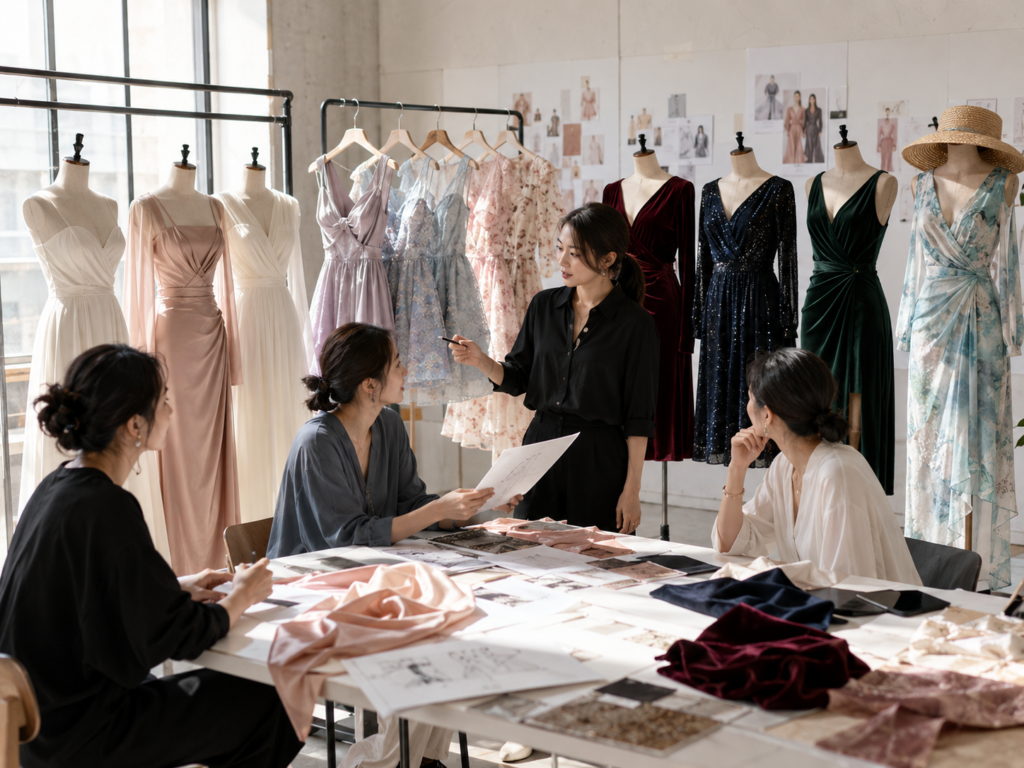
A strong collection begins with organized style direction. Duolan helps brands move from broad inspiration into garment groups defined by occasion, silhouette, fabric, length, fit level and collection role. Clear direction improves sample priority, fabric sourcing, pattern development and bulk planning.
Direction by Occasion
Occasion-led development starts with the wearing moment. Each occasion carries different expectations for polish, comfort, movement, color, fit and presentation.
- Wedding guest and cocktail: These styles need refined fabric, clean proportion, stable lining and enough polish for social events without becoming bridal.
- Graduation and homecoming: Younger event-driven styles often need shorter lengths, stronger photo effect, comfortable movement and clear size grading.
- Holiday and party season: Shine, mesh, velvet, satin, sequin and darker color stories may work well, but comfort and packing protection need early review.
- Resort and vacation: Lightweight fabrics, prints, color palettes and relaxed silhouettes must support movement, travel and seasonal launch timing.
Direction by Silhouette
Silhouette defines how a collection feels on the body. Duolan reviews each shape by support, proportion, fabric behavior and production risk.
- Corset and bustier: These silhouettes require cup position, boning placement, lining, back closure and support review before sample approval.
- Bodycon and fitted: Stretch, recovery, side seam balance, opacity and negative ease determine whether the garment feels flattering or unstable.
- Halter, backless and one-shoulder: Neckline load, strap placement, bust support and back stability must be checked before moving into bulk.
- Slip and A-line: Fluid garments depend on fabric drape, bias behavior, lining length, hem balance and final pressing.

Direction by Fabric
Fabric direction helps organize the visual language of a collection. Duolan reviews how each material supports the planned product role and production route.
- Satin and velvet: Polished surfaces need seam control, pressing discipline, shade consistency and packing protection.
- Mesh and lace: Transparency, lining, placement, edge finish and skin comfort decide whether the garment feels refined.
- Jersey and stretch fabrics: Recovery, weight, handfeel and seam elasticity shape fit, comfort and size consistency.
- Sequin and embellished materials: Weight, friction, edge treatment, lining and carton protection must be checked before bulk production.

Direction by Length
Length planning gives a collection structure. Mini, midi and maxi styles may share a theme, but each length needs different development control.
- Mini styles: Coverage, inner lining, hem safety, movement comfort and strap support receive priority.
- Midi styles: Waist placement, skirt fall, slit height, hem level and refined finishing shape the commercial look.
- Maxi styles: Fabric width, panel balance, length tolerance, print placement and packing discipline become critical.
- Length extensions: A proven silhouette may extend into several lengths, but pattern and grading changes still need review.

Direction by Collection Role
Every style should serve a clear purpose. Duolan helps separate visual statement pieces from commercial core styles and repeatable products.
- Hero styles: Strong silhouettes, special fabrics or high-impact details support campaigns, lookbooks and social media visuals.
- Commercial core: Balanced fit, stable cost, available fabrics and easier repeat production support stronger sell-through potential.
- Seasonal styles: Color, print, texture or occasion timing can create freshness without overcomplicating production.
- Extension styles: Approved silhouettes can expand through sleeve, length, neckline, color or fabric variations.

Trend-to-Collection Review
Trend references only create value when they become coherent garments within a collection. A social media detail, runway silhouette, color story or competitor reference may inspire development, but Duolan reviews whether the idea fits the brand, supports the target wearer, works with the planned fabric and can move into production.

Brand Relevance
Duolan reviews whether a trend belongs in the brand’s current language. A cut-out idea may suit partywear, while a soft printed maxi may support resort direction. A corset shape may work as a hero style but not as commercial core. Trend relevance must be judged by brand identity, target market, launch season and collection role.

Garment Translation
A trend must become a garment with real construction. Neckline, bust support, waist position, closure, lining, hem, seam finish and size range need definition. Duolan reviews how inspiration turns into pattern, fabric, trims and sample instructions. Strong translation helps avoid samples that look close to the reference but fail as wearable products.

Fabric Reality
Fabric can strengthen or weaken a trend. Shiny satin may need careful seam control. Mesh may require coverage mapping. Sequin may need edge and packing protection. Jersey may require recovery testing. Duolan reviews whether a fabric supports the desired visual effect, fit and bulk stability before the style enters collection sampling.

Production Timing
A trend-driven collection loses value if materials, samples and production miss the launch window. Duolan reviews fabric lead time, special process timing, sample rounds, PP approval and shipment needs against the planned release. Trend-to-collection development must respect the calendar, not only the moodboard.
Fabric and Color Planning
Fabric and color planning decide whether a fashion collection feels intentional. Duolan reviews material mood, color rhythm, print direction, bulk availability and repeat potential before sample development, so the collection can move from visual planning into controlled production.
Fabric Mood Planning
A collection should not mix materials randomly. Fabrics must support the brand direction, garment role, fit level and production route.
- Main fabric families: Satin, mesh, jersey, lace, chiffon, velvet, sequin and structured woven materials each create a different collection mood and manufacturing risk.
- Supporting fabrics: Linings, interlinings, stretch layers and inner support fabrics should match the outer fabric instead of fighting against shape, drape or comfort.
- Fabric-to-style allocation: Hero styles may use stronger visual fabrics, while commercial core products often need more stable, repeatable materials.
- Bulk availability: Sample fabric should be reviewed for production sourcing, batch consistency, color continuity and future reorder potential.

Color Rhythm Planning
Color creates the first visual connection across a collection. Duolan reviews color by garment role, fabric type, launch timing and repeat value.
- Core colors: Black, white, beige and other stable colors often support repeatable styles and commercial core pieces.
- Seasonal colors: Red, pink, blue, green, pastel and rich evening tones can support campaign energy when lab dip and batch control are planned early.
- Color-to-fabric behavior: The same color may look different on satin, mesh, lace, jersey or sequin due to shine, transparency and texture.
- Shade control: Lab dips, shade bands, bulk fabric records and previous batch references help reduce visible color drift across multi-style programs.

Print and Process Planning
Prints and special processes can build collection identity, but only when placement, scale, cost and production stability are reviewed together.
- Print placement: Floral, border, gradient and directional prints require paper pattern review before cutting, especially for front panels, side seams and skirt hems.
- Process selection: Digital print, screen print, embroidery, dyeing, pleating, sequin and beading should be selected for product value, not decoration volume.
- Sample validation: Strike-offs, fabric tests, process samples and photo samples help verify color, handfeel, shrinkage and visual impact before bulk.
- Production timing: Special processes need calendar control. Delayed artwork, lab dips or process tests can push the full collection schedule.

Material Continuity
Collection manufacturing gains strength when approved materials can support future orders. Duolan records fabric quality, lining, trims, color references and process notes for repeat-ready development.
- BOM records: Approved fabric, lining, trims, labels, hardware and packing materials are recorded by style for future production clarity.
- Repeat color references: Color records reduce uncertainty when a bestselling style returns in a new batch or seasonal color.
- Fabric substitutions: When original fabric becomes unavailable, Duolan reviews alternatives by weight, stretch, drape, opacity and handfeel.
- Extension planning: Approved materials can support related styles, length variations, sets or capsule extensions without restarting every decision.

Multi-style Sample Development Path
Collection sampling needs sequence. Duolan organizes sample development by product role, risk level, fabric uncertainty and launch priority so multiple garments can move forward without confusion.
Step 1|Collection Brief Review
Development begins with the collection brief, product categories, style count, moodboard, reference styles, target market, price range, fabric direction and launch date. Duolan reviews whether the collection has a clear product structure and identifies which garments need deeper development, which fabrics require testing and which details may create production risk.
Step 2|Fabric and Style Grouping
Styles are grouped by fabric type, construction complexity, sample purpose and production route. Satin pieces, stretch garments, mesh styles, structured dresses and lightweight resort styles may need different sample planning. Grouping helps manage material sourcing, sample timing, pattern work and technical review without treating all styles as equal.
Step 3|First Sample Development
Duolan prioritizes samples based on collection role and risk. Hero styles, complex structures, uncertain fabrics and key commercial pieces often need earlier samples. First samples test silhouette, fabric behavior, construction and visual direction. The aim is not to finish every style at once, but to create the right development decisions in the right order.
Step 4|Revision and Fit Review
Sample comments are translated into clear revisions. Fit, length, neckline, fabric, lining, trim, seam, support and finish changes are recorded by style. When several samples are revised together, Duolan helps keep collection consistency across measurements, fabric choices, construction details and final presentation.
Step 5|PP Sample and Bulk Planning
Approved samples move toward PP sample preparation, BOM confirmation, material locking, production notes, QC planning and packing standards. Each style receives its own production reference, while the collection remains coordinated through shared launch timing, color planning, packing requirements and delivery goals.

Sample Types for Collection Decisions
Different samples support different collection decisions. Duolan helps brands use each sample stage with a clear purpose, especially when several styles move through development at the same time.
| Sample Type | Role in Collection | What It Confirms |
|---|---|---|
| Concept Sample | Tests whether the collection direction can become garments | Silhouette, fabric mood, proportion, key detail and style potential |
| Fit Sample | Reviews wearing balance and standard-size fit | Bust, waist, hip, length, neckline, comfort, movement and coverage |
| Revised Sample | Confirms comments and development adjustments | Pattern correction, fabric change, lining, trims, measurement and construction |
| Photo Sample | Supports campaign, ecommerce or internal visual review | Color, drape, surface finish, styling effect and presentation quality |
| Salesman Sample | Supports sales, showroom or internal commercial evaluation | Quality feel, fit impression, brand alignment and product readiness |
| PP Sample | Becomes the production benchmark | Material, measurement, workmanship, labels, packing and QC standards |
| Bulk Reference Sample | Supports repeat or extended production | Production memory, BOM record, color reference and key QC notes |
Pattern, Fit and Size Consistency
A collection should feel coherent across different silhouettes, fabrics and size ranges. Duolan reviews pattern language, fit balance, grading logic and fabric behavior together, so the collection carries one brand standard instead of several disconnected garment fits.
Shared Fit Language
A collection may include fitted, semi-fitted, structured and flowing garments. Each shape can differ, but the brand’s wearing feel should remain controlled.
- Bust and waist balance: Dress collections often fail when bust support, waist position and side seam balance change too much across styles.
- Neckline and strap logic: Halter, one-shoulder, backless and corset styles need consistent support thinking, even when outer shapes differ.
- Skirt fall and hem balance: Midi, maxi and vacation styles need proportional skirt movement, lining length and hem control across the collection.
- Brand fit feeling: Some brands need closer fit, some need softer ease. Duolan reads fit direction before pattern and grading decisions are locked.

Size Range Logic
Ready-to-wear collections require fit control beyond one approved sample size. Duolan checks how each garment scales across the intended size range.
- Grading sensitivity: Corset dresses, bodycon styles, mesh garments and structured tops may change dramatically when graded without fit review.
- Tolerance planning: Key points such as bust, waist, hip, length, neckline, strap and hem require measurable tolerance before production.
- Size-to-style relationship: A relaxed maxi dress and a fitted mini dress cannot use the same fit judgment, even in one collection.
- Commercial wearability: Standard-size garments should remain wearable, stable and aligned with the brand’s fit expectation across sizes.

Fabric Impact on Fit
Fabric changes can alter the entire fit of a garment. Duolan reviews material behavior before treating measurements as final.
- Stretch fabrics: Recovery, tension, lining, seam elasticity and negative ease decide whether fitted styles hold shape.
- Fluid fabrics: Satin, chiffon and lightweight materials need drape review, bias control, lining balance and hem stability.
- Transparent fabrics: Mesh and lace require coverage mapping, lining placement and edge treatment to protect wear confidence.
- Structured fabrics: Corset and tailored shapes need interlining, support layers and pressing control to keep shape without stiffness.

Movement and Wear Confidence
Fit consistency should be visible during movement, not only on a flat measurement table. Duolan reviews how garments perform when worn, zipped, seated, stretched or packed.
- Support points: Bust, waist, back, straps, zipper and neckline should remain stable during normal wear.
- Coverage control: Mini, mesh, cut-out and fitted styles need coverage review before sample approval.
- Comfort checks: Lining, seams, trims, elastic, boning and embellishment should not create friction or pressure.
- Packing impact: Fold lines, crushing, pressing marks and garment recovery after transport are reviewed for sensitive fabrics.

Collection Risk Matrix
Collection development creates risks beyond single-style production. Duolan reviews these issues early so the program can move through sampling, PP approval and bulk production with clearer control.
| Collection Risk | Why It Happens | Duolan Control |
|---|---|---|
| Styles feel disconnected | Garments are selected without shared fabric, color, scene or product role logic | Collection architecture review before sampling |
| Fabric mood is inconsistent | Each style uses separate material decisions without collection planning | Fabric and color planning across the full program |
| Sampling sequence is unclear | All styles move forward at the same priority | Sample priority based on risk, role and launch timing |
| Hero style becomes too complex | Visual impact details create cost, quality or timing pressure | Complex style trial and production feasibility review |
| Commercial core is weak | Collection over-focuses on statement pieces | Product role balance across hero, core and repeatable styles |
| Color control becomes difficult | Multiple fabrics and dye lots are approved separately | Lab dip, shade band and batch control by style group |
| Bulk schedule slips | Samples, revisions, PP approval and material booking are not back-planned | Launch calendar planning with production milestones |
| Repeat potential is lost | BOM, PP samples and QC notes are not recorded | Repeat-ready documentation and material records |
Production Engineering for Multi-style Programs
Production engineering helps move a collection from approved samples into controlled production. Duolan does not treat all styles as the same sewing job. Each garment is reviewed by fabric, structure, process route, risk point and inspection need before production begins.
Style-specific Routes
Satin dresses need seam and pressing control. Mesh styles need coverage and edge review. Bodycon garments need stretch and recovery control. Sequin styles need edge cleaning, lining and packing protection. Corset styles need internal support and first-piece confirmation. Duolan separates production routes according to garment behavior, not only by order quantity.
Critical Process Notes
Each style receives process notes based on approved samples and production risk. These may include seam type, lining attachment, zipper placement, strap reinforcement, slit control, sequin edge treatment, print placement, hem finish or pressing requirements. Notes help production teams understand which details cannot drift during bulk.
First-piece Confirmation
For collection programs, first-piece confirmation is essential because several styles may enter production at different times or lines. Duolan checks measurements, construction, trims, lining, appearance and critical details before bulk continues. This helps reduce the chance of one style weakening the overall collection delivery.
Bulk Readiness
A style becomes bulk-ready when fabric, trims, PP sample, BOM, production notes, QC checklist and packing method are aligned. Duolan uses production engineering to close the gap between sample room decisions and production line execution. Collection-level control depends on this handover discipline.
Manufacturing System for Collection Bulk
A fashion collection rarely moves as one simple order. Several styles, fabrics, size ranges, trims, samples and delivery requirements may run at the same time. Duolan’s manufacturing system is built to support collection-level production through owned factory control, satellite capacity, sample density, production routing, QC coordination and material support.

Owned Factory Control
Duolan’s owned factory structure gives stronger control over core styles, sensitive garments and sample-to-bulk handover. For collection programs, owned factories are especially valuable when key styles require closer management from approved sample to PP standard and bulk production.
- 16 owned womenswear factories: Core collection styles can stay under direct manufacturing control, especially fitted dresses, structured styles, satin garments, partywear and hero pieces.
- 30+ years of apparel R&D background: The wider factory system is built from long-term fast-fashion womenswear development experience, not simple cut-and-sew production.
- 2008 onward manufacturing investment: The manufacturing base has been built around sample development, bulk production, process realization, order coordination and delivery scale.
- Core style protection: Approved fit, fabric, workmanship and finishing standards can be transferred into production with clearer responsibility.
- Repeat program value: Owned factory control supports repeatable silhouettes, seasonal extensions and replenishment programs more effectively than disconnected order-by-order production.

Satellite Factory Coordination
Collection programs often need flexible capacity beyond one production point.
Duolan’s satellite factory network supports launch programs, repeat orders, seasonal peaks and multi-style allocation without treating production as random outsourcing.
- 20+ long-term satellite factories: Additional capacity supports multi-style collection launches, replenishment orders and flexible production routing.
- 4 regional support bases: Guangxi, Guizhou, Sichuan and Jiangxi provide additional manufacturing support for capacity buffering and production allocation.
- 12,000+ supporting workers: Regional partner capacity gives Duolan stronger flexibility during seasonal concentration, scaling orders and repeat production.
- Style allocation by complexity: Easier repeat styles, volume extensions and less sensitive garments can be assigned more efficiently while complex styles remain under tighter control.
- PP sample alignment: Satellite production follows approved samples, production notes, QC requirements and packing standards instead of informal factory interpretation.

Development and Sample Density
A fashion collection may require first samples, fit samples, revised samples, photo samples, salesman samples and PP samples across several styles. Duolan’s sample density supports parallel development rather than forcing a collection to wait for one style at a time.
- 15,000–35,000 monthly sample capacity: High-frequency sample development supports seasonal collections, capsule programs and multi-style dress launches.
- 3,000–8,000 monthly style development workflows: Several dresses, sets and tops can move through fabric review, pattern work, sample making and revision at the same time.
- 750–1,200 development team members: Product planning, design, fabric, pattern, sample, process and development coordination teams support collection-level work.
- 300–400 pattern and sample specialists: Pattern makers, CAD engineers, sample technicians and sample room teams help translate style direction into workable garments.
- 130–200 process development members: Sewing process, special process, print, embroidery, washing, costing and risk review support complex garment development.
Production Line Scale
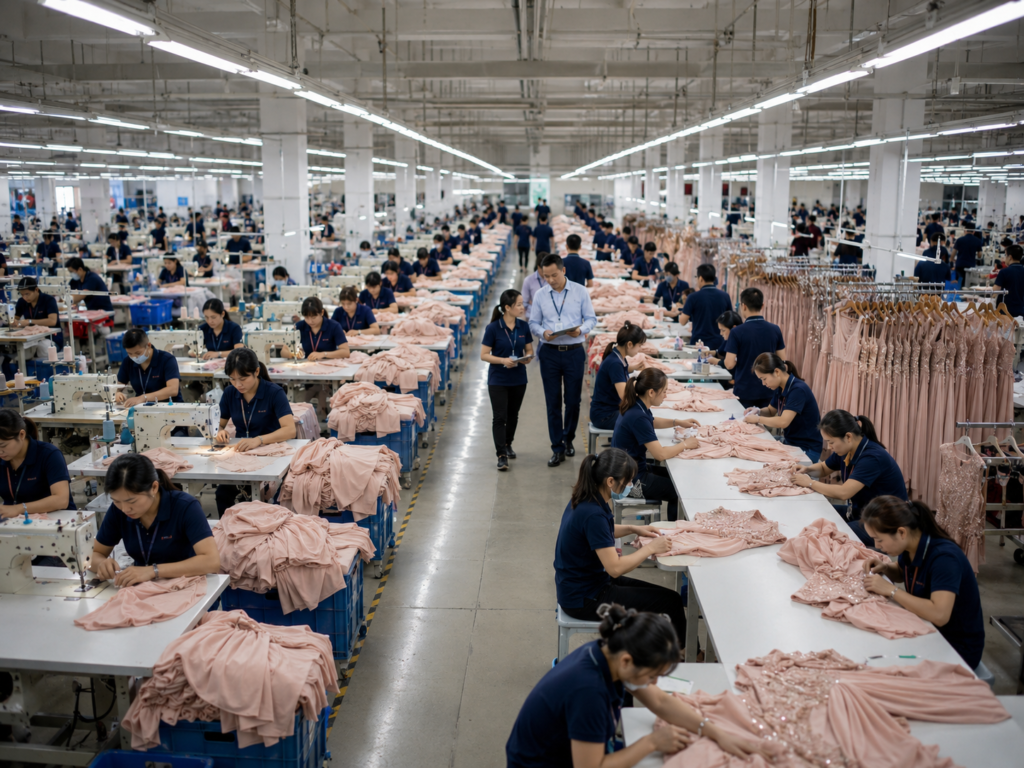
Bulk collection production needs scale, but scale only matters when production routes, garment complexity and QC standards are organized clearly. Duolan’s line structure supports both planned bulk and quicker launch response.
- 300 sewing production lines: Parallel production can support multiple approved styles when materials, PP samples and QC checkpoints are ready.
- 50+ quick-response lines: Trial runs, launch preparation, urgent replenishment and smaller collection segments can receive more flexible handling.
- 6,500,000 pieces stable monthly capacity: Planned bulk production can support larger collection programs and repeat delivery requirements.
- 10,000,000 pieces peak monthly capacity: Seasonal peaks can be supported when production planning, material readiness and factory allocation are prepared early.
- 1,000,000–2,000,000 pieces additional monthly capacity space: Extra capacity buffer helps manage changing launch plans, reorder pressure and production scaling.

Equipment and Process Support
Collection manufacturing depends on material preparation, cutting, sewing, printing, embroidery, pressing, inspection and packing. Duolan’s equipment base supports different garment types instead of relying on one narrow production method.
- 12,000–20,000 total equipment units: The wider manufacturing base covers fabric inspection, cutting, sampling, sewing, printing, embroidery, finishing, inspection and packing.
- 1,100–2,000 fabric inspection and cutting units: Fabric shrinkage, color, weight, spreading, cutting and numbering can be controlled before sewing begins.
- 650–1,200 pattern and sample equipment units: CAD pattern systems, plotting, sample machines and sample pressing support development-to-sample accuracy.
- 7,000–9,000 core sewing machines: Single needle, overlock, coverstitch, buttonhole, bartack, special machines and automatic template machines support varied womenswear structures.
- 150–400 printing equipment units: DTG, heat transfer, screen print, digital print and curing equipment support print-led collection directions.
- 150–300 embroidery equipment units: Flat embroidery, sequin embroidery, towel embroidery and laser-assisted embroidery support decorative collection styles.
- 1,000–1,800 finishing units: Pressing, drying, bonding, stain removal, steam ironing and garment shaping support final presentation before packing.
- 3,000–6,000 inspection, packing and handling units: Needle detection, measurement, folding, bagging, barcode printing, carton sealing and transport tools support delivery readiness.

Supply Chain and Material Support
A collection often combines several fabric types, trims and special processes.
Duolan’s surrounding supply chain helps match material, process and garment role more efficiently.
- Fabric factory resources: Satin, mesh, lace, chiffon, jersey, velvet, sequin and structured materials can be reviewed according to garment role and bulk availability.
- Trim and accessory resources: Zippers, linings, elastic, boning, hardware, labels, hangtags, barcodes, polybags and carton materials can be matched by style requirement.
- 2–3 mature partners for each key special process: Printing, dip dyeing, embroidery and washing resources can be selected according to collection mood, cost and timing.
- South China fabric market access: Mature fabric resources support faster material review, substitution and seasonal collection development.
- Humen trim market access: Concentrated trim and accessory resources support quicker matching for labels, hardware, zippers, elastic, decoration and packing details.
Sample-to-bulk Collection Control
A collection becomes commercially valuable when approved samples can move into coordinated bulk production. Duolan connects each style to its own standard while keeping the full program aligned.
| Control Point | What Gets Confirmed | Collection Value |
|---|---|---|
| Approved Samples | Final fit, fabric, construction, trims and finishing for each style | Prevents production from relying on vague visual references |
| BOM Locking | Fabric, lining, trims, labels, thread, hardware and packing items | Supports multi-style material control and purchasing accuracy |
| PP Samples | Production benchmark for each approved garment | Gives each production line a physical standard to follow |
| Production Notes | Process details, sensitive areas, size points and special requirements | Reduces confusion across multiple styles and production routes |
| QC Checkpoints | Fabric, cutting, first-piece, inline, final and packing checks | Protects each style while keeping collection-level quality aligned |
| Packing Standards | Hangtag, barcode, polybag, carton mark, ratio and folding | Supports warehouse receiving and channel-ready delivery |
| Reorder Records | BOM, PP sample, color reference, QC notes and production feedback | Supports future extensions, repeat styles and color updates |
QC for Fashion Collections
Quality control for a fashion collection must protect individual garments and the collection as a whole. Duolan checks materials, cutting, sewing, finishing, packing and overall consistency across all styles.
| QC Stage | What We Check | Collection Risk Controlled |
|---|---|---|
| Material QC | Fabric defects, color, shade bands, stretch, shrinkage, lining and trim consistency | Prevents material mismatch across styles and colors |
| Cutting QC | Fabric direction, panel balance, placement, numbering and size accuracy | Reduces fit variation and visual imbalance before sewing |
| First-piece QC | Measurements, construction, trims, lining, zipper and critical details | Confirms each style is understood before bulk continues |
| Inline QC | Seam quality, stitch tension, support points, trim position and workmanship | Catches production drift across different lines or factories |
| Final QC | Appearance, measurements, stains, defects, labels and finishing | Protects shipment quality across the full collection |
| Packing QC | Folding, barcode, hangtag, polybag, carton mark and ratio | Reduces receiving confusion for multi-style shipments |
| Consistency Check | Color rhythm, fabric mood, workmanship level and final presentation | Keeps the collection aligned as one branded product program |
Retail-ready Label and Packaging
A fashion collection must arrive organized for the brand’s selling channel. Duolan treats labels and packaging as part of collection delivery, not a final decoration step.
Main Label

Main labels should support brand identity without affecting comfort, fabric appearance or garment structure. Duolan reviews placement, size, attachment method, stitch visibility and skin-contact position across all styles. For a collection, label standards should remain consistent even when garments use different fabrics, linings or silhouettes.
Care Label

Care labels must follow brand and market requirements while respecting garment structure. Lightweight fabrics, mesh, satin, bodycon styles and lined garments may need different placement decisions. Duolan coordinates care label position, content and attachment so product information remains clear without weakening the wearing experience.
Hangtag

Hangtags connect product presentation with brand communication. Duolan follows requirements for tag position, string type, attachment point and packing relationship. For collection programs, hangtag execution should remain visually consistent across dresses, tops, sets and seasonal styles while protecting delicate fabrics and trims.
Barcode and SKU

Barcodes and SKU labels help warehouse, ecommerce and retail operations manage multi-style collections. Duolan coordinates barcode placement, size, SKU reference, color, size, carton relationship and packing ratio. Accuracy is especially important when one shipment includes many styles, colors and size groups.
Polybag and Folding

Polybag size and folding method influence arrival condition. Satin, sequin, pleated, structured and lightweight garments may need different protection. Duolan reviews folding, bag size, sticker placement and surface protection by garment type while keeping collection packing organized.
Carton and Ratio

Carton marks, size ratios, color ratios and packing lists help receiving teams process collection shipments accurately. Duolan follows brand packing instructions and coordinates carton information by style, color, size and quantity. Strong carton discipline reduces operational friction after delivery.
Launch Calendar and Delivery Planning
Fashion collections are tied to launch timing. Duolan helps brands back-plan development, sample review, PP approval, material booking, production and shipment from the target release window.
Launch Back-planning
The collection calendar begins with the desired launch date, then works backward through sample development, revision rounds, photo sample timing, PP approval, material purchase, cutting, sewing, QC, packing and shipment. Duolan reviews the calendar before development begins so key decisions are not left too close to production.
Sample Milestones
A collection may need first samples, fit samples, photo samples, salesman samples and PP samples at different moments. Duolan helps identify which samples must come first based on product role and risk. Hero styles, complex garments and uncertain fabrics often need earlier review so later bulk planning does not become compressed.
Material Timing
Fabric and trim timing can decide whether a collection launches on schedule. Duolan reviews lab dip, bulk fabric booking, lining, zipper, elastic, hardware, special process and packing materials against the launch calendar. When material decisions are delayed, production risk rises across the whole collection.
Launch Back-planning
The collection calendar begins with the desired launch date, then works backward through sample development, revision rounds, photo sample timing, PP approval, material purchase, cutting, sewing, QC, packing and shipment. Duolan reviews the calendar before development begins so key decisions are not left too close to production.
Sample Milestones
A collection may need first samples, fit samples, photo samples, salesman samples and PP samples at different moments. Duolan helps identify which samples must come first based on product role and risk. Hero styles, complex garments and uncertain fabrics often need earlier review so later bulk planning does not become compressed.
Material Timing
Fabric and trim timing can decide whether a collection launches on schedule. Duolan reviews lab dip, bulk fabric booking, lining, zipper, elastic, hardware, special process and packing materials against the launch calendar. When material decisions are delayed, production risk rises across the whole collection.
Delivery Coordination
Delivery planning includes final inspection, packing method, carton information, shipment preparation and brand receiving requirements. For multi-style launches, delivery is not only about ship date. It also involves organizing sizes, colors, product groups and packing ratios so the collection arrives ready for the intended channel.
Cost and Quantity Logic for Collections
Collection cost should be evaluated by style role, material strategy, construction complexity, color depth, sample path, production route and repeat potential. The percentages below are planning ranges for custom womenswear collections. Final quotation depends on approved fabric, trims, workmanship, quantity, colorways, size range, packing and delivery requirements.
| Cost Factor | Typical Price Share / Impact | Why It Changes | Duolan Control Focus |
|---|---|---|---|
| Main Fabric and Lining | 30%–55% of garment cost | Fabric quality, width, weight, composition, stretch, opacity, lining type, shrinkage and available stock all affect cost. Satin, lace, sequin, velvet and custom print usually raise the range. | Review fabric before sampling, compare production-ready alternatives, confirm bulk availability and avoid sample-only materials. |
| Sewing Labor and Construction | 18%–32% of garment cost | Corset structures, bodycon fits, mesh panels, cut-outs, linings, ruching, gathers, slit reinforcement and delicate seams increase sewing time. | Match garment complexity with suitable production lines, prepare process notes and confirm first-piece standards before bulk continues. |
| Special Process | 6%–25% of garment cost | Print, embroidery, sequin, beading, pleating, dyeing, washing, heat setting and surface treatment can change cost sharply by coverage area and process difficulty. | Use special processes only where they support product value, then confirm samples, process tests and bulk stability early. |
| Trims and Hardware | 4%–12% of garment cost | Zippers, boning, elastic, hooks, eyelets, straps, sliders, buttons, metal parts and decorative trims may carry separate minimums and lead times. | Lock trim specifications before PP approval and avoid late hardware changes that affect cost, fit or delivery. |
| Pattern, Sampling and Revision | 3%–8% of bulk program value | More styles, complex fit, new fabric testing, sample rounds, photo samples and PP samples increase development cost before bulk begins. | Prioritize risky styles first, group similar garments and reduce repeated revisions through clearer comments and sample records. |
| Colorways and Lab Dips | 1%–5% of program cost | More colors increase lab dips, dye approval, shade control, batch tracking and fabric booking complexity. | Separate core colors, seasonal colors and campaign colors before material approval to reduce color-related delays. |
| Size Range and Grading | 1%–4% of program cost | Wider size ranges require stronger pattern grading, measurement checking and fit review, especially for fitted or structured garments. | Confirm size logic, tolerance points and fit priorities before PP samples are approved. |
| QC, Pressing and Finishing | 3%–8% of garment cost | Delicate fabrics, fitted garments, sequin, satin, pleating, lining and special finishes require more inspection, pressing and final presentation control. | Connect QC checkpoints to material, cutting, first-piece, inline, final inspection and packing standards. |
| Labels and Retail Packing | 2%–6% of garment cost | Main labels, care labels, hangtags, barcodes, polybags, stickers, carton marks, folding and packing ratios affect final delivery cost. | Confirm packing rules before bulk completion so products arrive ready for ecommerce, retail or warehouse receiving. |
| Testing and Compliance Support | 1%–4% of program cost | Fiber content, colorfastness, shrinkage, seam strength, nickel, flammability, restricted substances or brand-specific testing may be required. | Prepare material and garment information early so testing or inspection needs do not delay shipment. |
| Cutting Yield and Wastage | 3%–10% of material cost | Fabric width, print placement, nap direction, lace scallop, sequin layout and long dress panels can increase material loss. | Review marker efficiency, print placement and cutting direction before bulk fabric consumption is finalized. |
| Order Quantity and Line Efficiency | 5%–18% unit price movement | Higher quantities can improve cutting, sewing and packing efficiency. Very fragmented orders with many styles, colors or sizes reduce efficiency. | Plan collection roles clearly, group compatible styles and separate core production from high-complexity statement garments. |
Compliance and Supplier Evaluation
Established fashion brands evaluate a collection manufacturer through more than sample quality. Social audit records, quality control discipline, testing coordination, material requirements, label execution, packing accuracy and inspection readiness all influence supplier approval.
Duolan supports formal evaluation with SMETA audit records, project-based QC control, testing coordination and brand-specific production standards. For collection programs, compliance should connect directly to development, bulk production, packing and delivery rather than sitting as a separate certificate display.
- SMETA audit records support structured vendor review for established fashion brand sourcing teams.
- BSCI, ISO 9001 and client standards can guide project-specific compliance preparation discussions.
- AATCC, ASTM, EN and GB testing needs are reviewed before production planning.
- OEKO-TEX® or GOTS material requirements can be coordinated when programs require certified fabrics.
- Label, packaging and carton instructions are aligned with brand receiving requirements early.
- Third-party inspection preparation covers samples, measurements, packing ratios and final shipment readiness.
- QC records connect fabric, cutting, sewing, finishing and packing checkpoints across styles.
- Supplier evaluation materials can support sourcing offices during formal onboarding review cycles.

Anonymous Collection Project Evidence
Duolan respects brand confidentiality, so collection experience is presented through anonymized project patterns. Before publication, internal teams should confirm exact figures against real project records. The following format keeps evidence specific, country-based and credible without exposing brand names or confidential styles.
United States|Occasion Dress Program

A US occasionwear program focused on wedding guest, cocktail and graduation dress directions. The brief covered a multi-style launch with polished fabrics, refined fit and channel-ready packing.
Project data
- Region: United States
- Program type: Occasion dress collection
- Style scope: 18–24 dress directions reviewed
- Sample focus: First samples, fit samples, photo samples and PP samples
- Size range: XS–XL or brand-defined standard sizing
Key controls
- Style role mapping: Dresses were grouped into hero styles, commercial core styles and repeatable silhouettes before sample priority was confirmed.
- Fabric review: Satin, chiffon, lace and stretch options were checked for drape, opacity, lining compatibility and final presentation.
- Fit focus: Bust balance, waist position, zipper stability, lining length and hem level were reviewed before PP approval.
- Bulk handover: Approved samples were connected to BOM, PP standards, production notes, QC checkpoints and packing instructions.
Australia|Partywear Drop

An Australian partywear drop required high visual impact across fitted, mesh, cut-out and shine-focused styles. Production planning focused on wearability, stretch control and consistency across several statement garments.
Project data
- Region: Australia
- Program type: Partywear and going-out collection
- Style scope: 12–16 fitted or event-driven styles
- Fabric groups: Stretch jersey, mesh, sequin and satin-touch materials
- Main risks: Recovery, coverage, lining, edge finish and packing protection
Key controls
- Stretch review: Fabric recovery, negative ease, side seam balance and lining compatibility were checked before grading.
- Mesh coverage: Transparent areas were mapped against lining placement, skin exposure, comfort and brand presentation.
- Sequin handling: Edge cleaning, inner lining, zipper position and carton protection were reviewed for high-friction garments.
- First-piece checks: Critical measurements, support points, seams and trims were confirmed before larger production continued.
United Kingdom|Going-out Dress Line

A UK going-out line centered on short dresses, halter shapes, ruched bodycon styles and polished evening colors. The project required a clear link between visual energy and production-ready fit.
Project data
- Region: United Kingdom
- Program type: Going-out dress line
- Style scope: 10–14 styles across mini, bodycon and halter shapes
- Fit focus: Bust support, waist shaping, side seam balance and strap tension
- Sample stages: Fit sample, revised sample and PP sample confirmation
Key controls
- Mini dress proportion: Length, lining, movement comfort and hem safety were reviewed to protect wear confidence.
- Ruched construction: Ruching position, amount, seam tension and size scaling were recorded for bulk consistency.
- Halter stability: Neck strap load, bust support and back opening balance were checked through fit review.
- Color control: Dark evening tones were reviewed across fabric batches to reduce visible shade difference.
France|Contemporary Dress Capsule

A French contemporary capsule focused on refined midi dresses, satin finishes and softer occasion styling. The program required clean finishing, controlled drape and understated garment polish.
Project data
- Region: France
- Program type: Contemporary dress capsule
- Style scope: 8–12 refined dress styles
- Main fabrics: Satin, soft woven, lined lightweight materials
- Key standard: Drape, seam smoothness, pressing and retail presentation
Key controls
- Satin behavior: Seam puckering, surface marks, pressing temperature and packing creases were reviewed before bulk.
- Midi balance: Waist position, skirt fall, slit height and hem level were checked across sample and PP stages.
- Interior finish: Lining attachment, side seams, zipper inside and hem finishing were reviewed for clean wearing experience.
- Presentation standard: Final pressing, hanging review, folding and polybag method were aligned with garment surface sensitivity.
Custom Fashion Collection FAQ
Fashion collection manufacturing involves style roles, fabric planning, sampling, PP standards, bulk production, QC, packing and delivery. These questions help brand teams understand how Duolan supports collection-level programs instead of single-style production.
A custom fashion collection manufacturer helps a brand develop and produce a group of garments built around a defined direction, product role, fabric plan, color story and launch calendar. Duolan supports dress-focused womenswear collections from brief review and sample development to PP approval, bulk production, QC, packing and repeat records. The focus is coordinated collection execution, not isolated garment sewing.
Single-style production focuses on one garment. Collection manufacturing manages several garments with shared brand direction, fabric logic, color rhythm, sample sequence and delivery timing. Duolan reviews how styles relate to each other, which garments need priority sampling, which materials should be grouped and how bulk production should be organized so the collection arrives as a coherent program.
Yes. Duolan supports seasonal womenswear collections, capsule drops and dress-centered product programs for established brands. The strongest fit includes fashion dresses, occasion dresses, partywear, vacation dresses, going-out styles, fashion sets, refined tops and structured garments. Development can begin from collection briefs, moodboards, reference styles, fabric direction and launch calendars.
Useful information includes a collection brief, moodboard, reference styles, product categories, target market, fabric direction, color palette, size range, target quantity, launch timing and channel requirements. Tech packs, original samples and previous production notes are also valuable. Clearer information allows Duolan to review sample priority, material needs, production route, costing logic and delivery planning more accurately.
Yes. Duolan can manage multi-style sampling through style grouping and sample priority planning. Hero styles, complex garments, uncertain fabrics and commercial core pieces may require different sample paths. Duolan organizes first samples, fit samples, revised samples, photo samples and PP samples so several garments can move forward without losing collection coherence or production readiness.
Duolan reviews fabric mood, material availability, lab dip requirements, shade bands, color-to-style allocation and bulk fabric records. For collections using multiple fabrics, we check whether satin, mesh, lace, jersey, chiffon, sequin or printed fabrics can work together visually and operationally. Color and fabric control helps the full collection feel aligned after production.
Yes, once approved samples become production standards. Duolan connects each approved style to BOM records, material locking, PP samples, production notes, QC checkpoints and packing requirements. Sample approval alone is not enough. Each garment must be translated into a clear production reference before bulk cutting, sewing, finishing and shipment.
Duolan reviews launch timing by working backward from the target release date. Key stages include collection brief review, fabric sourcing, first samples, revisions, photo or salesman samples, PP approval, material booking, bulk production, QC, packing and shipment. Calendar planning is especially important when several styles, fabrics and sample stages move together.
Yes. Duolan can follow brand requirements for main labels, care labels, size labels, hangtags, barcodes, polybags, folding, carton marks and packing ratios. For collection shipments, packing accuracy matters because several styles, colors and sizes may be delivered together. Strong packing standards support channel receiving and product presentation.
A brand can send a collection brief, product categories, style count, moodboard, reference images, fabric direction, color palette, target quantity, size range and launch date. Duolan will review the collection from a development and manufacturing perspective, including sample path, fabric feasibility, production route, QC focus, packing needs and delivery planning.

Send Your Fashion Collection Brief
Duolan works best with established womenswear brands, product teams, sourcing offices and multi-brand groups that need collection-level development and manufacturing. If your brand has a seasonal direction, capsule plan, dress program, partywear drop, resort collection or multi-style womenswear launch, our team can review how the program may move from collection brief to samples, PP standards, bulk production, QC and delivery.
You can submit a complete collection brief or an early development package with reference styles, moodboards, fabric direction, color palette, target quantity, size range and launch timing. Duolan will review product roles, sample priority, fabric feasibility, fit risk, production route, packing needs and repeat potential before recommending the next step.
Share Your Collection
- Collection type: occasion, partywear, resort, going-out, contemporary dress or fashion set program.
- Number of styles, product categories, launch timing and target quantity.
- Moodboard, reference images, fabric direction, color palette and size range.
Useful Project Details
- Sample purpose: concept, fit, photo, salesman, PP or bulk reference.
- Fabric, trim, special process, label, barcode, polybag and carton requirements.
- Current stage: collection planning, sample development, revision, PP approval or bulk production.
Duolan Will Review
Collection structure, style roles and sample priority.
Fabric, fit, construction and production feasibility.
Bulk readiness, QC focus, packing plan and repeat delivery potential.

