 Skip to content
Custom Feather Trim Dress Manufacturer
- 6 trim variables reviewed: length, density, direction, color, base coverage and attachment
- 6 core placement areas: cuffs, hem, neckline, bust edge, sleeves and slits
- Structured support for 10–30 style programs and 20,000–80,000-piece brand orders
- Sampling, PP approval, bulk readiness, production, QC and protective packaging managed in one development path
Built for Established Fashion and Occasionwear Brands
Fashion Dress Brands
- Translating design references into production-ready specifications
- Balancing feather volume with a commercial silhouette
- Coordinating color, fabric handfeel and trim character
- Preparing style standards for launch orders and repeat production
- Maintaining visual consistency across sizes and colorways
Occasionwear Product Teams
Occasionwear programs depend on photography, movement, event suitability and strong surface finishing. Feather placement must enhance the garment without reducing comfort, mobility or retail presentation.
Duolan supports product teams developing holiday party, cocktail, birthday, homecoming, graduation, wedding guest and social-event dresses. Development discussions can cover the role of each style, visual strength, wearability, fitting priority, fabric direction, trim density and packaging method. Photo-ready samples, fit samples and production samples can be managed as separate approval stages when a collection calendar requires different sample purposes.
Procurement and Sourcing Teams
Procurement teams require production evidence, documentation discipline, transparent timelines and control points extending beyond one successful sample. Feather-trim projects add material availability, color variation, handwork, packing recovery and bulk replication risks.
Duolan organizes projects around approved materials, measurement specifications, workmanship references, PP standards, production readiness and QC checkpoints. Multi-style orders can be separated by construction risk, trim complexity, delivery priority and production route. Formal communication can cover quotations, BOM details, sample comments, critical measurements, packaging requirements and shipment preparation.
Risks to Control Before Feather Dress Production
A feather dress can appear visually simple while combining material, fit, attachment, comfort and packing risks. Early identification prevents attractive samples from becoming unstable bulk programs.
| Project Stage | Main Risk | Commercial Impact | Duolan Control Direction |
|---|---|---|---|
| Design Review | Feather volume overwhelms the silhouette | Style appears costume-like or loses brand balance | Review placement scale, garment proportion and target occasion |
| Material Sourcing | Feather shade, density or base tape varies | Sample and bulk appearance become inconsistent | Confirm trim specification, reference swatch and acceptable variation |
| Pattern Development | Placement line changes after fit correction | Feather quantity, balance and position shift | Finalize key measurements before locking trim length |
| Sample Making | Base tape remains visible | Garment looks unfinished at close range | Test seam insertion, concealed backing or covered attachment |
| Wear Testing | Trim rubs against skin or limits movement | Poor comfort and higher return risk | Review lining, backing softness, cuff ease and neckline contact |
| Bulk Production | Attachment density changes between operators | Uneven appearance across garments | Use approved first piece, density reference and inline inspection |
| Color Production | Feather and body fabric react differently to dye | Shade mismatch under daylight or studio lighting | Approve fabric and trim together under controlled lighting |
| Packing | Feather becomes crushed or distorted | Poor warehouse and unboxing presentation | Define fold direction, protection layer, carton pressure and recovery method |
| Repeat Orders | Original trim lot becomes unavailable | Reorder fails to match the first production | Preserve specification, approved sample and alternative sourcing path |
What Defines Professional Feather Dress Manufacturing
Feather Specification Must Become a Production Standard
- What physical reference controls bulk purchasing?
- Which visible variations are acceptable?
- Which features are critical to the design?
- What alternative can protect repeat production if the first source changes?
Garment Structure Must Support the Decoration
Feather placement changes visual weight. A fitted mini dress with a heavy hem can appear shorter and wider than the same pattern without decoration. Large cuffs can draw attention away from the waistline. Feather around a neckline can interfere with bust shaping, straps, jewelry and skin comfort.
Pattern development should therefore consider decoration before the garment shape is finalized. Important decisions include:
- Whether the hem circumference supports the intended fullness
- Whether sleeve openings require additional stability
- Whether an invisible zipper remains accessible
- Whether the trim overlaps a slit, seam or closure
- Whether structured bodices need internal reinforcement
- Whether stretch fabrics require a non-stretch attachment base
- Whether detachable construction is better for cleaning or packing
The body garment should first hold the intended silhouette, balance and fit. Decoration can then reinforce the design instead of hiding an unresolved pattern problem. For corset, strapless, blazer and bodycon styles, internal structure often matters as much as the visible trim.
Sample Quality Must Be Transferable to Bulk
A beautiful sample can still be unsuitable for production. Sample-room hand placement may take far longer than a bulk line can repeat. A limited trim swatch may differ from available production material. A temporary attachment may look acceptable in photographs but fail during wear or packing.
Production-ready development requires the sample team to record how the approved result was achieved. Relevant information includes:
- Final pattern version
- Feather specification and approved source
- Placement start and end points
- Attachment stitch or seam method
- Density and direction reference
- Lining and backing treatment
- Critical measurements
- Packing and recovery instruction
Before bulk release, Duolan reviews whether the sample is fit confirmed, visually approved, suitable as a PP basis or still pending refinement. Unresolved decorative details should not move directly into high-volume production.

Custom Feather Trim Dress Styles We Develop

Feather Cuff Dresses
- Keep left and right density visually balanced
- Confirm whether trim sits outside, inside or within the cuff seam
- Prevent backing tape from scratching the wrist
- Preserve enough sleeve opening for movement and dressing
- Check trim contact with handbags, jewelry and table surfaces
- Define packing protection to avoid bent feather tips

Feather Hem Mini Dresses
A feather hem can turn a clean mini silhouette into a strong party or holiday product. Hem circumference directly affects trim usage, fullness, weight and visual scale.
Development should confirm:
- Finished dress length before trim
- Visual length after feather extension
- Front and back hem balance
- Side seam joining position
- Coverage of the backing tape
- Walking clearance and sitting comfort
- Packing fold direction
Fitted designs require special care because body stretch can alter the hem line. Woven A-line or trapeze silhouettes offer different movement and volume. A physical trim sample placed around the actual hem circumference gives a more reliable result than reviewing a short loose swatch.

Feather Blazer Dresses
Feather blazer dresses combine tailored structure with party-focused decoration. The strongest versions preserve clean lapels, shoulders, waist shaping and closure alignment while using feathers at cuffs, hem or selected edges.
Production control should cover:
- Lapel roll and front balance
- Shoulder shape and sleeve pitch
- Button or concealed closure position
- Sleeve cuff symmetry
- Hem stability
- Internal facing and lining
- Trim attachment without distorting tailoring
A blazer dress often requires more pressing and shape retention than a soft party dress. Feather should be attached after critical tailoring stages where possible, reducing damage during repeated handling and pressing.

Feather Bodycon Dresses
Bodycon dresses rely on controlled negative ease, recovery and line continuity. Feather attachment introduces a non-stretch or limited-stretch element, so placement cannot be treated like ordinary surface decoration.Important decisions include:
- Stretch direction of the body fabric
- Stabilization behind the attachment line
- Placement behavior across different sizes
- Hem recovery after wear
- Zipper or pull-on construction
- Lining stretch compatibility
- Comfort where backing touches the body
For bandage, ponte, stretch crepe or mesh-layered styles, an approved sample should be checked both on a form and during movement. A visually clean static sample may behave differently when worn.

Feather Sequin Dresses
- Sequin removal from seam allowances
- Feather backing placed over a clean attachment area
- Internal protection from exposed sequin edges
- Combined garment weight
- Surface damage during sewing
- Feather contamination from loose sequins
- Packing pressure on two delicate materials

Feather Satin Dresses
- Whether satin has enough body for the selected placement
- Needle marking and seam impression
- Pressing temperature and surface protection
- Color matching under daylight and warm light
- Lining to control transparency and static
- Trim attachment without puckering
- Recovery after folded transportation

Feather Strapless Dresses
Strapless feather dresses require secure bust support before decoration is considered. Feather placed around the neckline can increase visual weight and may affect grip, coverage and comfort.
Development priorities include:
- Cup position and bust shape
- Internal grip or support
- Boning direction where required
- Neckline stability
- Feather distance from skin
- Zipper and closure strength
- Movement testing
- Size grading across bust measurements
A strapless design should remain stable without relying on feathers to conceal fit issues. Decoration is added after the support structure and neckline position are approved.

Feather Cocktail Dresses
Cocktail styles require a refined balance between impact and wearability. Feather may be limited to cuffs, a hem edge, asymmetric neckline, shoulder accent or removable detail.
Collection planning can vary the same design language across:
- Mini and midi lengths
- Sleeveless and long-sleeve versions
- Fitted and softly shaped silhouettes
- Tonal and contrast colors
- Clean and embellished body fabrics
- Fixed and detachable trim
A controlled feather detail can help several dresses share one collection identity without making every piece equally complex or costly.
Feather Placement Options and Construction Decisions

Cuff Placement

Hemline Placement

Neckline Placement
Neckline feathers sit close to the face and skin, making softness, direction and backing coverage critical. Trim should not interfere with the zipper, hook, button or strap position.
Front and back density may differ depending on the design, but any variation must be intentional. Makeup contact, jewelry friction and neckline stretch should also be considered during wear testing.

Bust Edge Placement

Shoulder Placement
Shoulder feather creates volume near the face and can support campaign-led styles. Weight must be balanced to avoid collapsing a soft shoulder line.
Structured shoulders may need internal support, while delicate mesh or satin may need a backing panel. Trim direction should frame the neck without covering the face. Left-right matching becomes especially visible in front photography.

Sleeve Placement
Full sleeve-edge or panel placement creates strong movement but increases handling risk during sewing and packing.
Designers should decide whether feathers run along one seam, surround the sleeve or sit on a separate panel. Attachment must account for elbow movement, sleeve twist and lining. Garment construction should minimize repeated machine handling after feathers are attached.

Slit Edge Placement
Feather along a slit draws attention to movement and leg exposure. The slit opening must remain stable, and the decoration should not catch between the legs or pull the seam.
Placement begins only after slit height, overlap and reinforcement are approved. A lighter density often performs better than a heavy trim. Wear testing should include walking, sitting and turning.

Detachable Placement
Feather Trim Specifications to Confirm Before Sampling
Length, Fullness and Visual Density
- Approximate visible length range
- Fullness viewed from front, side and back
- Density around curved and straight edges
- Direction of feather lay
- Acceptable natural variation
- Required coverage of the base tape
- Visual effect under movement
Backing Width and Attachment Base
The backing tape or stitched base determines how the trim connects to the garment. A wide base may support heavier fullness but can become visible, stiff or uncomfortable. A narrow base can be easier to conceal but may provide less stability.
Construction review should determine whether the base will be:
- Enclosed within a seam
- Covered by a facing
- Topstitched onto a stable panel
- Reinforced with a backing strip
- Attached to a detachable band
- Partially hand secured at stress points
Curved hems, stretch fabrics and narrow cuffs need different backing solutions. The sample should show both the exterior result and the interior finish. Close-up approval is essential because a full-body photograph may hide exposed tape, uneven stitching or bulky joins.
Color, Direction and Batch Character
Feather and body fabric rarely reflect light in the same way. Even a technically similar shade can look different because one surface is matte, translucent or multi-directional while the other is smooth and reflective. Color approval should compare:
- Body fabric
- Feather trim
- Lining
- Thread
- Zipper tape
- Main labels or visible trims
Review should take place under daylight-equivalent light and the lighting most relevant to the brand’s imagery. For satin or sequin garments, warm and cool light may create larger apparent differences. The approved trim should also capture feather direction and batch character. Natural variation may affect curl, tip shape and local density. Production control should define which variation remains acceptable and which variation requires sorting or replacement.
Material Source and Documentation
Material selection should consider visual effect, availability, repeatability, care requirements and destination-market documentation. Natural feather, processed feather and synthetic feather-effect trims can differ in appearance, sourcing cycle, declarations and maintenance. Before final commitment, Duolan can coordinate a material review covering:
- Supplier description
- Composition or available material statement
- Color and finish
- Minimum material quantity
- Production availability
- Repeat-order continuity
- Care guidance
- Available supporting documents
- Destination-market requirements supplied by the brand
No single declaration applies automatically to every material or market. Required testing, import documentation and labeling should be confirmed with the nominated trim source and the brand’s compliance team.
Dress Fabrics Matched to Feather Trim Effects

Satin
Satin suits evening, cocktail, holiday and occasion styles where sheen and feather softness create contrast. Medium-weight satin supports structured minis and corset shapes, while lighter satin suits draped or fluid designs. Development must control needle marking, seam impression, pressing shine, puckering and color matching. Feather attachment should avoid pulling the surface. Lining often improves opacity, comfort and shape retention.

Stretch Crepe
Stretch crepe supports fitted silhouettes with a cleaner, less reflective surface. Its recovery helps bodycon dresses retain shape, but feather attachment can restrict stretch if applied without stabilization. Placement lines should be tested in the main stretch direction. Cuffs, hems and neckline areas may require backing or a controlled non-stretch edge. Crepe also works well for tonal party dresses requiring a refined rather than high-shine finish.

Velvet
Velvet creates rich holiday and evening effects, especially with tonal or contrast feather cuffs and hems. Pile direction must remain consistent across cut panels. Pressing, handling and seam crushing require care. Feather attachment should not flatten adjacent velvet or create visible stitch marks. Velvet and feather together also increase packing volume, so garment protection and carton pressure should be reviewed before production release.

Mesh
Mesh supports illusion panels, layered bodycon dresses and corset-inspired designs. Feather cannot usually be attached directly to a highly delicate or open mesh edge without reinforcement. A binding, facing, stable lining or concealed support panel may be required. Transparency, stretch, seam strength and skin contact should be reviewed together. Feather may also help frame an illusion area, but it should not hide weak construction.
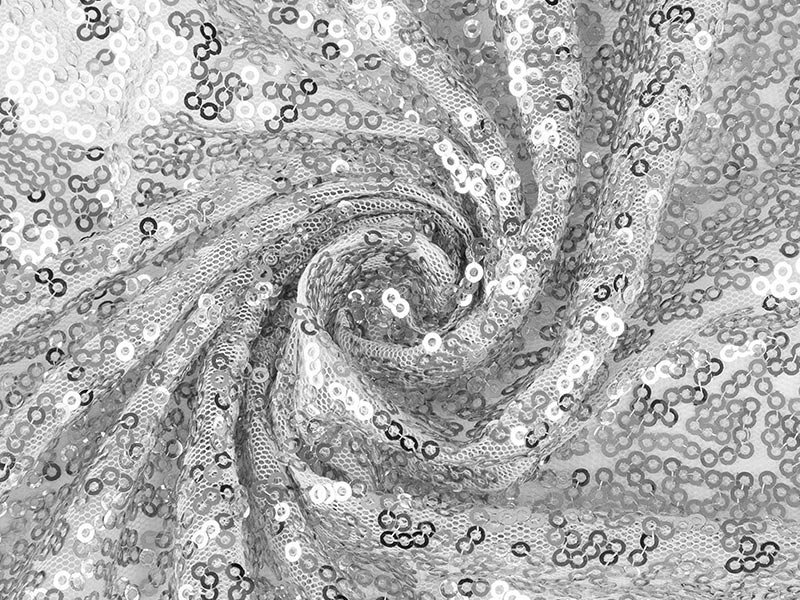
Sequin Fabric
Sequin fabric delivers strong party-season impact but increases garment weight, surface friction and seam complexity. Sequin removal around attachment lines helps create a flatter base for feather trim. Loose or cut sequin edges should be controlled inside the garment. Lining, zipper installation and feather attachment sequence must be planned before bulk. Final packing should prevent feathers from catching against exposed sequins.

Woven Suiting
Woven suiting is suited to feather blazer dresses, structured minis and tailored occasion pieces. Stable construction supports clean cuffs and hems, while interfacing and lining help preserve form. Fabric thickness must still be considered at seam-enclosed trim areas, where multiple layers can become bulky. Tailoring stages, pressing and feather attachment should be sequenced to protect both structure and decoration.

Bandage Knit
Bandage knit creates firm body-contouring shapes but places high tension on seams and openings. Feather trim should not interrupt required stretch or pull the hem downward. A reinforced application area may be needed. Size grading must account for changing body tension, not just flat measurements. Wear testing should review recovery, attachment stability and visual balance after movement.

Chiffon and Layered Fabrics
Chiffon and layered fabrics create soft occasion silhouettes but may not support dense feather trim without an internal stable layer. Feather can work at cuffs, selected hems or detachable areas when weight remains controlled. A narrow attachment band concealed between layers can provide a cleaner result than applying trim directly to a delicate outer layer.
Coordinating Feather, Fabric and Lining Colors
Tonal Color Matching
Tonal feather dresses may use several related shades rather than one laboratory-identical shade. Satin reflects light strongly, velvet absorbs light, mesh reveals the lining, and feathers produce highlights through movement.
Color approval should compare all visible components together:
- Main fabric
- Feather trim
- Lining
- Thread
- Zipper
- Labels or edge trims
A physical approval board gives production teams a clearer reference than separate digital images. When an exact visual match is not technically achievable, the brand can approve a controlled tonal relationship before sampling.
Contrast Color Planning
Contrast feather can strengthen a collection signature, especially on black-and-white, jewel-tone, metallic or holiday palettes. The contrast should support garment proportion and brand direction.
Development review should consider:
- Whether feather becomes the dominant visual element
- Whether the trim color repeats elsewhere in the collection
- Whether backing tape remains concealed
- Whether lining or thread becomes visible
- Whether the chosen shade photographs accurately
- Whether production material remains available for reorder
Contrast programs benefit from early material booking because an unavailable trim can affect several connected styles.
Bulk Shade Approval
Bulk fabric and trim should be checked against approved references before cutting and attachment. One approval should not be assumed to cover later lots or repeat orders.
A controlled process may include:
- Lab dip or bulk fabric approval
- Trim lot review
- Side-by-side daylight comparison
- Internal lighting review
- Photograph under agreed conditions
- Recording of approved variation
- Isolation of visibly different lots
For multi-color programs, each colorway needs its own reference. A black sample cannot establish the acceptable appearance of ivory, blush, red or pale blue materials.
Designing Dress Structure Around Feather Trim
Silhouette Balance Comes Before Decoration
Feather creates optical volume. A wide hem looks fuller, a large cuff enlarges the lower sleeve, and neckline trim can make the upper body appear broader. Pattern and trim decisions should therefore be made together. For fitted minis, Duolan reviews whether the feather extension changes the intended dress length or covers the narrowest part of the leg. For A-line and trapeze shapes, trim distribution must follow the full hem curve without creating sparse zones. For midi dresses, feather may require reduced density to maintain proportion.
The silhouette review can examine:
- Body length before and after trim
- Hem circumference
- Sleeve length and cuff scale
- Waist position
- Bust-to-waist proportion
- Shoulder balance
- Side-view volume
- Movement during walking and turning
A feather dress should still read clearly when the trim is temporarily covered. Strong underlying structure produces a more convincing finished result.
Internal Support Protects the Outer Result
Corset, strapless, bustier and structured party dresses require support systems adapted to the chosen fabric and neckline. Possible components include lining, interfacing, cups, grip, boning, waist support and stable seam placement. Feather around the bust or neckline should never substitute for structural control. If the neckline moves, trim position also moves. If the cup shape collapses, feather may exaggerate the imbalance. Development should confirm:
- Intended bust shape
- Coverage level
- Cup position
- Waist balance
- Boning or support direction
- Zipper and closure strength
- Neckline grip
- Lining tension
- Feather clearance from skin
Larger size grading may require structural adjustment rather than simple pattern enlargement. The approved design should preserve support, comfort and feather placement across the selected size range.
Closure and Seam Access Must Remain Functional
Feather can obstruct invisible zippers, buttons, hooks, slits and seam openings when placement is not planned. Production teams also need enough access to sew, press, inspect and repair the garment before decoration blocks the area. Key decisions include:
- Distance between feather and zipper teeth
- Clear hand access to hooks or buttons
- Placement of trim joints
- Whether side seams remain serviceable
- Whether feather crosses a slit opening
- Whether lining can be closed after trim attachment
- Whether repair access is possible
- Which operation should occur last
For detachable styles, connection points must stay hidden yet reachable. For fixed trim, the operation sequence should protect feather from excessive machine handling and pressing.
Production Feasibility Shapes Better Design
Some visual ideas are achievable for one presentation sample but difficult to repeat consistently across thousands of garments. Feasibility review does not weaken creativity; it identifies a route able to preserve the intended effect. Possible development decisions include:
- Reducing feather density at high-friction areas
- Moving a joint to a side seam
- Adding a stable backing
- Separating decoration into panels
- Changing a full-circle application to a controlled section
- Using detachable trim for packing or care
- Adjusting body fabric weight
- Simplifying hidden construction without changing appearance
Duolan reviews fabric behavior, pattern balance, attachment access, handwork requirements, material continuity and inspection difficulty before recommending a production route.
Comfort, Lining and Skin-Contact Decisions
Soft Interior Backing
Backing tape, stitching and cut trim ends should not rub directly against sensitive areas. A facing, binding, lining extension or soft cover may be used according to the construction. Interior photographs should form part of sample approval, especially around cuffs, neckline and bust edges.
Lining Coverage
Lining controls opacity, seam comfort, static and internal cleanliness. Feather dresses combining mesh, sequins or structured bodices may need different lining materials in separate zones. Lining should support the garment without pulling the shell or changing the approved silhouette.
Neckline Comfort
Neckline trim sits near the face, collarbone and shoulders. Softness, direction and distance from skin should be checked during movement. Feather should not obstruct fastenings or shift into the face. Strapless and halter designs require additional wear testing because neckline tension changes during use.
Cuff Mobility
Large cuffs may interfere with hand movement, dining, handbags or jewelry. Sleeve opening, trim length and feather direction should be tested with the arm bent and extended. A dramatic cuff can remain functional when the base opening and application angle are engineered correctly.
Hem Mobility
Feather at a fitted hem can restrict stride or catch during sitting. Feather at a flared hem can move between the legs if excessively long. Walking, stairs, sitting and turning should be reviewed. Dress length and feather extension should be recorded separately.
Combined Embellishment Comfort
Sequins, rhinestones, beads and feather can create several internal friction points. Edge cleaning, seam allowance control, lining and backing should work as one comfort system. Heavy decoration should also be checked for weight distribution across shoulders, waist or bust.
Feather Attachment Methods for Stable Production

Seam-Enclosed Feather Tape
Enclosing the backing within a seam produces a clean exterior and can hide much of the attachment base. The method suits selected cuffs, hems, facings and panel edges where the construction sequence allows insertion. Development must control:
- Seam thickness
- Feather direction
- Tape position
- Stitch distance
- Joint location
- Feather caught inside the seam
- Final pressing access
The trim should be prepared so feather fibers remain clear of the sewing path. For curved edges, clipping, easing or sectional preparation may be required. A trial panel helps determine whether the selected backing can turn cleanly without stiffness or puckering.

Topstitched and Covered Attachment
Topstitch attachment can suit stable woven fabrics, structured panels and areas where the backing is later covered by a facing, binding or decorative layer. Stitching must remain straight and consistent, particularly on satin or other surfaces where needle marks are visible.
Control points include:
- Backing alignment
- Stitch spacing
- Thread selection
- Tension
- Edge coverage
- Reinforcement at ends
- Interior protection
A topstitched method should not be chosen only because it is faster. Exterior appearance, durability, repair access and skin contact determine whether it is appropriate.

Reinforced Stretch Attachment
Stretch fabrics need a stable plan at the decoration line. Directly fixing a non-stretch trim to a highly elastic hem can restrict wear, create rippling or break stitches.
Possible solutions include:
- Stabilized seam allowance
- Controlled elastic recovery
- Separate attachment band
- Stretch-compatible backing
- Sectional placement
- Reduced density
- Opening or zipper adjustment
The sample should be assessed both relaxed and worn. Measurements after stretch and recovery help confirm whether the attachment remains flat. Grading also needs review because tension changes across sizes.

Detachable and Hand-Reinforced Details
Detachable construction supports care, styling and transport, while selective hand reinforcement can secure joints, corners and high-stress points. Neither method should depend on undocumented individual workmanship. For detachable trim, the standard should define:
- Connection type
- Spacing
- Orientation
- Left and right identification
- Spare component policy
- Packing position
- Reattachment instruction
For hand-reinforced areas, stitch count, thread, location and visual reference should be documented. Bulk consistency comes from repeatable standards, even when handwork is involved.
Combining Feather Trim with Fashion Embellishments
Feather and Sequins
Sequins create reflected light while feather creates movement. The combination works strongly for holiday, birthday and evening styles.
Production priorities:
- Clear sequins from seam and attachment allowances
- Protect the skin from cut sequin edges
- Stabilize the feather base
- Limit unnecessary garment handling after attachment
- Inspect loose sequins and damaged feather separately
- Use packing layers preventing materials from catching
Feather and Rhinestones
Rhinestones add concentrated shine and can frame a neckline, waist or bodice near feather details. Heat application, adhesive curing and feather sensitivity must be separated in the production sequence.
Production priorities:
- Complete heat processes before feather attachment
- Check stone placement against trim coverage
- Control garment weight
- Test interior backing
- Inspect missing stones and feather density independently
- Protect raised surfaces during packing
Feather and Beading
Beading offers a more textured premium effect but increases handwork, weight and snagging risk. Beads should not rub directly against feather bases or create sharp interior points.
Production priorities:
- Reinforce bead areas
- Separate bead and feather operation zones
- Review garment balance
- Cover internal threads
- Confirm repair standard
- Use packing barriers between decorated surfaces
Feather and Mesh
Mesh can create illusion or layered effects beside feather edges. Delicate mesh usually needs a stable support where trim is attached.
Production priorities:
- Confirm transparency level
- Add backing where required
- Protect the mesh from trim tape abrasion
- Control stretch
- Review neckline or cut-out security
- Inspect holes, runs and attachment tension
Feather and Satin
Satin and feather depend on controlled surface quality. Heavy trim can pull satin, while repeated sewing can leave needle marks.
Production priorities:
- Select suitable satin weight
- Test seam puckering
- Protect surface during handling
- Approve tonal color under multiple lights
- Attach feather after major pressing stages
- Define packing recovery method
Feather and Corsetry
Corset-inspired dresses combine visual trim with internal engineering. Feather may sit along the neckline, hem or detachable sleeve area.
Production priorities:
- Lock cup and bust shape first
- Confirm boning and waist support
- Protect skin from internal construction
- Keep feather away from closure function
- Test movement and grip
- Grade support and placement together
What to Send for Feather Dress Development
Tech Pack and Drawings
Provide front, back and detail views, measurement specifications, construction notes and colorways. Feather placement should be marked clearly, including full-circle, partial, fixed or detachable applications. Close-up sketches help define hidden backing and joining positions.
Reference Images
Reference images can communicate silhouette, feather volume, mood and styling. Mark which features must be matched and which features may be adjusted. A visual reference alone rarely defines measurements, material or internal construction, so Duolan will identify missing development information.
Original Sample
An original sample can clarify fit, fabric, proportion and workmanship. Indicate whether the goal is replication, improvement, material change or collection extension. Measurement review and construction analysis help separate required features from sample defects.
Fabric and Trim Direction
Send fabric swatches, Pantone references, trim photographs or desired handfeel. State whether color matching, natural material, synthetic feather-effect trim, detachable construction or specific documentation is required. Early direction reduces unsuitable sourcing options.
Size and Fit Standard
Provide the brand’s size chart, fit model information, base size and tolerance expectations. State whether the product uses XS–XL, numerical sizes, regional sizing or a proprietary chart. Highlight critical bust, waist, hip, length and opening measurements.
Commercial Project Details
Include style count, colorways, estimated quantity, launch date, destination market, sample purpose, packaging requirements and expected approval stages. Such information helps Duolan evaluate material minimums, development sequence, production route and timeline.
Feasibility Review Before Sample Development

Fabric and Trim Compatibility Review
The first question is not whether feather can be attached, but whether the selected body fabric can support the intended weight, position and movement. Review may cover:
- Fabric stability
- Stretch direction
- Surface sensitivity
- Lining requirement
- Seam thickness
- Trim backing
- Color relationship
- Pressing and care limitations
A heavy hem may suit structured satin or suiting but overwhelm lightweight chiffon. A non-stretch feather band may restrict a stretch bodycon hem. A wide backing may show through mesh. Identifying conflicts early avoids rebuilding the pattern after the first sample.

Fit and Structure Feasibility
Feather can magnify unresolved fit problems. Neckline trim follows every movement of a strapless bodice. Cuff trim exposes sleeve asymmetry. Hem trim makes uneven garment length more visible. Duolan reviews:
- Silhouette balance
- Bust and waist support
- Coverage
- Opening dimensions
- Closure access
- Hem level
- Slit stability
- Movement allowance
- Grading risk
The result may be approved for direct development, approved with recommended adjustment or held until key measurements are clarified.
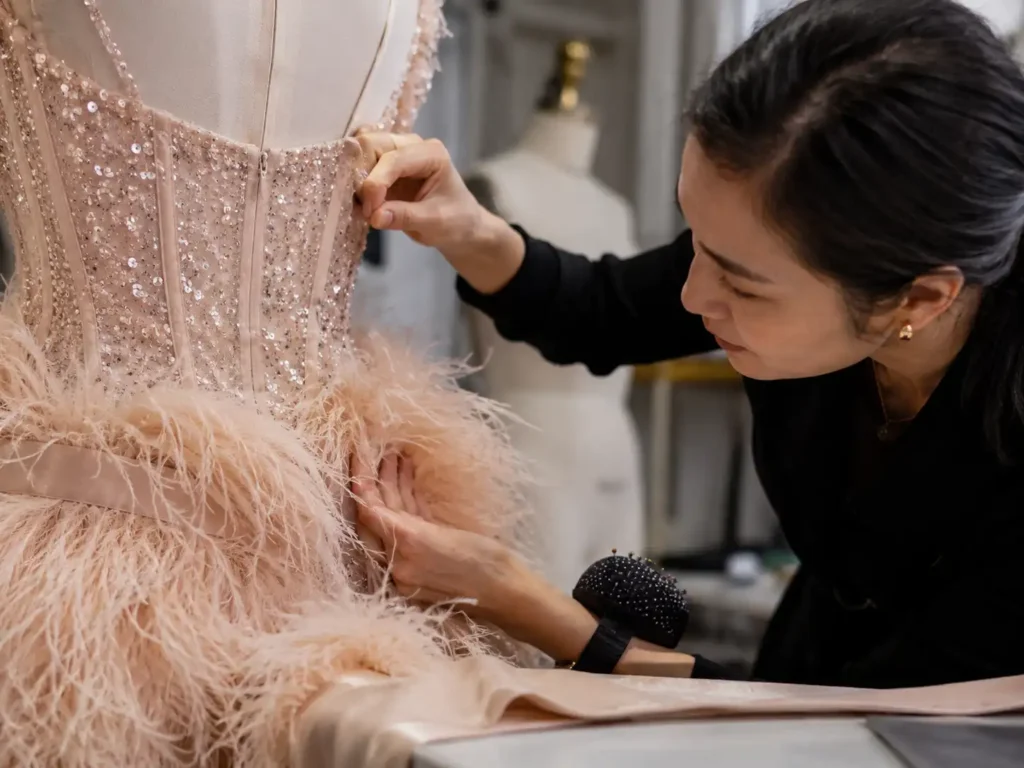
Workmanship and Bulk Feasibility
Some hand-finished effects are suitable for a campaign sample but unsuitable for 20,000-piece production without modification.
Feasibility review estimates whether attachment, density, joining, reinforcement and inspection can be standardized.
Questions include:
- Can operators repeat the placement accurately?
- Can the trim source supply the required lot?
- Can density be measured or visually referenced?
- Are attachment joins hidden consistently?
- Is hand reinforcement limited to defined points?
- Can QC inspect the detail without damaging it?
- Can packing preserve the result?

Timeline and Launch Feasibility
Feather projects may require trim sourcing, color matching, construction trials, sample revision, PP approval and protective packaging development. A launch calendar should include each approval rather than counting only sewing days. Duolan reviews:
- Material availability
- Color development
- First-sample purpose
- Fit revision
- Bulk material preparation
- Production complexity
- Inspection
- Packing
Complex decoration should begin earlier than a comparable plain dress program.
From Design Brief to Feather Dress Sample
Brief Review
Duolan first confirms style purpose, sample purpose, target market, fabric direction, feather reference, size standard, quantity range and launch date. The sample may be intended for fit approval, visual review, photography, internal presentation or production preparation. Clear purpose determines which details need priority.
Material Direction
Body fabrics, lining, zippers, support materials and feather trims are reviewed together. Physical swatches are preferred for color, density, softness and backing approval. Material availability and possible alternatives are discussed before pattern and construction decisions become fixed.
Pattern Development
Pattern work establishes silhouette, fit, length, opening dimensions, neckline balance and placement paths. Feather usage is not finalized from a sketch alone. The pattern provides the actual cuff, hem, neckline or slit length needed for accurate trim planning.
Base Garment Sample
For complex styles, the base garment may be reviewed before full feather attachment. Fit, structure, lining, zipper, hem level and movement can be corrected without wasting delicate trim. A base-garment checkpoint is especially valuable for corset, strapless, blazer and bodycon designs.
Feather Placement Trial
A placement trial confirms length, density, direction, backing coverage, joint position and overall proportion. Partial sections or detachable trials may be used when several options need comparison. Close-up images help the brand review interior and exterior finishing.
Fit and Wear Review
The completed sample is assessed for bust, waist, hip, sleeve, length and movement. Feather-specific checks include wrist comfort, neckline contact, walking clearance, zipper access, trim weight and shedding during normal handling.
Revision Sample
Approved comments are translated into pattern, measurement, material and workmanship changes. A revision record should distinguish visual requests from production-critical corrections. Updated photographs and measurements help the brand confirm progress before shipping.
Production-Ready Approval
The final development stage confirms whether the sample is visually approved, fit approved, suitable as a PP basis and ready for bulk standard transfer. Fabric, trim, measurements, attachment, workmanship and packaging points are recorded before production planning.
Sample Revision and PP Approval Standards
Comments Become Measurable Changes
Comments such as “more feather,” “cleaner neckline” or “tighter fit” need technical interpretation.
Duolan converts comments into actions such as:
- Increase trim density against an approved reference
- Move attachment line by a defined distance
- Adjust neckline measurement
- Change backing coverage
- Correct sleeve opening
- Modify hem circumference
- Update zipper clearance
- Revise lining shape
- Record new pattern version
Photographs can show appearance, while measurement charts and construction notes control repeatability. Each revision should identify which earlier standard has been replaced.
PP Approval Locks Production-Critical Details
The PP sample should represent the approved materials, measurements, construction, decoration and finishing expected in bulk. PP review can cover:
- Fabric and lining
- Feather trim
- Color
- Measurement
- Fit
- Placement
- Attachment
- Interior finish
- Labels
- Packaging
- Pressing and appearance
An approved sample should be supported by specifications rather than treated as the only source of truth. Physical samples can age, crush or become unavailable during repeat orders; records preserve the standard.
Three Approval Levels Reduce Confusion
Feather projects benefit from separating three approval questions:
Fit Approval
Does the garment fit, support and move correctly?
Visual Approval
Are silhouette, color, trim volume, placement and styling correct?
Production Approval
Can materials, workmanship and packing be repeated under bulk conditions?
A sample may pass one level and remain pending in another. Clear status prevents a visually approved photo sample from being mistaken for a production-approved standard.
Private Label and Brand Detail Customization

Main and Size Labels
Main labels and size labels should be positioned without interfering with feather, lining or wearer comfort. Brand artwork, label dimensions, fold type, placement and sewing method should be confirmed before bulk. Size labels must match the approved size assortment and packing list.

Care and Composition Labels
Care labels should reflect the approved materials and maintenance direction. Feather, body fabric, lining and embellishment may require specialist care language. Final wording remains subject to brand review, destination-market rules and available material information.

Hangtags and Brand Cards
Hangtags can carry brand information, barcodes, retail prices, style details or care notes. Placement should protect the dress and avoid catching feather. Brand cards or unpacking notes may explain how to restore feather shape after transport.

Barcodes and SKU Labels
Barcode, SKU, color, size and warehouse labels must match the brand’s data file. Verification is required across each style, colorway and size. For multi-style programs, label control becomes a separate QC checkpoint before carton sealing.

Individual Packaging
Individual bags, tissue, protective inserts and size stickers are selected according to garment shape and warehouse requirements. Feather areas may require additional space or local protection. Packing should limit compression without creating excessive movement inside the bag.

Carton and Warehouse Marks
Carton marks, carton quantity, assortment, destination labels and handling notes should be approved before shipment. Feather dresses may require lower carton density than flat basic garments. Carton pressure, route and warehouse handling influence the final pack plan.
What Determines Cost and Production Timing
Feather dress quotations are built from material, construction, labor, style mix, volume, approval status and packing requirements. Production time begins after critical approvals and material readiness.
| Cost or Timing Variable | Production Effect | Planning Direction |
|---|---|---|
| Feather Type and Fullness | Changes material price, visible density, usage and sourcing cycle | Approve a physical trim reference before final costing |
| Placement Length | Cuffs, neckline and full-circle hems require different quantities | Calculate from final pattern measurements |
| Body Fabric | Weight, stretch, surface sensitivity and width affect consumption and sewing | Confirm actual fabric direction before final quote |
| Dress Structure | Lining, cups, boning, tailoring and zippers add operations and fitting work | Classify style as standard, structured or high-control |
| Attachment Method | Seam-enclosed, topstitched, detachable or hand-reinforced options use different labor | Approve a construction trial |
| Color Development | Custom fabric and trim colors may require separate approval cycles | Begin shade review early |
| Style and Color Mix | More styles, colors and sizes increase material and line coordination | Review the full program rather than one unit |
| Sample Status | Unresolved fit or workmanship extends the pre-production stage | Complete PP and bulk-readiness approval |
| Inspection Requirement | Added testing, third-party inspection or brand-specific checks require scheduling | Share quality manuals before production |
| Packaging Method | Feather protection may reduce carton quantity and increase materials | Approve packing sample before shipment |
| Standard Production | Simple styles may require approximately 15–20 production days after readiness | Final timing depends on materials and capacity |
| Regular Production | Common structured styles may require approximately 20–30 production days | PP approval and complete BOM are required |
| Complex Production | Feather, sequin, corset or multi-process styles may require approximately 30–45 production days | Trial production and added QC may be necessary |
Production days exclude unapproved samples, unresolved material development and transportation unless specifically included in the project plan.
Controlling Feather Trim from Sample to Bulk
Material Locking Prevents Visual Drift
Before production, Duolan aligns the approved body fabric, lining, feather trim, thread, zipper, support materials, labels and packing components.
Material locking can record:
- Supplier and item reference
- Color approval
- Fabric weight or handfeel direction
- Feather length and density
- Backing width
- Approved lot or controlled variation
- Quantity requirement
- Replacement route
- Care or documentation notes
Material changes after PP approval require review because a new trim can alter weight, color, attachment and packing performance.
Pattern and Measurement Locking Controls Placement
The approved pattern establishes every decoration path. Production documents should connect trim length with sleeve, hem, neckline or slit measurements. Control points include:
- Approved pattern version
- Base size
- Grade rules
- Critical measurements
- Tolerance priorities
- Trim start and end points
- Joint positions
- Placement by size
- Visual extension beyond garment edge
Changes should be updated across all related documents. A revised dress length without a revised trim instruction can create immediate bulk inconsistency.
Workmanship References Guide the Line
Production teams need clear interior and exterior references. An approved sample, construction sheet, close-up photographs and first-piece confirmation can work together. Workmanship standards cover:
- Attachment method
- Stitching line
- Feather direction
- Density
- Joint concealment
- Backing coverage
- Reinforcement
- Interior finish
- Loose feather handling
- Pressing restrictions
Critical operations may be tested before full production. Early confirmation prevents defects from spreading across a large order.
Packing Standards Complete Bulk Readiness
Packing is part of production readiness because compression can change the final appearance even when sewing is correct.
Before bulk release, the team confirms:
- Fold method
- Feather direction
- Tissue or protective support
- Individual bag size
- Hang or flat pack
- Carton quantity
- Carton pressure
- Size and barcode labels
- Unpacking or recovery instruction
- Shipment route considerations
Quality Control for Feather Trim Dress Production
Material Inspection
Incoming material control focuses on body fabric, lining, feather trim and related components. Checks can include:
- Fabric color and visible defects
- Surface condition
- Weight or handfeel direction
- Stretch and recovery where relevant
- Feather color
- Visible length
- Density
- Backing width
- Direction
- Damaged or sparse areas
- Zipper and support materials
- Labels and packaging components
Approved materials are identified before use. Visibly different trim or fabric lots should not be mixed without review.
First-Piece Inspection
The first-piece review confirms whether development standards have transferred correctly to the production line.
Priority points include:
- Overall silhouette
- Bust, waist and hip measurements
- Garment length
- Sleeve and cuff measurements
- Feather placement
- Density and direction
- Joint position
- Backing coverage
- Lining and interior finish
- Closure function
- Label placement
Approval should occur before large quantities pass through the same operations.
Inline Process Control
Inline control identifies repeated problems early. Inspection frequency and focus depend on construction risk and production stage.
Feather-specific monitoring includes:
- Uneven application
- Missing sections
- Exposed backing
- Twisted direction
- Loose attachment
- Stitch breaks
- Garment puckering
- Asymmetric cuffs
- Uneven hem position
- Feather caught in seams
- Contamination or damage
Findings should lead to operation correction, not only removal of defective garments at the end.
Final Garment Inspection
Final inspection covers appearance, measurements, workmanship, function and presentation. Review may include:
- Approved size specification
- Dress balance
- Zipper operation
- Lining
- Seams
- Pressing
- Stains or marks
- Feather fullness
- Left-right symmetry
- Missing embellishments
- Labels
- Barcode
Inspection criteria can follow the brand’s quality manual and agreed sampling plan.
Packing and Shipment Inspection
A garment can pass sewing inspection and still arrive poorly if packing compresses the trim. Packing QC verifies:
- Feather direction before folding
- Protective tissue or supports
- Correct individual bag
- Size and barcode accuracy
- Hangtag placement
- Packing assortment
- Carton quantity
- Carton marks
- Carton pressure
- Handling labels
- Shipment count
Random packed garments can be reopened to confirm the method preserves presentation.

Packaging That Protects Feather Shape and Presentation
Individual Garment Protection
Individual packaging should protect feather from abrasion, static, snagging and compression. Bag dimensions must allow the decoration to sit without excessive bending.
Possible protection elements include:
- Tissue between decorated areas
- Lightweight support around cuffs
- Hem protection strip
- Separate detachable trim bag
- Larger garment bag
- Controlled fold line
- Warning or unpacking note
The pack should remain efficient for warehousing while preserving visual recovery after opening.
Folded Versus Hanging Packing
Hanging packing may suit highly structured or heavily decorated styles, while folded packing can remain suitable when trim direction and support are controlled. The decision considers:
- Dress structure
- Feather placement
- Trim length
- Garment weight
- Warehouse standard
- Transport mode
- Carton height
- Cost
- Destination handling
A packing trial can be stored under expected pressure and reopened to evaluate feather recovery, garment creasing and label position.
Carton Density and Pressure
A carton suitable for plain dresses may over-compress feather garments. Carton quantity should be calculated from actual packed volume rather than an existing standard alone.
Carton review covers:
- Units per carton
- Internal pressure
- Orientation
- Layer arrangement
- Empty movement space
- Carton strength
- Moisture protection
- Route duration
- Handling method
Lower packing density may protect presentation and reduce reconditioning work at the warehouse.
Unpacking and Shape Recovery
Feather may need gentle shaking, hanging or controlled steaming after transport. The suitable method depends on material and garment construction.
Brand teams may request:
- Warehouse unpacking note
- Store handling instruction
- Ecommerce fulfillment guidance
- Detachable trim assembly note
- Care communication
- Photo standard after recovery
Recovery instructions should be tested rather than copied from another material. Direct heat or aggressive steaming may be unsuitable for certain trims or fabrics.
Manufacturing Capacity Behind Complex Dress Programs
30+ Years Development Background
Duolan’s manufacturing foundation draws on more than 30 years of apparel development experience, with long-term focus on fashion dresses, occasion dresses and decoration-led womenswear. Experience supports: Fabric-to-silhouette judgment, Pattern and fit understanding, Decorative workmanship development.
16 Owned Factories
Sixteen owned womenswear factories provide direct control for core styles, development-sensitive programs and production requiring close coordination. Factory assignment depends on garment structure, fabric, decoration, timing and quality priorities rather than available capacity alone.
20+ Satellite Factories
More than 20 long-term satellite factories add capacity flexibility for larger programs, repeat orders and seasonal peaks. Production allocation is planned according to approved standards, style complexity and management requirements. Critical products remain under controlled coordination.
12,000+ Coordinated Workers
The wider manufacturing network includes more than 12,000 supporting workers across apparel production bases. Workforce scale supports cutting, sewing, special processes, finishing, inspection, packing and multi-base order coordination.
300 Sewing Lines
Approximately 300 sewing lines provide a foundation for multi-style programs, parallel production and differentiated production routes. Feather, sequin, corset and structured styles can be separated from more standard garments according to operation risk and required experience.
50+ Flexible Lines
More than 50 quick-response and flexible lines support development-linked production, launch orders, repeat programs and changing style priorities. Flexible capacity does not remove the need for PP approval, material locking or critical-operation trials; it helps organized programs move through the right route.
Feather and Embellished Dress Development Cases

North American Partywear Program
- 18 styles
- 5 color families
- XS–XL size range
- 42,600 total pieces
- 3 sample approval levels
- 2 planned shipment windows
- Separated base-garment fit approval from decoration approval
- Added stable attachment zones on selected stretch styles
- Recorded trim density and direction through physical references
- Moved visible joints to controlled seam locations
- Introduced first-piece checks for each feather construction
- Adjusted carton quantities for feather-heavy styles

European Occasionwear Collection
- 24 styles
- 7 coordinated colors
- 3 silhouette groups
- 68,400 total pieces
- 4 material approval rounds
- 3 production paths
- Built color boards containing body fabric, lining, feather and thread
- Reviewed tonal relationships under daylight and warm light
- Rebalanced trim density by silhouette
- Used firmer satin for selected structured minis
- Preserved lighter trim for draped midi styles
- Added packing trials for hem recovery
- Separated high-control styles from standard satin production

Multi-Style Holiday Drop
- 12 core styles
- 16 total SKUs
- 4 size groups
- 27,800 total pieces
- 2 photo-sample rounds
- 1 PP approval round per style
- Separated photo-sample status from PP status
- Reserved bulk trim only after physical specification approval
- Replaced temporary sample trims on affected styles
- Created production-readiness notes by style
- Prioritized blazer and strapless fit approval before decoration
- Planned two shipment windows around campaign and warehouse dates
- Preserved approved BOM and packing standards for reorder
Frequently Asked Questions About Feather Trim Dresses

Start Your Feather Trim Dress Development Project
Send your tech pack, reference images, original sample photographs, fabric direction or feather effect reference. Duolan will review the proposed silhouette, placement, fit priorities, material compatibility, attachment route and bulk-production risks before recommending a development plan.
For a more accurate evaluation, please include:
- Company or brand name
- Product category
- Number of styles
- Target quantity by style
- Colorways
- Size range
- Tech pack or reference images
- Target fabric
- Feather placement and visual direction
- Sample purpose
- Required labels and packaging
- Destination market
- Target launch and delivery dates
Your files can be used to prepare a development route covering material review, pattern work, sample stages, PP approval, production planning, quality control and protective packing.


