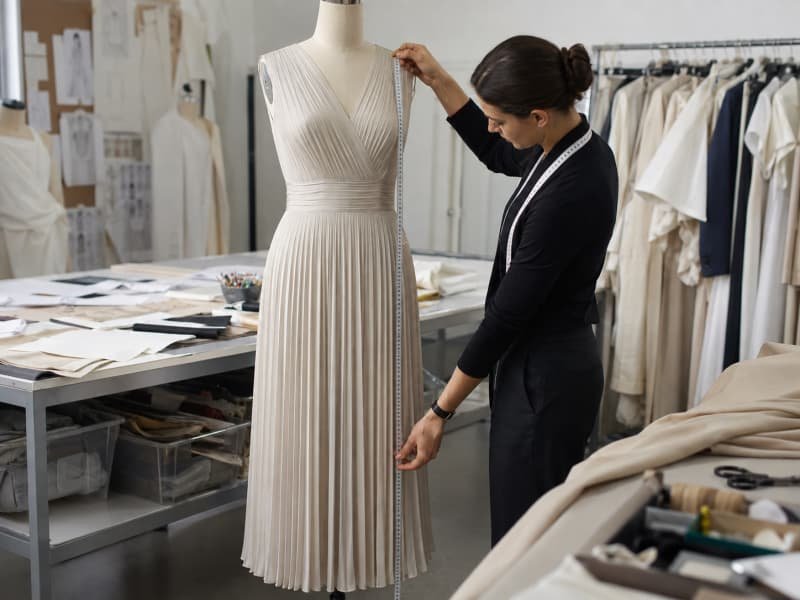
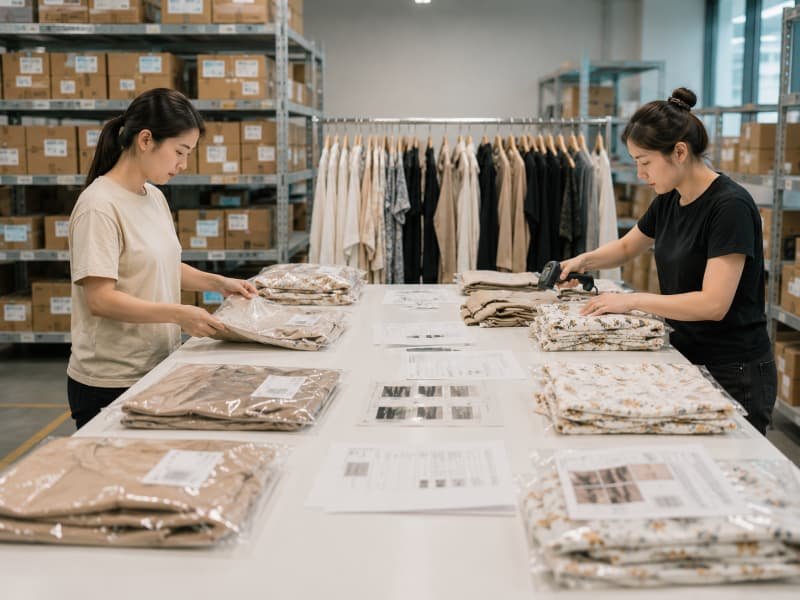
...

Custom Heat-Set Pleated Dress Manufacturer

Dress-focused development and manufacturing for fashion brands building stable, repeatable and commercially ready heat-set pleated collections.

  • 8+ pleat directions: micro, accordion, knife, box, sunray, crystal, directional and mixed-panel pleating.
  • 10–30 styles per program: coordinated sampling and bulk planning across silhouettes, colors and size ranges.
  • 20,000–80,000 pieces per order: structured allocation across styles, colors, sizes and production paths.
  • 6 technical control stages: fabric review, pleating trial, pattern adjustment, sample approval, bulk readiness and final inspection.

Duolan coordinates fabric behavior, pleat definition, pattern dimensions, garment construction, fit, bulk repeatability and protective packing within one controlled development path. Brand teams may submit a tech pack, reference garment, original sample, fabric direction or collection brief for an initial feasibility review.

Pleated Dress Manufacturing for Established Fashion Teams

Heat-set pleated garments require coordination between design, material behavior, pattern engineering, pleating control and complete garment construction. Duolan works with organizations that already have a defined market direction, structured development calendar and clear production objectives.

Established Fashion Brands

Fashion brands need more than access to a pleating supplier. A successful program must preserve design identity across sample versions, colors, sizes and repeat orders. Duolan reviews silhouette, pleat language, material direction, target retail positioning and production requirements before defining the development route. Support may cover one hero style, a coordinated capsule or a seasonal assortment containing 10–30 styles. Each style is developed as part of a wider range rather than treated as an isolated garment.

Product Development Teams

Product developers manage design intent, fabric decisions, fit comments, sample approvals, costing targets and production deadlines at the same time. Duolan converts comments into pattern corrections, pleat specifications, construction updates and measurable approval points. Development communication may include fabric swatches, pleating trials, measurement revisions, sample review notes, PP sample requirements and bulk readiness confirmation. Clear records reduce repeated comments and prevent approved details from disappearing during production.

Buying and Sourcing Teams

Sourcing teams evaluate whether a supplier can control quality beyond the first sample. Key concerns include material consistency, production capacity, order allocation, inspection discipline, compliance documentation and delivery coordination. Duolan supports supplier evaluation with factory information, manufacturing capability details, development records, quality checkpoints and project-specific production planning. Complex pleated styles can be separated from standard styles and assigned to a more suitable production route.

Multi-Brand Fashion Groups

Multi-brand groups often manage different price levels, silhouettes, launch windows and quality standards within one sourcing structure. Pleated programs may include commercial basics, stronger visual styles, occasion dresses, resort dresses and repeatable continuity products. Duolan can organize style codes, colorways, size ratios, material references, pleat standards and packing requirements by brand or collection. The goal is to maintain clear separation while using a coordinated development and manufacturing system.

Control the Main Risks Before Bulk Pleated Production

A pleated sample may look acceptable on a hanger while still carrying serious production risks. Fabric composition, heat response, pleat take-up, pattern allowance, seam construction and packing pressure can all change the finished result. Risk control must begin before the first garment sample.

Production RiskLikely ResultDuolan Control Action
Fabric cannot retain the selected pleatWeak definition, rapid opening or uneven recoveryReview fiber composition, weight, stretch and surface before making a formal pleating trial
Heat changes color or surface appearanceShade shift, glazing, loss of softness or visible marksCompare unprocessed and processed swatches under approved light conditions
Pattern ignores pleat take-upIncorrect width, length, waist position or sweepRecord pre-pleat and post-pleat dimensions before finalizing the pattern
Pleat direction changes during assemblyTwisted panels, broken visual lines or poor symmetryMark panel direction, joining points and garment orientation in the production file
Sample standard is not transferred to bulkDifferent pleat width, depth, tension or garment shapeLock the approved fabric, pleat sample, pattern version and PP garment before production
Packing compresses the garment incorrectlyFlattened pleats, hard fold marks or poor recovery after deliveryDefine folding direction, bag size, carton loading and recovery instructions before shipment

Risk review is not intended to slow development. Early identification protects the sample calendar, reduces repeated corrections and creates a stronger basis for production costing. A technically beautiful design becomes commercially useful only when its pleating route can be measured, recorded and repeated.

Complete Garment Engineering Beyond the Pleating Process

Heat-set pleating is one part of a complete dress. A specialist pleating workshop may create a strong fabric effect but may not control fit, lining, zipper installation, waist construction, grading, hem balance or final assembly. A conventional sewing factory may construct a dress correctly but lack the material judgment needed for permanent pleats.

Pleating Must Support the Silhouette

Pleat selection should begin with the intended garment shape. Fine vertical micro pleats may provide controlled extension around the body. Wide accordion pleats can create stronger movement and volume. Sunray pleats change from narrow to wider spacing and must align with the skirt radius. Box pleats create more structured volume and require different pattern allowances. Duolan reviews the connection between pleat geometry and dress silhouette before sample development. 

Garment Construction Must Protect the Pleats

Seams, closures and linings can either support or disrupt a pleated surface. Heavy seam allowances may create ridges. A poorly placed zipper can pull pleats out of line. An incompatible lining can restrict extension. A conventional hem may flatten the lower section or change the intended movement. Construction decisions are therefore developed around the approved pleat behavior. Pattern, sewing sequence and finishing method must work together rather than being planned as separate operations.

Production Standards Must Connect Both Processes

A strong result requires one approval route for fabric, pleating and garment assembly. The production file should define the approved material lot, pleat reference, panel orientation, construction sequence, measurement method and packing direction. Duolan links pleating references with the garment specification, sample comments, PP standard and final quality checkpoints. Such alignment helps preserve the visual result when an order moves from a few samples to tens of thousands of garments.

Custom Pleated Dress Styles for Commercial Collections

Duolan develops pleated dresses across different lengths, fit levels and wearing occasions. Every direction requires a separate balance of pleat scale, material weight, transparency, body extension, lining and finishing.

Micro-Pleated Dresses

Micro pleats create a fine, continuous vertical texture with controlled extension and strong visual depth. They are well suited to fitted midi dresses, column dresses, long-sleeve styles, body-skimming occasion dresses and coordinated sets. Development focuses on even pleat density, recovery after stretching, neckline stability, shoulder balance and consistent garment length. The pattern cannot be graded in the same way as a flat woven dress because extension changes according to the material, pleat ratio and construction.

Accordion-Pleated Dresses

Accordion pleats produce repeated ridges with noticeable movement and three-dimensional volume. They work well in relaxed midi dresses, flowing maxi dresses, statement sleeves, asymmetric panels and resort silhouettes. Material weight must be controlled carefully. A fabric that is too light may lack definition, while a heavy construction may create excessive bulk at seams and waist joins. Duolan evaluates panel width, drape, edge finishing and packing recovery before the design moves into production.

Sunray-Pleated Dresses

Sunray pleats radiate from a narrower point into a wider hem, creating controlled expansion and elegant movement. They are commonly used for circular skirts, midi occasion dresses, halter styles and wedding guest collections. The central challenge is geometry. Pleat spacing, skirt radius, waist measurement and finished length influence one another. Pattern development must account for the pleating route rather than treating the skirt as a conventional circular panel.

cPleated Flare

Knife-Pleated Dresses

Knife pleats fold consistently in one direction and can create either soft movement or a sharper uniform appearance. They suit structured midi dresses, preppy silhouettes, uniform-inspired fashion, asymmetric skirts and layered occasionwear. Direction must remain consistent across front, back and joined panels. Seam placement, overlap allowance and hem treatment require special attention because any interruption becomes visible in the repeated linear structure.

Box-Pleated Dresses

Box pleats offer stronger structure and controlled volume. They are suitable for tailored mini dresses, fit-and-flare styles, defined waist dresses and designs requiring a cleaner architectural shape. Box depth, underlay width and waist attachment determine the final volume. Duolan records folding direction and placement references so bulk garments maintain consistent spacing and symmetry across the size range.
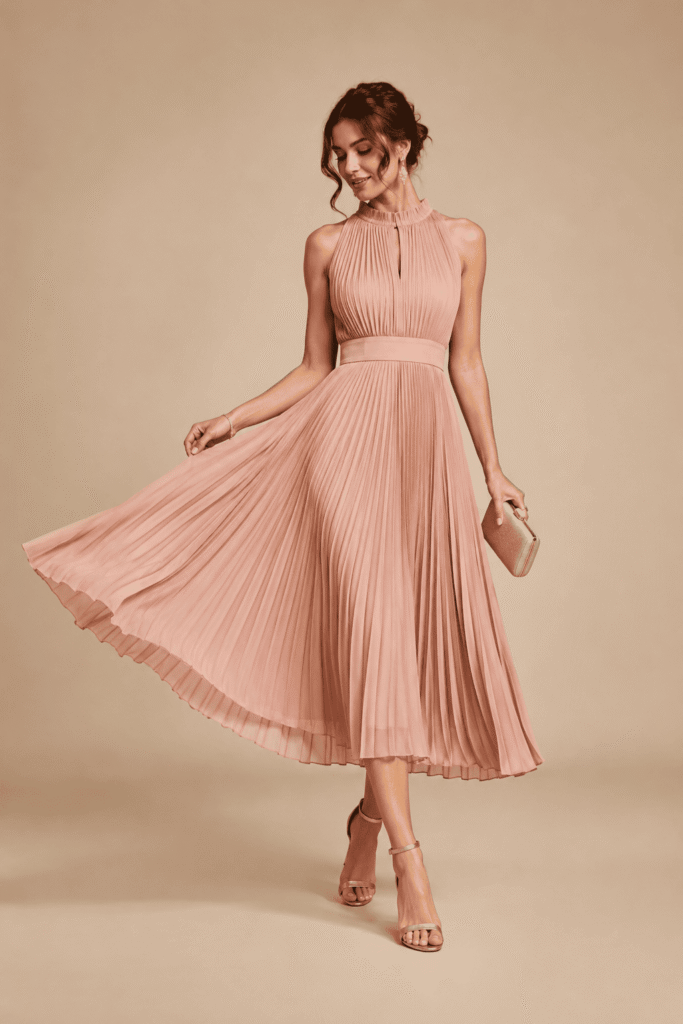
Pleated Midi Dresses

Midi lengths are commercially important across occasion, workwear, resort and transitional collections. Their success depends on the relationship between waist position, skirt volume, body proportion and finished hem balance. For pleated midi styles, Duolan reviews how the garment hangs after processing, sewing and relaxation. Length is checked in the agreed measurement condition so inconsistent extension does not create uneven finished garments.

Pleated Maxi Dresses

Maxi dresses place greater demand on vertical consistency, weight distribution and packing. Long panels may stretch under their own weight, and lower pleats may respond differently from the upper garment after hanging. Development includes garment relaxation, length checking, lining balance, side seam control and carton planning. Long garments may require a specific folding method to reduce hard compression marks during transport.

Pleated Occasion Dresses

Occasion styles may combine pleating with asymmetric necklines, open backs, fitted bodices, draped overlays, embellishment or structured internal support. Visual impact must be balanced with secure wear and repeatable production. Duolan treats the pleated section as part of a complete occasionwear structure. Bodice support, transparency, closure choice, seam placement and wearer movement are reviewed together before the PP stage.

Pleat Structures Engineered for Different Dress Silhouettes

Pleat type changes fabric consumption, stretch behavior, visual volume, movement and garment construction. Selecting a pleat by appearance alone can lead to incorrect pattern dimensions or unstable bulk results. Duolan establishes separate references for every pleated panel, including type, direction, finished dimensions, placement and joining method. Such documentation reduces interpretation during bulk production. 

Fine Micro Pleats

Fine micro pleats create dense texture and flexible extension. They are effective for slim columns, fitted bodies, sleeves and layering pieces. Control points include pleat density, recovery, edge stability and dimensional consistency after sewing.

Medium Accordion Pleats

Medium accordion pleats provide clearer peaks and valleys with stronger movement. They suit relaxed dresses, maxi silhouettes and statement panels. Fabric thickness and seam construction must be balanced to prevent bulky joins.

Wide Accordion Pleats

Wide accordion structures create bold visual rhythm and greater volume. They are useful for fashion-led occasion styles and sculptural silhouettes. Wider folds expose inconsistency quickly, making alignment and panel matching essential.

Directional Knife Pleats

Directional knife pleats create a repeated flow across the garment. They may run vertically, diagonally or around a shaped panel. Direction markings and joining instructions must remain clear throughout cutting and sewing.

Structured Box Pleats

Box pleats create measured volume with a tailored appearance. Their underfolds add material at the waist or seam. Pattern calculations must account for total depth, repeat spacing and size grading.

Radiating Sunray Pleats

Sunray pleats change width across a circular or curved panel. The pattern, waist opening and hem sweep must be developed as a connected system. Small geometric changes can affect the entire skirt.

Crystal Pleats

Crystal pleats create narrow, sharply defined folds with a refined surface. They are often selected for lightweight polyester fabrics and delicate occasion silhouettes. Surface quality and edge finishing require close control.

Mixed Pleat Panels

Mixed-panel designs combine different pleat scales, directions or unpleated sections within one garment. They create stronger fashion value but increase alignment, measurement and sewing complexity.

What Heat-Set Pleating Means in Dress Manufacturing

Heat-set pleating uses controlled heat, pressure, time and cooling to form a defined structure in a suitable thermoplastic textile. Polyester and selected polyester-rich fabrics are common choices because their fiber structure can retain a shaped form after controlled processing.

A Permanent Effect Requires Material Compatibility

“Permanent” does not mean every fabric will hold every pleat under every condition. Results depend on fiber composition, yarn structure, fabric construction, weight, finishing treatment, stretch content, print process and intended care method.

A stable pleat begins with a material capable of responding to the selected process. A beautiful fold created temporarily with steam or an iron is not equal to an approved production pleat.
Duolan reviews the material basis before pattern and garment development. A formal pleating trial provides stronger evidence than a visual assumption.

Heat, Pressure and Time Must Be Balanced

Too little processing may produce weak definition or rapid opening. Excessive heat or pressure may change hand feel, color, gloss, stretch recovery or surface texture. Parameters should therefore be developed for the actual fabric rather than copied from another style.
For polyester satin, surface appearance may be highly sensitive. For chiffon, edge behavior and transparency may become more visible. Stretch polyester requires additional attention because elastomeric fibers can react differently from the main fiber.
The approved trial becomes the production reference. It should represent the intended fabric lot, color direction, pleat geometry and final care expectation as closely as possible.

Pleating Changes the Garment Dimensions

Pleating consumes width and may also affect length. The amount depends on fold type, depth, spacing, direction and material response. No universal consumption ratio should be used across all products.
Pre-pleat dimensions, post-pleat dimensions and relaxed dimensions need separate records. Pattern development can then compensate for the actual behavior rather than relying on estimates.

The Final Dress Must Survive More Than Production

A pleated dress is folded, sewn, pressed, packed, shipped, unpacked, hung and worn. Every stage can affect the appearance. A reliable development route checks not only the first pleat but also the garment after assembly and recovery.
Duolan includes construction and packaging considerations when evaluating the pleat. The intended result is a garment that reaches the brand in an approved, recoverable and repeatable condition.

Fabric Selection for Stable Heat-Set Pleated Dresses

Fiber content alone does not determine success. Fabric weight, weave, stretch, surface finish, color method and intended silhouette all influence the result. A pleating trial should be made before final pattern dimensions and production costing are locked.

Fabric DirectionSuitable Pleat EffectsMain StrengthMain Development Concern
Polyester chiffonFine accordion, sunray, crystal and soft knife pleatsLightweight movement and layered transparencyFraying, transparency, edge finish and lining balance
Polyester georgetteMedium accordion and soft directional pleatsTextured surface with controlled drapeGrain stability, seam handling and dimensional change
Polyester satinDefined accordion, knife and wider statement pleatsStrong light reflection and occasionwear valueHeat marks, glazing, shade change and visible seam pressure
Polyester crepeMicro, accordion and directional pleatsBalanced drape with reduced surface shineThickness consistency and recovery after sewing
Lightweight woven polyesterKnife, box and geometric pleatsCleaner structure and commercial consistencyBulk at folds, seam allowance and hem treatment
Stretch polyesterMicro pleats and flexible body-skimming structuresWear comfort and adaptable fitRecovery, elastane sensitivity and measurement method
Printed polyesterSunray, accordion and mixed pleat panelsStrong visual identity across collectionsPrint distortion, motif placement and shade consistency
Recycled polyester optionsPleat type selected after testingSupports material strategy and collection positioningYarn variation, finish response and lot-to-lot consistency

Material approval should include the intended color whenever possible. Dark, pale, metallic, printed or highly lustrous surfaces may respond differently under processing even when the base construction appears similar.

Duolan compares original and processed swatches for appearance, hand feel, dimensional change and pleat definition. Final selection is made according to the garment objective rather than a generic fabric recommendation.

Fabric Behavior Is Tested Before Pattern Finalization

A controlled pleating trial gives the pattern and production teams measurable information. Testing is not limited to checking whether folds appear. The trial should show how the textile behaves through processing, relaxation, handling and garment assembly.

Pleat Definition

The first review checks whether peaks, valleys and edges form cleanly. Soft or irregular definition may be suitable for a flowing design but unacceptable for a precise geometric style. The approved level of sharpness is recorded visually. Production assessment then compares bulk panels against the same reference instead of relying on subjective descriptions such as “more pleated” or “sharper.”

Dimensional Change

Pre-process width and length are recorded, followed by post-process and relaxed measurements. Such data helps determine material consumption and pattern allowance. A panel should not be released for garment sampling until the pattern team understands the finished dimensions under the agreed measuring condition.

Surface Appearance

Processing can influence shine, texture, color depth and hand feel. Satin and coated surfaces require particular attention because pressure marks or glazing may become visible under retail lighting. Original and processed swatches are compared side by side. Any acceptable difference should be approved before bulk material is committed.

Stretch and Recovery

Micro-pleated or stretch-based fabrics may extend significantly during wear. Recovery after extension influences fit, garment length and repeat use. The development team checks whether the material returns toward the approved shape after controlled stretching and relaxation. Measurement rules are then written around the observed behavior.

Seam Response

A pleated swatch may look stable until it is stitched. Needle tension, seam type, allowance width and handling can flatten or distort the folds near the join. Trial seams help establish the sewing method before the full sample. Particular attention is given to side seams, waist joins, zippers, shoulders and curved openings.

Packing Recovery

Pleated products are often compressed during transport. A folding and recovery review shows whether the selected method creates hard marks, uneven flattening or permanent deformation. Bag dimensions, fold direction, internal support and carton quantity can then be adjusted according to the garment length and pleat structure.

Define Pleat Specifications Before the First Garment Sample

A production team cannot work from the instruction “add pleats.” The pleat needs a measurable identity that connects design, fabric processing, pattern development and quality inspection.

Pleat Type, Scale and Direction

The specification should identify the pleat family, visible width, fold depth, repeat spacing and direction. Directional styles also require a clear orientation reference so left and right panels are not assembled incorrectly. For mixed-panel garments, each section receives its own code. A micro-pleated bodice and a sunray skirt cannot share one general instruction.

Starting and Ending Positions

Pleats may begin at the neckline, shoulder, waist seam, hip line or a defined point within a panel. They may continue into the hem or stop before a construction area. Starting and ending references influence fit and assembly. A pleat beginning too close to a zipper may cause distortion. A pleat stopping inconsistently at a seam creates an obvious visual defect.

Pre-Pleat and Finished Dimensions

Both dimensions are required because processing consumes material. The specification may record original panel width, processed panel width, intended relaxed width and approved garment measurement. Dimensional records also support costing. Fabric consumption cannot be estimated accurately from the finished garment width alone.

Panel Orientation and Placement

The top, bottom, face side, fold direction and joining edge should be identified. Printed or directional fabrics may also require motif alignment and orientation control. Clear marking prevents panels from being rotated, reversed or joined against the approved flow.

Approved Appearance Reference

Numbers do not fully describe texture, depth and movement. An approved physical swatch or signed sample should accompany the written specification. The production team then has both a measurable standard and a visual standard. QC can compare definition, spacing, direction and overall appearance against the same basis.

Care and Recovery Expectation

The intended care label affects development. A garment expected to tolerate a defined wash method requires testing aligned with the claim. A dry-clean-only occasion dress follows a different risk route. Duolan reviews care expectations before final approval so pleat performance and label information do not conflict.

Pattern Engineering for Pleated Fabric Dimensions

Pleating changes the relationship between flat material and finished garment measurements. Pattern engineering should therefore begin after enough material behavior is known.

Choose the Correct Cutting Route

Some products are cut before pleating, while others use pleated yardage or processed panels cut afterward. The correct route depends on pleat geometry, placement, fabric stability, print direction and garment structure.
Cutting before pleating may support exact placement but requires careful prediction of dimensional change.
Duolan evaluates the route style by style rather than applying one method across all pleated dresses.

Build Allowance from Actual Trial Data

Pattern dimensions should reflect the approved pleating trial. Pre-pleat width, finished width and relaxed behavior are entered into the development record.
No universal multiplier is used for micro, accordion, knife, box or sunray pleats. Fold depth and material response create different consumption and extension ratios.
A pattern based on actual data improves garment measurements, fabric ordering and bulk repeatability.

Protect Critical Body Points

Bust, waist, hip, armhole, shoulder and neckline require separate attention. A pleated body may stretch horizontally but remain restrictive at a stabilized seam or lining.
The pattern team reviews where flexibility is needed and where stability is required. Necklines and shoulders may need support, while body panels may need controlled extension.
A garment should not rely on uncontrolled stretching to achieve the intended size.

Grade According to Pleat Behavior

Size grading cannot simply add equal amounts to every pattern edge. Changes in body measurement may interact with pleat extension, seam position, lining and silhouette.
For broader size ranges, critical boundary sizes deserve additional review. The aim is consistent visual proportion, not only numerical compliance.
Pleat width may remain constant while panel count or finished extension changes.

Control Finished Length

Pleated garments can appear different in length under compressed, relaxed, hanging and worn conditions. The approved measurement condition must be defined clearly.

Long dresses may require a controlled relaxation period before final length checking. Lining and outer shell should be assessed together so neither layer creates pulling or exposure.

Transfer the Pattern into Production

Approved pattern version, grain direction, pleat orientation, notches, joining points and construction notes should move together into bulk.

Duolan connects pattern files with the approved sample, specification and QC points. Version control prevents an earlier sample pattern from being used after later corrections have been approved.

Fit Control Across Relaxed and Extended Pleat States

Pleated fabric can change shape between the hanger, fitting body and movement. Fit review should consider both appearance and functional extension. Fit comments should specify measurable corrections and visual priorities. Duolan converts comments into pattern updates, revised specifications and sample review records before the next version is produced.

Bust and Upper Body

Pleated bodices need enough extension for movement without creating uncontrolled opening, transparency or distorted fold lines. Neckline shape, armhole depth and bust position should remain stable when worn.

Waist Position

A fixed waist seam, elastic waist or uninterrupted pleated body creates different fit behavior. The waist should sit at the approved level without excessive compression, sagging or fold accumulation.

Hip Allowance

Body-skimming pleats may extend over the hip and recover below it. Insufficient allowance creates flattening and shine; excessive extension may weaken the intended vertical line.

Shoulder Balance

Shoulders and necklines often need stabilization because unrestricted pleated material may grow or shift. Binding, tape, facing or lining structure can protect the approved shape.

Side Seam Control

Side seams should hang vertically and remain balanced during movement. Unequal panel tension, incorrect orientation or lining restriction can pull the garment forward or backward.

Garment Length

Length is reviewed in the approved relaxed condition and, where relevant, on the fitting body. Outer layer, lining and any asymmetric sections must maintain the intended relationship.

Construction Details Behind a Stable Pleated Dress

Internal construction determines whether a pleated garment wears securely, moves naturally and retains a clean exterior.

Lining Compatibility

A lining should provide coverage without restricting pleat extension or adding unwanted weight. Stretch lining may be required for body-skimming micro pleats, while flowing skirts may use a separate lightweight lining shape. Length, sweep and attachment points are checked so the inner layer does not pull the outer fabric upward.

Waist Connection

Pleated material can become bulky when gathered into a fixed waist seam. The construction may use controlled compression, a separate waistband, partial stabilization or a smoother internal join. The waist method should support fit while preserving the intended fold direction.

Zipper Installation

A zipper introduces a stable line into a flexible or dimensional surface. Seam allowances, interfacing and pleat positioning need to be planned around the closure. The finished zipper area should lie cleanly without twisting, excessive thickness or broken pleat alignment.

Neckline Stabilization

Necklines may grow if pleated material is left unsupported. Facing, binding, stay tape or a lining structure can maintain the approved opening.

Stabilization should remain discreet and should not flatten more pleating than necessary.

Shoulder and Armhole Finish

Shoulder seams carry garment weight and may stretch over time. Armholes also need a clean edge that does not wave or collapse. Construction is selected according to fabric thickness, transparency and silhouette. The finished edge should look refined from both exterior and interior views.

Panel Joining

Pleated panels require directional alignment and balanced tension. One panel should not be stretched against another during sewing. Joining points, notches and seam handling instructions are established during sampling. QC later checks direction, continuity and seam appearance.

Hem and Edge Finishing for Pleated Silhouettes

The lower edge influences movement, weight and visual continuity. An unsuitable hem can flatten folds, create waviness or make the outer and lining lengths appear uneven. Hem approval should occur after garment relaxation and fit review. Long or asymmetric designs may require a final balance check before the standard is released to bulk. 

Clean Heat-Cut Edge

Selected synthetic fabrics may support a clean heat-cut edge when the material, pleat structure and design allow it. The edge must remain even and free from visible melting, discoloration or hard points.

Narrow Rolled Hem

A narrow rolled hem provides a refined finish on lightweight chiffon or georgette. Sewing tension and handling must be controlled so the edge does not wave or compress the pleats excessively.

Baby Hem

A baby hem offers a minimal folded finish for delicate fabrics. Its suitability depends on pleat scale and garment movement. Fine folds near the hem should remain consistent after stitching.

Bound Edge

Binding can stabilize an edge and create a design detail. Added weight and stiffness should be assessed because they may change the skirt fall or restrict pleat opening.

Pleat-Preserving Finish

Some pleated structures require a finishing route developed specifically around the fold direction. The aim is to secure the edge without creating a flat band across the lower garment.

Split and Opening Finish

Side or front splits interrupt the pleated panel and need stable endpoints. Reinforcement should remain discreet, while the edges must follow the approved direction and hang without twisting.

From Design Brief to Controlled Pleating Trial

Development begins by defining what needs to be proven. A first visual prototype, fit sample, photo-ready garment and PP sample serve different decisions.

Project Review

Duolan reviews the product type, silhouette, reference basis, style count, target quantity, size range, launch window and required sample purpose. Missing information is identified before material and pattern work begins.

Fabric Direction

The team reviews fiber content, fabric construction, weight, stretch, transparency, surface and intended color or print. Available fabric references may be compared with proposed alternatives before a formal trial is arranged.

Pleat Definition

Pleat type, width, depth, direction, placement and finished effect are discussed. Mixed structures are separated into individual panel requirements. A trial objective is recorded so each swatch answers a clear question.

Pleating Trial

Selected fabrics are processed and compared for definition, dimensions, appearance, hand feel and recovery. The preferred trial becomes the basis for pattern engineering and garment sampling.

Pattern and Construction

Pattern allowances, panel orientation, seams, closures, lining and finishing are developed around the approved material behavior. Technical concerns are resolved before the complete sample is released.

Garment Sample

The first garment verifies silhouette, fit, pleat expression, construction and overall commercial direction. Comments are translated into measurable revisions, followed by the required fit, revised, photo-ready or PP stage. 

A Pleated Sample Must Support Production Decisions

A visually attractive sample is not automatically ready for bulk. Production readiness requires an approved relationship between material, pleat, pattern, fit, workmanship, measurements and packing.

Different Samples Serve Different Decisions

A first prototype checks whether the concept can be translated into a garment. A fit sample evaluates body balance and measurements. A revised sample confirms corrections. A photo-ready or salesman sample supports presentation. A PP sample locks the intended production standard. Using one sample for every decision creates confusion. A photo garment may look strong but may not carry final trims, internal construction or production material. A fit sample may use temporary fabric and cannot automatically approve surface appearance. Duolan clarifies the sample purpose before development begins.

Bulk Feasibility Is Reviewed Before Release

Complex pleated styles may need a first-piece confirmation or pilot stage before full quantity is released. Such verification is especially useful when the style contains sensitive fit, mixed pleat panels, print placement, long asymmetric lengths or complicated closures.

The aim is to identify production variation before it appears across thousands of pieces. A controlled first-piece route gives the production and quality teams a final opportunity to align with the approved standard.

The Sample Creates a Manufacturing Record

An approved version should connect to:

  • Material reference and color
  • Approved pleating swatch
  • Pattern version
  • Size specification
  • Construction details
  • Lining and trims
  • Label placement
  • Packing requirements
  • Critical QC points

The garment becomes more valuable when its decisions are recorded and transferable.

Tech Packs and Measurement Rules Reduce Pleating Errors

Technical files need to explain how a pleated garment should be measured, not only what the numbers are. Material state and measurement method can change the result significantly.

Technical Specification

A useful tech pack identifies the garment silhouette, material, pleat type, panel direction, construction, trims, labels, colorways and size range. Pleated areas should include pre-process or finished references where relevant. Images, callouts and physical swatches can clarify details that numbers alone cannot describe.

Measurement Discipline

The specification should state whether measurements are taken relaxed, lightly extended, fully extended or on a fitting body. Garment length, chest, waist, hip and sweep require consistent handling. A defined relaxation condition helps different teams measure the garment in the same way. Excess pulling during measurement can create false compliance.

Version and Comment Control

Every correction should connect to a new pattern, measurement chart or workmanship note. Comments such as “slightly smaller” or “more fitted” are converted into a measurable action. Duolan records the approved version before PP and bulk release. Earlier sample files are separated to reduce accidental use.

Controlled Bulk Production for Heat-Set Pleated Dresses

Large pleated programs require coordinated control from incoming fabric through packing. Each stage protects decisions made during development.

Bulk Fabric Inspection

Fabric is checked for width, appearance, shade, visible defects and consistency against the approved direction. Rolls or lots requiring separation are identified before processing.

Lot and Shade Control

Different material lots may respond or appear differently after pleating. Shade grouping and production allocation help prevent visible variation within one garment or delivery group.

Pleating Preparation

Panels or yardage are prepared according to the approved route. Orientation, dimensions, face side, print direction and style references are checked before processing.

Heat-Set Processing

Production follows the approved pleat reference and material route. Output is assessed for definition, direction, dimensions and surface appearance before sewing.

Pattern and Panel Preparation

Processed material is relaxed and prepared for cutting or joining. Pattern placement, notches, orientation and panel matching follow the approved specification.

Sewing and Assembly

Construction is completed with attention to tension, seam handling, closures, lining and fold continuity. Critical operations receive focused checks.

Finishing and Inspection

Garments are allowed to recover before measurement and appearance review. Loose threads, seam quality, pleat alignment, hem balance and labels are inspected.

Protective Packing

Folding direction, polybag size, tissue or support material, carton quantity and orientation follow the approved packing method.

Workmanship Details Protect the Finished Pleated Effect

Pleated dresses expose inconsistency quickly because repeated lines make small errors visible. Workmanship control therefore focuses on both construction strength and visual continuity.

Pleat Alignment

Pleat peaks and valleys should meet the approved reference across panels and construction points. Misalignment near waist seams or shoulders can disturb the entire silhouette.

Direction Consistency

Left, right, front and back panels must follow the intended direction. Reversed fabric or incorrectly rotated panels create an immediate visual difference.

Symmetry Control

Symmetrical designs require matching pleat placement, neckline position, armholes, side lengths and hem levels. Asymmetric designs still need controlled reference points.

Seam Joining

Sewing should not stretch one panel against another or flatten an excessive area. Seam allowance width and pressing method are developed during sampling.

Waist Construction

Pleats should enter the waist evenly without uncontrolled bulk, twisting or inconsistent compression. The internal finish should remain comfortable and clean.

Zipper Area

Pleat lines near the zipper need to remain balanced. Interfacing and seam allowances should support the closure without creating a hard visible ridge.

Hem Continuity

The lower edge should preserve the approved rhythm and movement. Stitching, cutting or binding should not create uneven flattening across the skirt.

Lining Movement

Lining should follow body movement without pulling, twisting or exposing itself below the outer shell. Attachment points and ease are checked during fitting.

Quality Checks from Pleating Trial to Final Inspection

Quality control begins before bulk sewing. Waiting until final inspection makes material, pattern and pleating errors expensive to correct.

Material and Pleating Control

Incoming material is compared with the approved direction for appearance, shade, surface and basic physical characteristics. Pleating output is checked for type, width, direction, dimensions and visible consistency. Processed swatches or panels are reviewed before a large quantity moves forward. Color or surface differences are escalated early. Key records may include material reference, processed panel measurement and approved appearance sample.

Pre-Production Control

The PP sample, pattern, specification, construction notes, trims and packing instructions are reviewed together. Critical risks are converted into production checkpoints. A long maxi may require length recovery checks. A fitted micro-pleated body may require relaxed measurement control. A printed panel may require orientation and motif review. A first-piece or pilot confirmation can be arranged for higher-risk styles.

Inline and Final Garment Control

Inline inspection focuses on issues while correction remains possible. Pleat direction, seam handling, waist joins, zippers, lining and measurements are checked during production. Final inspection covers workmanship, appearance, measurements, labels, packing and order information. Inspection level and tolerances follow the agreed specification, approved sample and project requirements. Third-party inspection can be coordinated when required.

Packing and Shipment Control

Polybag, folding, labels, assortment, carton marks and carton quantity are checked before shipment. Packed garments may be reviewed for pressure and recovery where the pleat structure is sensitive. Shipment documents and final status are confirmed against the order plan. Quality decisions remain connected to the approved sample rather than being reduced to a general statement of “good quality.”

Packing Methods Designed to Protect Pleat Recovery

Packaging has a direct effect on the appearance of a pleated dress when it reaches a warehouse, store or fulfilment centre.
Packing Standard​

Fold with the Pleat Direction

Random folding can create hard cross-lines or reverse sections of the pleat. The fold route should follow the garment structure and minimise pressure against the approved direction. Long dresses may need more than one soft fold, with support between layers where necessary.
Polybag​

Use a Suitable Polybag Size

A bag that is too small compresses the product and may force the skirt into uneven folds. An oversized bag can allow excessive movement and disordered presentation. Bag dimensions are selected according to garment length, volume and folding route rather than using one standard size for every dress.

Control Carton Loading

Excessive carton quantity increases pressure, while insufficient control allows movement and crushing. The packing plan balances protection, logistics efficiency and presentation. Different styles within one order may require different carton quantities because their pleat depth and garment volume vary.

Protect Labels and Trims

Hangtags, spare buttons, belts and decorative components should not press into the pleated surface. Placement is reviewed so accessories do not leave marks or catch the fabric. Care labels should provide instructions aligned with the approved material and pleat performance.

Define Recovery Instructions

Some pleated products benefit from hanging and relaxation after unpacking. Warehouse or retail handling guidance can be added when required. The aim is not to promise that compression has no effect. The aim is to select a packing route that supports predictable recovery.

Confirm Before Bulk Packing

A packing sample or folded garment can be reviewed before the entire order is packed. Approval covers presentation, fold direction, bag size, label placement and carton arrangement. Such confirmation is especially useful for maxi lengths, wide accordion structures and garments with layered pleated panels.

A Dress-Focused Manufacturing System for Brand Programs

Duolan combines long-term womenswear development experience with a multi-factory manufacturing structure built for coordinated sampling, production and repeat orders.

30+ Years Development Experience

The leadership and product background extends across almost three decades of fashion womenswear development, fabric interpretation, dress construction and commercial product execution. Such experience supports early judgment around silhouette, material, decoration, fit and production feasibility rather than limiting support to sewing instructions.

16 Owned Womenswear Factories

Owned manufacturing facilities provide stronger control over core styles, development-sensitive products and priority programs.

The structure supports closer coordination between sample standards, production planning and quality management.

20+ Satellite Factories

Long-term satellite facilities add production flexibility for multi-style programs, repeat orders, peak periods and different construction needs.

Allocation is based on style complexity, material, critical workmanship and delivery planning rather than random capacity availability.

12,000+ Manufacturing Workers

The wider coordinated manufacturing network includes more than 12,000 workers across supporting regions.

Scale is valuable when connected to project management. Large programs are divided by style, color, size, quantity and complexity before production resources are assigned.

Multi-Style Production Support

Typical brand programs may contain 10–30 styles and total 20,000–80,000 pieces across the order.

Duolan organizes sampling, PP approval, material preparation, production allocation and QC by style so a broad assortment remains manageable.

Compliance and Quality Foundation

The manufacturing system has completed SMETA and SMETA 2-Pillar audit requirements. Project execution can also align with relevant brand, testing and market standards according to the product and destination. Compliance records, quality requirements and inspection expectations should be reviewed during supplier evaluation and before order confirmation.

Heat-Set Pleated Dress Development Case Studies

The following project profiles show how pleated programs can be structured around multiple styles, defined technical risks and measurable manufacturing actions.

United States Occasionwear Program

  • Region: United States
  • Brand Type: Established occasionwear and social-event label
  • Program: 14 pleated midi and maxi styles
  • Total Quantity: 32,600 pieces
  • Colorways: 29 style-color combinations
  • Pleat Directions: Sunray, medium accordion and directional knife pleats
  • Main Materials: Polyester chiffon, georgette and selected satin qualities
  • Size Range: Brand-supplied graded range

The collection included flowing wedding guest dresses, halter maxis, asymmetric midi dresses and defined-waist occasion styles. The main risks were transparency, inconsistent sunray geometry, lining restriction and length variation after hanging.

Duolan separated the program into three technical groups. Chiffon styles received pleating and lining compatibility reviews. Sunray skirts were developed from measured panel trials before pattern release. Satin styles received additional surface and pressure review because visible marks would be unacceptable under event lighting.

The team locked separate approved references for pleat type, lining length, waist construction and packing. Higher-risk maxi styles moved through first-piece confirmation before full release. Bulk planning divided the 14 styles according to complexity and delivery sequence. Final control concentrated on skirt balance, pleat direction, lining exposure, zipper areas and carton pressure. The result was a coordinated assortment with one shared visual language but different production routes according to the garment structure.

3. Australia|Regional Resort Dress Coordination (1)

European Resort Collection

  • Region: Europe
  • Brand Type: Resort and vacation dress label
  • Program: 18 micro-pleated and accordion styles
  • Total Quantity: 41,400 pieces
  • Colorways: 36 solid and printed combinations
  • Pleat Directions: Fine micro pleats, accordion pleats and mixed panels
  • Main Materials: Lightweight polyester crepe, printed polyester and stretch polyester
  • Size Range: Multi-market brand specification

The range combined relaxed midi dresses, long-sleeve columns, printed maxis, matching sets and asymmetric styles. Print distortion and inconsistent extension across sizes were the central development concerns. Printed swatches were evaluated before garment sampling to understand how motif scale changed after pleating. Artwork placement was adjusted for selected styles so key motifs remained visible in the finished state.

For fitted micro-pleated garments, Duolan established relaxed measurement rules and reviewed pattern grading around bust, waist, hip and length. Linings were developed separately so they provided coverage without restricting movement. The 18-style order was organized by material and pleat family.

Shared references improved consistency while style-specific files controlled neckline, sleeve, closure and length differences. Packing trials focused on garment recovery after folding because the products were intended for resort deliveries and online fulfilment. Polybag dimensions and fold directions were adjusted for longer and higher-volume styles.

United States Fast-Fashion Dress Program

  • Region: United States
  • Brand Type: High-volume fashion dress brand
  • Program: 27 styles across occasion, party and going-out categories
  • Total Quantity: 76,800 pieces
  • Colorways: 54 style-color combinations
  • Pleat Directions: Micro, knife, accordion, box and mixed directional pleats
  • Main Materials: Polyester chiffon, satin, crepe and lightweight woven qualities
  • Project Structure: Multi-stage launch with priority and follow-up groups
The main challenge was not one difficult garment. The challenge was coordinating 27 styles with different materials, pleat geometries, sample statuses and delivery priorities. Duolan created a style matrix separating standard, complex, fit-sensitive and high-risk pleating products. Each group received a different sample and production route. Priority launch styles moved first through material confirmation, PP approval and production planning. Complex satin and mixed-panel garments received additional pleating and workmanship reviews. Commercial continuation styles used shared material and construction references where appropriate. The order was divided by style, color, size and production complexity. Production updates followed the launch sequence rather than treating all 76,800 pieces as one block. Quality checkpoints were concentrated around pleat direction, panel matching, waist joins, zippers, finished length and packing. Approved records were retained to support repeat colors and later replenishment. The structured approach allowed a large, varied assortment to move from development into bulk without forcing every style through an identical path.

Heat-Set Pleated Dress Manufacturing Frequently Asked Questions

Polyester and selected polyester-rich fabrics are commonly suitable because thermoplastic fibers can retain a shaped structure after controlled processing. Chiffon, georgette, satin, crepe, lightweight woven polyester and selected stretch qualities may all be considered.

Suitability depends on more than fiber content. Weight, weave, finish, stretch, print, color and surface sensitivity influence the result. Duolan recommends a pleating trial before final pattern dimensions or bulk material commitments are confirmed.
Heat-set pleats can provide durable shape retention when the fabric, process and care method are compatible. “Permanent” should not be interpreted as unlimited resistance to every wash, temperature, pressure or handling condition.

Performance should be evaluated according to the intended care label and garment use. The approved trial and garment sample establish the expected result for production.
A reference garment, fabric swatch or close-up image can provide a starting direction. Exact matching depends on access to a similar material, fold geometry and processing route.

Duolan reviews visible width, depth, direction, density, extension and finished hand feel. A new trial is normally required because identical appearance cannot be guaranteed from photographs alone.
Yes. Micro, accordion, knife, box, sunray, crystal, directional and mixed-panel structures may be developed according to fabric suitability and silhouette.

The specification should identify visible width, fold depth, spacing, orientation, starting point and finished dimensions. A physical approved reference remains important for bulk comparison.
Pleating changes width, length, surface, hand feel and sometimes color appearance. Pattern engineering based on untreated fabric may produce incorrect garment measurements.

A trial provides measurable post-process dimensions and shows whether the material can support the intended effect. It also helps estimate consumption, construction method and production risk.
The measurement method depends on whether the garment should be evaluated relaxed, lightly extended, fully extended or on a fitting body. The agreed condition must remain consistent across sampling, PP approval and bulk inspection.

Garment length, chest, waist, hip and sweep may respond differently. Duolan records measurement instructions within the specification to reduce inconsistent results.
Yes. Print distortion, motif placement, direction and color response need early review. Artwork may appear compressed or expanded after pleating.

A printed trial helps determine whether artwork scale or placement requires adjustment. Directional motifs and large repeats need clearer panel orientation controls.
Consistency begins by locking the production material, approved pleat reference, pattern version, size specification, construction details, PP sample and critical QC points.

Bulk pleating and garment output are checked against those references. Higher-risk styles may receive first-piece or pilot confirmation before full production release.
Packing should follow the pleat direction, avoid excessive compression and use a suitable bag and carton quantity. Long garments and wide accordion structures may need additional support or different folding routes.

A packing sample can be approved before full packing. Recovery after unpacking may also be reviewed for sensitive styles.
Useful information includes a tech pack, reference image, original sample photo, desired silhouette, pleat direction, fabric idea, size chart, number of styles, target quantity and launch date.

A complete tech pack is helpful, but an initial feasibility review can also begin from a clear reference and project brief.

Send Your Pleated Dress Project for Technical Review

Share enough project information for Duolan to evaluate the material, pleat structure, garment construction, sample route and bulk production basis. A tech pack is ideal, but a clear reference image, original garment photo, fabric direction or collection brief can also support the first review.

Please include:

  • Company or brand name
  • Website and target market
  • Product type and silhouette
  • Preferred pleat type
  • Fabric composition or material direction
  • Number of styles and colorways
  • Expected size range
  • Target quantity by style or across the program
  • Required sample purpose
  • Target launch or warehouse date
  • Label and packaging requirements
  • Tech pack, size chart, artwork or reference files

After receiving the materials, Duolan will review development feasibility, information gaps, fabric testing needs, pleating risks, sample stages and production planning requirements. A confirmed quotation and timeline depend on the final material, complexity, quantity, approval route and delivery arrangement.

Start Your Apparel Development Project

OEM/ODM Manufacturing Support for Fashion Brands

Share your collection details, estimated quantities, target market, development timeline, and technical requirements. The production team will review your request and provide a tailored manufacturing solution based on your product category, fabric selection, construction needs, and delivery schedule.

Fashion Manufacturing Support with Scalable Production Capacity

From sample development to bulk production, Duolan supports fashion brands with confidential OEM/ODM manufacturing, stable quality management, flexible production planning, and coordinated multi-factory execution for seasonal and capsule collections.

Need Direct Assistance?

Seraphinite AcceleratorOptimized by Seraphinite Accelerator
Turns on site high speed to be attractive for people and search engines.