 Skip to content
Custom Holiday Party Dress Manufacturer
Dress-focused development and manufacturing for fashion brands building coordinated Christmas, New Year’s Eve and winter partywear collections.
- Holiday programs structured around 10–30 coordinated styles rather than isolated designs.
- Seasonal order planning suited to collection volumes of approximately 20,000–80,000 pieces.
- Standard styles are commonly planned within 7–12 working days for the first sample after material direction is confirmed.
- Complex sequin, corset, mesh and embellished styles are commonly planned within 12–20 working days.
- Supported by 300 sewing lines, 50+ quick-response lines and a multi-factory womenswear manufacturing system.
- From collection brief, fabric review and pattern development to PP approval, bulk control, packing and repeat production.
Built for Established Holiday Partywear Programs
Fashion Dress Brands
Holiday programs often combine visual hero products with dependable commercial styles. Duolan supports brands managing multiple silhouettes, fabrics, colorways and delivery priorities within one seasonal plan.
Our team reviews:
- Core brand positioning and target retail level
- Expected holiday selling occasions
- Number of styles and colorways
- Target launch and warehouse dates
- Planned quantity by style
- Fit, material and workmanship priorities
- Potential repeat-order requirements
The goal is to create a coordinated program that can move from development into controlled production without losing brand identity.
Buying Teams
Buying teams need accurate information, disciplined approvals and production visibility. Duolan organizes each program around product data, review points, material status, sample purpose, quantity structure and delivery timing.
Support may include:
- Style-by-style feasibility review
- Material and trim status tracking
- Sample approval records
- PP and bulk readiness confirmation
- Production path and timing updates
- Quality checkpoints
- Packing and shipment coordination
Clear records reduce repeated explanations and help internal merchandising, technical and sourcing teams work from the same approved standard.
Product Development Teams
Product teams need a manufacturing partner capable of translating design language into measurable, wearable and manufacturable dresses. Holiday partywear frequently includes fitted silhouettes, sensitive surfaces and decorative construction, making early technical judgment essential.
Duolan reviews:
- Silhouette and fabric compatibility
- Bust, waist and hip balance
- Support and closure requirements
- Transparency and lining coverage
- Decorative density
- Workmanship feasibility
- Sample purpose and revision priorities
The first sample is treated as a product decision tool rather than a simple visual prototype.
Holiday Dresses Developed for Real Selling Occasions

Christmas Party Collections
- Sequin mini dresses
- Velvet bodycon styles
- Satin draped midi dresses
- Mesh-sleeve cocktail dresses
- Embellished evening separates

New Year’s Eve Dresses
New Year’s Eve dressing places greater emphasis on movement, shine, photography and evening impact. Metallic surfaces, sequins, rhinestones, cut-outs, corset structures and fitted shapes often lead the assortment.
Development must consider:
- Flash and studio-light appearance
- Sequin weight and skin contact
- Secure straps and closures
- Sitting and movement comfort
- Lining coverage
- Surface protection during packing
- Campaign sample timing
Strong visual effect is valuable only when the garment remains wearable and repeatable in bulk.

Corporate Holiday Events
- Neckline security
- Bra compatibility
- Appropriate lining
- Sleeve movement
- Sitting comfort
- Zipper smoothness
- Consistent length grading

Winter Cocktail Dressing
- Fabric weight
- Sleeve and shoulder movement
- Lining comfort
- Static behavior
- Hem balance
- Surface recovery after packing
- Compatibility with seasonal outerwear

Festive Dinner Dresses
- Comfortable waist shaping
- Seated movement
- Stable necklines
- Smooth lining
- Controlled slit openings
- Balanced skirt fall

Seasonal Party Drops
A seasonal drop may combine Christmas, New Year’s Eve, cocktail and going-out styles under one color and material direction. Duolan helps organize the assortment by product role, complexity, quantity and required delivery sequence.
A drop can be structured around:
- Campaign hero styles
- Commercial volume styles
- Repeatable core shapes
- Color extensions
- Event-specific capsules
- Later replenishment options
What Brands Need From a Holiday Dress Manufacturer
Multi-style Development
- Product role
- Material readiness
- Pattern complexity
- Decoration level
- Sample urgency
- Bulk risk
- Expected quantity
Seasonal Timing Control
- Target launch date
- Campaign and photography date
- Sample approval deadline
- Material locking date
- PP approval deadline
- Production window
- Inspection and shipping buffer
Complex Material Handling
- Drape
- Stretch
- Recovery
- Opacity
- Surface sensitivity
- Directional pile
- Sequin weight
- Needle response
- Packing recovery
Fit and Structure Accuracy
- Defined base size
- Accurate POM
- Fabric-specific pattern adjustment
- Support mapping
- Closure review
- Fit comments translated into measurable corrections
- Approved grading direction
Sample-to-Bulk Consistency
- Approved pattern
- Final measurement chart
- Material and trim specification
- Workmanship points
- Placement references
- PP sample
- Packing requirements
- QC checklist
Reorder and Scale Support
Repeat production must preserve the commercial qualities that made the first order successful. New material lots, color batches, trims and production lines can introduce variation.
Reorder control includes:
- Pattern version confirmation
- BOM comparison
- Material lot review
- Shade comparison
- Previous issue review
- First-piece confirmation
- Packing standard reuse
How to Evaluate a Holiday Dress Manufacturer
Supplier selection should connect visible claims with verifiable operating evidence. Product specialization, material judgment, sample discipline, bulk consistency and seasonal delivery control matter more than a broad catalogue.
| Evaluation Area | What to Examine | Evidence Duolan Can Prepare |
|---|---|---|
| Product Focus | Relevant experience in party, occasion and fitted dresses | Similar silhouettes, development records and workmanship details |
| Material Capability | Understanding of satin, velvet, mesh, lace, sequin and stretch fabrics | Swatches, material comparisons, test sewing and alternative suggestions |
| Pattern and Fit | Ability to manage bodycon, corset, halter and backless structures | Pattern review, POM records, fit notes and revised measurements |
| Sample System | Clear purpose for first, fit, photo, revision and PP samples | Sample plan, progress updates and review notes |
| Bulk Transition | Process for converting approvals into production standards | PP sample, BOM, measurement chart and workmanship sheet |
| Multi-style Control | Ability to manage several fabrics, colorways and timelines | Style classification and production path planning |
| Quality Management | Checks before, during and after sewing | Material inspection, first-piece, inline and final records |
| Seasonal Delivery | Planning around launch, campaign and warehouse dates | Back-planned timeline with inspection and shipping buffers |
| Compliance Support | Ability to coordinate brand requirements and project files | Audit records, material documents and inspection support |
| Repeat Production | Ability to preserve fit, color, material and packing standards | Locked pattern, BOM, QC notes and reorder comparison |
Holiday Party Dress Styles We Develop
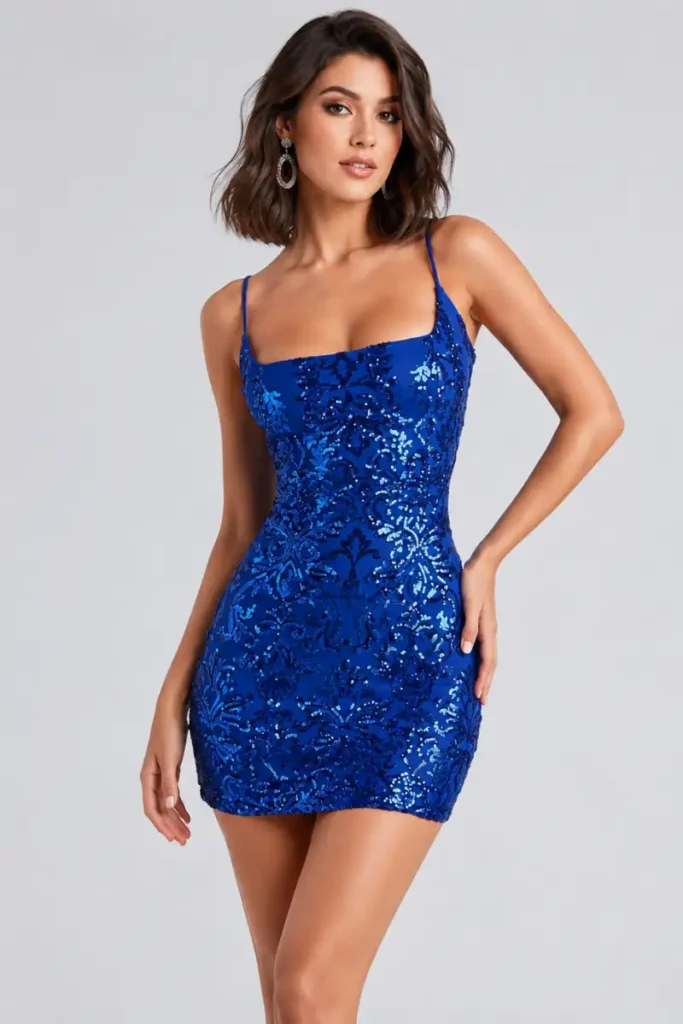
Sequin Mini Dresses
Sequin mini dresses create immediate holiday recognition and strong campaign imagery. Development must control much more than sparkle.
Technical priorities include:
- Sequin base stability
- Decoration direction
- Seam-area trimming
- Skin-contact protection
- Lining attachment
- Garment weight
- Hem balance
- Surface protection in packing
Placement and pattern direction should remain consistent across sizes and colorways.

Satin Cocktail Dresses
- Satin weight and composition
- Bias or straight-grain use
- Drape direction
- Seam construction
- Zipper compatibility
- Lining
- Pressing temperature
- Packing recovery

Velvet Bodycon Dresses
Velvet adds seasonal depth and premium texture, but directional pile makes cutting and packing discipline essential.
Control points include:
- Nap direction
- Shade appearance under light
- Stretch and recovery
- Seam impressions
- Pressing protection
- Zipper installation
- Hanger and folding method
- Carton pressure
Pattern allowance must respond to the specific velvet construction rather than copying a standard bodycon block.

Mesh Party Dresses
Mesh supports transparency, layering, ruching and contrast effects. Weak mesh can stretch during sewing, expose unintended areas or lose shape after wear.
Development decisions include:
- Stretch direction
- Recovery
- Opacity
- Lining coverage
- Seam stabilization
- Ruching ratio
- Edge finish
- Support placement
Power mesh, soft mesh and decorative mesh serve different functions and should not be treated as interchangeable materials.

Corset and Bustier Dresses
- Cup position
- Bust projection
- Center-front length
- Waist balance
- Boning channel placement
- Gripper or internal support
- Back closure
- Lining tension

Rhinestone Occasion Dresses
Rhinestone dresses create concentrated visual impact through placement, density and light reflection. The application method must suit the base fabric and intended care method.
Review includes:
- Stone size and weight
- Attachment method
- Placement tolerance
- Stretch-zone avoidance
- Skin contact
- Packing protection
- Repair allowance
- Bulk consistency

Halter and Backless Dresses
- Neck strap width
- Pressure distribution
- Side-bust coverage
- Back opening shape
- Concealed support
- Closure security
- Bra solution
- Movement test

One-Shoulder Maxi Dresses
One-shoulder and asymmetric maxi dresses depend on visual balance and controlled weight distribution. Heavy decoration or draped fabric can pull the neckline away from the intended position.
Review includes:
- Shoulder anchoring
- Bust support
- Waist balance
- Drape distribution
- Skirt weight
- Slit position
- Hem length
- Size grading
Building a Balanced Holiday Party Collection
Visual Hero Styles
Hero products drive campaign imagery, social content and seasonal identity. They may include high-density sequins, rhinestone placement, corset structures, metallic surfaces or dramatic draping. Development should focus on:
- Distinctive visual recognition
- Camera and lighting performance
- Strong fit at the campaign size
- Secure construction
- Realistic workmanship time
- Controlled production quantity
- Protective packing
Hero styles can justify greater complexity, but the production plan must reflect longer sample, material and workmanship paths.
Commercial Core Styles
Commercial core styles translate the seasonal direction into wearable products with wider sales potential. Satin midi dresses, velvet bodycon dresses, refined mini dresses and mesh-detail cocktail styles often perform this role. Commercial planning should balance:
- Visual appeal
- Fit accessibility
- Material stability
- Production efficiency
- Color extension potential
- Reorder feasibility
These styles often carry more volume than campaign-led pieces and require particularly stable grading and workmanship.
Reorder-ready Styles
Reorder-ready products use controlled fabrics, proven blocks and repeatable construction. They provide a stable base for color updates, regional assortment changes and post-launch replenishment.
A reorder-ready style should have:
- Locked pattern
- Defined material specification
- Stable trim source
- Clear workmanship standard
- Approved packaging
- Reliable production time
- Documented QC points
Silhouette Development for Holiday Party Dressing

Bodycon Fit
- Bust, waist and hip balance
- Side-seam position
- Cross-grain stretch
- Recovery after extension
- Lining compatibility
- Hem stability
- Grading by POM
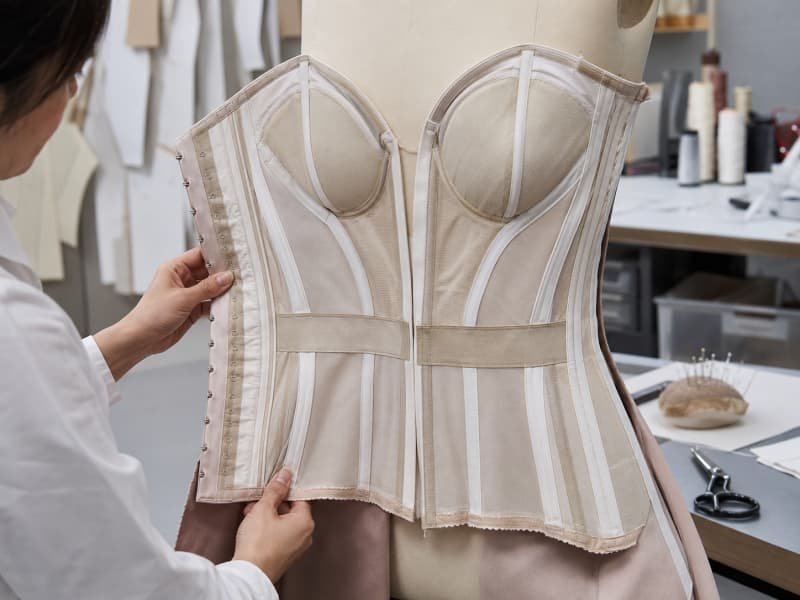
Corset Support
Corset support must hold the target shape without creating visible distortion or uncomfortable pressure. Development includes:
- Cup and under-bust position
- Boning length
- Waist shaping
- Center-front stability
- Side support
- Lining tension
- Back closure
- Grading logic
Support elements should remain hidden and clean from the outside.
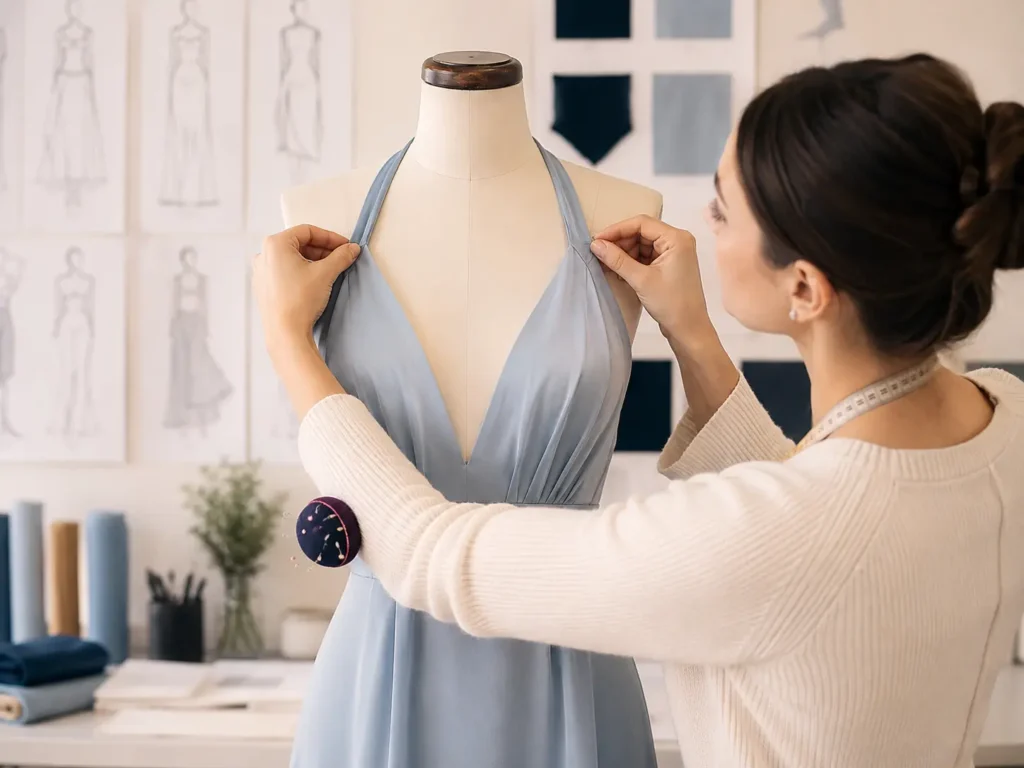
Halter Balance
Halter dresses place load through the neck and upper bodice. Incorrect strap length or front balance can create pressure, gaping or unstable coverage.
Review covers:
- Neckline position
- Strap width
- Bust anchoring
- Armhole shape
- Side coverage
- Back connection
- Adjustability
- Wear duration

Backless Stability
- Back opening depth
- Side seam balance
- Bust security
- Strap placement
- Closure strength
- Lining edge
- Movement test
- Grading

Draped Satin Shapes
- Drape origin
- Grain direction
- Fold depth
- Waist anchoring
- Seam placement
- Lining interference
- Pressing
- Hanging recovery

Asymmetric Silhouettes
- Shoulder balance
- Side-seam alignment
- Hem level
- Cut-out reinforcement
- Drape weight
- Closure position
- Measurement method
- Grading reference
Translating Brand Direction Into Partywear Products
Glamorous Partywear
- Decoration density
- Internal comfort
- Secure closures
- Surface weight
- Lining
- Stretch zones
- Packing protection
- Retail price impact
Elevated Minimal
- Satin surface
- Neckline shape
- Seam placement
- Invisible closures
- Controlled ruching
- Clean lining
- Pressing
- Hem finish
Feminine Occasion
- Coverage
- Layering
- Flower or lace placement
- Color harmony
- Soft structure
- Movement
- Lining tone
- Edge finishing
Polished Social Dressing
Polished social dresses serve corporate events, formal dinners and premium evening occasions. They often require restrained glamour, stable coverage and comfortable wear. Useful directions include:
- Velvet midi shapes
- Long-sleeve fitted dresses
- Refined one-shoulder styles
- Controlled slits
- Satin wrap effects
- Jewel-tone colors
- Structured necklines
- Clean internal finishing
Fabrics Selected for Holiday Dress Performance

Satin
Satin selection should consider composition, weight, weave density, sheen, drape and surface sensitivity. A lightweight satin may work for soft draping but show seam tension and body lines. A heavier satin may support structure but resist fluid gathers.Review includes:
- GSM and thickness
- Drape
- Sheen level
- Needle response
- Pressing tolerance
- Opacity
- Lining
- Lot consistency

Velvet
Velvet provides seasonal richness and depth. Directional pile changes how color appears, making marker planning and cutting direction important.
Review includes:
- Stretch or non-stretch construction
- Pile height
- Nap direction
- Recovery
- Seam impression
- Pressing method
- Hanger choice
- Packing pressure

Sequin Fabric
Sequin fabric varies in backing, sequin size, density, direction and weight. A fabric suitable for a loose shift may not work for a fitted corset mini.
Review includes:
- Base stretch
- Sequin attachment
- Pattern direction
- Garment weight
- Skin contact
- Seam preparation
- Lining
- Packing protection

Mesh
Mesh may be decorative, supportive or both. Soft mesh creates transparency and drape, while power mesh adds control and recovery.
Review includes:
- Stretch direction
- Recovery
- Transparency
- Surface softness
- Layer count
- Seam stability
- Lining tone
- Edge finish

Lace
Lace development requires attention to motif direction, scallop use, transparency and placement across seams.
Control includes:
- Motif scale
- Repeat
- Border use
- Cutting placement
- Lining color
- Seam matching
- Edge finish
- Lot consistency

Metallic Fabrics
Metallic fabrics create strong holiday impact but may crease, scratch, delaminate or show needle damage.
Review includes:
- Surface construction
- Flexibility
- Recovery
- Stitch compatibility
- Heat sensitivity
- Edge finish
- Packing
- Wear test

Stretch Crepe
Stretch crepe offers a cleaner matte option for fitted party dresses. It can support bodycon shaping while reducing the surface sensitivity associated with satin.Review includes:
- Weight
- Stretch percentage
- Recovery
- Opacity
- Seam behavior
- Pressing
- Color consistency

Textured Wovens
Jacquard, brocade and textured woven fabrics add dimension without relying on applied decoration.
Review includes:
- Pattern scale
- Fabric direction
- Fraying
- Thickness
- Seam bulk
- Pressing
- Motif placement
- cutting yield
Holiday Color and Surface Effect Development
Black and Midnight
Control requires:
- Material-specific approval
- Lining shade
- Trim tone
- Zipper match
- Light comparison
- Bulk lot review
Burgundy and Red
Review includes:
- Pantone or physical standard
- Lab dip
- Material absorption
- Velvet pile direction
- Satin reflection
- Bulk shade
- Repeat-order comparison
Emerald and Jewel Tones
Emerald, sapphire, plum and deep teal create premium seasonal depth. Color selection should consider fabric character and target retail photography.
Control includes:
- Lab dip approval
- Lighting review
- Lining coordination
- Metallic trim pairing
- Shade continuity
- Multi-material matching
Silver and Gold
Silver and gold depend on reflection rather than flat color alone. Sequin shape, foil surface, metallic yarn and rhinestone type influence the result.
Review includes:
- Reflection intensity
- Warm or cool tone
- Surface durability
- Base-fabric visibility
- Trim compatibility
- Packing abrasion
Metallic Effects
Control includes:
- Surface stability
- Flexing test
- Needle damage
- Heat response
- Crease recovery
- Packaging method
Custom Seasonal Colors
A color request should include:
- Reference standard
- Target material
- Required quantity
- Number of colorways
- Launch timing
- Acceptable tolerance
Decorative Workmanship for High-impact Holiday Dresses
Sequin Application
Control includes:
- Pattern direction
- Seam-area removal
- Reinforcement
- Lining protection
- Weight distribution
- Missing-sequin inspection
- Repair method
- Packing barrier
Beading
Review includes:
- Bead size
- Thread strength
- Knot security
- Placement tolerance
- Skin contact
- Spare material
- Inspection method
- Packing
Rhinestone Placement
Control includes:
- Stone specification
- Placement map
- Adhesion test
- Stretch allowance
- Heat setting
- Surface inspection
- Repair standard
- Carton pressure
Embroidery
Review includes:
- Thread type
- Stitch density
- Backing
- Placement
- Color
- Shrinkage
- Edge finish
- Bulk repeatability
Appliqué
Control includes:
- Motif preparation
- Attachment method
- Size grading
- Edge security
- Movement
- Skin contact
- Inspection
- Packing protection
Pleating
Pleating changes volume, light reflection and movement. Pleat depth and recovery must suit the fabric and care method.
Review includes:
- Pleat type
- Heat stability
- Direction
- Seam matching
- Hem control
- Size grading
- Pressing
- Packing recovery
Draping and Ruching
Control includes:
- Gather ratio
- Anchor points
- Direction
- Lining relationship
- Stretch behavior
- Seam tension
- Measurement reference
- Size grading
Mixed Decoration
Planning includes:
- Technique sequence
- Material compatibility
- Weight balance
- Reinforcement
- Quality ownership
- Repair process
- Timeline
- Packing
Construction Details Behind Better Party Dress Fit

Cups and Padding
- Cup shape
- Cup size
- Under-bust position
- Edge concealment
- Lining attachment
- Grading
- Wash and wear behavior
- Replacement consistency

Boning Placement
Boning stabilizes corset, bustier and structured bodices. Poor placement can create pressure, visible ridges or shape distortion. Review includes:
- Boning type
- Channel position
- Length
- End protection
- Waist interaction
- Side support
- Grading
- Production tolerance

Lining Coverage
- Composition
- Stretch compatibility
- Shade
- Coverage
- Attachment
- Hem relation
- Seam allowance
- Pressing response

Zipper Construction
- Zipper type
- Tape color
- Length
- Seam reinforcement
- Top closure
- Waist tension
- Pressing
- Replacement source

Elastic and Recovery
Elastic may stabilize necklines, backs, waists or straps. Its tension must support the body without visible gathering or discomfort. Control includes:
- Width
- Recovery
- Tension ratio
- Attachment method
- Skin feel
- Color
- Grading
- Wear test

Hem and Slit Control
- Hem type
- Weight
- Stabilization
- Slit height
- Reinforcement
- Lining relationship
- Measurement method
- Pressing
Tech Pack and Measurement Control Before Sampling
Base Size Definition
The brief should identify:
- Base size
- Target market
- Fit intention
- Model measurements
- Garment ease
- Stretch assumptions
- Reference block
Points of Measurement
POM definitions should explain exactly where and how each measurement is taken. Bust, waist, hip, body length, cup position, strap length and slit height require consistent measuring methods.
Clear diagrams reduce disagreement during:
- First sample review
- Fit correction
- PP approval
- Inline inspection
- Final measurement checks
Size Tolerance
Tolerance should reflect garment type and measurement location. A highly fitted corset bodice requires tighter control than a flowing skirt circumference.
Tolerance planning should consider:
- Critical fit points
- Fabric stretch
- Construction complexity
- Measurement method
- Production variability
- Final inspection rules
Grading Direction
Special attention is required for:
- Cup position
- Neckline depth
- Strap placement
- Armhole
- Back opening
- Slit height
- Boning length
- Decorative placement
Construction Notes
Construction notes should identify seam type, lining method, edge finish, closure, support, reinforcement and pressing requirements.
For holiday partywear, the file may also include:
- Sequin removal zones
- Rhinestone placement
- Ruching ratio
- Mesh layering
- Velvet direction
- Satin pressing restriction
- Packing protection
Trim Placement
Zippers, hooks, cups, boning, straps, labels and decorative trims require measurable locations. Placement should remain visually balanced across sizes.
Documentation may include:
- Distance from seam
- Center alignment
- Angle
- Spacing
- Finished exposure
- Size-specific adjustments
From Collection Brief to Production-ready Samples
Brief Review
The process begins with the intended product role, reference materials, size basis, quantity and launch timing.Useful inputs include:
- Tech pack
- Flat sketch
- Reference image
- Original sample
- Fabric direction
- Measurement chart
- Previous fit comments
- Target price position
Duolan identifies missing information and confirms the most suitable starting point.
Fabric and Trim Direction
- Main fabric
- Lining
- Interfacing
- Zipper
- Boning
- Cup
- Elastic
- Decoration
Pattern Development
The pattern is created or adjusted around the approved design basis, body measurements and fabric behavior.
Development priorities may include:
- Bust balance
- Waist position
- Hip contour
- Strap placement
- Neckline
- Back opening
- Skirt fall
- Hem and slit
First Sample
- Visual direction
- Fit basis
- Material behavior
- Construction feasibility
- Revision priorities
- Production risks
Fit and Comment Review
- Bust shape
- Waist length
- Hip allowance
- Side-seam position
- Strap length
- Neckline security
- Skirt balance
- Decoration placement
Revision and PP Direction
Revision timing commonly requires 5–10 working days, depending on material changes and construction complexity. The project then moves toward visual approval, fit approval, photo-ready use or PP basis. The sample review note should identify:
- Approved points
- Pending points
- Required corrections
- Material decisions
- Bulk-readiness actions
- Next approval stage
Development Risks Across Holiday Dress Materials
Material-specific risk control prevents visual defects, fit problems and production delays from being discovered after bulk cutting has started.
| Product Direction | Main Risks | Duolan Control Direction |
|---|---|---|
| Satin Dresses | Needle marks, seam puckering, pressure shine, scratches and unstable drape | Fabric trial, needle and thread selection, seam review, controlled pressing and protective packing |
| Sequin Dresses | Missing sequins, skin irritation, excess weight, seam damage and carton abrasion | Sequin mapping, seam preparation, lining protection, first-piece review and surface packing |
| Mesh Dresses | Unplanned transparency, stretch distortion, exposed lining and unstable ruching | Stretch-direction review, layer mapping, stabilization, coverage check and ratio control |
| Corset Dresses | Incorrect cup position, visible boning, pressure points and grading distortion | Support mapping, fit review, channel control, edge protection and size-specific grading |
| Velvet Dresses | Reversed nap, pressure marks, shade variation and zipper impressions | Nap-controlled marker, protected pressing, lot review, hanger planning and carton-pressure control |
| Bodycon Dresses | Transparency, poor recovery, twisting seams and inconsistent compression | Stretch and recovery review, pattern reduction, lining compatibility and movement testing |
| Rhinestone Dresses | Loose stones, uneven placement, heat damage and abrasion | Placement map, adhesion test, surface inspection, repair standard and packing barrier |
| Draped Dresses | Uneven folds, incorrect grain, twisting and bulk inconsistency | Grain control, anchor-point specification, ratio recording and PP comparison |
Planning Backward From the Holiday Launch Date
Launch Window
Required inputs include:
- Target launch date
- Warehouse receiving date
- Market or region
- Delivery method
- Number of styles
- Planned quantity
- Campaign schedule
Campaign Samples
Planning should confirm:
- Required size
- Color
- Delivery date
- Final or temporary materials
- Styling needs
- Difference from PP standard
Sample Development
Standard and complex styles should not share one identical timeline. Sequin placement, corset support, custom color, embroidery and special trims may require earlier starts.
The sample calendar should separate:
- First prototype
- Fit sample
- Revision
- Photo-ready sample
- Salesman sample
- PP sample
Material Locking
Material locking should confirm both specification and supply. Color standards, fabric composition, width, weight, stretch, shrinkage, handfeel and finishing must match the approved sample.
The material locking checklist should separate:
- Main fabric and lining approval
- Custom color and lab-dip confirmation
- Fabric consumption and order quantity
- Lace, mesh, embroidery and sequin availability
- Zippers, buttons, cups and boning specifications
- Label, hangtag and packing material approval
Bulk Production
Typical bulk planning for holiday partywear commonly falls within approximately 25–45 days after PP approval and material readiness.
Final timing depends on:
- Quantity
- Number of styles
- Decoration
- Material status
- Factory path
- Inspection
- Packing
Inspection and Shipping
Final inspection, packing, forwarding and transport require protected time. Air, sea and express options have different booking, cost and risk profiles.
The plan should include:
- Final inspection
- Rework buffer
- Packing completion
- Carton marking
- Shipping documents
- Forwarder booking
- Transit buffer
Production Planning for Multi-style Holiday Collections
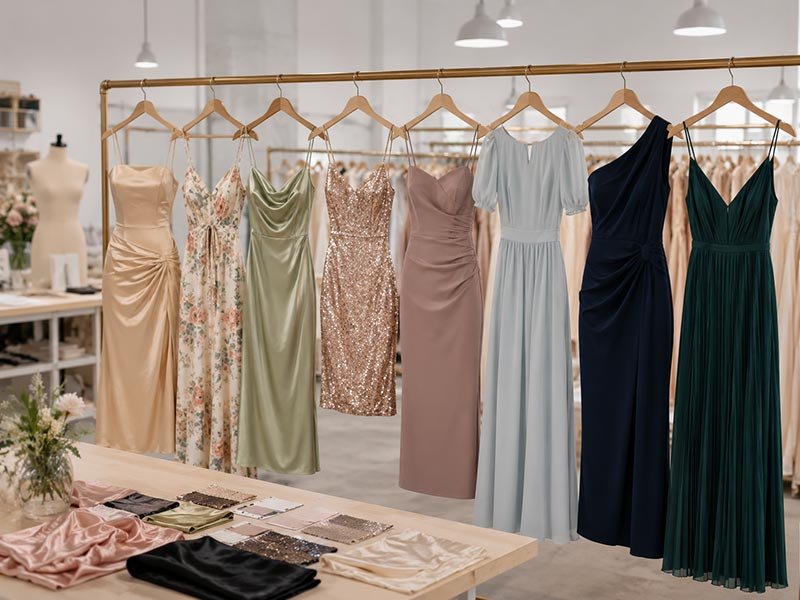
Style Classification

Color and Size Breakdown

Complexity Review

Material Critical Path

Line Matching

Special Process Planning

Launch Calendar Control

Shipment Coordination
Transferring Approved Samples Into Bulk Standards
Approved Pattern
Measurement Specification
BOM and Trim Board
Workmanship Sheet
PP Sample Reference
QC Checklist
Quality Control Across Holiday Dress Production
Quality management begins during development and continues through material review, cutting, first-piece approval, sewing, finishing, measurement, packing and shipment review.
Fabric Inspection
Fabric is checked for shade, surface defects, width, stretch, directional issues and visible damage before cutting. Sensitive holiday fabrics require material-specific inspection standards.
Shade and Lot Control
Cutting Accuracy
First-piece Confirmation
Inline Inspection
Measurement Control
Final Appearance Review
Packing Inspection
First-piece and Pilot Control for Complex Dresses
First-piece Comparison
The first completed production piece is compared with the PP sample, approved pattern and workmanship standard. Review includes:
- Main measurements
- Cup and boning position
- Neckline and straps
- Side-seam balance
- Decoration placement
- Surface condition
- Lining coverage
- Zipper function
Pilot Quantity Review
- Sewing sequence
- Operator consistency
- Workmanship time
- Material damage
- Pressing method
- Measurement variation
- Decoration loss
- Packing behavior
Packaging Designed for Delicate Holiday Dresses

Sequin Protection

Satin Surface Care

Velvet Nap Protection

Corset Shape Protection

Label and Barcode Control

Carton and Shipment Planning
Reorder Consistency for Seasonal Bestsellers
Pattern Preservation
Material Recheck
Color Comparison
Trim Consistency
Previous Issue Review
Packing Standard Reuse
A Manufacturing System Built for Brand-level Partywear
Nearly 30 Years R&D
16 Owned Factories
20+ Satellite Factories
300 Sewing Lines
50+ Response Lines
South China Resources
Compliance Support for Global Fashion Programs
Product Standard Coordination
Projects may require coordination with standards or testing frameworks such as:
- AATCC
- ASTM
- OEKO-TEX-related material requirements
- EN requirements
- China GB standards
- GOTS-related material requirements
- Brand-specific manuals
Availability depends on the nominated material, supplier documentation, test scope and destination market. Requirements should be reviewed before sampling or bulk material booking.
Documentation and Inspection
Support may include:
- Fabric composition records
- Material specifications
- Lab dip records
- Care label information
- Packing specifications
- QC checklists
- Inspection coordination
- Shipment documentation
Representative Holiday Party Dress Programs

US Holiday E-commerce Program
Region: United States
Program: Christmas and New Year’s Eve e-commerce collection
Styles: 18
Total Planned Quantity: 42,000 pieces
Size Range: US 0–14
Main Materials: Sequin, satin, stretch velvet
Colorways: Black, burgundy, emerald, silver and gold
The program combines six campaign-focused styles, eight commercial core styles and four repeat-ready shapes.
The proposed control path includes:
- Style classification by complexity
- Early fabric and trim review
- Photo-sample priority for six hero styles
- Separate fit review for corset and bodycon products
- First-piece approval for sequin and velvet styles
- Protective packing standards by surface type
- Reorder records for the four core shapes
Program Control Target: Release campaign samples first, complete PP approvals in planned groups and maintain one coordinated warehouse delivery window.

UK Occasionwear Holiday Drop
Region: United Kingdom
Program: Partywear and winter occasion capsule
Styles: 12
Total Planned Quantity: 26,400 pieces
Size Range: UK 6–18
Main Materials: Satin, velvet, lace and power mesh
Colorways: Black, wine, navy, plum and forest green
The assortment focuses on polished social dressing, corporate events and cocktail occasions. The key challenge is maintaining coverage and support while preserving a refined appearance.
The proposed development plan includes:
- Two base fitted blocks
- Three neckline families
- Consistent cup and lining strategy
- Fabric-specific pattern adjustment
- Controlled slit and back-opening standards
- Size grading review at critical POM
- Satin pressing and velvet nap instructions
- Inline checks focused on zipper, lining and bust balance
Program Control Target: Reduce repeated fit development by using approved base blocks while preserving clear style differences across the capsule.

European Multi-brand Party Program
Region: European Union
Program: Multi-brand holiday partywear supply
Styles: 24
Total Planned Quantity: 68,000 pieces
Size Range: EU 34–46
Main Materials: Sequins, metallic jersey, mesh, textured wovens and stretch crepe
Delivery Structure: Two seasonal releases
The program includes different retail levels and regional assortments. Main challenges include style prioritization, material lead times, label variations and split delivery.
The proposed production structure includes:
- Style allocation by retail group
- Common material platforms where appropriate
- Separate label and barcode instructions
- Two PP approval waves
- Production-path allocation by complexity
- Inline and final inspection planning
- Split packing and shipment schedules
- Retained standards for repeat orders
Program Control Target: Coordinate 24 styles without allowing regional labels, material variation or delivery sequence to disrupt the common quality basis.
Frequently Asked Questions About Holiday Party Dresses
Duolan develops sequin mini dresses, satin cocktail dresses, velvet bodycon dresses, mesh party dresses, corset and bustier dresses, halter and backless styles, rhinestone dresses, asymmetric silhouettes, midi occasion dresses and selected maxi partywear. Product suitability is reviewed against fabric behavior, fit, construction complexity, planned quantity and delivery timing.
Yes. A collection may include 10–30 coordinated styles across hero, commercial and repeat-ready products. Duolan can review silhouette balance, material direction, colorways, sample priorities, PP approval groups, production allocation and delivery sequence.
A complete tech pack is helpful, but evaluation can also begin from a sketch, reference image, original sample, moodboard, fabric idea, size chart or previous fit comments. More complete information improves quotation accuracy and sample planning.
Standard styles are commonly planned within 7–12 working days after key materials and development information are confirmed. Complex sequin, corset, draped, mesh or embellished styles are commonly planned within 12–20 working days. Final timing is confirmed after feasibility review.
Holiday partywear is commonly planned within approximately 25–45 days after PP approval and material readiness. Quantity, style count, decoration, custom color, inspection, packing and factory allocation can change the final schedule.
Yes. Development can follow brand-specific measurements, POM definitions, grading rules and tolerances. The base size, fit intention, fabric stretch and critical measurements should be confirmed before fit approval.
Duolan can coordinate material sourcing, trim matching, lab dips and alternative material review through established South China supply resources. Material selection is evaluated against silhouette, support, stretch, opacity, surface, cost, availability and bulk consistency.
Approved decisions are transferred into the final pattern, measurement chart, BOM, workmanship sheet, PP sample and QC checklist. First-piece and inline inspections verify whether production remains aligned with the approved basis.
Yes. Multi-style orders are divided by style, color, size, quantity, complexity and timing. Regular, complex, quick-response and high-risk styles may follow different sample and production paths.
Yes. Repeat production can use retained pattern versions, BOM records, material specifications, QC notes, packing standards and previous issue reviews. New material lots and trims are rechecked before production.

Start Your Holiday Party Dress Program
Send Duolan the information already available, whether your team has complete tech packs, original samples, reference images or an early collection brief. Our team will review the product direction, fabrics, fit requirements, decorative workmanship, number of styles, quantities and target dates before proposing a suitable development or production path.
For a more accurate review, please include:
- Company or brand name
- Website or social profile
- Country and target market
- Product types and number of styles
- Tech packs, sketches or reference images
- Fabric and trim direction
- Required colorways
- Base size and size range
- Quantity by style or total program quantity
- Campaign, launch and delivery dates
- Label, barcode and packaging requirements
- Required sample type
- Inspection or compliance requirements
Unreleased designs, technical files, BOMs, original samples and brand information are handled as confidential project materials. NDA requests can be discussed before detailed files are exchanged.


