 Skip to content
Custom Jacquard Dress Manufacturer
Dress-focused development and manufacturing for fashion brands building textured, structured and commercially viable jacquard collections.
- Jacquard programs can be organised across 10–30 coordinated styles, including mini, midi, structured, corset and occasion silhouettes.
- Established brand orders commonly involve 20,000–80,000 garments across multiple styles, colours and size ratios.
- Three approval gates protect production: fabric and motif review, fit and construction confirmation, and PP sample readiness.
- Duolan coordinates fabric sourcing, pattern development, sampling, manufacturing, inspection, packing and delivery through one project structure.
Built for Fashion Teams Developing Jacquard Dress Collections
Established Fashion Brands
Occasionwear Brands
Jacquard offers texture, dimension and visual value for wedding guest, cocktail, holiday, graduation and formal collections. Occasionwear also creates higher expectations for fit, lining, support, closure quality and visual balance. Duolan evaluates the complete garment rather than treating the fabric as decoration added to an ordinary dress pattern.
Product Development Teams
Buying and Sourcing Teams
Control Jacquard Dress Risks Before Bulk Production
Fabric Silhouette Mismatch
Unbalanced Motif Placement
Broken Seam Patterns
Sample Bulk Variation
Excessive Fabric Consumption
Seam Puckering
Lining Structure Conflict
Size Placement Drift
A Dress Development System Beyond Basic Cut-and-Sew
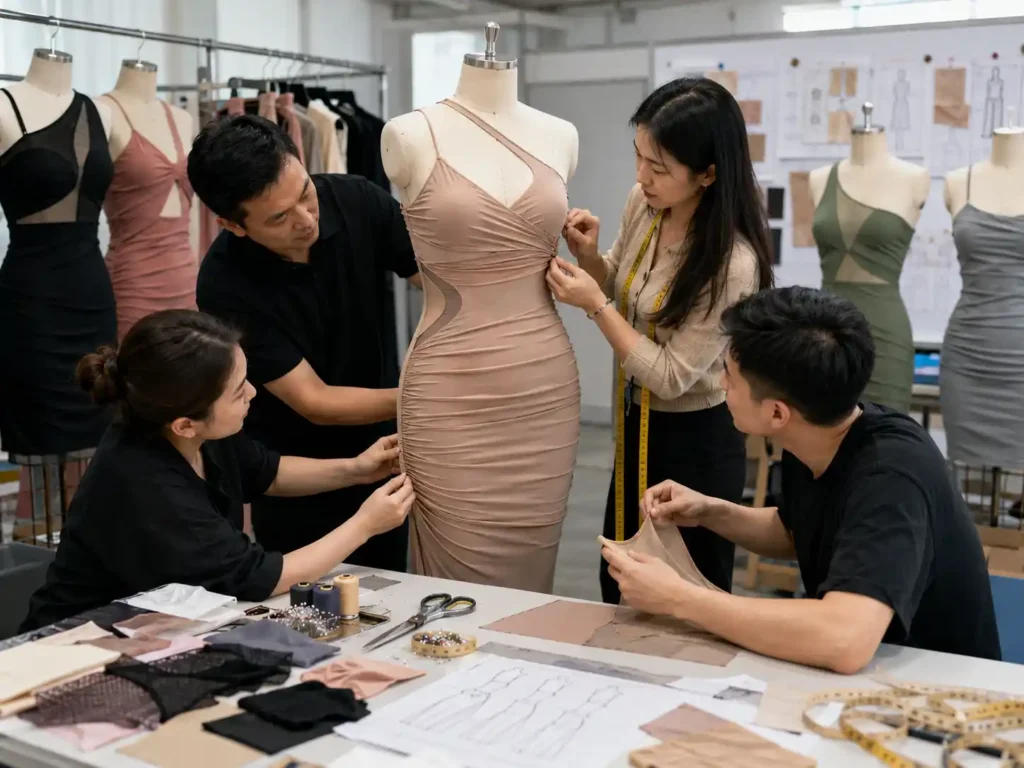
Dress-focused Experience
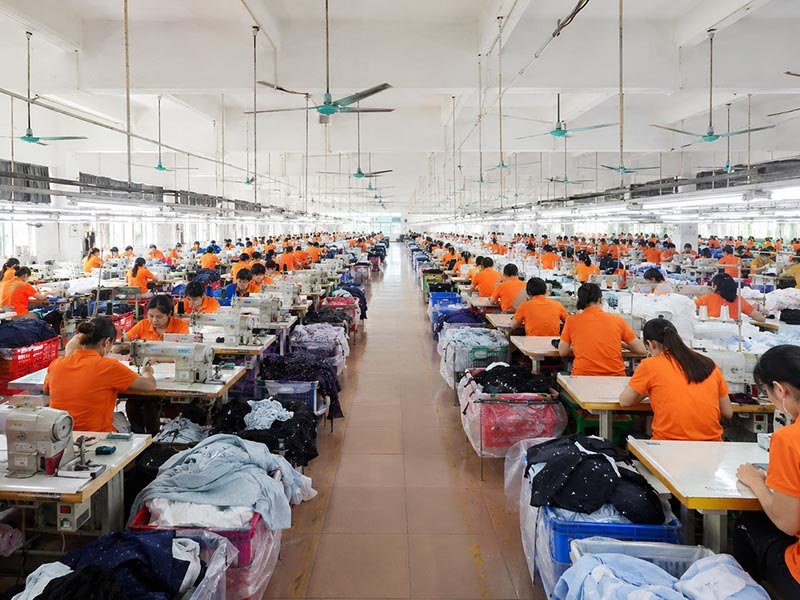
Controlled Core Production

Flexible Manufacturing Network

Brand-level Coordination
Jacquard Dress Styles for Modern Fashion Markets

Jacquard Mini Dresses

Jacquard Midi Dresses

Jacquard Maxi Dresses
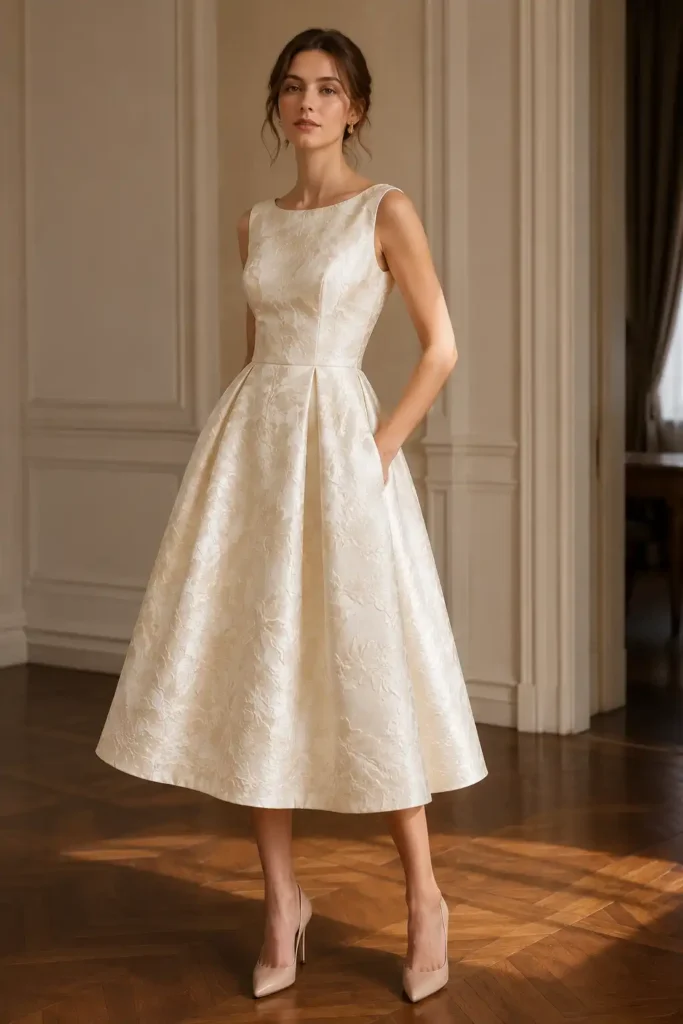
A-line Jacquard Dresses

Fit-and-Flare Dresses

Structured Bodycon Dresses

Corset Jacquard Dresses

Strapless Jacquard Dresses

Puff Sleeve Dresses

Halter Jacquard Dresses
Halter silhouettes place pressure around the neck, bust and upper back. Pattern design must control support, coverage and armhole shape while preserving the intended open neckline. Motif direction becomes especially visible along diagonal neck edges and centre-front panels. Closures and internal support are selected according to fabric weight and dress length.

Cut-out Jacquard Dresses
Cut-outs need reinforcement around exposed edges, accurate positioning across sizes and enough stability to prevent stretching or gaping. Motifs can either frame the cut-out or compete with it. Duolan reviews whether the design should use hidden support, clean binding, facing, lining or narrow seam construction.

Coordinated Jacquard Sets
Matching skirts, corset tops, refined tops and two-piece dress sets allow one jacquard direction to support a broader collection. Pattern placement should remain coherent across separate garments without requiring unrealistic matching standards. Shared lining, trims and colour standards can improve collection consistency and simplify repeat production.
Jacquard Fabric Directions for Different Dress Effects

Floral Jacquard

Geometric Jacquard

Metallic Jacquard

Brocade-style Jacquard

Tonal Jacquard

Lightweight Jacquard

Structured Jacquard

Stretch Jacquard

Matelassé Texture

Logo Jacquard
Brand symbols, initials or custom graphic elements can be woven into a dedicated repeat. Artwork must be translated into a weave-compatible structure with suitable scale and yarn contrast. Development involves pattern repeat planning, loom sampling, fabric approval and confidentiality controls.

Sheer Jacquard
Sheer jacquard can create delicate overlays, sleeves and layered dress sections. Transparency, seam visibility, thread colour and lining coverage become central decisions. Raised motifs may also create local stiffness, so panels should be tested for drape and body movement.

Recycled-blend Jacquard
Recycled polyester and other preferred-fibre blends can be considered when the material source, performance and documentation suit the project. Composition alone does not confirm fitness for use. Weight, recovery, surface durability, colour consistency and available certification require project-level verification.
Woven and Knitted Jacquard Need Different Development Paths
Woven and knitted jacquard can both create patterned surfaces, but they behave differently during pattern making, fitting, sewing and wear. The development route should follow the material construction.
| Development Point | Woven Jacquard | Knitted Jacquard |
|---|---|---|
| Structure | Stable, crisp or softly structured | Flexible, body-following and stretch-responsive |
| Common Dresses | A-line, fit-and-flare, occasion, corset, formal | Bodycon, sweater, fitted day and soft occasion |
| Fit Method | Shaping through darts, seams and panels | Shaping through stretch, recovery and negative ease |
| Primary Risks | Fraying, seam slippage, puckering, bulky joins | Growth, distortion, poor recovery, stretched seams |
| Motif Control | Placement and seam matching | Placement plus stretch distortion control |
| Lining | Often used for comfort, opacity and support | Selected according to stretch and recovery |
| Sample Priority | Silhouette, structure and motif position | Fit, recovery, opacity and movement |
| Bulk Control | Shade, repeat, placement and cutting direction | Stretch stability, relaxation and size consistency |
Match Jacquard Structure to the Intended Dress Silhouette
Material selection should start from the desired garment result. A visually attractive fabric may still fail when its weight, drape, stretch or surface construction conflicts with the proposed shape.
| Fabric Character | Suitable Dress Directions | Main Development Checks |
|---|---|---|
| Crisp, medium-weight woven | A-line, structured mini, fit-and-flare | Seam thickness, sitting comfort, skirt volume |
| Firm brocade-style woven | Corset, strapless, formal midi | Boning joins, zipper thickness, motif centre |
| Soft lightweight woven | Puff sleeve, relaxed midi, layered dress | Transparency, seam slippage, lining weight |
| Stretch woven jacquard | Bodycon, fitted midi, panelled mini | Recovery, negative ease, seam strength |
| High-relief matelassé | Sculpted mini, boxy day dress | Visual volume, edge thickness, pressing |
| Metallic jacquard | Holiday, cocktail, event dresses | Snagging, skin comfort, press temperature |
| Tonal low-sheen jacquard | Premium daywear, office, refined occasion | Motif visibility, handfeel, colour consistency |
| Knit jacquard | Sweater dress, fitted daywear, soft bodycon | Growth, recovery, stretch direction |
A successful match considers more than appearance. Duolan reviews the intended retail position, dress length, body fit, lining, season, colour direction, available width and order structure before the fabric becomes the development basis.
Custom Jacquard Pattern Development with Fabric Mill Coordination
Artwork and Motif Feasibility Review
A custom motif must be translated from a visual design into a repeat suitable for weaving. Fine lines, colour transitions, logo details and irregular shapes may need adjustment to remain clear in the fabric structure.
- Artwork format, scale and intended viewing distance are reviewed.
- The design team identifies key elements that must remain recognisable.
- Repeat direction is considered against front panels, sleeves and skirt sections.
- The motif is assessed in relation to the final garment rather than as an isolated textile graphic.
- Confidential project materials are handled through controlled communication.
A larger motif may create strong impact on a midi or maxi dress but become difficult to position on a fitted mini. A small repeat may work efficiently across multiple sizes but deliver less visual distinction. The development decision should balance identity, garment proportions and realistic cutting control.
Yarn, Colour and Fabric Construction Direction
Colour in jacquard comes from yarn selection and woven interaction rather than surface printing alone.
The same artwork can appear very different when yarn sheen, fibre content, density or ground structure changes.
- Yarn colours are reviewed against the intended dress palette.
- Matte, lustrous and metallic components are evaluated for visual depth.
- Weight, thickness and stiffness are selected around the silhouette.
- The reverse side is reviewed for comfort, loose floats and lining needs.
- Fabric width and repeat dimensions are considered in the preliminary consumption plan.
Custom development timing depends on artwork readiness, yarn availability, weave complexity and loom scheduling. Duolan confirms a development path after the fabric direction and garment requirements are reviewed.
Loom Sample and Garment Integration
A textile swatch alone cannot prove the final dress result. The approved fabric direction must be evaluated through drape, construction and placement on the proposed garment.
- Loom samples or development swatches are checked for motif definition.
- Weight, handfeel, stretch, opacity and surface relief are reviewed.
- The material is tested around seams, darts, closures and pressing.
- A garment sample confirms whether the pattern scale suits the body.
- Adjustments may involve motif scale, colour balance, lining or silhouette.
The final approval basis should identify the fabric quality, colour direction, motif repeat and intended garment application before bulk fabric and garment production move forward.

Motif Placement Planned Across Every Critical Dress Panel
Front Body and Bust Placement
- Dominant motifs are identified before pattern placement begins.
- Centre-front balance is reviewed against neckline and waist position.
- Princess seams are assessed for possible interruption.
- Left and right bust areas are checked for visual weight.
- Darts may be repositioned or absorbed into panel lines when suitable.
- The sample confirms how the motif appears on a three-dimensional body.
Waist, Side Seam and Back Control
Waist seams and side seams divide the motif across several garment sections.
Poor planning can create abrupt colour breaks or mismatched directional elements.
- The waist join is checked for major motif interruption.
- Side seams are assessed according to visibility and fabric repeat.
- Centre-back zippers are placed to preserve balance where possible.
- Back neck and lower back motifs are reviewed for asymmetry.
- Panels are numbered to protect cutting direction.
- Acceptable production tolerance is defined before bulk cutting.
The commercial standard depends on repeat size, dress structure, fabric cost and order quantity. Duolan presents a workable placement method instead of promising unrealistic matching across every seam.
Sleeve Pairs and Skirt Panels
Sleeves and skirt sections can reveal directional inconsistency quickly. One sleeve may show a dominant flower while the opposite sleeve carries only background texture unless paired cutting is planned.
- Sleeve pairs are cut with compatible orientation.
- Puff sleeves are checked after gathering changes the motif.
- Pleated or flared skirts are reviewed for repeat flow.
- Large skirt panels are checked for shade and direction.
- Hem placement is considered when the motif contains clear borders.
- Panel joins are assessed from normal viewing distance.
Marker planning balances visual requirements with fabric utilisation. Special placement zones can be isolated without applying expensive matching rules to every hidden or low-visibility seam.
Placement Across the Size Range
A motif centred on one sample size may shift after grading. Larger sizes add width and length, while smaller sizes remove space around necklines, bust lines and waist panels.
- Key anchor points are defined for grading.
- The centre-front position remains the main visual control.
- Neckline and bust motifs are reviewed in representative sizes.
- Waist seam placement follows the approved proportion.
- Sleeve and skirt scale are checked for distortion.
- Placement notes are transferred into cutting and QC instructions.
Size consistency means preserving the visual intention, not forcing identical motif coordinates onto every body size. The final rule should protect proportion, symmetry and brand presentation across the approved range.
Pattern Engineering for Structured Jacquard Dress Silhouettes
Shape the Pattern Around Fabric Behaviour
- Darts and princess seams are selected around motif and fit priorities.
- Bust shaping is checked for smoothness and visual balance.
- Waist suppression is reviewed against sitting comfort.
- Hip ease follows stretch level and garment length.
- Necklines and armholes receive stability according to the fabric.
- Flare, pleats and gathers are tested against fabric thickness.

Control Seam Thickness and Internal Bulk
- Seam allowances can be graded or reduced in thick zones.
- Facings are selected according to outer-fabric weight.
- Zipper tape and hook areas receive controlled reinforcement.
- Boning channels avoid unnecessary layer build-up.
- Corners and shaped necklines are clipped and turned carefully.
- Pressing tests confirm whether flattening changes the surface texture.

Grade Fit and Proportion Across Sizes
Size grading affects more than circumference. Neckline depth, cup position, strap length, waist height, slit position and motif placement can change the visual result across the range.
- Duolan can work from brand-specific US, UK, EU or AU specifications.
- Base-size measurements and fit priorities are reviewed first.
- Grade rules are applied according to silhouette and target market.
- Structured bust areas receive separate attention.
- Strapless and corset styles are checked for support stability.
- Representative sizes can be reviewed when the risk level requires it.
The objective is a consistent brand fit, not a mechanical increase of every measurement. Fit comments, size charts and final grade rules should remain aligned before bulk patterns are released.

Lining and Support Systems Matched to Jacquard Structure
Lining Weight
Surface Comfort
Bust Support
Neckline Stability
Waist Structure
Hem and Skirt Balance
Trim Selection Protects Fit, Function and Visual Finish
Invisible Zippers
Metal Zippers
Hooks and Eyes
Covered Buttons
Boning Systems
Cups and Padding
Interfacing Materials
Brand Components
Technical Information Needed Before Jacquard Dress Sampling
Design Foundation
Jacquard Direction
Measurements and Fit
Construction Details
Commercial Information
Timing and Delivery
From Fabric Direction to Production-ready Jacquard Samples

Project Brief and Feasibility Review
- Design files, measurements and fabric direction are reviewed.
- High-risk areas are identified before pattern work starts.
- Missing information is listed for confirmation.
- The development objective is recorded.
- Fabric availability and custom development needs are separated.
- A provisional path is proposed according to complexity.

Pattern, First Sample and Internal Review
Pattern development translates the design into fabric-specific construction.
The first garment is then checked internally before shipment.
- Pattern lines are reviewed against motif and silhouette.
- Fabric direction and placement are marked.
- Lining and support are prepared with the outer shell.
- Sewing methods are tested around sensitive seams.
- Measurements, symmetry and visual balance are inspected.
- The sample is pressed and reviewed from front, side and back.
Internal checking aims to remove avoidable errors before brand review. The first sample may still require fit or design refinement, but it should provide a clear decision basis rather than create confusion.

Fit Comments and Controlled Revision
- Each comment is translated into a pattern or construction action.
- Conflicting requests are identified for clarification.
- Revision priorities are agreed before work begins.
- Updated measurements and pattern notes remain recorded.
- Production risks are communicated before approval.
- The revised sample is compared with the previous version.

PP Sample and Bulk Readiness
- Approved fabric, colour, lining and trims are confirmed.
- Final measurements and grade rules are checked.
- Motif placement and matching standards are recorded.
- Workmanship details and pressing methods are fixed.
- Packing and labelling requirements are included.
- A production-readiness review confirms remaining actions.
Fit Corrections Translated into Pattern and Construction Changes
Upper Body Balance
- Neckline shape and edge stability are reviewed.
- Bust width, dart position and cup placement are checked together.
- Front and back balance are compared.
- Armhole depth follows movement and coverage needs.
- Strap length and angle are adjusted around the neckline.
- Support methods are reviewed when fit depends on internal structure.
Waist and Hip Control
A twisted side seam, raised waistline or horizontal pulling can indicate incorrect body distribution, not simply insufficient width.
- Waist position is reviewed front, side and back.
- Side seam direction is checked on the form.
- Hip ease follows fabric stretch and garment length.
- Darts and panel curves are adjusted around body shape.
- Lining measurements remain aligned with the outer shell.
- Closure tension is checked through the waist zone.
Jacquard surface patterns can make fit imbalance more visible. Panel lines and motifs should remain visually stable after corrections.
Hem, Slit and Skirt Movement
Uneven hems and restricted movement can result from fabric weight, body balance, lining tension or incorrect flare distribution.
- The garment hangs before final hem evaluation.
- Front and back lengths are checked on the body.
- Slit height is assessed for movement and coverage.
- Skirt panels are reviewed for twisting.
- Lining width and length are compared with the shell.
- Motif borders near the hem are checked for consistency.
Longer jacquard dresses need enough movement without losing the intended sculpted appearance. The approved result should remain stable after pressing and packing.
Controlled Manufacturing from Fabric Inspection to Final Packing
Fabric Receiving
Fabric Inspection
Stability Review
Placement Planning
Controlled Cutting
Sewing Preparation
First-piece Confirmation
Inline Control
Final Finish and Packing
Workmanship Details Preserve Jacquard Texture and Dress Shape
Cutting Direction, Pairing and Edge Control
Woven jacquard often has a clear face, reverse, directional sheen or motif orientation. Cutting preparation protects those characteristics before sewing begins.
- Grain and one-way direction are marked clearly.
- Left and right components are paired correctly.
- Dominant motifs are positioned according to approved rules.
- Fraying edges are handled before they lose shape.
- Bundles are numbered to avoid shade or direction mixing.
- Notches remain accurate without damaging loose woven structures.
Large repeats may require controlled marker placement, while compact repeats can allow more efficient layouts. Fabric utilisation remains important, but visual standards cannot be recovered after pieces are cut incorrectly.
Seams, Darts and Structured Panel Joins
Seams must shape the body without puckering, slipping or crushing the raised surface.
- Needle size follows yarn density and fabric construction.
- Thread and stitch length are selected through testing.
- Curved seams are clipped and pressed carefully.
- Darts remain smooth and point toward the correct body position.
- Princess seams preserve both fit and motif balance.
- Thick seam intersections are graded to reduce bulk.
Dense jacquards may need different handling from lightweight filament jacquards.
Workmanship instructions should identify sensitive areas rather than applying one generic seam standard.
Zipper, Lining and Internal Support Installation
- Zipper tape is stabilised without creating stiffness.
- Waist joins are aligned across the closure.
- Lining ease prevents pulling and twisting.
- Cups and boning remain secure but discreet.
- Facing and interfacing edges avoid visible ridges.
- Hook positions support the closure at stress points.
Pressing, Surface Protection and Final Presentation
- Temperature and pressure are tested on the actual material.
- Protective cloths or surface methods are used when needed.
- Seam allowances are shaped without flattening the motif.
- Shine marks and imprints are checked under several light angles.
- Garments cool before packing.
- Folding avoids sharp pressure across high-relief areas.
Quality Checks Designed for Jacquard Dress Production
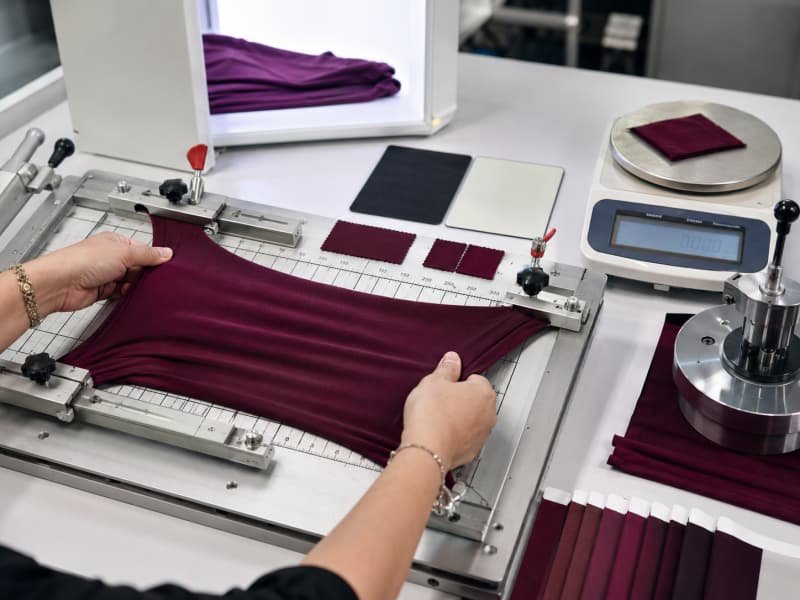
Fabric Quality Control
- Composition and quality reference
- Roll width and usable width
- Colour and shade consistency
- Motif repeat and direction
- Raised-yarn or loose-float defects
- Snagging and surface damage
- Weight and handfeel
- Shrinkage or stability where required
Cutting and Placement Control
- Grain and direction
- Front-centre position
- Pair symmetry
- Sleeve orientation
- Waist and visible seam balance
- Numbering and bundling
- Size identification
- Cutting accuracy

Sewing and Construction Control
- Seam puckering
- Seam slippage
- Skipped stitches
- Zipper waviness
- Lining tension
- Boning and cup position
- Neckline stability
- Motif interruption
- Stitch density
- Internal cleanliness

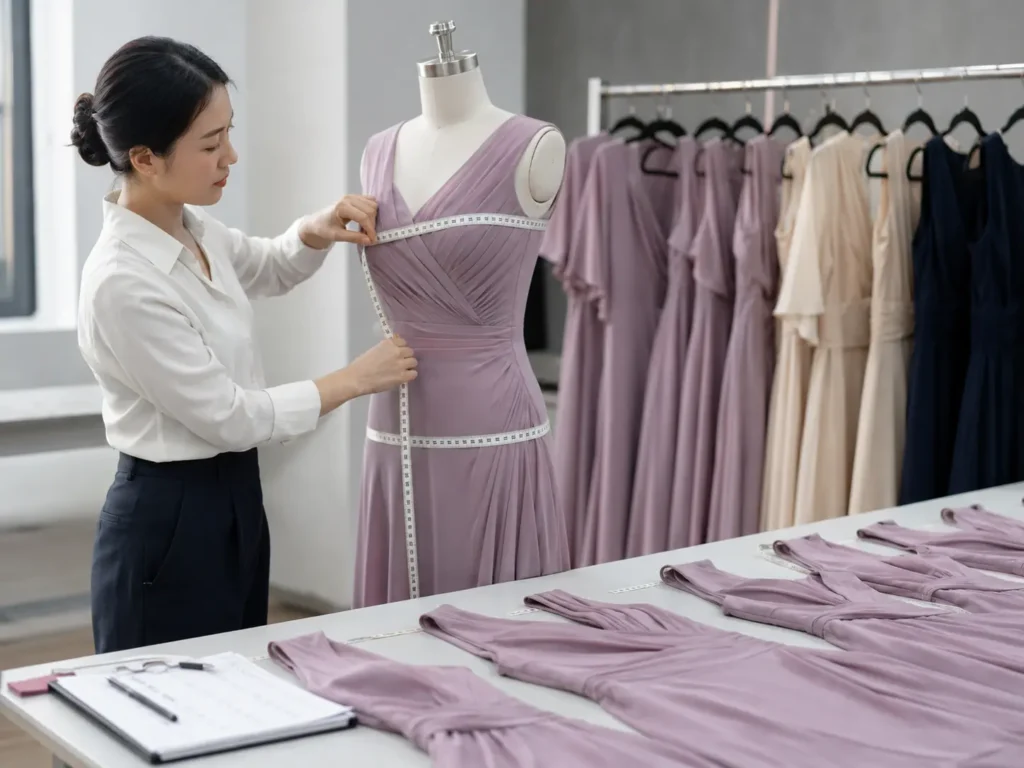
Measurement and Fit Control
- Bust, waist and hip
- Body length
- Strap or halter length
- Armhole and neckline
- Sleeve length and opening
- Skirt length and slit position
- Waist seam level
- Symmetry points
Final Appearance and Packing Control
- Surface cleanliness
- Loose yarns and snags
- Press marks
- Motif balance
- Closure function
- Label placement
- Size and barcode accuracy
- Folding or hanging method
- Surface protection
- Carton assortment

Manufacturing Capacity for Multi-style Jacquard Programs
Core Factory Control
Satellite Capacity Support
Multi-style Planning
Quick-response Coordination
Compliance and Documentation for Global Fashion Programs
Social Audit Records
Material Information
Product Testing
Quality Records
Client Standards
Shipment Documents
Packaging and Delivery Planned Around Your Launch Calendar
Brand Labels
Hangtags and Barcodes
Surface Protection
Hanging or Folded Packing
The packing route depends on dress length, structure, fabric relief and warehouse requirements.
Formal or strongly structured garments may benefit from hanging solutions.
Carton Planning
Carton size, assortment ratio, weight, internal pressure and destination handling are reviewed to protect garments while supporting shipping efficiency.
Delivery Options
Jacquard Dress Programs Developed for Fashion Markets
United States Wedding Guest Collection
Program: 18 jacquard dress styles across structured mini, midi and fit-and-flare silhouettes
Total Order: 42,600 garments
Colour Direction: 31 approved style-colour combinations
Size Structure: Brand-specific US grading with selected larger-size fit review
The main challenge came from using six jacquard qualities across one collection. Large floral repeats looked balanced on midi dresses but became visually crowded on shorter silhouettes. Several bodices also combined princess seams with wide motifs, creating the risk of broken flowers around the bust.
Duolan divided the collection by repeat scale, fabric body and silhouette. Large motifs were assigned to cleaner panels and longer skirts, while compact repeats were used for corset and shaped mini dresses. Front-centre anchor points were created for the most visible styles. Waist and side-seam matching priorities were agreed before marker planning.
Fit review focused on bust balance, waist position, strapless security and sitting comfort. Two higher-risk styles moved through first-piece confirmation before production release. Fabric, lining, zipper and motif standards were included in the production-readiness record.
Result: All 18 styles entered one coordinated launch program. Commercial styles were prioritised for earlier warehouse delivery, while four statement pieces followed a separate workmanship route. The approved construction and placement records provided a clear base for repeat colours.

United Kingdom Holiday and Occasion Program
Program: 12 dresses including corset minis, structured midis and holiday party silhouettes
Total Order: 28,800 garments
Material Direction: Four metallic jacquards with different stiffness and surface relief
Delivery Plan: Two production and shipment stages
The original design direction used one stiff metallic jacquard across several silhouettes. Sampling showed the material worked well for A-line and corset shapes but created excessive bulk in gathered sleeves and close waist seams. The reverse surface also required better skin protection.
Duolan reorganised the material application. Firm qualities remained on structured bodices and skirts. Softer metallic jacquard was assigned to sleeves and fitted midis. Seam allowances were graded around waist joins, and internal support was reduced where the outer fabric already provided enough body. Full lining was used for rougher reverse surfaces, while lighter partial support was applied to lower-relief qualities.
Pressing trials established safer temperature and pressure settings. Packing specifications avoided sharp folding through raised motifs. Zipper and hook positions were tested before bulk release because metallic structures created local thickness.
Result: Twelve styles retained a unified holiday visual direction without forcing every silhouette into one fabric construction. Split production allowed four complex styles to receive added first-piece checks while eight stable styles moved through the regular route. The staged delivery protected the planned launch calendar.

Australian Party and Event Collection
Program: 24 styles across mini dresses, fitted midis, halter dresses and coordinated sets
Total Order: 67,200 garments
Collection Structure: Seven main jacquard directions with shared linings and trims
Launch Format: Three online drops
The brand required enough variation for three launches without creating an unmanageable number of materials. Early development contained too many separate linings, zipper finishes and support combinations, increasing approval pressure and repeat-order complexity.
Duolan grouped the styles by fabric behaviour and body structure. Seven jacquard qualities were retained, while lining and trim options were consolidated into controlled families. Halter and open-back styles received separate coverage and support reviews. Fitted dresses used stretch and recovery checks, while structured minis followed motif-placement and seam-thickness controls.
Sample comments were organised by collection group rather than handled as unrelated single styles. Common waist, neckline, zipper and lining decisions could then be applied consistently. Production was divided according to drop sequence, complexity and fabric readiness.
Result: Twenty-four styles retained distinct visual identities while using a more controlled material and trim system. The production plan supported three delivery stages, and approved BOM structures simplified colour extensions and future reorder discussion.

What Fashion Brands Should Verify Before Supplier Approval
Fabric Evidence
Placement Standards
Pattern Capability
Sample Management
Bulk Readiness
Manufacturing Evidence
Custom Jacquard Dress Frequently Asked Questions

Start Your Custom Jacquard Dress Development Project
Share your jacquard dress direction with Duolan for a structured development and manufacturing review. A complete tech pack allows the team to assess pattern, fit, motif placement, construction and quotation more accurately. Reference images, an original sample, a fabric swatch or jacquard artwork can also provide a starting point when technical files are still being completed.
Please include:
- Company or brand name and website
- Target market and intended wearing occasion
- Tech pack, sketches or reference images
- Jacquard artwork, swatch or fabric direction
- Required styles and colourways
- Sample size and complete size range
- Estimated quantity per style and colour
- Target launch and delivery dates
- Main label, care label and packaging requirements
- Testing, inspection or compliance standards
After receiving the files, Duolan will review the development basis, fabric route, fit-sensitive areas, sample purpose, bulk feasibility and suitable production path before confirming the next steps.


