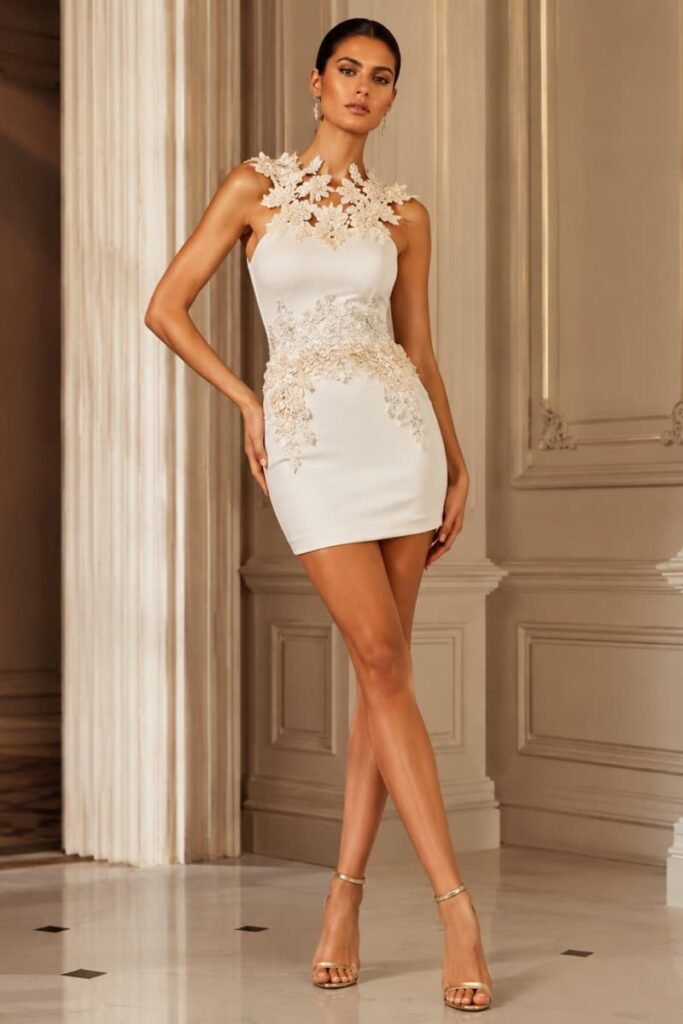
...

Custom Lace Appliqué Dress Manufacturer

Dress-focused development and manufacturing for fashion brands creating refined lace appliqué collections with controlled placement, fit and bulk consistency.

  • Nearly 30 years of fashion dress development and manufacturing experience
  • 8 lace variables reviewed before sampling: scale, direction, symmetry, seam crossing, edge use, lining, grading and attachment
  • 5 production control gates from motif approval to first-piece release
  • 10 dedicated inspection points for lace appliqué workmanship
  • Support for mini, midi, maxi, corset, mesh, party and occasion dress programs
  • Development, sampling, bulk production, quality control and delivery coordination under one project path

Built for Dress Brands With Structured Development Programs

Duolan supports teams that need more than garment assembly. Our work begins with product direction, lace behavior, fit priorities, commercial positioning and production feasibility before patterns and samples move forward.

Occasionwear Brands

Develop mini, midi and maxi dresses for cocktail, graduation, wedding guest, homecoming and formal collections. Support covers refined lace placement, clean lining coverage, shape control and stable workmanship across coordinated seasonal programs.
  • Collection-based product development
  • Multiple silhouettes under one visual direction
  • Photo-ready and production-ready sample paths
  • Reorder preparation for proven styles

Fast Fashion Buying Teams

Manage several styles, colors and delivery windows without losing control of approved details. Placement references, sample comments, material confirmations and production checkpoints remain linked to each style throughout development and bulk execution.
  • Multi-style project organization
  • Clear approval and revision records
  • Production priority planning
  • Inspection and delivery coordination

Product Development Teams

Translate sketches, tech packs, original samples and reference images into garments that can be fitted, reviewed, corrected and prepared for repeatable production. Material and construction risks are raised before they become costly sample problems.
  • Fabric and lace feasibility review
  • Pattern and fit development
  • Placement and workmanship trials
  • Bulk-readiness evaluation

Designer-Led Dress Labels

Protect the visual language behind a collection while improving manufacturability. Duolan reviews motif proportion, focal placement, silhouette balance, decorative density and finish quality without flattening the original design direction.
  • Refined product interpretation
  • Controlled complex detailing
  • Confidential project handling
  • Scalable manufacturing planning

Control the Risks Hidden Behind Beautiful Lace Appliqué

A lace appliqué dress can look convincing in one photograph yet fail during fitting, grading or bulk production. Strong development identifies visual, structural and workmanship risks before materials are cut.

Placement Drift

A motif placed a few centimeters too high, low or wide can change bust balance, waist definition and the visual center of the dress. Duolan records reference points from neckline, center front, waist seam and major pattern lines instead of relying only on visual estimation.

Broken Symmetry

Mirror-pair florals require control over orientation, spacing, height and distance from the center line. Left and right pieces are checked as a pair before attachment, especially around cups, necklines, waist panels and hip areas.

Size Grading Distortion

The same appliqué cannot always remain at the same coordinate across every size. Larger or smaller pattern dimensions may require repositioning, additional motifs or adjusted spacing to preserve the intended visual proportion.

Lining Color Shift

Nude, self-color and contrast linings can make one lace appear completely different. Lining color, opacity, surface shine and attachment method are reviewed together with the outer lace and base fabric.

Edge Lifting

Poorly controlled motif edges may curl, fray or detach after fitting, packing or wear. Edge condition, thread path, hidden attachment points and stress zones are reviewed before the workmanship route is approved.

Sample-to-Bulk Variation

A sample may receive exceptional attention while bulk pieces follow an unclear standard. Duolan converts approved appearance into placement references, workmanship instructions, PP confirmation and first-piece inspection points.

Custom Lace Appliqué Dress Categories for Fashion Collections
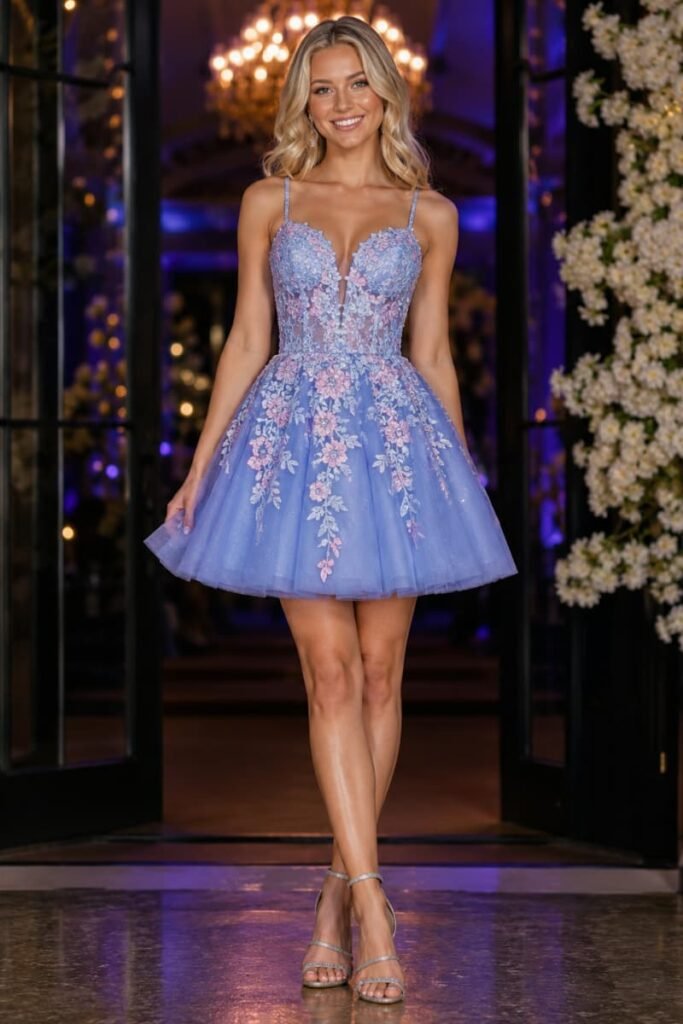
Product development can cover commercial core styles, visual statement pieces and repeatable collection extensions. Each category requires a different balance of lace scale, base fabric, fit, lining and production method.

Lace Appliqué Mini Dresses

Mini silhouettes place strong visual pressure on a limited garment area. Motif scale must remain proportionate, while hem, waist and bust zones cannot compete for attention. Common directions include fitted party minis, A-line occasion styles, long-sleeve designs and corset-inspired shapes. Key controls include hem balance, thigh comfort, skirt movement, lining length and placement continuity across short pattern pieces.

Lace Appliqué Midi Dresses

Midi dresses offer more space for vertical floral movement, border arrangements and waist-to-hem transitions. Development may combine fitted bodices with pencil, A-line, bias-inspired or softly flared skirts. Important decisions include motif flow, waist emphasis, slit placement, lining coverage and whether the lace should frame the body or create an all-over surface effect.

Lace Appliqué Maxi Dresses

Maxi styles require controlled weight distribution and visual rhythm over a larger surface. Dense decoration near the hem may influence drape, while concentrated bodice work may require stronger internal support. Development reviews skirt volume, motif spacing, panel construction, movement, lining length and packing protection for long embellished garments.

Corset Lace Dresses

Corset structures require appliqué to work with cups, boning, princess seams, waist shaping and closure systems. Motifs may need to cross structural lines without creating bulk or weakening support. Key control points include cup framing, center-front symmetry, boning visibility, underarm comfort and clean internal finishing.

Mesh Appliqué Dresses

Sheer mesh allows motifs to appear suspended on the body, creating a refined visual effect. The same transparency also exposes attachment threads, seam allowances, cups, support layers and lining edges. Mesh stretch, recovery, color, skin tone, stitch tension and coverage zones must be reviewed as one system.

Three-Dimensional Floral Dresses

Layered flowers, folded petals and raised motifs create strong visual depth but add weight, packing volume and snagging risk. Flower position must support movement rather than collapse around high-contact zones. Petal shape, attachment points, edge security, steaming and carton protection enter the production standard.

Beaded Lace Dresses

Beads, pearls, sequins or rhinestones can be combined with embroidered lace motifs for premium party and occasion styles. Decorative density affects garment weight, flexibility, handwork time and comfort. The reverse side, underarm zones, sitting areas, side seams and packaging require special review.

Wedding Guest Dresses

Lace appliqué can support refined wedding guest, bridesmaid, cocktail and special-event collections without moving into traditional bridal gown production. Commercial silhouettes may include structured midis, elegant maxis, fitted minis and feminine fit-and-flare designs. The focus remains on wearable sophistication, repeatable quality and collection-level manufacturing.

Build Lace Collections Around Real Wearing Occasions

A commercially balanced range should contain visual styles, dependable sales shapes and repeatable extensions. Lace direction, color, coverage and silhouette need to support the intended occasion and retail position.

Cocktail Collections

Use strategic lace placement around necklines, waist panels or skirt borders to create refined impact without excessive weight. Midi and short silhouettes can balance elegance with easier movement and wider commercial appeal.

Partywear Programs

Combine lace with mesh, satin, sequins or crystal accents for stronger photography and event-driven demand. Placement should remain visible under evening lighting while internal surfaces stay smooth against the skin.

Graduation Dresses

White, ivory, pastel and soft-tone lace dresses require careful control of transparency, lining color and photography under strong light. Short and midi styles should remain comfortable for extended wear and movement.

Homecoming Dresses

Fitted mini dresses, corset shapes and playful A-line silhouettes can use appliqué as a focal detail. Strong attachment and secure fit matter because the garment must perform during active wear.
Lace and Appliqué Halter Dresses​

Wedding Guest Edits

Elegant lace placement works well for midi and maxi silhouettes, one-shoulder designs, long sleeves and refined fitted shapes. Color, coverage and decorative density should support sophistication without resembling traditional bridal gowns.

Holiday Collections

Deep colors, metallic thread, velvet bases, sequins and dimensional motifs can create stronger seasonal impact.

Material weight and surface friction require attention during production and packing.

Going-Out Dresses

Body-conscious silhouettes can use localized motifs to frame bust, waist or hip areas.

Stretch behavior must remain balanced so decorative areas do not create rigid spots or visible pulling.

Premium Occasion Capsules

A smaller coordinated capsule may combine one statement piece, several commercial silhouettes and repeatable fabric or motif extensions. Shared materials and controlled color direction can improve collection coherence and production planning.

Choose Lace Appliqué by Structure, Weight and Visual Effect

The word “lace” covers many constructions. A motif must be evaluated by thread density, base net, edge stability, weight, stiffness and cuttable spacing before it is assigned to a garment.

Flat Embroidered Appliqué

Flat motifs provide clean surface decoration with limited bulk. They suit fitted minis, mesh panels, sleeves and controlled neckline arrangements. Edge quality and backing stiffness determine whether the motif lies smoothly or creates visible ridges.

Corded Lace Motifs

Raised cord outlines create stronger definition in photography. Corded motifs work well on occasion midi dresses, corset bodices and formal silhouettes. Heavier edges require careful joining and may need additional internal support.

Guipure Lace Appliqué

Guipure motifs contain dense embroidery without a fine net background. The substantial structure creates a premium appearance but adds weight and stiffness. Placement should avoid areas needing high stretch or soft drape.

Three-Dimensional Flowers

Layered petals, folded organza, embroidered leaves and raised floral centers create depth. Each component requires secure attachment at several points while preserving the intended volume after pressing and packing.

Beaded Lace Motifs

Pre-beaded motifs reduce some garment-level decoration work but increase cutting, sewing and handling risk. Broken beads near seam allowances must be removed or secured before attachment.

Sequin Lace Appliqué

Sequins add light response and partywear value. Density, direction, skin contact, seam crossing and edge trimming all influence production quality. Loose or sharp components cannot remain near underarm or neckline zones.

Mirror-Pair Motifs

Matched left and right motifs are valuable for corset fronts, necklines, shoulder placements and waist framing. Each pair needs orientation marking and paired inspection before sewing.

Scalloped Edge Appliqué

Scalloped borders can finish necklines, sleeves, slits and hems with a natural decorative edge. Pattern lines should be developed around the border rather than cutting away the most valuable visual feature.

Match Lace, Base Fabric and Lining as One System

Material selection determines whether appliqué lies smoothly, retains shape and remains comfortable through fitting and wear. Duolan evaluates drape, support, stretch, recovery, opacity, surface friction and attachment stability before recommending a combination.

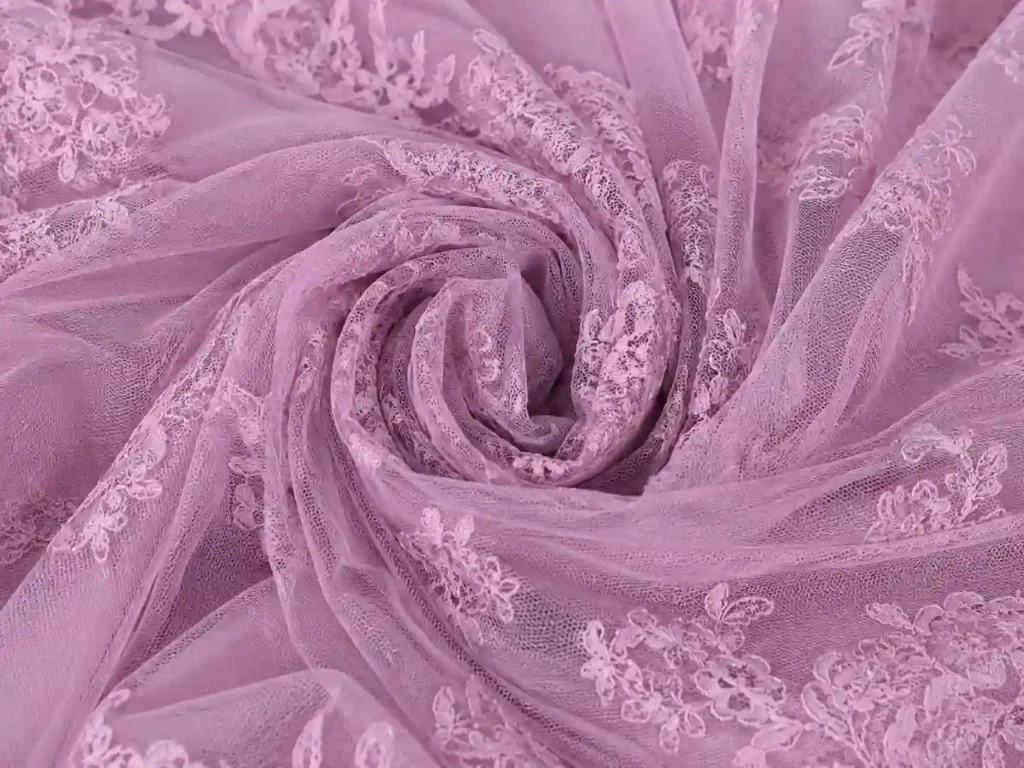
Lace With Tulle

Fine tulle creates a floating appliqué effect for occasionwear, sheer sleeves, upper bodices and layered skirts. Tulle weight, hole size and stiffness must suit the motif. Very soft tulle can collapse under heavy embroidery, while rigid tulle may scratch or distort movement.
  • Best for: illusion panels, layered skirts and refined formal styles
  • Main risks: tearing, visible attachment thread and unstable heavy motifs
  • Control focus: reinforcement, lining coverage and stitch tension
Lace With Stretch Mesh

Stretch mesh works well for body-conscious dresses, fitted sleeves and semi-sheer panels. Appliqué reduces local stretch, creating rigid zones if placement is too dense. Recovery and extension should be checked before pattern finalization.
  • Best for: fitted minis, bodycon midis and stretch occasion styles
  • Main risks: rippling, restricted movement and uneven recovery
  • Control focus: stretch direction, motif spacing and attachment flexibility

Lace With Satin

Satin gives lace a smooth, luminous background and strong color contrast. Needle marks, surface snagging and pressing impressions require disciplined handling. Heavy appliqué may pull against soft satin unless structure is added.
  • Best for: cocktail, corset and premium occasion dresses
  • Main risks: stitch marks, puckering and pressure damage
  • Control focus: needle choice, stabilization and controlled pressing

Lace With Crepe

Crepe offers a matte surface and stable body, allowing motifs to stand out without excessive shine. Woven or stretch crepe options can support fitted and tailored silhouettes.
  • Best for: refined midis, fitted dresses and modern occasionwear
  • Main risks: mismatch between lace stiffness and base drape
  • Control focus: weight compatibility, pressing and seam balance

Lace With Jersey

Jersey supports comfort and body contouring but requires flexible attachment. Dense motifs can lock stretch, create bubbling or change local recovery.
  • Best for: soft bodycon dresses and comfortable going-out styles
  • Main risks: rigid patches, distortion and seam growth
  • Control focus: stretch tests, pattern reduction and controlled stitch length

Lace With Chiffon

Chiffon creates softness and movement beneath delicate appliqué. Heavy motifs can cause sagging or uneven drape, especially on skirts and sleeves.
  • Best for: romantic maxis, flowing midis and layered occasion styles
  • Main risks: dragging, puckering and visible reinforcement
  • Control focus: lightweight motifs, placement spacing and hidden support

Control Lining Color, Coverage and Sheer Areas

Lining decisions affect lace color, body coverage, fit, comfort and photography. Every lining direction should be approved together with the outer material rather than added after the sample shape is complete.

Self-Color Lining

A matching lining creates stronger color saturation and a more solid appearance. Slight color differences may become visible through open lace, so lace, base and lining should be reviewed under consistent light.

Nude-Tone Lining

Nude lining creates an illusion effect while preserving coverage. Skin-tone selection, opacity, neckline shape and exposed mesh zones need careful alignment with the intended market and size range.

Contrast Lining

Contrast colors can reveal the floral structure and strengthen graphic impact. The visual result should be checked at distance and in photographs, because high contrast may expose inconsistent attachment or seam allowances.

Partial Coverage

Partial lining can leave sleeves, shoulders, waist panels or lower skirts sheer. Coverage lines must follow the garment design and remain stable during movement. Internal edges should stay clean and invisible from the outside.

Engineer Lace Placement Across Every Garment Zone

Placement references convert a decorative idea into repeatable production instructions. Each zone has different visual, fit and stress requirements.

Neckline Framing

Motifs may follow a V-neck, sweetheart, square, halter or asymmetric neckline. Flower height and scalloped edges must remain balanced while seam allowances and stabilization stay concealed.

Bust Positioning

Bust motifs influence perceived cup position and upper-body balance. Placement must account for darts, cups, princess seams and size grading rather than following a flat sketch alone.

Waist Definition

Horizontal borders, narrow vines or concentrated florals can emphasize the waist. Excessive stiffness or dense layering may reduce comfort and create bulk at side seams.

Hip Placement

Hip motifs affect visual width and garment flexibility. Stretch garments require sufficient negative space around high-movement zones.

Hem Arrangement

Border lace and repeated motifs must follow hem shape, skirt sweep and length. Short styles need exact visual balance, while long skirts require consistent rhythm around a wider circumference.

Back and Closure Zones

Zippers, lacing, hooks and back neck openings may interrupt motif flow. Placement should frame the closure without causing excessive thickness or trapping decoration in seam allowances.

Start Placement Accuracy at Pattern and Cutting Stage

A sewing operator cannot correct a motif already cut in the wrong direction. Pattern preparation, single-layer cutting, marking and bundle control establish the foundation for accurate appliqué work.

Pattern Reference Lines

Center front, center back, waist, bust point, hip line, seam lines and neckline are used as stable reference points. Placement instructions should connect motifs to measurable garment coordinates.

Single-Layer Cutting

Directional lace and irregular motifs often require single-layer cutting. The method improves control over orientation and pair matching but increases cutting time and material usage.

Pair Cutting

Left and right pieces should be prepared as matched sets. Pair identification helps prevent reversed motifs or mismatched heights during assembly.

Motif Marking

Temporary marks, placement templates or paper references guide position without leaving permanent damage. Marking methods must suit the base fabric and lace color.

Cut-Loss Planning

Large flowers, scalloped borders and irregular repeats create greater material loss than plain fabric. Marker efficiency should be evaluated before quotation and bulk ordering.

Bundle Control

Cut components, loose motifs and size-specific pieces must remain organized by style, color and size. Clear numbering reduces mix-ups during attachment and sewing.

Preserve Visual Balance Across the Full Size Range

Size grading for lace appliqué is a design-control exercise, not a simple coordinate enlargement. Duolan reviews how motif scale, spacing and body landmarks change across the approved size set.

Size-Control AreaSmaller SizesBase SizeLarger SizesControl Principle
Bust MotifMay require tighter spacingApproved visual referenceMay require wider spacing or added support motifsKeep floral center aligned with bust structure
Neckline BorderShorter perimeterApproved edge placementLonger perimeter may need additional repeatPreserve border rhythm without stretched gaps
Waist PlacementNarrower panel widthApproved distance from waist seamWider panel may require motif redistributionMaintain waist emphasis and side-seam balance
Hip MotifsReduced available areaApproved negative spaceMore area may require adjusted spreadAvoid visual crowding or empty zones
Hem BorderShorter circumferenceApproved repeat countHigher repeat count or controlled joiningKeep motif rhythm continuous
Side-Seam MatchLess joining lengthApproved seam alignmentLonger seam may expose repeat changesPlan cut points and joining order by size

Duolan can work from a supplied graded specification or support pattern grading around the approved base size. Placement standards are reviewed at critical sizes where visual balance or coverage may change most clearly.

Select the Right Appliqué Attachment Method

Attachment method affects appearance, handwork time, flexibility, durability and reverse-side comfort. One garment may require several methods for different zones.

Hand Tacking

Small hidden stitches secure irregular edges and delicate motifs with minimal visible thread. Hand tacking offers fine control around curves, cups and dimensional flowers, but requires clear stitch density and inspection standards.

Fine Machine Stitching

A narrow controlled stitch can secure flatter motifs efficiently. Thread color, stitch width and tension must blend into the embroidery without creating puckering.

Edge Stitching

Following the outer motif line helps prevent lifting and fraying. Complex shapes may require reduced speed and several direction changes.

Hidden Stitching

Hidden attachment is useful where visible topstitching would reduce the premium appearance. Stitch position must still provide enough hold at raised edges and stress points.

Embroidery-Assisted Attachment

Some placements can be integrated into embroidery or applied through programmed stitching. Feasibility depends on garment construction, hoop access and fabric stability.

Mixed Attachment

Machine stitching can secure major areas while hand finishing controls petals, corners, beads and difficult edges. Mixed methods often offer the best balance for detailed occasionwear.

Finish Edges and Internal Surfaces for Real Wear

A refined front view is not enough. Reverse-side finish, skin contact, edge security and internal bulk influence comfort, returns and product perception.

Edge Security

Every loose petal, leaf and thread tail should be assessed. High-lift areas need additional fixing, while clean cut edges should remain free from visible fraying.

Underarm Comfort

Arm movement creates friction. Raised cords, beads and stiff floral edges should be repositioned, covered or softened near the underarm.

Neckline Comfort

Decorative edges around the neck and chest require smooth finishing. Stiff motifs may need lining coverage, binding or adjusted placement.

Reverse-Side Cleanliness

Thread paths, backing remnants, knots and reinforcement should remain controlled. Sheer areas expose internal workmanship more clearly than opaque garments.

Seam Bulk

Several layers of lace, lining and base fabric can build excessive thickness at side seams, waist joins and closures. Motifs may need trimming or redistribution before assembly.

Pressing and Recovery

Heat and pressure can flatten dimensional flowers, mark satin or distort synthetic lace. Finishing instructions should protect texture while restoring garment shape.

Combine Lace With Controlled Decorative Techniques

Decorative combinations should strengthen the garment rather than add uncontrolled complexity. Duolan evaluates visual value, weight, handwork, comfort and production repeatability before confirming each technique.

Lace With Pearls

Pearls can highlight flower centers, necklines or waist details. Attachment spacing, thread strength, reverse-side knots and packing pressure require control.

Lace With Rhinestones

Rhinestones create concentrated light response. Stone size, adhesive or hot-fix suitability, fabric heat tolerance and wash expectations should be tested before production.

Lace With Sequins

Sequins can be integrated into motifs or added locally. Direction, density, sharp edges and seam allowances affect comfort and workmanship.

Lace With 3D Flowers

Dimensional flowers may be layered over flat motifs to create depth. Placement should avoid crushing zones and areas exposed to high friction.

Lace With Embroidery

Additional embroidery can connect motifs, extend vines or create custom branding details. Thread color, density and base stability influence final quality.

Lace With Beading

Beads add texture and weight. Load distribution, attachment security, spare component planning and carton protection become part of the production standard.

Prepare the Right Files Before Lace Development Begins

Clear development information reduces uncertain sampling, unnecessary revisions and material waste. Duolan can begin from a complete technical package or organize an early review around reference materials.

Recommended Technical Files

A complete package should include front and back sketches, construction notes, measurement specification, size range, motif artwork, placement dimensions, color references, base fabric direction, lining requirement, closure details, labeling and packaging instructions.

Useful files include:

  • Tech pack in PDF, Excel or editable format
  • Vector motif artwork
  • Front, back and side reference views
  • Measurement chart
  • Bill of materials
  • Placement map
  • Color standards
  • Approved label and packaging files

Alternative Development References

A project can also begin from an original sample, detailed photographs, a moodboard, lace swatch, fabric idea or commercial product direction. Duolan will identify missing information and recommend what must be clarified before accurate sampling or quotation.

Early review normally focuses on:

  • Intended silhouette and fit
  • Target selling occasion
  • Lace and base-fabric direction
  • Desired coverage
  • Size range
  • Planned quantity
  • Target launch timing
  • Required sample purpose

Review Production Feasibility Before Cutting the First Sample

A good-looking sketch may contain material, fit or workmanship conflicts. Feasibility review identifies whether the intended effect can be achieved within the planned price range, timeline and production scale.

Motif Feasibility

Review scale, weight, edge stability, cuttable spacing, direction and availability. A motif unsuitable for the pattern shape may need resizing, substitution or a revised layout.

Fabric Feasibility

Confirm whether the base fabric can support the embroidery weight and attachment method. Stretch, drape, transparency and surface sensitivity all influence the result.

Fit Feasibility

Assess how placement interacts with cups, darts, seams, body contours and movement. Decoration cannot compensate for an unstable pattern.

Workmanship Feasibility

Estimate handwork density, stitch access, internal finish and inspection difficulty. Complex designs may require a workmanship test before the full sample.

Commercial Feasibility

Review material consumption, cutting loss, labor intensity, size and color complexity, packaging needs and expected production volume.

Timeline Feasibility

Work backward from the intended launch. Material development, motif production, sample revisions, PP approval, bulk execution, inspection and shipping all need protected time.

Turn Sample Comments Into Controlled Product Improvements

Sample revision should produce measurable progress, not repeated versions with unclear changes. Duolan organizes comments by fit, material, placement, construction and finish.

Placement Correction

A US occasion mini required the primary floral pair to move 18 mm upward and 12 mm inward to improve bust framing. The revision also reduced overlap near the princess seams, creating cleaner symmetry and easier bulk attachment.

Coverage Correction

A semi-sheer midi initially exposed the lining edge under strong studio lighting. The revised lining extended above the waist join, while the side seam attachment was repositioned to remain hidden during movement.

Comfort Correction

A beaded shoulder motif created friction near the armhole.

The revised version removed beads from the contact zone, softened the lace edge and added hidden fixing points to stop movement.

Each revision should retain a record of:

  • Original concern
  • Approved action
  • Updated measurement or position
  • New material or workmanship note
  • Final confirmation status
Skin-Irritation

Lock Every Approved Detail Before Bulk Production

A visually approved sample is not automatically ready for production. Material, construction, placement and quality references must be translated into controlled bulk instructions.

Approved Materials

Lock lace quality, base fabric, lining, trims, thread, decorative components and approved color references.

Placement Standard

Record motif position, direction, pair relationships, reference measurements and size-specific adjustments.

Measurement Standard

Confirm final measurement specification, tolerances, grade rules and critical fit points.

Workmanship Standard

Define stitch method, edge treatment, reverse-side finish, seam construction, pressing and decoration security.

PP Sample

Use the approved pre-production sample as a visible garment reference alongside technical documentation.

Packing Standard

Confirm folding, tissue, protective covers, hanger requirements, spare components, labels, carton arrangement and decoration protection.

Inspect Lace Appliqué With Dedicated Quality Standards

General garment inspection cannot fully cover appliqué risk. Duolan reviews material, placement, attachment, comfort and packing at several stages from incoming material through final shipment.

Inspection PointWhat Is CheckedMain Risk ControlledProduction Evidence
Lace ColorShade against approved reference and liningVisual mismatch across panels or batchesSwatch and lot comparison
Motif DirectionFloral orientation and mirror pairingReversed or inconsistent layoutPair-marking record
Placement PositionDistance from neckline, center line, waist and seamsDistorted silhouette or uneven appearancePlacement map check
Left-Right SymmetryHeight, angle and spacingUnbalanced front or backFirst-piece comparison
Edge SecurityLoose corners, petals, leaves and thread endsLifting or detachmentEdge inspection
Attachment QualityStitch visibility, tension and densityPuckering, weak hold or rough finishWorkmanship sample
Lining CoverageBust, waist, hip and sheer-zone coverageTransparency and exposed internal workLight-condition review
Skin ComfortUnderarm, neckline, shoulder and side-seam contactScratching or irritationWear-zone inspection
MeasurementsCritical garment dimensions and tolerancesFit inconsistencyMeasurement report
Packing ProtectionFolding pressure, crushing and snagging exposureDamaged 3D or beaded motifsPacking approval

Quality control also includes material inspection, PP locking, pre-production briefing, first-piece confirmation, inline checks, final inspection, packing QC and coordination with appointed third-party inspection services when required.

Manufacturing Capacity for Multi-Style Dress Programs

Duolan combines dress-development experience with a multi-factory manufacturing structure designed for seasonal collections, repeated programs and scalable production.

Nearly 30 Years’ Development Background

The leadership and manufacturing system grew from long-term work in fast fashion dress development, fabric selection, product engineering and decorative workmanship.

16 Owned Womenswear Factories

Core facilities support key styles, sample-to-bulk control, workmanship-sensitive products and coordinated production management.

20+ Satellite Factories

Long-term satellite partners provide flexible capacity for repeat orders, seasonal demand and appropriate production allocation by product complexity.

12,000+ Manufacturing Workers

A multi-region network supports broad order planning rather than depending on a single production location.

300 Sewing Lines

Production resources can be organized by garment type, complexity, schedule and approved workmanship route.

Development and Capacity Scale

The manufacturing system supports approximately 15,000–35,000 sample pieces or development outputs per month and around 3,000–8,000 style-development workflows. 

Stable monthly garment capacity is approximately 6.5 million pieces, with higher capacity available during peak planning periods.

Lace appliqué programs are allocated according to material preparation, handwork density, fit complexity, size range, color count and required delivery sequence. Capacity figures do not replace project evaluation; each program receives a specific development and production plan.

Representative Lace Appliqué Collection Programs

Project data below reflects realistic order structures for established dress brands managing 10–30 styles and 20,000–80,000 pieces within one collection program. Brand identities remain confidential.

United States Occasionwear Program

  • Collection: 18 lace appliqué mini and midi styles
  • Total order: 36,400 pieces
  • Size range: XS–XXL
  • Main materials: stretch mesh, embroidered floral motifs and knitted lining
  • Main challenge: maintaining bust placement and transparency control across six sizes
Duolan separated the collection into three placement groups: symmetric corset fronts, asymmetric shoulder layouts and scattered floral mesh designs. Critical sizes received additional placement review. Lining coverage was raised on selected light-color styles after studio-light assessment. A common workmanship standard was created for motif edges, stretch zones and underarm comfort. Result: the full program moved into bulk with controlled size-specific placement references, coordinated fabric-lining approvals and consistent front-view balance across the range.

United Kingdom Wedding Guest Program

  • Collection: 14 midi and maxi styles
  • Total order: 28,800 pieces
  • Size range: UK 4–18
  • Main materials: corded lace, crepe, tulle and satin lining
  • Main challenge: maintaining scalloped borders across curved necklines, side seams and skirt hems
Pattern lines were adjusted to preserve the most valuable lace borders. Single-layer cutting and matched-side preparation were introduced for selected designs. Hem repeats were planned by skirt circumference rather than copied from the base size. Lining colors were reviewed with the outer lace under daylight and warm indoor lighting. Result: scalloped edges remained visually continuous across the size range while seam intersections, lining transitions and skirt balance followed the approved design direction.

European Partywear Program

  • Collection: 24 styles
  • Total order: 62,000 pieces
  • Colorways: 2–4 colors per style
  • Main materials: lace, sequins, pearls, 3D flowers and stretch satin
  • Main challenge: controlling decorative weight, skin comfort and packing damage across several craft combinations

The collection was divided by workmanship level so each style followed an appropriate development and production path. High-contact zones received reduced bead density. Dimensional flowers used multiple concealed fixing points. Packing standards included tissue support and reduced compression for raised decoration. Result: the collection retained a consistent partywear identity while each style followed a defined craft, inspection and packing standard suited to its decoration level.

2.United Kingdom Partywear Drop Appliqué (1)

Frequently Asked Questions About Lace Appliqué Manufacturing

Yes. A reference image can begin an early feasibility review. Better accuracy comes from additional information such as target fit, size chart, fabric direction, lace preference, quantity, color and intended launch timing. Duolan will identify missing technical details before sampling starts.
Motif customization may involve selecting an existing lace, changing scale or color, adapting embroidery artwork, developing matched pairs or creating a project-specific arrangement. Feasibility depends on artwork, material construction, development cost and planned order volume.
Yes, subject to material review. Duolan will assess available quantity, shade consistency, edge stability, motif repeat, cut loss, attachment suitability and replacement availability before confirming production use.
The approved base-size appearance is translated into reference measurements and grading logic. Critical areas such as bust, neckline, waist, hip and hem are reviewed across the size range. Some sizes may require repositioning or adjusted motif counts.
Yes. Development covers petal structure, attachment points, weight, steaming, snagging risk and protective packing. Raised decoration requires different handling from flat embroidered lace.
Yes. Decorative combinations are reviewed by weight, attachment security, skin contact, fabric support, production time and carton protection before confirmation.
Edge security begins with appropriate motif cutting and a suitable attachment method. Hand, machine or mixed stitching may be used. High-lift corners, petals and stress zones receive dedicated inspection.
Underarm, neckline, shoulder, side-seam and bust-contact areas are reviewed for stiff cord, bead backing, rough edges and internal knots. Coverage, binding, softening or repositioning may be recommended.
Useful materials include a tech pack, reference images, original sample, measurement chart, lace artwork, fabric direction, size range, target quantity, color standard and launch date.
Timing depends on information completeness, lace availability, pattern complexity, placement trials, fit requirements and revision scope. A confirmed schedule is issued after the development basis and sample objective are reviewed.
The schedule normally begins after required files, sample fee, base size, material direction and major construction points are confirmed. Delayed material or incomplete comments may change the timeline.
Bulk timing includes material preparation, PP approval, cutting, appliqué preparation, garment assembly, handwork, inspection, packing and shipment coordination. A firm schedule is quoted after order details and material readiness are confirmed.
Yes. Inspection can be coordinated according to the brand’s appointed service, inspection protocol, sampling level and shipment plan.
Yes. Support can cover main labels, size labels, care labels, hangtags, barcodes, polybags, protective tissue, garment covers and carton specifications.
Packing may use tissue support, reduced compression, garment bags, shaped folding and controlled carton quantities. The method depends on flower height, bead density, dress length and fabric sensitivity.

Start Your Lace Appliqué Dress Development Project

Share your design direction with Duolan for a structured review covering lace selection, motif placement, base fabric, lining, fit, size grading, workmanship and production feasibility. A complete tech pack allows faster evaluation, while reference images, original samples, material swatches or collection moodboards can also establish the first development direction.

For a useful project assessment, please include:

  • Dress category and intended wearing occasion
  • Front, back and detail reference images
  • Tech pack or measurement specification
  • Base size and full size range
  • Preferred lace, appliqué, fabric and lining direction
  • Required colorways
  • Target quantity by style
  • Planned collection size
  • Intended launch or delivery window
  • Label, packaging and inspection requirements
  • Target price range when available
  • Existing sample comments or development concerns

Duolan will review the supplied information, identify missing decisions, assess important production risks and recommend the next development step. Project discussions can cover a single technically demanding style or a complete 10–30 style dress program.


Start Your Apparel Development Project

OEM/ODM Manufacturing Support for Fashion Brands

Share your collection details, estimated quantities, target market, development timeline, and technical requirements. The production team will review your request and provide a tailored manufacturing solution based on your product category, fabric selection, construction needs, and delivery schedule.

Fashion Manufacturing Support with Scalable Production Capacity

From sample development to bulk production, Duolan supports fashion brands with confidential OEM/ODM manufacturing, stable quality management, flexible production planning, and coordinated multi-factory execution for seasonal and capsule collections.

Need Direct Assistance?

Seraphinite AcceleratorOptimized by Seraphinite Accelerator
Turns on site high speed to be attractive for people and search engines.