...

Custom Lace-Up Dress Manufacturer

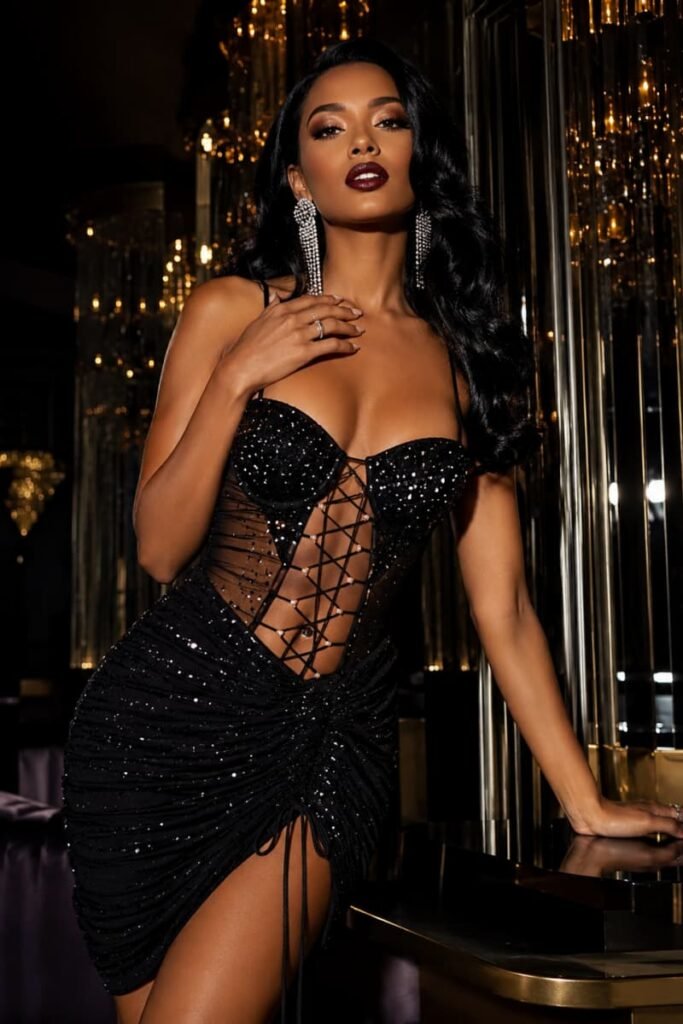
Dress-focused development and manufacturing for fashion brands building corset, backless, bodycon, party and occasionwear collections.

  • Six primary lacing positions supported: back, front, side, waist, neckline and corset-panel constructions.
  • Eyelet count, lacing gap, tie length and reinforcement method are reviewed by style, fabric and graded size.
  • Sample planning commonly covers pattern, material, structure, fit and production feasibility before bulk approval.
  • Multi-style programs can include 10–30 coordinated designs with total order volumes commonly planned between 20,000 and 80,000 pieces.
  • Lace-up projects move through material review, pattern development, sample revision, production-readiness review and controlled bulk release.

Built for Established Fashion and Dress Development Teams

Duolan works with fashion organizations that require disciplined development, detailed product interpretation and reliable movement from approved sample to repeatable bulk production.

Fashion Dress Brands

Lace-up dresses often sit inside party, occasion, going-out, resort or fitted-dress programs where visual impact must remain commercially wearable. Duolan supports brands developing coordinated collections rather than isolated styles. Product work can cover silhouette planning, fabric direction, fit priorities, structure decisions, sample refinement and production preparation. Communication remains centered on clear product files, measurable comments and controlled approval points, helping brand teams manage several styles without losing consistency across color, fit, construction or delivery timing.

Product Development Teams

Development teams need more than a factory able to follow a sketch. They need technical interpretation of lacing placement, body tension, fabric behavior, opening depth, coverage, closure security and bulk feasibility. Duolan reviews how each decision affects fit, workmanship, cost and manufacturing stability. Pattern makers, sample teams and project coordinators work from documented requirements so comments can move into revised measurements, pattern changes and construction updates rather than remaining subjective visual requests.

Sourcing and Buying Teams

Sourcing teams evaluate whether a supplier can manage files, sample rounds, material confirmation, quality checkpoints, production timing and repeat orders with discipline. Duolan organizes lace-up dress programs around defined inputs, approval records, production standards and staged quality control. Multi-style orders are broken down by complexity, fabric, trim and delivery priority before production begins, giving procurement teams clearer visibility across styles with different structural and manufacturing risks.

Why Lace-Up Dresses Need Specialized Manufacturing Control

A lace-up detail can shape the silhouette, carry tension, expose skin or support the body. Weak development turns an attractive concept into unstable fit, damaged fabric or inconsistent bulk garments.

Uncontrolled Lacing Gaps

The visible gap between two lacing edges changes with body dimensions, fabric stretch, pattern balance and how tightly the wearer pulls the cord. A gap that looks balanced on one sample may close completely in smaller sizes or open excessively in larger sizes. Duolan defines the intended visual gap, functional adjustment range and size-specific behavior before grading. Pattern shaping remains responsible for fit; lacing provides controlled adjustment rather than compensating for an incorrect base pattern.

Weak Eyelet Areas

Metal eyelets placed directly into lightweight satin, mesh, chiffon or lace can pull through the fabric under tension. Reinforcement must suit fabric weight, stretch and seam location. Options may include bonded support, fusible layers, woven backing, facing panels or internally constructed channels. Hole diameter, edge distance and eyelet spacing also affect resistance. Duolan reviews the complete load path before the first sample so the visible hardware and hidden support work as one construction.

Inconsistent Tie Lengths

Tie length affects styling, wearing ease, production consumption and garment appearance. Excess length creates bulk and tangling; insufficient length reduces adjustability and may prevent secure fastening. The correct measurement depends on eyelet count, lacing route, opening width, bow size and size grading. Bulk standards should define cut length, finished length, width, stretch, end treatment and permitted tolerance. These controls reduce visual differences between pieces and support consistent packing presentation.

Distorted Fabric Surfaces

Lacing tension can create diagonal drag lines, rippling, twisting or seam distortion around the opening. Stretch fabrics may recover unevenly, while satin can show permanent pressure marks. Structured fabrics may resist adjustment and push strain toward the seam or eyelet. Duolan evaluates grain direction, reinforcement stiffness, seam position and pattern balance together. A stable result keeps the intended contour without forcing the outer fabric beyond its working behavior.

Sample-to-Bulk Variation

A carefully handled sample may look correct while bulk production introduces inconsistent eyelet placement, varying stitch tension or uneven lacing gaps. Risk increases when operators rely on visual judgment instead of placement templates and approved measurements. Duolan transfers sample information into production references covering hole position, spacing, reinforcement, tie specification, approved opening, stitching and inspection points. First-piece verification helps confirm that the production method reproduces the approved standard before full release.

Wearing Security Risks

Backless, corset, cut-out and fitted lace-up dresses must remain secure during sitting, walking, dancing and arm movement. Security may depend on internal elastic, grip tape, side boning, hook-and-eye support, concealed zippers, modesty panels or strategically placed lining. Lacing alone should not carry every function. Duolan separates visual lacing from structural support where required, allowing the garment to maintain its intended appearance without placing excessive pressure on one decorative component.

Custom Lace-Up Dress Categories for Fashion Collections

A lace-up direction can move from minimal adjustable detailing to fully structured corsetry. Duolan develops each category around its own fabric, fit, support and production requirements.

Back Lace-Up Dresses

Back lacing can create an adjustable waist, exposed-back feature or corset-inspired finish. Development begins with the intended opening width, neckline security and level of body shaping. Soft party dresses may use fabric loops and ribbons, while structured styles may require reinforced eyelets, modesty panels and internal boning. Zipper placement also matters: some designs combine a concealed zipper with decorative lacing to simplify dressing and preserve a controlled visual gap.

Corset Lace-Up Dresses

Corset lace-up dresses require coordinated control of bust shape, waist compression, panel seams, boning channels, cups, lining and rear adjustment. Duolan distinguishes between a corset-look construction and a support-bearing corset structure. A visual corset may rely on seam styling and light boning, while a functional version requires stronger inner layers and carefully planned tension. Pattern balance is reviewed before decorative details are added, reducing strain and inconsistent shaping in bulk.

Front Lace-Up Dresses

Front lacing creates a strong visual focus but requires coverage, symmetry and fastening security. Neckline depth, eyelet spacing and underlayer design determine whether the style looks refined or exposes more than intended. A front modesty panel, facing or concealed base closure may be necessary. For soft woven or knit fabrics, reinforcement must remain stable without creating a stiff rectangular area. Duolan balances visible detail with natural drape and comfortable body movement.

Side Lace-Up Dresses

Side lacing can adjust the waist or create cut-out exposure along the ribs, hip or thigh. Tension pulls across the body differently from back lacing, making side-seam position and fabric stretch especially important. Duolan reviews the angle of pull, opening shape, seam allowance and reinforcement path. For bodycon dresses, side lacing must work with the fabric’s recovery so the opening remains smooth instead of puckering or widening unevenly after repeated wear.

Halter Lace-Up Dresses

Halter lace-up structures may use neck ties, crossed straps or adjustable back lacing. The neck should not carry excessive garment weight, particularly on embellished or lined styles. Bust stability often needs support from cups, underbust seams, side panels or internal elastic. Tie width and surface texture influence comfort and knot security. Duolan develops the halter and body structure together, creating a balanced fit from neckline through waist rather than treating the neck ties as an isolated detail.

Bodycon Lace-Up Dresses

Bodycon styles combine close fit with adjustable openings, so stretch percentage, recovery and opacity become essential development factors. Highly elastic fabric can distort the eyelet area; limited stretch can make the garment difficult to wear. Duolan reviews fabric direction, negative ease, seam stabilization and lacing range before confirming the pattern. Grading also considers how the visible opening changes across bust, waist and hip sizes instead of increasing every detail by one uniform ratio.

Satin Lace-Up Dresses

Satin brings sheen and fluidity but exposes needle damage, pressure marks, puckering and handling errors. Reinforcement must support the lacing without telegraphing through the face fabric. Interfacing weight, seam pressing and eyelet installation require careful control. Self-fabric ties may need internal support to prevent twisting. Duolan evaluates satin construction through sample testing, then defines handling and workmanship standards before production, especially for fitted mini, midi and occasion silhouettes.

Party Lace-Up Dresses

Party and occasion styles may combine lacing with sequins, mesh, rhinestones, ruching, draping or structured cups. Every added detail changes weight, tension and production sequence. Eyelets cannot be installed safely through loose sequins or unstable embroidery without a planned base. Duolan maps construction order before bulk cutting, deciding when reinforcement, surface craft, lining, closures and lacing should be applied. The result protects the visual design while improving repeatability across larger quantities.

Lace-Up Placement Changes Function, Fit and Visual Impact

Placement determines whether lacing works as decoration, adjustment, exposure control or structural support. Each position creates a different load direction and pattern requirement.

Center Back Lacing

Center-back lacing creates symmetrical adjustment and a strong corset reference. The opening can remain fixed, partially adjustable or fully functional. Duolan defines the top and bottom stop points, planned gap, eyelet count and modesty-panel coverage. Back-neckline stability and zipper strategy are reviewed at the same time. For fitted styles, the center-back grain and panel seams must remain straight after tightening, preventing twisting around the waist and hip.

Center Front Lacing

Front placement attracts attention to the neckline, bust or waist. Symmetry is highly visible, so small position errors become obvious. Front lacing may need a hidden underpanel, base closure or reinforced facing. On corset-inspired dresses, bust shaping should come from the pattern and inner structure, not from tightening the front cord. Duolan positions hardware against center-front and bust reference points, then checks the appearance on-body rather than only on a flat garment.

Side Seam Lacing

Side lacing creates adjustable cut-outs and can visually narrow the waist. The pull direction crosses curved body zones, creating a higher risk of puckering and edge rolling. Reinforcement must bend with the body without stretching out. Duolan checks side-seam balance, opening depth and waist-to-hip transition during fitting. Hole placement may need size-specific adjustment so the visible spacing remains intentional across a broader range of body proportions.

Waist Panel Lacing

Waist lacing can sit at the front, back or sides and may connect separate bodice and skirt sections. A stable waist panel helps distribute tension, but excessive stiffness can interrupt drape. Duolan selects the support layer according to outer fabric and desired shaping. The waistline is checked around the full body to ensure the lacing does not pull one section upward, rotate the skirt or create uneven pressure around the torso.
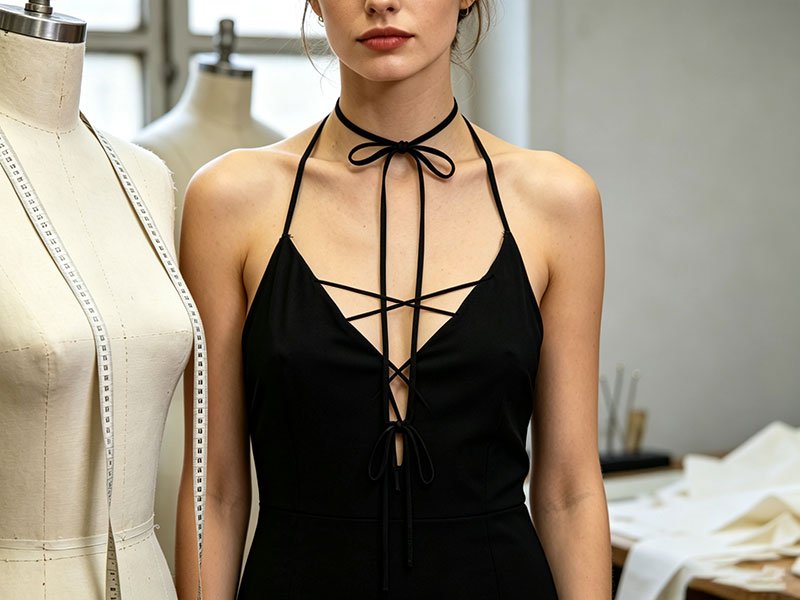
Neckline and Halter Ties

Neckline lacing is frequently adjustable but should not become the sole support for the garment. Tie position, strap angle and neckline coverage influence comfort and security. Duolan considers neck pressure, bust support and movement during development. Wider ties may feel softer but create larger knots; narrow cords create a cleaner look but can cut into the skin. End finish and tie surface are selected to reduce slipping during wear.

Hip and Thigh Lacing

Lacing along the hip or thigh often forms an adjustable slit or exposed cut-out. Walking movement can pull heavily on the lowest fixation point. Edge stabilization, slit shape and tie route must permit motion without tearing or opening unexpectedly. Duolan tests the style during sitting and walking, then confirms reinforcement and bar-tack positions. Grading protects the intended exposure level while accommodating changes in hip circumference and garment length.

Design Options Built Around Commercial Dress Collections

Lace-up construction can support varied silhouettes and market positions. Development choices are coordinated with fabric, intended price level, wearing occasion and production complexity.

Mini Dress Shapes

Mini lace-up dresses work well for party, going-out and festival collections. Shorter body length increases the importance of hem balance, hip movement and secure coverage. Fitted versions may use stretch fabrics and side lacing, while structured versions combine corset backs with shaped skirts. Duolan checks sitting length, skirt movement and opening stability during sample review so visual impact does not compromise wearability.

Midi Dress Shapes

Midi silhouettes offer more space for side lacing, back corsetry, draped panels and controlled slits. Weight distribution becomes more important as skirt length and fabric consumption increase. Satin, mesh and stretch crepe can create different levels of movement. Duolan coordinates the lacing area with skirt drape, waist balance and zipper access, keeping the bodice stable while the lower body retains the intended fluidity.

Maxi Dress Shapes

Maxi lace-up dresses may combine fitted bodices with flowing skirts, high slits or open backs. Longer garments create greater weight and may pull downward on halter ties or bodice edges. Inner waist support, shoulder strategy and seam construction help manage the load. Duolan reviews full-length balance on a mannequin or fit model, including hem drop, train direction, slit movement and lacing tension under the garment’s completed weight.

Corset Bodices

Corset bodices can be straight, curved, pointed or panel-shaped at the waist. Cup shape, neckline, boning position and lower-edge contour determine the final appearance. Duolan develops internal and external layers as one system. Decorative seam lines should follow the structural pattern rather than conflict with it. Where bulk feasibility requires simplification, construction can be adjusted without losing the visible corset language or intended waist definition.

Ruched Lace-Up Styles

Ruching adds visual texture and supports close-fitting silhouettes, but it can hide or amplify uneven tension. Gathering ratio, seam placement and stretch direction require control. Lace-up openings should remain clean rather than disappearing inside uncontrolled folds. Duolan marks gathering zones and finished measurements in the development file, allowing production teams to reproduce the approved fullness instead of relying on individual operator judgment.

Cut-Out Constructions

Cut-outs placed beside lacing require exact edge shape, coverage and stabilization. The opening must remain smooth against curved body areas and resist stretching during wear. Facing, lining, elastic or binding may be used depending on fabric and visual direction. Duolan evaluates exposure on-body, checking whether the opening shifts during movement. Lacing placement is then adjusted to maintain the intended negative space across graded sizes.

Layered Mesh Designs

Layered mesh can create transparency, tonal depth or sculpted panels. Stretch mesh, rigid tulle and power mesh behave differently around eyelets and cords. Duolan separates outer visual layers from structural layers when needed. Reinforcement can be hidden between layers, preserving a light appearance while supporting tension. Seam bulk, edge finishing and lining coverage are reviewed so the lace-up area remains clean from both outside and inside.

Embellished Party Styles

Sequins, beads, pearls and rhinestones increase weight and complicate the lacing zone. Decorative placement must leave room for hardware, stitching and reinforcement. Loose embellishment near the cord can catch during tightening. Duolan plans motif clearance, backing and installation sequence before the sample is finalized. Bulk workmanship standards define protected areas around eyelets and ties, reducing snagging, surface damage and inconsistent decoration density.

Fabrics Selected for Drape, Support and Lacing Stability

Fabric choice controls more than color and texture. Stretch, recovery, thickness, friction, transparency and resistance to concentrated tension all influence lace-up construction.

Satin

Satin delivers shine and fluid movement for party, evening and occasion dresses. Its smooth face also reveals puckering, needle marks and pressure from hidden reinforcement. Lightweight satin may require a supported facing around eyelets, while heavier satin needs careful pressing to prevent impressions. Self-fabric ties should be cut and turned consistently to avoid twisting. Duolan reviews drape, seam appearance, reinforcement visibility and color consistency before confirming the construction method.

Stretch Crepe

Stretch crepe offers controlled recovery and a matte finish suited to fitted mini and midi dresses. Its body can support side or back lacing better than very light fabrics, but uncontrolled tension may still stretch the opening. Stabilizing tape or a reinforced panel can protect the edge. Duolan checks stretch direction, negative ease, thickness and recovery after wear, ensuring the lacing adjustment remains compatible with the base pattern rather than deforming it.

Jersey

Jersey supports comfortable bodycon shapes and adjustable cut-outs. High stretch helps dressing but creates risk around eyelets and fabric loops. Holes may elongate, loops may pull away and tie pressure may produce uneven gathering. Duolan tests backing methods that preserve flexibility without creating a rigid patch. Seam stabilization and tie tension are reviewed on-body. Fabric recovery is checked after stretching to confirm the opening returns close to its intended shape.

Power Mesh

Power mesh functions as a hidden support layer in corset, bodycon and sheer constructions. It can stabilize cups, side panels, waist zones and lacing areas while remaining lighter than woven corsetry materials. Stretch direction and strength vary by specification. Duolan selects power mesh according to required compression and combines it with the outer fabric carefully, avoiding visible bubbling or mismatched recovery. Seam and boning placement are planned around the support layer.

Fashion Mesh

Fashion mesh provides transparency, layering and soft visual effects. Most lightweight meshes cannot carry metal eyelets without hidden reinforcement. Fabric loops, embroidered holes or reinforced panels may create a better solution. Duolan tests transparency, stretch and edge stability before deciding whether the mesh should be structural or decorative. Lining and modesty coverage are planned with the brand’s intended exposure level, color standard and comfort requirements.

Lace

Lace fabric can be combined with lace-up construction, although the two terms represent different elements. Open motifs and delicate grounds need stable backing around tension points. Hardware placement should respect motif direction and avoid cutting through important pattern areas. Duolan reviews repeat layout, transparency, scallop use and reinforcement concealment. For corded or beaded lace, additional bulk around seams and eyelets is considered before the sample method is approved.

Velvet

Velvet gives depth and richness to fitted or occasion lace-up dresses. Pile direction affects color appearance, while pressure and handling can crush the surface. Eyelet installation and pressing must avoid visible marks. Velvet ties may feel luxurious but can become bulky and difficult to knot. Duolan checks nap direction, backing, seam bulk and tie construction. Production handling instructions help maintain consistent surface appearance across cut panels and completed garments.

Sequin Fabrics

Sequin fabrics create high visual impact but require a stable base around lacing. Sequins may need removal from seam and eyelet zones before reinforcement and installation. Sharp edges can abrade ribbons or skin, while uneven surface thickness affects hardware setting. Duolan plans motif placement, clear zones, lining and construction order before bulk production. Finished areas are checked for loose sequins, snag points, exposed threads and inconsistent visual coverage.

Material and Trim Selection for Lace-Up Construction

Material decisions should reflect tensile load, visual direction, fit function and repeatable manufacturing. Specifications remain subject to final fabric and sample testing.

ComponentSuitable ApplicationsKey StrengthMain RiskDevelopment Control
Metal EyeletsCorset backs, structured panels, utility-inspired stylesDefined opening and strong visual finishPull-through, surface scratching, plating variationBacking layer, edge distance, setting pressure and finish approval
Fabric LoopsSatin, evening, delicate or minimal stylesSoft appearance and no exposed metalLoop stretching, uneven length, seam pull-outFixed loop length, internal anchoring and placement template
Embroidered EyeletsLightweight woven and decorative stylesFlat surface and refined finishFraying, hole distortion and limited load capacityDense stitching, supported base and tension testing
Lacing ChannelsDrawstring and adjustable ruching stylesDistributed load and soft adjustmentCord friction, tunnel twisting and uneven gatheringChannel width, seam strength and cord compatibility
Satin RibbonOccasion, bridal-inspired and feminine stylesSmooth sheen and soft bowSlipping, edge fray and pressure marksWidth, weave density, end sealing and knot test
Self-Fabric TiesCoordinated premium designsExact material and color matchTwisting, bulk and inconsistent turningGrain direction, inner support and finished-width tolerance
Flat Woven TapeStructured, sporty or modern dressesStable width and strong pull resistanceStiffness against skin and color mismatchHand-feel review, color approval and edge finishing
Decorative CordFront lacing, halter and festival stylesCompact profile and strong visual lineSkin pressure, knot movement and end frayDiameter, friction, end cap and wearing test
Plastic BoningLight corset-look and fashion bodicesFlexible support and lower weightWarping and visible edge linesChannel fit, end protection and heat handling
Steel BoningHigher-support structured stylesStrong shaping and stable vertical supportWeight, rigidity and end pressurePlacement, capped ends, channel strength and wearing review
Power MeshInternal support and fitted constructionFlexible compression and recoveryMismatch with outer fabric stretchStretch direction, recovery and seam compatibility
Modesty PanelBack corset and adjustable openingsCoverage behind lacingBunching, shifting and excess bulkWidth, attachment method and graded coverage

Matching Fabric Behavior to the Intended Structure

A successful lace-up dress starts with material behavior, not surface appearance alone. Outer fabric, support layers and adjustment method must respond together under tension.

Lightweight Wovens Need Hidden Support

Chiffon, lightweight satin and delicate lace rarely tolerate concentrated pull without assistance. A stable facing or internal support panel carries the load while the outer layer preserves drape. Reinforcement should extend beyond each eyelet rather than forming isolated patches that create visible squares. Duolan tests whether support becomes visible from the face, especially under studio lighting. Seam position and edge shape are adjusted to conceal structure without weakening the opening.

Stretch Fabrics Need Recovery Control

Stretch jersey and mesh can make a lace-up style comfortable, but too much extension changes the visual gap and pulls hardware out of alignment. Reinforcement must move enough to avoid tearing while remaining stable enough to hold shape. Duolan checks stretch percentage along relevant directions, then evaluates recovery after tension. Pattern ease, lacing range and support placement are coordinated so the garment fits through fabric behavior and pattern design rather than extreme tightening.

Satin Needs Pressure Management

Satin can show ring marks around eyelets, seam impressions and buckling from stiff backing. A heavy reinforcement selected only for strength may damage the desired surface. Duolan balances support weight with the satin’s thickness and drape. Eyelet setting pressure, washer choice and hole preparation are tested on sample material. Pressing instructions protect the sheen and prevent hidden layers from leaving visible edges along the lacing panel.

Embellished Fabrics Need Clear Zones

Sequins, beads and embroidery cannot be treated as a flat base. Hardware needs a level, supported area, and cords need space to move without catching. Duolan identifies clear zones around holes, loops and seams during artwork or panel planning. Decorative components may be removed locally and secured before construction. The backing method must support tension while preserving motif continuity. Final inspection covers snagging, loose embellishment and visual gaps around the lacing area.

Eyelet Engineering for Strength, Alignment and Clean Appearance

Eyelets concentrate repeated tension into small areas. Reliable construction depends on planned load distribution, suitable support and repeatable placement rather than hardware appearance alone.

Hole Position and Edge Distance

Eyelets placed too close to a raw or folded edge may tear through the fabric. Excessive distance creates a wide, heavy-looking panel and changes the planned lacing gap. Duolan defines the eyelet centerline against seam, fold and pattern reference points. Top and bottom positions are checked against neckline, waist and closure components. Placement templates transfer approved spacing into bulk production, reducing left-right differences and operator variation.

Reinforcement Area Design

Backing should cover the full tension zone, not only the immediate hole. Depending on the outer fabric, reinforcement may use woven fabric, bonded support, facing, interfacing or layered internal construction. Duolan considers stiffness transition so the supported panel does not end abruptly and create a visible ridge. Reinforcement edges are shaped around the garment panel and kept away from unnecessary bulk points such as zipper seams or boning ends.

Hardware Size and Finish

Eyelet inner diameter must suit the ribbon, tape or cord passing through it. A small opening increases friction and damages ties; an oversized opening looks loose and may reduce support. Finish options can include matte, polished, painted or plated surfaces. Duolan reviews metal tone, surface consistency, washer fit and skin contact. Hardware color is checked against the approved trim standard, with bulk inspection covering scratches, oxidation, deformation and missing washers.

Setting Pressure Control

Insufficient setting pressure allows an eyelet to rotate or separate. Excess pressure can cut the fabric, crack coatings or crush support layers. Duolan confirms the setting method on production material rather than an unrelated test fabric. The back side is inspected as carefully as the front because sharp flanges can damage lining or skin. First-piece checks confirm closure shape, security and surrounding fabric appearance before the process is released across the order.

Eyelet Spacing Consistency

Spacing determines the rhythm of the lacing and influences tension distribution. Uneven holes create a visibly crooked cord path and inconsistent opening pressure. Duolan records the approved number of eyelets, center-to-center distance and top/bottom margins. Where pattern curvature changes, spacing may be adjusted intentionally rather than forced into a straight mathematical repeat. Bulk templates reproduce the approved geometry across matching left and right panels.

Pull and Wearing Review

A useful test reflects expected wear rather than a single hard pull. The lace-up area is tightened, released and retightened while the surrounding fabric is observed for elongation, tearing or distortion. On fitted dresses, evaluation also includes sitting and body movement. Duolan records problems at the sample or first-piece stage and changes reinforcement, hardware or pattern balance before volume production. The goal is stable use, not only surviving factory handling.

Fabric Loop and Lacing Channel Construction Details

Soft lacing systems can look refined and reduce exposed hardware, yet small dimensional errors quickly become visible. Loop anchoring, finished length and channel stability require controlled workmanship.

Loop Length Control

A few millimeters of variation can change the opening width and make a cord path look uneven. Duolan defines loop cut length, folded length, visible projection and spacing. Templates support consistent placement before the panel is closed. For self-fabric loops, thickness and turning quality are checked so each unit lies flat. Finished loops must accept the specified tie without excessive friction or loose movement.

Internal Loop Anchoring

Loops should be secured deeper than the visible seam line. A short attachment can pull out when tightened repeatedly. Depending on construction, the internal end may be stitched into a reinforced facing, caught in multiple seam lines or supported by an internal tape. Duolan reviews the load direction and anchor length during development. Bulk sewing checks focus on backtacking, stitch coverage and accidental loop twisting inside the seam.

Channel Width and Friction

Drawstring channels need sufficient space for the cord to move without rolling or binding. Excess width creates uncontrolled gathering; narrow channels increase friction and can damage the cord. Duolan sets channel width against cord diameter, fabric thickness and intended adjustment. Entry and exit points receive additional control because repeated pulling concentrates wear there. The final sample is adjusted several times to evaluate smooth movement and even gathering.

Edge Stability

Soft loops and channels still need stable panel edges. Stretch or bias-cut areas can lengthen during sewing and cause mismatched sides. Stay tape, controlled interfacing or supported seam allowances may be used depending on fabric. Duolan checks panel length before and after loop installation. Edge shape is inspected on-body so reinforcement maintains the intended line without producing stiffness, rippling or visible seam shadow.

Lacing Materials and End Finishes for Brand-Level Presentation

Tie material changes friction, knot security, comfort and visual weight. End treatments protect against fraying while supporting a clean retail presentation.

Satin Ribbon

Satin ribbon provides a polished surface suited to party and occasion styles. Weave density affects strength and edge stability. Very smooth ribbon may loosen during wear, while stiff ribbon forms bulky bows. Duolan reviews width, thickness, color, sheen and knot performance. Cut ends may be heat sealed, folded or finished with caps depending on the design and material response.

Self-Fabric Ties

Self-fabric ties create exact color and material coordination. Construction must control grain direction, turning, seam bulk and finished width. Lightweight fabric may require support; stretch fabric may lengthen during pulling. Duolan defines the internal construction and cutting direction before sample approval. Each tie is checked for twisting, uneven width, exposed seam allowances and inconsistent end shape.

Flat Woven Tape

Flat tape provides stable tensile behavior and a modern visual direction. It works well for structured, utility-inspired or sport-influenced dresses. Surface texture and edge hardness must remain comfortable against skin. Duolan evaluates colorfastness, width tolerance, friction and compatibility with eyelet size. End folding or metal tips can be specified when aligned with the intended price position.

Decorative Cord

Round cord creates a compact lacing line and can support front, side or halter applications. Diameter determines pressure and visual strength. Smooth cords may slip; rough cords may abrade eyelets or skin. Duolan reviews core strength, outer braid, color consistency and knot security. Ends can be sealed, knotted, wrapped or fitted with approved tips to prevent fraying.

Elastic Lacing

Elastic cords or tapes allow movement and controlled stretch. They can improve comfort in bodycon and performance-influenced styles but should not replace accurate fit. Elongation and recovery must remain consistent across the order. Duolan tests the lacing at the intended extension and checks whether the opening changes permanently after wear. Attachment points receive reinforcement suited to repeated elastic pull.

Finished Tie Ends

Tie ends affect durability and perceived finish. Options include clean folded ends, stitched ends, heat sealing, wrapped tips, metal aglets or molded caps. The method must suit material thickness and avoid sharp edges. Duolan includes finished-end specifications in sample and bulk references. Final inspection covers length, symmetry, attachment security, coating quality and any surface that could scratch skin or fabric.

Corset Support Construction Beyond Decorative Lacing

A lace-up corset dress needs a stable base before the cord is tightened. Bust shape, boning, panel seams and internal support determine whether the garment holds its intended silhouette.

Corset-Look Versus Functional Support

A corset-look bodice uses seam lines, light boning and lacing to create a visual reference. A functional support bodice manages body pressure, bust position and waist shaping. Mixing the two without a clear target causes overbuilt samples or unstable fit. Duolan establishes the expected support level before pattern development. Construction is then selected around wearing purpose, fabric, size range and target visual effect.

Cup and Bust Shaping

Cup size, wire shape, neckline and seam placement influence bust coverage and position. Generic cups may not align with the pattern or graded sizes. Duolan checks cup width, depth, spacing and attachment against the bodice. Foam thickness and lining are reviewed for smooth transitions. Lacing can adjust circumference, but it cannot correct an incorrectly shaped bust panel, so fit review prioritizes cup and underbust balance first.

Boning Placement

Boning stabilizes vertical lines and prevents the bodice from collapsing under lacing tension. Position should support the pattern seams and avoid pressure on sensitive body areas. Duolan determines whether plastic or steel boning is appropriate and confirms channel width, end protection and length. Boning ends stop clear of seam intersections and neckline edges. Completed samples are checked for visible ridges, twisting and uncomfortable pressure.

Waist Support

A fitted corset dress may require internal waist stay, power mesh or stronger lining to distribute pressure. Without support, tightening can pull the outer fabric upward or distort the skirt connection. Duolan reviews waistline construction and the relationship between bodice and skirt. A waist stay may be included when the design and support level justify it. Attachment points are hidden and tested during body movement.

Modesty Panel Design

A modesty panel provides coverage behind back lacing and can also help distribute pressure. Width depends on the planned gap and grading. A narrow panel may expose skin unexpectedly; an oversized panel can bunch or shift. Duolan decides whether the panel should float, attach on one side or integrate into the lining. Edge finish, stiffness and color are matched to the main garment.

Closure Integration

Functional lace-up dresses may still need zippers, hooks or internal fastenings for easier dressing and controlled fit. Closure position must avoid conflict with boning, panel seams and reinforcement. Duolan reviews dressing sequence during development: how the wearer enters the garment, secures the base closure and adjusts the lacing. A clear sequence improves retail usability and reduces excessive pulling on decorative components.

Lining, Closures and Wearing Security Work Together

Internal components may remain invisible in product photography, yet they determine comfort, coverage, dressing ease and long-term stability.

Full Bodice Lining

A full lining encloses reinforcement, cups, boning and seam allowances. It improves comfort and creates a clean interior. Lining stretch must match the outer construction closely enough to avoid pulling or bubbling. Duolan checks lining pattern, seam position and attachment points separately from the shell. Excess lining is controlled around curved necklines and lace-up edges.

Partial Support Lining

Some designs need support only in the bodice or lacing panel. Partial lining can preserve skirt movement and reduce weight. Transition points must remain smooth and secure. Duolan defines where support begins and ends, especially near waist seams, cut-outs and side openings. The chosen lining should not become visible through sheer or light-colored outer fabrics.

Concealed Zippers

A concealed zipper allows easier dressing while maintaining a clean surface. Placement may be center back, side seam or another controlled location away from lacing. Seam bulk and reinforcement must not interfere with zipper movement. Duolan checks zipper length, top closure, seam alignment and puller access. Bulk inspection covers waviness, catching and mismatched seam levels.

Hook-and-Eye Support

Hooks can stabilize the top of a zipper, inner waist or corset opening before lacing is adjusted. They reduce direct strain on the primary closure. Position and strength depend on expected load. Duolan selects size and attachment method according to fabric and support level. Hooks are checked for secure stitching, smooth surface and alignment during first-piece inspection.

Internal Grip Support

Silicone grip tape or elastic can improve stability on strapless and open-back styles. Grip should hold without creating uncomfortable pressure or visible rippling. Duolan confirms width, stretch and position during fitting. Attachment tension must remain consistent in production. Skin-contact materials are reviewed for appropriate use and finished edges are checked for comfort.

Coverage Panels

Modesty and coverage panels manage exposure behind front, side or back lacing. Their shape should follow the opening rather than appear as an unrelated rectangle. Duolan grades panel width and length with the garment. Attachment method is selected to prevent twisting or escape from the opening during wear. Color and opacity are confirmed against the approved sample.

Lace-Up Fit Engineering Starts With the Base Pattern

Lacing can fine-tune circumference and appearance, but correct fit still depends on bust, waist, hip and body-length balance.

Planned Adjustment Range

The design team should define how much adjustment the lacing is expected to provide. A decorative opening may maintain a nearly fixed gap, while a functional corset back needs a wider controlled range. Duolan records the intended range during development and checks it on the fit sample. Excess adjustment often signals that the base pattern is too loose or too tight rather than proving greater flexibility.

Bust and Underbust Balance

Bust shaping affects neckline security, cup position and how the back opening sits. Tightening the rear lacing cannot solve incorrect cup depth or underbust placement. Duolan measures and reviews bust level, cup spacing, underbust seam and side-body balance. Pattern changes are made before further tightening tests. Support construction and lacing tension are then evaluated together.

Waist and Hip Transition

A strongly shaped waist connected to a fitted skirt can create drag lines if hip volume is insufficient or side seams rotate. Duolan checks the complete torso rather than only the laced opening. Waist reduction, hip ease and skirt attachment are balanced so tension moves evenly around the body. Side and back views are used during fitting to identify rotation and uneven contour.

Body Length Control

Bodice length determines whether the waist sits correctly and whether lacing pulls upward or downward. Short torsos, long torsos and different bust positions can change the appearance even when circumference measurements match. Duolan reviews shoulder-to-waist, underbust-to-waist and center-back length according to style. Correct vertical balance protects neckline, waist shaping and skirt position.

Movement Evaluation

Fit review includes more than a static front photograph. Sitting, walking, raising arms and turning can expose instability around neckline, side openings and hip lacing. Duolan observes whether ties loosen, panels shift or edges roll. Changes may involve pattern shape, internal elastic, closure strategy or support—not merely tighter lacing. Movement results are incorporated into the next sample or approval comments.

Visual Gap Consistency

A lace-up opening becomes part of the garment’s design language. Its width and angle should look intentional from top to bottom. Duolan checks whether the gap remains parallel, narrows deliberately or follows a shaped panel. Uneven gaps often indicate imbalance in pattern, support or lacing tension. Approved appearance is documented for sample review and bulk quality reference.

Tech Packs Reduce Sampling Errors Before Materials Are Cut

A strong development file makes lacing, fit and construction decisions visible before they become expensive sample or production corrections.

Design and Structure Details

Provide front, back and side views with clear lacing position, opening shape, eyelet or loop count, tie route, closure method and coverage requirement. Indicate whether the lacing is decorative, adjustable or support-bearing. Corset styles should show cups, boning, internal panels and desired shaping. Reference images can support the brief, but measurable construction notes prevent interpretation gaps.

Measurements and Fit Intent

Include base size, POM diagram, garment measurements, intended fit and size range. Mark critical dimensions such as back gap, bodice length, underbust, strap length and opening depth. State whether the style should feel compressed, fitted, semi-fitted or relaxed. Fit priorities help Duolan distinguish between dimensions that may be optimized and features that must remain unchanged.

Materials and Finishing

Specify outer fabric direction, lining, reinforcement, ribbon or cord, eyelet finish, zipper, cups, boning, labels and packaging. Color references should use approved standards where possible. Explain surface craft such as sequins, embroidery or printing near the lacing area. When exact materials are not finalized, provide target hand feel, stretch, weight, sheen and price direction for sourcing review.

Sewing and Workmanship Standards for Lace-Up Dresses

Clean workmanship must remain stable around high-tension details, shaped bodices, linings and surface-sensitive fabrics.

Reinforced Seam Zones

Lacing panels, loop seams and corset edges carry greater pressure than ordinary decorative seams. Duolan reviews seam allowance, reinforcement, stitch coverage and stress-point securing. Bulk sewing instructions identify areas requiring backtacking, bar tacks or supported seam construction. Reinforcement remains concealed where the design calls for a polished finish.

Balanced Stitch Tension

Uneven stitch tension can pucker satin, distort mesh and create weak loop attachment. Machine settings are reviewed according to fabric and seam type. Operators should not use one tension setting across all layers. Duolan checks stitch appearance from both sides and monitors high-visibility seams during inline inspection.

Clean Eyelet Setting

Eyelets should sit flat, aligned and secure without cut fibers, sharp backs or cracked coating. Hole preparation, support and setting pressure are controlled. Front and back surfaces are inspected before lining closes access. Finished garments are checked for movement, missing components and surrounding fabric damage.

Smooth Boning Channels

Boning channels must remain straight, correctly sized and free from exposed ends. Excess space permits twisting; narrow channels create pressure and difficult insertion. Duolan checks boning length, capped ends and channel alignment. Curved seams are handled carefully to avoid visible ridges and uncomfortable pressure.

Controlled Lining Finish

Lining should cover internal support cleanly without pulling the outer shell. Attachment around necklines, armholes, zippers and lacing panels is checked for rolling and visibility. Duolan controls lining ease and understitching according to construction. Finished interiors are inspected for loose threads, rough hardware and exposed support components.

Consistent Final Pressing

Pressing shapes seams and improves presentation but can damage satin, velvet, sequins and hidden support. Temperature, pressure and protective methods are selected by material. Lacing panels are pressed without leaving reinforcement outlines. Final garments are reviewed for shine marks, crushed pile, distorted cups and uneven seams before packing.

Controlled Sample Development From Brief to Reviewable Garment

Sampling is treated as a decision process covering material, pattern, fit, workmanship and future production—not as a one-time visual prototype.

Brief Review

Project information is organized by style, material, size, color and sample purpose. Duolan identifies missing measurements, unclear construction points and priority details. Questions are resolved before pattern work where possible. A structured start reduces avoidable rework and gives both teams a shared understanding of the intended garment.

Fabric and Trim

Material options are reviewed against drape, stretch, reinforcement, color and availability. Eyelets, ties, zippers, cups, boning and lining are matched to the design. Where exact bulk materials are unavailable for an early sample, substitutions are identified clearly so the review team understands which results are provisional.

Pattern Development

Pattern makers translate the design into body balance, shaping and seam construction. Lacing edges, reinforcement panels and closure access are built into the pattern rather than added after the silhouette is completed. Critical dimensions are checked before cutting. Complex bodices may require internal and external pattern sets.

Sample Sewing

The sample team follows the planned construction sequence, including reinforcement, support layers, loops or eyelets, lining, closures and finishing. Process issues are recorded during sewing. A method that creates excessive bulk, visible pressure or unstable alignment can be corrected before the sample reaches final evaluation.

Internal Review

Duolan reviews silhouette, key measurements, lacing appearance, workmanship and dressing function before dispatch. Front, side and back photographs help identify imbalance. Critical details such as eyelet setting, tie length, cup position and opening width are checked. Clear issues are corrected or disclosed before the sample is submitted.

Brand Review

The completed sample is delivered with photographs, relevant measurements and notes on areas requiring evaluation. Comments can be organized by fit, material, construction, appearance and production feasibility. Structured comments make pattern and workmanship revisions easier to execute and verify in the next round.

Sample and Bulk Timeline Planning References

Timing starts after required specifications, materials, approvals and commercial terms are confirmed. Complex structures or custom trims may require additional validation.

StagePlanning ReferenceMain Inputs RequiredMain Output
Initial project review1–3 working daysTech pack, reference, quantity, size range and target dateQuestions, risk points and development direction
Fabric and trim sourcing3–10 working daysMaterial specification, color and approved alternativesSwatches, trim options or sourcing confirmation
First sample development7–15 working daysConfirmed development basis and available materialsFirst reviewable sample
Complex corset or hardware sampleConfirm by projectCups, boning, custom eyelets, surface craft and support requirementsStructured sample and construction review
Sample revision5–10 working daysConsolidated comments and revised measurementsUpdated sample and revision record
PP or production-basis sample7–12 working daysApproved material, measurements, trims and workmanshipBulk production reference
Simple bulk styles15–20 daysPP approval, BOM, materials, order and depositCompleted production before shipping
Standard bulk styles20–30 daysLocked specifications and production scheduleCompleted production before shipping
Complex bulk styles30–45 daysStructured construction, special craft or custom materialCompleted production before shipping
Express shipping3–7 daysFinal address, documents and dispatch confirmationDoor-to-door or courier delivery
Air freight5–8 daysBooking, export documents and receiving detailsAirport or arranged delivery
Sea freight20–35 daysBooking, packing data and destination requirementsPort or arranged delivery

Sample-to-Bulk Readiness Protects the Approved Design

Bulk production should not begin from a general statement that the sample looks acceptable. Each production variable needs a defined and traceable standard.

Lock the Approved Reference

The production basis may include an approved sample, PP sample, sealed sample or documented construction reference. Its status must be clear. Duolan confirms which version controls fit, material, workmanship and appearance. Earlier samples are removed from active production references to prevent version confusion.

Confirm the Complete BOM

Outer fabric, lining, reinforcement, cups, boning, eyelets, ties, zippers, hooks, labels and packaging are listed with approved specifications. Substitutions require review before use. Color, finish, width, size and supplier references are recorded where relevant. A complete BOM prevents visually similar but functionally different materials entering production.

Transfer Critical Measurements

Production teams receive the approved measurement chart, grading and tolerances. Lace-up-specific control points include opening width, panel length, eyelet position, tie length, cup placement and bodice balance. Measurements are connected to clear methods so inspection teams and sewing teams interpret them consistently.

Define Workmanship Points

Construction requirements identify reinforcement, seam type, stitch appearance, eyelet setting, loop anchoring, boning ends, lining attachment and closure integration. High-risk steps are highlighted for first-piece and inline review. Approved detail photographs can strengthen written instructions where visual execution matters.

Confirm Packaging Requirements

Hangtags, care labels, size labels, barcode placement, folding method, tie arrangement, protective materials and carton marks are confirmed before final production stages. Long ties may need controlled folding or fastening to prevent tangling and presentation damage. Packing instructions are included in the production handover.

Plan Inspection Stages

Incoming material, first-piece, inline and final checks are planned around the style’s risks. Lace-up garments need early verification because eyelet or loop errors become expensive after completion. Duolan identifies the checkpoints and evidence required before production volume increases.

Pilot Runs and First-Piece Checks Reduce Bulk Surprises

High-risk lace-up styles are verified before full production volume is released. Early validation gives teams time to correct methods without affecting thousands of garments.

First-Piece Construction Review

The first completed production garment is compared with the approved reference. Duolan checks silhouette, measurements, lacing gap, eyelet placement, tie length, closures, lining and workmanship. Differences are corrected before operators repeat the same method across the order. The first piece also confirms whether production materials behave like the sample materials.

Critical Operation Trials

Eyelet setting, fabric-loop sewing, boning insertion, cup attachment and embellished-panel construction may be tested as separate operations. Trial pieces reveal pressure, alignment or handling problems before full garment assembly. Duolan reviews the process with production and quality teams, then confirms the method, tools and inspection point.

Limited Pilot Quantity

Complex or shape-sensitive styles may move through a limited pilot quantity before broader release. The pilot shows whether sewing time, operator understanding and quality consistency remain stable beyond one garment. Results can lead to template changes, additional reinforcement or improved work instructions. Bulk volume is released after major risks are under control.

Confirmation Records

A Pilot Run or First-Piece Confirmation Note can document checked points, findings and corrections. Visual records support internal alignment and give brand teams clearer evidence of production preparation. The note becomes part of the order history, supporting repeat orders and later production comparisons.

Private Label and Packaging Prepared for Retail Operations

Brand identity and packing requirements are integrated into production planning so final garments arrive ready for the intended sales and distribution channel.

Main Brand Labels

Woven, printed or heat-transfer labels can be developed according to artwork and placement requirements. Label size, fold type, base color, text and sewing position are confirmed before bulk use. Placement is checked against comfort and visible garment construction, especially around corset backs and open necklines.

Size and Care Labels

Size, fiber content, care instructions, country information and other required text are prepared according to the supplied market requirements. Label material and print durability should suit the garment and expected care method. Duolan checks wording, size allocation and sewing position before final production.

Hangtags and Fasteners

Hangtags can include brand artwork, product information, price references or campaign elements. Fastener location is selected to avoid damaging delicate satin, mesh or sequins. Attachment method and length are confirmed with the packing standard. Tags are checked for correct style, color and barcode association.

Barcode and SKU Control

Multi-style collections require accurate links between style number, color, size, barcode and packing quantity. Duolan organizes label and packing information against the order breakdown. Barcode placement and readability are checked before packing. Clear SKU control reduces receiving errors across warehouses and retail channels.
3.-Packaging-Solutions

Individual Packaging

Garments may use protective bags, tissue, inserts or other approved materials according to fabric and channel requirements. Structured cups and boning need packing methods that prevent crushing. Long ribbons and cords are arranged to avoid tangling. Fold direction is reviewed for presentation and carton efficiency.

Carton and Shipping Marks

Carton quantity, assortment, dimensions, marks and destination details are confirmed before shipment. Mixed-size or mixed-style cartons follow the approved packing plan. Duolan prepares packing data for freight coordination, including carton count, weight and CBM where required. Split shipments can be planned according to launch or warehouse schedules.

Lace-Up Dress Quality Control From Material to Packing

Quality control follows the risks created by fabric, support, fit, hardware and finishing rather than relying only on a final visual check.

Incoming Material Check

Outer fabric, lining, reinforcement, ties and hardware are checked against approved direction before cutting. Inspection covers color, hand feel, visible defects, stretch, width and trim finish where relevant. Eyelets and accessories are reviewed for size, coating and consistency. Material differences are addressed before they enter completed garments.

Cutting Accuracy

Lacing panels, corset pieces and curved bodice sections depend on accurate cutting and matching. Grain direction and pair symmetry are controlled. Numbering and bundling help keep matching left and right pieces together. Duolan checks high-risk panels before sewing so alignment problems do not appear after eyelet or loop installation.

Placement Template Check

Eyelet, loop and boning positions are verified against approved templates or pattern marks. Top and bottom margins, centerlines and left-right symmetry receive special attention. Early checks prevent repeated visible errors. Template condition and use are monitored during production rather than confirmed only at the first garment.

Inline Workmanship Check

Quality teams inspect reinforcement, seam quality, loop anchoring, eyelet setting, lining, closures and support while production remains accessible. Defects found inline can be corrected before later operations hide the construction. Findings are communicated to the line so repeated problems are contained rather than moved forward.

Measurement Check

Key POMs are measured according to the approved method and tolerance. Lace-up garments include opening width, panel length, eyelet position and tie length in addition to standard bust, waist, hip and length. Measurement results are reviewed across sizes to identify grading or sewing drift.

Wearing and Function Check

Selected garments are fastened, tightened and moved through basic wearing actions. Inspectors observe tie movement, panel shifting, closure security and stress around openings. Corset and halter styles receive attention at bust, neckline and support zones. Functional checks complement flat measurements and visual inspection.

Final Appearance Check

Completed garments are reviewed for symmetry, silhouette, surface marks, loose threads, hardware damage, lining visibility and overall presentation. Satin, velvet and sequin styles receive material-specific checks. Lacing is arranged according to the approved presentation method so pieces enter packing consistently.

Packing Verification

Labels, hangtags, barcode, size, color, folding, protective materials and carton information are checked against order requirements. Ties are secured or folded to avoid tangling and damage. Packing quantities and assortment are verified before carton closure. Final records support shipment release and later traceability.

Dress-Focused Manufacturing Backed by Structured Factory Capacity

Duolan combines long-term womenswear development experience, core-factory control and coordinated scale capacity for demanding dress programs.

Nearly Three Decades

Company leadership brings close to 30 years of involvement in fast-fashion womenswear research, product development and manufacturing. Experience centers on dress silhouette, fabric response, decorative techniques, commercial development and production execution for European and American fashion markets.

Sixteen Owned Factories

Sixteen owned womenswear factories provide core control for development-sensitive and production-critical projects.
Owned capacity supports closer alignment between sample standards, production methods, quality requirements and delivery planning for key styles.

Coordinated Factory Network

More than 20 long-term satellite factories support flexible scale, parallel styles, repeat orders and specialized production routes. Coordination operates through unified project files, approved references, workmanship points and quality checkpoints.

Large Production Workforce

The wider manufacturing network includes more than 12,000 workers across core and coordinated production bases. Workforce scale supports multi-style collections and larger order programs when matched with structured production planning.

Flexible Production Lines

Around 300 sewing lines and more than 50 quick-response or flexible lines support a combination of development, launch orders, repeat orders and volume expansion. Styles are allocated according to structure, material, complexity and timing.

Compliance Coordination

The factory system has completed SMETA and SMETA 2-Pillar audit processes and maintains social-audit records. Projects can be coordinated around applicable BSCI, ISO 9001, AATCC, ASTM, OEKO-TEX?, EN, China GB, GOTS or specific brand requirements according to product and market needs.

Lace-Up Dress Programs Delivered Across Multiple Fashion Markets

The following anonymized projects reflect the scale and decision patterns commonly found in established dress programs. Brand identities remain confidential.

United States Going-Out Collection

Region: United States

Program: Corset-back, side-lace and halter lace-up mini dresses

Style Count: 18 styles

Total Quantity: 42,000 pieces

The program combined stretch crepe, satin and mesh across black, red, ivory and seasonal colors. Main risks involved inconsistent rear openings, eyelet pull-through on lighter fabrics and different bust support requirements across styles.

Duolan grouped the program into three construction routes: structured corset bodices, stretch bodycon shapes and soft halter styles. Eyelet backing, tie specifications and planned gaps were defined separately. Selected corset styles moved through first-piece verification before full release.

Result: All 18 styles entered production under separate control standards, while shared trims and color families were consolidated where technically suitable. The collection shipped in staged batches aligned with launch priorities.

United Kingdom Satin Lace-Up Occasion Program

Region: United Kingdom

Program: Satin midi and maxi dresses with back lacing, cups and draped skirts

Style Count: 12 styles

Total Quantity: 24,600 pieces

The approved visual direction required clean satin surfaces, narrow lacing panels and hidden internal support. Early testing showed that heavy reinforcement created visible pressure lines, while lightweight support allowed the eyelets to distort.

Duolan adjusted the backing shape, changed the stiffness transition and refined eyelet-setting pressure. Tie construction was standardized by finished width and size. Bodice and skirt sections were produced through controlled routes because pressing and handling requirements differed.

Result: The final bulk standard maintained clean lacing panels without visible square reinforcement marks. Size-specific tie lengths and graded modesty panels improved presentation across the full range. Final inspection focused on satin pressure marks, symmetry, cup position and opening consistency.

Multi-Style European Partywear Collection

Region: Continental Europe

Program: Mesh, sequin and embellished lace-up party dresses

Style Count: 26 styles

Total Quantity: 68,000 pieces

The collection combined rear corset lacing, side cut-outs and front decorative cords. Sequin and beaded panels created difficulties around eyelet placement and cord movement. Several styles also required different lining coverage for market presentation and wearing security.

Duolan created hardware-clear zones in the decorative layouts, reinforced the lacing area below the surface layer and separated embellished styles from standard sewing routes. A production-readiness review locked approved motifs, eyelet finishes, lining coverage, tie ends and packing methods before bulk cutting.

Result: The order moved through phased production according to style complexity. Inline checks concentrated on surface-craft security, hardware alignment and lining exposure. Priority campaign styles shipped first, followed by the remaining commercial styles under the agreed delivery schedule.

Frequently Asked Questions About Custom Lace-Up Dress Manufacturing

Duolan develops back, front, side, waist, halter and corset lace-up dresses across mini, midi and maxi lengths. Product directions include party, going-out, occasion, resort, bodycon, satin, mesh, sequin and structured corset styles. Feasibility depends on fabric, support, lacing function, size range and order requirements.
Yes. A reference image, sketch, tech pack, original sample photo or collection brief can support an initial review. A complete tech pack improves accuracy, but Duolan can first identify missing measurements, construction questions, material direction and fit priorities before confirming the development path.
Reinforcement is selected according to outer fabric, tension and visual requirement. Options may include woven backing, interfacing, facing panels, internal support layers or reinforced corset construction. Hole position, edge distance, hardware size and setting pressure are tested during sample or first-piece review.
Yes. Functional support requires review of cups, boning, panel shaping, lining, waist support, closures, modesty coverage and lacing tension. The team first clarifies whether the target is a corset-inspired visual effect or a genuinely support-bearing bodice.
Stretch crepe, supported satin, structured woven fabrics, jersey, mesh, lace, velvet and sequin materials can all be used when matched with suitable reinforcement. Material selection depends on silhouette, support, transparency, stretch, recovery, drape and surface sensitivity.
Many first samples require approximately 7–15 working days after development information and available materials are confirmed. Corset structures, custom hardware, special colors or detailed embellishment may require additional time. Revision timing depends on the scope and clarity of consolidated comments.
Duolan grades the base pattern first, then reviews lacing-panel length, planned gap, eyelet distribution, modesty coverage and tie length across sizes. Critical POMs and tolerances are documented. Representative sizes may be checked when a structure carries higher fit or support risk.
Reference production periods are 15–20 days for simple styles, 20–30 days for standard styles and 30–45 days for complex styles. Timing starts after PP basis, BOM, materials, order documents and payment requirements are confirmed. Special craft, testing, packaging and inspection can affect the schedule.
Yes. Services can include main labels, size labels, care labels, hangtags, barcode labels, individual packing and carton marks. Artwork, wording, placement, materials and packing standards should be approved before bulk completion.
Provide the design or tech pack, target fabric, colorways, size range, quantity by style, lacing position, support requirements, labels, packaging, target delivery date and destination. The team can then review sample requirements, production route, timing and quotation basis more accurately.

Start Your Custom Lace-Up Dress Development Program

Send Duolan your tech pack, reference images, original sample photographs or collection brief for an initial development and manufacturing review. Our team will examine the style direction, lacing placement, fabric behavior, fit priorities, reinforcement, support construction, size range and future bulk requirements before confirming the next step.

A clear submission allows us to prepare a more accurate sample route, material direction, quotation basis and production timeline. For multi-style collections, include a style list and expected quantities so development priorities and production paths can be assessed together.

Please provide:

  • Product category and wearing occasion
  • Tech pack, sketch or reference images
  • Target fabric and color direction
  • Lace-up position and intended function
  • Base size and complete size range
  • Quantity by style and color
  • Sample, PP or bulk requirement
  • Private-label and packaging details
  • Target launch or delivery date
  • Destination market and shipping preference

Start Your Apparel Development Project

OEM/ODM Manufacturing Support for Fashion Brands

Share your collection details, estimated quantities, target market, development timeline, and technical requirements. The production team will review your request and provide a tailored manufacturing solution based on your product category, fabric selection, construction needs, and delivery schedule.

Fashion Manufacturing Support with Scalable Production Capacity

From sample development to bulk production, Duolan supports fashion brands with confidential OEM/ODM manufacturing, stable quality management, flexible production planning, and coordinated multi-factory execution for seasonal and capsule collections.

Need Direct Assistance?

Seraphinite AcceleratorOptimized by Seraphinite Accelerator
Turns on site high speed to be attractive for people and search engines.