Skip to content
Custom Metal Trim Dress Manufacturer
Dress-focused development and manufacturing for fashion brands creating metal-chain, ring, buckle, eyelet, clasp and custom-hardware dress collections.
- 12 metal-trim directions covering chains, rings, buckles, eyelets, rivets, logo plates, clasps, bars and custom connectors.
- 8 placement zones reviewed across necklines, straps, busts, waists, cut-outs, backs, slits and hems.
- 3 production locks covering approved hardware, production-ready garments and first-piece confirmation.
- Collection programs commonly involve 10–30 styles with 20,000–80,000 garments across one brand order.
Duolan coordinates dress design, fabric selection, metal-trim sourcing, pattern engineering, sampling, bulk manufacturing, quality control and packing protection through one controlled development path.
Built for Brands Developing Metal-detail Dress Collections
Going-out Dress Brands
Partywear Brands
Occasionwear Teams
Product Development Teams
Buying and Sourcing Teams
Multi-brand Fashion Groups
What Defines a Custom Metal Trim Dress?
Decorative Metal Details
Structural Metal Details
Functional Metal Details
Metal Trim Risks Reviewed Before Sampling
Excess Hardware Weight
Fabric Tearing
Sharp Metal Edges
Plating Variation
Chain Length Errors
Placement Movement
Surface Damage
Supply Delay
Metal Trim Dress Styles for Fashion Collections

Chain Strap Mini Dresses

Metal Ring Cut-outs

Buckle Bodycon Dresses

Clasp Halter Dresses

Eyelet Lace-up Dresses

Logo Plate Dresses

Chain Fringe Dresses

Metal Bar Necklines

Hardware Corset Dresses

Ring-connected Backless Dresses
Backless dresses often use rings or chains to connect narrow straps and stabilize the open back. Strap angles, back width, elastic behavior and component weight can alter support. Fit review must include movement, sitting and shoulder position rather than static mannequin appearance alone.

Metal Belt Occasion Dresses
Integrated metal belts or buckle structures can define the waist of midi and maxi occasion dresses. Belt position, waist ease and closure method must match grading rules. Hard components also require packing protection to prevent pressure marks on the dress body.

Embellished Metal Dresses
Metal trims can work with rhinestones, pearls, sequins or embroidery to create layered decoration. Combined embellishment raises weight, friction and workmanship complexity. A clear hierarchy of materials helps preserve visual focus and prevents unnecessary production cost.
Metal Trims Coordinated for Dress Development
Every hardware category carries its own dimensional, surface and construction requirements. Duolan reviews intended use, material compatibility, supplier readiness and bulk control before a trim enters the approved garment standard.
Fashion Chains
O-rings
D-rings
Buckles
Eyelets
Grommets
Rivets
Logo Plates
Hooks and Clasps
Metal Bars
Chain Fringes
Custom Connectors
Metal Finishes, Colors and Brand Identity

Polished Finishes

Matte Finishes

Antique Finishes

Black Finishes

Brushed Finishes

Branded Finishes
Where Metal Details Shape Dress Silhouettes
Neckline Placement
Shoulder Straps
Bust Area
Waist Placement
Side Cut-outs
Back Openings
Slit Details
Hem and Fringe
Matching Metal Trims with Dress Fabrics
Metal trim suitability depends on fabric strength, surface sensitivity, stretch, drape and thickness. A visually attractive combination may fail during wear or bulk production when weight and attachment structure are ignored.
| Fabric Direction | Suitable Metal Applications | Main Development Risks | Control Priorities |
|---|---|---|---|
| Satin | Lightweight chains, bars, clasps, logo plates | Needle marks, pressure marks, pulled yarns, visible reinforcement | Reduce trim weight, hide backing, protect surfaces during sewing and packing |
| Stretch Jersey | Rings, buckles, connectors, adjusters | Stretch distortion, attachment movement, poor recovery | Stabilize attachment zones, confirm recovery, fit-test under body tension |
| Mesh | Eyelets, rings, light chains, decorative bars | Tearing, transparency, exposed backing, edge curling | Add suitable backing, coordinate lining, control hole size and seam support |
| Velvet | Logo plates, buckles, clasps, decorative chains | Pile crushing, shading, pressure marks, visible handling | Control fabric direction, use soft protection, review packing pressure |
| Crepe | Rings, buckles, plates, chain straps | Local pulling, seam distortion, uneven drape | Match fabric weight, distribute force, confirm reinforcement dimensions |
| Sequin Fabric | Chains, logo pieces, metal fringe, clasps | Snagging, surface friction, broken sequins, skin irritation | Isolate contact points, clear installation zones, cover internal hardware |
| Chiffon | Very light chains, small bars, decorative clasps | Tearing, sagging, visible backing, unstable drape | Use layered support, minimize weight, test movement and transparency |
| Coated Fabric | Eyelets, rivets, buckles, metal plates | Hole cracking, surface marking, coating separation | Confirm punch size, backing, post length and setting pressure |
Metal trim approval should include fabric swatches, trim samples and a garment test. Approval based only on isolated component appearance leaves major fit and workmanship risks unresolved.
Building a Coordinated Metal Trim Collection
Shared Finish System
Hero and Commercial Styles
Cross-style Component Planning
Feasibility Review Before Sampling Begins
Information Reviewed
- Tech pack, sketch, reference image or original garment photographs
- Intended metal type, size, finish, logo and placement
- Target fabric, lining, stretch, opacity and surface character
- Sample purpose, including visual review, fit approval, photography or PP approval
- Planned quantity, size range, market and launch window
- Required testing, label, packaging and inspection standards
Technical Questions
- Does the hardware carry load or serve decoration only?
- Can the fabric support the component without distortion?
- Will reinforcement remain hidden from the outside?
- Can the trim touch skin, hair or adjacent fabric?
- Does the component need a custom mold or standard source?
- Can the selected sample trim remain available for bulk?
- Does hardware timing fit the planned development calendar?
- Will packing require individual protection?
Reinforcement Engineering Behind Metal Trim Details

Chain Strap Load

Ring Cut-out Tension

Halter Neck Pressure

Buckle Waist Force

Heavy Fringe Distribution

Eyelet Hole Strength

Thin Fabric Support

Size-grade Stability
Attachment Methods for Stable Metal Trim Construction
Sewn Fabric Loops
Reinforced Tabs
Eyelet and Washer Sets
Rivet Attachment
Hidden Tape Support
Facing Reinforcement
Bar-tack Reinforcement
Hand-secured Chains
Lining-covered Hardware
Wearability, Skin Contact and Comfort Control
Edge Contact
Hair Snagging
Neck Pressure
Body Movement
Metal Noise
Temperature Contact
Dressing Access
Removable Components
Removable chains or embellishments can support care and packing needs. Any detachable design requires secure closures, clear instructions and spare-component planning where appropriate.
Specifying Metal Trims in Tech Packs and BOMs
Component Identity
Material and Structure
Dimensions and Weight
Finish and Color
Logo and Orientation
Placement and Attachment
Supply Information
Approval Status
Controlling Metal Trims from Sample to Bulk

Approved Trim Reference

Supplier Confirmation

BOM Locking
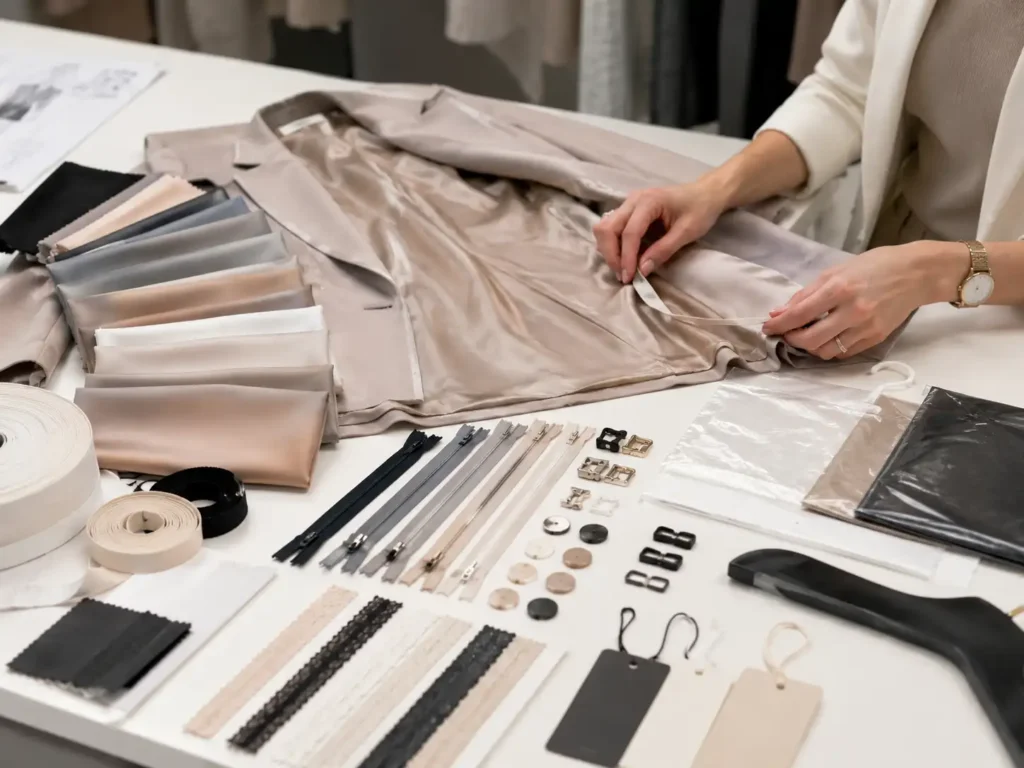
Incoming Inspection

Placement Templates

First-piece Review

Inline Inspection

Final Comparison
From Metal Trim Concept to Dress Sample
Design Review
Hardware Direction
Fabric Coordination
Fabric structure, stretch, surface sensitivity and drape are compared with proposed hardware. Lining and reinforcement directions are considered at the same stage.
Pattern Development
First Sample
Fit Review
Revision Sample
Production Preparation
Metal Trim Supply Stability for Repeat Orders
Bulk Availability
Custom Mold Timing
Finish Continuity
Shared Trim Planning
Replacement Approval
Reorder File Control
Multi-style Bulk Manufacturing for Metal Trim Dresses
16 Owned Factories
20+ Satellite Factories
12,000+ Supporting Workers
Core Style Allocation
Parallel Style Planning
Repeat-order Support
Quality Control for Metal Trim Dress Production

Incoming Trim Control

Attachment and Strength

Placement and Symmetry

Fabric and Finish Protection

Fit-related Measurements

Workmanship Review

PP and First-piece Control

Final and Packing Check
Packing Metal Trim Dresses Without Surface Damage
Tissue Separation
Hardware Wrapping
Chain Positioning
Fringe Control
Folding Direction
Hanger Packing
Polybag Selection
Carton Pressure
Compliance and Testing Support for Brand Programs
Duolan’s manufacturing system has completed a SMETA 2-Pillar audit and can coordinate garment, material, trim, label and packing requirements according to the target market and brand standards.
Audit Readiness
Testing Coordination
Inspection Cooperation
Why Fashion Brands Choose Duolan
Dress-focused Experience
Fabric and Trim Judgment
Pattern and Fit Control
Pattern teams evaluate bust balance, waist position, cut-outs, support, strap tension and grading.
Hardware-related measurements become part of the fit and specification process.
Special Process Coordination
Manufacturing Flexibility
Controlled Project Path
Metal Trim Dress Development Cases

U.S. Going-out Collection
Project profile
- Region: United States
- Product direction: chain-strap and ring-connected mini dresses
- Collection size: 18 styles
- Total order quantity: 42,000 garments
- Main materials: stretch jersey, double-layer mesh and satin
- Metal directions: polished gold, silver and black nickel
Development challenge
The original chain selected for several styles was visually strong but too heavy for lightweight necklines. Ring dimensions also created inconsistent cut-out openings across different silhouettes.
Duolan response
Chain weight, strap length and neckline pattern were reviewed together. Selected styles received concealed textile support beneath decorative chains. Ring sizes were standardized into two controlled diameter groups. Cut-out measurements and ring-to-seam distances were added to the specification files.
Production control
Bulk hardware was checked against three approved finish references. First-piece confirmation focused on chain length, neckline level, left-right symmetry and fabric damage. Packing used tissue separation around chain contact zones.
Project outcome
The 18-style program moved into bulk after PP and first-piece approval. Shared hardware references were retained for follow-up production and new color development.

UK Occasionwear Program
Project profile
- Region: United Kingdom
- Product direction: metal-bar, buckle and clasp midi dresses
- Collection size: 12 styles
- Total order quantity: 24,600 garments
- Main materials: satin, crepe and velvet
- Metal directions: matte gold and soft gunmetal
Development challenge
Metal bars created visible pressure around satin necklines, while one waist buckle rotated during fitting because the supporting tab lacked enough body. Velvet styles also showed surface marks during folding.
Duolan response
Metal-bar attachment zones received hidden reinforcement and revised gathering ratios. Buckle tabs were rebuilt with controlled internal layers and new stitch positions. Satin and velvet packing directions were revised to keep hard components away from visible surfaces.
Production control
Trim finish references, bar position measurements and buckle orientation were included in the PP records. Packing trials evaluated pressure after carton loading. Inline checks focused on reinforcement flatness and surface condition.
Project outcome
All 12 styles entered production under one coordinated matte-metal direction. Packing methods were separated by fabric sensitivity instead of applying one folding method across the entire collection.

European Multi-brand Group
Project profile
- Region: European Union
- Product direction: metal logo plates, eyelets, buckles and decorative rings
- Collection size: 26 styles across two labels
- Total order quantity: 68,400 garments
- Main materials: jersey, mesh, crepe and coated fabric
- Hardware families: five approved component groups
Development challenge
Early designs used too many unrelated finishes and component shapes. The structure increased sourcing complexity, created inconsistent brand presentation and placed several custom components on the critical production path.
Duolan response
Hardware was reorganized into five families with shared finish standards. One label used polished components and the other used brushed finishes. Existing market components were applied to commercial styles, while custom logo plates remained limited to image-led styles.
Production control
Each component family received a shared internal code, physical reference and approved supplier source. Eyelet post lengths were adjusted according to material thickness. Coated-fabric styles used controlled hole punching and backing structures.
Project outcome
The 26-style order moved through phased production according to trim readiness. Hardware files, molds, finish standards and placement records were preserved for repeat programs.
How to Evaluate a Metal Trim Dress Manufacturer
Supplier evaluation should cover garment knowledge, trim control, sample development, manufacturing readiness and long-term repeatability. Attractive product photographs alone cannot prove production capability.
| Evaluation Area | Evidence to Request |
|---|---|
| Dress-category expertise | Metal-detail mini, midi, maxi, party, occasion and going-out samples |
| Hardware sourcing | Trim boards, supplier references, finish samples and custom-development records |
| Structural control | Reverse-side construction photos, reinforcement methods and load-point explanations |
| Sample capability | First sample, fit sample, revision notes, PP sample and approval records |
| Bulk consistency | Approved BOM, trim standard, first-piece confirmation and inline checks |
| Quality management | Incoming trim inspection, placement measurement, attachment review and packing control |
| Multi-style capacity | Style-level schedules, material readiness plans and parallel production organization |
| Compliance support | Audit records, testing coordination, inspection cooperation and documentation |
| Confidentiality | NDA process, restricted design access and protected unpublished development materials |
| Communication discipline | Clear project summaries, staged sample updates, revision records and risk notices |
Custom Metal Trim Dress Frequently Asked Questions

Start Your Metal Trim Dress Development Project
Send Duolan a clear overview of the dress collection, metal-detail direction and planned production program. A complete tech pack is helpful, but initial evaluation can also begin from reference images, original garment photographs, sketches, trim samples, fabric ideas or a collection brief.
Please include:
- Dress type and intended occasion
- Metal component reference, size, finish and placement
- Fabric and lining direction
- Number of styles and colorways
- Sample purpose and required sample size
- Planned size range
- Estimated quantity by style
- Target market and launch schedule
- Testing, label and packing standards
- Available tech packs, BOMs or previous comments
After receiving the project information, Duolan will review product complexity, hardware sourcing, fabric compatibility, fit-sensitive areas, sample path and production dependencies before confirming the development proposal, quotation basis and timeline.