Skip to content
Custom Minimal Occasion Dress Manufacturer
Dress-focused development and manufacturing for modern occasionwear collections built around clean silhouettes, precise fit and refined fabric performance.
- Development planning for seasonal programs containing 10–30 coordinated dress styles
- Production organization for brand orders totaling approximately 20,000–80,000 garments
- Eight core silhouette directions covering slip, column, fitted, draped, asymmetric, halter, strapless and one-shoulder dresses
- Fabric evaluation focused on drape, opacity, stretch, recovery, surface sensitivity, support and bulk stability
- Sample-to-bulk control covering approved measurements, material standards, construction points, PP approval and production checkpoints
Manufacturing Capacity Built Around Fashion Dress Programs
30+ Years Development Experience
16 Owned Factories
Core factories provide direct control over development-intensive styles, approved workmanship, critical construction and priority production programs. Core styles can remain under a closely managed manufacturing route from sample review through bulk inspection.
20+ Satellite Factories
300 Sewing Lines
50+ Flexible Lines
6.5 Million Monthly Capacity
Built for Established Fashion and Occasionwear Teams
Global Fashion Brands
Regional Fashion Leaders
Product Development Teams
Buying and Sourcing Teams
What Makes an Occasion Dress Truly Minimal
Minimal Does Not Mean Basic
Fabric selection carries greater visual responsibility because there are fewer decorative elements to redirect attention. Satin must remain smooth around seams and zippers. Crepe must hold shape without appearing heavy. Jersey must recover after movement. Chiffon must retain lightness while maintaining coverage.
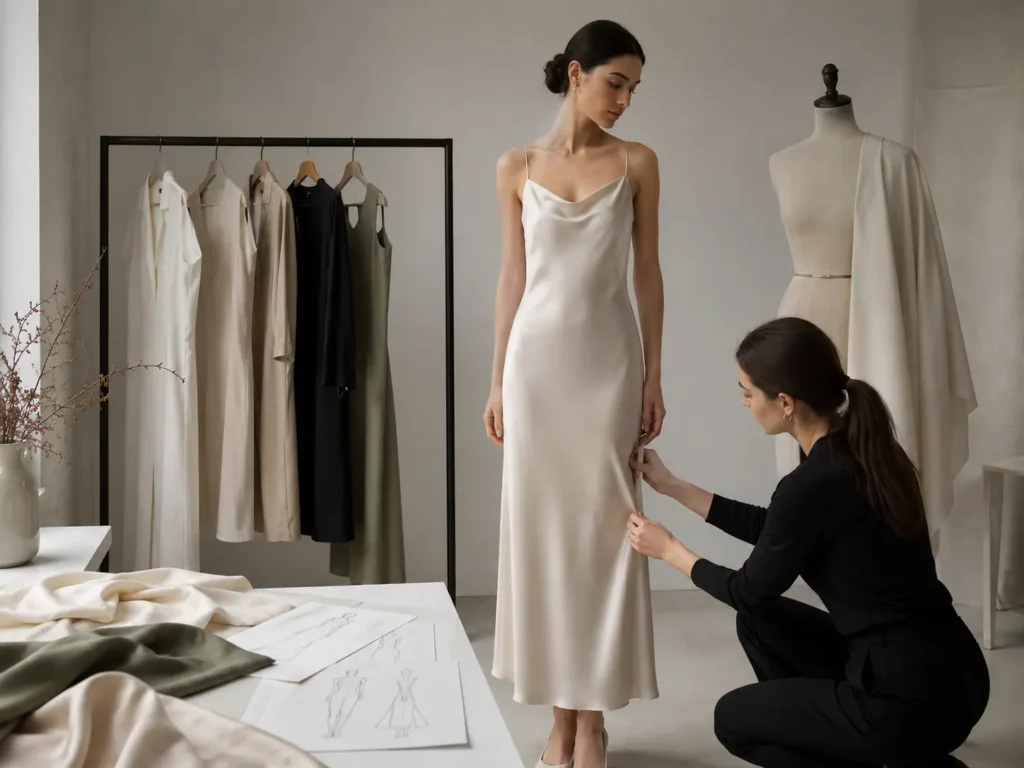
Construction also becomes more visible. A concealed zipper that waves, a lining that pulls, a side seam that twists or an uneven hem can reduce the perceived value of the entire garment. Minimalism therefore depends on disciplined pattern development, controlled sewing and accurate finishing.
Occasionwear Must Remain Wearable
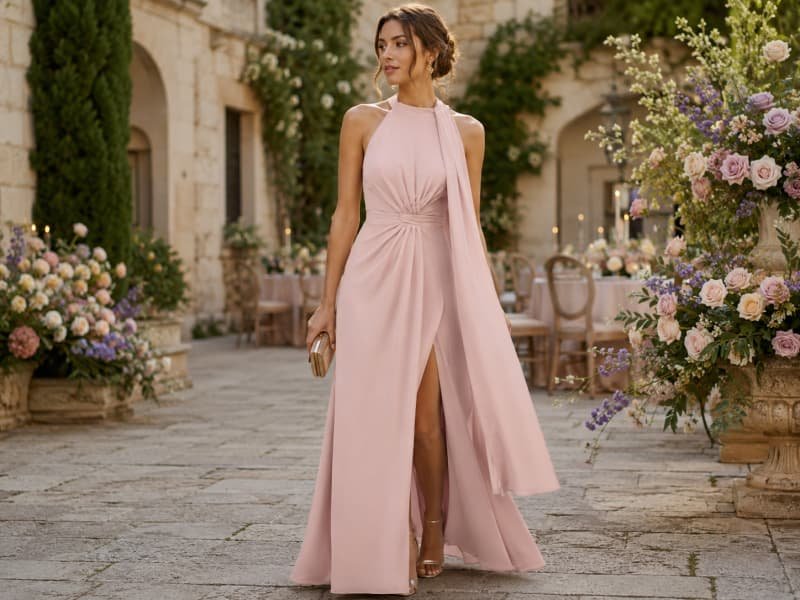
Modern occasion dresses need enough visual elevation for wedding guest events, cocktail occasions, dinners, graduations, celebrations and semi-formal settings. They also need movement, secure coverage and comfort across standing, sitting, walking and photography.
A successful style balances visual restraint with functional support. Strapless dresses may require internal grip, cups, boning or waist stabilization. Backless dresses may need controlled strap positioning and concealed fastening. Draped dresses require measured fold distribution rather than uncontrolled excess fabric.
The aim is a dress that appears effortless while carrying enough internal engineering to maintain fit, shape and confidence throughout the occasion.
Risks Hidden Inside Clean Occasionwear Designs
Flat Design Result
Fabric Silhouette Mismatch
Unstable Fit
Visible Sewing Marks
Lining Distortion
An unsuitable lining can restrict stretch, change drape, pull the hem or show through the outer fabric. Lining is selected according to opacity, movement, weight, recovery and required internal support.
Bulk Sample Difference
Minimal Occasion Dress Styles We Develop

Minimal Slip Dresses
Slip dresses rely on controlled fluidity rather than decoration. Development focuses on neckline stability, strap placement, bust coverage, bias behavior, side-seam balance and clean movement through the waist and hip. Bias-cut styles may relax after cutting and sewing, so hanging behavior, finished length and hem balance must be checked before approval.

Clean Column Dresses

Draped Midi Dresses

Strapless Occasion Dresses

One-Shoulder Dresses

Halter Occasion Dresses

Asymmetric Dresses

Refined Bodycon Dresses
Minimal fitted dresses depend on controlled stretch and recovery. Fabric must provide shaping without excessive transparency, shine or growth during wear. Pattern development considers negative ease, seam placement, lining compatibility, zipper requirements and grading across the size range.
Occasionwear Developed Around Real Event Settings
Wedding Guest
Cocktail Events
Dinner Occasions
Graduation Season
Holiday Events
Semi-Formal Social Events
Building a Commercial Minimal Occasionwear Collection
Create a Balanced Style Architecture
A 10–30 style program can be divided into clear commercial roles:
- Hero styles introduce the strongest neckline, drape or asymmetric feature.
- Core styles carry accessible fits and reliable color options.
- Entry styles simplify construction without losing brand identity.
- Image-led styles support campaigns, social content and launch storytelling.
- Replenishment styles use controlled fabrics and repeatable construction.
- Extension styles reuse proven blocks through new lengths, colors or neckline variations.
A balanced program might combine fitted and fluid silhouettes rather than repeating one shape throughout the range. Mini, midi and maxi lengths can share a common neckline language or fabric family while addressing different event preferences.

Plan the Launch Backward
Development should begin from the intended online launch, retail delivery or campaign date. The project route needs time for fabric sourcing, lab dips, first samples, fit comments, revised samples, PP approval, bulk production, inspection, packing and logistics.
Complex strapless, draped or asymmetric styles should enter development earlier than proven slip or column shapes. Early prioritization protects the selling window without forcing every garment through the same compressed schedule.
Coordinate Color and Fabric Direction
Minimal occasionwear benefits from disciplined color planning. Core black, ivory alternatives, navy, chocolate, deep red or muted neutrals can support repeat sales. Seasonal colors can introduce freshness without requiring entirely new construction routes.
Fabric planning should also be connected. A collection using too many unrelated materials increases sampling, color approval, minimum material quantities and production risk. A focused fabric platform can support multiple silhouettes while allowing construction to change according to each style.
Silhouette Engineering for Clean Dress Proportions
Slip Silhouette

Column Silhouette

A-Line Silhouette

Draped Silhouette

Fitted Silhouette

Structured Silhouette
Minimal Design Details with Maximum Visual Control
Sculpted Necklines
Controlled Draping
Clean Cut-Outs
Refined Backless Shapes
Precisely Placed Slits
Concealed Closures
Seam-Led Structure
Subtle Hardware
Compare Fabrics by Silhouette and Production Risk
Material decisions should connect visual effect with fit behavior and manufacturing stability. Final selection follows approved samples, brand requirements and confirmed bulk availability.
| Material | Best Applications | Visual and Fit Behavior | Main Production Risks | Control Direction |
|---|---|---|---|---|
| Satin | Slip, draped, column and one-shoulder dresses | Fluid movement, smooth surface and controlled shine | Needle marks, seam puckering, zipper waves, pressure marks and color-lot reflection differences | Seam trials, needle and tension selection, controlled pressing, zipper testing and surface-protective packing |
| Crepe | Column, fitted, A-line and semi-structured dresses | Stable surface, moderate drape and cleaner seam appearance | Weight variation, excessive stiffness, shrinkage and inconsistent recovery | Weight confirmation, shrinkage testing, handfeel approval and construction review |
| Chiffon | Layered, draped, sleeve and flowing occasion dresses | Light movement, translucency and soft volume | Transparency, edge distortion, uneven hems and seam visibility | Layer planning, lining coordination, hanging checks and controlled narrow hems |
| Georgette | Soft fitted, gathered and draped dresses | Textured surface, moderate fluidity and reduced shine | Grain movement, shrinkage, edge fraying and color variation | Grain control, pre-production testing, seam allowance planning and color approval |
| Stretch Jersey | Bodycon, ruched and fitted dresses | Close fit, comfort and movement | Growth, transparency, seam waviness and poor recovery | Stretch and recovery testing, negative-ease review, compatible lining and seam trials |
| Stretch Woven | Structured fitted, strapless and tailored dresses | Shape retention with controlled comfort | Limited recovery, pressure marks and fit sensitivity | Stretch-direction confirmation, pattern adjustment and movement fitting |
| Velvet | Holiday, evening and winter occasion dresses | Rich depth, soft surface and strong seasonal character | Nap variation, pressure marks, seam impressions and packing damage | Nap-direction control, low-pressure handling and protective packing |
| Cupro-Touch Blends | Slip, draped and relaxed occasion dresses | Soft handfeel, fluid movement and matte sophistication | Growth, seam movement, shrinkage and surface sensitivity | Hanging evaluation, shrinkage review and stable seam construction |
Fabric Engineering for Minimal Occasion Dresses
Evaluate Fabric Through Seven Performance Factors
- Drape: how the material falls around the body and responds to folds.
- Weight: whether the fabric supports or overwhelms the silhouette.
- Opacity: coverage under normal light, photography and movement.
- Stretch: available extension in width, length or multiple directions.
- Recovery: ability to return to shape after wear and handling.
- Surface sensitivity: risk of needle marks, seam impressions, shine or pressure marks.
- Bulk stability: expected consistency across color lots and production quantities.

Match Fabric to the Intended Shape
Fluid slip and draped silhouettes often require satin, cupro-touch fabrics, lightweight crepe or georgette. Clean columns may need medium-weight crepe, structured satin or stable woven blends. Bodycon shapes require stretch and recovery rather than softness alone. Strapless dresses need enough body to work with internal support.
The outer fabric must also work with the lining. A non-stretch lining can restrict a stretch shell. A heavy lining can flatten a light drape. A shiny lining can show through pale colors. Material systems are reviewed as complete garment constructions.
Consider Production Before Approval
Material suitability includes cutting, sewing, pressing, inspection and packing behavior. Slippery satin may require controlled cutting and seam handling. Velvet requires nap direction. Chiffon needs stable edge and hem methods. Stretch fabrics require compatible thread, needle, seam and lining choices.
Approval should include color, composition, weight, handfeel, width, stretch direction, opacity and any special finishing requirement. Bulk material is then matched against the approved direction before production release.
Invisible Support Behind Clean Occasionwear
Full Lining
Partial Lining
Built-In Cups
Internal Boning
Power Mesh
Silicone Grip
Inner Waist Support
Slit Reinforcement
Workmanship Standards Behind Clean Minimalism
Full Lining
Full lining improves coverage, comfort and interior finish. Weight, stretch and movement must remain compatible with the outer fabric so the lining does not shorten, twist or restrict the garment.
Partial Lining
Partial lining can preserve lightness in sleeves, draped areas or lower skirts. Edge placement must remain invisible from the exterior and stable during movement.
Built-In Cups
Cups support bust shape and reduce dependency on separate undergarments. Cup size, position, spacing, edge blending and attachment method are reviewed during fitting.
Internal Boning
Boning stabilizes strapless, corset-influenced and structured bodices. Placement follows body lines and seam construction. Ends require clean protection to prevent discomfort or visible pressure points.
Power Mesh
Power mesh can provide controlled support while retaining movement. Stretch direction, recovery, opacity and edge finishing must match the garment’s intended compression level.
Silicone Grip
Grip tape helps secure strapless and open-neck designs. Width, softness, placement and skin contact need evaluation to avoid discomfort, rolling or visible edge distortion.
Inner Waist Support
A concealed waist stay can transfer garment weight away from the neckline and improve stability. Position and tension are adjusted to the intended fit and closure route.
Slit Reinforcement
Slits require bartacks, reinforcement patches or controlled seam construction at stress points. Reinforcement must protect the opening without creating a visible hard point.
Color, Pressing and Surface Finish Control
Color Approval
Lot Consistency
Grain and Nap Direction
Controlled Pressing
Final Appearance Review
Protective Packing
Four Clear Routes into Dress Development
Complete Tech Pack
Reference Images
Original Sample
Collection Brief
Measurement Standards for Minimal Dress Fit
Clean silhouettes depend on measurable fit control. The following working framework illustrates common control points; final tolerances follow the approved specification and brand quality manual.
| Control Point | Why It Matters | Example Working Tolerance | Review Method |
| Bust Circumference | Controls compression, neckline stability and side-seam position | ±1.0 cm | Garment measured flat at defined POM |
| Underbust | Supports fitted, cup and strapless structures | ±0.7 cm | Measured along specified seam or level |
| Waist Circumference | Determines proportion and garment stability | ±1.0 cm | Relaxed garment measurement |
| Hip Circumference | Controls movement, strain and silhouette | ±1.0 cm | Measured at approved distance below waist |
| Neckline Depth | Affects coverage and visual proportion | ±0.5 cm | High shoulder point to neckline edge |
| Strap Length | Influences neckline, armhole and bust position | ±0.5 cm | End-to-end along approved strap route |
| Side-Seam Length | Protects hem level and waist balance | ±0.7 cm | Underarm or waist reference to hem |
| Slit Height | Controls movement and event-appropriate coverage | ±0.7 cm | Hem edge to reinforced slit endpoint |
| Center-Back Zipper Length | Affects entry, fit and surface stability | ±0.5 cm | Top edge to zipper stop |
| Total Dress Length | Protects intended mini, midi or maxi proportion | ±1.0 cm | High shoulder point or approved reference to hem |
Fit comments are converted into measurable actions. “Raise the neckline,” “reduce gaping” or “improve waist fit” must become an updated measurement, pattern correction or construction instruction before the next sample proceeds.
Pattern Making and Fit Review Before Approval

Pattern Analysis Before Cutting
The pattern team reviews:
- silhouette
- grain direction
- seam placement
- shaping
- ease
- stretch allowance,
- lining
- internal support.
Construction-sensitive areas are identified before fabric is committed.
For minimal occasionwear, attention often centers on neckline contact, bust position, waist level, side-seam direction, hip balance, slit placement and hem line. Fabric behavior may require pattern adjustment even when initial measurements appear correct.

Mannequin and Live Fitting
Mannequin review helps evaluate balance, seam direction and visual proportion. Live fitting adds movement, body response and comfort. The fit session checks:
- Neckline security and gaping
- Shoulder and strap position
- Bust shaping and cup placement
- Underarm coverage
- Waist balance
- Side-seam direction
- Hip tension or excess ease
- Back opening stability
- Slit movement
- Sitting and walking comfort
- Hem position from front, side and back

Comments Become Controlled Corrections

Grading Follows Approved Fit Logic
Size grading begins after the core fit and pattern direction are accepted. Growth between sizes should protect neckline shape, cup position, waist placement, strap length and garment proportion. Minimal fitted and strapless styles may require point-specific grading rather than equal increases across every area. Brand size standards remain the governing reference.
A Structured Sample Development and Revision Path
Project Brief Review
Feasibility Review
First Sample Development
Structured Fit Comments
Revised Sample
The revised sample is checked against the recorded correction list.
Updated pattern, specification and construction references remain aligned with the new version.
Approval Route
Timeline Planning
No single sampling promise is applied to every minimal occasion dress. Lead time is confirmed after reviewing fabric availability, structure, pattern requirements, sample purpose and required approval rounds.
A structured proposal records first-sample timing, revision timing, materials requiring early approval and dates when brand comments are needed to protect the launch plan.
From Approved Sample to Production Readiness
Confirm the Approval Status
The project team first identifies what has actually been approved:
- Fit approved
- Visual appearance approved
- Fabric direction approved
- Color approved
- Construction approved
- PP basis approved
- Remaining refinements recorded
Separating approval categories prevents an early visual sample from being treated as a complete production standard.
Lock Production-Critical Information
- Outer fabric and approved lot direction
- Lining, interfacing and support materials
- Zippers, hooks, cups, boning and elastic
- Color references
- Pattern version
- Size specification and critical tolerances
- Workmanship details
- Labels and packaging
- Required inspection standard
- Shipment and warehouse requirements
Establish the PP Reference
The PP sample represents the intended bulk materials, pattern, measurements, workmanship and finishing route. Any approved exceptions are recorded. For multi-style collections, PP approvals may be organized in waves according to fabric readiness, style complexity and launch priority.
Issue a Bulk Start Confirmation
A structured production-readiness note gives brand teams visibility into what is approved, what remains pending and what conditions must be completed before cutting or sewing begins.
Six Controls Protecting Sample-to-Bulk Consistency
Approved Sample Review
Material Locking
Workmanship Standard
First-Piece Confirmation
Inline Inspection
Final and Packing Review
Manufacturing Coordination for Multi-Style Dress Orders
Order Breakdown
Multi-Style Priority Management
High-risk or launch-critical styles can be prioritized for earlier PP approval and first-piece review. Proven silhouettes may proceed through a more direct route once all standards are locked.
Material and Process Coordination
Production planning accounts for:
- Fabric and lining arrival
- Lab dip or color approval
- Pattern and marker readiness
- Zipper and trim confirmation
- Special support components
- Cutting sequence
- Sewing line allocation
- Pressing and finishing
- Inspection and packing
- Required shipment waves

Production Path Matching
Styles are matched with suitable factory and line capabilities according to woven or stretch construction, lining, support, draping, surface sensitivity and required finishing.
A clean satin slip dress and a structured strapless column dress should not automatically follow identical sewing, handling or inspection plans.
Delivery Planning
The timeline is built backward from the target shipment, warehouse or launch date. Material approvals, sample comments and PP decisions remain connected to the overall schedule.
When a full program cannot move through one route safely, staged production or split delivery can be assessed according to style readiness and commercial priorities.
Quality Control for Minimal Occasion Dresses
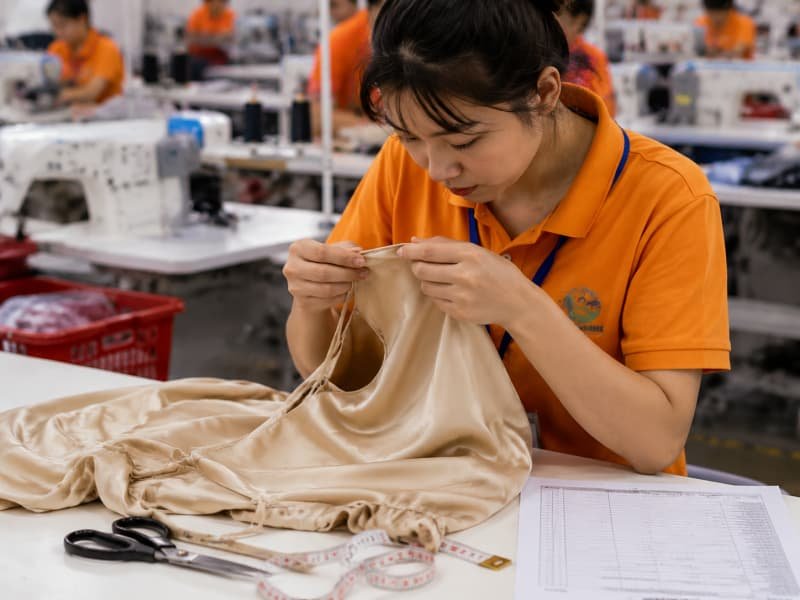
Quality inspection begins with product understanding. Minimal dress defects are not limited to loose threads; fit imbalance, surface marks, lining behavior and finishing differences can change the entire product impression.

Incoming Fabric Review

Pre-Production Review

Cutting Control

First-Piece Inspection

Inline Measurement Check
Workmanship Inspection
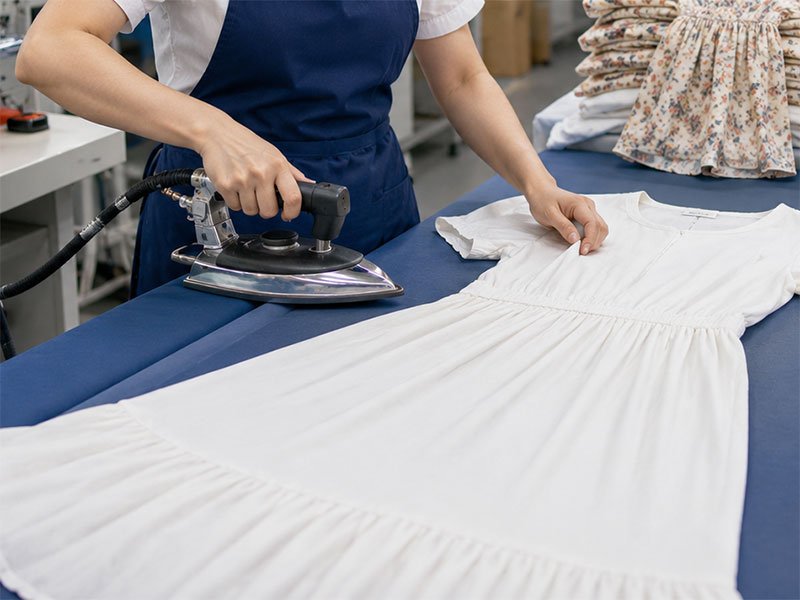
Pressing and Appearance
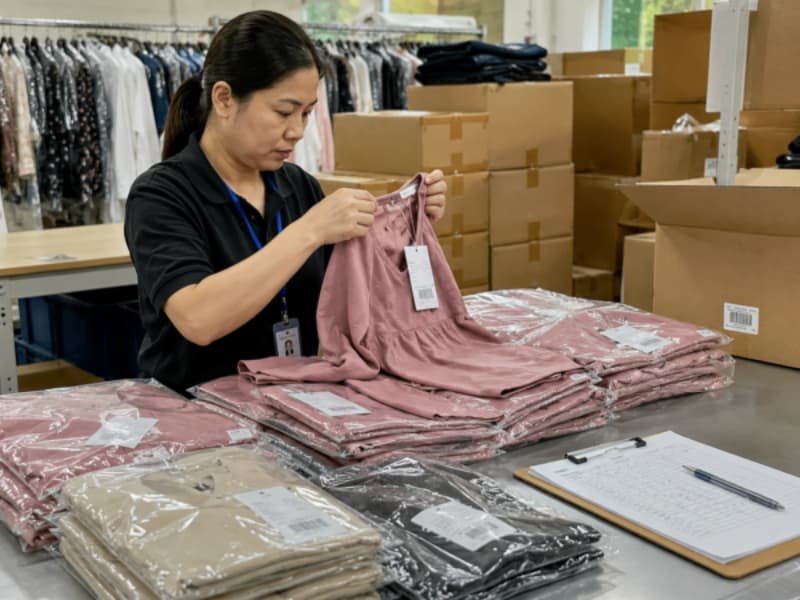
Final Packing Check
Compliance Readiness for Global Fashion Programs
Social Audit Foundation
Material Testing
Standard Coordination
Projects can be assessed against applicable requirements connected with AATCC, ASTM, OEKO-TEX®, EN, China GB standards, GOTS-related material programs and specific brand manuals.
Label and Care Information
Inspection Support
Shipment Documents
Packaging That Protects Minimal Dress Surfaces
Surface Protection
Controlled Folding
Hanging Options
Brand Presentation
Carton Accuracy
Delivery Preparation
Representative Minimal Occasionwear Program Profiles

United States Occasionwear Program
Program Structure
- Region: United States
- Product direction: modern minimal occasionwear
- Styles: 18
- Total quantity: 42,600 garments
- Size range: brand-defined core size run
- Main materials: satin, medium-weight crepe and stretch woven
- Key silhouettes: slip, column, strapless, asymmetric and fitted midi
Development Challenge
The collection used clean surfaces and limited decoration, making zipper waves, neckline gaping, uneven drape and pressing marks immediately visible. Several styles shared related silhouettes but used different fabric weights, so one pattern approach could not be applied across every style.
Control Route
Each fabric category received separate handling and construction review. Strapless styles went through support and movement checks, while satin styles received seam, zipper and pressing trials. Fit comments were converted into updated pattern and measurement records. PP approvals were organized in three waves according to style complexity and launch priority.
Program Result
Production was divided by fabric behavior and construction rather than visual category alone. Core fit logic was preserved across related silhouettes, and approved workmanship references were retained for future color and length extensions.

United Kingdom Wedding Guest Edit
Program Structure
- Region: United Kingdom
- Product direction: minimal wedding guest and cocktail dresses
- Styles: 24
- Total quantity: 68,400 garments
- Colorways: 9 coordinated seasonal colors
- Main materials: crepe, georgette, satin and selected stretch woven
- Key silhouettes: one-shoulder, draped midi, halter, column and A-line
Development Challenge
The range needed a consistent brand fit across several neckline constructions and fabric categories. Color approval also required close attention because reflective satin and matte crepe produced different visual readings from the same color reference.
Control Route
Styles were grouped by common block, neckline structure and fabric behavior. POM methods were standardized across related patterns. Lab dips and bulk material were assessed according to surface category rather than color name alone. Critical fit areas included neckline contact, underarm coverage, waist placement, slit height and hem balance.
Program Result
The collection moved through coordinated fit and PP review waves. Shared blocks reduced unnecessary redevelopment, while separate fabric standards protected the intended appearance across matte and reflective styles.

Australian Digital Fashion Drop
Program Structure
- Region: Australia
- Product direction: social-event and evening occasion dresses
- Styles: 12
- Total quantity: 26,800 garments
- Core launch focus: six image-led styles and six commercial extensions
- Main materials: stretch jersey, satin and lined georgette
- Key silhouettes: asymmetric mini, draped bodycon, backless midi and halter maxi
Development Challenge
The launch calendar required image-led styles to reach photography first while commercial extensions continued through fit and material confirmation. Several designs contained asymmetric draping and open-back construction, creating tension and coverage risks.
Control Route
Photography priorities were separated from bulk approval status. Draped patterns recorded fold direction and anchor points, while backless and halter styles received movement checks. Production was scheduled in controlled groups according to material readiness and approval stage.
Program Result
The release route protected campaign timing without treating photo samples as automatic production references. Approved patterns, BOM details and workmanship points were carried into the bulk readiness review before line release.
Frequently Asked Questions About Minimal Occasion Dress Manufacturing
Please include intended quantity, size range, fabric direction, target event category, required sample purpose and intended launch or delivery date. Clear project information allows Duolan to assess feasibility, risk points and the appropriate sample route.
Any uncertain information is recorded for confirmation before pattern development. A reference image can communicate visual direction, but measurements, materials, internal construction and finishing still need a defined development basis.
The sample proposal identifies first-sample timing, revision timing, brand confirmation points and any material decisions capable of affecting progress. A satin slip dress and a structured strapless dress normally require different development routes, so one fixed promise is not applied to every style.
A clear tech pack and confirmed material direction can reduce avoidable revision. Fit-sensitive strapless, backless, asymmetric or strongly draped designs may require more review than a proven block with a controlled neckline and familiar fabric.
Development may be released in waves so high-risk or image-led styles begin earlier. Shared fabric and fit directions can improve coordination, while each style still receives its own construction and approval record.
Neckline, cup, strap, waist and slit positions may require point-specific grading. Final standards follow the brand’s size chart, fit model and quality requirements.
Critical risks include needle marks, seam puckering, zipper waves, pressure shine and visible differences between panels. First-piece and inline reviews focus on the areas most likely to affect the clean exterior.
Duolan still reviews fabric suitability for the silhouette, pattern, lining, workmanship and production plan. Material responsibility, testing, shade approval, replacement terms and delivery timing should be confirmed before sampling or bulk cutting.
Orders are divided by style, color, size, complexity and priority. Styles are then matched to suitable production routes. The confirmed schedule depends on material readiness, PP approval, line allocation, inspection requirements and intended shipment plan.
The inspection agency, standard, AQL level, timing, location and documentation needs should be confirmed early. Duolan also conducts production-stage and final controls based on the approved sample, measurement specification, BOM, workmanship standard and packing instructions.
Brand files, material requirements, placement, language, barcode data and warehouse instructions should be provided early enough for sampling and approval before bulk packing begins.
Material availability and color lots are reviewed again before a reorder is confirmed. Any approved substitution or construction change receives a new record rather than replacing the previous standard without traceability.

Start Your Minimal Occasionwear Development Program
Send Duolan the information already available for your dress program. A complete submission allows our team to review the product direction, fabric and fit risks, sampling route, production requirements and target timing before preparing a development proposal.
Useful project information includes:
- Tech pack, sketches or reference images
- Original sample photos or courier details
- Number of styles and colorways
- Target quantity by style and color
- Intended size range and fit standard
- Fabric composition, weight, stretch and color direction
- Lining and internal support requirements
- Target sample purpose
- Required launch, shipment or warehouse date
- Quality, testing, labeling and packing requirements
Duolan is located in Shenzhen, China, with a coordinated manufacturing foundation focused on fashion dresses, occasionwear, party dresses and fitted womenswear programs.