Skip to content
Custom Pearl Strap Dress Manufacturer
Pearl strap dress development built around visual proportion, structural support, secure attachment and repeatable bulk production.
- Nearly 30 years of fashion dress development and decorative craft experience.
- 6 pearl strap construction directions available for project evaluation.
- 10+ fit, attachment, symmetry and finishing checkpoints can be defined per style.
- 3 approval gates connect strap trials, fit samples and PP confirmation before bulk release.
Duolan develops pearl straps as part of the garment structure rather than adding a decorative chain after sewing. Our team evaluates the dress weight, neckline, bust support, fabric behavior, strap length, pearl arrangement, connection method and packing protection before approving a production route.
Pearl Strap Dress Manufacturing for Established Fashion Teams
Established Fashion Labels
- Tech pack and reference-based development
- New silhouettes using established fit blocks
- Pearl strap mini, midi and maxi programs
- Seasonal color and material extensions
- PP sample preparation and bulk transition
- Repeat production based on approved standards
Partywear Product Teams
- Bust coverage and neckline security
- Strap load and attachment position
- Pearl scale under studio lighting
- Skin contact and sharp hardware risks
- Stretch recovery for fitted silhouettes
- Packing protection for embellished surfaces
Buying and Sourcing Teams
- Product feasibility review
- Material and trim direction
- Sample purpose definition
- Revision and approval records
- Production-readiness review
- Inline and final inspection planning
- Packing and shipment preparation
Designer-led Commercial Labels
- Measurable strap specifications
- Stable bodice construction
- Sourced or custom trim directions
- Defined handwork standards
- Commercially suitable material alternatives
- Bulk-ready workmanship instructions
Why Pearl Strap Dresses Carry Higher Production Risk
Strap Breakage
Pearl chains can fail through weak thread, open jump rings, poorly closed clasps or excessive garment weight. Risk increases when a decorative strap is expected to carry the entire bodice.
Duolan reviews:
- Garment weight and tension direction
- String, wire, chain or tape construction
- Front and back connection strength
- Hidden reinforcement inside the bodice
- Hardware compatibility
- Repair and replacement planning
Support may need to come from the bodice, side structure, internal elastic or gripper tape rather than the visible pearls alone.
Uneven Pearl Spacing
Control begins with:
- Approved pearl diameter
- Defined pearl count
- Spacer selection
- Finished strap length
- Arrangement sequence
- Left-right matching
- Assembly reference sample
Incorrect Strap Length
Review points include:
- Finished strap length
- Front and back anchor positions
- Base sample size
- Grade rules across the size range
- Pearl weight
- Hardware length
- Expected movement during wear
Weak Attachment Points
Possible controls include:
- Internal woven tape
- Reinforcement patches
- Secure loops
- Bar tacks
- Clean enclosed seams
- Layered interlining
- Protected metal rings
Poor Bust Support
Duolan evaluates:
- Cup placement
- Bust-point position
- Boning route
- Neckline stabilization
- Side seam balance
- Back opening
- Gripper tape
- Internal elastic support
Bulk Inconsistency
Bulk control requires:
- Locked material specifications
- Approved strap sample
- Defined assembly sequence
- First-piece confirmation
- Inline measurement checks
- Appearance standards
- Packing instructions
- Final inspection criteria
What Makes a Pearl Strap Dress Production-ready
More Than an Attractive Prototype
A first prototype confirms design direction, but bulk readiness requires more evidence. Pearl color, surface finish, diameter, quantity, spacing, connection components and finished length must be defined. The bodice must also hold its intended position without asking the pearl strap to carry unsuitable weight.
Duolan reviews five connected systems:
- Visual system: Pearl scale, color, luster, row arrangement and proportion against the neckline.
- Structural system: Bodice support, cups, boning, lining, elastic, closure and reinforcement.
- Measurement system: Finished strap length, anchor location, neckline depth, bust coverage and grading.
- Production system: Assembly sequence, workmanship reference, first-piece standard and inspection points.
- Protection system: Handling, pressing, folding, individual wrapping and carton placement.
A style reaches production readiness only after the approved sample can be translated into clear manufacturing instructions. Approval records should identify which elements are final and which remain open for adjustment.
A Controlled Basis for Bulk
A confirmed version normally includes:
- Approved fabric and lining
- Approved pearl and hardware references
- Finished strap construction
- Pattern version
- Measurement specification
- Size grading basis
- Workmanship comments
- PP sample or production basis
- Label and packaging requirements
- Critical QC checkpoints
When a dress contains detachable straps, additional standards are required for clasp orientation, hidden loops, spare components and packing placement. For multi-row straps, row order and tension must also be recorded.
A strong sample creates a reliable decision base for product approval, photography, sales review and production. Duolan treats sample development as preparation for later manufacturing rather than an isolated sewing exercise.
Pearl Strap Dress Styles Developed by Duolan

Pearl Strap Mini Dress
- Secure neckline and bust coverage
- Stable hem during movement
- Balanced pearl scale
- Clean back attachment
- Smooth invisible zipper
- Comfortable underarm finish

Pearl Strap Midi Dress
Midi silhouettes allow a refined balance between occasionwear and commercial party dressing. Pearl straps can elevate simple column, slip, corset and fit-and-flare shapes without overloading the design.
Key decisions include:
- Strap scale against longer proportions
- Waist and hip balance
- Slit placement
- Lining length
- Fabric drape
- Back neckline position
Midi styles work well for cocktail, wedding guest, graduation and evening collections where visual polish and movement both matter.

Pearl Strap Maxi Dress
Maxi dresses create greater garment weight, so visible straps should not automatically carry the full load. Fabric volume, skirt length and lining construction influence upper-body tension.
Duolan reviews:
- Load distribution through the bodice
- Side seam and waist support
- Back closure strength
- Skirt weight
- Strap reinforcement
- Packing and hanging methods
Pearl straps often perform best as controlled visual elements supported by a stable inner garment structure.

Pearl Strap Bodycon Dress
Bodycon dresses require synchronized control of stretch recovery, pattern tension, lining and seam elasticity. The neckline may pull downward when the body stretches during movement.
Priority controls include:
- Fabric stretch direction
- Bust, waist and hip balance
- Strap length under tension
- Side seam position
- Lining recovery
- Neckline stabilization
- Secure back closure
Pearl straps should remain aligned while the dress stretches, recovers and returns to shape.

Pearl Strap Corset Dress
- Cup shape and spacing
- Boning position
- Interlining
- Center-front balance
- Back closure
- Waist stability
- Hidden strap reinforcement

Pearl Strap Satin Dress
Satin highlights both elegant drape and minor workmanship defects. Needle marks, tension lines, pressing shine and attachment puckering are easily visible. Duolan controls:
- Fabric weight and drape
- Seam tension
- Reinforcement thickness
- Pressing temperature
- Pearl contact marks
- Edge finishing
- Protective packing
The goal is a clean surface where strap attachment remains secure without disturbing the satin face.

Pearl Strap Party Dress
- Dance and movement stability
- Skin contact
- Detachable component security
- Photography under direct lighting
- Decoration density
- Fast dressing and removal
- Return-risk reduction

Pearl Strap Occasion Dress
Occasion dresses often require a more controlled and refined finish than trend-led clubwear. Pearl luster, neckline proportion and fabric quality should match the intended price position. Suitable directions include:
- Cocktail midi dresses
- Wedding guest styles
- Graduation dresses
- Holiday event dresses
- Reception dresses
- Semi-formal evening dresses
Development focuses on polished finishing, stable fit, clear size grading and repeatable visual standards.
Pearl Strap Construction Options for Custom Dresses
Fixed, Detachable and Adjustable Structures
- Short concealed chain extensions
- Multiple attachment loops
- A pearl front section with fabric adjustment at the back
- Hidden hook positions
- Removable length segments
Multi-row and Pearl-chain Designs
Multi-row pearl straps create stronger visual value but introduce additional weight and alignment risk. Rows must remain ordered rather than crossing or twisting.
Development must define:
- Number of rows
- Row spacing
- Graduated or equal lengths
- Pearl sequence
- Shared or separate attachment points
- Tension balance
- Front and back orientation
Pearl-and-chain straps combine softness and metallic contrast. Chain type, plating finish, ring closure and skin contact require review. Metal parts must not stain light fabrics or scratch pearl surfaces during packing.
Fabric-backed Pearl Straps
A fabric-backed strap hides a structural layer beneath the decorative pearls. Satin rouleau, woven tape, narrow elastic or reinforced fabric can carry load while pearls create the visible finish.
Benefits include:
- Improved strength
- Better comfort
- Reduced stress on pearl string
- More stable grading
- Easier attachment
- Cleaner load distribution
The backing must remain concealed from normal viewing angles. Color matching, width and flexibility should be developed alongside the pearl arrangement.

Pearl Materials, Threads and Hardware Selected for Performance
Resin Imitation Pearls
Resin pearls offer a useful balance of visual quality, weight and sourcing flexibility. They are suitable for single-row, multi-row and detachable strap designs.Evaluation points include:
- Surface coating
- Scratch resistance
- Hole consistency
- Diameter tolerance
- Weight per strap
- Color matching
- Batch availability
Resin options can reduce load compared with glass, making them suitable for fitted party dresses and longer straps.
Glass Pearls
- Total strap weight
- Impact resistance
- Edge chipping
- Hole finish
- Reinforcement method
- Packing separation
- Replacement planning
Acrylic Pearls
- Luster
- Seam visibility
- Color depth
- Weight
- Scratch resistance
- Price position
- Quantity stability
Reinforced String Systems
Pearls may be assembled using nylon thread, coated wire, reinforced cord or other project-specific materials. Selection depends on hole size, flexibility, expected load and connection design.
Control points include:
- Knot security
- Abrasion resistance
- Flexibility
- End finishing
- Hidden connection
- Repair feasibility
- Skin comfort
A backup structural layer may be recommended when visual thread alone cannot safely carry the required load.
Chains and Metal Components
- Ring closure
- Plating color
- Sharp edges
- Opening direction
- Repeated use
- Fabric staining risk
- Pearl abrasion
- Spare part planning
Hidden Reinforcement Materials
- Main fabric transparency
- Fabric weight
- Stretch
- Neckline shape
- Seam allowance
- Lining construction
- Target comfort
Matching Dress Fabrics with Pearl Strap Construction

Satin: Drape, Surface and Attachment Marks
- Fabric weight and opacity
- Bias movement
- Seam tension
- Needle selection
- Pressing method
- Reinforcement size
- Pearl contact during packing

Crepe: Stable Structure and Clean Finish
Crepe often provides greater surface stability than satin, making it suitable for fitted midi dresses, cocktail dresses and structured occasion styles. The material can support clean neckline edges and hidden reinforcement.
Development decisions include:
- Stretch or non-stretch construction
- Lining compatibility
- Neckline roll control
- Attachment thickness
- Pressing response
- Edge finishing
- Fit tolerance
A medium-weight crepe can allow pearl straps to remain visually delicate while the bodice handles most structural work.

Stretch Jersey: Recovery and Tension
Stretch jersey changes dimension during wear. A strap attached to a neckline under tension may appear correct on the table but shift downward on the body.
Duolan checks:
- Stretch percentage
- Recovery
- Directional stretch
- Pattern reduction
- Seam elasticity
- Lining compatibility
- Neckline reinforcement
Pearl elements are normally non-stretch, creating a rigid point against a flexible garment. Connection engineering must prevent tearing, distortion and uncomfortable pulling.

Velvet: Pile Direction and Weight
- Pile direction
- Cutting consistency
- Seam imprint risk
- Pressing method
- Reinforcement placement
- Pearl contact marks
- Hanging and packing

Mesh: Transparency and Hidden Strength
- Mesh stretch
- Transparency
- Lining coverage
- Edge binding
- Anchor concealment
- Cup support
- Skin comfort

Sequin and Embellished Fabrics
- Decoration density
- Garment weight
- Sequin direction
- Underarm comfort
- Strap-to-surface friction
- Edge clearing
- Packing separation
Bodice Support Designed Behind Pearl Strap Details
Lightweight Slip and Column Dresses
Lightweight slip dresses may allow pearl straps to carry a meaningful part of the garment weight. Accurate strap length and secure attachment become especially important.
Recommended controls include:
- Stable front and back neckline edges
- Clean bias or straight-grain balance
- Lightweight reinforcement
- Smooth lining
- Secure back opening
- Controlled skirt weight
- Strap length verification on body
For bias-cut styles, the garment may lengthen during hanging. Strap and hem approval should occur after the fabric has relaxed.
Corset and Bustier Dresses
Corset and bustier constructions should obtain primary support from cups, boning, waist structure and back closure. Pearl straps can then act as a visual frame rather than a rescue mechanism.
Development includes:
- Cup volume and spacing
- Underbust position
- Boning length
- Center-front control
- Side support
- Waist anchoring
- Back closure tension
- Internal seam comfort
Detachable pearl straps work particularly well when the corset can remain secure without them.
Heavy and Embellished Dresses
A heavy skirt, dense decoration or layered fabric increases downward load. Allowing a narrow pearl chain to carry the full weight may lead to breakage, discomfort or neckline distortion. Possible structural solutions include:
- Hidden internal straps
- Waist stays
- Supportive lining
- Reinforced side seams
- Stable back panels
- Gripper tape
- Internal elastic
- Fabric-backed pearl straps
The final solution should preserve the intended visual lightness while transferring load through stronger garment areas.
Pattern, Fit and Strap Measurements Controlled Together
Strap Length and Anchor Position
Finished strap length should be measured between defined attachment points rather than from loose component ends. Hardware length, loops and seam insertion must be included in the finished measurement.
Typical project controls may include:
- Short rigid strap tolerance: around ±0.3 cm
- Longer flexible strap tolerance: around ±0.5 cm
- Visible anchor-position tolerance: around ±0.3 cm
- Left-right visible difference target: no more than 0.3 cm
- Pearl count: matched to the approved specification
Final tolerances depend on pearl size, construction, fabric behavior and brand manuals. Values are confirmed during sampling and transferred into the production specification.
Fit Relationships Around the Bodice
- Bust-point relationship
- Neckline height
- Front coverage
- Armhole opening
- Side seam balance
- Center-back position
- Underbust support
- Back width
- Zipper behavior
Size Grading Strategy
A pearl strap should not receive the same automatic grade as a fabric shoulder seam. Grading depends on the silhouette and intended coverage. The base sample size is selected according to the brand’s fit system, commonly around US 4–6, UK 8–10 or EU 36–38. Final base size always follows the supplied size chart. Grading review includes:
- Strap length increments
- Front anchor movement
- Back anchor movement
- Neckline width
- Bust coverage
- Cup scaling
- Armhole balance
- Hardware size consistency
The approved grading rule should be checked on selected larger or smaller sizes when fit sensitivity is high.

Custom Design Details for Distinctive Pearl Strap Collections
Pearl Size and Scale
- Neckline width
- Garment length
- Fabric weight
- Intended price position
- Photography distance
- Total strap weight
- Wear comfort
Pearl Color and Finish
- Luster
- Warmth
- Surface depth
- Coating consistency
- Reflection under flash
- Matching against fabric
Strap Width and Rows
Single-row straps appear refined and minimal. Double-row or multi-row structures create stronger visual impact but increase weight and assembly time. Control requirements include:
- Row count
- Row spacing
- Relative lengths
- Twist prevention
- Anchor width
- Left-right symmetry
- Packing orientation
Multi-row designs may require a wider concealed reinforcement area inside the neckline.
Front and Back Placement
A strap can run vertically, angle inward, angle outward, cross at the back or connect to a low-back neckline. Placement changes both fit and visual direction.
Development should evaluate:
- Bust framing
- Shoulder line
- Back exposure
- Arm movement
- Bra compatibility
- Closure access
- Strap twisting
Front and back positions are marked on the pattern and confirmed on the fit sample.
Detachable Hardware
Detachable systems can add styling value and simplify replacement. Hardware should remain small, secure and easy to use.
Key decisions include:
- Clasp type
- Ring size
- Loop construction
- Opening direction
- Metal finish
- Spare strap packaging
- Care instructions
The connection should not release during movement or create a sharp point against the skin.
Silhouette Integration
- Mini, midi or maxi length
- Slip, bodycon or corset shape
- Backless or low-back styling
- Cut-outs
- Ruching
- Draping
- Slits
- Mesh panels
Build a Commercial Pearl Strap Dress Collection

Satin Mini Hero Style
A satin mini with a distinctive pearl strap can serve as the main campaign image. Strong lighting response and clean neckline construction create immediate recognition. Development priorities:
- High visual finish
- Controlled satin surface
- Defined pearl scale
- Secure bust support
- Photo-ready sample timing
- Premium packing
The hero style may carry more complex trim or a stronger silhouette than the commercial volume styles.

Bodycon Core Style
- Recovery
- Size grading
- Lining
- Strap tension
- Side seam balance
- Neckline stability

Corset Midi Premium Style
A corset midi can occupy the premium level of the collection. Cups, boning and internal structure allow pearl straps to remain decorative and refined. Development may include:
- Multi-row straps
- Satin or crepe base
- Defined waist
- Slit options
- Detachable hardware
- Detailed interior finishing
The style should justify added workmanship through visible quality and stronger perceived value.

Maxi Occasion Style
- Support distribution
- Fabric drape
- Movement
- Hem length
- Back closure
- Shipping method

Black Evening Colorway
- Colorfastness
- Pearl transfer
- Hardware tone
- Photography
- Dust visibility
- Packing cleanliness

Ivory Event Colorway
- Fabric opacity
- Lining tone
- Warm or cool pearl color
- Makeup transfer risk
- Care labeling
- Transparent packing
Development Feasibility Review Before Sampling Begins
Start from Available Project Materials
- Tech pack
- Design sketch
- Reference image
- Original sample photographs
- Existing dress sample
- Fabric swatch
- Pearl or jewelry reference
- Collection mood
- Size chart
- Previous fit comments
Technical Questions Reviewed
- Will the pearl strap carry load or remain decorative?
- Does the bodice provide enough support?
- Is the selected fabric suitable for reinforcement?
- Will pearls scratch, stain or pull the fabric?
- Does the strap need to detach?
- Can the design grade across the intended size range?
- Is a local strap trial required first?
- Does packing require separate protection?
Development Route Recommendation
The result may recommend one of several routes:
- Direct first prototype
- Strap component trial before sampling
- Fabric and reinforcement test
- Pattern and fit sample first
- Corset structure trial
- Detachable hardware test
- Existing sample duplication with modifications
- Collection-level material planning
Duolan confirms the proposed sample purpose, estimated schedule, development fee and open decisions before work begins.
Pearl Strap Dress Sample Development in Six Stages
Brief Review
Review covers:
- Desired silhouette
- Fit direction
- Pearl concept
- Fabric direction
- Support requirements
- Size chart
- Branding and packing
- Future bulk plan
Fabric and Trim Direction
Fabric, lining, pearls, string, chains, clasps and reinforcement materials are reviewed together.
Common activities include:
- Swatch comparison
- Pearl size comparison
- Color matching
- Hardware finish selection
- Weight review
- Attachment planning
- Availability confirmation
A custom or uncommon trim may require a local trial before full sample assembly.
Pattern Development
The pattern stage confirms:
- Front and back balance
- Cup placement
- Neckline depth
- Strap position
- Zipper route
- Lining structure
- Seam allowance
- Size basis
Strap Prototype
Evaluation may include:
- One or more pearl diameters
- Different row arrangements
- Fixed versus detachable systems
- Chain combinations
- Backing methods
- Attachment loops
- Finished length
First Sample
The first complete sample checks the relationship between silhouette, fabric, bodice support and pearl straps.
A common planning window is confirmed only after materials are ready. Standard pearl strap constructions are often scheduled within approximately 10–15 working days, while corset, multi-row or custom-hardware designs may require approximately 15–25 working days.
Timelines remain subject to material sourcing, fit complexity and review scope.
Sample Review
The finished sample is reviewed through:
- Front, side and back views
- Key measurements
- Neckline and bust stability
- Strap length
- Left-right symmetry
- Connection quality
- Movement and comfort
- Workmanship
- Packing considerations
Comments are organized by priority before the next revision or PP step.
How Pearl Straps Are Assembled and Attached

Pearl Sorting and Component Preparation
- Diameter
- Color
- Surface finish
- Hole consistency
- Scratches
- Cracks
- Molding marks
- Coating defects

Length and Assembly Control
Each strap is built around a defined finished length and pearl count. Assembly instructions identify:
- Pearl sequence
- Spacers
- Thread or wire
- Chain sections
- End finishing
- Clasp direction
- Row arrangement
- Left-right matching
Straps may be checked on a flat measurement fixture before attachment. Flexible straps should rest without excessive tension during measurement.

Garment Reinforcement
The front and back anchor areas are prepared before the strap is installed.
Reinforcement may use:
- Woven tape
- Organza patches
- Interlining
- Fabric loops
- Metal rings
- Bar tacks
- Enclosed seam anchoring
- Internal elastic support
The method depends on fabric transparency, stretch and weight. Reinforcement must remain concealed from the outer view.

Attachment and Alignment
- Correct front and back orientation
- Left-right length
- Anchor placement
- Hardware direction
- No twisting
- Clean seam finish
- Smooth neckline
- Secure stitching

Cleaning and Final Finish
After assembly, the dress is checked for:
- Thread ends
- Adhesive marks
- Fingerprints
- Pearl scratches
- Fabric pulls
- Pressing marks
- Hardware alignment
- Surface contamination
Pearls may need separate protection before pressing or steaming nearby areas.

Workmanship Transfer to Bulk
- Workmanship notes
- Component references
- Assembly sequence
- Critical measurements
- First-piece points
- Inline inspection points
- Repair rules
- Packing instructions
Pearl Strap Testing and Bulk Quality Standards
Testing requirements should reflect the garment weight, materials, wearing conditions and brand manual. Final values are agreed per project rather than applied blindly to every style.
| Control Point | Main Risk | Verification Method | Production Standard |
|---|---|---|---|
| Finished strap length | Uneven neckline or fit | Flat measurement between defined anchors | Within approved project tolerance |
| Pearl count and order | Visible inconsistency | Count and sequence comparison | Matches approved specification |
| Left-right symmetry | Unbalanced appearance | Side-by-side and garment measurement | Within approved position tolerance |
| Attachment strength | Strap separation | Project-defined pull or load check | No release, tearing or distortion |
| Clasp security | Accidental opening | Repeated opening and closing review | Secure operation without deformation |
| Ring closure | Component failure | Visual and manual inspection | Fully closed with no sharp gap |
| Pearl surface | Scratches or coating defects | Controlled visual inspection | Matches approved trim reference |
| Hardware finish | Color variation or staining | Finish comparison and contact review | Consistent approved plating |
| Bodice stability | Sliding, gaping or twisting | Fit and movement review | Maintains approved neckline position |
| Skin contact | Irritation or sharp edges | Interior and wear review | No exposed sharp or rough point |
| Packing protection | Scratching or tangling | Packed-unit inspection | Strap protected and correctly positioned |
| Size consistency | Grading or placement error | Selected-size measurement checks | Matches approved size specification |
Pilot Runs Reduce Risk Before Full Production
Component Trial
A strap component trial can verify:
- Pearl count
- Finished length
- Clasp orientation
- Ring closure
- Thread or wire behavior
- Multi-row alignment
- Weight
- Skin contact
The trial may compare several constructions before one route is released.
First-piece Confirmation
Review includes:
- Fabric and color
- Pattern and measurements
- Bodice support
- Pearl strap appearance
- Attachment points
- Stitching
- Pressing
- Labels
- Packing
Small Pilot Production
The pilot can reveal:
- Assembly bottlenecks
- Operator variation
- Material damage
- Measurement drift
- Packing problems
- Unclear instructions
- Unexpected labor time
Production Release Decision
Full production begins after confirming:
- Approved first-piece
- Stable component supply
- Clear workmanship
- Achievable output
- Defined inspection points
- Correct packing
- Updated instructions
- Closed critical issues
The approach reduces the risk of discovering structural or cosmetic problems across thousands of finished garments.
Packaging Pearl Strap Dresses Without Surface Damage
Strap Position and Individual Protection
- Soft tissue wrapping
- Lightweight sleeves
- Separate component bags
- Non-abrasive interleaving
- Controlled folding
- Secured strap positioning
- Covered metal hardware
Detachable Strap Packing
Detachable straps may be:
- Attached in the approved wearing position
- Packed in an internal accessory bag
- Secured to a hangtag card
- Placed in a dedicated pocket
- Packed with a spare component kit
The selected method should prevent loss while remaining easy for warehouse teams and end wearers to understand.
Folded Versus Hanging Delivery
- Dress length
- Bodice structure
- Fabric recovery
- Pearl weight
- Warehouse method
- Freight cost
- Carton dimensions
- Crease recovery
Brand and Warehouse Requirements
- Main labels
- Care labels
- Size labels
- Hangtags
- Barcodes
- Price tickets
- Polybag warnings
- Carton assortment
- Carton marks
- Warehouse routing information
Sample-to-Bulk Quality Control at Six Key Stages

Incoming Pearl Inspection
- Lot identification
- Diameter
- Coating
- Scratches
- Cracks
- Hole quality
- Color consistency
- Quantity

Strap Assembly Check
- Finished length
- Pearl count
- Sequence
- Row alignment
- Clasp direction
- Ring closure
- End finishing
- Left-right matching

First-piece Approval
- Overall silhouette
- Fit
- Pearl scale
- Strap position
- Bodice support
- Workmanship
- Labels
- Packing
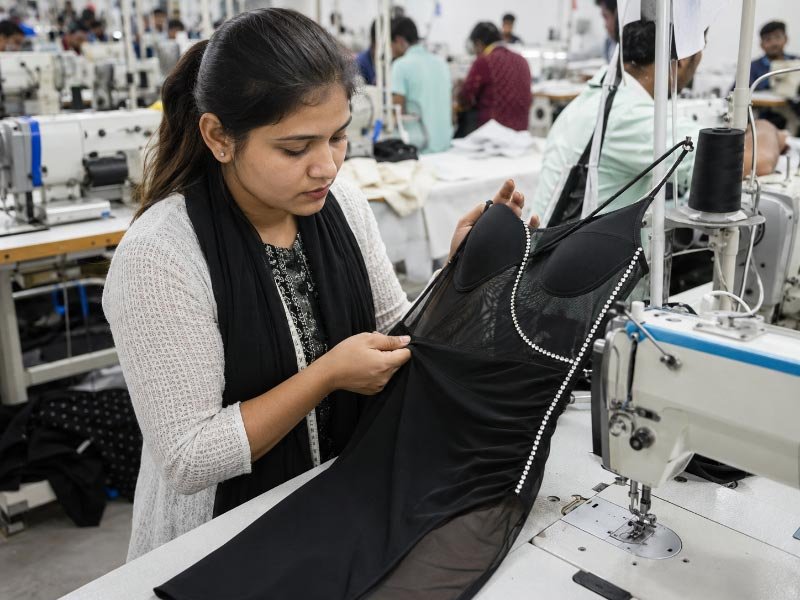
Inline Garment Inspection
- Anchor reinforcement
- Neckline distortion
- Strap symmetry
- Zipper behavior
- Lining position
- Cup and boning placement
- Measurement control
- Surface damage

Final Fit and Appearance
- Measurements
- Size consistency
- Pearl appearance
- Hardware
- Attachment security
- Cleanliness
- Pressing
- Labeling
- Packaging

Packing Verification
- Strap orientation
- Individual protection
- Detachable component inclusion
- Spare components where required
- Hangtag placement
- Barcode
- Polybag
- Carton assortment
- Carton marks
Manufacturing Capacity for Multi-style Pearl Dress Programs
Owned Factory Control
- Sample-to-bulk continuity
- Pattern and workmanship transfer
- First-piece confirmation
- Production troubleshooting
- Inline quality control
- Repeat-style preservation
Coordinated Satellite Capacity
- Parallel style production
- Capacity expansion
- Repeat-order allocation
- Regional production planning
- Specialized workmanship
- Split delivery schedules
Fast-response and Scale-up Support
- High-control campaign styles
- Commercial fitted dresses
- Repeat core shapes
- Premium corset styles
- Multiple colors
- Size extensions
- Follow-up replenishment
Production Lead-time Planning
- Simple styles: approximately 15–20 days
- Regular styles: approximately 20–30 days
- Complex styles: approximately 30–45 days
- Express: approximately 3–7 days
- Air freight: approximately 5–8 days
- Sea freight: approximately 20–35 days
Compliance Support for Brand-level Dress Production
Factory Audit Readiness
- Available audit records
- Factory profile
- Manufacturing scope
- Quality workflow
- Social responsibility information
- Factory visit arrangements
Material Testing Support
- Fiber composition
- Colorfastness
- Dimensional stability
- Restricted substances
- Trim safety
- Performance tests
- Project-specific requirements
Labeling Requirements
- Main label
- Size label
- Care label
- Fiber content
- Country of origin
- Required language
- Brand-specific symbols
- Traceability references
Quality Manual Execution
- Measurement tolerances
- Defect classification
- Inspection levels
- Workmanship standards
- Testing
- Packing
- Reporting
- Approval records
Packing Instructions
- Polybag warnings
- Barcode positioning
- Price tickets
- Carton assortment
- Carton strength
- Carton marks
- Warehouse labels
- Routing instructions
Shipment Documentation
- Packing lists
- Commercial invoices
- Shipping marks
- Product descriptions
- Delivery coordination
- Inspection records
- Test reports where required
- Project documentation
MOQ, Quotation and Lead-time Evaluation Factors
Pearl strap dress quotations depend on materials, structure, quantities, color count, size range, workmanship, packing and launch timing. Clear project information allows a more accurate commercial review.
| Project Variable | Production Effect | Information Needed |
|---|---|---|
| Pearl material | Changes weight, finish, price and availability | Material preference, size, finish and reference |
| Custom pearl color | May require matching, sampling and material minimums | Fabric swatch, color standard or physical reference |
| Custom hardware | May involve tooling, plating or component minimums | Drawing, size, finish and functional requirement |
| Strap structure | Affects labor, strength testing and reinforcement | Fixed, detachable, adjustable, multi-row or backed |
| Dress construction | Changes pattern, support, sewing and QC requirements | Silhouette, lining, cups, boning, closure and details |
| Fabric selection | Influences reinforcement, drape and production risk | Composition, weight, stretch, opacity and handfeel |
| Number of colors | Increases material planning and production setup | Color list and quantity by color |
| Size range | Affects grading, strap length and fit validation | Base size, size chart and size breakdown |
| Order quantity | Influences material purchasing and production planning | Quantity by style, color and size |
| Sample purpose | Defines development depth and approval route | Prototype, fit, photo, salesman or PP sample |
| Packing | Adds materials, labor and protection requirements | Labels, hangtags, barcodes, polybags and cartons |
| Launch date | Determines feasibility, priority and shipping route | Required warehouse date and destination |
Duolan evaluates projects according to development stage, launch order, repeat production or scale-up requirements. The goal is a commercially workable production plan rather than a generic unit price based only on a photograph.
Pearl Strap Dress Programs Managed Across Realistic Order Volumes

Detachable Pearl Satin Program
Region: United States
Collection: Holiday and occasionwear
Style count: 12 styles
Total order: 24,600 pieces
Colorways: 3–5 per selected style
Size range: US 0–14
Bulk window: 28 days after final material readiness
The collection included satin mini, fitted midi and straight-neck party dresses. Four styles used detachable pearl straps with concealed front and back loops.
The original pearl component created three problems:
- Clasps were visually heavy
- Strap rows twisted during wear
- Metal rings marked the satin during packing
Duolan revised the system by reducing clasp scale, widening the hidden reinforcement area and separating detachable straps inside soft accessory sleeves.
Two sample revisions were completed before PP approval. A first-piece check focused on neckline balance, clasp direction, pearl count and protective packing. The final production plan divided the collection by construction risk rather than placing all 12 styles into one production route.

Multi-row Corset Midi Program
Region: United States
Collection: Holiday and occasionwear
Style count: 12 styles
Total order: 24,600 pieces
Colorways: 3–5 per selected style
Size range: US 0–14
Bulk window: 28 days after final material readiness
The collection included satin mini, fitted midi and straight-neck party dresses. Four styles used detachable pearl straps with concealed front and back loops.
The original pearl component created three problems:
- Clasps were visually heavy
- Strap rows twisted during wear
- Metal rings marked the satin during packing
Duolan revised the system by reducing clasp scale, widening the hidden reinforcement area and separating detachable straps inside soft accessory sleeves.
Two sample revisions were completed before PP approval. A first-piece check focused on neckline balance, clasp direction, pearl count and protective packing. The final production plan divided the collection by construction risk rather than placing all 12 styles into one production route.

Repeat Party Dress Collection
Region: North America
Collection: Going-out and party dresses
Style count: 26 styles
Total order: 76,200 pieces
Colorways: 2–6 per style
Size range: XS–3XL
Delivery structure: Two planned shipment windows
The program combined bodycon, mesh, satin and occasion silhouettes. Nine styles shared a pearl and metal trim family, creating a consistent collection language while using different strap structures.
The main risk came from scale:
- Multiple materials reached production at different times
- Pearl color needed consistency across suppliers
- Stretch and non-stretch styles required separate fit logic
Duolan established shared trim references, style-specific BOMs, production-readiness notes and separate QC points for stretch, satin and corset styles.
The first shipment covered launch priorities. The second covered additional commercial styles and replenishment quantities. Approved patterns, trim references and packing instructions were preserved for repeat planning.
Frequently Asked Questions About Pearl Strap Dresses

Start Your Pearl Strap Dress Development Project
- Company name and website
- Target market
- Tech pack, sketch or reference image
- Existing sample photographs
- Dress silhouette and fabric direction
- Pearl size, color and finish
- Fixed, detachable or adjustable strap preference
- Target quantity
- Color and size breakdown
- Sample purpose
- Planned launch date
- Compliance or testing requirements
- Labels, hangtags and packing manual
- Delivery destination