Skip to content
Custom Placement Print Dress Manufacturer
Placement Print Engineering for Fashion-led Dress Collections
Duolan develops placement print dresses by connecting artwork, fabric behavior, garment patterns, size grading, construction details, sampling, and bulk manufacturing within one controlled production path.
- Built for collection programs covering 10–30 styles and approximately 20,000–80,000 garments per order.
- Placement planning can cover front bodies, backs, sleeves, waist seams, asymmetric panels, and border-print hems.
- Artwork control follows six critical stages: scale review, panel mapping, strike-off, sample review, size grading, and PP standard locking.
- Supported by 30+ years of womenswear development experience, 16 owned factories, 20+ satellite factories, and a structured print-and-garment manufacturing network.
Built for Established Fashion and Product Teams
Fashion Brand Teams
- Multi-style collection development
- Print and silhouette coordination
- Sample and revision planning
- Launch-order manufacturing
- Repeat-order record control
Product Development Teams
- Artwork feasibility notes
- Pattern and panel mapping
- Strike-off evaluation
- Fit-related print adjustment
- PP sample preparation
Buying and Sourcing Teams
Sourcing teams need disciplined project handling, accurate documentation, controlled production, and clear quality checkpoints. Placement print orders add another layer of risk because artwork versions, color standards, panel direction, and size-specific files must remain synchronized across printing, cutting, sewing, inspection, and packing.
Duolan supports:
- Supplier capability evaluation
- Production path planning
- Style-color-size breakdown
- Inline status coordination
- Final quality and packing review
Resort and Occasion Labels
Resortwear and occasionwear labels often require strong visual impact through print placement, color expression, silhouette proportion, drape, and photography performance. Duolan reviews how artwork interacts with garment structure instead of treating prints as separate graphics. A border motif must remain balanced when skirt length changes. A waist placement may need adjustment after fit correction.Typical support includes:
- Print and silhouette coordination
- Placement adjustment review
- Sample and fit evaluation
- Fabric and color direction control
- Bulk production preparation
Placement Print Is Designed Around the Garment

Placement Print

All-over Print

Engineered Panel Print

Garment Decoration
Eight Capabilities Define a Reliable Print Dress Partner
Dress Specialization
Artwork Engineering
Fabric Compatibility
Color, sharpness, hand feel, stretch, penetration, and durability vary by fiber and surface. Satin, chiffon, mesh, jersey, viscose, and crepe do not respond identically. Print selection starts with the intended garment effect, not only the graphic file.
Pattern Mapping
Final or near-final garment patterns should guide artwork placement. Visual centers, seam lines, darts, pleats, zippers, openings, and grain direction are reviewed before the print map is approved. Pattern changes may require corresponding artwork changes.
Graded Positioning
Strike-off Control
Bulk Reproduction
Brand-ready Delivery
Placement Print Risks Controlled Before Bulk Production
Most placement failures begin before sewing. Duolan connects every visible risk with a specific development or production control, allowing artwork, patterns, fabric, and garment construction to be reviewed before errors spread across thousands of pieces.
| Production Risk | Common Cause | Duolan Control |
|---|---|---|
| Motif sits above or below the intended position | Artwork mapped before fit and pattern confirmation | Recheck placement after fit correction and pattern approval |
| Left and right motifs appear unbalanced | Mirrored panels use inconsistent reference points | Establish center lines, balance points, and panel orientation marks |
| Artwork breaks at waist or side seams | Seam allowance and sewing intake were not included | Map artwork against sewing lines and approved seam construction |
| Border print becomes uneven around the hem | Curved hem shape or grading was ignored | Build border depth around the final skirt pattern and size rules |
| Large motif changes across sizes | One print file is used without a grading strategy | Define fixed-size, scaled, or size-specific mapping before bulk |
| Satin print looks dull or overly reflective | Base fabric shine changes perceived color | Review strike-off and garment sample under agreed lighting |
| Mesh artwork stretches out of shape | Artwork is evaluated flat rather than on tension | Check print appearance on stretched fabric and lined construction |
| Sample is accurate but bulk garments drift | Placement standards are not measured during production | Use approved reference points, first-piece checks, and inline audits |
| Correct panels are sewn in the wrong direction | Panel identification is incomplete | Apply style, size, orientation, and bundle identification controls |
| Color differs between production batches | Fabric ground and print settings are not locked | Approve bulk standard, separate lots, and review batch variation |
Placement Print Dresses Developed for Commercial Collections

Printed Mini Dresses
- Controlled center placement
- Balanced bust and waist motifs
- Stable hem distance
- Camera-ready color impact

Printed Midi Dresses
- Skirt length and artwork ratio
- Front-to-back visual continuity
- Slit and print interaction
- Size-graded border position

Printed Maxi Dresses
Maxi dresses allow large artwork and dramatic border compositions but create higher fabric-consumption and alignment risks. Long skirts, godets, gathered panels, tiers, and curved hems need individual print planning.
Development priorities:
- Large-scale motif control
- Multi-panel skirt mapping
- Flow during movement
- Hem-border consistency

Resort Print Dresses
Resort dresses often combine vivid color, fluid fabrics, open backs, halter necks, cut-outs, and relaxed skirt volume. Artwork must remain attractive both in static photography and natural movement.
Development priorities:
- Tropical and artistic placement
- Lightweight fabric response
- Lining and opacity
- Vacation-ready movement

Border Print Dresses
Border prints may follow straight, curved, asymmetric, or tiered hems. A border designed as a flat stripe can become visibly uneven once applied to a circular or flared skirt. Development priorities:
- Pattern-shaped border mapping
- Hem curve compensation
- Graded border depth
- Side-seam joining logic

Scarf Print Dresses
- Frame-to-panel alignment
- Corner and edge treatment
- Symmetry or intentional asymmetry
- Clean visual transitions

Printed Mesh Dresses
Mesh can stretch during printing, cutting, sewing, and wear. Transparent ground color and lining selection also change the final appearance of a motif.
Development priorities:
- Stretch-compensated artwork
- Lining color interaction
- Coverage over body zones
- Layer registration

Printed Satin Dresses
- Color and gloss balance
- Smooth placement around seams
- Controlled handling and pressing
- Protective finishing and packing
Placement Layouts Engineered for Different Dress Silhouettes

Center-front Placement

Neckline Placement

Waist-focused Placement

Hem Border Placement
Hem borders must follow skirt shape, length, flare, tiers, and curved edges. A maxi border may require separate mapping for front and back panels or for different size groups to maintain a consistent visual depth.

Sleeve Placement

Mirrored Placement

Diagonal Placement

Multi-panel Placement
Project Files Needed for Accurate Placement Development
Artwork Files
Garment References
Placement Measurements
Fabric Direction
Size and Quantity Plan
Launch Requirements
Artwork Feasibility Review Before Sample Development
Scale, Focus, and Garment Proportion Review
Review points include:
- Primary focal area: The design team identifies whether attention should fall on the neckline, bust, waist, hip, side body, or hem.
- Motif scale: Large elements are compared with garment width, torso length, skirt length, and intended size range.
- Visual weight: Dense dark elements can make one side appear heavier, while open areas may look empty after construction.
- Body interaction: Curved areas can visually distort faces, circles, geometric lines, or typography.
- Photography impact: Artwork is reviewed for front-view product shots, three-quarter angles, movement, and close-up photography.
Construction Conflict and Panel Review
Print artwork can be interrupted by darts, princess seams, waist joins, pleats, gathers, zippers, pockets, ruching, slits, and asymmetric cut lines. Every conflict is evaluated before print files are prepared.
Typical actions include:
- Moving a focal motif away from a dart intake
- Rebuilding artwork around a princess seam
- Separating upper and lower artwork at a waist join
- Extending border artwork beyond a curved hem line
- Protecting important details from zipper sewing
- Repositioning artwork before ruching compression
- Adding bleed around uncertain construction zones
Duolan may recommend a visual change when exact alignment would create excessive fabric waste, unstable production, or an unrealistic cost structure.
A technically possible design is not always the most commercially sound route.
Fabric and Printing Route Review
The same artwork can produce very different results on polyester satin, chiffon, viscose, mesh, crepe, jersey, or stretch woven fabric.
Evaluation covers:
- Fiber composition and printing compatibility
- Base color and influence on printed color
- Surface shine and perceived saturation
- Stretch and motif distortion
- Fabric width and panel layout
- Drape and visual movement
- Hand-feel requirements
- Wash and rubbing performance
- Bulk availability and lot consistency
The recommended route may involve digital printing, sublimation, screen printing, heat transfer, or another method suited to the material and order structure.
Size Range and Production Feasibility Review
Artwork must work beyond the sample size. Duolan reviews whether one file can serve the full size range or whether separate scaling and repositioning are required.
A review may define:
- Fixed-size motifs across all sizes
- Proportionally scaled motifs
- Two or more size-group maps
- Fully size-specific panel files
- Controlled hem distance
- Stable waist or bust reference
- Acceptable seam interruption
- First-piece measurement points
The final feasibility direction becomes the basis for quotation, strike-off planning, sample timing, and future bulk control.
Selecting the Right Placement Printing Method
Print selection depends on fiber, artwork complexity, color count, quantity, hand feel, stretch, durability, repeat-order plans, and placement accuracy. One method should not be applied to every dress program.
| Printing Method | Suitable Applications | Main Strengths | Main Control Points |
|---|---|---|---|
| Digital Printing | Multicolor florals, gradients, artistic motifs, photographic artwork, complex placement designs | High detail, broad color range, efficient visual development | Fabric absorption, color calibration, strike-off approval, batch consistency |
| Sublimation Printing | Polyester satin, chiffon, mesh, jersey, and performance-based fabrics | Strong color penetration, light hand feel, clear artwork, durable color | Polyester content, heat response, migration, shrinkage, panel positioning |
| Screen Printing | Graphic motifs, strong solid colors, defined placement, repeat programs | Saturated color, repeat stability, cost efficiency at suitable volume | Screen preparation, color count, paste compatibility, curing, stretch resistance |
| Heat Transfer | Selected motifs, limited garment areas, defined color graphics | Controlled local placement and flexible development | Transfer edge, hand feel, heat sensitivity, adhesion, wash performance |
| DTG Printing | Certain cotton-rich or compatible garment areas | Fine artwork and flexible local graphics | Pretreatment, fabric composition, color strength, curing, garment structure |
| Hybrid Print Process | Printed artwork combined with embroidery, sequins, rhinestones, or foil | Layered visual depth and stronger fashion expression | Process order, alignment, fabric stress, surface comfort, bulk repeatability |
No route is approved only from a description. Fabric testing, strike-off results, intended volume, garment construction, and end-use expectations guide the final process.
Fabrics Selected for Print, Drape, and Wearability

Polyester Satin
- Weight and opacity
- Gloss level
- Heat response
- Print definition
- Lining requirement
- Protective packing

Printed Chiffon
Chiffon creates light movement and soft color transitions. The transparent base can reduce saturation or allow lining color to influence the final effect. Layered skirts may create darker overlapping zones. Key controls:
- Ground color
- Transparency
- Print penetration
- Layer interaction
- Hem treatment
- Cutting stability

Printed Mesh
Mesh is suitable for bodycon, layered, ruched, and occasion silhouettes. Stretch can widen motifs and reduce color density. Printed mesh should be assessed both flat and under the expected wearing tension. Key controls:
- Stretch percentage
- Recovery
- Artwork compensation
- Lining contrast
- Seam stability
- Coverage placement

Printed Crepe
Crepe offers a more matte surface and controlled drape. Texture can soften fine artwork edges but provides commercial wearability across day dresses, midi dresses, and occasion styles.
Key controls:
- Surface texture
- Weight
- Color depth
- Shrinkage
- Drape
- Seam appearance

Printed Viscose
- Composition
- Dimensional stability
- Colorfastness
- Fabric width
- Skew control
- Bulk availability

Printed Jersey
- Stretch direction
- Recovery
- Print cracking risk
- Needle selection
- Hem method
- Size-grade appearance
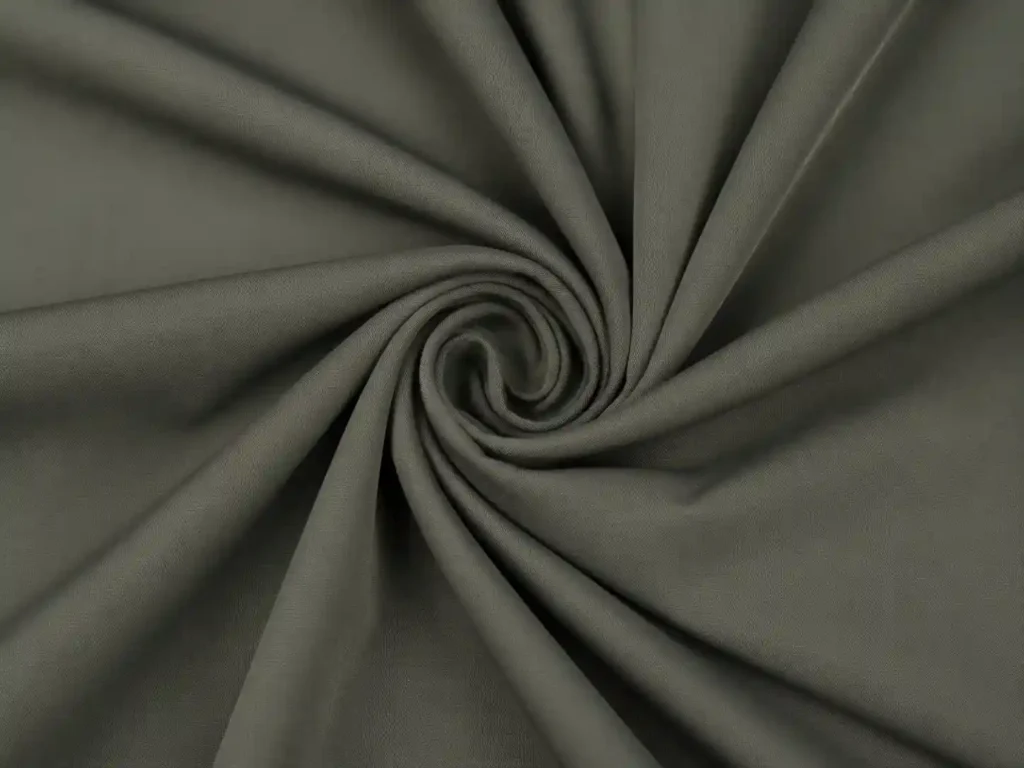
Stretch Woven Fabric
- Elastane content
- Recovery
- Heat sensitivity
- Bust and hip distortion
- Seam strength
- Pressing temperature

Lining and Layering
Lining changes printed color, opacity, drape, and comfort. White, nude, tonal, or contrast linings create different final effects under chiffon and mesh. Key controls:
- Lining shade
- Static behavior
- Weight balance
- Stretch compatibility
- Seam connection
- Care compatibility
Pattern-to-Print Mapping Controls the Final Garment
Start With a Stable Pattern Foundation
- Bust, waist, and hip balance
- Garment length
- Neckline and armhole shape
- Dart or princess-line position
- Waist-seam location
- Sleeve shape
- Skirt volume
- Closure and opening
- Lining construction
Overlay Artwork on Individual Panels
- Finished garment line
- Cutting line
- Seam allowance
- Grainline
- Center front and back
- Notches
- Balance marks
- Pattern name and size
- Artwork direction
- Required bleed
Build Reference Points for Production
- Vertical position measurement
- Horizontal center alignment
- Distance from finished edge
- Mirrored balance line
- Border depth
- Cross-seam continuation mark
- Orientation arrow
- Size identification
Convert the Approved Map Into Production Control
- Printing
- Panel identification
- Cutting
- Bundling
- Sewing
- First-piece review
- Inline inspection
- Final inspection
Construction Details That Change Artwork Position

Darts and Princess Seams
Control points:
- Keep focal details away from dart intake
- Add controlled artwork continuation
- Assess distortion on a fitted sample
- Re-map after bust-fit correction

Waist Seams
Control points:
- Define upper and lower alignment marks
- Include seam intake in mapping
- Approve continuity on a sewn sample
- Check waist placement across sizes

Pleats and Gathers
Pleats and gathers hide part of the printed surface. Artwork approved on flat fabric may become dense, fragmented, or visually uneven after volume is compressed.
Control points:
- Evaluate closed and open positions
- Avoid critical details inside deep pleats
- Adjust motif density
- Review movement on mannequin or model

Ruching and Draping
Control points:
- Place noncritical areas inside ruching
- Mark gathering start and end points
- Test fabric stretch and recovery
- Review the finished garment, not only flat panels

Zippers and Openings
Back zippers, side zippers, keyholes, slits, and cut-outs can interrupt artwork. Print alignment must also allow for zipper tape, seam rolling, and opening movement.
Control points:
- Protect focal motifs
- Define acceptable interruption
- Check closed and open appearance
- Control left-right sewing balance

Layering and Lining
Printed mesh, chiffon, overlays, godets, and tiered skirts create visual depth through overlapping layers. The same motif can become darker or lose clarity where layers cross.
Control points:
- Review lining shade
- Test overlapping density
- Control layer direction
- Confirm opacity in body-sensitive areas
Size Grading Must Include Print Placement Rules
Fixed-size Motifs Across Multiple Sizes
A fixed motif may be suitable when the artwork should remain visually identical across the range, such as a small neckline emblem, compact waist graphic, or controlled center-front illustration.
The team checks:
- Whether the motif remains centered
- Whether body landmarks shift
- Whether the motif becomes visually too small on larger sizes
- Whether garment length changes affect the layout
- Whether surrounding negative space stays balanced
A fixed-size approach simplifies production but should only be chosen when the garment silhouette supports it.
Proportionally Scaled Artwork
The team considers:
- Maximum and minimum acceptable scale
- Artwork resolution
- Print definition
- Border depth
- Focal motif size
- Relationship with body zones
- Fabric consumption
Size-group Placement Mapping
A commercial solution may use grouped mapping,for example:
- XS–S
- M–L
- XL–XXL
Each group can use a slightly different artwork scale or position while avoiding the complexity of a fully unique map for every size.
Grouping works when pattern changes remain predictable and focal areas can be preserved.
Size-group decisions are documented before production file output.
Fully Size-specific Panel Files
Complex engineered prints, fitted bodices, precise waist motifs, and shaped border designs may require individual panel files for every size.
Size-specific mapping may be recommended when:
- Artwork crosses several seams
- Bust or waist position is critical
- Skirt length changes significantly
- Border distance must remain uniform
- Curved panels vary materially by size
- Large focal motifs cannot tolerate drift
The chosen grading route is confirmed during development, not after bulk printing begins.
Seam Matching Requires Clear Production Priorities
Center-front Symmetry
- Vertical center accuracy
- Neckline balance
- Waist alignment
- Hem position
- Garment twist
Side-seam Continuity
- Main visual line
- Motif height
- Front-back balance
- Seam rolling
- Acceptable interruption
Waist-seam Alignment
A horizontal waist join can be highly visible when a floral stem, stripe, frame, or geometric line crosses the seam.
Priority checks:
- Sewing intake
- Bodice length
- Skirt attachment
- Left-right balance
- Graded waist location
Sleeve-body Alignment
- Sleeve orientation
- Arm-down appearance
- Front-view balance
- Left-right mirroring
- Sleeve-cap easing
Zipper-line Matching
- Closed-garment appearance
- Zipper tape allowance
- Seam rolling
- Top and waist reference
- Pattern balance
Multi-panel Continuity
- Main visual focal lines
- Front-facing joins
- Symmetrical areas
- High-visibility borders
- Brand-approved tolerance zones
Color Approval Starts With the Actual Fabric
Build a Clear Color Reference
Color direction can begin from Pantone references, physical swatches, previous garments, approved digital artwork, or a brand color library. Physical references are especially useful for complex neutrals, deep shades, metallic effects, and colors influenced by gloss.
The color brief should define:
- Primary and secondary colors
- Ground color
- Critical brand colors
- Acceptable visual direction
- Intended lighting environment
- Lining interaction
- Market-specific requirements
Digital displays are useful for communication but should not replace physical approval for color-critical programs.
Develop and Review Strike-offs
Review points include:
- Overall color balance
- Fine-line definition
- Gradient transition
- Saturation
- White or light-area cleanliness
- Surface shine
- Hand feel
- Stretch behavior
- Back penetration
- Heat or curing effect
Confirm Color on a Complete Sample
The complete sample is reviewed for:
- Color on the body
- Motif balance
- Shadow and overlap
- Lining influence
- Camera response
- Print-to-trim relationship
- Visual consistency between panels
Lock a Bulk Color Standard
After approval, Duolan links the final artwork version, fabric base, print method, strike-off, garment sample, and bulk reference.
Bulk monitoring considers:
- Fabric ground variation
- Print batch variation
- Colorway identification
- Lot separation
- Agreed light source
- Panel-to-panel consistency
- Finished-garment comparison
- Repeat-order records
A Controlled Placement Print Sample Development Process

Project Brief Review

Artwork Evaluation

Fabric Confirmation

Strike-off Development

Pattern Mapping

First Sample

Revision Sample

PP Sample
The pre-production sample confirms the intended fabric, artwork, position, fit, workmanship, trims, labels, and packing basis for production.

Bulk Readiness Review
The team checks whether approved files, materials, size mapping, placement measurements, production route, QC standards, and launch timing are aligned.
Fit Changes Can Require Artwork Re-mapping
Bodice Fit Changes
Adjustments to bust width, dart intake, shoulder slope, neckline depth, armhole shape, or torso length can shift artwork around the most visible garment area.Re-mapping may be required when:
- A neckline motif becomes too close to the edge
- A bust motif changes height
- A center graphic becomes visually compressed
- A princess seam cuts through a focal detail
- A shoulder adjustment rotates the panel
Artwork and fit are reviewed together before proceeding to the next sample stage.
Waist and Hip Corrections
- Waist-seam level
- High-waist or natural-waist intention
- Side-seam balance
- Ruching position
- Hip tension
- Print distortion under wear
- Size-grade consistency
Skirt Length and Volume Changes
Changes to skirt length, flare, gathers, tiers, godets, or hem shape can alter border depth and motif spacing.
Common re-mapping actions include:
- Extending background areas
- Rebalancing border height
- Adjusting motif repeats
- Repositioning large florals
- Rebuilding front and back skirt maps
- Revising size-group files
A border print is approved only after the final skirt geometry is clear.
From Revised Pattern to Updated Print Standard
Once fit comments are implemented, the revised pattern version is compared with the previous print map. Updated files receive clear version identification to prevent old artwork from returning to production. The controlled record includes:
- Pattern version
- Artwork version
- Sample date
- Revision reason
- Approved placement references
- Size mapping rule
- PP status
- Bulk release status
PP Approval Locks the Bulk Production Standard
Approved Materials
Approved Artwork
Approved Placement
Approved Fit
Approved Workmanship
Approved Packing
From Artwork Files to Controlled Bulk Production
Artwork Release
Fabric Lot Review
Bulk Print Trial
Panel Identification
Cutting Control
Bundle Management
First-piece Sewing
Inline Inspection
Finishing Control
Final Inspection
Packing Verification
Delivery Coordination
Placement Print Quality Control at Every Production Stage

Artwork Version Check

Print Color Check
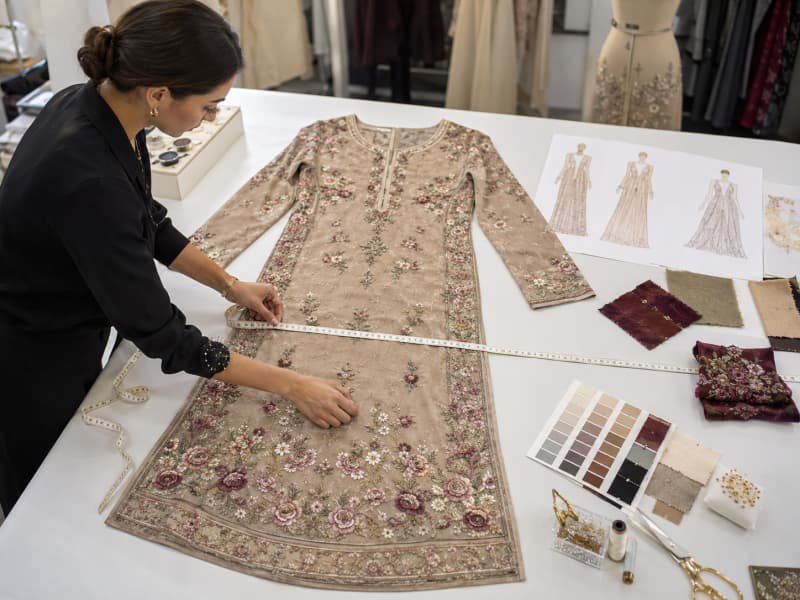
Position Measurement

Orientation Check

Seam Alignment Check
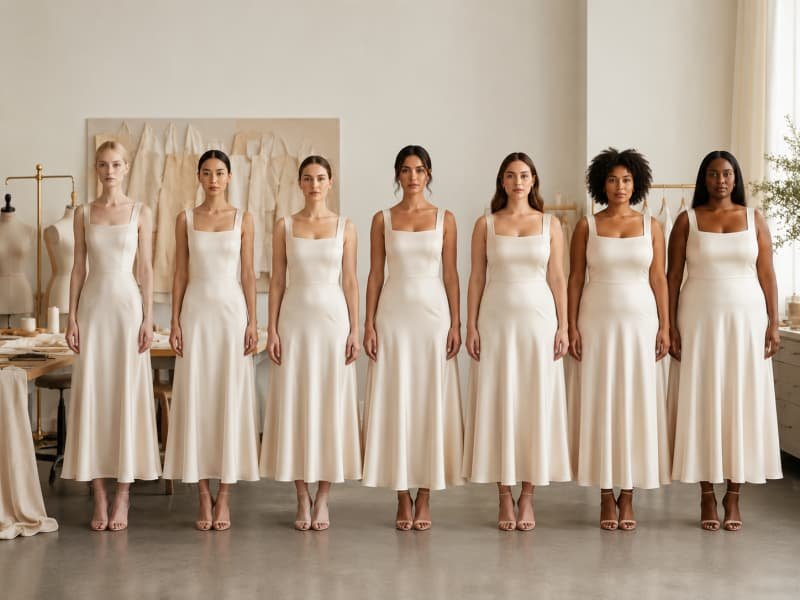
Size Mapping Check

Garment Measurement Check

Surface and Workmanship Check
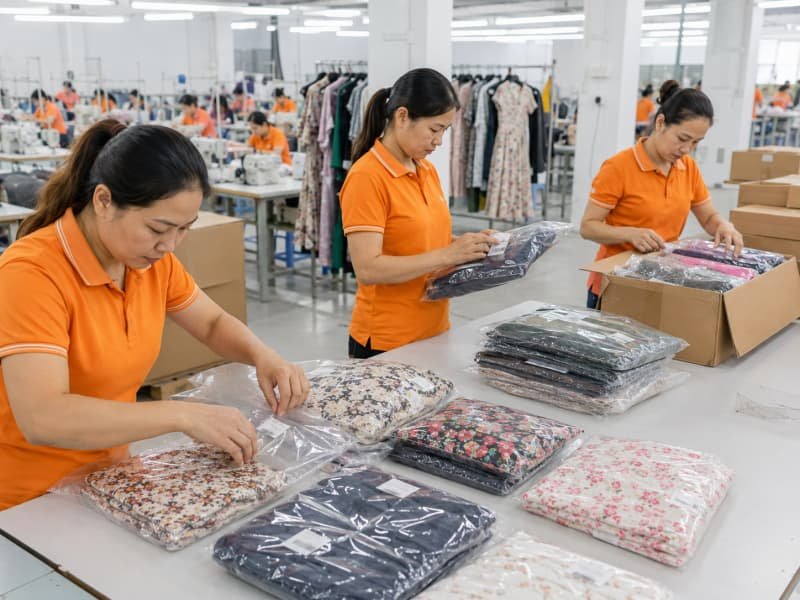
Packing and SKU Check
Testing Plans Matched to Fabric and Print Method
Wash Colorfastness
Rubbing Colorfastness
Dimensional Stability
Stretch Performance
Print Adhesion
Surface Abrasion
Heat Response
Appearance After Care
Manufacturing Capacity for Multi-style Print Dress Programs
30+ Years Development Experience
16 Owned Factories
20+ Satellite Factories
300 Sewing Lines
50+ Flexible Lines
Print and Development Equipment
Across the manufacturing group, available resources include approximately 150–400 sets of DTG, heat-transfer, screen-printing, digital-printing, exposure, curing, automatic screen-printing, and transfer-cutting equipment.
Representative Placement Print Dress Programs
US Resortwear Collection — 18 Styles and 42,600 Pieces
A US resortwear label planned an 18-style summer collection covering halter maxi dresses, printed midi dresses, open-back mini dresses, and two-piece vacation sets. Total production reached 42,600 pieces across six sizes and five primary color stories.
Development challenge:
The collection used four placement systems: oversized front florals, scarf-style bodice frames, asymmetric side motifs, and curved hem borders. Several maxi skirts contained gathered panels, creating a high risk of border distortion. Two open-back styles also required artwork to remain balanced after major bodice fit corrections.
Duolan development path:
- Reviewed layered artwork and five color stories
- Built pattern overlays for 18 styles
- Divided maxi skirts into front, back, and side mapping zones
- Developed strike-offs on two lightweight polyester bases
- Adjusted border depth for three size groups
- Re-mapped bodice artwork after fit revision
- Locked panel orientation and bundle identification before production
- Used first-piece review for every style-color combination
Production result:
The program moved through two strike-off rounds, one main fit revision, PP approval, and two planned shipment windows. Border depth, major focal motifs, size identification, labels, and packing ratios were included in final inspection.

UK Occasionwear Program — 12 Styles and 24,800 Pieces
A UK occasionwear label developed 12 placement print dresses in satin, chiffon, and lined mesh. Total production reached 24,800 pieces across cocktail, wedding-guest, holiday-party, and formal-event categories.
Development challenge:
Several styles used waist-focused motifs and mirrored florals on fitted bodices. Satin shine changed color appearance under studio lighting, while the mesh styles required artwork evaluation over tonal lining. Invisible zippers interrupted two back-center compositions.
Duolan development path:
- Compared satin gloss levels before artwork approval
- Tested print color on satin, chiffon, and mesh
- Developed separate strike-offs for critical colorways
- Repositioned focal motifs away from bust darts
- Created mirrored left-right bodice files
- Adjusted back artwork around zipper sewing lines
- Reviewed mesh color over final lining
- Locked size-specific waist references for fitted styles
- Added surface-protection requirements during finishing and packing
Production result:
The approved range entered bulk through style-by-style PP confirmation. Print position, zipper-line balance, color under agreed lighting, garment measurements, and surface appearance were checked through first-piece and inline inspection.

Australian Fashion Drop — 26 Styles and 67,200 Pieces
An Australian fashion label planned a 26-style printed dress drop covering bodycon mesh, ruched midi dresses, flowing resort maxis, printed satin minis, and asymmetric day dresses. Total production reached 67,200 pieces across eight colorways and a broad size range.
Development challenge:
The order combined stretch and non-stretch fabrics under one launch calendar. Mesh motifs changed under body tension, ruching compressed artwork, and border prints required different treatment across mini, midi, and maxi lengths. Multi-style coordination created additional risks around file versions, colorways, and panel identification.
Duolan development path:
- Classified styles by stretch, structure, print route, and production risk
- Tested mesh artwork under controlled extension
- Moved critical motifs outside high-compression ruching areas
- Created separate border maps for three dress-length groups
- Assigned artwork, pattern, and colorway version codes
- Planned first-piece confirmation for all 26 styles
- Separated printed panel bundles by style, size, and direction
- Coordinated production through multiple suitable lines
- Scheduled delivery in three commercial windows
Production result:
The range progressed from artwork evaluation to strike-off, first sample, revisions, PP confirmation, bulk printing, garment production, inspection, packing, and split delivery under one project structure.

Compliance, Branding, Packing, and Delivery Coordination
Audit Foundation
Testing Coordination
Projects can be coordinated around relevant AATCC, ASTM, OEKO-TEX®, EN, China GB, GOTS, ISO-related, or brand-specific requirements when applicable. Requirements are confirmed before production rather than assumed.
Private Labels
SKU Identification
Retail-ready Packing
Delivery Models
Placement Print Dress Frequently Asked Questions

Start Your Placement Print Dress Development Program
Send Duolan your artwork, tech pack, garment reference, fabric direction, size range, estimated quantity, and target launch schedule. Our team will review how the print should work across the silhouette, pattern panels, seams, construction details, sizes, sampling route, and future production. Useful project information includes:
- Company name and website
- Target market
- Dress categories and number of styles
- AI, PSD, EPS, PDF, or high-resolution artwork
- Tech pack, sketch, or reference garment
- Intended print position and dimensions
- Preferred fabric or physical swatch
- Sample size and full size range
- Estimated quantity by style and color
- Campaign, showroom, or launch date
- Label, testing, packing, and delivery requirements
After the files are received, Duolan will review development feasibility, missing information, suitable material and printing directions, potential construction risks, sample stages, and the most appropriate path toward PP approval and bulk manufacturing.