Skip to content
Custom Pleated Fabric Dress Manufacturer
Pleated dress development for fashion brands requiring controlled fabric behavior, accurate silhouettes and production-ready results across multi-style collections.
- Six core pleat controls: width, depth, direction, symmetry, retention and dimensional change.
- Three validation stages: pleated swatch, fitted garment sample and bulk first-piece confirmation.
- Development support for mini, midi, maxi, occasion, party, resort and going-out dress programs.
- Manufacturing structure suited to 10–30-style collections and total brand orders of 20,000–80,000 pieces.
- Pattern, lining, seam, zipper, hem and packaging decisions reviewed around the pleated structure.
- Sample standards are transferred into material, workmanship, measurement and QC checkpoints before bulk production.
From Pleated Fabric to Production-Ready Dresses
Fabric and Pleat Review
- Whether the proposed material can accept the intended pleat definition.
- Whether heat exposure may alter color, gloss, hand feel or dimensions.
- Whether pleating should occur before cutting, after panel preparation or at a later garment stage.
- Whether a trial swatch is needed before pattern development.
- Whether lining, interfacing or support layers may restrict movement.
- Whether bulk fabric variation could affect the approved appearance.
Pattern and Fit Development
- Flat fabric width versus finished pleated width.
- Pleat release at the bust, waist, hip or hem.
- Side-seam and center-line alignment.
- Zipper placement beside compressed or released pleats.
- Size grading without visually distorting pleat density.
- Lining ease and attachment points.
- Waist thickness and bodice-to-skirt balance.
Sample and Process Validation
- Pleat clarity after handling and steaming.
- Left-right symmetry.
- Waistline distribution.
- Dress length and hem movement.
- Lining coverage.
- Zipper smoothness.
- Seam distortion.
- Recovery after packing or hanging.
- Compatibility with the intended care instruction.
Bulk Production Control
Approved sample details are converted into manufacturing standards covering the material batch, pleat specification, pattern version, measurement chart, seam construction, lining, trims, pressing and packaging.
Before line production, Duolan reviews:
- Approved pleated swatch or panel.
- Final garment sample and comments.
- Critical measurements and tolerances.
- Material and trim confirmation.
- Workmanship points requiring visual standards.
- First-piece inspection criteria.
- Inline pleat and seam checks.
- Final folding and carton protection.
Built for Fashion Brands and Product Teams
Established Fashion Brands
Established labels often manage multiple drops, defined price architecture, approved size standards and detailed brand presentation requirements. Pleated dresses must fit within a wider collection rather than appear as isolated styles.Support can cover:
- Seasonal color and silhouette coordination.
- Multi-style development schedules.
- Product hierarchy across commercial and statement pieces.
- Fabric and trim consistency across related styles.
- Production documentation for repeat orders.
- Branded labeling and retail packing.
- Quality checkpoints aligned with internal approval procedures.
Buying and Sourcing Teams
Sourcing teams need more than product images.
They require clear supplier information, sample accountability, material traceability, reliable production planning and inspection access.
Duolan helps organize:
- Style, color, size and quantity breakdowns.
- Fabric and pleating feasibility notes.
- Development status and revision records.
- Bulk-readiness review.
- PP sample or approved-sample basis.
- Production-path allocation.
- Inline and final QC records.
- Packing, labeling and shipment confirmation.
Product Development Teams
Development discussions can cover:
- Intended silhouette and wearing occasion.
- Pleat behavior expected in motion.
- Relationship between bodice structure and pleated skirt.
- Fabric replacement options.
- Pattern corrections.
- Fit priorities.
- Revision sequencing.
- Production limitations that should be addressed early.
Occasionwear Brands
Key priorities include:
- Controlled volume without excessive waist thickness.
- Secure necklines and closures.
- Lining coverage under lighting.
- Balanced hem movement.
- Clean seam joining.
- Protection of delicate surfaces during packing.
- Consistent appearance across larger order quantities.
Resortwear Brands
Resort collections often require lightweight movement, breathable layering, flowing maxi proportions and colors suited to destination markets.
Pleated resort development may involve:
- Lightweight chiffon or georgette.
- Printed pleated panels.
- Halter and open-back silhouettes.
- Partial lining.
- Adjustable straps.
- Long hems requiring balance checks.
- Packing methods that allow recovery after travel.
Multi-Brand Fashion Groups
Duolan can organize:
- Brand-specific BOM and specifications.
- Separate sample approvals.
- Different labeling and packing rules.
- Production-line allocation by complexity.
- Consolidated project reporting.
- Independent shipment preparation.
- Repeat-order file preservation.
Risks Behind Pleated Dress Development
Fabric Rejects Pleats
- Composition and construction review.
- Trial swatch.
- Heat-response observation.
- Recovery check.
- Surface and color comparison.
- Care-condition review.
Pleat Width Changes
Pleat width may vary between sampling and bulk when forming conditions, panel width or process handling are not controlled.
Control actions:
- Approved pleat reference.
- Measurement method.
- Width and depth checkpoints.
- First bulk-panel comparison.
- Random inline measurement.
- Batch-to-batch visual review.
Consumption Is Miscalculated
Pleated fabric may require substantially more flat width than the finished garment suggests. Incorrect compression assumptions affect costing, pattern yield and final size. Control actions:
- Flat-to-finished ratio calculation.
- Trial panel measurement.
- Marker planning after pleat confirmation.
- Allowance for panel joining and defects.
Waist Becomes Bulky
Multiple compressed layers at the waist can create stiffness, uneven gathering or an unattractive seam ridge.
Control actions:
- Pleat release planning.
- Seam allowance management.
- Waist construction trial.
- Lining reduction where appropriate.
- Controlled layer distribution.
- Pressing method confirmation.
Sample and Bulk Differ
- Bulk-feasible construction review.
- Approved workmanship reference.
- First-piece confirmation.
- Operator instruction.
- Inline comparison against the approved sample.
- Process notes for repeat orders.
Pleats Lose Shape
Steam, pressing, laundering, moisture or carton compression can soften or flatten the approved effect.
Control actions:
- Appropriate heat-setting route.
- Pressing restrictions.
- Recovery observation.
- Packing trial.
- Care-label alignment.
- Carton-load review.
Seams Break Alignment
Side seams, center seams and panel joins can interrupt the vertical rhythm of pleats, creating visible breaks across the garment.
Control actions:
- Pleat-position marking.
- Pattern matching.
- Controlled cutting.
- Seam allowance consistency.
- First-piece visual approval.
- Left-right symmetry checks.
Packing Flattens Volume
- Defined fold direction.
- Tissue or internal support where needed.
- Suitable polybag dimensions.
- Carton quantity limits.
- Packed-garment recovery review.
- Shipment sample check.
Custom Pleated Dress Styles We Develop

Pleated Mini Dresses
Mini dresses require precise length control because even small deviations are visually obvious. Pleated skirts must retain movement without lifting excessively, while the waist and hip area should remain balanced. Development priorities include:
- Stable finished length.
- Controlled flare.
- Smooth waist connection.
- Secure lining coverage.
- Correct seat ease.
- Balanced hemline.
- Suitable zipper or closure placement.

Pleated Midi Dresses
Midi silhouettes need proportion control between bodice length, waist position, skirt volume and calf-level hem placement. Dense pleats can appear heavy when fabric, lining or compression ratio is poorly selected.
Development priorities include:
- Waist-to-hem proportion.
- Pleat release position.
- Walking movement.
- Lining length.
- Side-seam balance.
- Hem recovery.
- Size grading consistency.

Pleated Maxi Dresses
Maxi dresses require stronger control over vertical balance, hem level and transport recovery. Lightweight fabrics may twist, while heavier constructions can pull at the waist or shoulder.
Development priorities include:
- Long-panel alignment.
- Hem balancing on a mannequin.
- Bodice support.
- Shoulder or halter load.
- Lining movement.
- Packing length.
- Wear testing for walking and sitting.

Pleated Party Dresses
Party styles often combine pleating with fitted bodices, cut-outs, metallic fabrics, asymmetric panels or decorative trims.
Development priorities include:
- Secure neckline construction.
- Controlled volume.
- Clean transitions between fitted and pleated areas.
- Surface protection.
- Comfortable lining.
- Stable closures.
- Photo-ready visual completion.

Pleated Occasion Dresses
- Refined drape.
- Symmetrical pleat direction.
- Concealed support.
- Clean lining attachment.
- Elegant hem movement.
- Controlled pressing.
- Retail-ready packing.

Pleated Resort Dresses
Resort dresses favor movement, color and lightweight layering. Fabrics must recover after folding while remaining comfortable in warmer climates. Development priorities include:
- Breathable lining choices.
- Adjustable straps or ties.
- Printed-panel positioning.
- Lightweight seam construction.
- Long-hem balance.
- Travel packing.
- Steam-recovery guidance.

Pleated Halter Dresses
Halter styles place visual and structural focus on the neckline, shoulder and upper back. Pleated fabric may radiate from the neck, waist or bust. Development priorities include:
- Neck pressure.
- Bust coverage.
- Pleat distribution.
- Back closure security.
- Lining support.
- Armhole cleanliness.
- Symmetrical front drape.

Layered Pleated Dresses
Layered constructions create depth but may also increase weight, opacity differences and seam bulk.
Development priorities include:
- Layer-length relationship.
- Pleat density by layer.
- Transparency control.
- Hem separation.
- Color consistency.
- Waist thickness.
- Packing protection.
Pleat Types for Different Dress Effects

Accordion Pleats
Key considerations:
- Consistent fold depth.
- Sufficient fabric consumption.
- Heat response.
- Seam interruption.
- Waist compression.
- Packed recovery.

Knife Pleats
Key considerations:
- Direction consistency.
- Overlap depth.
- Panel joining.
- Left-right balance.
- Waist attachment.
- Pressing method.

Box Pleats
Key considerations:
- Fold placement.
- Center alignment.
- Stitch-down length.
- Waist thickness.
- Lining freedom.
- Grading across sizes.

Inverted Pleats
Key considerations:
- Exact placement.
- Opening movement.
- Seam reinforcement.
- Internal finishing.
- Pressing.
- Repeat production marking.

Sunray Pleats
Key considerations:
- Panel geometry.
- Pleat progression.
- Waist circumference.
- Circular hem balance.
- Heat-setting stability.
- Pattern consumption.

Micro Pleats
Key considerations:
- Fine-width tolerance.
- Surface change.
- Stretch and recovery.
- Seam construction.
- Edge finishing.
- Bulk-batch comparison.

Directional Pleats
Key considerations:
- Grain direction.
- Pattern placement.
- Left-right design intention.
- Joining points.
- Internal support.
- Repeatable marking.

Mixed Pleat Panels
A single dress may combine narrow and wide pleats, stitched and released areas, or different pleat directions.
Key considerations:
- Transition points.
- Panel labeling.
- Sewing sequence.
- Visual balance.
- Consumption.
- First-piece approval.
Which Fabrics Work Best for Pleating?
Material choice determines whether a pleat appears crisp, soft, sculptural or temporary. No fabric should be approved from appearance alone; composition, heat behavior, recovery and finished garment structure must also be reviewed.
| Fabric Direction | Pleat Performance | Suitable Dress Effects | Main Production Risk | Recommended Validation |
|---|---|---|---|---|
| Polyester Chiffon | Good potential for light, defined pleats | Flowing midi, maxi, resort and occasion dresses | Transparency, edge distortion and seam puckering | Pleat swatch, lining test, hem trial and steam review |
| Polyester Georgette | Controlled drape with more body than chiffon | Occasion, wedding-guest and long-sleeve pleated dresses | Surface texture change and inconsistent fall | Heat trial, color comparison and garment drape review |
| Polyester Satin | Smooth movement with strong visual shine | Premium party, formal and asymmetric pleated dresses | Heat marks, gloss change, needle marks and pressing lines | Temperature trial, surface inspection and seam test |
| Organza | Crisp structure and clear geometric volume | Sculptural mini, statement midi and layered occasion dresses | Excess stiffness, sharp edges and bulky seam joins | Pleat definition test, edge finish trial and waist construction check |
| Tulle or Mesh | Lightweight volume and layered transparency | Party, prom-inspired and layered pleated dresses | Uneven edges, stretching and snagging | Layer test, edge trial, coverage review and hanging test |
| Polyester Crepe | Softer definition with controlled movement | Commercial midi, office-to-occasion and long-sleeve dresses | Reduced sharpness and batch hand-feel variation | Pleat comparison, weight check and recovery observation |
| Stretch Polyester Blend | Flexible pleat structure for fitted or travel styles | Body-skimming, contemporary and easy-care dresses | Recovery variation, width change and seam tension | Stretch recovery test, graded-size sample and seam compatibility trial |
| Printed Polyester | Visual pattern combined with pleated texture | Resort, vacation, seasonal and statement dresses | Print distortion, placement shift and color change after heat | Print-before-pleat trial, placement review and bulk panel approval |
Fabric Sourcing for Pleated Dress Projects
Matching the Intended Drape
A reference image may show a long, narrow pleat with fluid movement, yet several fabrics can produce very different results. Fabric sourcing compares composition, weight, thickness, surface, stretch and opacity against the target appearance.
Evaluation may include:
- How freely the skirt should move.
- Whether the pleat should remain sharp or soft.
- Whether the garment needs a matte or glossy surface.
- How much body the upper section requires.
- Whether the fabric will be lined.
- Whether the chosen color affects transparency.
- Whether the same material can support multiple styles in a collection.
Swatches are reviewed as garment materials, not as isolated textiles.
Building a Material Set
- Main pleated fabric.
- Bodice fabric when different.
- Stretch or non-stretch lining.
- Fusible or non-fusible support.
- Concealed zipper.
- Hook-and-eye closure.
- Shoulder tape.
- Hem support where required.
- Brand labels and care labels.
- Protective packing materials.
Developing Color and Surface
Heat and pressure may affect color, gloss or hand feel. Dark shades, pale shades, metallic surfaces and printed fabrics may respond differently.
Color development can include:
- Pantone reference.
- Lab dip.
- Fabric cutting approval.
- Pleated color comparison.
- Print placement review.
- Surface inspection before and after processing.
- Bulk dye-lot control.
- Lining color coordination.
Approval should be based on the processed appearance when pleating can alter the visible surface.
Finding Production Alternatives
- Composition.
- Weight.
- Drape.
- Transparency.
- Heat response.
- Pleat retention.
- Color availability.
- Order quantity.
- Lead time.
- Repeat-order continuity.
How Pleating Is Developed Before Production
Fabric Feasibility Review
The first decision is whether the proposed material can support the desired effect. A soft fold, permanent heat-set pleat, stitched pleat or manually arranged drape should not be treated as the same process. Review points include:
- Fiber content and blended composition.
- Fabric weight and thickness.
- Woven or knitted structure.
- Stretch direction.
- Surface coating.
- Print or finish.
- Heat tolerance.
- Color sensitivity.
- Shrinkage or dimensional movement.
- Intended care method.
When evidence is insufficient, a trial swatch is prepared before the full garment pattern is finalized.
Pleat Specification
- Pleat type.
- Finished pleat width.
- Fold depth.
- Direction.
- Starting and ending position.
- Stitched-down area.
- Released area.
- Panel width before and after pleating.
- Symmetry point.
- Alignment with seams and center lines.
- Required recovery after steaming or handling.
Sample Pleating Test
A pleated swatch allows the development team to observe the material before committing to a full dress.
A trial can reveal:
- Whether fold edges remain clear.
- Whether heat changes color or gloss.
- Whether the panel contracts uniformly.
- Whether the surface becomes stiff.
- Whether stretch recovery is acceptable.
- Whether the pleat opens too easily.
- Whether seams can be sewn cleanly.
- Whether the chosen lining remains compatible.
The trial result becomes the starting reference for pattern and costing work.
Pattern Adjustment
Pleating changes effective dimensions. Pattern calculations should use the confirmed processed panel rather than an estimated flat-fabric ratio. Adjustments may cover:
- Required pre-pleat width.
- Finished panel width.
- Seam allowance placement.
- Waist or neckline release.
- Bodice-to-skirt joining.
- Center-front or center-back alignment.
- Zipper allowance.
- Layer overlap.
- Hem shape.
- Grading method.
Pattern corrections are documented so the approved result can be repeated.
Bulk Pleat Standard
Before bulk starts, the approved swatch or garment area becomes a measurable production reference. Bulk standards can cover:
- Width tolerance.
- Direction.
- Symmetry.
- Panel length.
- Surface appearance.
- Color after processing.
- Recovery behavior.
- Seam joining.
- Pressing restrictions.
- Packing instructions.
The goal is not absolute visual perfection in every fold; the goal is a controlled and commercially consistent result within agreed standards.

Heat Setting and Pleat Retention Control
Material Response Comes First
Review points include:
- Fiber composition.
- Fabric finish.
- Color.
- Surface shine.
- Elastic content.
- Weight.
- Thickness.
- Print method.
- Intended washing or care condition.
Process Conditions Need Control
Control records may include:
- Approved sample reference.
- Material batch.
- Processing sequence.
- Panel dimensions before processing.
- Finished dimensions.
- Pleat-width observation.
- Surface appearance.
- Recovery after handling.
- Any restricted pressing instructions.
Retention Is More Than Appearance
Depending on the project, review can include:
- Natural hanging.
- Controlled steaming.
- Gentle handling.
- Folding and unpacking.
- Agreed care simulation.
- Repeated opening and release.
- Seam joining.
- Long-panel weight.
- Lining interaction.
Bulk Conditions Must Match
Bulk inconsistency often appears when the fabric lot, panel size, forming condition or finishing method changes.
Bulk control therefore links:
- Approved fabric lot.
- Approved pleated swatch.
- Confirmed panel specification.
- First bulk panel.
- First garment.
- Inline comparison.
- Final inspection.
- Packing trial.
Any major process or material change requires renewed approval rather than silent substitution.
Design Details That Affect Pleated Dress Quality

Bodice-to-Skirt Connection
- Pleat release near the seam.
- Seam allowance thickness.
- Stabilization.
- Lining attachment.
- Zipper crossing.
- Waist measurement.
- Left-right distribution.

Waist Bulk Control
- Finished waist thickness.
- Compression ratio.
- Layer count.
- Seam construction.
- Pressing method.
- Comfort when sitting.
- Visual smoothness under the bodice.

Pleat Direction
Pleat direction affects symmetry, light reflection and movement. Directional inconsistency becomes highly visible across front panels, side seams and center lines. Control points include:
- Grain and fold direction.
- Panel labeling.
- Center-front alignment.
- Mirror-image areas.
- Left and right side seams.
- Design-intended asymmetry.
- Repeat-order records.

Zipper Placement
A concealed zipper can distort pleats when placed through dense folds or unsupported lightweight fabric. Control points include:
- Zipper location.
- Seam stabilization.
- Fold release around the zipper.
- Top closure.
- Lining attachment.
- Smooth opening.
- No twisting when worn.

Lining and Transparency
- Lining opacity.
- Lining color.
- Stretch compatibility.
- Length.
- Attachment.
- Side-slit relationship.
- Movement without dragging the outer layer.

Hem Movement
- Final hanging time.
- Hem level.
- Inner and outer layer length.
- Edge finish.
- Pressing.
- Weight distribution.
- Packing recovery.
Pattern Engineering for Pleated Fabric Dresses
Calculate Flat and Finished Width
A pleated panel can require several times its finished width, depending on fold type and depth. The calculation should consider:
- Usable fabric width.
- Selvedge restrictions.
- Pleat repeat.
- Defect allowance.
- Directional layout.
- Shrinkage.
- Matching requirements.
- Size range.
A change in pleat depth can affect both visual density and material consumption.
Position Pleats Around the Body
Pleats should support the silhouette rather than add uncontrolled volume. Placement decisions vary across bust, waist, hip and hem. Pattern planning may define:
- Where folds remain stitched.
- Where folds open.
- Where volume is reduced.
- How the front and back are balanced.
- How the side seam remains vertical.
- How the zipper area is stabilized.
- How the lining follows the outer layer.
Wearability is checked through standing, sitting and walking positions.
Engineer Panel Alignment
Pleated panels often need exact joining at center seams, side seams or style lines. The seam should preserve visual rhythm without creating excessive thickness.
Alignment work includes:
- Matching repeated folds.
- Marking fold peaks and valleys.
- Controlling seam allowance.
- Selecting a joining position.
- Checking color and surface direction.
- Preventing twist.
- Inspecting both outer and inner appearance.
Grade Across Sizes
- Bust, waist and hip increments.
- Pleat count.
- Pleat spacing.
- Panel width.
- Release position.
- Bodice length.
- Skirt length.
- Zipper length.
- Lining ease.
Control Garment Measurements
Pleated structures can move during handling and measurement. The method should define how the garment is laid, relaxed and measured. Critical points may include:
- Bust.
- Waist.
- Hip where relevant.
- Bodice length.
- Center-front length.
- Center-back length.
- Side length.
- Sweep.
- Strap or halter length.
- Lining length.

Pleated Dress Sample Development Process
Brief and Reference Review
- Tech pack.
- Reference images.
- Original garment.
- Size chart.
- Fabric direction.
- Pleat reference.
- Colorways.
- Target market.
- Quantity plan.
- Intended launch date.
Fabric and Pleat Direction
Potential materials and pleat methods are compared against the target silhouette.
A swatch trial may be completed before full garment development when behavior remains uncertain.
Output can include:
- Recommended material direction.
- Lining suggestion.
- Pleat-type confirmation.
- Key risk points.
- Trial requirement.
- Initial consumption basis.
Pattern Development
The pattern team translates the confirmed design into garment structure, accounting for flat-to-finished panel width, joining points, fit and size-standard priorities.
Work can include:
- Base pattern.
- Pleated panel calculation.
- Bodice construction.
- Lining pattern.
- Closure placement.
- Seam engineering.
- Initial measurement control.
First Sample
A standard first-sample schedule is confirmed after fabric and pleating feasibility are clear.
Straightforward styles may often be planned within approximately 10–15 working days, while complex mixed pleats, special materials or newly developed trims may require approximately 15–25 working days. Final timing depends on material readiness and approval speed.
Fit and Pleat Revision
- Fit.
- Proportion.
- Pleat density.
- Pleat direction.
- Length.
- Lining.
- Closure.
- Workmanship.
- Surface appearance.
- Bulk feasibility.
PP and Bulk Readiness
Before bulk planning, the team confirms which version will serve as the production basis.
Review points include:
- Approved sample status.
- Final pattern.
- Material and trims.
- Color.
- Measurement chart.
- Workmanship.
- Pleat reference.
- Packing.
- Inspection requirements.
- Delivery window.
Tests Before Approving Pleated Fabric
Pleat Definition Test
Review can include:
- Width consistency.
- Depth.
- Direction.
- Surface smoothness.
- Sharpness or softness.
- Light reflection.
- Panel uniformity.
Heat Response Test
The fabric is observed for unwanted changes during the selected processing route.
Review can include:
- Color shift.
- Gloss change.
- Hardening.
- Surface marking.
- Distortion.
- Shrinkage.
- Print change.
- Elasticity change.
Dimensional Change Check
Panel dimensions are recorded before and after pleating or finishing.
Review can include:
- Width contraction.
- Length change.
- Skew.
- Edge distortion.
- Repeatability.
- Impact on pattern.
- Impact on consumption.
Steam Recovery Check
Review can include:
- Fold softening.
- Opening.
- Twisting.
- Surface change.
- Recovery after cooling.
- Hem behavior.
- Need for pressing restrictions.
Surface and Color Review
Review can include:
- Shade.
- Shine.
- Texture.
- Print appearance.
- Fold shadow.
- Batch variation.
- Lining compatibility.
Sewing Compatibility Test
Review can include:
- Needle marks.
- Seam puckering.
- Fold slippage.
- Edge fraying.
- Zipper installation.
- Lining attachment.
- Pressing response.
- Repair visibility.
Workmanship Details for Pleated Dresses
Cutting and Panel Handling
- Panel relaxation.
- Direction marking.
- Template or pattern stabilization.
- Layer limitation.
- Controlled pinning or clipping.
- Notch placement.
- Bundle labeling.
- Surface protection.
Pleat Alignment at Seams
Visible breaks at side seams or center seams reduce product quality. Alignment requires consistent marking and sewing.
Controls can include:
- Peak-and-valley matching.
- Seam-position selection.
- Controlled seam allowance.
- Basting where needed.
- First-piece comparison.
- Symmetry checks.
- No unintended fold reversal.
Waist Seam Control
The waist often carries the highest concentration of layers. Construction should hold the garment securely without creating a hard ridge.
Controls can include:
- Controlled pleat release.
- Layer trimming.
- Stabilizing tape.
- Seam direction.
- Lining reduction.
- Pressure management.
- Comfort review.
Zipper Installation
A concealed zipper should open smoothly and remain visually clean. Controls can include:
- Stabilized zipper seam.
- Fold clearance.
- Equal left-right length.
- Top-edge alignment.
- Lining attachment.
- Hook-and-eye position.
- No zipper-wave distortion.
Lining Attachment
- Appropriate ease.
- Secure attachment points.
- Clean armhole and neckline finishing.
- Independent hem movement.
- No visible pulling.
- Suitable side-slit treatment.
- Color compatibility.
Pressing Discipline
- Areas not to press directly.
- Suitable temperature.
- Steam restrictions.
- Protective cloth.
- Direction of handling.
- Final shaping.
- Packing recovery method.
Validate Complex Pleated Styles Before Scaling

Mixed Pleat Structures
- Transition cleanliness.
- Panel marking.
- Sewing order.
- Symmetry.
- Visual balance.
- Bulk repeatability.

Fitted Bodice Combinations
- Bust shape.
- Waist pressure.
- Seam thickness.
- Zipper stability.
- Lining.
- Wear comfort.

Halter and Backless Styles
- Neck pressure.
- Bust coverage.
- Back opening.
- Internal support.
- Pleat origin.
- Movement during wear.

Layered and Asymmetric Dresses
- Layer relationship.
- Weight distribution.
- Left-right intention.
- Hem balance.
- Packing.
- Final hanging appearance.
Keeping Pleats Consistent from Sample to Bulk
Approved Fabric Basis
- Composition.
- Weight.
- Color.
- Hand feel.
- Surface.
- Stretch.
- Transparency.
- Heat response.
- Pleat behavior.
Approved Pleat Reference
The approved swatch or garment area defines:
- Pleat type.
- Width.
- Depth.
- Direction.
- Symmetry.
- Surface result.
- Recovery expectation.
- Pressing restrictions.
Reference material should remain available for bulk comparison.
Pattern and Measurement Lock
Control includes:
- Correct pattern version.
- Grading.
- Finished length.
- Waist.
- Bodice proportion.
- Lining.
- Closure.
- Panel dimensions.
- Critical tolerances.
First-Piece Confirmation
Checks can include:
- Overall silhouette.
- Pleat density.
- Side-seam alignment.
- Waist connection.
- Zipper.
- Lining.
- Measurement.
- Hem.
- Pressing.
- Packing.
Inline Bulk Checks
Inspection during production prevents a repeated error from reaching the final stage.
Inline checks can cover:
- Pleated-panel consistency.
- Sewing alignment.
- Measurement.
- Seam quality.
- Zipper installation.
- Lining.
- Stains or heat marks.
- Bundle separation.
- Color and size identification.
Final Appearance Review
Final inspection combines technical and visual checks.
Review can cover:
- Approved appearance.
- Symmetry.
- Pleat clarity.
- Measurement.
- Workmanship.
- Surface condition.
- Labeling.
- Folding.
- Carton preparation.
- Inspection documentation.
Quality Control for Pleated Dress Production
Quality control follows the material from incoming inspection through pleating, sewing, measurement, final appearance and packing. Every checkpoint should address a defined product risk.
| QC Stage | Main Checkpoints | Risks Controlled | Typical Evidence |
|---|---|---|---|
| Incoming Material | Color, composition, weight, width, surface, stretch, visible defects and lot separation | Shade difference, unstable hand feel, surface defects and incompatible material | Fabric inspection record, shade comparison and approved cutting |
| Pleating Process | Width, depth, direction, panel dimensions, symmetry, heat effect and surface appearance | Uneven folds, color change, dimensional error and unstable pleat definition | Approved swatch, panel measurement and batch comparison |
| Cutting and Bundling | Direction, panel identity, size, matching points and protection | Reversed pleats, mixed panels, incorrect size and damaged surface | Cutting check, bundle labels and panel records |
| Sewing | Seam alignment, waist joining, zipper, lining, edge finish and stitch quality | Broken visual rhythm, bulky waist, twisted zipper, lining drag and seam puckering | First-piece approval and inline inspection |
| Measurement | Bust, waist, hip where applicable, bodice length, dress length, lining and straps | Fit deviation, uneven length, poor proportion and grading inconsistency | Measurement report and tolerance review |
| Final Appearance | Pleat clarity, symmetry, surface, stains, pressing, hem level and recovery | Flattened folds, shine marks, twisting, uneven hem and visual inconsistency | Final inspection record and approved-sample comparison |
| Label and Packing | Main label, care label, hangtag, barcode, fold direction, bag and carton loading | Incorrect identification, damaged presentation and compressed pleats | Packing audit, carton check and shipment sample |
Quality requirements can be aligned with agreed brand standards, third-party inspection procedures and applicable testing needs. Duolan’s manufacturing system has completed SMETA and SMETA 2-Pillar audit processes and can coordinate documentation or testing requirements connected with relevant market and brand standards.
Protecting Pleats During Packing and Shipping
Define the Fold Direction
Folding against the pleat direction may create unwanted creases or flatten the structure. Packing instructions can define:
- Natural pleat direction.
- First fold point.
- Sleeve or strap placement.
- Skirt length management.
- Areas that should not be compressed.
- Whether the garment should rest before bagging.
Use Internal Protection
- Fine micro pleats.
- Metallic surfaces.
- Organza.
- Long maxi panels.
- Decorative bodices.
- Delicate trims.
- Light colors.
- High-value showroom pieces.
Select the Right Bag Size
A bag that is too small compresses the garment; an oversized bag can allow twisting. Bag planning considers:
- Folded dimensions.
- Garment thickness.
- Air removal.
- Seal position.
- Warning text.
- Barcode placement.
- Retail or warehouse requirements.
Control Carton Loading
- Pieces per carton.
- Size and color assortment.
- Carton dimensions.
- Weight.
- Compression.
- Inner-carton arrangement.
- Carton marking.
- Shipment split.
Check Recovery After Unpacking
- Fold marks.
- Pleat recovery.
- Twisting.
- Surface marks.
- Hem behavior.
- Need for steaming guidance.
- Revised carton loading.

Pleated Dress Collections, Not Just One Style

Occasionwear Capsules
Coordination can cover:
- Hero and commercial styles.
- Pleat density.
- Fabric family.
- Lining.
- Color.
- Trim language.
- Launch priority.
- Production complexity.

Resort Collections
Resort programs may extend one printed or solid pleated material across dresses, skirts, tops and matching sets.
Coordination can cover:
- Print placement.
- Long and short silhouettes.
- Color stories.
- Lightweight lining.
- Adjustable details.
- Travel packing.
- Reorder continuity.
- Destination-market timing.

Multi-Style Production
Production planning separates:
- Complex statement pieces.
- Commercial core styles.
- Photo-sample priorities.
- Launch-critical items.
- Different fabric routes.
- Special-process garments.
- Repeat-order candidates.
- Packing and shipment groups.

Color Extensions
Pleated fabrics may respond differently by shade, particularly where heat, print or surface shine is involved.
Color-program control can include:
- Lab dips.
- Processed swatch comparison.
- Lining coordination.
- Bulk lot approval.
- Color-specific inspection.
- Assortment planning.
- SKU and carton identification.

Test, Launch and Reorder
A controlled launch order can establish sales and production data for future replenishment.
Records preserved for reorder can include:
- Approved fabric.
- Pleat reference.
- Pattern.
- Size chart.
- BOM.
- Workmanship.
- QC points.
- Packing.
- Comments from the first production.

Seasonal Delivery Planning
Development should be planned backward from the intended selling window.
A schedule can include:
- Brief confirmation.
- Fabric sourcing.
- Pleat trial.
- First sample.
- PP approval.
- Material booking.
- Bulk production.
- Inspection.
- Packing.
Custom Options for Your Pleated Dress Program
Dress Silhouette
Fabric Direction
Pleat Type
Pleat Placement
Color and Print
Size and Grading
Labels and Trims
Retail Packaging
What Determines Pleated Dress Production Cost?
A reliable quotation comes from confirmed production details. Pleated dresses can vary widely in fabric consumption, processing complexity, workmanship and quality-control requirements.
Base Fabric Cost
Fabric Consumption
Pleat Complexity
Pattern Difficulty
Sewing Construction
Order Structure
Cost depends on total quantity, quantity per color, size distribution, number of styles, repeatability and whether materials are shared across a collection.
Testing and Inspection
Packaging Requirements
Pleated Dress Development Case Studies

United States Occasionwear Collection
- Compared three temperature and process directions on trial swatches.
- Reduced pleat density within the waist seam while maintaining visual fullness below.
- Adjusted the panel ratio after measuring processed width.
- Changed the internal joining method to reduce layer thickness.
- Repositioned the concealed zipper away from the densest fold area.
- Confirmed a processed color reference rather than relying only on the flat-fabric lab dip.
- Used first-piece review before wider line production.
- Added tissue protection and a lower carton-loading quantity for the longest styles.

European Resort Dress Program
- Compared print-before-pleat and adjusted placement methods.
- Established acceptable motif movement around fold valleys.
- Selected a softer lining color matched to each outer shade.
- Revised lining length to avoid visible horizontal lines.
- Balanced long hems after garment hanging.
- Added directional bundle identification for printed panels.
- Completed packing trials using two fold methods.
- Separated long maxi styles from shorter products in carton planning.
- Preserved approved print, panel and packing references for repeat production.
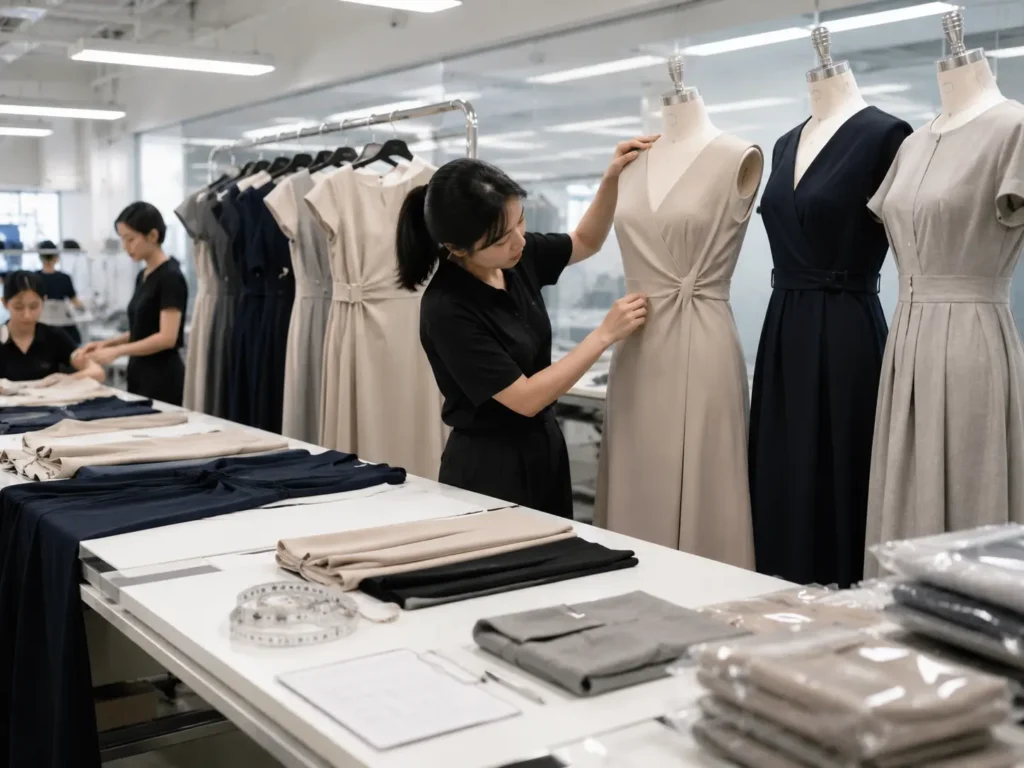
Multi-Brand Sourcing Program
- Separated the program by brand, style, material, complexity and delivery window.
- Created independent sample and BOM records.
- Assigned complex styles to higher-control development and production paths.
- Used processed pleat references for each fabric group.
- Locked label, barcode and packaging rules by brand.
- Confirmed first pieces by production route.
- Applied inline checks to pleat width, zipper construction, lining and length.
- Coordinated final inspection and carton marking by shipment group.
- Preserved production standards for replenishment discussions.
A Manufacturing System Built for Brand-Level Production
30+ Years Development Background
Duolan’s leadership and manufacturing foundation are built on more than 30 years of involvement in fashion womenswear development, fabric selection, silhouette interpretation and commercial dress production.The value lies in understanding how:
- Trend direction becomes a saleable dress.
- Fabric affects silhouette.
- Decorative work affects wearability.
- Sample decisions affect bulk.
- Production complexity affects timing and cost.
16 Owned Factories
Owned womenswear factories support core programs, development-intensive styles and projects requiring closer control of samples, workmanship and production standards.
Owned-factory value includes:
- Direct production coordination.
- Core-style allocation.
- Sample-to-bulk communication.
- Production-path control.
- Quality follow-up.
- Long-term standard preservation.
20+ Satellite Factories
Long-term satellite factories provide additional flexibility for replenishment, expanded quantities and differentiated production routes.
Satellite-factory coordination supports:
- Capacity peaks.
- Repeat orders.
- Multi-style production.
- Regional production support.
- Style allocation by construction.
- Delivery balancing.
12,000+ Coordinated Workers
- Multi-line planning.
- Different production stages.
- Replenishment.
- Production balancing.
- Packing and shipment preparation.
- Sustained delivery programs.
300 Sewing Lines
- Garment construction.
- Fabric behavior.
- Operator skill.
- Special-process dependency.
- Order quantity.
- Delivery priority.
- Inspection needs.
Development Density
The broader system supports approximately 15,000–35,000 sample pieces or development units per month and around 3,000–8,000 style-development and sampling workflows.
Development capacity supports:
- Multiple concurrent briefs.
- Fabric sourcing.
- Pattern development.
- Sample revisions.
- Collection programs.
- Photo and PP samples.
- Bulk handover.
50+ Flexible Lines
More than 50 quick-response and flexible lines support development-to-order transitions, selected launch programs, replenishment and time-sensitive styles.
Flexible capacity is used within an organized production structure rather than as a promise of uncontrolled speed.
Scalable Production
Compliance Coordination
Duolan’s manufacturing system has completed SMETA and SMETA 2-Pillar audit processes and can coordinate requirements related to social responsibility, quality documentation, material testing and specific brand standards.
Frequently Asked Questions About Pleated Dress Manufacturing

Start Your Pleated Dress Development Project
Send the information currently available, even when every detail has not yet been finalized. Duolan will review the proposed dress direction, fabric and pleating requirements, sample stage, production complexity and information needed for a reliable next-step plan. A clearer brief allows the team to provide a more accurate development route, quotation basis and delivery assessment.
Helpful project information includes:
- Tech pack, reference images or original-sample photos.
- Intended pleat type, width, direction or visual reference.
- Fabric composition, swatch, weight, color or material direction.
- Dress silhouette and important construction details.
- Size chart and target size range.
- Planned colors and quantity by style.
- Total collection quantity.
- Target market and intended retail position.
- Required sample stage.
- Desired launch or delivery date.
- Main label, care label, hangtag and barcode requirements.
- Packaging and carton requirements.
- Testing, audit or inspection requirements.
- Current concerns about fit, pleat retention, production or packing.
After review, Duolan can outline:
- Material and pleating feasibility.
- Recommended sample path.
- Main development risks.
- Information still requiring confirmation.
- Preliminary production route.
- Quotation basis.
- Lead-time factors.
- Bulk-readiness requirements.