Skip to content

Bandage Fabric vs Ponte Fabric: What Is the Difference and Which Is Better for Fitted Dresses?
Your trusted Women’s Apparel Development & Manufacturing Partner from China
- Jerry
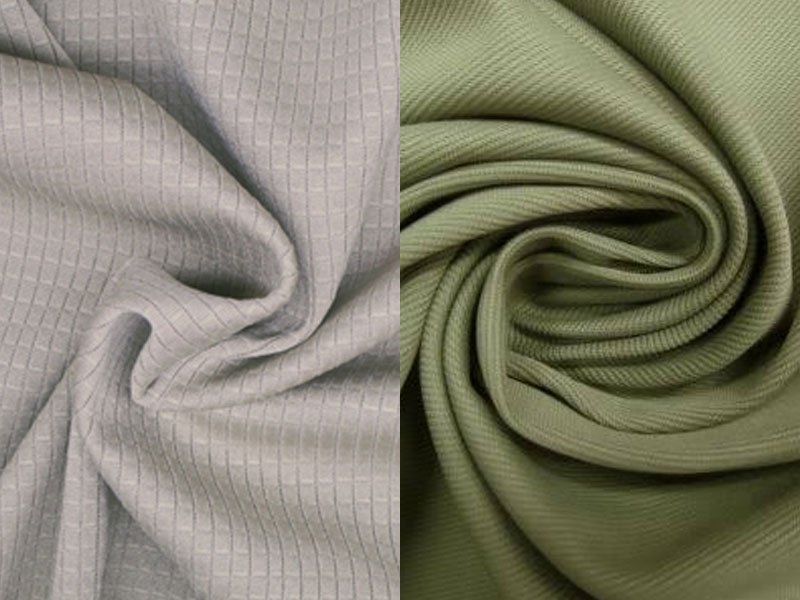
Two fabrics can look almost identical on a hanger and create completely different dresses once they are stretched over a body. This is especially true of bandage fabric and Ponte fabric. Both can feel substantial, appear smooth, and support close-fitting designs, yet they do not provide the same compression, movement, recovery, or visual result. Choosing between them by touch, fiber blend, or fabric weight alone can lead to a costly development mistake because the most important differences only appear when the material is placed under real garment tension.
Bandage fabric is generally the stronger choice for sculpted, compression-led dresses, while Ponte fabric is usually better for structured fitted garments that need comfort, stability, and easier movement. They are not automatically interchangeable. The right choice depends on stretch direction, recovery, density, negative ease, seam construction, opacity under extension, and the amount of body shaping the finished dress is expected to provide.
A swatch may look perfect during a sourcing meeting, but the first fit sample tells the more useful story. The waist may relax after sitting, the hips may turn shiny, the hem may climb with every step, or a dress expected to sculpt the body may behave like an ordinary heavy jersey. Understanding the difference before sampling helps brands protect their fit, development calendar, production cost, and customer experience.
What Are Bandage and Ponte Fabrics?
Bandage fabric is a dense, high-recovery stretch material selected for compression and body sculpting, while Ponte is a stable double-knit fabric designed to combine structure, stretch, and comfort. They may share similar fiber blends or weights, but their resistance, recovery, surface behavior, and intended garment performance can differ enough to require separate patterns and construction methods.
What Is Bandage Fabric?
“Bandage fabric” is a familiar sourcing term in fitted womenswear, but it does not always describe one universally standardized textile construction. Different mills may use the name for dense rayon-nylon-elastane knits, engineered compression fabrics, heavy stretch interlocks, or narrow knitted panels intended for bandage-style garment construction. That variation is why an experienced product team looks beyond the trade name and asks how the fabric behaves when it is stretched, sewn, worn, and allowed to recover.
A suitable bandage material should stretch enough to fit closely around the body while maintaining controlled resistance. It should recover quickly after extension, remain opaque over curved areas, and support the silhouette without causing excessive pressure at the neckline, armhole, waist, or hem. The difference between a dependable bandage fabric and an ordinary heavy knit often appears only after wear, when one quality keeps its shape and another relaxes around the waist, turns shiny across the hips, or develops visible loop opening.
- Measure widthwise and lengthwise stretch separately.
- Check resistance at the intended wearing extension, not only maximum stretch.
- Repeat recovery tests to identify fatigue after several extension cycles.
- Inspect pale and dark colors for opacity, shine, whitening, and loop opening.
- Wear-test the sample for sitting, walking, stair movement, and hem ride-up.
Fiber composition provides useful background information, but it does not guarantee performance. Two fabrics with similar percentages of rayon, nylon, and elastane can behave very differently because of yarn quality, knitting density, heat setting, finishing, and the way elastane is distributed through the structure. For that reason, the approved standard should always be a tested physical fabric and garment sample rather than a composition line copied from a supplier quotation.
What Is Ponte Fabric?
Ponte, often called Ponte di Roma, is a double-knit fabric known for its compact surface, dimensional stability, and balanced stretch. It is widely used for dresses, trousers, skirts, jackets, and coordinated sets because it gives a cleaner shape than lightweight jersey while remaining more comfortable than many compression fabrics. In a fitted dress, Ponte can smooth the silhouette and hold panel seams neatly, but it usually relies more on pattern shaping than on strong fabric pressure.
Ponte is not one fixed formula. Commercial qualities may contain polyester, viscose, rayon, nylon, elastane, or blends of these fibers. A polyester-rich Ponte may feel firmer, resist abrasion well, and hold its shape effectively, but it can retain more heat. A viscose-rich quality may feel smoother and more refined, although shrinkage, pilling, and recovery need closer attention. The knitting structure, yarn count, and finishing process can matter as much as the headline fiber blend.
For fitted dresses, Ponte is attractive because it can offer a smooth, relatively opaque face, moderate stretch, stable edges, and enough body for waist shaping or vertical panel lines. It is also generally easier to spread, cut, notch, and sew than a highly elastic compression fabric. That makes it a practical choice for office dresses, bodycon midis, coordinated sets, and day-to-evening garments that need shape without the restrictive pressure expected from a true bandage dress.
Are They the Same?
Bandage fabric and Ponte can appear similar because both may be thick, elastic, smooth, and suitable for close-fitting clothing. Some supplier catalogs even use the terms loosely or place both materials in the same commercial category. However, similar weight, fiber content, or hand feel does not mean the fabrics will perform in the same way. The more useful distinction is that bandage fabric is usually selected to contour and compress, while Ponte is usually selected to structure, smooth, and support.
A bandage dress depends heavily on controlled tension. The fabric must resist extension strongly enough to influence the silhouette while returning close to its original dimensions after repeated wear. Ponte usually places less pressure on the body and relies more on seam placement, darts, panels, and balanced negative ease to create a fitted appearance. When a design depends on pronounced sculpting, replacing bandage fabric with ordinary Ponte can change the product promise even if the sample still looks close-fitting on a mannequin.
Development Factor | Bandage Fabric | Ponte Fabric |
Primary function | Compression and contouring | Structure and comfortable fit |
Common hand feel | Dense, elastic, resistant | Smooth, compact, stable |
Stretch resistance | Usually moderate to high | Usually low to moderate |
Recovery requirement | Critical to garment function | Important for shape retention |
Pattern approach | Often uses greater negative ease | Usually uses moderate negative ease |
Common applications | Sculpted minis, club dresses, compression partywear | Bodycon dresses, work dresses, skirts, trousers |
Main fit risk | Excess pressure, ride-up, seam strain | Relaxation, bagging, weak shaping |
Main visual risk | Shine or surface opening under stretch | A flatter or softer contour than expected |
Why Names Cause Confusion
Fabric names in fashion sourcing are often shaped by product trends, customer language, and supplier marketing rather than by one global naming rule. “Bandage” may describe the appearance a customer wants instead of the exact knitting structure. “Ponte” may be used loosely for several compact double knits with different fiber blends and performance levels. A development team that orders material by name alone may receive a fabric that looks correct on the roll but cannot reproduce the approved silhouette.
A clearer brief describes the intended result in practical terms: firm compression with controlled two-way stretch, moderate stretch for a comfortable fitted midi, strong recovery with limited growth after sitting, an opaque surface at the planned garment extension, or stable edges suitable for panel seams and a center-back zipper. This language gives mills and manufacturers a more useful target because it connects material selection to the way the finished dress must look and feel.
How Do Their Properties Differ?
Bandage fabric generally provides stronger resistance and compression, while Ponte offers more balanced structure, movement, and comfort. The most important differences appear in usable stretch, recovery, pressure, drape, opacity, and growth after wear. These properties, rather than fabric names alone, determine whether a fitted dress remains sculpted, wearable, and visually consistent through sampling and repeat production.

Stretch and Resistance
Stretch percentage measures how far a fabric can extend, but it does not show how much pressure the material creates. That difference is central to the bandage-versus-Ponte decision. A ten-centimeter specimen stretched to sixteen centimeters has sixty percent extension, yet two fabrics with that same result can feel completely different. One may extend easily and provide little support, while the other may require noticeably more force and create real compression at the same measurement.
For fitted-dress development, maximum stretch and usable stretch should be treated as separate values. Maximum stretch is the point the material can reach before damage or severe distortion. Usable stretch is the range in which the surface remains attractive, opacity remains acceptable, recovery stays controlled, and the wearer can move without excessive pressure. A fabric may technically reach eighty percent extension but become shiny or transparent beyond forty-five percent, making its commercial working range much lower.
The basic calculation is straightforward: stretch percentage equals the extended measurement minus the original measurement, divided by the original measurement, multiplied by one hundred. Both directions must be recorded because widthwise stretch governs body fit and compression, while lengthwise stretch affects walking, garment drop, waist position, neckline stability, and hem level. A fabric with generous widthwise stretch but limited lengthwise movement may support the torso well while restricting a long fitted skirt.
Recovery and Growth
Recovery shows how closely a fabric returns to its original dimensions after extension, and it is one of the strongest predictors of whether a fitted dress will retain its shape. Poor recovery produces a waist that becomes loose after sitting, bubbling across the lower back, bagging at the hips or elbows, a widening hem, and necklines that no longer sit against the body. These problems often appear gradually, which is why a quick hand stretch during sourcing is not enough.
A simple internal test can begin with a marked ten-centimeter section. Stretch it to a predetermined distance, hold it for thirty seconds, release it without manually reshaping the fabric, and measure after one minute and again after thirty minutes. Repeat the same cycle five to ten times to reveal fatigue. If the original ten-centimeter section remains at 10.4 centimeters after relaxation, the residual growth is four percent. The acceptable limit depends on the product, but a compression dress generally needs tighter control than a relaxed knit top.
Bandage fabric normally requires stricter recovery control because tension is central to the design. Ponte also needs dependable recovery, particularly at the waist, lower back, elbows, and knees, but small differences may be less visible when the garment uses moderate negative ease and stronger pattern shaping. The important point is consistency: the approved black sample, the pale colorway, and the later bulk lot should not produce noticeably different pressure or growth.
Test Item | Practical Method | What to Watch |
Widthwise stretch | Extend a 10 cm section to a controlled limit | Surface opening, excessive force, whitening |
Lengthwise stretch | Repeat along the fabric length | Garment drop, restricted movement |
Immediate recovery | Measure one minute after release | Rapid residual growth |
Relaxed recovery | Measure after 30 minutes | Permanent extension |
Repeated recovery | Repeat the cycle 5-10 times | Fatigue and progressive bagging |
Surface under stretch | Inspect at intended wearing extension | Shine, loop separation, opacity loss |
Seam recovery | Stretch a sewn seam repeatedly | Thread breakage, waviness, seam growth |
Weight, Density, and Drape
Weight is commonly expressed in grams per square meter, but GSM should never be used as the only quality measure. A heavier fabric is not automatically more supportive, opaque, or durable. Density, yarn structure, loop formation, elastane placement, and finishing all influence the result. A tightly knitted 320 GSM Ponte can feel firmer than a looser 370 GSM quality, while a dense bandage knit may provide stronger resistance than a heavier material with a softer construction.
In commercial fitted-dress development, teams may encounter materials from roughly 250 to more than 450 GSM, depending on season, silhouette, lining, and intended pressure. These figures are broad sourcing references rather than universal approval limits. Lighter qualities may suit long sleeves, ruched dresses, and comfortable bodycon styles, while denser options may suit sculpted minis, firm panelled dresses, and pale colors that need stronger coverage. The final decision should always consider how the fabric behaves at the planned garment extension.
Drape must also match the design language. A resistant fabric can make gathers bulky, prevent a skirt from falling naturally, and create heavy seam intersections. A soft Ponte can make a sharp corset-inspired silhouette look flat or under-supported. The correct material helps the pattern produce the intended shape without forcing the development team to compensate through extreme reduction, excessive reinforcement, or repeated sample corrections.
Comfort and Surface Appearance
Comfort depends on more than softness. A fabric may feel smooth in the hand but become uncomfortable when the finished pattern concentrates pressure at the armhole, waist, thigh, or neckline. Bandage dresses often create the strongest pressure through the waist and hips. If reduction is not balanced, the wearer may experience restricted breathing, rolling edges, tight sleeves, or a skirt that travels upward with every step. Ponte usually allows easier movement, although weak recovery can make it look loose later in the day.
Surface appearance should be reviewed at realistic wearing extension rather than on a relaxed swatch. Product teams should check whether color becomes lighter across the hips, knit loops become visible, the face develops a plastic-looking shine, pale colors reveal seam allowances, or the material loses its smooth appearance after repeated stretching. Black often hides weaknesses that become obvious in ivory, red, pale pink, or bright seasonal colors, so major color groups need their own review before bulk approval.
The most useful comfort test is a complete garment worn through normal movement. A thirty-to-sixty-minute first trial involving sitting, walking, stair movement, reaching, and bending can expose pressure points and surface changes that a short fitting misses. For occasion dresses expected to be worn for several hours, a longer trial provides a more realistic view of heat retention, edge pressure, recovery, and whether the wearer is constantly adjusting the garment.
Which Fabric Suits Each Dress?
Bandage fabric is best suited to garments where compression and sculpting are part of the product promise. Ponte is better for structured fitted dresses that need stability, comfort, and easier movement. The right material depends on the silhouette, wearing occasion, pattern reduction, garment length, sleeve construction, and the level of support the customer expects.

Bandage and Bodycon Dresses
A bandage dress and a bodycon dress may both sit close to the body, but they do not promise the same wearing experience. A bodycon dress follows the wearer’s natural shape and may provide light smoothing or support. A bandage dress is expected to apply stronger, controlled pressure and create a visibly sculpted silhouette. That difference affects fabric resistance, negative ease, seam placement, panel design, fitting standards, and the language used to describe the product to customers.
Bandage fabric is usually the better starting point when the design needs a firm waist and hip line, strong recovery after extension, a dense polished surface, contour panels that actively shape the body, and limited relaxation during wear. Ponte is often more suitable when the goal is a clean fitted outline without intense compression. It works well for panelled minis, fitted midis, long-sleeved bodycon dresses, and commercial silhouettes intended for longer wear or a broader customer group.
A common development mistake is choosing soft Ponte for a highly sculpted reference and then reducing the pattern aggressively to create more pressure. The sample may become tighter, but it rarely becomes evenly supportive. Horizontal strain lines, tight armholes, unstable necklines, compressed bust areas, and a rising hem are common results. Compression should come from the combined behavior of fabric, pattern, and construction, not simply from making every garment measurement smaller.
Party and Going-Out Dresses
Partywear often depends on a strong visual silhouette. Birthday dresses, club dresses, fitted cocktail styles, and going-out minis may need a controlled waist, smooth hip line, and stable surface that photographs well under direct lighting. Bandage fabric can support those goals, especially when the garment uses sculpted contour seams, narrow panels, firm off-shoulder edges, structured cut-outs, or a close mini or midi shape with little drape.
Not every party dress needs strong compression. Ruched dresses, draped midis, gathered one-shoulder styles, and softer occasion pieces often perform better in Ponte or another flexible knit. An excessively resistant material can make gathers bulky, limit movement, and create a stiff visual result. The intended wearing time also matters. A customer may accept stronger pressure for a short club event but expect more comfort from a wedding-guest dinner, graduation celebration, or long evening occasion.
Sleeves, high necklines, and below-knee lengths increase the amount of fabric in contact with the body, which can make highly resistant materials feel more restrictive. The best partywear fabric creates impact without making the wearer fight the garment. During fitting, attention should be given to arm movement, breathing comfort, sitting ease, hem travel, cut-out stability, and whether the neckline remains secure after repeated movement.
Office and Day Dresses
Ponte has a strong advantage in workwear and polished day dresses because it provides structure without demanding intense compression. It can hold clean vertical lines, shaped waist seams, and fitted skirts while allowing the wearer to sit, walk, commute, and work comfortably. Common applications include office sheath dresses, fitted midis, panelled A-line styles, coordinated skirts and tops, structured trousers, and day-to-evening sets that need a polished surface and dependable shape.
For office use, a garment should maintain its appearance after several hours of sitting. The fabric needs recovery across the back waist, hips, elbows, and knees, and it should resist surface shine from repeated contact with chairs or desks. Moderate negative ease is usually more appropriate than the aggressive reductions used in compression garments. Princess seams, darts, curved side seams, and waist panels can create a refined fit without applying uncomfortable pressure through the entire garment.
Ponte is also easier to combine with tailored details such as collars, lapels, pockets, zippers, waistbands, and cuffs. Strong bandage fabric can make these details bulky or difficult to stabilize, especially where several layers intersect. When a brand wants a fitted but credible daytime product, the fabric should support easy movement, clean construction, and repeat wear rather than pursuing the strongest possible sculpting effect.
Fit by Garment Type
The matrix below is a practical starting point rather than a fixed rule. The actual decision still depends on the tested fabric lot, pattern reduction, color, construction, size range, and customer expectation. Styles that combine long fitted lengths, sleeves, cut-outs, or a broad size range often deserve side-by-side sampling because the best result may come from a lower-resistance bandage knit, a firmer Ponte, or a hybrid construction with localized support.
Garment Type | Preferred Starting Fabric | Key Performance Need | Main Development Risk |
Sculpted club mini | Bandage fabric | Compression and strong recovery | Ride-up and excessive pressure |
Compression party midi | Bandage fabric | Waist and hip contouring | Restricted walking |
Comfortable bodycon dress | Ponte | Smooth fit and movement | Insufficient shaping |
Office sheath dress | Ponte | Stability during long wear | Back-waist growth |
Fitted long-sleeve dress | Ponte or tested light bandage | Arm mobility and recovery | Sleeve pressure |
Cut-out statement dress | Test both | Edge stability and fit balance | Gaping or skin pressure |
Ruched fitted dress | Softer Ponte | Drape and controlled stretch | Bulky gathers |
Structured fashion set | Ponte | Consistent shape across pieces | Shade and weight variation |
Panelled bandage dress | Bandage fabric | Balanced tension between panels | Uneven compression |
Fitted maxi dress | Ponte or lower-resistance bandage | Vertical stability and walking ease | Length growth and restricted stride |
Garment length changes the risk profile. A mini dress is more likely to ride upward, while a fitted maxi must balance vertical recovery with walking ease. Sleeves introduce pressure at the bicep and elbow, and cut-outs concentrate tension around narrow edges. A fabric that works well for a sleeveless black mini may therefore be unsuitable for a pale long-sleeved midi, even when both products belong to the same collection.
Can Ponte Replace Bandage Fabric?
Ponte can replace bandage fabric when the design needs a smooth, structured, fitted appearance rather than strong compression. It is not a reliable direct substitute when sculpting, high tension, or shapewear-like support is central to the garment. Any substitution should be followed by new pattern, seam, opacity, recovery, and wear testing.

When Ponte Works
Ponte is a sensible substitute when the original style is visually fitted but does not depend on firm body shaping. Many commercial dresses described as “bandage inspired” actually need clean contouring, stable seams, and moderate support rather than genuine compression. Ponte may be more suitable when the garment will be worn for several hours, the design includes long sleeves or tailored details, the target customer values movement, or the product must serve a wider size range consistently.
It can also simplify manufacturing. Ponte is usually easier to relax, spread, cut, notch, and sew than highly elastic compression material. Curved panels may remain more stable, zipper areas can be controlled with less distortion, and seam intersections are often easier to press cleanly. These advantages can improve production consistency, but they are only valuable when the finished silhouette still matches the product brief. Easier sewing does not compensate for a dress that no longer looks or feels as intended.
A successful substitution preserves what the customer notices: fit, comfort, opacity, shape, and visual quality. It does not need to reproduce every technical value of the original fabric, but it must retain the reason the customer selected the product. Choosing Ponte only because it is cheaper can create a false saving if the brand later pays for extra samples, fit corrections, markdowns, returns, or weaker customer reviews.
When It Fails
Ponte substitution fails when the fabric cannot generate the pressure required by the approved pattern and product description. The sample may look acceptable while the wearer stands still, then lose definition after sitting or walking. Common warning signs include a waist that becomes loose within a short period, lower-back folds, a hip line that is no longer smooth, panel seams that look decorative rather than sculptural, and a neckline that moves away from the body during normal activity.
Another failure occurs when marketing promises compression, sculpting, or shapewear-like support, but the garment provides only ordinary stretch. The dress may still be attractive, yet the product experience no longer matches the claim. Color can add further risk because dyeing and finishing may change stretch, recovery, shrinkage, and surface feel. An approved black sample does not prove that ivory, bright red, or pale pink will behave identically under the same pattern reduction.
Substitution is particularly risky in garments made from multiple narrow panels. If recovery varies between sections or colors, pressure can become uneven across the body, creating visible ridges, twisted seams, or distorted panel lines. The practical rule is simple: never approve a substitute by name or fiber composition alone. Approve the actual fabric lot through measured testing and a complete garment sample in the intended construction and color.
Pattern Changes
Switching from bandage fabric to Ponte usually requires pattern revision because the new material may need less negative ease, more shaping through seams, and different allowances for vertical movement. Negative ease equals the body measurement minus the garment measurement, divided by the body measurement, multiplied by one hundred. A 72-centimeter body waist with a 64-centimeter garment waist has about 11.1 percent negative ease, while a 58-centimeter garment waist increases that figure to about 19.4 percent.
Those two garments will not feel remotely similar, even when cut from the same fabric. When changing materials, teams should reassess bust containment, neckline position, waist and hip reduction, lower-back shaping, side-seam balance, armhole circumference, sleeve pressure, skirt stride, slit length, hem level, vertical growth, and grade rules across the size range. A softer fabric may require stronger seam shaping, while a fabric with more vertical stretch may require shorter pattern lengths to prevent the garment from dropping after wear.
The original paper pattern should not be treated as a fixed object that must survive every material change. It is a technical tool that should respond to the fabric. A product team that preserves the original pattern at all costs often ends up correcting the wrong problem through sewing, reinforcement, or excessive reduction. A properly revised pattern usually creates a cleaner result with fewer production complications.
Seams and Lining
Seams in fitted garments must stretch with the body while resisting permanent growth. A stitch that is too rigid may snap, while a seam that is too elastic may become wavy and fail to control the garment. Suitable construction may involve four-thread overlock, stretch chain stitch, coverstitch, reinforced lockstitch, or combinations of these methods. The correct choice depends on seam position, fabric thickness, stretch direction, edge stability, and the visual standard required by the design.
- Compare seam extension with the stretch of the surrounding fabric.
- Check for needle damage, cut yarns, thread breakage, and seam spreading.
- Inspect puckering, zipper waviness, and bulk where several panels meet.
- Repeat extension cycles to identify seam growth and poor recovery.
- Press and rest the sample before judging the final seam appearance.
Lining can improve opacity, comfort, and surface smoothness, but it can also reduce stretch or add too much heat. A low-stretch lining may prevent the outer fabric from moving naturally, while a highly elastic lining can create excessive combined pressure. Full lining is not always the best solution. Partial bodice lining, power-mesh support, localized waist reinforcement, double-layer front panels, or selected stretch-tricot sections may provide better control without restricting the entire dress.
The lining should support the garment’s function rather than simply cover the inside. It must be tested with the outer fabric because the two layers interact. A lining that looks harmless when held separately can change pressure, recovery, drape, and seam behavior once it is attached. The completed sample, not the outer-fabric swatch, should be the final reference for fit and comfort.
How Should Brands Choose?
Brands should choose through measurable fabric and garment performance rather than supplier terminology. Composition, GSM, stretch, recovery, shrinkage, opacity, pilling, seam behavior, and wear results should all be reviewed. Final approval should be based on the intended color, construction, size range, and bulk fabric lot, not on a small swatch alone.

Set the Performance Target
The first step is defining what the garment must do. Terms such as fitted, supportive, smoothing, and compressive should not be treated as interchangeable. A useful brief records the wearing occasion, expected pressure, target customer, size range, garment length, sleeve design, surface appearance, opacity, care method, expected hours of comfortable wear, retail positioning, and likely repeat-order volume. The team should also identify where support is needed rather than applying equal pressure across the entire body.
A fitted office dress may need to remain smooth after eight hours of sitting, while a party mini may prioritize a strong waist and hip line for a shorter event. A long-sleeved club dress may create more risk at the bicep and elbow than at the torso. A pale fitted midi may need stronger opacity control than a black mini. These differences should be written into the development brief so that sourcing, pattern, sampling, and quality teams are working toward the same result.
Clear targets also help prevent overengineering. Not every bodycon dress needs the strongest available compression fabric, and not every Ponte dress should be made loose for comfort. The best commercial product balances silhouette, movement, pressure, construction, price, and repeatability. Defining that balance early usually saves more time than trying to correct a poorly matched fabric after several sample rounds.
Review the Fabric Data
A fabric request that says only “heavy black bandage fabric” or “premium Ponte” leaves too much room for interpretation. A useful specification combines numerical data with physical approval standards. The figures below help teams compare lots and suppliers, while a sealed swatch and approved garment sample show the expected hand feel, surface, color, and fit. Tolerances should be realistic and agreed in advance because zero variation is not practical, but undefined variation is commercially dangerous.
Specification | Useful Information to Record | Why It Matters |
Fiber content | Exact percentage of each fiber | Influences touch, recovery, heat, and care |
Fabric weight | GSM with agreed tolerance | Supports consistency between lots |
Usable width | Relaxed width after finishing | Affects marker efficiency and cost |
Widthwise stretch | Percentage under a defined method | Controls body fit and compression |
Lengthwise stretch | Percentage under a defined method | Affects garment length and movement |
Recovery | Residual growth after set intervals | Predicts bagging and fit relaxation |
Shrinkage | Length and width after care testing | Protects finished measurements |
Opacity | Relaxed and at wearing extension | Reduces transparency complaints |
Pilling | Test result or approved visual standard | Supports repeat-wear appearance |
Colorfastness | Wash, rubbing, and perspiration results | Reduces staining and color transfer |
Surface behavior | Shine, whitening, or loop opening | Protects visual quality under tension |
Lot variation | Shade, weight, width, and stretch range | Supports bulk consistency |
Small differences in stretch resistance can have a noticeable effect on a close-fitting garment even when GSM and composition remain similar. The specification should therefore state the test method or internal procedure used to generate each result. A percentage without a consistent method can be misleading because different operators may apply different force, hold time, or specimen size. Physical standards and recorded procedures make later repeat orders easier to compare.
Test the Garment
Fabric testing alone cannot predict every wearing problem. The material must be evaluated in the intended pattern, construction, color, and size. A practical sequence begins with stretch and recovery tests in both directions, followed by opacity checks at the planned extension, representative seam trials, care testing, a fit sample, movement review, and remeasurement after wear and relaxation. The goal is to understand how the complete garment behaves rather than collecting isolated laboratory numbers.
- Measure widthwise and lengthwise stretch using a consistent specimen and method.
- Record immediate and relaxed recovery after controlled extension.
- Repeat the stretch cycle several times to reveal fatigue.
- Check opacity, shine, and loop opening at the planned pattern reduction.
- Sew representative seams and extend them repeatedly.
- Test the proposed washing or care method.
- Produce a fit sample in the intended color and construction.
- Conduct sitting, walking, stair, reaching, and bending tests.
- Re-measure the garment after wear and a defined rest period.
- Confirm pattern and construction changes before the next approval sample.
A thirty-to-sixty-minute first wear test can expose hem travel, neckline movement, side-seam rotation, lower-back bubbling, and pressure points that do not appear during a short standing fit. Higher-risk styles deserve a longer trial. Size-range testing is equally important because a fixed grade rule may not create the same pressure across every size. Larger sizes may need revised panel proportions, localized support, or different reductions to preserve both comfort and silhouette.
Control the Bulk Fabric
Bulk quality control begins before cutting. Each incoming lot should be checked against the approved standard for shade, hand feel, GSM, usable width, stretch, recovery, and surface appearance. Elastic fabrics often need relaxation after being unrolled because cutting material while it remains under roll tension can produce panels that shrink later. Roll identity and lot separation are especially important when several colorways or replenishment orders are being processed at the same time.
- Identify rolls and separate lots before spreading.
- Group shades under controlled lighting.
- Inspect fabric quality before marker placement.
- Check GSM, width, stretch, and recovery at multiple roll positions.
- Define and record fabric-relaxation time.
- Measure first-cut panels before full cutting release.
- Run pilot sewing before the production line is fully loaded.
- Compare inline and final garments with the approved sample.
The black colorway should not be the only performance reference. Pale and bright colors may reveal transparency, whitening, seam allowances, or finishing differences that black conceals. Continuity also matters because a successful style may require repeat production months later. The mill or supplier should be able to reproduce the approved weight, stretch, recovery, shade, and hand feel closely enough for the next order, while the garment team preserves the approved pattern, construction, and quality records.
The correct choice is not simply bandage fabric or Ponte. It is the material specification that delivers the intended silhouette, comfort, appearance, and repeatability with the lowest realistic product risk. When those requirements are clear, the sourcing decision becomes easier, fit corrections become more focused, and bulk production is less likely to drift away from the approved sample.
Develop Your Fitted Dress with Duolan Apparel
For brands developing bodycon, party, occasion, or bandage dresses, the safest path is to connect fabric selection with pattern engineering, sampling, fit correction, and bulk control from the beginning. Duolan Apparel supports these stages through dedicated fabric, pattern, sample, order, and quality teams within a multi-factory womenswear manufacturing network. Its core manufacturing system has completed a SMETA 2-Pillar audit and is positioned around fashion dresses and fitted silhouettes rather than general low-cost apparel production.
To request a quotation, share your tech pack, reference garment or design images, intended market, size range, preferred fabric or swatch, required compression level, colors, estimated quantities, launch timing, testing standards, and packaging requirements. The development team can then review whether bandage fabric, Ponte, or another structured stretch quality is better suited to the intended silhouette and production plan.
Share:
Our Services
Categories
Table of Contents
Here, developing fashion collections is more than manufacturing garments — it’s a collaborative process focused on transforming ideas into well-executed, market-ready products. From fabric sourcing and sample development to scalable production and delivery coordination, every stage is built to support quality, consistency, and efficient collection launches across global markets.