...

Custom Power Mesh Dress Manufacturer

Power mesh dress development for established fashion brands, buying teams, sourcing offices, and product teams managing fitted, sheer, printed, and occasion-led collections.

Duolan turns design briefs, tech packs, original samples, and collection directions into production-ready power mesh dresses with controlled fit, transparency, stretch recovery, workmanship, and bulk consistency.

  • 7 material variables reviewed: composition, GSM, stretch direction, extension, recovery, mesh density, and opacity under tension.
  • 2-way and 4-way stretch behavior considered during pattern development, grading, lining selection, and measurement control.
  • Multi-style programs commonly involve 10–30 styles and total order volumes between 20,000 and 80,000 pieces.
  • Development support covers first samples, fit revisions, size sets, PP samples, bulk production, inspection, branded packing, and repeat orders.

Built for Established Fashion and Product Teams

Power mesh projects require more than a factory capable of sewing stretch fabric. Duolan works with teams that need structured development, clear technical communication, controlled sampling, stable production standards, and long-term support across multiple styles and seasonal launches.

Fashion Dress Brands

For brands developing fitted, going-out, party, occasion, and contemporary dress collections, Duolan coordinates fabric direction, silhouette, lining coverage, construction details, fit review, and commercial production. Development decisions consider how the garment must look in campaign imagery, feel during wear, perform across sizes, and remain repeatable when the style moves into larger production runs.

Product Development Teams

Product teams often manage references, sketches, tech packs, target costs, fit comments, sample calendars, and internal approvals simultaneously. Duolan converts those inputs into measurable development actions, including material checks, pattern corrections, revised sample notes, construction confirmation, and bulk-readiness reviews before production standards are released.

Buying and Sourcing Teams

Buying and sourcing teams need suppliers that can follow documents, identify risk early, communicate changes clearly, and protect delivery schedules. Duolan supports structured quotation, material confirmation, sample tracking, production-path planning, inline quality updates, final inspection, packing control, and repeat-order record preservation.

Occasionwear Programs

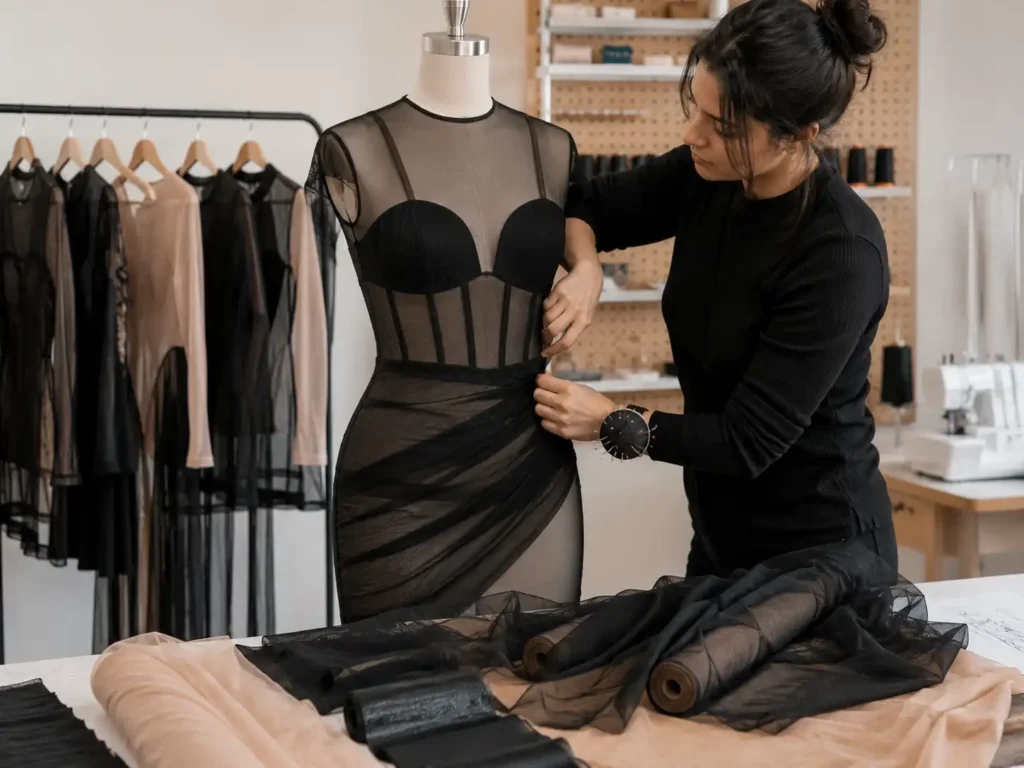
Occasionwear and going-out collections place greater pressure on silhouette, coverage, visual finish, comfort, and consistency. Power mesh may be used for body shaping, second-skin effects, printed overlays, transparent panels, sleeves, ruching, or layered structures. Each use requires a different material, pattern, construction, and inspection approach.

Why Brands Choose Duolan for Power Mesh

Duolan combines dress-focused development experience, a coordinated manufacturing network, established fabric and special-process resources, and project management built around samples, production standards, quality records, and repeat-order continuity.

Dress-focused Development

Power mesh development is handled as a fitted fashion-dress project rather than a generic knitwear order. Reviews consider silhouette, bust-waist-hip balance, coverage, lining interaction, negative ease, sleeve mobility, seam placement, surface appearance, and how the approved result can be reproduced during bulk production.

Nearly 30 Years

Duolan’s manufacturing background is supported by nearly three decades of fast-fashion womenswear development experience. Long-term work in fashion dresses, decorative techniques, fabrics, silhouettes, and European and American market requirements strengthens decisions before sampling begins and reduces avoidable development cycles.

Multi-factory Coordination

A network of 16 owned womenswear factories and more than 20 long-term satellite factories supports core-style control, multi-style production, repeat orders, seasonal peaks, and scalable delivery. Projects are assigned according to construction complexity, material behavior, workmanship requirements, timing, and order volume.

Material Resource Access

Duolan works with established fabric, trim, accessory, printing, embroidery, washing, and finishing resources within the South China apparel supply chain. Material sourcing is guided by the approved handfeel, stretch, recovery, mesh density, transparency, color, and production requirements rather than appearance alone.

Controlled Project Stages

Development is divided into brief review, feasibility assessment, material direction, pattern work, first sample, fit revision, size confirmation, PP approval, production planning, quality control, and shipment preparation. Each stage has a purpose, required inputs, and confirmation points.

Brand-level Compliance

Duolan’s manufacturing system has completed SMETA and SMETA 2-Pillar auditing. Additional quality, testing, social-responsibility, fiber, chemical, and market standards can be reviewed according to the destination market, material, product category, and individual brand requirements.

Where Power Mesh Dress Projects Commonly Fail

Power mesh responds to tension, heat, layering, stitching, finishing, and body movement. A visually acceptable first sample can still create production problems when material behavior, pattern reduction, lining stretch, seam construction, and bulk standards are not aligned early.

Project RiskPossible Garment ResultDuolan Control Direction
Incorrect mesh selectionInsufficient support, excessive stiffness, weak drape, or unsuitable transparencyReview composition, GSM, mesh density, stretch, recovery, handfeel, and intended use
Stretch direction ignoredTwisted seams, incorrect fit, sleeve rotation, length change, or unstable necklineMark grain and stretch direction before pattern and cutting approval
Poor recoveryGarment loosens after fitting, hanging, or repeated wearCompare extension with recovery and assess high-tension body areas
Lining mismatchOuter layer and lining pull against each other, causing twisting or restricted movementMatch stretch direction, extension, recovery, weight, and pattern reduction
Incorrect negative easeGarment becomes too tight, too loose, too transparent, or difficult to dressDevelop reduction from fabric behavior and target fit rather than a fixed formula
Unstable seam tensionWavy seams, skipped stitches, thread breakage, seam grin, or puckeringRun sewing trials and define needle, thread, seam, stitch, and tension direction
Sample material differs from bulkFit, opacity, color, handfeel, and recovery shift after sample approvalLock material reference, batch requirements, approved swatch, and PP standard
Weak bulk documentationProduction line interprets construction differently from the sample roomPreserve pattern version, BOM, measurements, workmanship notes, and approved sample
Print distortionArtwork stretches unevenly across bust, waist, hip, sleeves, or ruchingReview repeat scale, panel placement, stretch direction, and worn-state appearance
Coverage not tested under tensionLined or sheer areas become more transparent on the bodyCheck opacity in relaxed and stretched conditions across relevant size points

Power Mesh Dresses Developed for Fashion Collections
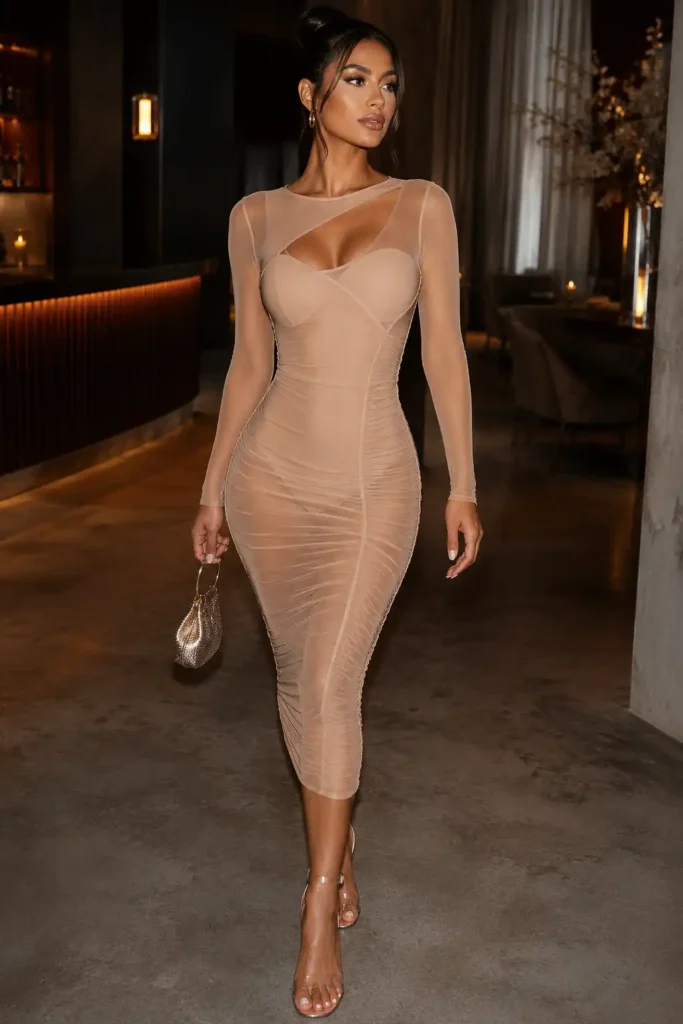
Power mesh can create sharply fitted silhouettes, fluid transparency, printed second-skin effects, controlled ruching, layered coverage, sculpted panels, and high-impact occasionwear. Each product direction below requires its own fabric, pattern, lining, sewing, and quality plan.

Bodycon Mesh Dresses

Bodycon power mesh dresses require a controlled relationship between extension, recovery, negative ease, garment measurements, and body movement. Bust, waist, hip, seat, armhole, sleeve, and hem tension cannot be reduced by one uniform percentage. Lining coverage and seam placement must also remain visually stable after stretching.

Ruched Mesh Dresses

Ruched designs need defined gathering ratios, anchor points, symmetry rules, panel lengths, and tension distribution. Excessive gathering can create bulky seams or uneven transparency, while insufficient gathering weakens the intended visual effect. Production instructions should specify finished ruching positions rather than leaving the result entirely to operator judgment.

Printed Mesh Dresses

Printed power mesh requires artwork scaling, repeat planning, color assessment, stretch-direction control, and worn-state review. A print that looks correct when flat may distort significantly across the bust, waist, hip, elbows, or gathered areas. Panel matching and side-seam placement may also affect fabric consumption and cutting plans.

Double-layer Mesh Dresses

Double layers improve coverage, color depth, surface smoothness, and support, but they also change stretch and recovery. Both layers must be oriented correctly and handled without unequal feeding. Pattern reduction often needs adjustment because two layers rarely behave like one layer with double opacity.

Sheer Panel Dresses

Sheer panels can frame the waist, neckline, back, sleeves, midriff, or side body. Panel edges, seam allowances, lining boundaries, and reinforcement must be planned carefully because construction is visible through the fabric. Coverage must remain appropriate when the garment is worn and stretched.

Long Sleeve Mesh Dresses

Long sleeves require mobility without twisting, sagging, excessive compression, or wrist distortion. Sleeve cap balance, bicep ease, elbow movement, cuff opening, seam position, and fabric recovery become key checkpoints. Printed sleeves also require careful artwork direction and left-right consistency.

Cut-out Mesh Dresses

Cut-outs combine exposure, support, and garment stability. Edges may need narrow binding, clean finishing, elastic support, facing, lining, or reinforced seams. Cut-out placement should be reviewed on the body because small changes in stretch or grading may alter coverage across different sizes.

Mesh Maxi Dresses

Power mesh maxi dresses introduce vertical weight, drag, and length balance. Layering, lining length, slit position, hem finish, print direction, and skirt recovery affect movement and appearance. The skirt must hang cleanly without pulling the bodice, twisting side seams, or stretching beyond the approved finished length.

Collection Development Across Major Fashion Scenarios

A commercial collection needs more than a list of silhouettes. Duolan helps organize material directions, fit families, color plans, hero styles, commercial styles, sample priorities, production complexity, and launch timing across a coordinated power mesh program.
Mesh and Sheer Dresses

Going-out Collections

Going-out collections often combine mini lengths, close-body silhouettes, cut-outs, ruching, printed mesh, long sleeves, asymmetry, and strategic lining. Development focuses on strong visual impact while preserving dressing comfort, movement, coverage, and repeatable fit across the full size range.

Partywear Drops

Partywear programs may include metallic prints, jewel colors, black mesh, double layers, high slits, draped panels, gloves, corset combinations, and decorative trims. Materials and details must be selected with bulk sewing, snag risk, pressing, packing, and event-season delivery windows in mind.

Occasionwear Capsules

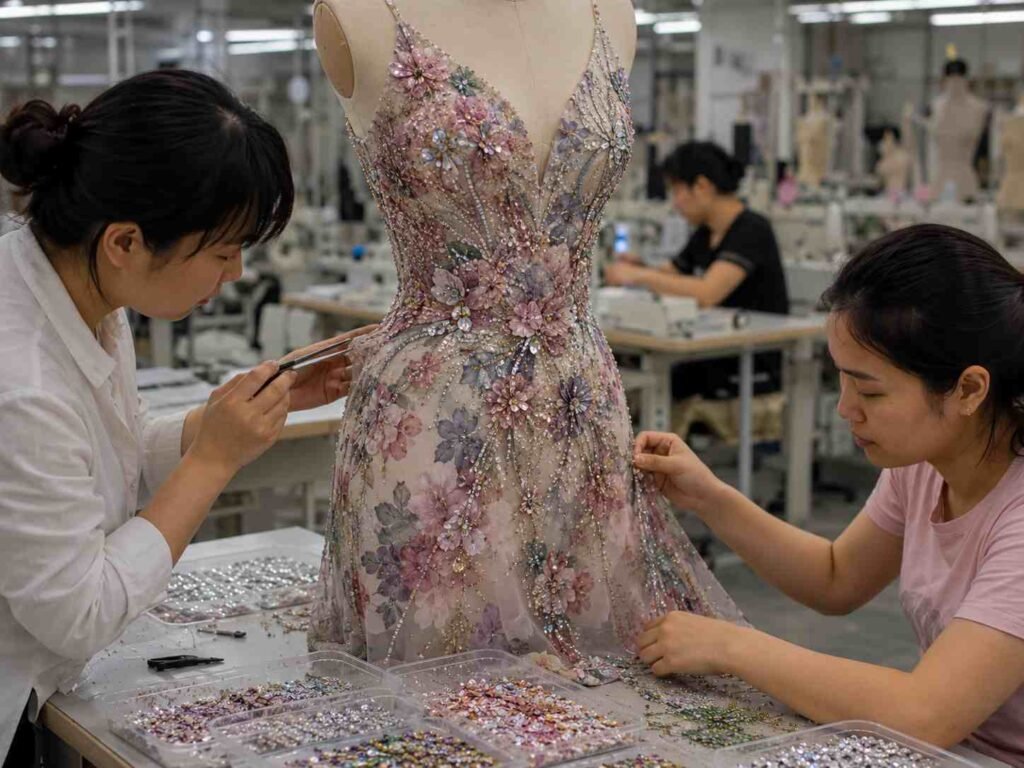
Occasionwear requires a refined finish at close viewing distance. Transparency boundaries, lining edges, necklines, seam allowances, closures, hems, and surface quality become especially important. Photo samples and salesman samples may also require a higher finishing standard before bulk orders are placed.

Festival Programs

Festival products can use vibrant prints, body mapping, cut-outs, mesh sleeves, asymmetry, and layered styling. Designs must still withstand movement, repeated dressing, packing, transport, and visual inspection. Development should separate attention-grabbing details from construction choices that may be difficult to scale.

Resort Collections

Resort and vacation lines may use softer power mesh, tropical prints, fluid maxi silhouettes, sheer overlays, swim-inspired linings, and lightweight packing. Breathability, colorfastness, transparency, hem movement, and garment weight should match warm-weather wear and travel scenarios.

Contemporary Fashion Lines

Contemporary programs often require cleaner silhouettes, muted colors, refined transparency, matte surfaces, precise panels, and controlled proportions. Fabric handfeel, seam neatness, lining tone, subtle support, and consistent grading carry more value than excessive decoration.

Customize Every Part of the Dress

Full customization covers the visible design and the hidden technical decisions that determine fit, comfort, production stability, and retail presentation. Duolan reviews each component in relation to material behavior and the approved sample standard.

Silhouette

Develop bodycon, fitted, column, mermaid, A-line, draped, asymmetric, flared, or layered forms. Silhouette decisions guide fabric support, pattern reduction, lining, seam placement, hem balance, and whether the style needs one or several mesh qualities.

Dress Length

Mini, midi, and maxi lengths respond differently to fabric weight and body tension. Mini styles require coverage control across sizes, while maxi styles require vertical stability, slit planning, and protection against length growth during hanging, pressing, or wear.

Neckline

High necks, scoop necks, cowl necks, square necks, halter lines, bandeau shapes, plunging fronts, and asymmetric necklines need different edge finishes and support. Transparency and stretch can change neckline shape significantly after dressing.

Sleeve Structure

Sleeveless, cap sleeve, short sleeve, long sleeve, flared sleeve, glove sleeve, and off-shoulder structures require individual armhole, bicep, elbow, cuff, and mobility planning. Sleeve fabrics may use a different power level from the dress body.

Mesh Density

Fine mesh creates a smooth second-skin effect, while larger openings create stronger visual texture. Mesh density affects opacity, snag resistance, print clarity, seam visibility, handfeel, weight, and whether the garment can be used as one or two layers.

Transparency Level

Transparency can be controlled through mesh weight, color, layering, print density, lining tone, gathering, panel placement, and pattern reduction. Assessment should be completed on the body or form under realistic tension rather than on a flat fabric swatch alone.

Lining Coverage

Choose full lining, partial lining, bodysuit lining, bust coverage, brief coverage, mini-skirt lining, double-mesh coverage, or intentionally unlined areas. Lining edges must integrate with the design rather than create visible lines or restrict outer-layer movement.

Branding Details

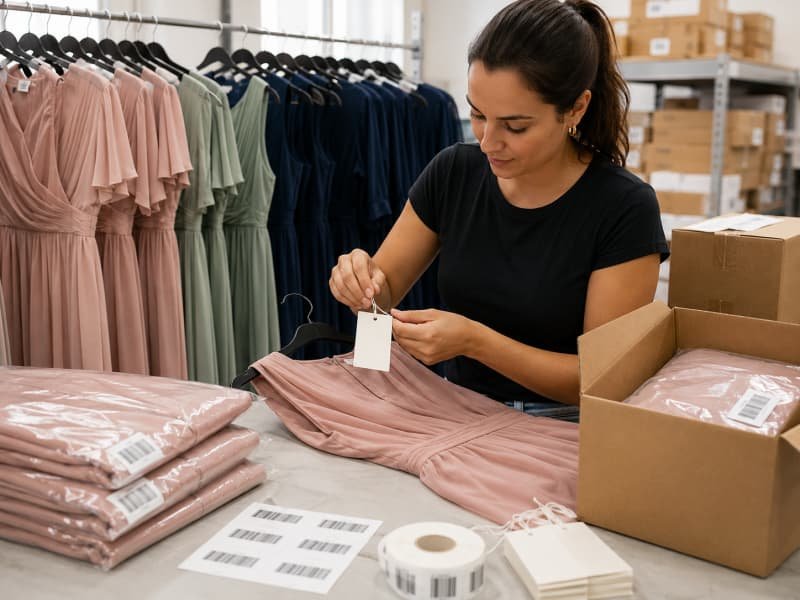
Main labels, size labels, care labels, fiber-content labels, heat transfers, hangtags, barcodes, retail stickers, packaging inserts, polybags, and carton marks can be coordinated with the garment and destination-market requirements.

Power Mesh Materials for Different Dress Effects

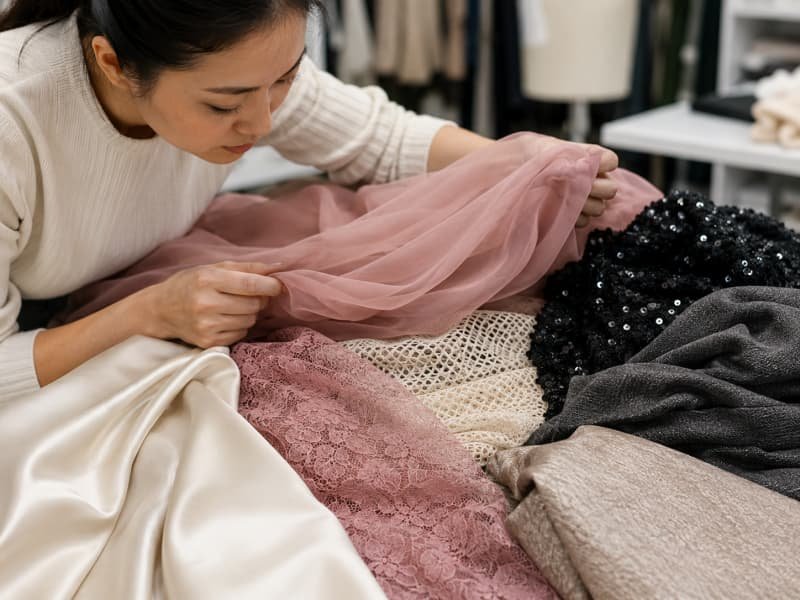
Material selection begins with the intended fit and visual result. Duolan reviews swatches, supplier references, original garments, target compositions, and performance requirements before recommending sampling directions.

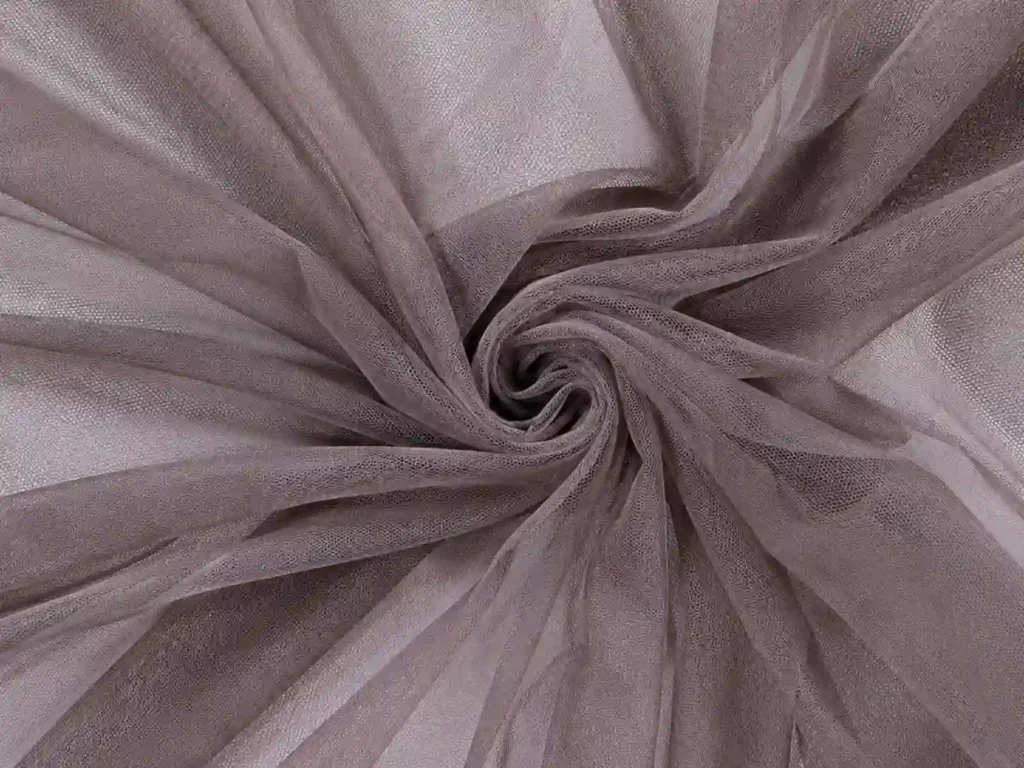
Lightweight Stretch Mesh

A lighter quality can create soft sleeves, transparent overlays, gathered details, draped panels, or second-skin printed effects. It usually provides less holding force, so body areas requiring support may need a second layer, lining, reinforced structure, or another mesh specification. Key review points:
  • Fine surface and soft handfeel
  • Low to medium support
  • Higher transparency under tension
  • Suitable for sleeves, overlays, or layered looks
  • Requires careful seam and snag control

Medium Power Mesh

Medium-weight power mesh is often suitable for fitted dress bodies, ruching, printed styles, double layers, and controlled sheer effects. It can balance movement, coverage, recovery, and support when matched with the correct pattern reduction and lining structure.

Key review points:

  • Balanced support and flexibility
  • Suitable for multiple silhouettes
  • Good potential for all-over prints
  • Can be used as single or double layer
  • Recovery must still be tested by project

Firm Power Mesh

Firmer qualities may provide stronger shape retention and support for high-pressure panels, fitted foundations, internal structures, or defined bodycon silhouettes. The handfeel, edge comfort, seam bulk, and dressing ease require careful review before using firm mesh across an entire garment. Key review points:
  • Higher recovery force
  • Greater resistance to deformation
  • May increase seam and edge pressure
  • Often more suitable for panels or support layers
  • Requires fit testing before grading

Printed Power Mesh

Printed mesh must be evaluated for base-fabric behavior and print performance. Ink or finishing can influence stretch, recovery, handfeel, opacity, surface friction, and color appearance. Digital artwork should be assessed both flat and stretched across the body. Key review points:

  • Repeat scale and placement
  • Color change under extension
  • Print cracking or whitening risk
  • Panel and side-seam alignment
  • Batch consistency for repeat orders

Fine Second-skin Mesh

Fine-gauge mesh creates a close, smooth visual effect with minimal surface texture. It can be effective for tonal layering, tattoo prints, skin-tone effects, and refined transparent panels. Fine structures may be more sensitive to needle damage, snagging, and visible seam allowances. Key review points:
  • Smooth body appearance
  • High sensitivity to handling
  • Fine needle and thread selection
  • Strong need for opacity review
  • Packaging must reduce surface damage

Lining and Support Mesh

Lining materials should not be selected only by color. Stretch direction, extension, recovery, weight, surface friction, breathability, edge behavior, and shrinkage influence how the outer layer performs. A lining with the wrong recovery can distort the entire garment. Key review points:

  • Outer and inner layer compatibility
  • Coverage and comfort
  • Movement at bust, waist, hip, and seat
  • Stable bonding at seams and openings
  • Consistent behavior across the size range

Power Mesh Specification and Application Matrix

Specifications are reviewed as a connected system. One number cannot determine whether a material is suitable. GSM, composition, stretch, recovery, opacity, mesh density, and surface must support the same garment objective.

Evaluation FieldWhat Duolan ReviewsGarment ImpactDevelopment Application
Fiber compositionNylon or polyester base, elastane content, supplier constructionHandfeel, strength, drying, color, recovery, and print behaviorOuter layer, sleeve, lining, support panel
GSMWeight consistency across swatch and bulk rollsOpacity, support, drape, heat, seam bulk, and garment weightSoft overlay through firm body-shaping structures
Stretch directionHorizontal, vertical, 2-way, or 4-way behaviorPattern placement, movement, sleeve mobility, and length stabilityBodycon, sleeves, fitted panels, maxi skirts
ExtensionPercentage reached under controlled tensionPattern reduction, dressing ease, and transparencyClose-fit body areas and openings
RecoveryReturn after extension and restShape retention, neckline stability, knee or seat baggingRepeat wear and fitted silhouettes
Mesh densityHole size, knit uniformity, and surface textureCoverage, snagging, print clarity, seam visibilityTransparent panels, all-over dresses, fine prints
Opacity under tensionCoverage at relaxed and worn extension levelsModesty, color depth, lining requirements, return riskBust, waist, hip, seat, sleeves, side panels
Surface and handfeelMatte, sheen, smoothness, friction, or firmnessVisual position, comfort, layering, and premium perceptionContemporary, party, occasion, or performance effects
Color behaviorShade in relaxed and stretched statesColor consistency, skin show-through, print appearanceLight colors, black, skin tones, saturated shades
Layer compatibilityStretch and recovery of outer and inner fabricsTwisting, pulling, restriction, seam distortionDouble mesh, jersey lining, bodysuit bases

Stretch and Recovery Control Before Pattern Approval

Power mesh can extend easily without recovering strongly. Extension describes how far the material stretches; recovery describes how effectively it returns. Both measurements influence fit, transparency, shape retention, grading, and repeat-order stability.

Directional Stretch

Horizontal and vertical extension should be recorded separately. Some fabrics stretch strongly across the body but only slightly along the length. Others provide four-way movement. Pattern orientation must follow the approved stretch map, especially for sleeves, long bodies, maxi skirts, and printed panels.

High-pressure Areas

Bust, waist, hip, seat, upper arm, elbow, cuff, neckline, and hem do not carry equal tension. A dress may fit correctly at the waist but become overly transparent at the hip, restrictive at the arm, or unstable at the neckline. Each pressure area needs an individual fit review.

Recovery After Rest

Immediate snap-back does not always represent recovery after prolonged wear. Development may include controlled extension, resting, hanging, repeated dressing, or sample wear evaluation. Findings guide fabric approval, pattern reduction, seam choice, lining, and measurement tolerance.

Heat and Finishing

Steam, pressing, print finishing, washing, or heat exposure can influence stretch and dimensions. Pressing conditions should be tested before bulk production because excessive heat or pressure can flatten mesh texture, create shine, shrink areas, or change recovery.

Layered Behavior

Two mesh layers or a mesh-and-lining combination create a new stretch system. Total extension may decrease while friction and recovery force increase. Pattern decisions must be based on the complete garment structure rather than testing each layer independently.

Duolan records the approved material direction in the sampling and production documents so the pattern room, cutting team, sewing line, and QC team work from the same construction basis.

Transparency and Lining Designed as One System

Power mesh transparency changes with color, body pressure, lighting, print density, layering, garment size, and the wearer’s skin tone. Coverage must be designed deliberately and confirmed during fitting.

Full Lining

Full lining offers consistent coverage and can improve color depth, comfort, and shape. The lining must follow the outer layer without restricting movement or creating drag. Neckline, armhole, hem, zipper, and seam connections require careful engineering to avoid visible pulling.

Partial Lining

Partial lining preserves selected transparent areas while covering the bust, waist, hip, or upper thigh. Lining boundaries should follow the design and body anatomy. An arbitrary straight edge can become visually obvious through a fitted outer layer.

Double Mesh

Double mesh can improve opacity without introducing a visibly different lining surface. Both layers need the same orientation and controlled feeding. Unequal stretch during sewing may create rippling, twisting, or uneven color density.

Bodysuit Base

A bodysuit base can stabilize a sheer dress and maintain coverage during movement. Torso length, leg opening, crotch construction, fastening, bust shape, and attachment points must be integrated with the dress pattern from the beginning.

Bust Coverage

Bust panels may use tonal lining, cups, double mesh, jersey, or structured support. Coverage must remain stable across bust sizes and during movement. The edge should not cut into the body or become visible in an unintended position.

Brief Coverage

Integrated briefs or short linings can protect coverage in mini and high-slit styles. Leg openings, rise, seat depth, crotch width, and stretch recovery need fit review. Incorrect proportions can pull the entire outer dress upward.

Skin-tone Lining

Skin-tone lining creates an illusion effect while controlling coverage. Shade selection should consider the brand’s target market and color range. Multiple lining shades may be needed when one tone cannot support the full collection strategy.

Strategic Sheer Zones

Transparent zones can be placed at sleeves, neckline, back, waist, midriff, thigh, or side body. Seam allowances, reinforcement, labels, zippers, and lining edges should remain hidden or become intentional design features.

Printed Power Mesh Built for Worn-state Accuracy

Printed mesh needs more than approved artwork. The design must remain visually balanced when stretched, cut into shaped panels, gathered, sewn, graded, and worn on different body areas.

Artwork Preparation

Vector or high-resolution artwork should include repeat size, color reference, direction, scale, and placement requirements. The production file must distinguish an all-over repeat from engineered placement and identify any design elements that cannot cross seams.

Stretch Distortion Review

Circles may become ovals, text may widen, and detailed motifs may lose proportion when worn. Duolan reviews how the artwork changes across bust, waist, hip, sleeve, elbow, and ruching zones. Critical elements may need pre-distortion or repositioning.

Color Under Extension

A stretched base exposes more open mesh area and can make colors appear lighter or less saturated. White base fabric may show through dense colors. A print should be assessed in relaxed, stretched, single-layer, and lined conditions.

Panel Placement

Engineered prints require markers that connect artwork to the final paper pattern. Center front, side seams, sleeves, neckline, waist, and hem should be reviewed before cutting. Pattern corrections after print placement approval may require artwork updates.

Ruching and Gathering

Gathered sections compress the print and change motif density. The artwork may appear darker or visually crowded in ruched areas. Sampling determines whether print scale, gathering ratio, or panel layout should be adjusted.

Bulk Print Control

Production control can include strike-off approval, base-fabric confirmation, lab or color reference, repeat measurement, roll identification, shade grouping, inspection, and approved sample comparison. Repeat orders require renewed checks when fabric or printing batches change.

Design Feasibility Reviewed Before Sampling Starts

A strong first sample begins with an informed development decision. Duolan reviews the design, material direction, fit objective, structure, finishing, and intended order before patterns and samples consume time or resources.

Files We Can Review

Development can begin from:

  • Tech pack
  • Flat sketch
  • Reference image
  • Original garment
  • Measurement chart
  • Existing paper pattern
  • Fabric swatch
  • Print artwork
  • Collection mood board
  • Fit comments from a previous supplier

Questions We Clarify

The review identifies:

  • Intended silhouette and fit pressure
  • Outer and lining material direction
  • Required coverage
  • Stretch and recovery expectations
  • Sample purpose
  • Target size and full size range
  • Print, ruching, cut-out, and panel details
  • Closure and dressing method
  • Target order quantity
  • Target launch or delivery date

Pattern Engineering Starts With Fabric Behavior

Power mesh patterns cannot be developed as ordinary woven-dress patterns and then reduced by one fixed percentage. Pattern decisions must reflect directional stretch, recovery, body pressure, lining, coverage, seam construction, and the intended silhouette.

Negative Ease Planning

Negative ease is allocated by body zone rather than applied equally. Bust, waist, hip, seat, upper arm, cuff, neckline, and hem need different balances. Excessive reduction may increase transparency, restrict movement, distort prints, or overload seams.

Bust-waist-hip Balance

A fitted dress must follow body curves without pulling side seams forward, creating drag lines, flattening the bust, over-compressing the hip, or lifting the hem. Pattern balance is reviewed on the fit model and against the measurement specification.

Vertical Proportion

Torso length, waist position, hip level, dress length, slit height, lining length, and sleeve length can change when the garment stretches horizontally. Vertical measurements should be reviewed after the dress settles on the body.

Sleeve and Armhole

Sleeve cap, armhole depth, bicep, elbow, cuff, and underarm seam must allow movement without twisting or sagging. Outer mesh and lining may need different pattern shapes even when joined at the same opening.

Panel and Seam Placement

Transparent construction makes seam positions more visible. Panel lines should support the body shape and design. Seam allowances, labels, reinforcement, and lining edges must not create unintended visual interruption.

Layered Pattern Relationship

Outer mesh, second mesh layer, jersey lining, bodysuit base, cups, briefs, or support panels may each require separate pattern reduction. Copying one paper pattern for every layer often creates pulling or excess fabric.

Measurement and Grading Built for Full-size Sales

A strong sample size is only the starting point. Grading must preserve silhouette, coverage, proportion, comfort, print balance, and lining position across the intended size range.

Measurement Foundation

Development begins with the brand’s garment measurement chart, body standard, fit model information, sample size, target market, grading rules, and fit intention. When no complete specification exists, critical points can be reviewed before sampling.

Relaxed Measurements

Power mesh garments are generally measured in a relaxed state under controlled handling. Overstretching during measurement can produce inconsistent results. Measurement method, garment positioning, and key POM definitions should remain stable across samples and bulk inspection.

Stretched Checks

Selected openings or body areas may also require controlled stretched checks, especially necklines, cuffs, bodysuit openings, hems, or dressing access. Stretched dimensions should not replace the approved relaxed garment specification unless specifically defined.

Tolerance Priorities

Not every POM carries the same risk. Bust, waist, hip, torso length, sleeve, cuff, neckline, lining coverage, slit position, and dress length often need tighter attention in fitted mesh styles. Tolerance is agreed according to construction and fabric behavior.

Size Range Development

Duolan can work with brand-specific US, UK, EU, AU, or internal size systems. A common development range may begin at XS–XL, but fuller or extended ranges are reviewed according to pattern, fit model, fabric recovery, lining, and coverage requirements.

Fabric-sensitive Grading

Grading is not simple proportional enlargement. Larger sizes may place more tension on the same fabric, increasing transparency and changing recovery. Coverage panels, lining, sleeve width, bust shaping, mini length, cut-outs, and print placement may require controlled grade rules.

Sampling Moves Toward Production Readiness

Every sample has a defined purpose. Duolan separates visual review, fit approval, material confirmation, size validation, photography, sales presentation, and bulk-production approval so one sample is not expected to answer every question.

Brief Review

Files, reference images, material direction, target fit, sample size, quantity, packaging, and schedule are reviewed first. Missing information and high-risk construction points are identified before pattern work begins.

Fabric Direction

Available materials, supplier swatches, custom developments, print bases, lining options, and trim requirements are compared. Final sample timing starts after the selected material path and required approvals are clear.

First Sample

The first sample translates the design into a physical garment. It is reviewed for silhouette, proportions, pattern balance, fabric response, coverage, construction, and whether the proposed direction remains suitable for production.

Fit Revision

Fit comments are converted into measurable pattern and construction changes. Revised samples should show which issues were corrected, which points remain open, and whether a material change has altered previous approvals.

Size Set

Selected sizes may be sampled or measured to confirm grade rules, proportion, coverage, length, and fit stability.
Size-set scope depends on the product risk, brand protocol, and order structure.

Sales or Photo Sample

Salesman and photo samples require strong visual finishing, correct color, appropriate fabric, and reliable fit. Their purpose and deadline should be confirmed early because they may be needed before PP or bulk material is fully available.

PP Sample

The pre-production sample represents the intended bulk construction, material, measurements, workmanship, trims, labels, and finishing. Open points should be closed or formally recorded before line release.

Bulk Readiness Review

The approved sample, BOM, pattern version, measurement chart, material direction, workmanship, quality checkpoints, packaging, and delivery requirements are aligned before production begins.

Project-planning reference:

  • Standard first sample: commonly 7–12 working days after complete files and material direction are confirmed.
  • Printed, multi-layer, heavily ruched, or complex panel styles: commonly 12–18 working days.
  • Revised fit sample: commonly 5–8 working days after clear comments and materials are available.
  • PP sample: commonly 7–10 working days after bulk materials and construction are locked.

Final timing is confirmed after project review.

Fit Comments Converted Into Controlled Revisions

Clear comments are valuable only when they are converted into the correct pattern, measurement, fabric, or workmanship action. Duolan organizes revision work so comments do not become disconnected messages across teams.

Comment Classification

Comments are separated into: Silhouette and visual proportion, Garment measurements, Body fit and movement, Fabric behavior, Transparency and lining, Construction and workmanship, Print or panel placement, Trim and closure, Finishing and pressing.

Measurable Correction

“Too tight,” “too loose,” “waist looks low,” or “sleeve twists” must be translated into measurable changes. The pattern team reviews POMs, balance lines, seam positions, stretch direction, negative ease, and construction before altering the paper pattern.

Version Control

Pattern files, measurement charts, sample comments, and revision notes should carry clear versions. Only the approved version moves forward. Old patterns or unresolved comments should not remain available for bulk production use.

Before-and-after Evidence

Revision records can include marked photographs, garment measurements, paper-pattern changes, updated specifications, and sample comparisons. Evidence helps remote teams review progress without relying on general statements such as “the fit has been improved.”

Approval Status

Each sample should be identified as fit approved, visually approved, material approved, PP basis, or still pending refinement. A sample that is approved only for photography should not automatically become the production standard.

Design Details Requiring Specialized Mesh Control

Power mesh highlights construction. Ruching, cut-outs, slits, asymmetry, sleeves, panels, and visible seams must be controlled at pattern, sampling, production, and inspection stages.

Controlled Ruching

Ruching requires defined gathering ratios, finished lengths, anchor positions, and symmetry. The production team should know where gathering begins, where it ends, how dense it becomes, and how it aligns with side seams, waist, hip, or print motifs.

Cut-out Edges

Cut-outs may use narrow bindings, clean facings, elastic support, double mesh, turned edges, or reinforced seams. Edge construction must remain flat under tension and retain the intended shape across the full size range.

Long Mesh Sleeves

Sleeves need smooth movement at the shoulder, elbow, and cuff. Excessive negative ease can cause twisting, discomfort, print distortion, or thread breakage, while insufficient recovery can create bagging after wear.

Glove Sleeves

Integrated glove sleeves require accurate arm length, wrist shaping, thumb opening, hand movement, seam position, and dressing method. The structure must not pull the dress body upward or overload the underarm seam.

High Slits

Slits require reinforcement, controlled opening height, lining coordination, and correct position when worn. Elastic fabrics can make a slit rise higher than expected, especially after grading or when the garment is under hip tension.

Asymmetric Panels

Asymmetric designs need accurate balance despite unequal panel shapes. Pattern notches, grain and stretch direction, left-right marking, print placement, and seam sequence reduce the risk of reversed or distorted production.

Exposed Seams

Visible seam allowances, cover seams, binding, or external overlock details become part of the design. Thread color, seam width, tension, trimming, and consistency must meet visual as well as structural requirements.

Engineered Prints

Placed motifs, body mapping, ombré effects, logos, or directional graphics require coordination between artwork and the final graded pattern. Placement rules should define acceptable movement across different sizes.

Cutting Power Mesh Without Stretch Distortion

Cutting accuracy begins before the blade reaches the fabric. Power mesh can relax, shrink, curl, slide, stretch under spreading pressure, and change shape when lifted or bundled.

Material Relaxation

Fabric may need controlled relaxation before cutting so roll tension is released. Relaxation time depends on material behavior, roll condition, finishing, and project risk. Cutting immediately after unrolling can create dimension changes later.

Stretch Direction Marking

Markers and cut plans must identify width, length, print direction, and approved stretch orientation. Direction errors can alter garment fit, sleeve mobility, body length, print appearance, and seam behavior.

Controlled Layer Height

Excessive lay height may cause lower layers to shift or compress differently from upper layers. Lay height is planned according to mesh stability, print, cutting method, panel size, and required accuracy.

Slip and Curl Control

Fine mesh can move during spreading and cutting. Handling methods should keep layers flat without pulling them. Curled edges, distorted panels, or stretched cut parts can create measurement differences before sewing starts.

Pair and Symmetry Control

Sleeves, side panels, cut-outs, printed motifs, and asymmetric pieces require clear numbering and left-right control. Matching pieces are bundled so orientation is preserved through production.

Outer and Lining Sets

Outer mesh, second layers, linings, bodysuits, support panels, and trims should be issued as coordinated sets. Missing or mixed components can create production delay or mismatched stretch behavior.

Seam Engineering for Stretch, Strength, and Appearance

No single stitch construction is correct for every power mesh dress. Seam selection depends on mesh weight, recovery, transparency, body tension, layers, panel shape, edge finish, and visual intent.

Needle Selection

Needle size and point are selected to reduce yarn damage, visible holes, skipped stitches, and laddering.

Fine second-skin mesh may require a different approach from firm support mesh or a multi-layer section.

Thread Performance

Thread must support the required seam extension without breaking or creating excessive tension. Thread size, elasticity, surface, and color affect strength, appearance, bulk, and comfort against the skin.

Overlock Seams

Overlock can provide stretch and edge control, but seam width, differential feed, stitch density, trimming, and tension must remain consistent. Excessive feed creates gathering; insufficient control creates waving or seam grin.

Cover and Flat Seams

Cover, flat, or decorative stretch seams may be selected for hems, exposed lines, sporty details, or reduced bulk. The seam should recover with the fabric and remain visually even under realistic garment tension.

Narrow Edge Finishes

Necklines, cut-outs, sleeves, and hems may use narrow elastic, binding, turned finishing, rolled edges, or clean layering. Edge construction must maintain shape without becoming stiff, wavy, or overly tight.

High-stress Reinforcement

Zipper ends, slit points, strap joins, underarms, cut-out corners, bodysuit connections, and gathering anchors may need reinforcement. Reinforcement should add strength without becoming visible or creating a hard pressure point.

Transparent Seam Appearance

Seam allowances and threads can be visible through power mesh. Width, direction, trimming, pressing, lining, and color need deliberate control. Internal construction should look organized rather than accidental.

Sewing Trial Approval

High-risk seams are tested using the actual bulk fabric, layers, thread, elastic, and construction. The trial confirms stretch, recovery, appearance, strength, and operator method before full-line production.

PP Samples and Pilot Runs Protect Bulk Quality

Complex power mesh styles should not move from an attractive development sample directly into full production. A controlled pre-production stage confirms that the approved result can be reproduced by the assigned line using bulk materials.

PP Sample Confirmation

The PP sample should represent: Bulk power mesh, Approved lining, Final trims and closures, Final pattern version, Approved measurements, Workmanship method, Print or color, Labels and key branding details, Intended finishing.

Material Locking

Fabric batch, shade, GSM direction, handfeel, mesh structure, stretch, recovery, lining, elastic, thread, zipper, and other critical components are confirmed before line start. Substitutions require review rather than silent replacement.

Workmanship Trial

High-risk seams, ruching, cut-outs, layered panels, sleeve joins, slits, and edge finishes may be trialed before production. The trial determines operator method, machine settings, sequence, and inspection points.

First-piece Review

Initial production pieces are compared with the approved standard for measurements, fit-sensitive dimensions, appearance, lining position, seam quality, print placement, labels, and finishing. Corrections are made before volume increases.

Pilot Quantity

A controlled pilot may be used for highly complex styles or when production is transferred from the sample room to a new line. Pilot size is determined by style risk, order volume, brand protocol, and production structure.

Line Release

Full production starts only after responsible teams understand the approved sample, material, pattern, measurement, workmanship, quality, and packaging requirements. Unresolved points are recorded and escalated.

Keeping Approved Samples Consistent in Bulk

Sample-to-bulk consistency depends on controlling the variables that change when production volume, operators, fabric batches, lines, and timelines increase.

Approved Sample Standard

The approved sample defines silhouette, fit, material, construction, appearance, and finishing. Approval status must be clear. Photo-only, fit-only, or material-only samples should not be treated as complete bulk standards.

Material Reference

Bulk fabric and lining are checked against approved references for color, surface, weight direction, handfeel, stretch, recovery, and transparency. Shade groups and batch records are maintained where relevant.

Pattern Version Control

Only the final approved pattern version is released. Changes from fit revisions, grading, PP review, or production trials are recorded so previous versions do not return during repeat orders.

Measurement Control

Critical POMs are highlighted for cutting, first-piece review, inline inspection, and final inspection. Measurement handling is standardized because elastic garments can produce inconsistent readings when pulled or positioned differently.

Workmanship Standard

Seam type, stitch appearance, gathering density, reinforcement, lining attachment, edge finish, print placement, pressing, and thread direction are documented with visual or physical references.

Inline Verification

Inspection begins during production rather than after completion. Early checks can identify seam waving, measurement drift, lining exposure, wrong stretch direction, uneven ruching, or print-placement problems before they spread across the order.

Production Planning for Multi-style Mesh Programs

A 20-style collection cannot be managed as one undivided production block. Duolan breaks orders down by product risk, material, construction, timing, quantity, and required processes before assigning production paths.

Order Breakdown

Orders are separated by style, color, size, quantity, fabric batch, lining, print, trims, complexity, and delivery priority. The structure helps identify shared materials, bottlenecks, high-risk styles, and styles requiring earlier PP approval.

Style Classification

Styles may be classified as: Standard mesh construction, Complex panel construction, Printed styles, Multi-layer styles, High-ruching styles, Fit-sensitive styles, Special-process styles, Repeat-order styles.

Production-path Matching

Core, complex, or high-risk products are matched with suitable teams and lines. Satellite capacity may support scalable volume or repeat production under aligned material, pattern, workmanship, and quality standards.

Timeline Planning

The internal plan works backward from the required shipping or warehouse date.

Fabric, print, sample approval, PP, cutting, line start, inline QC, finishing, final inspection, packing, and shipment preparation receive defined time windows.

Planning Lead Times

A general planning reference for power mesh bulk production is:

  • Standard styles with confirmed materials: commonly 25–45 days after PP and order details are locked.
  • Printed, complex layered, or multi-style programs: commonly 35–60 days.

Repeat-order Preparation

Approved patterns, size specs, material references, construction notes, quality comments, print files, labels, and packing standards are preserved.

Before a reorder, availability and batch changes are checked again rather than assuming the previous material remains identical.

Power Mesh Quality Control at Critical Stages

Quality inspection follows the risks of the product. Power mesh dresses require fabric, stretch, fit, transparency, lining, seam, print, ruching, measurement, and finishing checks beyond a general appearance inspection.

Fabric Batch Control

Bulk rolls are identified and reviewed for shade, print, surface defects, mesh consistency, stretch direction, handfeel, width, and relevant weight or recovery changes. Cutting records help trace materials used in each production group.

Stretch Direction

Cut panels and first pieces are checked against the approved orientation. Incorrect direction can change fit, sleeve movement, dress length, print appearance, and seam performance even when the garment measurements appear acceptable.

Garment Measurements

Critical POMs are measured using a consistent method. Bust, waist, hip, torso length, sleeve, cuff, neckline, lining coverage, slit height, and total length receive attention according to the style.

Seam Appearance

QC checks waving, puckering, skipped stitches, thread breakage, uneven overlock width, seam grin, loose ends, needle damage, reinforcement, and seam allowance visibility through transparent areas.

Transparency Coverage

Coverage is assessed under realistic tension at bust, waist, hip, seat, thigh, sleeve, cut-out, and lining boundaries. Light colors and larger sizes may require additional attention.

Lining Position

Lining must remain aligned without twisting, pulling, sagging, or showing in unintended areas. Bust coverage, brief edges, mini linings, bodysuit bases, and internal panels are checked against the approved sample.

Ruching Balance

Gathered density, finished length, symmetry, anchor points, side-seam alignment, and print appearance are compared with the approved standard. Significant differences are corrected before finishing.

Labels and Packing

Main labels, size labels, care labels, fiber content, hangtags, barcodes, polybags, folding, quantity, carton marks, and protection against snagging are checked before shipment release.

Manufacturing Capacity With Development Control

Scale matters when it supports development accuracy, production discipline, peak-season allocation, repeat-order continuity, and multi-style coordination. Duolan’s manufacturing structure combines core control with flexible capacity.

Owned Factory Network

Sixteen owned womenswear factories provide control for core styles, development-sensitive products, important brand programs, and orders requiring closer alignment between sample, production, and quality teams.

Satellite Capacity

More than 20 long-term satellite factories add production flexibility for approved styles, seasonal volume, repeat orders, and capacity peaks. Production allocation follows style complexity, workmanship, materials, timing, and required quality standards.

Regional Workforce

The coordinated manufacturing network includes more than 12,000 workers across core and supporting production regions. The value lies in organized capacity allocation rather than placing every style into one factory regardless of suitability.

Sewing Lines

Approximately 300 sewing lines support broad production volume, while more than 50 quick-response and flexible lines help manage development orders, launch programs, repeat production, and projects requiring adaptable line planning.

Sample Development Capacity

The wider development system can support approximately 15,000–35,000 sample developments or sample-related pieces per month and 3,000–8,000 style development processes, depending on complexity and project structure.

Compliance Foundation

The manufacturing system has completed SMETA and SMETA 2-Pillar auditing. Brand-specific quality manuals, testing requirements, social-responsibility expectations, inspection protocols, and documentation can be reviewed before onboarding.

Branding and Packaging Ready for Retail Delivery

The garment is not complete until labels, product information, barcodes, folding, protection, packing, and carton identification meet the brand’s receiving requirements.

Main and Size Labels

Brand labels and size labels are positioned according to the approved artwork, material, dimensions, color, attachment method, and garment construction. Placement should not irritate the wearer or show through transparent mesh.

Care and Fiber Labels

Care instructions, fiber composition, country-of-origin information, language, symbols, and market requirements are reviewed according to the approved fabric and destination. Label details must match the final material rather than the original development assumption.

Hangtags and Barcodes

Hangtags, swing tickets, price tickets, barcode stickers, QR codes, promotional inserts, and collection cards can be coordinated with garment style, SKU, color, and size data.
5 Packaging for Party Dresses

Protective Packing

Fine mesh can snag on zippers, hooks, rhinestones, rough tags, carton surfaces, or other garments. Tissue, protective sleeves, isolated trims, suitable folding, and smooth packing materials reduce surface damage.
Polybag​

Folding and Polybags

Folding methods consider garment length, print, cups, boning, sleeves, ruching, and crease sensitivity. Polybag dimensions, suffocation warnings, recycling marks, adhesive position, and ventilation can follow brand requirements.
Carton Mark​

Carton Control

Carton assortment, quantity, SKU, size ratio, color, gross weight, net weight, dimensions, marks, labels, and sealing are checked before shipment. Mixed cartons require a clear packing list and identification system.

What Determines a Power Mesh Dress Quote

Accurate quotations depend on the approved construction and commercial plan. A reference image can support an early estimate, but final costing requires enough information to calculate material use, labor, processes, testing, packing, and production risk. For efficient review, provide the tech pack or reference, target material, style count, colorways, size range, estimated quantities, target market, packaging requirements, and requested delivery date.

Mesh Specification

Composition, GSM, width, stretch, recovery, mesh density, color, print, finishing, supplier minimums, and required testing influence material cost and availability.

Lining Structure

Full lining, partial lining, bodysuit bases, briefs, cups, double mesh, support panels, and multiple skin-tone options affect fabric use, pattern count, cutting, sewing, and fitting.

Pattern Complexity

Curved panels, cut-outs, draping, glove sleeves, asymmetric construction, engineered prints, fitted foundations, and difficult dressing methods increase development and production work.

Ruching and Layers

Gathering ratios, internal elastic, channels, drawcords, multiple layers, mesh alignment, and panel matching affect consumption, cutting, operator time, and quality control.

Print Development

Artwork preparation, strike-offs, repeat scale, color matching, engineered placement, panel matching, printing minimums, and batch inspection influence cost and timing.

Trims and Closures

Invisible zippers, hooks, snaps, elastics, cups, boning, straps, branded hardware, decorative trims, and custom labels add material and assembly requirements.

Quantity Structure

Cost changes according to quantity per style, color breakdown, size ratio, number of styles, production path, material minimums, and whether the order is a launch, scale-up, or repeat program.

Testing and Packing

Third-party testing, special inspection, barcode control, retail-ready packing, hanger packing, tissue protection, inserts, and destination-specific carton requirements are quoted according to the project.

Confidential Power Mesh Projects With Measurable Results

Client names, labels, and unreleased designs remain confidential. The following project records show the type of order structure, development challenge, control method, and production result handled in multi-style dress programs.

US Going-out Collection

A US fashion brand developed an 18-style power mesh capsule covering ruched mini dresses, printed long-sleeve styles, double-layer bodycon dresses, and cut-out designs. The total launch order reached 36,000 pieces across four color and print directions.

The main challenge involved artwork distortion across the bust and hip, inconsistent gathering density, and increased transparency in lighter colorways. Duolan reviewed repeat scale, panel direction, worn-state print appearance, gathering ratios, lining tone, and negative ease before final sample approval.

Development actions included:

  • Two structured fit-review rounds
  • Separate print placement files for fitted panels
  • Defined gathering ratios and finished lengths
  • Double-mesh construction for selected light colors
  • PP approval using production material
  • First-piece checks for print and ruching

The 18 styles moved into three coordinated production groups. Approved artwork, pattern versions, gathering standards, lining records, and QC photographs were preserved for repeat-order review.

UK Occasionwear Program

A UK occasionwear brand placed a 12-style program totaling 24,000 pieces. Products included double-layer midi dresses, sheer-sleeve fitted dresses, asymmetric maxis, and mesh styles with internal bust and brief coverage.

The original concept used an outer mesh and lining with different recovery behavior. Early fitting showed side-seam rotation, restrictive movement, and visible lining tension across the hip. Duolan compared alternative lining qualities, adjusted outer and inner patterns separately, and revised the connection points.

Development actions included:

  • Outer and lining stretch comparison
  • Separate negative-ease planning
  • Revised torso and hip balance
  • Coverage checks under worn tension
  • Size-set review across selected sizes
  • PP and pilot confirmation

The program entered production after the second revised sample. Lining boundaries, seam positions, coverage points, and measurement priorities were added to the bulk control documents.

European Multi-style Program

A European fashion group developed 26 power mesh styles with a total order volume of 68,000 pieces. The program included solid bodycon dresses, digital prints, ruched minis, long-sleeve maxis, transparent-panel styles, and repeat colorways.

The main pressure came from managing multiple fabric bases, prints, lining structures, sample stages, and delivery groups without losing approved standards. Duolan separated styles by risk and production path before bulk allocation.

Project actions included:

  • Style-by-style feasibility classification
  • Shared and unique material mapping
  • Independent sample timelines for complex styles
  • Pattern and BOM version control
  • Production grouping by construction
  • Inline QC photo records
  • Staggered packing and delivery preparation

The 26 styles were divided into four production paths and three shipment windows. Repeat-ready records were maintained for patterns, measurements, mesh references, prints, trims, workmanship, labels, and packing.

1.US Ecommerce Dress Program mesh cut-out (1)

Frequently Asked Power Mesh Dress Questions

Stretch mesh describes a broad group of mesh fabrics with elastic movement. Power mesh generally offers stronger recovery, firmer support, or greater shape retention. Actual performance still depends on composition, GSM, knit structure, mesh opening, stretch direction, and finishing. Duolan reviews physical fabric behavior rather than approving a material from its trade name alone.
Yes. Sourcing can begin from a physical swatch, original garment, supplier code, target composition, desired GSM, stretch direction, recovery level, mesh density, color, print, handfeel, or performance requirement. Availability and development timing depend on the specification and quantity.
Yes. A reference image can begin an ODM development review. Clear front, back, side, detail, fit, and material references improve accuracy. Duolan will identify missing information covering silhouette, lining, construction, measurements, fabric behavior, closures, and intended sample purpose.
Yes. Tech packs, BOMs, garment measurements, grading rules, construction callouts, artwork, color standards, labels, packaging, testing manuals, and fit comments can be reviewed before development or quotation.
Transparency is managed through mesh specification, color, print density, pattern reduction, layering, lining, coverage panels, gathering, and body tension. Assessment is completed in relaxed and worn conditions at key areas such as bust, waist, hip, seat, thigh, sleeve, and cut-outs.
Yes. Development can cover all-over repeats, directional prints, engineered placements, gradients, body-mapped artwork, and multiple colorways. Artwork scale, stretch distortion, color under tension, panel placement, gathering, and bulk batch consistency must be reviewed.
Duolan compares stretch direction, extension, recovery, weight, handfeel, friction, opacity, and shrinkage. Outer and inner patterns may require different reductions. A lining is not approved only because the color matches.
Garments are measured using defined POMs and a consistent relaxed handling method. Fit-sensitive openings or body zones may receive additional controlled checks. Critical measurements and tolerance priorities are identified for samples, first pieces, inline QC, and final inspection.
Available stages may include first prototype, fit sample, revised sample, salesman sample, photo sample, size set, pre-production sample, and pilot or first-piece confirmation. The required stages depend on design complexity, material, brand procedure, and order risk.
Standard power mesh first samples commonly require 7–12 working days after complete files and material direction are confirmed. Printed, highly ruched, layered, engineered-panel, or complex styles commonly require 12–18 working days. Final timing is issued in the sample plan.
Many confirmed power mesh styles fall within a 25–45 day production range after PP approval and material readiness. Multi-style, printed, layered, or highly complex programs may require 35–60 days. Material development, testing, packing, approval speed, and shipment plan affect the final schedule.
Yes. Multi-style orders are broken down by fabric, color, size, quantity, construction risk, sample status, process, and delivery priority. Production paths and QC points are assigned style by style rather than treating the entire program as one production block.
Duolan aligns the approved sample, final pattern, measurement chart, BOM, material references, workmanship, print, trims, labels, packing, and quality checkpoints before line release. First-piece and inline inspections confirm whether production remains aligned.
Repeat-order records can preserve approved patterns, measurements, fabric references, print files, trim standards, workmanship notes, quality comments, labels, and packing. Material and color availability are rechecked because new batches may not behave identically.
Confidential development arrangements can be discussed. Tech packs, original samples, unreleased designs, artwork, labels, patterns, BOMs, and project information are treated as brand assets. Public case materials can be anonymized or limited to approved evidence.
Testing and documentation can be coordinated according to material, product, market, retail channel, and brand requirements. SMETA audit information and relevant factory capability documents can be provided during supplier evaluation.

Start a Power Mesh Dress Development Project

Send Duolan your product direction, technical files, reference garment, target fabric, or collection list. Our team will review material behavior, fit priorities, transparency, lining, construction, sample stages, production risk, quantity structure, and target delivery timing before proposing the next development step.

For a more accurate project review, please include:

  • Company and brand name
  • Brand website or sales channel
  • Country and destination market
  • Tech pack, sketch, or reference images
  • Original sample information, when available
  • Target power mesh or physical swatch
  • Print artwork and color direction
  • Required lining and coverage
  • Sample size and full size range
  • Quantity per style and color
  • Total number of styles
  • Target price range, when available
  • Requested sample date
  • Required delivery or launch date
  • Testing and compliance requirements
  • Main label, care label, barcode, and packing files
  • Current development challenge

Typical multi-style programs can include 10–30 styles and total order volumes between 20,000 and 80,000 pieces. Project timing and production paths are reviewed according to material availability, style complexity, approval stages, quality requirements, and delivery windows.


Mesh and Illusion Layers for Modern Guest Styles

Start Your Apparel Development Project

OEM/ODM Manufacturing Support for Fashion Brands

Share your collection details, estimated quantities, target market, development timeline, and technical requirements. The production team will review your request and provide a tailored manufacturing solution based on your product category, fabric selection, construction needs, and delivery schedule.

Fashion Manufacturing Support with Scalable Production Capacity

From sample development to bulk production, Duolan supports fashion brands with confidential OEM/ODM manufacturing, stable quality management, flexible production planning, and coordinated multi-factory execution for seasonal and capsule collections.

Need Direct Assistance?

Seraphinite AcceleratorOptimized by Seraphinite Accelerator
Turns on site high speed to be attractive for people and search engines.