Skip to content
Custom Satin Top Manufacturer
Satin Top Development, Sampling and Scalable Manufacturing for Established Fashion Brands, Buying Teams and Product Development Teams
Duolan turns satin top concepts, tech packs, reference images and original samples into controlled development and production programs.
- 12+ core satin top structures covering camisoles, cowl necks, halters, corsets, bustiers, blouses and draped silhouettes
- 8 satin material directions assessed by composition, weight, luster, drape, stretch, opacity and production stability
- Multi-style programs commonly planned around 10–30 styles and 20,000–80,000 total pieces
- 7-stage control path from product review and sampling to PP approval, bulk production, QC and branded delivery
- Manufacturing support backed by 16 owned womenswear factories, 20+ satellite factories and 50+ flexible production lines
Built for Established Fashion Brands and Product Teams
Global Fashion Brands
Duolan supports brand teams through:
- Structured development briefs
- Fabric and trim evaluation
- Sample-stage separation
- PP and bulk-readiness review
- Multi-factory production planning
- Quality checkpoints and delivery records
Regional Leading Brands
Established regional brands often operate fast ecommerce calendars, local retail networks or multi-channel sales. Their collections may contain several colors, coordinated sets and repeatable commercial silhouettes.
Duolan helps organize:
- Seasonal satin top capsules
- Core and fashion-led style balance
- Test colors and commercial color extensions
- Style-level and collection-level timelines
- Repeat-order records
- Scaled production after sales validation
The goal is to protect product identity while giving growing collections enough manufacturing capacity.
Buying Teams
Buying teams need accurate samples, clear costing logic, confirmed materials and dependable production dates. Information must remain consistent from the initial quotation through final packing.
Our project coordination covers:
- Style, color, size and quantity breakdown
- Material availability and substitution review
- Sample status and approval records
- Production-critical workmanship points
- QC checkpoints
- Packing, labeling and shipment requirements
Every production decision is linked to an approved standard rather than informal verbal instructions.
Product Development Teams
Duolan reviews:
- Design intent
- Target fit
- Fabric direction
- Internal support
- Sample purpose
- Size and grading requirements
- Production feasibility
Sourcing Offices
Sourcing offices need factories that can present capability evidence, respond through structured documents and support supplier evaluation. A reliable project should remain traceable even when several teams participate.
Available cooperation support includes:
- English email and WhatsApp communication
- Video meetings
- Factory and sample-room reviews
- Audit and quality document coordination
- Production updates
- Third-party inspection cooperation
- Shipment document coordination
Multi-brand Fashion Groups
Multi-brand groups may develop similar product categories across different price bands, markets and launch dates. Material, construction and capacity decisions must be separated by program while production remains coordinated.
Duolan can organize:
- Brand-specific development files
- Separate size and fit standards
- Different satin quality levels
- Distinct label and packaging specifications
- Parallel sample schedules
- Production path allocation
- Reorder history by brand and style
What Fashion Teams Need from Satin Top Suppliers
Fabric Silhouette Mismatch
A fluid cowl-neck top and a structured bustier cannot use the same satin logic. Fabric weight, weave density, stretch, recovery, surface finish and reverse-side texture affect how the garment hangs and holds its shape.
Control actions include:
- Swatch comparison under natural and artificial light
- Drape review on the intended silhouette
- Opacity and lining assessment
- Stretch and recovery comparison
- Trial construction when the fabric is unfamiliar
Design Sample Mismatch
- Intended wearing ease
- Neckline depth
- Bust coverage
- Strap position
- Body length
- Opening and closure requirements
- Hidden support structure
Satin Sewing Distortion
Satin may shift during cutting, stretch along curved edges or pucker under unsuitable thread tension. Needle marks become visible more easily than on matte fabrics.
Control actions may include:
- Direction-controlled cutting
- Suitable needle and thread selection
- Trial stitching
- Seam tension adjustment
- Edge stabilization
- First-piece workmanship review
The final method depends on fabric construction and garment design.
Coverage and Lining Risk
- Front and side coverage
- Armhole depth
- Lining length
- Lining stretch compatibility
- Seam visibility
- Cup or bust-panel placement
- Movement during wear
Sample Bulk Difference
- Approved material records
- Updated measurement specifications
- Workmanship notes
- PP or production basis
- First-piece confirmation
- Inline inspections
- Final packing checks
Launch Calendar Delay
Satin programs often involve lab dips, special colors, lining selection, hardware matching and repeated fit review. Delayed approvals can compress production and shipment buffers. Timeline control starts with:
- Target launch date
- Required photo sample date
- Material approval deadline
- Fit and PP approval windows
- Planned production period
- Inspection and shipping buffer
Why Satin Tops Need Specialized Development Control
Satin Is a Surface and Structure Decision
- Composition: Composition affects price, care instructions, heat sensitivity, hand feel and sourcing stability.
- Weight: Lightweight satin supports fluid drape but may require lining. Heavier satin offers structure but can increase seam bulk.
- Weave density: Looser structures may create seam slippage. Dense structures may show needle marks more clearly.
- Finish: High-gloss, matte, sand-washed and crepe-back surfaces produce different visual identities.
- Stretch: Stretch satin supports fitted silhouettes but requires recovery control.
- Reverse side: The reverse surface affects comfort, seam handling, lining choices and edge finishing.
Light Reflection Changes Construction Visibility
Satin reflects light along folds, seam lines and pressed areas. Slight puckering that remains hidden on crepe or cotton can become highly visible on satin.
Development teams therefore review:
- Grain and luster direction between panels
- Seam position under direct light
- Curved neckline behavior
- Bust dart visibility
- Pressing marks
- Edge rolling
- Topstitch appearance
- Zipper placement
Panel direction must remain consistent during cutting. A reversed panel may appear as a different shade even when every piece comes from the same fabric batch.
Production Stability Must Be Tested Early
A sample made slowly by an experienced sample machinist may look excellent while the same method becomes unstable on a production line. Construction has to be translated into repeatable steps. Before bulk release, higher-risk satin styles may require:
- Trial seams
- Edge-stabilization tests
- Lining compatibility checks
- First-piece confirmation
- Pilot production
- Pressing trials
- Handling and packing trials
Development success is measured by more than visual similarity. A production-ready satin top must retain its shape, surface quality and fit through cutting, sewing, pressing, inspection and transportation.

Custom Satin Top Styles We Develop and Manufacture

Satin Camisole Tops
Key controls:
- Strap attachment strength
- Front and back neckline balance
- Armhole exposure
- Bust coverage
- Hem movement
- Lining stability

Cowl Neck Tops
A successful cowl neckline depends on fabric fluidity, neckline width, fold depth and chest coverage. Too little fabric removes the draped effect; excessive volume can collapse or expose the bust.
Development focuses on:
- Cowl depth
- Shoulder or strap position
- Inner facing
- Bust security
- Side-seam balance
- Draping behavior across sizes

Satin Crop Tops
Crop tops require accurate proportion between bust, waist and finished length. The position of the hem influences how the style coordinates with high-waisted skirts, trousers or matching sets.
Options include:
- Fitted crop silhouettes
- Relaxed camisole crops
- Ruched bodies
- Tie-front constructions
- Structured waist panels
- Elasticated back sections

Satin Halter Tops
Development points include:
- Neck-tie or fixed-neck construction
- Hook, button or zip closure
- Side-bust coverage
- Back opening
- Internal support
- Lining and clean finishing

Backless Satin Tops
Controls include:
- Back opening position
- Strap tension
- Bust stability
- Side-seam height
- Closure security
- Seam reinforcement

Strapless Satin Tops
Possible structures include:
- Boning channels
- Gripper elastic
- Inner waist support
- Molded or removable cups
- Side or back zippers
- Hook-and-eye closures

Satin Corset Tops
Key development areas:
- Panel shaping
- Cup and bust balance
- Boning placement
- Binding or clean internal finishing
- Lacing, hook or zipper systems
- Size grading across the full range

Satin Bustier Tops
Options include:
- Under-bust seams
- Structured cups
- Princess panels
- Internal mesh support
- Adjustable straps
- Decorative topstitch or clean seams

Ruched Satin Tops
Controls include:
- Gathering ratio
- Elastic tension
- Placement symmetry
- Side-seam alignment
- Lining construction
- Full-size appearance

Wrap Satin Tops
Wrap styles need sufficient overlap, stable necklines and secure waist ties. A flattering sample can become unstable if overlap reduces too much in larger sizes.
Review points include:
- Front overlap
- Tie position
- Internal fastening
- Neckline control
- Sleeve and shoulder balance
- Graded coverage

Satin Blouses
Satin blouses require refined collar, placket, shoulder and sleeve construction. Surface quality can be affected by pressing, seam bulk and interlining selection.
Available directions include:
- Button-front blouses
- Concealed plackets
- Tie-neck silhouettes
- Draped sleeves
- Cuff details
- Relaxed or fitted bodies

Draped Satin Tops
Draped designs may combine pleats, twists, asymmetric folds or gathered panels. Each fold must be translated from a visual concept into an efficient cutting and sewing sequence.
Development considers:
- Fold direction
- Anchoring points
- Fabric consumption
- Weight distribution
- Internal finishing
- Repeatable assembly method
Satin Tops for Commercial Fashion Collections
Going-out Collections
Going-out programs often combine cowl necks, fitted crops, halters and bustier tops. Commercial success depends on secure fit, flattering proportions and colors that photograph well under evening lighting.
Collection planning may cover:
- Core black and neutral colors
- Seasonal jewel tones
- Coordinated skirts or trousers
- Short and long body options
- Main styles and lower-risk supporting styles
Partywear Collections
Production review includes:
- Trim weight
- Attachment method
- Skin contact
- Pressing restrictions
- Packing protection
- Reorder availability
Occasionwear Collections
Collection development considers:
- Elevated fabric quality
- Clean internal construction
- Coverage
- Color consistency
- Coordinated separates
- Event-driven launch dates
Resort Collections
Resort satin tops often use lighter weights, prints, halter necks, open backs and relaxed fits. Material must retain fluidity without becoming overly transparent.
Program planning may include:
- Printed satin
- Sunset and tropical colors
- Matching skirt sets
- Tie details
- Loose draping
- Travel-conscious packing
Holiday Collections
Holiday collections may use red, emerald, champagne, black, metallic finishes or decorative trims. High visual impact must remain compatible with volume production.
Critical controls include:
- Lab-dip timing
- Decoration approval
- Seasonal delivery windows
- Shade consistency
- Pressing and packing
- Reorder readiness
Day-to-night Collections
Commercial planning may combine:
- Neutral colors
- Easy layering shapes
- Adjustable fit details
- Lower-shine surfaces
- Coordinated tailoring
- Repeatable core styles
Satin Fabric Directions for Different Top Designs

Polyester Satin
Polyester satin offers broad color possibilities, stable sourcing and several weight and finish options. It can suit camisoles, blouses, draped tops and coordinated sets. Evaluation focuses on:
- Surface shine
- Static behavior
- Heat sensitivity
- Opacity
- Snagging resistance
- Seam slippage
- Bulk color consistency

Recycled Polyester Satin
- Certification requirements
- Minimum material quantity
- Hand feel
- Color feasibility
- Care labeling
- Repeat-order availability
- Approved material records

Stretch Satin
Stretch satin suits fitted crops, corset-inspired tops, bustiers and ruched silhouettes. Stretch percentage alone does not define performance; recovery and directional stability are equally important. Review points include:
- Width and direction of stretch
- Recovery after extension
- Surface whitening
- Seam behavior
- Lining compatibility
- Negative-ease planning
- Size grading

Charmeuse-style Satin
Charmeuse-style satin provides fluid drape and a refined surface for camisoles, cowl necks and bias-cut tops. Lightweight quality increases transparency and seam-handling risk. Controls include:
- Drape level
- Opacity
- Grain stability
- Needle marking
- Bias extension
- Narrow-edge finishing
- Protective handling

Crepe-back Satin
Crepe-back satin combines a lustrous face with a textured reverse. It may provide better internal grip and a more substantial hand than lightweight satin. Suitable applications include:
- Blouses
- Wrap tops
- Draped tops
- Occasion styles
- Structured relaxed silhouettes
Weight and seam bulk still require evaluation.

Matte Satin
Matte satin reduces strong reflection while retaining a smooth hand and controlled drape. It can suit elevated daywear, refined blouses and brands seeking a quieter finish. Development review covers:
- Surface uniformity
- Color depth
- Pressing response
- Hand feel
- Opacity
- Drape
- Bulk shade control

Viscose Acetate Blends
- Composition
- Dimensional stability
- Colorfastness
- Pressing temperature
- Wrinkle behavior
- Bulk availability
- Label requirements
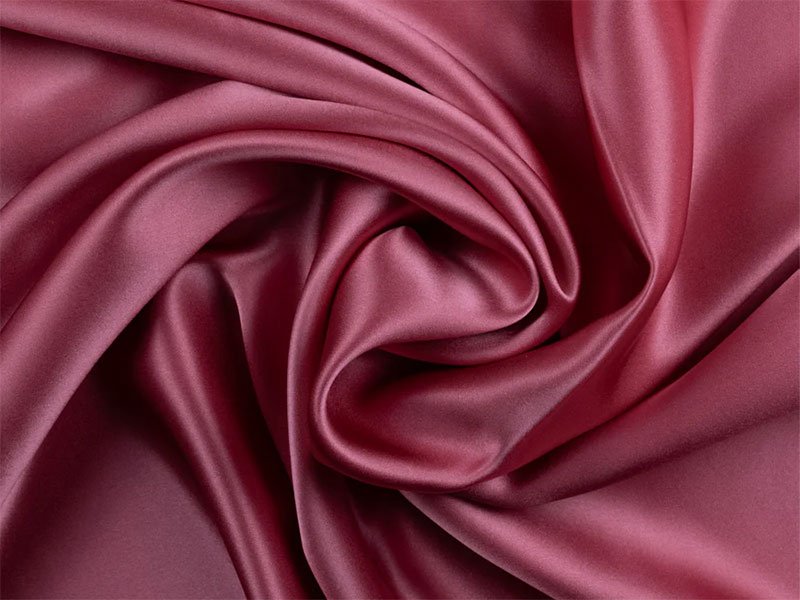
Silk and Silk Blends
- Required silk content
- Momme or fabric weight
- Quality standard
- Order volume
- Color requirements
- Testing
- Approved supplier availability
How We Evaluate Satin Before Sample Development
A satin swatch must be evaluated as part of the garment system. Material approval covers appearance, fit influence, sewing behavior, care performance and bulk repeatability.
| Evaluation Item | Development Review | Production Control | Why It Matters |
|---|---|---|---|
| Fiber Composition | Confirm fiber content, hand feel, care and price position | Lock approved composition in BOM and label data | Composition changes performance, cost and care requirements |
| Fabric Weight | Compare weight with silhouette and lining plan | Check approved weight range against bulk material | Weight affects drape, coverage and structural support |
| Luster Direction | Review face, reverse and directional light response | Control cutting direction and panel orientation | Reversed panels can appear as different shades |
| Stretch and Recovery | Measure direction, extension and return | Compare bulk batches and control pattern ease | Poor recovery can cause neckline, waist or hem distortion |
| Opacity | Review on body form and under strong lighting | Maintain lining, color and layer standards | Light satin may expose seams, underwear or lining edges |
| Seam Slippage | Conduct suitable seam and construction trials | Monitor seam quality during first-piece and inline checks | Loose structures may open along stress areas |
| Shrinkage | Test according to project and care requirement | Apply pattern allowance and batch controls | Shrinkage can alter body length, neckline and fit |
| Colorfastness | Review based on color, market and care needs | Coordinate approved test standard | Deep and bright colors may transfer or change |
| Snagging Risk | Assess surface sensitivity during sample handling | Protect cutting, sewing, inspection and packing stages | Pulled yarns remain highly visible on satin |
| Pressing Response | Test temperature, pressure and contact method | Issue pressing guidance for production | Excessive heat or pressure can leave shine and marks |
Matching Satin Behavior with Silhouette and Structure
Fluid Silhouettes Need Controlled Drape
Cowl necks, bias camisoles and draped tops rely on gravity and fabric movement. Development begins by evaluating whether the fabric falls in soft folds or creates stiff, angular lines. Key decisions include:
- Fabric weight: A very light satin creates fine folds but may become transparent. A heavier quality improves coverage yet can reduce movement.
- Bias behavior: Bias-cut panels may lengthen after hanging. Sample evaluation should include resting time before final length decisions.
- Neckline volume: Cowl depth must be adjusted to fabric fluidity rather than copied directly from a photograph.
- Edge construction: Facing, binding or narrow hemming must support the neckline without making the edge rigid.
- Lining: A full lining can change drape. Partial lining or self-facing may offer better movement for some designs.
The sample should be reviewed both on a dress form and during body movement.
Structured Tops Need Supportive Material Planning
- Outer satin
- Fusible or non-fusible support
- Inner woven layers
- Mesh reinforcement
- Cups
- Boning
- Gripper elastic
- Secure closure systems
Fitted Satin Needs Stretch Recovery Balance
Stretch satin can support close-fitting tops, but excess stretch may weaken shape while insufficient stretch may restrict movement. Fit planning reviews:
- Stretch direction
- Percentage extension
- Recovery
- Negative ease
- Lining elasticity
- Zipper requirement
- Seam reinforcement
- Full-size grading
Ruched and fitted styles also need controlled gathering ratios. Excess gathering increases thickness at side seams, while low gathering may lose the intended visual effect. A fit sample should confirm appearance, comfort and recovery after wear before bulk grading begins.

Pattern and Fit Control for Satin Fashion Tops
Bust, Neckline and Armhole Balance
- Bust point position
- Front-neck depth
- Side-bust coverage
- Armhole height
- Shoulder or strap placement
- Under-bust shaping
- Back opening
Strap and Closure Engineering
Straps influence neckline height, bust position and armhole exposure. Adjustable straps require suitable sliders, rings, strap width and attachment reinforcement.
Closure decisions may include:
- Invisible zipper
- Exposed zipper
- Buttons
- Hooks and eyes
- Tie back
- Elasticated back
- Lacing
A closure must provide sufficient opening for dressing while keeping the garment stable during wear. Zipper position also affects seam appearance and pressing.
Size Grading Protects Full-range Proportion
Grading is not a simple proportional enlargement of the sample size. Neckline, strap length, cup position, body length and opening depth may need controlled grade rules.
Duolan can work from:
- Brand measurement charts
- US, UK, EU or AU market references
- Existing approved blocks
- Fit-model comments
- Historical return feedback
- Full-size grading rules
The sample size becomes a basis for the range, not the only fit decision. Larger sizes require renewed attention to bust coverage, support and neckline stability.
Lining, Support and Closure Options for Satin Tops
Self Lining
Review points:
- Added thickness
- Seam bulk
- Cost and consumption
- Face-to-face friction
- Color consistency
- Pressing behavior
Partial Lining
Controls include:
- Lining edge placement
- Attachment method
- Stretch compatibility
- Visibility under light
- Movement during wear
- Clean internal finishing
Full Lining
Important controls:
- Length allowance
- Ease relationship
- Shrinkage compatibility
- Color
- Static behavior
- Seam connection points
Cup and Boning Support
Development covers:
- Cup size basis
- Cup height and width
- Boning length
- Channel position
- Edge comfort
- Replacement consistency
- Internal finishing
Adjustable Strap Systems
Checks include:
- Slider movement
- Ring strength
- Strap slipping
- Attachment reinforcement
- Skin comfort
- Color and plating
- Wash compatibility
Zippers Hooks and Buttons
Options include:
- Invisible zippers
- Metal or plastic exposed zippers
- Hook-and-eye tape
- Individual hooks
- Covered buttons
- Fabric loops
- Internal safety fastening
Sewing and Pressing Details That Protect Satin Quality

Cutting Direction and Panel Control
Production controls include:
- Face-side identification
- Direction marking
- Panel numbering
- Shade grouping
- Clean cutting surfaces
- Controlled bundling
- Protection from sharp edges and contamination

Needle Thread and Stitch Setting
Review points include:
- Needle penetration marks
- Thread balance
- Stitch density
- Seam elasticity
- Fabric feeding
- Puckering under light
- Recovery after pressing

Curved Edge and Bias Stabilization
Necklines, armholes and bias-cut edges can stretch before assembly. Stabilization must support the edge without creating stiffness or visible ridges.
Possible methods include:
- Stay stitching
- Narrow stabilization tapes
- Facing
- Binding
- Understitching
- Controlled seam allowance
- Process sequencing
The selected method depends on fabric weight, transparency and design.

Narrow Hem and Clean Finishing
Satin hems may use narrow machine hems, baby hems, enclosed seams or lined finishing. The goal is to maintain a smooth edge without twisting or visible seam bulk.
Hem trials review:
- Finished width
- Rolling
- Stitch visibility
- Curved areas
- Side-seam junction
- Pressing response
- Durability

Pressing Temperature and Pressure
Production guidance may cover:
- Temperature range
- Protective cloth
- Vacuum use
- Seam-board use
- Contact duration
- Direction of pressure
- Cooling before stacking

Handling Between Workstations
A satin top can be damaged after sewing through rough baskets, metal edges, jewelry, dirty tables or excessive stacking.
Handling standards should address:
- Clean work surfaces
- Covered containers
- Limited pile height
- Separation of hardware
- Surface inspection
- Stain prevention
- Protective transfer to packing
Decorative Details Applied with Satin Care
Lace Mesh Inserts
Lace and mesh can create contrast, transparency or support. Their stretch, color and edge behavior must align with the satin. Controls include:
- Color matching
- Stretch compatibility
- Seam bulk
- Edge finishing
- Skin feel
- Placement symmetry
- Grade rules
Ruching and Draping
- Gathering ratio
- Anchor points
- Elastic tension
- Seam thickness
- Visual symmetry
- Full-range grading
- Production sequence
Beading and Rhinestones
Beading and stones can increase visual impact but may pull the fabric, scratch adjacent panels or create uncomfortable backs. Development covers:
- Decoration weight
- Attachment strength
- Backing support
- Skin protection
- Pressing restriction
- Spare component planning
- Packing separation
Embroidery and Print
Embroidery can distort lightweight satin, while print changes color, hand feel and luster. Artwork and production method must suit the material. Controls include:
- Stabilizer selection
- Stitch density
- Print penetration
- Strike-off approval
- Placement
- Color review
- Bulk standard locking
Brand and Care Labels
- Main labels
- Size labels
- Care labels
- Country-of-origin labels
- Hangtags
- Barcodes
- Security labels
Hardware and Trim Details
Rings, sliders, zippers, hooks, buttons and decorative metal pieces must fit the style and avoid surface damage.
Review points include:
- Size and weight
- Plating
- Edge smoothness
- Color
- Strength
- Corrosion requirements
- Replacement availability
What to Send for Satin Top Development Review
Tech Pack
A tech pack may include construction drawings, measurement specifications, stitching requirements, BOM details, labeling instructions and packaging standards.
Duolan reviews:
- Missing technical information
- High-risk construction points
- Material compatibility
- Sample purpose
- Size basis
- Quotation requirements
Reference Images
Reference images can communicate neckline, proportion, drape and visual direction. Images alone may not reveal internal construction, exact measurements or fabric composition.
Helpful references include:
- Front, back and side views
- Close-up details
- Desired fit
- Fabric appearance
- Styling context
- Comparable retail products
Original Sample
Please identify:
- Areas to keep
- Areas to change
- Target fabric
- Target market
- Expected order structure
- Label and packaging needs
Measurement Chart
A measurement chart gives the pattern team a controlled fit basis. It should identify measurement points, sample size, grading requirements and tolerances.
Useful information includes:
- Target market
- Fit intention
- Sample size
- Full size range
- Grade rules
- Historical fit comments
Fabric Direction
Fabric information may include composition, weight, surface, stretch, color, reference swatch or supplier details.
Duolan can review:
- Suitability for the silhouette
- Potential alternatives
- Lining requirements
- Color risks
- Sample availability
- Bulk feasibility
Quantity and Launch Plan
Order structure and target date influence material sourcing, sampling sequence, cost and production planning.
Please include:
- Number of styles
- Colors per style
- Size range
- Quantity per style
- Total program volume
- Photo date
- Launch date
- Delivery destination
From Product Brief to Production-ready Satin Sample
Project Brief and Feasibility Review
Development begins with a structured review of product type, target market, fit direction, satin quality, internal support, quantity and launch timing.
The team identifies:
- Unclear design points
- Material risks
- Construction-sensitive areas
- Required sample stage
- Information needed for quotation
- Possible production restrictions
The review prevents avoidable revisions caused by missing decisions.
Fabric and Trim Direction
Review covers:
- Drape
- Weight
- Luster
- Stretch
- Opacity
- Color
- Lining
- Closures
- Hardware
Pattern Development
The pattern team translates the design into measurable shape and construction.
Satin behavior is considered during neckline, bust, armhole, strap and body-length planning.
Pattern work may start from:
- A tech pack
- Reference images
- An original sample
- An existing brand block
- A combination of materials
First Sample
The first sample verifies design direction, material behavior, silhouette and construction. It is not automatically a production standard.
Internal review may cover:
- Measurements
- Symmetry
- Surface quality
- Neckline
- Coverage
- Closures
- Lining
- Workmanship
- Pressing
Fit and Visual Review
Comments are separated into measurable fit issues, visual preferences, material questions and construction changes.
Revision control may include:
- Comment response
- Updated measurement sheet
- Pattern correction
- Material confirmation
- Construction note
- Open-question list
Clear comments shorten the path toward approval more effectively than rushed sewing.
PP and Bulk Readiness
Before bulk release, Duolan reviews the approved sample status, materials, measurements, workmanship, labels, packaging and production path.The production basis may include:
- PP sample
- Approved sample
- BOM
- Size specification
- Workmanship notes
- Material records
- QC checkpoints
Duolan’s manufacturing system can support 15,000–35,000 sample units per month and 3,000–8,000 style-development processes, allowing multi-style programs to move in parallel while remaining separated by project.
Controlling Approved Samples Before Bulk Production

Bulk Readiness Review
Before production starts, Duolan reviews the current approval status:
- Fit confirmed
- Visual confirmed
- PP basis confirmed
- Materials confirmed
- Pending refinements identified
The order purpose is also reviewed:
- Launch order
- Repeat order
- Scale-up order
- Collection extension
A production-readiness note can record open points and required confirmation.

Material and Workmanship Locking
Production-critical details are aligned before the line begins.The control list may include:
- Satin composition and weight
- Approved color or lab dip
- Lining
- Straps
- Cups
- Boning
- Zippers and hooks
- Decoration
- Pressing
- Labels
- Packing

Production Path Planning
Orders are broken down by style, color, size, quantity, complexity and delivery requirement.
Styles may be classified as:
- Standard construction
- Structured fit
- High-risk surface
- Decoration-intensive
- Quick-response
- Repeat style
Production is assigned according to workmanship, material readiness and timing rather than treated as one undivided block.

First-piece and Pilot Confirmation
Higher-risk satin styles may receive first-piece confirmation or a small pilot stage before the full quantity is released.
Review covers:
- Measurements
- Panel direction
- Seam smoothness
- Neckline
- Support
- Closures
- Surface quality
- Pressing
- Labels
- Packing
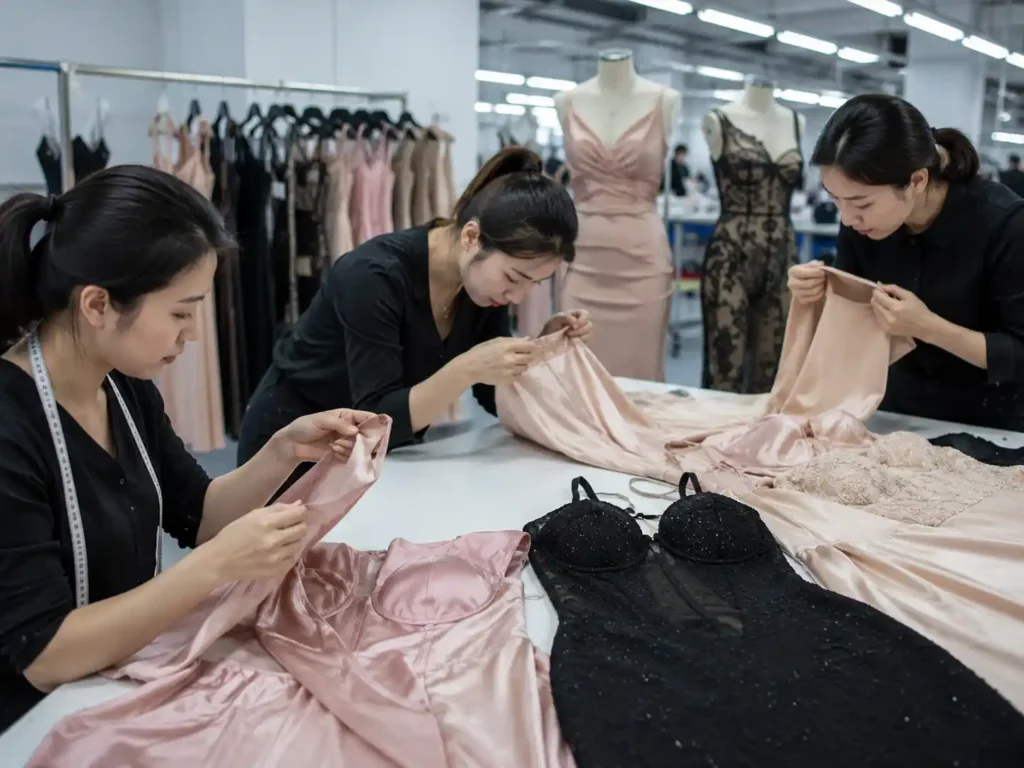
Production and Quality Monitoring
Inline checks compare production against approved standards. Deviations are addressed while garments remain in process.
Inspection attention includes:
- Fabric shade
- Surface damage
- Seam quality
- Measurements
- Symmetry
- Lining
- Trim placement
- Cleaning
- Pressing
- Packing

Reorder Standard Preservation
After delivery, approved files and production history provide a stronger basis for repeats.
Useful records include:
- Pattern version
- Size specification
- Material record
- Color approval
- BOM
- Construction notes
- QC comments
- Packing standard
Production Planning for Multi-style Satin Top Programs
Order Breakdown by Style
A program is divided by:
- Style number
- Product structure
- Satin type
- Color
- Size range
- Quantity
- Decoration
- Packing method
Complex bustiers, standard camisoles and relaxed blouses should not share identical planning assumptions.
Capacity Matched to Complexity
Duolan’s network includes 16 owned womenswear factories, 20+ satellite factories, 300 sewing lines and 50+ quick-response or flexible lines.
Capacity is used according to project need:
- Core styles remain under stronger direct control
- Repeat orders can receive scalable allocation
- Special constructions move to suitable lines
- High-volume orders may use coordinated production paths
- Time-sensitive styles receive separate planning
Program-level Quantity Planning
Duolan commonly works with brand programs containing 10–30 styles and 20,000–80,000 total pieces.
A program may combine:
- Higher-volume commercial tops
- Lower-volume statement styles
- Main colors
- Seasonal colors
- Coordinated sets
- Repeatable carryover silhouettes
Style-level quantities, fabric minimums and production efficiency are reviewed as one commercial structure.
Bulk Production Timing
Reference production periods depend on style complexity, approved materials and production readiness:
- Simple styles: approximately 15–20 days
- Standard styles: approximately 20–30 days
- Complex styles: approximately 30–45 days
Timing begins after production-critical approvals and material readiness.
Shipment method and inspection requirements are planned separately.
Launch Date Backward Planning
The schedule works backward from the required warehouse or launch date:
Launch date → warehouse receiving → shipping → final inspection → packing → bulk production → PP approval → fit approval → fabric approval → initial development
The plan should preserve time for:
- Sample comments
- Material corrections
- Inspection
- Packing checks
- Logistics
- Unexpected production adjustments
Repeat and Scale-up Planning
Repeat orders require renewed material and capacity review. Original fabric may have changed in shade, hand feel, weight or availability.
Before repeat release, Duolan checks:
- Current material availability
- Latest pattern version
- Updated quantity
- Size distribution
- New color requirements
- Previous QC comments
- Required delivery date
Quality Control Built Around Satin-specific Risks
Fabric Shade Inspection
Incoming satin is reviewed for:
- Color
- Luster
- Face direction
- Visible defects
- Width
- Weight
- Hand feel
- Batch variation
Approved standards guide shade grouping and cutting decisions.
Cutting Direction Control
Cut panels must follow the approved luster direction. Direction errors may create visible shade differences under store or photography lighting.
Controls include:
- Direction marks
- Face identification
- Bundle numbering
- Shade separation
- Panel verification
- Clean handling
Pre-production Confirmation
- Measurements
- Lining
- Closures
- Stitch type
- Seam allowance
- Pressing
- Label position
- Packing
First-piece Inspection
The first completed production garment is checked before larger volume continues.
Inspection focuses on:
- Fit basis
- Measurements
- Surface appearance
- Symmetry
- Seam smoothness
- Support structure
- Labels
- Packing method
Inline Quality Checks
Inline checks identify deviations while correction remains possible.
Common checkpoints include:
- Neckline shape
- Strap length
- Armhole balance
- Seam puckering
- Lining exposure
- Trim position
- Snagging
- Stains
- Measurement tolerance
Final Packing Inspection
Final review covers garment quality and delivery accuracy. Checks may include:
- Size and color ratio
- Labels
- Hangtags
- Barcodes
- Folding
- Protective materials
- Polybags
- Carton marks
- Quantity
- Shipment documentation
Preventing Predictable Satin Top Production Problems
Seam Puckering
- Trial seams
- Balanced tension
- Controlled stitch density
- Suitable needle and thread
- First-piece comparison under directional light
Seam Slippage
- Fabric evaluation
- Suitable seam construction
- Stress-area reinforcement
- Coverage and fit review
- Trial production
Needle Marks
- Needle trials
- Limited rework
- Controlled seam correction
- Needle-change discipline
- Clean handling
Directional Shade
- Face and direction marking
- One-way cutting plans
- Bundle control
- Panel verification
- Directional-light inspection
Surface Snagging
- Clean covered tables
- Protected containers
- Hardware isolation
- Limited stacking
- Surface inspections between stages
Lining Exposure
- Lining-pattern review
- Appropriate length allowance
- Understitching or anchoring
- Movement testing
- Full-size review
Light-color Transparency
- Opacity testing
- Body-form review
- Lining selection
- Color-specific approval
- Fit adjustment
Bias Distortion
- Pattern allowance
- Resting time
- Edge stabilization
- Controlled hanging
- Length recheck before hemming
Pressing Marks
Main causes: Excess heat, pressure, moisture or direct iron contact. Prevention:
- Pressing trials
- Protective cloth
- Controlled temperature
- Vacuum and cooling
- No heavy stacking while warm
Bulk checkpoint: Seams, hems, collars, darts and folded packing areas.
A Manufacturing System Built for Development and Scale
30+ Years Development Experience
For satin tops, experience supports:
- Material-to-silhouette judgment
- Fit and structure review
- Decoration feasibility
- Collection balance
- Sample correction
- Production translation
16 Owned Factories
Owned factories provide stronger control for core styles, priority programs and products requiring closer coordination between development and bulk production.
Their value includes:
- Direct production planning
- Sample-to-line communication
- Quality follow-up
- Priority style control
- Production-record preservation
- Repeat-order support
20+ Satellite Factories
Long-term satellite partners add capacity flexibility for repeat orders, scale-up programs and seasonal production peaks.
Allocation depends on:
- Product type
- Workmanship
- Required capacity
- Delivery schedule
- Quality history
- Approved production path
300 Sewing Lines
A 300-line sewing structure supports parallel order execution across different programs and complexity levels.
The main value is not the number alone.
It allows:
- Multi-style production
- Separate complex and standard paths
- Continued repeat production
- Capacity reallocation
- Seasonal volume planning
- Multiple delivery windows
50+ Flexible Lines
Flexible and quick-response lines support development-linked orders, early launch quantities, replenishment and time-sensitive styles.
They work alongside larger production capacity rather than replacing formal bulk planning.
Suitable uses include:
- Priority launch styles
- Repeat colorways
- Fast replenishment
- Controlled scale-up
- Urgent collection gaps
6.5 Million Monthly Capacity
Capacity is assigned after reviewing:
- Style complexity
- Fabric readiness
- Construction
- Quantity
- Quality requirements
- Delivery sequence
Packaging Satin Tops Without Crushing Their Finish

Controlled Folding
Fold lines are planned to avoid crushing structured bust areas, cowl necks, cups or decorative sections.
Controls include:
- Folding position
- Body and sleeve arrangement
- Strap placement
- Tissue support
- Carton pressure
- Garment size

Tissue Paper Protection
- Cowl necks
- Cups
- Hardware
- Rhinestones
- Printed areas
- Light-colored surfaces

Individual Garment Bags
Polybags or alternative garment bags protect products from dust, moisture and handling. Specification may include:
- Bag dimensions
- Ventilation
- Warning text
- Recycling information
- Closure method
- Barcode position
- Size identification

Hardware Isolation
Metal sliders, zippers, hooks and decorative pieces can scratch satin during transport.
Protection options include:
- Tissue separation
- Small protective sleeves
- Closure fastening
- Interior placement
- Garment-to-garment separation
- Controlled carton quantity
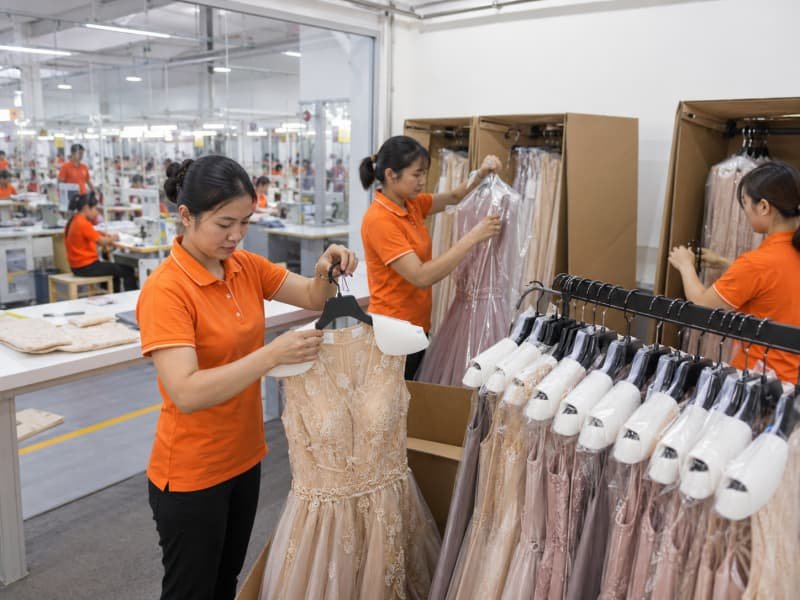
Flat or Hanger Packing
- Garment structure
- Freight cost
- Carton dimensions
- Warehouse handling
- Presentation requirement
- Wrinkle sensitivity

Carton and Marking Control
Carton packing protects quantity accuracy and delivery routing. Checks include:
- Pieces per carton
- Size and color ratio
- Carton pressure
- Inner and outer labels
- Carton marks
- Gross and net weight
- Destination instructions
Compliance and Testing Support for Global Programs
SMETA Audit Foundation
Duolan’s manufacturing system has completed a SMETA audit and SMETA 2-Pillar audit, providing a documented social-responsibility basis for supplier evaluation.
Available records can be reviewed according to project and confidentiality requirements.
Brand-specific Standards
- Brand manuals
- Approved samples
- Inspection criteria
- Packaging instructions
- Vendor documents
- Third-party inspection requirements
Textile Testing Coordination
Testing can be coordinated according to material, product and market requirements. Relevant satin-top tests may include:
- Fiber composition
- Colorfastness
- Shrinkage
- Seam strength
- Seam slippage
- Dimensional stability
- Trim attachment
International Standard Alignment
The factory system can coordinate and execute requirements related to BSCI, ISO 9001, AATCC, ASTM, OEKO-TEX®, EN, China GB standards, GOTS and specific brand protocols where applicable.
Standards are confirmed by project rather than presented as a universal certificate claim.
Third-party Inspection
- Pre-production review
- During-production inspection
- Pre-shipment inspection
- Quantity verification
- Packing checks
- Document review
Product Documentation
- Material composition information
- Care-label data
- Packing lists
- Commercial invoices
- Carton information
- Inspection reports
- Shipment documents
- Project-specific compliance files
Satin Top Programs from Development to Repeat Production
The following anonymized program profiles use representative order structures within Duolan’s normal 10–30 style and 20,000–80,000-piece project range. Brand names and commercially sensitive details remain confidential.

United States Going-out Collection
Program structure
- Region: United States
- Brand type: Established ecommerce going-out label
- Styles: 22
- Total quantity: 46,800 pieces
- Main products: Cowl-neck camisoles, ruched crops, halter tops and satin skirt sets
- Size range: Brand-specific US size chart
- Colors: Black, ivory, red, chocolate and seasonal tones
Development challenge
The collection used several satin weights across fitted and fluid silhouettes. Early references showed deep cowl necklines, low armholes and short body lengths, creating coverage and fit risks. Matching tops and skirts also required consistent color and luster direction.
Duolan approach
The program was divided into fluid, fitted and coordinated-set groups. Fabric review focused on drape, opacity, stretch and batch consistency. Cowl volume, strap position and armhole coverage were revised by style. Matching sets used linked fabric and color records. Photo-ready and PP stages were separated so campaign deadlines did not replace production approval.
Production control
The 22 styles were scheduled by material readiness and construction complexity. Higher-risk cowl and ruched styles received first-piece review. Inline inspection focused on neckline shape, seam puckering, gathering ratio and surface condition.
Program result
The collection moved into planned bulk production with approved material, fit and packing standards recorded for color extensions and future repeats.

United Kingdom Occasionwear Collection
Program structure
- Region: United Kingdom
- Brand type: Occasionwear and event-fashion label
- Styles: 16
- Total quantity: 28,600 pieces
- Main products: Satin corset tops, structured bustiers, halter tops and draped blouses
- Size range: Brand-specific UK size chart
- Colors: Black, champagne, burgundy, navy and emerald
Development challenge
Structured tops required stable cup placement, bust coverage and waist contour across multiple sizes. Satin surfaces exposed panel-seam ridges, boning edges and pressing marks. Several styles included invisible zippers, hooks and internal mesh support.
Duolan approach
Pattern review separated outer appearance from internal support. Cup position, boning length, panel shape and neckline symmetry were checked before decorative development. Outer satin, lining and internal support were tested together. Full-size grading focused on bust, waist, neckline and body-length relationships rather than simple proportional enlargement.
Production control
PP approval covered outer satin, lining, cups, boning, zipper type, measurement tolerance and internal finishing. First-piece inspection checked surface smoothness, support position and closure function. Packing included internal support and hardware separation to reduce surface marking.
Program result
The structured styles entered bulk with a defined construction basis and retained records for repeat colors and future occasionwear extensions.

Australian Resort Collection
Program structure
- Region: Australia
- Brand type: Established resort and online fashion label
- Styles: 27
- Total quantity: 72,000 pieces
- Main products: Printed satin halters, relaxed blouses, draped tops and matching skirt sets
- Size range: Brand-specific AU size chart
- Colors: Printed stories, sunset tones, ivory, black and ocean shades
Development challenge
The program combined plain and printed satin, light resort silhouettes and matching separates. Print placement, shade consistency and transparency needed control across tops and skirts. A staggered launch calendar required several development and production groups to move in parallel.
Duolan approach
Styles were classified by print, structure and launch priority. Printed satin moved through artwork review, strike-off and garment-sample approval. Matching-set components shared color and fabric records. Light colors received opacity and lining review. Halter and backless styles were tested for coverage and strap stability.
Production control
The 27 styles were allocated according to material and print readiness. Production checks focused on print orientation, panel shade, matching-set consistency, strap construction and packing folds. Delivery was divided according to the launch calendar and warehouse receiving plan.
Program result
The collection structure supported a phased launch and created reusable records for repeat prints, color extensions and coordinated separates.
Frequently Asked Questions About Satin Top Manufacturing

Send Your Satin Top Project for Development Review
Share the materials currently available—tech packs, reference images, original-sample photos, measurement charts, satin swatches, color direction or collection plans. Duolan will review the product structure, fabric suitability, fit priorities, lining and support needs, workmanship risks, sample path and bulk-production feasibility.
For a more accurate review, include:
- Company or brand name
- Target market
- Satin top category
- Number of styles
- Reference image or tech pack
- Preferred composition, weight, luster and stretch
- Sample size and full size range
- Colors and quantities
- Total program volume
- Required photo, launch or warehouse date
- Label and packaging requirements
- Inspection or compliance standards
- Delivery destination
Send the information already available. Missing points can be identified during the initial review. Project files, unreleased designs and brand information are handled as commercial materials and are not used as public references without permission.