 Skip to content
Custom Scuba Dress Manufacturer
Scuba dress development and manufacturing built around fabric behavior, engineered fit, clean construction, controlled sampling, and reliable bulk production for established fashion brands.
- Scuba fabrics commonly evaluated across approximately 260–420 GSM, depending on silhouette, compression, opacity, structure, and seasonal wear requirements.
- Development programs can cover 10–30 coordinated styles, with total order quantities commonly planned between 20,000 and 80,000 garments per brand program.
- Fit-sensitive styles can be reviewed across base, lower, and upper sizes before final grading approval.
- Production support is backed by 16 owned womenswear factories, more than 20 satellite factories, and a coordinated dress-focused supply network.
Scuba Dress Manufacturing for Established Fashion Teams
Fast Fashion Brands
Duolan helps organize development around:
- Seasonal launch dates
- Multi-style sample schedules
- Colorway coordination
- Commercial and image-led styles
- Sample revision priorities
- Bulk production sequencing
Occasionwear Brands
Our development review focuses on:
- Bust, waist, and hip balance
- Neckline stability
- Structured skirt volume
- Zipper appearance
- Lining requirements
- Pressing sensitivity
- Size consistency
Product Development Teams
Product teams need clear technical responses rather than generic confirmations. A reference image may suggest a smooth bodycon silhouette, yet the result depends on fabric thickness, stretch direction, recovery, seam placement, and pattern engineering.
Duolan works from tech packs, sketches, original samples, reference images, measurement specifications, and fabric ideas. Development notes can identify areas requiring confirmation before sampling, including:Negative ease,Fabric substitution,Seam bulk,Neckline shape,Length balance,Internal support,Production feasibility.
Sourcing and Buying Teams
Procurement teams usually evaluate several suppliers before placing a program. Important questions include whether samples can become reliable production standards, whether material batches remain controlled, and whether production planning can support several styles without information loss.
Duolan provides a structured path from project review to bulk execution. The working process can include feasibility notes, sample plans, revision summaries, production-readiness checks, first-piece confirmation, inline inspection, packing review, and repeat-order file preservation.
Why Scuba Dress Production Needs Specialist Control
Incorrect Fabric Weight
- Target silhouette
- Seasonal market
- Retail price
- Body coverage
- Garment length
- Construction complexity
- Packing method
Weak Stretch Recovery
Initial stretch alone does not confirm suitability. A fabric may extend easily but fail to return to its original width after wear or repeated movement. Poor recovery can cause bagging around the seat, waist, elbows, neckline, or zipper area.
Recovery review helps determine:
- Required negative ease
- Pattern reduction
- Size grading method
- Seam reinforcement
- Wear performance
- Repeat-order consistency
A stable silhouette requires controlled stretch and reliable return, not maximum elasticity.
Excessive Seam Bulk
Scuba can become visibly thick where multiple layers meet. Waist seams, princess seams, zipper ends, hems, pockets, facings, and lined areas may create ridges or pressure points when seam allowances are not planned carefully. Control methods may include:
- Reduced seam allowance
- Graded layer thickness
- Selective trimming
- Alternative internal finishing
- Controlled topstitching
- Construction trials
- Pressing tests
Clean external lines depend on disciplined internal construction.
Unstable Necklines
- Front and back opening
- Strap position
- Shoulder balance
- Binding or facing method
- Clear elastic use
- Movement testing
- Size grading
Poor Pattern Reduction
- Stretch percentage
- Recovery
- Fabric thickness
- Compression target
- Body contour
- Design ease
- Intended size range
Sample-to-Bulk Drift
A good sample does not automatically guarantee stable production. Fabric lots, trim substitutions, stitching methods, pressing settings, measurement tolerances, and production handling can change the result.
Bulk control requires:
- Approved material standards
- Confirmed measurements
- Locked construction details
- Defined workmanship points
- PP or production reference
- First-piece review
- Inline inspection
- Final packing checks
Understanding Scuba, Neoprene, Ponte, and Spacer Fabrics

Fashion Scuba Knit
Fashion scuba is commonly a smooth double-knit fabric made with polyester and elastane or related synthetic blends. It usually offers moderate body, a clean face, and enough elasticity for fitted or structured silhouettes.
Suitable applications include:
- Bodycon dresses
- Fitted midi dresses
- Fit-and-flare styles
- Structured mini dresses
- Clean-panel occasion dresses
Final suitability depends on GSM, recovery, opacity, handfeel, and sewing behavior.

Double Scuba
- Waist seam thickness
- Zipper insertion
- Hem weight
- Sleeve mobility
- Layered areas
- Packing pressure
- Warm-weather comfort

Air-Layer Fabric
- Compression recovery
- Edge finishing
- Needle marks
- Surface denting
- Seam allowance behavior
- Heat sensitivity
- Wash response

Ponte-Like Knits
Ponte and scuba may appear similar, yet ponte often has a denser, more traditional double-knit character with different drape, compression, and surface properties.
Ponte may suit:
- Workwear dresses
- Tailored fitted styles
- Panel dresses
- Long-sleeve midi dresses
- Refined day-to-evening silhouettes
Material confirmation should rely on swatches and test data rather than fabric names alone.

Bonded Fabrics
- Bond strength
- Flexibility
- Wash method
- Cutting behavior
- Needle penetration
- Internal finishing
- Required labeling

Neoprene Materials
True neoprene-related materials differ from common fashion scuba. They may contain a foam-like core and require different handling, sewing, edge treatment, comfort assessment, and care instructions.
A fashion dress project should clearly define whether the intended result requires:
- Standard scuba knit
- Neoprene-look structure
- Foam-backed material
- Technical neoprene
- Bonded or laminated alternatives
Custom Scuba Dress Styles Developed for Brand Collections

Scuba Bodycon Dresses
- Bust shaping
- Waist suppression
- Hip contour
- Side seam balance
- Hem movement
- Zipper pressure
- Lining choice
- Grading consistency

Scuba Midi Dresses
Midi lengths create stronger demands on vertical balance and movement. A fabric that works for a mini dress may feel heavy or restrictive when extended below the knee.
Important decisions include:
- Center-back vent
- Side slit
- Skirt taper
- Knee ease
- Hem weight
- Zipper length
- Longitudinal stretch
- Pressing and hanging
The finished silhouette should remain clean without restricting normal stride or pulling upward during movement.

Scuba Mini Dresses
Mini dresses require accurate garment length, stable hems, controlled ride-up, and secure upper-body fit. Higher fabric recovery can improve shape retention, yet excessive compression may pull the garment upward.
Development considers:
- Front and back length
- Hip depth
- Hem circumference
- Lining length
- Side seam position
- Strap or sleeve support
- Movement testing
Mini styles can be fitted, flared, strapless, long-sleeved, or sculpted according to the collection direction.

Fit-and-Flare Dresses
Fit-and-flare silhouettes depend on a clear transition from fitted bodice to controlled skirt volume. Scuba can create a strong shape without extensive petticoat structure, but waist seams and skirt attachment require careful thickness control. Review points include:
- Waist placement
- Bodice support
- Skirt panel count
- Flare ratio
- Hem behavior
- Seam bulk
- Zipper transition
- Lining compatibility
The objective is a defined waist and balanced volume rather than uncontrolled stiffness.

Scuba Skater Dresses
Skater dresses use circular or panelled skirt construction to create movement and youthful volume. Scuba adds body, but fabric weight and skirt radius must be balanced to avoid excessive bulk at the waist.
Development may compare:
- Full circle
- Half circle
- Panelled flare
- Box pleats
- Godet structures
- Waist seam methods
A commercial skater dress should hold a recognizable shape while remaining packable, wearable, and stable across the planned size range.

Structured Scuba Dresses
- Layer concentration
- Internal stabilization
- Fold memory
- Pressing marks
- Pattern accuracy
- Construction sequence
- Packing deformation

Scuba Party Dresses
Party dresses often combine body-conscious fit with visual features such as cut-outs, hardware, rhinestones, contrast panels, draping, ruching, or asymmetric shapes.
Scuba can provide a clean base for decorative development, but added elements must be checked for:
- Weight balance
- Surface marking
- Stretch restriction
- Placement consistency
- Skin comfort
- Wash durability
- Bulk repeatability

Scuba Occasion Dresses
Occasion dresses require stronger visual finish, stable fit, and careful presentation. Longline silhouettes, dramatic skirts, statement sleeves, corset-inspired bodices, and sculpted necklines may all be developed with suitable scuba options.
The development path should align:
- Fabric structure
- Formality level
- Internal finishing
- Photography appearance
- Event comfort
- Color depth
- Packing protection
- Retail price architecture
Building Coordinated Scuba Dress Collections

Occasion Capsule
- Color family
- Surface finish
- Dress length
- Coverage level
- Event category
- Retail price range
- Launch timing
- Reorder potential

Party Drop
Party drops often require stronger visual impact and faster market response. Scuba provides a clean foundation for cut-outs, asymmetric seams, statement sleeves, hardware, draping, and shaped panels.
Commercial planning should distinguish:
- Hero styles
- Volume styles
- Social-media styles
- Entry-price styles
- Repeatable core styles
- Limited color statements

Going-Out Collection
Going-out collections usually need fitted silhouettes, shorter lengths, defined waistlines, and recognizable neckline details. Comfort and movement remain essential even when the visual direction is body-conscious.
Development can coordinate:
- Mini and midi balance
- Sleeve and sleeveless options
- Neutral and bright colors
- Clean and detailed styles
- Core and directional fits

Contemporary Workwear
- Sheath dresses
- Belted midis
- Panelled dresses
- Long-sleeve fitted styles
- Peplum structures
- Day-to-evening shapes

Holiday Collection
Holiday collections may combine deep colors, sculpted shapes, metallic accessories, decorative panels, and event-led silhouettes. Material and trim readiness should be planned early because late sourcing can affect photo samples, PP approval, and production windows. A clear launch calendar helps prioritize:
- Campaign styles
- Commercial styles
- Reorder styles
- Color-critical styles
- Trim-dependent designs

Structured Essentials
- Pattern version
- Fabric reference
- Color standard
- Trim specification
- Measurement tolerance
- Sewing method
- Packing standard

Colorway Programs
Scuba dresses often perform well across coordinated colorways. Color planning should consider shade depth, opacity, surface reflection, fabric lot variation, and sales relevance.
A program may include:
- Core neutrals
- Seasonal fashion colors
- Event-led shades
- Online-exclusive colors
- Repeat-order basics
Lab dips and shade bands should be approved before production.

Repeat-Order Programs
- Material availability
- Dye-lot risk
- Trim continuity
- Pattern changes
- Size performance
- Updated labeling
- Delivery calendar
Scuba Fabric Selection Based on Garment Performance
Fabric should be selected according to the intended result rather than a generic fabric name. Weight, stretch, recovery, opacity, surface, breathability, and seam behavior must support the silhouette, price positioning, and production method.
| Intended Garment Result | Recommended Evaluation Range | Suitable Dress Directions | Main Production Risks |
|---|---|---|---|
| Smooth close-body fit | Moderate weight, controlled stretch, high recovery, strong opacity | Bodycon, sheath, fitted midi | Bagging, transparency, seam strain, zipper waves |
| Defined structured shape | Higher body and thickness, lower drape, stable recovery | Fit-and-flare, skater, sculpted mini | Waist bulk, heavy hems, heat retention, packing pressure |
| Refined day-to-evening finish | Smooth face, moderate structure, balanced stretch | Panel dresses, workwear midis, clean occasion dresses | Pressing marks, surface shine variation, fit inconsistency |
| Printed or fashion-led appearance | Print-stable surface, controlled recovery, colorfastness | Party, statement, seasonal styles | Print distortion, shade variation, surface cracking |
| Lightweight seasonal direction | Lower GSM, breathable construction, sufficient opacity | Summer minis, fitted day dresses | Weak support, transparency, poor recovery |
| Strong compression silhouette | Dense structure, tested recovery, high opacity | Sculpted bodycon, corset-inspired forms | Restricted movement, excessive pressure, size grading risk |
Fabric assessment may include composition, GSM, width, stretch direction, stretch percentage, recovery, handfeel, opacity, surface quality, color availability, shrinkage, and bulk availability.
How We Evaluate Scuba Fabric Before Sampling
Composition Review
Our review confirms:
- Stated composition
- Intended market
- Care expectations
- Surface character
- Required support
- Labeling implications
Weight Measurement
GSM affects support, drape, opacity, seam thickness, comfort, and shipping weight. Common fashion scuba development may fall around 260–420 GSM, although final selection depends on the style.
Weight is evaluated together with:
- Dress length
- Skirt volume
- Layer count
- Seasonal use
- Internal structure
- Consumer comfort
Stretch Direction
Two-way and four-way stretch options require different pattern and grading decisions. Directional stretch also affects cutting layout, panel stability, movement, and consumption.
Testing identifies:
- Greater stretch direction
- Crosswise extension
- Lengthwise extension
- Bias response
- Panel orientation
- Pattern placement needs
Recovery Assessment
Fabric is stretched to a controlled extension and observed after release. The purpose is to understand whether the material returns cleanly or retains visible deformation.
Recovery influences:
- Negative ease
- Neckline stability
- Seat bagging
- Waist retention
- Sleeve shape
- Repeat wear performance
Opacity Review
Opacity should be checked under stretch, not only in a relaxed swatch. Light colors may become transparent across the bust, hip, seat, or seam areas even when the unstretched fabric appears solid.
Review may include:
- Relaxed opacity
- Stretched opacity
- Light-color performance
- Seam show-through
- Lining need
- Underwear visibility
Sewing Feasibility
Trial outputs can guide:
- Needle selection
- Stitch type
- Seam allowance
- Reinforcement
- Pressing method
- Internal finish
Fabric Sourcing, Color Development, and Bulk Material Locking
Fabric Sourcing
The sourcing team reviews available constructions according to silhouette, stretch, recovery, opacity, surface, quantity, color, delivery schedule, and price position. Several options may be presented when the original reference cannot support stable production.
A useful sourcing proposal should explain:
- Why each option suits the style
- Differences in weight and recovery
- Expected fit changes
- Color availability
- Bulk supply conditions
- Cost and timing effects
Alternative Material Review
We compare:
- Silhouette support
- Surface appearance
- Compression
- Drape
- Opacity
- Seam behavior
- Comfort
- Production repeatability
Lab Dips and Color Approval
Custom colors can be developed against Pantone references, approved garments, or physical color standards. Lab dips should be reviewed under agreed lighting and against the final fabric construction.
Approval records may include:
- Color reference
- Lighting condition
- Approved dip
- Shade tolerance
- Fabric lot notes
- Seasonal color name
Printed Scuba Development
Development may involve:
- Artwork scale
- Repeat size
- Color separation
- Strike-off approval
- Stretch distortion review
- Panel placement
- Colorfastness testing
- Bulk print matching
Bulk Material Locking
Before PP approval or production release, the material direction must be translated into a clear bulk standard. The locked reference may cover composition, GSM, handfeel, width, stretch, recovery, color, surface, and approved lot information.
Bulk material should not be replaced without documented approval when the change affects:
- Fit
- Appearance
- Construction
- Labeling
- Cost
- Delivery timing
Pattern Engineering for Structured Scuba Dresses

Fabric-Led Pattern Development
- Flattened bust shaping
- Loose waist sections
- Excessive hip pressure
- Pulling side seams
- Restricted armholes
- Distorted necklines
- Zipper stress

Contour and Balance
Scuba emphasizes surface lines. Side seams, princess seams, waist seams, center-back seams, and darts become visually important because the material holds shape.
Pattern review checks:
- Bust apex position
- Waistline level
- Hip depth
- Side seam direction
- Front-to-back balance
- Shoulder slope
- Armhole shape
- Hem level

Negative Ease Control
Negative ease should create the planned fit without turning the garment into excessive compression wear. The required amount depends on the material’s extension, recovery, opacity, and thickness.
Fit approval should consider:
- Standing appearance
- Sitting comfort
- Walking movement
- Neckline stability
- Waist retention
- Seat recovery
- Zipper strain

Structured Skirt Development
- Circular shapes
- Panelled shapes
- Pleated volume
- Godet inserts
- Asymmetric flare
- Sculpted folds

Zipper and Opening Allowance
- Zipper length
- Seam thickness
- Back curve
- Waist crossing
- Hook-and-eye position
- Top edge stability
- Internal tape support

Grading Logic
- Base size sample
- Lower size check
- Upper size check
- Grade-rule confirmation
- Measurement tolerance
- Fit-model feedback
Fit Control Across the Planned Size Range
Lower Size Review
- Bust width
- Neckline opening
- Armhole depth
- Waist pressure
- Hip movement
- Garment length
- Zipper load
Base Size Approval
The base size establishes the main pattern, construction, and visual direction. Fit should be reviewed on the intended fit model with the nominated or equivalent fabric.
Approval covers:
- Silhouette
- Bust, waist, hip
- Shoulder and neckline
- Sleeve movement
- Side seam balance
- Length and hem
- Comfort and recovery
Upper Size Review
Larger sizes require more than proportional enlargement. Bust projection, waist-to-hip relationship, armhole depth, sleeve width, neckline stability, and garment length may require controlled adjustment. The aim is to preserve:
- Intended compression
- Coverage
- Shape
- Movement
- Seam position
- Visual proportion
- Fabric recovery
Construction Details That Define Scuba Dress Quality
Neckline Stability
Shoulder Control
Bust Shaping
Waist Balance
Zipper Installation
Princess Seams
Hem Structure
Lining Integration
Stitching and Workmanship Built for Scuba Fabric

Needle and Thread Selection
- Fabric density
- Elastane content
- Seam type
- Stitch exposure
- Garment color
- Required stretch
- Wash method

Stitch Elasticity
A visually clean stitch may still fail when the garment stretches. Seams around the bust, waist, hip, armhole, and zipper need enough extensibility to follow movement without breaking.
Stitch trials can compare:
- Straight stitch settings
- Stretch-compatible seams
- Overlock balance
- Coverstitch options
- Reinforcement points
- Recovery after extension

Seam Bulk Reduction
- Trimming selected layers
- Grading seam allowances
- Staggering intersections
- Reducing unnecessary facings
- Testing alternative assembly order
- Controlling topstitch position

Pressing Control
Scuba may react to heat, steam, pressure, and prolonged contact. Excessive heat can create shine, flatten texture, mark seam allowances, or distort bonded constructions.
Pressing standards should define:
- Temperature range
- Steam level
- Pressure
- Protective cloth
- Cooling time
- Storage after pressing

Curved Seam Control

Zipper Workmanship

Hem Finishing

Workmanship Reference
Approved construction should be translated into visible production references. Close-up photos, seam samples, workmanship notes, and PP details help the sample room, production line, and QC team follow the same standard.
Linings, Zippers, Support, and Brand Trims
Stretch Linings
Stable Linings
Invisible Zippers
Exposed Zippers
Clear Elastic
Boning and Cups
Branded Labels
Packaging Trims
From Design Brief to Scuba Dress Sample
Brief Review
Fabric Direction
Feasibility Check
Pattern Development
Construction Trial
First Sample
Fit Review
Revised Sample
What a First Scuba Dress Sample Should Confirm
Silhouette Direction
Fabric Behavior
Main Proportions
Construction Feasibility
Major Fit Risks
Revision Priorities
Turning Fit Comments Into Technical Actions
Clear comments need technical interpretation. Every request should be connected to the pattern, material, construction, measurement, or finishing change required to achieve the intended result.
| Brand Comment | Technical Review | Possible Action | Recheck Point |
|---|---|---|---|
| Waist feels loose | Negative ease, recovery, side seam, waist shaping | Reduce selected pattern areas or adjust seam shaping | Waist tension, side seam balance, sitting comfort |
| Neckline gapes | Opening shape, shoulder angle, fabric recovery, stabilization | Reshape neckline or add controlled support | Standing and movement test |
| Zipper waves | Tape tension, seam thickness, back curve, pressing | Adjust zipper method, seam allowance, or pressing | Back appearance and opening function |
| Skirt lacks volume | GSM, flare ratio, panel direction, hem weight | Change fabric or increase structured pattern volume | Waist bulk and hem shape |
| Hip feels restricted | Stretch, negative ease, hip depth, seam placement | Add controlled ease or revise hip curve | Walking, sitting, recovery |
| Hem rides upward | Compression, garment length, hip balance, circumference | Adjust length, hem width, or pattern reduction | Movement and resting position |
| Bust looks flattened | Bust shaping, fabric compression, dart or princess line | Add contour, projection, cup, or seam adjustment | Front balance and neckline |
| Sleeve twists | Grain direction, armhole balance, sleeve pitch | Correct sleeve pitch and cutting orientation | Arm movement and seam position |
Sample Stages for Brand Decision-Making

First Sample

Fit Sample
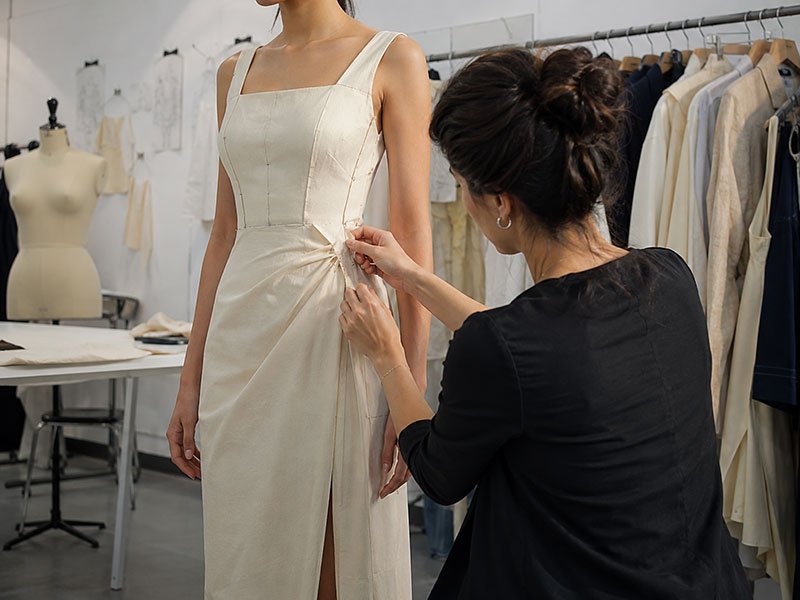
Revised Sample

Photo-Ready Sample

Salesman Sample

PP Sample
Production Planning for Multi-Style Scuba Programs
Order Breakdown
Orders are divided by:
- Style
- Color
- Size
- Quantity
- Material
- Construction complexity
- Delivery group
- Inspection requirement
Style Classification
Scuba dresses may be classified as:
- Standard fitted style
- Fit-sensitive style
- Material-sensitive style
- Structured style
- Special-trim style
- Repeat-order style
- Campaign-priority style
Material Readiness
Production timing should reflect:
- fabric
- trim approval,
- dyeing
- printing
- testing
- delivery to factory
- relaxation
- incoming inspection.
Line Matching
Production Communication
Reorder Preparation
A Manufacturing System Built for Dress Programs
Sixteen Owned Factories
Twenty-Plus Satellite Factories
Twelve-Thousand-Plus Workers
Dress-Focused Development
Material and Trim Network
Multi-Style Coordination
Quality Control Checkpoints for Scuba Dresses

Incoming Fabric
Incoming fabric is reviewed for:Color and shade,Width,GSM,Surface defects,Stretch direction,Recovery,Lot consistency,Quantity.

Fabric Relaxation

Cutting Control

Sewing Control

Measurement Control

Pressing Control
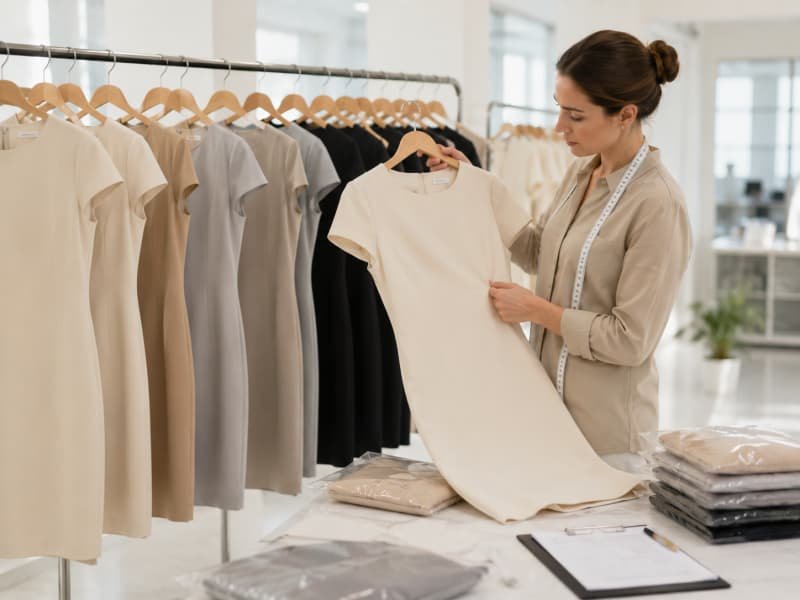
Final Appearance
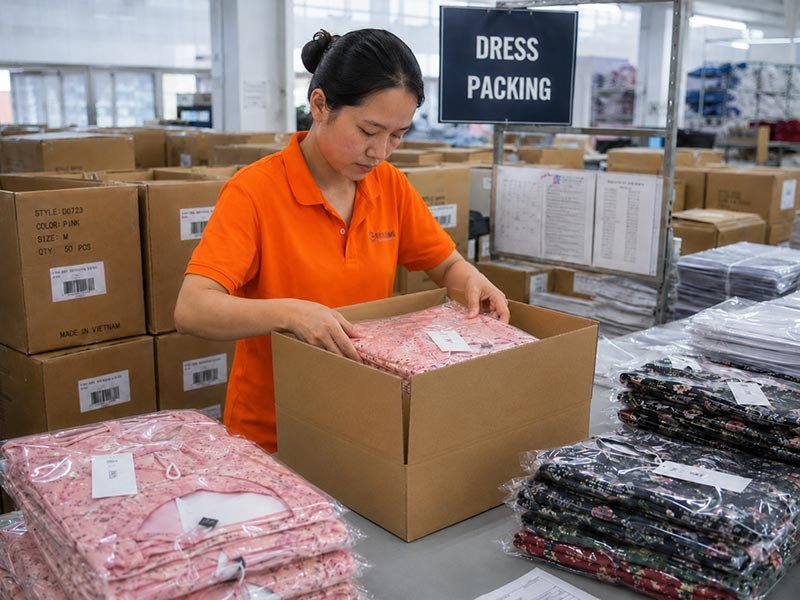
Packing Control
Compliance, Testing, and Brand-Specific Requirements
Social Compliance
Material Testing
Garment Testing
Label Review
Needle Control
Third-Party Inspection
Illustrative Scuba Dress Program Models
US Contemporary Dress Program
Program structure: 18 styles, 42,600 garments, five color families, sizes XS–XL.
The proposed range combined fitted midi dresses, square-neck minis, sculpted long-sleeve styles, and fit-and-flare occasion dresses. Early review identified three different material needs rather than one universal scuba fabric.
The bodycon group required controlled stretch and strong recovery. The flared group required greater body and lower drape. The long-sleeve group needed improved mobility and reduced heat concentration.
Development actions included:
- Three fabric constructions
- Base, lower, and upper size reviews
- Zipper and waist seam trials
- Color lab dips
- Separate pattern reduction by silhouette
- Pilot confirmation for fitted styles
The program model demonstrates why collection-level planning is more reliable than applying one material and one fit formula across every dress.

UK Occasionwear Program
Program structure: 12 styles, 26,400 garments, three delivery groups, sizes UK 6–18.
The collection direction included sculpted minis, asymmetric midis, peplum dresses, and structured event styles. Main risks involved neckline stability, seam concentration, body compression, and photo-sample timing.
Development planning included:
- Fabric review by silhouette
- Structured neckline trials
- Princess seam refinement
- Lining compatibility checks
- Upper-size fit review
- PP approval by delivery group
- First-piece inspection for high-risk styles
The production plan separated campaign styles from commercial repeat styles so photography deadlines did not force every design into the same rushed schedule.

European Multi-Brand Program
Program structure: 24 styles, 68,800 garments, seven core colors, sizes XXS–XXL.
The range combined workwear, going-out, party, and occasion dresses for several regional markets. The main challenge involved maintaining consistent fit and material appearance across different silhouettes, colors, and delivery windows.
Program controls included:
- Central material standards
- Style-level pattern and grading files
- Shade-band approval
- Construction reference photos
- Pilot production for complex silhouettes
- Inline measurement checkpoints
- Repeat-order document preservation
- Separate packing requirements by market
The model shows how a large program can retain style-level control without treating the order as one generic production block.

Scuba Dress Manufacturing Frequently Asked Questions

Start Your Custom Scuba Dress Project
Share your scuba dress direction with Duolan for a structured development and production review. Your information helps our team evaluate fabric performance, pattern requirements, fit sensitivity, sample stages, construction risks, production quantity, and target timing before proposing the next step.
Useful project information includes:
- Tech pack, sketch, reference images, or original sample
- Target scuba construction, composition, GSM, or physical swatch
- Intended silhouette and wearing occasion
- Quantity by style and color
- Planned size range and measurement specification
- Colorways, lab dip, or print requirements
- Lining, zipper, support, trim, and branding details
- Target sample purpose
- Planned launch or delivery date
- Packaging and inspection requirements


