 Skip to content
Custom Shirred Dress Manufacturer
Dress-focused development and manufacturing for fashion brands building commercial shirred dress collections.
- 3 measurement states reviewed for critical shirred areas: relaxed, comfortable extension and controlled maximum extension.
- 5 development stages available: first prototype, fit sample, revised sample, size set and pre-production sample.
- 8 production controls can be locked before bulk release, including fabric, elastic thread, row count, spacing, measurements, workmanship, labels and packing.
- Custom development covers shirred bodices, backs, waists, sleeves, cuffs and multi-zone elastic structures.
- Production planning supports multi-style collections, launch orders, repeat programs and larger seasonal volumes.
Built for Brand-led Shirred Dress Programs
Fast Fashion Brands
- Multi-style development calendars
- Fit and measurement priorities
- Color and print coordination
- Sample revision tracking
- Production allocation by complexity
- Repeat-order standard preservation
Resortwear Brands
Resort and vacation collections often depend on light fabrics, breathable construction, comfortable stretch and a relaxed visual finish. Shirred bodices and elasticated backs can support flexible fit, but the fabric must still recover after wear and maintain the intended silhouette.
Development reviews consider:
- Drape and garment weight
- Opacity and lining coverage
- Print placement
- Bodice support
- Strap stability
- Packing recovery after compression
Contemporary Labels
Contemporary labels usually require cleaner finishing, controlled proportions and a more refined relationship between shirring, flat panels and seam construction. Duolan reviews whether the shirred area supports the design language without making the garment look overly casual or visually heavy.
Attention is placed on:
- Row density
- Panel proportion
- Seam transitions
- Surface regularity
- Neckline balance
- Hem movement
Occasionwear Teams
Shirring used in occasion dresses requires more control than a basic summer dress. Satin, chiffon, crepe, mesh or decorated fabrics may react differently to elastic-thread stitching, steam and garment weight.
Project planning may include:
- Support structure review
- Lining and coverage
- Needle-mark risk
- Bust and waist stability
- Evening-fit expectations
- Delicate surface handling
Product Development Teams
- Design-basis review
- Fabric direction
- Pattern priorities
- Sample-purpose definition
- Fit comments
- Production-readiness notes
Sourcing Offices
- Capability information
- Audit documentation
- QC checkpoints
- Bulk timeline planning
- Packing requirements
- Third-party inspection coordination
Where Shirred Dress Development Commonly Goes Wrong
Uneven Shirring Density
Inconsistent density can create visible bands, slanted rows, loose sections or compressed areas across the bodice. Variation often comes from row spacing, stitch length, handling speed, fabric feeding or changes in elastic-thread tension. Duolan’s control direction includes:
- Confirmed row spacing
- Approved stitch setting
- Reference swatch
- Start-and-finish method
- In-line appearance review
- Panel-to-panel comparison
Weak Stretch Recovery
A bodice may stretch easily during fitting yet fail to return to its intended relaxed size. Weak recovery can produce a loose neckline, dropped back, unstable waist or poor shape after repeated wear. Review points include:
- Elastic-thread specification
- Fabric composition
- Stitch density
- Steam exposure
- Repeated extension
- Recovery after resting
- Wash-care influence
Fabric Mismatch
- Weight
- Weave
- Drape
- Surface sensitivity
- Shrinkage
- Transparency
- Recovery
- Target silhouette
Incorrect Relaxed Measurements
Using only one bust or waist measurement is not enough for shirred construction. A dress can meet a flat specification yet feel too tight, too loose or unstable during movement.
Critical measurements may include:
- Relaxed width
- Comfortable extension
- Controlled maximum extension
- Panel height
- Underarm position
- Waist placement
- Total body length
Distorted Size Grading
- Bust growth
- Waist growth
- Panel height
- Strap position
- Armhole balance
- Skirt volume
- Support needs
- Visual proportion
Bulk Sample Variation
A well-made sample can still fail in production when approved settings are not translated into measurable bulk standards. Risks rise when fabric batches, elastic thread, operators or production locations change. Duolan converts the approved version into:
- Material reference
- Row-count standard
- Spacing requirement
- Measurement sheet
- Workmanship images
- First-piece approval
- In-line QC points
- Final comparison basis
Dress Development Backed by Manufacturing Scale
30+ Years Development
Brand value includes:
- Faster product understanding
- Stronger risk recognition
- Better fabric-to-style judgment
- Clearer sample priorities
- Improved bulk preparation
16 Owned Factories
Owned manufacturing facilities provide a stronger control base for priority styles, sample-to-bulk transition, technical standards and core production programs.
Project value includes:
- Direct production coordination
- Better standard transfer
- Controlled priority scheduling
- Stronger first-piece management
- Clearer responsibility across stages
20+ Satellite Factories
Long-term satellite partners add production flexibility for rolling orders, repeat programs and seasonal peaks. Allocation is based on style complexity, material type, construction requirements and delivery schedule.
The structure supports:
- Volume expansion
- Reorder capacity
- Parallel production
- Regional load balancing
- Seasonal order peaks
12,000+ Coordinated Workers
A broad coordinated workforce supports multi-style programs and larger order plans. Labor scale only becomes valuable when pattern, material, production and QC information move under a common standard.
Operational focus includes:
- Style breakdown
- Production-route selection
- Training on critical points
- Stage-based quality checks
- Centralized order coordination
Dress-focused Supply Resources
Development value includes:
- Faster material matching
- Alternative material review
- Better process coordination
- Improved bulk feasibility
- More complete collection development
Structured Project Management
A larger manufacturing network requires disciplined communication. Duolan organizes style, color, size, material, workmanship, packing and timing information before production allocation.
Project records may include:
- Development brief
- Sample review note
- Production-readiness note
- Timeline plan
- QC checkpoints
- Reorder standard file
Custom Shirred Dress Styles for Seasonal Collections

Shirred Bodice Mini
Key options include:
- Square, straight or sweetheart neckline
- Fixed or adjustable straps
- Fitted or flared skirt
- Plain or printed fabric
- Lightweight lining
- Ruffle or clean hem

Shirred Bodice Midi
Midi lengths balance commercial coverage with a feminine silhouette. Garment weight becomes more important because the skirt can pull downward on the elastic bodice.
Control points include:
- Upper-edge stability
- Waist position
- Bodice recovery
- Side-seam balance
- Skirt-to-bodice ratio
- Walking ease
- Hem movement

Shirred Bodice Maxi
Maxi dresses suit resort, vacation and summer programs, especially in viscose, rayon, cotton voile and light crepe. Longer skirts add weight and may stretch the bodice during hanging or wear.
Development focuses on:
- Fabric weight
- Strap reinforcement
- Upper-body support
- Skirt volume
- Tier placement
- Hem balance
- Packing and hanging behavior

Shirred Waist Dress
Important decisions include:
- Shirred-band width
- Stretch pressure
- Bodice blousing
- Skirt fall
- Side-seam alignment
- Waist recovery
- Lining connection

Shirred Back Dress
A shirred back panel adds fit flexibility while preserving a cleaner front bodice. It is common in fitted, occasion and structured dresses.
Development considerations include:
- Back-panel width
- Center-back balance
- Zipper or no zipper
- Front-bodice support
- Side-seam position
- Strap alignment
- Recovery after movement

Shirred Panel Dress
Control includes:
- Panel shape
- Seam allowance
- Tension distribution
- Matching notch positions
- Flat-to-shirred transition
- Symmetry
- Internal finishing

Strapless Shirred Dress
Possible support includes:
- Anti-slip tape
- Structured front panel
- Elastic upper edge
- Lining
- Internal reinforcement
- Balanced bodice height
- Controlled extension
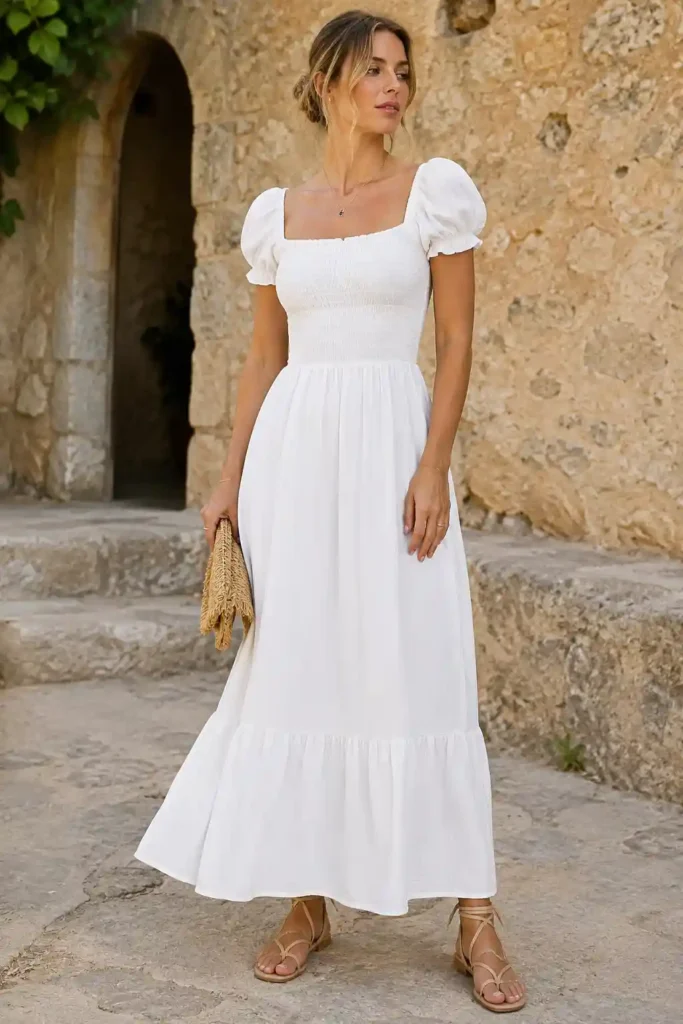
Puff Sleeve Shirred
Review points include:
- Cuff extension
- Sleeve fullness
- Elastic pressure
- Arm mobility
- Row spacing
- Sleeve symmetry
- Seam comfort

Off-shoulder Shirred
Development covers:
- Shoulder position
- Neckline circumference
- Elastic recovery
- Sleeve connection
- Upper-arm fit
- Movement test
- Ruffle balance

Tiered Shirred Maxi
Tiered skirts add visual volume and movement to a fitted shirred upper body. Each tier changes garment weight and can affect the way the bodice stretches.
Planning includes:
- Tier ratio
- Gathering density
- Seam reinforcement
- Print matching
- Total garment weight
- Hem circumference
- Packing volume

Printed Resort Shirred
Printed shirred dresses combine stretch texture with color and pattern. Compression changes how prints appear, making motif scale and placement important before cutting.
Control points include:
- Print repeat
- Color approval
- Motif distortion
- Panel matching
- Shirred visual density
- Fabric shrinkage
- Batch consistency

Shirred Occasion Dress
Occasion-focused shirred styles may combine elastic structure with chiffon, satin, mesh, lace, ruffles or decorative details. The finish should look intentional and refined rather than overly casual.
Development may require:
- Lined bodice
- Support panel
- Delicate-edge finishing
- Controlled transparency
- Decorative placement
- Fit review
- Surface protection
Shirring Placement and Design Options
Full Bodice Shirring
Back Panel Shirring
A back panel supports adjustable fit while keeping the front visually clean. Panel width should be sufficient for extension without pulling side seams backward. For structured fronts, the back elasticity must work with cups, lining, zipper placement or internal support.
Waist Shirring
Side Panel Shirring
Side shirring offers localized fit flexibility and can remain visually subtle. The seam connection between elastic and flat sections must be smooth.Uneven tension can pull the garment off center or create different front and back lengths.
Bust Shirring
Sleeve Shirring
Cuff Shirring
Shirred cuffs provide soft closure and decorative texture. Cuff width, relaxed circumference and extension should be tested on the intended size range. Lightweight fabrics may need careful seam finishing to prevent bulk or irritation.
Multi-zone Shirring
A single dress may combine bodice, sleeve, cuff and waist shirring. Each zone can require different settings because fabric direction, panel width and wearing pressure differ. Multi-zone styles need separate test swatches and clearly identified production standards.
Shirred Dresses Across Commercial Fashion Scenarios

Resort and Vacation
- Comfortable extension
- Lightweight lining
- Strap adjustability
- Print behavior
- Packability
- Recovery after folding

Summer Daywear
- Wash shrinkage
- Bodice pressure
- Neckline coverage
- Pocket integration
- Hem durability
- Care-label accuracy

Brunch and Social
- Front-body balance
- Sleeve movement
- Waist placement
- Texture regularity
- Color presentation
- Finishing quality

Going Out
- Stretch pressure
- Coverage
- Bust stability
- Body length
- Side-seam balance
- Lining attachment
- Movement security

Wedding Guest
- Chiffon or crepe
- Lined bodice
- Draped skirt
- Delicate straps
- Structured front
- Controlled sheen
- Longer hem lengths

Occasion and Party
Party collections may combine shirring with asymmetry, sequins, mesh layers, ruffles or decorative trims. Surface effect must remain consistent after the elastic area is compressed. Key work includes:
- Material trials
- Needle-mark assessment
- Decorative alignment
- Support review
- Fit sample
- Protected packing
Shirring, Smocking and Ruching Differ
Elastic Shirring
Primary functions include:
- Flexible fit
- Surface texture
- Body shaping
- Easier dressing
- Size accommodation
Decorative Smocking
Development should identify:
- Hand or machine method
- Stitch pattern
- Thread color
- Motif repeat
- Labor level
- Production scalability
Ruching Construction
Ruching concentrates fabric through seams, elastic channels, drawcords or controlled gathering. It may shape the body or create drape but does not always provide the same extension as elastic shirring.
A clear brief should define:
- Desired fold direction
- Fixed or adjustable gathering
- Stretch requirement
- Placement
- Volume
- Internal construction
Selecting Fabrics That Respond Well to Shirring
Fabric behavior determines whether shirring looks even, feels comfortable and remains stable after wear and care. The table provides a development guide rather than an automatic approval. Final suitability depends on the actual composition, weight, weave, finishing and target silhouette.
| Fabric Direction | Drape | Shirring Suitability | Main Development Risks | Common Dress Use |
|---|---|---|---|---|
| Cotton Poplin | Structured to medium | High for clean commercial texture | Excess bulk, rigid handfeel, wash shrinkage | Mini dresses, summer daywear |
| Cotton Voile | Light and soft | Medium to high | Transparency, seam stress, uneven compression | Layered resort dresses |
| Viscose | Fluid | High after testing | Wet shrinkage, skew, weaker recovery | Printed midi and maxi dresses |
| Rayon | Fluid and soft | High after testing | Color variation, shrinkage, handling distortion | Vacation and summer dresses |
| Crepe | Medium to fluid | Medium to high | Surface variation, weight differences | Midi, occasion and social dresses |
| Chiffon | Very fluid | Conditional | Needle marks, slipping, transparency | Layered occasion dresses |
| Satin | Fluid with sheen | Conditional | Needle damage, puckering, visible tension lines | Party and evening dresses |
| Linen Blend | Medium and textured | Conditional | Uneven compression, weaker recovery, wrinkling | Resort and relaxed dresses |
| Lightweight Denim | Structured | Limited to selected designs | Bulk, pressure, reduced extension | Fashion mini dresses |
| Recycled Wovens | Variable | Requires individual trial | Batch variation, handfeel and recovery | Sustainability-led collections |
Elastic Thread and Stitch Settings Shape Results
Elastic Thread Selection and Control
- Thread thickness: Affects gathering strength and finished bulk.
- Extension behavior: Influences how far the panel can stretch before pressure becomes excessive.
- Recovery: Determines whether the panel returns close to the approved relaxed size.
- Color: The underside may be visible during wearing, washing or inspection.
- Batch consistency: Changes between sample and bulk can alter the completed measurement.
- Care resistance: Steam, washing and drying conditions can affect elasticity.

Stitch Length and Row Spacing
- Stitch length
- Row distance
- Number of rows
- Direction of sewing
- Seam start position
- Back-tacking or locking method
- Edge allowance
- Panel size before shirring

Fabric Feeding and Handling
The sewing result also depends on fabric handling. Pulling the fabric too strongly, changing feeding speed or failing to guide the previous row can create curved lines and irregular density. Production control should consider:
- Consistent operator method
- Guide alignment
- Fabric grain
- Panel numbering
- Left-and-right panel comparison
- Resting time before measurement
- Steam application
- In-line inspection frequency
For higher-risk materials, Duolan can confirm a first piece or short pilot run before releasing full volume. Early verification reduces the risk of repeating the same variation across thousands of garments.

Controlling Shrinkage, Stretch Range and Recovery
Controlled Shirring Ratio
- Original cut-panel width
- Completed relaxed width
- Comfortable wearing width
- Controlled maximum extension
- Number of shirring rows
- Completed panel height
- Fabric direction
- Resting condition before measurement
Three Measurement States
Critical areas should not rely on one flat dimension.
Duolan can work with three states depending on the garment and brand standard:
- Relaxed measurement: Panel laid flat without forced extension.
- Comfortable extension: Range expected during normal wearing.
- Controlled maximum extension: Upper check used to assess dressing access and pressure.
Measurements should use an agreed method, including the position of the tape, panel orientation, garment resting time and whether the result is half width or full circumference. For a shirred bodice, bust, underbust, waist and upper edge may require separate records. For a shirred sleeve or cuff, upper-arm or wrist extension may be more relevant.
Recovery After Wear and Care
Recovery needs time-based observation. A panel may return immediately after one pull yet remain enlarged after repeated extension, steam or washing. Depending on project requirements, review can include:
- Repeated manual extension
- Recovery after a rest period
- Steam exposure
- Wash-care test
- Hanging test for maxi dresses
- Packing-compression review
- Comparison against approved sample
- Measurement before and after treatment
The aim is not to claim that every elastic structure remains unchanged forever. The aim is to identify an acceptable performance range and ensure bulk garments follow the approved standard.
Pattern Engineering Beyond a Standard Dress Block
Bodice Width Before Shirring
Pattern development considers:
- Finished relaxed measurement
- Wearing extension
- Seam allowance
- Side-panel connection
- Grain direction
- Print placement
- Size grading
- Upper-edge construction
Bodice Height and Waist Position
Shirring compresses fabric horizontally and can also affect vertical appearance. Bodice height needs enough coverage without creating excess fabric below the bust.
Review points include:
- Shoulder-to-bust length
- Underarm depth
- Waist level
- Panel height
- Row count
- Skirt-join position
- Body-length grading
Bust and Neckline Balance
Development may include:
- Shaped front panel
- Lined bust area
- Adjustable straps
- Anti-slip tape
- Elastic top edge
- Cup or support option
- Coverage review
Flat-to-Shirred Transitions
Transitions between flat fabric and shirred panels are common at side seams, center backs, yokes and waist seams. Unequal tension can distort the garment.
Control includes:
- Matching notches
- Controlled seam feeding
- Reinforcement
- Seam allowance
- Pressing method
- Left-right symmetry
- Internal finishing
Grading Shirred Dresses Without Distorting Silhouette
Bust Growth
Waist Growth
Panel Height
Strap Position
Armhole Balance
Skirt Proportion
Measurement Standards for Shirred Dress Development

Relaxed Bust
Measure the shirred bust panel after the garment has rested flat without pulling. The measuring line should be defined relative to the underarm, bust level or brand specification.
Record:
- Half or full circumference
- Garment resting time
- Measurement position
- Panel alignment
- Approved tolerance basis

Extended Bust
Extension should be applied evenly rather than pulling only one point. The target may represent comfortable wear or a controlled maximum, depending on brand requirements.
Record:
- Extension method
- Target width
- Pressure limit
- Return measurement
- Visual distortion
- Seam response

Shirred Panel Height
Check:
- Center front
- Side seam
- Center back
- Row count
- Vertical distortion
- Size growth

Waist Position
The waist can be natural, raised, empire or dropped. Shirring may visually change the position after the garment is worn.
Review:
- Shoulder-to-waist
- Underarm-to-waist
- Front and back balance
- Skirt-join level
- Stretch during movement

Body Length
Measure:
- High-point shoulder length
- Center-front length
- Side length
- Back length
- Hem level

Skirt Volume
Skirt volume affects the load placed on the bodice. Tiered and gathered skirts can create more downward force than a simple A-line skirt.
Review:
- Waist seam circumference
- Tier ratio
- Hem circumference
- Fabric weight
- Lining weight
- Full garment weight
Design Details Supporting Fit and Wearability
Adjustable Straps
Anti-slip Tape
Lining Coverage
Bust Support
Side Seam Balance
Elasticated Cuffs
Tiered Skirt Join
Hem Weight Balance
Workmanship Details Behind Consistent Shirring
Straight Row Alignment
Control points:
- Guide alignment
- Row spacing
- Panel grain
- Operator handling
Consistent Row Spacing
Control points:
- First-row reference
- Spacing guide
- In-line measurement
- Panel comparison
Secure Start Points
Control points:
- Locking method
- Thread tail handling
- Seam coverage
- Pull check
Secure Finish Points
Control points:
- Back-tacking
- Knot position
- Seam capture
- Loose-thread cleaning
Elastic Thread Joining
Control points:
- Join position
- Overlap
- Security
- Appearance
Side Seam Matching
Control points:
- Notch matching
- Panel numbering
- Seam feeding
- Symmetry check
Shirred-flat Connection
Control points:
- Seam length
- Elastic distribution
- Stabilization
- Pressing
Lining Attachment
Control points:
- Lining width
- Seam connection
- Hem freedom
- Stretch test
Upper Edge Finish
Control points:
- Edge extension
- Seam thickness
- Comfort
- Visual flatness
Strap Reinforcement
Control points:
- Stitch density
- Attachment depth
- Pull resistance
- Symmetry
Pressing Method
Control points:
- Temperature
- Steam
- Pressure
- Resting time
Final Surface Check
The completed panel should be inspected for irregular rows, skipped stitches, thread exposure, stains, damage and asymmetry.
Control points:
- Front view
- Back view
- Side comparison
- Measurement confirmation
From Design Brief to Production-ready Sample
Sampling is managed as a sequence of decisions rather than one isolated garment. Exact timing is quoted after reviewing style complexity, fabric readiness, trim availability and the purpose of the sample.
Brief Review
Material Preparation
Shirring Trial
Pattern Development
First Sample
Fit and Review
Revised or PP Sample

Sampling schedules should be confirmed inside the sample proposal instead of using one fixed promise for every style. Simple woven shirred dresses, lined occasion designs and multi-zone structures require different preparation.
Fit Review Leading to Pattern Correction
Mannequin and Visual Review
- Proportion
- Symmetry
- Row alignment
- Hem balance
- Neckline shape
- Panel transitions
Live Fit and Movement
- Bust security
- Underarm coverage
- Waist stability
- Strap position
- Extension comfort
- Skirt movement
- Recovery after wear
Measurement and Stretch Review
- Cut-panel width
- Row count
- Stitch setting
- Bodice height
- Side seam
- Lining
- Support details
- Size grading
Pattern Correction Record
Approved comments are returned to the pattern, measurement sheet and technical note. The revised sample should not depend on temporary hand adjustments that cannot be repeated in production. Correction records may include:
- Updated pattern
- Revised dimensions
- Comment summary
- Construction change
- Material note
- Next sample purpose
- Bulk-risk reminder
Controlled Production for Multi-style Shirred Orders
Fabric Inspection
Pre-shrink Review
Cutting and Numbering
Shirring Operation
Panel Assembly
In-line Measurement
Finishing and Pressing
Packing and Shipment
Quality Checks for Shirred Dress Production
Quality control should focus on the specific failure points of elastic shirring rather than rely only on general garment inspection. Inspection methods can be adjusted to the brand’s specification and third-party requirements.
| Inspection Item | Stage | Review Method | Main Risk | Typical Record |
|---|---|---|---|---|
| Fabric and Color | Incoming | Visual and approved-reference comparison | Shade or material variation | Fabric inspection record |
| Shirring Row Count | In-line | Count against approved sample | Unequal compression | In-line QC sheet |
| Row Spacing | In-line | Measurement and visual comparison | Irregular surface | Photo and measurement |
| Relaxed Measurement | Sample, in-line, final | Flat measurement after resting | Size inconsistency | Measurement report |
| Extended Measurement | Sample and final | Controlled even extension | Restricted or excessive fit | Stretch-check record |
| Recovery | Sample or selected bulk check | Extension and rest comparison | Loss of shape | Recovery note |
| Panel Symmetry | In-line and final | Left-right comparison | Uneven bodice | Appearance record |
| Seam Security | In-line and final | Visual and controlled pull review | Thread release or seam opening | QC checklist |
| Fabric Damage | In-line and final | Surface inspection | Needle marks, pulls or holes | Defect record |
| Lining Freedom | Sample and final | Wear and extension review | Restricted movement | Fit or QC note |
| Label Accuracy | Final | Artwork and placement check | Compliance or identification error | Packing checklist |
| Packing Condition | Final | Folding and compression review | Distortion or surface damage | Packing record |
Private Label and Packaging for Brand-ready Delivery
Labels and packing are treated as part of production preparation. Garment presentation, identification and handling requirements should be confirmed before the packing stage begins. Shirred dresses should not remain under excessive compression for long periods when the fabric or elastic structure is sensitive. Folding and carton loading can be reviewed during packing confirmation.

Main Brand Label

Size Label

Care Label

Hang Tag
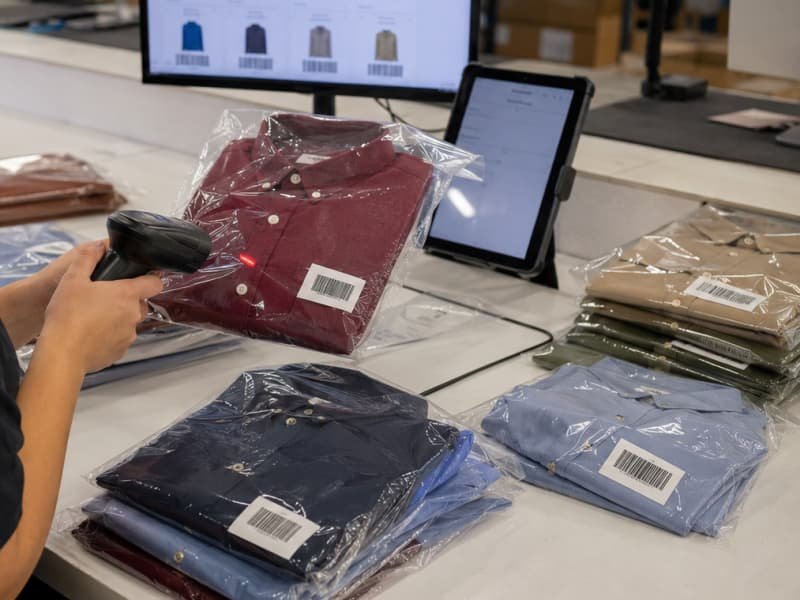
Polybag and Barcode

Carton Marking
Manufacturing Capacity for Collections and Reorders
Core Style Control
Multi-style Allocation
Repeat-order Support
Seasonal Capacity
Specialized Processes
Central Standards
Compliance Support for Global Fashion Programs
Duolan’s manufacturing base has completed a SMETA 2-Pillar audit and can work with project-specific quality, testing, social responsibility and labeling requirements. Final compliance planning depends on the product, fabric, destination market and brand standard.
SMETA Audit Support
Material Documentation
Testing Coordination
Brand Manuals
Third-party Inspection
Market-specific Labels
Compliance should never be described as one universal certificate covering every garment. Each program needs a confirmed requirement list and applicable evidence.
Shirred Dress Development and Production Cases
US Resortwear Program
Collection: Resort and vacation dresses
Styles: 18
Total order: 36,800 pieces
Main products: Shirred bodice maxi dresses, printed midi dresses and adjustable-strap mini dresses
The collection used lightweight viscose and rayon fabrics across several prints. Initial development identified three risks: wet shrinkage, bodice recovery and print distortion after compression.
The production path included:
- Fabric shrinkage review before pattern locking
- Separate shirring swatches for the main fabric groups
- Relaxed and comfortable-extension measurements
- Adjustable-strap reinforcement
- Print and color confirmation
- PP approval before bulk release
- In-line row-density checks
- Two delivery windows aligned with the seasonal launch plan

UK Occasionwear Program
Collection: Social occasion and wedding guest
Styles: 12
Total order: 24,600 pieces
Main products: Shirred-back midi dresses, chiffon overlay dresses and fitted mini dresses
The front bodices required a cleaner, more structured appearance while the shirred back provided fit flexibility. Main risks included front-to-back tension balance, lining restriction and inconsistent waist position across sizes.
The development route covered:
- Structured front-panel review
- Shirred-back width testing
- Lining extension allowance
- Bust and waist fit checks
- Size-set review
- Side-seam balance
- First-piece confirmation
- Final inspection against the PP sample

European Contemporary Program
Collection: Contemporary summer and social dresses
Styles: 26
Total order: 71,200 pieces
Main products: Shirred waist dresses, puff-sleeve dresses, tiered maxi dresses and repeat-order printed styles
The program included several fabric families, four delivery groups and repeat styles from an earlier season. The primary task was preserving fit and appearance while coordinating new colors, updated prints and higher volume.
Project controls included:
- Reorder-file review
- Material-reference comparison
- Updated color approval
- Separate production paths by complexity
- Critical measurement list
- In-line inspection
- Packing verification
- Staged shipment planning

Custom Shirred Dress Frequently Asked Questions
A tech pack is the clearest starting point, but Duolan can also review reference images, design sketches, original-sample photos, size charts, fabric direction and previous fit comments. Helpful commercial information includes target market, size range, expected styles, quantities, launch date, labels, packing and inspection requirements.
Yes, reference-image development can be evaluated. A reference image does not always reveal internal construction, fabric composition or finished measurements, so the team may request additional details. The sample proposal will identify assumptions, missing specifications and priority decisions before development begins.
Cotton poplin, lightweight cotton, viscose, rayon and selected crepes commonly respond well after testing. Chiffon, satin, linen blends and other materials may also work but require closer review. Suitability depends on weight, weave, finishing, shrinkage, surface sensitivity and target compression.
Density is controlled through the approved combination of fabric, elastic thread, stitch length, row spacing, row count, panel dimensions and sewing method. A reference swatch or approved sample should be used during production. In-line checks compare appearance, measurements and panel consistency.
Relaxed measurement is taken with the garment resting flat without forced extension. Comfortable extension represents the intended wearing range. Controlled maximum extension may be used as an upper check for dressing access and pressure. The exact method should be confirmed inside the measurement specification.
Yes. Grading may include changes to cut-panel width, bodice height, armhole, neckline, strap position, waist placement and skirt volume. Larger sizes should not be created only by adding the same width everywhere. Size-set review is recommended for fit-sensitive programs.
Recovery can be reviewed after repeated extension, a defined rest period, steam, washing or other agreed care conditions. The inspection method depends on the project standard. Results are compared with approved relaxed measurements and visual appearance.
Before production, Duolan can lock the approved fabric, elastic thread, row count, spacing, measurements, workmanship, labels and packing. Higher-risk styles may receive first-piece or pilot confirmation. In-line and final checks use the PP sample and technical records as the comparison basis.
Reference lead times are approximately 15–20 days for simple styles, 20–30 days for regular styles and 30–45 days for complex styles after PP approval, materials, order details and relevant payment milestones are confirmed. Shipping time is calculated separately.
Yes. Main labels, size labels, care labels, hang tags, barcodes, polybags and carton marks can follow approved artwork and packing instructions. Third-party inspection, audit documents and project-specific testing can be coordinated according to agreed requirements.

Start Your Shirred Dress Development Project
Share the design basis and commercial plan available to your team. A complete tech pack is helpful, but reference images, original-sample photos, a size chart, fabric ideas or previous fit comments can also support an initial review.
For a more useful development or production response, include:
- Company name and website
- Target market
- Product type and number of styles
- Tech pack, sketch or reference images
- Shirring position and desired visual effect
- Fabric, print and color direction
- Sample size and target size range
- Relaxed or extended measurement requirements
- Expected quantity by style
- Target launch and delivery window
- Label and packaging requirements
- Inspection or compliance standards
Duolan will review the product direction, fabric behavior, pattern requirements, shirring construction, sample purpose, production feasibility and likely project path before confirming the sample proposal, quotation basis and lead-time plan.


