...

Custom Silk Dress Manufacturer

Dress-focused development and manufacturing support for established fashion brands building refined silk collections, seasonal drops, and repeatable commercial programs.

Duolan develops silk dress programs from tech packs, original samples, reference images, fabric swatches or collection briefs. The team coordinates fabric verification, lining review, pattern development, draping control, sample correction, pre-production approval, bulk planning, quality inspection and delivery for silk, silk-blend and silk-look dress collections.

Manufacturing and silk-dress program facts:

  • 30+ years of womenswear development experience behind dress-focused fabric, fit and workmanship judgment.
  • 16 owned womenswear factories and 20+ long-term satellite factories support coordinated launch, repeat and scale-up production.
  • 300 garment sewing lines and 50+ flexible lines allow multi-style silk programs to be separated by material sensitivity, construction difficulty and delivery window.
  • An anonymized US occasionwear silk program covered 18 styles and 46,800 pieces across bias slips, cowl midis, halter maxis and draped minis.
  • An anonymized multi-market fashion dress program covered 24 styles and 72,000 pieces across North America, Europe and Middle East distribution.

Manufacturing Depth for Brand-level Dress Programs

Duolan combines long-term dress development knowledge with a multi-factory manufacturing structure designed for complex styles, seasonal programs, repeat orders and larger production releases.

30+ Years Experience

Duolan’s development foundation comes from more than three decades of involvement in fast-fashion womenswear, dress design, fabric development, pattern interpretation, decorative workmanship and commercial product execution. The experience supports more informed decisions around:
  • Dress silhouette and body balance
  • Fabric behavior and visual effect
  • Pattern feasibility
  • Sample correction
  • Workmanship selection
  • Bulk-production readiness

16 Owned Factories

Sixteen owned womenswear factories provide direct control over core developments, technically sensitive styles, important launch programs and products requiring close coordination between the sample room and production teams. Core projects can be assigned according to:

  • Fabric sensitivity
  • Fit complexity
  • Construction difficulty
  • Workmanship requirements
  • Quantity structure
  • Launch priority

50+ Flexible Lines

More than fifty quick-response and flexible production lines support launch quantities, repeat orders, selected urgent developments and collections with several styles moving at different speeds. Flexible capacity is valuable when one collection includes:

  • Early campaign styles
  • Commercial volume styles
  • Later repeat styles
  • Complex products requiring additional validation
  • Different planned shipment windows

12,000+ Manufacturing Workers

Duolan’s broader manufacturing network includes more than 12,000 workers across several apparel-producing regions in China. The network supports varied production needs, including fashion dresses, fitted dresses, occasionwear, embellished products, flexible launch orders, repeat runs and scaled seasonal programs.

300 Sewing Lines

Three hundred garment sewing lines provide capacity for multi-style programs and larger order structures. Production planning separates regular styles, shape-sensitive dresses, complex constructions, high-risk workmanship and repeat products. Each category receives a suitable production route instead of entering one undifferentiated schedule.

20+ Satellite Factories

More than twenty long-term satellite factories add production flexibility for repeat orders, replenishment, peak-season capacity and larger collection releases. Production is not distributed without structure. Factory allocation considers style difficulty, available skills, material flow, approval status, quality requirements and delivery sequence before bulk work begins.

Silk Dress Manufacturing for Established Fashion Teams

Duolan works with fashion organizations that have defined product direction, structured development requirements, order planning and long-term supply-chain objectives.

Established Fashion Brands

Established labels require more than a garment matching a reference image. Each silk dress must fit the brand’s silhouette language, price architecture, size standard, retail positioning and seasonal launch calendar. Duolan supports development from early material review through bulk execution, while keeping pattern versions, approved details, fabric direction, workmanship standards and production records organized for future orders.

Product Development Teams

Development teams need samples that allow clear decisions on fit, drape, proportion, support, lining, transparency, finishing and commercial feasibility. Duolan translates design comments into measurable pattern and workmanship actions. Sample reviews focus on what must change, why the change matters and whether the revised construction can remain stable during production.

Buying and Sourcing Teams

Sourcing teams need clear capacity information, organized documentation, material confirmation, dependable communication, controlled approval stages and transparent production planning. Duolan supports supplier evaluation through project briefs, feasibility notes, sample-stage definitions, bulk-readiness reviews, production-path planning, quality checkpoints, packing confirmation and shipment coordination.

Occasion and Resort Brands

Occasion, evening, party, resort and vacation collections depend heavily on fabric behavior and visual finish. A small change in weight, lining, grain direction, pressing or seam tension can alter the entire dress. Duolan reviews material, silhouette, movement, coverage, surface appearance and production risk together before a style moves toward scale.

Eight Standards for Evaluating Silk Dress Manufacturers

A capable silk dress partner must explain material suitability, development control, workmanship risks, approval stages and bulk execution – not only show finished garments.

Material Verification

The supplier should distinguish silk fiber from satin construction and clearly identify 100% silk, mulberry silk, silk blends, silk satin and non-silk satin. Material review should cover composition, construction, weight, width, surface, transparency, shrinkage, color route, lot availability, care requirements and documentation.

Dress Development Ability

Silk handling alone is not enough. Strong development requires an understanding of silhouette, fit, balance, movement, support, lining, closures and the visual role of each detail. A dress-focused team should identify conflicts between the selected fabric and the intended shape before repeated sample rounds begin.

Pattern and Draping Control

Bias-cut, cowl-neck, asymmetric, draped, halter and backless dresses require more than standard flat-pattern execution. Evaluation should include grain direction, fabric growth, side-seam balance, neckline fall, strap loading, bust balance, waist placement, skirt drop and hem stability after hanging.

Sample-stage Discipline

Each sample needs a defined purpose. A first development sample, fit sample, campaign sample, size set, revision sample and pre-production sample cannot be treated as interchangeable garments. Approval records should show which areas are confirmed, which remain open and what the next sample must prove.

Workmanship Control

Lightweight silk can expose needle damage, seam puckering, zipper waves, unstable narrow hems, pressing marks, surface abrasion and inconsistent stitch tension. Manufacturing evaluation should include actual detail samples, garment close-ups, pilot work and clear control instructions for sensitive operations.

Bulk Consistency

An attractive sample offers limited value when its materials, construction or finishing cannot be reproduced. Bulk readiness depends on approved patterns, measurement specifications, fabric and trim confirmation, workmanship notes, pre-production reference, first-piece review, inline control and final inspection.

Scalable Manufacturing

Large fashion programs often contain ten to thirty styles rather than one product. A suitable partner must allocate capacity by style, difficulty, approval timing, quantity and delivery window. Core styles, complex styles, campaign products, repeat runs and volume lines may require separate production routes.

Compliance and Documentation

Supplier assessment should include social-audit records, quality-system awareness, material documentation, label execution, testing coordination, packaging instructions, inspection support and traceable approval records. Duolan’s manufacturing system has completed a SMETA 2-Pillar audit and can coordinate additional project requirements according to the brand’s market and compliance program.

Controlling Risks Before Silk Dresses Reach Production

Silk dress problems become costly when material, pattern, finishing and approval decisions remain unclear until bulk production. Duolan moves the main risks into development and pre-production review.

Fiber Content Confusion

A glossy surface does not confirm silk content. Satin describes a weave structure, while silk describes a fiber. Duolan requests a clear material description and available documentation before quotation or sampling. Labels, care instructions, costing, testing and market claims should follow the confirmed fiber composition rather than appearance alone.

Fabric-Silhouette Mismatch

A light charmeuse may create a fluid slip dress but fail to support a structured bodice. A heavier silk may hold shape while losing the soft fall required for a cowl neckline. Fabric review considers drape, body, surface, transparency, recovery, weight distribution and sewing behavior before the pattern route is fixed.

Bias-cut Growth

Bias-cut panels can lengthen, twist, narrow or pull differently after cutting, sewing, hanging, steaming and wearing. Control begins with grain planning, controlled cutting, panel handling, hanging allowance, side-seam observation, balanced joining and final hem levelling after the garment has settled.

Seam Puckering

Silk surfaces reveal tension imbalance quickly. Incorrect needle selection, thread tension, stitch density, seam construction, pressing or feed control can create permanent rippling. Sensitive seams should be tested before bulk sewing, with approved references kept beside production operations.

Needle and Surface Marks

Needle holes, snags, oil marks, scratches and handling damage can remain visible on delicate silk. Fabric movement, workstation cleanliness, needle replacement, operator handling, bundling, storage, in-process protection and final surface inspection require stricter control than many regular woven fabrics.

Pressing Damage

Excessive temperature, pressure, steam or direct contact can create glazing, water marks, seam impressions, flattening or color change. Pressing instructions should define temperature route, pressing cloth use, equipment cleanliness, seam treatment and the approved final appearance.

Lot and Color Variation

Silk color may appear different under daylight, retail lighting, studio lighting and camera flash. Separate dye lots may also show visible variation. Lab dips, strike-offs, bulk shade review, lot segregation, panel matching and approved lighting conditions help reduce color inconsistency.

Sample-to-Bulk Deviation

A development sample may use limited fabric, manual treatment or extra attention unavailable in bulk unless the standard is translated properly. Duolan locks approved materials, pattern versions, measurements, construction points, visual references, packing instructions and inspection checkpoints before production release.

Custom Silk Dress Styles for Fashion Collections

Each silk silhouette requires a different balance of fabric weight, grain direction, lining, pattern control, sewing technique and finishing. Duolan develops each category around its intended commercial role.

Silk Slip Dresses

Silk slip dresses rely on clean lines, controlled bust coverage, balanced straps, smooth side seams and a hem that falls without twisting. Development reviews neckline depth, strap placement, underarm coverage, lining choice, seam visibility, body skim and movement. Bias or straight-grain construction is selected according to the required silhouette and fabric behavior.

Bias-cut Silk Dresses

Bias-cut dresses create fluid movement but require close control over grain, hanging growth, side-seam balance, waist position and hem levelling. Panels should be handled consistently from cutting through sewing. Fit assessment is completed after the garment settles, rather than immediately after assembly, because fabric growth may change the final length and balance.

Cowl-neck Silk Dresses

A cowl neckline depends on fabric fall, neckline width, facing construction, weight distribution and shoulder stability. Too little fabric creates a flat neckline; too much creates uncontrolled bulk. Duolan reviews the drape on a mannequin and body to confirm the intended depth, coverage, fold direction and movement.

Draped Silk Dresses

Draped dresses may include gathered waists, twisted fronts, soft pleats, asymmetric folds or wrapped bodices. Development must control fold placement, fabric consumption, internal support, seam bulk, body balance and repeatable construction. Key drape points are marked in patterns and workmanship instructions for production consistency.

Silk Mini Dresses

Silk mini dresses require careful proportion between neckline, waist, hip, skirt width and finished length. Shorter silhouettes also increase sensitivity around sitting coverage, lining stability, slit position, hem movement and body fit. Size grading must preserve the visual proportion rather than only enlarge each measurement mechanically.

Silk Midi Dresses

Silk midi dresses serve occasion, office, cocktail, resort and elevated daywear collections. The development route considers hem position, skirt fall, side-seam balance, walking movement, lining length, zipper placement and how the fabric behaves below the knee. Fitted and flowing midi silhouettes require different pattern and pressing strategies.

Silk Maxi Dresses

Silk maxi dresses place more fabric weight on shoulders, straps, waist seams and internal support points. Long panels may stretch during hanging and wear. Duolan reviews garment balance, train or hem length, lining control, seam stability, movement, packing method and the risk of distortion during storage and transport.

Silk Halter Dresses

Halter dresses place tension around the neckline and upper body. Fabric, fastening method, back coverage, bust support and neck comfort need coordinated development. The pattern should prevent front gaping, excessive neck pressure, side-bust exposure or back distortion. Internal support may be added according to the intended fit and market.

Silk Backless Dresses

Backless silk dresses need secure front balance even when conventional back support is reduced. Development evaluates shoulder or neck anchoring, bust position, side seam stability, elastic or tape support, zipper location, lining, adhesive compatibility where relevant, and movement during sitting, walking and dancing.

Printed Silk Dresses

Printed silk projects combine garment engineering with color and artwork control. Print scale, repeat, direction, placement, panel matching, registration, shade, shrinkage and cutting utilization affect both appearance and cost. Strike-offs or approved print references should be confirmed before bulk material release.

Silk Occasion Dresses

Occasion dresses require strong visual impact without sacrificing movement, coverage or production stability. Silk may be combined with draping, cut-outs, pleats, gathered details, lace, embroidery or selected embellishment. Each added process is reviewed for weight, abrasion, seam support, wearer comfort, cleaning, packing and repeatability.

Silk Resort Dresses

Resort silk dresses often prioritize movement, color, print, breathability and visual ease. Suitable products include relaxed maxis, halter dresses, wrap shapes, flowing midis, printed slips and lightweight occasion styles. Development balances softness with opacity, durable construction, travel-friendly packing and the intended retail price.

Silk Dress Programs Built Around Brand Collections

Duolan supports coordinated dress groups in which silhouette, material, color, fit, price level, sampling priority and production timing work as one commercial program.

Minimal Silk Capsule

A minimal capsule may combine slip, midi, maxi, halter and draped silhouettes in a controlled palette.

Development focuses on refined fit, fabric quality, clean workmanship, tonal lining, discreet trims, consistent strap proportions and shared material use across several products to improve collection coherence and material planning.

Occasion Collection

An occasion program can include cocktail dresses, wedding-guest dresses, evening midis, backless maxis, cowl-neck dresses and elevated party styles.

The range needs a structured mix of campaign products, strong commercial silhouettes, accessible price points and higher-impact styles without creating unmanageable production complexity.

Resort and Vacation Edit

Resort collections often use fluid silhouettes, lighter colors, botanical prints, open backs, halter necklines, flowing skirts and travel-friendly shapes.

Duolan coordinates print direction, fabric transparency, lining, movement, packing recovery and production timing around seasonal launch and delivery windows.

Evening and Party Program

Party collections may combine silk with ruching, draping, asymmetric necklines, cut-outs, lace inserts, embellishment or structured internal details.

Visual impact must remain compatible with comfort, production time, price architecture and bulk repeatability. High-risk styles are isolated early for additional trials.

Printed Silk Collection

A printed silk program requires artwork planning across dress lengths, panel sizes, silhouette types and colorways.

Print scale may be adjusted for mini, midi and maxi proportions. Placement, repeat direction, cutting efficiency, shade approval and artwork ownership are reviewed before production fabric is released.
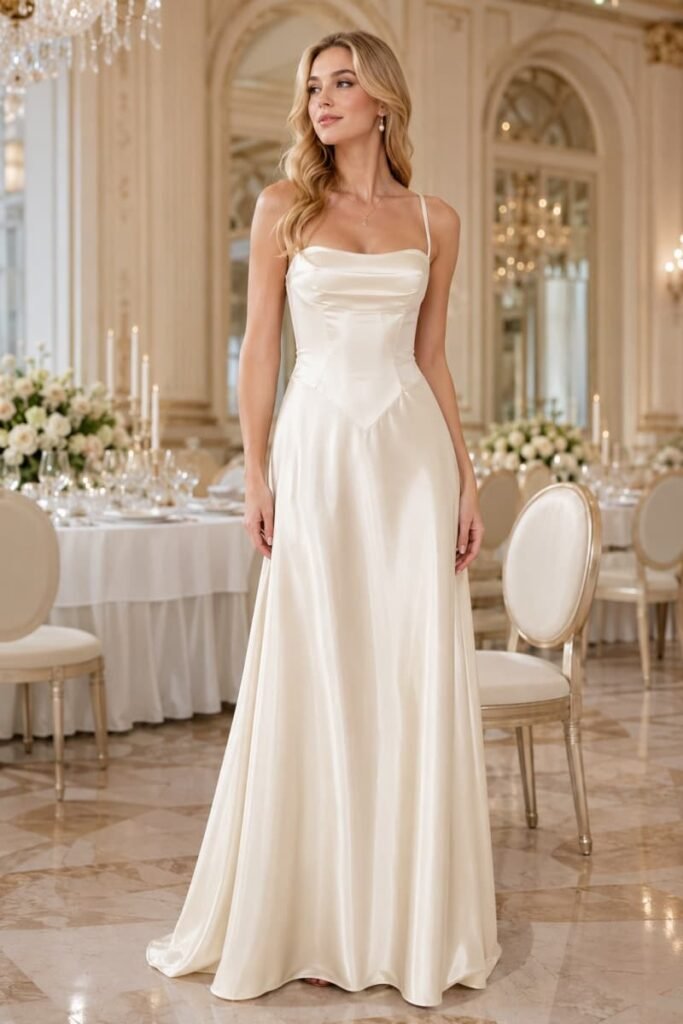
Seasonal Color Extension

Established silhouettes can be extended through seasonal colors, new prints, modified lengths, adjusted necklines or selected construction changes.

Existing pattern, fit, BOM, workmanship and QC records shorten the redevelopment path while preserving the identity and commercial performance of the original product.

Understanding Silk Materials Before Dress Development

Clear material terminology protects labeling, costing, product claims, testing, care instructions and garment performance throughout development and production.

Material TermMeaningDevelopment Points to Confirm
100% SilkFabric made entirely from silk fiberFiber report, weave, weight, width, finish, shrinkage, shade, care route
Mulberry SilkSilk fiber associated with domesticated silkworm productionSupplier documentation, fabric specification, testing requirements
Silk SatinSatin-weave fabric made with silk fiberMomme or weight, gloss, drape, snag risk, seam behavior, pressing route
Silk CharmeuseLightweight silk fabric with a smooth face and softer reverseFluidity, transparency, bias behavior, surface protection, lining
Silk CrepeSilk fabric with a textured or pebbled surfaceRecovery, body, stretch behavior, drape, seam response
Silk GeorgetteLightweight, sheer, slightly textured silk fabricTransparency, lining, edge finishing, gathering, snag protection
Silk ChiffonVery light, sheer silk fabric with airy movementLayer count, lining, narrow hems, seam type, cutting stability
Silk BlendSilk combined with another fiberExact blend ratio, performance change, labeling, care, cost
Silk-look SatinSatin fabric made from fibers other than silkAccurate composition wording, performance, care, positioning

Silk Fabrics Selected Around the Intended Dress Effect

Fabric selection begins with the silhouette, wearer experience, finish, price level, order structure, care route and production requirements – not only a visual swatch.

Silk Charmeuse

Silk charmeuse supports fluid slips, cowl-neck dresses, bias-cut midis, soft maxis and refined evening silhouettes. Development reviews surface shine, reverse-side handfeel, opacity, weight, snagging, seam puckering, pressing and bias growth. A lining may improve coverage but should not overpower the outer fabric’s movement.

Silk Crepe

Silk crepe can provide more body, texture and controlled drape than highly glossy silk satin. It may suit wrap dresses, structured midis, fitted styles, long-sleeve dresses, draped occasion products and elevated daywear. Recovery, surface texture, stretch, grain stability and seam finish are reviewed during sampling.

Silk Georgette

Silk georgette creates lightweight movement with a slightly textured appearance. It works for layered dresses, gathered skirts, sleeves, overlays, ruffles and flowing occasionwear. Transparency, seam type, lining, edge finishing, gathering control, print behavior and snag protection require early confirmation.

Silk Chiffon

Silk chiffon is suited to airy overlays, sleeves, layered skirts, scarves, draped panels and soft occasion silhouettes. Cutting stability, panel handling, narrow hems, seam visibility, transparency, layer count, print registration and static behavior affect the final result and production efficiency.

Silk Satin

Silk satin provides a polished surface and fluid appearance for evening, party, wedding-guest, resort and premium capsule collections. Gloss level, fabric weight, surface sensitivity, crease visibility, seam tension, zipper installation, pressing, storage and packing have a strong effect on perceived quality.

Silk Blends

Silk blends can change strength, recovery, surface, wrinkle behavior, care, cost and availability. A blend should be selected for a defined product reason rather than treated as an interchangeable replacement. Duolan reviews the resulting garment behavior and ensures the confirmed fiber composition remains accurate in labeling and project records.

Silk Fabric Specifications Reviewed Before Sampling

A fabric name alone cannot support accurate dress development. Two materials described as silk satin may differ substantially in weight, surface gloss, width, opacity, drape, shrinkage, sewing behavior, color response and bulk availability.

Composition, Construction and Weight

Development begins with confirmation of fiber content, fabric construction, finishing, width and either momme or another usable weight reference. Momme is commonly used for silk, while some suppliers may provide GSM or internal construction data. The number cannot be judged alone. A lighter material may create the intended fluidity but require more lining and handling control. A heavier material may improve opacity while changing the neckline fall, gathering, bias movement and final price.

Transparency, Lining and Skin Feel

Silk may become more transparent under sunlight, retail lighting, studio flash or body stretch. A garment that appears covered on a hanger may reveal more when worn. Duolan evaluates opacity by color, layer, body placement and lighting condition. Lining selection considers weight, stretch compatibility, surface friction, static, breathability, color and care. The outer and lining fabrics must move together without dragging, rolling or changing the intended silhouette.

Drape, Structure and Recovery

The selected material must support the visual objective of the garment. A cowl neckline needs controlled fall. A bias-cut slip needs fluidity without uncontrolled growth. A halter or backless dress may require stronger support. A fitted silk dress needs enough structure to hold the shape without creating seam stress or visible pulling. Review points include:

  • Vertical and diagonal drape
  • Fabric body
  • Stretch and recovery
  • Bias behavior
  • Crease response
  • Pressing response
  • Skirt movement
  • Strap and seam loading

Color, Print and Bulk Continuity

Custom color and print routes introduce additional approval stages. Lab dips, strike-offs, print scale, artwork direction, shade review and lot availability need enough time before sampling and production. Bulk continuity is reviewed for:

  • Color consistency
  • Print repeat
  • Panel direction
  • Lot segregation
  • Replacement availability
  • Reorder feasibility
  • Label and care consistency

Material recommendations are made only after the silhouette, price position, quantity, launch date and required appearance are understood.

Matching Silk Behavior to Dress Silhouettes

The same silk cannot deliver every shape. Duolan evaluates fabric movement and pattern structure together before committing to a sample route.
Bias and Drape​

Bias Slip Balance

A bias slip requires diagonal movement, clean body skim, stable side seams and controlled garment growth. The fabric must fall smoothly without clinging unevenly or stretching beyond the planned length. Pattern direction, seam placement, lining, hanging time and hem levelling form one control system.

Cowl Drape Control

A cowl neckline needs enough softness to form natural folds and enough stability to retain coverage. Neckline width, depth, shoulder position, facing, internal anchoring and front weight are tested on the intended fabric rather than decided from a sketch alone.

Draped Waist Stability

Gathered and draped waists can create bulk, pulling, uneven fold density or visible internal seams when fabric and pattern are poorly matched. Duolan controls fold placement, seam location, fabric allowance, internal support, closure position and production marking for repeatable assembly.

Maxi Weight Distribution

Long silk panels create downward load through shoulders, straps, necklines, waist seams and back openings. Development checks whether the upper body remains balanced after hanging, steaming, movement and extended wear. Strap construction and internal stabilization are adjusted where required.

Backless Support Engineering

Backless dresses remove structural areas normally used to stabilize fit. Fabric choice must work with bust balance, side seam control, neck or shoulder anchoring, elastic support, tape, lining, fastening and wearer movement.

Printed Resort Movement

Printed resort dresses need a fabric with the correct movement and sufficient print clarity. Artwork scale, panel direction, cutting layout, gathering, pleats, draping and hem width can distort a print. The pattern and artwork route are reviewed together before production fabric is approved.

Lining and Opacity Engineering for Silk Dresses

Lining has a direct effect on coverage, drape, movement, comfort, appearance, fit, care and production stability. A lining selected only by color can weaken an otherwise refined silk dress.

Opacity Under Real Conditions

Opacity should be reviewed beyond a sample-room table. Light silk colors may behave differently under daylight, retail lighting, camera flash, direct sunlight and body movement.
Key review areas include:
  • Bust and hip coverage
  • Side seams under tension
  • Back and cut-out areas
  • Slits and wrap openings
  • Garment movement
  • Photography conditions
  • Lining visibility at openings
A lining may be full length, partial, double-layered, localized or omitted according to product purpose and fabric performance.

Weight and Drape Compatibility

A heavy lining can pull against a fluid outer fabric, flatten a cowl, reduce skirt movement or create a visible inner shape. A very light lining may roll, cling, rise or fail to provide coverage.
Duolan compares the outer fabric and lining for:

  • Weight relationship
  • Stretch compatibility
  • Surface friction
  • Recovery
  • Shrinkage
  • Static tendency
  • Care route
  • Hem behavior

Construction and Coverage

Lining construction affects necklines, armholes, back openings, zippers, slits, waist seams and internal support.
The pattern must prevent the lining from showing above the outer edge, pulling the outer garment or becoming visible during movement. Backless, halter, low-cut and asymmetric dresses often require localized solutions rather than a standard full lining.

Sample-to-Bulk Control

Outer fabric and lining specifications are locked together before bulk production.

Approved color, weight, handfeel, construction, attachment method, hem level and internal appearance become part of the production standard.

Custom Color, Print, Trims and Brand Execution

Material appearance and brand details must be managed with the same discipline as the garment pattern. Duolan coordinates each element around confirmed product requirements.

Custom Color

Color development may include standard references, Pantone direction, supplied swatches or brand-specific standards. Lab dips are reviewed for shade, undertone, light condition, fabric surface and bulk feasibility. Dark, bright, pastel and pale silk colors may require different dyeing and inspection attention.

Digital Print

Digital printing supports detailed artwork, multiple colors, gradient effects and flexible design development. The process requires review of artwork resolution, repeat, scale, color profile, fabric preparation, strike-off, fixation, shrinkage, surface feel and bulk shade consistency.

Placement Print

Placement prints must align with garment panels, seams, necklines, waist positions and dress lengths. Pattern pieces and artwork are coordinated so major motifs remain positioned correctly. Mini, midi and maxi versions may need separate placement plans rather than a single enlarged artwork.

Functional Trims

Zippers, hooks, buttons, adjusters, elastic, tapes, cups, boning and internal support materials affect fit and wearability. Trim selection considers color, weight, surface, strength, care, skin contact, availability, order quantity and compatibility with delicate silk.

Brand Labels

Main labels, size labels, fiber-content labels, care labels, country-of-origin information, hangtags, price tickets and barcode labels are executed according to supplied brand manuals and market requirements. Label placement is checked for visibility, comfort, attachment strength and garment appearance.

Packaging Instructions

Silk dresses require packing methods that reduce crushing, sharp folds, surface abrasion, moisture exposure and trim damage. Options may include tissue protection, individual bags, hanger packing, controlled folding, protective inserts, barcode placement, carton configuration and brand-specific warehouse labels.

Start Silk Dress Development From Available Information

A complete technical pack is useful, but development can also begin from a structured combination of references, original garments, fabric direction and commercial requirements.

Tech Pack Development

A tech pack may include flat sketches, construction notes, measurements, grading rules, BOM, stitch details, artwork, labels, packing and testing requirements. Duolan reviews missing information, conflicts, material feasibility, high-risk construction points, sample purpose and quotation basis before development begins.

Reference Image Development

Reference images can communicate silhouette, neckline, drape, length, color or detail direction, but images do not provide full construction information. Duolan clarifies intended fit, front and back structure, fabric, lining, closures, internal support, measurements, use scenario and permitted design changes before pattern work begins.

Original Sample Development

An original sample provides information on proportion, construction, finish, fit and material behavior. The garment can be reviewed for elements to retain, modify, improve or remove. A new pattern and technical basis are developed according to the brand’s size standard and commercial objective.

Collection Brief Development

A collection brief may define theme, market, season, color direction, silhouettes, price levels, style count, launch date and target order structure. Duolan helps organize development priority, shared fabrics, high-risk styles, campaign products, commercial styles, sample sequence and production path.

Pattern and Draping Development for Silk Silhouettes

Silk dress development depends on how a flat pattern behaves after cutting, hanging, sewing, pressing and movement. Duolan combines pattern work, mannequin review, garment fitting and material observation for shape-sensitive styles.

Grain Direction and Bias Behavior

Straight grain, cross grain and true bias create different stretch, drape, stability and visual movement. For bias-cut dresses, the pattern route reviews:
  • Panel grain
  • Cutting direction
  • Fabric resting
  • Panel growth
  • Side-seam movement
  • Waist and hip balance
  • Lining compatibility
  • Hem levelling
Panels may require controlled hanging before the final hem is established. A garment assessed too early can appear correct during sampling and become uneven later.

Cowl, Drape and Twist Development

Cowl necklines, twisted fronts, gathered waists, soft pleats and asymmetric drapes require three-dimensional observation. Duolan evaluates:
  • Fold origin
  • Fold volume
  • Neckline depth
  • Body coverage
  • Bust balance
  • Internal anchoring
  • Seam bulk
  • Repeatable marking
A visually pleasing sample must also contain enough production information for operators to reproduce the fold location and direction.

Halter and Backless Balance

Halter and backless dresses shift support toward the neck, shoulders, side seams, waist and internal construction. Development checks:

  • Neck pressure
  • Bust position
  • Side-bust coverage
  • Front gaping
  • Strap length
  • Back opening
  • Closure stability
  • Movement security

Pattern corrections are based on the intended fit and target size standard rather than simply tightening loose areas.

Fit Correction and Size Grading

Duolan can follow client-provided alpha or numerical size charts and grading rules. Common project references may include XS-XXL, US 0-16, UK 4-20 or EU 32-48, subject to product structure and the approved measurement specification. Grading reviews more than circumference. It also considers:

  • Neckline position
  • Strap length
  • Bust shaping
  • Waist placement
  • Hip balance
  • Slit level
  • Dress length
  • Drape proportion

The approved size range, sample size, grade rule and tolerance are confirmed before bulk production.

Controlled Silk Dress Sample Development Process

Each stage produces a defined decision. Development moves forward only after material, fit, construction and production concerns are clear enough for the next step.

Step 1|Brief Review

Duolan organizes the style objective, target market, silhouette, fabric direction, size standard, quantity, launch date, price position, required sample type and available files. Unclear points are listed before pattern and material work begins.

Step 2|Fabric Direction

Available swatches, specified materials, supplier options, lining, trims, color, print and care expectations are reviewed against the intended dress effect. Material availability and order requirements are checked early to prevent later redesign.

Step 3|Feasibility Check

Pattern, construction, support, closures, embellishment, seam finish, printing, lining, packing and production risks are assessed. High-risk areas may require a local trial, material test, draping review or revised construction proposal.

Step 4|Pattern Development

The pattern team develops or corrects the base pattern according to the approved silhouette, measurements, fabric behavior and fit objective. Grain, drape, balance, seam placement and internal support are included in the pattern route.

Step 5|First Sample

The first sample is used to evaluate direction rather than declare final approval. Review points include visual match, fit, proportion, drape, coverage, fabric response, workmanship, construction and commercial feasibility.

Step 6|Fit and Visual Review

Comments are organized by priority and converted into measurable actions. Pattern changes, construction changes, material changes and visual refinements are separated so the next sample has a clear purpose.

Step 7|Revision Sample

The revised sample verifies whether the comments have been interpreted correctly. Duolan records the updated pattern version, material direction, measurements, workmanship decisions and unresolved points.

Step 8|Bulk-readiness Review

Before production, Duolan checks whether the style is fit-confirmed, visually confirmed, based on an approved pre-production reference or still pending refinement. Fabric, lining, trims, color, measurements, workmanship, labels, packing, quantity and launch requirements are locked before production release.

Sample Stages and Project Planning References

Planning windows begin after the required fabric, construction direction, measurements and development information are available. Custom-dyed, printed, embellished or highly complex silk products may require additional time.

StageMain PurposePlanning Reference
Feasibility ReviewClarify fabric, structure, risks, missing information and sample route2-4 working days after receiving usable project information
First Development SampleEvaluate silhouette, construction, fabric direction and initial fitCommonly 10-15 working days after material and pattern direction are confirmed
Complex Silk SampleDevelop bias-cut, draped, printed, structured or multi-process stylesCommonly 15-25 working days after critical materials are available
Revision SampleVerify fit comments, pattern changes and workmanship correctionsCommonly 7-12 working days after consolidated comments
Photo or Sales SamplePrepare a visually refined sample for internal sales or campaign useScheduled according to final material and visual requirements
Size SetVerify graded measurements and fit across selected sizesScheduled after the base size and grade rules are confirmed
Pre-production SampleEstablish the material, workmanship, measurement and visual basis for bulkCommonly 7-12 working days after final comments and materials
Bulk ProductionExecute approved multi-style production after materials and standards are lockedMany 20,000-80,000-piece programs require 35-60 days, depending on style count, material route, processes, approval timing and shipment plan

Size Development Note: Duolan follows the brand’s approved measurement chart, sample size, grading rules, fit model information and tolerance requirements. Alpha and numerical size ranges are assessed according to silhouette and construction rather than treated as one universal standard.

Workmanship Control for Delicate Silk Dresses
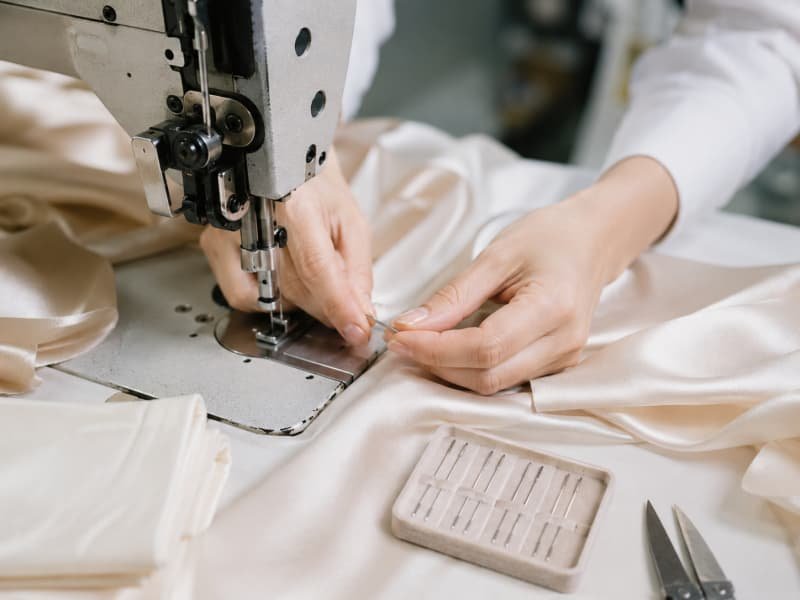
Silk exposes small workmanship errors quickly. Duolan establishes control references during sampling and carries approved details into production instructions, first-piece checks, inline control and final inspection.

Needle Selection

Needle size and condition affect visible holes, pulled yarns, snags, seam appearance and fabric damage. Needles are selected according to fabric construction and seam operation. Replacement discipline is important because even a slightly damaged point can leave repeated marks on delicate surfaces.

Thread Tension

Incorrect upper or lower tension creates puckering, loose stitches, seam draw, fabric tunnelling or visible imbalance. Tension is adjusted using the actual bulk fabric, thread, seam type, layers and feed condition. Approved seam references guide production rather than relying only on machine settings.
1Satin Seam Control (1)

Seam Puckering

Puckering may result from tension, feed imbalance, thread contraction, stitch density, seam construction, pressing or fabric instability. Duolan reviews the entire seam system. A visible ripple cannot always be corrected by lowering tension alone.

Seam Slippage

Some silk constructions may separate near stressed seams even when the stitches remain intact. Risk areas include fitted hips, back zippers, side seams, armholes, slits and waist seams. Seam allowance, construction, reinforcement, fit and fabric suitability are reviewed together.

Narrow Hem Control

Narrow hems must remain smooth, even, stable and visually light. Chiffon, georgette, charmeuse and bias-cut hems behave differently. Edge control, seam width, feeding, pressing, curve handling and final levelling are established during sampling.

Zipper Installation

A zipper can create waves, stiffness, pulling or a visible ridge in lightweight silk. Zipper weight, tape, seam allowance, stabilisation, sewing sequence, pressing, top and bottom finishing and body tension are evaluated before the operation is released.

Pressing Control

Pressing should shape and finish the dress without creating gloss, seam impressions, water marks, crushed texture, distortion or color change. Approved temperature, pressure, steam, pressing-cloth use and contact time are recorded for sensitive materials.

Surface Protection

Silk surfaces can be damaged during cutting, bundling, sewing, transport between operations, inspection, pressing, packing and storage. Clean work surfaces, controlled bundling, protective tissue, careful handling, stain prevention, separated defective pieces and final light inspection help preserve the approved appearance.

What Determines Silk Dress Cost and Production Planning

Accurate commercial planning requires style, material, quantity, size, color, process and delivery information. One universal price or production calendar cannot represent every silk dress.

Fabric Composition

100% silk, silk blends and non-silk satin have different material costs, availability, care routes, labeling requirements and order conditions. Quotation begins with an accurate composition and fabric specification rather than the word “silk” alone.

Color and Print Route

Stock colors, custom dyeing, digital print, screen print and placement print require different approval steps and material quantities. Lab dips, strike-offs, artwork preparation, print testing, fixation, bulk shade approval and replacement fabric can affect cost and timing.

Construction Complexity

Bias cutting, draping, cowls, twists, cut-outs, halter construction, backless support, asymmetry, internal cups, boning, multiple layers and special closures increase development and production work. Complexity is assessed operation by operation rather than judged only by the garment’s outward simplicity.

Material Consumption

Wide skirts, long lengths, bias layouts, print placement, pattern matching, fabric defects, one-way direction and narrow fabric widths may increase consumption. Marker planning helps identify the actual material requirement before final quotation.

Order Structure

A program containing twenty styles, several colors, broad size ranges and separate shipment dates creates a different production structure from one repeated style. Style count, units per style, color split, size ratio, approval timing and delivery sequence are reviewed together.

Approval and Delivery Plan

Late material approval, repeated fit changes, delayed artwork, unconfirmed labels or changing packing instructions can compress the production window. Duolan works backward from the required launch or receiving date and identifies which approvals must be completed first.

Scalable Production for Multi-style Silk Dress Programs

Duolan’s manufacturing network supports brand programs containing ten to thirty styles and total quantities commonly ranging from 20,000 to 80,000 pieces.

Core Factory Control

High-priority and technically sensitive products can remain under direct factory control to protect sample interpretation, pattern transfer, workmanship and early production decisions. Core control is especially valuable for bias-cut, draped, backless, halter, fitted, printed or elevated occasion styles.

Flexible Production Planning

Flexible lines support selected launch quantities, early production, replenishment and products moving on different approval schedules. Capacity is allocated according to confirmed materials and readiness rather than assigning every style to production simultaneously.

Multi-style Coordination

Orders are separated by style, color, size, quantity, difficulty, material and required delivery. Project tracking keeps sample approval, material status, production route, QC status, packing and shipment progress visible across the full collection.

Special-process Coordination

Printing, embroidery, decorative work, dyeing, washing and other external processes are assigned to established supporting resources according to product needs. Timing, transport, quality references, incoming inspection and production sequence are included in the coordination plan.

Reorder Capacity

Approved patterns, BOM information, material direction, workmanship records, measurement standards, QC points, packing records and previous production findings form a reusable base for repeat orders. A reorder review identifies any material, color, process, quantity or timing changes before release.

Peak-season Allocation

Peak-season programs require earlier capacity reservation, material confirmation, style prioritization and approval discipline. Duolan’s owned and satellite factory structure provides additional allocation options for larger seasonal releases, replenishment and several delivery windows.

Preventing Predictable Silk Dress Quality Problems

Quality control starts by identifying where the garment is most likely to fail. Each risk is linked to a development, pre-production, inline or final-inspection action.

Seam Puckering

Cause: Tension imbalance, unsuitable thread or needle, stitch density, feed mismatch, seam construction or pressing.
Control: Trial seams on actual fabric, approved seam reference, tension adjustment, controlled operation, inline appearance checks and final pressing review.

Bias Distortion

Cause: Uncontrolled grain, panel growth, uneven handling, early hemming, lining conflict or inconsistent sewing.
Control: Grain marking, cutting control, panel resting, balanced handling, garment hanging, side-seam review and final hem levelling.

Length Growth

Cause: Fabric weight, bias movement, steaming, hanging or upper-body support changes.
Control: Review after settling, record measurement conditions, stabilize critical areas, compare lining and outer length, and confirm final length before bulk hemming.

Lining Exposure

Cause: Incorrect pattern relationship, fabric growth, seam pull, movement, insufficient turn-of-cloth or unstable attachment.
Control: Opening checks, movement fitting, lining pattern correction, controlled attachment, under-stitching where suitable and final appearance inspection.

Pressing Marks

Cause: Excessive heat, pressure, steam, dirty equipment, direct contact or seam impressions.
Control: Pressing trials, approved temperature route, pressing cloth, clean equipment, controlled pressure, seam protection and surface inspection under suitable light.

Surface Damage

Cause: Snags, scratches, oil, rough tables, damaged needles, improper bundling, tools or packing friction.
Control: Clean work areas, surface protection, needle control, careful bundling, damaged-piece segregation, protected movement and final light-table inspection.

Color Variation

Cause: Dye-lot difference, print variation, panel mixing, lighting differences or uneven finishing.
Control: Approved standard, bulk shade review, lot separation, panel matching, lighting definition, carton control and shade records for repeat production.

Packing Creases

Cause: Sharp folding, excessive compression, incompatible inserts, long storage or incorrect carton loading.
Control: Packing trial, tissue protection, controlled folds, suitable bag and carton size, hanger packing where required, and unpacking-recovery review.

Quality Inspection and Material Documentation

Duolan’s inspection route connects fabric, cutting, sewing, measurements, appearance, labeling, packing and final release rather than relying on a single end-stage check.

Fabric Inspection

Incoming fabric is reviewed according to project requirements for color, lot, visible defects, width, surface, print, handfeel, direction and available supporting information. Sensitive silk materials receive added handling and shade attention before cutting.

Cutting Control

Cutting checks include pattern version, grain, print direction, size marking, panel quantity, fabric lot, critical placement and cut-piece protection. Bias-cut and printed panels require clear identification to prevent mixing or incorrect orientation.

Inline Workmanship

Inline control focuses on early detection of seam puckering, distortion, wrong construction, unstable draping, zipper waves, lining problems, incorrect measurements and visible surface damage. Corrective action is taken before the same issue repeats through a larger quantity.

Measurement Review

Critical measurements are checked against the approved specification and tolerance. Priority points may include bust, waist, hip, neckline, strap, body length, slit, hem, back opening and lining relationship according to the style.

Final Appearance

Final inspection reviews garment balance, drape, seam quality, pressing, shade, cleanliness, surface condition, trims, labels, size and presentation. Silk garments are assessed under suitable light because marks and shade differences may be difficult to see under one condition.

Compliance Coordination

Duolan’s manufacturing system has completed a SMETA 2-Pillar audit. Additional testing, material documentation, inspection, label, packaging, social-responsibility and market requirements can be coordinated according to the specific brand program. 

Representative Multi-style Silk Dress Project Profiles
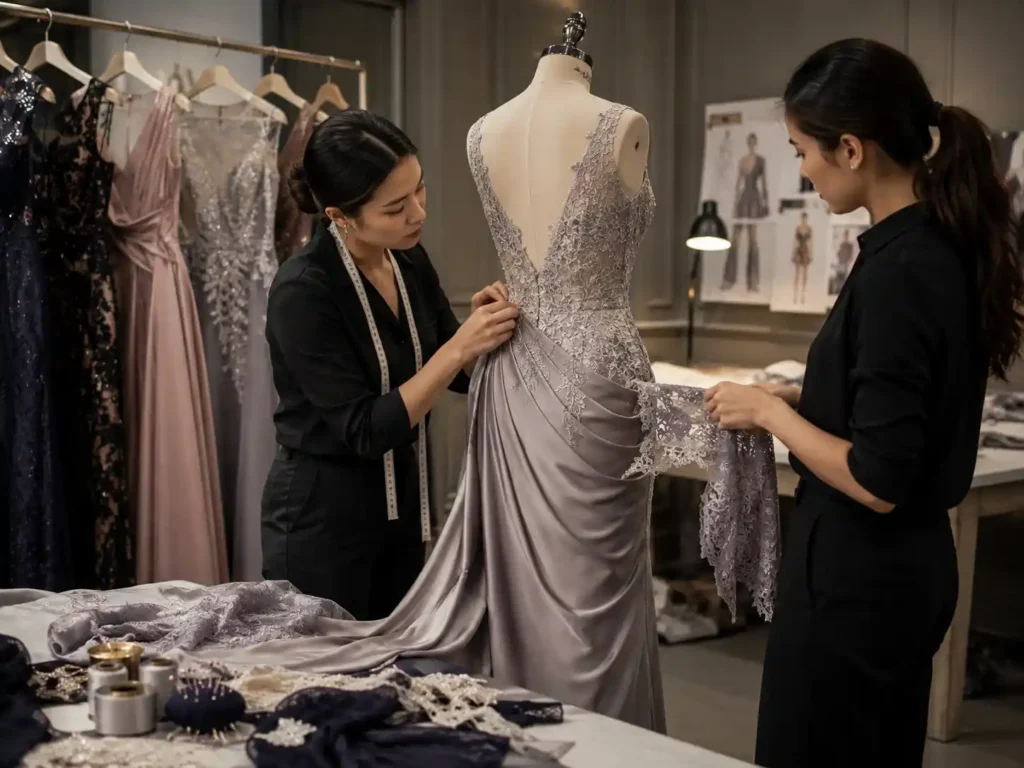
The following profiles use order structures aligned with Duolan’s established brand programs. Brand names, proprietary artwork and identifying product information remain confidential.

US Occasionwear Program

Region: United States
Brand Type: Established occasion and partywear label
Program: 18 styles / 46,800 pieces
Products: Bias-cut slips, cowl-neck midis, halter maxis, draped minis and backless occasion dresses
Size Structure: US 0-16 based on the brand’s measurement specification
The main challenge involved maintaining consistent drape and body balance across several silk and silk-blend fabric directions. Early references contained deep cowls, open backs, fine straps and bias-cut skirts, creating risks around neckline coverage, side-seam twist, garment growth, zipper waves and lining visibility.
Duolan separated the program into core commercial styles, higher-risk campaign styles and volume styles. Bias-cut products received additional hanging and hem review. Cowl shapes were corrected through mannequin draping and pattern adjustment. Backless products were evaluated for front support, side coverage, strap anchoring and lining construction.
Production standards included approved pattern versions, fabric and lining records, critical measurements, seam references, zipper details, pressing instructions and packing requirements. Five production lines were assigned according to style difficulty and approval status.
The full program moved through two principal shipment windows. High-risk silhouettes entered first-piece confirmation before wider production release, while repeatable commercial styles advanced through the standard production path.
Case 03 Australia Resort Destination Pop Up Capsule

European Resort Collection

Region: Western Europe
Brand Type: Regional resort and vacationwear label
Program: 12 styles / 28,600 pieces
Products: Printed silk maxis, halter dresses, flowing midis, wrap dresses and relaxed evening slips
Color and Print Structure: Four print stories and six coordinated solid colors
The collection required coordination between garment patterns and large-scale artwork. A single print repeat could not be applied identically across mini, midi and maxi proportions without affecting motif placement and visual balance.
Duolan reviewed artwork scale, panel direction, key motif placement, fabric width, cutting utilization, neckline position, waist seams, gathering and skirt volume. Separate placement notes were developed for selected silhouettes. Strike-off review covered color, scale, surface, fixation and the relationship between the print and the lining.
Several pale colors required additional opacity assessment. Lining weight and color were adjusted to protect coverage without restricting skirt movement. Halter products received neckline-load and back-coverage review, while maxi styles were assessed after hanging to confirm finished length.
The production plan separated printed and solid-color materials, protected fabric lots and linked each artwork approval to the correct style and pattern version. Packing trials were completed for longer garments to reduce sharp folding and print-surface marking.

Multi-market Fashion Dress Program

Region: North America, Europe and Middle East distribution
Brand Type: Large multi-market fashion group
Program: 24 styles / 72,000 pieces
Products: Silk-look commercial dresses, selected silk-blend occasion styles, printed midis, draped minis and evening maxis
Delivery Structure: Three planned receiving windows
The main pressure came from the number of styles, varied approval speeds, multiple colorways, broad size coverage and separate regional label and packing requirements.
Duolan divided the order by product risk, material route, construction, quantity and delivery priority. Core volume products entered stable lines, while draped and shape-sensitive styles remained under closer technical control. Printed, solid-color and embellished products followed separate material and process schedules.
Project records tracked sample status, fabric approval, pattern version, size range, production route, QC priorities, label set, packing instructions and shipment allocation. A late neckline correction on two styles was isolated without disturbing the remaining program because the affected products had not entered full production.
First-piece reviews confirmed fit, drape, lining, zipper appearance, pressing and packaging before each major release. The program was prepared for three receiving windows, allowing campaign styles, commercial launch products and later volume products to follow the brand’s planned retail sequence.

Silk Dress Manufacturing Frequently Asked Questions

Duolan can evaluate and develop 100% silk dress projects according to the required composition, fabric construction, silhouette, quantity, testing and supply conditions. Material availability, documentation, dyeing or printing route, width, weight, lining and bulk continuity are reviewed before final quotation and sampling.
Silk is a fiber, while satin is a weave structure. Satin can be produced from silk, polyester, acetate, viscose or blended fibers. Duolan uses the confirmed fiber composition and fabric specification in project records, quotation, labeling, care instructions and material communication.
Project directions may include silk charmeuse, silk satin, silk crepe, silk georgette, silk chiffon and selected silk blends. Availability depends on the required composition, weight, color, print, width, quantity, finish, documentation and delivery schedule.
Yes. Reference images can establish silhouette and visual direction, but additional information is required for accurate development. Duolan confirms fabric, fit, measurements, front and back construction, lining, closures, support, colors, sizes, quantity, price level and intended sample stage.
Control includes grain direction, cutting stability, panel handling, side-seam balance, hanging growth, lining compatibility, fitting after settling and final hem levelling. The approved pattern and garment standard are transferred into production instructions and first-piece review.
Yes, subject to material and project requirements. Custom routes may include lab dips, strike-offs, digital prints, screen prints or placement prints. Color, artwork scale, repeat, direction, shade, fabric handfeel, shrinkage and bulk continuity are confirmed before production material release.
Order structure depends on fabric availability, dyeing or printing requirements, style count, color split, size ratio, construction complexity, trim conditions, production route and total program quantity. Duolan evaluates the complete collection rather than promoting one fixed minimum for every silk product.
A common first-sample planning range is 10-15 working days after material and pattern direction are confirmed. Complex bias-cut, draped, printed or multi-process styles commonly require 15-25 working days. The confirmed schedule follows fabric availability and project complexity.
Duolan locks the approved pattern, measurements, fabric, lining, trims, color, workmanship, labels, packing and pre-production reference before release. First-piece checks, inline control, measurement review, final appearance inspection and packing checks connect the approved sample with bulk production.
Useful information includes company details, tech packs, reference images, original sample photos, fabric composition, swatches, size charts, colors, prints, quantities, launch date, target price position, testing, labels and packing instructions. Duolan identifies missing information during the initial feasibility review.

Start Your Silk Dress Development Project

Duolan supports established fashion brands, product teams, sourcing teams and multi-brand groups developing silk dresses for occasion, resort, evening, party, vacation and seasonal collections.

Send the available project information for an initial review. A complete tech pack is welcome, although development can also begin from reference images, original sample photographs, fabric swatches, artwork or a structured collection brief.

Useful information includes:

  • Company name and website
  • Product category and number of styles
  • Tech packs or reference images
  • Required silk composition or fabric direction
  • Fabric swatches or supplier information
  • Target sizes and measurement chart
  • Colors, prints and artwork
  • Quantity by style and color
  • Required sample stage
  • Target launch or receiving date
  • Testing and quality requirements
  • Main labels, care labels, hangtags and packaging
  • Existing fit, material, workmanship or delivery concerns

UK Satin and Tops Development

Start Your Apparel Development Project

OEM/ODM Manufacturing Support for Fashion Brands

Share your collection details, estimated quantities, target market, development timeline, and technical requirements. The production team will review your request and provide a tailored manufacturing solution based on your product category, fabric selection, construction needs, and delivery schedule.

Fashion Manufacturing Support with Scalable Production Capacity

From sample development to bulk production, Duolan supports fashion brands with confidential OEM/ODM manufacturing, stable quality management, flexible production planning, and coordinated multi-factory execution for seasonal and capsule collections.

Need Direct Assistance?

Seraphinite AcceleratorOptimized by Seraphinite Accelerator
Turns on site high speed to be attractive for people and search engines.