Skip to content
Custom Skater Dress Manufacturer
Dress-focused development and manufacturing for fashion brands building commercially balanced, production-ready skater dress collections.
- Develop mini, knee-length and midi skater dresses across 8 core product directions.
- Control 6 silhouette checkpoints from upper-bodice balance to finished hem movement.
- Coordinate knit, woven, structured and occasion-led materials according to the required flare.
- Support collection programs covering 10–30 styles with organized sampling and bulk production paths.
- Manage simple, standard and complex styles through separate development and production routes.
Fashion Skater Dresses Built for Brand Collections
Fashion Dress Manufacturing
Our focus is fashion-led skater dresses for daywear, occasionwear, party, graduation, wedding guest, going-out and seasonal collections. Development may begin from a tech pack, original sample, reference image, existing pattern or confirmed collection direction.
The service covers pattern development, fabric and trim coordination, sample revision, pre-production confirmation, bulk manufacturing, quality control, labeling, packing and shipment coordination.
Full Garment Development
Customization extends beyond printing a graphic onto a standard blank. Duolan can develop the garment structure, size specification, neckline, sleeve, waist seam, skirt panels, hem shape, lining, zipper, print placement and branded components according to the approved design direction.
Fashion skater dresses are also different from figure-skating performance costumes. Competition garments require sport-specific stretch, movement and decoration standards. Duolan concentrates on commercial womenswear intended for retail, ecommerce, fashion collections and repeat production.
Manufacturing Support for Established Fashion Product Teams

Fashion Brands
- Seasonal and capsule collections
- Core and supporting style development
- Fabric-family coordination
- Color and trim planning
- Sample prioritization
- Initial orders and repeat programs

Product Development Teams
- Design feasibility reviews
- Pattern and sample development
- Fit comment translation
- Revision summaries
- Pre-production preparation
- Bulk readiness checkpoints

Buying Teams
Buying teams evaluate price, quality, timing, commercial value and supply risk together. A clear quotation must reflect fabric, construction, order structure, size range, packaging and testing requirements rather than relying on a reference image alone. Duolan supports quotation and production decisions with:
- Defined product specifications
- Order breakdown by style and color
- Production path planning
- Quality checkpoints
- Packing and shipping preparation
- Repeat-order documentation

Sourcing Offices
Sourcing offices often manage multiple brands, factories, approval stages and delivery windows. They need a manufacturing partner capable of following documents, keeping development records and reporting issues before they affect bulk production. Duolan can coordinate:
- Factory and project information
- Sampling status updates
- Material and trim confirmation
- Production milestone reporting
- Inspection preparation
- Shipping document coordination
What Brands Evaluate Before Selecting a Manufacturer
Dress Category Focus
A supplier should understand fitted bodices, defined waists, flared skirts, fashion fabrics and occasion-led finishing. Duolan’s product focus covers fashion dresses, occasion dresses, party dresses, fitted dresses and related collection pieces.
Pattern Capability
Fabric Judgment
The same pattern can produce very different results in ponte, jersey, crepe, satin or cotton poplin. Weight, stretch, drape, recovery and surface behavior must be evaluated before the material is approved. Material selection is linked to the intended shape and price position.
Sample Accuracy
Grading Discipline
Bulk Consistency
Quality Readiness
Reorder Support
Common Risks in Custom Skater Dress Production
Waist Position Drift
Collapsed Skirt Volume
Uneven Hemline
Circle and bias-cut sections may relax at different rates. An apparently level hem can become uneven after hanging, pressing or wearing.
Control actions may include hanging time, panel balance review, hem leveling, directional cutting control and a final appearance check before packing.
Bodice Fit Variation
Zipper Distortion
Invisible zippers may create rippling, stiffness or a raised center-back seam when the surrounding fabric is soft or elastic.
Duolan evaluates zipper type, seam stabilization, lining connection, pressing method and installation sequence before bulk sewing.
Sample-to-Bulk Difference
Custom Skater Dress Styles We Develop
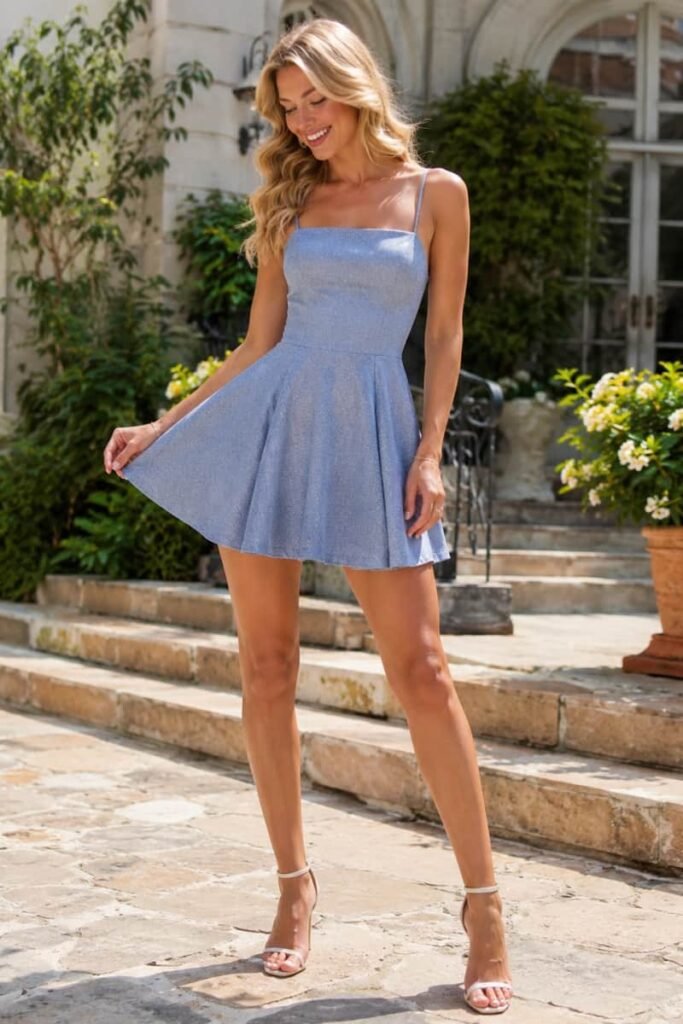
Mini Skater Dresses
Suitable directions include:
- Going-out collections
- Birthday and party edits
- Summer drops
- Graduation and homecoming programs
- Long-sleeve or sleeveless versions

Midi Skater Dresses
Midi skater dresses need controlled vertical balance. Excessive volume can overwhelm the wearer, while insufficient sweep may make the skirt appear like a basic A-line shape.
Development reviews:
- Waist-to-hem proportion
- Panel distribution
- Side-seam fall
- Lining length
- Movement during walking
- Hem finishing weight
Crepe, structured jersey, satin, viscose blends and woven materials may all be used, depending on the intended market and visual result.

Knit Skater Dresses
Duolan evaluates:
- Stretch percentage and direction
- Recovery after extension
- Fabric weight
- Opacity
- Neckline stabilization
- Waist-seam behavior
- Hem method

Woven Skater Dresses
Suitable fabrics include:
- Crepe
- Poplin
- Satin
- Viscose twill
- Jacquard
- Lightweight structured blends

Party Skater Dresses
Critical development points include:
- Decorative weight
- Lining coverage
- Zipper stability
- Edge finishing
- Waist reinforcement
- Embellishment placement
- Packing protection

Printed Skater Dresses
Duolan can review:
- All-over print scale
- Placement print location
- Directional cutting
- Panel continuity
- Waist-seam matching
- Color approval
- Print strike-off or sample yardage

Structured Skater Dresses
Structured versions use firmer fabrics, internal support, shaped seams or reinforced waist construction to create a more architectural silhouette.
Possible features include:
- Corset-inspired seam lines
- Boning in selected areas
- Interfacing
- Structured cups
- Double-layer bodices
- Stable waist tape
- Sculpted skirt panels
Support must remain comfortable and suitable for commercial production rather than only creating a dramatic sample.

Occasion Skater Dresses
Duolan reviews the full wearing experience, including:
- Bust coverage
- Waist stability
- Skirt movement
- Lining opacity
- Closure comfort
- Sitting ease
- The final pressed appearance
Skater Dress Directions Across Fashion Occasions
Daywear Collections
Brunch and Resort
Office to Evening
Office-to-evening versions need controlled necklines, reliable coverage and a polished skirt shape.
Midi lengths, sleeves, stable woven crepe or compact knit can help move the garment between work, dinner and social occasions.
Going Out
Going-out styles may use mini lengths, cut-outs, open backs, square necklines or stronger waist shaping.
Fit security becomes important because the garment must remain stable during movement without relying on constant adjustment.
Cocktail Programs
Cocktail skater dresses can combine elevated fabrics with a clean, recognizable silhouette.
Satin, jacquard, velvet, lace or structured crepe may be used with carefully controlled linings, zippers and hem finishing.
Graduation Collections
Graduation programs often need commercial color choices, photo-ready shapes and comfortable all-day wear.
Mini and above-knee lengths should be checked for sitting, walking and coverage across the full size range.
Wedding Guest Edits
Party Season
Design Options for Custom Skater Dress Development
Neckline Architecture
The neckline must work with:
- Bust coverage
- Shoulder stability
- Fabric stretch
- Lining
- Seam support
- Target undergarments
Sleeve Development
Sleeve development considers:
- Armhole depth
- Bicep ease
- Sleeve-head shape
- Elastic tension
- Cuff construction
- Mobility
- Fabric weight
Bodice Construction
Bodices may use darts, princess seams, panels, gathers, wrap fronts, corset-inspired lines or soft blouson shaping.
The selection affects:
- Fit accuracy
- Sewing complexity
- Material consumption
- Bust support
- Size grading
- Visual identity
Duolan reviews whether the proposed construction supports the fabric and target fit before pattern development.
Skirt Geometry
Each route changes:
- Flare level
- Fabric consumption
- print placement
- Side-seam fall
- Hem circumference
- Production handling
Waist Definition
The development team confirms how the waist should look, where it should sit and how much wearing ease is needed before grading begins.
Closure Systems
Closure planning must address entry, wearing comfort, seam stability, lining attachment and the visual finish of the back or side profile.
Length Development
Mini, above-knee, knee and midi versions can be developed from a related design family.
Length should not be changed without reviewing skirt proportion, sweep, lining, hem weight and the relationship between the waist and the wearer’s leg line.
Fashion Details
Collection details may include ruching, cut-outs, lace inserts, piping, contrast panels, decorative bows, pleats, flounces, ruffles, embroidery and embellishment.
Every detail is reviewed for: Visual value,Fit influence,Production repeatability,Skin comfort,Cost,Inspection method
Engineering the Skater Silhouette from Bodice to Hem
Bodice Balance Controls the Upper Silhouette
Duolan reviews the upper body through several connected checkpoints:
- Bust shape: The pattern must create enough room and contour without producing drag lines, flattening or excess fabric.
- Neckline stability: Open necklines need controlled edges and sufficient tension to remain close to the body.
- Armhole balance: Armholes should allow movement without cutting into the underarm or revealing excessive side coverage.
- Shoulder position: Shoulder seams, straps or halter points influence the way the bodice hangs from the body.
- Back fit: Center-back, side seams and waist shaping must remain balanced around the zipper or closure.
Waist Placement Defines the Garment Proportion
Development checks include:
- Front and back bodice length
- Side-seam alignment
- Natural-waist relationship
- Waist-seam angle
- Ease around the body
- Lining and zipper influence
- Stability after pressing
Grading also affects waist placement. Adding width without managing vertical growth can make larger sizes sit differently from the approved sample. Duolan connects the waist position with the full measurement and grading plan before bulk production.
Skirt Geometry Creates Flare, Movement and Cost
A skater skirt is not defined only by a wide hem. The angle of the panels, grain direction, seam distribution and material behavior determine whether the skirt opens cleanly, hangs softly or becomes bulky.
Duolan reviews:
- Full-circle, half-circle or panelled construction
- Fabric width and cutting efficiency
- Bias sections and potential growth
- Panel balance
- Side-seam position
- Hem circumference
- Print direction
- Lining volume
A full-circle skirt creates stronger movement but increases consumption and hem length. A half-circle or multi-panel skirt may provide a more controlled commercial shape with better cutting efficiency. Heavy or soft fabrics may require less volume to avoid collapse, while crisp fabrics may need carefully managed seams to prevent excessive stiffness.
Hem, Lining and Closure Complete the Shape
The lower edge carries a large visual area and can expose inconsistency quickly. A clean hem must remain level, move naturally and suit the fabric.
Key controls include:
- Hanging or relaxation before leveling bias sections
- Narrow hem, blind hem, binding or facing selection
- Seam transition at panel joins
- Lining length and sweep
- Pressing temperature and pressure
- Zipper-end finish
- Final symmetry review
The lining should provide opacity and comfort without restricting the outer skirt. A lining with too little sweep can pull the skirt inward, while excessive lining can create bulk. Zippers and seams must also remain flat around the fitted bodice and waist.
Fabric Selection for Shape, Movement and Commercial Wear
Material selection determines how closely the finished garment follows the body, where the skirt begins to open, how it moves, whether it retains shape and how consistently the approved result can be reproduced.
| Fabric Direction | Structure | Stretch | Drape | Main Development Focus | Suitable Skater Direction |
|---|---|---|---|---|---|
| Ponte Knit | Medium to firm | Medium | Controlled | Recovery, seam bulk, waist stability | Workwear, daywear, structured mini |
| Scuba Knit | Firm | Medium | Low to controlled | Heat marks, seam thickness, silhouette volume | Party, statement mini, structured styles |
| Single Jersey | Soft | Medium to high | Fluid | Recovery, opacity, neckline stability | Casual, summer, easy-wear collections |
| Rib Knit | Soft to medium | High | Body-following | Growth, recovery, seam waviness | Fitted casual and long-sleeve styles |
| Woven Crepe | Medium | Low | Soft to controlled | Pressing, seam appearance, fit ease | Occasion, office, cocktail |
| Cotton Poplin | Crisp | Low | Low | Gathering, wrinkle behavior, skirt volume | Summer, brunch, printed collections |
| Viscose Woven | Soft | Low | Fluid | Shrinkage, seam slippage, bias growth | Resort, daywear, printed midi |
| Satin | Soft to medium | Low | Fluid | Needle marks, puckering, pressing, grain | Party, cocktail, occasion |
| Velvet | Medium | Low to slight | Rich, directional | Nap direction, pressure marks, bulk | Holiday and winter party |
| Lace | Open or supported | Low to slight | Depends on base | Placement, seam visibility, lining coverage | Occasion and wedding guest |
| Mesh | Lightweight | Medium to high | Soft | Transparency, edge finishing, layer tension | Party, layered, fashion-led styles |
| Jacquard | Medium to firm | Low | Structured | Motif placement, seam bulk, pressing | Premium occasion and structured dresses |
Linings, Trims and Closures Supporting the Silhouette
Supporting materials influence opacity, movement, comfort, fit and manufacturing stability. Duolan coordinates the outer fabric with components that preserve the intended garment effect.

Lightweight Linings

Stretch Linings

Invisible Zippers

Stay Tape

Interfacing Support

Brand Components
Pattern and Fit Control for Balanced Skater Dresses
Converting Design Intent into Pattern Logic
Development begins by identifying what must remain visually recognizable:
- How fitted the bodice should be
- Where the neckline should sit
- Whether the waist is natural, raised or shaped
- How quickly the skirt opens
- Where the finished hem should fall
- How much movement the garment needs
A reference image may not reveal seam placement, closure, lining, ease or fabric behavior. These points are clarified before the pattern route is confirmed.
For existing tech packs, Duolan reviews construction drawings, points of measurement, size specifications and material direction together. For original samples, the team records structure, measurements, seam methods and areas requiring improvement rather than copying blindly.
Fabric-dependent Pattern Adjustment
- Stretch percentage
- Stretch direction
- Recovery
- Fabric weight
- Negative or positive ease
- Seam stabilization
- Darts and panel shaping
- Wearing ease
- Zipper access
- Bust and waist contour
- Seam allowance
- Movement during sitting and walking
Fit Review and Pattern Correction
Fit comments need to become measurable corrections. Feedback such as “the waist feels loose” or “the skirt does not move enough” is reviewed against measurements, pattern shape, fabric behavior and construction. Possible corrections include:
- Changing dart intake
- Adjusting side-seam contour
- Moving waist position
- Reshaping neckline
- Revising armhole
- Adding or reducing skirt sweep
- Revising lining dimensions
Corrections are made at pattern level so the improvement can move into the next sample and future production.
Production-ready Pattern Standards
Before bulk production, the approved pattern should align with:
- Final size specification
- Approved fabric
- Grain direction
- Seam allowance
- Notches and balance points
- Construction method
- Lining and trim information
- Grading requirements
The aim is not only to produce an attractive sample. The pattern must also provide a stable basis for cutting, sewing, inspection and repeat orders.
Why Tech Packs Matter Before Skater Dress Sampling
Design Views
Measurement Basis
Material Direction
Construction Details
Branding Information
Approval Priorities
Feasibility Review Before Pattern and Sample Development
Silhouette Feasibility
Material Feasibility
Construction Feasibility
Cost Feasibility
Timeline Feasibility
Bulk Feasibility
From Development Brief to Production-ready Sample

Brief Review

Material Preparation

Pattern Development

First Sample

Fit and Revision
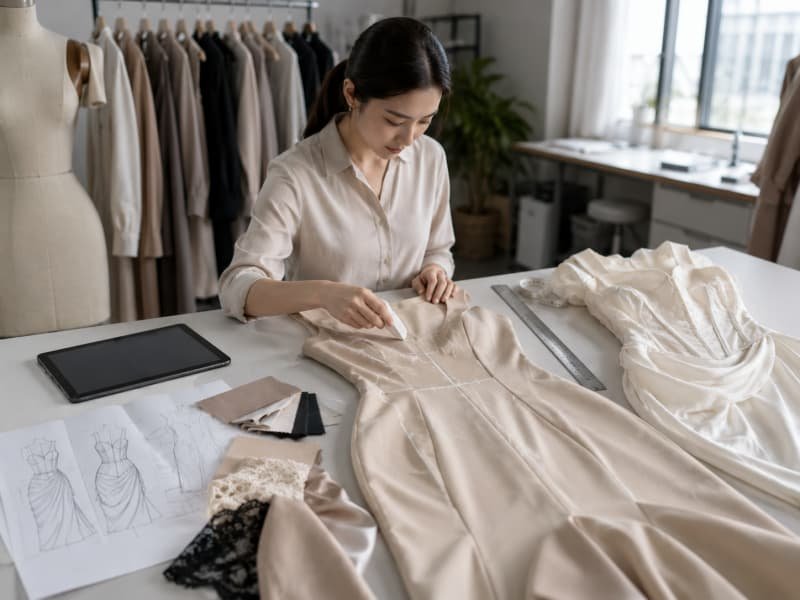
Approval Path
The sample may move into a revised sample, photo-ready sample, salesman sample or PP sample according to the project stage. Timing is confirmed after design information and material readiness are reviewed.
Turning Fit Comments into Controlled Pattern Corrections
Separate Fit, Visual and Construction Comments
- Fit comments: Bust pressure, loose waist, neckline gape, restricted arm movement or incorrect length.
- Visual comments: Insufficient flare, incorrect waist proportion, wrong sleeve volume or a skirt that appears too heavy.
- Material comments: Fabric too soft, too transparent, too stiff or unable to recover.
- Construction comments: Zipper ripple, bulky waist seam, visible lining, uneven gathering or unstable edge finishing.
Convert Language into Technical Actions
“Waist feels loose” may require:
- Confirming the measurement method
- Checking fabric stretch
- Reviewing side-seam contour
- Adjusting dart or panel intake
- Examining zipper influence
- Changing panel geometry
- Increasing sweep
- Selecting a lighter fabric
- Reducing lining restriction
- Rebalancing seam distribution
Record Revisions by Version
The revised sample should not rely on memory. Duolan organizes changes through marked photos, measurement updates, pattern corrections and a revision summary.
The record may identify: Original comment,Confirmed interpretation,Technical correction,Responsible development area,New sample version,Points requiring renewed approval.Version control becomes especially important when 10–30 styles are moving through development at the same time.
Carry Approved Changes into Bulk Standards
A successful revised sample only adds value when the correction reaches the production documents.
Approved changes should update the pattern, specification, bill of materials, workmanship notes and inspection focus.
The corrected sample then becomes part of the PP and bulk readiness process rather than remaining an isolated development result.
Workmanship Details Protecting Fit and Skirt Shape

Waist Seam Alignment and Stability
- Matching front, back and side balance points
- Preventing stretching during sewing
- Distributing gathers or pleats evenly
- Keeping piping or waistbands level
- Reducing bulk at intersecting seams
- Confirming lining alignment
- Pressing without creating shine or distortion

Invisible Zipper Installation
- Zipper tape weight
- Seam stabilization
- Fabric stretch
- Waist-seam matching
- Lining attachment
- Top and bottom finish
- Pressing method

Neckline and Armhole Finishing
Necklines and armholes influence fit security and skin comfort. Facing, lining, binding, elastic, understitching or clean-finish methods are selected according to the material and design.
Inspection looks for:
- Smooth curves
- Stable edge length
- No rolling lining
- No visible seam allowance
- Balanced left and right sides
- Comfortable underarm shape
- Sufficient reinforcement at straps or open areas
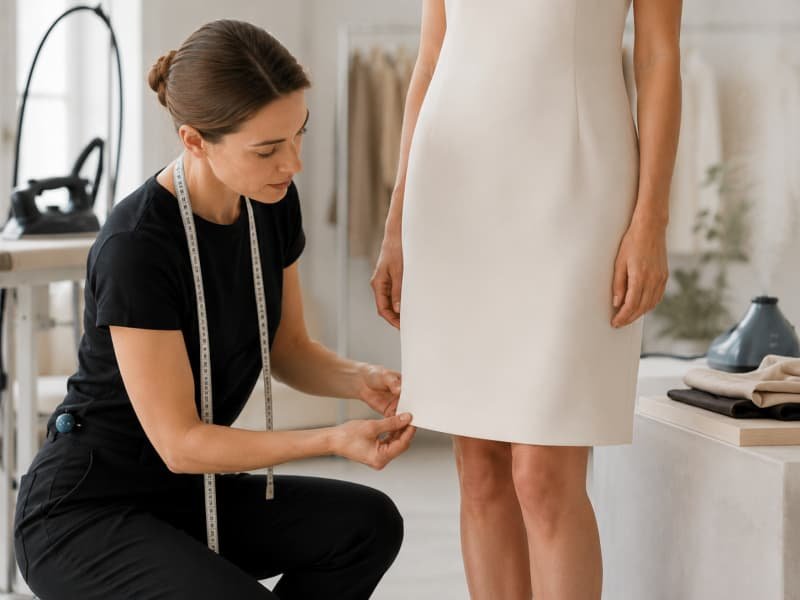
Hem Shaping and Final Pressing
Skater dresses often contain long curved hems. A poorly controlled hem may twist, flare unevenly or become heavy. Hem selection may include:
- Narrow rolled hem
- Baby hem
- Blind hem
- Binding
- Facing
- Clean-finished lining edge
The method must suit fabric thickness, skirt sweep and market positioning. Final pressing should establish shape without flattening gathers, crushing velvet, marking satin or stretching bias areas.
Print and Embellishment Options for Fashion-led Dresses
All-over Printing
Placement Printing
Embroidery
Lace Application
Beading and Rhinestones
Pleats and Ruffles
Private Label Details for Brand-ready Delivery

Main Labels

Size Labels

Care Labels
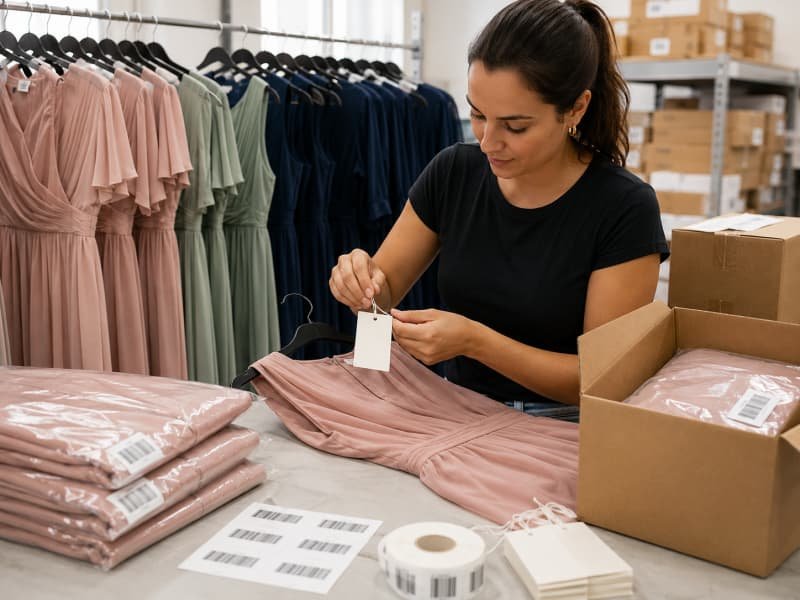
Hangtags and Barcodes

Branded Polybags

Carton Marking
What Determines Custom Skater Dress Production Cost
A useful quotation explains the cost structure behind the garment. Fabric consumption, skirt geometry, size distribution, workmanship and order organization can influence the commercial result more than a single decorative feature.
| Cost Factor | Main Influence | Information Needed for Accurate Review |
|---|---|---|
| Outer Fabric | Price, width, weight, minimum dye or print quantity | Composition, quality reference, color, supplier direction |
| Fabric Consumption | Circle or panel geometry, length, width and print direction | Base size, skirt sweep, finished length, fabric width |
| Lining | Coverage, stretch compatibility and skirt volume | Lining area, quality, color and construction |
| Bodice Construction | Darts, panels, cups, boning, facings or double layers | Drawings, reference sample and fit direction |
| Sleeves and Neckline | Pattern complexity, finishing and reinforcement | Front/back views and construction notes |
| Printing | Artwork scale, colors, technique and placement | Artwork file, repeat size and color standard |
| Embellishment | Application quantity, density, labor and protection | Placement map, sample or artwork |
| Size Range | Pattern development, grading and consumption variation | Size chart, order ratio and extended sizes |
| Order Structure | Styles, colors, quantities and production paths | Quantity by style, color and size |
| Sample Development | Pattern, sourcing, sewing, testing and revisions | Sample purpose and required versions |
| Testing and Compliance | Material, garment or customer-specific tests | Market, manual and testing standard |
| Packaging | Labels, hangtags, polybags, inserts and cartons | Packing guide and artwork |
| Delivery Schedule | Material lead time, production route and shipping mode | Launch date and required receipt date |
Cost optimization should protect the values that make the garment sell: silhouette, fit, movement, surface appearance and wearing comfort. Material alternatives, shared fabric families, color consolidation or construction refinement can improve commercial feasibility without reducing the intended product identity.
Production Planning for Multi-style Dress Programs
Style Classification
Material Planning
Line Matching
Milestone Planning
The production route is planned backwards from the required shipment or launch window.
Key points include material arrival, cutting, first-piece review, sewing, finishing, inspection and packing.
Production Cycle Reference
General bulk production references are: Simple styles: 15–20 days,Standard styles: 20–30 days,Complex styles: 30–45 days.
Final timing depends on material readiness, order quantity, construction, special processes, approval status and production schedule.
Progress Coordination
Updates can include material status, cutting, sewing, first-piece confirmation, finishing, inspection and packing.
Important risks are raised while corrective action remains possible.
Quality Control for Fit, Shape and Bulk Consistency

Fabric Inspection

Cutting Control

Waist Alignment

Bodice Measurement

Skirt Symmetry
Left and right panels, side seams, center lines, fullness and visual fall are reviewed.
The skirt should open evenly without twisting or pulling toward one side.

Zipper and Lining
Zippers are checked for smooth operation, flat installation and waist-seam matching.
Linings are reviewed for coverage, attachment, length and freedom of movement.

Hem Balance
The hem is checked for finished length, smoothness and level appearance.
Bias or circular sections may need additional relaxation and leveling before final approval.

Final Presentation
Packing, Shipping and Repeat-order Standards
Folding Protection
Hanging Options
Barcode Accuracy
Shipping Coordination
Reference transit times include: Express: 3–7 days,Air freight: 5–8 days,Sea freight: 20–35 days.Actual delivery depends on destination, route, carrier and customs. FOB, CIF, DDP and split-shipment arrangements may be coordinated according to the project.
Reorder Records
Patterns, specifications, bills of materials, workmanship notes, labels, packing instructions and quality findings can form the technical base for repeat production.
Seasonal Continuity
A Dress-focused Manufacturing System Behind Every Project
Development Since 1996
Sixteen Owned Factories
Twenty-plus Satellite Factories
Twelve-thousand-plus Workers
Fifty-plus Flexible Lines
Specialized Supply Resources
Compliance Support for Global Fashion Brand Requirements
Social Audit Readiness
Material Testing
Label Information
Packing Compliance
Brand Standards
Duolan can coordinate requirements connected with BSCI, ISO 9001, AATCC, ASTM, OEKO-TEX®, EN, China GB standards, GOTS and specific brand manuals where applicable to the project.
Shipment Documentation
Representative Skater Dress Collection Project Profiles

United States Contemporary Collection
- Region: United States
- Sales Channel: Ecommerce and selected retail partners
- Collection: Knit and woven skater dress program
- Styles: 18
- Total Quantity: 42,600 pieces
- Size Range: XS–XL
- Colorways: 2–4 per style
The program combined ponte mini dresses, long-sleeve jersey styles, printed woven dresses and several structured occasion versions. The main development challenge was maintaining a recognizable waist-and-flare identity across fabrics with very different stretch and drape. The development route separated knit and woven patterns rather than forcing all styles into one fit block. Critical measurements included bust, waist, bodice length, armhole, skirt length and hem sweep. The printed styles also required directional cutting and waist-seam placement review. Samples were prioritized by material family, allowing the brand to review core fit before every color and sleeve variation entered development. Bulk planning separated standard jersey styles from structured and printed garments. Project result: The program gained a clearer common fit direction, while each fabric family retained an appropriate pattern and workmanship route. Production could be organized by construction risk rather than treating all 18 styles as identical dresses.

United Kingdom Occasionwear Edit
- Region: United Kingdom
- Sales Channel: Online fashion retail
- Collection: Party and occasion skater dresses
- Styles: 24
- Total Quantity: 67,200 pieces
- Size Range: UK 6–16
- Materials: Satin, velvet, lace, mesh and structured crepe
The program contained square-neck minis, corset-inspired bodices, velvet long-sleeve styles, lace overlays and layered mesh skirts. The main risks involved neckline stability, zipper rippling, waist bulk, lining restriction and decorative weight. Duolan divided the development into standard, structure-sensitive and decoration-sensitive paths.
Several bodices required partial construction tests before full samples. Satin zipper areas were stabilized, lace placement was aligned by panel, and mesh lining sweep was adjusted to preserve movement. Before bulk production, critical styles went through first-piece or pilot review. Waist alignment, cup or panel position, lining, zipper behavior and hem balance became focused inspection points.
Project result: Complex styles entered production with clearer construction standards and separated risk controls. The 24-style order was scheduled across suitable production routes instead of relying on one generalized sewing method.

European Printed Dress Program
- Region: European Union
- Sales Channel: Multi-market ecommerce
- Collection: Printed mini and midi skater dresses
- Styles: 12
- Total Quantity: 28,800 pieces
- Size Range: EU 34–44
- Print Directions: Floral, geometric and placement motifs
The main challenge was preserving print impact across curved skirt panels and several garment lengths. Large motifs could become distorted at the waist seam, while directional patterns created cutting and material-consumption pressure. The design review established print scale, repeat direction, panel placement and acceptable seam interruption before bulk fabric approval. Mini and midi versions were evaluated separately because the same artwork produced different visual balance at different lengths. The team also reviewed shrinkage, color, panel direction and barcode accuracy across several markets. Cutting plans were organized around directional requirements, while final inspection included print position, waist alignment and garment symmetry. Project result: Artwork rules became part of the product standard rather than being left to cutting interpretation. The collection maintained clearer visual continuity across 12 styles, multiple colors and two principal lengths.
Custom Skater Dress Frequently Asked Questions
A fashion skater dress has a fitted or shaped bodice, a defined waist and a skirt that opens below the waist. The skirt may use circle, half-circle, panelled, pleated or gathered construction. Duolan focuses on retail and ecommerce fashion dresses rather than figure-skating competition costumes.
Yes. A tech pack can include drawings, base-size measurements, fabric direction, construction details, labels and packing information. Duolan reviews the file for fit, material, structure, sample purpose and production feasibility before confirming the development route.
Yes. A reference image can provide visual direction, but measurements, fabric, structure, lining, closure, size range and target fit still need confirmation. Duolan converts the reference into a defined development basis instead of treating the image as a complete production file.
Common directions include ponte, jersey, rib knit, crepe, poplin, viscose, satin, velvet, lace, mesh and jacquard. The correct choice depends on the required flare, structure, stretch, recovery, opacity, movement and price position.
Yes. Knit and woven styles follow different pattern, fit and sewing logic. Knit development focuses on stretch, recovery and stabilization, while woven development relies more heavily on shaped seams, ease and closures.
Control begins with bodice length, waist-seam position, pattern geometry, panel distribution and fabric behavior. The approved sample, specification, pattern and workmanship standard are then carried into grading, production and inspection.
Yes. Options include all-over print, placement print, embroidery, lace application, beads, rhinestones, pleats and ruffles. Artwork, material compatibility, added weight, comfort, production consistency and inspection requirements are reviewed before approval.
Reference cycles are 15–20 days for simple styles, 20–30 days for standard styles and 30–45 days for complex styles. Final timing depends on material readiness, quantity, special processes, approval status and production scheduling.
Yes. Main labels, size labels, care labels, hangtags, barcodes, polybags, inserts and carton marks can be coordinated according to the approved brand and packing requirements.
Please provide your company information, tech pack or reference, target fabric, size range, quantity by style or color, launch date, testing needs and packaging requirements. These details allow Duolan to review the correct sample and production path.

Start Your Custom Skater Dress Development Project
Share your skater dress program with Duolan for a structured development and manufacturing review. Our team will assess the design basis, silhouette, material direction, target fit, order structure and launch timing before proposing the appropriate sampling and production path.
For a more accurate response, please provide:
- Company or brand name
- Website or principal sales channel
- Target market
- Tech pack, reference image or original sample photos
- Fabric and color direction
- Number of styles and colorways
- Estimated quantity by style
- Required size range
- Target launch or delivery date
- Label, testing and packing requirements
- Current stage: development, sampling, supplier evaluation or bulk production