Skip to content
Custom Stretch Mesh Dress Manufacturer
Stretch Mesh Dress Development Built Around Fit, Opacity and Bulk Consistency
Duolan develops stretch mesh dresses for established fashion brands, product teams, buying offices and multi-style dress programs.
- Two-way and four-way stretch mesh evaluated against the intended silhouette, coverage level and movement requirement.
- Collection programs commonly involve 10–30 coordinated styles rather than isolated single designs.
- Brand orders commonly total 20,000–80,000 garments across approved styles, colors and size ranges.
- Fabric, lining, pattern tension, stretch seams and ruching standards are reviewed before bulk release.
- A seven-stage development path connects project review, fabric evaluation, sampling, revision, PP approval, production and quality control.
What Defines a Capable Stretch Mesh Dress Manufacturer?
Mesh Material Judgment
Pattern Tension Control
Opacity Planning
A mesh swatch may appear sufficiently covered while relaxed, then become considerably more transparent when stretched over the body.
Coverage must therefore be reviewed at likely wearing extension, especially across the bust, hip, thigh, elbow and seat areas.
Lining Coordination
Stretch Seam Engineering
Sample-to-Bulk Control
Built for Brand-Level Stretch Mesh Dress Programs
Duolan supports dress-focused product development rather than generic garment sourcing. Our work connects fashion direction, technical review, sampling, bulk planning and repeat production for brands requiring stronger control over fitted, sheer and shape-sensitive styles.
Dress-Focused Development
Multi-Style Programs
Most mature dress programs contain several silhouettes, colorways and commercial roles.
Duolan can coordinate hero styles, core fitted dresses, long-sleeve coverage styles, printed seasonal pieces and repeatable commercial options within one collection calendar.
Long-Term Production Alignment
Development decisions are reviewed with future production in mind. Fabric availability, dyeing or printing route, workmanship difficulty, grading risk, quality checkpoints and repeat-order feasibility are considered before a style is treated as production-ready.

Who We Support with Stretch Mesh Dress Development
Established Fashion Brands
Partywear Brands
Occasionwear Brands
Ecommerce Fashion Brands
Product and Buying Teams
Sourcing Offices
What Fashion Brands Expect from a Mesh Dress Supplier
Accurate Design Reading
Suitable Mesh Sourcing
Lining Compatibility
Fit-Sensitive Patterns
Structured Revisions
Stable Bulk Reproduction
Multi-Style Coordination
Repeat-Order Consistency
Control Stretch Mesh Risks Before Bulk Production
Excessive Transparency
Weak Recovery
Incorrect Pattern Pressure
Wavy or Broken Seams
Unstable Ruching
Material Batch Variation
Grading Distortion
Sample-to-Bulk Drift
Custom Stretch Mesh Dress Styles We Develop
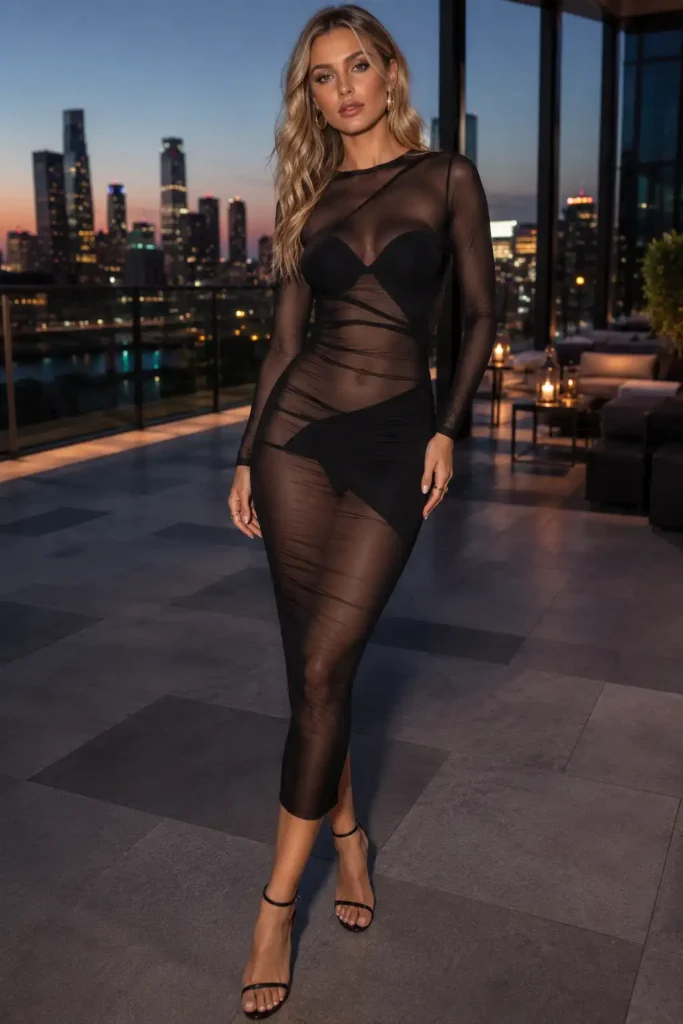
Bodycon Mesh Dresses

Ruched Mesh Dresses

Double-Layer Mesh Dresses

Printed Mesh Dresses

Long-Sleeve Mesh Dresses

Cut-Out Mesh Dresses

Draped Mesh Dresses
Draped mesh depends on controlled excess volume, directional stretch and secure internal attachment. Duolan reviews drape depth, twist position, seam concealment and movement before converting the sample into production instructions.

Midi and Maxi Mesh Dresses
Stretch Mesh Dresses for Distinct Fashion Collections
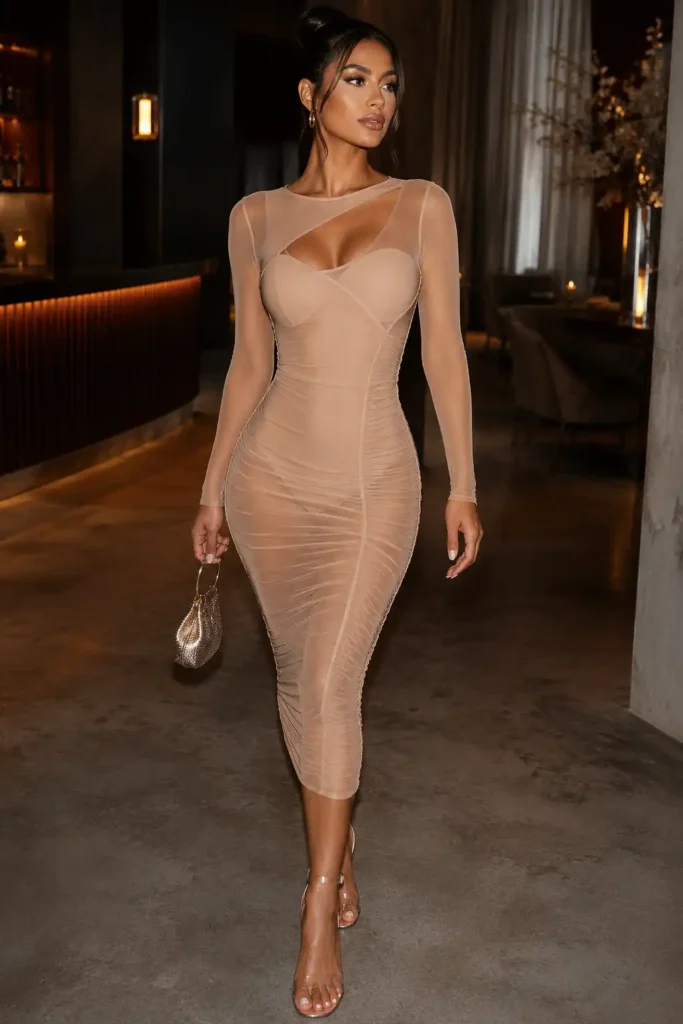
Going-Out Collections

Partywear Drops

Occasionwear Capsules

Vacation Collections

Event and Festival Lines

Seasonal Ecommerce Launches
Stretch Mesh Fabrics Selected for Fit and Effect

Polyester Elastane Mesh

Nylon Spandex Mesh

Power Mesh

Fine Sheer Mesh

Printed Stretch Mesh

Glitter or Flocked Mesh
Compare Stretch Mesh Options Before Sampling
Material selection should begin with the expected wearing result rather than appearance alone. The table below gives a development framework; final specifications are confirmed after swatch, stretch, lining and sample review.
| Mesh Direction | Stretch Structure | Recovery Level | Opacity | Best Applications | Main Development Risk |
|---|---|---|---|---|---|
| Polyester Elastane Mesh | Usually 2-way or 4-way | Medium to strong | Sheer to semi-sheer | Printed, ruched and layered dresses | Batch variation and surface distortion |
| Nylon Spandex Mesh | Often 4-way | Strong | Fine sheer to semi-sheer | Bodycon, refined sheer panels and fitted sleeves | Heat sensitivity and shade matching |
| Power Mesh | 2-way or 4-way | High support | Semi-sheer | Internal support, control panels and structured fitted areas | Excess compression or restricted drape |
| Fine Sheer Mesh | Usually light 2-way or 4-way | Light to medium | High transparency | Sleeves, yokes, overlays and delicate panels | Needle damage, seam visibility and edge curling |
| Printed Stretch Mesh | Depends on base fabric | Base-dependent | Print and extension dependent | Seasonal statements and collection prints | Print widening, fading and seam misalignment |
| Glitter or Flocked Mesh | Treatment may reduce stretch | Medium | Variable | Partywear, event and statement dresses | Shedding, abrasion and uneven extension |
Stretch, Recovery and Opacity Must Work Together
Stretch Direction
Extension Under Wear
A flat fabric measurement does not represent how the material performs across changing body zones. The bust, high hip, full hip, thigh, elbow and upper arm may apply different extension levels. Sample fitting shows where transparency and pressure increase.
Recovery After Extension
Opacity Under Tension
Heat and Finishing Influence
Bulk Batch Verification
Bulk fabric should be compared with the approved sample reference for weight, width, shade, hand feel, extension and recovery.
Material differences must be resolved before broad cutting begins.
Typical development data recorded for a mesh program may include fabric width, grams per square meter, dominant stretch direction, controlled extension measurements, recovery observation, lining specification and approved shade reference. The values are project-specific rather than copied from a generic standard.
Lining Systems Designed Around Coverage and Movement
Lining is not an afterthought in stretch mesh dress development. It controls opacity, body comfort, support, color depth and how the outer mesh moves during wear.
Full Stretch Lining
Partial Lining
Double-Layer Mesh
Bodice-Only Lining
Skirt Coverage Lining
Power Mesh Support
Outer and inner layers are tested together because identical stated composition does not guarantee identical extension. Lining weight, surface friction and seam placement can change the way the dress settles on the body.
Custom Colors, Prints and Surface Effects
Solid-Dyed Mesh
Digital Printed Mesh
Gradient Effects
Flocked Mesh
Glitter Mesh
Embroidered Mesh
Design Details Engineered for Stretch Mesh Dresses

Ruching

Draping

Cut-Outs
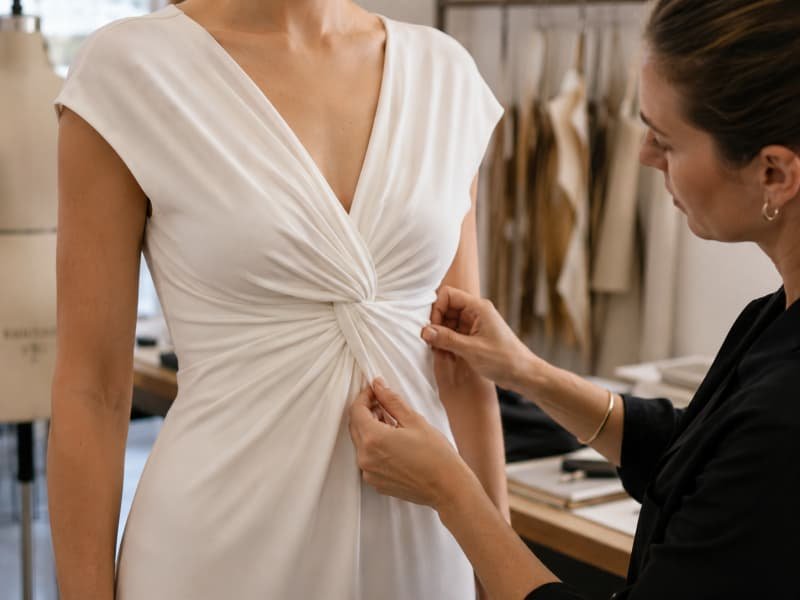
Twist Fronts

Asymmetric Hems

Off-Shoulder Necklines

Open Backs

Slits and Ties
Hidden Components Improve Fit and Wearability
Concealed Zippers
Hook and Eye
Clear Elastic
Shoulder Stabilizing Tape
Adjustable Straps
Anti-Slip Elastic
Anti-slip elastic can support strapless or off-shoulder structures.
Contact pressure and skin comfort require review.
Bra Cups
Bra cups may improve coverage and shaping.
Cup size, position, lining attachment and grading need coordination across the size range.
Internal Support Panels
Pattern Tension Controls the Finished Fit
Stretch mesh patterns must be developed around material behavior. Copying a standard knit block or reducing every measurement by one percentage can create pressure imbalance, transparency problems and distorted seams.
Negative Ease by Body Zone
Fabric and Lining as One System
Bust and Underbust Balance
Waist and Hip Alignment
Lengthwise Stretch
Pattern Version Control
A first sample is therefore a diagnostic tool. It reveals how the selected mesh interacts with the pattern, lining and construction before the style is moved toward PP approval.
Measurement Control Beyond Bust, Waist and Hip
Bust Circumference
Underbust Level
Waist Position
High and Full Hip
Armhole Depth
Sleeve Bicep
Side Seam Length
Slit Position
Lining Length
Grading Stretch Mesh Dresses Across the Size Range
Custom Size Specifications
Non-Linear Pressure Changes
Opacity Across Sizes
Ruching Distribution
Strap and Support Grading
Size-Set Review
Critical programs can include a size-set review before broad bulk production. The review checks key sizes, grading logic, measurements and visual balance against the approved standard.
Stretch Seam Engineering for Stable Construction
A seam must survive extension without damaging the mesh or changing the silhouette. Seam selection depends on fabric weight, stretch direction, lining, location and visible finish.

Overlock Construction

Coverstitch Finishing

Four-Needle Six-Thread

Narrow Binding

Elastic Insertion

Twin-Needle Finishing

Seam Stress Testing

Needle Damage Control

Wave Prevention
What to Send for Stretch Mesh Dress Development
Clear project information allows a more accurate development route, fabric recommendation, sample schedule and production review. A complete pack is helpful, although Duolan can begin with the strongest materials already available.
Tech Pack
Reference Images
Original Sample
Size Chart
Fabric Direction
Collection Brief
A collection brief can include style count, launch date, quantity, price architecture, key colors, target market and intended product roles.
Helpful commercial details include target quantities, colorways, size range, launch timing, label requirements, packing method and inspection expectations.
From Design Reference to a Controlled Sample
Stretch mesh sampling is organized as a decision process rather than one sewing step. Each stage confirms a different part of the product before production readiness is reached.
Project Brief Review
Fabric Feasibility Check
Pattern Development
First Sample
Fit and Visual Review
Revision Sample
A typical first-sample planning window for a stretch mesh dress is approximately 10–18 working days after the key material and specification direction is confirmed. Complex printing, special surface treatments, engineered draping or extensive internal support may require a longer schedule. Revision planning commonly requires 5–10 working days, depending on material changes and comment scope.
Turning Fit Comments into Traceable Revisions
Comment Classification
Location-Based Marking
Pattern Updates
Measurement Updates
Construction Changes
Revision Summary
Approval Status

Quality Checkpoints from Fabric to Final Packing
Stretch mesh quality control focuses on material behavior, tension, coverage, construction and repeatability. Inspection criteria are established before defects can spread across the order.
| Production Stage | Main Checkpoint | Main Risk | Control Method | Record |
|---|---|---|---|---|
| Incoming Fabric | Shade, width, weight, surface and extension | Batch variation or hidden defects | Compare against approved swatch and specification | Fabric inspection record |
| Relaxing and Cutting | Grain, stretch direction and layer stability | Twisting, size drift or print distortion | Marker and direction confirmation | Cutting instruction |
| First Piece | Fit, measurements, lining, ruching and seams | Incorrect production interpretation | Compare with approved PP sample | First-piece note |
| Sewing | Seam extension, skipped stitches and waviness | Breakage or distorted edges | Inline operation checks and seam testing | Inline QC record |
| Ruching and Draping | Ratio, position, symmetry and finished length | Visual inconsistency | Template, marker and sample comparison | Critical-point checklist |
| Measurement | Bust, waist, hip, sleeve, length and balance | Fit inconsistency | Approved measurement chart and tolerances | Measurement report |
| Coverage | Transparency and lining position | Excessive exposure or uneven layers | Visual review at representative extension | Coverage check |
| Final Inspection | Appearance, workmanship, measurements and function | Defects reaching shipment | Final inspection against approved standard | Final QC report |
| Packing | Labels, folding, polybags, barcodes and cartons | Retail or warehouse errors | Packing instruction and carton check | Packing record |
A Production-Ready Sample Becomes the Bulk Reference
A visually approved sample is not automatically ready for production. A production-ready version must connect fit, materials, construction, documentation and inspection standards.

Fit and Measurement Standard

Fabric and Color Standard

Trim and Accessory Standard

Construction Standard

BOM and Tech Pack Alignment
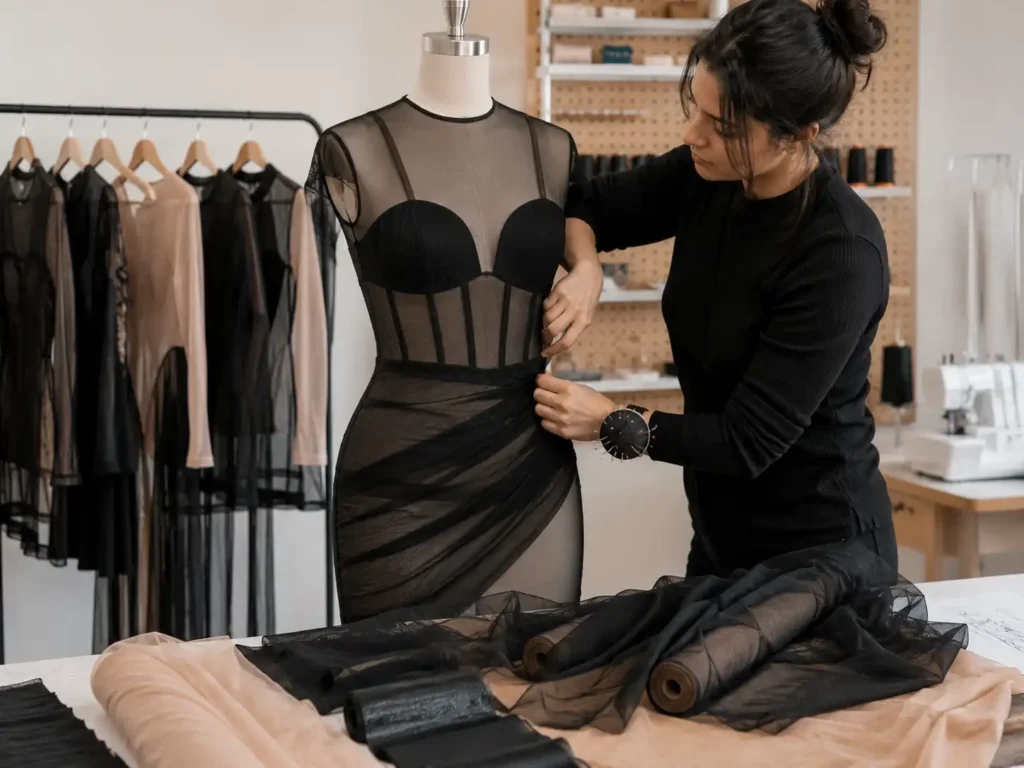
PP Approval Basis
A production-ready sample gives design, sourcing, pattern, material, production and quality teams one common standard. The approach reduces sample-to-bulk drift, rework and approval disputes.
Testing and Inspection Support for Brand Requirements
SMETA Audit Foundation
Quality Management Requirements
AATCC and ASTM Methods
OEKO-TEX® Requirements
EN and GB Standards
Applicable European or China GB requirements can be incorporated where relevant to the destination market and product category.
GOTS-Related Programs
Brand-Specific Standards
Third-Party Inspection
Manufacturing Capacity for Multi-Style Dress Programs
16 Owned Factories
20+ Satellite Factories
12,000+ Workers
300 Sewing Lines
50+ Quick-Response Lines
Multi-Region Capacity
Material Supply Access
Dress Development Background
See the Stretch Mesh Development Process
Mesh Swatch Review
Stretch and Recovery Check
Opacity Comparison
Pattern Development
Fit Review
Construction Details
First-Piece Approval
Inline Quality Control
Packing Confirmation
Stretch Mesh Dress Programs Solved Through Controlled Development

United States Going-Out Collection
Program: 18 stretch mesh dress styles across bodycon, ruched, cut-out and long-sleeve directions
Order Volume: 36,400 garments across 6 color groups and an XXS–2XL size range
Initial Challenge: The nominated mesh became significantly more transparent at the hip and thigh after extension. The original lining also recovered more slowly than the outer mesh, causing the lower dress to shift after movement.
Development Response:
- Compared three mesh bases against two stretch-lining options.
- Rebalanced negative ease across waist, high hip and full hip.
- Extended lining coverage for selected lighter colors.
- Added clear stabilization around two cut-out constructions.
- Defined separate ruching ratios for mini and midi lengths.
- Completed two fit rounds before PP approval.
Production Control:
The program used first-piece confirmation for six higher-risk styles. Bulk fabric lots were separated by shade and checked against the approved stretch and lining combination. Critical side seams, cut-out edges and ruched panels received dedicated inline checks.
Result:
All 18 styles moved into the launch order under one coordinated production plan. Four commercial styles entered a 14,800-piece repeat program after the first selling period.

United Kingdom Partywear Drop
Program: 12 printed and glitter mesh dress styles for a holiday partywear launch
Order Volume: 24,600 garments across 4 print stories, 3 solid colors and sizes UK 4–18
Initial Challenge: The original artwork widened visibly when stretched, while glitter coating reduced extension in selected areas. Sample ruching also varied between left and right side seams.
Development Response:
- Adjusted artwork scale after extension testing on the selected mesh.
- Repositioned motifs around side seams and bust shaping.
- Separated glitter and printed bases rather than forcing one pattern block across both.
- Established measurable ruching start points, ratios and finished distances.
- Reworked sleeve bicep grading for sizes UK 14–18.
- Coordinated lining colors to preserve print clarity without excessive exposure.
Production Control:
A pilot run was completed for the four printed hero styles. Print lots, stretch direction and cutting markers were recorded by style. First-piece sign-off included motif placement, sleeve movement and side-ruching symmetry.
Result:
The complete 12-style drop entered production within the confirmed launch path. Two printed silhouettes were extended into new colorways for a following seasonal program.

European Occasionwear Program
Program: 24 midi and maxi mesh dresses featuring drape, twist fronts, asymmetric hems and partial lining
Order Volume: 67,200 garments across 8 coordinated colors and sizes EU 32–48
Initial Challenge: Several original references used soft drape with limited internal structure. Early mock-ups showed neckline opening, vertical growth in maxi lengths and inconsistent partial-lining boundaries across sizes.
Development Response:
- Evaluated nylon-spandex and polyester-elastane mesh bases against the required drape.
- Added discreet stabilization at selected necklines and shoulders.
- Allowed resting time before confirming maxi hem length.
- Rebuilt lining patterns as separate graded components.
- Defined partial-lining boundaries relative to body measurement points.
- Divided the collection into core, complex and high-risk styles for separate sample priorities.
Production Control:
Eight complex styles completed pilot or first-piece review. Material, lining, trim and workmanship approvals were locked before production release. The quality plan included lining-position checks, neckline stability, side-seam balance and hem measurements.
Result:
All 24 styles were produced through a coordinated multi-line schedule. Six core styles later formed a repeat-order base totaling 21,600 garments.
Frequently Asked Questions About Stretch Mesh Dress Manufacturing

Start Your Stretch Mesh Dress Development Project
Helpful project information includes:
- Tech pack, reference images or original sample photographs
- Target silhouette, length and intended wearing occasion
- Preferred mesh composition, weight, stretch direction or visual reference
- Transparency and lining requirements
- Size range and sample size
- Number of styles, colors and total target quantity
- Print, glitter, flocking, embroidery or surface-treatment requirements
- Label, barcode, packaging and inspection requirements
- Target launch, warehouse or delivery date
- Current stage: concept review, sampling, revision, PP approval, first order or repeat production
For stretch mesh programs, Duolan pays particular attention to fabric recovery, wearing opacity, outer-and-lining coordination, negative ease, ruching consistency, seam extension, grading and sample-to-bulk transfer.