...

Custom Structured Dress Manufacturer

Structured dress development and manufacturing built around silhouette, internal support, precise fit, controlled workmanship, and stable bulk reproduction.

  • Structured collection programs commonly include 10–30 styles across mini, midi, corset, tailored, sculptural, and occasion-led silhouettes.
  • Brand production programs generally range from 20,000 to 80,000 pieces across approved styles, colors, and size runs.
  • Development control covers pattern balance, cup and boning position, interlining, lining, closure stability, size grading, and PP approval.
  • Supported by 30+ years of dress development experience, 16 owned factories, 20+ satellite factories, and 50+ flexible production lines.

Structured Dress Manufacturing for Established Fashion Teams

Duolan supports structured dress programs that require more than basic cut-and-sew production. Our work fits teams managing defined product direction, seasonal launches, multi-style orders, repeated development, and controlled production standards.

Fashion Brand Teams

Fashion brands need structured dresses that carry a clear design language while remaining commercially wearable. Development may involve several silhouettes, fabric directions, internal support levels, and price positions within one collection. Duolan helps translate collection direction into workable patterns, material combinations, sample stages, and production standards. 

Product Development Teams

Product teams often manage the most sensitive decisions: silhouette accuracy, bust and waist balance, material behavior, lining coverage, comfort, visual finish, and production feasibility. Duolan organizes those decisions into a clear development path. References, tech packs, original samples, swatches, and fit comments are reviewed together so that design, pattern, material, workmanship, and future production remain aligned.

Buying and Sourcing Teams

Buying and sourcing teams require more than an attractive sample. Supplier discipline, file accuracy, revision control, production readiness, capacity planning, inspection points, compliance support, and delivery coordination all affect the final decision. Duolan structures each project around visible review stages, documented standards, and defined bulk checkpoints rather than relying on informal verbal confirmation.

Occasionwear Specialists

Occasionwear and partywear collections carry higher visual and structural expectations. Strapless stability, defined waists, sculpted bodices, clean necklines, smooth zippers, controlled lining, and consistent pressing all influence the finished product. Duolan combines dress-focused development knowledge with manufacturing resources suited to multi-style programs, repeat orders, and seasonal volume.

What Defines a Professionally Structured Dress?

A structured dress gains its form through coordinated pattern engineering, material selection, internal construction, and controlled assembly. Fabric thickness alone does not create a stable silhouette.

Defined Silhouette

A structured silhouette holds a deliberate line around the bust, waist, hip, shoulder, or skirt volume. Shape may be sharp, sculpted, fitted, tailored, or softly supported, but the final outline must remain intentional during wear. Pattern geometry, grain direction, seam placement, and pressing standards all contribute to the result.

Internal Support

Internal support may include cups, boning, power mesh, interlining, waist stays, elastic, stay tape, underbust panels, shoulder reinforcement, or layered lining. Each component has a clear role. Excessive support can create stiffness and discomfort, while insufficient support can cause slipping, collapse, gaping, or distortion.

Pattern Shaping

Princess seams, darts, contour seams, shaped panels, curved waistlines, shoulder angles, and controlled ease turn flat fabric into a three-dimensional garment. A strong pattern must balance visual shape with movement, body proportion, seam behavior, and repeatability across sizes.

Fabric Stability

Fabric weight, stretch, recovery, drape, thickness, fusibility, and pressing response affect structure. Duchess satin, crepe, taffeta, ponte, scuba, jacquard, poplin, mesh, and organza cannot be handled with one construction method. Material behavior must be tested against the intended silhouette.

Controlled Fit

Structured fit depends on more than bust, waist, and hip measurements. Bust point, underbust level, waist placement, neckline tension, shoulder position, torso length, armhole shape, and closure stability require coordinated review. A visual fit issue is often connected to several pattern points rather than one measurement.

Repeatable Construction

A successful sample must be reproducible by a production line. Internal components, seam allowances, construction order, pressing method, material specifications, measurement tolerances, and QC points must be clear enough to support size runs, bulk quantities, and future repeat orders.

Structural Risks Identified Before Bulk Production

A visually impressive first sample can still contain production risks. Early review focuses on the areas most likely to affect fit, comfort, repeatability, inspection, and delivery.

Bust Support and Cup Position

Bust construction is affected by cup shape, cup size, bust point, underbust seam, neckline depth, fabric tension, lining tension, and boning placement. A cup positioned only 8–12 mm too high or too low may change the entire upper-body balance.

  • Cup volume must match the intended size specification and outer pattern.
  • Bust points must remain visually level and symmetrical.
  • Lining must support the cup without pulling the shell fabric.
  • Underbust seams require smooth transitions without puckering.
  • Strapless styles may need additional waist support rather than stronger neckline tension.

Development photos should include front, side, back, internal construction, and worn-fit views. Comments are converted into measurable pattern and construction changes before the next sample round.

Waist Balance and Bodice Stability

A structured waist can look sharp on a mannequin yet twist, rise, or collapse during movement.

Waist placement must coordinate with torso length, princess seams, side seams, center front, center back, zipper position, and skirt attachment.

  • Waist seams are checked horizontally from front to back.
  • Side seams are reviewed for forward or backward rotation.
  • Boning ends must stop at controlled positions to prevent pressure points.
  • Waist stays or internal tape may be added where the outer fabric cannot carry the load.
  • Skirt weight must not pull the bodice below the approved position.

Material and Silhouette Mismatch

A reference image may suggest a strong silhouette, while the selected material is too soft, too elastic, too heavy, or too unstable. Duolan reviews the relationship between outer fabric, lining, interlining, support components, and construction before confirming the sample direction. A soft crepe can create controlled drape but may not hold an architectural shoulder without reinforcement. A heavy satin may support shape but expose seam ridges and pressing marks. Stretch fabric can improve wearability but alter neckline and waist stability. Material decisions are therefore made around the complete garment, not a swatch in isolation.

Sample-to-Bulk Variation

Bulk inconsistency usually begins when sample information is incomplete. Substituted interlining, altered boning, different cup density, fabric lot variation, uncontrolled pressing, or unclear seam construction can change the finished shape. Duolan prepares a production-readiness review before release. Approved materials, patterns, measurements, construction points, internal structure, closure standards, pressing expectations, labeling, and packing requirements are aligned. High-risk styles may require first-piece confirmation or a controlled pilot run before full output.

Structured Dress Styles We Develop and Manufacture

Our structured dress capability covers commercial silhouettes for partywear, occasionwear, contemporary fashion, social-event collections, and premium dress programs. Each category follows a different pattern, support, material, and production path.

Structured Mini Dresses

Mini dresses require secure upper-body fit, balanced skirt length, movement protection, and clean proportion. Styles may use corset bodices, shaped panels, internal shorts, supportive lining, or reinforced necklines. Fit is reviewed while standing, sitting, and moving to reduce riding, gaping, or exposure.

Structured Midi Dresses

Midi proportions rely on waist placement, hip shape, skirt fall, and hem balance. Tailored, fitted, column, and fit-and-flare versions may use interlining, full lining, waist support, or controlled stretch. The longer body line makes side-seam balance and grain control especially visible.

Corset Dresses

Corset dresses combine bust shaping, waist definition, boning, cups, lining, closure stability, and comfort. Plastic boning, spiral steel, power mesh, elastic support, and waist stays are selected according to price position, wear time, care method, and target silhouette.

Bustier Dresses

Bustier dresses generally use a shorter structured upper body than traditional corsetry. Cup shape, underbust placement, neckline tension, strap position, and back closure require accurate coordination. Outer fabric and lining must remain smooth over the internal cup and support panels.

Boned Bodice Dresses

Boned bodices may be strapless, halter, off-shoulder, square-neck, sweetheart, or asymmetric. Boning position follows seam structure and body contour rather than decorative symmetry alone. Channel width, boning length, end protection, and lining attachment affect both comfort and bulk consistency.

Tailored Cocktail Dresses

Tailored cocktail dresses use clean seaming, stable necklines, controlled waists, shaped shoulders, or refined lapels. Crepe, satin, jacquard, suiting, and compact woven fabrics are common options. Internal construction must provide shape without making the garment visually heavy.
Mesh Bodycon Dresses

Structured Bodycon Dresses

Bodycon structure combines fabric recovery, negative ease, lining elasticity, seam strength, and strategic reinforcement. The aim is controlled shaping rather than excessive compression. Stretch direction, opacity, shrinkage, seam elasticity, and size grading are evaluated together.

Blazer Dresses

Blazer dresses require a balance between tailoring and feminine proportion. Shoulder slope, lapel roll, waist suppression, button position, front overlap, sleeve head, lining, interlining, and hem pressing must work as one system. Structure should remain refined rather than boxy.
2 Sculptural Mini Dresses

Sculptural Dresses

Sculptural dresses may use shaped panels, asymmetric volume, organza support, gathered foundations, molded sections, or reinforced edges. Development often requires partial construction tests before a complete sample because geometry, weight, and body movement can alter the original design.

Strapless Dresses

A strapless dress must remain stable without relying on excessive pressure around the neckline. Cup support, waist grip, boning, back tension, elastic, neckline shaping, and torso length all affect security. Fit testing is required across the intended size range.

Asymmetric Dresses

Asymmetric necklines, one-shoulder structures, diagonal seams, and sculpted drapes create uneven tension. Pattern balance must account for load distribution across the shoulder, bust, waist, side seam, and closure. Production checks focus on angle consistency and left-right orientation.

Structured Occasion Dresses

Occasion dresses may combine satin, lace, mesh, sequins, embroidery, or decorative hardware with internal support. Outer visual effects cannot interfere with cups, boning, seam allowances, lining coverage, or wearer comfort. Material and process planning begins before sampling.

Structured Collections Built Around Selling Occasions

A collection performs better when structure, comfort, visual impact, price position, and launch timing are planned around the intended wearing occasion.

Cocktail Events

Cocktail dresses need refined shape without limiting movement. Structured minis and midis may use clean crepe, compact satin, shaped seams, light boning, or stable lining. Neckline security, sitting comfort, zipper smoothness, and balanced hem length receive close attention.

Going Out

Going-out collections often favor fitted minis, bustier shapes, corset details, mesh combinations, and asymmetric necklines. Strong visual impact must still allow dancing, walking, sitting, and extended wear. Support and coverage are tested under movement rather than judged on a static mannequin.

Birthday Dressing

Birthday styles commonly feature sculpted bodices, dramatic necklines, satin shine, sequins, rhinestones, or dimensional details. Structure must carry decorative weight without distorting the fit. Lining and internal finishing protect the wearer from hard trims and rough seam areas.

Homecoming

Homecoming programs require youthful proportions, secure short lengths, defined waists, and strong photo appeal. Size grading, movement security, closure strength, and consistent color are especially important when multiple styles and colorways launch together.

Graduation

Graduation dresses often require cleaner proportions, wearable support, and comfort under gowns or during long events. Structured minis and midis can use refined seaming, shaped waists, modest necklines, and lightweight internal support without excessive bulk.

Holiday Parties

Holiday collections may combine velvet, satin, sequins, metallic jacquard, and structured silhouettes. Material direction, nap, shine, decorative weight, lining, pressing, and packing must be considered early because seasonal launch windows leave limited room for rework.

Wedding Guest

Wedding guest dresses need occasion-level finish while remaining commercially wearable. Structured midis, draped corset dresses, tailored cocktail styles, and fit-and-flare silhouettes may be developed across coordinated colors and fabrics. Duolan focuses on guest dressing rather than specialist bridal gown construction.

Office to Evening

Blazer dresses, tailored midis, structured sheath dresses, and refined wrap-inspired shapes support office-to-evening dressing. Shoulder structure, waist shaping, coverage, lining comfort, and wrinkle behavior influence whether the garment remains polished through a full day.

From Design Direction to Production-ready Structure

Structured development follows a controlled sequence. Each stage answers a different question before investment moves into the next stage.

Brief Review

We identify the style purpose, target occasion, reference basis, size range, price position, intended fabric, target quantity, and launch date. The sample goal is defined as visual approval, fit confirmation, sales presentation, or production preparation.

Silhouette Analysis

The team reviews where shape must be held, where movement is needed, how the upper body connects to the skirt, and which lines define the design.

High-risk areas are marked before pattern work begins.

Material Direction

Outer fabric, lining, interlining, cups, boning, elastic, closures, and reinforcement are considered as a complete material system. Alternative options may be proposed when the original direction creates fit, cost, lead-time, or production concerns.

Pattern Development

Pattern work establishes bust shape, waist position, torso length, neckline, shoulder balance, side seam, closure placement, skirt fall, and internal support locations. Seam allowances and construction access are planned for production, not only sampling.

First Sample

The first sample tests overall proportion, material response, fit balance, structure, and workmanship feasibility. It does not need to solve every visual detail at once; priorities are set according to the sample purpose.

Fit Correction

Comments are separated into measurable fit changes, visual preferences, material changes, and construction improvements. Each revision is tracked so later decisions do not overwrite previously approved points.

Construction Validation

Cup, boning, lining, interlining, zipper, seam order, pressing, and internal finishing are reviewed for repeatability. Complex sections may be tested separately before a full revised sample.

Bulk Readiness

Before production release, approved pattern, measurements, materials, workmanship, color, labeling, packing, and critical QC points are aligned. The project then moves into PP confirmation, first-piece review, or pilot validation according to risk.

Internal Construction Behind Stable Structured Dresses

Invisible components often determine whether a dress feels secure, fits cleanly, and remains consistent in production. Every support element must match the outer design and intended wearing experience.

Cups, Bust Panels and Underbust Support

Cup construction begins with the intended neckline, size range, bust coverage, lift level, and visual shape. Molded cups may provide consistent volume, while cut-and-sew cups offer more control over unusual silhouettes and graded shaping. Neither option works alone.

  • Cup position: The cup center must coordinate with the approved bust point and neckline.
  • Underbust shaping: Seams and support panels must sit under the bust without cutting, collapsing, or creating a visible ridge.
  • Outer-layer control: Shell fabric requires sufficient ease and stable grain to remain smooth over the cup.
  • Lining tension: Lining supports the structure but cannot pull the cup inward or distort the neckline.
  • Size grading: Cup width, depth, spacing, and support may require separate rules rather than uniform proportional enlargement.

For strapless and bustier styles, security should come from a combination of waist control, back tension, boning, and cup support rather than a tight neckline alone.

Boning Channels and Waist Stability

Boning controls vertical shape, supports the bodice, and helps distribute tension. Plastic boning offers flexibility and lighter cost, while spiral steel can provide stronger multidirectional support for selected premium structures. Selection depends on design, care method, comfort, and price position.
  • Channel placement: Boning follows seam logic, bust contour, waist direction, and closure load.
  • Channel width: A channel that is too tight causes twisting; excessive width allows migration.
  • Boning length: Ends require sufficient clearance from seam joins and pressure zones.
  • End protection: Rounded or protected ends reduce puncture, abrasion, and wearer discomfort.
  • Waist stays: Internal waist tape may stabilize the garment and reduce downward pull from a heavy skirt.
  • Back support: Zipper edges, eyelets, hooks, or lace-up areas require reinforcement that remains flat.
A structured dress should hold the intended shape without feeling like separate rigid parts inside the garment.

Interlining and Reinforced Areas

Interlining supports the areas people notice immediately even when they cannot identify the internal material. Necklines, lapels, front panels, waist sections, zipper edges, cuffs, shoulder zones, and sculptural details may require different reinforcement. Lightweight fusible can stabilize a neckline without changing hand feel. Medium woven interlining can support a tailored front. Stretch interlining can add control while preserving movement. Organza or sew-in support may be preferred where heat bonding creates shine, bubbles, or stiffness. Selection includes adhesion testing, strike-through review, surface appearance, shrinkage compatibility, pressing temperature, wash response, and final flexibility. A single fusible should not automatically be applied across all components.

Lining, Power Mesh and Comfort Layers

Lining influences opacity, comfort, internal cleanliness, movement, and visual finish. It must coordinate with the outer fabric’s stretch, weight, color, drape, and care method. Power mesh can add controlled support through the torso while allowing movement. Stable woven lining may protect shaped structures and improve the clean finish of tailored dresses. Stretch lining can move with bodycon materials but must recover at a compatible rate. Partial lining may preserve lightness, while full lining provides coverage and internal control. Coverage around cups, boning ends, zipper teeth, sequins, beads, and firm interlining is planned to reduce abrasion. Lining length, slit construction, seam position, and attachment points are checked during fitting because an incorrect lining can pull the entire dress out of balance.

Matching Fabric Behavior to Structural Intent

A strong structured silhouette comes from the interaction between outer fabric, pattern, interlining, lining, support components, sewing, and pressing. Material selection begins with the target shape rather than fabric appearance alone.
Fabric DirectionStructural CharacterDevelopment FocusMain Production Risk
Duchess SatinFirm, smooth, formal, shape-supportingSeam placement, pressing, lining, surface protectionNeedle marks, seam ridges, shine, packing creases
Medium CrepeClean contour with controlled drapeWeight, recovery, fusible choice, hem balanceEdge waving, weak support, surface pulling
TaffetaCrisp volume and architectural shapeGrain, seam finish, volume control, pressingPermanent creasing, noise, seam puckering
PonteStretch structure and close fitGSM, recovery, negative ease, seam elasticityGrowth, transparency, inconsistent compression
ScubaModern shape with high stabilityThickness, edge finish, heat response, seam bulkHeavy joins, heat marks, restricted movement
Cotton PoplinCrisp light structureShrinkage, grain, seam shape, interliningWrinkling, torque, loss of shape after wash
Brocade/JacquardRich texture and bodyPattern placement, weight, fraying, liningThick seams, motif mismatch, abrasion
OrganzaTransparent support and volumeLayering, edge treatment, stiffness, opacityScratching, cracking, uncontrolled volume
MeshSheer, stretch, layered supportTransparency, recovery, lining, seam stabilityDistortion, over-stretching, poor coverage
VelvetSoft depth with directional structureNap, pile pressure, cutting direction, liningCrushing, shade variation, visible marks

Weight, Drape and Support

Two fabrics with the same fiber composition may create very different garments because weave, yarn, finishing, GSM, stretch, and surface treatment change behavior. Material review may include hand feel, hanging test, recovery, transparency, pressing, fusibility, and seam response.

For a sculpted bodice, insufficient body may require interlining or layered construction. For a tailored dress, excessive stiffness can make the waist and hip appear heavy. For a corset dress, stretch in the wrong direction may shift the neckline or cup position. Fabric approval therefore considers the complete pattern and construction.

Material Locking for Bulk

Once the sample direction is approved, bulk fabric standards should include composition, weight range, usable width, stretch direction, recovery, color reference, surface appearance, shrinkage, and approved lot expectations. Lining and interlining also require defined standards.

Substituting an apparently similar material can change neckline stability, bust shape, waist control, zipper flatness, pressing, and final measurement. Material locking reduces avoidable differences between the approved sample and production.

Support Materials Selected for Each Dress Structure

Internal materials are selected according to silhouette, comfort, care, price position, and manufacturing stability. Greater stiffness is not automatically better.

Woven Interlining

Woven interlining follows grain and provides controlled support with a fabric-like hand. It suits tailored fronts, lapels, waist areas, structured bodices, and premium woven dresses where natural movement and surface quality matter.

Non-woven Fusible

Non-woven fusible offers efficient stabilization for selected necklines, zipper edges, facings, and waist sections. Adhesion, weight, strike-through, stiffness, and wash behavior must be tested against the shell fabric.

Stretch Interlining

Stretch interlining adds control without removing all movement. It can support fitted dresses, stretch bodices, and shaped panels, provided its stretch direction and recovery remain compatible with the main material.

Plastic Boning

Plastic boning is lightweight, adaptable, and suitable for many commercial corset and bustier dresses. Width, thickness, heat behavior, end finish, and channel construction influence performance.

Spiral Steel Boning

Spiral steel bends in multiple directions and can offer stronger support for selected premium structures. Garment weight, wearer comfort, care instructions, and product price must justify the added material and construction requirements.

Molded Cups

Molded cups provide consistent volume and can reduce development variation where standard shapes suit the design. Cup density, edge thickness, size range, neckline exposure, and outer-fabric coverage require review.

Power Mesh

Power mesh supports fitted areas while maintaining controlled stretch. It is commonly used through bodices, side panels, backs, or waist sections. Recovery, transparency, softness, and seam compatibility determine suitability.

Stay Tapes

Waist stays, neckline stay tape, shoulder tape, and zipper reinforcement control local tension. Narrow internal components often prevent significant issues such as slipping, stretching, gaping, or closure distortion.

Pattern Engineering Controls Shape and Repeatability

Pattern quality determines whether structure sits on the body correctly, remains balanced through movement, grades across sizes, and transfers consistently into production.

Mapping the Upper-body Structure

Upper-body patterns must coordinate neckline, bust point, cup, underbust, torso length, waist, armhole, shoulder, strap, side seam, center front, center back, and closure.
A correction to one point can affect several connected areas. Lowering the neckline may alter cup exposure and support. Increasing bust volume may require changes to cup depth, princess seams, front length, side seam, and lining. Tightening the back may improve stability but pull the side seam backward.
Duolan reviews structured fit as a connected pattern system rather than a list of independent measurements. Marked fitting photos, garment measurements, balance lines, and written comments are combined before revision.

Engineering the Skirt Connection

The skirt affects bodice stability through weight, seam shape, gathers, pleats, flare, slit, and fabric direction.

A heavy full skirt can pull a strapless bodice downward. A narrow pencil skirt can restrict movement and force the waist upward. An asymmetric skirt can twist the side seam if weight is not balanced.

Development checks include waist-seam alignment, hip ease, front-to-back balance, grain, hem level, slit position, lining length, and seam bulk. The connection between bodice and skirt is reviewed internally as well as externally so that support components do not create thick or uneven joins.

Production-ready Pattern Standards

A production-ready pattern needs more than a final outline. It should include clear notches, grain lines, drill points, piece identification, seam allowances, fold lines, interlining areas, lining pieces, support placement, closure references, and construction relationships.

Pattern locking occurs only after approved fit and visual direction are understood. Size grading then follows garment-specific rules. Cup position, boning length, neckline tension, strap placement, waist level, and torso length may require controlled grading rather than uniform enlargement.

Pattern files, measurement specifications, sample comments, material information, and PP references are aligned before bulk release.
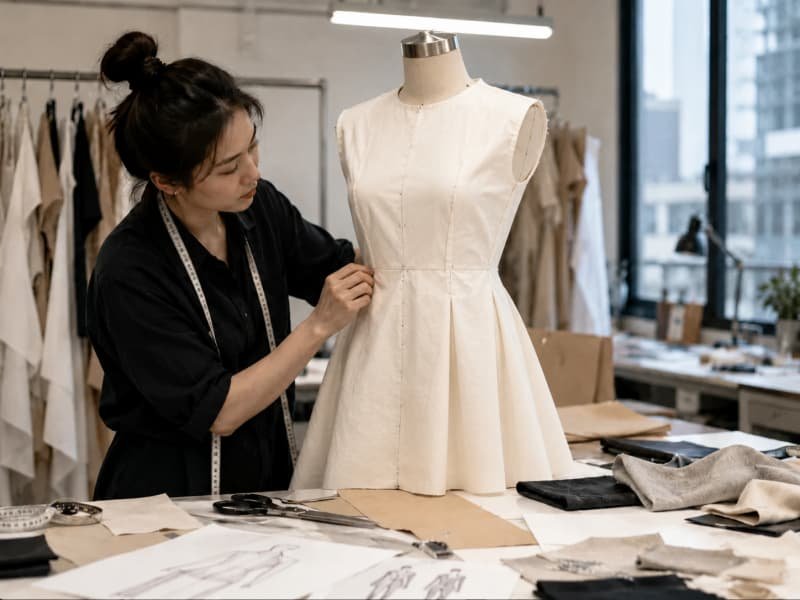
Fit Control Across Core and Extended Sizes

Structured garments must preserve support, proportion, and comfort across the intended size range. Size development requires controlled grading and physical review, not simple percentage enlargement.

Measurement Priorities

Key points may include bust, high bust, underbust, waist, high hip, hip, front body length, back body length, bust point spacing, shoulder, neckline, armhole, torso length, skirt length, and closure length.

Tolerance is set according to function. A small difference at bust point or underbust can be more visible than the same difference at a relaxed skirt hem. Critical points therefore receive tighter production attention.

Fit comments are separated into measurement changes and shape changes. A gaping neckline may require pattern rotation or support adjustment rather than simply reducing the neckline measurement.

Size Grading Logic

Structured sizes cannot always be graded from one base size with equal increments. Bust depth, cup width, cup spacing, torso length, waist shaping, boning length, strap placement, and neckline opening may need separate rules.
For larger sizes, support may require broader panels, revised cup shapes, stronger internal materials, or different elastic. For smaller sizes, reducing the pattern without rebalancing can create narrow cups, misplaced bust points, or excessive neckline tension.
Duolan can follow a supplied size chart, established block, original sample, or agreed target measurements. Grading rules are confirmed around the brand’s fit direction.

Size-set Review

Size-set review confirms whether approved structure remains consistent beyond the base size. The selection may include the base size plus one smaller and one larger size, or a wider spread for extended ranges.

Review points include neckline position, cup coverage, bust support, waist level, torso length, side-seam balance, skirt proportion, movement, zipper function, and internal comfort. Findings are corrected before the full size range moves into production.

A structured style may require additional fit attention when the range spans more than six or eight sizes because body proportions do not change in a perfectly linear way.

What We Review Before Sampling Starts

Clear project information allows the development team to identify structure, material, fit, timing, and production risks before the first pattern is cut.

Tech Pack

A strong tech pack may include flat sketches, construction notes, measurement specifications, material direction, colorways, trims, labels, and packing. Missing technical points are listed for clarification before sample planning.

Reference Images

Reference images help define silhouette, neckline, proportion, material appearance, or styling. They are reviewed as design direction rather than copied blindly. Hidden internal structure and production feasibility still need separate assessment.

Original Sample

An original garment provides valuable information about fit, material, finishing, and construction. Duolan records requested changes so the new development does not simply duplicate unwanted issues from the reference.

Fabric Direction

A swatch, composition, hand-feel description, target weight, or visual reference helps narrow material sourcing. Fabric suitability is reviewed against silhouette, support, comfort, price, quantity, and delivery timing.

Size and Fit

A size chart, fit model information, base size, intended market, measurement method, and fit comments help establish the development standard. Unclear measurement definitions are resolved before pattern approval.

Order and Launch Plan

Target style count, colors, size range, estimated quantity, sample purpose, photo date, launch date, and delivery window influence material choices and development priority. Complex styles may need earlier validation within a multi-style calendar.

Structured Dress Sample Development by Clear Stages

Sampling is managed as a decision process. Timing begins after development information, material direction, sample terms, and critical measurements are sufficiently clear.

Development Brief

The brief records the sample purpose, reference basis, target silhouette, fit priorities, material direction, support expectations, target quantity, and timeline. It keeps product, pattern, material, and communication teams aligned.

Feasibility Review

Pattern, development, and sourcing teams identify the areas most likely to affect success. Bust support, waist balance, neckline stability, fabric behavior, decorative weight, closure method, or production sequence may be flagged before work begins.

Material Preparation

Main fabric, lining, interlining, cups, boning, zippers, elastic, hooks, and decorative trims are prepared according to the approved direction. Material timing can affect the confirmed sample schedule.

First Pattern

The first pattern establishes proportion, structural lines, and construction access. For complex sculptural details, partial pattern tests or mock-ups may be prepared before using final materials.

First Sample

The first sample reviews overall silhouette, fit balance, structure, material behavior, and workmanship direction. Many structured styles require approximately 7–15 working days after the development basis and materials are confirmed, depending on complexity and sourcing.

Fit Review

Front, side, back, internal details, measurements, movement, and closure function are reviewed. Comments are grouped by priority so fit, visual, material, and workmanship changes remain clear.

Revision Sample

Revision timing depends on the scale of change and material availability. Minor pattern refinements may move faster than changes involving cups, boning layout, fabric, neckline, or complete construction rebuilding.

PP Sample

A PP or production-basis sample confirms the approved direction for measurements, materials, support, construction, finishing, labeling, and packing. Remaining open points are recorded before bulk release.

Workmanship Details That Keep Structure Clean

Structured dresses reveal small workmanship errors quickly. Smooth seams, stable edges, accurate symmetry, protected support materials, and controlled pressing separate a refined garment from an unstable one.

Bodice Seam and Boning Control

Princess seams and shaped panels must remain smooth over curved areas. Seam allowances may require grading, clipping, notching, pressing, or internal securing according to fabric thickness and structure.
Boning channels are checked for equal width, straight placement, protected ends, and secure closure. Boning must not twist inside the channel or push visibly against the outer fabric. At seam intersections, bulk is reduced without weakening support.
Internal photos should show the complete support map before lining closure. Production instructions identify channel positions, boning types, lengths, and insertion sequence.

Neckline and Edge Stability

Structured necklines must remain clean against the body without rolling, stretching, gaping, or digging. Edge stability may come from stay stitching, tape, interlining, facing, understitching, elastic, or internal support.
Sweetheart, square, asymmetric, strapless, and off-shoulder necklines have different tension patterns. Understitching should remain invisible from the outside. Corners and curves require consistent seam allowance and controlled turning.
Final inspection checks neckline symmetry, flatness, body contact, and recovery after movement.

Zipper and Closure Finish

Invisible zippers are highly visible when installed poorly. Seam preparation, stabilization, zipper length, waist-seam alignment, tape tension, top finish, hook position, and pressing all affect the result.
A heavy structured bodice may require zipper-edge reinforcement. A fitted dress may need a hook-and-eye to reduce stress at the top. Lace-up backs require stable eyelet zones and balanced cord tension. Buttoned blazer dresses need controlled overlap and internal anchoring.
Closures are checked under realistic tension, not only while the garment lies flat.

Lining and Internal Cleanliness

Lining should cover internal support, protect the wearer, move with the shell, and remain invisible from the outside. It cannot be so tight that it changes the fit or so loose that it twists and gathers.
Critical areas include cup edges, boning ends, underbust seams, waist joins, zipper openings, slits, armholes, and decorative attachment points. Tack placement keeps layers aligned while allowing movement.
Internal finishing is judged for comfort, consistency, repairability, and production efficiency as well as appearance.

Manufacturing Sequence Built Around Structural Stability

Production order affects garment shape. Structured styles require planned preparation, assembly, pressing, and inspection so early variation does not accumulate through later operations.

Fabric Inspection

Fabric is reviewed for width, shade, surface defects, direction, stretch, and usable quality before cutting. Satin, velvet, jacquard, and directional fabrics require special attention.

Relaxation and Testing

Applicable fabrics are relaxed before cutting. Shrinkage, heat response, stretch recovery, or bonding tests may be completed according to material and care requirements.

Interlining Trials

Fusible pressure, temperature, time, adhesion, strike-through, and stiffness are tested. Approved bonding conditions become part of the production instruction.

Precision Cutting

Grain, nap, pattern direction, symmetry, and panel identification are controlled. Structured bodices require accurate matching because small cutting variation changes seam shape.

Panel Preparation

Interlining, stay tape, cup layers, support mesh, pocketing, or reinforcement are applied before main assembly according to the approved operation sequence.

Cup Assembly

Molded or cut-and-sew cups are positioned and secured. Underbust lines, cup spacing, edge finish, and left-right symmetry receive in-process review.

Boning Installation

Channels are sewn, checked, and loaded with approved boning. Length, end protection, direction, and secure closure are verified before lining covers the structure.

Bodice Assembly

Front, side, back, and shoulder sections are joined with controlled seam shape and pressing. Critical measurements are checked before skirt attachment.

Lining Assembly

Lining is assembled to match the approved internal structure. Attachment points are planned to avoid pulling, twisting, or visible impressions.

Closure Installation

Zippers, hooks, buttons, eyelets, or lace-up closures are installed after reinforcement and seam alignment are confirmed. Function is checked under tension.

Shape Pressing

Pressing develops the final contour but can also damage material. Temperature, pressure, tools, support forms, and sequence are matched to the fabric.

Final Measurement

Bust, waist, hip, body length, neckline, straps, skirt length, closure, and other critical points are reviewed according to the specification and tolerance plan.

Keeping Approved Structure Consistent in Bulk

Sample approval becomes valuable only when the approved fit, materials, structure, and visual finish are transferred into a clear production standard.

Production-readiness Review

Before bulk begins, Duolan reviews the sample’s approval status. A sample may be fit-confirmed, visually confirmed, accepted as a PP basis, or still pending specific refinement. Production should not begin under an unclear status.The review locks:

  • Approved pattern and size specification
  • Main fabric, lining, interlining, and support materials
  • Cups, boning, elastic, closures, and trims
  • Color and approved references
  • Label, packing, and carton requirements
  • Launch and delivery requirements
  • Inspection focus

Order Breakdown and Line Matching

Multi-style orders are separated by style, color, size, quantity, material, construction complexity, and delivery priority. A 20-style program should not be treated as one undifferentiated production block.

Structured corset dresses, tailored crepe dresses, satin sculptural styles, and simpler support-led minis may require different lines, operation skills, pilot needs, and production timing. Styles are matched to an appropriate production path within the manufacturing network.

Delivery plans are worked backward from the required window, including material preparation, PP approval, production, inspection, packing, and shipment buffer.

Material and Standard Control

Bulk material is checked against the approved direction. Interlining and support components receive equal attention because hidden substitutions can change the entire garment.
Production teams receive approved measurements, pattern files, workmanship instructions, internal structure references, and visual standards. QC teams use the same references. The goal is one aligned standard across development, sourcing, line management, inspection, and packing.

Repeat Order Stability

Repeat production depends on preserved information. Pattern version, grading rules, material standards, approved components, construction notes, QC points, and packing records are maintained for future orders.
When materials change between seasons, the replacement is evaluated for effect on fit and structure rather than approved by appearance alone. Repeat production should become more predictable, not return to the beginning of development.

Quality Control Focused on Shape and Support

Structured dress inspection goes beyond general stitching checks. Shape, support, measurement, internal construction, material behavior, and visual consistency require attention throughout production.

Fabric Shade Review

Color, surface, nap, shine, and lot variation are checked before spreading and cutting. Directional materials are separated and controlled.

Shrinkage Review

Applicable fabrics are reviewed for dimensional response before production. Pattern and process decisions are adjusted where required.

Bonding Quality

Interlining adhesion, bubbles, strike-through, stiffness, and edge lifting are checked after fusing and through production.

Cutting Accuracy

Critical panels, cup pieces, princess seams, asymmetric sections, and matching points are checked for shape and identification.

Cup Position

Cup height, spacing, left-right alignment, outer-fabric smoothness, and underbust connection are reviewed during assembly.

Boning Placement

Channels, boning type, length, end protection, direction, and position are checked before lining closure.

Seam Symmetry

Princess seams, waist joins, neckline curves, shoulder angles, darts, and asymmetric lines are compared for visual consistency.

Inline Measurements

Critical measurements are monitored during production rather than postponed until the final stage. Early correction reduces repeated variation.

Zipper Flatness

Zipper tape, waist alignment, top finish, seam waves, closure function, and hook position are checked under tension.

Lining Coverage

Lining must cover internal structure, protect the wearer, remain smooth, and avoid changing the approved outer fit.

Shape and Pressing

Final pressing is reviewed for contour, seam smoothness, shine, impressions, lapel roll, hem balance, and structural consistency.

Packing Protection

Cups, boning, shoulders, sculptural areas, satin surfaces, velvet pile, embellishments, and closures are protected according to product risk.

Critical Inspection Points by Dress Structure

Inspection priorities change with garment construction. Focusing on the correct risk points is more effective than applying one general checklist to every structured style.

Dress TypeMain RiskCritical InspectionBulk Control Basis
Corset DressCup or boning shiftCup position, boning channels, underbust balance, waist fitApproved internal map and PP sample
Strapless DressSlipping or neckline openingUpper-edge contact, waist support, back tension, movement fitFit review and support standard
Blazer DressShoulder or lapel distortionShoulder slope, sleeve head, lapel roll, front overlapInterlining and pressing standard
Structured BodyconGrowth or transparencyRecovery, seam stretch, opacity, bust-waist-hip measurementApproved fabric lot and graded specification
Sculptural DressShape collapse or twistingPanel geometry, support placement, weight balanceFirst-piece confirmation
Structured Satin DressSeam and pressing marksNeedle appearance, seam smoothness, shine, packing creasesWorkmanship and pressing reference
Asymmetric DressAngle inconsistencyShoulder position, diagonal seam, hem balance, orientationPattern and visual reference
Embellished Structured DressWeight distortion or abrasionTrim attachment, support, lining protection, symmetryApproved trim map and inspection points

Branding and Packaging That Protects Dress Shape

Brand presentation and logistics protection are planned together. Structured garments can lose shape before arrival when cups, boning, shoulders, surfaces, or decorative areas are packed without product-specific support.

Main Labels

Woven, printed, heat-transfer, or specialty labels are positioned to remain comfortable and visually clean. Label placement must avoid boning, support seams, and transparent areas.

Care Labels

Care information reflects outer fabric, lining, interlining, support materials, decorations, and construction. Structured dresses may require more controlled care than visually similar unstructured styles.

Hangtags

Hangtags can include brand information, size, style, color, barcode, price, or market-specific content. Attachment positions are selected to avoid marking delicate surfaces.

Hanger Packing

Hanger packing can preserve shoulders, bust shape, tailored fronts, and long silhouettes. Hanger type, straps, protective covers, and carton height are planned around the product.

Shape Support

Tissue, cup support, internal forms, sleeve filling, protective sheets, or flat reinforcement may be used where folding pressure could alter the garment.

Carton Planning

Carton quantity, folding method, divider use, weight, stacking, and orientation are evaluated to reduce compression, abrasion, permanent creasing, and hardware impressions.

Project Teams Behind Structured Dress Development

A structured dress program requires coordinated development, materials, pattern, sample, production, quality, and delivery decisions. Responsibility must remain clear as the project moves forward.

Project Coordination

Project coordinators organize the brief, files, priorities, sample purpose, comments, timing, and next steps. Formal points are confirmed by email, while faster discussion can continue through WhatsApp, WeChat, voice calls, or video meetings.

Fabric and Trim Team

Material teams source and review outer fabric, lining, interlining, cups, boning, elastic, zippers, hooks, labels, and packaging. Alternatives are assessed for silhouette, fit, cost, quantity, and lead time.

Pattern Team

Pattern teams translate design intent into body proportion, contour, construction, seam relationships, support placement, and grading. Fit comments become measurable adjustments rather than general instructions.

Sample Team

Sample teams execute the approved development direction, test complex operations, prepare internal construction, and provide visible evidence for review. Sample results feed back into pattern and material decisions.

Production and QC Team

Production teams follow approved references, operation paths, and critical construction points. QC teams monitor materials, measurements, internal support, workmanship, appearance, and packing through defined stages.

Delivery Coordination

Packing, inspection, shipping documents, freight coordination, and delivery timing are managed as part of the project. Shipment methods can be arranged according to volume, cost, and delivery window.

Manufacturing Capacity for Multi-style Dress Programs

Duolan combines development density, core-factory control, flexible production, and satellite capacity to support complex collections, repeat orders, and seasonal volume.

16 Owned Factories

Owned factories provide direct control for core projects, sensitive styles, development-intensive products, and orders requiring close sample-to-bulk coordination.

20+ Satellite Factories

Long-term satellite factories add production flexibility for repeat orders, expanded volume, specialized operations, and programs with several delivery stages.

12,000+ Workforce

The supporting manufacturing network includes more than 12,000 workers across established production regions, providing capacity buffers for multi-style and seasonal programs.

300 Sewing Lines

Approximately 300 garment sewing lines across the wider system allow styles to be assigned according to product type, complexity, quantity, skill requirements, and timeline.

50+ Flexible Lines

More than 50 quick-response and flexible lines support sampling transitions, controlled launch quantities, repeat production, replenishment, and products requiring shorter production paths.

6.5M+ Monthly Capacity

The wider manufacturing system has a regular monthly production capability of approximately 6.5 million garments, with higher peak capacity according to confirmed planning, product mix, and resource allocation.

Compliance Support for Global Fashion Programs

Duolan’s manufacturing system supports formal supplier evaluation, social-audit requirements, quality documentation, product testing coordination, and brand-specific production standards.

SMETA Audit Support

Core manufacturing resources have completed SMETA audit requirements, including SMETA 2-Pillar audit records. Relevant information can be reviewed during supplier evaluation.

Social Responsibility

Working-hour, workplace, labor, health, safety, and social-responsibility requirements are coordinated according to the applicable audit and brand program.

Quality Requirements

Projects can be aligned with quality-management expectations connected to ISO 9001 frameworks and specific brand procedures where required.

Testing Coordination

Material and garment testing can be coordinated around relevant AATCC, ASTM, EN, China GB, or brand-defined methods according to product and destination requirements.

Material Standards

OEKO-TEX®, GOTS, composition, restricted-substance, colorfastness, shrinkage, and other material requirements can be reviewed when specified by the project.

Third-party Inspection

Duolan can coordinate with nominated third-party inspection providers or follow brand-specific inspection instructions, documentation, AQL direction, and shipment-release procedures.

Structured Dress Programs Managed at Brand Scale

The following anonymized project snapshots reflect common order structures for established dress brands. Figures are presented without brand names to protect confidential development and commercial information.

United States Structured Partywear Program

Project scope: 18 styles across corset minis, strapless midis, bustier dresses, sculpted satin styles, and two embellished hero pieces.

Order structure: 42,600 pieces across 18 styles, 31 color-style combinations, and a six-size range.

Development challenge: The collection combined three different support systems. Some styles used molded cups and plastic boning, others used cut-and-sew cups with power mesh, while the hero styles required stronger waist control and decorative weight management. The brand also needed a consistent bust and waist language across several silhouettes.

Development response:

  • Grouped styles by shared block, support level, material family, and launch priority.
  • Built a defined cup-position and bust-point review for all fitted bodices.
  • Tested interlining and lining combinations for satin and compact crepe.
  • Separated decorative hero styles from repeatable commercial styles during sample planning.
  • Reviewed the base size plus one smaller and one larger size before full grading.
  • Locked approved cup, boning, zipper, lining, and pressing standards before production.

Production control: First-piece review focused on cup symmetry, boning channels, waist-seam alignment, zipper flatness, and neckline contact. Styles were assigned to different production paths according to complexity.

Commercial result: The project moved as a coordinated collection rather than 18 unrelated styles, creating a clearer base for repeat colorways and future structured drops.

United Kingdom Occasionwear Program

Project scope: 24 styles covering structured cocktail dresses, tailored midis, blazer dresses, asymmetric necklines, wedding-guest styles, and refined party silhouettes.

Order structure: 68,400 pieces across 24 styles, 36 color-style combinations, and seven core sizes.

Development challenge: The collection used crepe, satin, jacquard, velvet, and mesh overlays. Each material required a different balance of support, lining, pressing, and packing. Blazer dresses needed tailored control, while corset-led styles needed stronger upper-body engineering.

Development response:

  • Created separate material and support paths rather than forcing one construction system across the collection.
  • Reviewed blazer shoulder slope, lapel roll, front overlap, waist shaping, and button position.
  • Tested fusible response on crepe, satin, velvet, and jacquard before approval.
  • Developed lining specifications around opacity, stretch, comfort, and outer-fabric behavior.
  • Prioritized the most structurally sensitive styles earlier in the calendar.
  • Confirmed size-set fit on selected corset, tailored, and strapless references.

Production control: The order was broken down by style complexity, material family, and critical operation. Tailored, corset, satin, and decorative styles followed separate production and QC checkpoints.

Commercial result: A unified collection identity was maintained while construction paths remained technically appropriate for each material and silhouette.

European Contemporary Dress Program

Project scope: 12 styles featuring sculptural midis, asymmetric mini dresses, structured column dresses, shaped shoulders, controlled draping, and clean internal finishes.

Order structure: 27,600 pieces across 12 styles, 18 color-style combinations, and an extended size range.

Development challenge: The designs appeared minimal but depended on precise panel geometry, shoulder balance, internal support, seam smoothness, and pressing. Several styles had no decorative elements to hide construction variation.

Development response:

  • Used partial mock-ups for sculptural shoulder and neckline sections.
  • Checked grain, panel angle, weight balance, and closure placement before full sampling.
  • Reduced visible seam bulk through graded allowances and controlled interlining.
  • Reviewed torso length, shoulder position, waist level, and hem balance across selected sizes.
  • Developed pressing references for clean surfaces and controlled volume.
  • Added packing support to protect shaped shoulders and asymmetric panels.

Production control: First pieces were checked against marked visual and measurement references. Critical operations were isolated for early confirmation before wider line output.

Commercial result: Minimal silhouettes retained a controlled, premium appearance through careful pattern, internal support, pressing, and packing rather than added decoration.

Structured Dress Frequently Asked Questions

A structured dress uses pattern shaping, stable or supported materials, internal construction, and controlled fit to hold a defined silhouette. Support may include interlining, cups, boning, power mesh, waist stays, lining, shaped seams, or reinforced edges. Structure can be light and tailored or strong and corset-led.
Duolan develops structured mini, midi, corset, bustier, boned-bodice, strapless, blazer, cocktail, sculptural, bodycon, asymmetric, and occasion dresses. Suitability is reviewed according to fabric, internal support, fit, workmanship, quantity, and launch plan.
Yes. A reference image can establish silhouette, proportion, material appearance, or styling. Additional decisions are still needed for measurements, fabric, lining, internal support, closure, size range, construction, and production feasibility. Duolan identifies missing information before confirming the sample path.
Selection depends on silhouette, outer fabric, wearer comfort, care method, product price, size range, and production stability. Plastic boning, spiral steel, woven interlining, non-woven fusible, stretch interlining, organza, power mesh, and stay tape each create different results.
Many structured styles require approximately 7–15 working days after the development basis and materials are confirmed. Timing changes with fabric sourcing, cup or boning development, pattern complexity, construction tests, special trims, and revision scope. A confirmed sample plan is issued after project review.
The number depends on design clarity, fit standard, material behavior, and complexity. A structured style may move through first sample, fit revision, and PP sample. Major material or structural changes can require an additional round. Each stage should have a defined approval purpose.
Yes. Development can follow a supplied size chart, established block, original garment, or agreed measurement standard. Measurement definitions, base size, fit model, grading rules, and critical tolerances should be confirmed before full size development.
Duolan aligns the approved pattern, measurements, fabric, lining, interlining, cups, boning, trims, construction, pressing, labels, packing, and QC points before release. High-risk styles may use first-piece confirmation or pilot validation before full production.
Simple styles may require approximately 15–20 days, regular styles around 20–30 days, and complex styles around 30–45 days after materials, PP basis, and production conditions are confirmed. Multi-style calendars are planned according to complexity, quantity, and delivery requirements.
Yes. Multi-style programs are divided by material, construction, complexity, quantity, and timing. Styles are prioritized for sampling and matched to appropriate production paths. Duolan’s wider system includes 16 owned factories, 20+ satellite factories, 300 sewing lines, and 50+ flexible lines.
Packing depends on cups, boning, shoulders, fabric surface, skirt volume, decoration, and shipping method. Options include hanger packing, tissue support, protective forms, garment covers, flat reinforcement, dividers, and controlled carton quantities.
Send available tech packs, reference images, original-sample photos, size charts, material direction, colorways, target quantity, style count, label and packing requirements, required sample date, and target delivery date. Duolan will identify any missing points needed for development or quotation.

Start Your Structured Dress Development Review

Share the information currently available for your structured dress program. A complete tech pack is helpful but not mandatory at the first stage. Reference images, sketches, original-sample photos, size charts, fabric direction, or a collection brief can provide enough information for an initial review.

To prepare a useful response, please include:

  • Product type and intended wearing occasion
  • Tech pack, sketch, reference image, or sample photos
  • Number of styles and estimated total quantity
  • Target size range and key fit requirements
  • Fabric, lining, cup, boning, or support direction
  • Target sample date, launch date, and delivery window
  • Branding, labeling, packing, and compliance requirements
  • Current stage: development, sampling, supplier review, or bulk planning

Our team will review silhouette, material compatibility, internal support, pattern and fit priorities, sample path, production feasibility, critical risks, and the information needed for the next step.


1.United States|Corset and Satin Detail Program (1)

Start Your Apparel Development Project

OEM/ODM Manufacturing Support for Fashion Brands

Share your collection details, estimated quantities, target market, development timeline, and technical requirements. The production team will review your request and provide a tailored manufacturing solution based on your product category, fabric selection, construction needs, and delivery schedule.

Fashion Manufacturing Support with Scalable Production Capacity

From sample development to bulk production, Duolan supports fashion brands with confidential OEM/ODM manufacturing, stable quality management, flexible production planning, and coordinated multi-factory execution for seasonal and capsule collections.

Need Direct Assistance?

Seraphinite AcceleratorOptimized by Seraphinite Accelerator
Turns on site high speed to be attractive for people and search engines.