 Skip to content
Custom Sundress Manufacturer for Fashion Brands
Dress-focused development and manufacturing for seasonal sundress collections, from fabric and pattern review to production-ready samples, controlled bulk production and repeat-order support.
- Seasonal programs commonly cover 10–30 coordinated sundress styles per order.
- Established brand programs commonly total 20,000–80,000 garments across styles, colors and sizes.
- 30+ years of womenswear development and manufacturing experience.
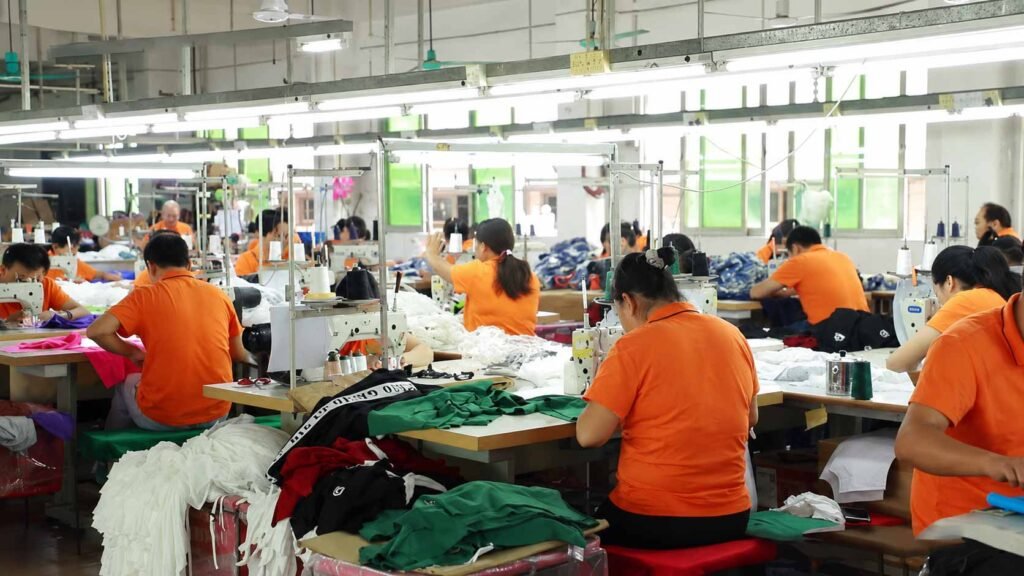
- 16 owned womenswear factories supported by 20+ long-term satellite factories.
- 300 sewing lines and 50+ quick-response lines across the manufacturing network.
- Mini, midi, maxi, printed, smocked, halter, tiered, wrap and vacation sundress development.
- SMETA 2-Pillar audited manufacturing foundation for structured brand cooperation.
Duolan converts collection briefs, tech packs, reference garments and design directions into sundresses prepared for fit review, commercial evaluation and controlled bulk production. Fabric behavior, neckline coverage, strap construction, print placement, smocking recovery, lining and size grading are reviewed as connected product decisions rather than isolated sewing details.
What a Custom Sundress Manufacturer Should Deliver
Development Before Sewing
The initial review may include:
- Tech pack completeness and measurement priorities.
- Reference image or original sample analysis.
- Fabric weight, drape, shrinkage and opacity.
- Strap, neckline, back opening and support requirements.
- Print scale, color direction and placement risk.
- Sample purpose: fit, visual review, photography, sales presentation or production preparation.
Production-Ready Sampling
A strong sample must support a commercial decision. Appearance alone is not enough. The sample should allow the brand team to review proportion, fabric behavior, fit, coverage, construction, finishing and production feasibility.
Duolan can organize samples around different purposes:
- First prototype for silhouette and construction review.
- Fit sample for measurement, balance and wearing evaluation.
- Revised sample following consolidated comments.
- Sales or photography sample where presentation is required.
- Pre-production sample for final material, workmanship and packing confirmation.
Sample comments are translated into defined actions rather than informal sewing adjustments. The resulting version can then form a clearer basis for PP approval and bulk planning.
Controlled Bulk Delivery
Bulk production requires approved product information to be converted into repeatable manufacturing standards. Duolan reviews the approved sample, fabric, lining, trims, measurements, print, workmanship, labeling and packing requirements before production starts.
Orders are divided by style, color, size, quantity and construction complexity. Different styles can then be matched with suitable production routes rather than being treated as one undifferentiated order. Production preparation, first-piece review, inline checks, finishing inspection and packing verification help protect the approved product direction across 10–30 style seasonal programs.
Built for Established Fashion and Product Teams
Fashion Brand Teams
Fashion brands need sundresses that fit a recognizable collection direction rather than disconnected styles. Duolan can support coordinated mini, midi and maxi silhouettes, shared print stories, color families, fabric groups and recurring fit blocks. Key priorities include:
- Commercial silhouettes suited to the intended retail channel.
- Consistent fit logic across related styles.
- Controlled variation between core and statement pieces.
- Defined sample and approval stages.
- Bulk standards that can support repeat colors or future extensions.
- Confidential handling of unreleased designs and collection information.
For a program containing 10–30 styles, development sequence matters. High-risk fabrics, prints, smocking and fitted shapes should normally be reviewed before simpler styles so the launch schedule remains protected.
Buying and Product Teams
Buying and product teams require clear files, measurable decisions and visible progress. They often coordinate designers, technical teams, merchandising, compliance, logistics and internal approval groups across different locations. Duolan supports organized cooperation through:
- Project brief review before quotation or sampling.
- Feasibility notes for fabric, fit and construction concerns.
- Sample proposals explaining development scope.
- Staged updates during pattern and sample work.
- Sample review notes with front, side, back and detail images.
- Revision summaries recording requested and completed changes.
- Bulk start confirmation before production release.
Resort and Summer Brands
Resort, vacation and summer dress brands depend heavily on fabric handfeel, print identity, lightness, movement and warm-weather comfort. A visually successful product must also maintain coverage, recovery and durability during real wear.
Duolan reviews:
- Lightweight fabric suitability for the target silhouette.
- Wrinkle behavior for travel and retail handling.
- Opacity under natural and strong light.
- Lining coverage without excessive heat or bulk.
- Strap comfort and attachment strength.
- Print scale across mini, midi and maxi proportions.
- Smocking or elastic recovery after repeated stretching.
- Packaging methods for long skirts, straps and delicate surfaces.
Six Standards for Evaluating Sundress Manufacturing Capability
Category Experience
- Recent mini, midi and maxi sundress samples.
- Similar fabric and construction records.
- Production photographs showing related workmanship.
- Fit samples across more than one size.
- Approved samples beside bulk garments.
- Repeat-order records for comparable styles.
Fabric Judgment
- Finished garment weight.
- Drape and body.
- Shrinkage and distortion.
- Seam slippage.
- Transparency.
- Wrinkle recovery.
- Print clarity.
- Lining compatibility.
Pattern and Fit
- Base-size measurement accuracy.
- Balance between front and back length.
- Fit adjustments according to fabric behavior.
- Relaxed and extended smocking measurements.
- Strap length and adjuster position.
- Mini, midi and maxi finished lengths.
- Grading consistency across the approved size range.
Print and Color
- Artwork and repeat review.
- Strike-off approval.
- Pantone or approved color reference.
- Placement planning at center front, seams and tiers.
- Colorfastness requirements.
- Bulk shade control.
- Reorder color record where applicable.
Sample-to-Bulk Control
- Approved sample status.
- Fabric and trim confirmation.
- BOM record.
- Measurement specification and tolerance.
- Workmanship notes.
- Print or placement standard.
- PP sample where required.
- First-piece review.
- Inline and final inspection checkpoints.
Program Management
Seasonal orders often combine 10–30 styles, multiple fabrics, several colorways and size assortments. Program management must identify which styles are simple, complex, material-sensitive or process-sensitive. Duolan reviews:
- Development sequence.
- Material readiness.
- Sample priorities.
- Production path by style.
- Approval dependencies.
- Quality risk points.
- Packing and shipping deadlines.
- Repeat-order preparation.
A multi-style order works best when decisions are divided into manageable groups instead of being released as one large block.
Sundress Risks Controlled Before Bulk Production
Lightweight summer dresses often appear simple, yet small material and construction decisions can create visible problems in fit, coverage, appearance and repeat production. Duolan links each identified risk with a defined development or production control.
| Development or Production Risk | Possible Garment Result | Duolan Control Direction |
|---|---|---|
| Fabric too sheer | Underwear lines, body exposure or uneven visual coverage under sunlight | Opacity review, lining coverage planning, double-layer evaluation and color comparison |
| Unstable shrinkage | Shorter length, changed waist position or twisted seams after washing | Fabric testing, relaxation, pre-treatment review and pattern allowance confirmation |
| Weak strap attachment | Loose straps, broken seams or uneven left and right lengths | Attachment reinforcement, bartack review, strap measurement and pull-point inspection |
| Uneven smocking | Inconsistent bust or waist fit across sizes and production batches | Stitch density standard, elastic tension review, relaxed measurement and recovery check |
| Print misalignment | Off-center motifs, broken repeats or mismatched tier seams | Artwork layout, marker planning, cutting placement and approved print reference |
| Incorrect lining | Excessive heat, visible lining edge, restricted movement or altered drape | Lining weight, color, length, attachment and coverage review |
| Poor neckline balance | Gaping, excessive exposure or uneven front shape | Pattern correction, mannequin review, wear test and neckline measurement |
| Bulk material substitution | Different handfeel, shade, stretch or trim performance | Material locking, approved supplier reference and pre-production confirmation |
| Unclear tolerance | Inconsistent fit across sizes or production lines | POM definition, measurement method, tolerance priority and QC reference |
| Pressing damage | Shine, flattening, seam marks or distorted light fabric | Pressing trial, temperature control direction and finished appearance inspection |
Custom Sundress Styles Developed for Seasonal Collections

Spaghetti Strap Sundresses
Key controls:
- Equal left and right strap length.
- Reinforcement at attachment points.
- Hardware color and plating consistency.
- Strap twisting prevention.
- Neckline stability during movement.
- Lining attachment around the upper body.

Halter Sundresses
Key controls:
- Neck strap width and angle.
- Bust position and side coverage.
- Back opening depth.
- Tie length and fastening security.
- Lining or internal support.
- Left-right symmetry.
- Bulk measurement consistency.

Smocked Sundresses
Key controls:
- Relaxed and extended panel measurements.
- Row spacing and stitch density.
- Elastic recovery after repeated extension.
- Panel placement at bust, back or waist.
- Size grading strategy.
- Seam connection between smocked and non-smocked sections.
- Lining compatibility where needed.

Shirred Waist Sundresses
Development considers:
- Finished waist placement.
- Elastic length and tension.
- Casing width.
- Gather distribution.
- Bodice blousing allowance.
- Skirt weight below the elastic.
- Recovery after wear and washing.
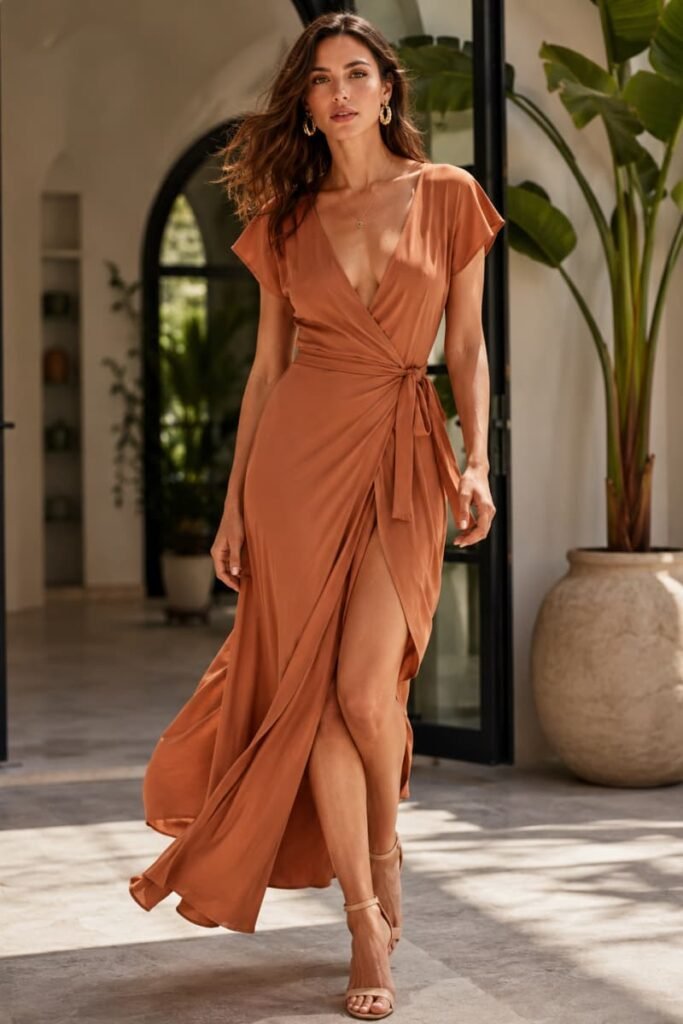
Wrap Sundresses
Key controls:
- Front overlap width.
- Inner and outer tie position.
- Waistline balance.
- Neckline gaping.
- Skirt opening during movement.
- Tie length and reinforcement.
- Size grading of overlap and waist.

Tiered Sundresses
Development should define:
- Number of tiers.
- Finished length per tier.
- Gather ratio.
- Seam allowance and finishing.
- Print direction.
- Placement of joining seams.
- Hem circumference.
- Size grading without excessive lower-volume growth.

Ruffle Sundresses
Key controls:
- Ruffle width and fullness.
- Symmetry.
- Rolled hem or narrow hem quality.
- Connection seam bulk.
- Direction and lay.
- Print orientation.
- Pressing and packing recovery.

Backless Sundresses
Development includes:
- Back opening shape and depth.
- Neck or shoulder support.
- Side seam coverage.
- Waist anchoring.
- Tie, elastic or zipper structure.
- Lining and internal stabilization.
- Movement and sitting evaluation.

Button-Front Sundresses
Key controls:
- Placket width and reinforcement.
- Button and buttonhole spacing.
- Bust-area gap prevention.
- Center-front alignment.
- Print matching where required.
- Hem alignment.
- Spare button and packaging requirements.
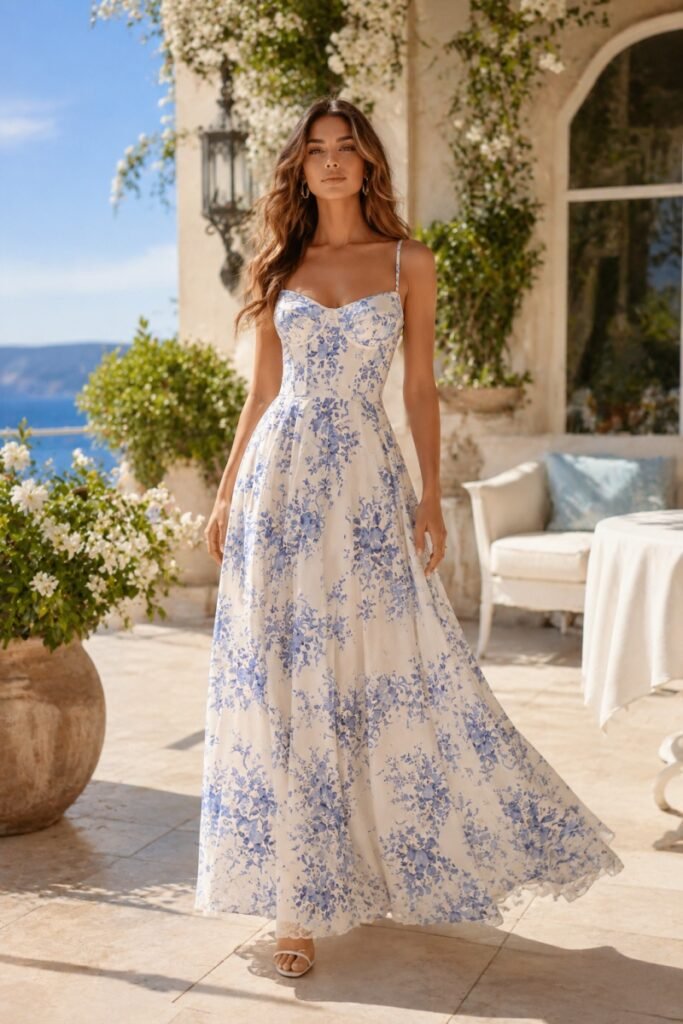
Printed Maxi Sundresses
Printed maxi dresses combine large garment area, long drape and visible artwork placement. Print scale must work across the full length without overwhelming smaller sizes.
Development considers:
- Artwork repeat.
- Front and back direction.
- Center placement.
- Tier or panel connections.
- Skirt volume.
- Hem balance.
- Color absorption.
- Packing folds and wrinkle recovery.
Large-scale prints may require individual placement planning rather than standard all-over cutting.

Mini Sundresses
Mini lengths make proportion errors highly visible. Waist position, skirt flare, hem level and sitting coverage must be reviewed carefully.
Key controls:
- Finished length by size.
- Front-to-back balance.
- Hem circumference.
- Lining length.
- Side opening exposure.
- Strap or neckline stability.
- Shrinkage allowance.
A small length change can significantly affect commercial wearability, especially after fabric relaxation or washing.

Midi Sundresses
Midi lengths are suitable for daywear, resort, contemporary and occasion collections. Success depends on where the hem meets the leg, how the skirt falls and how the waist is positioned.
Development considers:
- Target finished length.
- Skirt volume.
- Side slit position.
- Lining coverage.
- Fabric weight.
- Movement during walking.
- Size grading.
- Retail folding or hanging method.
Build a Commercial Sundress Collection
Casual Daywear
- Breathable materials.
- Comfortable armhole and neckline coverage.
- Easy-care construction.
- Core colors with selected prints.
- Repeatable fit blocks.
- Retail-friendly packing.
- Sizes suited to the intended market.
Resort and Vacation
- Strong hero print.
- Coordinated secondary prints.
- Travel-friendly fabric behavior.
- Warm-weather lining choices.
- Adjustable or secure straps.
- Photogenic movement.
- Packing recovery after folding.
- Repeat colors for successful silhouettes.
Contemporary Fashion
- Accurate body proportion.
- Fabric support for fitted areas.
- Controlled exposure.
- Clear design hierarchy.
- Distinctive construction without unnecessary bulk.
- Strong visual finish for digital retail.
- Production methods capable of repeat consistency.
Summer Occasion
Summer occasion collections may use light satin, crepe, chiffon, floral prints, halter necklines, draped details and refined maxi shapes. Wedding guest, garden event and holiday dining scenarios require elegance without heavy construction. Planning priorities:
- Controlled sheen.
- Smooth seam and pressing finish.
- Supportive but light lining.
- Refined neckline and back exposure.
- Accurate length.
- Color consistency.
- Delicate-detail protection during packing.
- Strong PP sample reference.
Fabrics Engineered for Sundress Performance

Cotton Poplin
- Weight and density.
- Shrinkage.
- Wrinkle level.
- White and pale-color opacity.
- Print definition.
- Seam puckering.
- Lining requirement.
- Wash-care expectations.

Cotton Voile
- High transparency risk.
- Softness after finishing.
- Shrinkage.
- Seam strength.
- Layer count.
- Lining weight.
- Edge finishing.
- Print visibility.

Linen Blends
- Wrinkle behavior.
- Slub and texture consistency.
- Shrinkage.
- Seam slippage.
- Color variation.
- Body and drape.
- Pressing response.
- Packing recovery.

Viscose and Rayon
- Fabric relaxation.
- Shrinkage.
- Skew and twisting.
- Wet strength.
- Print clarity.
- Seam stability.
- Pattern allowance.
- Long-skirt hanging behavior.

Chiffon and Georgette
- Full or partial lining.
- Rolled hem quality.
- Seam show-through.
- Grain distortion.
- Static.
- Print direction.
- Layer alignment.
- Packing protection.

Lightweight Crepe
Light crepe offers soft drape, reduced shine and adaptable day-to-evening styling. It can work for wrap, midi, halter and relaxed occasion dresses. Development points:
- Surface texture.
- Drape.
- Opacity.
- Stretch or mechanical give.
- Seam appearance.
- Pressing response.
- Color depth.
- Lining need.
Crepe varies widely by fiber and construction, so final selection should rely on actual handfeel and garment testing rather than fabric name alone.
Lightweight Satin
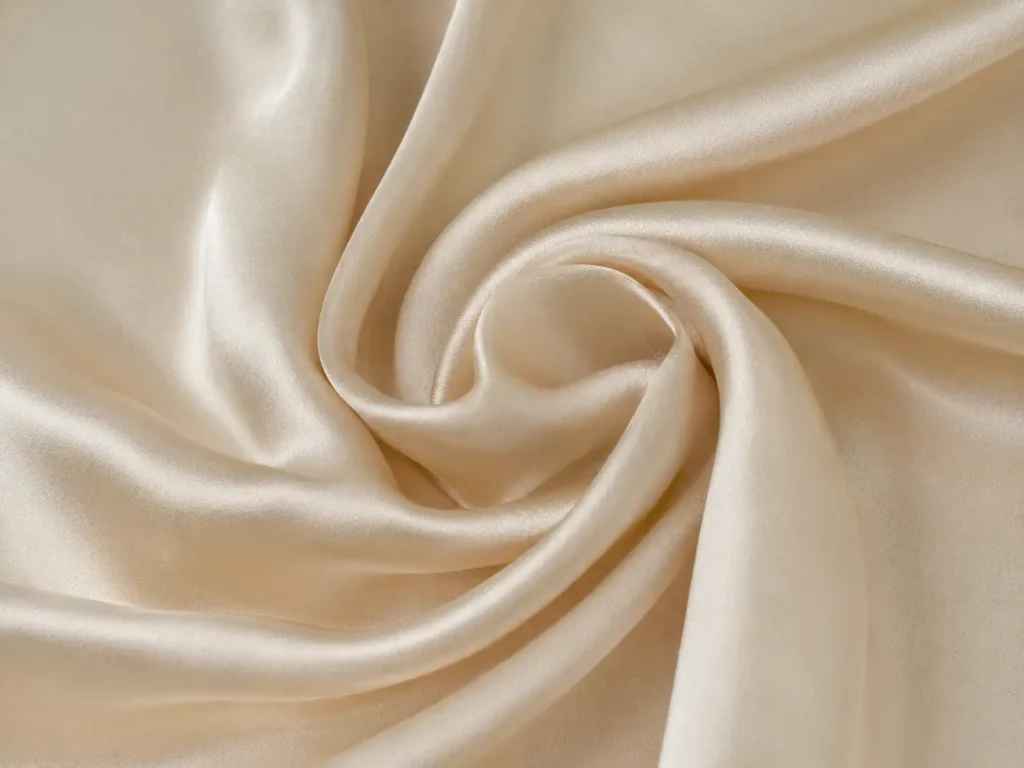
Light satin suits elevated summer occasions, holiday dressing and refined halter or slip-inspired sundresses. Its surface makes needle marks, seam tension and pressing errors highly visible.Development points:
- Shine level.
- Bias behavior.
- Needle and thread selection.
- Seam puckering.
- Water or pressing marks.
- Lining.
- Grain direction.
- Packing folds.
A controlled sewing and pressing route is essential before bulk production.

Printed Polyester
- Breathability.
- Static.
- Handfeel.
- Print method.
- Colorfastness.
- Opacity.
- Heat sensitivity.
- Finished drape.
Match Fabric Performance with Sundress Structure
Material selection should follow the intended silhouette, wear scenario and production risk. The same fabric can perform well in one sundress and poorly in another when length, volume, lining or construction changes.
| Fabric Direction | Suitable Sundress Styles | Main Development Risk | Recommended Control |
|---|---|---|---|
| Cotton Poplin | Fitted mini, button-front, tie-strap, structured midi | Wrinkling, pale-color transparency, seam puckering | Shrinkage review, lining assessment, seam trial and pressing standard |
| Cotton Voile | Tiered, ruffled, loose mini, gathered midi | High transparency and delicate seam strength | Layer planning, light lining, edge-finish trial and seam reinforcement |
| Linen Blend | Resort midi, button-front, square-neck and relaxed maxi | Creasing, seam slippage and dimensional change | Blend comparison, shrinkage review, seam construction and packing test |
| Viscose or Rayon | Printed maxi, wrap, gathered and flowing midi | Distortion, shrinkage, skew and length change | Fabric relaxation, pre-treatment review, pattern allowance and hanging check |
| Chiffon | Layered halter, ruffle and summer occasion styles | Sheerness, grain movement and edge inconsistency | Lining plan, rolled-hem trial, layer alignment and careful cutting |
| Lightweight Crepe | Wrap, halter, midi and refined daywear | Variation in stretch, opacity and pressing response | Fabric-spec confirmation, seam trial and fit review |
| Lightweight Satin | Slip-inspired, halter and summer occasion dresses | Needle marks, shine variation, seam puckering and pressing damage | Sewing trial, controlled pressing, lining review and packing protection |
| Printed Polyester | Resort maxi, tiered and commercial print programs | Static, poor breathability or stiff handfeel | Finish selection, handfeel approval, print strike-off and wear evaluation |
Custom Print and Color Development for Sundresses
From Artwork to Approved Fabric
A print file must be translated into a repeatable fabric result. Before production, the team reviews artwork resolution, repeat size, motif direction, color count, base fabric and intended garment placement.The process may include:
- Artwork file review.
- Repeat and scale confirmation.
- All-over or engineered placement decision.
- Strike-off preparation.
- Pantone or approved color comparison.
- Fabric-base evaluation.
- Light and dark color behavior.
- Colorfastness requirement.
- Bulk print reference.
Print scale should be evaluated on a full garment proportion. A motif that looks balanced on a swatch may appear too large on a mini dress or too repetitive across a maxi skirt.
For center-front motifs, border prints or directional artwork, pattern and marker planning should begin before final print approval. Production cutting must follow the approved orientation and placement standard.
Color Control Across Fabrics and Orders
Color appearance changes with fiber, surface, shine and print method. The same color reference can appear deeper on crepe, brighter on satin, softer on cotton and more transparent on chiffon.
Color planning should separate:
- Core commercial colors.
- Seasonal lead colors.
- Print ground colors.
- Visual campaign colors.
- Repeat-safe colors.
- Colors requiring extra opacity control.
Approval can include lab dips, strike-offs, fabric cuttings or full sample review according to material and process. Bulk inspection should compare production against the approved reference under suitable lighting.
Repeat orders require preserved color information, approved standards and material records. A previous color name alone is not enough to reproduce an earlier result.
Opacity, Lining and Warm-Weather Comfort
Control Coverage Without Losing Lightness
- Bust coverage.
- Waist and hip coverage.
- Skirt transparency.
- Back-light visibility.
- Seam allowance show-through.
- Pocket-bag visibility.
- Underwear-line exposure.
- Coverage during walking and sitting.

Match Lining to Outer Fabric
Lining should support rather than fight the outer material. Weight, stretch, surface, color and shrinkage need compatible behavior. Key decisions include:
- Woven or stretch lining.
- Full-length or partial coverage.
- Attached or free-hanging construction.
- Lining color.
- Hem level.
- Seam placement.
- Static reduction.
- Breathability.
- Care instruction compatibility.
For light satin, a smooth lining can improve comfort but must not pull at side seams. For chiffon, a lining may provide the main fit structure. For smocked styles, lining cannot prevent the panel from stretching correctly. Duolan reviews lining together with the outer sample so movement, coverage and overall handfeel can be judged as one finished garment.

Pattern, Fit and Size Grading for Sundresses
Build the Correct Base Size
Base-size review includes:
- Bust and under-bust balance.
- Neckline width and depth.
- Front and back armhole.
- Strap length and position.
- Waist location.
- Hip ease.
- Front and back body length.
- Back opening.
- Skirt volume.
- Finished hem length.
Grade Sizes Without Losing Design Proportion
Projects commonly use ranges such as XXS–XXL or US 0–16, while final grading always follows the approved brand specification. Extended sizing, regional size systems and custom fit blocks can be evaluated separately.
Grading points include:
- Neckline growth.
- Strap position.
- Armhole coverage.
- Bust shaping.
- Waist placement.
- Smocked-panel width.
- Skirt volume.
- Slit height.
- Tier depth.
- Finished length.
Visual proportion must be reviewed alongside numerical grading.
Convert Fit Comments into Pattern Actions
Fit comments are most useful when they identify the location, issue, intended result and measurement impact. Duolan organizes comments before revision so pattern changes do not conflict.
A revision summary may separate:
- Confirmed points.
- Fit corrections.
- Visual refinements.
- Material-related changes.
- Construction changes.
- Pending decisions.
- Items requiring another wear review.
Front, side and back photos, measurement notes and marked images can help clarify comments. Each revision should move the product toward a clearer approval standard rather than reopening previously confirmed decisions.
Sundress Construction Details Controlled for Bulk

Adjustable Straps

Fixed Straps

Smocked Panels

Shirred Waistlines
Shirred waists require consistent casing width, elastic length and gather distribution.
Waist placement must remain level around the garment and stable across sizes.

Ruffle Attachment

Gather Distribution

Invisible Zippers

Button Plackets
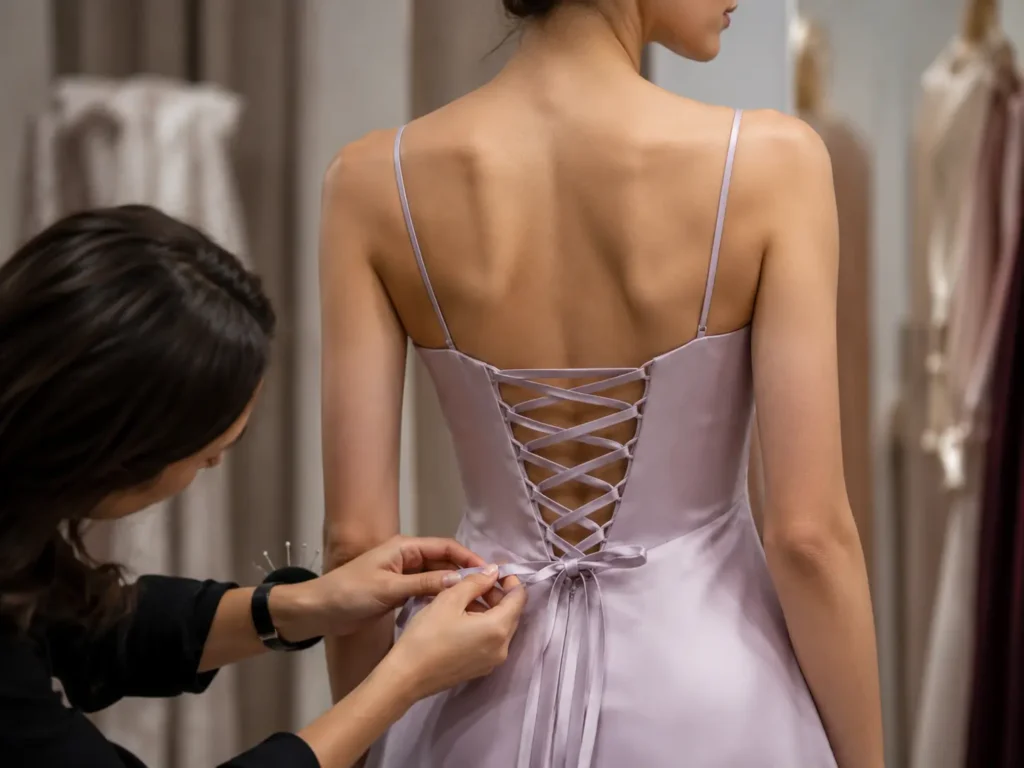
Tie Closures

Lining Attachment

Narrow Hems

Side Pockets
Five Ways to Start a Sundress Project
Tech Pack Development
Suitable for established product teams with drawings, measurements, construction notes, material information and labeling requirements.
Duolan reviews:
- Missing measurements.
- Conflicting construction notes.
- Fabric feasibility.
- Tolerance priorities.
- Print and trim requirements.
- Sample purpose.
- Bulk-production risks.
A complete tech pack supports more accurate quotation and development planning, yet technical review is still required before pattern and sample work begin.
Reference Image Development
Additional decisions include:
- Fabric type and weight.
- Back construction.
- Lining.
- Measurements.
- Strap or closure system.
- Print.
- Size range.
- Workmanship.
- Original design adjustments.
Original Sample Development
An original garment can help communicate proportion, fit and construction. Duolan can examine the sample and discuss which elements should be retained, improved or adapted.
Possible changes include:
- Fabric replacement.
- Fit adjustment.
- Length modification.
- New color or print.
- Simplified or upgraded workmanship.
- Label and packaging conversion.
- Size-range development.
- Production-readiness improvements.
Collection Brief Development
Duolan can help organize:
- Silhouette mix.
- Fabric families.
- Core and statement styles.
- Development sequence.
- High-risk sample priorities.
- Shared fit blocks.
- Bulk-production paths.
Fabric-Led Development
Fabric-led work can support:
- Print capsules.
- Linen-blend resort programs.
- Smocked viscose collections.
- Cotton daywear groups.
- Chiffon summer occasion lines.
Private Label Delivery
Private label preparation can include:
- Main labels.
- Size labels.
- Care and composition labels.
- Hangtags.
- Barcodes.
- Price tickets.
- Polybags.
- Tissue or inserts.
- Carton marks.
- Pack ratios.
Structured Sundress Sample Development
Development Review and Sample Planning
Before pattern work, Duolan reviews:
- Product type and selling scenario.
- Tech pack or reference basis.
- Target fabric and trims.
- Intended size range.
- Fit priorities.
- Visual priorities.
- Target quantity.
- Sample purpose.
- Launch schedule.
The team identifies points requiring early confirmation, such as custom print, pale-color opacity, smocking tension, halter support, unusual ruffle construction or long viscose panels.
A sample proposal can then explain the development route, material preparation, expected review points and project-specific timing. Clear information at the beginning makes the schedule more controllable.
Pattern, Sewing and Staged Updates
Pattern work translates approved information into garment structure.
During development, progress may be shared at several stages:
- Development start confirmation.
- Fabric and trim preparation.
- Pattern or draping progress.
- Complex construction checkpoints.
- In-process garment images.
- Pre-completion update.
- Finished sample photographs and details.
For sensitive styles, early review of fabric drape, neckline, coverage or smocking can prevent a completed sample from moving too far in the wrong direction.
Updates should explain a decision or progress point rather than provide unrelated workshop photographs.
Sample Delivery and Review Note
A finished sample should arrive with enough information for efficient internal review.
Duolan can prepare:
- Front, side and back images.
- Detail close-ups.
- Key measurement checks.
- Description of sample stage.
- Points already close to target.
- Areas recommended for review.
- Pending material or construction decisions.
- Suggested next step.
Planning ranges are confirmed after material and complexity review. A basic sundress sample may commonly require around 7–12 working days after development information and materials are confirmed. Printed, highly smocked, layered or structurally sensitive styles may require around 12–20 working days. Revision samples commonly require 5–10 working days after consolidated comments and required materials are ready.
From Approved Sample to Repeatable Bulk Standards
Bulk Readiness Review
Before production begins, the team confirms the status of the current sample:
- Fit confirmed.
- Visual direction confirmed.
- PP basis approved.
- Material approval completed.
- Remaining refinement points.
- Packing direction confirmed.
Key items are then locked or clearly marked as pending:
- Fabric.
- Lining.
- Trims.
- Color.
- Print.
- Measurements.
- Tolerance.
- Workmanship.
- Labels.
- Packaging.
Production Path Planning
A 10–30 style order should not be treated as one identical production block. Duolan breaks the order down by:
- Style complexity.
- Fabric group.
- Special process.
- Color.
- Size assortment.
- Quantity.
- Delivery priority.
- Quality risk.
Styles may be classified as regular, complex, quick-response or high-risk workmanship. Production routing can then match the most suitable factory, line and supporting process. Printed styles, smocked programs, lightweight satin styles and simple cotton dresses may require different preparation and inspection priorities even when they belong to one collection.
Preserve Standards for Repeat Orders
Repeat production should not restart from memory.
Records can preserve:
- Approved pattern version.
- BOM.
- Fabric and trim references.
- Color standard.
- Measurement specification.
- Tolerance.
- Workmanship notes.
- PP or approved sample.
- QC findings.
- Packing record.
Preserved standards support repeat colors, additional quantities and future extensions with lower risk of unapproved changes.
How Custom Sundresses Move Through Production
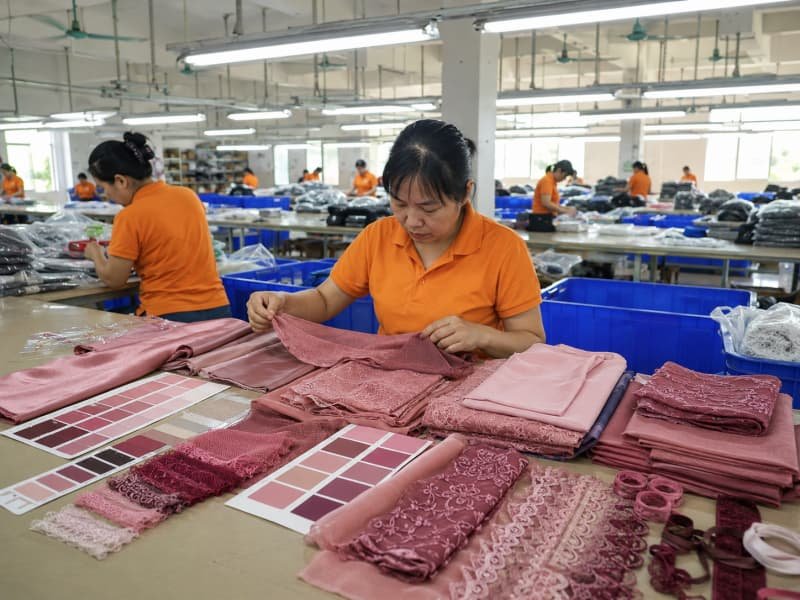
Fabric Inspection
- Color and shade.
- Width.
- Weight direction.
- Surface defects.
- Print quality.
- Handfeel.
- Stretch or recovery.
- Shrinkage information.
- Roll variation.

Laying and Cutting
Key controls:
- Fabric relaxation.
- Face direction.
- Print placement.
- Shade grouping.
- Panel identification.
- Notches and drill marks.
- Long-panel distortion.
- Cut-part numbering.

Special Process Preparation
Checks include:
- Artwork version.
- Color.
- Position.
- Orientation.
- Finished dimension.
- Process effect.
- Handling protection.
- Batch consistency.

Sewing and Assembly
Sundress checkpoints may include:
- Strap attachment.
- Neckline shape.
- Smocking tension.
- Elastic length.
- Gather distribution.
- Tier joining.
- Zipper alignment.
- Button spacing.
- Lining connection.
- Hem finish.

Pressing and Appearance
Pressing should improve shape without damaging the fabric. Light satin, chiffon, viscose and printed materials respond differently to heat and pressure.
Appearance checks include:
- Seam flatness.
- Shine or pressure marks.
- Hem level.
- Skirt fall.
- Ruffle shape.
- Strap condition.
- Lining position.
- Overall symmetry.
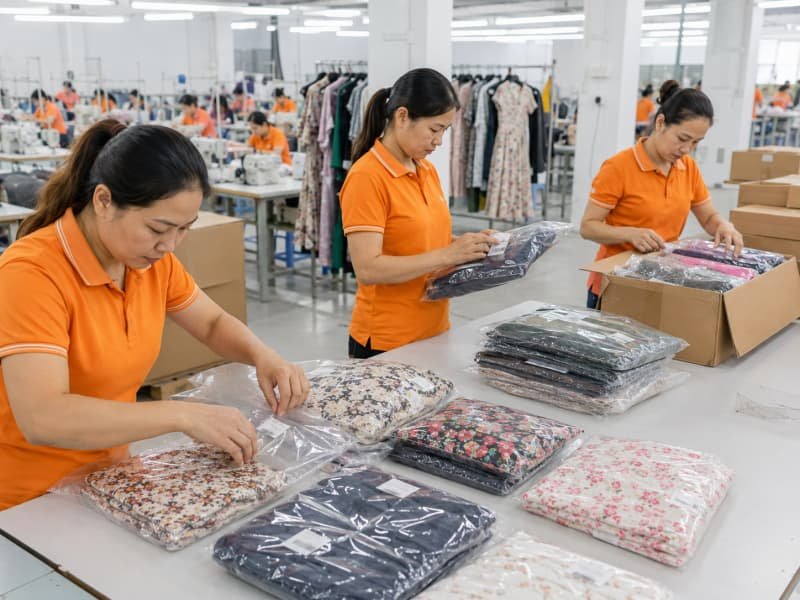
Final Inspection and Packing
Final review connects measurements, workmanship, appearance, labels and packing.
Checks can cover:
- Approved measurement points.
- Construction and finishing.
- Print direction and shade.
- Cleanliness.
- Label accuracy.
- Barcode and SKU.
- Pack ratio.
- Polybag and carton marks.
- Folding or hanging method.
Manufacturing Capacity for Multi-Style Dress Programs
Duolan combines owned factories, satellite capacity, development resources and coordinated production planning to support high-density fashion programs and larger seasonal orders.
16 Owned Factories
20+ Satellite Factories
12,000+ Workers
300 Sewing Lines
50+ Quick-Response Lines
Multi-Style Coordination
Capacity is not presented as a promise that every order uses every factory or line. A specific production route is confirmed after style, quantity, timing, material and quality requirements are reviewed.
Sundress Quality Control from Material to Packing
Fabric and Shade
Shrinkage and Stability
Strap Construction
Smocking Recovery
Relaxed dimensions, extended dimensions, row consistency and recovery are reviewed to protect fit across sizes and production batches.
Neckline and Armhole
Lining and Opacity
Measurement and Grading
Final Appearance
Labels, Packaging and Global Delivery Preparation
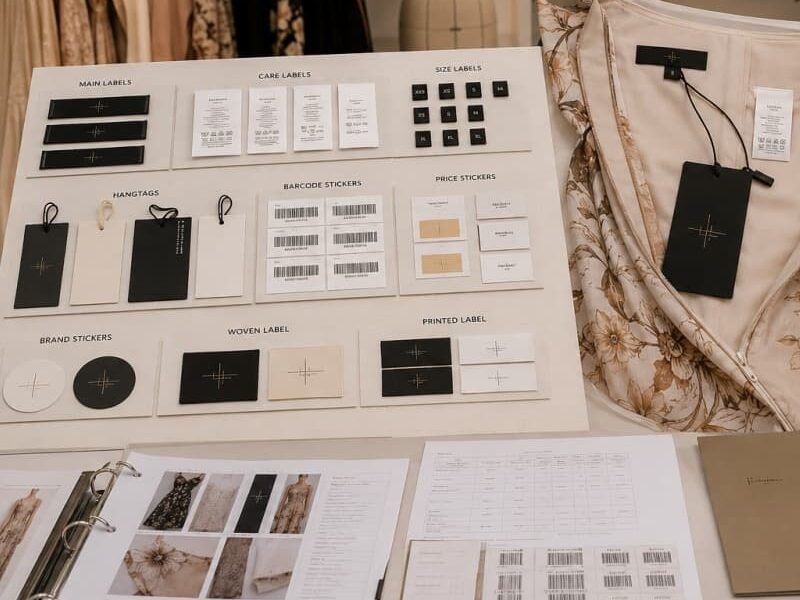
Brand Labels
- Main label.
- Size label.
- Care label.
- Composition label.
- Country-of-origin information.
- Special instruction label.

Carton Planning
Carton preparation includes:
- Pack ratio.
- Size and color assortment.
- Carton quantity.
- Carton mark.
- Destination information.
- Weight and dimension planning.
- Packing-list consistency.

Individual Packing
- Standard polybags.
- Recycled-material bags where specified.
- Tissue protection.
- Garment inserts.
- Strap protection.
- Special folding cards.

Sundress Folding

Hangtags and Tickets
Hangtags, barcode labels, price tickets and SKU stickers are checked for artwork, position, readability and assortment accuracy before packing.

Logistics Coordination
Duolan can coordinate production handover with the nominated forwarder and agreed trade terms. Express, air and sea options are evaluated according to timing, volume, destination and commercial requirements.
Audit, Testing and Compliance Coordination
SMETA Audit Foundation
Brand-Specific Standards
Fabric Testing
Testing requirements may cover: Fiber composition,Colorfastness,Shrinkage,Dimensional stability,Seam strength,Pilling,Appearance after care,Relevant restricted substances.
Garment Testing
Standard Coordination
Projects can be evaluated for requirements connected with AATCC, ASTM, EN, China GB, OEKO-TEX®, GOTS or other specified systems. Coordination does not mean every product automatically carries every certification.
Third-Party Inspection
Duolan can coordinate with nominated inspection organizations or brand inspection teams according to agreed access, timing, sample plan and reporting requirements.
Sundress Programs Developed for International Fashion Markets

United States Contemporary Program
Market: United States
Product direction: Printed, smocked and clean-line summer dresses
Program size: 18 styles
Order quantity: 42,600 garments
Size range: XXS–XXL
Color and print structure: 7 print or solid directions
The program combined printed viscose maxi dresses, smocked mini dresses, tie-strap midis and several cleaner cotton-blend shapes. Major development risks included print scale across different lengths, smocking recovery, pale-ground opacity and consistency between fitted and relaxed silhouettes.
Duolan organized the program into three development groups:
- Printed flowing styles.
- Smocked fitted styles.
- Structured cotton-blend styles.
Print strike-offs were reviewed before full sample release. Smocked panels received relaxed and extended measurement standards. Pale-ground styles were assessed with selected lining directions. Shared fit references were used where silhouettes allowed, while high-risk styles received individual pattern attention.
Bulk planning separated the order according to fabric and construction rather than sending all 18 styles through one production route. Material confirmation, PP references and packing matrices were controlled by style group.
Result:
- 18 coordinated styles moved into one seasonal production program.
- Total volume reached 42,600 garments.
- Size and packing records were maintained by style, color and market SKU.
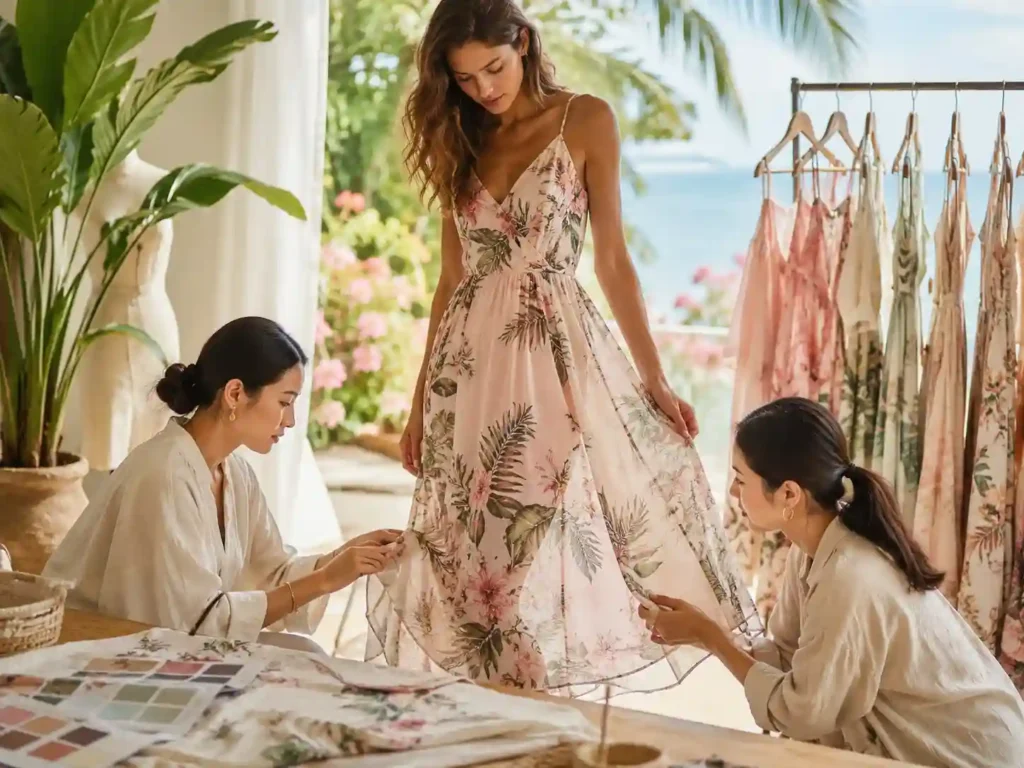
European Resort Collection
Market: Western Europe
Product direction: Viscose, chiffon and linen-blend resort dresses
Program size: 12 styles
Order quantity: 24,800 garments
Size range: XS–XXL
Color and print structure: 4 print stories and 5 solid colors
The collection included printed maxi dresses, halter midis, button-front linen-blend styles and layered chiffon shapes. Development focused on viscose shrinkage, maxi length stability, chiffon lining, halter support and travel-related wrinkling.
Duolan reviewed each material group separately. Viscose fabrics were considered for relaxation and dimensional behavior before final pattern release. Chiffon styles received lining and rolled-hem trials. Linen-blend styles were evaluated for wrinkle character and seam stability. Halter samples were reviewed for neck pressure, bust coverage and back anchoring.
The 12 styles were divided between earlier high-risk sampling and later commercial-shape development. Approval records covered fabric, lining, measurements, print, trims and packing. Maxi folding methods were tested to reduce heavy crease lines during shipment.
Result:
- 12 styles were prepared under one coordinated resort calendar.
- Total bulk quantity reached 24,800 garments.
- Four print stories were scaled across different dress lengths.
- Packing directions were separated for maxi and shorter styles.
- Material and pattern records were prepared for possible seasonal repeats.

Multi-Market Ecommerce Program
Product direction: Commercial mini, midi and maxi sundresses
Program size: 26 styles
Order quantity: 73,500 garments
Size range: US 0–16
Color and print structure: 8 color families
The program required a wide style mix including square-neck cotton minis, smocked midis, tiered maxis, wrap dresses and backless holiday shapes. The main operational challenge was coordinating 26 styles without delaying high-priority launch products.
Duolan classified the collection by complexity and commercial priority:
- Fast commercial styles.
- Print-dependent styles.
- Smocking-sensitive styles.
- Fit-sensitive backless and halter styles.
- Longer-lead material styles.
Production planning connected style complexity, fabric readiness, order quantity and delivery priority. Inline attention focused on strap length, smocking recovery, neckline coverage, print orientation and size assortment.
Result:
- 26 styles were organized into staged development and production releases.
- Combined volume reached 73,500 garments.
- High-priority products were separated from longer-lead styles.
- Size, color, barcode and carton data were managed by market.
- Approved blocks and records created a stronger basis for follow-up color and volume extensions.
Custom Sundress Frequently Asked Questions
Duolan develops mini, midi and maxi sundresses, including spaghetti-strap, halter, smocked, shirred-waist, wrap, tiered, ruffled, backless, button-front, printed and summer occasion styles. Final capability is reviewed according to fabric, construction, quantity and quality requirements.
Yes. The team reviews measurements, fabric, trims, construction, artwork, tolerances, size range, labels and packing information before confirming the sample route. Missing or conflicting points are identified before development progresses.
Yes. A reference image can establish the visual direction, but fabric, measurements, construction, back details, lining, size range and original design changes still need confirmation.
Common options include cotton poplin, cotton voile, linen blends, viscose, rayon, chiffon, georgette, crepe, lightweight satin and printed polyester. Selection depends on silhouette, opacity, drape, comfort, care and target price.
Yes. Print development can include artwork review, repeat and scale confirmation, strike-offs, Pantone references, placement planning and bulk color control. Requirements depend on fabric and print method.
Duolan reviews fabric density, color, body contact and lighting. Solutions may include partial lining, full lining, double layers or fabric adjustment. Coverage is evaluated without adding unnecessary heat or weight.
Duolan can follow brand-specific size charts and grading rules. Common project ranges may include XXS–XXL or US 0–16. Extended sizes and regional standards are reviewed according to the selected fit block and style.
Basic first samples commonly require around 7–12 working days after development information and materials are confirmed. Complex printed, layered, smocked or structured styles may require around 12–20 working days. A project-specific schedule is provided before sampling.
Material availability, print, special processes, quantity, number of styles, approval status, testing and packing requirements affect timing. Established programs commonly require around 25–45 days after PP approval and material readiness, subject to final review.
Duolan uses approved samples, BOM records, material confirmation, measurement specifications, workmanship notes, PP references, first-piece review, inline checks, final inspection and packing verification according to the project.

Start Your Custom Sundress Development Program
Send Duolan the available project information for a focused review of fabric, pattern, sampling, production and delivery requirements. A complete tech pack is helpful but not mandatory. Reference images, original garment photographs, collection briefs, fabric ideas or print artwork can also establish the first development discussion.
For a more useful evaluation, include:
- Brand or company name.
- Website and primary market.
- Sundress types being developed.
- Number of styles.
- Estimated quantity per style and total program quantity.
- Target colors or print directions.
- Required size range.
- Tech pack, reference images or original sample details.
- Fabric and lining direction.
- Target sample purpose.
- Intended launch or warehouse date.
- Quality, testing or compliance requirements.
- Main label, care label, hangtag and packaging files.
- Preferred delivery terms or nominated forwarder information.
Duolan will review the development basis, major product risks, sample route, required confirmations and potential bulk-production path. The first response can then focus on the information needed to move forward rather than a generic quotation.


