 Skip to content
Custom Sweetheart Neckline Dress Manufacturer
Dress-focused development and manufacturing for fashion brands building structured, fitted, party, occasion, and going-out collections.
- 8 commercial sweetheart dress directions covering mini, midi, bodycon, cocktail, party, occasion, prom, and wedding guest programs.
- 6 critical fit checkpoints covering neckline contour, bust point, cup position, side coverage, strap balance, and waist alignment.
- 5 sample purposes supported: first prototype, fit sample, photo-ready sample, salesman sample, and PP sample.
- 4 quality stages covering incoming materials, cutting, inline production, and final packing inspection.
Duolan turns tech packs, design sketches, reference images, original samples, and fabric directions into production-ready sweetheart neckline dresses. Development covers neckline engineering, pattern balance, internal bust support, material selection, sample refinement, bulk preparation, production control, branded packing, and repeat-order coordination.
Built for Structured Fashion Dress Development
Fast-Fashion Dress Brands
Occasionwear Brands
Product Development Teams
Buying and Sourcing Teams
Complete Sweetheart Dress Manufacturing Capabilities
Design Review
Fabric and Trim Sourcing
Pattern Development
Sample Development
Production Preparation
Bulk and Delivery Control
Why Sweetheart Necklines Need Specialist Control
A sweetheart neckline concentrates several fit and construction risks within a small area. An attractive sketch can become unstable when curve geometry, bust position, support, fabric, grading, and sewing methods are not developed as one system.
| Development Risk | What Can Go Wrong | Duolan Control Direction |
|---|---|---|
| Neckline gaping | The upper edge stands away from the body, especially at the center front or upper cup | Review neckline contour, fabric stretch, stay tape, cup shape, seam tension, and negative ease |
| Uneven heart curves | Left and right curves appear different after sewing or pressing | Check pattern symmetry, cutting direction, notch accuracy, sewing sequence, and first-piece appearance |
| Incorrect bust point | The visual apex sits too high, low, narrow, or wide | Align bust point, cup position, dart or princess seam, neckline depth, and target body measurements |
| Limited side coverage | Side bust exposure increases during movement or across larger sizes | Review side seam height, cup width, strap position, lining coverage, and grading rules |
| Weak strapless support | The bodice slips, rotates, collapses, or relies excessively on tightness | Evaluate boning, under-bust stability, grip tape, cup structure, waist anchoring, closure, and lining |
| Distorted size grading | Larger or smaller sizes lose the intended heart shape | Grade curve depth, cup spacing, coverage, straps, center front, and internal support independently |
| Fabric-driven deformation | Stretch, weight, bias movement, or soft drape changes the neckline | Test fabric behavior before final pattern approval and adjust reinforcement accordingly |
| Bulk inconsistency | Approved sample details shift during cutting, sewing, pressing, or finishing | Lock materials, measurements, construction points, PP reference, first-piece checks, and inline controls |
Custom Sweetheart Neckline Dress Collections
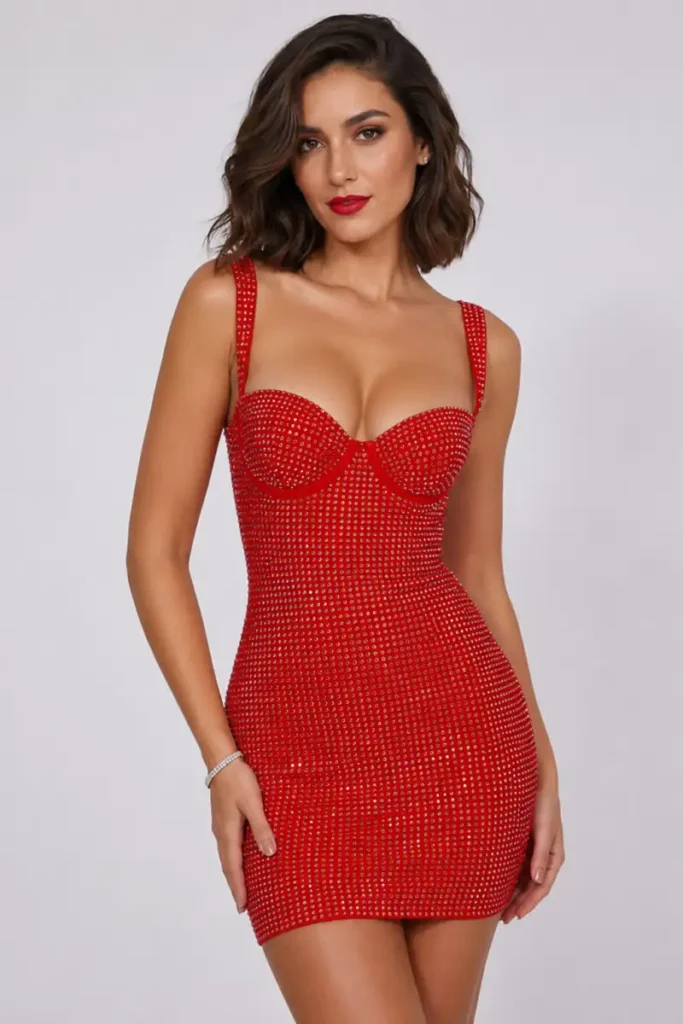
Sweetheart Mini Dresses

Sweetheart Midi Dresses

Sweetheart Maxi Dresses

Sweetheart Bodycon Dresses
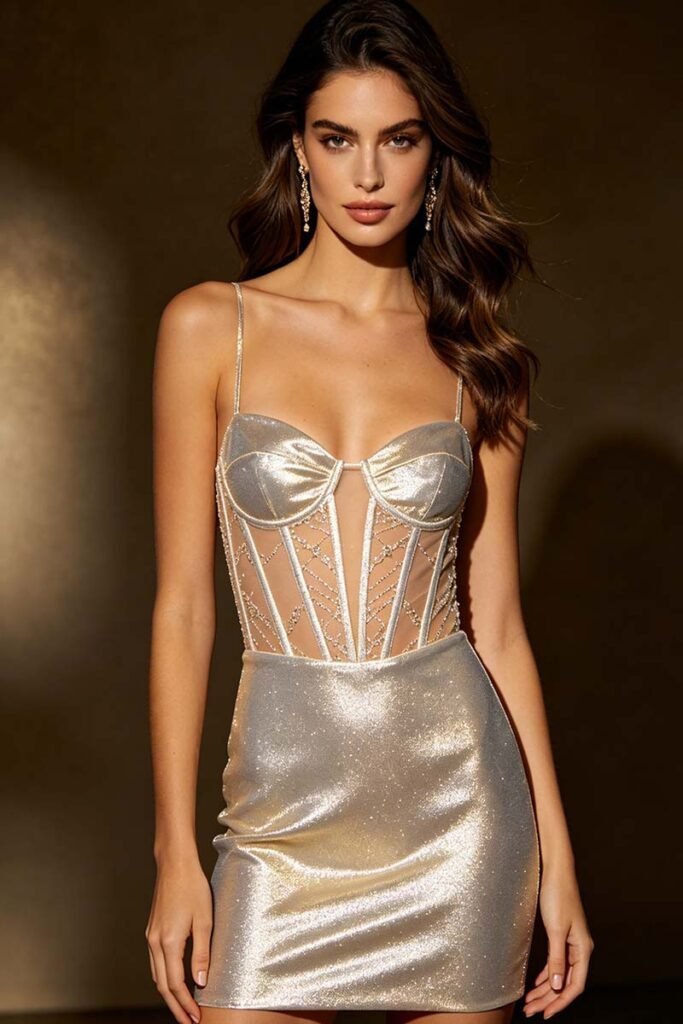
Sweetheart Party Dresses
Party dresses may combine a sweetheart neckline with ruching, sequins, metallic surfaces, crystal details, mesh, cut-outs, bows, corset seams, or asymmetric draping. Decoration cannot be evaluated separately from fit. Added weight may pull the neckline, rough edges may affect comfort, and stretch interruption can change the curve. Duolan reviews decorative placement, seam allowances, lining protection, reinforcement, and bulk workmanship before production planning.

Sweetheart Cocktail Dresses
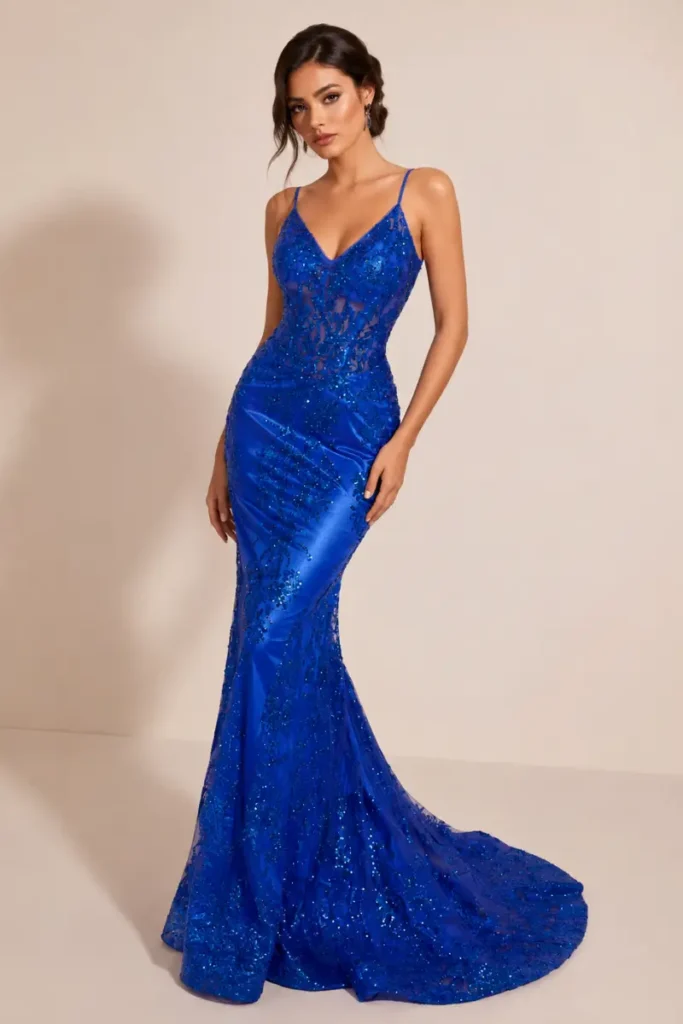
Sweetheart Occasion Dresses

Sweetheart Wedding Guest Dresses
Sweetheart Neckline Design Variations

Strapless Sweetheart

Spaghetti Strap Sweetheart
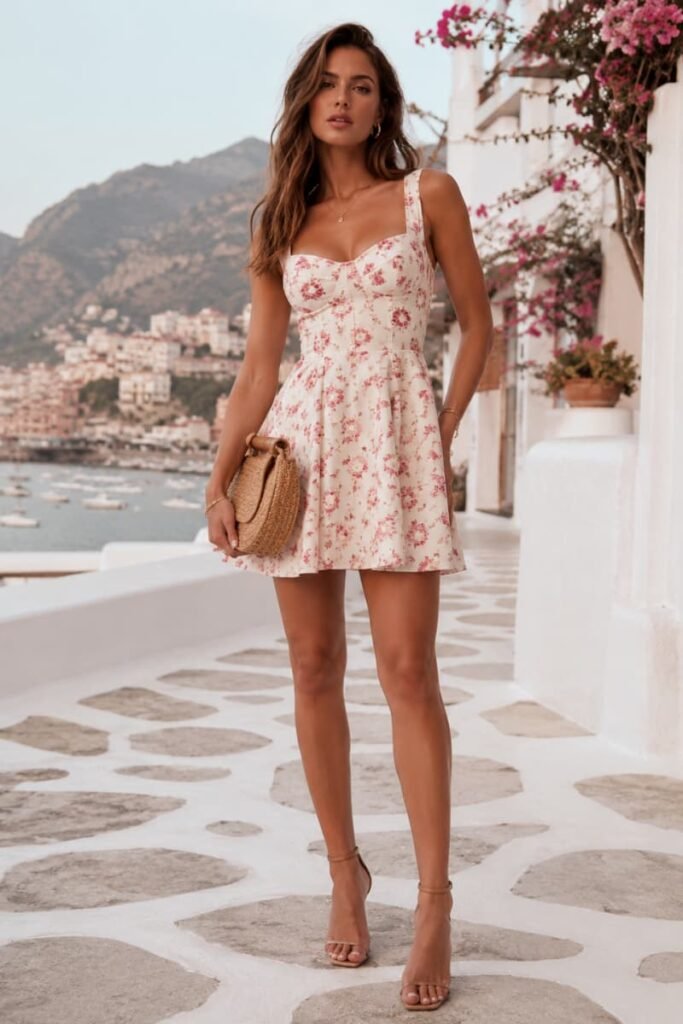
Wide Strap Sweetheart

Off-Shoulder Sweetheart

Puff Sleeve Sweetheart

Long Sleeve Sweetheart

Corset Sweetheart

Ruched Sweetheart
Ruching can soften the neckline, add texture, improve visual coverage, or shape the waist and bust. Poorly controlled ruching may create asymmetry, excessive thickness, seam twisting, or inconsistent bulk appearance. The direction, density, anchoring, lining, and stretch relationship need specification. Ruching placement should reinforce the intended silhouette rather than hide unresolved pattern problems.
From Design Reference to Commercial Production
Decode the Design Intention
Key review points include:
- Target neckline depth and center-front shape
- Bust coverage and intended bra compatibility
- Strap, sleeve, or strapless direction
- Fabric surface and movement
- Cup, lining, boning, or reinforcement needs
- Closure and dressing method
- Size range and fit intention
- Decoration, print, lace, or sequin placement
- Target quantity and launch timing
Convert Appearance into Specifications
The development basis may include:
- Front, back, and side technical views
- Measurement chart and POM definitions
- Base size and grading direction
- Fabric and lining specifications
- Cup, boning, tape, elastic, and closure details
- Stitching and finishing notes
- Label and packaging requirements
- Sample purpose and approval criteria
Protect the Brand Look
Production engineering should preserve the visual reasons a style was selected. Duolan does not remove defining details merely to simplify production. The team identifies which elements create recognition—such as the curve depth, corset seam map, satin drape, ruched bust, sleeve volume, or decorated edge—and which details can be adjusted to improve fit, comfort, stability, or bulk execution.
For example, a deep reference neckline may need slightly more side coverage for the target size range while retaining its center-front character. A soft satin bodice may require hidden reinforcement to prevent rolling. A heavy embellished fabric may need a lighter lining or stronger waist support. Each adjustment should protect the intended design rather than flatten it into a generic factory version.

Sweetheart Neckline Curve Engineering
Curve Depth and Center Front
- Vertical depth from reference points
- Center-front notch or rounded transition
- Relationship between curve depth and cup bridge
- Seam allowance behavior at the tightest curve
- Understitching, clipping, and turning requirements
- Stay tape or stabilizer placement
- Lining roll and edge visibility
- Pressing access without flattening cup volume
Left and Right Symmetry
- Mirrored pattern verification
- Grainline and fabric direction
- Paired cutting and component numbering
- Matching notch positions
- Equal seam allowance handling
- Cup and princess-seam alignment
- Consistent tape or elastic tension
- First-piece visual comparison
- Final measurement from fixed reference points
Bust Point and Cup Relationship
- Horizontal bust-point spacing
- Vertical bust-point level
- Cup height and width
- Apex position within the cup
- Princess-seam or dart shaping
- Under-bust location
- Side cup coverage
- Center-front bridge
- Strap entry point
- Intended cleavage and coverage
Side Coverage and Edge Stability
- Carefully calculated neckline length
- Stay tape or clear elastic
- Fusible reinforcement
- Lining with suitable recovery
- Power mesh sections
- Controlled understitching
- Cup attachment
- Boning near the side seam
- Strap or sleeve anchoring
- Stable back closure
Bust Support and Internal Construction

Cups and Bust Shaping
- Cup size relative to the base garment size
- Cup height, width, projection, and apex
- Distance between cups
- Cup edge visibility
- Attachment to lining or seam structure
- Compatibility with underwire or boning
- Behavior after pressing and packing
- Grading method across the size range

Boning and Bodice Stability
- Plastic, spiral steel, or other appropriate options
- Boning width and stiffness
- Channel position and seam integration
- Top and bottom finishing
- Interaction with waist seam and lining
- Comfort during sitting and movement
- Visibility through outer fabric
- Risk of twisting or piercing
- Bulk sewing consistency

Grip, Elastic, and Reinforcement
A strapless neckline may use silicone grip elastic to reduce downward movement, but grip tape cannot replace correct fit and bodice anchoring. Stay tape can control stretch along curved edges. Power mesh can reinforce selected lining areas. Under-bust elastic may improve stability in certain designs. Fusible materials can support shape when selected according to fabric weight and surface sensitivity.
Key questions include:
- Where should tension be added?
- Where must stretch remain available?
- Will reinforcement show through the outer fabric?
- Can the garment be worn comfortably for several hours?
- Will elastic recover after repeated wear?
- Does the support method change the neckline appearance?
- Can the same method be reproduced consistently in bulk?
Local reinforcement is often more effective than making the entire bodice rigid.

Lining and Closure Systems
Lining controls comfort, opacity, support, seam protection, and interior appearance. Full lining may suit occasion and satin dresses, while partial lining can reduce bulk in stretch or mesh designs. The lining must work with the outer shell rather than pull against it. Closure options may include:
- Invisible zipper
- Exposed decorative zipper
- Hook-and-eye extension
- Lace-up back
- Corset eyelets
- Elasticated back panel
- Smocked back
- Combination zipper and hook
- Side zipper
- Pull-on stretch construction
The closure affects dressing ease, fit adjustment, production time, and size tolerance. Zipper placement must not interrupt boning, cup seams, lace motifs, or decorative panels without a planned construction solution.
Fabric and Lining Selection by Dress Effect
Material choice controls more than surface appearance. Weight, stretch, recovery, drape, opacity, friction, grain stability, and pressing response directly affect neckline shape, support, fit, workmanship, packing, and bulk consistency.
The following table provides development directions rather than fixed material rules. Final selection should be reviewed against the design, sample size, size range, target quantity, color plan, price position, and launch schedule.
| Fabric Direction | Suitable Sweetheart Dress Effect | Main Development Risks | Control Priorities |
|---|---|---|---|
| Satin | Polished cocktail, occasion, wedding guest, formal, and party dresses | Needle marks, seam waviness, pressure marks, scratching, transparency, neckline rolling | Weight, weave stability, lining, reinforcement, needle and thread selection, seam handling, pressing, protective packing |
| Stretch Jersey | Fitted mini, bodycon, club, and going-out dresses | Neckline stretching, gaping, transparency, poor recovery, seam rippling | GSM, stretch direction, recovery, negative ease, lining tension, clear elastic, neckline stabilization |
| Crepe | Refined fitted, cocktail, work-to-evening, and midi dresses | Surface puckering, uneven drape, bulk at structured seams | Fiber content, weight, recovery, seam type, fusible selection, pressing temperature |
| Mesh | Sheer panels, draped overlays, sleeves, corset inserts, and party styles | Excess transparency, seam visibility, stretching, edge distortion, discomfort | Stretch and recovery, mesh density, lining coverage, seam placement, elastic control, edge finishing |
| Lace | Romantic occasion, cocktail, bridesmaid, and wedding guest dresses | Motif mismatch, visible seam interruption, edge fraying, uneven stretch | Motif placement, paired cutting, seam concealment, backing fabric, edge finishing, color matching |
| Sequin Fabric | Statement party, holiday, prom, and event dresses | Added weight, missing sequins, scratching, broken needles, bulky seams, neckline pulling | Base fabric, sequin direction, edge clearance, lining, weight support, seam cleaning, repair standard |
| Velvet | Holiday, evening, winter occasion, and premium fitted dresses | Pile crushing, shade direction, seam marking, difficult pressing | Nap direction, cutting consistency, seam handling, lining, low-pressure finishing, hanging and packing |
| Chiffon or Organza | Soft drape, layered skirts, sleeves, overlays, and romantic occasion dresses | Fraying, seam visibility, transparency, edge distortion, weak bust support | Layer planning, lining, narrow seams, stabilizing underlayers, controlled gathering, reinforcement at structured areas |
Matching Lining to Function
Lining should be selected according to function rather than treated as a hidden generic material.
- Opacity lining: prevents show-through in light satin, mesh, lace, and pale colors.
- Support lining: uses stable woven or power mesh areas to help control the bust and waist.
- Comfort lining: protects skin from sequins, boning, lace edges, embroidery, and internal seams.
- Stretch lining: moves with bodycon fabrics without restricting recovery.
- Partial lining: reduces heat and bulk while covering only the areas requiring opacity or structure.
Fabric Confirmation Before Sampling
A clear fabric request should include the intended appearance, composition preference, weight direction, stretch, recovery, opacity, handfeel, color, target quantity, and acceptable alternatives. Duolan can work with brand-nominated fabrics, supplied swatches, original samples, photographs, or internal sourcing directions.
Material availability affects sample accuracy and production timing. When the exact bulk fabric is not yet available, the sample plan should identify whether a substitute is suitable for visual review, fit review, construction testing, or only early pattern evaluation.
Pattern, Bust Balance and Fit Development
Base Pattern and Bust Balance
Core checks include:
- Bust circumference and high-bust relationship
- Bust-point distance and level
- Cup width, height, and projection
- Center-front length
- Under-bust and waist level
- Side seam position
- Armhole or strap entry
- Back width and closure position
- Bodice length and waist seam
- Balance between front and back
Strap and Shoulder Balance
Development considers:
- Front strap entry
- Back strap position
- Strap angle
- Strap width and elasticity
- Adjustable or fixed construction
- Hardware strength
- Reinforcement at attachment points
- Size grading
- Bra compatibility
- Movement during wear
Waist and Lower-Body Relationship
The neckline cannot be evaluated separately from the rest of the dress. Waist shaping controls how the bodice stays in position. A stable waist can reduce pressure on straps and upper edges. Skirt weight may pull on the bodice, particularly in maxi, embellished, layered, or heavy satin designs.
Fit assessment includes:
- Natural or raised waist placement
- Waist seam level
- Front and back waist balance
- Hip and seat shaping
- Skirt weight
- Slit position
- Ruching or drape tension
- Lining interaction
- Zipper behavior
- Hem and movemen
Movement and Wear Review
Static mannequin appearance is only one stage of fit judgment. Sweetheart dresses should be reviewed during walking, sitting, arm movement, torso rotation, and normal dressing actions. Movement may reveal neckline gaping, side exposure, strap pressure, zipper strain, boning discomfort, or skirt pull.
Depending on the sample purpose, Duolan can support:
- Flat measurement review
- Mannequin review
- Model fitting feedback
- Brand fit comments
- Front, side, and back photography
- Movement observations
- Revision summaries
- Production-readiness checks
Measurement and Size Grading Discipline
Measurement Points That Matter
A structured measurement chart should define fixed points rather than rely on visual assumptions. Depending on the design, 8–12 neckline and bust-related POMs may be needed in addition to standard garment measurements. Recommended points include:
- Neckline depth from high shoulder point or approved reference
- Neckline width at defined level
- Center-front bodice length
- Bust-point distance
- Bust-point height
- Cup height
- Cup width
- Under-bust circumference
- Strap length
- Front strap position
- Back strap position
- Waist seam level
- Across-front and across-back
- Zipper length
- Internal boning length
Grading the Neckline Shape
The heart curve should remain recognizable across the full range without creating excessive exposure in larger sizes or a disproportionately high neckline in smaller sizes. The grade may require independent adjustments to curve width, center-front depth, cup distance, side coverage, and strap position.
Grading review asks:
- Does the curve still match the design identity?
- Is the cup centered over the body?
- Does side coverage remain secure?
- Is neckline depth commercially appropriate?
- Does strap position remain balanced?
- Does the internal support scale with garment tension?
- Are size transitions smooth rather than abrupt?
For expanded size programs, additional fit review may be required rather than relying only on computer grading.
Tolerance and Bulk Measurement
Tolerance should reflect the sensitivity of each measurement. A small variation at the neckline, cup, strap, or center front may have a greater visual and functional effect than the same variation at a less sensitive area.
Critical measurements may include:
- Neckline depth
- Bust-point spacing
- Cup placement
- Strap length
- Under-bust
- Waist
- Side height
- Center-front length
- Boning position
- Zipper and closure alignment
Duolan identifies priority POMs for sample review, PP confirmation, inline checks, and final inspection. Tolerances should be agreed before production rather than decided after garments are completed.

Technical Files Required Before Sampling
Design Views
Measurement Basis
Material Direction
Construction Details
Sample Objective
Commercial Information
Feasibility Review Before Pattern Cutting
Neckline Feasibility
Fabric Feasibility
Support Feasibility
Workmanship Feasibility
Timeline Feasibility
Commercial Feasibility
Controlled Sweetheart Dress Sample Development
Sampling is treated as a managed development path. Each stage has a purpose, required input, visible output, and decision point before the project moves forward.
Project Brief Review
Material Preparation
Pattern Development
Structure Testing
Sample Sewing
Internal Review
Brand Review
Revision Summary
PP and Bulk Readiness
Sample lead time is confirmed in the Sample Plan after style complexity, material readiness, sample purpose, and required structure are reviewed. Complex corset, sequin, mesh, and special-material styles need sufficient preparation rather than an artificial fixed deadline.
Fit Comments Become Measurable Corrections
Neckline Comments
Bust and Cup Comments
Strap and Sleeve Comments
Waist and Body Comments
Material Comments
Revision Records
Sweetheart Dress Sewing and Workmanship Details

Clean Neckline Edges

Cup Attachment
Cups must sit at the approved height and remain symmetrical. Attachment should prevent movement without creating visible stitching, ridges, or hard edges. The cup, lining, outer shell, princess seam, underwire, and boning should meet cleanly. Bulk production requires clear placement references rather than relying on operator judgment.
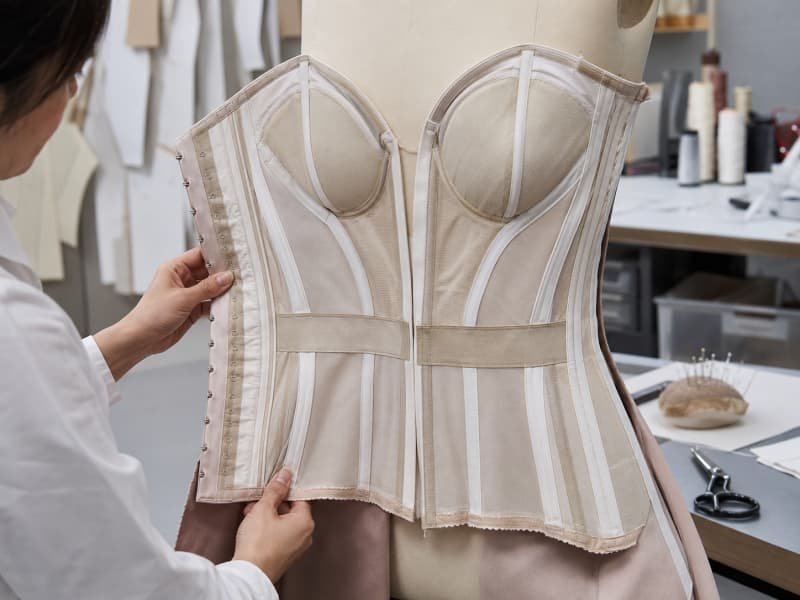
Boning Channels
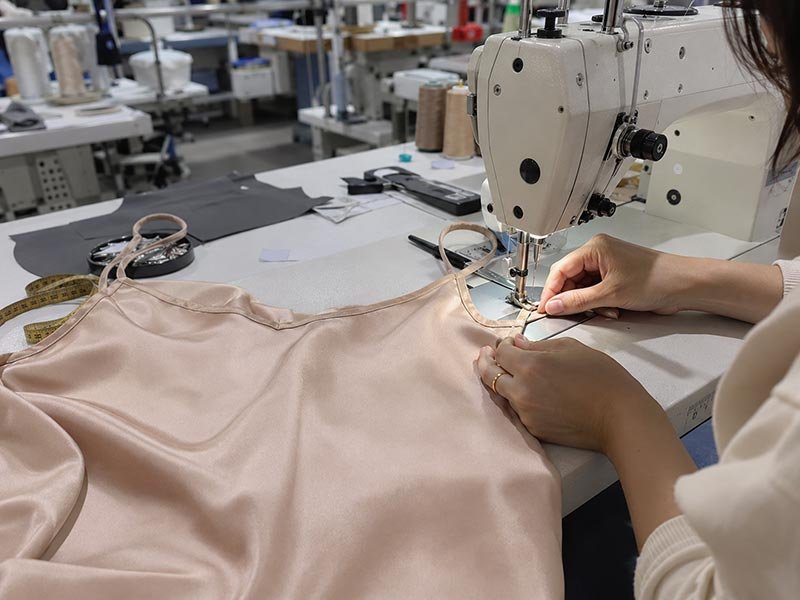
Strap Reinforcement

Lining Control

Invisible Zipper Setting

Lace and Mesh Joining

Sequin Edge Preparation
Approved Sample to Controlled Bulk Production
Bulk Readiness Review
The review identifies the current sample status:
- Fit confirmed
- Visual direction confirmed
- PP basis approved
- Material approval pending
- Workmanship refinement pending
- Packaging approval pending
The team also confirms whether the order is a launch order, repeat order, scale-up order, or replenishment program.
Different order stages carry different risks.
Material and Workmanship Locking
Before cutting, production-critical details are confirmed:
- Shell fabric lot, color, weight, stretch, and handfeel
- Lining, cups, boning, tape, elastic, zipper, and trims
- Print, embroidery, sequins, pleating, washing, or finishing
- Neckline, cup, strap, zipper, lining, and hem workmanship
- Main label, size label, care label, hangtag, barcode, and packing
A Material and Workmanship Confirmation Summary can be prepared for structured projects.
Order Breakdown and Production Path
Bulk orders are separated by style, color, size, quantity, complexity, material, workmanship risk, and required delivery timing. The project may be assigned to a single production unit or coordinated across suitable factories and lines according to the order structure.Planning considers:
- Standard styles
- Complex structured styles
- Fast-response requirements
- Special-process styles
- First-piece or pilot needs
- Multi-style priorities
- Packing and shipment sequence
- Repeat-order material continuity
First-Piece and Pilot Production Control
Neckline First Piece
Structured Bodice Pilot
Satin Handling Check
Mesh and Lace Check
Sequin and Embellishment Check
Measurement Verification
Quality Control for Sweetheart Neckline Dresses
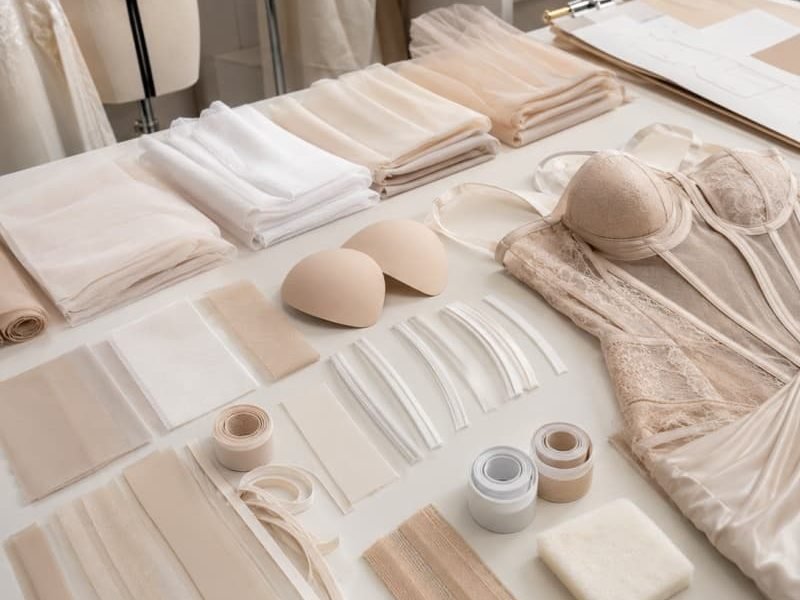
Incoming Material Control
- Color and shade
- Fabric weight
- Width and usable width
- Stretch and recovery
- Opacity
- Handfeel and surface
- Shrinkage requirement
- Defects and contamination
- Trim dimensions
- Cup and boning specification
- Zipper color and function
- Label and packaging accuracy

Cutting Control
Cutting affects symmetry and fit before sewing starts.
Priority points include:
- Pattern version
- Grainline
- Directional fabric
- Paired components
- Lace or print placement
- Sequin direction
- Shade grouping
- Component numbering
- Notches and drill marks
- Cup, lining, and reinforcement pieces
- Cutting quantity
- Bundle identification
Sweetheart curves, cups, and mirrored panels require careful pairing.

Inline Sewing Control
- Neckline curve and symmetry
- Cup position and attachment
- Bust point
- Boning position
- Stay tape or elastic tension
- Strap position and reinforcement
- Side coverage
- Waist seam alignment
- Zipper installation
- Lining control
- Lace, mesh, or sequin joining
- Critical measurements
- Seam quality and tension

Finishing and Final Control
Final inspection verifies both garment presentation and technical requirements. Review points include:
- Overall shape and balance
- Neckline appearance
- Front, side, and back symmetry
- Measurement within agreed tolerance
- Cup, boning, straps, zipper, and closure
- Loose threads, stains, holes, and damage
- Pressing and surface condition
- Label placement
- Hangtag and barcode
- Folding or hanger presentation
- Polybag and carton information
- Assortment accuracy
Third-party inspection can be coordinated according to brand requirements.
Manufacturing Capacity for Brand-Level Dress Programs
16 Owned Factories
20+ Satellite Factories
12,000+ Manufacturing Workers
Multi-Region Capacity
South China Supply Chain
Dress-Focused Experience
Multi-Style Collections and Repeat-Order Support
Length and Silhouette Range
Fabric Family Planning
Colorway Coordination
Multi-Style Sampling
Launch Order Planning
Repeat and Scale-Up
Private Label, Packaging and Supplier Coordination
Main and Size Labels
Care and Content Labels
Hangtags and Barcodes
Garment Packing
Audit and Standards Support
Inspection and Shipment
Anonymized Sweetheart Dress Project Cases

United States Going-Out Brand
Project scope: 18 sweetheart neckline styles across bodycon minis, corset-inspired minis, ruched midis, and fitted party dresses.
Order volume: 48,600 garments across the full program, with four main color directions and a brand-defined size range.
Initial challenge: Several reference designs used deep neckline curves on stretch fabrics. Early review identified a risk of center-front gaping, inconsistent cup position, limited side coverage, and neckline distortion after grading. The brand also needed the collection aligned for a fixed seasonal launch.
Development response: Duolan grouped the range by fabric and upper-bodice structure. Higher-risk strapless and corset styles were prioritized for pattern and structure testing. Neckline depth, bust-point spacing, cup dimensions, side height, straps, and waist anchoring were converted into measurable review points. Stretch recovery and opacity were checked before sample approval.
Sample control: The 18 styles moved through two structured review rounds. Comments were separated into curve, cup, strap, waist, fabric, and workmanship changes. Related styles shared confirmed fit and construction directions where suitable.
Bulk control: PP references, critical measurements, material standards, cup placement, clear elastic, lining, zippers, labels, and packing were locked before production. Higher-risk styles received first-piece neckline checks.
Project result: All 18 styles entered the planned bulk program with one coordinated production path, defined QC points, and repeat-order records for future color extensions.

United Kingdom Occasionwear Brand
Project scope: 12 satin sweetheart neckline styles, including fitted midi dresses, softly draped cocktail dresses, wide-strap occasion styles, and structured wedding guest dresses.
Order volume: 24,000 garments across three core colors and two seasonal colors.
Initial challenge: The visual direction depended on clean satin surfaces and soft light reflection. The original material direction showed needle marks, seam waviness, pressure impressions, and visible lining at the neckline. Several styles also needed stronger bust support without creating a rigid corset appearance.
Development response: Duolan compared satin weight, weave stability, shine, drape, opacity, and pressing response. Lining and localized reinforcement were adjusted according to each silhouette. Curve geometry, cup placement, side coverage, zipper installation, and waist balance were reviewed on the first samples.
Sample control: Selected high-risk styles used partial construction tests before full samples. Fit feedback focused on neckline stability, bust position, strap balance, waist seam, skirt fall, and sitting comfort. Satin handling instructions were added to the workmanship notes.
Bulk control: Fabric lots, shade, lining, reinforcement, stitch direction, seam handling, pressing, hanging, protective film, and garment packing were confirmed before cutting. First-piece inspection focused on neckline symmetry and surface condition.
Project result: The collection retained the intended satin appearance while using differentiated internal structures for strapless, strapped, and draped styles. Production standards were recorded for future occasionwear developments.

Australian Partywear Brand
Project scope: 22 sweetheart neckline styles combining mesh, sequins, stretch crepe, lace, and corset-inspired bodices.
Order volume: 66,000 garments across the complete launch, with mini, midi, long-sleeve, strapless, and embellished variations.
Initial challenge: The range contained several construction conflicts. Sequin weight pulled against soft necklines, mesh panels created inconsistent coverage, lace motifs needed symmetry, and fine straps carried too much structural load. The launch also required several styles to progress in parallel.
Development response: Duolan separated the styles into material and risk groups. Sequin edges were cleared around seam lines, mesh density and lining coverage were reviewed, lace placement was mirrored where needed, and internal waist support was added to reduce strap load. Decorative details were retained while production-sensitive areas received clearer workmanship specifications.
Sample control: Hero styles and highest-risk structures were developed first. Confirmed neckline, cup, lining, boning, and strap solutions were then adapted to related styles. Stage updates showed material status, structure tests, sample progress, and remaining approval points.
Bulk control: The 22 styles were divided by complexity, special process, material, and delivery priority. Sequin, lace, and mesh styles received targeted inline checks. Packing methods protected cups, sequins, lace surfaces, and structured bodices.
Project result: The collection moved into a coordinated launch order with defined construction families, risk-based inspection points, and records prepared for replenishment and future partywear extensions.
Frequently Asked Questions About Sweetheart Dress Manufacturing

Start Your Sweetheart Dress Development Project
Send Duolan a clear project brief so the team can review the neckline direction, fabric, internal support, fit requirements, sample purpose, production quantity, and launch timing before confirming the development path.
For the most accurate review, please provide:
- Company and brand name
- Company website
- Country and target sales market
- Product type and intended occasion
- Tech pack, design sketch, reference image, or original sample photos
- Sweetheart neckline depth and coverage direction
- Sample size and required size range
- Measurement chart or brand fit standard
- Shell fabric and lining direction
- Cup, boning, underwire, grip tape, strap, and closure requirements
- Colors and estimated quantities
- Sample purpose
- Target launch date
- Label, barcode, hanger, folding, and packaging requirements
- Inspection and delivery requirements
After receiving the files, Duolan will review the development basis, material direction, fit priorities, structural risks, sample route, and bulk-production considerations. Confidential product information can be discussed through email, WhatsApp, video meeting, or a structured project review.


