
Custom Tie-Front Dress Manufacturer
Dress-focused development and manufacturing for fashion brands building secure, balanced and production-ready tie-front collections.
A tie-front detail changes far more than the appearance of a dress. Its position affects bust coverage, waist definition, front-panel balance, fabric drape and movement during wear. Duolan manages these variables through a structured development route:
- 8 tie-front product directions covering mini, midi, maxi, cut-out, shirt, resort, woven and knit dresses
- 11 critical measurement points for tie position, front opening, coverage and size grading
- 6 fit and movement checks before production readiness
- 3 approval stages connecting prototype, revised fit and pre-production standards
- 30+ years of fashion womenswear development experience
- 16 owned womenswear factories supported by 20+ long-term satellite factories
Tie-Front Dress Development Built Around Production Reality
From Design Direction
Development can begin from a complete tech pack, flat sketch, reference image, original garment or collection brief. Our team first identifies the intended tie function, front opening, bust coverage, waist position, skirt shape and target wearing occasion.
The initial review considers:
- Whether the tie closes the bodice or only shapes the waist
- Whether the knot creates gathers, twists or controlled folds
- Whether the garment requires a concealed closure
- Whether the proposed fabric can hold the intended knot shape
- Whether coverage remains stable from the smallest to the largest size
- Whether the construction can be repeated efficiently in bulk
The goal is not to copy an image without questioning its structure. The goal is to convert the visual direction into a measurable, wearable and manufacturable dress.
Through Controlled Production
Once the development route is clear, fabric, pattern, grading, workmanship and inspection standards are connected to one production plan. Approved details are recorded before bulk cutting begins, including tie length, tie width, anchor position, front opening, lining coverage, stitch method and packing presentation.
Duolan supports:
- First prototype development
- Fit sample review
- Revised sample execution
- Salesman or presentation samples
- Pre-production samples
- Launch orders
- Repeat orders
- Multi-style dress programs
Built for Structured Fashion Dress Programs
Fashion Dress Brands
Fashion brands need tie-front dresses that support a recognizable product identity rather than generic market duplication. Development may involve coordinated silhouettes, shared fabrics, seasonal colors, print stories and different tie constructions across one collection.
Duolan supports brand teams with:
- Product feasibility review
- Fabric and trim direction
- Pattern and fit development
- Multi-style sample coordination
- Private label execution
- Launch-order planning
- Repeat-order continuity
A single approved block can also be extended into mini, midi, sleeved, sleeveless or printed variations without losing the original fit language.
Product Development Teams
Our development work focuses on:
- Translating comments into pattern actions
- Separating visual priorities from production requirements
- Recording revisions by version
- Identifying high-risk construction before cutting
- Preparing a clear path toward pre-production approval
Buying and Sourcing Teams
Buying and sourcing teams need supplier discipline, traceable approvals and dependable bulk execution. A visually acceptable sample is only one part of the decision.
Duolan helps establish:
- Quotation based on confirmed product details
- Material and workmanship checkpoints
- Production-readiness review
- Style, color, size and quantity breakdown
- First-piece and inline inspection points
- Packing and delivery coordination
- Repeat-order records
Control Tie-Front Risks Before They Reach Bulk
Unstable Front Coverage
A front tie may pull the neckline open, expose the bust or create different coverage after movement. Coverage must be checked in standing, sitting, bending and arm-raising positions.
Control actions include:
- Front overlap review
- Neckline stabilization
- Hidden snap assessment
- Lining coverage review
- Movement fitting
- Size-specific opening control
Distorted Bodice Balance
Review points include:
- Left-right symmetry
- Center-front alignment
- Side-seam position
- Waist-seam level
- Bust shaping
- Skirt fall
Weak Tie Anchoring
A tie fixed only into a light seam allowance may tear, stretch or distort the garment after repeated knotting. The required reinforcement depends on tie function, fabric weight and expected tension.
Possible solutions include:
- Reinforcement tape
- Wider internal seam allowance
- Bar tack or controlled backtack
- Internal support patch
- Stabilized lining connection
- Load-spread construction
Poor Knot Definition
Soft fabrics may collapse, stiff fabrics may create excessive bulk and slippery fabrics may loosen during wear. Tie width, internal construction and edge finishing must match the selected material.
Development checks include:
- Knot volume
- Tie-end fall
- Friction and security
- Pressing response
- Edge thickness
- Recovery after untying
Incorrect Size Grading
Using one tie length and one anchor rule across all sizes can create insufficient coverage in larger sizes or excessive tie length in smaller sizes.
Grading must consider:
- Bust growth
- Waist growth
- Front opening
- Tie anchor movement
- Tie length progression
- Knot position
- Lining coverage
Sample-to-Bulk Drift
A sample may be handmade carefully while bulk production uses unclear measurements or construction notes.
Before line start, Duolan locks:
- Approved pattern
- Size grading
- Material specifications
- Tie measurements
- Anchor location
- Workmanship method
- Inspection points
- Packing presentation
Tie-Front Dress Styles Developed for Distinct Markets

Tie-Front Mini Dresses
- Secure bust coverage
- Controlled front opening
- Stable waistline
- Hem balance after tying
- Appropriate lining depth
- Movement testing
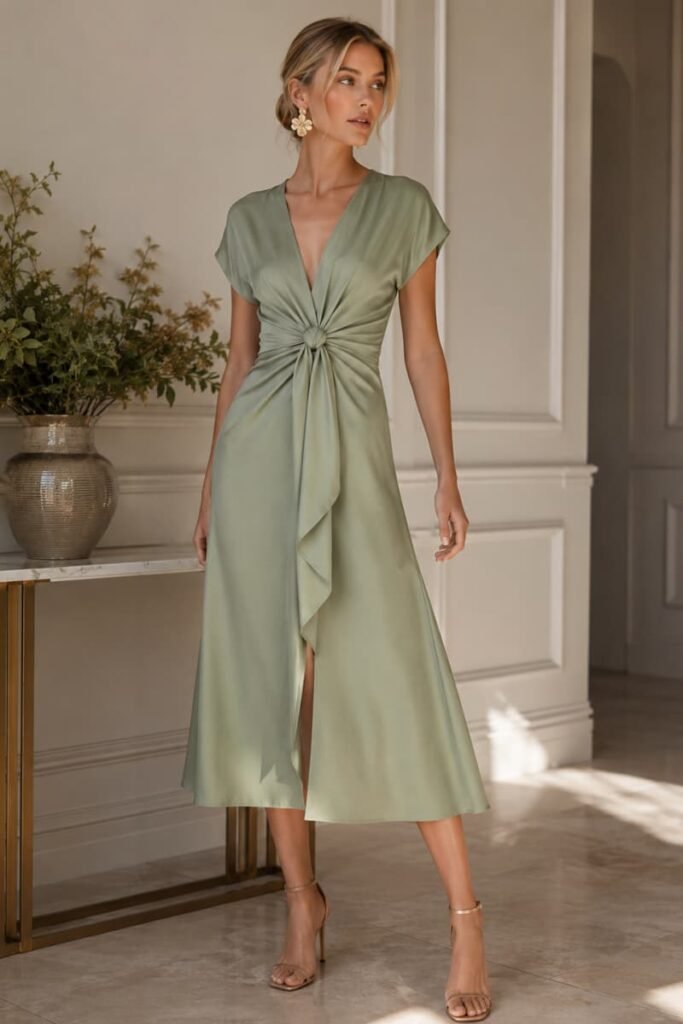
Tie-Front Midi Dresses
- Waist-seam stability
- Skirt-to-bodice weight balance
- Front gather distribution
- Tie length after knotting
- Side-seam alignment
- Hem level
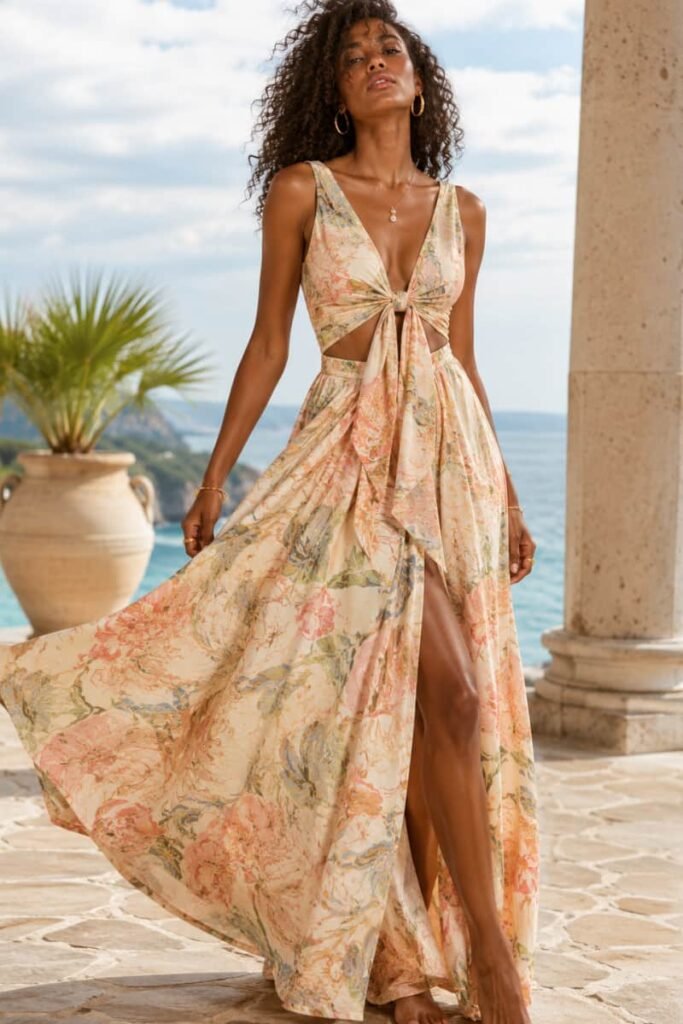
Tie-Front Maxi Dresses
- Stable bodice support
- Controlled front overlap
- Print placement
- Skirt volume
- Hem sweep
- Lining construction
- Garment weight distribution
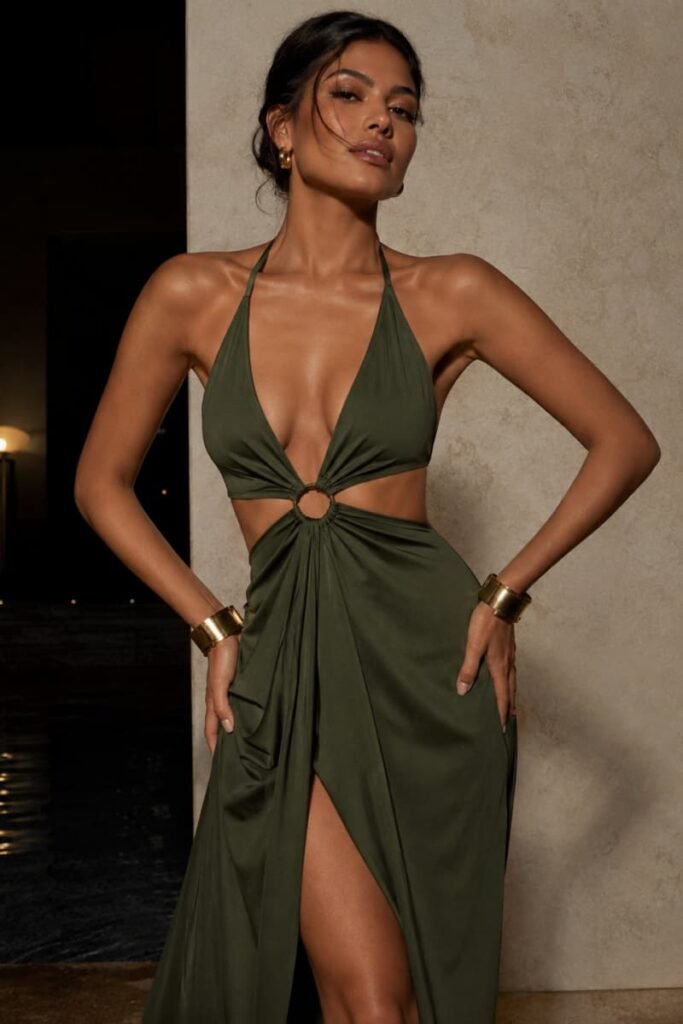
Cut-Out Tie Dresses
Cut-out tie-front dresses combine exposed areas with a functional or decorative tie. The size and location of the opening must remain intentional across the complete size range.
Critical controls include:
- Cut-out shape
- Skin exposure
- Edge stability
- Tie tension
- Lining termination
- Bust and waist security
- Grading of exposed areas
A cut-out cannot be graded only by adding width. Its shape must be reviewed on each required fit size.

Tie-Front Shirt Dresses
Shirt-dress construction may combine a collar, button placket, sleeve and front waist tie. Tie placement must align with the placket and waist while preserving clean front balance. Development priorities:
- Placket alignment
- Collar and neckline balance
- Tie integration
- Waist definition
- Sleeve mobility
- Button spacing
- Hem level
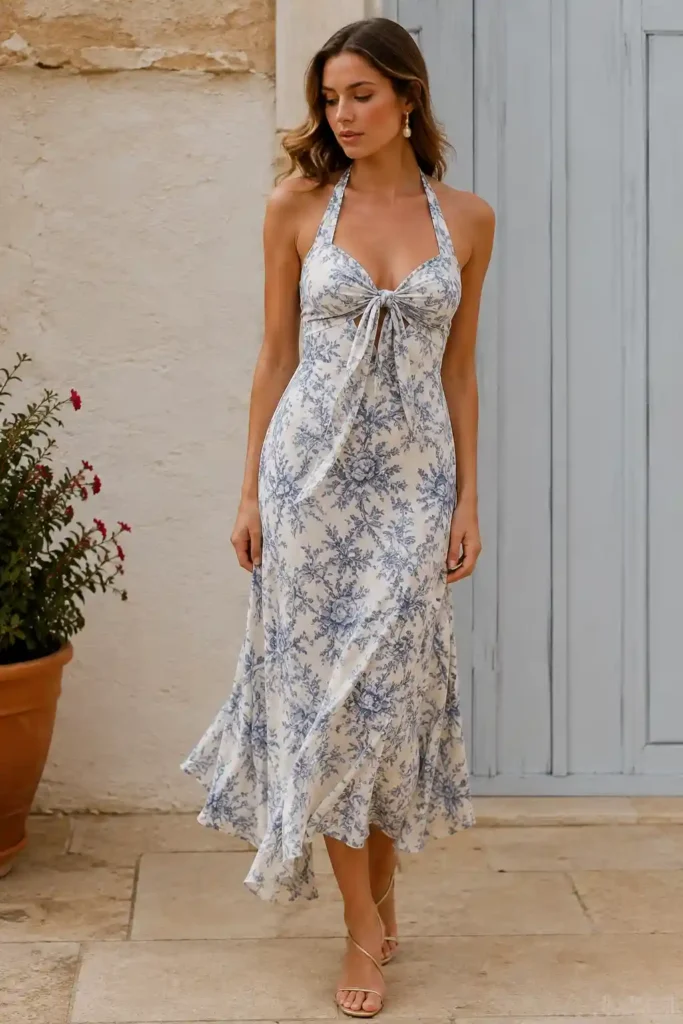
Resort Tie-Front Dresses
Resort styles often rely on soft drape, prints, breathable hand feel and relaxed fit. Loose styling does not remove the need for coverage and production control.
Important points include:
- Print positioning near the knot
- Fabric shrinkage
- Tie security
- Front opening
- Color matching
- Skirt movement
- Packing recovery

Occasion Tie Dresses
Occasion dresses may use satin, crepe, chiffon, velvet or embellished materials. A tie detail must look refined and remain compatible with lining, internal support and formal finishing. Control priorities:
- Knot shape
- Gloss and pressing marks
- Concealed reinforcement
- Lining coverage
- Clean internal finish
- Closure placement
- Display presentation
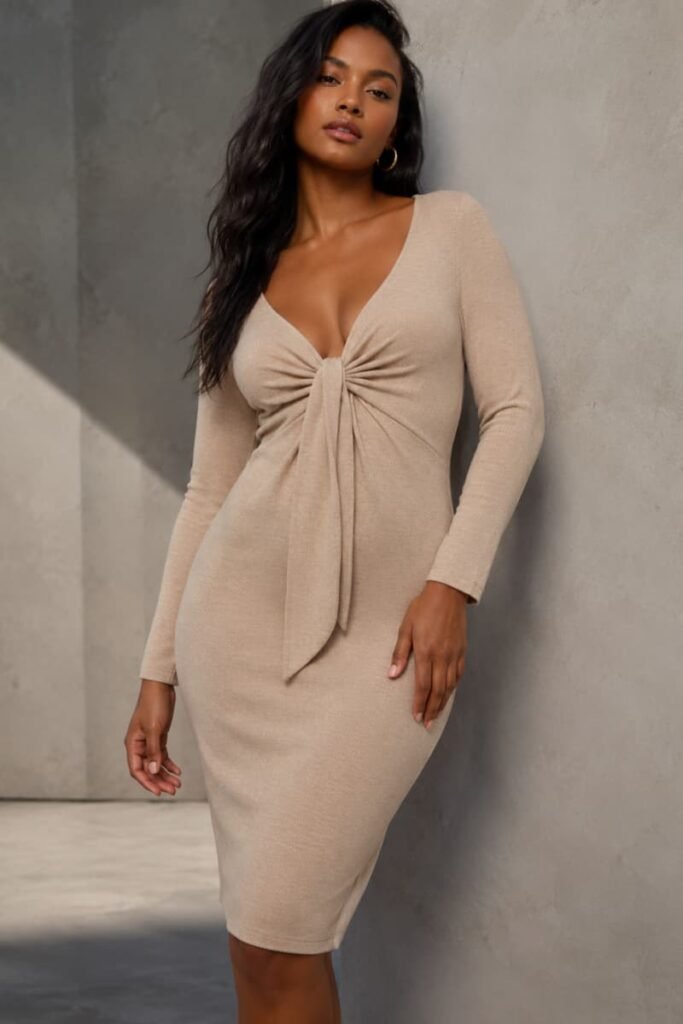
Knit Knot-Front Dresses
Knit styles depend on stretch, recovery and fabric torque. A front knot can lengthen, sag or pull the neckline out of shape when the material lacks recovery.
Development priorities:
- Stretch direction
- Recovery rate
- Knot retention
- Stabilized neckline
- Seam elasticity
- Tie growth after wear
- Finished garment measurement
Not Every Tie-Front Construction Works the Same

Functional Bodice Tie
- Sufficient overlap
- Stable neckline
- Reinforced anchor
- Size-based tie length
- Movement security
- Optional hidden closure
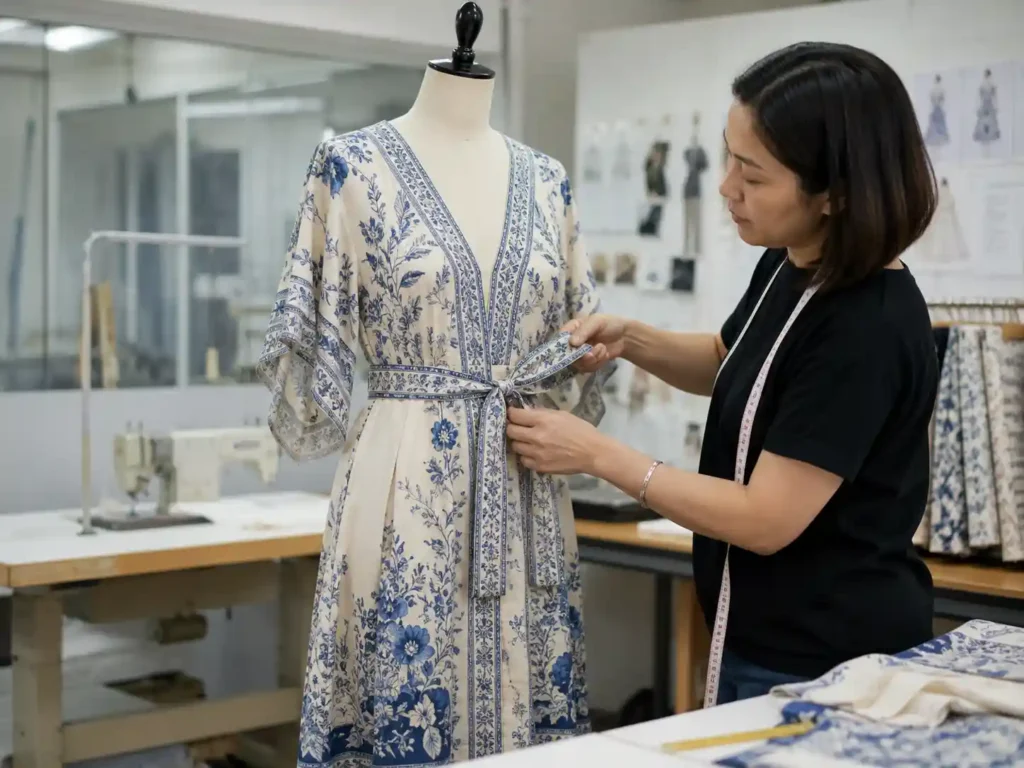
Waist-Shaping Tie
- Waist height
- Tie symmetry
- Gather distribution
- Seam reinforcement
- Knot position
- Tie-end length
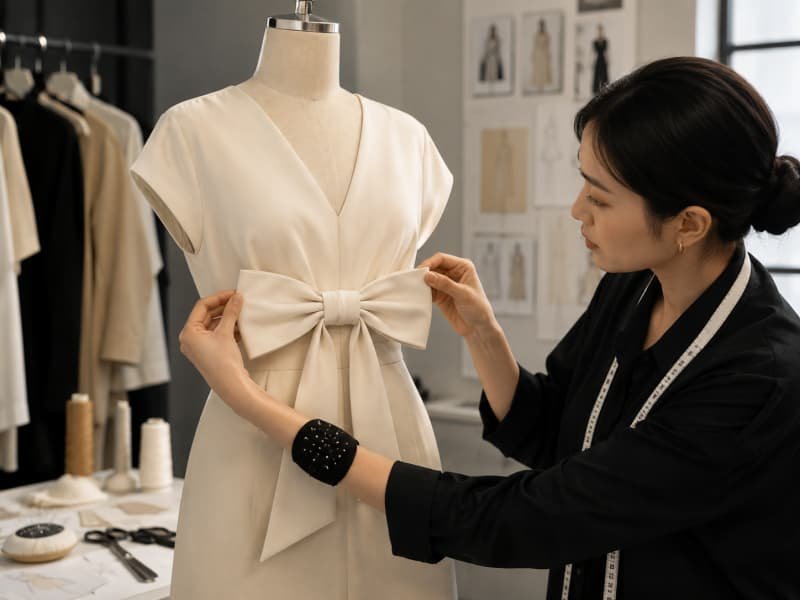
Fixed Front Bow
- Bow width
- Loop volume
- Center position
- Secure attachment
- Shape recovery
- Packing protection
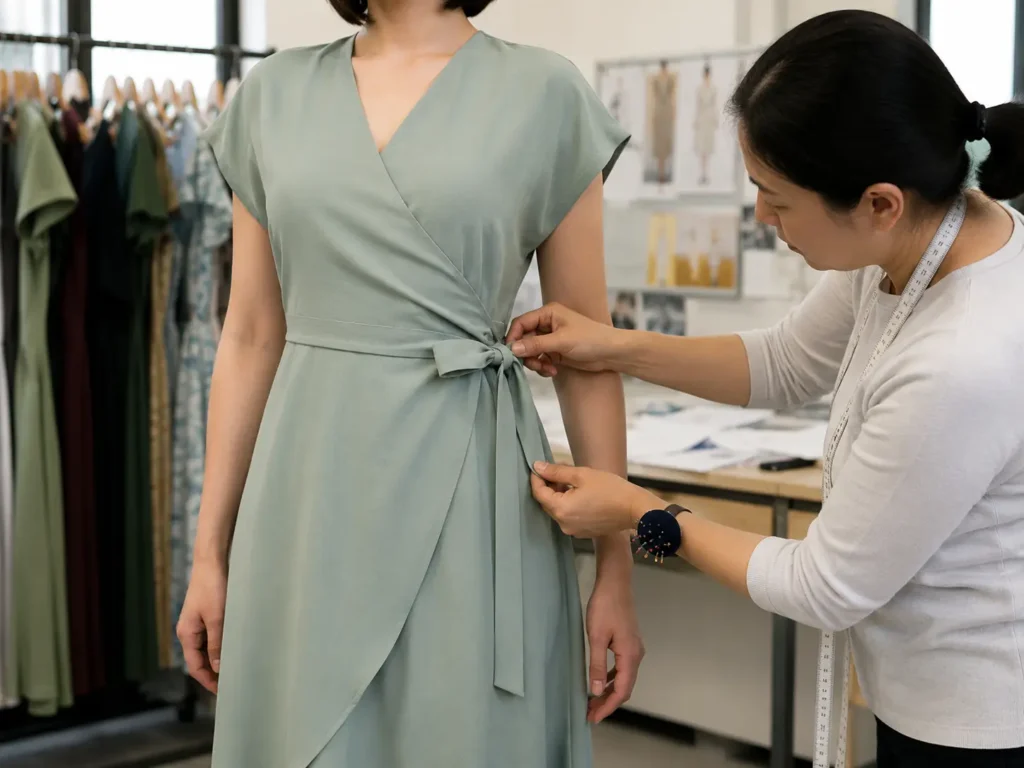
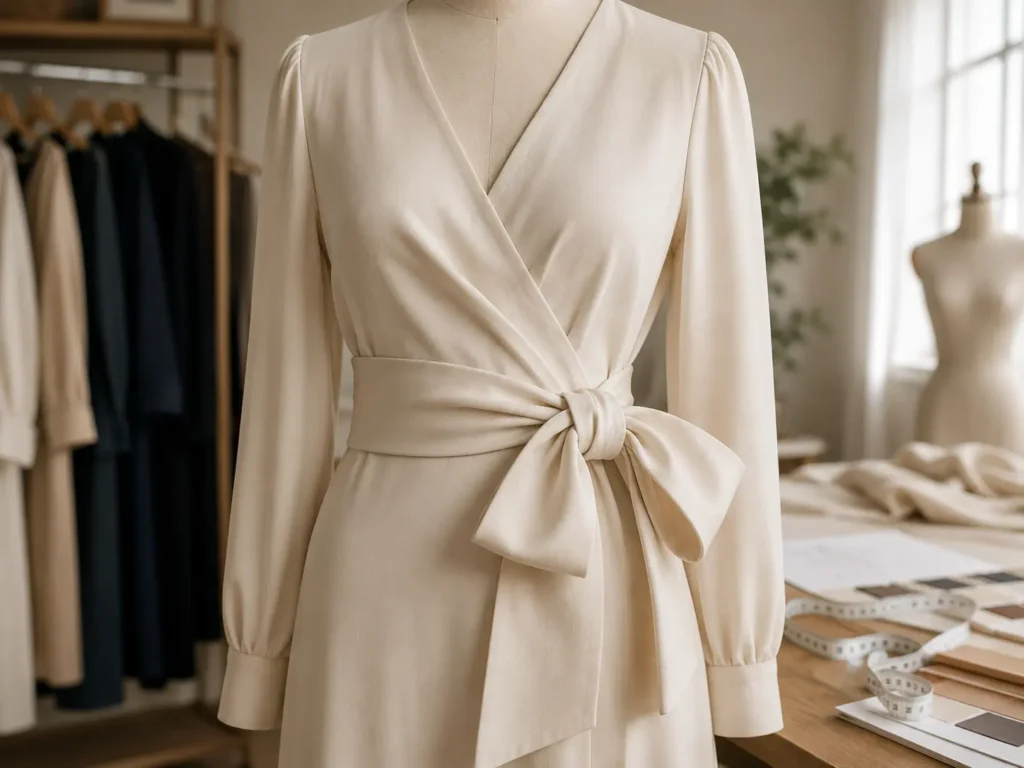
Wrap-Inspired Tie
An overlapping front panel closes through a tie or combined internal closure. Coverage changes with body shape and movement. Required controls:
- Front overlap
- Internal securing point
- Neckline stability
- Waist tension
- Skirt opening
- Size grading
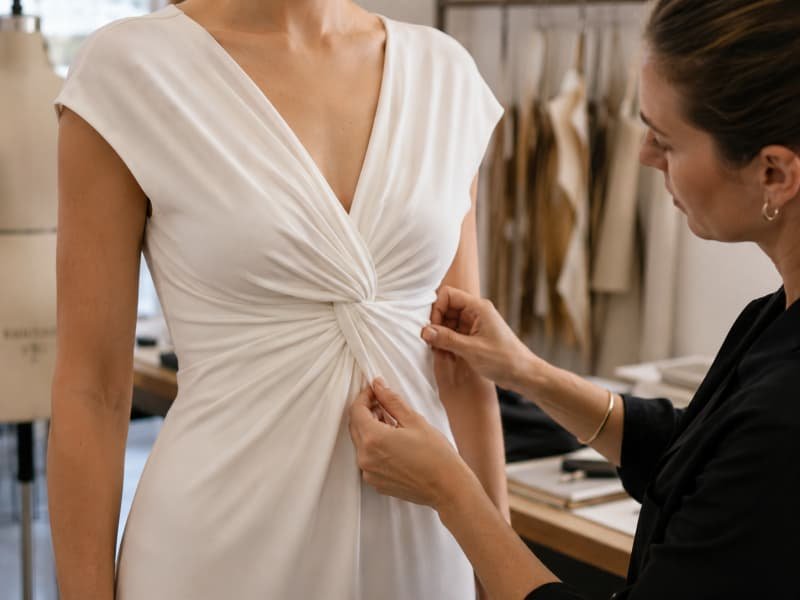
Twist-Knot Front
- Correct twist direction
- Gather distribution
- Seam concealment
- Knot thickness
- Center alignment
- Repeatable sewing sequence

Cut-Out Tie Front
- Cut-out dimensions
- Edge reinforcement
- Anchor strength
- Skin exposure
- Lining shape
- Size progression
Coverage and Wearability Are Built Into the Pattern
Standing Fit
Review points:
- Center-front balance
- Neckline symmetry
- Bust coverage
- Waist position
- Tie-end direction
- Hem level
Sitting Position
Sitting shortens the torso and increases pressure around the waist and bust. A front opening that appears secure while standing may separate when seated.
Review points:
- Opening expansion
- Tie tension
- Waist comfort
- Bodice riding
- Skirt movement
- Lining exposure
Arm Movement
Raising or reaching the arms can lift the bodice and change the neckline opening. Sleeve shape and armhole position may also pull against the front tie.
Review points:
- Armhole mobility
- Neckline movement
- Tie-anchor stress
- Bodice lift
- Side-seam movement
- Coverage recovery
Bending Movement
Bending forward tests bust coverage, tie security and neckline stabilization. Functional front ties may require an internal securing method.
Review points:
- Front opening
- Tie slippage
- Neckline gaping
- Lining position
- Hidden snap need
- Recovery after movement
Bra Compatibility
Review points:
- Strap visibility
- Back height
- Side coverage
- Cup line
- Front opening
- Lining opacity
Skin Contact
Tie edges, seam ends and internal reinforcement should not create abrasion. Occasion and fitted dresses require special attention where the knot touches the torso.
Review points:
- Edge softness
- Seam bulk
- Reinforcement position
- Label placement
- Thread ends
- Internal finishing
Design Details That Shape the Finished Silhouette
Tie Position and Anchor Distance
- Vertical position from neckline or shoulder point
- Horizontal distance from center front
- Relationship to bust apex
- Relationship to waist seam
- Distance between left and right anchors
- Movement across the size range
Tie Width and Finished Thickness
- Cut width
- Finished width
- Seam allowance
- Turning method
- Internal reinforcement
- Edge stitch or clean finish
- Pressing method
Tie Length and Knot Position
Tie length should be judged after the intended knot is formed, not only as a flat component. The required length depends on waist circumference, anchor distance, knot type and desired tail length.
Tie specifications should define:
- Finished length before tying
- Target knot method
- Tail length after tying
- Size progression
- Maximum stretch or growth
- Left-right tolerance
For functional closures, tie length also influences security. For decorative ties, it controls visual proportion and display consistency.
Front Opening Geometry
- Opening width before tying
- Opening width after tying
- Neckline drop
- Overlap depth
- Cut-out dimensions
- Lining coverage
- Hidden closure position
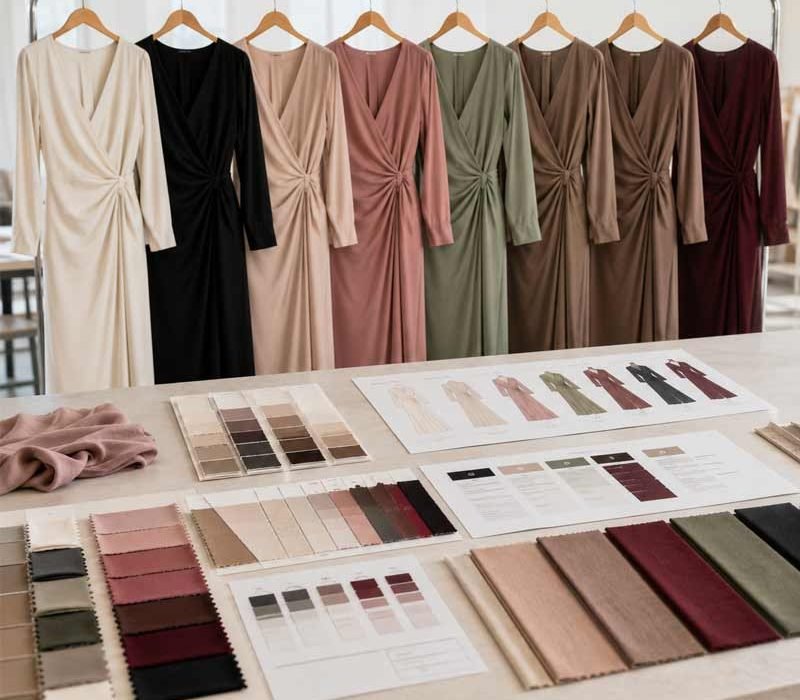
Select Fabric by Drape, Grip and Tie Performance
| Fabric Direction | Drape and Knot Behavior | Main Development Risk | Best-Fit Applications | Recommended Control |
|---|---|---|---|---|
| Viscose / Rayon | Fluid drape with soft knot formation | Shrinkage, twisting, opening under skirt weight | Resort, maxi, printed midi dresses | Pre-shrink review, grain control, front-overlap testing |
| Crepe | Balanced drape with moderate grip | Seam impression or uneven gathers | Daywear, occasion, mini and midi styles | Controlled pressing, balanced tie width |
| Satin | Smooth drape with refined shine | Slippage, needle marks, pressing glaze, loose knot | Occasion, party and evening dresses | Fine needle selection, protected pressing, knot-security review |
| Chiffon / Georgette | Light movement and delicate knot | Transparency, fraying, unstable anchor | Layered occasion and resort dresses | Lining development, reinforced anchors, narrow seam control |
| Cotton Poplin | Crisp shape and defined bow | Excessive knot bulk, hard folds | Shirt dresses, day dresses, summer minis | Reduced tie layers, seam-bulk management |
| Linen Blends | Natural structure with relaxed texture | Wrinkling, thickness variation, knot stiffness | Vacation, resort and contemporary daywear | Fabric conditioning, tie-width adjustment |
| Stretch Woven | Shaped fit with controlled flexibility | Uneven stretch at anchors and front opening | Fitted mini and going-out dresses | Stretch-direction control, stabilized anchors |
| Jersey Knit | Soft stretch and body conformity | Tie growth, neckline distortion, sagging knot | Bodycon and casual knot-front dresses | Recovery testing, neckline stabilization |
Material Approval Should Follow Garment Behavior
A fabric can look correct on a swatch and still fail in the finished dress. Tie-front development should include a small construction trial or first sample before confirming bulk suitability.
Key observations include:
- Does the knot remain secure for several hours?
- Does the fabric recover after untying?
- Does the front opening grow under garment weight?
- Does the tie edge wave after sewing?
- Does the material show seam allowance through the front panel?
- Does pressing create shine, marks or permanent flattening?
- Does the color remain consistent across the main fabric, lining and thread?
Material approval should also consider availability for repeat production. A successful first order is difficult to repeat if the fabric quality, weight or color standard cannot be maintained.
Lining and Trims Support Secure Front Construction
Full or Partial Lining
Control points:
- Coverage boundary
- Color compatibility
- Stretch compatibility
- Attachment method
- Hem behavior
- Opening concealment
Hidden Snap Closure
Control points:
- Position during movement
- Pull resistance
- Skin comfort
- Color match
- Reinforcement
- Accessibility
Stay Tape Support
Control points:
- Tape width
- Stretch direction
- Application tension
- Heat response
- Seam concealment
- Bulk impact
Internal Reinforcement
Lightweight support pieces distribute force at tie anchors and prevent tearing.
Control points:
- Reinforcement size
- Material compatibility
- Placement accuracy
- Edge visibility
- Wash response
- Comfort
Zippers and Closures
Control points:
- Zipper length
- Seam position
- Waist alignment
- Puckering
- Top closure
- Lining attachment
Labels and Branding
Main labels, care labels and size labels should not interfere with the neckline, tie area or skin contact.
Control points:
- Label position
- Label softness
- Stitch method
- Language requirements
- Care information
- Size identification
Pattern Engineering Behind a Balanced Tie Front
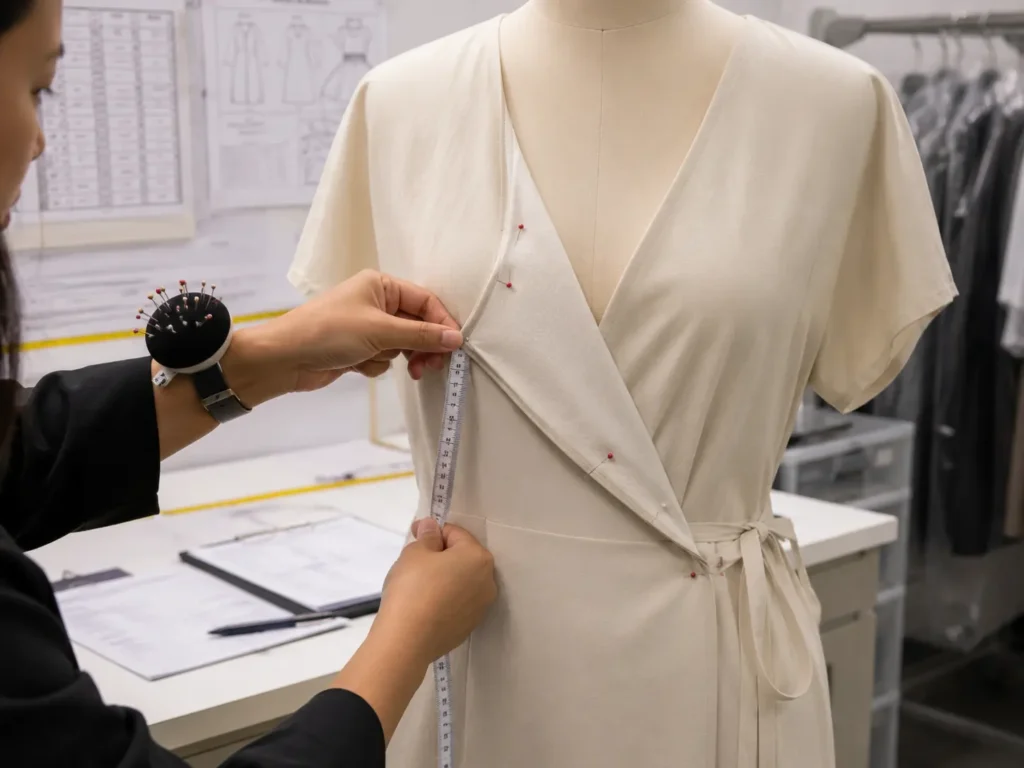
Front-Panel Balance
- Center-front direction
- Grainline
- Panel overlap
- Dart or gather position
- Bust shaping
- Waist seam
- Side-seam length
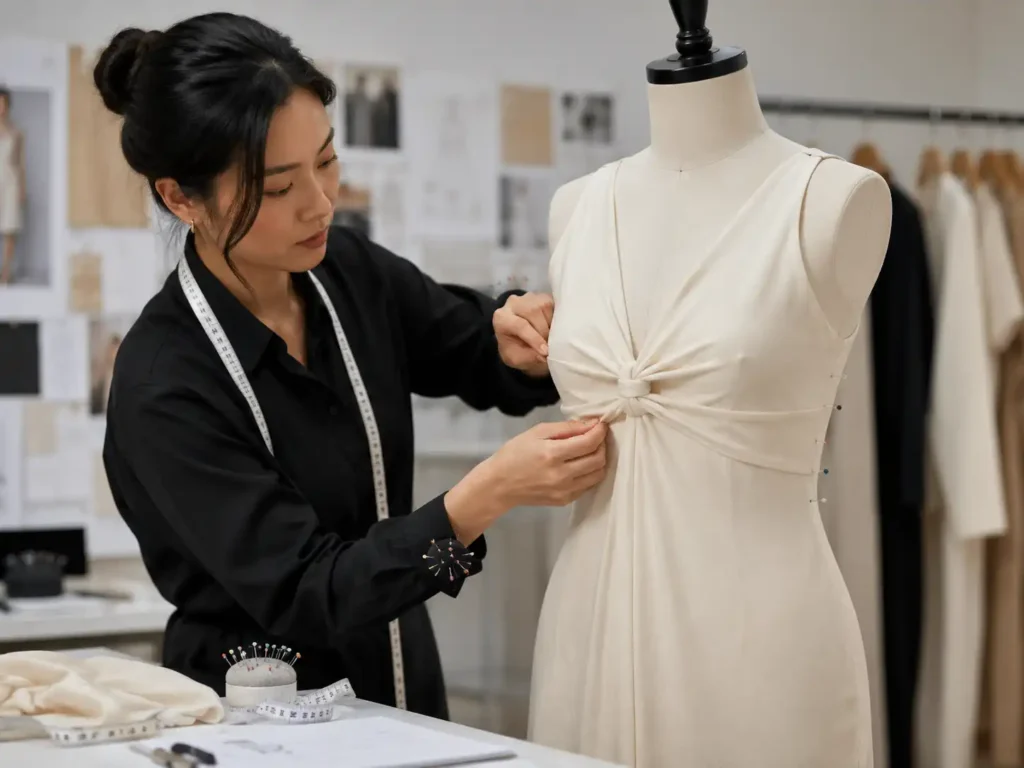
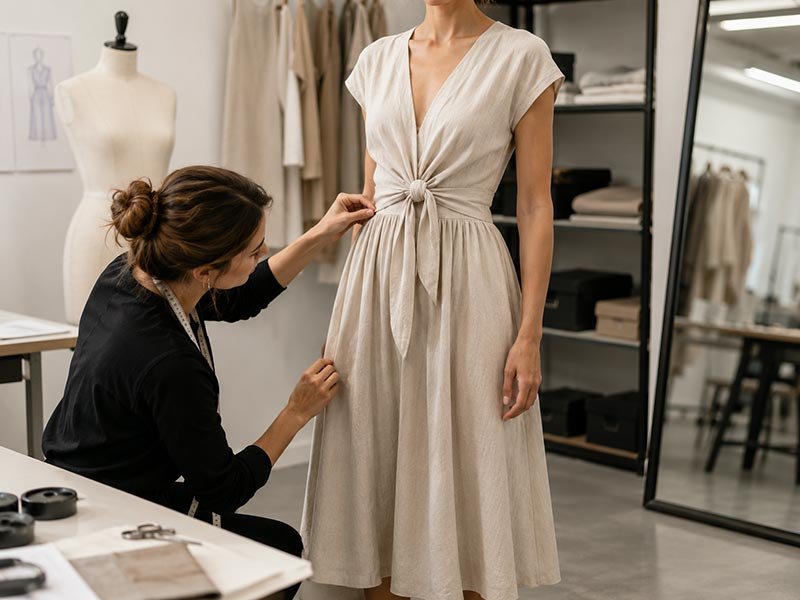
Bust and Neckline Control
- Dart adjustment
- Gather redistribution
- Neckline reshaping
- Internal elastic
- Stay tape
- Hidden closure
- Lining support
Waist and Skirt Integration
- Waist seam level
- Skirt attachment ratio
- Gather distribution
- Tie insertion point
- Front and back length
- Side-seam balance
- Hem fall
Fabric-Specific Pattern Adjustment
- Additional or reduced overlap
- Revised tie width
- Stabilized neckline
- Changed seam allowance
- Revised gather ratio
- Modified anchor reinforcement
- Adjusted finished measurements
Critical Measurements Across Sizes and Production Batches
Tie-front dresses need a measurement method that records both flat garment dimensions and finished tie relationships. The same knot method, measuring tension and reference points should be used during sampling, pre-production approval and bulk inspection.
| Critical Measurement Point | Why It Matters | Main Grading Risk | Bulk Control Method |
|---|---|---|---|
| Bust Width | Controls fit and front coverage | Excess width may gape; insufficient width may pull open | Measure flat at the approved bust line |
| Waist Width | Determines shaping and tie tension | Knot position may shift between sizes | Measure with closure relaxed and ties untied |
| Front Neckline Drop | Controls visual depth and exposure | Mechanical grading may deepen the opening too much | Measure from defined shoulder or high-point reference |
| Front Opening Width | Defines coverage after construction | Opening may increase disproportionately | Check before and after standard tying |
| Tie Anchor Distance | Controls symmetry and knot position | Anchors may move away from intended visual center | Measure between fixed attachment points |
| Finished Tie Width | Affects knot bulk and anchor strength | Width variation changes appearance and tying behavior | Measure at three defined positions |
| Finished Tie Length | Controls knot and tail proportion | One-length grading may fail at size extremes | Measure each side from anchor to finished end |
| Lining Coverage | Prevents exposure and edge visibility | Larger sizes may reveal lining boundaries | Measure from neckline and front opening |
| Front Bodice Length | Controls waist placement | Short fronts can ride upward after tying | Measure from approved high-point reference |
| Side-Seam Length | Confirms left-right and front-back balance | Tie tension may lift one side | Compare both garment sides |
| Finished Knot Position | Confirms visual intent | Different tying methods create inconsistent results | Inspect using an approved knot reference image |
Start From a Tech Pack, Reference or Original Sample
Tech-Pack-Based OEM
- Flat sketch
- Size specification
- Construction callouts
- Fabric details
- Trim BOM
- Colorways
- Label requirements
- Packing standard
- Target quantity
- Launch timing
Reference-Based Development
A reference image can establish the visual direction, but dimensions and hidden construction still require interpretation.
Our review identifies:
- Tie function
- Front opening
- Coverage target
- Fabric behavior
- Lining need
- Closure system
- Size range
- Expected price position
The development proposal then defines what must be created, tested and confirmed.
Original-Sample Development
An original garment allows direct study of proportion, fit, internal construction and fabric behavior. Development may reproduce selected elements or modify them for a new brand standard.
Review covers:
- Garment measurements
- Pattern balance
- Tie construction
- Fabric and trim
- Fit strengths and weaknesses
- Required design changes
- Label and packaging conversion
A Controlled Tie-Front Dress Sampling Process
Sampling is organized around clear decisions, not repeated sewing without direction. Each stage should answer a defined product question and move the style closer to a production-ready version.
Project Brief Review
- Development summary
- Missing-information list
- Initial risk notes
- Recommended sample route
Fabric and Structure Check
- Material direction
- Alternative recommendation
- Lining and reinforcement notes
- Construction feasibility comments
Pattern Development
- Base pattern
- Critical measurement points
- Anchor references
- Initial grading considerations
First Sample Construction
The first prototype tests design proportion, fabric response and construction logic. It is not treated as a finished production standard.
- First sample
- Measurement record
- Development photos
- Initial workmanship review
Fit and Tie Review
Fit review focuses on bust balance, front opening, knot shape, waist position, movement and size-related risks.
- Fit comments
- Priority corrections
- Material or construction updates
- Revision plan
Production-Readiness Decision
- Revision summary
- Confirmed measurements
- Bulk-risk notes
- Recommended next stage
A clear style using available material may often be planned around 7–12 working days for the first sample after technical details are confirmed. Complex cut-outs, nominated fabrics, custom prints, special dyeing or multi-layer construction require a project-specific schedule. Focused revisions may commonly be planned within 5–8 working days once comments and replacement materials are ready.
Turning an Approved Sample Into a Bulk Standard

Bulk Readiness Review
Before production, Duolan confirms the status of the approved garment:
- Fit confirmed
- Visual appearance confirmed
- Material direction confirmed
- Pre-production basis established
- Remaining refinement identified
The review also confirms whether the order is a launch program, repeat order, color extension or scaled production run.

Material Locking
- Main fabric
- Lining
- Interlining
- Reinforcement
- Zipper or snaps
- Thread
- Labels
- Packaging materials
Construction Locking
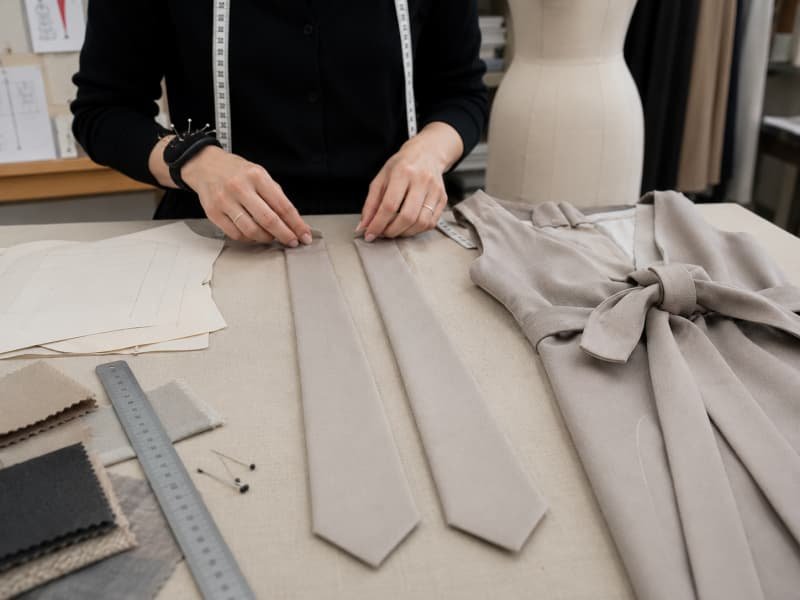
Tie-front construction requires precise production notes:
- Tie width and length
- Anchor point
- Reinforcement method
- Front-opening dimensions
- Lining coverage
- Knot reference
- Stitch type
- Pressing standard

Pre-Production Basis
The production pack may include:
- Approved garment
- Measurement sheet
- Grading file
- BOM
- Workmanship notes
- Critical-point photos
- Packing instruction
- Inspection checklist
Workmanship Standards for Clean and Secure Tie Details
Tie Cutting and Grain Direction
- Grain alignment
- Pair matching
- Left-right identification
- Print direction
- Nap direction
- Shrinkage allowance
Tie Turning and Edge Finish
A narrow tube can become uneven when seam allowance gathers inside or when turning pressure distorts the fabric.
Control points:
- Consistent seam allowance
- Clean turning
- Even finished width
- Smooth corners
- Controlled edge stitch
- No internal bunching
Anchor Reinforcement
Anchor construction must distribute tension without creating visible stiffness on the outer garment.
Control points:
- Reinforcement size
- Reinforcement location
- Stitch concentration
- Seam integration
- Lining support
- Pull direction
Knot-Area Bulk Control
Several fabric layers can gather around the center front, especially in poplin, linen blends or lined satin. Bulk can be reduced through:
- Narrower internal seam allowance
- Graded seam layers
- Alternative turning sequence
- Partial internal layer
- Reduced tie width
- Controlled pressing
Front-Opening Finish
The front edge must remain smooth and stable after repeated tying. Control points:
- Edge shape
- Lining roll
- Seam visibility
- Stay-tape tension
- Topstitch distance
- Opening symmetry
Pressing and Shape Setting
- Temperature
- Pressure
- Protective pressing layer
- Knot-area shaping
- Tie-end direction
- Final recovery
Left-Right Symmetry
Tie pairs should be compared before attachment and after finishing. Inspection points:
- Length difference
- Width difference
- Anchor height
- Tail shape
- Stitch appearance
- Finished position
Internal Cleanliness
The inside of a tie-front dress should remain clean around lining joins, reinforcement pieces, closures and labels. Inspection points:
- Covered seam ends
- No loose reinforcement
- Smooth lining attachment
- Secure snaps
- Trimmed thread
- Comfortable skin contact
Production Steps for Consistent Tie-Front Dresses
Fabric Inspection
Relaxation and Preparation
Marker Planning
Controlled Cutting
Tie Preparation
Front-Panel Assembly
Anchor Reinforcement
Lining Integration
Garment Assembly
First-Piece Review
Inline Inspection
Final Finishing
Garments are pressed, tied or prepared according to the approved presentation, inspected and packed.
Quality Control Focused on Tie-Front Structure
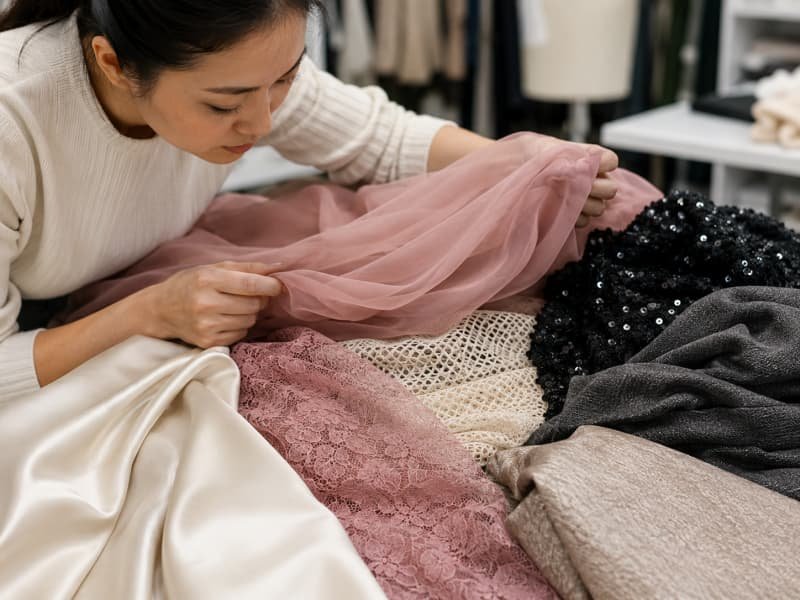
Fabric and Shade
- Shade continuity
- Print direction
- Surface faults
- Hand feel
- Opacity
- Batch separation

Tie Dimensions
- Left-right length
- Finished width
- Tail shape
- Stretch or growth
- Twist
- Edge consistency
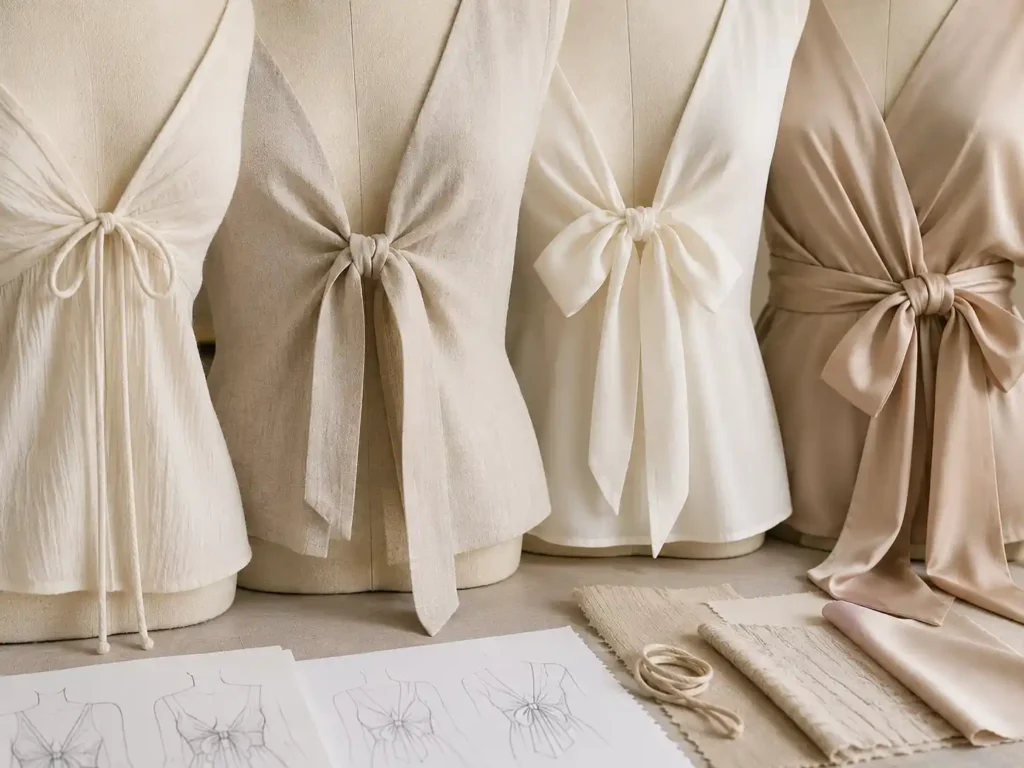
Anchor Position
- Vertical position
- Horizontal distance
- Symmetry
- Reinforcement
- Seam security
- Visual alignment

Front Coverage
- Opening width
- Neckline depth
- Bust coverage
- Lining coverage
- Hidden closure
- Movement security
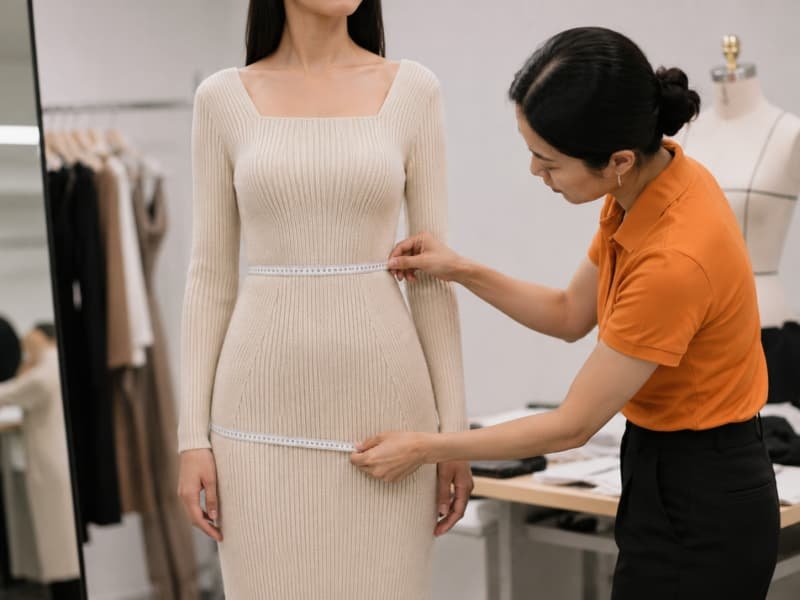
Garment Measurements
- Bust
- Waist
- Front length
- Side seam
- Anchor distance
- Tie length

Workmanship Security
- Seam security
- Stitch balance
- Anchor strength
- Edge finish
- Lining attachment
- Closure function
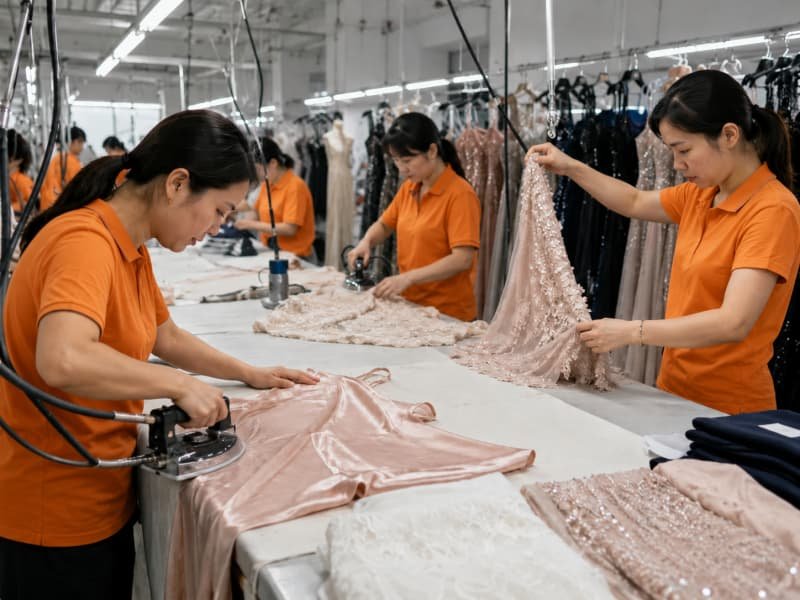
Finished Appearance
The garment is reviewed tied and untied.
Checks include:
- Knot position
- Symmetry
- Front balance
- Skirt fall
- Pressing
- Presentation
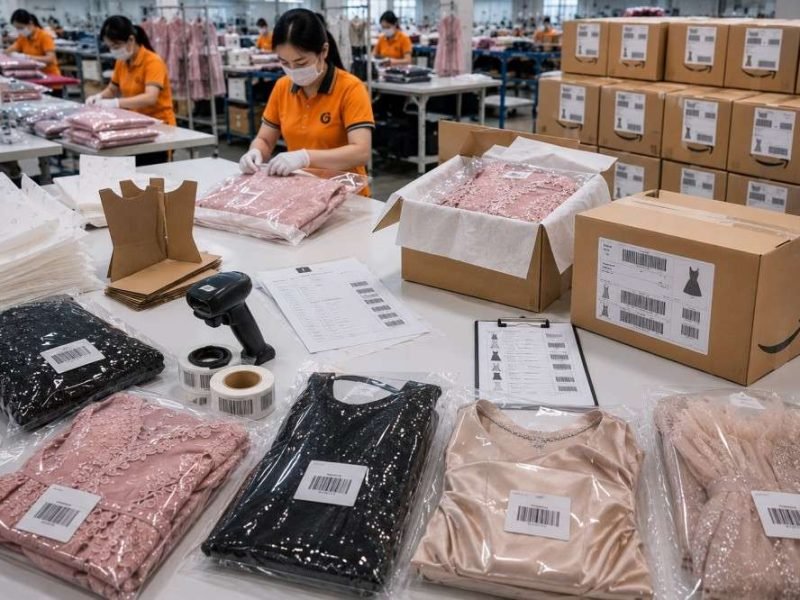
Packing Condition
Packing should preserve the tie and front panels without permanent crushing or distortion. Checks include:
- Tie preparation
- Fold position
- Tissue support
- Hanger requirement
- Polybag size
- Carton pressure
Repeat Orders Need More Than an Archived Sample
Approved Product Record
Repeat-order files should retain:
- Final pattern
- Size grading
- Measurement chart
- Approved knot reference
- Tie specifications
- Front-opening standard
- Workmanship notes
- BOM
- Label details
- Packing instruction
Material Continuity
Repeat production begins with a check of fabric and trim availability. When the original material is unavailable, alternatives should be compared against:
- appearance
- drape
- weight
- opacity
- stretch
- knot behavior
A replacement material is not accepted only because its composition is similar. It must produce a comparable finished garment.
Color and Batch Control
Color approval should consider:
- Main fabric
- Lining
- Thread
- Zipper
- Snaps
- Labels
- Printed elements
New dye lots are reviewed against the approved color standard before bulk use.
Reorder Development Options
An approved tie-front block can support:
- New colors
- New prints
- Sleeve variations
- Length extensions
- Fabric updates
- Coordinated tops or skirts
- Seasonal refreshes
- Regional size adaptations
Branding and Packaging Without Distorting Tie Details
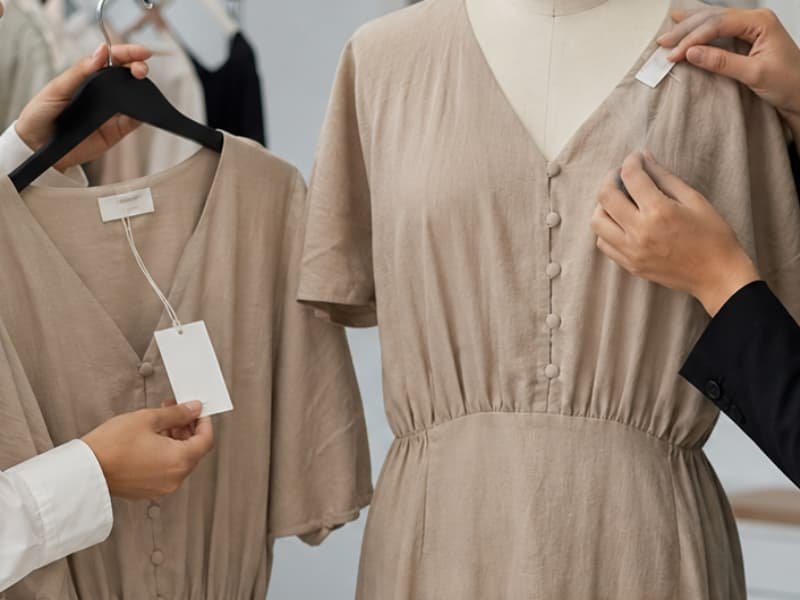
Main and Size Labels
- Label size
- Label softness
- Stitch method
- Center alignment
- Size identification
- Country requirements
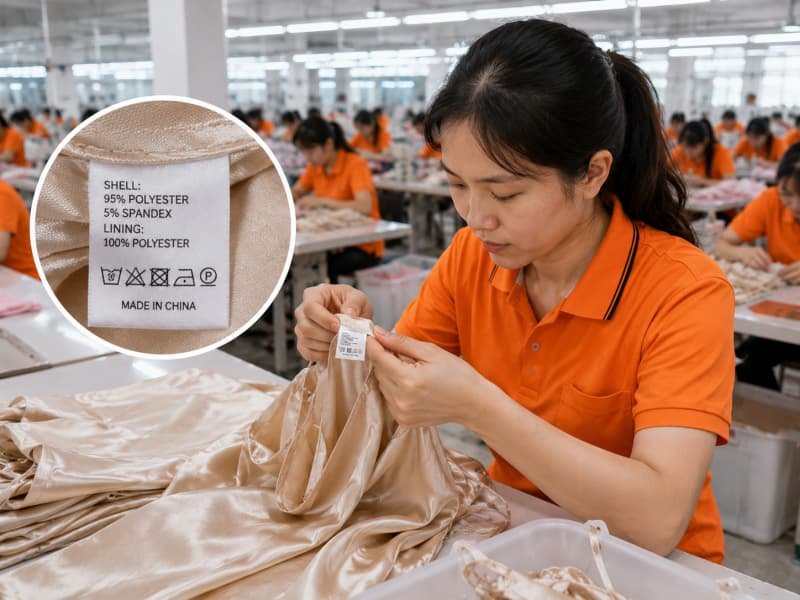
Care Labels
- Fiber content
- Washing method
- Ironing limitations
- Dry-clean direction
- Language versions
- Placement

Hangtags and Barcodes
- Attachment point
- Barcode
- Price ticket
- Security tag
- Market information
- Removal method

Folded Packing
- Fold line
- Knot pressure
- Tie direction
- Tissue support
- Polybag dimensions
- Reopening appearance
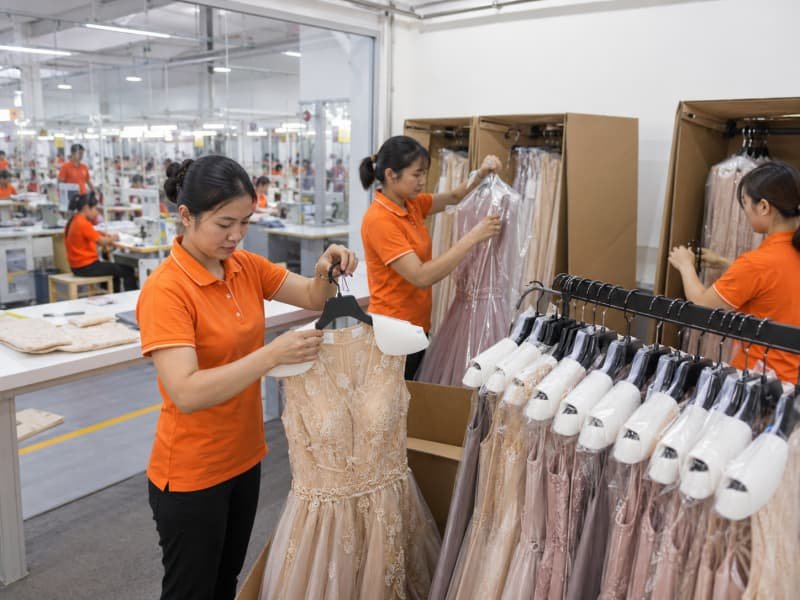
Hanger Packing
- Hanger type
- Shoulder support
- Tie arrangement
- Garment cover
- Carton height
- Transport stability
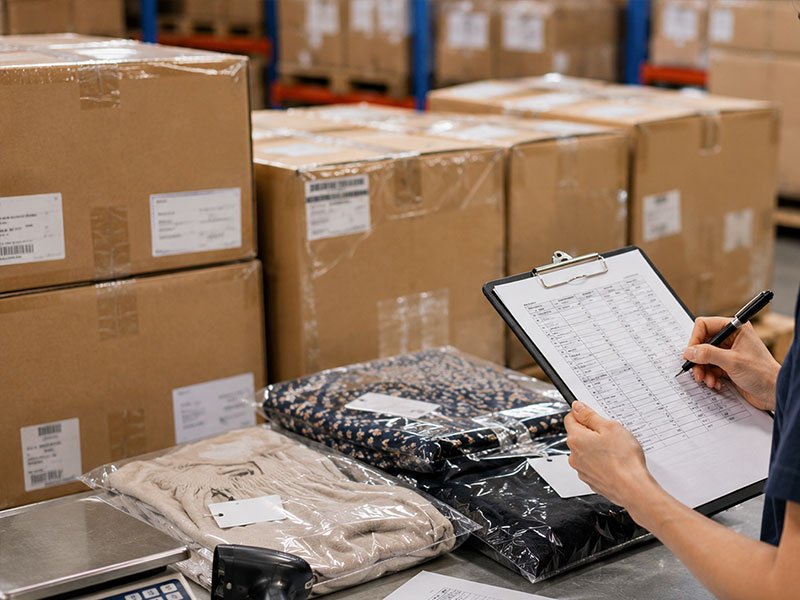
Carton Planning
- Units per carton
- Size assortment
- Color separation
- Carton pressure
- Moisture protection
- Shipping marks
A Dress Manufacturing System Built for Brand Programs
30+ Years Development
16 Owned Factories
High Development Density
The wider system can support approximately 15,000–35,000 sample developments per month and around 3,000–8,000 style-development processes, depending on project complexity and sample stage.
Audit and Standards Support
The manufacturing system has SMETA and SMETA 2-Pillar audit foundations and can work with requirements connected to BSCI, ISO 9001, AATCC, ASTM, OEKO-TEX®, EN, China GB, GOTS and specific brand standards when applicable to the project.
300 Sewing Lines
50+ Quick-Response Lines
20+ Satellite Factories
Long-term satellite factories support repeat orders, capacity expansion and style allocation according to construction complexity.
12,000+ Supporting Workers
The broader manufacturing network provides labor depth for multi-style, multi-color and seasonal programs.
Tie-Front Dress Development Cases
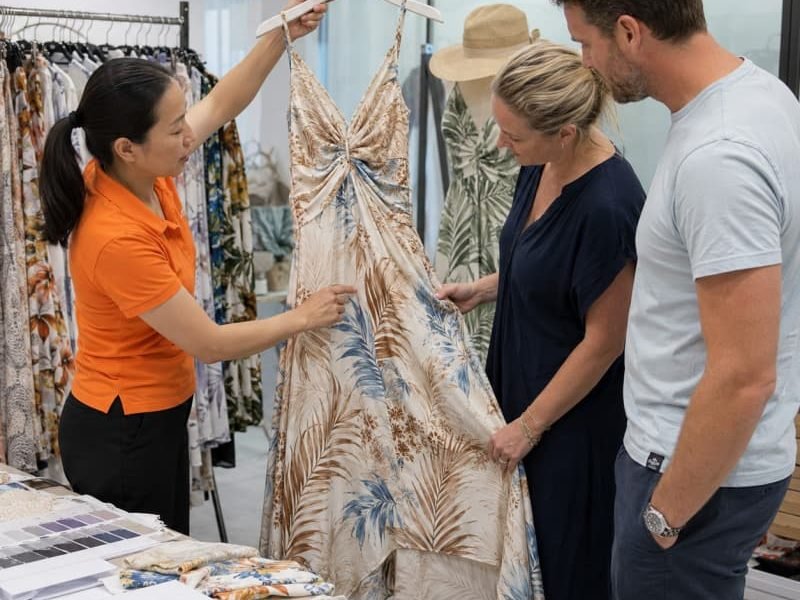
US Resort Collection
Region: United States
Program: Resort and vacation dresses
Styles: 18
Total Quantity: 36,000 pieces
Size Range: XS–XL
Color and Print Directions: 4
Main Materials: Printed viscose, crepe and lightweight lining
The collection included tie-front mini, midi and maxi silhouettes. Early samples showed two recurring issues: soft viscose allowed the front opening to expand under skirt weight, while one tie length did not create consistent tail proportions across all sizes.
Development actions included:
- Testing three fabric qualities for drape, opacity and knot grip
- Increasing front overlap on selected silhouettes
- Adjusting anchor position by size group
- Establishing 11 critical measurement points
- Adding concealed snaps to four deeper-neck styles
- Separating lining coverage standards for mini and maxi dresses
- Creating an approved knot reference for production inspection
All 18 styles moved into bulk after two focused development rounds. Production was completed within the agreed 35-day manufacturing window after pre-production approval and material readiness.

US Going-Out Program
Region: United States
Program: Going-out and social-event dresses
Styles: 12
Total Quantity: 24,600 pieces
Size Range: US 0–12
Launch Drops: 2
Main Materials: Stretch woven, satin and compact jersey
The program combined cut-out tie fronts, twist-knot bodices and fitted mini silhouettes. The primary challenge was maintaining the intended skin exposure and knot position across six sizes without allowing the neckline to spread during movement.
Development actions included:
- Dividing styles into functional-tie and decorative-knot groups
- Revising cut-out grading independently from bust grading
- Stabilizing selected necklines
- Adding reinforcement behind high-tension anchors
- Conducting standing, sitting, bending and arm-raising reviews
- Defining size-specific tie lengths
- Locking front-opening dimensions for first-piece and inline checks
The first launch drop covered seven styles and the second covered five styles. Production standards from the first drop were carried into the second, allowing repeat construction points to move directly into pre-production confirmation.

European Contemporary Range
Region: Europe
Program: Contemporary day-to-occasion dresses
Styles: 26
Total Quantity: 68,400 pieces
Size Range: EU 34–46
Color Families: 5
Program Type: New development plus repeat extensions
Fifteen styles were developed from previously approved fit blocks, while eleven required new tie constructions. The main challenge was coordinating different fabrics and tying methods while preserving one recognizable fit language across the range.
Development actions included:
- Grouping styles by bodice block and tie construction
- Reusing approved grading where fabric behavior remained comparable
- Developing new patterns for twist-front and cut-out structures
- Locking common label, lining and packaging components
- Separating critical inspections by product family
- Allocating production according to construction complexity
- Retaining approved patterns, BOMs and knot references for repeat orders
The grouped development route reduced unnecessary duplication. Carry-forward styles required fit confirmation and material review, while new constructions followed the complete prototype and revision route.
Why Dress Teams Evaluate Duolan
Dress-Focused Knowledge
Fabric-Structure Matching
Pattern and Fit Control
Structured Sampling
Controlled Bulk Transition
Scalable Production Support
Tie-Front Dress Manufacturing Frequently Asked Questions

Start Your Tie-Front Dress Development Project
Share the information already available, whether it is a complete tech pack, reference image, original sample, fabric swatch or collection brief. Duolan will review the intended tie structure, front coverage, fabric behavior, fit requirements, size range, development stage and production goal before recommending the next route.
For a more accurate review, include:
- Product type and intended wearing occasion
- Tech pack, flat sketch, reference image or original-sample photos
- Functional tie, decorative bow, wrap, twist or cut-out direction
- Fabric composition, weight, stretch, opacity or swatch
- Size chart and target size range
- Estimated quantity by style and color
- Required sample stage
- Branding, label and packaging requirements
- Target launch or delivery window
- Testing, inspection or compliance requirements
After receiving the information, our team can evaluate fabric and construction risks, sampling route, likely revision priorities, production readiness, quantity structure and delivery planning.