Skip to content
Custom Wedding Guest Dress Manufacturer
Dress-focused development and manufacturing for established fashion brands building commercially structured wedding guest and occasionwear collections.
- Collection programs commonly include 10–30 coordinated styles across mini, midi, and maxi lengths.
- Established brand orders commonly total 20,000–80,000 pieces across styles, colors, and sizes.
- Development control covers six critical areas: fabric, fit, lining, support, workmanship, and bulk consistency.
- Duolan operates through 16 owned womenswear factories and more than 20 coordinated satellite factories.
- 300 sewing lines and 50+ quick-response lines support core production, testing programs, repeat orders, and replenishment.
- Monthly sample development capacity supports approximately 15,000–35,000 sample developments and revisions across the manufacturing system.

What a Wedding Guest Dress Manufacturer Should Deliver
A custom wedding guest dress manufacturer converts brand concepts into commercially viable occasionwear through fabric assessment, pattern development, sampling, fit correction, production planning, quality control, private labeling, and coordinated delivery.
The role extends beyond sewing an attractive dress. A manufacturing partner must understand how wedding settings, dress codes, retail price architecture, body fit, movement, photography, seasonality, and production repeatability affect the finished collection.
Duolan supports projects based on tech packs, reference images, original samples, collection mood boards, fabric directions, and existing styles requiring improvement. Each project is reviewed for silhouette, material behavior, structural requirements, construction difficulty, sample purpose, order structure, and bulk feasibility.
Wedding guest programs frequently contain several product levels: visual campaign styles, commercial volume styles, accessible entry styles, formal evening styles, and repeatable core silhouettes. Successful manufacturing depends on keeping these product levels visually coordinated while assigning the right development and production path to every style.
Wedding Guest Dresses Require a Distinct Product Strategy
Wedding Guest Dresses
Bridal Gowns
Bridesmaid and Formal Dresses
Built for Established Fashion and Occasionwear Teams
Fashion Brand Teams
Occasionwear Specialists
Product Development Teams
Buying and Merchandising Teams
Sourcing Offices
Multi-brand Fashion Groups
Development Risks Hidden Behind a Beautiful Dress
Design Translation Risk
Fabric Silhouette Mismatch
Fit Comment Confusion
Detail Placement Variation
Sample-to-Bulk Difference
Launch Window Pressure
Wedding Guest Dresses Must Perform Beyond Photography
Occasion Value Without Bridal Weight
Wedding guest occasionwear requires visible refinement without the excessive structure, weight, or ceremonial detail associated with bridal gowns. Fabric sheen, lace texture, draping, neckline proportion, color, and controlled decoration create occasion value. Every element also affects sewing time, material yield, size consistency, comfort, and retail price.
Duolan evaluates whether a visual detail contributes meaningful product value. A corset seam may improve shape and support, while unnecessary internal complexity may increase cost without improving fit. A decorative overlay may strengthen photography impact, while excessive layers may add heat, weight, and handling risk. Development decisions are therefore made against the complete product goal rather than visual reference alone.
Wedding guest ranges often need several levels of formality. A floral chiffon midi may suit daytime ceremonies, while a satin column maxi serves evening receptions. A structured mini may work for modern city weddings, while lace and crepe designs address refined formal occasions.
Wearability During a Full Event
Wedding guests sit, stand, dine, walk, pose for photographs, and often dance for several hours. Construction must support movement without strap slippage, neckline gaping, lining exposure, excessive compression, seam irritation, or unstable slits.
Fit review examines bust position, waist level, hip ease, back balance, armhole shape, strap length, zipper tension, slit opening, hem movement, and lining attachment. Backless, halter, strapless, and corset-inspired designs require extra attention because visual minimalism often depends on hidden internal functions.
Comfort cannot be separated from material selection. Stiff sequins may irritate the underarm. Thin satin may reveal seam pressure. Heavy beading can pull the neckline downward. Stretch mesh may recover differently after sewing. Lining can improve opacity and comfort but alter drape and heat. Duolan reviews these relationships before production standards are locked.
Commercial Repeatability
A dress can look excellent as a single sample yet remain unsuitable for 3,000-piece or 8,000-piece production. Commercial repeatability requires stable fabric supply, manageable construction, clear pattern logic, controlled decoration, measurable placement, realistic pressing, and defined tolerances.
Duolan reviews whether each feature can be reproduced across sizes, colors, lines, and production batches. Critical elements are translated into technical records, approved components, visual references, and inspection points. The goal is not to remove creative detail. The goal is to preserve the intended appearance through a controlled manufacturing method.

Wedding Guest Dress Styles Developed by Duolan

Wedding Guest Minis

Cocktail Midi Dresses

Formal Maxi Dresses

Satin Slip Dresses
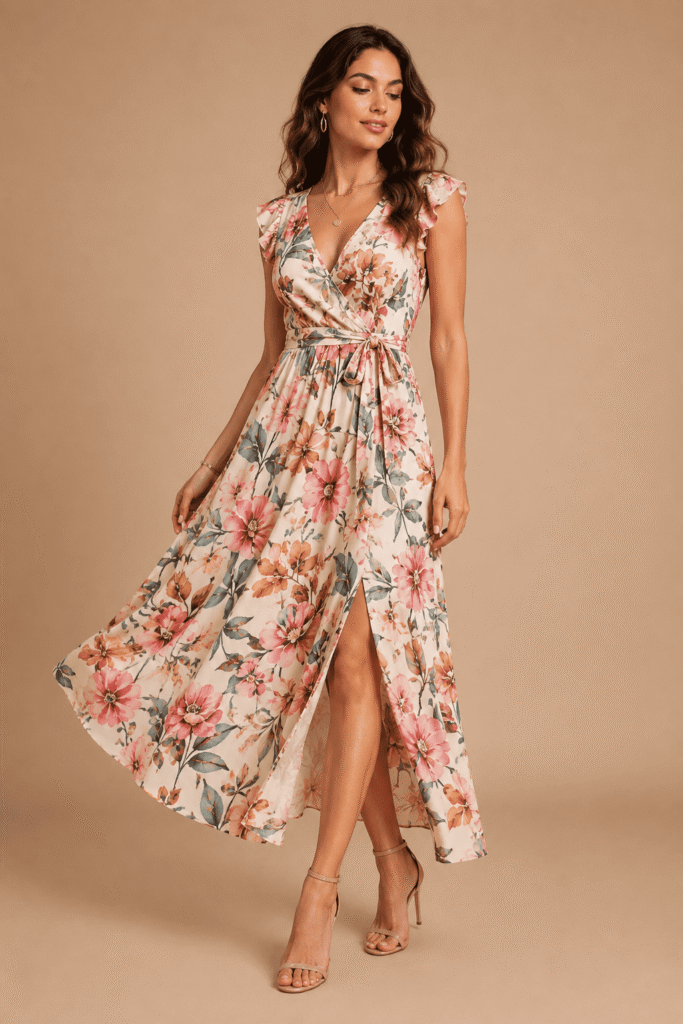
Floral and Printed Dresses

Lace Occasion Dresses
Lace adds texture and ceremony but introduces placement, transparency, symmetry, seam bulk, and edge-finishing risks. Development decisions include all-over lace versus placement lace, matched motifs, scalloped edges, contrast or tonal lining, appliqué treatment, seam positioning, and stretch compatibility. Duolan defines the approved motif arrangement and lining coverage before cutting begins. Larger sizes may require adjusted placement rules so the visual balance remains consistent.

Corset Structured Dresses
Corset-inspired wedding guest dresses require controlled bust shape, cup position, boning, neckline security, waist balance, and internal comfort. Structure must support the wearer without creating visible ridges or excessive stiffness. Duolan reviews outer fabric, lining, power mesh, cups, boning channels, seam allowance, closures, and grading together.
The approved sample must confirm both visual shaping and production feasibility before bulk lines are released.

Embellished Evening Dresses
Dresses Developed for Different Wedding Settings
Garden Weddings
Garden collections often favor floral prints, chiffon, crepe, lace, soft sleeves, fluid midis, and romantic maxis. Hem design must account for outdoor movement, while colors need enough depth for natural-light photography.
Transparent areas, lightweight linings, and wind movement require early review.
Destination Weddings
Beach Weddings
City Weddings
Cocktail Receptions
Cocktail reception dresses rely on social appeal, movement, and evening photography. Minis and midis may include ruching, cutouts, corset seams, lace, satin, sequins, and statement sleeves.
Security around the bust, neckline, slit, and back opening must be tested through movement.
Black-Tie Weddings
Daytime Ceremonies
Evening Celebrations
Translate Wedding Dress Codes Into Commercial Dresses

Casual Wedding

Cocktail Attire

Semi-Formal

Formal Attire

Black-Tie

Destination Attire
From Design Direction to Production-Ready Occasionwear
Establish the Development Basis
Every project begins by clarifying what the brand wants to achieve and what information is available. A complete tech pack may include flat sketches, measurements, BOM, construction details, fabric requirements, labels, and packaging.
Duolan reviews the intended occasion, silhouette, target market, sample purpose, size standard, retail position, quantity, colorways, launch date, and manufacturing risk. Missing information is identified before pattern work or fabric commitments begin.
The review separates visual direction from technical requirement. A reference may show a dramatic neckline without explaining support. A draped skirt may hide a complex pattern structure. A backless design may need cups, internal elastic, boning, grip tape, or hidden closures. Clarifying these points early reduces avoidable sample revisions.
Convert the Concept Into a Sample Plan
After the design basis is understood, Duolan evaluates fabric, trims, construction, fit priorities, decoration, and sample purpose. The sample plan may include a first prototype, fit sample, revised sample, photography sample, salesman sample, or PP reference.
Each sample stage should answer defined questions. A first prototype may validate proportion and construction. A fit sample may focus on bust, waist, hip, balance, length, and movement. A photography sample prioritizes final visual presentation. A PP sample aligns the approved product with bulk production standards.
Fabric and trim sourcing are integrated into the sample plan. Materials are reviewed for drape, stability, opacity, surface behavior, lead time, quantity availability, and price impact. Complex decoration may require an approved panel or process test before the full sample is made.
Prepare the Style for Manufacturing
A visually approved sample still requires production-readiness review. Duolan confirms fabric, lining, trims, measurements, construction, workmanship points, color, decoration placement, labels, packing, and inspection standards before bulk release.
The approved product information becomes a working manufacturing reference rather than remaining in separate emails and images. Pattern versions, measurement records, BOM data, sample comments, material approvals, and PP references are aligned.
Styles are then classified by production sensitivity. A basic crepe midi and a boned, beaded corset maxi should not follow one identical production route. Duolan matches style complexity, material behavior, craft process, quantity, and timing to the most suitable factory and line.
Fabrics Selected for Silhouette, Occasion and Production
Fluid Fabrics for Movement
Satin, chiffon, georgette, and selected crepes create movement, drape, and occasion value. Each material behaves differently under cutting, sewing, pressing, and wear.
Satin requires control over shine, seam puckering, needle marks, snagging, bias movement, opacity, and pressing. Lightweight satin may produce a fluid slip silhouette but reveal body lines and seam pressure. Heavier satin offers more coverage and structure but changes cost, drape, and heat.
Chiffon creates lightness and layered movement. Development must define layer count, lining, hem method, seam finish, transparency, static behavior, and print performance. Georgette may offer more texture and control, while crepe can provide a more stable formal result.
Duolan compares swatches against the intended shape, body coverage, price level, and production quantity before confirming the direction.

Structured Fabrics for Shape
Compact crepe, jacquard, stretch woven fabrics, faille, taffeta-inspired materials, and stable satin support defined silhouettes. They are often used for corset forms, sculpted minis, fit-and-flare dresses, peplum details, and modern formal shapes.
Structure must be balanced with comfort and movement. Excessively stiff material can create harsh edges, poor sitting comfort, or bulky seams. Fabric with insufficient body may collapse around cups, boning, pleats, or architectural necklines.
Duolan reviews thickness, recovery, seam bulk, press response, lining compatibility, and size grading. Construction trials may be required around bodices, waist seams, zippers, and shaped panels. The strongest material is not automatically the best option; the correct material must support the intended silhouette and production method.

Textured and Decorative Materials
Lace, mesh, velvet, sequins, embroidered fabrics, beaded materials, and appliqué surfaces create distinction but carry additional manufacturing risk.
Lace requires motif placement, symmetry, seam planning, lining decisions, edge treatment, and size-consistent visual balance. Mesh requires control over stretch, recovery, transparency, distortion, seam stability, and lining coverage. Velvet needs nap direction, cutting discipline, pressing protection, and surface handling.
Sequined and beaded fabrics introduce weight, seam clearance, skin contact, damage, loss, and packing concerns. Decoration may need to be removed from seam allowances and restored after sewing. Duolan evaluates whether the intended visual result can be reproduced across the planned quantity before full development proceeds.

Fabric Comparison for Wedding Guest Dress Development
Material decisions should be made against the silhouette, wedding setting, wearing experience, price architecture, production method, and repeat-order plan.
| Fabric | Best Product Use | Visual Result | Main Production Risk | Duolan Control Direction |
|---|---|---|---|---|
| Satin | Slip dresses, draped midis, formal maxis | Fluid shine and elevated occasion appearance | Seam puckering, snagging, needle marks, bias twisting, batch color difference | Weight review, seam trial, cutting direction, pressing test, approved color and batch standard |
| Chiffon | Layered maxis, sleeves, printed dresses | Soft movement and light volume | Transparency, uneven hems, layer movement, static, edge instability | Layer plan, lining coverage, hanging test, hem method, print and color approval |
| Crepe | Midis, columns, formal shapes, fitted dresses | Controlled drape and refined matte surface | Weight inconsistency, stretch variation, seam impression | GSM and recovery review, pattern adjustment, pressing control, approved fabric reference |
| Lace | Occasion midis, sleeves, overlays, structured dresses | Texture, ceremony and visual detail | Motif mismatch, asymmetry, transparency, seam bulk | Placement map, matched panels, lining approval, scallop and seam standard |
| Mesh | Illusion panels, fitted dresses, overlays, sleeves | Light coverage and modern structure | Stretch distortion, transparency, seam weakness, recovery variation | Stretch test, lining map, seam stabilization, direction control, fit review |
| Jacquard | Structured minis, fit-and-flare dresses, formal midis | Shape, texture and premium visual depth | Pattern direction, seam bulk, stiffness, fraying | Layout review, motif balance, seam method, structured pattern correction |
| Sequin Fabric | Evening minis, statement midis, formal gowns | Strong light response and campaign impact | Sequin loss, skin irritation, seam damage, weight, packing friction | Seam-clearance treatment, reinforcement, comfort covering, loss inspection, protected packing |
| Velvet | Fall and winter formal dresses | Rich color depth and evening finish | Nap direction, pressure marks, shade variation, difficult pressing | One-way cutting, protected handling, surface inspection, packing control |
Color and Print Planning for Wedding Season Collections
Color and print affect product grouping, photography, sell-through, material sourcing, cutting, replenishment, and batch consistency. Development should follow a controlled collection palette.

Spring Pastels

Summer Florals

Destination Brights

Autumn Jewel Tones

Evening Dark Tones

Metallic Accents
Construction Details That Control the Final Silhouette
Neckline and Bust Engineering
Waist, Hip and Contour Control
Back, Strap and Closure Security
Skirt, Slit and Hem Balance
Workmanship That Gives Occasion Dresses Their Finish

Draping, Pleating and Ruching

Lace, Appliqué and Embroidery

Sequins, Pearls and Rhinestones

Clean Internal Finishing
Internal finishing influences comfort, durability, shape, and brand perception. Lining attachment, seam allowances, binding, facing, cups, boning channels, elastic, hooks, zipper guards, and edge covering must remain neat and functional. Duolan selects internal methods according to the fabric, structure, price level, and wearing purpose. A lightweight satin slip needs a different internal solution from a boned lace corset dress or sequined formal maxi. Pressing completes the construction. Temperature, pressure, direction, and surface protection are controlled to avoid shine, impressions, crushed texture, distortion, or seam marks.
Hidden Functions That Keep Dresses Secure and Comfortable
Built-In Cups
Boning Support
Power Mesh Panels
Adjustable Straps
Grip and Stay Systems
Covered Closures
Risk Controls for Complex Wedding Guest Dresses
The following controls show how development risks are converted into measurable sample and production actions.
| Product Type | Main Risk | Development Check | Bulk Production Control |
|---|---|---|---|
| Satin Slip Dress | Seam puckering, bias twisting, opacity, strap imbalance | Fabric weight review, bias hang test, neckline and strap fitting, seam trial | One-direction cutting where required, controlled needle and seam method, pressing standard, first-piece review |
| Lace Midi Dress | Motif mismatch, transparency, bulky seams, irregular edges | Placement map, symmetry check, lining selection, scallop planning | Panel reference, cutting control, seam standard, placement inspection |
| Chiffon Maxi Dress | Uneven hem, layer movement, static, transparency | Layer plan, lining length, hanging test, movement review | Controlled layer cutting, temporary hanging before hemming, hem and length inspection |
| Corset Dress | Cup position, boning discomfort, neckline instability | Bust balance, support trial, boning map, movement fitting | Approved internal structure, channel position standard, first-piece fit review |
| Mesh Panel Dress | Stretch distortion, coverage, weak seams | Stretch-direction review, opacity test, lining map, seam trial | Cutting direction control, stabilized seams, coverage inspection |
| Sequin Dress | Sequin loss, skin irritation, seam damage, weight | Decoration panel, seam-clearance trial, comfort review | Reinforced attachment, cleared seam allowances, loss inspection, protected packing |
| Backless Dress | Strap movement, bust instability, back gaping | Internal support review, strap-position fitting, closure test | Strap and support measurements, attachment inspection, movement check |
| Ruched Fitted Dress | Uneven gathering, body-line exposure, length variation | Gathering ratio, fabric recovery, lining tension, fit test | Marked anchor points, controlled distribution, measurement and appearance inspection |
Tech Packs Create a Clear Basis for Development
A well-organized tech pack connects design, measurements, materials, workmanship, costing, sampling, and bulk production. Duolan also supports early review when some files are still being finalized.
Flat Sketches
Front, back, and detail sketches clarify silhouette, seams, openings, panels, pockets, closures, straps, and design lines. Reference photos alone may hide important construction information.
Measurement Specifications
Bill of Materials
Construction Notes
Color and Artwork
Label and Packing Files
Measurement Discipline Protects Fit Across Every Size

Establish the Base-Size Fit

Control Structured and Open Designs

Develop the Grading Logic

Lock Tolerances and Inspection Points
Measurement tolerances are agreed by point rather than applying one universal value to the entire dress. Stable woven areas, stretch panels, bias sections, elasticated details, and long hems behave differently during production and pressing.
Duolan identifies high-risk POMs for each style. These usually include bust, waist, hip, neckline, strap, body length, slit, and hem balance. Measurements are checked during sample review, first-piece inspection, inline production, and final inspection according to the project standard.
A Controlled Wedding Guest Dress Sampling Process
Brief Review
Feasibility Check
Material Direction
Suitable outer fabric, lining, mesh, support components, trims, zippers, decoration, and color references are proposed or matched against nominated materials.
Pattern Development
First Sample
The first sample validates overall direction, proportion, fabric response, construction approach, and major fit points.
It is reviewed against the brief rather than judged as a final product.
Fit Revision
Comments are divided into measurement, balance, shape, support, construction, material, and visual categories.
A revision summary records the agreed corrections.
Final Development Sample
The revised product confirms the intended visual and fit direction.
Photography or salesman samples may be prepared according to the brand’s internal schedule.
PP Readiness
Before bulk production, Duolan aligns the approved sample with materials, measurements, labels, packing, and QC requirements. Sample timing is confirmed after fabric availability, structural complexity, decoration processes, and sample purpose are reviewed.
Keep Approved Samples Aligned With Bulk Production
Run a Bulk Readiness Review
Lock Materials and Product Standards
Confirm the First Production Piece
Preserve the Standard for Repeat Orders
Successful styles should not restart from incomplete records. Duolan maintains pattern versions, BOM direction, material references, workmanship points, measurement standards, PP references, QC findings, label information, and packing records. Repeat production begins with a review of previous results, current material conditions, quantities, colorways, delivery timing, and requested improvements. Preserved standards support faster alignment while still allowing necessary updates.
Quality Control for Wedding Guest Occasionwear
Material and Pre-Production Control
Cutting and First-Piece Control
Inline and Workmanship Inspection
Final and Packing Inspection
Final inspection confirms appearance, measurements, workmanship, decoration, cleanliness, labels, barcodes, packing method, assortment, carton marks, and quantity. Long dresses, satin, velvet, sequins, and structured products may require specific folding, hanging, tissue, or protective methods. Inspection requirements can be aligned with the brand’s AQL plan, nominated third-party process, market standards, and product-specific criteria. Records should show what was checked, what was corrected, and what was released.
A Manufacturing System Built for Collection Programs
Manufacturing Scale With Product Control
Audit and Standards Alignment
Private Label, Packing and Delivery
Duolan supports main labels, care labels, size labels, hangtags, barcodes, stickers, polybags, tissue, hanger packing, flat packing, carton marks, ratio packing, and destination-specific requirements.
Packing is selected according to dress length, fabric sensitivity, decoration, wrinkle risk, retail preparation, e-commerce fulfillment, warehouse handling, and transport method. Satin, velvet, sequined, beaded, long, and structured dresses may need additional surface and shape protection.
Delivery options can include FOB, CIF, DDP, staged shipment, express, air freight, sea freight, and coordination with overseas warehouses or nominated forwarders.

Sampling, Production and Delivery Timing Reference
Sample Timing Logic
Initial sample timing is confirmed after four areas are reviewed: material availability, structural complexity, decoration process, and sample purpose. A clean crepe midi, bias satin slip, boned corset dress, and hand-decorated maxi require different development paths.The sample plan states what must be approved, what materials are available, what processes need testing, and which comments affect later stages.
Duolan’s wider system supports approximately 15,000–35,000 monthly sample developments and revisions, allowing multiple style programs to be managed in parallel. Capacity does not replace project discipline; each style still needs a clear development basis and approval path.
Bulk Production Reference
Bulk production begins after materials, PP basis, measurements, workmanship, labels, packing, and quality requirements are aligned.
Common manufacturing references are:
- Simple styles: approximately 15–20 days
- Standard styles: approximately 20–30 days
- Complex styles: approximately 30–45 days
Timing is affected by fabric readiness, lab dips, printing, embroidery, lace placement, beading, sequins, structure, quantity, color-size combinations, inspection, packing, and factory allocation. Multi-style collections may be scheduled in waves rather than waiting for every style to finish together.
Delivery Reference
ransport planning should be connected to the launch calendar and inspection buffer.
Common transit references are:
- Express: approximately 3–7 days
- Air freight: approximately 5–8 days
- Sea freight: approximately 20–35 days
Actual transit depends on origin, destination, route, customs, shipment volume, season, and service level. FOB, CIF, DDP, split shipment, and overseas-warehouse coordination can be arranged according to the project.
Wedding Guest Dress Projects Managed at Collection Scale

United States Occasionwear Collection
A US fashion brand prepared a 24-style wedding guest edit totaling 52,000 pieces. The range contained 8 minis, 10 midis, and 6 maxis across satin, crepe, chiffon, mesh, and lace. Quantities varied by commercial role: campaign styles carried controlled volumes, while midi and slip silhouettes carried larger allocations.
The primary challenge was maintaining one visual identity across three fit directions. Structured mini dresses required stable bust and waist shaping. Satin slips required controlled bias and seam quality. Chiffon and lace midis needed lighter fit and movement. Color approval also involved several related tonal shades across different material surfaces.
Duolan divided the collection into fit-sensitive, material-sensitive, and standard commercial groups. Four base-fit directions were established rather than developing 24 unrelated blocks. Satin construction trials, lace-placement references, chiffon-layer standards, and structure maps were completed before PP release.
Production was scheduled in three waves according to material readiness and launch priority. Pattern versions, BOM records, color references, PP standards, and quality checkpoints were maintained by style. The structured workflow allowed campaign products and commercial volume styles to move through different production paths while remaining part of one coordinated collection.
Project Data:
- 24 styles
- 52,000 total pieces
- 3 product-length groups
- 5 main material directions
- 3 staged production waves

European Wedding Guest Capsule
A European occasionwear label developed 16 styles totaling 28,800 pieces for spring and summer weddings. The range included 6 satin styles, 4 lace dresses, 3 chiffon products, and 3 textured woven designs. Several styles were offered in two colors, creating a wider material and shade-control workload than the style count alone suggested.
The main risks involved lace motif placement, pale-color opacity, long bias hems, and consistent visual balance across the size range. The brand also required split delivery to support separate campaign and selling dates.
Duolan prepared placement maps for lace bodices and sleeves, approved lining colors against outer materials, and completed hanging reviews before hemming chiffon and bias products. High-risk pale satin styles were reviewed for seam visibility and lining coverage under direct light. Size grading was checked around necklines, bust seams, waist positions, slits, and lace motifs.
Bulk production was divided by material and construction route. Formal maxis entered production earlier due to hanging and hem requirements, while stable crepe and structured woven styles followed a shorter production route. Deliveries were coordinated in two stages.
Project Data:
- 16 styles
- 28,800 total pieces
- 4 material groups
- 2 delivery stages
- 5 styles retained as repeat-production foundations

Australia and Middle East Formal Program
A multi-market fashion group developed a 22-style wedding guest and formal occasion program totaling 68,000 pieces. The collection combined fluid maxis, structured midis, evening minis, draped satin styles, crepe columns, and selected embellished products.
The project needed to serve warm-weather Australian events and more formal Middle Eastern evening occasions. Key concerns included lining weight, opacity, neckline coverage, slit control, long-dress movement, size grading, embellishment comfort, and packing protection. One universal construction approach would not have served both markets.
Duolan organized the program into lightweight destination, refined formal, structured occasion, and embellished evening groups. Lining weight and coverage were adjusted by style rather than standardized across the whole order. Long dresses received hem and movement review, while embellished products received seam-clearance, underarm-comfort, and protected-packing standards.
The 22 styles were distributed according to complexity and material behavior. Core formal products remained under tighter development continuity, while stable repeatable styles used coordinated volume capacity. Packing methods were divided between hanger-sensitive, flat-pack, and protected embellished requirements.
Project Data:
- 22 styles
- 68,000 total pieces
- 4 product groups
- Multiple market requirements
- 3 packing-control directions
Frequently Asked Questions About Wedding Guest Dress Manufacturing
Duolan focuses on fashion-led wedding guest, occasion, cocktail, party, and formal dresses. Selected corset, lace, structured, and embellished techniques may overlap with bridal construction, but the core manufacturing direction remains commercial womenswear collections rather than individual bridal-gown programs.
Duolan develops mini, midi, maxi, cocktail, satin slip, floral, printed, lace, chiffon, crepe, corset-inspired, structured, backless, halter, ruched, draped, sequined, beaded, and formal evening dresses according to brand direction and production feasibility.
Yes. Reference images, mood boards, original samples, sketches, fabric ideas, measurement charts, and existing fit comments can support an initial review. A complete tech pack improves accuracy, quotation, and production alignment, but it is not the only possible starting point.
Sample timing is confirmed after material availability, structural difficulty, decoration process, sample purpose, and required approvals are reviewed. Simple woven dresses, bias satin styles, corset products, lace placement, and embellished gowns require different development paths.
Duolan follows the brand’s measurement specification and reviews base-size fit, fabric behavior, bust-waist-hip balance, neckline, straps, armholes, length, support, movement, and grading logic. Critical points are checked on representative sizes before bulk production.
Yes. Multi-style programs are divided by product role, material, construction, fit sensitivity, craft risk, quantity, and deadline. Samples, comments, PP references, production routes, QC points, and delivery priorities are managed at style level.
Duolan aligns the approved sample with the correct pattern version, BOM, fabric, lining, trims, measurements, workmanship notes, decoration placement, PP reference, labels, packing, and QC checkpoints before line release.
Fabric minimums, custom colors, print, lace, trims, decoration, construction complexity, size-color combinations, material yield, workmanship, packing, and total order structure influence quantity and cost. Pricing is reviewed against the full project rather than one image alone.
Common manufacturing references are approximately 15–20 days for simple styles, 20–30 days for standard styles, and 30–45 days for complex styles after materials and approvals are ready. Exact scheduling depends on the project.
Send company information, product type, tech packs or references, target fabric, colorways, size range, style quantity, order quantity, launch date, quality requirements, labels, packaging, and destination. Duolan will review the development basis and production route.

Start Your Wedding Guest Dress Collection Review
Share the product direction, styles, materials, quantities, size requirements, launch schedule, and branded delivery needs for your upcoming wedding guest program.
Duolan can review projects based on a complete tech pack, reference images, an original sample, an existing style requiring improvement, or a broader collection brief. The team will assess the design basis, fabric direction, fit priorities, structural risks, decoration, sample route, production complexity, bulk timing, labeling, packing, and delivery requirements before confirming the next step.
For a more accurate review, include:
- Company or brand name
- Website or social channel
- Country and target market
- Tech packs, sketches, or reference images
- Original sample photos where available
- Number of styles and planned quantities
- Fabric and color direction
- Size range and measurement specification
- Sample purpose
- Target launch or delivery date
- Quality and inspection requirements
- Main labels, care labels, hangtags, and packaging
- Shipping destination and preferred terms
Submitted design files and project information are reviewed for development and production planning.