 Skip to content
Custom Woven Dress Manufacturer
Custom woven dress development and bulk manufacturing for established fashion brands.
Duolan helps fashion brands develop woven dresses where fabric behavior, pattern accuracy, shrinkage control, grainline, cutting direction, lining, pressing and size consistency decide final garment value. From woven midi dresses and printed resort styles to shirt dresses, A-line woven dresses, wrap woven dresses and work-to-evening programs, our team connects sampling, PP approval, bulk production, QC, packing and repeat delivery.
- 16 owned womenswear factories support controlled sample-to-bulk handover.
- 20+ satellite factories provide flexible capacity for repeat and seasonal dress programs.
- 300 sewing lines support standard-size bulk production across woven dress structures.
- 50+ quick-response lines support first samples, revised samples and launch preparation.
- 15,000–35,000 monthly sample capacity supports frequent fit, fabric and construction revisions.
- 6,500,000 stable monthly capacity supports planned bulk and repeat production.
- Typical cooperating brand orders include 10–30 styles and 20,000–80,000 pieces per order.






Woven Dresses Require Pattern and Fabric Discipline
A woven dress is not only a dress made from non-knit fabric. Its quality comes from fabric behavior, pattern accuracy, shrinkage control, grainline, seam construction, lining, pressing and repeatable bulk execution. Because woven fabrics do not rely on stretch in the same way as knit fabrics, fit must be built through pattern, ease, shaping lines and construction control.
Weak woven dress development often creates tight armholes, twisted side seams, uneven hems, bulky waist seams, wavy zippers or poor pressing marks. A sample can look acceptable in one fabric, then fail after shrinkage, print placement, lining changes, size grading or bulk cutting.
Duolan develops woven dresses as structure-sensitive womenswear products. Each approved style needs fabric review, pattern control, shrinkage notes, PP sample standard, production instructions, QC checkpoints, packing method and repeat records before bulk production.
Built for Established Woven Dress Programs
Duolan works with fashion brands, product teams and sourcing offices managing woven dress programs with defined garment standards, launch calendars, quality expectations and repeat value. Woven dress projects need stronger control of fabric, pattern, cutting, lining and pressing than ordinary dress production.
Contemporary Dress Brands
Contemporary dress brands need clean silhouettes, refined fabric handfeel, balanced seams and polished pressing. Minimal woven styles expose weak pattern work, poor fabric choice and uneven finishing quickly.
Work-to-Evening Brands
Work-to-evening brands need shirt dresses, shift dresses, A-line styles and woven midi dresses with coverage, comfort, wrinkle awareness and professional appearance. Fit and pressing both affect commercial value.
Resort and Vacation Brands
Resort brands need printed woven dresses, soft rayon or viscose blends, light movement and packing recovery. Duolan reviews shrinkage, opacity, print placement, color and carton behavior before bulk.
Occasionwear Brands
Occasionwear brands need satin woven, crepe, lace or structured woven dresses with stable lining, zipper, surface finish and photo-ready presentation. Surface and construction details receive careful sample approval.
Product Development Teams
Product teams need samples answering fabric and fit questions: Does fabric shrink? Is ease correct? Do darts sit cleanly? Does lining pull? Does pressing improve garment shape?
Sourcing Offices
Sourcing offices evaluate sample accuracy, production stability, QC discipline, packing accuracy, capacity and repeat readiness. Duolan supports woven programs through structured sample-to-delivery handover.
Woven Dress Types Duolan Can Support
Woven dress manufacturing becomes stronger when styles are grouped by fabric, structure and commercial role. A printed resort dress, shirt dress, structured A-line dress and satin woven occasion style each need a different sample path and production control plan.
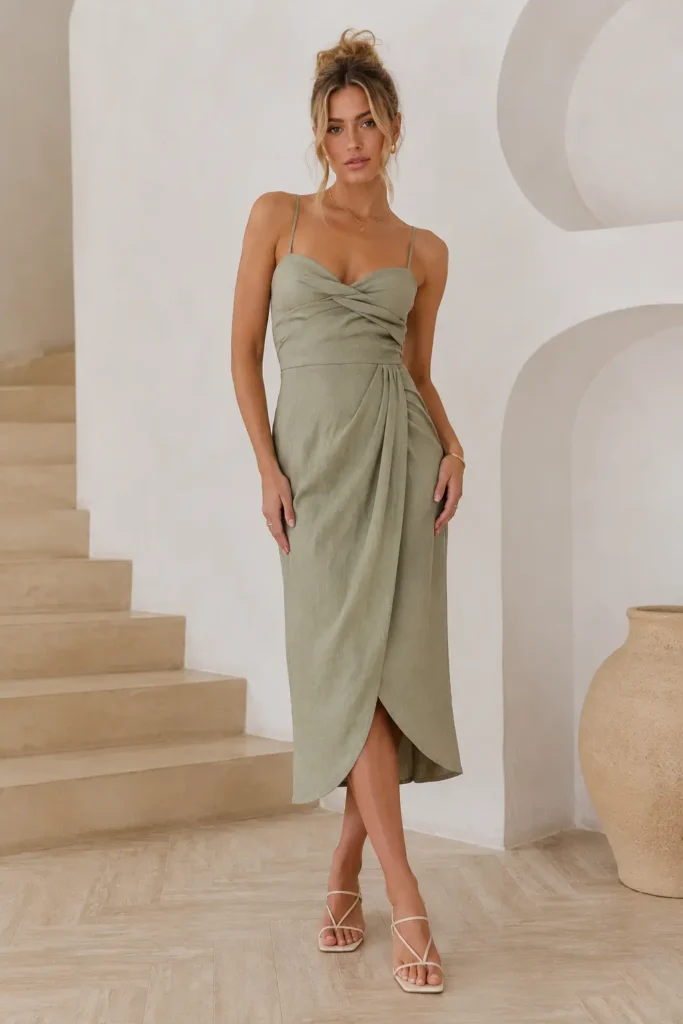
Woven Midi Dresses
Woven midi dresses need controlled length, waistline, hem balance and fabric fall.
- Midi length reveals fabric drape, hem control and side seam balance.
- Waistline and skirt sweep should stay stable across size ranges.

Woven Mini Dresses
Woven mini dresses need coverage, hem safety, compact shaping and fabric support.
- Shorter lengths make armhole, waist and hem accuracy more visible.
- Fabric body should support shape while keeping movement comfortable.

Woven Maxi Dresses
Woven maxi dresses require long-panel balance, hem control and crease-aware packing.
- Long hems need stable fabric fall and accurate cutting direction.
- Packing method should reduce deep creases across long woven panels.

Shirt Dresses
Shirt dresses rely on collar, placket, button spacing, sleeves and fabric crispness.
- Front placket alignment affects overall garment polish and fit perception.
- Collar and cuff construction need clean pressing and stable fabric body.

Shift Dresses
Shift dresses need accurate ease, shoulder balance, armhole comfort and hem stability.
- Bust, waist and hip ease must protect comfort without losing shape.
- Minimal construction makes pattern accuracy and pressing especially important.

A-Line Woven Dresses
A-line woven dresses depend on waist transition, flare amount and hem sweep.
- Flare should match fabric weight, length and intended silhouette.
- Side seam angle helps preserve a balanced A-line outline.

Printed Woven Dresses
Printed woven dresses need placement control, shrinkage review and cutting alignment.
- Print placement should stay balanced across panels, seams and sizes.
- Color continuity and batch shade need review before bulk cutting.

Cotton and Poplin Dresses
Cotton and poplin dresses support crisp daywear and structured shirt dresses.
- Shrinkage, wrinkle behavior and pressing response need early review.
- Crisp fabrics require clean seams, plackets, collars and hem finishing.

Viscose and Rayon Woven Dresses
Viscose and rayon woven dresses offer soft drape for resort and daywear styles.
- Shrinkage, twisting and opacity need review before sample approval.
- Soft fabrics require careful cutting, lining and hem control.

Crepe Woven Dresses
Crepe woven dresses suit polished work-to-evening and occasion programs.
- Crepe drape supports refined silhouettes with moderate structure.
- Surface texture, wrinkle behavior and seam response need checking.

Satin Woven Dresses
Satin woven dresses create polished occasion and evening looks.
- Satin needs seam discipline, shine control and careful pressing.
- Packing method should protect surface from pressure marks and creases.

Linen-Blend Dresses
Linen-blend dresses suit resort, summer and relaxed woven programs.
- Shrinkage, wrinkle behavior and handfeel need clear approval.
- Fabric body should support shape without excessive stiffness.
Woven Fabric Families and Dress Behavior
Fabric selection drives woven dress development. Woven fabrics differ in body, shrinkage, drape, wrinkle behavior, surface sensitivity and cutting stability. A fabric choice influences pattern, seam construction, lining, pressing, packing and future repeat orders.
Duolan reviews woven fabrics before sample approval because fabric risk often becomes garment risk. A cotton poplin shirt dress, viscose resort dress, crepe work dress and satin occasion dress require different pattern ease, sewing method, pressing plan and QC focus.
Fabric behavior review for woven dress programs
- Cotton and poplin support crisp shirt dresses and daywear silhouettes, with shrinkage, wrinkle behavior, pressing response and placket stability reviewed.
- Viscose and rayon woven fabrics create soft resort drape, while shrinkage, skewing, opacity and hem movement need careful checking.
- Crepe supports polished work-to-evening dresses, with surface texture, wrinkle recovery, waist shaping and seam response reviewed.
- Satin woven fabrics work for occasion and evening dresses, requiring seam discipline, shine control, lining review and packing protection.
- Chiffon-like woven fabrics create lightweight movement, requiring opacity control, lining, rolled hem review and carton crease planning.
- Twill and structured woven fabrics hold shape well, yet seam bulk, pressing response and wearing comfort need review.
- Linen blends support resort and summer dresses, with shrinkage, wrinkle character, handfeel and silhouette stability approved early.
- Printed woven fabrics need print placement, color continuity, cutting direction, fabric shrinkage and panel matching records.
How fabric affects production decisions
- Pattern ease changes according to fabric body and stretch absence.
- Cutting direction affects side seam balance and garment hang.
- Lining may improve opacity but can alter skirt fall.
- Pressing can sharpen shape or damage sensitive surfaces.
- Packing method should match wrinkle and crease behavior.
- Repeat programs need fabric availability, color records and approved swatches.

Pattern Accuracy, Ease and Silhouette Control
Woven dresses depend on pattern accuracy. Unlike stretch garments, a woven dress cannot hide poor fit through fabric recovery. Comfort, shape and size consistency come from calculated ease, clean shaping lines, balanced seams and precise measurements.
Duolan reviews woven patterns through body points and garment role. A shift dress needs relaxed ease and clean shoulder balance. A shirt dress needs placket alignment and sleeve movement. An A-line woven dress needs waist transition and skirt sweep. A structured occasion dress needs inner support, lining and stable zipper placement.
Pattern and fit control points
- Bust ease must support comfort without hollow areas, pulling or gaping.
- Waist shaping affects proportion, movement and finished garment polish.
- Hip ease decides sitting comfort, skirt fall and lower-body movement.
- Shoulder slope affects sleeve balance, neckline position and upper-body fit.
- Armhole shape influences comfort in sleeveless, short sleeve and shirt dress styles.
- Darts and princess seams shape woven fabric without relying on stretch.
- Panel lines help control A-line, shift, wrap and structured silhouettes.
- Skirt sweep should match fabric weight, length and movement needs.
- Neckline stability depends on pattern, facing, lining and fabric behavior.
- PP measurements must lock approved fit before bulk cutting.
Fit failures Duolan checks early
- Armholes feel tight after fabric shrinkage.
- Back zipper waves because ease is unbalanced.
- Bust darts sit too high or too low after grading.
- Waistline looks clean on hanger but pulls on body.
- Hip area feels restrictive when sitting.
- Hem sweep fails to support walking comfort.
- Lining pulls against outer shell during movement.

Shrinkage, Grainline and Cutting Direction
Woven dress quality can fail before sewing begins. Shrinkage, grainline, fabric skew, cutting direction and panel placement decide whether the garment keeps its approved size and shape. Duolan reviews these areas before bulk cutting because correction becomes difficult after fabric panels are cut.
A woven dress can shrink after washing, twist along side seams, lose hem balance or show mismatched prints when these controls are weak. For printed resort dresses, shirt dresses, woven midi styles and structured occasion dresses, cutting discipline protects both fit and visual quality.
Cutting preparation checks
- Shrinkage review protects finished measurements before pattern and bulk cutting are locked.
- Fabric batch approval helps reduce shade, handfeel and shrinkage variation.
- Grainline alignment protects garment hang, side seam balance and final silhouette.
- Fabric skew review reduces twisting in soft woven and printed fabrics.
- Cutting direction should match fabric surface, print direction and garment purpose.
- Print placement needs panel references before cutting begins.
- Stripe or check alignment requires special cutting attention across seams and plackets.
- Panel balance keeps left and right garment parts aligned.
- Hem consistency depends on accurate cutting and stable fabric behavior.
- First cut review helps detect risk before full bulk cutting proceeds.
Records supporting repeat production
- Approved fabric swatch and batch notes.
- Shrinkage result or fabric stability record.
- Marker and cutting direction reference.
- Print or stripe placement photo.
- Bundle and size-color separation notes.
- First cut panel measurement check.
- PP garment comparison after first-piece sewing.

Construction Details Defining Woven Dresses

Darts and Princess Seams
Darts and princess seams shape bust, waist and torso areas without relying on stretch. Placement affects comfort, body proportion and front smoothness.

Pleats and Gathers
Pleats and gathers create volume, movement and waist detail. Bulk control matters because excess fabric can distort waist seams or skirt balance.

Invisible Zippers
Invisible zippers need straight alignment, smooth operation and stable seam tension. Weak zipper setting can bend, wave or pull across waist areas.

Button Plackets
Button plackets define shirt dresses and woven daywear. Placket width, button spacing, collar relationship and pressing all affect finished polish.

Pockets
Pockets improve function but can affect side seams, hip shape and skirt fall. Placement and construction need review before bulk approval.

Linings and Facings
Linings and facings support opacity, neckline, armhole comfort and outer fabric shape. Poor compatibility can pull the garment or create visible distortion.
Brand Scenarios for Woven Dress Programs
Woven dresses serve multiple brand scenarios. Duolan reviews each program by fabric, silhouette, construction detail and delivery route.

Work-to-Evening Woven Dresses
Work-to-evening woven dresses need balanced fit, coverage, wrinkle behavior, pressing and professional appearance. Shirt dresses, shift dresses and midi styles often fit these programs.

Resort Printed Woven Dresses
Resort printed woven dresses need light drape, shrinkage control, print placement, opacity review and packing recovery. Soft fabrics require extra cutting discipline.

Contemporary Woven Dress Lines
Contemporary woven dress lines depend on clean silhouettes, fabric handfeel, seam quality, hem balance and repeat fit. Simple shapes expose weak construction quickly.

Occasion Woven Dresses
Occasion woven dresses may use satin, crepe, lace or structured materials. Surface control, lining, zipper setting and photo sample accuracy need stronger approval.

Shirt Dress Programs
Shirt dress programs require collar, placket, button spacing, sleeve balance, pocket placement and fabric crispness. Pressing standards influence final garment polish.

Repeatable Core Woven Styles
Repeatable core woven styles need approved patterns, fabric records, BOM, PP samples, QC notes and packing standards. Strong records support color updates and replenishment.
Woven Dress Sample Development Path
Woven dress sampling should resolve fabric, fit, construction and production questions before bulk planning begins.
Step 1|Fabric and Silhouette Review
Duolan reviews fabric direction, target silhouette, garment length, wearing scenario, reference images, size range and order plan. Fabric behavior and garment purpose guide the sample route.
Step 2|Shrinkage and Pattern Preparation
Fabric shrinkage, grainline, fabric stability, lining need and pattern direction are reviewed before sample cutting. Woven dresses need clear ease and structure decisions early.
Step 3|First Sample Development
The first sample checks bust, waist, hip, shoulder, armhole, darts, seams, hem, closures, lining and overall silhouette. Sample review focuses on fit and garment shape.
Step 4|Fit and Construction Revision
Fit comments are translated into corrections for pattern ease, seams, plackets, zippers, lining, hem, fabric or pressing. Each correction should improve both appearance and production stability.
Step 5|PP Sample and Bulk Preparation
After approval, the PP sample, BOM, measurements, tolerance, fabric standard, QC points, pressing method and packing method are confirmed. The PP sample becomes the physical production benchmark.

Sample Types for Woven Dress Decisions
Woven dress samples should answer specific fabric, fit and construction questions. Duolan uses sample stages to reduce uncertainty before bulk manufacturing begins.
| Sample Type | Purpose | Woven Dress Focus |
|---|---|---|
| First Sample | Checks fabric and pattern direction | Fabric behavior, pattern, silhouette |
| Fit Sample | Reviews standard-size wear condition | Bust, waist, hip, shoulder, armhole |
| Revised Sample | Confirms corrections after comments | Ease, seams, lining, closure, hem |
| Photo Sample | Supports campaign or ecommerce review | Surface, drape, color, pressing |
| Salesman Sample | Supports commercial and internal evaluation | Quality feel, fabric value, wearing comfort |
| PP Sample | Becomes the production benchmark | Measurements, workmanship, fabric, packing |
Pattern, Grading and Size Consistency
Woven dress grading is a core production issue because the garment cannot rely on stretch recovery. Each size must protect fit, comfort, structure and silhouette through pattern logic. Bust, waist, hip, shoulder, armhole, sleeve, hem sweep, lining and closures all need size-specific review.
Duolan reviews grading through garment type and fabric behavior. Shirt dresses need placket and sleeve balance. Shift dresses need ease distribution. A-line woven dresses need flare and hem control. Printed woven dresses need placement planning across sizes.
Grading control points
- Bust, waist and hip grading must protect fit without tightness or excess volume.
- Shoulder and armhole scaling affects comfort and sleeve movement.
- Sleeve grading needs range of motion across short and long sleeve styles.
- Waistline position should remain consistent across the confirmed size range.
- Dart placement must scale with body proportion and fabric behavior.
- Hem sweep should support movement and preserve silhouette.
- Lining dimensions must match outer shell size and movement.
- Closure placement should stay aligned after grading.
- Placket and button spacing need review across sizes and fabric thickness.
- Print placement may need adjustment by panel and size.
- PP tolerance should record key measurements before bulk cutting.
- Repeatable styles need approved pattern and size records.

Woven Dress Development Risk Matrix
Woven dress development carries fabric, pattern and construction risks. Duolan reviews these issues before production standards are locked.
| Risk | Why It Happens | Duolan Control |
|---|---|---|
| Garment shrinks after washing | Fabric shrinkage is not reviewed | Shrinkage test and fabric approval |
| Side seams twist | Grainline or fabric skew is unstable | Grainline and cutting direction check |
| Fit feels restrictive | Ease is not calculated correctly | Pattern and fit sample review |
| Hem becomes uneven | Cutting or pressing is unstable | Hem and pressing control |
| Print looks misaligned | Placement is not reviewed before cutting | Print placement reference |
| Lining pulls outer shell | Lining and fabric movement mismatch | Lining compatibility check |
| Zipper waves or bends | Seam tension or fit balance is weak | Zipper and waistline review |
| Larger sizes lose shape | Grading does not adjust structure properly | Size-specific grading review |
Production Engineering for Woven Dress Construction
Woven dress production requires engineering around pattern transfer, cutting, seam allowance, shaping lines, closures, lining and pressing. Duolan turns approved samples into production instructions before bulk sewing begins.
Production engineering focus
- Pattern transfer ensures the production line follows the approved silhouette.
- Marker and bundle control protects size, color and fabric batch separation.
- Seam allowance control keeps measurements stable across sewing operations.
- Dart and seam execution shapes woven fabric without stretch compensation.
- Princess seams and panel lines help control fitted and structured woven dresses.
- Pleat and gather control protects waist volume and skirt balance.
- Zipper setting should remain flat, smooth and aligned.
- Placket construction affects shirt dress appearance and button spacing.
- Pocket construction needs side seam balance and bulk control.
- Lining attachment should support outer fabric without pulling or twisting.
- Pressing method helps set woven shape before packing.
- First-piece confirmation checks whether production follows PP standards.
- Inline measurement checks reduce drift before defects spread across the batch.
Critical woven dress control areas
- Bust, waist and hip measurements.
- Shoulder and armhole comfort.
- Dart and princess seam position.
- Waist seam and side seam balance.
- Zipper or placket alignment.
- Lining movement.
- Hem sweep and hem level.
- Final pressed shape.
- Garment condition after packing.
Cutting, Sewing and Pressing Control
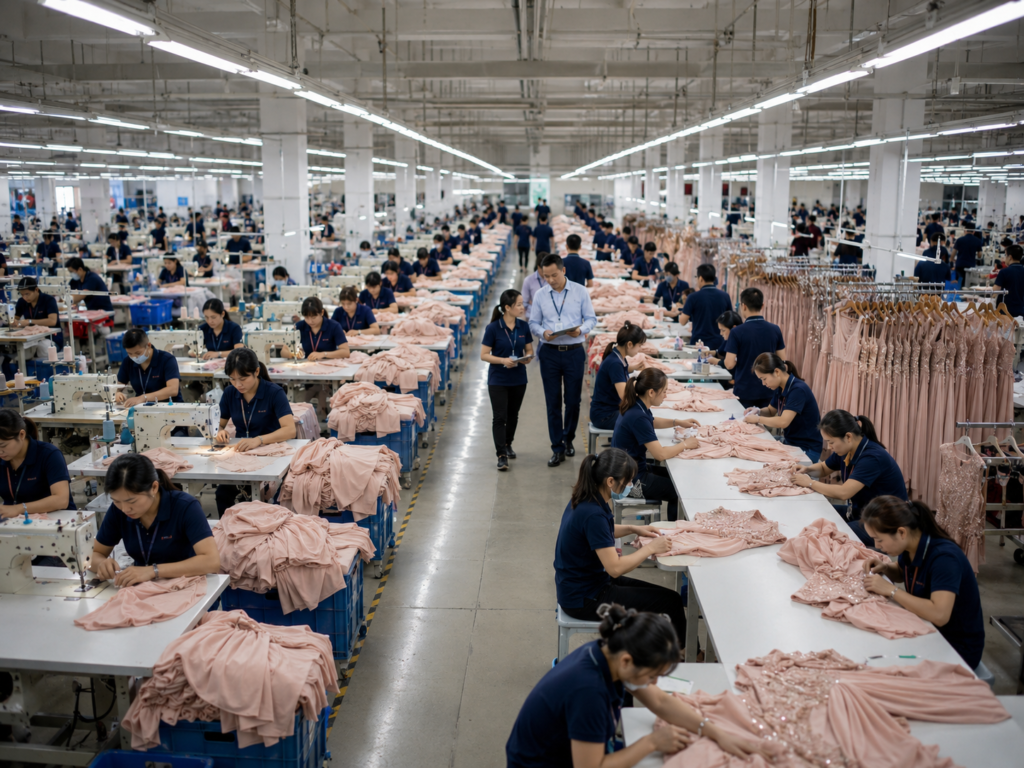
Woven dress quality is created through each production stage. Fabric inspection, cutting, sewing, first-piece review, pressing and packing all affect final garment shape.
Fabric Inspection Before Cutting
Duolan checks shrinkage, shade, fabric skew, surface defects, print clarity, drape and lining compatibility before cutting. Fabric approval protects measurement stability and garment appearance.
Cutting Control
Cutting checks include grainline, marker, print placement, panel balance, size bundling and left-right symmetry. Accurate cutting protects fit before sewing begins.
Sewing Execution
Sewing control focuses on darts, seams, pleats, zippers, plackets, pockets, lining and hem preparation. Each operation affects shape, comfort and final measurements.
First-piece Confirmation
The first completed garment is checked against the PP sample for measurements, fit, workmanship, lining, zipper, placket, hem and pressing readiness. Bulk continues after garment standards are confirmed.
Pressing and Packing Preparation
Final preparation checks pressing method, hem balance, placket shape, neckline, wrinkles, hangtag, polybag and carton pressure. Packing should protect finished woven shape.
QC and Packing Standards for Woven Dresses
Woven dress QC must protect fabric stability, pattern accuracy, construction, measurements, final appearance and packed presentation. Duolan checks quality from material arrival to packed cartons.
| Control Area | Woven Dress Risk | What Should Be Confirmed |
|---|---|---|
| Main Fabric QC | Shrinkage, skew, shade, defects, drape instability | Fabric batch, shrinkage, shade, surface |
| Cutting QC | Grainline, print placement, panel balance | Cutting direction, marker, size bundle |
| Sewing QC | Darts, seams, zippers, plackets, lining | Stitching, seam allowance, construction |
| Measurement QC | Bust, waist, hip, length, hem sweep | Tolerance, size spec, PP standard |
| Final Appearance QC | Wrinkles, pressing marks, uneven hems | Pressing method, garment surface, final photos |
| Packing QC | Creases, label errors, carton mix-ups | Folding, barcode, polybag, carton mark |
Cost and Quantity Logic for Woven Dress Projects
Woven dress cost depends on fabric, lining, pattern work, cutting accuracy, construction details, special processes, finishing and packing. Duolan reviews cost through garment risk and repeat potential rather than lowest-price logic.
| Cost Area | Woven Dress Cost Driver | What Should Be Confirmed |
|---|---|---|
| Main Fabric | Cotton, viscose, crepe, satin, print, linen blend | Width, shrinkage, drape, color, repeat availability |
| Lining / Facing | Opacity, comfort, neckline, armhole, skirt fall | Lining type, length, color, compatibility |
| Pattern and Sampling | Fit, ease, darts, grading, sample rounds | Sample path, PP sample, tolerance |
| Cutting and Sewing | Panels, seams, plackets, zippers, pockets | Operation sequence, first-piece approval |
| Special Process | Print, embroidery, washing, dyeing, pleating | Placement, approval sample, lead time |
| Finishing and Pressing | Garment shape, wrinkles, hem, placket | Pressing method, final appearance standard |
| Packing | Folding, barcode, carton, crease control | Packing method, label files, carton standard |
Manufacturing System and Project Evidence
Woven dress programs need fabric judgment, pattern accuracy, cutting discipline, pressing control and repeat-ready records. Duolan’s manufacturing system supports woven dress development from fabric review to bulk delivery and future replenishment.
Manufacturing capacity connected to woven dress programs
- 16 owned womenswear factories support core woven dress structure control and PP standard transfer.
- 20+ satellite factories provide flexible capacity for repeat orders and seasonal dress programs.
- 300 sewing lines support standard-size bulk production across woven mini, midi, maxi and work dresses.
- 50+ quick-response lines support first samples, revised samples and launch preparation.
- 15,000–35,000 monthly sample capacity supports frequent fit, fabric and construction revisions.
- 6,500,000 stable monthly capacity supports planned bulk delivery and repeat production.
- Typical cooperating brand orders run across 10–30 styles with 20,000–80,000 pieces per order.
- Fabric and process resources support cotton, viscose, crepe, satin, chiffon-like woven, linen blends, print, embroidery, dyeing, washing and finishing.

US Work-to-Evening Woven Dress Program
A US womenswear brand developed shirt dresses, A-line dresses and woven midi styles for polished day-to-evening use.
- Order scope: 22 styles across shirt dress, A-line and midi woven structures.
- Total program quantity: about 58,000 pieces.
- Focus areas: waistline, armhole, placket, fabric shrinkage, pressing and packing.
- Duolan actions: fabric review, fit sample correction, PP standard, first-piece check and packing reference.
- Result focus: refined woven dresses prepared for commercial repeat programs.

Australian Resort Printed Woven Drop
An Australian resort brand developed printed woven dresses with lightweight fabrics and seasonal colorways.
- Order scope: 16 styles across printed midi, maxi and wrap-inspired woven silhouettes.
- Total program quantity: about 42,000 pieces.
- Focus areas: print placement, lightweight drape, shrinkage, opacity and carton recovery.
- Duolan actions: print placement review, fabric stability check, sample correction and carton photo record.
- Result focus: soft woven movement and clean presentation after international transport.

European Contemporary Woven Midi Line
A European contemporary brand developed woven midi dresses for refined seasonal collections.
- Order scope: 28 styles across crepe, satin woven and structured daywear directions.
- Total program quantity: about 74,000 pieces.
- Focus areas: woven midi proportion, hem sweep, fabric drape, size grading and pressing.
- Duolan actions: pattern review, fit adjustment, PP sample locking and final QC focus.
- Result focus: woven silhouette consistency across style range and bulk production.

Occasion Crepe and Satin Woven Program
An occasionwear brand developed crepe and satin woven dresses for event-focused selling channels.
- Order scope: 14 styles across cocktail, wrap, A-line and refined woven silhouettes.
- Total program quantity: about 36,000 pieces.
- Focus areas: surface control, lining, invisible zipper, photo sample quality and PP standard.
- Duolan actions: material review, lining adjustment, zipper check and final appearance inspection.
- Result focus: polished woven garments prepared for occasion-driven delivery.

Repeatable Core Woven Style
A repeatable woven dress foundation was prepared for color updates and future replenishment.
- Order scope: 10 related woven styles.
- Total program quantity: about 24,000 pieces.
- Focus areas: approved pattern, BOM, fabric batch, color reference and QC notes.
- Duolan actions: repeat record setup, PP sample retention, packing standard confirmation.
- Result focus: future batches supported by approved production records.

FAQ|Custom Woven Dress Manufacturing
A custom woven dress manufacturer develops and produces dresses made from woven fabrics according to brand direction, fabric standards, size range and delivery needs. Duolan supports woven midi dresses, printed woven dresses, shirt dresses, A-line woven styles, wrap woven dresses and occasion woven programs from sample development to bulk production.
Woven dresses rely more on pattern accuracy, ease, cutting direction, seams, lining and pressing. Knit dresses rely more on stretch, recovery and fabric elasticity. Duolan treats woven dress development as pattern-led garment manufacturing.
Duolan can support cotton, poplin, viscose, rayon woven, crepe, satin woven, chiffon-like woven, linen blends, printed woven fabrics and structured woven materials. Fabric selection depends on garment shape, drape, shrinkage, opacity, pressing and repeat availability.
Duolan reviews fabric shrinkage, grainline, fabric skew, cutting direction, marker planning and first cut panels before bulk production. These checks help protect garment size, side seam balance and hem level.
Yes. Duolan supports printed woven dresses for resort, daywear, contemporary and occasion programs. Print placement, fabric shrinkage, color continuity, panel balance and cutting alignment receive special review.
Fit and grading are managed through pattern review, fit samples, size-specific measurements, ease control, armhole and shoulder checks, closure placement and PP sample standards. Woven dresses need size accuracy because fabric stretch is limited.
Yes. Approved samples are connected to BOM records, fabric standards, PP samples, production notes, QC checkpoints, pressing method and packing requirements. Sample approval becomes a production reference before bulk cutting begins.
A brand can send reference images, tech packs, target silhouette, woven fabric direction, size range, colorways, style count, quantity, launch date and packing requirements. Duolan will review fabric feasibility, fit risk, sample path, production readiness and QC focus.

Send Your Woven Dress Project
Duolan works best with established fashion brands, product teams and sourcing offices developing woven midi, printed woven, shirt dress, A-line woven, wrap woven, resort woven or occasion woven dress programs. Share your project files, fabric direction or sample requirements, and our team will review the development path before sampling or bulk production.
Share your project details
- Woven dress type: midi, mini, maxi, shirt dress, A-line, wrap, shift, printed or occasion.
- Fabric direction: cotton, poplin, viscose, crepe, satin woven, linen blend, print or structured woven.
- Construction needs: lining, zipper, placket, pockets, darts, pleats, gathers or special finishing.
- Project stage: first sample, fit sample, revised sample, PP approval, bulk production or repeat order.
- Program information: style count, target quantity, colorways, size range and launch date.
- Production needs: fabric sourcing, shrinkage review, pattern correction, QC, packing, label, barcode or repeat records.

