Skip to content
Custom Wrap Dress Manufacturer
Custom wrap dress development and bulk manufacturing for established fashion brands.
Duolan helps fashion brands develop wrap dresses where front overlap, V neckline stability, waist tie placement, coverage safety, fabric drape and size consistency decide final garment value. From printed resort wrap dresses and jersey wrap midi styles to satin wrap dresses, faux wrap workwear styles and occasion-ready wrap silhouettes, our team connects sampling, PP approval, bulk production, QC, packing and repeat delivery.
- 16 owned womenswear factories support controlled sample-to-bulk handover.
- 20+ satellite factories provide flexible capacity for repeat and seasonal dress programs.
- 300 sewing lines support standard-size bulk production across wrap dress structures.
- 50+ quick-response lines support first samples, revised samples and launch preparation.
- 15,000–35,000 monthly sample capacity supports frequent fit and coverage revisions.
- 6,500,000 stable monthly capacity supports planned bulk and repeat production.
- Typical cooperating brand orders include 10–30 styles and 20,000–80,000 pieces per order.








Wrap Dresses Require More Than a Tie Waist
A wrap dress is not only a dress with a waist tie. Its value comes from front overlap, neckline security, waist adjustment, fabric drape, coverage safety and reliable standard-size fit. A weak wrap dress may look attractive on a hanger but open during movement, gap at the bust, twist at the waist or lose shape after packing.
True wrap, faux wrap and wrap-style dresses each need different pattern logic. True wrap styles need secure overlap and adjustable tie construction. Faux wrap styles need fixed stability and cleaner size consistency. Wrap-style garments need visual drape without creating unnecessary wearing risk.
Duolan develops wrap dresses as structure-sensitive womenswear products. Each approved style needs pattern control, fabric review, closure planning, PP sample standard, production notes, QC checkpoints, packing requirements and repeat records before bulk production.
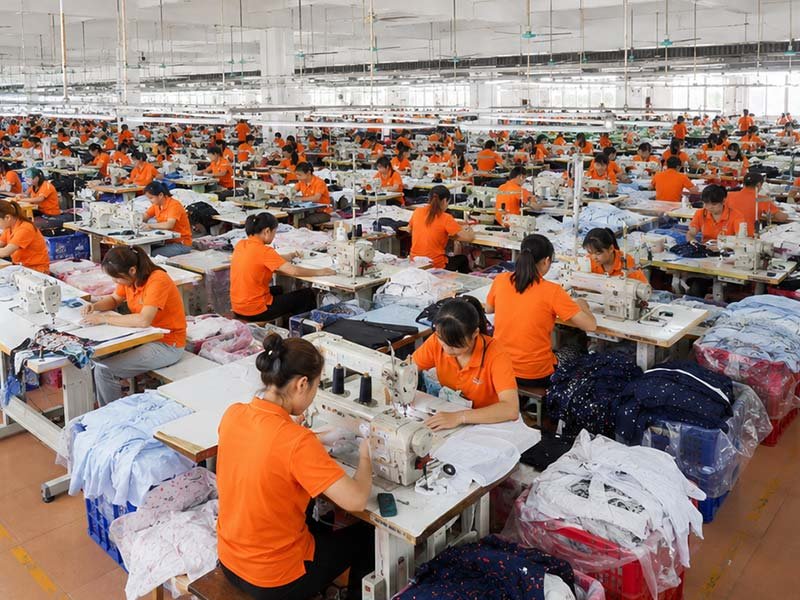
Built for Established Wrap Dress Programs
Duolan works with fashion brands, product teams and sourcing offices managing wrap dress programs with defined garment standards, launch calendars, quality expectations and repeat value. Wrap construction needs stronger control of coverage, neckline, waistline and movement than ordinary dress production.
Contemporary Dress Brands
Contemporary dress brands need clean wrap shapes, refined neckline balance, soft drape and controlled waist definition. Minimal styling leaves little room for weak overlap, unstable edges or poor pressing.
Resort and Vacation Brands
Resort brands need printed wrap dresses, lightweight fabrics, soft movement and packing recovery. Duolan reviews opacity, lining, print placement, shrinkage and front panel stability before bulk.
Work-to-Evening Brands
Work-to-evening brands often prefer faux wrap or fixed wrap structures with coverage, comfort and polished proportion. Knee-length and midi wrap styles need secure neckline and stable waist placement.
Occasionwear Brands
Occasionwear brands need satin, lace, crepe or cocktail wrap dresses with photo-ready finish. V neckline, lining, hidden closure, zipper, surface appearance and skirt movement require careful sample approval.
Product Development Teams
Product teams need samples answering structure questions: Is overlap deep enough? Does the neckline gap? Does the tie sit at the correct waistline? Does fabric move safely?
Sourcing Offices
Sourcing offices evaluate sample accuracy, production stability, QC discipline, packing accuracy, capacity and repeat readiness. Duolan supports wrap programs through structured sample-to-delivery handover.
True Wrap, Faux Wrap and Wrap-Style Dress Structures
Mesh dress programs need a product system, not a random sheer dress list. Established fashion brands often build one launch around bodycon mesh styles, mini dresses, cut-out dresses, overlays, long-sleeve mesh pieces, embroidered mesh, sequin mesh and resort mesh dresses. Duolan connects dress type, mesh behavior, lining coverage, edge finish and production control before sampling begins.
| Structure | Meaning | Manufacturing Focus | Best Use |
|---|---|---|---|
| True Wrap Dress | Front panels overlap and tie around the body | Overlap depth, tie length, side opening, waist security | Resort, casual, adjustable-fit programs |
| Faux Wrap Dress | Wrap look is fixed and does not fully open | Stable neckline, sewn overlap, size consistency | Workwear, ecommerce, wider size programs |
| Wrap-Style Dress | Wrap visual detail without full wrap function | Front seam, drape, panel balance | Fashion, occasion, contemporary styles |
| Surplice Bodice Dress | Cross-over bodice, often fixed at waist | V neckline, bust coverage, lining | Occasion, cocktail, refined daywear |
Wrap Dress Types Duolan Can Support
Wrap dress manufacturing becomes stronger when styles are grouped by structure, fabric and commercial role. A printed resort wrap dress, jersey wrap midi, satin occasion wrap and faux wrap work dress need different sample logic, fit review and production controls.

True Wrap Dresses
True wrap dresses use overlapping front panels and functional waist ties. Duolan reviews overlap depth, tie length, side opening and movement safety before bulk approval.
- Overlap depth should protect coverage during sitting, walking, and waist adjustment comfortably.
- Inner and outer ties need consistent placement across sizes and fabrics.

Faux Wrap Dresses
Faux wrap dresses keep the wrap appearance with a fixed front structure. They are useful when brands need cleaner neckline stability, stronger size consistency and lower wearing-risk compared with fully adjustable wrap construction.
- Fixed overlap helps improve neckline stability and front coverage consistency.
- Sewn front panels reduce movement risk for workwear and ecommerce programs.
Wrap Midi Dresses
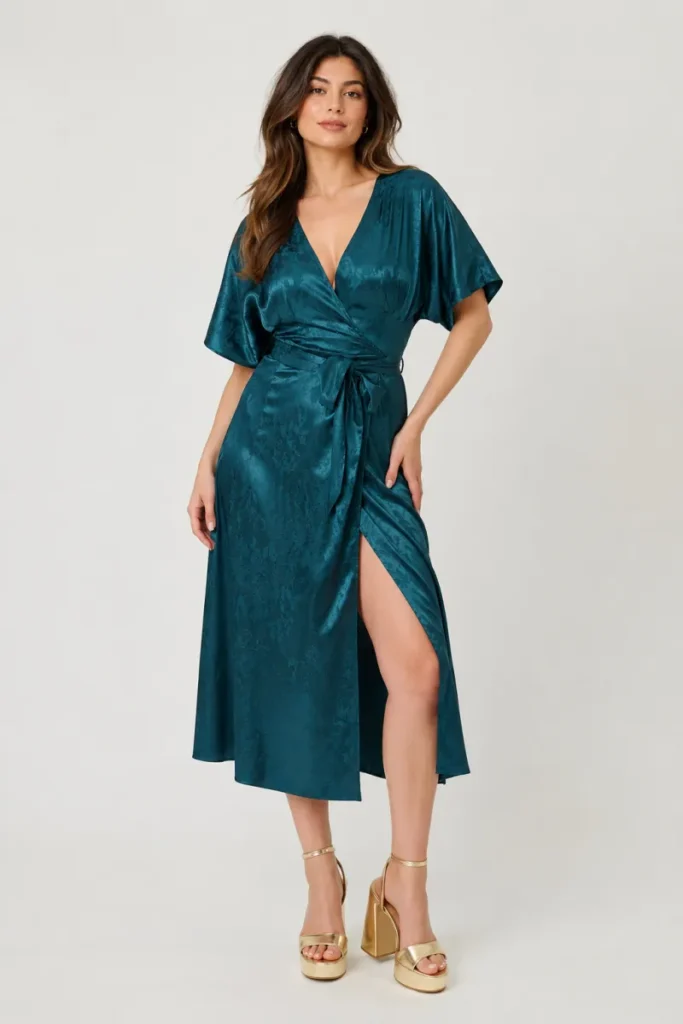
Wrap midi dresses need careful waistline balance, front opening control and hem stability. The length makes fabric drape, overlap depth and walking movement more visible than shorter wrap styles.
- Midi length needs balanced overlap, waistline, hem movement, and fabric fall.
- Front opening should stay secure while keeping elegant walking movement.

Wrap Maxi Dresses
Wrap maxi dresses require long hem control, fabric weight review and packing crease planning. Soft fabrics may create beautiful movement, but overlap safety and long-panel stability need close attention.
- Long panels need stable drape, clean hem, and controlled front opening.
- Packing method should prevent deep creases along front panels and ties.

Wrap Mini Dresses
Wrap mini dresses need stronger attention to front coverage, hem safety and walking comfort. Shorter lengths make overlap depth and tie security more sensitive during wear.
- Shorter length requires stronger overlap depth and movement safety checks.
- Hem position should protect coverage without weakening the wrap silhouette.

Surplice Wrap Dresses
Surplice wrap dresses use a cross-over bodice, often fixed at the waist. Duolan reviews bust coverage, neckline depth, lining alignment and front edge stability before production.
- Cross-over bodice needs stable bust coverage and neckline edge control.
- Lining and facing should support shape without pulling the outer fabric.

Printed Wrap Dresses
Printed wrap dresses require panel placement review because front overlap and ties can interrupt the print. Duolan checks print direction, color consistency and cutting alignment before bulk.
- Front panel print placement should remain balanced after overlapping and tying.
- Tie areas need print alignment without disturbing garment visual flow.

Satin Wrap Dresses
Satin wrap dresses create a polished and dressy appearance, but the fabric can shift, shine or crease easily. Duolan reviews seam discipline, front stability, pressing and packing method.
- Satin surface needs controlled seams, pressing, and packing crease prevention.
- Slippery fabric requires secure overlap, neckline facing, and tie placement.

Jersey Wrap Dresses
Jersey wrap dresses offer comfort and adjustable fit, but recovery and neckline stability must be controlled. Duolan checks stretch direction, front tension, shrinkage and side seam balance.
- Stretch recovery should support neckline shape and front panel stability.
- Waist ties must not distort the fabric after repeated wearing.

Chiffon-like Wrap Dresses
Chiffon-like wrap dresses need lining, opacity control and movement safety. Lightweight fabrics can look soft and elegant, but front panels may open or shift during walking.
- Lightweight fabric needs lining support, opacity review, and movement testing.
- Hem and overlap should stay balanced despite soft fabric movement.

Crepe Wrap Dresses
Crepe wrap dresses are suitable for work-to-evening and polished contemporary styles. Duolan reviews wrinkle behavior, waist structure, drape, pressing and neckline stability.
- Crepe supports polished wrap dresses with controlled drape and structure.
- Wrinkle behavior and waist seam stability need review before PP approval.

Lace Wrap Dresses
Lace wrap dresses need placement control, lining color and soft edge finishing. The front overlap must look refined without creating rough contact or uneven lace positioning.
- Lace motifs should align cleanly across overlap and neckline areas.
- Lining color and edge finish affect comfort and garment polish.

Resort Wrap Dresses
Resort wrap dresses often use printed, lightweight or soft-drape fabrics. Duolan reviews fabric movement, opacity, print placement, packing recovery and front opening safety.
- Resort wrap styles need soft movement, clear prints, and packing recovery.
- Lightweight fabrics require opacity checks and secure front panel control.
Work-to-Evening Wrap Dresses
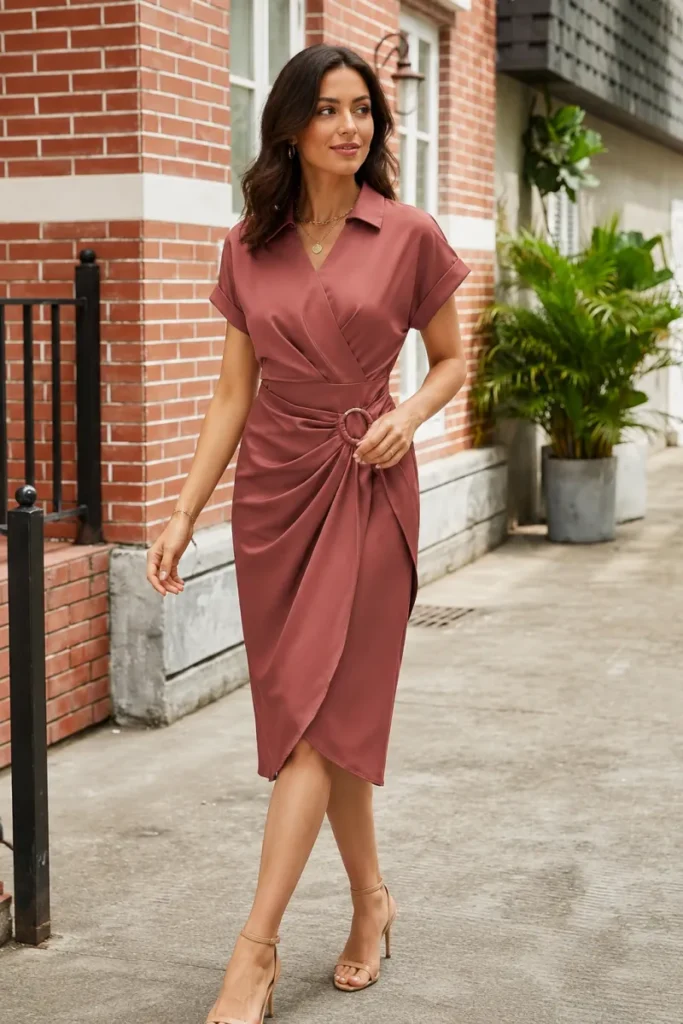
Work-to-evening wrap dresses usually need refined coverage, stable neckline and professional proportion. Faux wrap structures often work well for these programs because they reduce exposure risk.
- Coverage and neckline stability matter more than dramatic wrap movement.
- Fixed-front construction can support polished office-to-evening silhouettes.

Cocktail Wrap Dresses
Cocktail wrap dresses need a polished surface, secure neckline and flattering waist position. Satin, crepe, lace or structured woven fabrics often require stronger sample review and PP locking.
- Cocktail wrap dresses need refined neckline, waist shaping, and surface control.
- Hidden closures may improve coverage for deep V wrap designs.

Occasion Wrap Dresses
Occasion wrap dresses rely on drape, support, photo-ready fit and clean finishing. Duolan reviews lining, closure, front overlap, neckline edge and final appearance before bulk.
- Occasion styles need polished drape, lining control, and secure closure.
- Photo sample review should confirm neckline, overlap, and waist proportion.

Contemporary Wrap Dresses
Contemporary wrap dresses often use cleaner lines, softer drape and minimal details. Small problems in neckline, tie placement or front panel balance become visually obvious.
- Minimal wrap designs need precise neckline, waistline, and front balance.
- Fabric handfeel and pressing quality strongly affect perceived garment value.
Brand Scenarios for Wrap Dress Programs
Wrap dresses serve different brand scenarios. Duolan reviews each program by wearing context, fabric behavior, closure structure and production route.

Resort Wrap Programs
Resort wrap dresses often use printed woven, viscose blends, soft crepe or lightweight fabrics. Key checks include print placement, opacity, front opening safety, hem movement and packing recovery after transport.

Work-to-Evening Wrap Lines
Work-to-evening wrap lines often use faux wrap or stable fixed-front constructions. Coverage, neckline security, knee-length or midi proportion, wrinkle behavior and comfort remain central.

Contemporary Dress Collections
Contemporary wrap dresses need clean neckline lines, soft waist definition and controlled fabric movement. Weak facing, poor pressing or uneven overlap can reduce perceived garment value quickly.

Occasion Wrap Dresses
Occasion wrap dresses may use satin, crepe, lace or dressy woven fabrics. Neckline, lining, hidden closure, zipper strength, surface appearance and photo sample accuracy need stronger approval.

Social and Going-out Wrap Styles
Going-out wrap styles may include deep V, slit, tie waist or soft draped fronts. Coverage safety, movement comfort and front panel control become essential before bulk production.

Repeatable Core Wrap Programs
Core wrap dresses can support seasonal colors and future replenishment. Approved patterns, tie placement records, color references, PP samples and QC notes protect repeat orders.
Fabric Drape and Stability in Wrap Dress Production
Fabric decides whether a wrap dress feels elegant, secure or unstable. Wrap structures need drape, yet drape alone is not enough. Material must also hold neckline shape, protect coverage, support waist tie construction and remain stable across bulk cutting and packing.
A fabric can look soft in a swatch but fail in a wrap garment. Overly light fabric may fly open. Slippery satin may shift at the overlap. Thick fabric may create bulky ties. Stretch fabric may distort neckline shape after wear. Duolan reviews fabric behavior before sample approval, especially for multi-color, multi-size or repeat programs.
Fabric behavior review for wrap programs
- Viscose and rayon blends create soft drape, with shrinkage, twisting and opacity reviewed before sampling.
- Jersey fabrics support comfort and adjustable fit, while recovery and neckline gaping need control.
- Satin gives a polished wrap look, yet fabric slip, seam puckering and overlap movement require review.
- Crepe suits work-to-evening wrap styles, with wrinkle behavior and waist structure checked early.
- Chiffon-like lightweight fabrics need lining, opacity checks and movement control before PP approval.
- Printed woven fabrics require panel placement review across front overlap, skirt panels and tie areas.
- Lace needs lining color, edge comfort, motif placement and front overlap stability.
- Stretch fabrics require recovery checks so wrap fronts do not distort after wear.

Duolan checks before bulk
- Front panel drape under movement.
- Neckline edge stability after wearing simulation.
- Tie thickness and side knot bulk.
- Opacity across bust, hip and overlap areas.
- Lining compatibility with outer shell.
- Print placement across overlapping front panels.
- Shrinkage and fabric batch consistency.
- Packing recovery after folding and carton pressure.
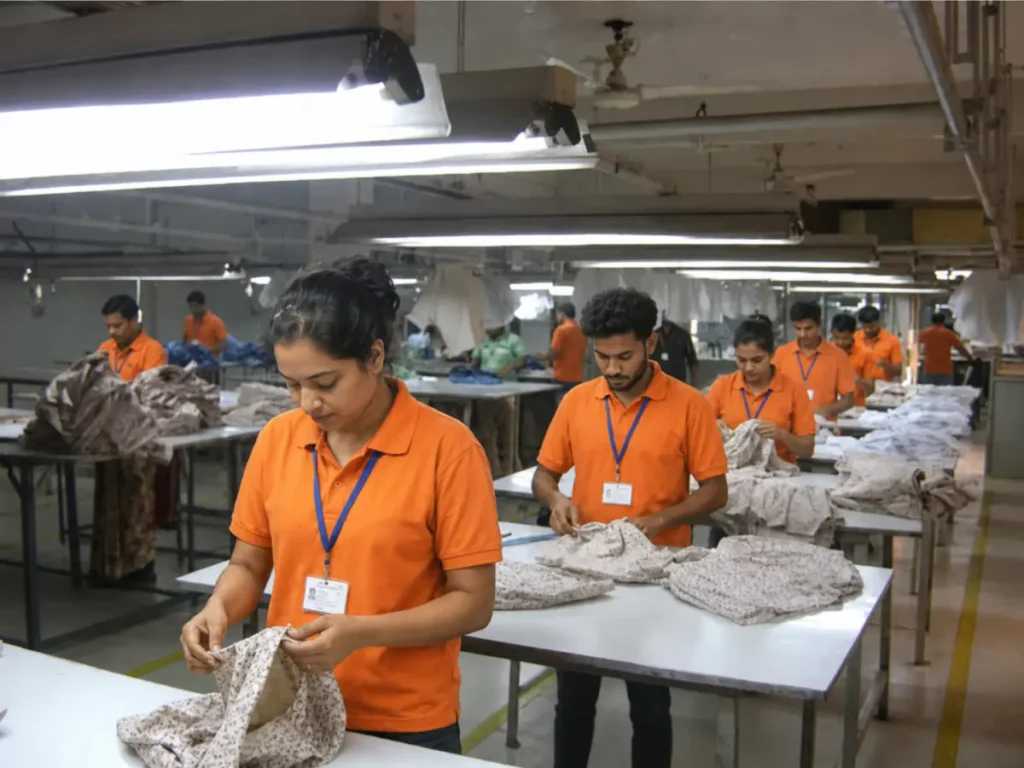
Front Overlap and V Neckline Control
Wrap dress complaints often start at the front: neckline gaping, unstable bust coverage, weak overlap or front panels opening during movement. Duolan treats overlap and neckline as core construction points, not styling details.
A strong wrap dress must look clean in front view, side view and movement. The neckline should match brand style while staying secure across sizes. Front panels must cross with enough depth to protect coverage without creating excess fabric bulk. Fabric behavior, facing, lining, hidden closure and grading all influence the final result.
Front structure checks
- Overlap depth must remain secure while standing, sitting and walking.
- V neckline shape should support brand style without gaping.
- Bust coverage needs review across the confirmed size range.
- Cross-front angle affects neckline security and body proportion.
- Facing and lining help hold front edge shape and reduce rolling.
- Hidden snap or hook may improve deep V stability and front coverage.
- Soft fabrics require extra edge control to prevent collapsing or opening.
- Faux wrap construction can reduce exposure risk for workwear and wider size programs.
- Photo sample review should include front, side and movement views.
- PP sample records should lock neckline depth, overlap position and closure method.

Visible records for approval
- Front overlap depth by sample size.
- Neckline depth and crossing angle.
- Bust coverage notes from fit review.
- Hidden closure placement photos.
- Front, side and movement photos.
- PP sample comparison before bulk release.

Tie Waist, Inner Closure and Coverage Safety
Tie waist construction controls both shape and security. In a wrap dress, ties are not decorative add-ons. They affect waistline position, front panel security, comfort, movement and garment balance. Inner ties, outer ties, side openings, hidden snaps and hooks may all become part of the garment’s structure.
Duolan reviews tie and closure design according to fabric, size range and wearing scenario. A soft resort wrap dress, a fixed faux wrap work dress and a satin occasion wrap style require different closure logic. The goal is a wrap dress with adjustable beauty and controlled wearing confidence.
Tie and closure checks
- Tie position must sit at the intended waistline and support garment proportion.
- Tie length should allow secure knotting without bulky side volume.
- Inner tie helps hold the under panel before outer fastening.
- Outer tie should control waist definition without twisting the front panels.
- Side opening must be reinforced to prevent tearing or distortion.
- Hidden snap or hook may improve neckline and front coverage.
- Waist seam stability helps reduce twisting after movement.
- Faux wrap waist construction supports stronger fixed-front size consistency.
- Coverage safety needs checks during sitting, walking and arm movement.
- Tie folding method should protect garment appearance after packing.

Production records worth keeping
- Tie length and placement.
- Side opening reinforcement method.
- Hidden closure position.
- Waist seam construction notes.
- Movement review comments.
- First-piece tie and overlap photo.
- Packing reference for tie arrangement.

Length, Sleeve and Detail Options
Wrap dress details should support front stability and waist balance. Duolan reviews length, sleeve and slit details by their effect on coverage, movement and production consistency.

Wrap Mini Dresses
Wrap mini dresses need front coverage, hem safety and walking comfort. Overlap depth and tie position become more sensitive because shorter lengths expose movement risk faster.

Wrap Midi Dresses
Wrap midi dresses require waistline balance, front opening control, fabric drape and hem stability. They suit resort, work-to-evening and contemporary dress programs.

Wrap Maxi Dresses
Wrap maxi dresses need long hem control, fabric weight review, front opening safety and packing crease prevention. Soft fabrics need extra movement and opacity checks.

Long Sleeve Wrap Dresses
Long sleeve wrap styles need shoulder movement, sleeve pitch, armhole comfort and waist tension review. Sleeve pull can affect neckline stability.

Short Sleeve and Sleeveless Wrap Dresses
Short sleeve and sleeveless wrap dresses require armhole, shoulder, neckline and inner finishing control. Lightweight fabrics need careful lining and edge stability.

Slit Wrap Dresses
Slit wrap dresses require slit height review, front overlap safety, lining coverage and walking comfort. Slit placement must stay balanced across sizes.
Wrap Dress Sample Development Path
Wrap dress sampling should resolve structure, coverage and fabric questions before bulk planning begins.
Step 1|Structure and Style Review
Duolan reviews true wrap, faux wrap or wrap-style direction, reference images, fabric, size range, target scenario and order plan. Structure choice decides pattern logic before sampling starts.
Step 2|Fabric and Coverage Evaluation
Fabric is reviewed for drape, opacity, stretch, shrinkage, slip, lining need and front overlap stability. Soft fabrics and deep V wrap styles need extra coverage review.
Step 3|Pattern and First Sample
The first sample checks V neckline, front overlap, tie position, side opening, inner closure, waistline, skirt panel and hem. Sample review focuses on whether the wrap structure works on body.
Step 4|Fit and Movement Revision
Fit comments are translated into corrections for bust coverage, neckline, tie placement, overlap depth, hem, front panel safety, sleeve or fabric. Movement review helps detect weak coverage early.
Step 5|PP Sample and Bulk Preparation
After approval, the PP sample, BOM, measurements, closure method, QC points and packing method are confirmed. The PP sample becomes the physical benchmark for production.
Sample Types for Wrap Dress Decisions
Wrap dress samples should answer specific structure and coverage questions. Duolan uses sample stages to reduce uncertainty before bulk manufacturing begins.
| Sample Type | Purpose | Wrap Dress Focus |
|---|---|---|
| First Sample | Checks whether the wrap structure works as a garment | Front overlap, tie position, neckline |
| Fit Sample | Reviews standard-size wear condition | Bust coverage, waistline, movement |
| Revised Sample | Confirms corrections after comments | Neckline, inner tie, overlap, lining |
| Photo Sample | Supports campaign or ecommerce review | Drape, V neckline, waist shape |
| Salesman Sample | Supports commercial and internal evaluation | Comfort, style value, coverage confidence |
| PP Sample | Becomes the production benchmark | Measurements, closure, workmanship, packing |
Pattern, Grading and Size Consistency
Wrap dress grading needs special care because coverage, neckline depth and tie placement can change across sizes. A wrap style cannot rely on adjustability alone. The pattern must protect bust coverage, front overlap and waist position across the confirmed size range.
Duolan reviews grading through body proportion, fabric behavior and structure type. True wrap garments need enough adjustment range. Faux wrap garments need fixed front stability. Surplice bodices need neckline scaling and lining control.
Grading control points
- Bust coverage must remain stable across the confirmed size range.
- Overlap depth cannot shrink too much after grading.
- V neckline depth needs size-specific review.
- Cross-front angle should keep front balance and coverage.
- Tie position must stay aligned with the intended waistline.
- Side opening needs comfort and reinforcement after grading.
- Faux wrap panels must keep a stable front appearance.
- True wrap panels need enough adjustment range without losing shape.
- Sleeve and armhole scaling must support movement and neckline stability.
- Lining and facing should follow size changes without pulling the outer shell.
- Hem balance needs review because front overlap can affect skirt fall.
- Movement review should include sitting, walking and arm lifting.

Wrap Dress Development Risk Matrix
Wrap dress development carries structure, coverage and fabric risks. Duolan reviews these issues before production standards are locked.
| Risk | Why It Happens | Duolan Control |
|---|---|---|
| Front panel opens during wear | Overlap depth is insufficient | Front overlap and movement review |
| V neckline gapes | Neckline edge or fabric is unstable | Neckline shape and facing control |
| Tie waist feels bulky | Tie length or fabric thickness is not balanced | Tie construction review |
| Under panel shifts | Inner tie or side opening is weak | Inner closure and side hole check |
| Larger sizes lose coverage | Grading does not protect overlap | Size-specific coverage review |
| Fabric twists after wear | Drape and recovery are not reviewed | Fabric behavior check |
| Hem becomes uneven | Front overlap and skirt panels pull differently | Hem and panel balance review |
| Faux wrap looks flat | Fixed front panel lacks drape | Faux wrap pattern adjustment |
Production Engineering for Wrap Construction
Wrap dress production requires engineering around crossing panels, neckline edges, tie placement and closure security. The production team must understand how the front structure works before bulk sewing begins. Duolan turns approved wrap samples into production instructions, reducing line-level interpretation risk.
Production engineering focus
- Front panel control protects overlap depth and cross-body balance.
- Cross-front seam or facing helps prevent neckline distortion and edge rolling.
- Neckline edge stabilization reduces gaping in soft or slippery fabrics.
- Inner tie attachment holds the under panel securely before outer fastening.
- Outer tie placement must match waistline and fit intention.
- Side opening reinforcement protects fabric from tearing under repeated tying.
- Waist seam balance reduces twisting after movement.
- Hem and front edge finish keep wrap opening clean and stable.
- Lining attachment should support coverage without pulling the outer layer.
- First-piece confirmation checks whether production follows the PP wrap structure.
- Inline checks review neckline, tie, overlap and hem before defects spread.
- Packing method should preserve tie shape and front panel appearance.
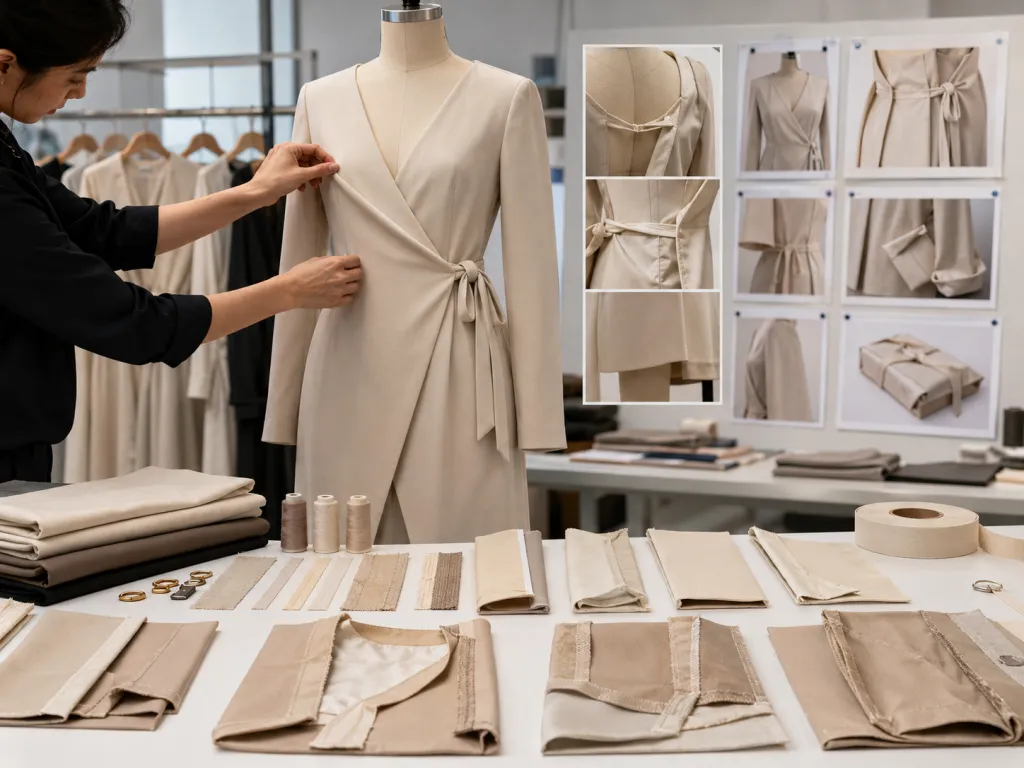
Critical wrap control areas
- Front overlap depth.
- V neckline shape.
- Tie length and tie placement.
- Inner closure position.
- Side opening reinforcement.
- Waistline balance.
- Bust coverage.
- Hem balance.
- Lining movement.
- Final shape after packing.

Cost, QC and Packing Logic for Wrap Dress Projects
Wrap dress cost and quality depend on fabric drape, lining, closure structure, front overlap, sewing accuracy, QC focus and packing method. Duolan reviews these areas before bulk production begins.
| Control Area | Wrap Dress Cost / QC Driver | What Should Be Confirmed |
|---|---|---|
| Main Fabric | Drape, shrinkage, opacity, print, stretch, slipperiness | Fabric quality, width, color, shrinkage, repeat availability |
| Lining / Facing | Coverage, neckline stability, inner comfort | Lining length, facing method, color match |
| Ties and Closures | Inner tie, outer tie, side hole, hidden snap or hook | Tie length, placement, reinforcement, closure sample |
| Cutting and Sewing | Front panels, overlap, waist seam, neckline, hem | Operation sequence, first-piece approval |
| QC Focus | Bust coverage, overlap depth, neckline, tie security | Measurement tolerance, movement review, PP standard |
| Packing | Tie folding, front panel shape, barcode, polybag, carton | Packing method, garment protection, carton standard |
Manufacturing System and Project Evidence
Wrap dress programs need structure control, sample density, fabric judgment and repeat-ready records. Duolan’s manufacturing system supports wrap dress development from structure review to bulk production and future replenishment.
Manufacturing capacity connected to wrap dress programs
- 16 owned womenswear factories support core wrap structure control and PP standard transfer.
- 20+ satellite factories provide flexible capacity for repeat orders and seasonal dress programs.
- 300 sewing lines support standard-size bulk production across wrap mini, midi, maxi and resort styles.
- 50+ quick-response lines support first samples, revised samples and launch preparation.
- 15,000–35,000 monthly sample capacity supports frequent fit, coverage and fabric revisions.
- 6,500,000 stable monthly capacity supports planned bulk delivery and repeat production.
- Typical cooperating brand orders run across 10–30 styles with 20,000–80,000 pieces per order.
- Fabric and process resources support viscose, jersey, satin, crepe, chiffon-like fabrics, print, embroidery, dyeing, washing and finishing.

US Work-to-Evening Wrap Program
A US womenswear brand developed faux wrap and midi wrap dresses for polished day-to-evening use.
- Order scope: 20 styles across faux wrap, knee-length and midi structures.
- Total program quantity: about 52,000 pieces.
- Focus areas: V neckline stability, bust coverage, woven fabric, waistline and packing.
- Duolan actions: fabric review, fit sample correction, PP standard, hidden closure review and packing reference.
- Result focus: refined wrap dresses prepared for repeatable commercial programs.

Australian Resort Wrap Drop
An Australian resort brand developed printed wrap dresses using lightweight fabrics and soft drape.
- Order scope: 16 styles across printed wrap mini, midi and maxi silhouettes.
- Total program quantity: about 40,000 pieces.
- Focus areas: print placement, opacity, front overlap, side tie and packing recovery.
- Duolan actions: print placement review, shrinkage check, sample correction and carton photo record.
- Result focus: soft movement and clean presentation after international transport.

European Contemporary Wrap Midi Line
A European contemporary brand developed wrap midi dresses for seasonal dress collections.
- Order scope: 24 styles across true wrap, faux wrap and surplice bodice directions.
- Total program quantity: about 68,000 pieces.
- Focus areas: wrap proportion, fabric drape, neckline stability, size grading and hem balance.
- Duolan actions: pattern review, coverage adjustment, PP sample locking and final QC focus.
- Result focus: wrap structure consistency across style range and bulk production.

Occasion Wrap Dress Program
An occasionwear brand developed satin and crepe wrap dresses for event-focused selling channels.
- Order scope: 12 styles across satin wrap, V neckline and tie waist structures.
- Total program quantity: about 30,000 pieces.
- Focus areas: satin surface, lining, hidden snap, photo sample quality and PP standard.
- Duolan actions: material review, neckline adjustment, closure check and final appearance inspection.
- Result focus: polished garments prepared for occasion-driven delivery.

FAQ|Custom Wrap Dress Manufacturing
A custom wrap dress manufacturer develops and produces wrap dresses according to brand direction, fabric standards, size range and delivery needs. Duolan supports true wrap, faux wrap, wrap-style and surplice bodice dress programs from sample development to bulk production.
True wrap dresses fully overlap and tie around the body. Faux wrap dresses keep the wrap look with a fixed front structure. True wrap offers adjustability, while faux wrap usually gives stronger front stability and size consistency.
Wrap dresses can use viscose, rayon blends, jersey, satin, crepe, lightweight woven fabrics, chiffon-like fabrics, lace or printed fabrics. Duolan reviews drape, opacity, shrinkage, slip, lining, neckline behavior and packing recovery before production.
Duolan reviews overlap depth, V neckline shape, bust coverage, facing, lining, hidden closure and fabric behavior during sampling. PP samples and fit comments help lock front structure before bulk cutting begins.
Yes. Duolan supports wrap mini, midi and maxi dresses. Mini styles need coverage and hem safety, midi styles need waistline and front opening control, while maxi styles need long hem management and packing crease prevention.
Fit control includes bust coverage, overlap depth, V neckline scaling, tie position, side opening, lining, facing and movement review. Grading must protect coverage and waist balance across the confirmed size range.
Yes. Approved samples are connected to BOM records, fabric standards, PP samples, production notes, QC checkpoints and packing requirements. Sample approval becomes a production reference before bulk cutting begins.
A brand can send reference images, tech packs, target structure, fabric direction, size range, colorways, style count, quantity, launch date and packing requirements. Duolan will review structure feasibility, fit risk, sample path, production readiness and QC focus.

Send Your Wrap Dress Project
Duolan works best with established fashion brands, product teams and sourcing offices developing true wrap, faux wrap, printed wrap, resort wrap, satin wrap or work-to-evening wrap dress programs. Share your project files, fabric direction or sample requirements, and our team will review the development path before sampling or bulk production.
Share your project details
- Wrap structure: true wrap, faux wrap, wrap-style or surplice bodice.
- Product type: mini, midi, maxi, printed, satin, jersey, resort or occasion wrap dress.
- Fabric direction: viscose blend, jersey, satin, crepe, lightweight woven, lace or print.
- Project stage: first sample, fit sample, revised sample, PP approval, bulk production or repeat order.
- Program information: style count, target quantity, colorways, size range and launch date.
- Production needs: fabric sourcing, front overlap review, neckline control, QC, packing, label, barcode or repeat records.