Skip to content

Cut-Out Dress Manufacturing
Cut-out dress development built around fit, body coverage, edge stability, movement safety, and repeatable production standards.
- 8 development controls: placement, coverage, movement, edge finish, support, fabric behavior, grading, and bulk consistency.
- 5 movement checks for sensitive openings: walking, sitting, bending, turning, and arm movement.
- 3 production gates for structure-sensitive styles: fit approval, production readiness, and first-piece verification.
- Development can start from a tech pack, reference image, original sample, or approved design direction.
What Fashion Teams Should Evaluate Before Cut-Out Dress Production
Product Interpretation
Pattern And Fit Control
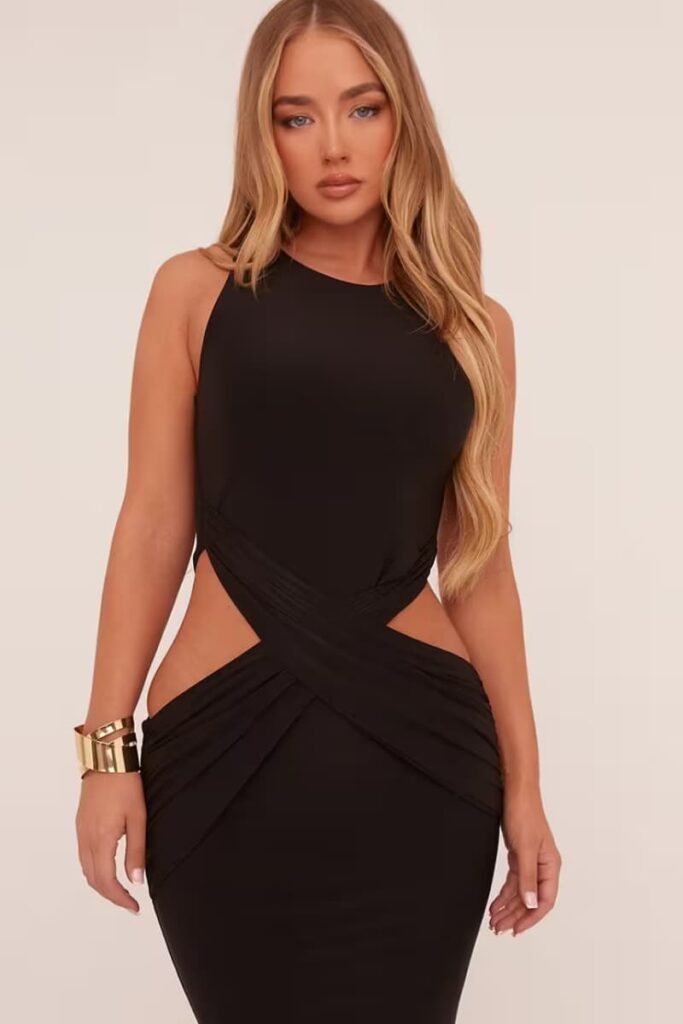
Cut-out dimensions cannot be developed separately from bust, underbust, waist, hip, torso length, side seam position, and fabric stretch.
A fitted style with a 12 cm opening may behave very differently after a change in size or fabric recovery. Pattern work therefore needs to control the body relationship around every exposed area, including tension above, below, and beside the opening.
Fabric Behavior
Jersey, stretch mesh, satin, crepe, lace, and structured woven fabrics react differently once part of the garment surface is removed. Stretch percentage, recovery, weight, drape, opacity, edge behavior, and lining compatibility all affect whether an opening stays flat or begins to gape, roll, twist, or grow during wear.
Fabric selection should be reviewed together with the pattern rather than after pattern development.
Construction Stability
Sample-To-Bulk Control
Wear And Movement Review
Cut-Out Dress Directions Developed For Fashion-Driven Collections
Side-Waist Cut-Out

Underbust Cut-Out

Front Torso Cut-Out

Back Cut-Out
Back cut-outs often look simple on a flat sketch but interact with shoulder stability, bra position, zipper location, waist tension, and upper-back movement. A wide opening can reduce support from the back panel, especially on halter or fitted styles.Development may require adjusted strap angles, reinforced connection points, stabilizing seams, internal elastic, or a revised closure position. Fit review should check whether the opening remains centered and smooth while standing, sitting, and moving the shoulders.

Shoulder And Neckline Cut-Out

Asymmetric Cut-Out
Asymmetric designs create strong campaign value but introduce a more complex balance problem. Removing fabric from only one side can influence side seam position, shoulder loading, waist tension, hem balance, and visual symmetry of the remaining garment.
Pattern work should establish stable anchor points rather than relying on the fabric to pull the style into shape. Fit review needs front, side, and back views because a visually correct front can still create twisting through the side seam or back.

Hardware-Connected Cut-Out

Mesh-Bridged Cut-Out
Engineering Cut-Out Placement For Wearable And Production-Ready Results
Placement Must Follow Body Landmarks And Garment Balance
Coverage And Movement Need To Be Reviewed Before Approval
Cut-Out Stability Comes From Controlled Tension
Bulk Consistency Must Be Designed During Development
Cut-Out Placement Risks Change With Every Body Area
Opening position determines far more than visual impact. Each location creates a different relationship between body movement, support, fabric tension, seam structure, and coverage. Development should identify the main risk before the pattern and construction method are finalized.
| Cut-Out Position | Main Development Risk | Fit Review | Construction Control | Bulk Check |
|---|---|---|---|---|
| Side Waist | Opening grows or side seam twists | Waist-to-hip balance, sitting movement | Edge stabilization, seam balance, lining if needed | Height, width, symmetry, seam distance |
| Underbust | Coverage shifts with bust volume or arm movement | Bust point, underbust, torso length | Cup/support logic, reinforced edge, lining | Opening position, bust coverage, support |
| Front Midriff | Garment loses center balance | Waistline, center front, torso tension | Panel shaping, facing or binding | Opening geometry, center alignment |
| Back Waist | Opening pulls during shoulder movement | Back width, waist tension, zipper position | Reinforcement, closure balance | Centering, edge shape, back stability |
| Shoulder | Edge lifts or neckline distorts | Shoulder slope, neckline curve | Clean facing or controlled binding | Opening shape, edge flatness |
| Asymmetric Torso | Side seam rotates or hem becomes uneven | Front/side/back balance | Stable anchor points, controlled tension | Pattern reference points, silhouette balance |
| Hardware Connected | Attachment point stretches or tears | Tension around ring or connector | Reinforced tabs, secure hardware attachment | Position, security, plating, alignment |
Fabric Selection Determines Cut-Out Shape, Support And Recovery
Stretch Jersey And Bodycon Knits

Mesh, Power Mesh And Illusion Panels

Satin, Crepe And Woven Fabrics

Lace, Sequin And Embellished Materials

Translating Cut-Out Design Details Into Clear Production Instructions
Map The Opening To The Garment
Design mapping starts with silhouette and proportion before focusing on the opening. Dress length, waistline, bust line, hip line, neckline, shoulder, side seam, center front, and center back create the coordinate system for the cut-out.
The opening can then be described using measurable relationships: upper point, lower point, widest point, distance to waist seam, distance to side seam, distance to underbust, connection width, strap width, or hardware position. Curved openings may require several control points rather than one width and one height.
For asymmetric designs, mapping is even more important. The design may intentionally avoid left-right symmetry, but production still needs fixed reference points so every garment carries the same asymmetry.
Design mapping should also show which lines are visual and which lines are structural. A waist seam may be hidden by ruching but still act as a key pattern anchor. A narrow bridge between two openings may look decorative but carry substantial body tension.
Reference images can provide the visual direction, while technical mapping converts the desired appearance into information the development team can act on. Early clarification reduces random interpretation during pattern making and makes later fit comments easier to trace back to the original design intent.
Define Support, Closure And Internal Coverage
A cut-out rarely works in isolation. The surrounding structure may include cups, lining, power mesh, elastic, boning, shoulder straps, halter straps, side seams, zippers, hooks, rings, or internal support.
Mapping should show how those elements interact. An underbust opening needs a defined relationship to the cup or bust shaping. A back cut-out needs to show where the zipper starts or whether the garment uses another closure. A side-waist opening needs clarity on whether lining stops at the opening or continues as an internal support layer.
Internal coverage can be just as important as the visible shell. Nude mesh, partial lining, self-fabric facing, elastic, or support tape may change how the opening sits. If an inner layer is visible from certain angles, its color and edge position need approval.
Hardware-connected styles need dimensions for both the hardware and fabric attachment points. Ring diameter, strap width, tab length, seam allowance, reinforcement, and hardware position should all be considered together.
Clear mapping allows product teams to make purposeful choices before sampling. Instead of reviewing a finished garment and discovering a support problem later, the structural relationship is visible during development.
Turn Approved Details Into A Repeatable Standard
Once the sample direction is accepted, mapped details need to move into production documentation. A final visual approval without measurements or construction information leaves too much room for interpretation.
Production standards may include opening width, opening height, reference-point distances, binding or facing width, lining position, reinforcement location, strap length, hardware position, seam allowance, topstitching, closure placement, and critical body measurements.
Fit comments should also be reflected in the final mapping. If a waist opening moved 12 mm upward during revision, the updated pattern and technical instruction should agree. If a mesh panel was introduced for support, the material and attachment method should appear in the final BOM and workmanship notes.
Version control matters on multi-style programs. Product teams may approve several similar cut-out silhouettes with different opening proportions. Clear style references reduce the risk of mixing construction instructions between styles.
The strongest design mapping therefore becomes more than an annotation exercise. It connects the original design language to pattern correction, approved sample, PP standard, line instruction, and final QC.

Pattern Engineering Keeps Cut-Out Proportions Stable Across Sizes
Build The Opening Around The Fit Block
Control Bust, Waist And Hip Balance
Grade The Body And Opening As One System
Correct Root Causes Instead Of Surface Symptoms
Clean Cut-Out Edges Require The Right Finishing Method
Binding For Stretch And Exposed Edges
The critical factor is tension. Binding applied too tightly can contract the opening and create puckering. Binding applied too loosely can wave or allow the opening to grow. Curved waist or underbust openings are particularly sensitive because the binding passes through changing grain and body tension.
Finished width also affects appearance. Narrow binding can look refined but requires more precise sewing. Wider binding may provide better control but can visually change a delicate cut-out.
For skin-contact areas, hand feel matters. Rough seam allowance, exposed overlock, thick joins, or poorly positioned binding ends can create irritation along the ribs, waist, or underbust.
Production standards should therefore define material, finished width, sewing method, join location, topstitching if used, and the expected stretched state. Inline inspection can then verify more than appearance alone.
Facing, Lining And Turned Construction
Facing and lining are useful when a cut-out requires a clean edge without visible binding. Woven satin, crepe, structured fabric, and premium occasion styles often benefit from a turned construction.
Facing width needs enough stability to hold the curve while remaining discreet from the outside. Too narrow can roll outward. Too wide can create bulk or show through lightweight fabric. Understitching, clipping, seam grading, pressing, and internal anchoring influence the finished appearance.
Full or partial lining can support larger openings while improving comfort and opacity.
The lining should follow the shell without pulling it inward or hanging beyond the exposed edge. Different shrinkage or stretch behavior between shell and lining can create distortion after production or wear.
Satin requires special attention because pressing marks, needle holes, and seam tension can remain visible. Construction should achieve a clean shape with limited handling and controlled pressing.
A good turned edge looks simple from the outside because the internal construction has been carefully planned.
Reinforcement At Stress Points
Narrow connectors and transition points around a cut-out often carry more load than the long edge itself.
Examples include the ends of side-waist openings, the top of a back cut-out, corners around geometric openings, strap connections, ring tabs, buckle loops, and points where lining ends. Repeated dressing and movement concentrates stress in these areas.
Reinforcement can use seam construction, additional layers, internal tape, compatible interlining, bar tacks, or other methods depending on fabric and design. The solution should strengthen the area without creating a visible lump.
Hardware-connected openings need particular attention because force transfers through a small attachment zone. Fabric tabs should be wide and strong enough for the hardware and expected body tension. Reinforcement should also tolerate repeated movement.
Stress-point control belongs in the sample and pilot stage. Waiting for bulk failures to identify weak points creates avoidable rework and inconsistent repairs.

Cut-Out Dress Sampling Built Around Fit And Production Decisions
Development Review Before Pattern Making
Sampling starts more efficiently when the purpose is clear. A tech pack may already define measurements, fabric, construction, and details. A reference image may only define the visual direction. An original sample may provide useful fit and construction information but still require adaptation for a new fabric, size range, or brand fit.
The first review identifies the development basis: silhouette, opening location, fabric direction, fit priorities, support, lining, closure, target size, target quantity, and launch schedule.
For cut-out designs, early review also flags sensitive areas. Large underbust exposure, narrow waist connectors, asymmetric tension, deep back openings, hardware, mesh bridges, and fabrics with weak recovery can all affect the development path.
Missing information is not automatically a reason to stop. The sample plan can identify which points can be interpreted internally and which points require approval before pattern work moves too far.
The goal is to avoid creating a technically complete sample that answers the wrong question. If fit approval is the priority, fabric and measurement direction need to be sufficiently representative. If the sample is for a campaign shoot, visual finish may be prioritized but production risks still need to be recorded for the next stage.
A structured review creates a cleaner starting point for pattern making, sourcing, and sample construction.
First Sample Should Reveal More Than Appearance
The first sample is valuable because it exposes how design, pattern, fabric, and construction interact on the body.
Internal review should check silhouette, cut-out position, bust-waist-hip balance, side seam, opening geometry, edge behavior, coverage, lining, strap tension, closure, hardware, and overall movement. For stretch garments, recovery after dressing and movement should also be observed.
Photos from front, side, and back can help technical review. Close-up images of openings, edge finishes, connection points, lining, and hardware provide more useful information than a single styled image.
A first sample does not need to be forced into a false “perfect” result. Clear identification of what is already working and what needs adjustment gives the next sample round a stronger purpose.
Fit comments should separate categories: pattern adjustment, fabric issue, design preference, construction correction, and production concern. Mixing all comments into one undifferentiated list can create unnecessary changes and new problems.
When a design is highly sensitive, the team may also recommend a different development order. For example, confirming the fit and cut-out geometry before adding final embellishment can reduce wasted work.
The value of the first sample lies in making the product more measurable and more controllable.
Revision Should Return Comments To Pattern And Construction
A revision is not complete when a sample-room operator manually alters one garment. Relevant changes should return to the pattern, specification, construction note, BOM, or material decision so the next version represents a real development update.
Typical cut-out revisions include moving an opening, changing width or curvature, improving bust coverage, adjusting waist tension, modifying side-seam balance, shortening or lengthening straps, changing lining coverage, strengthening connectors, revising binding tension, or selecting a fabric with better recovery.
Comments should be reviewed for interaction. Moving an underbust opening upward can affect bust coverage. Tightening a waist section can change the size of a side opening. Changing fabric can require a new pattern adjustment. Adding power mesh can improve support but alter stretch.A revision summary helps keep the process clear. It can identify what was changed, what remained unchanged, what still needs review, and which points influence future bulk production.
For multi-style collections, version control becomes even more important. Similar cut-out silhouettes may use different opening shapes, fabrics, or construction. Clear style and revision references reduce the risk of transferring a correction from one style into another.
Approval Should Prepare The Style For Production
Visual approval is only one part of sample approval.
Before a cut-out style becomes a reliable production basis, the team should understand which items are confirmed: main fabric, lining, trim, color, cut-out geometry, fit, measurements, edge finish, support, closure, hardware, grading direction, workmanship, labels, and packaging.
Pending items should remain visible rather than disappearing into email history. A style can be visually approved while still requiring confirmation of production fabric, final hardware plating, grading, or packaging.
For high-risk styles, a PP sample or production-ready sample can provide the final reference before bulk. The approved pattern, specification, BOM, workmanship notes, and physical or digital sample reference should all agree.
Sampling timing is quoted according to fabric readiness, construction complexity, and the purpose of the sample rather than treated as one universal number. Complex cut-out designs often need more technical review than simple open-back or shoulder-cut styles.
A controlled approval stage gives production a defined target. It also gives the brand team a clearer basis for judging whether the style is ready to move from development into manufacturing.
What Must Be Locked Before Cut-Out Dress Bulk Production
Cut-out production becomes more predictable when the approved sample is translated into specific manufacturing controls. The following points should be confirmed or clearly marked as pending before a production run is released.
| Approval Area | What Needs To Be Confirmed | Why It Matters For Cut-Out Dresses |
|---|---|---|
| Main Fabric | Composition, weight, stretch, recovery, color, hand feel | Changes opening size, drape, tension, and fit |
| Lining / Mesh | Coverage, stretch, opacity, color, attachment | Affects support, transparency, and edge stability |
| Cut-Out Geometry | Width, height, position, curve, reference points | Defines the core visual design |
| Fit & Measurements | Bust, underbust, waist, hip, torso, straps | Controls body relationship around the opening |
| Edge Finish | Binding, facing, turned edge, stitching | Prevents rolling, waving, stretching, or bulk |
| Support | Cups, elastic, mesh, boning, reinforcement | Maintains coverage and garment stability |
| Hardware / Closure | Ring, buckle, zipper, hook, strap connection | Carries tension and affects dressing access |
| Grading | Size rules and critical opening relationships | Keeps design proportion consistent across sizes |
| Workmanship | Seam type, reinforcement, symmetry, pressing | Converts sample quality into a repeatable standard |
| Packaging | Folding, protection, hardware handling | Prevents distortion, pressing marks, or surface damage |
How Cut-Out Dresses Move Through Controlled Bulk Manufacturing

Material Release
Production fabric, lining, mesh, binding, elastic, hardware, zippers, and reinforcement materials are checked against the approved basis before release. Stretch and recovery are particularly important for fitted programs. Color and hand feel also need consistency across the production quantity. Materials that change the fit or support system should not be substituted without review because even visually similar fabrics can change opening dimensions and body tension.

Pattern And Cutting
Sewing And Assembly

Finishing And Pressing

Inline Quality Control

Final Inspection And Packing
Pilot Runs Reduce Risk Before Complex Cut-Out Styles Scale
When A Pilot Run Adds Value
Not every style needs the same level of pre-production validation. A simple shoulder opening in a stable woven fabric may move efficiently from approved PP sample into bulk. A fitted asymmetric bodycon with large waist cut-outs, lining, hardware, or high stretch deserves more scrutiny.
Pilot verification is particularly valuable when a style combines several risk factors: new fabric, sensitive fit, narrow support points, large openings, unfamiliar construction, new hardware, complex lining, new grading, or a large launch quantity.
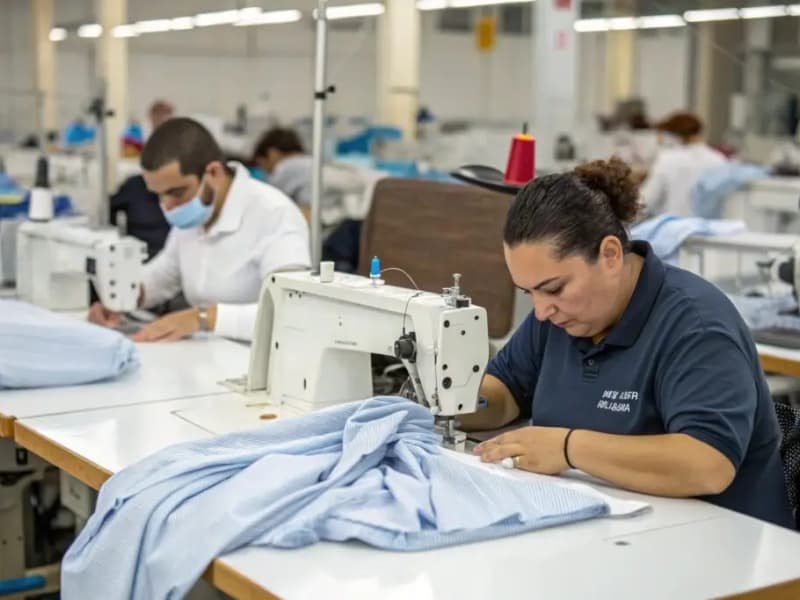
The first production pieces show whether line sewing reproduces the approved sample method. Sample makers often have more time to adjust handling by instinct. Production needs explicit instructions, repeatable operation sequences, and stable material behavior.
The pilot stage can therefore check whether the approved edge finish is achievable at production speed, whether reinforcement is easy to position consistently, whether the lining pulls the opening, whether pressing changes the shape, and whether critical measurements remain within the approved tolerance structure.
The result is not an extra sample for presentation. It is a manufacturing verification step designed to reveal repeatability before scale amplifies a small problem.
What The First Pieces Should Verify
First-piece review should combine fit, measurements, workmanship, and production handling.
For cut-out styles, the most useful checks include opening position, opening width and height, body coverage, side seam balance, strap length, edge flatness, binding or facing width, lining position, reinforcement, hardware security, zipper behavior, and symmetry where relevant.
Fit-sensitive pieces may also be placed on the intended mannequin or fit model so the team can compare the production result with the approved basis. Stretch garments benefit from checking both initial fit and recovery after movement.
Production teams should also inspect process behavior. Does the fabric distort during binding? Does a facing require excessive pressing? Is a narrow connector difficult to turn consistently? Does hardware create damage during later operations? Does one seam sequence make the cut-out easier to control than another?
Where an issue appears, correction can be introduced before full release. The solution may involve operation sequence, sewing tension, temporary stabilization, reinforcement, handling method, pattern marking, or another production detail.
A clear first-piece note provides a record of what was verified and what changed before scale-up.
From Verification To Production Release
Pilot approval should lead to an updated manufacturing basis rather than remain an isolated event.
If the first-piece matches the approved sample and technical requirements, production can move forward using the verified method. If changes are necessary, revised instructions should be communicated before the full line continues.
Critical points can be highlighted for inline QC. For example, a side-waist cut-out may require repeated measurement from the waist seam to the upper opening point. A hardware-connected opening may need a security check at the reinforcement stage. A mesh bridge may require seam-flatness review before lining closes the area.
For complex styles, production is more reliable when pattern, materials, workmanship notes, first-piece standard, and QC checkpoints all describe the same product.
Duolan’s internal manufacturing approach includes first-piece confirmation, pilot production, and key-operation verification for fit-, structure-, or workmanship-sensitive dress programs before full-scale release.
Size Grading Must Protect Cut-Out Coverage And Visual Proportion
Bust Relationship
Waist Position
Side-waist and front-midriff openings should stay visually connected to the waistline as sizes change.
A fixed distance can sometimes work; other styles need proportional adjustment. High hip and torso length also influence where the opening sits when the garment is worn.
Opening Dimensions
Opening width and height should preserve design character without creating excessive exposure in larger sizes or losing impact in smaller sizes. Curved openings may need several graded control points so the shape does not become too round, too narrow, or visually distorted.
Connector Width
Edge And Lining
Graded Sample Review
Preventing Common Cut-Out Dress Problems Before They Reach Bulk
Opening Placement Drift
Edge Rolling Or Waving
Gaping During Wear
Gaping can come from pattern excess, weak recovery, poor support, incorrect seam shape, or an opening placed across a high-movement area.
The solution is not automatically to make the opening smaller. Fit review should identify why fabric is losing contact with the body.
Correction may involve pattern shaping, fabric, lining, elastic support, strap tension, or moving the opening.
Left-Right Imbalance
Lining Or Mesh Exposure
Sample-To-Bulk Fit Drift
Product Evidence Should Show More Than Finished Cut-Out Dresses

Finished Cut-Out Samples

Mannequin Fit Views

Edge Construction Close-Ups

Fabric And Support Pairing

Pattern And Sample Development

Production And QC Proof
An Anonymized Cut-Out Dress Program From Development To Bulk
Program Scope And Development Structure
The program covered 16 cut-out dress styles with a planned total of 36,800 pieces. The assortment used five sizes from XS to XL and four main color families across fitted mini, midi, and going-out silhouettes.
The collection did not use one cut-out construction repeatedly. Styles included side-waist openings, underbust openings, asymmetric torso shapes, back cut-outs, narrow waist connectors, and mesh-supported openings. Fabrics included stretch jersey, lined mesh combinations, soft woven options, and selected structured stretch materials.
Development was organized around common controls so the collection could retain a consistent brand fit while allowing different visual directions. Base measurements, waist positioning, contour direction, body coverage expectations, edge standards, and movement review were established before each style moved too far into individual detailing.
The highest-risk styles were not necessarily the ones with the largest openings. Several narrow openings created greater tension because small connectors carried more load. Underbust styles needed closer review of bust coverage and strap balance. Asymmetric styles needed additional side-seam and hem checks.
Instead of treating 16 styles as 16 unrelated samples, development grouped related pattern logic, fabric behavior, and construction methods. The approach reduced unnecessary variation while keeping each design visually distinct.
Fit Corrections And Production Controls
Early fit review identified three recurring issues across the assortment: edge relaxation on high-stretch jersey, inconsistent side-waist opening position after size changes, and visible pull from lining around selected woven openings.
Corrections were made at the pattern and construction level rather than by manually adjusting finished samples. High-stretch styles received revised edge-control methods and pattern refinement around the opening. Side-waist styles used clearer reference points from the waist and side seam so grading could preserve the intended position. Woven styles received lining and facing adjustments to reduce inward pull.
Movement review focused on five actions: walking, sitting, arm raising, turning, and bending. Underbust and large side openings received the closest review. Styles intended for stronger visual impact were still expected to remain stable during normal movement.
Before bulk release, the production basis included approved fabric, lining, cut-out position, edge finish, critical measurements, grading direction, reinforcement points, and workmanship notes. High-risk styles moved through first-piece verification before broader production.
Inline QC then concentrated on opening geometry, edge flatness, side seam balance, lining exposure, reinforcement, strap length, and hardware position where applicable.The program used product-specific control points rather than applying one general dress inspection standard to every style.
Bulk Delivery And Repeatability
The 36,800-piece production plan was divided by style complexity rather than distributing every design through the same manufacturing path.More stable jersey styles could move through standard fitted-dress lines once first-piece results were accepted. Complex asymmetric, mesh-supported, and hardware-connected styles received additional operation checks before volume increased.
The main bulk objective was not to make every opening dimension identical across all styles. The goal was to keep each approved design consistent within its own style and size standard.Production comparison used approved sample references, measurement specifications, workmanship points, material standards, and first-piece results. Differences discovered during inline review were corrected before becoming repeated defects.
For future color or repeat orders, the value of the development work increases because the confirmed pattern, grading, edge construction, support logic, and QC points provide an established basis. New colorways still require material and color review, but the garment does not return to an undefined starting point.The program illustrates why cut-out manufacturing benefits from structured development. Complex visual details become easier to scale when placement, fit, fabric behavior, construction, and QC are converted into repeatable standards before volume grows.

Manufacturing Resources Supporting Complex Fashion Dress Programs
Dress-Focused Manufacturing Network
Duolan’s manufacturing structure includes 16 self-owned fashion garment factories supported by more than 20 long-term satellite manufacturing partners. The network allows styles to be allocated according to product complexity, process requirements, order timing, and production scale rather than forcing every dress through one identical manufacturing route.
Flexible Production Allocation
The wider production structure includes 300 garment sewing lines and more than 50 flexible or quick-response lines. For cut-out programs, production planning can separate stable fitted styles from higher-risk asymmetric, mesh, hardware, or support-sensitive designs so each group follows a more suitable manufacturing path.
Development And Sample Support
Pattern, sample, fabric, trim, workmanship, and production teams can work around the same product brief. Cut-out development frequently requires decisions across several functions at once because changing fabric can change fit, changing fit can change opening dimensions, and changing edge construction can affect both appearance and production time.
Complex Dress Production Control
Fitted, mesh, satin, halter, backless, corset, party, and occasion dresses form part of Duolan’s core dress manufacturing direction. The same fit, support, material, and construction disciplines are directly relevant to cut-out programs where exposure and garment stability are closely linked.
Brand Compliance Support
Duolan’s manufacturing system has completed SMETA audit and SMETA 2-Pillar audit. Projects can also be coordinated around brand-specified testing, quality, social-responsibility, and product-standard requirements where applicable.
Production Timing By Complexity
Bulk production timing is planned around construction and material complexity. Internal reference ranges list approximately 15–20 days for simple styles, 20–30 days for regular styles, and 30–45 days for complex styles after required production conditions are ready.
Information Needed For A Useful Cut-Out Dress Project Review
Design Information
Send a tech pack, reference image, design sketch, original sample photographs, or another clear design basis. Include the intended cut-out position, silhouette, neckline, dress length, closure, lining direction, hardware, ruching, straps, mesh, cups, or other important details when available.
A complete tech pack is helpful but not required for an initial feasibility review.
Fit, Material And Commercial Direction
Development Or Production Stage
Cut-Out Dress Manufacturing Frequently Asked Questions

Send Your Cut-Out Dress Project For Technical Review
- Reference image, tech pack, sketch, or sample photos
- Target fabric, lining, mesh, or trim direction
- Base size and intended size range
- Existing fit comments or approved measurements
- Style, color, and quantity plan
- Target market and selling occasion
- Required sample or production stage
- Launch or delivery window
- Label, packaging, and QC requirements when available