Skip to content

Day-to-Night Dress Manufacturing
Dress development for fashion brands building versatile collections that move from work, daytime events, travel, and social plans into evening settings.
- Comparable brand programs commonly run 10-30 styles with total order volumes around 20,000-80,000 pieces.
- Development focuses on six transition scenarios, from office-to-dinner and brunch-to-cocktail through travel-to-evening and day-event-to-reception.
- Fabric review covers drape, recovery, opacity, surface finish, structure, comfort, and bulk consistency before sample direction is locked.
- Development can progress from reference or tech pack through pattern, fit review, PP standard, bulk production, QC, and repeat planning.
Built for Brands Managing Multi-Occasion Dress Programs
Fashion Brand Teams
Day-to-night dresses work best when the collection already has a defined brand fit, price architecture, market position, and launch calendar. Development should protect those standards rather than force every style into one generic silhouette.
Duolan can work from approved fit blocks, previous samples, design references, or detailed tech packs while reviewing how each style needs to perform from daytime use into dinner, cocktail, or social settings. The goal is a coherent dress program that remains recognizably part of the brand rather than a random mix of versatile-looking garments.
Product and Merchandising Teams
Sourcing and Production Teams
Day-to-Night Transition Scenarios and Product Priorities
A strong day-to-night range starts with the transition a wearer actually makes. Silhouette, coverage, fabric surface, movement, and finishing should change according to the intended route rather than treating every versatile dress as the same product.
| Transition Scenario | Suitable Style Direction | Fabric and Fit Priorities | Production Watchpoints |
|---|---|---|---|
| Office to Dinner | Sheath, wrap midi, clean column, structured shirt dress | Crepe recovery, seated waist comfort, controlled neckline, clean drape | Seam smoothness, zipper waves, hem balance, pressing marks |
| Brunch to Cocktail | Soft midi, printed wrap, draped mini or midi | Lightweight movement, secure bust coverage, refined surface, comfortable armhole | Transparency, lining length, print placement, neckline stability |
| Day Event to Evening Reception | Occasion midi, satin-crepe slip, fitted column | Polished surface, movement comfort, slit control, lining compatibility | Shine consistency, seam puckering, slit reinforcement, final pressing |
| Travel to Dinner | Easy column, compact knit, wrinkle-tolerant woven | Recovery after sitting, packability, stable shape, low-fuss fit | Creasing, stretch recovery, hem distortion, packing method |
| Everyday to Going Out | Jersey or ponte fitted dress, clean mini, ruched midi | Body contour, opacity, recovery, secure openings, visual lift | Stretch variation, body-line exposure, ruching consistency, grading |
| Resort Day to Dinner | Halter midi, light maxi, slip dress, fluid wrap | Drape, neck pressure, bust security, lightweight lining, movement | Strap strength, bias distortion, color consistency, packing folds |
Why Day-to-Night Dresses Are Hard to Get Right
Too Corporate by Night
- Visual balance: use shape, drape, slit position, neckline proportion, or controlled sheen to lift the garment after daytime hours.
- Manufacturing control: preserve sharp seams, stable waist placement, balanced hems, and smooth pressing so the garment reads polished rather than uniform-like.
Too Exposed by Day
- Coverage review: check bust line, neckline drop, back opening, slit height, lining length, and undergarment compatibility.
- Construction review: assess strap width, closure position, elastic recovery, lining fixation, and reinforcement around openings.
Long-Wear Fit Pressure
- Key areas: bust balance, seated waist, hip ease, armhole depth, strap pressure, slit movement, and hem opening.
- Review method: combine measurement checks with fitting feedback so pressure points become pattern corrections rather than informal sewing adjustments.
Wrinkle and Recovery
- Material factors: fiber blend, construction, GSM, stretch direction, recovery, finishing, and pressing response.
- Production factors: cutting direction, seam handling, pressing temperature, folding method, and carton pressure can change the final garment appearance.
Surface Finish Mismatch
- Day-led styles: favor restrained texture, matte-to-soft sheen, clean seams, and controlled trims.
- Evening-lift styles: introduce satin-crepe, subtle hardware, drape, lace detail, or selective surface interest without compromising repeat production.
Sample-to-Bulk Drift
- Before bulk: lock fabric, color, pattern, measurements, trims, workmanship, labels, packing, and PP sample status.
- During bulk: use first-piece confirmation, inline measurement, appearance checks, and final inspection against the confirmed standard.
Core Style Architecture for Day-to-Night Dress Collections
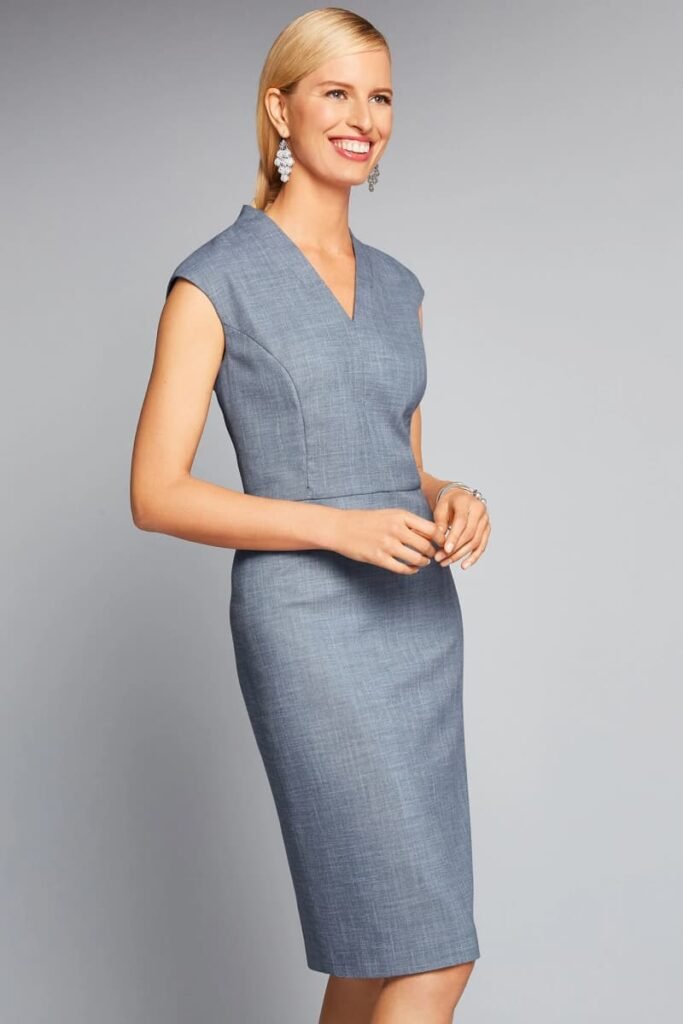
Tailored Sheath
A tailored sheath can anchor the work-to-dinner end of a collection when the body line is clean without feeling rigid. Stretch crepe or compact woven constructions usually provide a stronger balance than stiff suiting because they allow seated comfort while maintaining a controlled silhouette. Waist placement, bust shaping, back vent or slit, armhole comfort, and zipper behavior deserve close review.
- Day role: polished meetings, commuting, presentations, structured daytime events.
- Evening lift: refined neckline, controlled slit, shaped waist, soft sheen, or elevated trim.
- Production focus: dart symmetry, seam puckering, zipper waves, hem level, pressing, and measurement tolerance.

Wrap Midi
Wrap and faux-wrap midis perform well across daytime and evening because the neckline, waist, and skirt can create movement without heavy structure. A true wrap requires enough overlap to remain secure while walking or sitting; a faux-wrap version needs stable internal fixing so the front does not open or twist.
Fabric drape has a direct effect on how premium the style looks.
- Day role: office, lunch, events, travel, and smart casual use.
- Evening lift: deeper color, refined drape, soft sheen, or a more defined waist.
- Production focus: front overlap, neckline gaping, tie position, waist seam balance, skirt swing, and hem alignment.

Clean Column Midi
A column midi is useful for brands seeking a minimal day-to-night silhouette with strong repeat potential. The style can move from daytime to dinner through fabric quality, proportion, neckline, slit placement, and styling rather than decorative complexity.
Compact jersey, ponte-like knit, stretch crepe, and stable woven fabrics can all work, but pattern balance changes with elasticity and weight.
- Day role: clean office, gallery, travel, smart city dressing.
- Evening lift: square, asymmetric, cowl, or refined halter neckline with controlled surface finish.
- Production focus: side-seam straightness, hem drop, slit height, stretch recovery, lining, and full-size grading.

Ponte Knit Dress
- Day role: office, travel, extended wear, and repeatable core programs.
- Evening lift: sculpted seam lines, refined neckline, slit, hardware accent, or deeper seasonal color.
- Production focus: recovery, seam bulk, edge stability, press response, pilling risk, and measurement consistency.

Stretch Crepe Dress
- Day role: office, business events, smart daytime occasions.
- Evening lift: fitted waist, draped neckline, asymmetric detail, slit, or deeper color.
- Production focus: shade, GSM, recovery, seam impression, pressing, and batch consistency.

Soft Draped Midi
- Day role: lunch, daytime events, travel, weekend city wear.
- Evening lift: cowl, twist, asymmetric drape, side slit, refined color, or subtle shine.
- Production focus: grain direction, panel balance, seam growth, hem settling, lining, and pressing.

Satin-Crepe Dress
- Day role: elevated lunch, event dressing, premium office, wedding guest daytime use.
- Evening lift: drape, bias line, cowl, slim strap, asymmetric cut, or deeper tone.
- Production focus: cutting direction, stitch tension, pressing protection, shade consistency, and packing.

Structured Shirt Dress
- Day role: office, travel, city dressing, daytime meetings.
- Evening lift: defined waist, statement collar, controlled slit, polished button or buckle detail.
- Production focus: collar symmetry, placket alignment, button spacing, waist balance, hem level, and shrinkage.
Build a Day-to-Night Collection, Not Isolated Styles
Core Commercial Style
- Development role: establish fit block, material standard, measurement method, and workmanship baseline.
- Commercial role: carry core colors, broader size coverage, repeat orders, and later seasonal updates.
Day Foundation
- Development role: prioritize comfort, movement, coverage, easy styling, and stable material behavior.
- Collection role: connect daily wear with higher-value evening pieces and broaden wear frequency.
Evening Lift
- Development role: review support, coverage, surface finish, movement, and construction risk.
- Collection role: create campaign interest, social content value, and stronger dinner or event positioning.
Shared Fabric Family
- Development role: compare drape, stretch, recovery, opacity, pressing, and seam behavior by style.
- Production role: consolidate material standards while keeping silhouette-specific pattern adjustments.
Color Architecture
- Core colors: prioritize repeatability, stable lab-dip approval, and cross-style coordination.
- Seasonal colors: plan smaller extensions only after material, shade, and production feasibility are reviewed.
Reorder Extension
- Repeat logic: preserve confirmed standards before changing design variables.
- Growth logic: use sales feedback and fit comments to decide which extensions deserve development priority.
Fabric Selection Starts With the Garment Result
Start With Garment Result, Not Fabric Name
- Drape: fluid styles need enough weight to fall cleanly without collapsing around the waist or hip. Structured styles need enough body to hold seams, necklines, and waist shaping.
- Stretch and recovery: fitted dresses need controlled return after movement. High stretch with weak recovery can create bagging at the seat, waist, neckline, or elbows.
- Opacity: light shades, thin jersey, viscose blends, mesh overlays, and some satin constructions require lining or double-layer decisions before fit can be judged correctly.
- Surface: matte crepe, compact knit, soft sheen, and satin-crepe each create a different transition from daytime restraint to evening polish.
- Handfeel: a polished surface cannot compensate for scratchiness, static, lining friction, or heavy pressure during extended wear.
Balance Recovery, Drape, and Surface Finish
Day-to-night products live between two extremes: easy daytime wear and elevated evening appearance. The fabric must support both. Stretch crepe can provide polished recovery and a controlled surface; ponte or compact knit can offer shape and comfort; compact jersey can support fitted styles; viscose blends can create softer movement; satin-crepe can add evening refinement; selected lightweight woven fabrics can give travel or summer options.
None of those groups should be treated as automatically suitable.
- For fitted silhouettes: record stretch direction, recovery, GSM, opacity, seam behavior, and body-line exposure. A lighter fabric may lower material weight but can increase transparency and fit sensitivity.
- For draped silhouettes: inspect bias behavior, seam growth, hanging time, skirt balance, and how the fabric returns after packing or seating.
- For structured silhouettes: check whether the material can hold darts, princess seams, waist shaping, collar or neckline edges without bubbling or collapsing.
- For polished surfaces: evaluate needle marks, seam puckering, pressing marks, water sensitivity, shade variation, and carton creasing.
The material standard should be judged on the body and after handling, not only from a swatch.
A fabric that remains stable through sampling, fitting, pressing, packing, and repeat production is more valuable than one with a strong first visual impression but weak manufacturing control.
Lock Material Standards Before Bulk Production
Once a sample direction is approved, the material decision needs to become measurable. A fabric name such as crepe, ponte, jersey, viscose blend, or satin-crepe is not enough for repeat production. Bulk teams need an approved reference covering composition, weight, stretch, recovery, handfeel, shade, surface, opacity, shrinkage, finishing, and any lining relationship that affects the garment.
- Incoming review: compare delivered fabric against approved swatch, lab dip, handfeel, shade, width, visible defects, and key physical characteristics relevant to the style.
- Batch control: sensitive colors and surfaces should be reviewed for lot variation before cutting. Mixing visibly different shade lots can create inconsistent panels within one garment or across a delivery.
- Pattern relationship: a change in stretch, weight, or drape may require pattern or measurement review even when the fabric name stays the same.
- Workmanship relationship: needle size, stitch tension, seam construction, pressing temperature, lining, and edge finish should match the approved material behavior.
- Reorder record: keep the material reference connected to BOM, color approval, pattern version, workmanship notes, and previous QC findings.
Material locking turns an attractive sample into a repeatable production reference and reduces the risk of a day-to-night style changing character between sampling, launch order, and later replenishment.

Core Fabric Families for Day-to-Night Dress Development

Stretch Crepe
- Review: GSM, stretch direction, recovery, opacity, seam impression, pressing, and shade stability.
- Best use: office-to-dinner, smart daytime events, business travel, cocktail crossover, and repeat core styles.

Ponte and Compact Knit
- Review: knit density, recovery, pilling tendency, edge stability, press response, seam bulk, and wash stability.
- Best use: clean columns, fitted midis, structured knit dresses, travel-friendly core products, and repeat color programs.

Compact Jersey
- Review: four-way or two-way stretch, recovery, GSM, opacity, body-line exposure, shrinkage, and seam waviness.
- Best use: everyday-to-going-out styles, ruched midis, fitted minis, travel dresses, and color-led repeat programs.

Viscose Blend
Viscose blends can add fluidity, softness, and natural movement to wrap, draped, shirt, and relaxed midi dresses. The material can feel elevated and comfortable for long wear, but shrinkage, seam growth, wrinkling, colorfastness, and wet handling need careful review. Blend composition and finishing determine whether the fabric remains stable enough for repeated production. Cutting and hanging procedures also matter because fluid viscose constructions can change length or balance before hemming if the fabric is not allowed to settle correctly.
- Review: shrinkage, dimensional stability, drape, seam slippage, colorfastness, crease response, and lining requirements.
- Best use: brunch-to-cocktail, day events, travel-to-dinner, fluid city dressing, and soft seasonal collections.

Satin-Crepe
Satin-crepe sits between matte daywear and high-gloss evening satin, making it useful for elevated transitional dresses. A soft sheen can add dinner or event value without making every style look formal. The material remains sensitive to needle marks, puckering, press marks, shade changes, and packing creases, so production discipline has a direct effect on perceived quality. Protective handling between sewing, pressing, inspection, and packing should be defined early because smooth surfaces can pick up marks long before final shipment.
- Review: face sheen, weight, grain direction, stitch tension, pressing protection, shade consistency, and packing method.
- Best use: draped midis, slips, occasion crossover, wedding guest day-to-evening, and premium evening-lift styles.

Lightweight Woven
Selected lightweight woven fabrics can support shirt dresses, summer midis, wrap styles, and travel-led day-to-night collections. The right construction should provide enough body for a clean silhouette while remaining breathable and easy to wear. Very light fabrics may crease, become transparent, or lose structure, so lining, seam type, interfacing, and finishing need to be decided early. If the design uses a shaped waist, collar, or clean neckline, interfacing and seam-finishing choices should be tested on the approved fabric rather than copied from another woven style.
- Review: transparency, wrinkle response, seam strength, shrinkage, handfeel, pressing, and support requirements.
- Best use: summer city dressing, travel, resort day-to-dinner, daytime events, and structured casual transitions.
Fit Engineering for Long-Wear Day-to-Night Dresses
Standing Fit and Seated Fit Need Different Checks
- Bust and neckline: check coverage, gaping, underarm opening, strap angle, and how the front behaves when shoulders move forward.
- Waist: confirm visual placement and seated comfort. A visually narrow waist can still require enough internal ease or stretch recovery for several hours of wear.
- Hip and seat: assess drag lines, side-seam movement, back rise of the skirt, and whether fabric recovery returns after sitting.
- Slit and hem: confirm walking length, seated opening, and whether the slit pulls or twists when the wearer changes position.
- Armhole and shoulder: review reaching, driving, lifting a bag, and normal arm movement for sleeveless, fitted-sleeve, or halter constructions.
Coverage and Movement Security Are Part of Fit
- Necklines: control front drop, side opening, cowl depth, gaping, and bra compatibility where relevant.
- Halter and straps: assess neck pressure, strap length, attachment reinforcement, adjuster placement, and bust support.
- Back openings: review closure stability, edge tension, elastic recovery, and how the back moves when sitting or reaching.
- Slits: confirm height, overlap, reinforcement, lining relationship, and exposure during walking and sitting.
- Lining: check coverage over bust and hip, length, fixing points, stretch compatibility, static, and whether the lining changes outer-fabric drape.
Size Range and Grading Must Preserve the Silhouette
A successful base-size sample is only one part of the fit system. When a style expands through XS-XL or a broader US, UK, EU, or AU size range, neckline depth, waist position, bust coverage, slit height, strap length, torso length, and hem proportion cannot be increased by one simple formula. Fabric stretch and recovery also affect how grading should be applied. Critical measurement points often include bust, underbust, waist, high hip, low hip, body length, armhole, strap length, neckline drop, slit height, hem opening, and dress length. A fitted jersey style may use negative ease; a stretch-crepe sheath may need controlled ease; a lightweight woven dress may require additional movement allowance. Those relationships need to remain visually consistent across sizes. Grading review should connect four records: approved pattern, measurement spec, fit comments, and material behavior. When a new color, new fabric, or reorder changes stretch or weight, the earlier grading assumption should be checked before production resumes. Full-size review should therefore focus on proportion as well as circumference. The neckline, waistline, slit, and hem must still read as the same design in the smallest and largest intended sizes rather than appearing like separate garments. A graded nest or size-run review can expose proportional drift before bulk cutting begins across the full size range.

Design Details That Move a Dress Into Evening

Neckline Balance
- Development: confirm neckline depth, bust position, facing or lining, strap angle, closure, and edge stability.
- Production: monitor left-right symmetry, seam stretching, neckline waves, binding tension, and measurement tolerance.

Waist Definition
- Development: decide how much contour belongs in the pattern versus stretch, elastic, tie, or seam shaping.
- Production: control waist placement, seam matching, elastic tension, dart symmetry, and side-seam balance.

Sleeve and Coverage
- Development: review armhole comfort, shoulder movement, sleeve pitch, transparency, lining, and bra coverage.
- Production: check sleeve symmetry, armhole stretching, seam bulk, mesh handling, and consistent attachment points.

Slit and Hem
A slit can add movement and evening energy without changing the whole silhouette. The commercial result depends on height, overlap, reinforcement, lining, hem width, and how the opening behaves during walking or sitting. Mini lengths require a different safety review from midi or maxi lengths, and draped hems need enough balance to hang cleanly after pressing and packing. A marked slit reference on the spec sheet helps production and QC measure from the same point, reducing variation between sizes and between different sewing lines.
- Development: set slit height and hem opening against fit, fabric drape, and wearing scenario.
- Production: control reinforcement, left-right position, lining length, hem wave, press marks, and final level.

Surface Sheen
Surface finish can shift a dress from daytime polish to evening refinement with minimal design complexity. Matte crepe, subtle texture, soft satin-crepe sheen, polished hardware, or selective lace can create different levels of visual lift. High gloss or dense decoration may narrow wearability, while a flat surface can make the style feel ordinary.
Approved light conditions or reference photos can help teams distinguish intended sheen from unwanted press shine, panel mismatch, or surface damage during final appearance review.
- Development: define the intended light response and how the fabric photographs under daylight and indoor lighting.
- Production: control shade, sheen direction, pressing, needle marks, surface scratches, and packing pressure.

Closures and Trim
Buttons, buckles, zippers, rings, sliders, hooks, and subtle decorative trims can increase perceived value, but every component adds function and production risk. A day-to-night dress usually benefits from restrained hardware with stable finish rather than decorative overload. Trim choice should also consider skin contact, weight, wash requirements, and repeat availability. Repeat orders should also verify whether the exact finish remains available; a substitute zipper pull, buckle tone, or ring shape can change the visual language of an otherwise unchanged dress.
- Development: review size, finish, placement, load, color match, and interaction with fabric thickness.
- Production: confirm trim lot, attachment strength, zipper smoothness, metal color, alignment, and replacement plan for repeat orders.
From Design Brief to a Production-Ready Sample
Review the Development Basis Before Pattern Cutting
First Sample, Fit Review, and Revision Need Clear Roles
Photo Samples and PP Samples Serve Different Decisions
A photo or salesman sample may prioritize campaign appearance, styling, or sales presentation. A PP or golden sample needs a different level of confirmation because production, QC, and later repeat orders depend on it. The final production reference should align fabric, color, fit, pattern, measurements, trims, workmanship, labels, packing, and any approved exceptions.
Before PP approval, the team should confirm the BOM, approved fabric and lining, trim card, measurement spec, grading basis, stitch and seam requirements, pressing standard, labels, barcodes, packaging, and critical QC points. If a fabric or trim changes after approval, the affected fit, cost, lead time, or QC standard may need review again.
Day-to-night styles often rely on subtle quality points, so a production-ready sample should also capture surface appearance. Seam puckering on satin-crepe, seat bagging on knit, neckline waves on stretch fabrics, lining shadow on light colors, or press marks on smooth surfaces can change how the garment reads from day into evening. PP approval should make those expectations visible to production and inspection teams. Production approval should also identify which visual tolerances are critical for the brand, such as a smooth satin side seam, a precise waistline, a stable cowl depth, or a clean slit opening. Those details can then be built into inspection rather than left as subjective expectations.

Production-Ready Sample Approval Needs Clear Technical Standards
Material Standard
- Confirm: approved swatch, color, lining relationship, trim lot, and any acceptable alternative.
- Production link: BOM, material inspection, cutting direction, sewing method, pressing, and reorder record.
Fit and Measurement
- Confirm: base-size fit, seated comfort, movement, grading basis, and measurement method.
- Production link: spec sheet, pattern version, inline measurement, final measurement, and repeat-order comparison.
Construction Standard
- Confirm: critical seam and support methods, internal finishing, attachment points, and areas requiring reinforcement.
- Production link: workmanship instruction, first-piece review, line setup, and defect classification.
Color and Visual Standard
- Confirm: lab dip or approved color reference, surface sheen, panel matching, and trim coordination.
- Production link: incoming shade review, cutting by lot, inline appearance control, and final inspection lighting.
Labels and Packaging
- Confirm: artwork version, position, care content, barcode, size sticker, folding, protective material, and carton instruction.
- Production link: packing QC, warehouse identification, shipment documentation, and repeat-order consistency.
Next-Stage Decision
- Confirm: sample status, open points, required approvals, and release condition.
- Production link: pre-production meeting, production path, QC checkpoints, packing plan, and launch timeline.
Sample-to-Bulk Control for Multi-Occasion Dress Programs
PP Sample Locking
- Control point: approved sample status, critical measurements, workmanship details, fabric and trim references.
- Risk reduced: production teams following different sample versions or informal comments.
Material Receiving Review
- Control point: approved swatch, color standard, trim card, lot separation, and defect record.
- Risk reduced: mixed shades, changed fit behavior, seam problems, and inconsistent appearance across the order.
First Piece or Pilot Run
- Control point: key POM, garment balance, high-risk seams, trim application, press result, and line method.
- Risk reduced: repeating one sample-level issue across hundreds or thousands of garments.
Inline Measurement and Appearance
Inline QC should check the process while correction remains possible. Measurement review focuses on critical POM and tolerance; appearance review checks seam quality, balance, trim placement, shade, lining, hem, pressing, and high-risk design details. Findings should be connected to line correction rather than saved only for final inspection. Trending results by size or operation can reveal drift early, allowing the line to correct method or handling before the same issue reaches the remaining quantity.
- Control point: size measurements, seam quality, fit-sensitive areas, visual defects, and production trend.
- Risk reduced: gradual drift from the approved standard as operators, lots, or sizes change.
Final Garment Inspection
Final inspection should evaluate shipment-ready garments against the approved standard. Inspection can cover measurements, workmanship, appearance, color, trims, labels, packing, quantity, and project-specific requirements. AQL or brand-defined inspection methods can be coordinated when specified, alongside third-party inspection where required. Final review should also confirm that repairs or rework from earlier inspection have not created new appearance, measurement, or packing problems in shipment-ready goods.
- Control point: finished garment conformity, defect classification, labels, packaging, and shipment status.
- Risk reduced: shipment-level issues reaching warehouse, retail, or e-commerce fulfillment operations.
Packing and Shipment Review
A dress is not finished when sewing ends. Smooth fabrics, draped styles, structured shapes, and decorative surfaces can lose presentation through poor folding, excessive carton pressure, wrong labels, or packing errors. Final packing review should connect garment protection with warehouse identification and shipping instructions.
Carton quantity and assortment should be checked against the packing plan so correct garments do not arrive in the wrong size-color distribution at the receiving point.
- Control point: folding, tissue or protection, size sticker, barcode, polybag, carton mark, packing ratio, and shipment documents.
- Risk reduced: creasing, surface damage, scanning errors, size-color mix-ups, and receiving disputes.
Workmanship Standards for a Polished Day-to-Night Finish
Seam, Closure, and Edge Cleanliness Must Match the Fabric
- Seams: check stitch balance, puckering, skipped stitches, seam allowance consistency, side-seam straightness, and whether the seam changes the intended drape.
- Zippers: review insertion, smooth operation, top alignment, seam waves, facing or lining relationship, and whether the zipper distorts the back or side body line.
- Necklines and armholes: confirm clean edge shape, stable binding or facing, no stretching, and equal left-right opening.
- Straps and halters: assess attachment strength, symmetry, adjuster position, seam bulk, and comfort at the neck or shoulder.
- Slits: inspect reinforcement, edge stability, lining overlap, opening symmetry, and whether the slit falls naturally when the wearer stands or walks.
Lining, Hem, and Pressing Control the Final Silhouette
Internal construction has a direct effect on how a day-to-night dress feels and falls. Lining that is too short can pull the outer shell upward; lining that is too long can show below the hem. Poor fixing can make it twist, bunch, or move independently from the outer garment.
Pressing can correct minor handling distortion, but it can also create shine, water marks, seam impressions, or flattened texture when temperature and pressure do not suit the fabric.
- Lining: check coverage, length, fixing at shoulder, waist, side seam, zipper, and slit areas, plus stretch compatibility and static risk.
- Hem: select rolled, blind, clean-finished, faced, or other methods according to weight, drape, length, and desired movement. Confirm level, wave, twisting, and inner-outer relationship.
- Pressing: use fabric-appropriate temperature, pressure, steam, and protection. Smooth surfaces need particular care because press marks remain visible under evening light.
- Balance: review front-to-back hem, side seams, waist level, skirt fall, and drape after the garment has hung and cooled.
For polished dresses, pressing and lining should be treated as part of construction engineering, not final cosmetic steps after sewing is complete.
Packing should be reviewed alongside pressing because a perfectly finished hem or smooth satin panel can lose its appearance if folded directly across a sensitive area. Protective tissue, fold placement, hanging options, or carton loading may be adjusted according to the garment structure and delivery method.
Visual Inspection Should Recreate Real Selling Conditions
A dress sold for multiple occasions should be reviewed under more than one viewing condition. Daylight exposes seam waves, shade mismatch, transparency, and surface irregularity. Indoor or directional light can exaggerate satin sheen, press marks, rippling, or panel differences. Movement reveals slit behavior, hem imbalance, twisting, lining migration, and fit pressure that may not appear on a hanger.
- Front, side, and back: check symmetry, body line, waist position, hem level, neckline, zipper, and seam flow.
- Movement: walk, sit, raise arms, turn, and review whether the garment returns to shape.
- Light: inspect pale colors for opacity, smooth fabrics for marks, and multiple panels for shade consistency.
- Presentation: confirm the garment can be steamed or pressed into a stable selling condition and packed without immediately recreating deep folds or surface damage.
- Defect handling: classify whether an issue affects appearance, fit, function, durability, or brand presentation, then repair, isolate, or adjust the process accordingly.
Strong workmanship control protects both parts of the product promise: clean enough for daytime scrutiny and polished enough for evening presentation. Inspection records become more useful when defects are tied to cause and corrective action.

Reorders Should Start From Preserved Production Standards
Standard Preservation
- Before reorder: confirm material availability, lot or shade risk, trim continuity, size ratio, packaging version, and any fit feedback from the market.
- Benefit: less re-interpretation between teams and stronger continuity across production rounds.
Color and Length Extensions
A proven fit block can support new colors, neckline updates, sleeve options, or length extensions, but the change still needs technical review.
Moving from midi to mini alters proportion, hem behavior, slit logic, and sometimes lining. A new light color can create opacity issues not present in black. A new fabric can change stretch and require pattern correction.
- Extension review: color, opacity, fabric behavior, proportion, measurement points, and sample requirement.
- Benefit: faster product-line growth without treating every extension as an unrelated development project.
Repeat Production Planning
Reorders work best when the brand team shares sales timing, size-color ratio, required delivery window, and any previous quality or fit feedback before production is scheduled.
Duolan can review whether the existing production standard remains valid and whether material, trim, factory routing, or QC needs adjustment for the next round.
- Production review: approved standard, material readiness, quantity, timing, line allocation, and inspection plan.
- Benefit: repeat production becomes an extension of a verified system rather than a new order with hidden assumptions.
Manufacturing Capacity for Multi-Style Day-to-Night Programs
300 Sewing Lines
50+ Flexible Lines
6.5 Million Stable Monthly Capacity
Up to 10 Million Peak
15,000-35,000 Sample Capacity
16 Own and 20+ Satellite Factories
Duolan’s manufacturing network is documented around 16 self-owned womenswear factories plus more than 20 long-term satellite factories, with additional regional support in Guangxi, Guizhou, Sichuan, and Jiangxi. Core styles and development-sensitive work can remain under tighter control, while repeat volume, capacity buffering, or selected production can be routed according to complexity, material, process, quantity, and timing. Routing decisions remain project-specific, with development-sensitive and higher-risk styles assigned according to the level of control required.
How to Evaluate a Day-to-Night Dress Manufacturer
Supplier selection should test development judgment as well as sewing capacity. A stronger manufacturing partner can show how fabric, fit, sample stages, production standards, QC, capacity, communication, and compliance connect from design review through repeat orders.
| Evaluation Area | What a Fashion Brand Should Verify | Evidence Duolan Can Present |
|---|---|---|
| Development Understanding | Can the team explain the intended wearing transition, silhouette, material behavior, fit risk, and commercial role before sampling? | Development review notes, style-risk comments, material suggestions, sample path |
| Material Coordination | Can fabrics be compared by drape, recovery, opacity, surface, cost position, availability, and bulk stability? | Swatches, lab-dip records, fabric comparison, BOM and material confirmation |
| Fit Engineering | Can the supplier translate fit comments into pattern and measurement changes across sizes? | Pattern revisions, POM sheets, fit notes, measurement checks, grading records |
| Sample Staging | Are first sample, fit sample, photo or salesman sample, and PP sample treated as different decisions? | Sample plans, revision summaries, sample approval checklist, PP reference |
| Bulk Standardization | Does production start from approved sample, BOM, measurements, workmanship, materials, labels, and packing? | Pre-production checklist, production-readiness note, first-piece record |
| Quality Control | Are material, inline, measurement, final, and packing checks connected to dress-specific risks? | QC checklist, measurement record, defect log, final inspection evidence |
| Capacity and Reorders | Can the system manage multi-style production, repeat colors, replenishment, and scaled orders without losing standards? | Production planning, preserved pattern/BOM, reorder review, capacity allocation |
| Compliance and Communication | Can the supplier support formal vendor review, records, third-party inspection, and brand requirements? | SMETA 2-Pillar audit record, process documents, inspection coordination, project communication records |
Representative Multi-Occasion Dress Programs and Production Results

US Contemporary Dress Program
An established US contemporary fashion label developed an 18-style day-to-night drop totaling 46,800 pieces across five sizes. The range combined stretch-crepe sheaths, wrap midis, compact-knit columns, and satin-crepe evening-lift styles. Early review showed three different fit behaviors across the fabric families, so one generic block would have created inconsistent waist pressure and hip balance.
- Development action: grouped styles into three fit blocks, aligned fabric behavior with pattern direction, and used two controlled fit-review rounds for the highest-risk styles.
- Bulk control: PP sample, BOM, critical POM, pressing, lining, and shade references were locked before production release.

UK Office-to-Social Collection
A UK fashion brand prepared 14 styles and 31,500 pieces for an office-to-social collection covering seven sizes. The challenge was keeping daytime coverage while adding stronger evening appeal through neckline shape, slit position, waist definition, and color. The team used stretch crepe, ponte-like knit, and soft woven fabrics rather than forcing one material across every silhouette.
- Development action: reviewed seated fit, neckline security, slit overlap, and grading before final sample approval.
- Bulk control: one PP reference per style was linked to measurement tolerance, workmanship notes, shade control, label placement, and packing instruction before line allocation.

Australian Resort-to-Dinner Program
- Development action: prioritized fabric-to-style matching, bust and back security, lining coverage, and hem movement before photo and PP stages.
- Bulk control: style groups were routed by complexity, with material lot review, first-piece confirmation, inline measurement, final appearance checks, and protective packing for smooth surfaces.
Day-to-Night Dress Manufacturing Frequently Asked Questions

Send Your Day-to-Night Dress Program for Review
- Reference images, tech pack, design sketches, or original sample photos.
- Number of styles, target quantity, colorways, size range, and target market.
- Fabric direction, preferred handfeel, stretch, drape, opacity, or surface requirements.
- Fit priorities, previous sample comments, and any critical measurement standards.
- Launch date, required delivery window, inspection requirements, labels, barcodes, and packing manual.
- Current stage: development review, first sample, revision, PP approval, bulk production, or repeat order.