 Skip to content
How Can Brands Use Deadstock Fabric for Dress Collections?
Your trusted Women’s Apparel Development & Manufacturing Partner from China
- Jerry
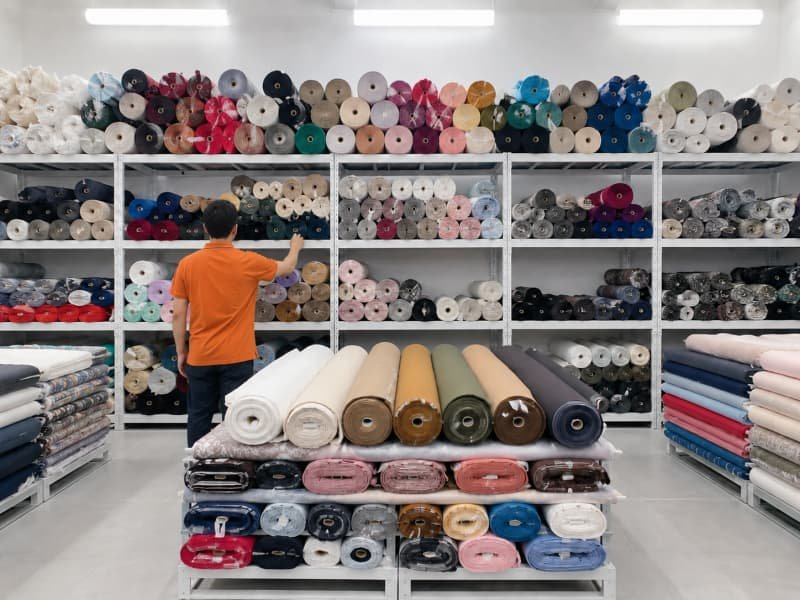
Deadstock fabric can look like a shortcut to a distinctive collection. A buyer discovers a beautiful satin, printed chiffon, textured jacquard, or stretch jersey that is already available, carries an attractive story, and appears ready for production. The temptation is to design first and ask technical questions later. That is usually where the problems begin. A fabric may be visually perfect but commercially unsuitable because the available quantity is overstated, several rolls belong to different shade groups, the composition cannot be verified, or the material cannot be reordered after launch.
Brands can use deadstock fabric successfully by verifying its source and usable quantity, testing its physical performance, matching it to suitable dress silhouettes, allocating the limited meterage before finalizing designs, and establishing a production plan that accounts for defects, samples, size ratios, cutting loss, and the possibility that the material cannot be replenished.
The strongest deadstock collections are not built around the idea that “the fabric already exists.” They are built around controlled scarcity. Imagine approving a dress that becomes the best-performing style in a seasonal drop, only to discover that the warehouse counted 3,000 meters while the factory can safely cut fewer than 2,500. The design may be a success, but the material plan has failed. The difference between a compelling limited edition and an expensive production problem is usually decided before the first bulk marker is released.
What Is Deadstock Fabric?
Deadstock fabric is unused material left outside its original production plan. It may come from cancelled orders, excess mill production, discontinued colors, unused brand inventory, or remaining rolls. The term explains why the fabric is available, but it does not confirm its quality, composition, traceability, sustainability, or suitability for a commercial dress collection.
What Qualifies as Deadstock?
A fabric lot generally qualifies as deadstock when it was produced for an earlier commercial purpose but was never converted into finished products. A mill may have woven more fabric than an order required, a brand may have cancelled a collection, or a warehouse may hold discontinued colors that are no longer part of a standard fabric range.
Common sources include mill overruns, cancelled orders, unused custom-dyed fabric, development yardage, discontinued qualities, end-of-roll inventory, and fabric purchased by a brand but never released into production.
The history matters. A recent overrun from a known mill is very different from an unidentified lot that has been stored for years. The first may have article numbers, composition records, test reports, and consistent rolls. The second may have uncertain fiber content, mixed dye lots, incomplete quantities, or storage damage.
Deadstock should therefore be treated as a supply status rather than a fabric specification. Buyers still need to establish exactly what the fabric is and whether it can perform in the intended garment.
How Is It Different?
Deadstock is frequently confused with remnant, clearance, recycled, upcycled, vintage, and second-quality fabric. A remnant is usually a relatively small quantity left after cutting or selling a larger roll. Clearance fabric is discounted inventory, but it may still be a repeatable standard quality. Recycled fabric contains fibers or polymers recovered from existing materials. Upcycled fabric is repurposed into a product with a different or higher value. Vintage fabric is normally valued for its age, rarity, or design history.
Second-quality fabric contains known defects or falls outside the original mill specification. Some second-quality fabric is also deadstock, but deadstock is not automatically defective.
These distinctions affect purchasing decisions. A buyer should not accept excessive defects, inaccurate composition information, or poor test performance simply because a seller describes the material as deadstock. The fabric must still meet the brand’s technical, visual, legal, and commercial requirements.
The key question is not only whether the material is surplus. It is whether the available lot can be converted into consistent, saleable dresses.
Why Do Brands Use It?
Brands often use deadstock because it can offer a fabric, print, texture, or color that is difficult to find in standard stock programs. A distinctive satin, printed chiffon, compact stretch knit, embroidered mesh, or textured jacquard can give a collection a stronger visual identity.
Deadstock may also shorten the initial sourcing stage because the material already exists. The brand does not need to wait for yarn booking, weaving, dyeing, printing, and finishing before sampling can begin. That advantage is valuable for seasonal drops and event-led collections with fixed launch dates.
Typical applications include limited capsules, partywear edits, vacation collections, occasion dresses, fashion minis, printed midis, and short-run color stories.
The main advantage is not always a lower fabric price. A limited fabric may require more inspection, testing, sorting, marker work, and production control than a normal repeatable material. Its value may come from exclusivity, faster access, stronger storytelling, or a product appearance that cannot be easily copied. A good deadstock decision starts with product value, not with the assumption that surplus fabric must be inexpensive.
Where Does the Risk Begin?
The risk begins when a beautiful swatch is treated as proof of bulk readiness. A small cutting cannot show roll-to-roll shade differences, inconsistent stretch, hidden creases, variable usable width, or defects distributed through the full lot.
The word “deadstock” does not guarantee verified fiber composition, first-quality grading, consistent roll shade, stable shrinkage, reliable stretch recovery, current chemical compliance, suitable storage history, reorder availability, accurate total quantity, or sustainable production conditions.
Age can also affect some materials. Elastane may lose recovery, coatings may become sticky or brittle, pale fabrics may yellow, and long-standing folds may leave permanent marks. Not every older fabric develops these problems, but visual inspection alone cannot rule them out.
A brand should separate emotional appeal from technical approval. The design team may love the fabric immediately, while sourcing, quality, pattern, and production teams still need to verify whether the lot can support the required quantity and standard.
Is Deadstock Right for Your Collection?
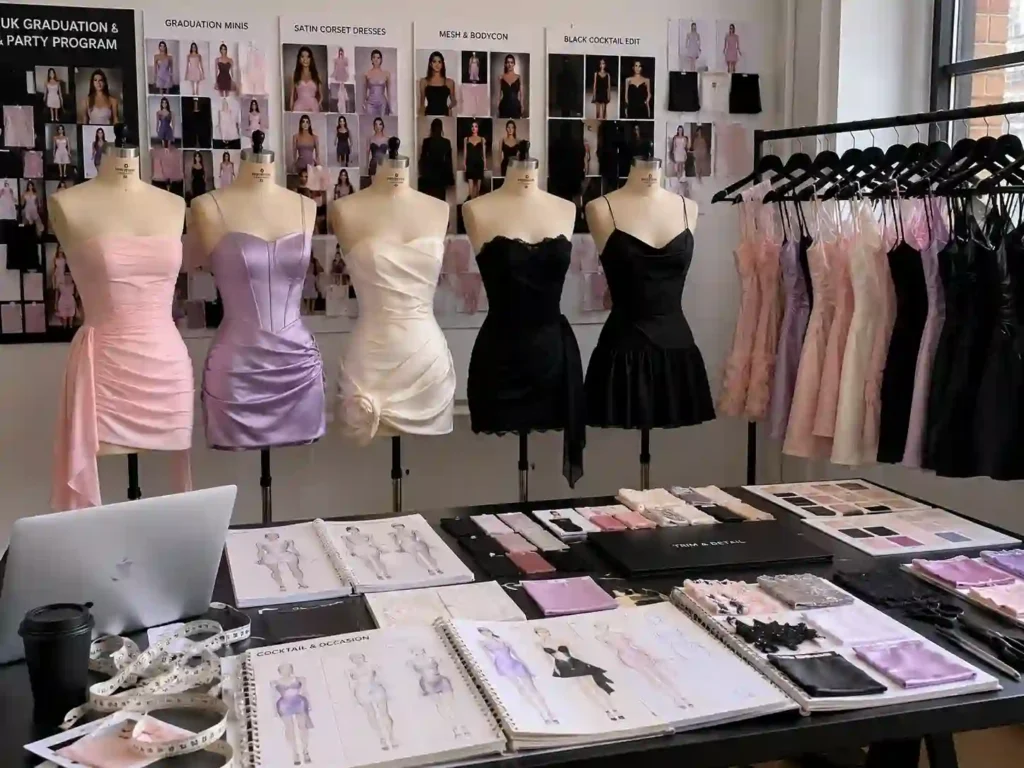
Deadstock is most suitable for collections that can benefit from limited quantities, distinctive materials, and a controlled selling period. It is less suitable for permanent products that rely on frequent restocking. The right decision depends on the collection model, expected sales volume, size range, garment consumption, quality risk, and need for exact repeatability.
Which Collections Suit It?
Deadstock works particularly well when scarcity is compatible with the sales plan. A limited partywear capsule, vacation drop, occasion edit, or seasonal fashion collection can turn restricted fabric availability into a clear product story.
It can also be useful for testing a new silhouette or price point. A brand may produce a controlled quantity, study customer response, and decide whether to develop a repeatable version in a newly produced fabric.
Collection types that often suit deadstock include limited-edition dress capsules, seasonal print stories, party and occasion edits, vacation and resort drops, small color extensions, campaign pieces, and test-market collections.
The material should still support a complete size ratio. A fabric lot that can make 1,000 garments in theory may not support the actual commercial size mix once large-size consumption, pattern direction, defects, and sample requirements are included. Deadstock works best when the brand accepts that the product may finish permanently after sell-through.
Which Dresses Work Best?
The most suitable dress is the one whose silhouette, construction, and fabric consumption match the lot’s real characteristics. Fluid fabrics may suit slip dresses, draped midis, bias details, relaxed occasion dresses, and soft vacation silhouettes. Stable wovens may work better for structured minis, fitted bodices, panelled dresses, or shaped waistlines. Stretch fabrics can support bodycon styles, fitted midis, ruched dresses, and close-fitting partywear when recovery is reliable.
Visual suitability is only part of the decision. A directional floral print may look ideal for a maxi dress but generate high cutting loss. A narrow embroidered mesh may require extra seams or reduce the number of units. A satin may drape beautifully but show every stitch-tension problem.
Before approving a style, product teams should check garment length, panel count, sleeve volume, skirt fullness, bias sections, print direction, nap, fabric width, lining needs, and intended size ratio.
A simpler dress is not automatically more efficient. Strategic design and accurate marker planning matter more than appearance alone.
Do Core Styles Suit Deadstock?
Core styles need reliable replenishment. A permanent black bodycon dress, satin midi, or bestselling party mini may be reordered several times a year. Customers expect the same color, fit, weight, hand feel, opacity, and care performance each time.
Deadstock rarely provides that certainty. A replacement lot may look similar but differ in yarn, finish, width, stretch, or shade. Even a small change in stretch recovery can alter the fit of a close-fitting dress.
There are safer ways to use deadstock with proven products. A brand may release a limited deadstock colorway while keeping the permanent version in a repeatable fabric. It may also reuse an established silhouette but create a separate SKU, fit approval, product description, and care label for each new material.
The mistake is assuming that the same pattern guarantees the same product. Fabric behavior is part of the fit. Whenever the material changes, the development team should review measurements, pattern balance, construction, lining, pressing, and production tolerance again.
How Should the Decision Be Made?
The collection model should determine the sourcing decision, not the attractiveness of the fabric alone. A practical review should compare usable meterage, realistic unit capacity, expected sell-through, margin, testing cost, quality risk, and the value of exclusivity.
A fabric may be unsuitable for a 10,000-unit continuity program but highly effective for a 1,200-unit limited dress edit. The same material can be either a good or poor choice depending on the business model around it.
Collection Model | Typical Reorder Need | Deadstock Fit | Main Advantage | Main Risk |
Limited capsule | None or very low | Strong | Scarcity supports exclusivity | No extension after sell-through |
Seasonal fashion drop | Low | Strong | Fits a short selling window | Quantity must be locked early |
Occasionwear edit | Low to medium | Strong | Distinctive fabrics add value | Shade and sewing variation |
New silhouette test | Uncertain | Moderate to strong | Limits initial exposure | A successful style may not restock |
Permanent core line | High | Weak | Limited color novelty | Exact fabric cannot be repeated |
Uniform or continuity program | Very high | Poor | Little operational benefit | Long-term consistency is impossible |

How Do You Verify a Deadstock Lot?
A deadstock lot should be verified through source records, full-roll inspection, representative sampling, and end-use testing. The goal is to confirm composition, condition, consistency, usable quantity, and garment performance before designs and sales quantities are finalized. A warehouse quantity alone is not enough to approve production.
What Records Matter?
Start by requesting information that connects the material to a specific article, supplier, quantity, and production history. Useful records include the supplier name, warehouse location, article reference, mill information, declared composition, fabric weight, usable width, roll numbers, production date, dye-lot details, storage history, and available test reports.
The original order context can also be useful. A cancelled brand order may have clearer records than a mixed warehouse clearance. A discontinued mill color may still be a current, tested construction even though the shade is no longer repeatable.
Documents should be compared with physical labels. If the paperwork lists one article number but the rolls carry several references, the lot may contain mixed constructions. If the supplier states one dye lot but the fabric shows several shade groups, production planning must follow the physical evidence.
Incomplete documentation does not always make the material unusable. It does, however, increase the need for independent composition testing, broader roll sampling, and more conservative claims about origin or sustainability.
How Should Rolls Be Inspected?
Every production roll should be identified and inspected before the final quantity is promised. Sampling only the first two rolls can miss problems that appear later in the lot.
Inspection should cover actual roll length, usable width, roll-to-roll shade, side-to-center shade, start-to-end shade, weight variation, stretch and recovery, bowing and skewing, permanent folds, holes, yarn faults, stains, surface marks, print registration, and coating or finish condition.
Shade should be checked under controlled lighting appropriate to the product and brand standard. Reflective satin, dark colors, washed finishes, and coated fabrics may show variation differently under daylight, store lighting, and photography conditions.
Rolls should then be grouped by compatible shade and performance. Garment components should normally be cut from the same approved group. Mixing bodices, sleeves, and skirts from visibly different rolls can create a garment that passes measurement inspection but fails visual inspection.
Which Tests Are Necessary?
Testing should reflect the final garment, care method, market, and fabric risk. There is no single deadstock test package suitable for every dress.
A stretch bodycon fabric should be checked for extension, recovery, dimensional change, seam stretch, opacity, and shape retention. Satin may require seam-slippage, snagging, pressing, puckering, and colorfastness checks. Printed chiffon may need wash performance, rubbing, perspiration, skew, and print-durability testing.
Composition testing is especially important when labels or records are uncertain. Incorrect fiber information can affect care labeling, customs documentation, product claims, and legal compliance.
Testing should be completed early enough to influence design. A fabric that fails seam slippage may need wider seam allowances, reinforcement, revised stitch density, or a different silhouette. A highly transparent material may require a fuller lining rather than a partial one. Acceptance criteria should come from the brand’s quality manual and destination-market requirements.
How Much Is Really Usable?
The quoted quantity and usable production quantity are rarely identical. Roll tickets may show the gross length, while production capacity depends on what remains after inspection, testing, samples, defects, width loss, and reserve.
The example below shows how a reported 2,400-meter lot might be converted into a realistic planning quantity. The figures are illustrative rather than fixed industry allowances. The final marker must use the intended sales size ratio, because a marker dominated by the base size can make consumption appear lower than the real bulk requirement.
The quantity should be recalculated whenever the design, skirt length, sleeve, ruffle, size mix, or fabric width changes.
Quantity Step | Meterage | Calculation |
Supplier-reported lot | 2,400 m | Starting quantity |
Short-roll adjustment | -24 m | Physical measurement differs from labels |
Defects and damaged sections | -96 m | 4% of measured quantity |
Development and testing | -48 m | Samples, wash tests and construction trials |
Production reserve | -72 m | Recutting and quality contingency |
Approved usable quantity | 2,160 m | Meterage available for planned cutting |
Average marker consumption | 1.80 m/dress | Approved production size ratio |
Planning capacity | 1,200 dresses | 2,160 ÷ 1.80 |

How Do You Plan Limited Fabric?
Limited fabric should be planned from verified usable meterage back to finished units. The brand needs an approved size ratio, production marker, defect allowance, sample requirement, and reserve before committing to styles or sales quantities. Every meter must be assigned a purpose before bulk cutting begins.
How Is Unit Capacity Calculated?
The basic calculation appears simple: divide usable fabric by consumption per dress. In practice, both numbers must be carefully defined.
Usable meterage should come from inspection rather than warehouse labels. Consumption should come from a production marker that includes the real size assortment, fabric width, pattern direction, matching requirements, and approved shrinkage allowance.
Consumption is affected by mini, midi, or maxi length; sleeve length and volume; skirt flare or gathering; ruffles and tiers; bias-cut panels; print placement; stripe or check matching; one-way nap; fabric width; size ratio; pattern-piece shape; and defect distribution.
A solid 150-centimeter-wide fabric may produce an efficient marker, while a one-way print on a 135-centimeter usable width may require substantially more material for the same dress. Operational consumption may also exceed the CAD marker result because of end loss, splice points, spreading conditions, and defect avoidance.
How Should Fabric Be Allocated?
When one lot supports several styles, allocation should happen before the collection is fully designed. Otherwise, an oversized hero dress may consume the meterage needed for commercially stronger products.
The team should assign quantities to campaign styles, volume styles, supporting silhouettes, fitting samples, photography samples, size sets, testing, recutting, and post-production reserves.
The illustrative allocation below protects the collection from using every available meter on the first cutting plan. Allocation should reflect expected sales, margin, campaign value, fit risk, and production complexity. A visually dramatic dress may justify lower volume, while a commercially proven mini may deserve a larger share of the lot.
Allocation | Meterage | Average Consumption | Planned Units or Use |
Commercial mini dress | 864 m | 1.35 m | 640 units |
Occasion midi dress | 648 m | 1.80 m | 360 units |
Campaign maxi dress | 324 m | 2.70 m | 120 units |
Samples and testing | 72 m | Varies | Development use |
Recutting reserve | 144 m | Varies | Quality contingency |
Unassigned balance | 108 m | Varies | Final size-ratio adjustment |
How Can Cutting Improve Yield?
Yield improvement starts during pattern development, not on the cutting day. Small design choices can significantly affect the number of garments produced from a finite lot.
A pattern team may compare several panel layouts, test alternative skirt seams, reduce hidden self-fabric components, or use a compatible lining for internal sections. CAD markers can show whether a minor pattern adjustment improves efficiency without changing the visible silhouette.
Useful controls include sectional markers, size grouping, defect mapping, controlled panel orientation, accurate relaxation, and planned use of contrast materials.
Pattern changes should never weaken fit or durability. Narrowing seam allowances below a safe level, removing required support, or forcing pattern pieces into unsuitable directions may save fabric but create failures later. Directional velvet, brushed surfaces, one-way prints, and reflective satin may require every piece to run in the same direction. The best yield plan protects both unit capacity and product quality.
What Happens at Sell-Out?
The brand should decide what will happen when the fabric runs out before the product goes live. One option is to retire the product permanently. Another is to release the same silhouette later in a different fabric under a new SKU. A third is to develop a pre-approved alternative that can be introduced if sales exceed the deadstock quantity.
The replacement fabric should not be treated as identical without testing. Differences in weight, stretch, opacity, drape, and finish may require pattern changes, new fit approval, revised care instructions, new photography, and updated product descriptions.
Brands should also retain enough material for production recutting, quality claims, replacement garments, photography corrections, approved reference samples, and laboratory retesting where required.
Selling the final theoretical unit can leave no fabric to resolve a valid customer or production issue. Scarcity can create urgency, but communication must remain accurate. “Limited to the available verified fabric lot” is clear. Promising a future restock when no matching fabric exists creates unnecessary customer-service and merchandising problems.

How Do You Move from Sample to Bulk?
Moving from sample to bulk requires the fabric, pattern, trims, workmanship, size specifications, marker, and quality requirements to be approved as one system. A successful prototype does not prove that every roll can produce the same result. Bulk readiness must be confirmed using representative materials and controlled production steps.
How Does Fabric Shape the Pattern?
Fabric behavior changes fit. A pattern developed for one satin, mesh, or stretch jersey cannot automatically be transferred to another material with a similar appearance.
Pattern teams should evaluate fabric weight, thickness, stretch direction, extension, recovery, shrinkage, drape, edge stability, opacity, surface friction, and bias growth.
A fitted jersey may stretch easily but recover poorly, causing the waist and hip to relax after wear. A soft satin may lengthen on the bias after hanging. A stretch mesh may require a different lining relationship to avoid restricting movement. A heavy skirt may pull a halter neckline or distort a low back.
Typical pattern responses include adjusting negative ease, stabilizing necklines, changing seam placement, increasing support, revising skirt balance, correcting lining length, or modifying the bust and waist contour. Grading must also be checked because cup shape, boning length, strap position, back opening, and skirt volume often require more than simple proportional enlargement.
Which Materials Must Be Locked?
Bulk approval should cover more than the shell fabric. The lining, zipper, thread, elastic, boning, cups, interfacing, closures, labels, and decorative trims must work with the deadstock material.
The lining should be compatible in stretch, weight, shrinkage, care method, opacity, and color. A rigid lining can restrict a stretch shell. A heavy lining can flatten the movement of a fluid fabric. A pale lining may change the visible shade of a semi-transparent outer layer.
Trims also influence fit and durability. Zipper tape can be too stiff for a lightweight satin. Elastic may recover differently from the shell. Boning can create pressure points when channels are not positioned correctly. Thread and needle selection affect puckering, holes, and seam appearance.
Whenever possible, supporting materials should be repeatable and ordered with enough reserve. Combining a limited shell fabric with an equally scarce zipper, lace, or trim increases the number of possible shortages. Approval should include the exact bulk material references, not only visually similar substitutions used for the first prototype.
Which Samples Are Needed?
The number of samples should match the technical risk. A simple stable woven dress may need fewer stages than a fitted corset style made from a variable stretch fabric.
The sample path below is a practical working example rather than a universal rule. Brand procedures, product complexity, and market requirements may call for different stages.
The pre-production sample should use approved bulk materials. A sample made from a separate swatch may not represent the actual roll group entering production.
Stage | Typical Quantity | Main Purpose | What Becomes Locked |
Construction trial | 1-3 components | Test seams, support and pressing | Sewing method |
First prototype | 1 garment | Check design interpretation | Initial pattern direction |
Fit sample | 1-2 garments | Review balance and measurements | Fit corrections |
Revised sample | 1 garment | Confirm comments | Base-size pattern |
Size set | 3-5 sizes | Check grading | Size progression |
Care-test sample | 1-3 garments | Review post-care appearance | Care method and shrinkage response |
Pre-production sample | 1-2 garments | Confirm bulk materials | Final construction standard |
First production piece | 1 per line or group | Confirm production execution | Line release |
How Is Bulk Consistency Controlled?
Bulk control starts at fabric receiving. Every roll should have an identity that follows it through inspection, shade grouping, spreading, cutting, bundling, sewing, finishing, and packing.
Important checkpoints include incoming roll verification, width measurement, shade review, relaxation, marker approval, bundle numbering, first-piece inspection, inline measurement checks, seam review, final appearance inspection, and packing verification.
Shade groups should not be mixed casually. Components for one dress should normally come from compatible rolls. Stretch groups may also need separation when recovery varies enough to affect fit.
The approved pre-production sample should remain available as a visual and construction reference, but it should not replace written specifications. Deadstock production often benefits from shorter cutting releases. Instead of cutting the entire lot immediately, the factory can release controlled sections, review early production results, and then continue. This provides an opportunity to detect shade, fit, or workmanship problems before the remaining fabric is committed.
Are Deadstock Claims Truly Sustainable?
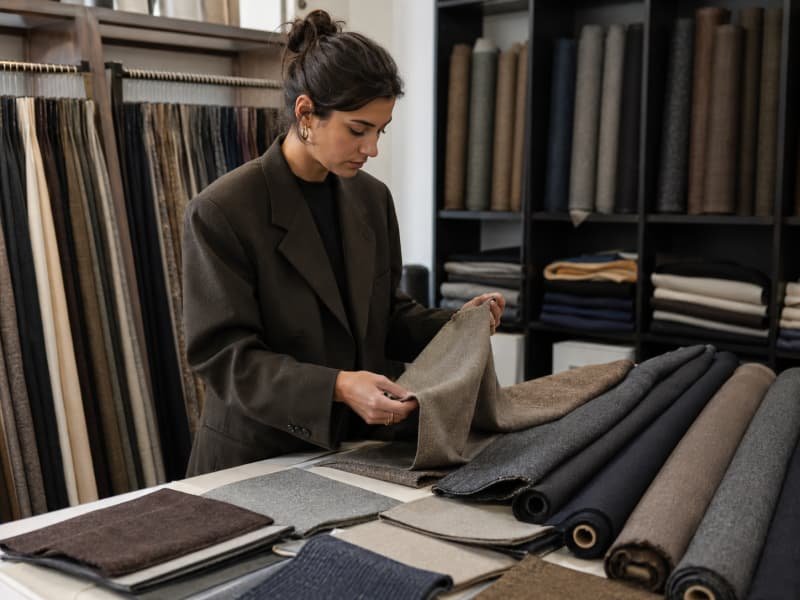
Deadstock can support more responsible use of existing materials, but it is not automatically sustainable. Its environmental value depends on why the fabric became surplus, whether using it reduces new production, how well its origin is documented, and whether the finished garment is durable, compliant, wearable, and honestly described.
Is All Deadstock Sustainable?
Producing fabric already consumed raw materials, water, energy, chemicals, labor, and transportation. Using the material does not remove those earlier impacts. It may, however, avoid leaving the lot inactive and reduce the need to produce a new fabric for the same collection.
The strength of the environmental case depends on whether the fabric was genuinely surplus, why the surplus existed, whether the material was likely to remain unused, whether its use replaces a new fabric order, whether its composition is suitable and durable, and whether the source can be reasonably documented.
A poor-quality garment does not become responsible simply because the material was surplus. If the dress loses shape, transfers color, tears at the seams, or becomes unwearable after limited use, the deadstock story cannot compensate for weak product performance.
Sustainability should therefore include quality, durability, fit, care, and realistic wear—not only the sourcing label attached to the fabric.
How Can Greenwashing Be Avoided?
Avoid broad statements that cannot be proven. Claims such as “zero impact,” “completely sustainable,” or “saved from landfill” require evidence that many brands do not possess.
More credible language explains what is known. A brand may state that the dress was made from a verified surplus lot already held in inventory, that the quantity was limited, and that the material was inspected and tested before production.
The wording should not imply that every deadstock fabric has the same origin or environmental value. One lot may have complete mill records, while another may only have warehouse-level information. Claims should be matched to the evidence available for each material.
Brands should also avoid suggesting that deadstock makes all other production decisions irrelevant. Linings, trims, packaging, transport, durability, and production waste still affect the overall product. Honest communication can include limitations rather than filling information gaps with attractive but unsupported claims.
What Evidence Should Be Kept?
A useful evidence file connects the source material to the finished collection. It may include a supplier declaration, purchase invoice, article or mill reference, roll inventory, roll photographs, composition report, inspection record, test reports, usable-quantity calculation, cutting allocation, finished-unit reconciliation, and records of rejected or reserved meterage.
The quantity record is particularly important. A brand may purchase 2,400 meters, approve 2,260 meters after measurement and inspection, allocate 50 meters to development, reserve 100 meters for recutting, and use the remaining quantity for a defined number of dresses.
That record supports a more specific story than saying that “thousands of meters were rescued.” It also helps sourcing, quality, merchandising, and customer-service teams understand why the product is limited and why an exact restock may not be possible.
Evidence should be retained in an organized material file rather than spread across informal emails, photographs, and messages that cannot be easily retrieved later.
How Should the Collection Be Described?
The product story should explain both the material and the garment. Customers need more than a sustainability label; they need to understand what makes the dress desirable and how to care for it.
Useful information includes the fabric type, surface or hand feel, source category, limited quantity, silhouette choice, care method, opacity, lining, and whether a future restock is possible.
A clear description might explain that a fluid surplus satin was selected for a draped occasion dress because its weight and movement suited the silhouette. It may state that production was limited to the verified lot and that the style will not be repeated in the exact same material.
Avoid making scarcity sound accidental. “Produced only within the available verified fabric quantity” communicates control. The strongest story connects design, material use, testing, and production discipline. The fabric was verified, matched to an appropriate dress, allocated carefully, and converted into a collection with a clear quantity and product standard.
Build a Production-Ready Deadstock Dress Collection
Deadstock fabric can give a dress collection exclusivity, speed, visual distinction, and a more considered approach to existing materials. It can also create shortages, inconsistent bulk production, labeling problems, unsupported claims, and disappointed customers when development begins with a mood board instead of a verified lot.
A reliable project should move through a clear sequence:
- Confirm the fabric source, article references, roll list, and available documentation.
- Inspect every production roll and calculate usable rather than quoted meterage.
- Test the material against the garment, care method, destination market, and brand standard.
- Develop silhouettes and patterns around measured fabric behavior.
- Create production markers using the intended commercial size ratio.
- Reserve material for samples, testing, recutting, and legitimate quality needs.
- Approve bulk materials, patterns, construction, workmanship, and production tolerances together.
- Maintain roll-to-garment traceability during cutting and manufacturing.
- Use precise, evidence-based product and sustainability language.
Duolan Apparel supports established fashion brands, buying teams, product developers, and sourcing offices with dress-focused fabric evaluation, pattern engineering, sample development, fit correction, production-readiness reviews, scalable manufacturing, and quality coordination. The company’s manufacturing network includes 16 self-owned womenswear factories, more than 20 long-term satellite factories, 300 sewing lines, and over 50 flexible quick-response lines, supported by SMETA audit records and experience with international testing and customer compliance requirements.
Share:
Our Services
Categories
Table of Contents
Here, developing fashion collections is more than manufacturing garments — it’s a collaborative process focused on transforming ideas into well-executed, market-ready products. From fabric sourcing and sample development to scalable production and delivery coordination, every stage is built to support quality, consistency, and efficient collection launches across global markets.

