 Skip to content
Dress Manufacturing Capacity & Equipment
Dress-focused production strength for multi-style collections, controlled bulk manufacturing, repeat programs, and long-term supply planning.
- 16 owned womenswear factories for core styles, technical development, controlled bulk production, and repeat-order consistency.
- 20+ long-term satellite factories supporting production allocation, seasonal volume, replenishment, and multi-collection scheduling.
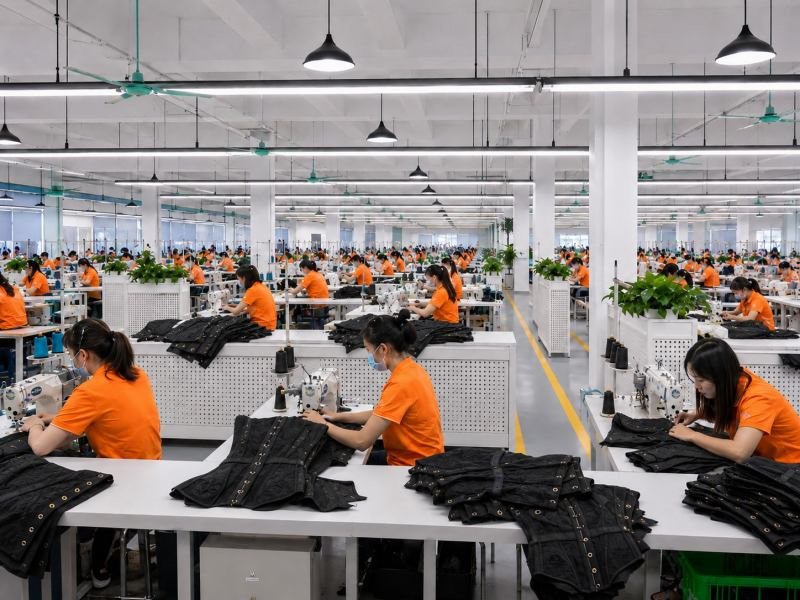
- 300 sewing lines, including 50+ quick-response and flexible lines for parallel style development and planned scale-up.
- Approximately 12,000-20,000 equipment units covering fabric inspection, CAD, cutting, sewing, decoration, finishing, inspection, and packing.
- Stable monthly production capacity of approximately 6.5 million garments, with peak capacity reaching approximately 10 million garments.
- Monthly development capacity of approximately 15,000-35,000 sample developments across 3,000-8,000 style workflows.
Capacity Means More Than a Monthly Output Number
Available Production Space
Dress-specific Line Fit
Complexity-adjusted Output
Multi-style Coordination
Sample-to-bulk Readiness
Peak-season Resilience
A Multi-level Manufacturing System Built Around Dresses
Owned Factories Control Core Styles and Technical Standards
Quick-response Lines Support Collection Rhythm and Reorders
Satellite Factories Add Controlled Scale Without Losing Standards
Regional Production Support Creates Capacity Buffers
The wider manufacturing system includes stable production support in Guangxi, Guizhou, Sichuan, and Jiangxi. Regional resources add labor availability, line capacity, and production flexibility when collection volume or seasonal demand increases. The value lies in planned distribution of suitable products, rather than moving technical styles to unfamiliar factories simply because space is available. Production allocation considers fabric handling, sewing complexity, special processes, size range, color count, delivery sequence, and inspection needs. Complex or newly developed dresses can remain in core facilities, while stable and repeatable styles may use regional capacity after standards have been proven. A multi-region structure also supports split production and phased shipment planning. Brand teams can discuss which styles need tighter technical control, which styles can scale through additional lines, and which orders should remain reserved for repeat production later in the season.
Duolan Dress Manufacturing Capacity at a Glance
Capacity figures are presented with their operating meaning, helping sourcing and product teams distinguish group scale, development density, flexible production, and peak-volume support.
| Capacity Indicator | Duolan Manufacturing Base | Production Meaning |
|---|---|---|
| Owned womenswear factories | 16 | Core control for development, complex styles, bulk execution, and repeat standards |
| Long-term satellite factories | 20+ | Planned allocation for scale-up, replenishment, and seasonal volume |
| Sewing production lines | 300 | Parallel management of multiple styles and bulk programs |
| Quick-response and flexible lines | 50+ | Reorders, launch support, production waves, and selected faster-turn programs |
| Supporting workforce | 12,000+ | Multi-region labor and production coordination across the wider manufacturing system |
| Stable monthly capacity | Approx. 6.5 million garments | Regular planned production across the group network |
| Peak monthly capacity | Up to approx. 10 million garments | Seasonal expansion and higher-volume scheduling when resources are reserved |
| Additional monthly capacity space | Approx. 1-2 million garments | Buffer for growth, suitable reallocation, and approved scale-up programs |
| Monthly sample developments | Approx. 15,000-35,000 developments | High development density across patterns, samples, revisions, and project stages |
| Monthly style workflows | Approx. 3,000-8,000 styles | Parallel management of collection development and sampling programs |
Final allocation depends on dress construction, fabric availability, special workmanship, color and size distribution, approval timing, inspection level, packing requirements, and requested shipment date.
Production Capacity Matched to Each Order Stage
Sample-to-bulk Orders
Market Test Programs
First Launch Orders
Repeat Production
Scale-up Programs
Seasonal Collections
Dress Categories Supported by Specialized Production Routes

Fashion Dresses

Occasion Dresses

Party Dresses
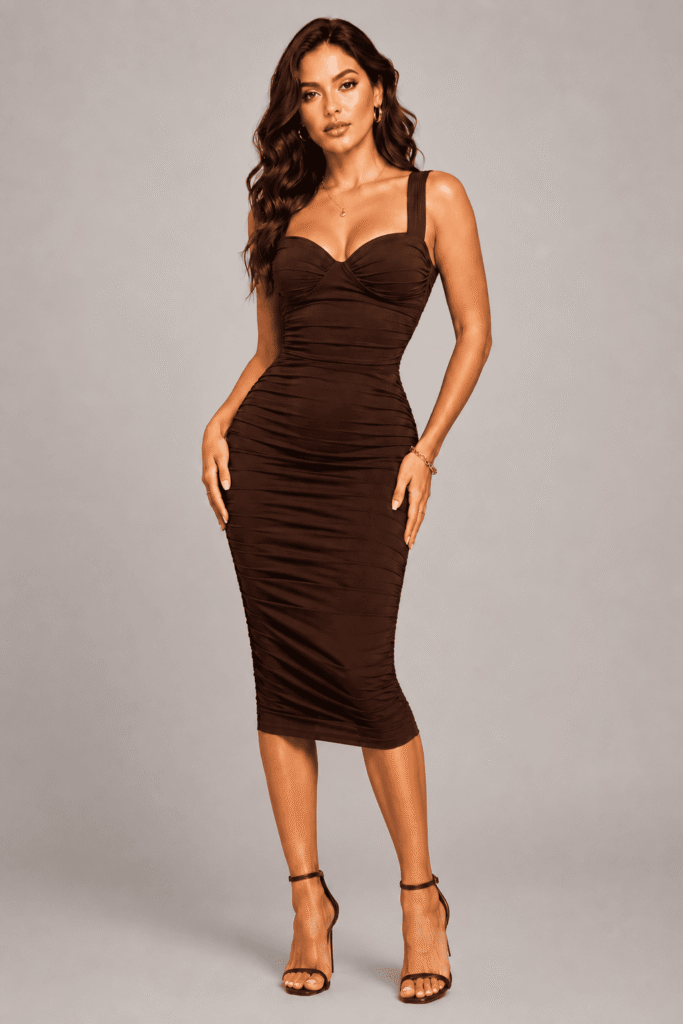
Bodycon Dresses

Satin Dresses

Corset Dresses

Mesh and Lace Dresses

Sequin Dresses
Equipment Evidence Across the Full Manufacturing Flow
Fabric Inspection Equipment
Pattern and Sample Equipment
Core Sewing Equipment
Printing Equipment
Embroidery Equipment
Pressing and Finishing Equipment
Inspection and Packing Equipment
Utility and Environmental Support
Fabric Control Before Cutting Protects Bulk Consistency
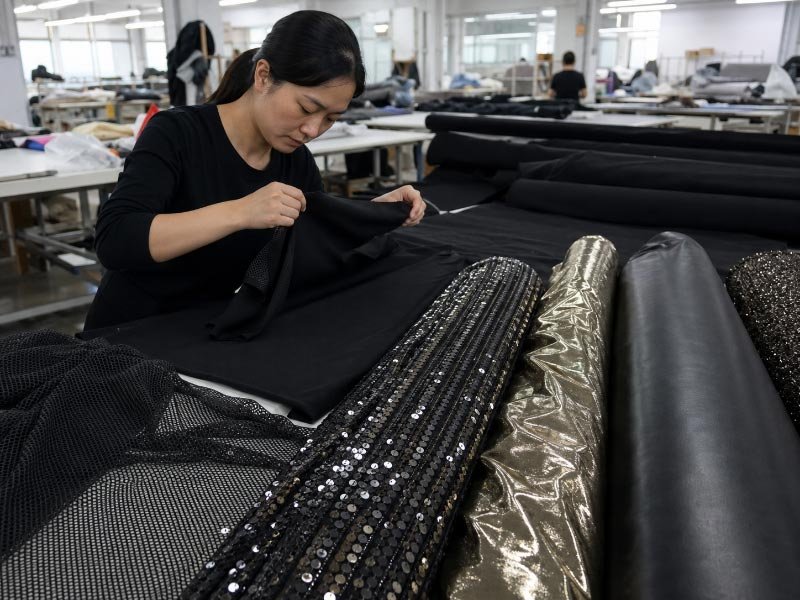
Fabric Inspection and Defect Mapping

Shrinkage and Fabric Behavior

Shade and Color Control

Spreading and Grain Direction

Automated and Controlled Cutting
Automatic cutting systems, computer cutting beds, straight-knife equipment, end cutters, and specialist tools support different material and order conditions. Marker efficiency matters, but cutting quality takes priority at high-visibility areas. Fine curves, notches, cup panels, corset sections, narrow straps, curved necklines, slit positions, and layered mesh pieces need accurate outlines. Cutting method is chosen according to fabric movement, layer count, panel complexity, production volume, and tolerance requirements.

Numbering and Bundle Traceability
CAD, Pattern and Sampling Capacity for Production-ready Dresses
CAD Pattern Development
Marker and Material Planning
Marker systems help plan pattern placement across fabric width, size ratios, grain direction, print direction, and cut quantities. Efficient utilization matters for cost, but the marker cannot compromise product appearance or technical requirements.
One-way satin, directional prints, lace motifs, border fabrics, nap, sequined surfaces, and panels requiring matching may need controlled placement with lower theoretical utilization. Material planning also considers shell, lining, interfacing, cups, boning, elastic, zippers, lace, mesh, decorative panels, and packaging. A clear consumption basis supports quotation, material booking, cutting preparation, and repeat production. When size ratios or color quantities change, marker and consumption information can be recalculated before fabric is committed.
Sample Sewing and Fit Review
PP and Bulk Readiness
Before bulk production, the team checks whether the latest approved version is clear enough for line execution. The PP basis may include approved sample, final pattern version, measurement chart, BOM, fabric and trim references, workmanship instructions, label information, packing requirements, and critical QC points.
Risk-sensitive dresses may require a first-piece or pilot stage. A bulk-ready style should answer several questions: Can the fabric be cut consistently? Can the construction be repeated by trained operators? Are support and lining methods stable? Are decorative processes repeatable? Is pressing safe for the material? Can inspection measure the important points? Will packing protect the garment? Production capacity is reserved only after these links are understood.
Sewing Equipment Matched to Dress Construction Details

Single-needle Lockstitch

Double-needle Sewing

Overlock Construction

Coverstitch and Stretch Sewing
Coverstitch and four-needle six-thread equipment support elastic fabrics, hems, binding, seam coverage, and stretch-sensitive construction. Suitable use depends on recovery, thickness, edge shape, and required appearance. Sewing teams review seam elasticity, tunneling, waviness, needle damage, transparency, and thread exposure. Size and fit control remain important because even a technically strong seam cannot correct an unsuitable pattern or fabric.

Bartack Reinforcement

Buttonhole and Button Equipment

Template and Pattern Sewing
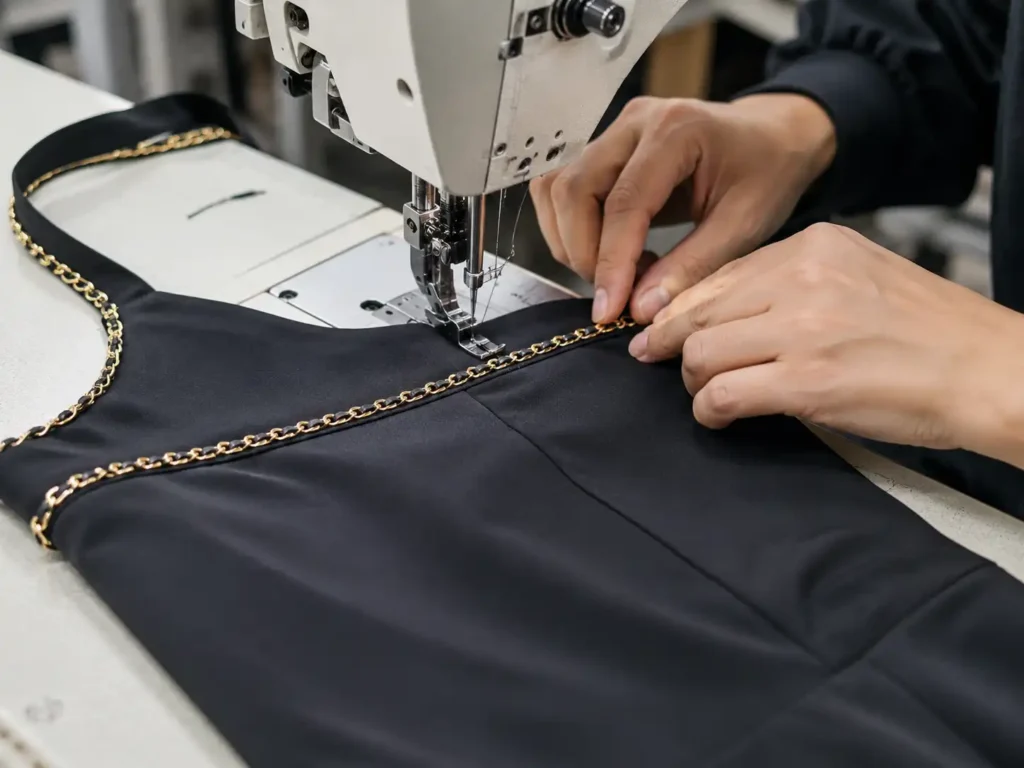
Blind and Chain Stitching
Printing, Embroidery and Decorative Craft Capacity
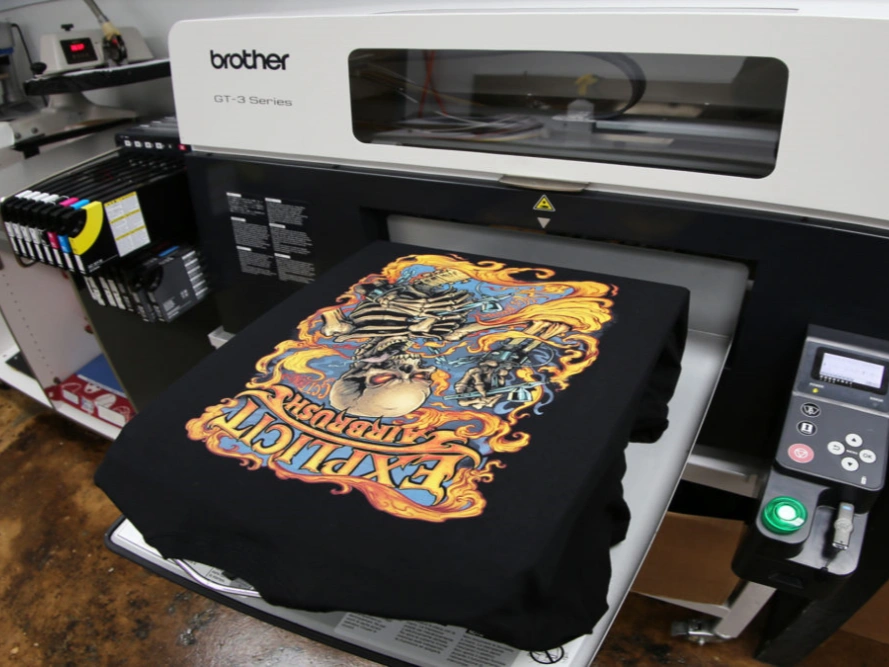
Digital and DTG Printing

Screen Printing

Heat Transfer Applications

Flat and Specialty Embroidery

Sequin and Composite Decoration

Decorative Quality Control
Decorative inspection checks placement, symmetry, color, stitch security, loose elements, missing components, backing, skin-contact comfort, and damage around seams. Pull checks may be used for selected attachments, while visual standards define acceptable variation. Packing method is part of craft control because folding pressure, friction, hooks, stones, sequins, and sharp edges can damage the garment or neighboring products during transport. Protective tissue, bags, hangers, or carton arrangements are selected according to style.
Finishing, Inspection and Packing Complete the Garment
Garment Pressing
Shape and Surface Finishing
Measurement Inspection
Needle and Safety Checks
Label and Barcode Control
Folding, Bagging and Cartons
How Equipment Controls High-risk Dress Production
Equipment creates value when it addresses a defined garment risk, supports repeatable operations, and gives inspection teams a measurable standard for bulk production.
| Dress Type | Main Production Risk | Relevant Equipment and Control | Intended Production Result |
|---|---|---|---|
| Satin dress | Seam impression, puckering, shade variation, press marks | Color light box, controlled spreading, precision cutting, fine lockstitch setup, suction pressing table | Cleaner surface, more even drape, and reduced visible handling damage |
| Bodycon dress | Seam waviness, weak recovery, measurement growth, transparency | Stretch assessment, overlock, coverstitch, four-needle six-thread, measurement station | Better seam elasticity, fit consistency, and recovery across sizes |
| Corset dress | Cup shift, boning variation, waist imbalance, closure stress | CAD pattern systems, template sewing, reinforced lockstitch, bartack, pull checks | More stable support placement and repeatable structured construction |
| Mesh dress | Layer shifting, visible seam allowance, distortion, coverage gaps | Controlled cutting, numbering, fine sewing, light inspection, mannequin review | Improved layer alignment, symmetry, transparency control, and edge quality |
| Sequin dress | Decoration damage, missing sequins, scratching, seam bulk | Sequin embroidery, panel preparation, special sewing, decoration inspection, protected packing | Lower visible damage, better comfort, and safer transport presentation |
| Lace dress | Motif mismatch, panel asymmetry, puckering, edge inconsistency | Marker planning, controlled placement, fine cutting, specialist sewing, visual inspection | Better motif alignment, balanced panels, and cleaner finishing |
| Maxi dress | Uneven length, twisting, panel distortion, packing creases | CAD grading, spreading control, accurate cutting, measurement station, hanging or protected packing | More consistent finished length, drape, and shipment appearance |
| Embellished occasion dress | Attachment loss, excess weight, lining discomfort, carton pressure | Embroidery and decoration equipment, pull review, lining checks, finishing and packing controls | Stronger decoration security, improved comfort, and protected delivery |
From Approved Sample to Controlled Bulk Production
Bulk Readiness Review Before Line Reservation
Material and Standard Locking
Bulk production needs a controlled reference for fabric, lining, interfacing, cups, boning, elastic, zippers, hooks, buttons, lace, mesh, decorations, labels, hangtags, bags, and cartons. Duolan records the BOM and approved material direction, including color references, composition, width, weight, hand feel, stretch, recovery, surface, and relevant testing or care requirements. Material locking does not mean ignoring unavoidable production variation. Fabric lots, dye batches, print runs, and trims can vary. The purpose is to define what must remain consistent, how variation will be reviewed, and which changes require approval. Shade grouping, roll identity, material inspection, and sample references help teams make controlled decisions. The approved sample, PP reference, measurement chart, workmanship file, critical-process notes, and packing instructions become the production standard. When a later revision is approved, the version record must change across the sample room, production coordination, factory, QC, and packing teams.
First-piece Approval and Pilot Verification
Controlled Line Release and Ongoing Checks
Once the production basis is confirmed, line teams receive the approved sample or PP reference, pattern and size information, BOM, workmanship instructions, critical measurements, labeling details, packing requirements, and QC checkpoints. Production coordinators explain special operations and identify points that should not rely only on operator memory. Initial line output is reviewed before larger quantities move forward. Inline checks monitor measurements, seam quality, symmetry, closures, lining, decoration, pressing, and other style-specific risks. Findings are recorded and corrected while production remains active. Later inspection confirms appearance, measurements, safety requirements, labels, assortment, packing, and carton information. Bulk production timing varies with complexity after approvals and materials are ready. Typical references are approximately 15-20 days for simple styles, 20-30 days for regular styles, and 30-45 days for complex styles. Final timing is confirmed against quantity, line loading, materials, workmanship, inspection, and shipment requirements.
Multi-factory Production Under One Approved Standard

Core Style Control

Stable Bulk Allocation
Flexible Scale-up

Unified Records and Verification
Production Scheduling Based on Real Order Conditions
Order Breakdown and Complexity Mapping
Material and Special-process Calendar
Line Reservation and Production Sequence
Delivery Planning and Shipment Options
Shipment planning begins before packing. Order teams confirm destination, Incoterm, forwarder requirements, split-shipment needs, carton assortment, barcode information, export documents, warehouse appointments, and expected transit. Duolan can coordinate FOB, CIF, DDP, split shipments, designated forwarders, and overseas warehouse arrangements according to the project.
Typical logistics references are approximately 3-7 days by express, 5-8 days by air, and 20-35 days by sea, subject to route, capacity, customs, destination, and service selection. Transit time is separate from garment production time and should be included in the launch calendar.
For multi-style collections, shipment sequence can reflect product readiness and commercial priority. A phased plan may release launch-critical styles first while remaining styles complete inspection and packing. Final dates are confirmed against production status and freight availability rather than presented as a universal promise.
Quality and Compliance Built Into Capacity Planning
Material Review
PP Sample Standard
First-piece Verification
Inline Inspection
Final and Packing Checks
Audit and Standard Support
Duolan’s core manufacturing system has completed SMETA audit and SMETA 2-Pillar audit and holds a SMETA social-audit record. Production can also coordinate brand requirements related to BSCI, ISO 9001, AATCC, ASTM, OEKO-TEX, EN, China GB standards, GOTS, and specific quality or testing manuals. The exact audit, certification, test, and document scope is confirmed for each program rather than presented as one universal claim.
Representative Multi-style Dress Production Programs
18-style Partywear Collection
A partywear program covered 18 styles and approximately 42,600 garments across sequined minis, mesh-lined dresses, fitted jersey styles, satin pieces, and embellished occasion dresses. The assortment included several colors and a multi-size distribution, requiring separate material, decoration, and packing controls by style.
Duolan divided the program into three technical groups. Stable fitted styles used suitable stretch-sewing lines. Satin and lined woven styles followed controlled cutting, fine sewing, and pressing routes. Sequin and embellished products used special-process coordination, panel inspection, lining protection, and enhanced final checks. Higher-risk styles passed first-piece confirmation before larger quantities were released.
Core factories retained products with complex decoration and fit sensitivity, while stable styles used additional qualified lines after standards were locked. The bulk schedule was planned within the 20-45 day range according to style complexity after approvals and material readiness. Shipment preparation separated hanging and folded packing requirements to protect garment presentation.

26-style Going-out Collection
A going-out collection included 26 styles totaling approximately 78,000 garments. The mix covered bodycon dresses, cut-out knits, mini dresses, halter shapes, ruched styles, mesh panels, and selected woven pieces. Quantities varied by style, with stronger commercial shapes carrying larger volume and fashion-led styles using more controlled production waves.
Pattern and sample teams first separated styles by fabric stretch, support, seam type, lining, and closure. Overlock, coverstitch, four-needle six-thread, lockstitch, bartack, and special sewing equipment were assigned according to construction. Critical measurements included chest, waist, hip, body length, strap position, neckline, and slit placement.
Eight suitable production routes were coordinated across core and flexible lines. Repeatable commercial styles moved earlier, while mesh and structure-sensitive styles passed additional review. Approved patterns, BOMs, size specifications, workmanship points, QC notes, and packing files were controlled by style. Production and shipment were phased to protect the planned launch sequence.

12-style Occasion Capsule
An occasion capsule covered 12 styles and approximately 24,000 garments, including satin midis, corset dresses, structured minis, layered mesh, and pearl or rhinestone details. Lower total quantity did not reduce technical workload because each style required careful fit, lining, support, pressing, and visual control.
Duolan used CAD pattern development, dedicated sampling, material review, construction trials, and first-piece checks before bulk release. Corset styles were reviewed for cup position, boning channels, waist balance, closures, and lining. Satin styles were reviewed for grain, seam puckering, surface marks, and packing pressure. Embellished styles received attachment, comfort, finishing, and protective-packing checks.
Complex products remained within closely managed core facilities. Production capacity was allocated after final approvals, with complex bulk timing planned within approximately 30-45 days after material readiness. The program demonstrates why dress manufacturing capacity must be measured through technical suitability, not only through the number of garments.

Evidence Available for Factory and Supplier Evaluation
Factory Network Evidence
Equipment in Operation
Development Records
Production and QC Records
Audit and Compliance Files
Capability Pack and Factory Review
Duolan can organize a supplier capability pack covering company background, factory structure, product focus, capacity indicators, equipment categories, development resources, production process, quality controls, compliance information, logistics, and project-submission requirements. Factory visits, sample-room visits, production-line reviews, video meetings, and remote evidence discussions can be arranged for qualified projects. Technical files and confidential styles can be handled under an agreed NDA process.
Dress Capacity Frequently Asked Questions

Request a Dress Production Capacity Review
- Dress categories and the number of styles in the collection.
- Tech packs, measurement charts, reference images, original samples, or approved samples.
- Quantity by style, color, and size, including expected repeat or scale-up volume.
- Fabric, lining, trims, closures, support materials, printing, embroidery, sequins, beadwork, or other workmanship.
- Current project stage: development, sample revision, supplier evaluation, PP approval, first bulk order, repeat order, or scale-up.
- Required quality, testing, audit, inspection, labeling, barcode, packaging, and shipment standards.
- Target launch date, required delivery date, destination, Incoterm, and preferred shipping route.


