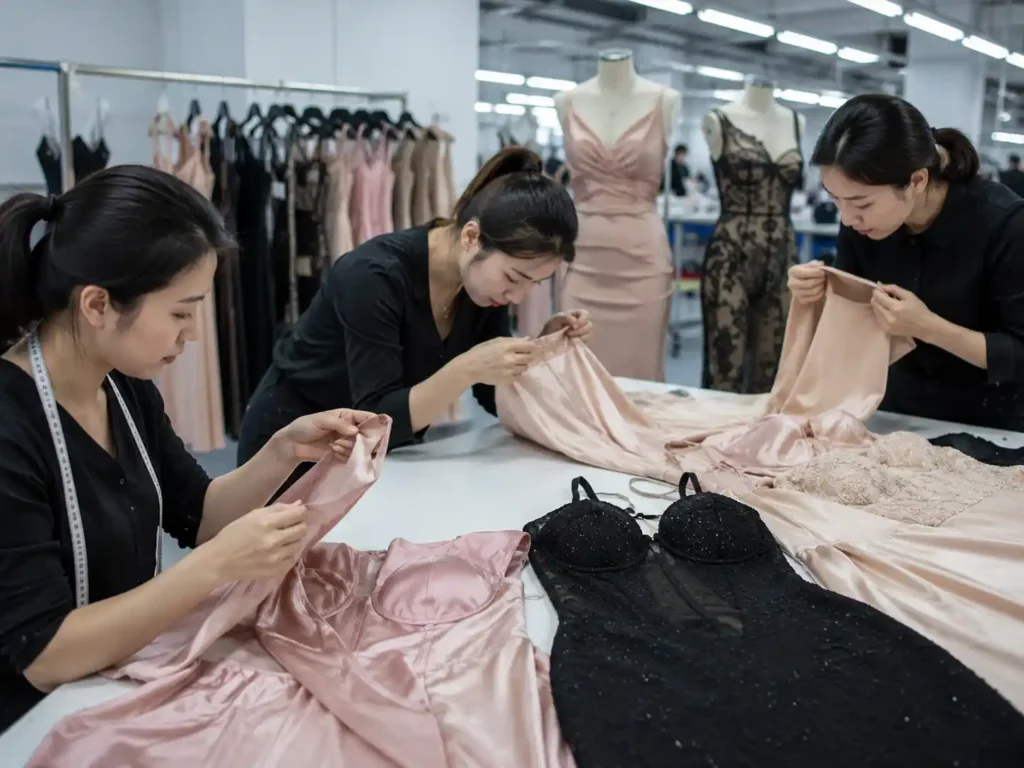
...

Dress Product Development & Sampling Capabilities

From design direction to a production-ready dress sample, developed for fit, fabric performance, construction accuracy and controlled bulk execution.

  • 30+ years of dress development experience across fashion, occasion, party and fitted silhouettes.
  • 300-400 pattern and sample specialists supporting pattern engineering, sample sewing, fit correction and technical preparation.
  • 15,000-35,000 sample pieces or development instances per month across the wider manufacturing group.
  • 16 owned factories, 20+ satellite factories and 300 sewing lines supporting the transition from approved sample to launch order, repeat order and scale-up production.
  • SMETA and SMETA 2-Pillar audited manufacturing system for brand-level cooperation and social compliance review.

Built for Established Fashion Product Teams

Duolan works best with fashion organizations that already have a clear product direction, a development calendar and a measurable route toward production. The sampling process is organized around design intent, technical decisions, approval standards and future bulk consistency rather than one-off prototype making.

Fashion Brand Teams

Established dress brands often need several styles developed within one seasonal drop, with a shared color direction, fabric story, fit standard and launch deadline. Duolan helps organize development by style complexity, sample purpose and material readiness, allowing commercial silhouettes and statement pieces to move through the same collection calendar without losing control of the details that define the brand.

Product Development Teams

Product teams need more than a sewing service. They need a partner able to interpret sketches, tech packs, reference garments, size specifications and fit comments, then convert those inputs into a clear development route. Duolan supports material review, pattern development, sample construction, revision summaries, approval checkpoints and the preparation of a production-ready basis for bulk planning.

Buying and Sourcing Teams

Buying teams and sourcing offices evaluate whether a supplier can manage files, timelines, sample versions, quality standards and multi-style production without creating hidden risk. Duolan provides a structured path from feasibility review to PP approval, supported by a multi-factory manufacturing network, dedicated development resources and documented control points before bulk production begins.

Control Development Risks Before They Reach Bulk

A dress sample can look close to a reference image and still fail on fit, comfort, repeatability or production efficiency. Duolan identifies the main risks before and during sampling, then links every risk to a defined development action rather than relying on late-stage correction.

Design Translation Risk

A reference image may show proportion and styling without revealing measurements, internal construction or fabric behavior. Duolan maps neckline depth, waist placement, strap angle, slit height, drape points, closures and support requirements before pattern work begins, creating a technical basis for the sample instead of copying appearance alone.

Fabric Mismatch Risk

The same pattern can produce very different results in satin, crepe, mesh, jersey or lace. Drape, stretch, recovery, transparency, surface friction and pressing sensitivity are reviewed against the target silhouette. Material direction is adjusted before sampling when the proposed fabric cannot support the intended fit or visual result.

Fit Interpretation Risk

Comments such as “too loose at bust,” “waist feels high” or “back opening is unstable” require technical diagnosis. Duolan separates fit, measurement, balance, support and fabric causes, then records the correct pattern action. The goal is a more accurate revision, not a cosmetic alteration that creates another problem elsewhere.

Revision Control Risk

Unstructured sample comments often create repeated errors and version confusion. Feedback is grouped into fit, measurement, fabric, construction, visual preference and production-related issues. Each sample round is recorded with confirmed points, pending decisions and the next review goal so the development path becomes clearer with every version.

Approval Clarity Risk

Visual approval alone does not confirm a style for production. Fabric, lining, trims, color, measurements, workmanship, labels and packaging may still be open. Duolan uses approval status language such as fit approved, visual approved, PP basis, needs revision and bulk ready to avoid moving an incomplete standard into production.

Sample-to-Bulk Risk

An approved sample must be translated into repeatable production information. Before bulk starts, Duolan reviews material status, workmanship points, measurement standards, production path and quality checkpoints. High-risk details may require first-piece confirmation, a pilot run or an additional PP review before full line loading.

Start From the Development Materials You Have

A dress project can begin from a complete technical package or from an earlier creative stage. Duolan reviews the available information, identifies what is missing and builds the next development step around the material already prepared by the brand team.

Tech Pack

A developed tech pack allows the team to review style drawings, construction notes, measurements, stitch details, labeling and BOM information. Duolan checks whether the file is internally consistent, whether the specified materials support the design and whether any construction points need clarification before pattern work or sample sewing begins.

Reference Images

Reference images are useful for silhouette, proportion and visual direction, but they rarely define internal structure or exact measurements. Duolan translates visible details into neckline, waist, hem, slit, drape, support, closure and lining questions, then confirms the intended result before committing to the sample route.

Fashion Sketch

A sketch may communicate the creative idea while leaving fit and construction open. The development team studies shape, style lines, body coverage, balance and key focal points, then proposes fabric behavior, construction logic and measurement priorities needed to turn the drawing into a wearable and manufacturable dress.

Original Sample

An original garment gives direct information about fit, construction, fabric, trims and finishing. Duolan can measure, photograph and analyze the reference, then separate the features to retain from the areas requiring improvement. Brand ownership, design confidentiality and agreed development boundaries are respected throughout the review.

Size Specification

A brand-supplied size specification provides the intended body and garment standards. Duolan reviews POM definitions, ease, grade rules, tolerance expectations and style-specific fit points. Any conflict between measurements, fabric stretch and target silhouette is raised before the first sample rather than after the fit session.
Core Fabric Direction​

Fabric Direction

A swatch, composition target, weight range, hand-feel reference or garment photo can establish material direction. Duolan compares drape, recovery, opacity, surface, color, finishing and bulk availability, then recommends whether the material should be sampled directly, replaced or tested with a lining and construction option.

Collection Moodboard

A moodboard can guide silhouette mix, color palette, occasion, material story and commercial positioning. Duolan uses it to understand how statement styles and commercial styles should relate, helping the sampling plan support a coherent collection rather than treating each dress as an isolated item.

Existing Sample Comments

Brands often approach Duolan after an earlier sample missed the target. Existing comments, photos and measurements help identify whether the problem comes from pattern balance, material choice, structure, workmanship or unclear specifications. A revised development plan can then focus on the real cause rather than repeating the same sample approach.

Feasibility Review Before Dress Sampling Begins

Sampling is more efficient when the major design and manufacturing questions are addressed before fabric is cut. Duolan reviews the style across design, material, fit, construction, production and timing, then recommends the most suitable development route.

Design, Fit and Material Feasibility

Design intent: Proportion, body coverage, visual focal points and styling must be clear enough to build a pattern. A deep neckline may need hidden support; an asymmetric drape may need anchor points; a low back may require a different closure and internal construction from the reference image.

Fit logic: Bust, waist, hip, shoulder, armhole, strap angle, slit position and hem balance are reviewed against the intended silhouette. A fitted stretch dress, a structured corset dress and a bias-cut satin dress require different ease, measurement and fit priorities.

Material behavior: Fabric is evaluated for drape, stretch, recovery, opacity, surface sensitivity and pressing response. When the original direction cannot produce the intended shape, Duolan proposes an alternative weight, composition, lining or construction before the sample consumes unnecessary time.

Construction and Workmanship Feasibility

Internal structure: Boning, cups, power mesh, stay tape, elastic, lining and clean-finish methods must support the dress without becoming visible or uncomfortable. Structural decisions are made according to body coverage, fabric stability and expected wear conditions.

Special details: Pleating, gathers, draping, cut-outs, lace placement, sequins, pearls, stones, printing and embroidery are reviewed for placement accuracy, weight, abrasion, wash or care requirements and repeatability. A detail that works on one hand-made sample may require a different process for 20,000 pieces.

Production method: The development team considers seam type, stitch type, edge finishing, pressing sequence, handling difficulty and critical operation order. Complex styles may need an operation test or first-piece review before the construction is accepted as a bulk standard.

Commercial and Timeline Feasibility

Project scale: Style count, color count, size range and expected quantity influence material planning, sample priority and production allocation. A 20-style seasonal program requires different coordination from one hero style with multiple colors.

Indicative timing: A standard dress sample is commonly planned within 7-12 working days after specifications and materials are confirmed. Structured, draped, heavily embellished or custom-fabric styles are normally planned within 12-20 working days, while revision samples often require 5-10 working days depending on the comments and material availability. Final timing is confirmed only after project review.

Bulk route: Target launch date, photo sample needs, PP approval, inspection, packing and logistics are planned backward from the selling window. The sampling stage is therefore connected to the commercial calendar from the beginning.

Complete Dress Product Development Capability

Product development brings creative direction, technical execution and manufacturing readiness into one controlled process. Each stage produces information needed by the next stage, reducing gaps between design, sample approval and bulk production.

Project Brief Review

The team confirms dress category, target market, sample purpose, available files, target quantity and launch timing. Missing information and high-risk decisions are listed before work begins, allowing the project plan to distinguish confirmed standards from open development choices.

Product Direction

Silhouette, proportion, occasion, price position, color direction and collection role are reviewed together. Duolan can support the development of commercial core styles, visual statement styles and coordinated dress programs without turning the process into a generic catalog selection exercise.

Material Development

Main fabric, lining, trims and special-process materials are evaluated as one system. Material recommendations account for target appearance, fit, comfort, care, cost, lead time and bulk availability rather than focusing only on a swatch that looks attractive in isolation.

Pattern Development

CAD pattern making, pattern correction, draping and measurement engineering convert the design direction into garment geometry. Style-specific priorities are set for bust balance, waist position, hip contour, shoulder or strap balance, hem fall, opening position and internal support.

Sample Construction

Sample makers assemble the garment using the intended construction logic, not only a temporary visual method. Critical seams, closures, linings, support components, drape points and embellishment areas are reviewed for both appearance and future repeatability.

Fit Review

The sample is assessed from front, side and back, with key POM measurements, balance and movement considered together. Fit comments are translated into pattern and construction actions, particularly for bodycon, corset, halter, backless, satin and mesh styles.

Revision Control

Each revision round records what changed, what remains open and what must be approved next. Version control avoids mixing old comments with new decisions and allows several stakeholders to review a dress without losing the technical history of the style.

Production Readiness

Once the sample is close to target, Duolan reviews materials, measurements, workmanship, PP requirements, labels, packaging and quality checkpoints. The style then moves toward a production basis rather than remaining an isolated development sample.

Dress Categories Requiring Deeper Development

Complex dresses are not difficult for one single reason. Fit, material behavior, internal structure and workmanship interact differently across silhouettes. Duolan organizes development around the dominant technical risk of each category.

Fitted and Bodycon

Bodycon dresses require controlled negative ease, correct stretch direction, stable recovery and balanced contour through bust, waist and hip. Fabric opacity and seam pressure must also be checked because a style can measure correctly while still appearing strained, transparent or uneven on the body. Pattern correction is connected to the chosen material rather than treated as a fixed block.

Corset and Bustier

Corset and bustier dresses depend on cup position, bust volume, waist shaping, boning placement, lining stability and back closure design. Internal components must provide support without creating visible ridges or discomfort. Sampling often includes structure testing before final fabric execution, followed by fit review focused on security, symmetry and pressure distribution.

Halter and Backless

Halter and backless dresses transfer support toward the neck, upper back, side seam or internal waist area. Strap length, angle, neckline tension, side coverage, adhesive compatibility and hidden stabilization become critical. A visually clean back requires accurate pattern balance and internal support rather than simply removing fabric from a standard bodice.

Satin and Draped

Satin reveals seam tension, press marks, puckering and surface damage more readily than many matte fabrics. Draped and bias-cut designs also respond strongly to grain direction, rest time, handling and hem balance. Duolan reviews fabric weight, cut direction, seam method, pressing and packing requirements before accepting the final development route.

Mesh and Layered

Mesh styles require control of transparency, stretch, edge stability, seam visibility and lining coverage. Layered construction may change fit and movement even when each individual material appears suitable. The sample is reviewed for coverage in motion, alignment of panels and appliques, and the way internal seams appear through the outer layer.
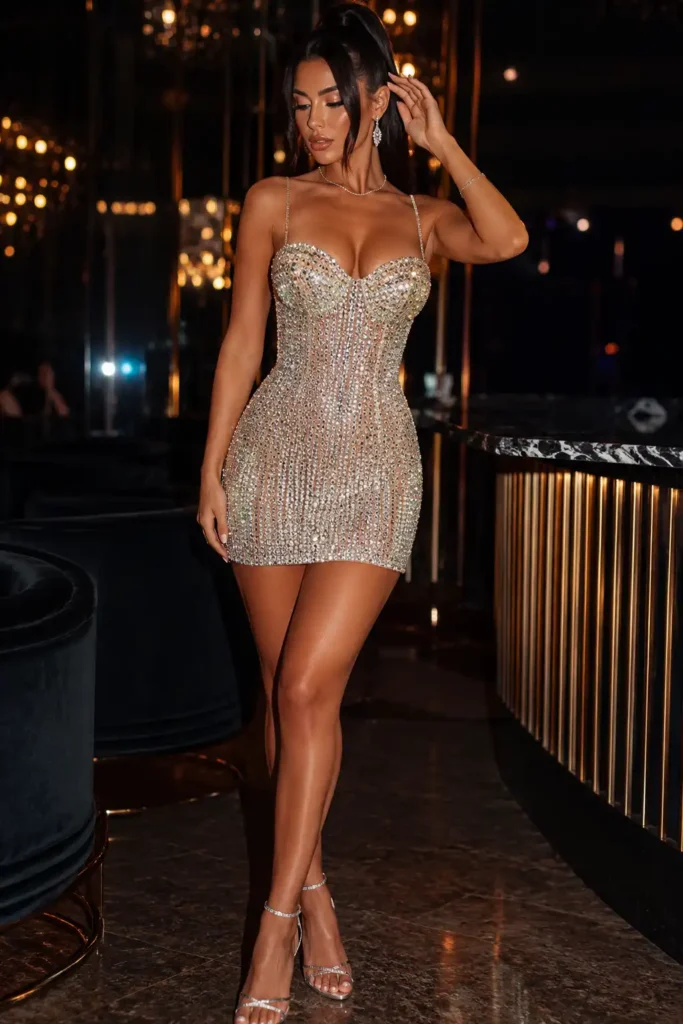
Sequin and Embellished

Sequins, pearls, stones and decorative surfaces add weight, abrasion, cutting difficulty and placement risk. Development includes motif positioning, seam clearance, attachment security, lining protection, handling and repair standards. For bulk production, decorative density and critical placement points must be converted into repeatable instructions rather than left to visual judgment on the line.

Fabric and Trim Development for Dress Performance

Material development begins with the intended garment result. Duolan evaluates main fabric, lining, functional components and decorative trims together so fit, appearance, comfort and production consistency support the same product objective.

Drape and Silhouette

Fabric weight, fluidity, resilience and surface friction determine whether a dress hangs close to the body, holds a structured line or forms a clean drape. Satin, crepe, chiffon, jersey and velvet can create completely different results from the same sketch. Swatches are reviewed against the target silhouette before a final sampling decision.

Stretch and Recovery

Stretch percentage alone does not define performance. Directional stretch, recovery speed, modulus and long-wear stability influence fit and size behavior. Fitted dresses may require testing across width and length, while structured bodices often need stable woven sections combined with controlled elastic or power mesh components.

Transparency and Lining

White, pastel, mesh, lace and lightweight fabrics are checked under realistic lighting and movement. Lining selection considers color, weight, stretch, hand feel and seam visibility. Coverage zones can be mapped differently across bodice, skirt, side panel and cut-out areas to protect the design without making the dress heavy or stiff.

Satin and Surface Care

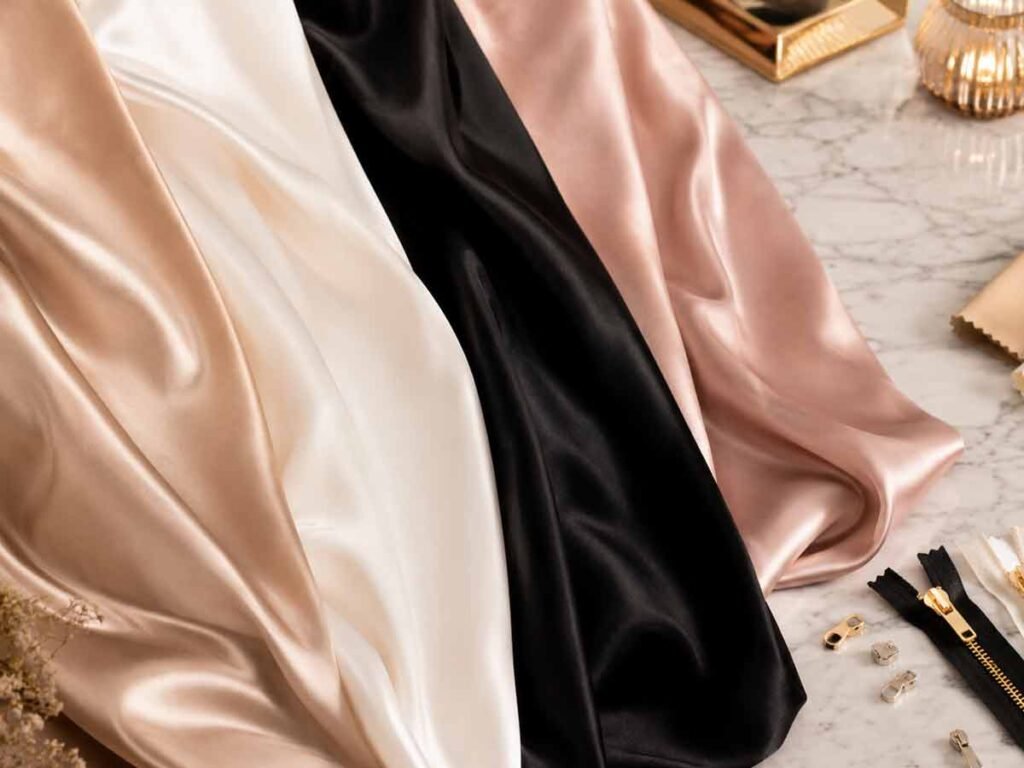
High-shine surfaces are assessed for snagging, press marks, seam puckering, shade variation and packing recovery. Sample handling and ironing methods are reviewed early because poor pressing can change the appearance even when the pattern is correct. Bulk packing may require tissue, hanging or reduced compression depending on the fabric and silhouette.

Lace and Mesh Placement

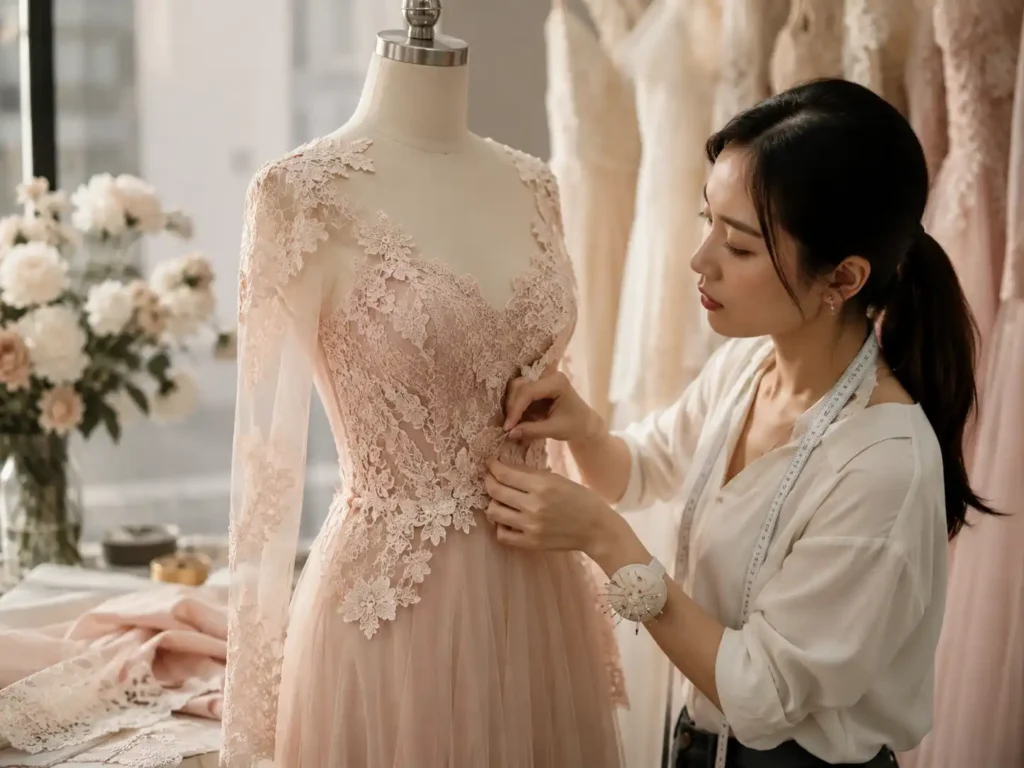
Lace motifs, mesh panels and applique lines need accurate alignment at neckline, bust, waist, side seam and hem. Placement is marked against pattern sections so the sample and bulk garments follow the same visual logic. Edge finishing and seam allowances are selected according to the stability and openness of the material.
4Trim Reuse Across Styles (1)

Functional Trims

Zippers, hook-and-eye closures, boning, cups, elastic, non-slip tape, eyelets, rings, adjusters and internal stays keep a dress secure and wearable. Specification covers size, finish, color, strength, placement and supplier availability. Hidden components are developed to perform without disrupting the clean external look.

Decorative Trims

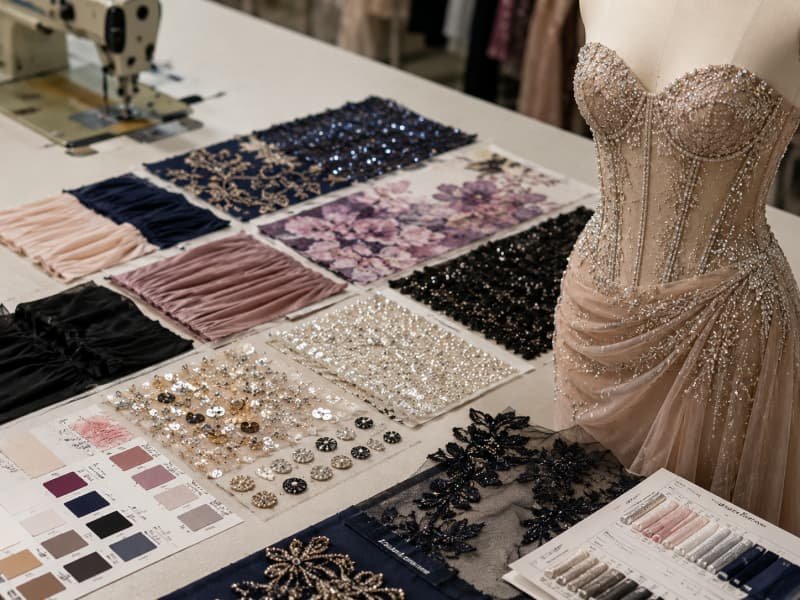
Pearls, stones, bows, ribbons, metal details, fringe and sequin applications are chosen according to weight, abrasion, attachment method and target price position. Duolan has long-term experience with pearl, bead, stone and combined decorative processes for fashion dresses, allowing visual impact to be evaluated alongside sewing and bulk execution.

Material Locking

Approved materials are recorded by composition, weight, color, finish, supplier reference, lining, trim specification and approved alternative status. Material locking reduces the risk of a sample looking correct while bulk production uses a substitute that changes fit, hand feel, appearance or construction performance.

Pattern Making, Draping and Fit Engineering

A dress pattern is the engineering structure behind the silhouette. Duolan combines CAD pattern development, draping, measurement control and fit correction so the approved appearance can be repeated across sizes and production runs.

Pattern Architecture for Fashion Dresses

Silhouette control: Pattern development defines how the dress sits through bust, waist, hip, shoulder and hem. Style lines, darts, panels, gathers and internal structure are organized to create the intended shape rather than relying on excessive alteration after sewing.

Material-linked pattern decisions: A stretch jersey bodycon dress needs controlled negative ease and recovery allowance.  A bias satin style needs grain control, hanging balance and careful seam placement. Duolan adjusts pattern logic according to fabric behavior instead of forcing one standard block across different materials.

Detail mapping: Neckline depth, cup position, waist seam, slit height, strap width, back opening and zipper placement are converted into measurable pattern points. Those points become the reference for sample review, fit comments, grading and later quality checks.

CAD and technical preparation: The wider group is equipped with CAD pattern systems, marker systems, plotters and dedicated sample equipment, with approximately 650-1,200 pattern, sample and development machines. Equipment supports speed and repeatability, while approval still depends on experienced pattern judgment and physical fit review.

Draping for Shape and Visual Balance

When draping is useful: Cowl necks, asymmetric dresses, twisted waists, gathered bodices, bias cuts and sculpted drapes are often clearer when developed on a form. Draping reveals how gravity, grain and body position affect the shape before final pattern conversion.

From form to pattern: Draped sections are marked, measured and translated into stable pattern pieces. Anchor points, seam positions, fullness distribution and internal support are documented so the effect can be reproduced beyond one manually arranged sample.

Visual review: Draped garments are checked from front, side and back. The team studies where folds start, where volume settles, whether the waist remains balanced and whether movement causes the design to collapse or expose areas not intended by the design.

Bulk consideration: A visually attractive drape must also be sewable at scale. Construction sequence, notches, placement marks, pressing and operator handling are considered before approval. Complex drapes may require a pilot operation or guided template for consistent bulk execution.

Fit Review and Grading Control

Fit priority: The sample purpose determines what must be reviewed first. A first sample may focus on silhouette and proportion; a fit sample focuses on balance, comfort and measurement; a PP sample confirms the approved standard for production.

Measurement review: POMs commonly include bust, underbust, waist, hip, shoulder, armhole, neckline, strap length, bodice length, skirt length, slit height and hem sweep. Relevant measurements vary by design, and critical points are identified before the fit session.

Revision action: Comments are translated into pattern movement, seam adjustment, dart correction, contour change, strap angle, lining modification or support revision. A visual note alone is not considered complete until the technical action is understood.

Size range: Grade nests are reviewed according to the brand-supplied size standard. Depending on style risk, approval may use a three-size set or a broader size set. Fitted, structured and asymmetric styles receive extra attention at bust, waist, hip, strap position, length and opening placement to protect consistency across the range.

Construction Development for Complex Dress Details

Construction development turns visual details into material specifications, sewing operations and quality checkpoints. Each detail is reviewed for appearance, body performance, operator execution and repeatability before it becomes part of the approved production standard.

Boning and Support

Boning type, length, position, channel construction and end protection influence bust support, waist shape and comfort. Placement is coordinated with seams, cups, lining and closures. The sample is checked for symmetry, pressure points, visible ridges and movement before the support system is approved.

Cups and Internal Layers

Cup shape, size, position and attachment must align with the outer pattern and intended coverage. Power mesh, lining, fusible layers and stay tape can be combined to stabilize the bodice. Internal layers are selected according to fabric weight and transparency so support remains clean from the outside.

Clean Lining Finish

Lining controls opacity, comfort, seam protection and internal appearance. Bagging, binding, understitching, hand tacking and turn-through methods are selected according to neckline, armhole, zipper, slit and hem construction. Sample review checks whether the lining pulls, rolls out or changes the drape of the outer fabric.

Closures and Zippers

Invisible zippers, open-end zippers, hooks, eyes, buttons, ties and lace-up systems are specified by length, color, strength and placement. The closure must support the dressing method and body tension without creating bulk. Top stops, seam reinforcement and clean internal finishing are checked during sampling.

Cut-Out Reinforcement

Cut-outs can distort, gape or grow during wear if edges lack stability. Pattern shape, facing, binding, elastic, fusible support or stay tape are selected according to fabric behavior. Fit review checks security through movement, while bulk instructions define placement and edge control.

Straps and Ties

Strap width, length, angle, adjustability and attachment determine both fit and comfort. Thin straps may need reinforcement or appropriate hardware; halter ties must manage neck pressure; back ties must remain stable under tension. Placement is measured rather than judged only by appearance.

Pleating and Draping

Pleat width, direction, depth, anchor points and pressing method are documented for repeatability. Gathers and drapes require balance between fullness, seam position and fabric weight. Sample construction verifies whether the effect survives movement, pressing and packing before the method is approved.

Embellishment Placement

Sequin, pearl, bead and stone placement is coordinated with seams, darts, closures and body contact areas. Cutting clearance, attachment security, abrasion protection and repair standards are defined. Duolan’s experience with decorative dress processes helps connect visual density with comfort and production execution.

Choose the Right Sample for Each Decision

Different samples answer different business and technical questions. The most efficient route uses only the sample stages needed for the style, while keeping approval clear enough for the next decision.

Sample TypeMain DecisionCore Review PointsIndicative Planning RangeTypical Next Step
First / Proto SampleIs the design direction working?Silhouette, proportion, material effect, construction concept7-12 working days for standard stylesFit review or revision
Fit SampleDoes the garment fit and balance correctly?Bust, waist, hip, shoulder, straps, length, movement7-12 working days after fit basis is confirmedPattern correction
Revision SampleWere comments translated correctly?Revised measurements, pattern action, fabric or detail changes5-10 working daysApproval or another focused revision
Photo-ready SampleIs the garment ready for campaign use?Visual finish, drape, color, surface, styling detailsPlanned around campaign dateShooting and visual approval
Salesman SampleCan commercial teams present and review the style?Appearance, hand feel, wearability, range consistencyPlanned by style groupOrder review or PP preparation
Size Set SampleDoes grading hold across the intended size range?Grade balance, critical POMs, length, openings, strapsDepends on 3-size or full-size scopeSize approval
PP SampleIs the production standard fully confirmed?Final material, measurements, workmanship, labels, packagingPlanned after material lockingBulk production

A Controlled Dress Sampling Process

Sampling is managed as a sequence of decisions. Every stage prepares the files, materials and review information needed for the next stage, helping the project move forward without unnecessary sample rounds.

Information Review

Design files, reference images, size specifications, material direction, expected quantity and launch timing are checked together. The team identifies missing information, possible conflicts and the intended purpose of the first sample before confirming the sample plan.

Development Proposal

Duolan outlines the recommended route, included work, material requirements, key risks, estimated timing and approval points. The proposal explains what can begin immediately and what requires a decision from the brand team before progress continues.

Fabric Preparation

Available swatches, lining and trims are reviewed or sourced. Color, weight, stretch, transparency, hand feel and availability are considered. Special processes may require a trial panel before the full sample is assembled.

Pattern Preparation

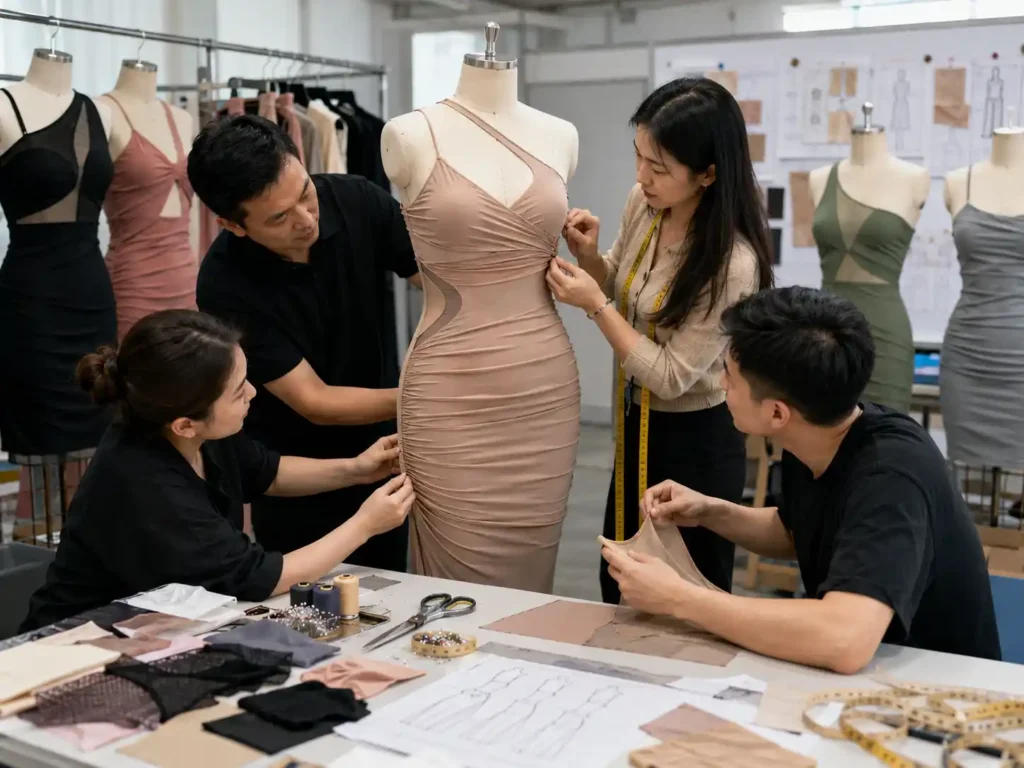
Pattern makers develop or correct the block, map critical details and prepare the construction basis. Draping is added where the design depends on grain, folds or asymmetric shaping. Measurements and fit priorities are linked to the sample purpose.

Sample Sewing

Dedicated sample makers assemble the garment using the planned construction method. Complex support, lining, drape, closure and embellishment details are handled as development operations rather than temporary visual shortcuts.

Internal Review

Before presentation, the sample is checked for measurements, silhouette, symmetry, construction, fabric behavior and visible workmanship. Obvious internal issues are corrected or disclosed so the external review focuses on meaningful product decisions.

Sample Delivery

Front, side, back and detail photographs can accompany the sample, together with key measurements and review notes. Sensitive satin, sequin, corset and pleated styles are packed according to surface and structure needs before shipping.

Feedback and Next Step

Comments are categorized and converted into a revision summary. The style then moves to a revision sample, fit approval, photo-ready version, size set, PP sample or bulk-readiness review according to the project objective.

Sampling Timelines Built Around Clear Inputs

Reliable timing comes from confirmed development inputs, material readiness and disciplined approvals. Duolan does not treat all dresses as equal; a simple commercial silhouette and a structured embellished style need different schedules and review depth.

Standard Development Route

A standard woven or knit dress with available fabric, clear measurements and conventional construction can often be planned at approximately 7-12 working days for the first sample. Revision work commonly takes about 5-10 working days when comments are consolidated and the material remains unchanged. A fast schedule still requires clear fit priorities, confirmed size basis and timely decisions from the brand team.

Complex Development Route

Corset, bustier, bias satin, draped, mesh-layered, sequin, pearl, stone or custom-print styles are generally planned at approximately 12-20 working days for the first physical sample after materials and structure are confirmed. Additional time may be required for custom coloration, embroidery, printing, embellishment panels or structural testing. Early risk review prevents rushed sewing from creating extra revisions later.

Collection Development Route

For a 10-30 style collection, styles are grouped by complexity, material family, sample purpose and launch priority. Hero styles, photo samples and high-risk structures begin first, while commercial carry-over shapes follow shared fabric and fit decisions. The sample calendar is connected to campaign, PP, production and inspection dates so several styles can move in parallel without losing version control.

Structured Updates, Review and Revision Control

A well-managed sample project should become more visible and more organized as development progresses. Duolan uses staged communication, review information and revision records to keep design, technical and production decisions aligned.

Staged Development Updates

Sampling begins with a start confirmation covering the agreed direction, current material status and open decisions. Complex styles receive a critical-point update when fabric behavior, internal support, drape or workmanship may affect the outcome. A pre-completion update confirms expected photos, review points, shipping method and any remaining decision needed before dispatch.

Sample Review Package

The sample can be supported by front, side and back photographs, detail close-ups, key measurements and a concise review note. The note highlights what is already close to target, where fit or construction needs attention and which areas are ready for approval. The review becomes a product decision document rather than a garment sent without context.

Revision Summary and Versions

Comments are organized into fit, measurement, fabric, construction, visual and production categories. V1, V2 and V3 records show the change requested, the technical action taken, the confirmed result and the next pending point. When one comment affects another area, the relationship is explained before the next sample begins, reducing repeated correction.

What Makes a Dress Sample Production-Ready

A production-ready dress sample is not simply the most attractive prototype. It is a product version with enough confirmed material, fit, construction and commercial information to support PP approval or controlled bulk preparation.

Material Approval

Main fabric, lining, trims, color, weight, stretch, transparency, hand feel and approved alternatives are identified. Any remaining lab dip, print, embroidery or embellishment approval is clearly marked before the style receives a production-ready status.

Fit Approval

The approved sample size, POMs, bust-waist-hip balance, length, straps, openings, slit and movement are confirmed against the brand’s size standard. Fit approval is separated from visual approval when the styling looks correct but measurements still require adjustment.

Construction Approval

Seams, lining, zipper, cups, boning, ties, pleats, gathers, cut-outs, lace and decorative applications have a defined construction method. Critical workmanship points are documented so the production line does not need to reinterpret the sample visually.

Visual Approval

Color, shine, drape, proportion, surface appearance, trim finish and overall styling are accepted for the intended commercial use. Photo-ready approval may occur before full production approval, so the status is recorded accurately rather than merged into one general “approved” label.

Brand and Packaging Approval

Main label, size label, care label, hangtag, barcode, folding, polybag and carton requirements are reviewed according to the project scope. Packaging choices must protect sensitive satin, pleating, corset shaping and embellished surfaces during handling and transport.

Next-Stage Status

Every sample receives a clear next status: needs revision, fit approved, visual approved, photo-ready, PP basis or bulk ready. A clear status prevents internal teams from moving forward on different assumptions and supports a disciplined production start.

From Approved Sample to Controlled Bulk Production

Duolan connects the sample room with production planning, material control and quality execution. The approved style is translated into a production route before fabric is committed to full line loading.
Bulk Production Planning​

Bulk Readiness Review

The team confirms whether the current sample is fit approved, visually approved, a PP basis or still pending refinement. Fabric, lining, trims, color, measurements, workmanship and packaging are reviewed together. Open points are closed or assigned a clear action before production starts.

Material Locking

Approved materials are matched to supplier references, color standards, batch requirements and alternates. For multi-style collections, shared materials are coordinated across styles to protect color consistency, lead time and purchasing efficiency without compromising the intended result.

Production Path Planning

Orders are broken down by style, color, size, quantity, fabric, complexity and critical operation. Standard, complex, fast-response and high-risk process styles can be assigned to different lines or factories within the group according to capability and timing.

PP and First-Piece Control

A PP sample, first piece or pilot run may be used to confirm the production method before full output. The check focuses on critical measurements, fit-sensitive points, lining, closures, support, surface handling, embellishment placement and packing method.

Inline Quality Control

Production inspections monitor measurements, color, cut-part matching, seam quality, shape, detail placement and critical workmanship. Problems are addressed while production is active rather than waiting for final inspection, reducing the risk of repeating the same defect across the order.

Final and Packing Review

Final checks cover appearance, measurements, quantity, labels, hangtags, barcodes, folding, polybags, carton marks and agreed packing requirements. Sensitive dress structures receive handling and packing attention based on the approved sample and material behavior.

Indicative Bulk Timing

After PP approval and material arrival, standard dress programs are commonly planned within approximately 30-45 working days. Highly structured, heavily embellished, custom-printed or multi-process collections are commonly planned within approximately 45-60 working days. 

Reorder Standard Retention

Approved patterns, measurement files, BOM information, workmanship notes, material references and quality records are retained for repeat orders. Reorder preparation begins from the confirmed standard rather than rebuilding the style from memory, supporting consistency as volume increases.

The Development System Behind Duolan

Development capacity matters only when the resources support accurate samples, organized approvals and repeatable production. Duolan combines long-term dress experience, dedicated development teams, technical equipment and a multi-factory manufacturing network.

30+ Years Experience

The leadership team has worked in fast-fashion womenswear research, fabric development and dress product development since the 1990s. The accumulated experience focuses on marketable silhouettes, material performance, decorative workmanship and the transition from product idea to commercial production.

750-1,200 Developers

Across the wider group, approximately 750-1,200 professionals support product planning, trend research, design, fabric and trim development, pattern making, sample making, process engineering, costing, technical files and project coordination.

300-400 Sample Specialists

Approximately 300-400 pattern and sample specialists across the group support CAD pattern work, draping, sample sewing, fit correction, measurement review and sample-room coordination. The team structure helps several seasonal programs progress in parallel.

650-1,200 Development Machines

The manufacturing system includes approximately 650-1,200 pattern, sample and development machines, including CAD pattern systems, marker systems, plotters, sample sewing machines, overlock machines, coverstitch machines, cutting tools and sample pressing stations.

15,000-35,000 Samples

Monthly group capacity is approximately 15,000-35,000 sample pieces or development instances, supporting an estimated 3,000-8,000 style development and sampling flows. Capacity is organized according to project complexity rather than measured only by the number of garments completed.

16 Owned Factories

Sixteen owned fashion production factories give Duolan direct control over core styles, technical execution, production planning and quality coordination. Important developments and high-risk styles can be connected more closely to the manufacturing team responsible for bulk execution.

20+ Satellite Factories

More than 20 long-term satellite factories add capacity flexibility for repeat orders, scale-up orders, process allocation and seasonal peaks. Styles are matched to production capability, material, workmanship and timing rather than distributed without technical planning.

300 Sewing Lines

The group operates approximately 300 sewing lines, including 50+ flexible and fast-response lines, with stable monthly capacity around 6.5 million garments and peak capacity up to 10 million garments. The network supports collection-level development, launch orders, repeat orders and volume growth after sample approval.

Anonymous Multi-Style Dress Development Case

A representative US occasionwear program shows how a structured development process can connect design review, sampling, revision control and a multi-style launch order without exposing confidential brand information or unreleased designs.

Project Scope and Initial Risks

The project covered 18 dress styles across satin, stretch crepe, mesh, sequin and structured bodice categories. The planned launch order totaled 46,800 pieces, with style quantities ranging from 1,800 to 3,600 pieces across multiple colors and a six-size range. The initial brief included sketches, reference images, partial tech packs and an existing size specification. Major risks included inconsistent bust support across corset styles, visible lining transitions under mesh, satin seam puckering, sequin placement near side seams and a shared launch date for styles with very different construction complexity.

Development Review and Sample Strategy

Duolan grouped the 18 styles into four development routes: standard commercial silhouettes, fitted stretch styles, structured bodices and embellished statement dresses. Each route received a different review depth and timeline. Satin and mesh materials were compared with lining options; corset styles received internal support mapping; sequin placement was adjusted away from high-friction and seam areas.The first sample plan prioritized six photo-critical styles and four high-risk structures. Standard styles moved directly from first sample to fit review, while corset and mesh styles used focused revision rounds. 

Revision and Production Readiness

Across the program, most styles required one focused revision, while the structured and embellished group required two controlled rounds. Key changes included lowering cup position by 8-12 mm on selected bodices, adjusting strap angles, increasing mesh coverage at side panels, changing satin seam handling and standardizing sequin clearance at zipper and side-seam areas.

Before PP approval, the team locked main fabric, lining, functional trims, color references, measurement files, workmanship notes and packaging requirements. A three-size set was reviewed for the highest-risk fitted styles. First-piece confirmation was added for corset and heavy-sequin groups before full production loading.

Launch Order Execution

The 46,800-piece order was divided by style complexity and process requirements across suitable lines within the manufacturing network. Standard and fitted styles followed a 35-42 working day production plan after PP approval and material arrival. Structured and embellished styles followed a 45-55 working day plan with additional first-piece and inline checkpoints.
The final production basis retained approved patterns, BOM references, key measurements, lining and trim standards, workmanship photographs and packaging instructions. Brand names, labels, complete patterns and unreleased design images remain confidential. The project demonstrates how a 10-30 style dress program can move from mixed development inputs to a controlled launch order through clear sample stages and production readiness decisions.

Dress Development Frequently Asked Questions

A project can begin from a tech pack, sketch, reference image, original garment, size specification, fabric swatch, collection moodboard or an existing sample with comments. Duolan reviews the available material and identifies the missing decisions needed before pattern development or sample sewing begins.
Yes. Reference images can establish silhouette and visual direction, but measurements, fabric, internal support and construction usually require clarification. Duolan maps visible details into technical questions and prepares a development basis before sampling rather than copying appearance without understanding the structure.
The scope may include project review, fabric and trim coordination, CAD pattern development, draping, sample sewing, internal inspection, photographs, key measurements, sample review notes and revision planning. Exact inclusions are confirmed according to sample purpose and style complexity.
The sample type depends on the decision required. First samples test direction, fit samples test balance and measurements, photo-ready samples support campaign work, size sets review grading and PP samples confirm the production standard. Duolan recommends the route after reviewing the project stage.
Standard styles are commonly planned at approximately 7-12 working days after specifications and materials are confirmed. Structured, draped, embellished or custom-material styles are commonly planned at approximately 12-20 working days. Revision samples often require 5-10 working days, depending on comments and material readiness.
Comments are classified into fit, measurement, fabric, construction, visual and production issues. Pattern makers and sample teams identify the technical cause, record the action and confirm the goal of the next sample. Revision summaries help prevent mixed instructions and repeated errors.
A production-ready sample has clear material, fit, measurement, construction, color, label, packaging and next-stage status. Not every point must be physically represented in one garment, but open items must be documented and assigned before the style moves into PP or bulk preparation.
Duolan conducts a bulk-readiness review covering sample status, materials, measurements, workmanship, packaging and production path. Depending on risk, the style may require PP approval, first-piece confirmation, a pilot run, inline inspection and specific quality checkpoints before full production.
Yes. NDA arrangements can be reviewed before confidential tech packs, original garments, unreleased references or collection plans are shared. Brand names, labels, complete patterns and unreleased design images are not used publicly without written approval.
Duolan’s manufacturing system has completed SMETA and SMETA 2-Pillar audits. Projects can also be planned around relevant quality, testing, social compliance, labeling, packaging and client-specific requirements. Applicable documents and standards are confirmed according to the target market and brand program.

Submit Your Dress Development Project

Send the material already available, even when the development package is not yet complete. A useful review normally includes the dress category, number of styles, reference images or tech packs, target fabric direction, size standard, expected quantity, sample purpose and intended launch date. Duolan will review the project against fit, material, construction, sample stage and production-readiness requirements, then identify the information needed for the next step.

For a multi-style program, include the priority order of photo samples, fit samples and launch styles. For a complex dress, highlight the areas causing concern, such as bust support, low-back stability, mesh coverage, satin drape, sequin placement, lining or grading. Confidential materials can be reviewed under an NDA before full files are released.

Recommended project details:

  • Company or brand name
  • Target market and selling channel
  • Dress category and number of styles
  • Tech pack, sketch, reference image or original sample
  • Target fabric, color and trim direction
  • Size range and measurement standard
  • Expected quantity by style or collection
  • Required sample type
  • Campaign or launch date
  • Key fit, construction or quality concerns
  • NDA requirement
  • File upload

Start Your Apparel Development Project

OEM/ODM Manufacturing Support for Fashion Brands

Share your collection details, estimated quantities, target market, development timeline, and technical requirements. The production team will review your request and provide a tailored manufacturing solution based on your product category, fabric selection, construction needs, and delivery schedule.

Fashion Manufacturing Support with Scalable Production Capacity

From sample development to bulk production, Duolan supports fashion brands with confidential OEM/ODM manufacturing, stable quality management, flexible production planning, and coordinated multi-factory execution for seasonal and capsule collections.

Need Direct Assistance?

Seraphinite AcceleratorOptimized by Seraphinite Accelerator
Turns on site high speed to be attractive for people and search engines.