Skip to content

Embellished Occasion Dress Manufacturing Solutions
Development and production support for occasionwear brands balancing decorative impact, fit, comfort, workmanship and repeatable bulk execution.
- 10–30 styles can form a typical branded occasionwear program, requiring decoration, fit and material standards to stay aligned across multiple silhouettes.
- 20,000–80,000 pieces may move through one brand order across styles, colors and sizes, making approved workmanship standards critical before bulk release.
- Duolan’s wider manufacturing system includes 300 sewing lines and 50+ flexible production lines, supporting multi-style scheduling and craft-sensitive production paths.
We develop embellished occasion dresses from reference images, tech packs, existing samples or collection briefs, combining material review, pattern development, decoration trials, sample revision, PP confirmation, controlled production, inspection and protective packing.
Built for Established Occasionwear and Fashion Brand Programs
Established Occasionwear Brands
Product Development Teams
Event-Driven Fashion Programs
Holiday, graduation, cocktail, wedding guest, party-season and social-event collections operate around fixed selling windows. A missed material approval or slow embellishment trial can affect sample photography, PP confirmation and final delivery.
Duolan approaches event-driven projects as coordinated development programs, linking style complexity, material readiness, special workmanship, sample revisions and production scheduling rather than treating every dress as an isolated order.
Where Embellished Occasion Dresses Commonly Lose Production Control
Decoration Weight Shift
Control points include:
- Decoration weight by zone
- Base-fabric support
- Shoulder and bust load
- Waist and hem balance
- Lining compatibility
Attachment Failure Risk
Control points include:
- Fixing method
- Stitch or adhesive security
- High-friction zones
- Edge reinforcement
- Repair standard
Base Fabric Distortion
Control points include:
- Stretch direction
- Needle sensitivity
- Local reinforcement
- Heat compatibility
- Drape after decoration
Skin Contact Problems
Control points include:
- Neckline abrasion
- Underarm contact
- Waist friction
- Lining coverage
- Backing softness
Placement and Grading Drift
Control points include:
- Center alignment
- Seam references
- Bust and waist position
- Size grading logic
- Symmetry tolerance
Sample-to-Bulk Variation
A single hand-finished sample may look excellent because one technician spends extra time correcting every detail. Bulk production needs a repeatable method. Decoration material, color, size, pattern, density, fixing method, backing, approved placement, acceptable variation and repair expectations should all be translated into production instructions. PP confirmation and first-piece review help identify areas where sample workmanship cannot be copied consistently before full production is released.
Control points include:
- Approved visual reference
- Decoration specification
- Placement map
- Workmanship standard
- First-piece confirmation
Embellished Occasion Dress Directions for Commercial Collections
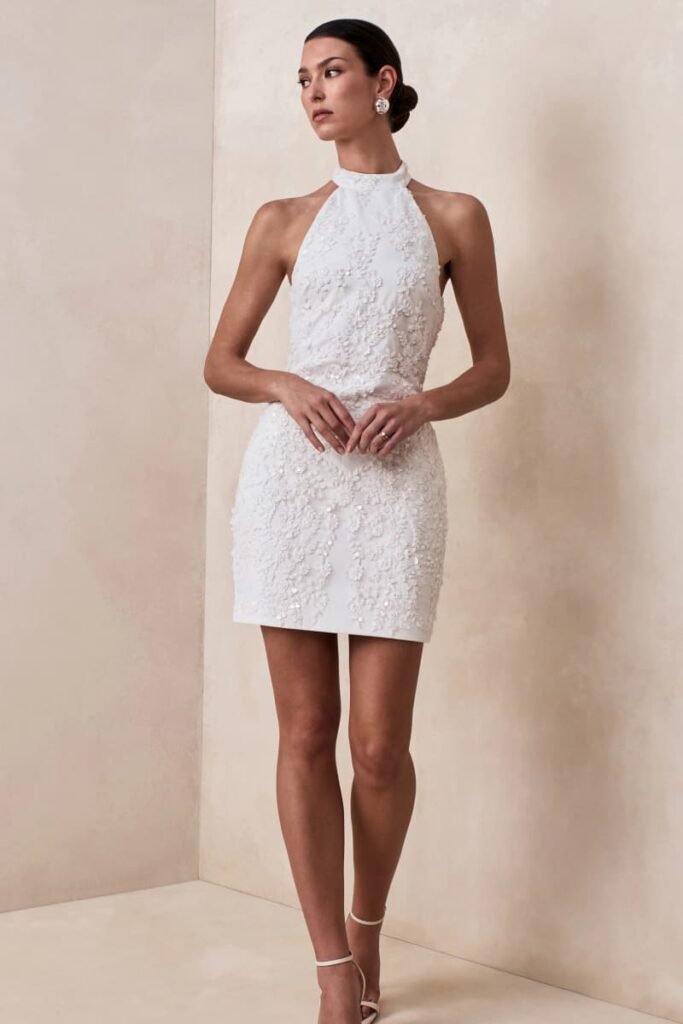
Embellished Mini Dresses

Beaded Midi Dresses
Midi dresses provide more surface area for beading but also create greater risk of weight concentration and inconsistent handwork. Placement can be organized around bodice panels, waist shaping, asymmetric motifs, border details or graduated density. We review how the bead layout follows the pattern, how weight affects skirt fall and whether seam positions interrupt the motif.
Lining and internal finishing are especially important when beads or threads sit close to skin. Bulk standards should also define bead color, size, sequence and repair expectations.

Crystal Corset Dresses

Embroidered Mesh Dresses

Appliqué Occasion Dresses
Floral, lace or dimensional appliqué can create a refined occasionwear surface without requiring full-body embellishment. The development challenge lies in placement, edge finishing, symmetry and interaction with curves. Large motifs may cross darts, princess seams or waist seams, while three-dimensional elements can become crushed during packing.
We determine which motifs should be cut individually, which areas require hand positioning and where appliqué should stop before construction points.

Embellished Halter Dresses

Backless Event Dresses
Backless occasion dresses depend on internal stability because the conventional back bodice provides little support. Decorative details can strengthen the visual impact, but heavy elements near open-back edges may cause rolling, sagging or uneven tension. Pattern balance, strap positioning, side-body security, lining and hidden reinforcement need to be resolved before decoration is fixed.
Crystals, beading or appliqué can then be used as controlled focal points instead of creating extra strain on already sensitive construction zones.

Statement Maxi Dresses
Compare Embellishment Techniques by Result and Production Risk
Different techniques create different visual effects, but production decisions should also consider fabric compatibility, weight, sewing sequence, comfort, cost and repeatability. The strongest technique is the one that delivers the intended occasionwear value without creating unnecessary production instability.
| Technique | Best Visual Role | Suitable Base Directions | Main Production Risks | Key Control Focus |
|---|---|---|---|---|
| Sequins | High-shine surfaces, holiday impact, graphic motifs, all-over sparkle | Mesh, embroidered base, woven grounds, selected stretch bases | Missing sequins, sharp edges, direction variation, seam bulk, packing abrasion | Sequin direction, seam clearing, edge finish, lining, missing-piece check |
| Beading & Pearls | Premium focal areas, bodices, waist details, borders, hand-finished accents | Stable woven bases, reinforced mesh, lace, structured bodices | Weight, loose threads, inconsistent density, rubbing, long labor time | Bead specification, thread security, weight distribution, backing, repair method |
| Crystals & Rhinestones | Light-catching placement, corset lines, necklines, logos, scattered sparkle | Satin with controlled fixing, mesh, stretch bases after testing, structured panels | Heat reaction, adhesive failure, stretch distortion, surface scratching | Fixing test, spacing, stretch test, surface protection, attachment inspection |
| Embroidery | Motifs, textured panels, branded surface language, floral or geometric direction | Mesh, tulle, organza, woven bases, selected satin | Puckering, stiffness, needle marking, density imbalance, motif distortion | Stitch density, stabilizer, thread tension, pattern placement, backing |
| Appliqué & 3D Detail | Floral dimension, couture-inspired focal areas, layered texture | Mesh, lace, satin, tulle, structured bases | Edge lifting, asymmetry, crushing, seam interference, inconsistent hand placement | Motif map, edge fixation, symmetry, packing space, placement reference |
| Mixed Embellishment | Hero occasion pieces combining several visual techniques | Selected bases after trial development | Sequence conflict, excessive weight, uneven appearance, difficult repair, long production path | Process order, craft trial, weight map, approved sample, layered QC checkpoints |
Engineering Embellishment for Wearable and Repeatable Occasion Dresses
Sequin Construction From Fabric Review to Finished Garment
Sequin work begins with the base rather than the sparkle. The first review covers sequin density, direction, attachment method, base-fabric stability, stretch, overall weight and skin-contact risk. All-over sequin fabrics can behave very differently from scattered embroidered sequins or individually attached pieces. A dense surface may reduce stretch, increase cutting loss and change the way the dress hangs on the body.
Cutting requires controlled direction and panel planning. A sequin pattern that looks uniform on a fabric roll may become visibly inconsistent if front and back panels are cut in different orientations. Seam allowances around side seams, darts, invisible zippers and waist joins may require partial sequin removal before stitching. Leaving thick sequins inside a seam can create bulk, needle breakage and uneven edges, while removing too much can expose visible gaps after construction.
Edge areas need separate treatment. Necklines, armholes, slit openings and mini hems sit close to skin and move repeatedly during wear. Sharp or partially cut sequins can scratch the wearer, so edge cleaning, binding, lining or controlled replacement may be necessary. Zipper areas also need enough clearance for smooth opening without losing the visual surface.
During bulk, inspection looks beyond loose threads. Direction, missing pieces, damaged sequins, color variation, edge safety, lining coverage and finished weight all need review against the approved reference. Protective folding and packing materials are considered before shipment because sequined surfaces can scratch, hook or press against neighboring garments.
Beading, Pearls and Crystals With Controlled Weight Distribution
Beading is most effective when decoration creates a defined visual purpose. A beaded neckline, concentrated corset panel, waist motif or border can increase perceived product value without covering every available surface. The first development decision is therefore placement and density rather than simply selecting a bead.
Material specification matters. Pearl diameter, crystal size, metallic bead finish, color, shape and weight influence both appearance and production. Small changes can alter the overall shine level, hand feel and final garment weight across several thousand pieces. Approved materials should therefore be recorded before bulk sourcing, especially when multiple bead types appear in one motif.
Attachment method depends on location and substrate. Hand-sewn beads on a stable corset panel behave differently from scattered crystals on stretch mesh. High-stress zones around shoulder straps, side seams, bust edges and waistlines require stronger fixing and more careful backing. Heavy beading can also distort soft fabric if weight is concentrated away from supported seams.
Comfort cannot be evaluated from front photography alone. Bead thread, stone backs and internal knots may rub skin, while raised crystals can catch on adjacent fabric. Lining, backing or selective coverage can protect wearing areas without flattening the desired exterior effect.
Bulk inspection compares density, pattern alignment and attachment security with the approved standard. Repair instructions should define how missing or loose components are corrected without leaving visible holes, glue marks or color mismatch. Packing protection is then planned around raised surfaces so decorative areas arrive in sellable condition.
Embroidery and Appliqué Built Around the Pattern
Embroidery should follow garment architecture. Motif scale, stitch density, thread type and backing all affect the base fabric, while the garment pattern determines where embroidery can sit without creating seam conflicts or visual distortion. Development therefore starts with both the artwork and the pattern relationship.Mesh and tulle often need stabilizing during embroidery, but excessive backing can make an otherwise lightweight dress stiff. Satin and smooth woven fabrics can show puckering or needle marks if stitch density and tension are not controlled. Curved bodice areas can also change how a flat embroidered motif appears once wrapped around the body. Sample panels help identify these interactions before full garment construction.
Appliqué creates another placement challenge. Floral motifs may need to bridge neckline edges, corset panels or transparent areas while keeping symmetry and coverage intentional. Large motifs positioned directly over darts, princess seams or zippers can complicate sewing and create thickness. For three-dimensional flowers or layered pieces, hand positioning may remain necessary even when the base embroidery process is mechanized.During size grading, the motif should maintain the same visual relationship to bust, waist and neckline rather than staying fixed to one coordinate from the base size.
Bulk control checks puckering, motif clarity, missing stitches, loose edges, symmetry, backing cleanliness and placement. Production planning also considers whether embellishment occurs before panel assembly, after partial sewing or during final finishing, since sequence has a direct effect on quality and efficiency.

Match Base Fabrics With Embellishment Before Sampling Starts
Base fabric determines how decoration sits, moves and survives production. Duolan reviews drape, stretch, recovery, support, opacity, surface sensitivity and weight before recommending an embellishment route. Material choices are considered together with silhouette, wearing scenario, target finish and future bulk stability rather than from swatches alone.
| Base Fabric | Strong Embellishment Directions | Main Advantages | Main Risks to Control | Development Focus |
|---|---|---|---|---|
| Mesh / Tulle | Embroidery, crystals, appliqué, scattered sequins | Lightweight visual effect, transparency, layered depth | Stretch distortion, tearing, density stiffness, exposure | Backing, stretch direction, lining coverage, motif density |
| Satin | Controlled crystals, appliqué, selective embroidery | Premium shine, smooth occasionwear finish | Needle marks, puckering, pulling, surface scratches | Trial attachment, seam planning, pressing, packing protection |
| Lace | Beading, pearls, sequins, appliqué reinforcement | Existing motif provides natural placement structure | Motif mismatch, excess weight, uneven transparency | Lace placement, lining color, motif symmetry, seam alignment |
| Velvet | Crystals, selected beadwork, decorative embroidery | Rich depth, strong evening appearance | Pile crushing, directional shade, attachment marks | Nap direction, fixing method, pressing protection |
| Crepe / Stable Woven | Embroidery, appliqué, beadwork, crystals | Better structural support, clean pattern control | Excess stiffness, localized pulling, seam thickness | Weight distribution, stabilizing, internal finish |
| Stretch Base | Rhinestones, scattered sequins, controlled embroidery | Fitted silhouette and movement | Decoration restricts stretch, adhesive failure, motif distortion | Stretch test, recovery test, placement while worn |
| Organza | Embroidery, light appliqué, crystals | Sculptural transparency, layered effect | Needle damage, seam visibility, stiffness | Density control, clean backing, edge finishing |
| Chiffon | Light embroidery, selective crystals, soft appliqué | Fluid movement and occasion softness | Pulling, sagging, distortion, visible backing | Low-weight embellishment, support zones, lining strategy |
Placement and Grading Decide Whether Decoration Looks Controlled
Place Decorative Motifs From Construction Reference Points
Placement should be measured from stable construction references whenever possible. Center front, center back, waist seam, princess seam, neckline edge, side seam and key pattern notches provide stronger production anchors than visual estimation from a photograph. A corset dress illustrates the issue clearly. Crystals scattered around the bust may look balanced on a first sample, yet slight movement during bulk can make the left and right cup appear unequal. A measured map can define distances from center front, cup edge and neckline so the arrangement stays visually controlled. Similar logic applies to embroidered waist panels, appliqué necklines, beaded hems and asymmetrical shoulder details. Seam clearance also needs attention. Decoration placed directly over an invisible zipper, dart or high-tension seam can affect sewing quality and wear. Certain components may need removal before stitching and controlled replacement after assembly. Other motifs may need to stop before a seam and restart on the neighboring panel. Symmetry does not always mean identical mirrored coordinates. Pattern shape and body contour may require small adjustments so the finished visual result appears balanced when worn. Fit reviews should therefore examine the dress on a body form or model, not only on a flat table. Approval records can include a placement map, marked sample photographs and key measurements. Clear reference points reduce interpretation differences between sample room, special-process workshop, production line and QC team.
Control Weight Before It Changes Fit and Silhouette
Decorative weight behaves like an additional material layer. A densely beaded bodice may require stronger support. A crystal shoulder can pull an asymmetric neckline downward. A heavily embellished hem can change the movement of a soft skirt. Weight must therefore be considered before final pattern and support details are locked. The review starts by identifying concentration zones.
Bust, shoulder, neckline, waist, hip and hem react differently because each area carries load in a different way. Weight around a strapless neckline may cause rolling or downward movement. Heavy beading on the outer side of a one-shoulder dress can create imbalance. Dense stones along a slit edge may affect how the opening falls. Internal structure can compensate where necessary. Boning, interlining, stabilized seams, stronger straps or carefully selected lining can help distribute load without making the garment unnecessarily rigid.
The goal is not to over-engineer every dress, but to support the areas where decoration changes garment behavior. Sample fitting should take place after the main decorative weight is represented. Evaluating fit on an undecorated shell can produce false confidence because the garment may behave differently after crystals, beads or appliqué are added. Bulk approval should keep decoration weight and density close to the approved sample. Substituting heavier stones or changing bead density can alter fit even when the pattern remains unchanged.
Grade the Visual Language Across the Full Size Range
Size grading changes more than measurements. It changes the surface area around the bust, waist, hip, neckline and skirt. A decorative motif should therefore be reviewed for visual grading as well as pattern grading. Some layouts can stay almost identical across several sizes. A small centered waist motif may simply follow a stable seam reference. Other layouts require controlled expansion or repositioning. A crystal arrangement covering a corset cup may need additional spacing as cup width increases. An embroidered neckline border may need a longer repeat in larger sizes. A body-following appliqué motif may need to shift so the design still frames the same anatomical area. The decision depends on whether the decoration functions as a fixed emblem, continuous border, scattered pattern, engineered placement or full-panel design. Different systems require different grading rules. Production documentation can identify fixed points, variable spacing and allowable visual adjustment. Size-set review provides an additional checkpoint for styles where decoration strongly follows body proportion. The objective is not mathematical enlargement. The objective is consistent visual intent. An XS and XL should belong to the same product family and deliver the same brand impression, even when motif spacing or quantity needs controlled adjustment.

Internal Structure Protects Embellishment, Fit and Wearing Confidence

Cups and Bust Support
Beaded, crystal or embroidered bodices often direct attention to the bust, making cup position and neckline balance highly visible. Cup size, shape, spacing and attachment need to work with the outer fabric and decoration map. Dense embellishment should not flatten the cup, distort seam lines or pull neckline edges outward.
Sample fitting checks bust balance, center-front position, upper edge security and interaction between decoration and internal support before PP standards are established.

Boning and Bodice Stability
Corset and bustier occasion dresses may rely on boning to maintain vertical shape, stabilize the waist and carry part of the decorative load. Boning channels need enough separation from bead, crystal or appliqué attachment points so construction remains clean.
Excessively rigid support can also fight soft outer fabrics. Development focuses on suitable support level, channel position, lining, seam allowances and comfort so the structure reinforces the silhouette without appearing heavy.

Lining and Skin Protection
Lining controls more than transparency. It separates skin from bead threads, crystal backs, rough sequin edges and embroidery backing while also influencing color depth, drape and movement. Coverage may vary between bodice, skirt, sleeves and illusion areas. We review lining color, stretch, hand feel, length and attachment points according to outer material and decorative technique. A clean interior is especially important for dresses expected to be worn for extended social events.

Straps, Open Backs and Slits
Craft Trials Reduce Risk Before a Full Sample Is Made
Start With the Highest-Risk Technical Question
Every embellished occasion dress has a different unknown. One project may depend on whether rhinestones remain secure on stretch mesh. Another may require confirmation that embroidery does not pucker satin. A beaded corset may need weight and support review. A dimensional appliqué dress may depend on whether motifs survive packing without crushing.
Development therefore begins by identifying the highest-risk technical question rather than automatically cutting a complete dress. A craft swatch, embroidery panel, crystal fixing trial, bead layout sample or appliqué placement test can often answer the main uncertainty faster.
The trial should use a material close to the intended production base whenever possible. Decoration behavior on substitute fabric can produce misleading results because stretch, surface finish, thickness and heat response differ.
Results are reviewed for visual effect, hand feel, attachment, backing, stretch, drape and possible sewing conflict. If several techniques appear together, sequence can also be tested: embroidery first, sewing second, hand beading after assembly, or another order depending on construction.
Early trials do not replace garment sampling. They make garment sampling more focused.
Build the First Sample Around Fit and Visual Priorities
Once the technical route is clear enough, pattern development begins around silhouette, measurements, fabric behavior and structural requirements. Occasion dresses often combine several sensitive factors at once: fitted bust, defined waist, high slit, open back, sheer panel, heavy embellishment or asymmetric support.
The first complete sample should therefore have a clear review purpose. Some samples prioritize fit. Others validate the visual effect, photography appearance or decoration placement. Defining the purpose helps both teams judge the result correctly instead of trying to finalize every detail in one round.
During fitting, we look at bust, waist, hip, neckline, strap position, skirt fall, opening security and movement. Embellishment is reviewed in relation to the body. A motif may need to move several millimeters even when the flat placement looked correct. Weight may reveal a need for stronger support. Lining may need more coverage around transparent or abrasive zones.
Comments should be translated into specific actions: pattern correction, measurement update, material adjustment, decoration repositioning, backing change or construction revision. Updated decisions are recorded before the next sample so previous problems are not accidentally repeated.
Move From Revision to PP With Fewer Open Questions
Revision is not simply another sample. Each round should close specific questions and reduce uncertainty before bulk. For an embellished occasion dress, unresolved issues may involve decoration color, placement, backing, lining, fit, zipper interaction, weight, edge comfort, packaging or acceptable visual variation.
A revised sample can incorporate fit corrections while also confirming selected materials and workmanship. When the product is close to production-ready, PP development should reflect the intended bulk standard as closely as possible. The approved fabric, lining, trims, decoration specification and main construction method need to be aligned before production release.
PP review checks measurements, silhouette, workmanship, decorative completeness, placement, comfort, finishing, labels and packing direction. Any remaining exception should be clearly identified rather than silently passed into production.
Duolan’s broader development system supports first proto, fit sample, revised sample, salesman or photo-related samples and pre-production samples according to project need. The exact route depends on style complexity, material readiness and the purpose of each round rather than a fixed number of samples.

Lock the Approved Sample Into a Bulk Production Standard
Approved Visual Reference
Material and Trim Lock
Embellishment Placement Standard
Workmanship Method
Bulk instructions should describe the relevant sequence and finishing method: panel embroidery before cutting, sequin clearing around seams, hand beading after assembly, crystal fixing after pressing or another confirmed route.
Critical areas including zippers, necklines, armholes, slits and edges need special notes when decoration affects sewing or comfort.
Measurement and Fit Basis
The approved size specification, tolerance direction and key measurement points need to match the pattern used for production.
For embellished fitted dresses, bust, waist, hip, strap, neckline, bodice length, slit and hem can be particularly sensitive.
Decoration should not become an excuse for uncontrolled fit variation.
QC and Packing Reference
Inspection criteria should cover decoration completeness, placement, attachment, appearance, fit, workmanship and finishing. Packing instructions also form part of the production standard because crystals, sequins and dimensional appliqué can be scratched, crushed or hooked during transport. Tissue, protective layers, folding direction or hanging methods can be selected according to product risk.
Production Engineering Connects Decoration With the Sewing Line
Process Route Planning
Material Preparation
Cutting and Panel Control
Special Process Coordination
First-Piece Confirmation
Finishing and Packing Preparation
Pressing, cleaning and final handling require extra care around crystals, sequins, beads and three-dimensional details. Heat, pressure and abrasion can damage decorative surfaces even after sewing is complete. Finishing instructions therefore consider protected pressing, thread and residue cleaning, repair checks and folding or hanging direction before final inspection and packing.
Embellished Occasion Dress QC Goes Beyond Loose Threads

Decoration Completeness

Attachment Security

Placement Consistency
Bulk units should maintain the approved relationship between motif, seam and body position. Inspection can compare center alignment, neckline distance, waist location, panel symmetry and key engineered motifs.
For graded layouts, QC follows the approved size logic rather than expecting one identical coordinate across every size.

Density and Visual Balance

Surface and Skin Safety

Fabric Distortion
Embroidery, bead weight and heat-fixed stones can pull or stiffen the base material. QC checks puckering, sagging, uneven stretching, distorted seams and surface damage after decoration and sewing are completed. Satin requires special attention to pulls and pressure marks, while mesh and stretch bases need review for tension imbalance around decorated areas.

Measurement and Fit
Decoration cannot replace measurement control. Bust, waist, hip, bodice length, strap, neckline, slit and hem still need to meet the production specification within the agreed tolerance direction. Fitted and structured occasion styles may also receive visual fitting review because weight and support can influence how correct measurements behave on the body.

Packing Protection
Final QC includes the condition in which the dress will travel. Raised crystals, sequin surfaces, beads and dimensional flowers can damage one another when compressed. Folding direction, tissue protection, garment separation, bag size and carton pressure are reviewed according to product sensitivity. Labels, barcodes, size identification and carton marks are checked at the same stage.
Cost and Lead Time Follow the Actual Decoration Complexity
Decoration Density
Number of Techniques
Handwork Content
Material and Construction
Sampling and Approval
Timeline and Launch Window
Material sourcing, embroidery, beading, crystal work and dimensional appliqué can sit on the critical path of an occasionwear launch. Production timing should consider decoration preparation, sample approvals, bulk craft capacity, sewing, finishing, inspection and packing together.
Scale a Collection Without Losing the Approved Dress Standard
Build Multi-Style Programs Around Shared Technical Logic
An embellished occasionwear collection may include crystal corsets, beaded midis, embroidered mesh dresses and sequin minis within one visual story. The styles do not need identical decoration, but they should share an understandable collection language.
Development can organize the program around core silhouettes, color direction, material families, decoration hierarchy and commercial role. Hero styles may carry denser handwork for campaign imagery, while commercial styles can use controlled crystal placement, simpler embroidery or localized appliqué. Supporting styles can carry the same visual language through a lower-complexity construction route.Shared materials and trims can also improve coordination when they genuinely suit several styles. One crystal finish, approved lining family or repeated embroidery thread palette may reduce unnecessary sourcing variation. The objective is not standardization for its own sake. The objective is fewer uncontrolled variables across a collection.
Duolan’s wider manufacturing system includes 300 sewing lines and 50+ flexible production lines, giving multi-style programs more options for production allocation according to complexity and timing. Broader monthly capacity figures describe the complete manufacturing network rather than embellished-dress capacity alone, so individual programs are scheduled according to actual workmanship requirements.
Preserve Standards for Reorders and Seasonal Extensions
Repeat production should begin from approved records rather than from memory. Pattern, measurements, fabric direction, lining, trims, decoration specification, workmanship notes, PP references and packing instructions form the starting basis for a reorder.
Decorative components require particular attention because crystal finish, bead color, sequin shade and embroidery thread can vary between sourcing batches. Reorder preparation therefore confirms whether the original material remains available and whether any change requires approval. When a component is discontinued, an alternative should be compared against the original visual and technical standard before production.
Production routes can also be reviewed. A style that performed well during the first launch may return in additional colors or higher quantities. Higher volume does not justify simplifying an approved workmanship standard without agreement. Instead, line allocation, material preparation and craft capacity should be adjusted around the confirmed garment.
Long-term records support seasonal extensions as well. A successful embellished bodice may become the basis for a different length, sleeve, neckline or color direction. Retaining technical knowledge reduces unnecessary redevelopment while allowing the brand to evolve the product deliberately.
Two Embellished Occasionwear Programs From Development to Bulk
US Occasionwear Brand — 18 Styles, 42,600 Pieces
A US occasionwear brand developed an 18-style event collection totaling 42,600 pieces, covering fitted minis, corset silhouettes, midi dresses and selected long occasion styles. The collection used five major decorative directions: sequin surfaces, localized crystal work, pearl and bead accents, embroidered mesh and dimensional appliqué.
The central challenge was not producing individual samples. The difficulty came from keeping visual standards aligned across several style-color combinations while each decorative technique reacted differently with the base fabric. Crystal placement on stretch areas needed additional testing. Embroidered mesh required density adjustment to prevent stiffness. Beaded bodices needed weight review around straps and upper bust. Selected sequin styles required cleaner neckline and zipper construction to reduce sharp edges and seam bulk.
Development began with material and craft reviews before full sample completion on the most sensitive styles. Fit work concentrated on bust, waist, hip, neckline stability and skirt balance. Decoration placement was refined after fitting where motifs needed to follow the body more accurately.
Before bulk, approved samples, material directions, key measurements and workmanship points were converted into production references. Craft-sensitive styles received first-piece review before broader release. QC focused on decoration completeness, placement, attachment, lining protection, measurement and final packing.
The result was a collection with different decorative identities but one consistent production framework, allowing complex hero styles and more commercial occasion dresses to move through the same launch program without treating every SKU as an isolated manufacturing problem.

UK Eventwear Brand — 12 Styles, 28,800 Pieces
A UK eventwear program included 12 embellished styles and 28,800 pieces across cocktail, wedding guest and party-oriented silhouettes. The collection combined crystal trim, embroidery, appliqué and selected sequin work, with several styles using more than one technique.
One structured midi placed crystals around an asymmetric neckline, creating a weight and placement issue near the shoulder. A mesh occasion dress used embroidery and appliqué across transparent zones, requiring lining coverage and motif-position review. Another fitted mini combined sequin material with a shaped bodice, making the zipper, neckline and armhole edges sensitive to bulk and abrasion.
The development route separated visual approval from technical confirmation. Small decoration trials were used where fixing, backing or density remained uncertain. Complete samples then focused on fit, proportion, support and overall appearance. Revised samples incorporated placement adjustments and lining changes before PP standards were finalized.
Production engineering defined which work happened on panels before sewing and which decorative processes happened after partial assembly. The process sequence reduced damage to finished embellishment and kept key construction points accessible. First-piece checks compared bulk workmanship with PP references before full release.
Packing was also adjusted by style. Raised appliqué and crystal surfaces received additional protection, while sequin garments were folded to reduce surface-to-surface abrasion.
The project illustrates an important manufacturing principle: mixed embellishment becomes manageable when every technique is assigned a clear stage, approval reference and QC checkpoint before volume increases.

Embellished Occasion Dress Frequently Asked Questions

Send Your Embellished Occasion Dress Project for Review
Share the information already available for your collection, whether it is a tech pack, reference image, sample photo, decoration artwork or partial development brief. Duolan will review the product from the perspective of silhouette, base fabric, embellishment feasibility, fit, support, sample path and future production requirements.
Clear project information allows a more useful first response. A mature evaluation should explain which details are ready to develop, which techniques may require a craft trial, which fit or material points need confirmation and which decisions could affect cost, timeline or bulk stability.
Useful project information includes:
- Brand / Company Name
- Website or Brand Reference
- Product Category
- Reference Images or Tech Pack
- Target Fabric Direction
- Embellishment Technique
- Number of Styles
- Expected Quantity
- Colorways
- Size Range
- Target Launch Date
- Label / Packaging Requirements
- Quality or Inspection Requirements
- Additional Development Notes
Send what is currently available. Our team can identify the next information required and recommend a suitable route for craft testing, sample development or bulk evaluation.