Skip to content

Flared Dress Manufacturing
Dress-focused development and production for fashion brands requiring controlled flare, reliable fit, accurate grading, and repeatable bulk quality.
- Typical brand programs cover 10-30 styles and 20,000-80,000 pieces per order, so flare standards must remain consistent across multiple styles, colors, and sizes.
- Development reviews six flare-critical checkpoints: waist placement, flare start, panel balance, skirt sweep, side-seam direction, and hem level.
- Sampling moves through three decision stages: first silhouette review, fit/revision, and PP or production-ready approval before bulk release.
Flared Silhouettes Need Different Development Logic
Flared dresses share an expanding skirt line, yet the pattern, fabric behavior, fit priority, and commercial use can differ sharply. Clear silhouette classification helps the development team choose the right waist structure, panel distribution, skirt volume, and approval standard before sampling begins.
| Silhouette | Shape Direction | Key Development Focus | Common Fashion Use |
|---|---|---|---|
| Fit-and-Flare | Fitted bodice, defined waist, controlled skirt expansion | Bodice fit, waist transition, sweep, zipper balance | Party, cocktail, occasion |
| A-Line | Gradual flare from waist or upper hip | Side-seam angle, panel balance, hem level | Day, resort, wedding guest |
| Skater | Shorter skirt with lively radial volume | Waist stability, coverage, lining, hem control | Graduation, homecoming, party |
| Soft Flared Midi / Maxi | Fluid skirt movement with softer vertical fall | Fabric drape, grain, panel length, hem fall | Occasion, resort, evening |
| Structured Flare | More defined volume with shape retention | Material support, seam placement, pressing, bulk consistency | Statement, party, premium occasion |
Flared Dress Directions We Develop for Fashion Programs
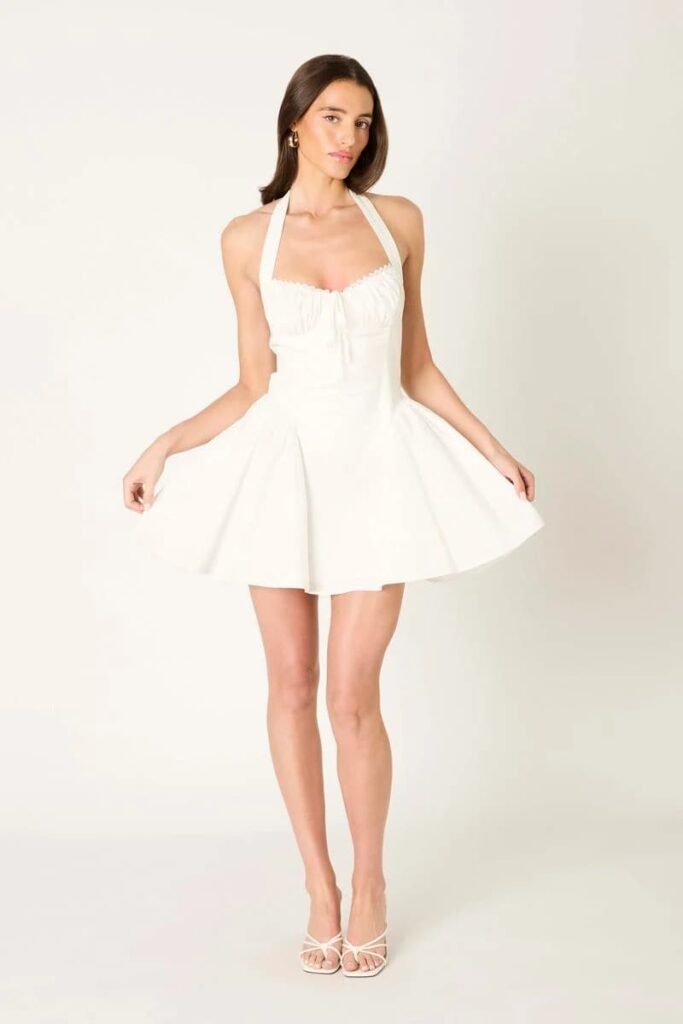
Fit-and-Flare Mini
A fitted upper body and controlled skirt expansion make the waist the visual anchor. Development starts by defining how closely the bodice should follow the bust and waist, where the flare begins, and how much volume belongs in the front, side, and back. Stretch woven, satin, crepe, compact knit, or other suitable materials can create very different results even when the outline looks similar on a sketch. The zipper, waist seam, lining, and side-seam direction also need to stay flat so the skirt does not kick forward or pull backward in bulk.

A-Line Midi

Skater Dress

Soft Flared Maxi

Structured Flare

Occasion Fit-and-Flare
Six Control Points Behind a Stable Flared Silhouette
Waist Placement
Flare Start Point
Panel Distribution
Skirt Sweep
Hem Balance
Size Grading
Fabric Behavior Determines How the Flare Actually Falls

Satin and Satin-Back Crepe

Chiffon and Georgette

Crepe Wovens

Jersey and Ponte

Structured Knits and Wovens

Mesh and Layered Effects
Pattern Engineering Builds the Flare Before Sewing Begins
Pattern Sets the Flare Geometry
- Flare start: Waist, upper hip, or lower release points need a clear visual purpose. A few centimeters of vertical shift can change the apparent torso and leg proportion.
- Panel balance: Front, side, and back panels should carry volume in a controlled relationship so the skirt does not project forward, collapse at the side, or pull toward the back.
- Grain direction: Panel orientation affects fall, twist, and movement, especially in softer fabrics and longer lengths.
- Skirt sweep: Sweep should match the intended movement, fabric weight, length, and price position rather than being maximized without control.
- Hem shape: Curved and multi-panel hems need a clean pattern path so finishing does not create waves or irregular drop.
Balance the Bodice and Skirt
- Bodice length: The waist seam must meet the body at the intended position rather than forcing the skirt to start too high or low.
- Waist seam shape: Curvature and seam allowance handling need to stay smooth around the body.
- Side-seam continuity: Upper and lower side seams should align visually and structurally.
- Closure balance: Zippers, hooks, or other closures should close without creating local tension.
- Lining relationship: Inner construction needs enough room to support movement without changing the outer silhouette.
Lock the Pattern for Bulk
Sample approval only becomes useful when every accepted correction returns to the production pattern. Duolan records approved fit comments, visual changes, construction decisions, and material-related adjustments before the style is released for grading and bulk preparation.
Pattern locking should cover more than outline shape. Seam allowances, notches, panel names, grain lines, zipper positions, lining pieces, pocket positions where applicable, hem allowance, and critical measurement references all need to match the approved sample basis. Revision versions should stay traceable so an old pattern is not accidentally used after a fit or silhouette correction.Before bulk release, the pattern connects with several production documents and checkpoints:
- Size specification: Critical measurements define what can be checked objectively during production.
- Grading rule: The base pattern becomes a controlled size range rather than a series of independent enlargements.
- BOM and trim basis: Zipper, lining, elastic, labels, and other components need to match the pattern and construction method.
- PP sample: Final pre-production approval provides a common visual and technical reference.
- QC tolerance: Measurement and appearance checks need a defined standard rather than subjective comparison alone.
Pattern discipline is what allows an approved flare to survive the move from one sample to thousands of garments.


Waist Fit and Hem Balance Define the Finished Silhouette
Flared dresses are highly sensitive to proportion. A correct skirt can still look wrong when the waist sits in the wrong position or the hem loses balance. Fit review therefore connects body position, skirt fall, movement, and visible symmetry rather than checking circumference measurements alone.
Waist Fit Controls Proportion
The waist is the transition point where fitted shape becomes skirt volume. For fit-and-flare and many A-line styles, even a visually minor waist shift can alter the entire proportion of the garment. The bodice may appear shortened, the skirt may look excessively full, or the body can lose the intended hourglass line.
Duolan reviews waist fit together with bust balance, torso length, side-seam direction, zipper behavior, and fabric stretch. A woven dress needs enough ease for closure and movement without losing waist definition. A stretch dress needs recovery so the waist does not grow after fitting. A structured bodice may need inner support to keep the top stable while the skirt moves freely.
Fit comments are translated into pattern or specification actions rather than temporary sewing corrections. Common review points include:
- Waist height: Compare front, side, and back placement against the intended silhouette.
- Waist circumference: Check whether the fitted section closes cleanly without pulling the skirt upward.
- Bust-to-waist balance: Excess or insufficient shaping can move the waist seam away from its intended position.
- Side-seam direction: Rotating seams often indicate balance problems above the skirt.
- Movement: Sitting, walking, and turning help reveal tension that a static front view can hide.
A stable waist gives the flare a clear visual origin and improves consistency across repeated colors and production lots.
Hem Balance Shows Pattern Accuracy
The hem line is one of the fastest ways to see whether pattern, fabric, cutting, sewing, lining, and pressing are working together. A clean front view is not enough. Flared garments should be reviewed from the front, both sides, and back because uneven drop often appears first near side seams or center back.
Several causes can create an uneven hem. Softer materials may relax differently by grain direction. A twisted side seam can pull one section upward. A narrow lining can restrict the shell and shorten selected areas. Zipper tension can raise the back waist. Panel lengths can shift when cutting or sewing control is weak. Final pressing can also stretch or flatten sections unevenly.
Duolan treats hem correction as a cause-finding exercise:
- Pattern check: Confirm panel lengths and waist balance before trimming the hem.
- Fabric check: Review drape, stretch, weight, and any settling or growth behavior.
- Construction check: Confirm side seams, zipper, lining, and panel joins are not pulling the skirt.
- Movement check: Observe the skirt after walking and turning, not only while standing still.
- Final finish: Hem method and pressing should preserve the approved fall rather than force an artificial line.
A balanced hem is not a cosmetic last step. It is evidence that the full garment structure is working correctly.
Grade the Flared Shape Across the Full Size Range
A base-size sample proves only one body relationship. Commercial production needs the same design language to remain recognizable across the brand-defined size range. Grading for flared dresses therefore controls proportion, placement, and skirt behavior together with measurements.
Grade Proportion, Not Measurements
Grading should preserve the visual logic of the original style rather than simply adding measurement increments at every seam. Flared dresses involve several linked relationships: neckline to bust, bust to waist, waist to hip, waist to hem, and bodice width to skirt volume. If one relationship grows faster than another, the style can change character across sizes.
For fit-and-flare styles, the team watches the waist position and bodice shaping closely because the fitted upper body establishes where the skirt should release. For A-line styles, the side-seam angle and flare distribution need to remain natural as circumference increases. For midi and maxi lengths, vertical proportion matters because a higher or lower waist can visually change the skirt length even when the measured hem length is correct.Grading review should connect:
- Brand size chart: Use the label’s own fit direction and measurement base.
- Critical POMs: Bust, waist, hip, body length, skirt length, and hem-related measurements should be clearly defined.
- Flare position: Release points should remain visually consistent across sizes.
- Skirt sweep: Volume should scale without becoming flat in smaller sizes or excessive in larger sizes.
- Fabric behavior: Stretch, thickness, drape, and recovery can influence the effective fit after grading.
The goal is a family of sizes that looks designed together, not independently enlarged.
Review Brand-Defined Size Ranges
Programs may run XS-XL, numeric sizing, extended sizing, or market-specific charts. Duolan works from the brand’s approved measurement system rather than forcing every program into one generic size block. The development basis should clearly identify base size, grading rule, target market, fabric behavior, fit intention, and any historical fit comments before full-size production begins.
A useful grading review combines measurement control with silhouette review. Measurement alone cannot show whether a waist appears too high, a side seam has rotated, or skirt volume looks disproportionate in a larger size. Visual checks should therefore compare key sizes against the approved design intention while technical checks confirm measurements and tolerance.Important continuity points include:
- Waist placement: Keep the visual break between bodice and skirt in the intended location.
- Bodice proportion: Maintain bust shaping, neckline position, and torso balance as sizes change.
- Skirt length: Preserve mini, midi, or maxi proportion according to the brand’s fit policy.
- Flare amount: Keep enough volume for movement without allowing the skirt to overwhelm the body.
- Lining and closure: Inner components and zipper lengths should follow the graded structure rather than being treated as one-size details.
Once approved, grading information becomes part of the PP sample, specification, production, QC, and reorder record.

Workmanship Must Preserve the Designed Flare in Production
Good pattern geometry can still be damaged by poor sewing, seam handling, lining, or pressing. Flared dress workmanship needs to protect shape through every operation, especially around the waist join, long panel seams, zipper areas, lining, and curved or wide hems.
Waist Seam and Closure Control
The waist seam carries both fit and visual transition. A bulky, stretched, or uneven join can push the skirt outward, create rippling, or make the flare start at different heights around the body. Sewing control therefore begins with accurate panel matching and a stable seam shape. Zipper construction deserves equal attention. A zipper inserted with excessive tension can shorten the center back and lift the rear hem. A zipper area with too much seam bulk can create a visible ridge at the waist. Satin and other smooth surfaces may show puckering more clearly, while thicker materials can create local stiffness. Production checks should focus on:
- Seam alignment: Bodice and skirt notches need accurate matching so flare distribution stays centered.
- Waist seam shape: The join should lie flat without stretching or twisting.
- Zipper flatness: Closure should operate smoothly and sit cleanly when the garment is worn.
- Seam allowance handling: Bulk should be controlled according to material thickness and construction.
- Pressing method: Heat and pressure need to support the silhouette without glazing, marking, or flattening sensitive fabric.
The waist area should look clean from the outside while maintaining enough internal stability for repeated wear.
Panel Seams and Grain Control
- Panel orientation: Grain line and fabric direction should match the approved pattern.
- Left-right symmetry: Mirrored sections need equivalent shaping and length.
- Seam feeding: Operators should avoid stretching or easing sections without a defined requirement.
- Side-seam hang: Finished seams should fall in the intended vertical direction on the body.
- Surface continuity: Prints, shine direction, nap, lace motifs, or layered effects need alignment where the design requires it.
Hem, Lining and Pressing Control
- Hem consistency: Check width, stitch quality, edge smoothness, and full-circumference level.
- Lining clearance: Confirm inner layers remain hidden and do not restrict skirt movement.
- Seam opening: Long seams should be pressed according to fabric behavior without visible shine or marks.
- Waist shape: Pressing should support a clean transition rather than flattening needed volume.
- Final hang: Garments should be reviewed after finishing for side-seam direction, skirt fall, and hem balance.

Sampling Turns the Intended Flare Into a Production Standard
First Sample: Validate Direction
- Bodice proportion: Does the upper body match the intended fitted, relaxed, or structured direction?
- Waist placement: Does the flare begin at the correct visual point?
- Panel distribution: Is skirt volume balanced front, side, and back?
- Fabric behavior: Does drape or structure support the intended outline?
- Side seams and hem: Does the garment hang cleanly before detailed refinement?
- Movement: Does the skirt open and recover naturally during walking and turning?
Fit and Revision: Correct the Cause
- approved and locked;
- approved with minor refinement;
- still open for fit review;
- dependent on material confirmation;
- dependent on production method.
PP Approval: Lock the Bulk Basis
Pre-production approval connects development with manufacturing. A PP sample should reflect the material direction, production pattern, grading basis, trims, construction, labels, and workmanship expected in bulk. A photo-ready sample can look excellent for a campaign while still using temporary materials or development shortcuts, so visual approval and production approval should remain distinct when required. Before bulk release, Duolan reviews whether the style is ready in several areas:
- Fit and measurement: Approved dimensions and tolerance need a clear reference.
- Fabric and color: Bulk material, color, handfeel, weight, stretch, and visible surface should align with the approved basis.
- Pattern and grading: Final pattern revision and full-size rule should be controlled.
- Construction: Waist seam, zipper, lining, panel seams, hem, and finishing methods should be confirmed.
- BOM and trims: Components should match the intended production specification.
- QC checkpoints: Flare-specific controls should be known before sewing volume increases.
PP approval gives product, pattern, production, and QC teams one common standard before the order moves into full manufacturing.

Production-Ready Approval Locks the Standard Before Bulk
Fit and Measurements
Fabric and Color
Pattern and Grading
Construction Method
Trims and BOM
PP and QC Basis
From Approved Sample to Controlled Flared Dress Bulk Production

Bulk Readiness Review

Material Locking

Cutting and Bundling
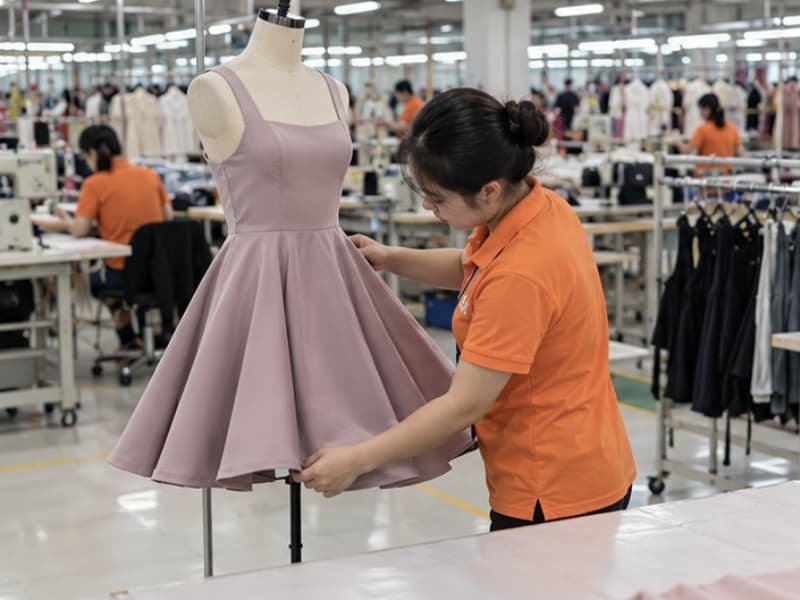
First-Piece Check

Inline Production Control
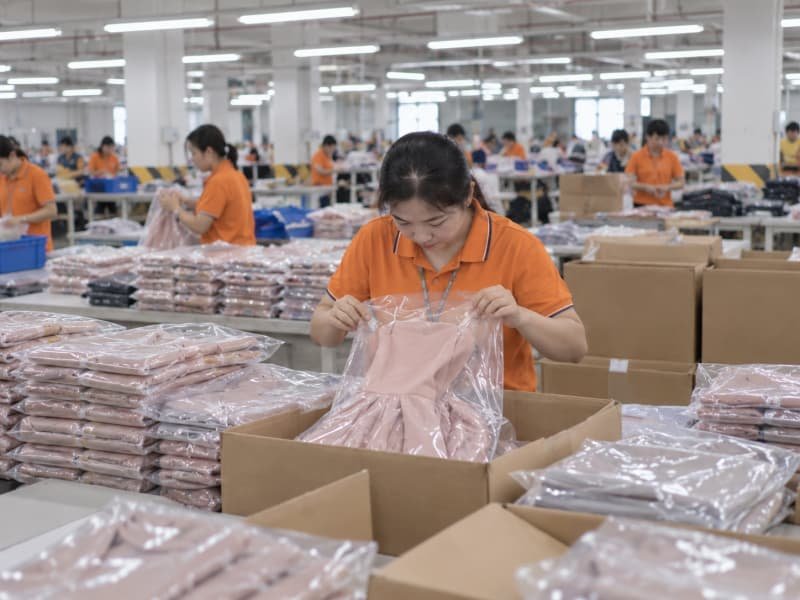
Final Release and Packing
Flared Dress QC Matrix Before Shipment
Quality control starts before production and follows the approved silhouette through cutting, sewing, finishing, and final inspection. The matrix below focuses on flared-dress risks that can change fit or visual balance even when general workmanship appears acceptable.
| QC Checkpoint | What Is Controlled | Main Stage |
|---|---|---|
| Waist Placement | Front, side, and back position against approved fit | Sample / PP / Final |
| Bodice Fit | Bust balance, torso length, closure tension, waist fit | Sample / PP / Inline |
| Flare Distribution | Front-side-back volume and left-right symmetry | Sample / First Piece / Final |
| Skirt Sweep | Pattern dimension and visible movement | Pattern / PP / Final |
| Side-Seam Direction | Rotation, pulling, panel alignment | First Piece / Inline / Final |
| Hem Balance | Front, side, back level and full-circumference consistency | Sample / Finishing / Final |
| Lining Relationship | Length, sweep, coverage, restriction | Sample / Inline / Final |
| Waist Seam and Zipper | Flatness, alignment, bulk, closure operation | First Piece / Inline / Final |
| Measurements and Grading | Critical POMs, tolerance, size consistency | PP / Inline / Final |
| Fabric and Color | Lot, handfeel, visible surface, approved material behavior | Pre-Cut / Final |
Flared Dress Programs Built Around Real Production Risks

US Occasionwear Program
18 styles | 46,800 pieces | XS-XL | 4 fabric families | 2 sample rounds + PP
The assortment combined fit-and-flare minis, A-line midis, and softer occasion silhouettes in satin, crepe, compact knit, and layered mesh directions. The main challenge was keeping the waist position and skirt balance consistent while individual styles required different flare volumes. Development grouped patterns into soft, controlled, and structured flare directions rather than forcing one skirt block across the full range. Fit comments were recorded by bust, waist, side seam, skirt fall, and hem. Bulk preparation locked fabric direction, pattern versions, grading rules, lining, zipper details, and PP standards before release. First-piece checks focused on waist-to-skirt transition and hem balance.

UK Partywear Program
12 styles | 28,800 pieces | 5 colorways | XS-XL | 3 flare structures
The range used fitted and corset-inspired upper bodies with flared party skirts. A narrow fitted bodice created higher sensitivity around zipper tension, waist seam bulk, and side-seam balance because any pulling above the waist changed how the skirt opened below. Development separated bodice correction from skirt-volume correction so fit comments did not accidentally reduce the intended flare. Three skirt structures were maintained across the program: soft movement, controlled party flare, and stronger structured volume. Revision notes tracked waist position, support, zipper, panel distribution, lining, and hem. PP approval and a first-piece production review provided the bulk reference before full sewing volume increased.

Australian Summer Program
16 styles | 34,400 pieces | 7 colors | 5 sizes | crepe, chiffon, and mesh-layered directions
The collection focused on lighter flared midi and maxi silhouettes for warm-weather occasion and resort use. The major risk was uneven hem fall across long panels and layered materials, especially where shell and lining behaved differently. Development reviewed grain direction, panel length, layer relationship, lining sweep, side-seam hang, and final hem method. Softer flare patterns used controlled panel distribution rather than excessive circumference, helping the skirts move without becoming heavy. Before bulk release, the program locked color, material basis, graded pattern versions, layer lengths, and workmanship points. Final inspection placed extra attention on front-side-back hem balance and shell-to-lining movement.
Evidence We Use to Prove Development and Production Control

Fabric Review Evidence

Pattern Review Evidence

Mannequin Fit Evidence
Front, side, and back mannequin or fit-model views help a product team assess waist placement, bodice balance, skirt fall, side seams, hem level, and movement. Marked images can identify where a revision was made without revealing a complete unreleased design. For flare-sensitive garments, one front photo is rarely enough because imbalance often appears from the side or back. A consistent photo angle across sample versions also makes revision progress easier to evaluate remotely.

Revision Record Evidence

PP-to-Bulk Evidence
PP sample photos, approved details, first-piece comparisons, inline inspection images, and bulk garment views create a visible bridge between development and manufacturing.
The purpose is not to prove every piece is photographed. The purpose is to show that production follows an approved reference and that key flare points are checked after scale-up. Side-by-side evidence can compare waist position, skirt shape, seam direction, hem, zipper area, lining, and finishing without exposing sensitive commercial information.

QC and Packing Evidence
Manufacturing Resources Behind Multi-Style Flared Dress Programs
16 Owned Womenswear Factories
20+ Satellite Factories
300 Sewing Lines
50+ Flexible Lines
15,000-35,000 Sample Capacity
SMETA and Brand Standards
Flared Dress Frequently Asked Questions

Send Your Flared Dress Project for Development Review
Send the materials already available for your flared, fit-and-flare, A-line, skater, or full-skirt program. Duolan will review the development basis before confirming the sample path, material direction, production considerations, and quotation basis. A complete tech pack is useful, but a clear reference image, original sample photos, size chart, fabric idea, or previous fit comments can also support an initial review. The goal is to identify the points that will affect silhouette accuracy and bulk stability before unnecessary sample rounds or production changes occur.
Please include where available:
- Product reference, sketch, tech pack, or original sample photos
- Target fabric, color, lining, and trim direction
- Brand size chart, base size, and full size range
- Target quantity by style or color
- Required sample purpose and launch timeline
- Existing fit comments or current production concerns
- Label, packaging, inspection, or compliance requirements